fbpx

January 21, 2021

State Department Cuts Ties With Islamic Charity Over Allegations of Anti-Semitism

The State Department cut ties with the Islamic Relief Worldwide (IRW) charity on January 19 after the charity had been plagued with allegations of anti-Semitism.

The conservative website Washington Free Beacon reported that the State Department had conducted a review of the charity and found there was “anti-Semitism exhibited repeatedly by IRW’s leadership.” The Dutch government has also said they would cease funding to IRW.

In October, the organization’s former interim CEO Tayeb Abdoun stepped down after it was revealed that he had posted on Facebook, “Lay the bodies of the Jews on the top of the mountains, so that no dog in Palestine must suffer hunger.:

Additionally, in August, the entire board of IRW’s Britain branch resigned after it was revealed that the charity’s new trustee had called Israel “the Zionist enemy,” praised Hamas members as “great men” following “holy call of the Muslim Brotherhood” and posted other anti-Semitic posts. Another trustee had called Jews “grandchildren of monkeys and pigs” on social media.

Lorenzo Vindino, director of the George Washington University’s Program on Extremism, told the Free Beacon, “The blatant anti-Semitism that large parts of the upper management of IRW have consistently displayed should disqualify them from any partnership with any government agency, irrespective of which administration is in the White House.”

The State Department ending ties with the charity had occurred in the last day of the Trump administration; it’s not known if the State Department under the new Biden administration will undo it.

UPDATE: An IRW spokesperson said in a statement to the Journal, “Islamic Relief Worldwide has a long record of partnership with USAID and the State Department and we look forward to this continuing under the new administration. We have strongly and repeatedly condemned anti-Semitism, and as soon as we discovered the social media posts we acted to ensure these individuals play no further role at Islamic Relief. Their unacceptable comments were completely against our values of mutual respect and interfaith collaboration. The UK’s regulator, the Charity Commission of England and Wales, has concluded that we acted swiftly and decisively to address this issue and has found no evidence of institutional anti-Semitism.”

State Department Cuts Ties With Islamic Charity Over Allegations of Anti-Semitism Read More »

The Art of the Deal – A poem for Torah Portion Bo

And also our cattle will go with us;
not a [single] hoof will remain
Exodus 10:26

In the shadow of the darkest dark
moments before the final plague
took the local first-born away

The stuttering spokesperson
stands his ground. His ground which is
our ground. Our ground which is

Holy ground. Our cows are coming home.
We haven’t been released yet but
we’re taking everything with us.

This is non-negotiable.
We’ve been packing boxes since
frogs fell out of the sky.

Our change-of-address forms
are all filled out. We’re experimenting
with changing the paint in the desert.

Does sand even go with cow?
What’s the reception out there?
Will Pharaoh learn how to store grain

for a lack of rainy days?
Will he move to Florida and
will they want him there?

It’s kind of a setup.
The answers are pre-ordained –
A Divine rhetorical.

After this conversation
these two men, the king
the former prince

who used to be brothers
will not stand in the same room
or see each other’s faces again.


God Wrestler: a poem for every Torah Portion by Rick LupertLos Angeles poet Rick Lupert created the Poetry Super Highway (an online publication and resource for poets), and hosted the Cobalt Cafe weekly poetry reading for almost 21 years. He’s authored 25 collections of poetry, including “God Wrestler: A Poem for Every Torah Portion“, “I’m a Jew, Are You” (Jewish themed poems) and “Feeding Holy Cats” (Poetry written while a staff member on the first Birthright Israel trip), and most recently “The Tokyo-Van Nuys Express” (Poems written in Japan – Ain’t Got No Press, August 2020) and edited the anthologies “Ekphrastia Gone Wild”, “A Poet’s Haggadah”, and “The Night Goes on All Night.” He writes the daily web comic “Cat and Banana” with fellow Los Angeles poet Brendan Constantine. He’s widely published and reads his poetry wherever they let him.

The Art of the Deal – A poem for Torah Portion Bo Read More »

COVID Deaths Overwhelm CA and AZ Jewish Communities

(JTA) — In Los Angeles, the Jewish funeral homes cannot keep up with the bodies.

Some family members are being forced to wait a week or even longer for burials. The city’s largest Jewish funeral home, Mount Sinai Memorial Parks and Mortuaries, rented a second 12-meter refrigerated truck last week to hold bodies with the one rented in March filled to capacity with 40 corpses.

In some cases, funerals are being delayed because overwhelmed doctors too busy caring for patients at inundated hospitals don’t have time to fill out death certificates and burial permits.

The culprit is the unprecedented COVID-19 surge in California, which this week became the first U.S. state to report more than 3 million coronavirus cases since the outbreak of the pandemic. One million of those cases have occurred in Los Angeles County, home to America’s second-largest Jewish community with about 500,000 souls. More than 14,000 people have died in Los Angeles and hospital intensive care units are filled to capacity.

“It’s overwhelming,” said Richard George, the funeral director at Home of Peace Memorial Park and Mortuary in Los Angeles. “All the Jewish mortuaries and cemeteries are experiencing the same thing.”

At a funeral home in West Hollywood, a man picked up the phone and said he was too busy to talk.

“It’s totally crazy here,” he explained before hanging up.

At Shalom Chapel, mortuary director Moe Goldsman answered the phone and immediately apologized for not having the time to talk.

“I’m working on six funerals,” he said.

A nurse works with a COVID patient in Fullerton, Calif., Dec. 25, 2020. (Francine Orr/Los Angeles Times/Getty Images)

California has the second-worst average daily infection rate among states at 101 per 100,000 people. Only Arizona is higher with 117 per 100,000.

Arizona Jews, who are concentrated in the Phoenix area and number nearly 100,000 people in Phoenix alone, are feeling it.

Rabbi Irwin Wiener of Sun Lakes Jewish Congregation, a Reform synagogue of about 400 people who live in a retirement community, said deaths are up about 50% above normal. Compounding matters, the rabbi can’t visit in person with grieving or ill congregants.

“I get a lot of calls from grieving families and give them as much consoling as I can,” Wiener said. “It’s very difficult to do because nothing is being done face to face. And there are people in hospice I can’t visit because of COVID restrictions. It’s a very difficult situation.”

At Green Acres Mortuary and Cemetery in Scottsdale, Arizona, a city that borders Phoenix, the number of COVID-19 deaths has jumped 65%  in the past month, according to Amie Gazda, the general manager.

“I have never seen anything like this personally, and I have been in the business for 24 years,” said Gazda, whose cemetery has a section set aside for Jews. “It’s been quite overwhelming. There have been delays in burials. Hospitals get backlogged and delay releasing the bodies to our care. And there are delays in getting death certificates and burial permits.”

In Los Angeles, Howard Kaplan, the general manager of Mount Sinai, said other area cemeteries are asking his mortuary to store bodies for them because they are so backed up. Kaplan’s staff works around the clock.

“In some cemeteries the wait is a week or 10 days,” Kaplan said. “In some of the bigger, non-Jewish cemeteries, they are three or four weeks out. People who have worked here for 20 years or more have never seen anything like this.”

The proportion of coronavirus-related deaths the cemetery is handling has soared along with the caseload. In November, about 6% of deaths were COVID-related. In December the figure was 19% and now it’s 35-40%, according to Kaplan. By contrast, during the spring coronavirus surge in April and May, the figure was approximately 15%.

A more contagious variant of the coronavirus is being blamed in part for California’s spiking caseload.

A grave is dug at the Groman Eden Mortuary at Eden Memorial Park in Mission Hills, Calif. (Anthony Lampe)

At Valley Beth Shalom, a Conservative shul in Los Angeles County that is one of California’s largest, the rabbi has been swamped with funerals.

“Normally, in a congregation like mine you might see two or three deaths in a week and then no deaths and then a few deaths,” the senior rabbi, Ed Feinstein, said. “But we have been in a wave for the last four weeks. We must have had 25 deaths of members or their parents. I’m doing three or four funerals a week, and I have two other rabbis who are equally very busy.”

Even some of the non-COVID deaths might be related to the coronavirus, Feinstein said, because doctors are so overwhelmed that patients with other illnesses cannot get adequate care.

David Estephan, who owns a funeral home in the L.A. area and also operates a business that transports bodies from hospitals, private homes and convalescent homes to Jewish funeral homes, said his crews have been instructed because of the coronavirus to no longer unzip body bags to check for jewelry and double check the person’s identity. He’s also turning people away from his funeral home because he has no room to store bodies before burial.

Also due to COVID-19, tahara rituals – in which a Jew’s body is ritually washed before interment – are suspended at Mount Sinai unless a family specifically requests it because of the risks associated with handling bodies that were infected with the virus. Instead, body bags containing the dead are being placed directly into caskets.

As for the funerals themselves, they’re being conducted with minimal family or friends present due to the risks associated with gatherings of people.

At Mt. Sinai Cemetery in Phoenix, funeral services are no longer permitted inside chapels because of COVID. The cemetery built a 32-foot outdoor pavilion for services with 10-15 chairs set up 6 feet apart for the immediate family. The funerals are broadcast online.

“We put in new equipment a couple of months ago to offer streaming of the service for our families who are out of state or who can’t come because of COVID,” said Wendy Konick, a family counselor.

“It’s never easy to lose somebody, but losing someone during a pandemic makes it more difficult,” Gazda of Scottsdale’s Green Acres Mortuary and Cemetery said. “They don’t have the customary support from their family and friends to provide comfort.”

COVID Deaths Overwhelm CA and AZ Jewish Communities Read More »

Netanyahu Congratulates Biden, Urges Him to Work Together on Iranian Threat

Israeli Prime Minister Benjamin Netanyahu congratulated Joe Biden on his inauguration as 46th president of the United States, where he noted his decades-long friendship and urged him to work together on confronting the Iranian threat.

“President Biden, you and I have had a warm personal friendship going back many decades,” Netanyahu said in the video that was released after Biden took the oath of office. “I look forward to working with you to further strengthen the U.S.-Israel alliance, to continue expanding peace between Israel and the Arab world and to confront common challenges—chief among them the threat posed by Iran.”

Biden has signaled that he intends on returning America to the Iranian nuclear deal, which former President Donald Trump pulled out of in May 2018. However, in Senate testimony on Tuesday, Biden’s choice for Secretary of State, Tony Blinken, said that the United States is “a long way” from re-entering the nuclear accord.

Blinken also said that the United States would consult with Israel and Gulf state allies before re-entering the deal.

Israel’s President Reuven Rivlin also sent a message congratulating Biden, emphasizing that the ties between Israel and America go beyond political parties and are based on shared values.

“Our region is changing quickly,” he said. “Many of the changes are positive. The recent peace deals between Israel and our neighbors brought new hope with them, and I expect to work with you to help build further bridges in the region, including with our Palestinian neighbors.”

Netanyahu Congratulates Biden, Urges Him to Work Together on Iranian Threat Read More »

New Jewish Dating App Basheret Allows Users to Play Matchmaker, Re-Define Online Dating

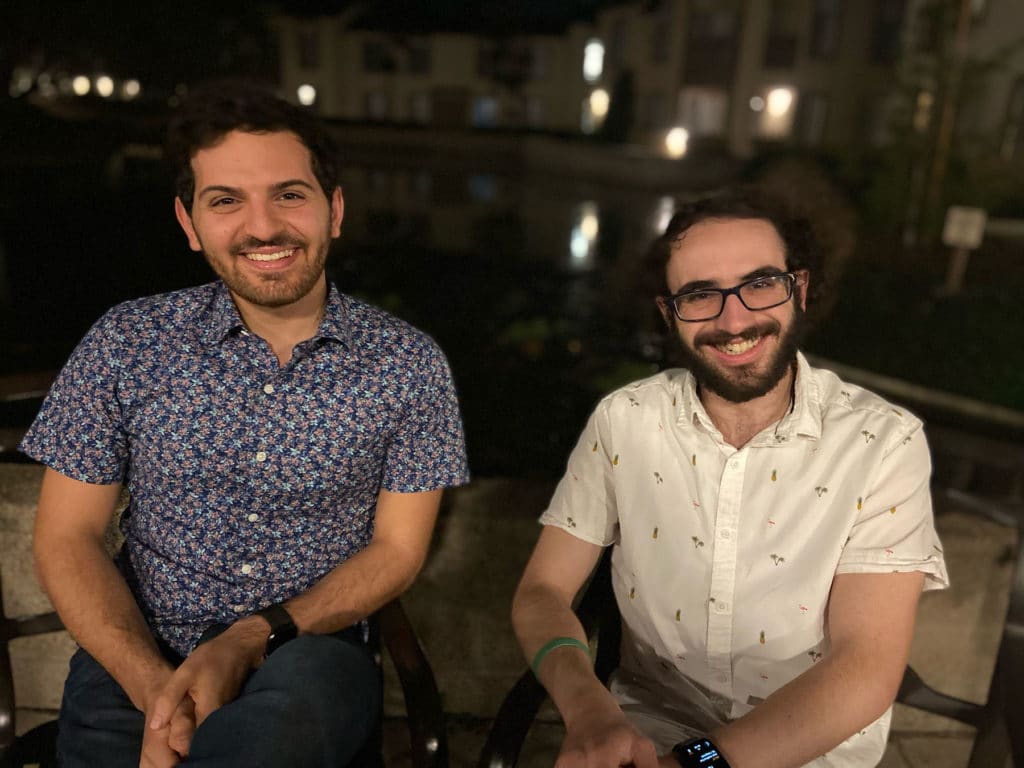
Los Angeles native Asher Naghi never really used dating apps. After witnessing his friends put themselves out there only to remain single, Naghi, 24, took it upon himself to create a Jewish dating app where matching with someone is likely.

“We wanted to make something that everyone would feel comfortable on, something that reflects organic experiences,” Naghi said. “My friends and I pitched this as a joke but got outstanding feedback. So, we started to work on the product.”

In early August, Naghi, along with his fellow UCLA alum Joey Levin and Maia Groman, launched Basheret (“meant to be” in Hebrew).

Basheret offers an array of profile questions that better represent a user’s Jewish personality mixed with Jewish geography. Questions vary from Jewish denomination, Shabbat observance and what summer camp they attended to questions about hobbies, profession, hopes and future aspirations.

While the name may be traditional, the app is anything but. Users will still find structural similarities to others—Tinder, Hinge, Bumble, JSwipe and JWed, respectively—a major difference is that you only get three suggestions a day to swipe left or right on.

Naghi specifically wanted users to slow down and look at the personality of users before only judging the photo. He said many aimlessly swipe when they have an endless amount of options.

“We’re not trying to make it about swiping,” Naghi admits. “Consider this person, talk to them, look through their entire profile and try to have an organic experience. We wanted to build it with non-addictive qualities. We think getting people on this app consistently is more important than having them on the app for long periods of time daily.”

Naghi noted that people can swipe through every user in their area and run out, then become tired and check back later. He and his team wanted to ensure that it isn’t about running through all your options at once. Instead it’s about taking the time to see what is out there and if you are both compatible.

The app started with more than 900 users and has since tripled user count around the country. To date, they have made more than 430 matches. To name a few, they have users in Los Angeles, New York, Detroit, Boston, Chicago and Toronto. Naghi added they hope to have a Hebrew version available in Israel soon.

To date, they have made more than 430 matches.

The creator also said one of the “quintessential things in the Jewish world” is matchmaking, either professionally or through friends and family. On Basheret, users have an option to enter Yenta mode so they can play matchmaker. The app syncs with your contact list so users can refer their friends to people they see on this site. He said the feature blends traditional shidduch profiles (Jewish arranged marriages) and online dating together in a modern way.

Mashable reported in November that between September and October of 2020, major dating apps including niche dating apps grew in popularity, despite the ongoing COVID-19 pandemic.

“Match grew 21 percent; OkCupid grew 21 percent; and Bumble grew 16 percent,” the report from Nov. 11 stated. “Other big hitters like Tinder and Hinge grew as well, but more modestly. Black singles app BLK grew the most out of Blacker’s sample with 23 percent month-over-month growth.”

The article also suggests that dating app users are spending more time on user profiles to see if they are emotionally compatible rather than just attraction.

Joey Levin, co-founder and chief technical officer of the app, was concerned at first about the app’s success since it launched during the pandemic. The 24-year-old was surprised and excited to see the session time on the app growing from users who simply wanted to find connection during quarantine even if dates were happening virtually. Levin, who doesn’t regularly use dating apps, joined Basheret during the pandemic so he could have a meaningful dating experience.

“Finding people who are interested in serious relationships are hard to find, it’s more of a hookup culture,” Levin said. “Most people on [the app] are here for [that]. The hope as time goes by is that we are able to maintain that identity.”

The Basheret team has heard from users that the app was a nice change of pace from the hookup culture and ghosting that occurs on dating platforms. “I think it opened up avenues for people, especially those who have never tried dating apps before,” Naghi said.

Michael Felsenthal from the Pico-Robertson area said that he had tried a variety of dating apps including traditional Orthodox formats, casual Jewish dating apps and Facebook groups. After giving the app a try, he liked how specific each profile was and the clarity that comes with it.

“It’s better to know going in where you stand with someone before it ends with someone getting hurt,” Felsenthal, 28, said. “Basheret makes Jewish dating clear.”

While he has matched with a few different people, his goal remains the same, to find someone he can have a meaningful relationship with that hopefully can lead to an engagement.

“Basheret stands out to me because not only does it have the better filters, but I feel like it is geared more to the Orthodox crowds. [Joey and Asher] get it and they understand where I’m coming from.”

Levin and Naghi said while they’re happy people are enjoying the app, their ultimate goal is for users to leave the app because it means they’ve found matches, maybe even their Basheret. While they are on the app, Naghi wants everyone to enjoy themselves in this virtual dating space.

“At least 60 percent of dating comes from apps. People are finding meaningful relationships through dating apps. The Jewish community I think has been moving towards it more across the denominational spectrum,” he said. “We built it so people could have fun, meet each other and have a positive Jewish dating experience.”

Learn more about Basheret, and download the app on iOS and Android here.

New Jewish Dating App Basheret Allows Users to Play Matchmaker, Re-Define Online Dating Read More »

UAE Gov’t Reunites Yemeni Jewish Family Separated By Conflict

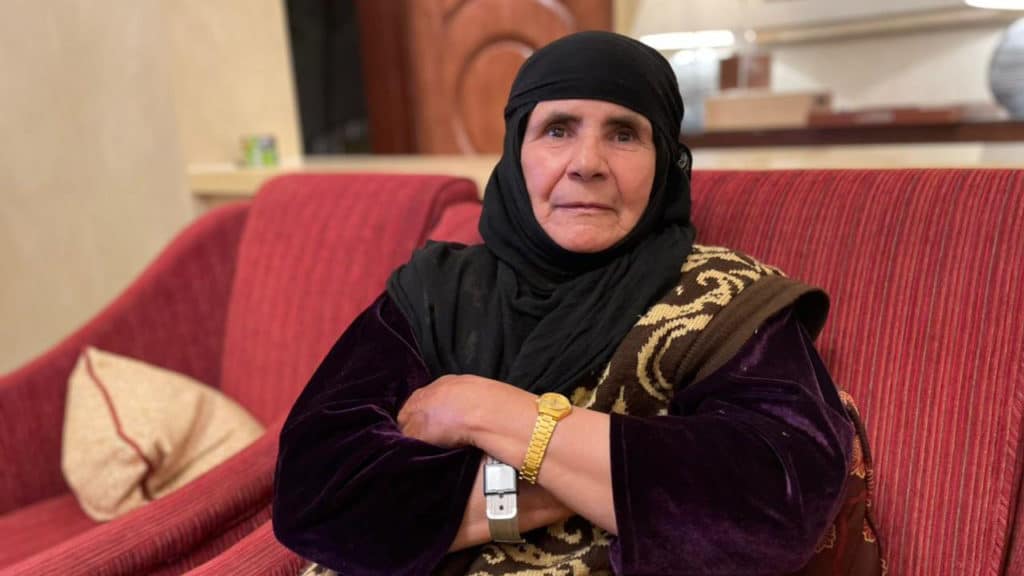
The Media Line — After 21 years apart, Israel Fayez approached his 73-year-old grandmother during an emotional reunion in Abu Dhabi to ask if she remembered him. She said no. Only when he used an old nickname she’d had for him as a child in Yemen did she break down, recognizing the boy who he fled his homeland at just 9 years old.

Israel left Yemen with his brothers and parents more than two decades ago, escaping persecution in their homeland by immigrating to the United Kingdom. His grandparents and uncle remained behind.

In the years since, the elderly members of the family suffered as the Iran-backed Houthi rebels escalated their oppression and maltreatment of the country’s small Jewish population. Yusef Chabib, Israel’s uncle, survived being shot 30 times at his shop, simply for being identifiably Jewish.

Last week, the United Arab Emirates government reunited Israel, along with 14 other members of the family now in the UK, with his grandparents and uncle.

“It was like happiness with more happiness, but this happiness came with emotion and crying,” Israel says.

Israel, 31, who now lives in London with his wife and children, fled Yemen with his family in 1999. The Houthi rebels came to power in Saada, where the family lived, in the 1990s and began attempting to drive the remaining Jews in Yemen out of the country. Of the tens of thousands of Jews who once lived in Yemen, it is thought that only a few dozen remain. The vast majority immigrated to Israel in 1949, immediately following the establishment of the country.

Jewish Yemeni families have been further stripped of many of their rights by the Houthis in recent decades, Israel says, facing often-violent discrimination.

“As a child it wasn’t easy. I was involved in two bombs, I was pulled out from one when I was 5 years old. There was no food, no electricity, no proper education, no water. It wasn’t safe.”

The final straw came when the Houthis murdered his grandmother’s brother. Israel and his family left the country soon after. He doesn’t remember how.

“All we knew was that people were helping us get out. My dad was always thinking of how to get us out to a place with proper education where we would be safe, where we wouldn’t be afraid walking in the street, we wouldn’t be afraid going to pray, or going out with a kippah as Jewish people. [Coming to London] was like moving into a different world that was like heaven.”

The separation was hard on the family. Israel’s mother worried and cried constantly about her parents’ plight. They kept in touch as best they could with their relatives in Yemen – through phone lines that worked one day but not the next. In 2001, after Chabib was targeted at his workplace, their concerns intensified.

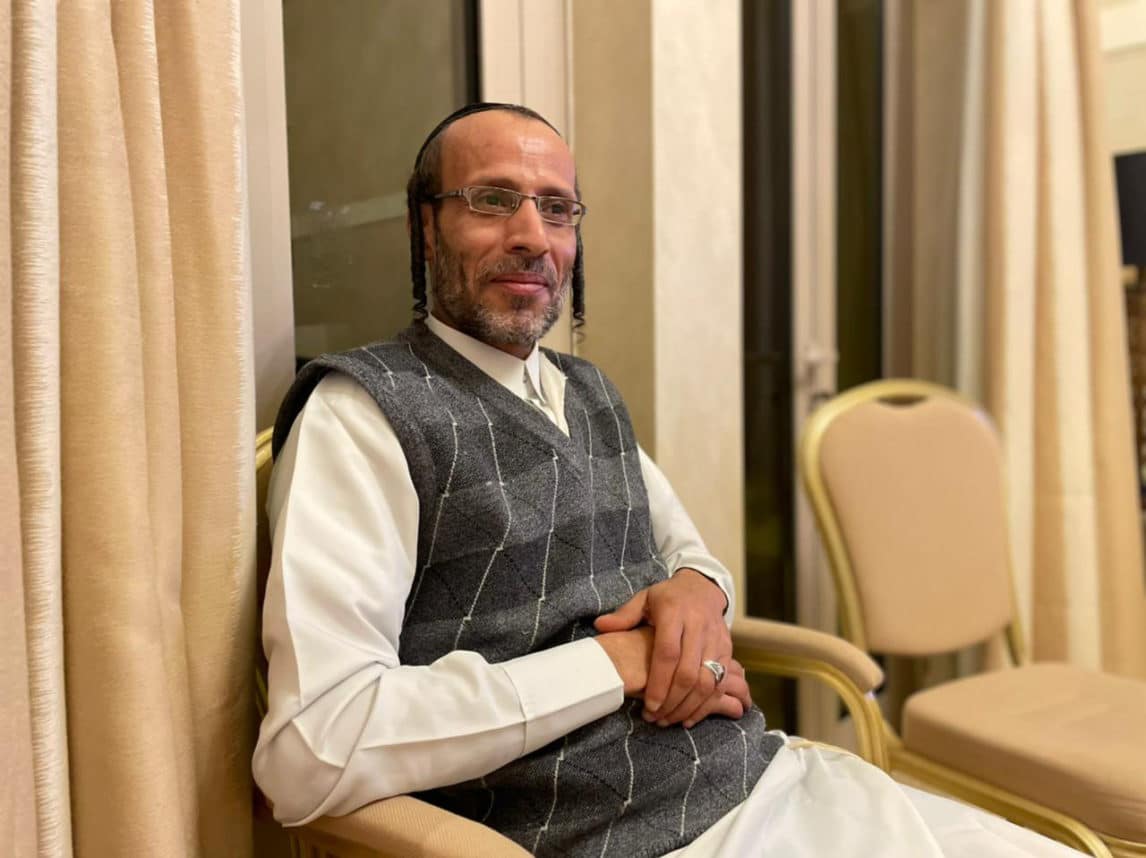
Yusef Chabib reunites with his family at a housing facility in Abu Dhabi, United Arab Emirates. (Courtesy)

Chabib, 45, made a living producing traditional Yemeni daggers, known as janbiya. He also made and sold silver jewelry. He was working at his shop the day several Houthis arrived and shot him about 30 times.

Chabib raises his thawb and points to the gnarled muscles in his leg, the gaping holes where flesh used to be. Bones were taken from his side to rebuild one of his legs and his other leg is no longer able to bend. He’s “very different” now, Israel says, and “very disabled.”

“I cannot believe it. He was a smiley person before, he was functional, he was different,” Israel says.

But, despite the attack and Chabib requiring emergency treatment in Jordan and the US, no amount of persuasion could assuage the remaining family members to leave their homeland.

Yitzhak Fayez, Israel’s brother, says they were reluctant to leave as they had lived their whole lives in Yemen and knew nothing different.

“They had land, they had cars, they had houses there. They couldn’t sell them.”

Yitzhak says in 2006 an order was issued to Jews in Yemen to leave the country within 24 hours or they would be killed. However, then-Yemeni President Ali Abdullah Saleh promised displaced Jews protection in the capital of Sanaa, offering them a gated housing complex to live in and a monthly benefit payment. Yitzhak says helicopters were sent in to “save them.” The family was relatively safe in Sanaa for a number of years, until Saleh was assassinated in 2017 and their protection disappeared with him. While Yitzhak would not go into specifics about the persecution the elderly family members faced in recent years, he says he became set on helping his family flee the country.

After spending months trying to track down the organization that helped reunite a Yemeni Jewish family in the UAE in August, Yitzhak and Israel flew to the UAE to try to find someone to help them. They were connected with Rabbi Elie Abadie, the UAE’s senior rabbi in residence.

“A month ago or so, a family member called me [and said] his family was trapped in Yemen in danger and he needs to save them. He asked me if I could intervene,” Abadie tells The Media Line. The rabbi invited Yitzhak to a Hanukkah party to discuss his family’s plight, during which they celebrated the Jewish holiday and Abadie “reassured him that I will intercede.”

“I took all their information – their name, their location and pictures and everything and said, ‘OK, let me see what I can do.’ I contacted the UAE government and in less than two days they got back to me and said, ‘Yes, we’re going to do this.’”

Yitzhak was then instructed to organize passports for the family members in Yemen and to “be ready.” The brothers had been back in London only days when they were told the rescue operation was imminent.

While he would not go into the details about how the family members were retrieved, Yitzhak likened it to a “CIA mission.” Within two weeks of Abadie contacting the UAE government, the family was reunited in the arrivals area of Abu Dhabi International Airport.

“I said to my grandmother, ‘Do you know who I am?’ She said no,” Israel recalls.

“So I went to my uncle to ask for his blessing because he knew who I was and then I went back to my grandmother and asked her, ‘Do you know who I am?’ She goes to me, ‘No.’ I then gave her a nickname that she used to call me in Yemen. She started crying. So many tears. Even my children, who have never met their great-grandparents, started crying. It wasn’t easy. We were all laughing and crying together.”

Yitzhak says he will be involved in future efforts to bring Jewish families out of Yemen. He says he is “so thankful to the UAE government” for reuniting his family.

“I’ve never met people like this, in the UAE. They have open hearts.”

Abadie praised the efforts of the UAE government in “practicing what they’re preaching.”

“They are showing that there is freedom of worship here – that there is tolerance, coexistence and harmony. They have really demonstrated that in action.”

While Yitzhak and Israel have since returned to London, their grandparents and uncle remain in Abu Dhabi. They do not know what the future holds for them just yet but hope to stay in the UAE.

“We don’t know what’s going to happen tomorrow,” Israel says. “We’ll see.”

UAE Gov’t Reunites Yemeni Jewish Family Separated By Conflict Read More »

A Bisl Torah — What Defines You?

In watching the inauguration, so many of us were captivated by Amanda Gorman, the youngest inaugural poet in U.S. History. As riveting her ability to transform history into lyrical song, I was just as moved by her poise and gift in commanding the attention of the watching world. She offered not just a poem, but an experience, engaging us in an urgency to see ourselves in the continuous building of this beautiful country.

I learned that this poet spent years overcoming a speech impediment. Amanda would self-edit her poems to exclude words she was unable to accurately pronounce. But ultimately, she decided to accept invitations to public poetry readings. Despite the impediment, she would speak, knowing her best was more than enough.

Perhaps most importantly, following in the footsteps of Maya Angelou who was mute as a child, Amanda learned that we are defined not by any one thing. Rather, all of abilities shape our character. Not one ability has the power to hold us back. Someone else’s perception of an ability stands no weight in comparison to our own.

When we begin to characterize Moses, our greatest Jewish prophet, rarely, do we bring up the fact that he had a stutter. The Torah explicitly highlights Moses imploring God to choose someone else, primarily because he believes Pharaoh will dismiss him because of his speech. And yet, this is the man that becomes a beacon of light for the children of Israel, using his words and spirit to lead a nation towards freedom. This is the same man of which the Midrash explains, quoted the entire Torah in seventy different languages. Meaning, a speech impediment was not going to hold Moses back from actualizing his heavenly mission.

How many times do we focus on what seems like a flaw, allowing one thing to prevent us from grasping that which we are meant to achieve in this lifetime? We are blessed to have role models, both Biblical and present, that teach us to create goals not defined by just one piece of our puzzle. Role models that urge us to take pride in the entirety of who we are.

What defines you? Take every gift bestowed by God and step forward. You, every piece of you, are meant to change this world.

Shabbat Shalom


Rabbi Nicole Guzik is a rabbi at Sinai Temple. She can be reached at her Facebook page at Rabbi Nicole Guzik.

A Bisl Torah — What Defines You? Read More »

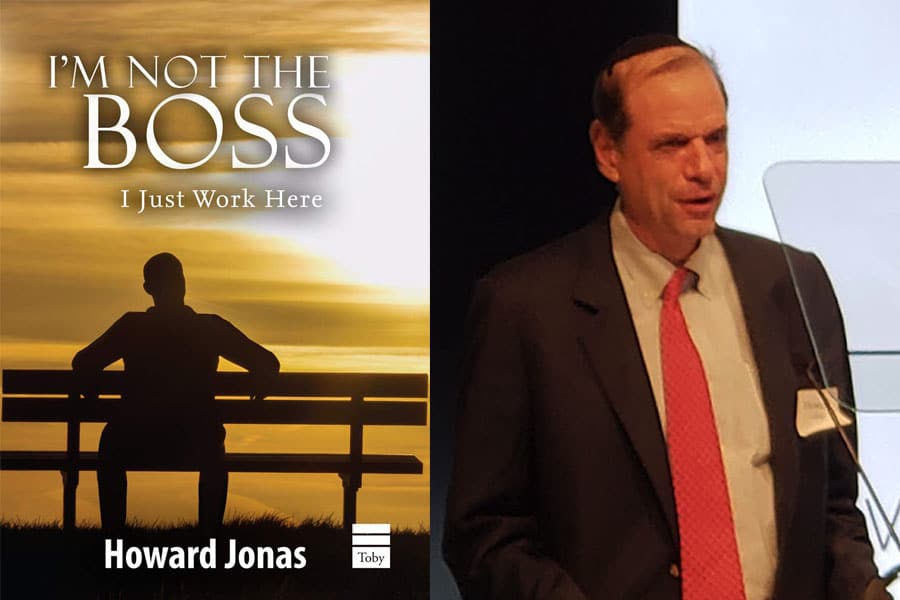
Book Review: “I’m Not the Boss, I Just Work Here”

Sometimes, a book that is exactly what is needed right now appears. “I’m Not the Boss, I Just Work Here” is one of those books, providing much-needed relief to those suffering from depression and threatened with financial ruin due to COVID-19. But even for those who are not coping with those issues, the book provides precious takeaways.

It is all the more intriguing because “I’m Not the Boss, I Just Work Here” (Toby Press) is actually an updated and republished version of a book that Howard Jonas, founder and chairman of IDT and Genie Energy Ltd., wrote 17 years ago. Apparently, some truths are universal and eternal.

“I’m Not the Boss, I Just Work Here” is only 102 pages — perfect for a cold or snowy Shabbat — but in that short space it packs vital business and entrepreneurial tips from an uber-successful businessman, coupled with takeaways from his personal struggle with depression and how he overcame it. Perhaps the book’s short length is part of Jonas’s message: you can convey the most important truths succinctly, just like the concept of “the elevator pitch” as start-up culture seeks to do.

Jonas opens the book by telling us that even though he is an Orthodox Jew, “I am not an expert on God… I am an expert on depression.” His house burned down, at one point his wife almost left him and he nearly went bankrupt several times. In the preface to the new edition, Jonas writes, “I lost hundreds of millions of dollars drilling for oil that wasn’t there and promoting technologies no one wanted to buy… [but] there is no mental, spiritual, or emotional depth from which you cannot rise… God is always there to help.”

Jonas dedicates part of his book to explaining his journey to God and this mindset. He lived through tumultuous times. After the Kennedy assassination, Jonas heard his mother cry, “Why is it always the good ones who get it? They killed him.” Jonas felt, “I needed an answer…But I had no answer.” The assassinations of Martin Luther King, Jr. and Robert F. Kennedy, Vietnam, and the Black Panthers prompted people to look for answers everywhere — San Francisco, India, Tibet. Pot, acid, LSD.” “Me,” Jonas adds, “I wasn’t much for travel or drugs… So I started to read.”

He read Nietzsche, Ayn Rand and Adam Smith. Then, one day, Jonas picked up a Bible. “I was amazed. There it all was — the libertarian ideal.” For example, Jonas cites Abraham’s buying of the Cave of Machpelah as a burial place for his wife, Sarah, which would belong to his family eternally, as an example of property rights. “[And] just because you’re rich or in the government doesn’t mean that you have the right to step on anyone else…The courts are expressly forbidden to give any special treatment to the rich… But it was the Bible’s exceptions to libertarian principle that struck me even more forcefully,” he writes.

Jonas’s perspective really changed at the age of 17, when he read about the halachic concept of yovel (the Jubilee year), during which all farmland reverts to its original owner. As he thought more about it, Jonas realized that only God could have come up with such a system because it was “a perfect compromise between pure laissez-faire economics and wealth redistribution strategies, which just lead to a welfare-state cycle of dependence.” Because humans are self-interested, Jonas reasons, God is the only one who could have created such a concept. “The Bible really was God’s revealed Law. It was the source of all morality in the world.”

Jonas continued to ponder good, evil, controlling and non-controlling societies and personal responsibility — and he does so in his book with a deep empathy and a sardonic wit. Jonas believes, unequivocally, that God’s central value is liberty; he wants people to make their own choices.

Jonas asks, since God knows everything, what is the point of giving us challenges? Part of his answer is that “people who’ve lived through adversity and confronted challenges are deeper people than those who haven’t… The real idea is to challenge oneself every day… by attempting to climb new mountains. Someone who lives this way, when challenges are thrust upon him, will be well prepared.” He urges the reader to respond to tragedy not with hopelessness, but with love.

Jonas describes three classes of people in the world: shirkers who try to mooch off the efforts of others, regular people who do what is necessary but no more and those who “go all out to try to accomplish the most they can with whatever God gave them.” They may be CEOs, top athletes or janitors.

The value of being the third type of person was instilled in Jonas at a young age. In his book, Jonas relates that his father told him a story — “I have no idea where he heard it” — about how Joseph, when he was a lowly slave, kept sweeping when others had stopped, and that was why Potiphar noticed him, leading eventually “to Joseph becoming Viceroy of all Egypt and the savior of his people. Why? Because he kept on sweeping,” Jonas writes.

The legendary storyteller and author, Professor Penninah Schram, said in a workshop in an ATARA conference I attended in New York in 2009 that we should think about the first story we remember being told. “That story,” she said, “is the story that informed your life.”

It may not have been the first story that Jonas was told, but, he writes, “This story had a dramatic effect on my life.” Although neither I, nor my scholar husband, nor several Tanach scholars who are my colleagues could locate the story in traditional sources, that was irrelevant because its message was clear: Joseph worked hard, in difficult circumstances, and was ultimately successful.

Jonas clearly carries the values from that story to his work and his views on failure. “I’ve never insisted on hiring the guys from the best schools or with the fanciest resumes,” he writes. “I’ve always wanted the people with a fire burning in them…The charities that have the most appeal for me are those that give people the chance to elevate themselves.” Cooking schools, he says, are better than soup kitchens.

To that end, Jonas tries to hire only two kinds of people: those who are obsessed and intensive about what they do, and those who have had profound “failures, screw-ups on an astonishingly grand level.” Jonas adds, “It is how we deal with the aftermath of failure and hardship that truly defines us.”

“It is how we deal with the aftermath of failure and hardship that truly defines us.”

For Jonas, this conviction in recovering from hardship is personal. Jonas’s depression started in 1992. He infers that it may be linked to the time that he transformed his business life from a small family-type operation to a large telecommunications business, with new hires every week, new equipment, an expanded budget, a slew of press and a move fifteen miles away to New Jersey. Then his father was diagnosed with cancer.

Jonas began spiralling downward, going to a psychiatrist, taking (the wrong) drugs and contemplating suicide. He changed doctors and medication, and things improved a bit. But the real breakthrough came when he was in Israel, traveling near the Dead Sea. But no spoilers on that — to learn about his remarkable recovery, you’ll have to read the book.

He went on to have four more children with his wife, Debbie (they have nine altogether), to whom he attributes much of his ability to have come back from the depths. He continues to try to improve the world; in addition to his other business projects and his extensive philanthropy, the company he is chairman and CEO of, Rafael Holdings, is in Phase 3 FDA trials of an anti-cancer drug.

Would he prefer to turn the clock back and not have experienced failures and depression, and live a “plain, happy life?” Yes, he writes, “But this wasn’t my choice.” To Jonas, “Our job in life is to continuously undertake challenges and confront evil, so that we will grow as people, and so that we can help move the world closer to the goodness, and further from the evil, that God gave us the freedom to create.”

Jonas clearly hopes to pass his wisdom on to the next generation. One of the most touching chapters is about his grandmother, from whom he learned deep, formative lessons in life. In addition to passing on our values and experiences to the next generation, Jonas writes, “Remember that God wants us to be happy and enjoy life.”

You will want to read and reread this book, small in size but vast in wisdom. Keep it by your bedside or recliner. And, like your values, you will want to pass it on, along with your own stories, to your next generation.

“I’m Not the Boss, I Just Work Here,” Howard Jonas. The Toby Press, $16.95 (102p) ISBN: 9781592645565


The author lives in Israel. She is an award-winning journalist, theatre director and the co-founder and editor-in-chief of WholeFamily.com.

Book Review: “I’m Not the Boss, I Just Work Here” Read More »

The Biden Era Promises Normal Arguments — Let’s Start with the Iran Deal

One of the worst aspects of the Trump era is that it was so difficult to have a normal argument.

Take the Iran nuclear deal (JCPOA), for example. I was dead set against it when the Obama administration pushed it through in 2015. I thought it empowered an evil regime and that we got royally ripped off during negotiations. My biggest beef was that even in the best of circumstances — where Iran would behave like Mother Teresa and follow the deal to the letter — they would still get their nuclear arsenal if they waited long enough for the sunset clause. At best, it was a nuclear time-out.

So, when President Trump pulled America out of the deal in 2018 and began a “maximum pressure” campaign, I thought it was a street-smart move. But because Trump was so crude and polarizing, because he was so hated by so many, it was virtually impossible to calmly defend any of his policies.

The Biden era will be different.

Biden is a decent guy. In his inaugural address, he reaffirmed the value of democratic dissent and vigorous debate. The portraits of Thomas Jefferson and Alexander Hamilton, two classic antagonists, hang together in his redecorated Oval office. Biden’s message: stay within the boundaries of decency and democracy, and you’ll get a fair hearing.

I hope he gives a fair hearing to a piece published today in The Atlantic on the Iran deal. Written by expert commentators Michael Oren and Yossi Klein Halevi, it is a comprehensive critique of a deal that is bound to become a controversial flashpoint within the Jewish community, and in relations between the new administration and Israel.

The piece confronts squarely the arguments of those in favor of returning to the deal, which the writers summarize as: “Only the deal’s renewal…can prevent the nightmare of a nuclear Iran.”

Slowly, methodically, they take that argument apart. I may be naturally biased because of my views on the deal, but the sheer amount of pertinent information is what makes the piece a must-read — regardless of where you stand.

The writers ask, “Why, then, aren’t Israelis and Arabs—those with the most to lose from Iranian nuclearization—also demanding a return to the JCPOA? Why aren’t they panicking over its dissolution? The answer is simple: The JCPOA didn’t diminish the Iranian nuclear threat; it magnified it.”

It’s well known that the Obama administration was highly eager to conclude a deal. As a result, the writers explain how much was left on the table:

It’s well known that the Obama administration was highly eager to conclude a deal. As a result, the writers explain how much was left on the table.

“The JCPOA allowed Iran to retain its massive nuclear infrastructure, unnecessary for a civilian energy program but essential for a military nuclear program. The agreement did not shut down a single nuclear facility or destroy a single centrifuge. The ease and speed with which Iran has resumed producing large amounts of more highly enriched uranium—doing so at a time of its own choosing—illustrates the danger of leaving the regime with these capabilities. In fact, the JCPOA blocks nothing.”

The piece is rich with such information: “Less than a decade from now, Iran will be legally able to produce and stockpile enough fissile material for dozens of bombs. The 97 percent reduction of Iran’s enriched uranium stockpile achieved by the JCPOA would be swiftly undone. Breakout time would no longer be a year, or even three months, but a matter of weeks.”

Anyone interested in this issue ought to read “The Case Against the Iran Deal” all the way through. The crucial point comes when the writers look to the future and conclude: “Iran can be stopped.”

The key is that “President Joe Biden should not squander the leverage he has inherited. The reimposition and intensification of American sanctions has placed enormous pressure on the Iranian regime. After waiting out the old administration in the hope that 2021 would bring a new one, the regime is now trying to intimidate Biden into renewing the JCPOA.”

I can only add that if Biden and his team are serious about consulting with allies and being sensitive to the security of Israel and the region, it won’t get sucked in by the wily trickery of the Iranian regime, the world’s #1 sponsor of terror. Once the U.S. releases economic sanctions, all leverage will be lost. There are encouraging signs, especially from Secretary of State Antony Blinken, that the new administration will not rush into doing that.

If Biden and his team are serious about consulting with allies and being sensitive to the security of Israel and the region, it won’t get sucked in by the wily trickery of the Iranian regime

In any case, if they want to make an informed decision on how to move forward, they can start by reading a dignified argument in The Atlantic.

It feels good to argue again.

The Biden Era Promises Normal Arguments — Let’s Start with the Iran Deal Read More »

IKAR Rabbi Sharon Brous Offers Prayer at National Inaugural Prayer Service

Los Angeles IKAR Rabbi Sharon Brous was one of the faith leaders offering prayers to the new Presidential administration on Jan. 21.

The virtual interfaith service, hosted by the Washington National Cathedral, included prayers from several leaders from all religious backgrounds and performances by Patti LaBelle, Josh Groban, Donald Lawrence and Company and Detroit gospel group The Clark Sisters.

Brous spoke about the excitement of a new presidential term and the restoration of democracy.

“Give us strength, God, as we usher in the dawn of a new America, a justice-driven, multiracial democracy,” Brous said. “A new America, that lifts up the poor and protects those most vulnerable. Help us today to imagine a new America that leaves behind the fallacy of profit over people, and instead affirms that every one of us deserves to live in full dignity.”

In her blessing, she hopes that Americans protect and sustain the Earth, and finally abolish white supremacy and do the necessary work to dismantle racism in all forms.

In her blessing, she hopes that Americans protect and sustain the Earth, and finally abolish white supremacy and do the necessary work to dismantle racism in all forms.

“Holy One, we ask that you protect President Joe Biden and Vice President Kamala Harris that you strengthen their resolve as they lead us in rebuilding this nation with love,” she said. “For after the long night of suffering, a redemptive dawn is near.”


NAACP national board member and Poor People’s Campaign co-chair Bishop William Barber II; Reverend Mariann Edgar Budde of the Episcopal Diocese of Washington; Archbishop Elpidophoros of the Greek Orthodox Archdiocese of America in New York; Rabbi Sharon Kleinbaum of Beit Simchat Torah in New York; Jonathan and Phefelia Nez representing the Navajo Nation in Window Rock; Sister Carol Keehan, CEO of Catholic Health Association in Maryland; Reverend Dr. Otis Moss III of Trinity United Church in Chicago; Valerie Kaur, Sikh American activist and author from L.A.; Debbie Almontaser, president of the Muslim Community Network in New York; Imam Azhar Subedar of the Islamic Association of Collin County, Emma Petty Addams, executive director of Mormon Women for Ethical Government; and Reverend Dr. Alexia Salvatierra, professor at Fuller Theological Seminary in L.A. were among the handful of religious leaders to also share meaningful prayers for the new administration.

Watch the full service below:

IKAR Rabbi Sharon Brous Offers Prayer at National Inaugural Prayer Service Read More »