fbpx

January 14, 2021

County Official: “Not Enough Dosages” a Key Reason for Delays in Vaccination

On January 14, the Los Angeles Times reported that about one in three county residents have been infected with COVID-19. Watching the surge in cases, many residents are rightfully asking why the county’s vaccine rollout is taking so long. The big reason for the delay? There are simply not enough vaccine doses at this time.

That was the big takeaway from the January 13 talk hosted by Jews United for Democracy and Justice (JUDJ) and Community Advocates, Inc. The event, titled “COVID-19, Vaccinations, and YOU: How Will it Work?” featured Dr. Barbara Ferrer, the director of the Los Angeles County Department of Health. The event was moderated by Larry Mantle, host of “AirTalk With Larry Mantle” on KPCC.

Ferrer began the talk by noting the stakes of the vaccine rollout, stating that “here in L.A. county, 80% of the people who are dying are people who are older.” She added, “we have more people dying every day in L.A. county of COVID-19 than we have dying of every single other cause of death combined.”

Prioritization

Mantle asked Ferrer what the recent Centers for Disease Control and Prevention (CDC) directive to vaccinate individuals over the age of 65 meant for Los Angeles’ vaccine distribution.

Ferrer explained that officials had to temper vaccinating older populations with vaccinating all of the county’s healthcare workers, who number as many as 800,000. “And no, L.A. county has not received 800,000 doses of vaccine yet, and as part of our allocation, we are actually in the process of giving everyone their second dose, which really means for 800,000 healthcare workers, you need 1.6 million doses of vaccine — and we’re nowhere near that,” she added. As of January 6, the county had received 490,995 doses.

People wait in line at a coronavirus testing and vaccination site at Lincoln Park on December 30, 2020, in Los Angeles, California. (Photo by Frazer Harrison/Getty Images)

Mantle asked Ferrer if the new CDC guidelines meant that individuals over 65 needed to be vaccinated immediately after front-line workers — not all healthcare workers. Ferrer responded that front-line workers is an expansive category. She noted, “within what’s called phase 1a” includes custodians, receptionists, lab workers, home healthcare workers and more.

Ferrer added that the 82 acute care hospitals in L.A. county have given all their front-line workers, who are regularly exposed to COVID-19, their first dose of the vaccine. But “most of them are still doing their second doses.” Private practitioners, clinics and psychiatric urgent care workers not in the hospital network still need to be vaccinated.

Mantle asked if the CDC directives meant that officials need to give the doses reserved for the second round of healthcare vaccinations to those 65 and older. Ferrer responded that “nobody’s holding anything in reserve. What we’ve been promised is that when we get an allocation for a first dose, when it’s time for that second dose to happen, we will get the subsequent allocations for those second doses.” There is no recommendation to forgo the second dose, she emphasized.

Mantle requested that Ferrer elaborate on the tiers of vaccine priority. “It’s a very complicated system” through “what are called phases,” she explained. The first phase is 1a, which includes front-line workers and long-term care facilities. As for Phase 1b, “we anticipate being here at the end of January/the beginning of February.”

Within each phase, Ferrer explained, are tiers as well. She said the state has “reprioritized” the order of eligibility for vaccination in phase 1b so that “at the top of the list are people 65 and older.” After those 65 and older come “workers at education and daycare sites, … workers in food and agriculture … and public safety first responders” to round out phase 1b. Those with high-risk conditions are not included in 1b.

Ferrer elaborated that “the CDC makes recommendations, the states take those recommendations and turn them into a framework for prioritizing vaccinations and then the local health departments are asked to follow that prioritization” and pursue implementation. “Getting more vaccine will be key to actually moving through this fairly quickly,” she added.

Getting the Vaccine

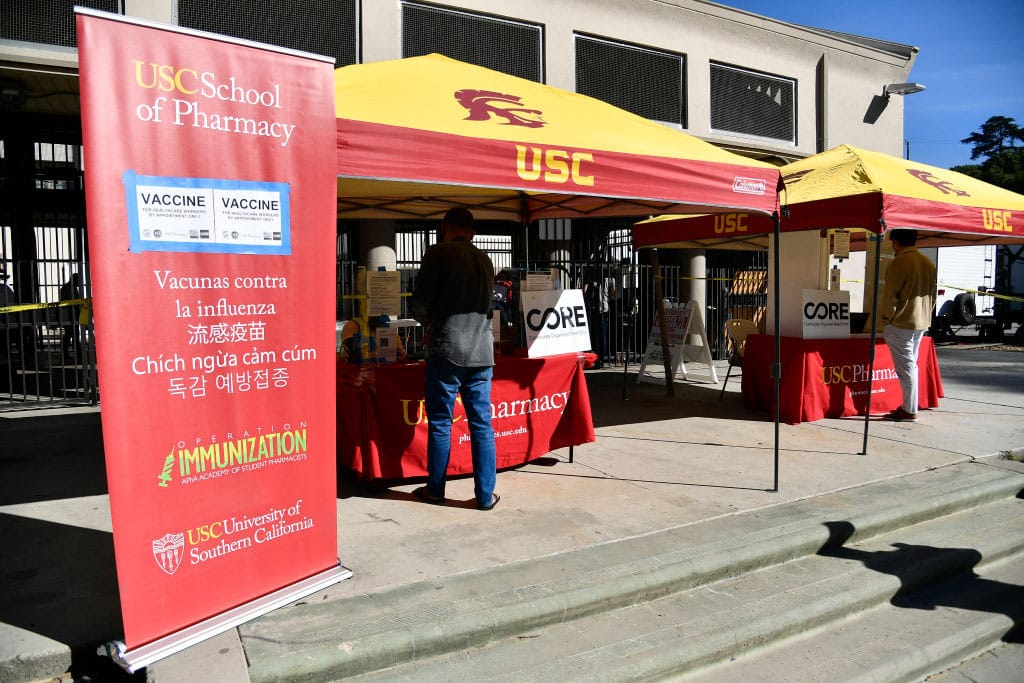
Ferrer said there is an online system to register for a vaccine that went live on January 13, so “hundreds of pharmacies already [are] registered and approved,” and many of the “larger” sites are already approved. As of now, there are “75 different sites” in the county where you can get vaccinated, she explained. “Starting on Tuesday, we start with these big vaccination sites,” many of which can do 4,000 vaccinations a day; Dodger Stadium could do 6,000.

Based on the prioritization, she noted, only healthcare workers will be able to schedule an appointment at this time, since not all get their vaccines at work. Ferrer said you could register online to receive an email when it is “your turn” to schedule a vaccine appointment. When that time comes, the site’s scheduler will tell you “where throughout the county we have appointments… where you can register.”

All sites, she emphasized, will require patients to “go to the portal, sign up and get an appointment.” You will likely be asked to establish residency to get vaccinated at these public sites.

Ferrer added that the county needs to make getting a vaccine more accessible for elderly individuals, such as setting up “call centers” to register for a vaccine (beyond the online site), as well as removing other obstacles and long waits. In addition to setting up large vaccination sites, the county is working to register and approve “trusted healthcare providers” and “home care agencies” to distribute the vaccine.

Nurse Susana Azapyan (R) departs after administering a dose of the Moderna COVID-19 vaccine to resident Adrineh Semerjian (L) at the Ararat Nursing Facility in the Mission Hills neighborhood of Los Angeles on January 8, 2021, in Los Angeles, California. (Photo by Mario Tama/Getty Images)

The VA has a separate system for vaccination, she added, “and they get a direct allocation from the federal government.” (See the site here: https://www.va.gov/health-care/covid-19-vaccine/)

Addressing Delays and Confusion

Ferrer explained that part of the confusion in the system stems from the fact that money went into developing the vaccine, but “there was no money given to public health to build out any systems for administering the vaccine.” “We got a few million dollars across the state to try to build this massive vaccination system,” she said.

“There was no money given to public health to build out any systems for administering the vaccine.”

“There was no federal plan” that went out to help counties and states roll out vaccination, she added. “As a matter of fact, a lot of systems were set up that went completely around the health departments.” Ferrer cited the federal Pharmacy Partnership with CVS and Walgreens to vaccinate individuals in long-term care facilities “that never really launched when it was supposed to launch.” She explained that those pharmacies get their “allocations directly from the feds; they don’t go through the county allocation systems.” As a result of the federal program’s delays, the county created its own system to vaccinate long-term care residents and staff.

But the real issue, she stated, is the lack of sufficient vaccine. “I personally don’t have enough vaccine here in L.A. county to actually give [the] vaccine to every site that is set up to vaccinate next week. I have to negotiate now with the state to see whether we can get all the doses that we need to make sure that everyone who has an appointment next week is actually going to get vaccinated.”

“That is a problem at the federal level; we have no idea when the vaccines are coming and how much we are getting,” Ferrer explained. The recent CDC announcement, she added, was created without a plan for implementation in place. Ferrer did not address why other counties have been able to enter phase 1b and begin vaccinating individuals 65 and older, nor did she address the problems other states are facing in vaccinating the elderly. Ferrer also did not discuss reports regarding unused dosages.

Towards the end of the call, Ferrer emphasized the need for vaccination — even if you have to keep wearing masks and socially distance after. Even if you’ve had COVID-19, she stated, you should get vaccinated because “people have been reinfected,” and there is no sense of how long immunity lasts after infection.

In the interim, Ferrer said that masks, social distancing and infection control at “sites where people may be together” can reduce transmission “by a lot.” The health department based its latest virus restrictions on those facts. But they are looking into additional restrictions given that cases have not declined. “If you don’t need to go shopping, don’t go shopping,” she added.

“This has been a very long year,” she concluded, “we have a ways to go.”

Sign up to get notified when you can schedule an appointment for vaccination here: http://publichealth.lacounty.gov/media/Coronavirus/vaccine/index.htm

The cohosts, JUDJ and Community Advocates, Inc. have hosted a variety of talks since April 25, 2020, as a part of their “America at a Crossroads” series. JUDJ is a coalition asserting “a Jewish voice to safeguard the principles and foundations of our constitutional democracy,” and Community Advocates, Inc. is a nonprofit “that advocates innovative approaches to human relations and race relations.” Prior events have included conversations with Bret Stephens, Congressman Adam Schiff, Max Boot and Mayor Eric Garcetti. These events are free and open to the public.

Watch the entire conversation here: https://www.youtube.com/watch?v=5GHsdrP8-q8

County Official: “Not Enough Dosages” a Key Reason for Delays in Vaccination Read More »
Portugal Opens First Holocaust Museum

(JTA) — Portugal is set to open its first Holocaust museum, built in the northern city of Porto by members of a Jewish community that was founded by descendants of victims of the Inquisition.

The Holocaust Museum of Porto was developed in cooperation with the Jewish Museum and Tolerance Center in Moscow and other institutions. It will open on Jan. 20, the Jewish Community of Oporto, an organization representing local Jews, said in a statement, and expects to receive 10,000 visitors a year when emergency restrictions connected to the COVID-19 pandemic are lifted.

On Jan. 27, International Holocaust Remembrance Day, students from across Portugal will visit the museum, the statement said.

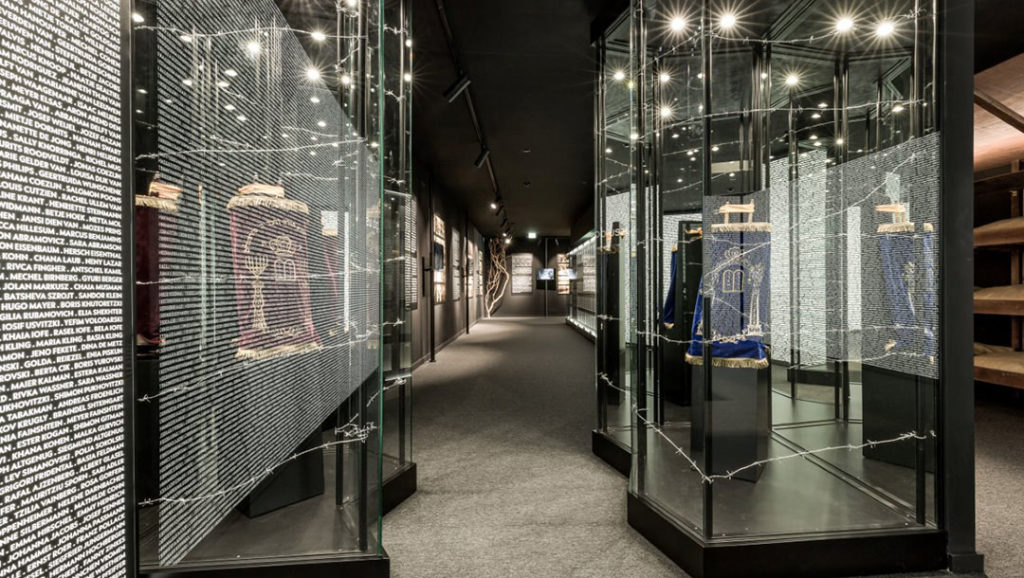
The museum features a reproduction of Auschwitz prisoner barracks, a memorial room with walls carrying the names of Holocaust victims and a study center.

The Inquisition, a campaign of religious persecution on the Iberian Peninsula that began in Spain in 1492, was applied also in Portugal in 1536. It ended Jewish life in Porto and across the region as hundreds of thousands of Sephardic Jews fled both countries. Those who remained practiced Judaism in secret. Their descendants are known as bnei anusim.

Organized Jewish life in Porto reappeared in the 1920s thanks to Artur Carlos de Barros Basto, a descendant of the bnei anusim and army captain who helped promote Jewish life in and around Porto. Consequently he was thrown out of the army and labeled a pedophile on false charges in an anti-Semitic conspiracy. With his downfall, Jewish life in Porto suffered a setback.

In the 1940s, many thousands of Jewish refugees from further east in Europe passed through Portugal, which was neutral during World War II, and escaped from there to the United States and prestate Israel. Aristides de Sousa Mendes, a former Portuguese consul general serving in France, issued thousands of life-saving visas to Jews fleeing Nazi-occupied Europe.

In the early 2000s, multiple bnei anusim from Porto completed Orthodox conversions to Judaism, including the former leader of the community, Jose Ferrao Filipe.

The community also has members descended from Ashkenazi Jews who lost relatives in the Holocaust, including the community organization’s treasurer, Michael Rothwell.

“My grandparents were good German patriots,” he wrote in the statement, but with Nazism ”they found themselves accused of unwanted foreigners, they were transported like cattle to Auschwitz, separated from each other, targets of all the violence and there they died.”

Portugal today has about 3,100 people who self-identify as Jews — a 75% percent increase over 2001, according to a 2020 report on Jewish demographics in Europe by the London-based Institute for Jewish Policy Research. The Jewish Community of Porto says it now has about 400 members, compared to a few dozen a decade ago. Porto has about 200,000 residents in total.

The influx is connected to immigration from elsewhere in Europe and Latin America, as well as Portugal’s 2015 law guaranteeing citizenship to descendants of Sephardic Jews that was passed to atone for the Inquisition. Spain passed a similar law later that same year.

The Jewish communities of Porto and Lisbon vet citizenship applications for the government, charging hundreds of dollars per application. There have been more than 76,000 applications, and about 30% have been approved.

The Porto community, which a decade ago could not afford to fix its cracked synagogue ceiling or hire a rabbi, in recent years has renovated its synagogue, hired a full-time rabbi, opened a Jewish museum and last year produced a $1 million documentary on de Barros Basto.

Dignitaries and diplomats from several countries will attend the opening of the latest addition to the community’s institutions, the Holocaust Museum of Porto, the community said. A community spokesperson declined to say how much the museum, which is located in the central Arrabida area, cost to build and what its annual budget will be.

The museum project benefited from “a substantial donation from a Portuguese Sephardic family from South East Asia,” Rothwell said in the statement, which did not name the family.

Portugal Opens First Holocaust Museum Read More »

Rosner’s Torah Talk: Parshat Vaera with Lise Stern

Our guest this week is Lise Stern from Hebrew College.

In Parshat Vaera Moses and Aaron repeatedly come before Pharaoh to demand “Let My people go”. Pharaoh refuses. Aaron’s staff turns into a snake and swallows the magic sticks of the Egyptian sorcerers. God then sends a series of plagues upon the Egyptians. Seven of them are counted in our parsha.

Our discussion focuses on the relations between Pharaoh and Moses.

Previous Torah Talks on Vaera

Rabbi Daniel Brenner

Rabbi Edwin Goldberg

Rabbi Adam Kligfeld

Rabbi William Cutter

Rabbi Craig Marantz

Rabbi Jenny Solomon


Rosner’s Torah Talk: Parshat Vaera with Lise Stern Read More »

Serious Semite: This Too Shall Pass

Trigger Warning: The following borrowed joke is sick, but it serves a purpose, so please read on.

“What is worse than finding a worm in your apple? Finding half a worm in your apple. What is worse than finding half a worm in your apple? The Holocaust.”

In the last couple of months, I, along with many, have experienced an exquisite kind of pain. The extreme quiet of living alone is getting a little much as we approach the one-year anniversary of lockdowns. There is a heavy toll from 300 days of solitude.

The initial lockdown felt like an adventure, apart from attending heart-wrenching funerals and online shivas, hearing about multitudes of other deaths and watching the virus’s rapid spread around the globe. Other than that, the wartime spirit became a source of creative inspiration and adventure. I filmed a YouTube web series, “Shopping for the Apocalypse,” on location at Ralph’s supermarket on Pico Boulevard. It began realistically at the height of the great toilet roll shortage and devolved into a surrealist comedy, featuring me dressed in a lycra bodysuit. Few shoppers looked surprised because, for most people, it was just another day in Los Angeles.

Back in April 2020, the internet was abuzz with coronavirus parody songs, which continued until the pain got closer to home and people no longer found it funny.

Today, many of my married friends face greater challenges at home with the constant presence of their children and spouses, trying to work and conduct business amidst noise and busyness and longing for silence. I, on the other hand, find myself longing for noise, beyond waking up to the sound of hot water crackling through the radiator. And yet, what is worse than being alone? The Holocaust.

I reread “Man’s Search for Meaning,” Victor Frankl’s account of navigating life in Auschwitz and how he continually chose to interpret his experience as something that he could survive and even grow from, through building his inner strength and refusing to lose his humanity. Pain is relative, loneliness is real, but a year of coronavirus restrictions are negligible when we consider the bigger picture.

Pain is relative, loneliness is real, but a year of coronavirus restrictions are negligible when we consider the bigger picture.

Some therapists might dismiss comparisons to the Holocaust as being unhelpful to a client who is experiencing pain. However, Frankl himself developed a psychological approach, logotherapy, which focuses on the future rather than the present, “a method less retrospective and less introspective.” Logotherapy proposes that “the typical self-centeredness of the neurotic is broken up instead of being continually fostered and reinforced.” He wasn’t a fan of the self-centered selfie lifestyle.

When he was walking from Auschwitz to a worksite, Frankl, nearly crying from the pain caused by sores on his feet and looking out for wire to use as improvised shoelaces, recounts feeling disgusted by his self-pitying thoughts. Instead, he directed his mind to visualize standing in a “well-lit, warm and pleasant lecture room,” where he was giving an inspiring talk on the psychology of the concentration camp. Reading, rereading and reflecting on Frankl’s search for meaning can be a highly therapeutic process and force the challenges of 2021 to shrink or even disappear.

My “pity party” is another circumstance of being alone, still unmarried, still longing for partnership and fatherhood and holding back thoughts of despair. Comparing myself to friends never yields a good result, but a more extreme comparison can be beneficial. Rabbi Yekusiel Yehuda Halberstam, also known as the Klausenberger Rabbi, lived through the Holocaust but lost his wife and eleven children to the Nazis. At age 42, he married the daughter of another Rabbinic dynasty (she was 24), and he was blessed with an additional seven children. He subsequently founded the Laniado hospital in Israel, which has saved hundreds of thousands of lives; 8,400 babies are born there every year.

I resisted the December 31 memes and proclamations that 2020 was an awful year because while it was difficult, we still have a choice of how to interpret it. This may be impossible for those who have lost loved ones or are still suffering the consequences of the virus. But for the rest of us, how can we say it was a bad year unless we fail to take into account all of the positive outcomes?

The process of weightlifting in the gym involves going through moments of pain where muscle fibers are broken down to make them stronger. Lotus flowers can grow in the mud. There are fire-activated seeds that lay dormant until there is fire, at which their shells crack open and start to grow. Unsurprisingly, some of these pyrophile plants exist in California. If 2020 was a pressure cooker, then what are we cooking?

The pain we face may feel overwhelming at times, but these can be the moments to surrender to our challenging emotions rather than resist them. Yet, there are also healing perspectives that we can focus on, and they are always available to us. My favorite is a story of King Solomon. He challenged his courtiers to find him an object that would make a sad person happy and a happy person sad. After months of searching, one man presented him with a ring that had the following words inscribed upon it; “this too shall pass.”

Wishing you a happy, healthy and healing 2021.


Marcus J Freed is an actor, filmmaker and award-winning author of The Kosher Sutras and The Kabbalah Sutras. www.marcusjfreed.com and on social @marcusjfreed. You can see “Shopping for the Apocalypse”  at https://www.youtube.com/c/marcusfreed.

Serious Semite: This Too Shall Pass Read More »

The Science of Struggle

One day, a boy found a fuzzy caterpillar and put it in a cage as a new pet. Soon, he observed the fascinating metamorphosis as the caterpillar disappeared within a cocoon. He checked the crusty shell daily for the butterfly to emerge. The boy waited impatiently and feared it was stuck. So he took a pair of scissors and gently opened the cocoon so the creature could escape. Sure enough, the butterfly inched out with small, misshapen wings. Sadly, those wings never grew properly, and the malformed insect spent its last days haplessly crawling around the cage. The boy learned that wings only develop when butterflies mount a tenacious struggle to escape their cocoons. His misguided act of kindness led to the creature’s doom.

Like the butterfly, Judaism teaches that life’s struggles strengthen us and give us the ability to fly. A theological maxim dictates God only gives us tests we can pass. Ideally, we accept our trials as proof of God’s love for us; proof God wants us to maximize our potential. Tests aren’t an interruption of your life — they are your life.

Take the word Yisrael (Israel), which means “struggling with God.” Jacob receives this news when he wrestles with an angel. He establishes the essence of Jewish meritocracy: to grapple with God and faith and emerge stronger for the effort. We are B’nai Yisrael (Children of Israel), inheritors of this legacy of spiritual pugilism. Abraham, Jacob’s grandfather, starts this trend. He argues with God to refrain from destroying the evil city of Sodom.  Hence, he is the first Jew.

As his descendants, we share his innate chutzpah and feel comfortable calling God to task. We lead, we speak our mind, we persevere. A case in point: Israeli Prime Minister Golda Meir famously insisted her job was more difficult than that of President Richard Nixon. “You may be the president of 250 million people,” she said, “but I’m the prime minister of five million prime ministers.”

Permission to dispute is our divine right as partners in a covenant with God. We confront God for allowing human suffering, for natural disasters, for the Holocaust. Our blessings are voiced using the familiar version of the word “you,” “Atah.” God is our debate partner, our peer. According to Dennis Prager, this precept of struggle with the divine has “enabled Jews to believe in the importance of reason — God could be challenged on the basis of reason and morality; one does not have to suspend reason to be a believing Jew.” Chassidic master Rabbi Tzadok HaCohen (1823-1900) argues that humankind ranks above the angels because we are the only creatures in existence sanctifying God through struggle.

Permission to dispute is our divine right as partners in a covenant with God.

Mastering the science of struggle is an essential skill in pursuing the joy of Judaism, a prerequisite to forging a meaningful relationship with a living God.

One of the most difficult times to embrace our partnership with God is when we are physically or spiritually wounded. When we are depressed, our yetzer harah (evil inclination) convinces us we are worthless, that God doesn’t care. But the opposite is true. The malady from which we suffer is evidence of God’s gentle presence. According to Rabbi David Aaron, “When life gets rough, ask not WHY this is happening but WHAT this happening is asking of me.” God roots for our healing, davens to connect with us and exults in our victories.

When we examine the lives of great artists, we find that many have faced profound struggles and hardships. We feel angst in every canvas by Van Gogh, who only sold one painting in his lifetime. We taste darkness in every phrase of Edgar Allen Poe, who lost nearly every member of his family and died penniless. How many great musicians never top their hit debut album, where they clawed for recognition?

Rabbi Nathan Lopes Cardozo named his venerable Jerusalem-based institution “Beth Midrash of Avraham Avinu” (Study Hall of Abraham our Forefather). He insists our heritage is based not on Abraham’s trait of kindness but instead on his courage to rebel against a substandard status quo. We keep kosher as an act of disobedience against eating like an animal; we join a community in prayer, rebelling against the tendency to think one can do it alone; we use the mikvah to protest our society’s obsession with sex. We do not commit to mitzvot to fit into religious society or to please a wrathful deity. We perfect the science of struggle in order to evolve in our personal power and strive for excellence.

Most Jewish day schools present only 90% of the breadth of the Torah. What’s the missing 10%? It’s the “why” of Judaism: why we do mitzvot, why we serve God, why we are different from the other nations of the world, why we merit redemption. Without emphasis placed on communicating this first 10%, observance can become rote and meaningless. Asking fundamental questions should not be seen as heretical; ignoring the “why” of Judaism imperils the Jewish future. Struggle with God isn’t optional! A butterfly that didn’t struggle is not a butterfly!

The answer to our collective salvation lies in offering each individual the full gamut of opportunities in Jewish life and then granting permission to struggle, to question, to personally engage. Until the day we leave this earth, we must strive for greatness. We are not merely human beings; we are human becomings. Struggle is life.

Like the butterfly, we are writhing and striving and competing, building and breaking and building again. While it is hard to perceive the value and benefit of setbacks when they happen, the challenges we face create the most powerful, beautiful wings, wings that allow us to soar in this dramatic quest of ultimate holiness and humanity.


Sam Glaser is a performer, composer, producer and author in Los Angeles. He has released 25 albums of his music, he produces music for various media in his Glaser Musicworks recording studio and his book The Joy of Judaism is an Amazon bestseller. Visit him online at www.samglaser.com. Join Sam for a weekly uplifting hour of study every Wednesday night (7:30 pm PST, Zoom Meeting ID: 71646005392) for learners of all ages and levels of knowledge.

The Science of Struggle Read More »