fbpx

September 17, 2020

Personalizing Home Ritual With ‘HighHolidaysAtHome’

As the world prepares for its first High Holy Days season of the pandemic era, the team behind Haggadot.com, a nonprofit, crowdsourced haggadah-making platform, has launched HighHolidaysAtHome. The site is designed around at-home rituals accessible to everyone, and features ready-to-download materials to help users celebrate the new year and its holidays. The microsite, like Haggadot.com before it, aims to democratize Jewish meaning, said Eileen Levinson, founder of Haggadot.com and Custom & Craft, the nonprofit design lab that created both platforms. 

“The high holidays bring out even the most skeptical Jews’ superstitions,” Levinson said. “We all joke about being ‘bad Jews,’ but if there’s a day of the year that you worry about something coming back to bite you for being a bad Jew, it’s going to happen over Rosh Hashanah or probably on Yom Kippur.” But, she added, High Holy Days have “become so ossified into this frontal experience of sitting in synagogue. [The team members] are thinking about ‘What’s the purpose of this time of year and the rituals, and how do we start to make them more accessible and more effective?’ It’s a big design thinking exercise with empathy toward our current lives.”

At Home Alter; Photo courtesy of Eileen Levinson.

The site contains clips and booklets “centered on home-based, self-guided rituals that really speak to what’s exciting about this moment,” said Rebecca Missel, director of partnerships and operations at Haggadot.com. The materials also feature contributions by artists and poets, including Jessica Tamar Deutsch, a Brooklyn-based visual artist; Los Angeles-based Kohenet Rachel Kann; and American Jewish University rabbinical student Julia Knobloch. Author, singer, Jewish educator and spiritual leader Deanna Neil and career educator Julee S. Levine — both L.A. based — contributed meditations. 

In the early days of the pandemic, more than 400,000 people (three to four times the usual audience) turned to Haggadot.com for Passover seder resources, and then requested High Holy Days content. HighHolidaysatHome is the result of these inquiries, months of intensive work from the core team and users providing community funding in the form of small donations to the site. There have been just under 4,000 small donors with an average donation of $30.

“Whatever the trend for homemade ritual was, COVID has accelerated it tremendously,” Missel said.

 “ ‘What’s the purpose of this time of year and the rituals, and how do we start to make them more accessible and more effective?’ It’s a big design thinking exercise with empathy toward our current lives.” — Eileen Levinson

Haggadot was born from Levinson’s experience in CalArts’ MFA program, where a project challenged students to imagine the future of publications. “I was thinking about my own relationship to Judaism and doing a lot of artwork about my dissatisfaction with Judaism, and starting to realize that I could use design as a tool to reimagine Judaism. I thought about the haggadah and all the ways that people are writing their own and wouldn’t it be great if there were a site where people could share, and mix and match and could customize.”

For the High Holy Days, the team has developed guides and webinars. For instance, a home altar-making guide provides steps to create a display of meaningful objects that invoke various aspects of the holidays as well as family memories.

“The idea of home altar-making is very radical and completely not radical,” Missel said. “There are so many other examples in Judaism of things that serve an altar-like function,” she said, citing the Shabbat dinner table with candles, wine and challah, and Passover’s seder plate. “We invite folks to think of it as whatever they want. Permissiveness is the ‘secret sauce’ of what makes this organization hum. Your personal relationship with Judaism is yours. The most authentic expression is what’s truest to you. We’re giving people the space to play with it on their own and figure out what makes the most sense to them.”

Levinson identified tashlich, for which the site has a guide called “Wash My Soul,” as a ritual particularly ripe for reinvention. 

“I find tashlich to be a beautiful experience that speaks more to my personal needs,” she said. “It’s physical. You’re moving your body. It’s in nature. There’s a performative aspect to it. The words can be spoken out loud or to yourself …. We have the Al Chet” — a High Holy Days prayer phrased in a collective plural voice — “and the contrast is, tashlich is so personal.”

Illustrated by Jessica Tamar Deutsch and available at highholidaysathome.com

Another guide, “Seeker Season: A High Holiday Guidebook for the Curious & Courageous,” explores the season’s themes and customs, integrating modern quotes from people including the late singer-songwriter Leonard Cohen and the late African American author, filmmaker and anthropologist Zora Neale Hurston. There’s also a 35- to 40-minute “Four Toasts Rosh Hashanah Seder,” focusing on four themes of Rosh Hashanah: Yom Teruah (Day of Reawakening), Yom HaDin (Day of Recommitment), Yom HaZikaron (Day of Remembrance), and Yom Harat Olam (Day of Re-creation); and Sukkot blessings and activities, featuring pieces on connecting to nature and containing a Land Acknowledgment Ceremony.  

Levinson said she appreciates the value of being in community, “but there needs to be a range of options. Synagogues have a hard job of keeping doors open, but asking for exorbitant fees to show up at vulnerable times just doesn’t work. We still struggle with this as a business model, but for me it’s so important that everything is available for free and you pay for what you wish. It’s about access.”

By listening to users’ requests, the team has learned that there’s a demand for ritual interpretation, particularly those that fully embrace women’s contemporary needs and mark current-day milestones such as fertility challenges, pregnancy loss, adoption and alternative family rituals, and other moments of transition like purchasing or leaving a home, paying off student debt, starting or completing cancer treatments and blessings for mental health and wellness. 

“On a very practical level, this is giving people the tools to be more considerate about how they create space for themselves and what these objects mean for them,” Levinson said. “If you can realize that you have the tools you need to take care of yourself spiritually and emotionally, and rabbis are there to help deepen the experience, that’s really empowering, especially at this time that can feel so chaotic.

“Through my interest in design and performance, I’ve come to understand ritual as a series of design choices,” Levinson said, adding that she understood her dissatisfaction with rituals was “because someone else was making design choices that didn’t have me in mind. I can get to the same essence of what the ritual is supposed to do if I [have] more understanding about the origins of the ritual, its purpose and all the choices that go into it that I can adjust for myself and for others.”

You can find all the guides listed above on their website, or register for upcoming webinars and watch recordings of past sessions here.

Personalizing Home Ritual With ‘HighHolidaysAtHome’ Read More »

Apples of Hope for Rosh Hashanah

As a new year begins, we remember the hard times of recent months but also look forward to the future with a promise of new beginnings. What are you hoping for in 5781? 

Since apples are one of the primary symbols of Rosh Hashanah, this project is a fun way to share our hopes — by writing them down and placing them in apples made of egg cartons. They’re a little like fortune cookies but with more meaningful messages. These would be great in a Rosh Hashanah table setting or left on a neighbor’s doorstep. After all, we all could use a little hope.

What you’ll need:
Egg carton
Scissors
Red craft paint
Paintbrush
Brown pipe cleaner
Green paper
Glue


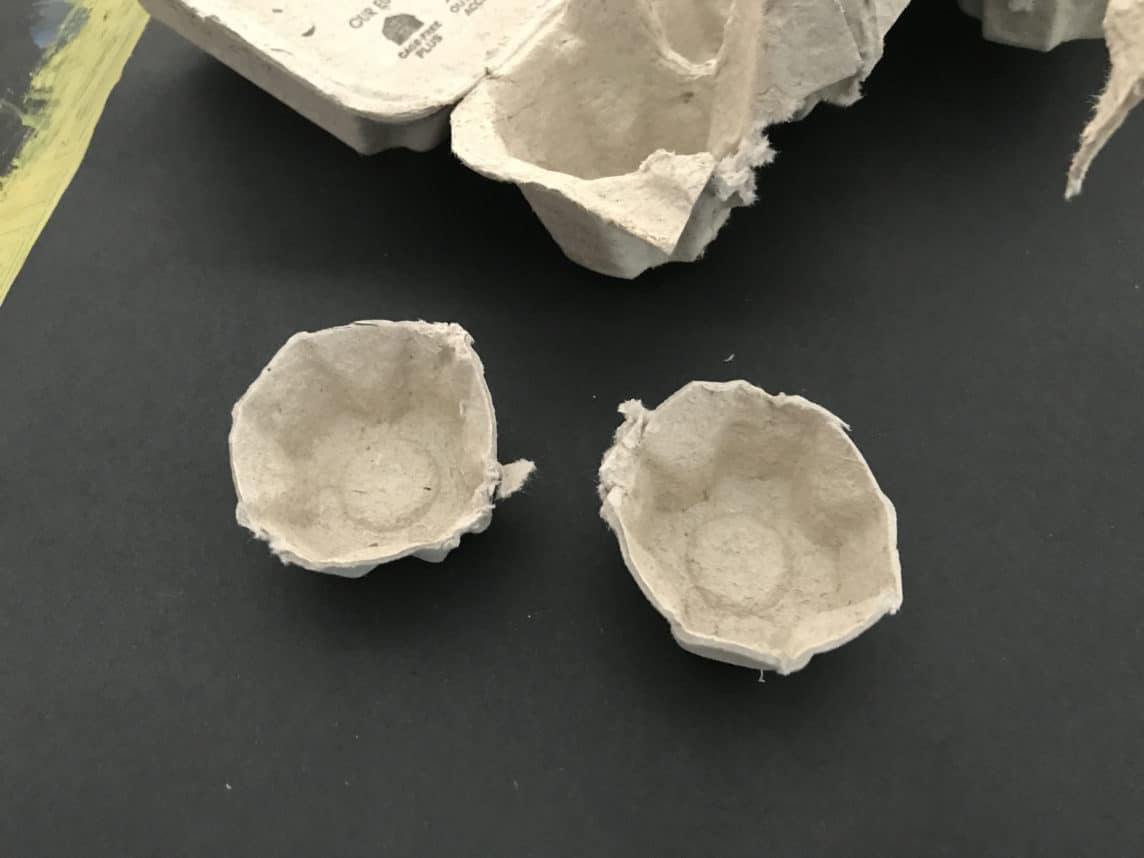
1. Cut the compartments out of an egg carton. You will need two compartments to make one apple. Try to cut them as straight across as possible.


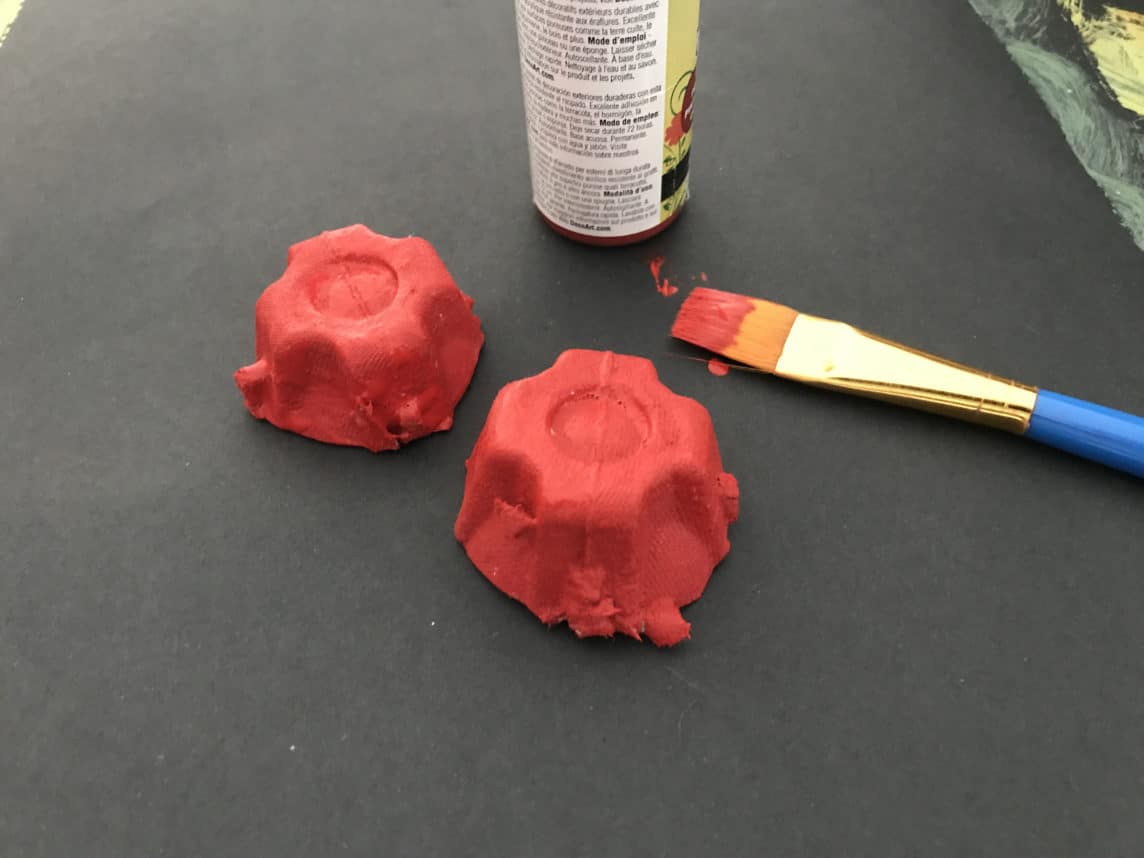
2. Paint the outside of the egg compartments with red paint. You do not need to paint the insides.


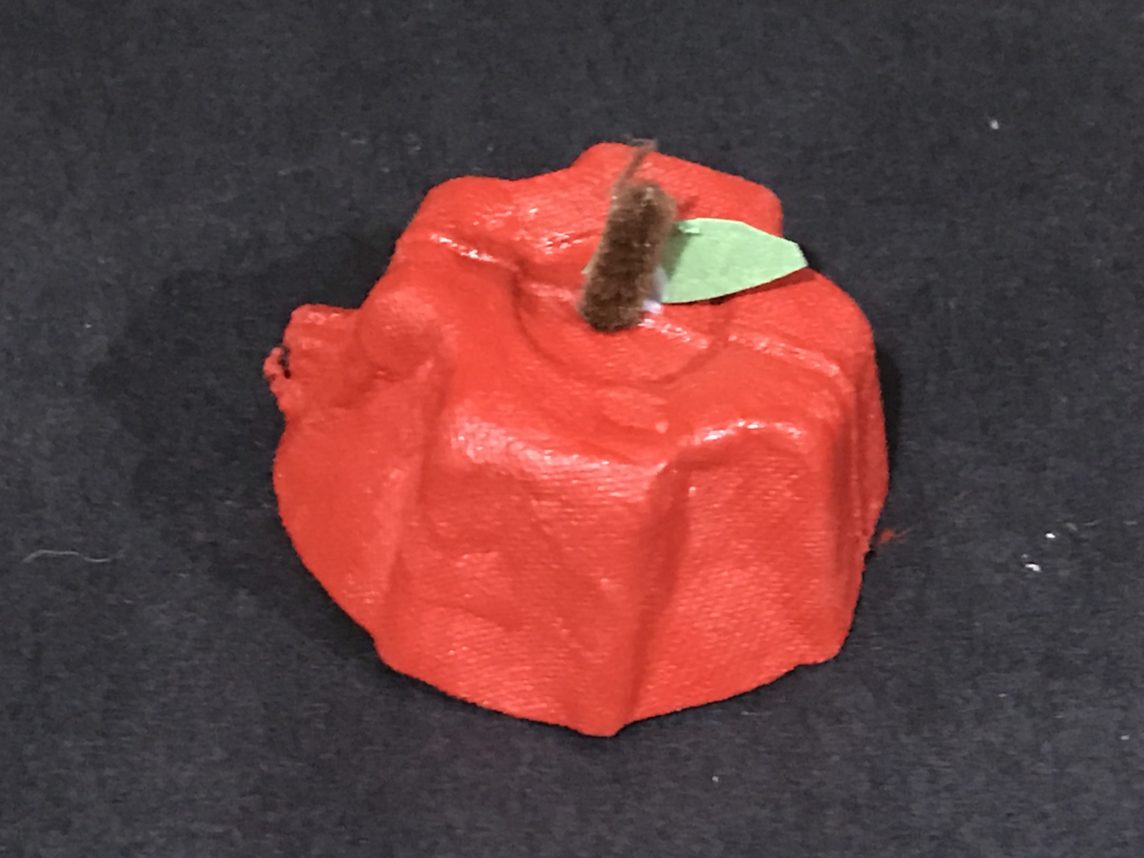
3. Designate one egg compartment as the top half of the apple. Poke a hole at the top and insert an inch of a brown pipe cleaner as the apple’s stem. (You also can glue on a strip of brown paper.) Then cut out a leaf shape from a piece of green paper and glue that to the stem.


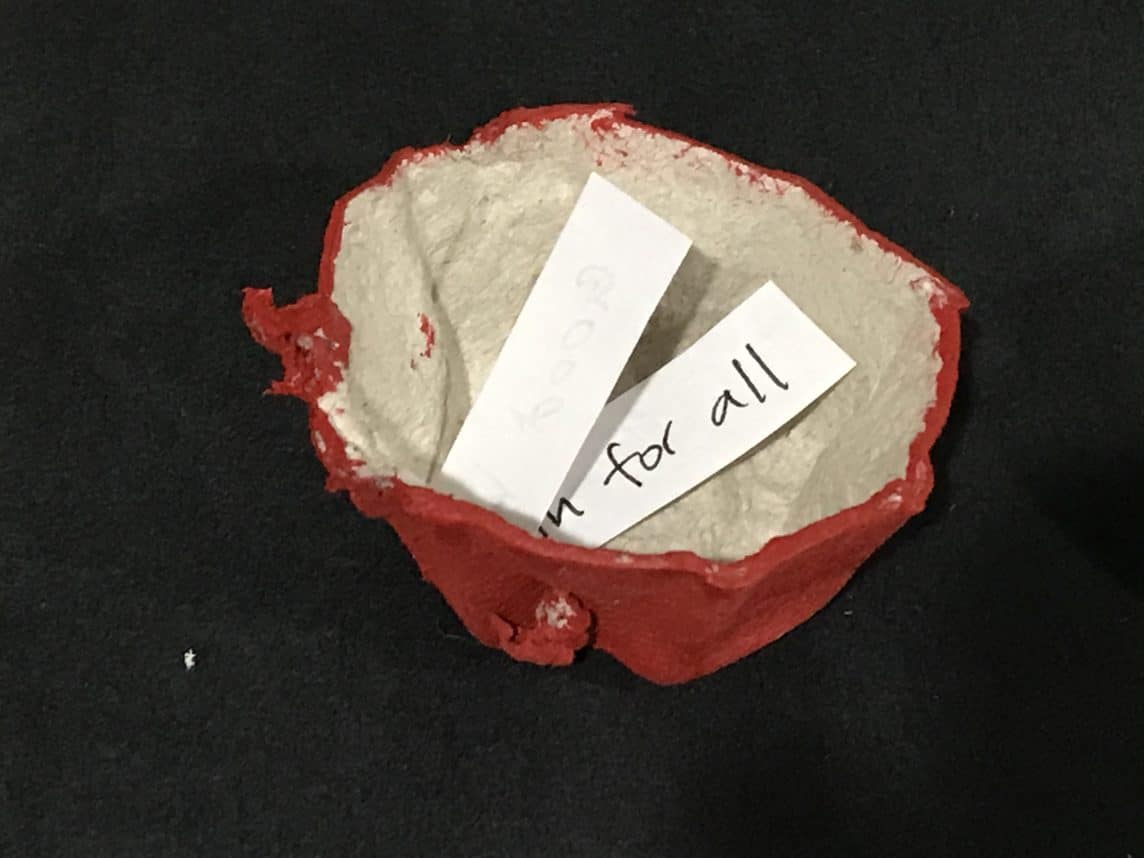
4. Write your hopes on pieces of paper and place them in the bottom halves of the apples. Glue the two halves together by applying glue to the edges and pressing firmly. They don’t need to be adhered too securely, as you want to be able to break the apples apart easily.

Apples of Hope for Rosh Hashanah Read More »

Bahrain Journalist Condemns Hamas Rockets, Urges Israel to Retaliate ‘Firmly … Toward These Terrorists’

A Bahrain journalist condemned Hamas for launching rockets against Israel on Sept. 15 during the signing of the peace agreements between Israel and the United Arab Emirates (UAE) and Israel and Bahrain.

Amjad Taha, who also is a political analyst, said in an appearance on i24 News on that day that the agreements, known as the Abraham Accords, “will contribute enormously to the stability and the prosperity of the region.” He proceeded to denounce Hamas.

“It’s really sad to hear that Hamas, the Iranian militias in Gaza, have launched their rockets towards Ashdod,” Taha said. “We all condemn that. We are really sad to hear that, and we hope Israel retaliates in a firmly and strong way toward these terrorists.”

He added that the Abraham Accords are a sign that Middle East nations can have a healthy debate and dialogue rather than launching rockets at one another, while still maintaining “the Palestinian right for dignified life.”


Gabriel Groisman, the mayor of Bal Harbor, Fla., tweeted the clip of Taha condemning Hamas. “It’s a new day in the Middle East.”


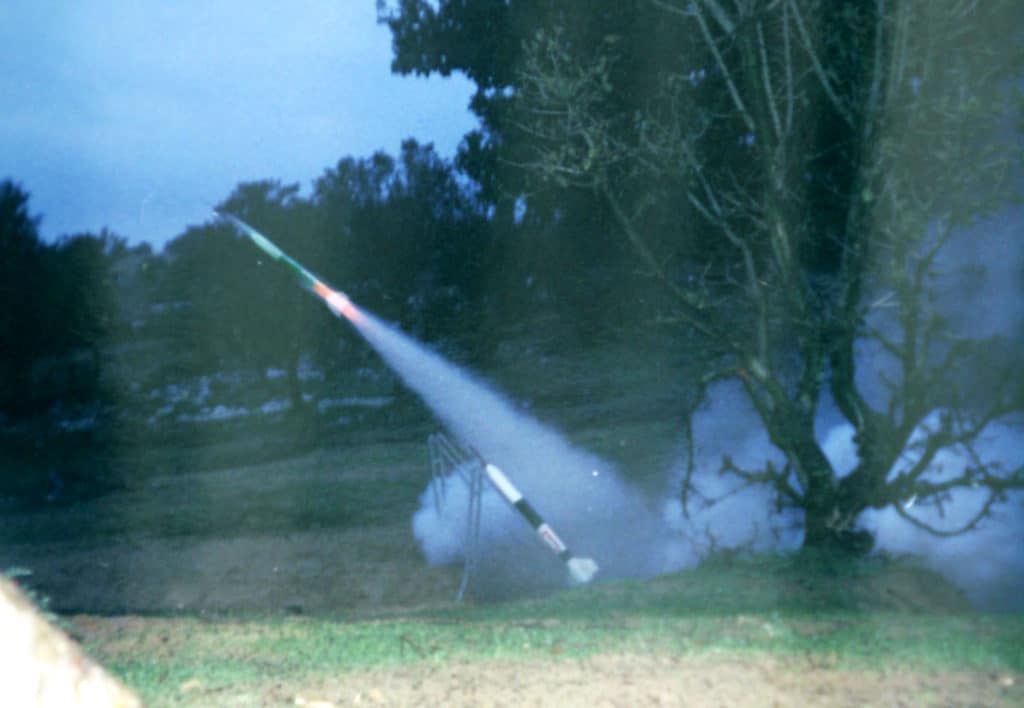
Two rockets were launched from the Gaza Strip toward southern Israeli communities on Sept. 15; Israel’s Iron Dome defense system intercepted one of the rockets and the other landed in Ashdod, Israel’s largest port city. According to The Jerusalem Post, a man in his 60s who was hit by shrapnel scattered in the attack is currently in serious condition. Four others sustained minor injuries from shrapnel and eight others were treated for shock.

After the rockets were launched, a Hamas spokesperson denounced the Abraham Accords as not being “worth the ink with which they were written — and our people, with their insistence on the struggle until the full recovery of their rights, will deal with these agreements as if they were nonexistent.”

Palestinians responded to the agreements with “days of rage” protests throughout the West Bank. A Fatah activist also told The Jerusalem Post on Sept. 15, “We are on the brink of a third intifada. The Palestinian people feel betrayed by the Arabs and will show the world that the Palestinian issue remains the central issue of all Arabs and Muslims.”

Bahrain Journalist Condemns Hamas Rockets, Urges Israel to Retaliate ‘Firmly … Toward These Terrorists’ Read More »

Democratic Super PAC Mailers Show Jewish GOP House Candidate Clutching Dollar Bills

(JTA) — A Democratic Super PAC aligned with House Speaker Nancy Pelosi has sent out three mailers to voters in a New Jersey congressional district that depict the Republican candidate, who is Jewish, clutching money.

One mailer shows the candidate, David Richter, holding a fistful of fanned-out $100 bills, with more raining down behind him, while the reverse shows his suit jacket lined with bills. Another, showing him holding $100 bills in the shape of a rose, says he “puts personal profits over New Jersey families and it is truly obscene.” A third shows him with $100 bills flying out of his backpack, and carries another image of him using a $100 bill as a parachute.

Richter, the former CEO of a construction management company, is running to unseat the incumbent Democrat, Rep. Andy Kim, in New Jersey’s 3rd District, in the center of the state.

The ads were sent by the House Majority PAC, a super PAC closely associated with House Speaker Nancy Pelosi. An official with the PAC confirmed its authenticity to the New Jersey Globe, a political news site, and said the reference was to Richter’s business history.

Richter said that the ads were anti-Semitic and called on Pelosi to apologize.

“Every single mailer that she’s sent attacking me has piles of cash either raining down on my head, shooting out of my backpack, lining my jacket pocket — every single mailer,” Richter told the Jewish Telegraphic Agency. “It’s outrageous. It really is. I felt that these were very anti-Semitic.”

Brad Komar, the super PAC’s independent expenditure director, said in a statement that the images referred to Richter’s record at his construction management company, not to his religion.

“The mail pieces have nothing to do with David Richter’s religion, and everything to do with the fact he ran a company into the ground,” Komar’s statement said. “Perhaps David Richter would like to tell us what imagery he thinks is more appropriate to describe his corruption, mismanagement and fraud.”

A string of mailers this year and in 2018 were similarly criticized for depicting mostly Democratic Jewish candidates clutching money or, in some cases, with artificially elongated noses.

Democratic Super PAC Mailers Show Jewish GOP House Candidate Clutching Dollar Bills Read More »

At Knesset Hearing, StandWithUs Israel Executive Director Calls SFSU Event to Feature Leila Khaled ‘Chilling’

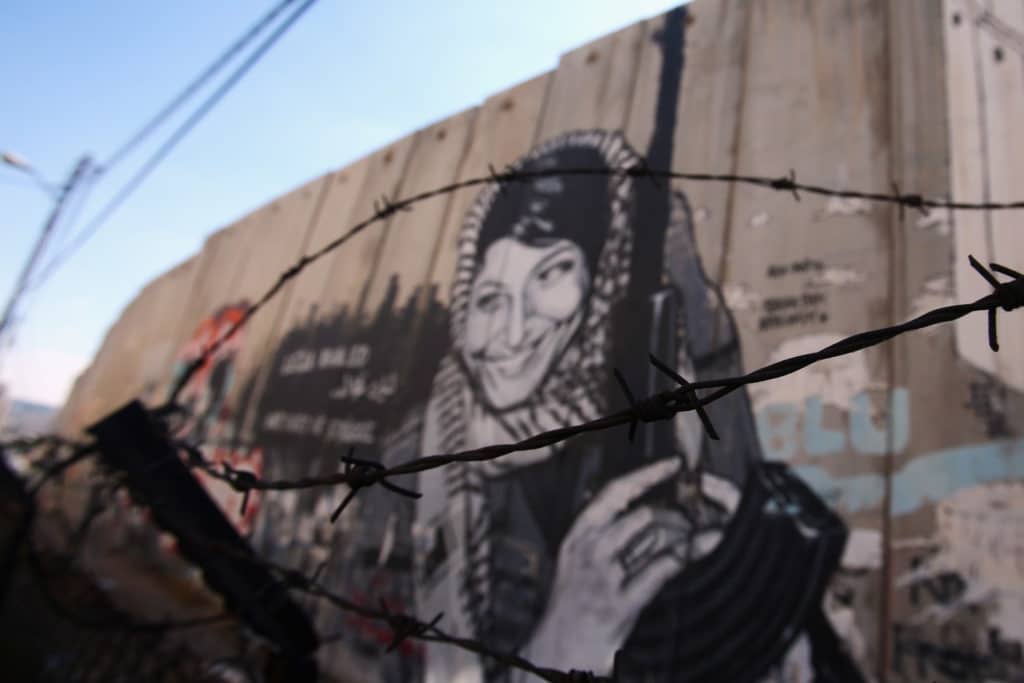
During a Sept. 15 Knesset hearing, StandWithUs Israel Executive Director Michael Dickson called the San Francisco State University’s (SFSU) Sept. 23 event that will feature Popular Front for the Liberation of Palestine (PFLP) member Leila Khaled “chilling.”

Dickson was speaking at the Knesset Aliyah and Integration Committee’s subcommittee on Israel-Diaspora Relations’ hearing on anti-Semitism and its effect on Jewish students on American college campuses. The Knesset is in West Jerusalem.

“Just weeks after the commemoration of 9/11, San Francisco State University will be giving its stage to a terrorist who, with a grenade in her hand, held passengers on planes hostage,” Dickson said.

He proceeded to hold up a black-and-white photo of Khaled brandishing a rifle.

“She’s a terrorist who hijacked multiple planes, including TWA Flight 840 on its way from Rome to Tel Aviv,” Dickson said. “She is part of the PFLP, which is classified as a terrorist organization in the United States, as well as Canada, Israel and the European Union. Although she thankfully didn’t succeed in mass murder, hosting Khaled is not different from allowing a 9/11 hijacker to speak at a university event.”

Dickson expressed disappointment in SFSU President Lynn Mahoney’s Sept. 5 statement on the matter because she didn’t mention Khaled or the PFLP. He urged Mahoney and the university to invite the victims of families that PFLP terrorists have killed.

“Hosting a PFLP terrorist is a chilling event and sends a message to Jewish students and Jews on campus in general,” Dickson said. “It says Jewish blood is cheap. It says atrocities committed against Jews do not matter. It says this form of resistance — which is included in the title of her speech — might be legitimate. This shameful event will give an unrepentant terrorist a chance to glorify her actions in a country — America — that has been so scarred by airplane hijacking. It is an affront to the 9/11 victims and all victims of terror.”

He added that it’s also disturbing that SFSU’s Arab and Muslim Ethnicities Diaspora (AMED) Studies, which is part of the College of Ethnic Studies, is hosting the event because ethnic studies is now a requirement for California State University (CSU) schools under AB 1460, which Gov. Gavin Newsom, a Democrat, signed into law in August.

“This illustrates the crucial need for the CSU administration to ensure that this requirement does not become a platform for systemically promoting anti-Israel and anti-Semitic bias,” Dickson said.

https://www.youtube.com/watch?v=f3LWUPzylYU&feature=youtu.be

The event, titled “Whose Narratives? Gender, Justice & Resistance” and will be presented via Zoom, will feature Khaled, now 76, speaking along with Rula Abu Dahou, acting director of the Institute for Women’s Studies at Birzeit University in the West Bank; South African politician Ronnie Kasrils; former Black Liberation Army member Sekou Odinga; and Jewish Voice for Peace member Laura Whitehorn. SFSU AMED professor Rabab Abdulhadi, who said Zionists were white nationalists in a 2019 UCLA guest lecture, and SFSU Women’s Studies professor Tomomi Kinukawa will moderate the panel. SFSU’s College of Liberal & Creative Arts website calls Khaled “controversial.”

StandWithUs launched a petition in response to the Khaled event calling on SFSU to take “concrete action to address systemic antisemitic and anti-Zionist hostility on campus.” The petition urges the university to launch a speaker series about anti-Semitism and Zionism, train all staff members in the Division of Equity and Community Inclusion about anti-Semitism, and hiring a Jewish Student Life Coordinator.

“It is long past time for SFSU to dismantle the systemic antisemitism Jewish students have faced for far too long at SFSU,” the petition stated. “I urge you to put politics aside and do the right thing.”

At Knesset Hearing, StandWithUs Israel Executive Director Calls SFSU Event to Feature Leila Khaled ‘Chilling’ Read More »

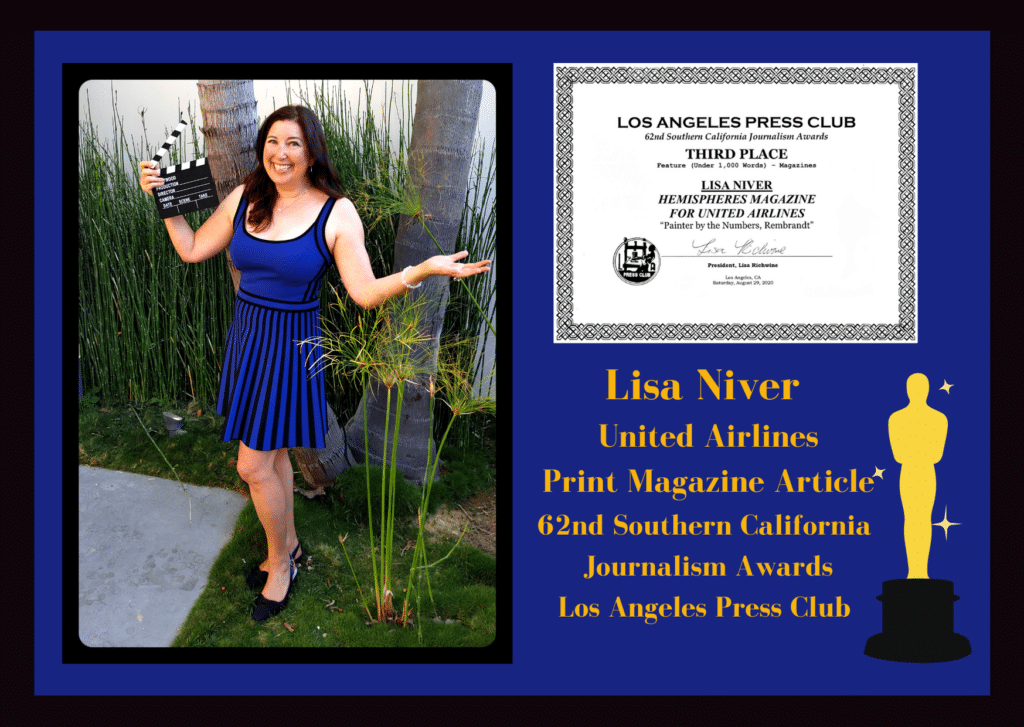
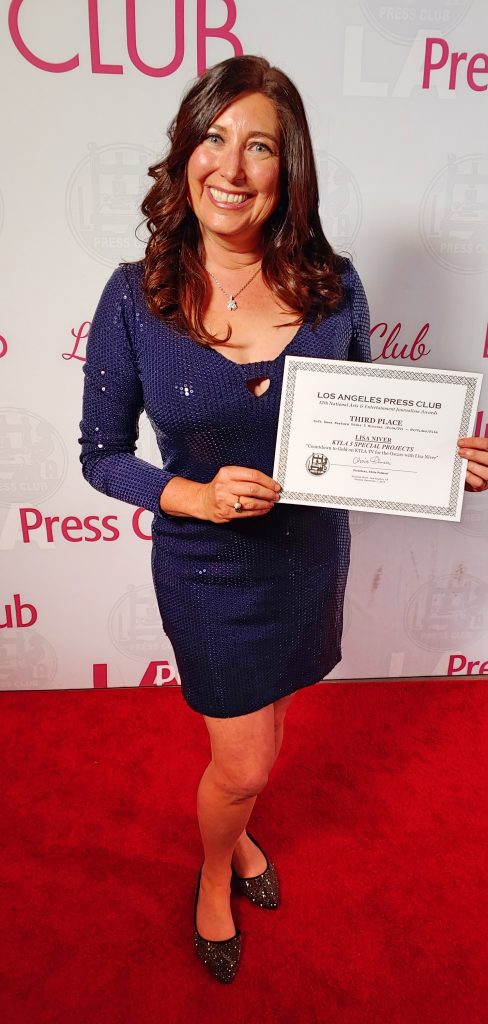
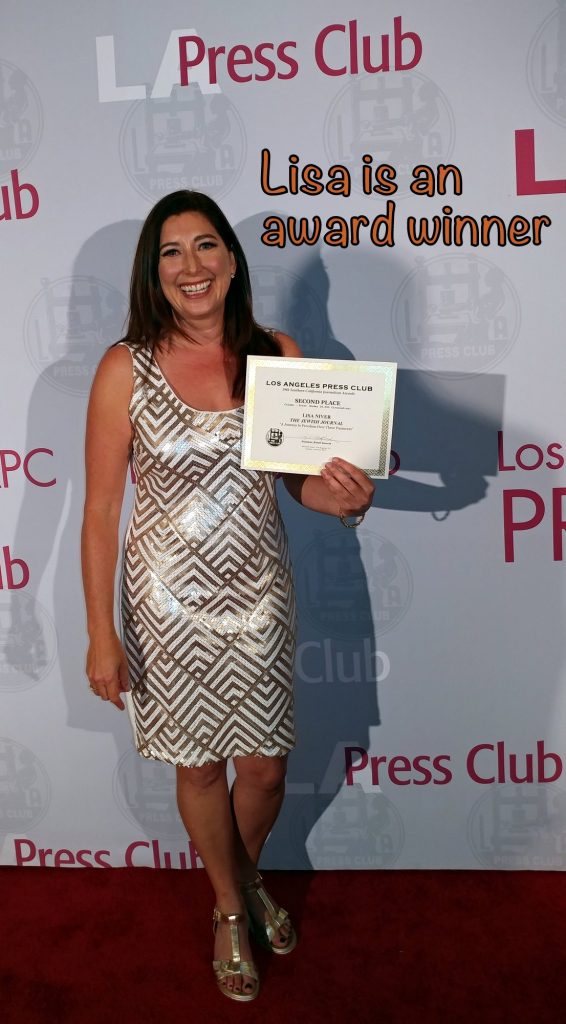
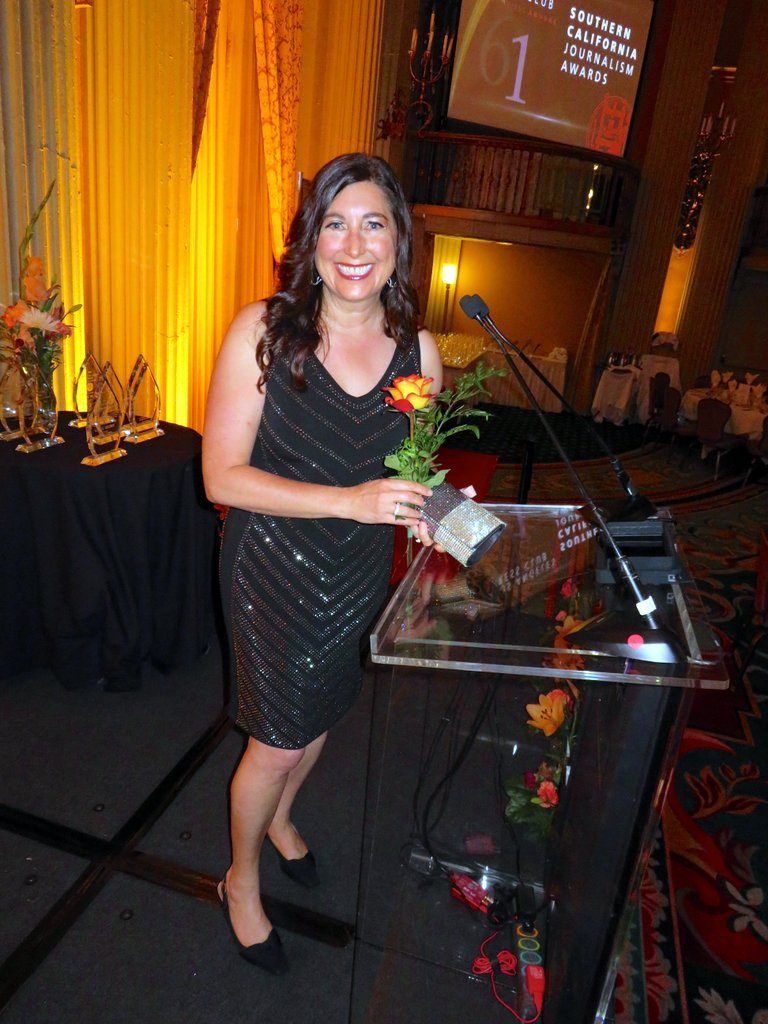
Lisa Niver is an Award Winner for 2020 Southern California Journalism Awards

Thank you! I am honored to have won for my print magazine story for Hemispheres Magazine for United Airlines in the 2020 Southern California Journalism Awards.

G6. PRINT MAGAZINE FEATURE, Under 1,000 Words: Any feature.

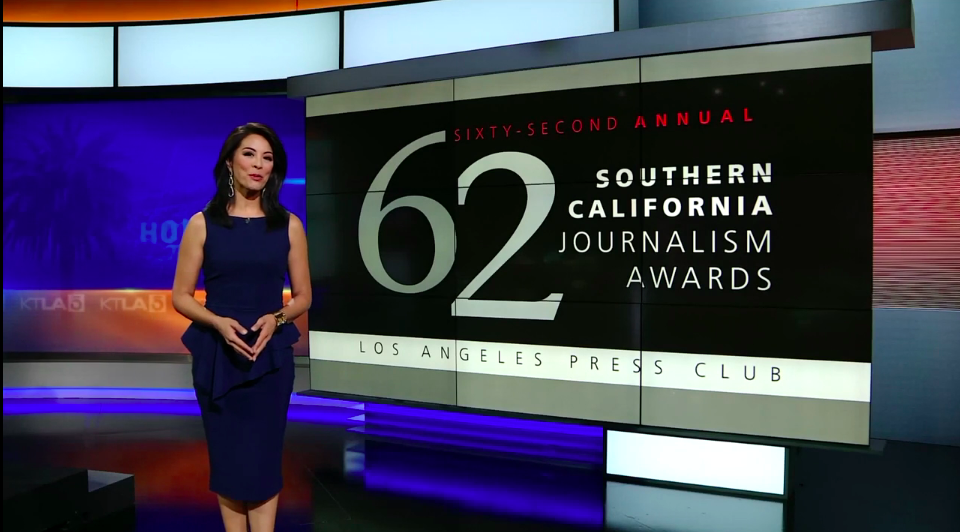
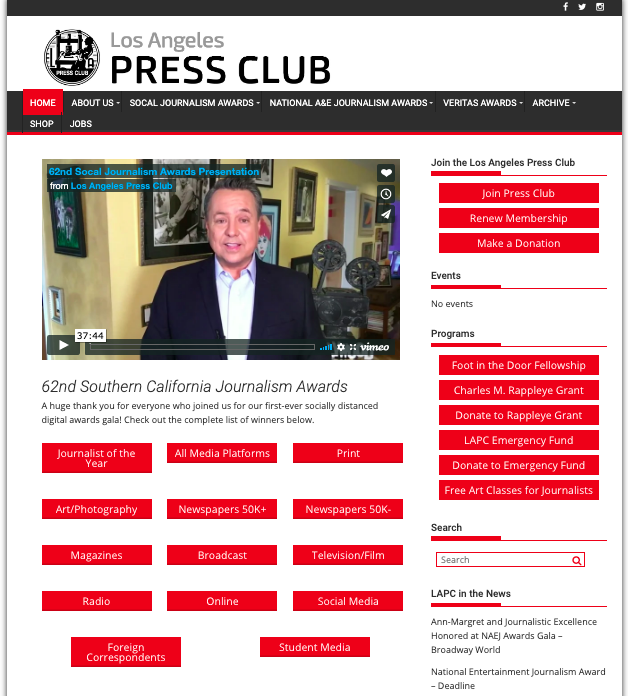
This year the Southern California Journalism Awards Gala was virtual and hosted by Cher Calvin from KTLA and George Pennacchio from ABC.
Thank you to everyone who has supported me and to all of the outlets who published my work. Please see below for my print, digital and broadcast content which was nominated in 2020. Thank you to the Los Angeles Press Club for this opportunity to be recognized!

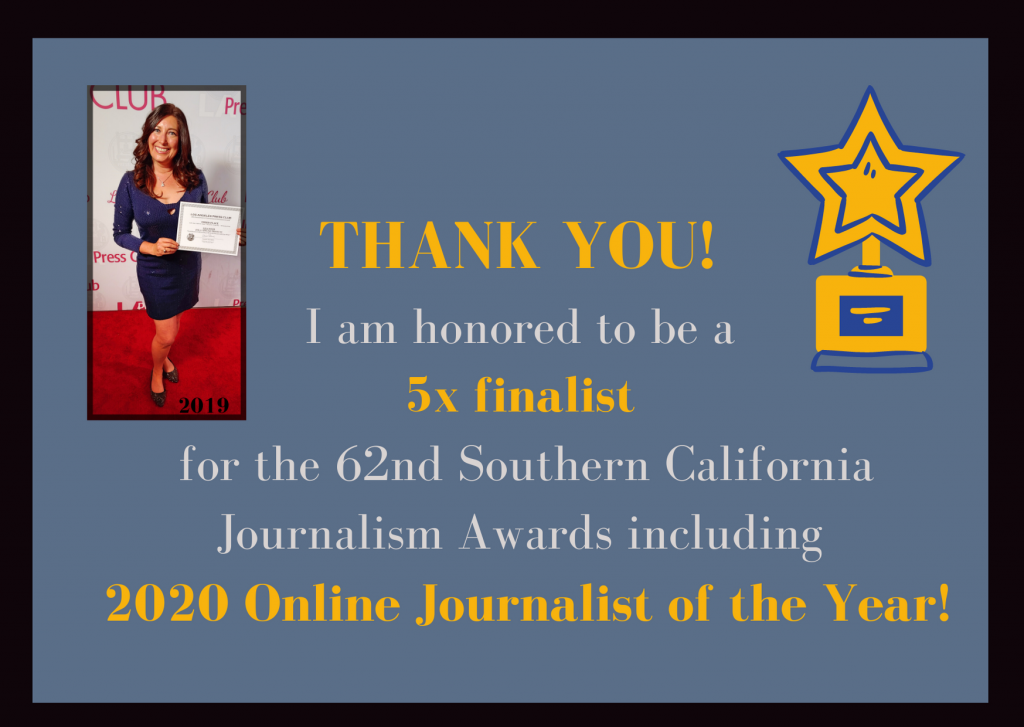
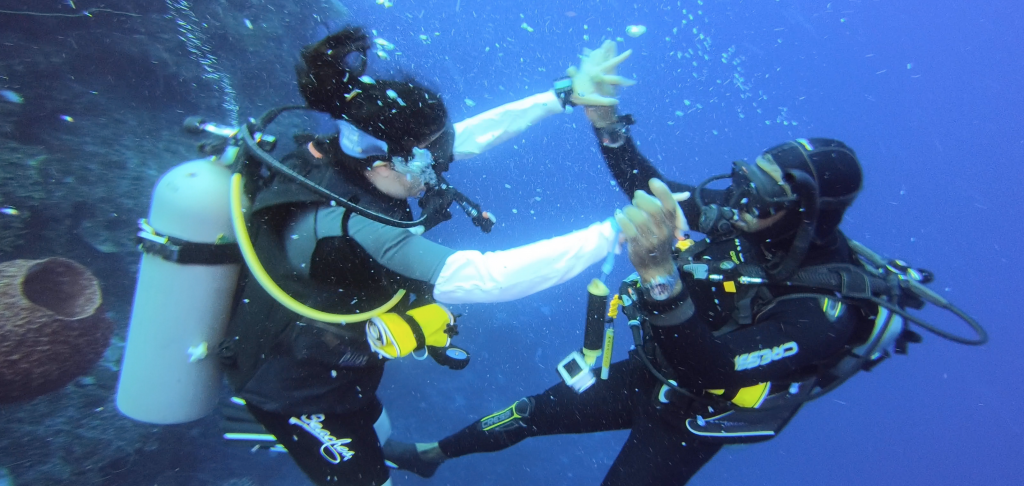
A5. ONLINE JOURNALIST OF THE YEAR

Lisa Niver dancing underwater at 70 feet

B4a. ACTIVISM JOURNALISM

Lisa Niver's article on Ilyasah Shabazz in Ms. Magazine
https://twitter.com/MsMagazine/status/1282059085849014272

B13. EDUCATIONAL REPORTING

I10. BROADCAST LIFESTYLE FEATURE

Lisa Niver at Waldorf Astoria Beverly Hills on KTLA TV

CONGRATULATIONS to all of the WINNERS and FINALISTS! I am honored to be recognized in this esteemed group!

My past nominations and winning content:

2019 WinnerNAEJ Award for KTLA TV segment 2019 Finalist: National Arts and Entertainment Journalism Awards in three categories
Lisa Niver at 2019 NAEJ Awards
2019 Finalist: Southern California Journalism Awards for Broadcast Television Lifestyle Segment: Ogden Ski Getaway
2018 Finalist for three categories of Southern California Journalism Awards:
Lisa Niver at 2017 Southern California Journalism Awards
2017 2nd place winner for Southern California Journalism Award Print Column and finalist for Travel Reporting.
Lisa Niver at Los Angeles Press Club Awards 2019
Lisa Niver at Los Angeles Press Club Awards 2019, Photo by Liz H. Kelly

Lisa Niver is an Award Winner for 2020 Southern California Journalism Awards Read More »

The Ties That Bind — Even in a Pandemic

In the years just before World War I, my grandparents, along with their siblings and many members of their extended families—all of whom lived in shtetls along the Bug River bordered by Poland and Belarus—fortunately fled Europe. They settled in two very disparate places, Chicago, Illinois and Caracas, Venezuela. This year, during the pandemic, the descendants have come back together. And for the first time in one hundred years, we will celebrate Rosh Hashana several days early as one reassembled family. From Los Angeles to Chicago to Rhode Island to Texas to Massachusetts to New York to Florida to Venezuela to Columbia to Israel to Canada.

This is not a story about finding each other through ancestors.com. It’s better than that: it’s a testimony to my grandparents and their siblings, to my mother and her four sisters, and to their Venezuelan first cousins, all whom were committed to maintaining the family through the generations, regardless of where they were. These ties were just about lost in my generation. But the pandemic is proving to have a silver lining. It’s bringing us back together.

Among my earliest memories are the gatherings at my grandfather’s apartment in Chicago as he read aloud a newly-arrived Yiddish letter from Caracas to his five daughters, who would translate for the fourteen children—me, my brother, and our first cousins. At other gatherings, my mother and aunts would read aloud the stilted English letters they had received from their generation of relatives. Later, when my grandfather died, Yiddish letters from the older generation of the Venezuelan family continued to arrive. I’d be sent to the door of Mrs. Adler downstairs, who came from the same area of shtetls, the Chicago remnants all lived in our neighborhood, and she’d excitedly huff and puff, climbing the stairs to translate the words of the friends she’d had grown up with and hadn’t seen in decades. My mother would listen attentively, take notes, and then call her sisters and cousins.

Gary Wexler’s mother, far right with her four sisters. The five sisters were like interchangeable mothers between the fourteen first cousins.

Over the years, a few of our Venezuelan cousins had come to visit Chicago. Those visits had been preceded by months of anticipation. They were emotional reunions with people I had never seen but knew through stories, letters, and names. I remember hearing the yells, “Jag sie masz” and learning it was Polish for the Yiddish words that proceeded them, “Voos machst du?”—how are you?” We had no common language, but we had a common bond. We knew we were family. We all shared the cultural touchstone that nothing was more important than this family. My mother and her four sisters told us this every day, wagging their fingers in our faces so we wouldn’t forget. They demonstrated this bond, as they were like five interchangeable mothers to me and to my first cousins. We were raised more like brothers and sisters than like the children of different women.

Years went by. Most of my mother’s generation died. My generation was busy with their own kids and grandchildren. The connection frayed.

Once my grandparents’ generation died, my mother’s generation in the United States and Venezuela continued to maintain the bond. But when I was in my early-forties, I realized that no one in either place was extending the relationship to the next generation, even though we talked about each other often. I knew that once our mothers died, this natural connection would whither.

About thirty years ago, at my parents’ house for Shabbat dinner, I saw an invitation tacked to their refrigerator for a wedding in Caracas. My mother and aunts and their Venezuelan cousins stayed in touch mainly through bar mitzvah and wedding invitations, as well as through the black and white photos of these events that they sent to each other. I read the invitation and told my parents, “We’re going.” A few weeks later, I, my wife, our three kids, and my parents flew to Florida, where we met two of my aunts who had flown from Chicago, in the airport. And then we all flew to Caracas.

Upon landing in a terminal where soldiers carried machine guns amidst strange Latin American smells and colors, my wife turned to me and said, “Where are we?” We grabbed our kids close. I leaned into her ear. “I’m glad my grandparents were the ones who made it to America.”

We traveled to an apartment complex where many members of the family lived. Cousins began pouring in, featuring the ones who I had met in my youth in Chicago alongside a Ricardo, a Carlotta, a Leonardo, a Mario, and a Diana. We looked like one another. The conversation flew by in Yiddish, Spanish, English, and Hebrew. Our connection was undeniable: my mother’s first cousins looked like her and her sisters; on the walls were pictures of my wedding, my brother’s wedding, and my cousins’ weddings; on the shelves were many of the same chachkes my mother and aunts had on their shelves. I had been looking forward to Venezuelan food, but instead I was served the exact same blintz, kugel, and fruit compote recipes my mother and aunts made. As I got to know my cousins, we realized that we were indeed family, sharing many of the same traits—and mishigas. But we also shared many of the same passionate Jewish involvements. I discovered that the Venezuelan family on my grandmother’s side and I shared the same mystical and spiritual Jewish interests.

From that trip on, I took on the responsibility of keeping the connection between the next generation. Years went by. Most of my mother’s generation died. My generation became busy with with own kids and grandchildren. The connection frayed.

Until four years ago in Jerusalem.

Every year, I attend Mekudeshet, the Jerusalem Sacred Music Festival that takes place at different sites throughout the city the week before Slichot. I rarely go on my Facebook page, but that week, I went to a yoga class whose schedule was on Facebook. When I opened Facebook, I saw a minutes-old post featuring a photo of my Venezuelan cousins Sarah and Diana in Tel Aviv. I sent them a message with my phone number, and moments later I got a screaming, crying call in Spanish. Sarah and Diana, who are sisters, were in Israel because Sarah’s daughter was getting married Tuesday night in Jerusalem. “You must come to the wedding,” they insisted. I joyfully accepted.

We were like an electrical cord had been severed then intertwined back together; on Zoom, we witnessed all the extinguished lights turn back on.

On Tuesday, I walked into the top-floor wedding hall at Hebrew Union College and was put at the head table. Everyone was excited to see me, and I discovered that there were scores of my Venezuelan cousins—all my kids’ ages—who are now living in Israel. “I thought I had no relatives in Israel,” I told them.

“We are your family in Israel,” they responded.

After the chupah, Sarah and I walked outside to the balcony overlooking the Old City. Sarah said to me, “One extended family left Poland a hundred years ago and went to two places in the world, Caracas and Chicago. And today, here, we are reunited again as one family at my daughter’s wedding in Jerusalem.” She and I both broke into tears.

Now when I’m in Israel, I have Shabbat dinners with my Venezuelan family. It has put me back in touch with them. Many of my cousins have fled Venezuela—like our grandparents fled Europe—and are now all over the world.

A few months after the pandemic began, I sent an email to all my first cousins in the United States. “This pandemic,” I said to them, “can be pretty lonely. We can’t get on planes and see each other. What if I put together a Zoom?”

Several of them wrote back, “It’ll never work. It will be chaos.” But I got a few cousins to say yes, and that forced all of them to finally agree. On the first Zoom, we were so happy to be with one another that we invited some of our third cousins in America to join the next Zoom. All summer long, we’ve had family Zoom calls, where we actually get into substantial conversations over family, politics, the pandemic, and the economy. We tell stories about our mothers and fill in the holes we kept from one another over the years. One month ago, I suggested, “What if I invite a few members of the Venezuelan family to join?”

It took some convincing with my Venezuelan cousins. I began first with a few still in Venezuela and several now in Bogota, Colombia. They were reluctant. “The wifi here isn’t so good. The Government will listen in. I can’t get Zoom to work from here.” But I pushed, and a few showed up. It was emotional beyond belief. One Venezuelan cousin shared stories about our grandparents and our mothers coming to Caracas. He talked about his excitement as a child surrounding the visits, so similar to how we felt about them when they came to Chicago. We were like an electrical cord that had been severed then intertwined back together; on Zoom, we witnessed all the extinguished lights turn back on. The family reunion photos that had been handed down to us from all our parents are still being scanned and flying back and forth on email.

This week, we will be having a pre-Rosh Hashana Zoom with even more Venezuelan cousins participating. My cousin Jacobo (who is in Caracas) and I discovered we are both serious Torah learners, so he and I have prepared a five-minute Rosh Hashana-related talk to start off the Zoom. We may even blow a shofar.

Jacobo will talk about the month of Elul. I’ll talk about the line after the shofar blasts, “Hayom Harat Ha’olam. Today is the birthday of the world.” My next line will be, “This is the birthday, after one hundred years, of our family coming back together.”

And it will keep expanding. Soon, we will all bring our children and grandchildren to the Zoom.

This Rosh Hashanah, even with the pandemic on Earth, our grandparents, their brothers, sisters, and cousins, and my mother and her five sisters will have reason to be dancing in Heaven.


Gary Wexler is an adjunct professor in the master’s in communication program at the USC Annenberg School for Communication and Journalism.

The Ties That Bind — Even in a Pandemic Read More »

Miami Herald Apologizes for Running Anti-Semitic and Racist Ads for Months in Spanish-Language Publication

(JTA) — The Miami Herald has apologized for running anti-Semitic and racist ads in its Spanish-language publication el Nuevo Herald for months.

A column in a paid insert titled “Libre” in the Friday edition said Jews support “thieves and arsonists” and compared the Black Lives Matter movement to the Nazis.

“What kind of people are these Jews?” Roberto Luque Escalona wrote in the column. “They’re always talking about the Holocaust, but have they already forgotten Kristallnacht, when Nazi thugs rampaged through Jewish shops all over Germany? So do the BLM and antifa, only the Nazis didn’t steal; they only destroyed.”

On Monday, the Herald apologized in a statement and said that upon review, the paper found that the insert had included “multiple instances of anti-Semitic and racist commentary since January.”

“The fact that no one in leadership, beginning with us, had previously read this advertising insert until this issue was surfaced by a reader is distressing,” the statement said. “It is one of a series of internal failures that we are investigating in order to prevent this from ever recurring.”

The statement did not address criticism over why the Herald had allowed the insert’s publisher, Demetrio Perez Jr., to advertise in its pages. Perez pleaded guilty and was sentenced in 2001 to house arrest and probation for defrauding elderly tenants in low-income housing that he owned.

The publication of the insert was referenced in a Monday article in Politico saying that Latinos in Florida were being flooded with anti-Semitic messages, including those affiliated with the QAnon conspiracy theory.

Miami Herald Apologizes for Running Anti-Semitic and Racist Ads for Months in Spanish-Language Publication Read More »

Mothers and Daughters, Honey and Joy

When Rebekah Sheff left for her freshman year at Chapman College, she took with her a special recipe book. Her Moroccan Spice Girl mom, Rachel, printed “Rebekah’s College Cookbook,” featuring all of her favorite recipes. 

Rebekah often baked while at home. Now that she’s away at college, she’s been cooking her way through the book. 

A family’s food DNA is transmitted in the kitchen, around the table and, very often, from mother to daughter. 

The Iraqi Spice Girl (Sharon) daughters, Gabriella, Alexandra and Shevy, are amazing helpers in the kitchen. They chop vegetables, stir sauces and have started to take over the baking and decorating of birthday cakes for all of their cousins. 

They are especially adept at dealing with the frenzy in the kitchen when Sharon hosts a large group of family and friends.

This week, the youngest shares a recipe called Honey Joys. It’s adapted from Nana Sue’s well-worn cookbook “The Australian Women’s Weekly Old Fashioned Favorites.” It’s an easy recipe that kids will enjoy making almost as much as they will love eating it.

We hope you try it with the future cooks and bakers in your lives. And we wish you a new year as sweet as Honey Joys. 

HONEY JOYS
3/4 cup butter or Earth Balance Buttery Spread
1/3 cup sugar
2 tablespoons honey
7 cups corn flakes

Preheat oven to 225 F.

Place 24 cupcake holders on baking sheet.

Combine butter, sugar and honey in small pan over medium heat until sugar is dissolved.

Bring to a quick boil, then remove from heat.

In large bowl, pour corn flakes and add honey mixture. Stir gently to combine.

Spoon mixture into cupcake holders and bake for 10 minutes.

Makes 2 dozen.


Rachel Sheff and Sharon Gomperts will answer cooking questions on Instagram at SephardicSpiceGirls or on Facebook at Sephardic Spice SEC Food. They have collaborated on Sephardic Educational Center projects and community cooking classes.

Mothers and Daughters, Honey and Joy Read More »