fbpx

September 17, 2020

Three Generations, One Timeless Mission 

On May 14, 1948, Nessim Bouskila, a 22-year-old Moroccan Jew living in France, was riding the Paris metro when he saw a man reading a special afternoon edition of France Soir. The front-page headline read, “L’etat d’Israël est ne” (“The state of Israel is born”). Overjoyed, he ran to a newsstand but his jubilation turned to dread when he read the subhead that appeared to bleed through the paper like a death sentence: “Egyptians announce ‘Our troops are entering the Holy Land.’ ”

The article also described how the Jewish Agency had issued a call for young Jews to help defend Israel. Bouskila immediately went to the organization’s Paris office. A few months later, he boarded a rickety boat bound for Israel. He didn’t tell his parents he was going to fight in Israel’s War of Independence until after he  arrived. For Bouskila, protecting Jewish lives was a non-negotiable issue — one he’d learned while on the brink of death.

In 1940, Vichy France, which was aligned with Nazi Germany, began its two-year occupation of Morocco, and Bouskila was one of the teenagers tasked with going  door-to-door in his hometown of Marrakech to collect the names of Jewish children slated for deportation to concentration camps. In November 1942, he and thousands of Moroccan Jews were saved when the Allies landed in North Africa during Operation Torch.

Bouskila served as a combat infantry soldier in the Palmach, the elite fighting force of the Haganah — the Jewish paramilitary operation that existed from 1920 to 1948. In October 1948, he fought in Operation Yoav, which helped Israel secure the Negev desert. During the operation, Israeli forces captured Metzudat Yoav (the Yoav fortress), which today serves as a museum and ceremony center for the Israel Defense Forces (IDF) elite Givati Infantry Brigade.

While he and thousands of Jews faced near-annihilation from five invading Arab armies during a war in which Israel lost almost 4,000 soldiers and 2,000 civilians (approximately 1% of its population), they still belonged to a romanticized era in the country’s history, immortalized by works such as Leon Uris’ 1958 novel “Exodus,” about the founding of the State of Israel.

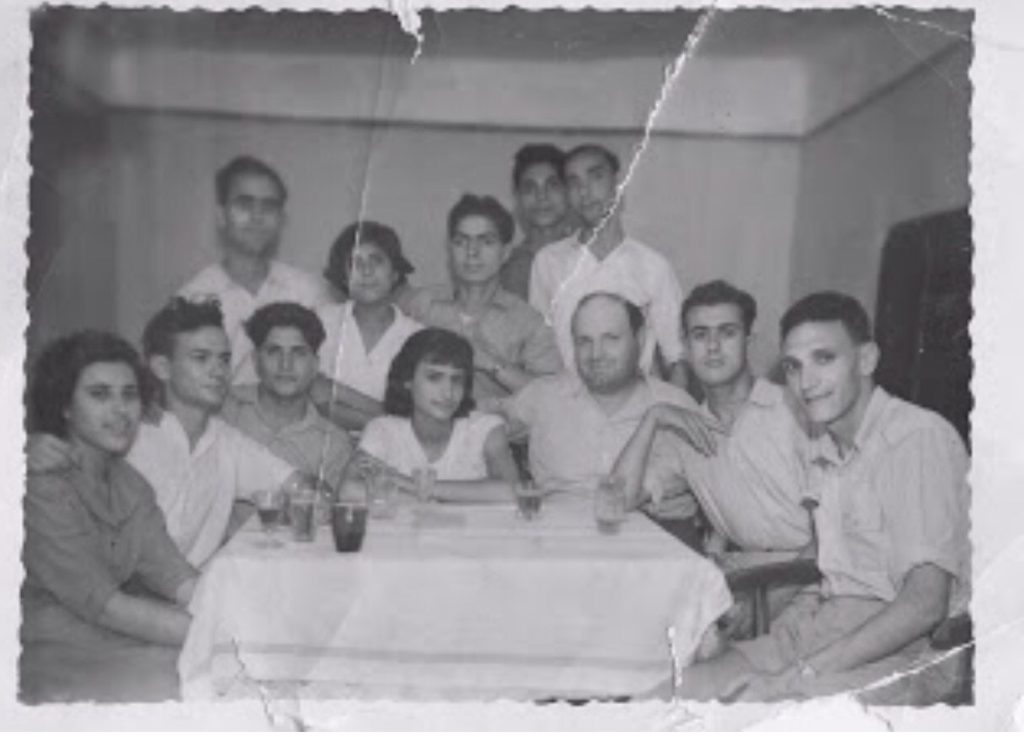
Only one photograph exists of Nessim Bouskila during his service in Israel —  with a group of Moroccan Jewish volunteers in 1948. In it, Bouskila exudes a quiet confidence. His smile seems to suggest he’s a grateful witness to a promise fulfilled — the 2,000-year-old promise of a return to the Jewish homeland.

On Feb. 5, 1985, Daniel Bouskila, a 21-year-old combat soldier in the Givati Brigade, was in a convoy  searching for Hezbollah terrorists in southern Lebanon. As it passed the gates near a Palestinian refugee camp, a suicide bomber detonated an explosive device from a car. Ten of the 14 soldiers in Bouskila’s vehicle were injured. He and the remaining soldiers in the convoy spent the next 45 minutes in an exchange of gunfire.

Daniel Bouskila

The war zone was a far cry from Daniel’s upbringing in Los Angeles, where he attended YULA Boys High School. During the second semester of his senior year in 1982, he studied at a religious Zionist yeshiva in Israel. Six months later, the First Lebanon War broke out. Daniel was studying in the beit midrash when IDF jeeps and buses pulled up outside.

“Before my eyes, I watched the beit midrash, which had over 300 students and rabbis, empty down to about 25 of us, as all the students and many of the rabbis were also IDF combat soldiers, and they were being taken to the front lines,” he said.

Daniel never made it home to his high school graduation. Two years later, when he enlisted in the IDF, Israel was at war in southern Lebanon. “I knew with certainty that a big part of my service would take place there,” Daniel said. “I was not deterred by that. I was actually motivated by it.”

When his parents learned he was joining the IDF, they were “proud but anxious,” Daniel said.  After all, his father, Nessim, was familiar with the meaningful but risky fight for the Jewish state.

In 1949, Nessim Bouskila returned to Paris and, in 1955, he married Alice Bitoun, an Algerian French Jew. A year later, they moved to Montreal, where their daughters, Sylvie and Orly, were born. They moved to L.A. in 1961 and Daniel was born in 1964. Nessim instilled in his children a sense of love and duty for the Jewish people.

“My primary inspiration to serve in the IDF was my father,” Daniel said. “I wanted to follow in his footsteps and be part of the story of Israel.” In 1993, Daniel received his rabbinic ordination from Yeshiva University. 

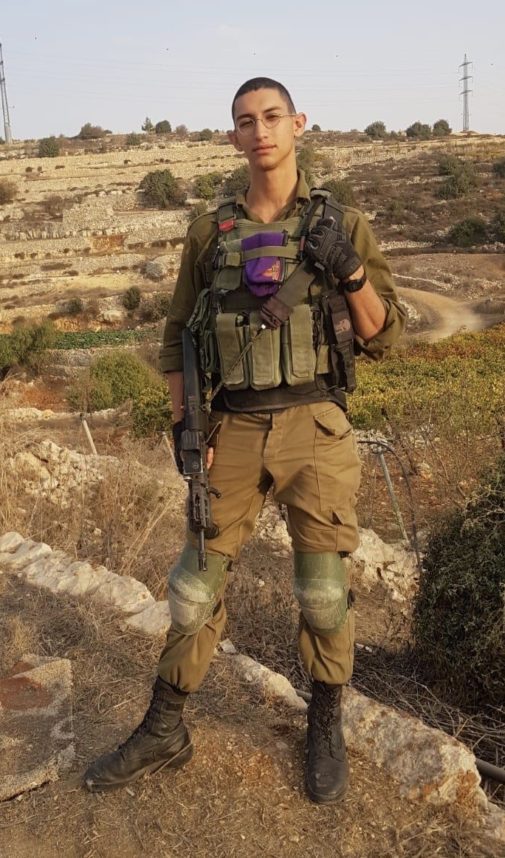
In 2018, Ilan Bouskila was on a senior class trip in Poland when he visited MILA 18, the Jewish resistance command bunker at the Warsaw Ghetto, and sent his parents, Daniel and Peni, a text message, informing them he was delaying his college plans and enlisting in the IDF. 
Ilan Bouskila

“There were moments in my service when I felt like I was drawing on the strength of my father and grandfather to keep myself going,” Ilan wrote in an email from Jerusalem. “I would imagine my grandfather in the desert and my dad in Lebanon. The two of them did their part despite all the hardship — that told me that I could, too.”

He continued, “I still love my friends from home, but sometimes it’s difficult to connect to them and their lives. Hearing about finals and parties while I was [in] the West Bank doing guard duty and patrols, or breaking up riots and doing house arrests at night, always made me feel like I was in a completely different world. It gave me a lot of perspective and insight [into] how the army changes people.”

Five months after his graduation from Shalhevet High School, Ilan, like his father, joined the Givati Brigade. He was placed in the elite Shaked battalion and was part of a front-line platoon that policed the West Bank. Ilan specialized in a weapon called “the Negev,” a machine gun with 800 rounds. He also was one of six soldiers selected to learn about and test new weapons yet to be released at the Rafael Advanced Defense Systems laboratory. 

Long gone is the romanticized era of Nessim Bouskila’s Israel. That ended when Daniel served in Lebanon and Israelis began to see that war as their Vietnam. By the time Ilan enlisted, Israel had, for decades, been vilified on the world stage, including through delegitimization efforts such as the boycott, divestment and sanctions (BDS) movement.

In June 2019, Ilan stood at the Yoav fortress, where his grandfather once served, during a purple beret ceremony for the Givati Brigade. His father watched him from the stands and cried because he understood he was witness to three generations of men who have served the Jewish state.

Ilan also acknowledged his role in the tapestry of Jewish history. “It was momentous,” he said. “I felt like I was in a dream. Being there in that moment reaffirmed what I already knew; that I was part of something far bigger and more important than myself and my family; that there would always be more Jews ready to put our lives on the line for our people and future.”


Tabby Refael is a Los Angeles-based writer, speaker and activist.  

Three Generations, One Timeless Mission  Read More »

5781 Is the Jewish Response to 2020

Dear friends,

It always amazes me that the Jewish calendar is so much older than our secular calendar. In the Jewish world, we seem to take that for granted. We say “Happy 5781!” as easily as we might say “Happy 2021!”

But in this year of turmoil, it’s worth reflecting on the longevity of 5781 to see what it can offer us in 2020.

There are several major themes to the Jewish story: a bond with God and Torah, a search for truth and justice, a calling to bring holiness to the world, among others.

As we confront the multiple crises of 2020, we might focus on another theme: resilience.

How could a people survive the destruction of two Temples, pogroms, centuries of persecution and an unspeakable Holocaust—and yet prepare today to celebrate the Jewish New Year around the world?

The simple answer is that Jews have learned to never give up, to never despair, to never lose hope.

Perhaps the theme of resilience, then, is the result of fulfilling those other themes.

Because we are bonded with God and Torah, because we are motivated to search for truth and justice, and because we are called upon to bring holiness down to earth, what choice do we have but to be resilient?

The Jews have learned through the millennia that to keep the flame of hope alive during dark times, resilience is not a choice but an imperative.

Let us contemplate that thought on Friday night as we gather to celebrate 5781, and let us appreciate the extra 3,760 years of experience that Jews can share with the world.

Shana Tova.

David

5781 Is the Jewish Response to 2020 Read More »

Fearing My Trauma Made Me a Fraud

I need help. Recently, while watching television with my 12-year-old son, Hillel, I gasped when one character slit another’s throat. My body seized in terror and I howled, “Turn it off, damn it. Enough. I can’t watch that crap. You’ve never had a knife at your throat.”

Hillel started to cry. “But Mom, it’s just a show.”

“Shut up. You don’t understand. You’ve never been kidnapped.”

He ran to his room and slammed the door. I collapsed and cried in shame.

I’ve never dealt with the trauma of being kidnapped on my honeymoon 24 years ago. Nor have I processed the traumatic, humiliating end to my marriage 18 years later. There already was too much trauma in my childhood, which included family members with drug addiction and bipolar behavior.

My past traumas often erupt when I watch a scary TV show or movie. I’ve become a master at shutting my eyes right before a violent scene. But sometimes, I don’t see it coming. When they hit, the flashbacks feel like virtual reality. In that moment with my son, I could feel my own throat being slit.

As I lay sobbing, I realized that my many years of forgetting my fears have made me a fraud. I’m not the resilient woman I project. I’ve hidden my trauma from my sons, friends and every man I’ve dated since my divorce. But there is one I cannot hide from: God.

As I prepare for Rosh Hashanah, I feel vulnerable and alone. 

As I prepare for Rosh Hashanah, I feel vulnerable and alone. I long to hear the sound of the shofar to remind me I am God’s beloved. Rosh Hashanah is when I release the vows I made to God during the past year and write new ones. Unlike my marriage, with God, I get another chance every year.

My sacred, spiritual meditation of annulling my vows to God is called Hatarat Nedarim. This Jewish ritual of introspection will free me from my past promises to be brave, strong and benevolent. Last year, I thought I could best serve God by doing mitzvahs and ignoring my wounded soul. I judged others for going to therapy and “doing the work.” “Hah,” I’ve thought. “They’re weak. Look at me. I’ve gone through hell and I’m fine. No — I’m amazing.”

In reality, I’m a fantastic liar — to myself and to everyone. I’m not amazing. I’m terrified to do “the work” because I don’t want to relive my pain. But before I ask God’s forgiveness for judgment and false pride (I have to save something for Yom Kippur), I want to stand emotionally naked in front of God and renew my soul. Rosh Hashanah is when I remember the sacred relationship with God and, like any good relationship, it’s a partnership. I can pray, but I must take action and do my part to make it work, too.

So my action this year is to work with a trauma therapist. I believe there are talented healers who allow God to work through their words, hands and energy. He or she is just waiting for me to show up.

God, I promise that this coming year, I will be true to you, true to myself and true to the ones I love. With your love, I will find the courage to seek help, face my fears and overcome my past traumas with humility and grace.

But first, I had to apologize to my son.

I knocked on Hillel’s door and walked into his room with a tear-stained smile. “Honey, it’s Mom.” His expression changed from anger to compassion. “I’m so sorry I yelled at you, sweetheart. It’s not OK. I’m not OK.”

“Mom,” he said, “I want you to get better. I know you can get better. Remember, it’s OK to ask for help.”

“I promise you, God willing, I will.”

“No, Mom, God won’t will it. You need to find a solution. God will make sure it works.”

Sometimes, I think God speaks through my son. So now it’s time to pray — and find a good therapist.


Audrey Jacobs is a financial adviser and has three sons. 

Fearing My Trauma Made Me a Fraud Read More »

Obituaries: Sept. 18, 2020

Lilla Aftergood died Sept. 3 at 95. Survived by daughter Annette (Mel) Gottlieb; sons Steven (Kimberly), David (Sara); 12 grandchildren; 11 great-grandchildren. Mount Sinai

Rachel Barzilai died Sept. 2 at 83. Survived by daughter Annette (Jeff); sons Elan (Cynthia), Steve, Michael; 2 grandchildren. Hillside

Barry Gilbert Binder died Aug. 29 at 78. Survived by sister-in-law Diane. Mount Sinai

Mark Castiel died July 28 at 86. Survived by his wife Monique; sons Henry, Daniel, Serge; brothers Maurice, Albert. Chevra Kadisha

Raphael Cohen died Sept. 5 at 97. Survived by daughter Caryn (Gary) Ezor; Jeffrey (Janet); 7 grandchildren; 4 great-grandchildren; brother Clement (Esther). Malinow and Silverman

Robert Irving Fox died Sept. 2 at 83. Survived by wife Fay; daughters Sheri (Greg), Susan (JT); son Stephen (Laura); 8 grandchildren; 2 great-grandchildren; sisters Marilyn, Wendy, June; brothers Howard, Michael, Hal. Mount Sinai

Eugenia Gertz died Aug. 31 at 83. Survived by daughters Monique Yankofsky, Cynthia Chamie, Deborah Gertz-Rosenbaum; 6 grandchildren. Chevra Kadisha

Burton J. Gindler died Aug. 19 at 93. Survived by son David (Kiki). Mount Sinai

Irwin Jay Goldfarb died Sept. 4 at 87. Survived by wife Arlene; daughter Mercy (Jeff) Goldfarb-Paul; son David (Debra); 5 grandchildren, 1 great-grandchild; sister Helene. Mount Sinai

Joan Barbara Gottschalk died Sept. 3 at 86. Survived by son David (Kathy); 2 grandchildren; sister Marge. Hillside

Norman J. Granz died Sept. 4 at 82. Survived by sons Glen (Kristine), Adam (Alisa); 3 grandchildren; sister Gloria Granz Gornick. Mount Sinai

Dorothy Green died May 18 at 87. Survived by daughter Paula; sons Matthew, Robert; 1 grandchild. Mount Sinai

Rosemary Greener died Sept. 5 at 98. Survived by daughter Lynn; son Gary. Hillside

Lynn Kurz Jacobson died Aug. 30 at 77. Survived by husband George; daughter Wendy; sons Michael (Risa), Brian (Paget English); 4 grandchildren; sister Shirley Silverman. Mount Sinai

Julene Jenny died Aug. 27 at 94. Survived by husband Sanford; daughter Patricia (Bill) Crooks; son Ronald (Jane); stepsons Robert, David, Michael; 7 grandchildren; 6 great-grandchildren. Hillside

Florence Diana Levinson died Aug. 25 at 94. Survived by cousin Anita Baab. Mount Sinai

Gloria Theresa Miller died Aug. 5 at 94. Survived by daughter Ilana (Tom Heller); son Scott (Lisa); 4 grandchildren; 5 great-grandchildren. Chevra Kadisha

Jade Lee Minkin died Aug. 2 at 49. Survived by mother Susan; father Gary; sisters Stephanie (Jeffrey) Simon Block, Melissa (Shifra); brother David (Jessica). Mount Sinai

Brenda Offer died Sept. 5 at 82. Survived by husband Charles; sons Robert (Daryl), David (Leslie); 6 grandchildren; sister Lois. Hillside

Maud L. Pincus died Sept. 3 at 88. Survived by sons Glenn (Jill), Philip (Kathleen); 4 grandchildren; brothers Merrill (Shari), Howard (Ellen). Mount Sinai 

Amy Waitsman Ross died Aug. 23 at 71. Survived by mother Beatrice Ross; 1 grandchild; sister Anita (Paul) Herman. Mount Sinai

Dove Angelique Rudman died Aug. 21 at 46. Survived by husband Jeff; sons Wyatt, Cody; mother Diane Greenberg; father David Greenberg; sisters Julie Greenberg, Tricia (Daniel) Schoenbaum. Mount Sinai

Joan Z. Sales died Sept. 4 at 90. Survived by daughter Lisa (Mike) Miller; son Ron Speilman; 3 grandchildren. Mount Sinai

Betty Doris Shapira died Aug. 28 at 97. Survived by daughter Jill; sons Eric (Susan), Harvey (Carol). Hillside

Charlotte Sinay died Sept. 7 at 92. Survived by daughters Shelley (Michael) Blumenfeld, Lynne ; 2 grandchildren. Mount Sinai

Beverly Jean Ulis died Sept. 6 at 90. Survived by daughter Caryn (Robert) Pola; 3 grandchildren. Mount Sinai

Betty J. Vigdor died Aug. 30 at 89. Survived by sons, James, Edward, William (Julie); 3 grandchildren; brother Simon Wolkenbrod. Mount Sinai

Judith C. Wachtel died Sept. 2 at 82. Survived by husband Stephen; daughter Robyn (Scott) Warren; son Douglas (Sydney) Wachtel-Lagier; 2 grandchildren. Mount Sinai

Irving P. Warsaw died Sept. 2 at 83. Survived by daughter Linda Gazzola; 1 grandchild; 1 great-grandchild. Riverside National Cemetery

Henry M. Wilf died Sept. 4 at 85. Survived by wife Leila; daughters Robin (Mark) Haas, Wendy (Glenn) Slater; son Richard; stepdaughter Halley (Daniel) Bise; 5 grandchildren. Mount Sinai

Oleg Zeltser died Sept. 3 at 73. Survived by wife Iraida; daughter Marianna; son Mikhail (Jenny); 4 grandchildren. Mount Sinai

Obituaries: Sept. 18, 2020 Read More »

2 U.S. Senators Warn Poland’s President on Anti-Semitism and Restitution

WASHINGTON (JTA) — Two U.S. senators wrote President Andrzej Duda of Poland to express their concern about a rise in what they said was anti-Semitic discourse, citing one of his own statements.

The letter sent Tuesday by Sen. Jacky Rosen, D-Nev., and James Lankford, R-Okla., on several occasions notes the close defense ties of the United States and Poland and suggests a failure to address the anti-Semitism, and to advance Holocaust restitution, could impede the growth of the relationship.

Much of the rhetoric singled out in the letter, which was released Wednesday, has to do with the debate in Poland over Holocaust restitution. It became an issue in the recent presidential campaign when Duda, a member of the ruling Law and Justice party, won reelection.

“We are alarmed by growing anti-Semitic discourse in Poland and scapegoating of the Jewish community, which run counter to our nations’ shared values,” the letter said. “Specifically, during Poland’s 2020 presidential campaign, the Law and Justice Party and state television peddled anti-Semitic tropes and thinly veiled demagoguery.”

It cited a number of insinuations that Duda’s rival in the election, Warsaw Mayor Rafal Trzaskowski, was in the pocket of Jews pressing the restitution issue.

Among these was a July 9 statement by Duda.

“I will never sign a bill which says that we will treat the inheritance of people from one ethnic group more favorably than from others,” he said.

Lankford and Rosen, who co-chair the Senate’s Bipartisan Task Force for Combating Anti-Semitism, also said in the letter: “In addition to putting Poland’s Jewish community at risk, these troubling statements undermine Poland’s obligations under the 2009 Terezin Declaration on Holocaust Era Assets and Related Issues. We know you share our desire to strengthen the U.S.-Poland partnership, which is why we call on you to unequivocally condemn anti-Semitism, including when propagated by the Law and Justice Party and your political allies, and to adopt comprehensive legislation on Holocaust-era property restitution.”

2 U.S. Senators Warn Poland’s President on Anti-Semitism and Restitution Read More »

The Bidens Tell Jewish Supporters the New Jewish Year Will Be Happier With Trump Out

(JTA) — Jill and Joe Biden greeted Jewish supporters for the Jewish New Year and cast the holy day’s message as an imperative to drive President Donald Trump from office.

It was the second New Year’s greetings-turned-pitch for votes of the season. Trump made his own appeal Wednesday during a White House call to Jewish supporters.

“These are the Days of Awe that give us a chance to restart, to speak up,” the Democratic presidential nominee said Thursday in a webcast organized by Jewish Americans for Biden, an arm of his campaign. “What kind of country do we wish to be? Both of our faiths, yours and mine, instruct us not to ignore what’s around us.”

Biden, a Roman Catholic, noted the persistence of the coronavirus pandemic, the social unrest over racism and the economy. “A common thread between them is a president who makes things worse, who appeals to the dark side of us,” Biden said.

Biden launched his campaign for the presidency last year he said because he was appalled at what he said were Trump’s equivocations in condemning deadly racist and anti-Semitic violence.

Biden’s wife, Jill, an educator, quoted the 19th-century rabbi, Yisrael Salanter, who founded the Jewish ethical movement, Musar. “As Rabbi Yisrael Salanter taught, ‘as long as the candle is still burning, it is still possible to accomplish and to mend’,” she said. “I hope these days of awe renew your spirit for these days ahead.”

Joe Biden, who has pushed back at progressives within his party who want to step up criticism of Israel, said, “we can pursue peace in the world including by remaining a steadfast ally of Israel.”

He concluded, “Shana Tova everyone, we can do this, it’s got to be a better year than last year.”

The Bidens Tell Jewish Supporters the New Jewish Year Will Be Happier With Trump Out Read More »

The Ark — In Person

With the doors to the ark open, they came with their hearts open. They came with their unexpected tears and their whispered intimacies. They came, broken and battered by COVID-19 and wildfires and choking air and societal upheaval and crushing loneliness and financial worry. They came with the crevices of their souls exposed and they had a chance to place a prayer in the crevices of the Holy Ark.

When Temple Beth Am dedicated its new sanctuary in 2019, just a few weeks before Rosh Hashanah, we had no idea how one spiritually whimsical design detail could become so important and profound in 2020. And with our sanctuary so full and robust last year, we could not anticipate how empty and lonely it (and its usual attendees) would be this year.

That one design detail was in our Aron Hakodesh. Its doors include an array of iridescent cubes. The sun’s rays stream in from the vast window on the east side of the room, refract through those cubes and create a subtly dazzling dappled light. When one is inside the ark and turns around to face the sanctuary, one can see the back of those cubes — hundreds of them. And many are perforated with small, tubular hollows.

Beth Am’s mini-Kotel, we mused, had enough space for notes to last several generations.

We intended that our ark would be a repository not only for God’s words but for our own. Not just holy writ but our writings. At the dedication last year, members wrote small prayers on special colored paper. They rolled the prayers around a dowel and inserted them into the cubes’ hollows. Beth Am’s mini-Kotel, we mused, had enough space for notes to last several generations.


The prediction was apt, but it did not account for the coronavirus. As the leadership thought through the worship options we would offer our community over these unique holidays (small, truncated services outdoors as well as “Zooms galore”), we also explored creative ways, borne out of this excruciating moment, to serve up tastes and feelings related to the High Holy Days.

One of those ideas was to invite family units to spend 15 minutes at and within the Holy Ark with one of our rabbis. The scene looked like a hybrid between a hockey penalty box and a Catholic confessional, with the rabbi in one “pen” behind a plexiglass screen and the family in a separate pen on the other side of the ark. Despite the masks, the physical distance, the plexiglass and the otherwise empty room, these moments have felt intimate, grand, full and pregnant with meaning. And prayer.

Virtual reality is impressive, but it is no replacement for human touch, for presence, for true closeness.

There is such joy in seeing a member of your community in person: having them articulate what has been painful and distressing about this era, yet challenging them to name one unexpected wonder they have found. Stepping back, so their whispered words are not audible and thus remain private, and inviting them to turn to one another to articulate any wish or feeling welling up inside them.

And then, we turn back to the mini-Kotel, watching as Jews — who are about to recite a litany of scripted prayers during the High Holy Days  — write out personal ones and place them within our ark.

Zoom is a wonder. Navigating COVID-19 — personally, professionally, educationally —without it is nigh impossible. But Zoom also has limitations in some ways by enslaving us even more powerfully to our screens. Zoom’s ubiquity and effectiveness is reinforcing to a young generation that the digital world is greater than the human world. It is not. Virtual reality is impressive, but it is no replacement for human touch, for presence, for true closeness.

On Kol Nidre, many communities recite a piyyut (liturgical poem) whose refrain is labrit habet, v’al tefen layetzer. We ask God to remember the covenant and not pay attention to our wayward urges. This year, I suggest we turn those words on ourselves. Let us not succumb to the urge that values the virtual over the personal. Rather, let us remember the covenant of humanity we share and recommit — both in creative ways while the pandemic rages and in all ways once it ebbs — to be together, because we need to be together more than we ever have before.

So much of human connection has been wrenched away from us. For all of the digital davening wonders we will deliver to our community as we celebrate 5781, perhaps nothing will be more important and needed than those 15 minutes by the ark.

And perhaps even some of those prayers in our mini-Kotel will be answered.


Rabbi Adam Kligfeld is the senior rabbi at Temple Beth Am. 

The Ark — In Person Read More »

Five Nations in Talks to Normalize Ties With Israel Soon, PA Minister Says

Palestinian Authority Social Affairs Minister Ahmed Majdalani told the Israeli public broadcasting radio outlet Kan on Sept. 17 that five Arab and Muslim nations are in negotiations to normalize ties with Israel soon.

The Jerusalem Post’s Lahav Harkov reported that Majdalani named the five countries as Comoros, Djibouti, Mauritania, Oman and Sudan. Harkov noted that Israeli Prime Minister Benjamin Netanyahu’s office declined to comment on her inquiry on the matter.

Wall Street Journal Chief Foreign Affairs Correspondent Yaroslav Trofimov tweeted, “Israel used to have an embassy in Mauritania and a liaison office in Oman (where Netanyahu visited a year ago) … And the Comoros are very close to the UAE [United Arab Emirates].”

However, British researcher David Collier tweeted against “taking the comments of the PA at face value” in a tweet, arguing there’s likely “an important name (or two) deliberately left out.”


Harkov also tweeted that she heard that Indonesia is another country that could soon normalize ties with Israel.


President Donald Trump initially told reporters after the Sept. 15 signing ceremony of agreements between Israel and the UAE and Israel and Bahrain that five or six countries could be next to establish relations with Israel; later in the day, he increased the number to around seven or nine and listed Saudi Arabia as one of those countries. The Saudis have publicly stated that they will not normalize ties with Israel until a two-state solution is reached with the Palestinians.

Palestinians responded to the agreement with “days of rage” protests throughout the West Bank. A Fatah activist also told The Jerusalem Post on Sept. 15, “We are on the brink of a third intifada. The Palestinian people feel betrayed by the Arabs and will show the world that the Palestinian issue remains the central issue of all Arabs and Muslims.”

Majdalani told Kan, “The attitude that there can be peace with the Arabs without peace with the Palestinians is an illusion.”

Additionally, two rockets were launched from the Gaza Strip and into Israel during the signing ceremony; Israel’s Iron Dome defense system intercepted one rocket and the other landed in Ashdod, Israel’s largest port city, injuring 13 people. One man in his 60s is reportedly in serious condition after being hit by shrapnel.

“The normalization agreements between the UAE and Bahrain with the Zionist entity are not worth the ink with which they were written — and our people, with their insistence on the struggle until the full recovery of their rights, will deal with these agreements as if they were nonexistent,” a Hamas spokesperson said after the rockets were launched.

Five Nations in Talks to Normalize Ties With Israel Soon, PA Minister Says Read More »

I’m Jealous of the Abraham Accords

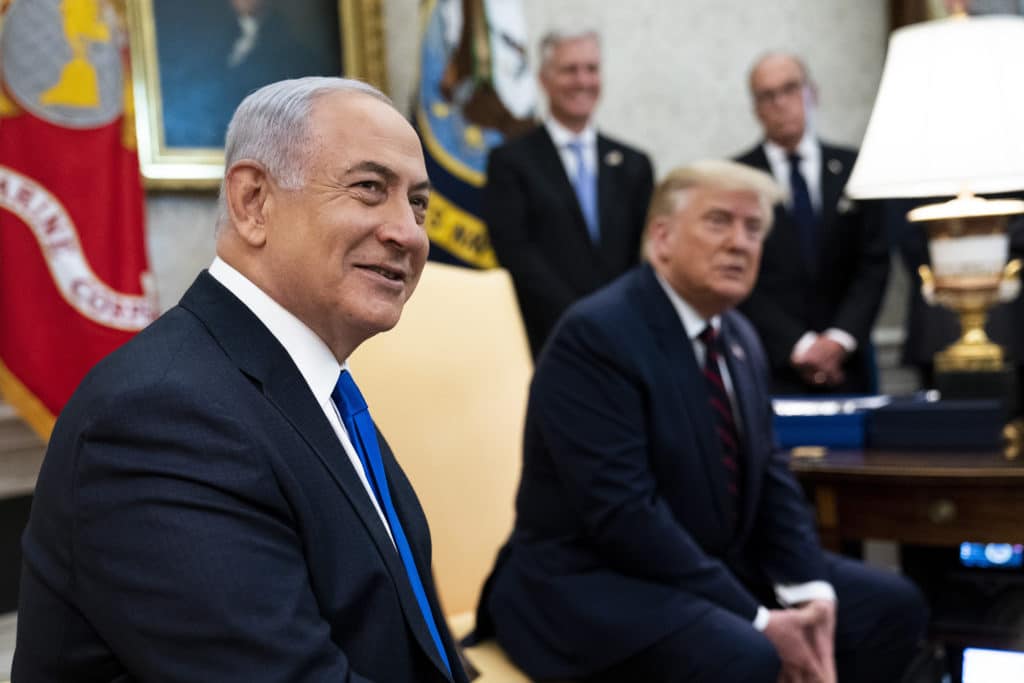
Watching the live video of the signing of the historic Abraham Accords between Israel and the United Arab Emirates (and Bahrain) at the White House on Sept. 15 was like attending an ex’s wedding. There they were, the happy parties, joined in peace and unity. And there I sat, seething with jealousy.

As a Zionist, I love this new era of peace and what it means for Israel. But inside, I coveted with a passion that would have left Abraham mortified. Is it normal to be jealous of the UAE? Yes, if you’re an Iranian Jew.

I watched “the groom,” Israeli Prime Minister Benjamin Netanyahu, and “the bride,” UAE Foreign Minister Sheik Abdullah bin Zayed, stand together and I wished I was the bride. There should have been a Persian bride at the White House last week. It should have been Iran.

For 41 years, my community — which once boasted 100,000 Jews in Iran — has watched helplessly as the regime has targeted Israel through a campaign of terror, demonization and proxy wars. You can’t imagine what it’s like as an Iranian-American Jew watching Iranian leaders host Holocaust cartoon contests every year.

In his remarks, President Donald Trump said the Abraham Accords “open the door for Muslims around the world to visit the historic sites in Israel and to peacefully pray at Al-Aqsa Mosque in Jerusalem, the third holiest site in Islam.” And Israelis now can visit Bahrain and the UAE in total freedom. Such sweet words, and yet, they were like salt on a wound.

want that. I want to be able to go back to Iran. I want to swim in the Caspian Sea and buy flowers at the famous Tehran bazaar. I want to return, only this time as an annoying tourist who won’t be fooled by local merchants. I want to haggle with them in perfect Persian until their hair falls out. That’s how I’ll know I’m truly back.

Is it normal to be jealous of the UAE? Yes, if you’re an Iranian Jew.

But more than anything, I want to visit the graves of my paternal grandparents, whom I lovingly called Babachi and Nanechi, but never saw again after we escaped Iran. If an Israeli now can sunbathe in Bahrain, is it too much to ask that I be able to place a stone on my Nanechi’s grave in Tehran?

During the ceremony, when bin Zayed passed on “the regards of the UAE people” to millions of Israelis, I broke down. Peace is so hard-earned and yet so attainable. Many Iranians don’t hate Israel. They hate the Iranian regime. I believe the Iranian people do send their regards to the people of Israel.

Trump said that “other countries will follow” and pursue peace with the Jewish state. At that point, he was just teasing me. Yes, other countries  follow (according to some analysts, Morocco might be next), but not Iran. It’s too busy. All that uranium won’t enrich itself.

If Morocco and Israel normalize relations, I expect to attend a peace agreement party hosted by local Moroccan Jews, who’ll cheer and toast with cups full of arak, while I sit on an ottoman and seethe. Sure, I’ll clap, but it will be hard to watch. Does that make me self-centered and petty? Yes. But I really loved my Nanechi.

Israel and some Arab states are aligning to thwart Iranian power in the region, and last week’s ceremony sent a clear message to Tehran. Will there be peace between Israel and Iran in my lifetime? I don’t know. The bigger question is whether there will be a free, democratic Iran in my lifetime. It’s something I pray I’ll live to see.Maybe one day, the president of a free Iran will stand alongside the Israeli prime minister at the White House. Can you imagine that? Nothing will keep me away from that ceremony.

During his remarks, Netanyahu imagined a future where Jews and Arabs “live together, pray together, and dream together.” Until a president of a free Iran offers such messages of peace and friendship at the White House, it’s still just that — a dream. But I won’t stop hoping.


Tabby Refael is a Los Angeles-based writer, speaker and activist.

I’m Jealous of the Abraham Accords Read More »

Novel’s Russian Jews Find Rough Going in Israel

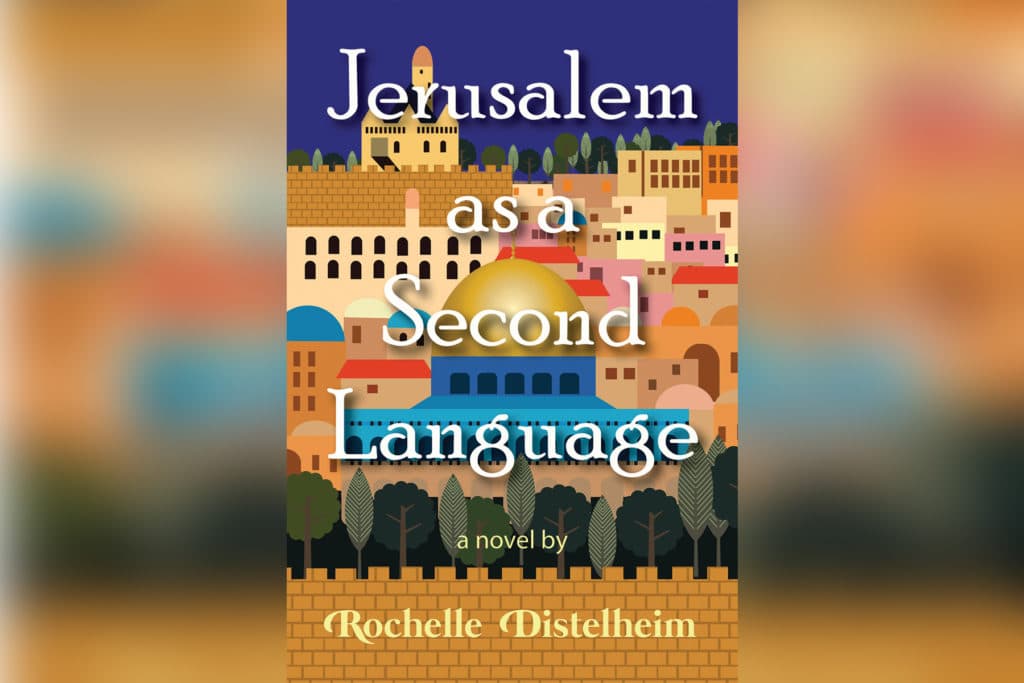
The setting of “Jerusalem as a Second Language,” a new novel by Rochelle Distelheim (Aubade Publishing), harks back to a remarkable moment in history. The year is 1998. The place is St. Petersburg. And the very first person we meet is Mikhail Gorbachev.

“Gorbachev was the one who said to the Jews what had never before been said: Go, find happiness, find love, good luck, sending us off to other countries in a blizzard of applications and visas and papers stamped in gold leaf,” observes Manya Zalinikov, the character whose voice we hear in Distelheim’s enchanting and winning book, a remark whose good cheer is purely ironic.

Manya and her family are olim, newly arrived in Israel after an exit from Russia that reads more like escape than emigration, but she is homesick. “Why my yearning for Russia, where, until now, one’s Jewishness was treated as a birth defect?” she muses. “Unreasoned longing. Or, perhaps, a sad knowing that I cannot slip out of my St. Petersburg life as easily as a snake slips out of its skin.”

Similar stories have been told about other generations of Jews who have left their places of birth and reinvented themselves, both in Israel and the Diaspora. “Jerusalem as a Second Language,” however, allows us to experience the profound culture shock of Jews from post-Soviet Russia who find their way to a country and a people that are famously intense.

 “Jerusalem as a Second Language” allows us to experience the profound culture shock of Jews from post-Soviet Russia who find their way to a country and a people that are famously intense.

Manya, for example, admonishes her daughter, Galina, against the sun and wind: “You want to age early, like Israeli women?” She sees signs everywhere in Russian, French and Spanish: “Please speak Hebrew,” but she finds the native language of her new homeland to be an affliction: “My mouth, my voice, my being, refused to make peace with the severe demands of spoken Hebrew.” When she learns that Galina’s army service will be deferred for two years, Manya is outraged: “Not for two hundred years, if I’m alive.”

“Try to relax yourself into it,” urges her husband, Yuri.

“Yuri, the word relax and the word Israel should not appear in the same sentence,” she replies.

Distelheim tells a heartfelt and often heartbreaking story with a light touch and a sparkling sense of humor. One fellow arrival from Russia promptly renames her dog Ben-Gurion, explaining that, back in Russia, he was first called Khrushchev and then Yeltsin. Galina pointedly asks where the milk and honey are and then declares that the phrase “is an advertising slogan Russians made up to get the Jews to leave.”

Still, the author is open-eyed and plainspoken about the challenges that her characters are forced to confront in Israel. Back in Russia, Jews were “not considered to be real Russians.” Here in Israel, they may not be considered to be real Jews if they lack Jewish parents “on both sides.” Even though she is fully Jewish, Manya arrives in Israel without knowing much about Judaism: “Who’s Queen Esther?” she whispers to a companion when the name comes up in conversation. And Manya bristles when her bag is searched at a security checkpoint. “These Russians are troublemakers,” the young soldier cracks, “everyone knows that.”

Manya’s biggest problem, however, is how to keep Galina out of the army. Since married women are not drafted, she sees marriage as the solution. “Yuri said God had His reasons,” observes Manya, whose husband is now fully observant and highly disapproving of Manya’s worldliness. “In His infinite wisdom, He had sent us to Israel. Possibly, He had also sent a young Russian man to Israel to marry Galina and keep her out of the army, to make her happy. To make me happy.” 

At the same time, she finds a job as a pianist at a supper club where Russian Jews gather, thus inviting the reader into the “Russian underground in Jerusalem,” a place every bit as dangerous and exotic as an Eric Ambler novel. She suspects that the club owner is engaged in diamond smuggling, but we see that Manya’s suspicion is only a hopeful thought because, after all, diamonds are “cleaner” than other criminal enterprises that she would rather not think about.

Amid these conflicts, her husband’s rabbi and the nightclub owner emerge as the angel on one shoulder and the devil on the other shoulder. The struggle between them is yet another strand of narrative that drives the novel forward so powerfully that we come to see “Jerusalem as a Second Language” as both a love story and a thriller. Almost inevitably, the wave of tension washes over Yuri and Manya, and their clash over what is permitted and what is forbidden threatens to tear their marriage apart. When Manya blames the moral crisis on “[t]his country, this frantic, frenzied, violent country,” Yuri retorts: “You blame Israel? Israel did this?”

Yuri means to put the blame squarely on his wife. Yet it is also true that Israel itself is perhaps the single most important character in “Jerusalem as a Second Language,” which builds to a climax that is explosive in every sense of the word. To put it another way, the men and women we meet are imaginary but the place where they encounter one another is very real. “I am shattered,” says one character, and another one replies, “I am not exactly in one piece.” Thanks to the author’s superb skill as a storyteller, these words are literal and metaphorical at the same time.


Jonathan Kirsch, author and publishing attorney, is the book editor of the Jewish Journal.

Novel’s Russian Jews Find Rough Going in Israel Read More »