fbpx

September 4, 2020

Obituaries: Sept. 4, 2020

Annette Pensick Ades died Aug. 12 at 95. Survived by sons Steven (Laurie Levit), Andrew (Virginia Chesney), Robert (Naomi Guth); 5 grandchildren. Hillside

Helen Arkawy died Aug. 4 at 72. Survived by husband Harvey; daughters Andrea Bandle, Denise Ching; 3 grandchildren; sister Paula Bronstein; brother Norman Gurfein. Mount Sinai

Shlomo Ben-Menahem died June 13 at 80. Survived by wife Tova; sons Eyal (Anat), Ofer (Rachel), Sean (Shiraya), Ronen (Michal); 13 grandchildren; sisters Bracha Siman-Tov, Ester Budakov; brothers Moti (Ester), Eli (Aliza), Yossi (Yehudit). Mount Sinai

Cary Collons died Aug. 7 at 74. Survived by husband Mark; daughter Kacy; son Brad (Sophie); 5 grandchildren; sister Trudy. Hillside

Ann Del Monte died Aug. 9 at 105. Survived by niece Pamela. Hillside

Evelyn Dorman died Aug. 6 at 94. Survived by daughters Karen Levin, Claudia (Jeffery) Davidson; 2 grandchildren; 4 great-grandchildren. Mount Sinai

Gilbert Edelstein died Aug. 5 at 88. Survived by wife Naomi; sons Jeff (Michelle), Gary, David (Margie); 4 grandchildren; 3 great-grandchildren. Mount Sinai

Stanley Eisenberg died Aug. 5 at 92. Survived by wife Mitzi; daughters Sheri (David), Lauren (Howard); sons Gary (Edelia), Bruce (Deborah), Eli (Sandra); 15 grandchildren; 13 great-grandchildren. Hillside

Eleanor Fainberg died Aug. 13 at 96. Survived by son Theodore (Rachel); 3 grandchildren. Mount Sinai

Audrey Feldman (nee Shultz) died Aug. 10 at 89. Survived by daughters Nancy (Isaac) Feldman-Weingart, Sue; sons Jeffrey (Susan), Gary (Sonny Abesamis); 5 grandchildren; 1 great-grandchild; brothers Alvin (Pauline) Shultz, Jack (Barbara) Shultz. Mount Sinai

Aleksandr Fur died Aug. 6 at 91. Survived by wife Alla; son Alex; 2 grandchildren. Mount Sinai

Ruth Goldberg died Aug. 7 at 91. Survived by daughters, Carole Schroeder, Judy Rosen, Edie; son Robert. Mount Sinai

Mildred Hoffman died Aug. 1 at 93. Survived by daughter Judy; sons Maury, Larry (Dori); 5 grandchildren. Malinow and Silverman

Sally Claire Kaufler died Aug. 11 at 91. Survived by daughter Carrie (William) De Smet; son Matt (Dee Dee); 2 grandchildren; brother Fred (Phyllis) Schoen. Mount Sinai

Ronald Howard Kleinfeld died Aug. 11 at 88. Survived by daughter Laura; son David (Cynthia); 4 grandchildren. Mount Sinai

Ryan Alexander Koeppel died Aug. 6 at 16. Survived by mother Carin; father Jeffrey; sister Sydney; brother Samuel; grandparents Michael and Lois Weinberg, Alida Koeppel. Mount Sinai

Charlene Roberta Lash died Aug. 5 at 74. Survived by husband Jason; son Adam Y. Lippman; 2 grandchildren. Mount Sinai

Jade Lee Minkin died Aug. 2 at 49. Survived by mother Susan; father Gary; sister Stephanie (Jeffrey) Simon Block; brother David (Jessica). Mount Sinai

Shirley Moos died Aug. 6 at 100. Survived by sons Steven, Floyd; 2 grandchildren. Mount Sinai

Barbara Pearl died Aug. 6 at 89. Survived by husband Daniel. Hillside

Thomas Pollock died Aug. 1 at 77. Survived by daughters Alexandra Gagerman, Allegra Pollock Brandado; son Luke. Malinow and Silverman 

Malvin Ross died Aug. 12 at 99. Survived by daughters Teri (Todd) Sachs, Dale (Mark) Bodenstein; 4 grandchildren; 6 great-grandchildren. Hillside

Stephen Sadowsky died July 29 at 71. Survived by wife Maria Stratton; daughters Elena Rose (Geofrey Kehlmann), Lily Diane; son Jacob Anthony; sister Doris (Howard) Banilower. Mount Sinai

Albert Sax died Aug. 13 at 95. Survived by daughter Linda; sons Lloyd, Jeff, Ken; 1 grandchild. Mount Sinai

Rubin Schubert died Aug. 5 at 74. Survived by niece Beth (Ronald); nephew Brian. Hillside

Arlene Serlin died Aug. 5 at 87. Survived by daughter Paula Teweles; son Marc; 5 grandchildren; 5 great-grandchildren. Mount Sinai

Doris Siegel died Aug. 8 at 98. Survived by sons Stuart (Sharon), Barry (Patricia), Howard (Edie); 7 grandchildren; 11 great-grandchildren. Mount Sinai

Esther Louise Sklarewitz died Aug. 4 at 94. Survived by husband Norman. Mount Sinai

Katherine “Kay” Wacker died Aug. 10 at 95. Survived by daughter Beverly (Harvard) Horowitz; sons Gerald (Ellen), Michael (Doreen), David (Karen); 9 grandchildren; 4 great-grandchildren. Mount Sinai

Ann Davis Wenkert died Aug. 3 at 94. Survived by daughter Deborah (Roger) Young; sons Daniel (Soheila), David (Deidre); 4 grandchildren. Mount Sinai

Leonard Wilstein died Aug. 7 at 90. Survived by wife Joyce; sons Gary, Ron; 6 grandchildren; 3 great-grandchildren; sister Gilda. Hillside 

Vladimir Yakhnovich died Aug. 9 at 83. Survived by daughters Marina Kunitskaya, Svetlana Kuntsky; 2 grandchildren; sister Roza. Mount Sinai

Obituaries: Sept. 4, 2020 Read More »

‘I’m a Zionist’ Is New Frontier of Israel Activism

When pro-Israel activists confront the Israel bashing that has been so prevalent on college campuses, they often argue that anti-Zionism is really a cover for anti-Semitism. In so doing, they convey the message that, somehow, anti-Zionism is not bad enough. It needs the added charge of Jew-hatred to get the world’s attention.

Even if it is true that anti-Zionism and anti-Semitism are intimately connected, we let anti-Zionists off the hook when we make the link. All they have to do is claim that they don’t hate Jews, and, voila, Israel bashing can continue.

This has had a corrosive effect on Israel’s image, particularly among the new generation of American Jews who are critical of Israeli policies. Because they don’t see any “anti-Semitism” per se in anti-Zionism, many of them have joined the Israel-bashing crowd thinking they’re part of a noble cause fighting for the underdogs.

There is nothing noble, of course, about anti-Zionism, or, as my friend Judea Pearl calls it, Zionophobia.

Zionophobia is an insightful term because it captures the truth that anti-Zionism has nothing to do with criticism and everything to do with denying a people’s right. The boycott, divestment, sanctions (BDS) movement, which embodies and defines Zionophobia, makes no bones about this. Its goal is the elimination of the Jewish state because Jews, in the BDS view, have no right to a homeland.

This is where Israel activism must go — Zionism as an expression of human rights. Zionism as a genuine, independent identity.

This is where Israel activism must go — Zionism as an expression of human rights. Zionism as a genuine, independent identity.

You can see this starting to happen. In a statement released Aug. 30 by 43 members of the USC faculty in support of Rose Ritch, who had to resign from student government, the focus was squarely on her Zionist identity.

“Rose Ritch was subjected to vicious online harassment, and her qualification to hold elected office was questioned on the basis of her professed Zionism,” the statement read. “We find it unacceptable that such blatant discrimination on the basis of a student’s belief, identity, or national origin could take place on our campus.”

The word “identity” is essential. It suggests that “I am a Zionist” should be as legitimate as “I am a Jew.” As Pearl likes to say, “Religion doesn’t have a monopoly on Jewish identity. You don’t have to be God-fearing or even Jewish to be a Zionist.”

The letter’s focus on anti-Zionism contrasts with the official response of USC leaders to the Rose Ritch incident, which focused on anti-Semitism. As Pearl told me, “Fighting antisemitism gives [college leaders] a cover up for inaction and a license to avoid the real source of campus hostility – Zionophobia.”

Contrary to what critics claim, Zionism is not a zero-sum game. As the faculty letter asserts, Zionism is inherently not in conflict with other rights, such as Palestinian rights:

“As supporters of the Zionist idea — the right of the Jewish people to a homeland and self-determination — we stand by the rights of all people, including Israelis and Palestinians, to freedom, dignity and peaceful coexistence, and to advocate for their causes with fairness and respect on our campus and in the world.”

In a tweet following the release of the statement, Pearl wrote: “The anti-Zionism virus, which has long been ignored or considered untreatable, now demands a specific vaccine, tailored to its own distinct chemistry. This long overdue letter is inspirational to students and faculty nation-wide.”

Focusing activism around Zionism doesn’t mean downplaying Judaism or anti-Semitism. It simply means identifying a specific threat and treating it as such. It says: “If you believe that Israel does not have a right to exist as a Jewish state, we don’t especially care whether or not that belief comes from a place of animosity toward Jews. The belief itself is bad enough.”

You may criticize Israeli policies all you want, but when you single out and bully a student because of his or her Zionist identity, that is not criticism — that is discrimination.

Making Zionism the driving force of the pro-Israel movement requires a two-fold approach — one based on protection, the other on inspiration.

First, when students are harassed and bullied because of their Zionist identity, we must demand that college leaders explicitly condemn anti-Zionism as blatant discrimination and impose consequences. Zionist students cannot walk around in fear of expressing their identity. They deserve the same protection as all other students.

We’re not talking here about protection from criticism. There is a crucial distinction between criticism and discrimination. You may criticize Israeli policies all you want, but when you single out and bully a student because of his or her Zionist identity, that is not criticism — that is discrimination.

Second, Zionism should be a source of inspiration. Zionism is the culmination of a people’s yearning to return home after nearly 2,000 years of exile. It represents the ability to triumph against all odds; to gather refugees from over 100 nationalities into one sovereign, multicultural, democratic home; to consistently offer humanitarian aid around the world; to seek peace in a hostile neighborhood.

Zionism is about freedom of speech and freedom of religion; about the right to dissent, to argue, to criticize. Zionism is a messy, feisty, imperfect work-in-progress that can be a liberating model for the rest of the Middle East. Indeed, if Arab countries offered its citizens the same rights and freedoms that Israeli Arabs enjoy in a Zionist country, that alone would represent major progress.

It’s time we stop apologizing for Zionism and make it the new frontier of Israel activism. Activist groups would be wise to rally around this message: Discrimination against Zionist students is unacceptable, with or without anti-Semitism, and saying “I am a Zionist” is as legitimate and worthy of respect as saying “I am a Jew.”

‘I’m a Zionist’ Is New Frontier of Israel Activism Read More »

Two Members of the Far-Right Boogaloo Bois Arrested for Attempting to Support Hamas

(JTA) — Two members of the Boogaloo Bois, a far-right anti-government movement, were arrested and charged with conspiring and attempting to give material support to Hamas.

Michael Robert Solomon, 30, and Benjamin Ryan Teeter, 22, were arrested Thursday, according to a Justice Department statement.

According to the Justice Department, the two men were recorded by a purported Hamas member promising to act as mercenaries for the group in exchange for cash. They later gave weapons to the purported Hamas member, who was secretly working with the FBI. The men thought they were working with the purported Hamas member to help overthrow the U.S. government.

“This case can only be understood as a disturbing example of the old adage, ‘The enemy of your enemy is your friend,’” said John Demers, the assistant attorney general for the department’s National Security Division. “As alleged in the complaint, these defendants sought to use violence against the police, other government officials and government property as part of their desire to overthrow the government.”

According to the department, Solomon and Teeter are members of the Boogaloo Bois, a loose network of anti-government extremists seeking to attack the police and other public institutions. They are also members of a subgroup of the movement called the “Boojahideen,” a play on the Arabic word “mujahideen,” which means jihadists. According to the statement, a witness saw Solomon openly carrying firearms in Minneapolis following the death of George Floyd in May.

The U.S. State Department has designated Hamas a foreign terrorist organization.

Two Members of the Far-Right Boogaloo Bois Arrested for Attempting to Support Hamas Read More »

Jewish Federations of North America Raising $54 Million for Coronavirus Fund

(JTA) — The Jewish Federations of North America is working to raise $54 million to ensure continued human services for Jewish communities and those affected by the coronavirus pandemic.

The Human Services Relief Fund will offer $18 million in matching funds raised from seven foundations to federations raising a combined total of $36 million. The funds will be used by agencies that provide emergency financial aid, food assistance, trauma counseling and services, and resources for employees of Jewish communal organizations who have been laid off or furloughed.

Many Jewish community federations already have used their endowment funds and held emergency campaigns to support their local Jewish agencies and Jewish life in their communities, Jewish Federations board chair Mark Wilf said.

“Yet the length and depth of this downturn remains unknown. We believe this effort will help alleviate Jewish families, seniors and others who have been hard hit by this pandemic,” he said.

Jewish Federations of North America Raising $54 Million for Coronavirus Fund Read More »

Kosovo, Serbia to Move Embassies to Jerusalem

Former foes Kosovo and Serbia will move their embassies to Jerusalem after the two countries normalized economic ties with each other under a United States-brokered deal.

The agreement involves Kosovo and Serbia promoting investment and job creation between the two countries. President Donald Trump called the new agreement “historic,” saying that he looks “forward to going to both countries in the not too distant future.”

Kosovo Prime Minister Avdullah Hoti and Serbian President Aleksandar Vucic joined Trump and Vice President Mike Pence in the Oval Office.

“Serbia and Kosovo have announced economic cooperation on a broad range of issues,” Trump said. But Serbian officials involved in the negotiations said they wouldn’t go as far as recognizing Kosovo as a fully-fledged state.

Israeli Prime Minister Benjamin Netanyahu’s office released a statement praising Serbia for being the first European country to move its embassy to Jerusalem.

“I thank my friend President Vucic of Serbia for his decision to recognize Jerusalem as Israel’s capital and move their embassy,” Netanyahu said. “I also want to thank my friend Donald Trump for his contribution to this achievement.”

He also praised Kosovo for being the first Muslim-majority country to move its embassy to Jerusalem; the two countries agreed to establish diplomatic relations under the agreement.

“As I said in recent days the circle of peace is expanding and more nations are expected to join,” Netanyahu said.

Kosovo President Hashim Thaci tweeted, “I welcome the announcement of Israeli PM @netanyahu about the genuine intention to recognize #Kosovo and establish diplomatic relations. Kosovo will keep its promise to place its diplomatic mission in #Jerusalem.”

The Simon Wiesenthal Center also tweeted that the agreement “bodes well for future of #Serbia(mostly Christian), #Kosovo(mostly Muslim), and #Israel(mostly Jewish) and for hopes for peace among people and different faiths. Kudos to Amb. [Ric] Grenell who has effectively took on anti-Semitism and #Iran while US Ambassador in #Berlin.”

Kosovo, Serbia to Move Embassies to Jerusalem Read More »

‘Iron Dome’ Documents the Creation of Israeli Defense System

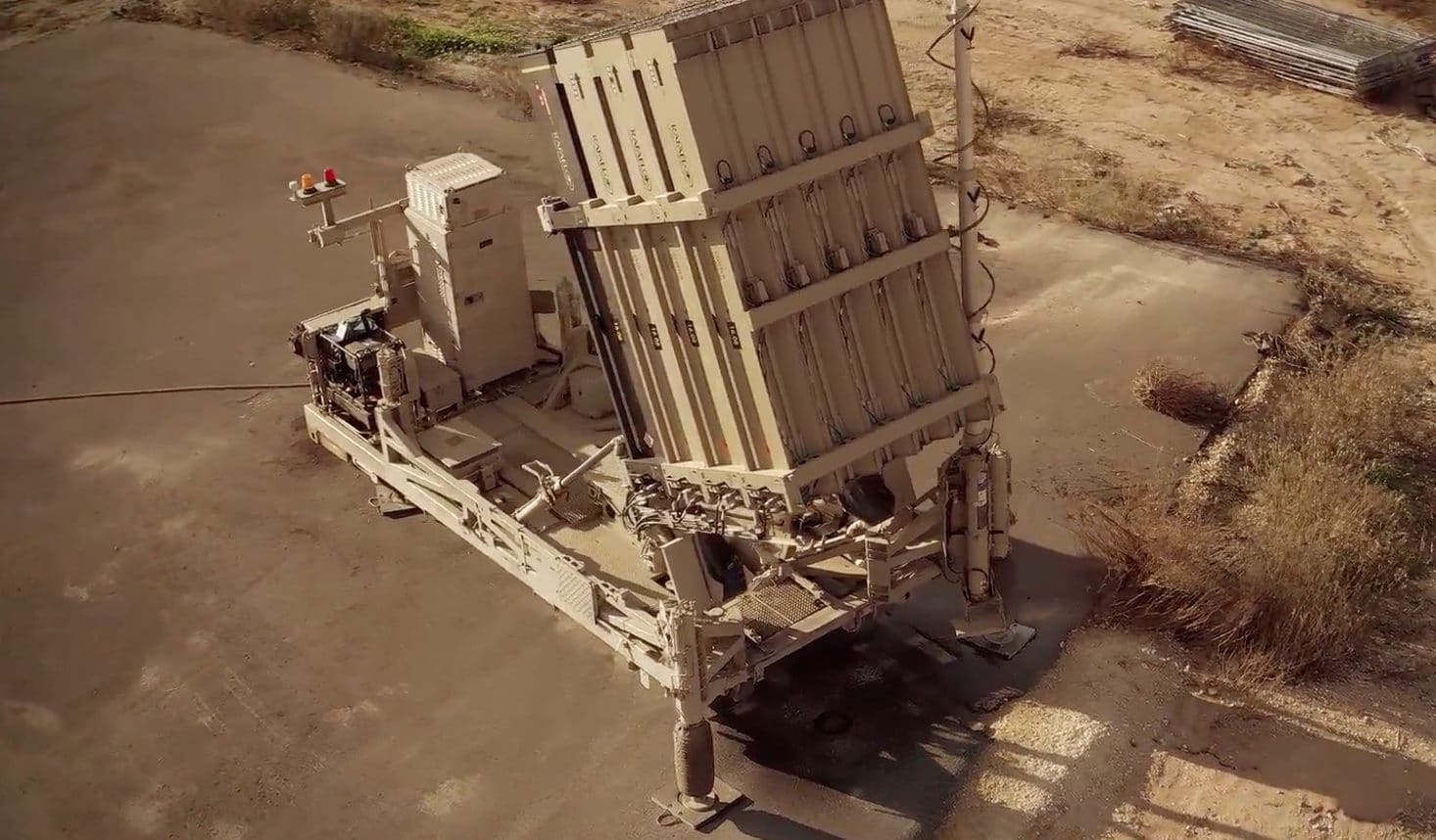
On the surface, a three-part documentary series about Israel’s missile defense system may not sound that compelling. However, the history and development of this game-changing, life-saving technology — the subject of “Iron Dome,” now streaming on Izzy — is a complex and fascinating saga. Since it came online in 2011, Iron Dome has targeted, intercepted and destroyed more than 1,200 rockets.

“It’s a success story that touches all of us in Israel … that involves many elements: fear of death, technological achievements, politics and money,” writer-director Uri Bar-On, who collaborated on the project with Nati Dinnar, told the Journal. Their aim: to “tell a contemporary historical story from a personal point of view.” Part One begins in Sderot, a town in southern Israel that has lived for years under the constant threat of rocket fire from Gaza, and the bombardment has taken a tragic toll.

“The decision to highlight the stories of the victims produces the right context for the Iron Dome story and also makes the series much more human,” Bar-On said. He also interviewed key government and military figures including the man who devised Iron Dome, Brig. Gen. (Res.) Danny Gold; Blue and White party leader and former Israeli military commander Benny Gantz; Knesset Member and Labor party leader Amir Peretz; and former Prime Minister and Defense Minister Ehud Barak. Bar-On said Barak spoke for hours on topics Bar-On knew would not be used in the flim, but he was reluctant to stop him. 

“The appreciation I have for [Barak] on a personal level made me ‘not direct it’ enough,” he said. “Happily, in the editing room, we found a great deal of interesting material from the things he said, so maybe in the end it was for the better.”

Bar-On also sought to interview Palestinians “who are experiencing this conflict from the other side of the fence. Unfortunately, we were able to locate only one Palestinian who lived in Gaza in the past and agreed to be interviewed. It’s a great achievement and contributes greatly to the series, but I hoped we could also interview a Hamas man who lives in Gaza today. Unfortunately, this did not happen.”

“It’s a success story that touches all of us in Israel … that involves many elements: fear of death, technological achievements, politics and money. The decision to highlight the stories of the victims produces the right context for the Iron Dome story and also makes the series much more human.” — Uri Bar-On

Three teams of researchers — one in charge of securing interviews, another that that obtained archival materials from public television and private sources, and a third that dealt with the technological aspect of Iron Dome — worked on the film between February 2018 and its completion this July. 

“The main challenge was how to tell a story that has so many elements, spans so many years and [involves] so many people in a coherent and simple way,” Bar-On said. He pointed out that “the most complicated and significant part of the project was its editing … putting all the pieces together and keeping it coherent for the whole series with a beginning, middle and end for each chapter that will stand on its own.”

The docuseries also emphasizes the role America played in getting Iron Dome off the ground. “Without the economic support of the United States, and especially the Obama administration, this amazing system would not have been possible to achieve at all, and for that we in Israel must be grateful,” Bar-On said. 

Defense comes at a steep price. Each Iron Dome battery costs about $100 million and each missile within the battery costs $50,000. “It is an incredible technological achievement and the fact that they have managed to develop it in such a short time span as three years is amazing,” Bar-On said.

Bar-On, who won Israel’s Independent Film of the Year award in 2015 for “10% My Child,” based on his relationship with his partner’s daughter, studied literature and business administration before changing course to get his master’s in cinema. He directed several well-received short and feature documentaries that led to regular television assignments as a writer and director. He favors documentaries but has two scripted films in the works, one the true story of a Polish writer who came to Israel in the late 1950s and the other a family drama about a grandfather who searches for the granddaughter he hasn’t seen since she moved to the U.S. 

Bar-On’s own family has roots in Poland; his grandparents immigrated to Israel between 1930 and 1950. “The family members of all my grandparents were murdered in the Holocaust, and their stories accompanied all of my childhood,” he said. The son of sabra parents, he was born in the United States and has dual citizenship. Now living in Tel Aviv with his partner and son, he considers himself a secular Jew.

“I do not go to synagogue, nor observe mitzvot, but at the same time, Judaism has meaning for me,” he said. “I very much like to celebrate the holidays and especially have a fondness for Yom Kippur. Everything stops, and the silence gives you the opportunity to gather inside and think many thoughts.” As an Israeli, he added, “my Jewish identity comes to me, anyway. I’m pretty sure that if I were living in the U.S., I would have to find a way to get closer to Judaism and preserve it.”

“Iron Dome” premiered in Israel on public television and was largely well received by the audience and the media, and it’s now playing exclusively on Izzy. 

“I think we were able to tell a unique story that was told in Israel but that could also touch people from all over the world,” Bar-On said. In the future, “I would hope that Iron Dome is no longer needed and the series is no longer relevant, but it seems at the moment it will be relevant for many years to come.”

“Iron Dome” is now streaming on Izzy (helloisrael.tv).

‘Iron Dome’ Documents the Creation of Israeli Defense System Read More »

Einat Levi: The Civilian Ambassador to Morocco

When Einat Levi was 4 years old, her mother was hospitalized for several months. Sent to live with her aunt, Levi was filled with sadness and longing for her mother and would spend hours drawing pictures of her family together. Decades later, Levi still is fascinated by family portraits and they have become a key part of her work in preserving the history of Morocco’s Jewish community. The longing she had for her mother as a child planted the seeds for her to undertake her first roots trip to Morocco in 2013. “Longing is not about getting stuck in the past,” she said. “Instead, it is the most powerful engine I know for renewal.” 

Upon her return, Levi posted photos online of the grave of a distant relative who had been murdered along with five other Jews by a group of Arabs in 1954. The photos wound up being seen by the victim’s daughter. The gratitude the woman felt at seeing her father’s grave for the first time in more than half a century spurred Levi to launch her project, Connection to Morocco, which aims to link people to Jewish Morocco through a number of channels. 

One of those is through trips to the North African country. Most Israeli tourists visit Morocco on organized tours. Levi encourages people to travel independently, claiming that much of Morocco’s magic is missed on group tours where every destination is predetermined. To that end, she helps people construct their own unique visits, doing everything from formulating itineraries and finding drivers, to obtaining visas and often accompanying them as a guide. 

“In order to understand the story of Jewish Morocco, you first need to understand the story of Morocco.”

She also organizes study tours as well as documenting Jewish heritage sites with 360-degree footage. But the soul of her work, she says, is operating a network of virtual communities of expat Moroccan Jews from all over the world. 

There are 12 such online communities representing people from 12 Moroccan cities. After Jews began leaving Morocco, Levi said, they entered what she calls a period of “forgetfulness and invisibility,” where they relegated their past history and heritage to the background as they embraced new identities, either as Israelis, Canadians, French or others. 

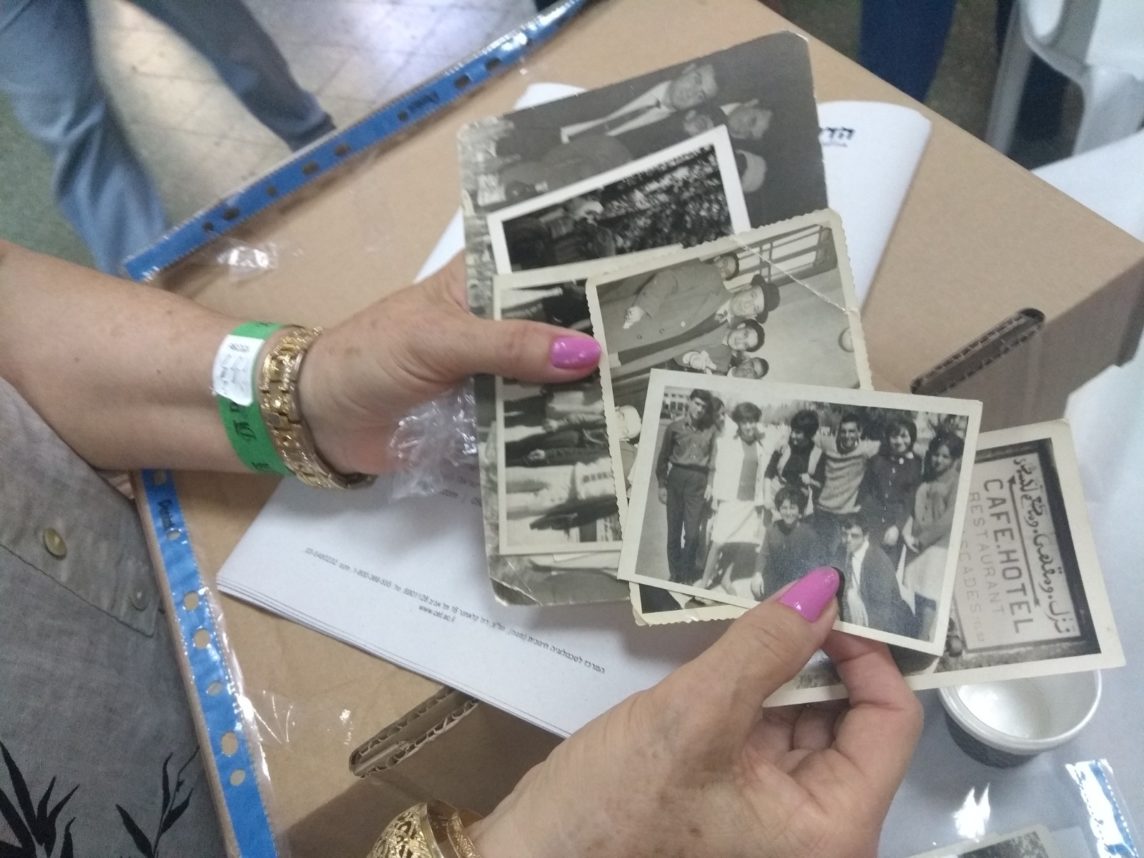
Her initiative, she said, has helped Moroccans regain their past by sharing memories, photos and documents. She also is a researcher at the Mitvim think tank, specializing in Israeli-Moroccan relations, and has become something of an unofficial Israeli ambassador to Morocco. While Morocco and Israel don’t share diplomatic relations, they share warm civic ties. “In order to understand the story of Jewish Morocco, you first need to understand the story of Morocco,” she said. 

Nevertheless, she doesn’t hold out much hope that a peace deal, like the one Israel struck with the United Arab Emirates, is in the offing anytime soon, despite speculation to the contrary. She said Moroccans love and welcome Israeli tourists. They view them as having returned to their homeland — “even if they’re Ashkenazi.” However, that doesn’t negate a deep-seated identification with the Palestinian cause, so a normalization accord with Israel would be unlikely without Palestinian statehood, she said. 

Einat Levi: The Civilian Ambassador to Morocco Read More »

The Bagel Report

Jews in Space and Bagels All Over the Place

As Rosh Hashanah approaches, the Bagels are hunkering down with some new Jewy series’, and getting contemplative about redemption. Esther, who grew up watching Holocaust movies in school, considers whether documentaries — including one about “Iron Dome” from new streaming service IZZY — might be #toosoon or #tooclose to reality for her, and Erin geeks out over Instagram posts from Broadway actors doing fun impressions including one of Mandy Patinkin. Both are looking forward to a Black Jew in space in the new show “Away” (on Netflix) and exploring how the BBC series “The Jewish Enquirer” (on Amazon) channels “Curb Your Enthusiasm” and trolls Jewish journalism at the same time. And in anticipation of the new season of “The Boys” (on Amazon and from Seth Rogen and Evan Goldberg) arriving just before the High Holy Days, Esther and Erin make it Jewy.
Follow ErinEsther and The Bagel Report on Twitter! 

Jews in Space and Bagels All Over the Place Read More »

david suissa podcast curious times

Pandemic Times Episode 84: The Value of Testing for Genetic Diseases

New David Suissa Podcast Every Monday and Friday.

A conversation with Hillary Regelman, director of national outreach for JScreen. Hillary has been with the program since its inception.

How do we manage our lives during the coronavirus crisis? How do we keep our sanity? How do we use this quarantine to bring out the best in ourselves? Tune in and share your stories with podcast@jewishjournal.com.

Pandemic Times Episode 84: The Value of Testing for Genetic Diseases Read More »

The Missing Piece

Some people lose socks in the laundry. Others constantly lose their spare key. My family can’t seem to assemble a complete puzzle. No matter what, there is always one puzzle piece missing. I would understand if there were a puzzle missing a few pieces or two puzzles jumbled together in the same box. But repeatedly, one ominous section of a puzzle taunts us, as if laughing at our naivete in thinking we might complete the masterpiece. And that missing piece steals the attention instead of giving honor to the remainder of an otherwise intact, beautiful scene.

Do you remember Shel Silverstein’s story “The Missing Piece?” To summarize: The misshapen circle was looking for the piece she thought would make herself whole. She wouldn’t stop searching. And in her exploring, she met new friends and experienced the wonders of the world. Finally, finding her piece, she was certain life would be better, but she realized that life was actually better — before. Misshapen, a little off, forced to live with the ups and downs. Finding what was missing didn’t fill her up the way she hoped.

Many of us feel as if we are missing pieces to our puzzle, searching in every direction to feel whole, to feel complete. We crave the presence of other human beings, desire hugs from those we love, wish for the normalcy of summers past. But we can’t seem to find the pieces. They’re lost — under the couch, stuck between shelves, buried in crevices hidden from human eyes. These missing pieces most likely will be lost for a while; even my magical Mom eyes have no power to find them.

And so I’m choosing to see the rest of the puzzle. Acknowledging the hurt in feeling incomplete and also seeing the miracles in front of me. Miracles that would be glossed over if I choose to focus on what’s not there.

Taking an inventory during the month of Elul isn’t just about what’s absent from life; taking an inventory is appreciating what’s already there.

The missing pieces may still be missing. But for the other messy, chaotic, glorious pieces that make up the puzzle of my life, I give thanks.

Shabbat shalom.

The Missing Piece Read More »