fbpx

June 29, 2020

Israel Strikes Hamas Targets in Retaliation for Rocket Attacks

JERUSALEM (JTA) — Israel launched airstrikes on Hamas targets in the Gaza Strip in response to two rockets fired from Gaza aimed at civilian communities in southern Israel.

The rockets fired Friday night from Gaza fell in open areas where no damage was reported. Sirens sounded in several southern Israeli communities, sending residents running for bomb shelters.

In response, the Israel Defense Forces targeted what it called “Hamas terrorist targets” in southern Gaza, including a rocket manufacturing workshop and a weapons manufacturing facility. There were no reports of any deaths.

“The IDF views any kind of terror activity aimed at Israel with great severity and will continue operating as necessary against attempts to harm Israeli civilians,” the IDF said in a statement.

The statement said that the “Hamas terror organization bears responsibility for what is happening inside of and what is coming out of the Gaza Strip, and that Hamas will bear the consequences for terrorist operations against Israeli citizens.” Hamas controls the Gaza Strip.

Later Saturday, Hamas said in a statement that Israel’s strike “increases our resolve to deal with the annexation plan,” The Times of Israel reported.

Israel Strikes Hamas Targets in Retaliation for Rocket Attacks Read More »

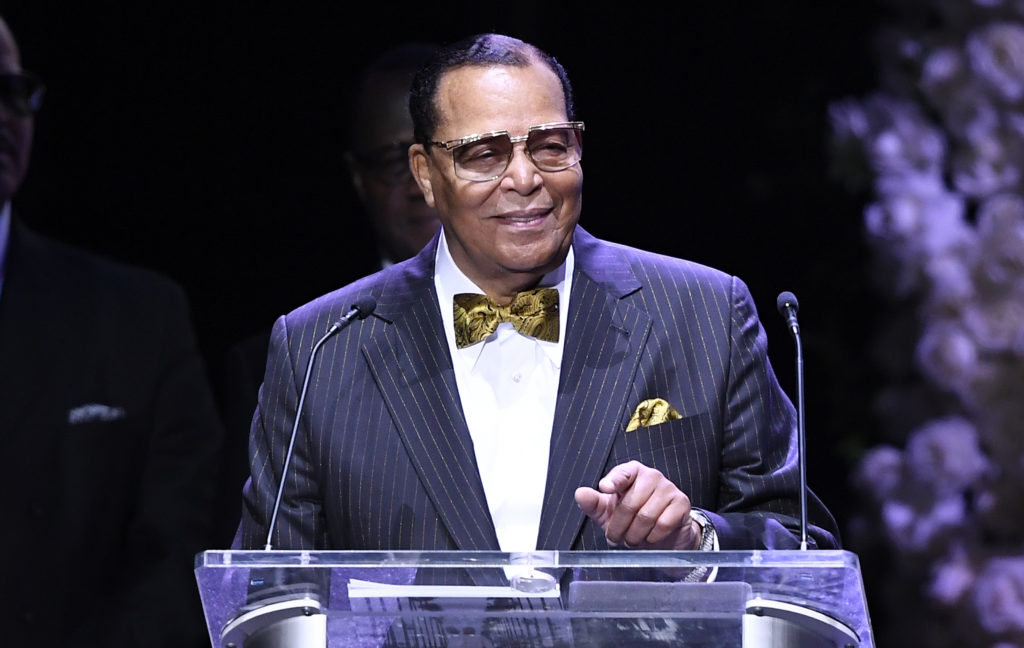
Fox Soul Announces It Will Not Broadcast Louis Farrakhan July 4 Address

The Fox Soul channel announced on June 29 the network will no longer be broadcasting Nation of Islam leader Louis Farrakhan’s address on July 4.

Fox Soul had initially announced on June 25, “LIVE ON FOX SOUL: THE CRITERION THE HONORABLE MINISTER LOUIS FARRAKHAN WILL DELIVER HIS MESSAGE to AMERICA ON JULY 4th.”

Jewish groups condemned Fox Soul for planning to broadcast a Farrakhan speech.

“Louis Farrakhan, a notorious #antisemite & #homophobe, inexplicably continues to get airtime. He repeatedly elevates hateful conspiracies,” Anti-Defamation League CEO Jonathan Greenblatt tweeted. “He has called Jews ‘termites’ and the #LGBTQ+ community ‘degenerates.’ He deserves condemnation, not exposure.”

Simon Wiesenthal Center founder and dean Rabbi Marvin Hier and associate dean Rabbi Abraham Cooper urged Fox Soul to cancel its broadcast of Farrakhan.

“Since the 1980s, Louis Farrakhan has denigrated the Jewish people, Judaism, and the Jewish State, members of the LGBTQ community, the United States of America, and entertainment leaders from Hollywood,” Hier and Cooper said. “Throughout those decades, he has embraced America’s enemies, from Libya’s Ghaddafi to Iran’s Ayatollahs.”

They said there have been various other Black leaders who gave addresses of unity on July 4, but “Farrakhan is a racist, anti-Semite — a demagogue and divider.”

“On behalf of our 400,000 constituent families, we urge Fox Television Network to cancel the speech by a person who has spent his adult life spitting on everything July 4th stands for,” Hier and Cooper added.

StandWithUs Israel executive director Michael Dickson similarly tweeted, “One thing you’ll never get cancelled for: inciting Jew-hatred. But giving this platform to the bigoted Farrakhan is disgusting.”

CNN’s Jake Tapper also weighed in, tweeting: “Farrakhan is a vile anti-LGBTQ, anti-Semitic misogynist. Why is a Fox channel airing his propaganda?”

Actor and rapper Ice Cube, born O’Shea Jackson, defended Farrakhan in a tweet responding to Tapper.

“Watch your mouth Jake,” Ice Cube tweeted. Ice Cube has previously posted tweets that have been criticized as anti-Semitic.

On June 29, Fox Soul announced on Twitter that it would be airing a compilation of Black leaders’ speeches instead of showing the Farrakhan broadcast.

https://twitter.com/foxsoultv/status/1277685960558415874?s=20

Jewish groups praised Fox Soul for the change.

“Thanks to @FOXSoulTV for listening to @ADL’s request,” Greenblatt tweeted. “Hate should have no place on broadcast, in print or on social media. Period.”

Cooper said in a statement that Fox Soul’s decision not to broadcast Farrakhan’s address was “a victory against hate and for unity and mutual respect for all Americans.”

Fox Soul describes itself on its website as “a new live and interactive streaming channel dedicated to the African American viewer. The programs aim to celebrate black culture and deal with real topics that impact the everyday lives of the black community through frank and insightful dialogue with local and national influencers.”

This article has been updated.

Fox Soul Announces It Will Not Broadcast Louis Farrakhan July 4 Address Read More »

Ben Stiller Had a Fake Fonzie Autograph, So Henry Winkler Got Him the Real Thing

If you’re a fan of Henry Winkler’s character Arthur Fonzaralli (aka “Fonzie” or “The Fonz”) from “Happy Days” you’re in good company. Comedian Ben Stiller is also a long time fan and in April he tweeted that in eighth grade, he was able to snag an autographed photograph of the Fonz via Winkler’s niece, Cheryl. The image was inscribed “To Ben, One man’s ceiling is another man’s floor.”

However, Stiller wanted to double-check that the photo was authentic. “Do you think you actually signed it? No worries if it wasn’t you, I’m sure there were a lot of requests,” the “Zoolander” actor tweeted at Winkler.

“Cheryl is my niece,” Winkler tweeted back and the case seemed closed.

However, Stiller was still looking for answers. He dug up the old photograph in June and tweeted the image at Winkler. “I found this prized possession going through stuff at my folks’ apartment,” Stiller wrote. “I thought it was lost to the ages. I hope you actually signed it but if you didn’t it still made me very happy and still does.”

This time, Winkler did not respond, leaving the issue a cold case.

However, this weekend, Stiller announced that his beloved autograph was indeed fake. Nevertheless, Winkler made sure he got a real one — featuring not just him but also his dogs.

“In case we need more proof of @hwinkler4real greatness, on a bad day yesterday I received in the mail this,” Stiller tweeted along with two signed photos from Winkler. The first was him in his Fonz getup, which reads “Ben! You are so cool and so powerful.” The second features the 74-year-old today grinning with his dogs Mosie and Sadie.

“I had told him I had a Fonz photo from childhood signed which he told me was forged, so he replaced it with the real deal,” Stiller wrote, thanking Winkler. “The Fonz always had great timing.”

Stiller is not shy about his love for Winkler’s role in “Happy Days.” In 2019, when Winkler tweeted out a photo of the cast during a Thanksgiving episode, stating, “I am thankful that I was part of this family,” Stiller responded, “Me too. #respect #Ayyyyyyy.”

While the autograph may not have been real, Stiller’s love for Winkler’s iconic character certainly is.

Ben Stiller Had a Fake Fonzie Autograph, So Henry Winkler Got Him the Real Thing Read More »

Don’t Fence Me In

“The wide world is all about you: You can fence yourselves in, but you cannot forever fence it out.” — J.R.R. Tolkien

“Try to stop a parent. A parent will run through a barbed wire fence and then a brick wall for their child.” — Mark Schiff

Pirkei Avot (1:1) (Ethics of our Fathers): The Men of the Great Assembly commissioned their disciples to “build a fence around the Torah.” 

I can’t think of many things these days that aren’t locked up, fenced in or protected. We have prisons, guard dogs, alarms, cameras, bars on windows and border walls. We lock up guns and ammo and meds. We lock our phones and computers. Hotel rooms safes display warnings that the hotel isn’t responsible for the safety of your belongings. I know one place that locked up its defibrillator and, when someone keeled over and they couldn’t find the key, they had to break it open with a hammer. Luckily, the hammer wasn’t locked up. 

Growing up, I remember hearing about chastity belts. Imagine these days some guy saying to his wife or girlfriend, “Sure, I trust you but wear this when I’m out of town. Plus, I’m taking the key with me.” We told women we don’t trust you but you’ll have to trust us. And look how well that worked out. No problem there, right guys? 

In the 1950s, most people in this country didn’t lock their front doors. When I was a kid, if I wanted to visit a friend, I would just show up at their house unannounced. Today, except for Jehovah’s Witnesses, no one shows up unannounced. Nowadays, it would be considered rude or scary.

One thing a person should protect but also keep open is his or her heart.

When I was 12, at about 6 a.m. one Sunday, I went to see if my friend David wanted to go for a bike ride. David’s family lived in an apartment on the fourth floor and never locked their door. So, I tiptoed into the apartment and woke him up. A few weeks later, I went back, got off the elevator and walked into his apartment, first stopping in the kitchen for a glass of milk only to realize I was in the apartment one floor below. I finished the milk and left. 

Fences can be wonderful things. They keep what’s inside protected and what’s unwanted at a safe distance. Throughout Jewish history, our rabbis and leaders have erected fences to protect Jewish tradition, Jewish custom and Jewish communities and to keep out the unwanted influences. These fences are called siyagot laTorah (fences around the Torah.) On Shabbat, we’re not supposed to spend money. To keep us far from transgressing, rabbis erected a fence teaching us that we should not even touch money. That’s why I take my wife to malls and jewelry stores on Shabbat. I know she can’t touch money. 

I’m a married guy so I don’t usually chat with or spend much time alone with other women. A handsome guy like me is very vulnerable to who knows what. So, there’s a fence around me. And I love it. 

About a week ago, my wife caught me stealing. She had baked some cookies and told me not to take any. When she wasn’t looking, I snatched one. Our indoor camera recorded it. Now there’s a fence around the cookies. 

One thing a person should protect but also keep open is his or her  heart. That’s tricky. We need to protect our hearts but we also need to keep them open enough to let in people. Every human has had their heart broken. But if we lock up our hearts, we lock out many of life’s possibilities. Our hearts have to remain open and be ready to welcome the next person, place or thing. That’s why we give people we trust the key to our hearts. A closed heart can lead to a limited and unhappy life. Getting hurt is part of being human. I’ve been hurt and I’ve done the hurting. It’s never fun but it didn’t kill me either. 

So, pop by anytime. I won’t think you’re rude. The door will be locked but if I’m home, I’ll be happy to let you in. 

Mark Schiff is a comedian, actor and writer.


Don’t Fence Me In Read More »

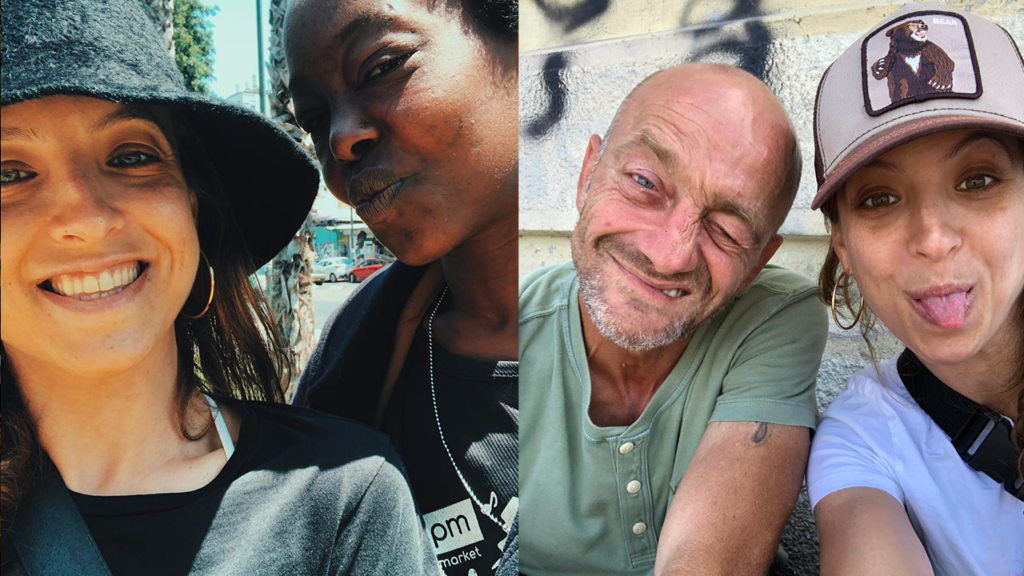
The Woman Who’s Turning TLV’s Homeless Into Celebrities

If you live in Tel Aviv, you simply can’t miss them. They are part of your life. When you hang out with your friends at the local bar – they’re there. When you go out for jogging – they are there. When you come home from your parents on Friday night and waiting at a red light in the entrance to Tel Aviv – they’re there. They are Tel Aviv’s saddest souls, the homeless. Yes, Tel Aviv is not Seattle nor is it San Francisco. But the city struggles with its own homeless people, asking the passersby to spare a shekel. Most of us walk right by them, don’t look, don’t care. But today we’re joined by someone who just can’t ignore them.

Mor Shaal is an artist who was living in Haifa up until a year ago. When she moved to Tel Aviv, she was amazed by the amount of homeless people in the streets, and became fascinated by them. She started talking with some, and then began documenting these encounters for a project which went viral on social media.

Mor Shaal joins us today to speak about her amazing work with the Street Dwellers Project.

Mor’s Facebook, Instagram and her kickstarter

The Woman Who’s Turning TLV’s Homeless Into Celebrities Read More »

Jews Are Standing With Communities of Color. Will Communities of Color Stand With Jews?

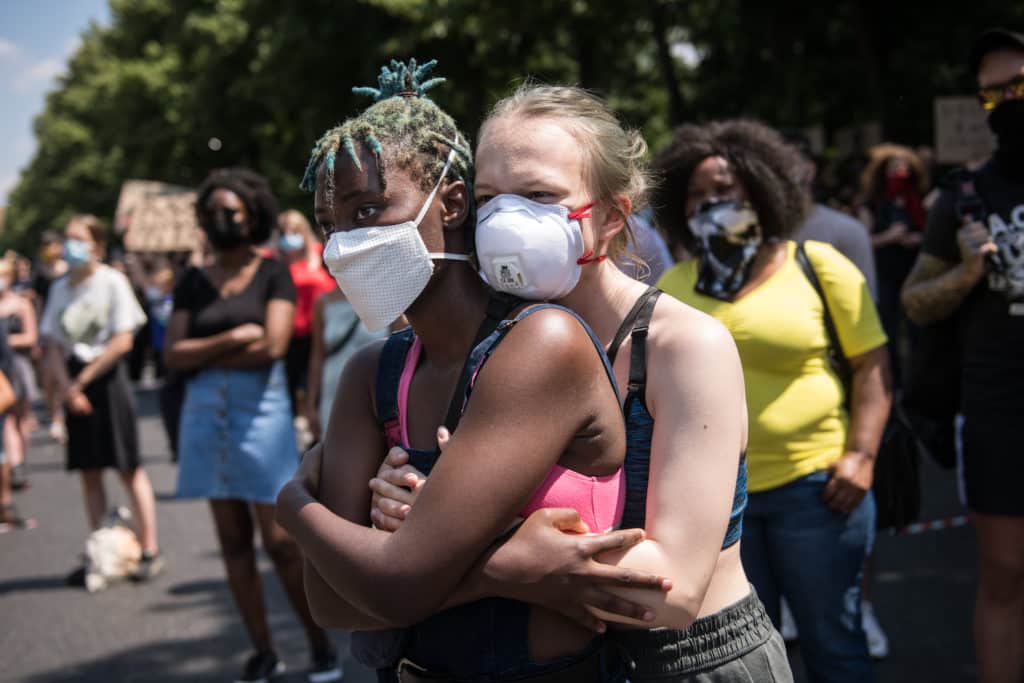
Over the past several weeks, the nation has been engrossed in a revitalized conversation about race relations in the United States. Not surprisingly, the Jewish community has been an active participant in those discussions and has been working to help chart a path forward.

But the more difficult question is whether such commitment and support should flow in both directions. In other words, as American Jews stand in opposition to racism and march on behalf of racial justice, should we expect — or hope — that members of the country’s most prominent communities of color will stand with us when we face prejudice and intolerance of our own?

When synagogues were attacked in Poway and Pittsburgh, minority voices across the country offered statements of support and comfort as we grieved. For that compassion, we will be forever grateful. But when the focus shifts to matters of public policy, these relationships become more complicated.

In other words, as American Jews stand in opposition to racism and march on behalf of racial justice, should we expect — or hope — that members of the country’s most prominent communities of color will stand with us when we face prejudice and intolerance of our own?

Fighting against injustice should never be conditional, of course. Given both our history as a people and the moral foundations of our religious faith, Jews in this country and elsewhere always will be on the frontlines to battle against hatred and bigotry. But in the decades since Jewish activists played critical roles in the civil rights movement of the 1950s and ’60s, the uncomfortable truth is that our relationship with the minority communities that have been the appropriate focus of the current protests has frayed considerably. There have been pockets of laudable cross-community dialogue and alliances, but on balance, the conversations are much less frequent, and the results are not nearly as impactful.

For years, the impact of this drift was most apparent in discussions about the safety and security of the State of Israel. Polling shows that Black and Latino voters are more likely to be supportive of the Palestinian cause than the overall electorate, and tensions between our communities on these issues have steadily grown on college campuses, within activist movements and in the halls of Congress. The clashes over the boycott and divestment movement and the possible conditionality of U.S. aid to Israel are getting fiercer, and the prominence of minority community leaders in these debates is growing as well.

But as examples of anti-Semitism in this country continue to increase at an alarming rate, our challenges are now closer to home. The California legislature has grappled for years over the question of mandated ethnic-studies classes for public school students. The original proposed curriculum was so saturated with anti-Zionist and anti-Semitic sentiment that it was hastily pulled back last summer for further review. But despite ongoing appeals from Jewish, Armenian, Hindu and other underrepresented groups, the core definition of “ethnic studies” still is limited to courses that focus on Native Americans, Blacks, Asian Americans, and Latina and Latino Americans, with no acknowledgement of the challenges, accomplishments or identity of any other marginalized community. Students fulfilling this requirement would finish their semester with no knowledge or understanding that the menace of discrimination and intolerance threatens a much broader audience than those four specific groups.

We will always fight for those who have been discriminated against — no matter what.

A central premise of ethnic-studies education is to confront latent hostilities toward those of other backgrounds by helping young people learn more about those cultures. Therefore, addressing hatred of Jews in that curriculum could have the same beneficial effect as discussions of other types of bigotry. But we may never know.

Majorities of Jewish Americans are deeply committed to the advancement of civil rights and to supporting communities of color as they strive for social justice. We will always fight for those who have been discriminated against — no matter what. But it does raise the question why prejudice against Jews so often is dismissed as a separate and lesser societal concern.

There’s no way to know whether continued Jewish participation in the racial justice discussion will create more support in communities of color when we advocate for our own goals. Either way, we will continue to stand against race-based hatred and discrimination. Hopefully, others will stand with us as well.


Dan Schnur teaches political communications at UC Berkeley.

Jews Are Standing With Communities of Color. Will Communities of Color Stand With Jews? Read More »

Los Angeles Orthodox Jewish Teens Create 50 Care Packages for Nurses Fighting COVID-19

Wanting to thank medical workers at Providence Cedars-Sinai Tarzana Medical Center for their hard work and selflessness during the pandemic, a group of 16-year-old boys from Valley Torah High School assembled and delivered 50 care packages that included energy drinks, snacks, confetti and handwritten “thank-you” notes.

The plan was the brainchild of David Kerendian, who is entering his junior year. At Valley Torah High, David is the president of the Chesed Club, where he and his fellow members participate in acts of community service, regularly visiting hospitals and senior-citizen homes. 

“[Pre-quarantine], I would be able to run all my clubs, have meetings, speak to many people, go out after school, connect with family and visit my little brother I volunteer with at Chai Lifeline,” David told the Journal in a phone interview. “But when the COVID-19 pandemic struck, all of that stopped abruptly … Life went from being so interactive and social to being so excluded and [antisocial].”

That’s when he approached seven of his Chesed club peers with the idea of the care packages and notes. Each letter, David said, was unique and personalized. They wrote a combination of serious, heartfelt and playful messages, which also included jokes and poems. 

One of the cards read: “Roses are red, Violets are blue. To be honest, I don’t know any poems, but I really want to say THANK YOU!!! Really, thank you so much for all the amazing work you do and I hope you enjoy this small package.”

“[I wanted] to make [the staff] feel like they’re being seen, like they’re being noticed,” David said, adding he hoped that others would be inspired by his idea. 

“Despite who you are, where you come from, what your age is or how many resources you have, any little thing can count to bring some goodness, some light into a room of darkness — so to speak. You don’t necessarily need to be a politician or someone with crazy resources. You can really be a teenager living at home, living your everyday life [who does] little acts of kindness; little acts in your community that could really go a long way.”

Raised in an Orthodox home, David said he had an “innate drive” to give back to his community. “The Jewish nation is always so focused on helping others, doing tzedakah and [giving money] to the poor,” he said. “The [medical workers] out there are sacrificing so much to save me and to save others, that this sense of community and this urge to give back — which I think was built into me because of my Jewish background — kicked in.”

David got in touch with the hospital’s patient experience specialist Kendrick Balba, who personally delivered the care packages to the nurses at Providence Cedars-Sinai Tarzana. 

“You don’t necessarily need to be a politician or someone with crazy resources. You can really be a teenager living at home [who does] little acts of kindness.” — David Kerendian

“David taking initiative and wanting to give back really was heartwarming for not only myself but our staff,” Balba wrote in an email to the Journal. “His donation brought a lot of smiles and joy as it made their day …. Getting a call from him and hearing how he wants to give back to his community really spoke volumes about his character. We are really appreciative that he was thinking about us during this time.” 

Balba added, “Acts of kindness instill hope in medical workers because heartfelt thanks from the community and each other remind us that we are not alone in this period of uncertainty. Receiving all these generous donations from businesses and families remind us, too, that they are rooting for us, and we are all in this together.”

To make a donation, contact Pam Egendorfer at (818) 708-5176 or visit the website.


Melissa Simon is a former Journal summer intern. 

Los Angeles Orthodox Jewish Teens Create 50 Care Packages for Nurses Fighting COVID-19 Read More »

We Said Go Travel Summer News DC (During #COVID19) June 2020

June News 2020 with We Said Go Travel:

Welcome to Summer COVID-19. I have been in Los Angeles since March 9, 2020. That is 112 days. It is the longest I have been in one place that I can remember.

I never imagined there would be a summer with no planned trips, no summer camp and masks required.

What have I been doing? During my walks around the block and now on Santa Monica beach, I have been practicing taking photos with my new phone, #LGV60ThinQ.

I have been working to amplify voices on my site and was honored to publish remarks from my Rabbi on Juneteenth.


Thank you to Gus, PADI, Beaches Resorts, Mike and ScubaNation TV! I loved dancing underwater on Scuba at Beaches Turks and Caicos with Gus! Thank you to Dive-In with Padi for including me and Mike for filming our impromtu underwater moment at 70 feet. Thanks also to my dive buddy, Michael, for the dramatic ending! Learn more about my travels at Beaches Resorts in Jan 2020.

Guess What! Superman Saved my Girl Scout Troop! I was on the Caped Wonder Superman podcast talking about when we filmed in 1978!
Have you ever wondered how to be a travel writer? Videographer? Listen to me on Candid Convo with Celia Werner
Thank you to MSN, Lindsay Tigar and Reader’s Digest for including me in “13 Ways Cruises Could Change Forever After Coronavirus!” Eight of the ways are care of LISA NIVER!

During COVID-19, I have been reading books non-stop. I wrote about 8 books that will transport you for Ms. Magazine as well as Untamed by Glennon Doyle. I have also been sharing about books on We Said Go Travel including: Cheryl Strayed’s Brave Enough, Leslie Blodgett’s Pretty Good Advice:For People Who Dream Big and Work Harder, Mitch Albom’s Finding Chika: A Little Girl, an Earthquake, and the Making of a Family and Jodi Picout and Samantha van Leer’s Between the Lines.

I recently published a video from my March ski trip in Utah! Read all about it: Want to Ski in God’s Armchair? Inspired Summit Adventures

WHERE CAN YOU FIND MY TRAVEL VIDEOS?

Here is the link to my video channel on YouTube where I have over one million two hundred thousand views on YouTube! (Exact count: 1,210,000 views) Thank you for your support! Are you one of my 2,730 subscribers? I hope you will join me and subscribe!

For more We Said Go Travel articles, TV segments, videos and social media: CLICK HERE

Find me on social media: Instagram, Facebook, Twitter, Pinterest, YouTube, and at LisaNiver.com.  My social media following is now over 160,000 and I am verified on Twitter.

My fortune cookies said:

“Accept something that you cannot change and you will feel better.”

“Ability will enable you to get to the top but character will keep you from falling.”

Stay safe and healthy! We will travel again….

Lisa

Sunset in Santa Monica in Feb 2020

We Said Go Travel Summer News DC (During #COVID19) June 2020 Read More »

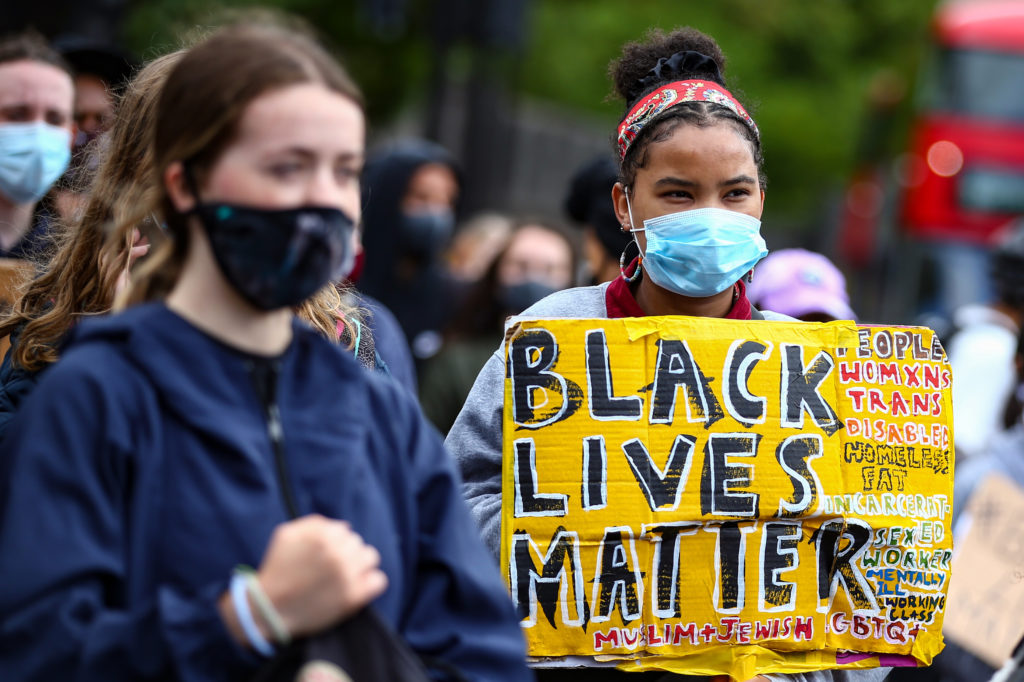
Black Lives Matter UK Conflates Its Movement With the Palestinians’ Struggle on Twitter

(JTA) — Black Lives Matter in the United Kingdom conflated its movement with the Palestinians’ struggle against Israel’s “settler colonial pursuits.”

“As Israel moves forward with the annexation of the West Bank, and mainstream British politics is gagged of the right to critique Zionism, and Israel’s settler colonial pursuits, we loudly and clearly stand beside our Palestinian comrades. FREE PALESTINE,” Black Lives Matter UK tweeted Sunday in the first of a series of tweets highlighting Jewish, Israeli and Palestinian groups that oppose “Zionism.”

The tweets highlight statements from groups such as Jewish Voice for Peace in the United States and the Boycott, Divestment and Sanctions movement against Israel. The former supports the BDS movement.

British Jewish leaders criticized the tweets but said they would stand behind the movement.

“It is beyond disappointing that Black Lives Matter UK, a supposedly anti-racist organization, has leaned into the anti-Semitic trope that British politics is ‘gagged’ in terms of debating Israel, a claim particularly preposterous because Israel is one of the most-discussed foreign policy issues in this country,” Marie van der Zyl, president of the Board of Deputies of British Jews, said in a statement, the Jewish News UK reported. “However, the failings of this particular group will not stop us standing alongside black people in their quest for justice, whether inside or outside our community.”

Karen Pollock, chief executive of the Holocaust Educational Trust, told the Jewish Chronicle that it was ‘’disappointing and dangerous to post something like this to thousands of followers who sincerely want to fight racism.’’

She added: “Gagged? Gagged by whom? The insinuation is depressingly clear.’’

Black Lives Matter in the United States had tried to link its efforts to the Palestinian cause and some of its supporters continue to do so.

Black Lives Matter UK Conflates Its Movement With the Palestinians’ Struggle on Twitter Read More »

‘Parenting in a Pandemic’ Booklet Offers Insights on How to Help Teens During COVID-19

COVID-19 has been tough on everyone. But for teens, who may not know how to ask for help, it has presented a whole new struggle. From loneliness to disappointment over canceled proms, social outings and graduations, teens now have to figure out how to contend with many unforeseen challenges.

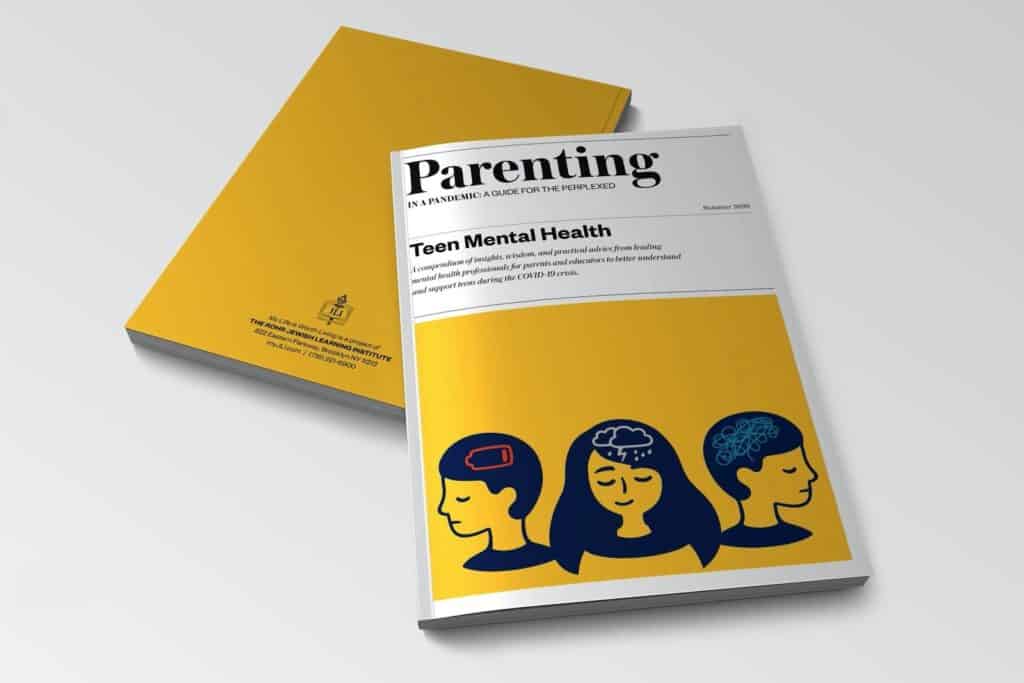
In an effort to address these issues facing teenagers, the Rohr Jewish Learning Institute (JLI) has released “Parenting in a Pandemic” a free 36-page booklet with teachings from mental health professionals who work with adolescents.

“Everyone I’ve been in touch with is swamped with requests for therapy,” Rabbi Zalman Abraham, marketing director and course author for the JLI, said in a phone interview with the Journal. “There’s a lot of really good wisdom [in the booklet].”

The JLI — an adult-education network run by the Chabad-Lubavitch community — put out the booklet as part of its youth suicide-prevention initiative, “My Life Is Worth Living.”

Under the program, youth leaders learn how to recognize the warning signs of teen suicide, assess risk and engage in group discussions that incorporate contemporary psychology and Jewish wisdom. The JLI hopes to train 1,000 educators, youth leaders and camp counselors by the end of 2020.

“Parenting in a Pandemic” includes commentary from Thomas Joiner, a psychologist at the University of Florida; Lisa M. Horowitz, a staff scientist/clinical psychologist at the National Institute of Mental Health Intramural Research Program; and Lisa Robin Jacobs, a psychiatrist in Palo Alto, Calif.

In an essay in the booklet titled “Let School Go During COVID-19,” Jacobs writes how people aren’t treating the teen mental health crisis like an emergency — but they should. In one therapy session, she writes she was talking with a parent who was concerned about her daughter missing school because of mental health issues, but didn’t want to take her to an intensive treatment program.

“I was shocked,” Jacobs writes. “This girl had a life-threatening illness. As an American teen, depression was more likely to kill her than any other medical illness. If it was cancer, her parents wouldn’t be worried about how much school she missed to get chemotherapy.”

Abraham said one parent who read the booklet said they found one simple piece of advice to be very powerful: Say to your teen, “Tell me more.”

In his essay on this topic, psychologist Casey Skvorc wrote, “When your child criticizes the hastily assembled distance learning offered by their high school or college — now to be completed at home with a completely different format and style of instruction — ask them to tell you more.”

“Everyone I’ve been in touch with is swamped with requests for therapy. There’s a lot of really good wisdom [in the booklet].” — Rabbi Zalman Abraham

The booklet also features tips on managing anxiety by exercising, meditating and practicing deep breathing, taking the guilt out of parenting, staying calm in unsettling times, and learning about suicide warning signs.

In her piece in the booklet titled “Parenting in Difficult Times,” Horowitz discusses how to have difficult conversations about suicide with your teen. “There is a widespread myth that asking someone if they are having thoughts of suicide will put the idea into their head. It’s actually the opposite; the best way to keep a young person from killing themselves is to ask directly, ‘Are you thinking of killing yourself?’ And then listen, really listen, to their answer.”

The idea for “Parenting in a Pandemic” emerged after the JLI put together a series of trainings for youth directors and leaders before Passover on how to support teens through COVID-19. Then, they commissioned advice from 14 mental health specialists.

Abraham said he hopes the My Life Is Worth Living program and the “Parenting in a Pandemic” booklet will allow teens to feel supported through these challenging times.

“Teens don’t get the help they need because therapy is inaccessible due to cost;  insurance doesn’t cover it and there is a stigma about it,” he said. “We’ve been working with groups across the spectrum to bring out the curriculum, support parents and help all teens get the help they need.”

“Parenting in a Pandemic” is available here.

‘Parenting in a Pandemic’ Booklet Offers Insights on How to Help Teens During COVID-19 Read More »