Actress Chelsea Handler shared a video of Louis Farrakhan discussing racism on her Instagram page on June 14 and called it “powerful.”
The video is a clip of the nation of Islam leader taking questions from the audience during an appearance on “The Phil Donahue Show” on an unspecified date. During the clip, Farrakhan discusses issues of racism and white supremacy.
“I learned a lot from watching this powerful video,” Handler wrote on her Instagram page.
One Instagram user responded in the comments section, “Based on this logic, if you find a video of Hitler saying something positive and powerful, will you feel equally compelled to share it? You gave hate credibility and a large platform today.”
In the comments section, Handler defended posting the video.
“Hitler was responsible for killing millions of lives,” she replied. “Farrakhan is just responsible for his own promotion of anti-Semitic beliefs. They are very different.”
Another commenter praised Handler for posting the video, stating: “Truth is truth, regardless of who it comes from and whether you like them.”
Handler responded, “Agreed. The message should stand alone.”
https://www.instagram.com/p/CBbJE5lgV3E/
The Simon Wiesenthal Center condemned Handler for posting the video.
“@chelseahandler what exactly were you + other Americans supposed to learn from a leader who is a life-long anti-Semite who called Hitler a great man who refers to Jews as insects who spews hatred of LGBTQ people, whose Research Group luridly links Israel to deadly Coronavirus?” the Jewish group tweeted.
@chelseahandler what exactly were you + other Americans supposed to learn from a leader who is a life-long anti-Semite who called Hitler a great man who refers to Jews as insects who spews hatred of LGBTQ people, whose Research Group luridly links Israel to deadly Coronavirus? pic.twitter.com/8Uq6gChWSV
— SimonWiesenthalCntr (@simonwiesenthal) June 15, 2020
Creative Community for Peace co-founder David Renzer similarly said in a statement to the Journal, “While CCFP supports the Black community in their efforts, it is important that we not confuse the message with the messenger. In a time of rising anti-Semitism, unless and until Minister Farrakhan completely disavows himself from his previous anti-Semitic comments, he remains a problematic figure who should cause entertainers to hesitate before looking to him for inspiration.”
Writer Hazel Cills noted on the feminist website Jezebel that actor Sean Hayes and actress Lisa Rinna also praised the video, and that actress Jessica Chastain may have posted it to her Instagram page before deleting it.
“While he has denied being anti-Semitic, Farrakhan has previously called Judaism a ‘gutter religion,’ has referred to Adolf Hitler as a ‘great man,’ and has spoken about ‘powerful’ and ‘Satanic’ Jews as being his enemy, among many other statements condemning Jewish people,” Cills wrote.
She later added: “I know many celebrities right now are desperately trying to prove they have an activist streak, but hopefully they can do a little research before they post things to social media. It must be so hard not having a manager around to help you Google things!”
The cancellation of trips for Jewish youths and young adults due to the coronavirus crisis will cost the Israeli economy about $200 million.
Trips for about 60,000 young Jews planned for the spring and summer have been canceled, Israel’s business daily Calcalist reported. The heritage trips include programs sponsored by Birthright Israel-Taglit, Masa, and Jewish schools and youth groups.
The estimated loss does not include revenue from air travel.
Israel closed its borders to the entrance of non-citizens on March 18. It has twice pushed back reopening to foreigners, with a tentative date set to allow in non-citizens for July 1.
The Ministry of Interior approved special visas to people attending Masa’s long-term programs in Israel, with a mandatory 14-day quarantine.
The Israel Experience-Educational Tourism Services Ltd., which organizes many of the heritage trips including Birthright, told Calcalist that it has lost $40 million in revenue in the past four months and put 75 percent of its employees on unpaid leave.
A white sheet spray-painted with messages described as anti-Semitic and white supremacist was hung on the walls of the Nashville Holocaust Memorial in Tennessee.
The memorial is located on the grounds of the Gordon Jewish Community Center. The vandalism was discovered on Saturday, The Tennessean reported on Monday.
“We condemn such bigotry and violence, which has no place in Nashville or anywhere in America,” read a statement from the Gordon JCC, which said it was working with local authorities in their investigation and that the Jewish community security network was mobilized.
“Jews have been forced to live with the pain and fear of discrimination and stereotyping for centuries. The tension has never left our collective psyche. Yet, even as a discriminated minority, we understand that such hatred is not isolated,” Felicia Figlarz Anchor, the memorial’s chair, said in a statement.
The Nashville memorial hosts hundreds of visitors each year, according to the statement.
It includes a wall inscribed with the names of deceased Holocaust survivors and victims, an eternal flame, a symbolic sculpture inspired and a reflection area with seating, according to its website.
(JTA) — A group of 37 members of the Peruvian Jewish community flew to Israel on a special charter flight amid high rates of COVID-19 in their native country and street riots that have broken out as a result of a scarcity of food and medical supplies.
The group landed at Israel’s Ben Gurion Airport on Friday and, like all other newcomers, was forced into a 14-day quarantine. The flight was organized by the International Fellowship of Christians and Jews, a nonprofit that works to build support for and facilitate immigration to Israel.
“We are required to stay at home as a result of the closure. From the window of our house we can see the riots happening outside,” said Gabriel Shnaider Ackerman, 20, who was on the special flight and will soon enlist in the Israeli army.
Peru has the second-largest coronavirus outbreak in Latin America after Brazil, with over 200,000 confirmed cases and 5,700 deaths, according to the Peruvian Ministry of Health. Nearly half of the cases are in Lima, home to most of the country’s 2,000-strong Jewish community.
“Residents in Lima are in a very high state of tension,” said Gustavo Gakman, director of the International Fellowship of Christians and Jews’ Latin America, Spain, and Portugal division.
“This is a country that was in financial calamity even before the coronavirus pandemic,” he said. “Now the situation has only gotten worse for the civilian population. Their ability to go out and to go to work has been halted, and the welfare system in the country is limited.”
Growing up, Arya Marvazy knew only of one person who came out as queer in his tight-knit Persian Jewish community. That person was ostracized by family members. He frequently heard homophobic jokes and comments, including by peers, relatives at Shabbat dinner and — one time that seared into his memory — the rabbi of his synagogue.
So when Marvazy realized he was gay in sixth grade he felt “completely and utterly alone.”
“I really did believe, if I’m being honest, that I could not come out and live a functional life amongst friends and family and community as a Persian Jewish person,” he said.
But things looked different when Marvazy shared his coming-out story in March to some 100 people at the West Hollywood City Council chambers. The attendees had come together to celebrate the fifth annual Persian Pride Month, an initiative that Marvazy leads for the Jewish LGBTQ group JQ International.
Ordinarily, Persian Pride Month serves as the community’s precursor to the citywide Pride celebrations here, but the city’s planned events, which had been scheduled for this past weekend, were canceled because of the coronavirus pandemic.
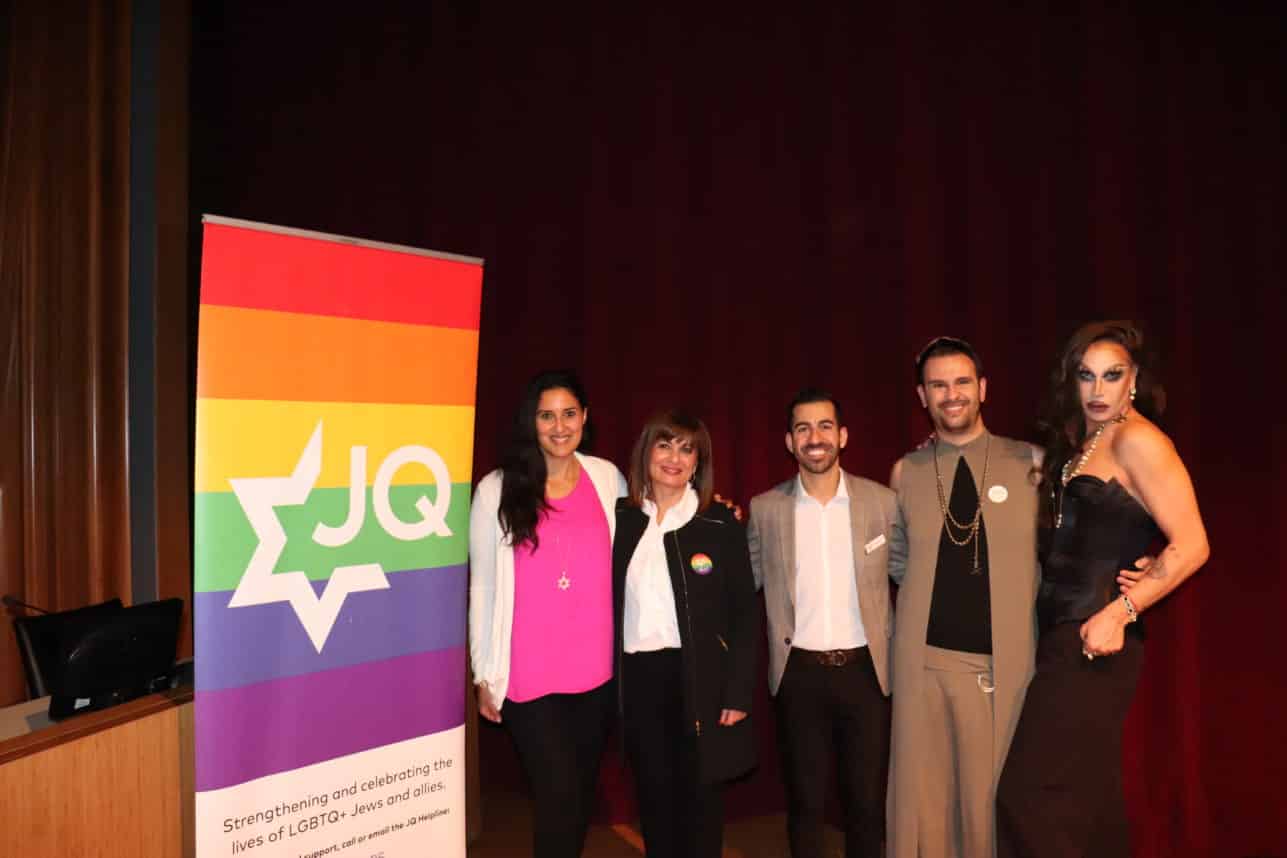
From left to right, Amanda Maddahi, Mahnaz Farzinpour, Arya Marvazy, Amir Yassai and Matthew Nouriel dressed up as drag persona “The Empress” after speaking at a Persian Pride event at the West Hollywood City Council chambers, March 5, 2020. (Josefin Dolsten)
At the event, Marvazy’s mother was one of several parents who shared their road to accepting their children. Marvazy, 33, moderated a panel consisting of an eclectic group of community members — a man decked out in drag spoke of his experience coming out as gay and experimenting with gender boundaries, while a middle-aged woman talked about how she handled her child coming out as transgender.
The audience applauded loudly as people shared coming-out stories, while everyone sat in silence as a therapist read a letter from a mother whose gay son committed suicide.
The event is emblematic of a change that has been taking place in the last five years in Los Angeles’s tight-knit, socially conservative Persian Jewish community, community leaders say.
“There are issues that have been taboo. They’re changing rapidly. The community is changing. People in our community like in the larger society are coming out and in the beginning it’s a shock but then you realize it’s the same person, so what if their sexual preference is different?” said Sam Kermanian, 64, a longtime community leader and senior adviser to the Iranian-American Federation.
Mastaneh Moghadam, an Iranian-American social worker who has spent 20 years counseling hundreds of LGTBTQ Iranians in the city was one of the panelists at the event. When she started a support group for Iranian parents of LGBTQ children in 2015, she was struggling to get more than one person to come. Today, the group has more than 50 members.
“I think the community has become just more willing to open their minds and open their hearts and really listen and hear the stories, and I think that’s what’s made the biggest change,” Moghadam, 46, told the Jewish Telegraphic Agency.
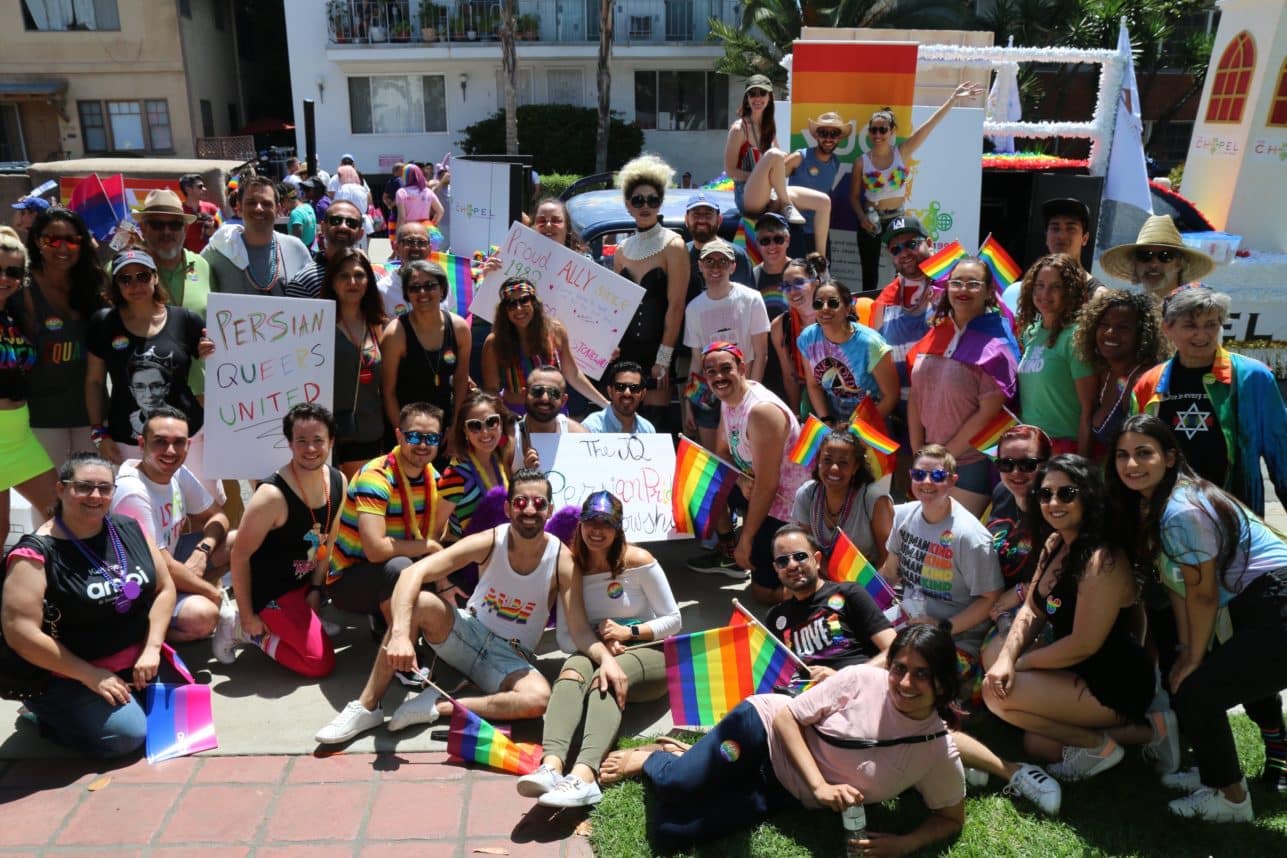
A delegation of Persian Jews and their friends march at the Los Angeles Pride Parade in 2019. (Anna Falzetta)
Persian Jews settled in Los Angeles — jokingly nicknamed Tehrangeles — in the 1970s, fleeing persecution following the Islamic Revolution. Today there are about 50,000 Persian Jews living there, making it the largest community outside Israel. The community has flourished and the city is now home to dozens of synagogues, grocery stores and other organizations catering specifically to their needs.
The tight-knit nature of the Persian Jewish community in Los Angeles has allowed it to thrive while maintaining its unique culture, but it also poses unique challenges to LGBTQ people, outside of those found in larger American society.
“I think for many of us as Iranian LGBTQ people, we naturally struggle with what it means to be part of a reputation-based society and a very tight-knit community and dealing with an identity that is historically looked at as shameful,” Marvazy said.
In the fall of 2015, Marvazy was able to put a face to that stigmatized identity when he publicly came out as gay in a Facebook video. His announcement made waves in the community and was viewed more than 35,000 times. In fact, Marvazy still gets up to a handful of messages every week from people who have seen the video and are seeking advice in coming out.
A few months after his public coming-out, he started working part time for JQ International and later would join the organization full time. The group puts on cultural, social and religious events for young LGBTQ Jews and welcomes queer youth of other faiths.
As people sheltered at home this spring because of the pandemic, JQ International’s helpline saw a record number of calls — something Marvazy attributed to closeted members of the community losing their outlets beyond their homes.
“We’re seeing raised levels of anxiety and depression, and emotional and mental hardship,” he said.
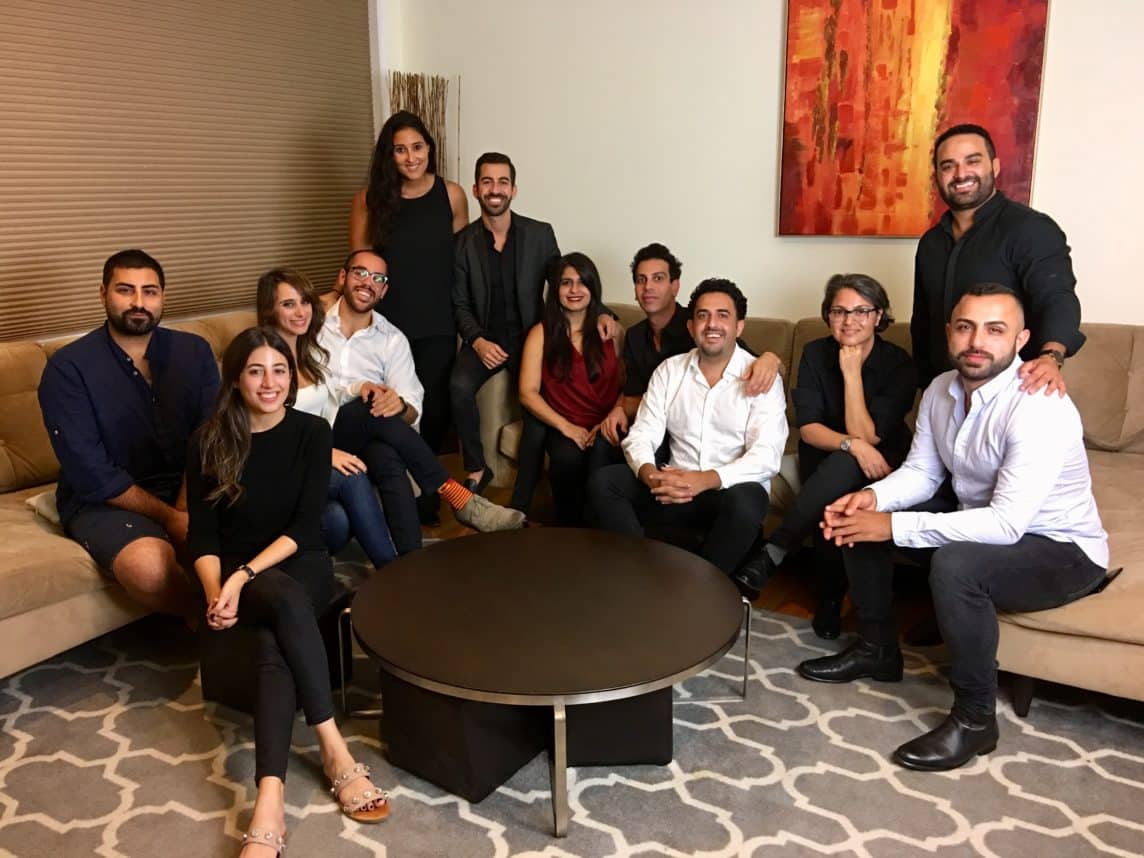
Maddahi and Marvazy in the back together with graduates of JQ International’s first Persian Pride fellowship cohort in 2018. (Mariya Stangl).
The group had to cancel some of its Persian Pride programming, originally scheduled to extend throughout March, but has been hosting virtual events to provide support and a sense of community.
Moghadam, the therapist who counsels LGBTQ people, said the value that the community places on collectivism and conformity can make it hard for people to come out.
“Anything that makes you unique and different from the general public is looked at as taboo, and so sexual orientation being different than straight is definitely something that’s looked at as taboo and not normal,” she said. “And then in a lot of cases because of that it’s so heavily shamed and looked down upon, and all of that makes a person who is LGBTQ further marginalized.”
When children do come out, it is common for parents to push them to receive conversion therapy, Moghadam said. The debunked practice uses therapy and sometimes hormones in an attempt to change participants’ sexuality. But that’s changing, too.
Prior to five years ago, about 70% of Moghadam’s patients had gone to conversion therapy. Now that number is about 40-50%, although Moghadam said part of the shift has to do with children being more educated on the practice and refusing to go.
Change is also happening around other topics. In 2014, Nicole Nowparvar founded Chaya together with two friends because she wanted to encourage discussions about issues the community had traditionally shied away from.
“There was an element that I felt was missing in our community, which was the openness to diversity and a lack of meaningful conversations,” said Nowparvar, 30. “I think there was an element of shame and fear in our community that didn’t allow people to express who they truly were.”
The organization has grown from hosting monthly to weekly events where community members come together to discuss taboo topics such as the LGBTQ community, sex and mental health.
Later this year, Chaya aims to host the second-ever Taboo Summit, an event that brings together more than 100 Persian Jews to discuss topics that are traditionally off-limits. (The event was originally supposed to take place in March but was postponed due to the coronavirus.)
The summit was created by graduates of a fellowship offered by 30 Years After, an organization that encourages civic participation among Persian Jews. The first one focused on LGBTQ issues, body image and dating. This year’s summit is dedicated to sex.
“I think people are ready for this and they’re ready to have these conversations,” Nowparvar said.
Sam Yebri, 30 Years After’s president and co-founder, said an increased openness to breaking down taboos is being driven by young community members.
“It’s a generational shift,” said Yebri, 38. “It has taken time, but those conversations are happening. There’s a new openness to break those taboos.”
Still, there’s a long way to go. Moghadam, the therapist who specializes in LGBTQ issues, says that nearly every one of her patients has contemplated suicide at one point.
And at a recent JQ International retreat for young Iranian Americans, only about half of the 20 participants were comfortable enough to pose for a group photo.
“The people in our spaces are relatively happy and their lives have improved by anywhere from tenfold to hundredfold to even a thousandfold,” said Amanda Maddahi, a 33-year-old LGBTQ activist who previously served as JQ International’s assistant director.
“The success stories are there and change has been made and the infrastructure set up, [but] it is by no means flawless. Gossip is still rampant. There are still people that are fatally in the closet.”
The son of an American billionaire was ordered to leave Israel two days after his arrival for violating quarantine restrictions.
Brandon Korff, son of Shari Redstone, chairwoman of ViacomCBS, arrived Friday and was ordered deported Sunday.
Korff had been granted special permission to enter Israel to visit with his brother, who is a lone soldier in the Israeli army. The exceptional permit was required since non-citizens have not been permitted to enter the country since March 18 due to the coronavirus pandemic.
But Korff violated his quarantine requirements almost as soon as he entered the country by meeting and staying in the same apartment with his girlfriend, Israel’s Population and Immigration Authority said in a statement. It did not name his girlfriend.
Korff’s girlfriend has been identified in media reports as model Yael Shelbia, 18, who is currently serving in the Israeli army.
People who enter Israel are generally required to spend 14 days in self-isolation. Korff agreed in writing to observe a quarantine, according to the authority.
A London man was charged with attempted murder in the stabbing of a rabbi on a city street.
The suspect in custody was identified as Stanley Frances of Stoke Newington, located in northeast London. He is scheduled to appear at Thames Magistrates’ Court on Monday, the London-based Jewish Times reported. He also was charged with possession of an offensive weapon, according to the report.
He was taken into custody the day after the Friday morning attack on Rabbi Alter Yaacov Schlesinger of the Satmar Yeshiva in Stamford Hill, the Jewish Chronicle reported. The rabbi, who is in his 50s, is reported to be in stable condition after being stabbed multiple times on High Street in Stoke Newington.
Passersby detained Frances, who they said perpetrated the attack, until police arrived.
Police said they are “maintaining an open mind” about the motive for the attack, The Guardian reported. They have not yet said the attack was a hate crime or linked to anti-Semitism.
A construction site manager and his brother ran toward the alleged attacker and held him down after hearing a “serious scream.”
With the long-awaited reopening of childcare options remaining effectively closed for the foreseeable future, many parents have resorted to ad-hoc daycare, babysitting and camps for their kids.
A lot of strange things have popped up on my Facebook feed since COVID-19 hit us (like a continuous wave of unrelenting death bricks…sorry to be dramatic). At first, it was Zoom winning the virtual war on how to entertain and educate our children safely at home. My group message boards were full of opportunities for STEM education from your kitchen and music lessons in your bedroom. It was great! (sort of).
Now that lockdown is fading into ‘phased unlocking’ the enthusiasm for Zoom is fading as well and it’s being replaced by new ideas for small-group and semi-socially distanced childcare. Yesterday I saw a Facebook post asking who had a backyard swimming pool they would be willing to ‘rent out’ to a nanny-share for an hour each week. The day before I got an email about some neighborhood high schoolers who would be willing to create ‘camp’ in a backyard for the kids of a few neighbors or cousins who were already seeing each other.
Activities for this ‘camp’ included – basketball, roller hockey, skateboarding and hikes. It sounded kind of fun…and tempting. As a mom of two little boys who I’ve been trying to educate and entertain on my own with little more than a coffee break in three months I totally see the appeal of this. For many parents, this might not just be tempting but necessary as they’re called back to the office or workplace without any of their normal options for childcare available. At first, I was uplifted by the ingenuity of these ideas and the can-do spirit of those trying to fill the gap during these hard times. The more I thought about it though, the more I saw only RED FLAGS.
What at first looks like a thoughtful, even nostalgic, neighborly solution to a pandemic crisis upon closer inspection is a totally unregulated, uninsured, no-safety-net idea that could put kids at risk. Should we really be willing to swap an accredited summer camp that’s gone through multiple safety inspections with specific and tested protocols in place and trained staff for highschoolers who sent out an email? I’m a Jewish mom so of course, I worry, but I really worry about the kids who are too young to speak up for themselves, or even speak at all who are being left in the care of individuals without proper training or background checks.
My agenda isn’t fear-mongering, but it is instigating. I want parents to demand that schools and camps and daycares find a way to reopen safely no matter the financial costs. I am demanding that this should be the top priority of our government and school systems. We must figure out a way to open these institutions safely because staying closed when parents go back to work is fundamentally a dangerous plan.
Marion Haberman is a writer and content creator for her YouTube/MyJewishMommyLife channel and Instagram @MyJewishMommyLife page where she shares her experience living a meaning-FULL Jewish family life. Marion is currently writing a book on Judaism and pregnancy titled ‘Expecting Jewish!’ She is also a professional social media consultant and web and television writer for Discovery Channel, NOAA and NatGeo and has an MBA from Georgetown University.
As of today, Israel hasn’t been hit very hard by the Coronavirus, relatively speaking. The government took extreme measures early on, and managed to limit the spread of the virus and death toll. One of the unique steps taken by the Israeli government was to rent out entire hotels throughout the country, and convert them into Quarantined Hotels. The idea was simple – if you have Corona, and can’t isolate, check into the hotel, receive food and medical treatment and once you recover, you can checkout. Welcome to The Hotel Corona! Such a lovely place.
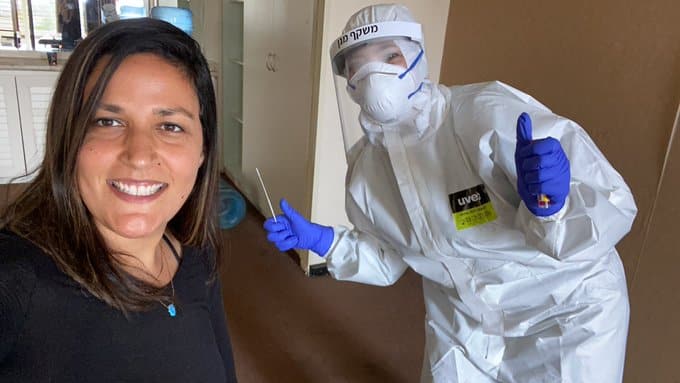
Noam Shuster is a stand up comedian, a peace activist and recently, patient number 3555. When she checked into Hotel Corona in Jerusalem, nothing had prepared her for the multicultural, unforgettable experience that would unfold in the following days.
We’re happy to host one of the only people in Israel who CAN’T infect us with COVID-19 (hopefully), Noam Shuster.
As a young boy in Cairo, Hussein Aboubakr grew up hating Jews and even fantasized about becoming a jihadist. Now a U.S citizen living in Los Angeles, he works with the nonprofit StandWithUs (SWU) to fight anti-Semitism and promote peace. But getting to that enlightened point cost him his country, his family and almost his life. Aboubakr’s story of ordeal and triumph is the subject of the documentary “Minority of One” and his book of the same name.
In the film, directed by Ori Guendelman, Aboubakr talks about growing up in a culture of blind hatred and studying Hebrew and Jewish history to better understand the enemy. Learning the truth opened his eyes, but his studies aroused suspicion that he was spying for Israel, and he was surveilled, harassed and ultimately jailed.
Considered an enemy of the state, he was tortured, beaten daily and contemplated suicide. His involvement in the Arab Spring uprising in 2011 put him on the Muslim Brotherhood’s radar, and the harassment continued until friends secured a visa for him, enabling him to escape to the United States.
After a few terrible months living on the streets in an unfamiliar country, Aboubakr was granted asylum and found work teaching Hebrew at Valley Torah in Valley Village and at the Defense Language Institute in Monterey. “It took some time to learn how to be free,” he told the Journal. “With freedom comes a lot of responsibility — that’s the difference between a free society and a patriarchal society. I learned from the Zionists that if you want something, you have to get it for yourself.”
Although standing up for his convictions came at great personal cost, “I couldn’t deny the truth: Jews are not evil. Israelis don’t want to kill Arab children,” he said. “It wasn’t so much that I wanted to be an activist. I was a nerd and not inclined toward that kind of work. But I had to stay true to myself. It was a matter of self- respect. I’ve seen how much cruelty humans are capable of. Now I understand it in the wider context of political oppression in the Middle East. It’s not a problem that can be solved from the top down. It’s the cultural notions about power that need to change, need to be fixed in the society itself.”
“We have to invest in education. It’s the only defense we have against racism, anti-Semitism and prejudice.” — Hussein Aboubakr
Aboubakr joined SWU in 2019 as a public speaker and educator. “I’m very happy and proud to go from where I started to where I ended up,” he said, “and be trusted to teach the Jewish community and Jewish students about the issues about the efforts that we need but also bring it to the attention of Muslims who are unaware that the problem exists.”
He added, “I care about Egypt and Arab and Muslim societies and cultures. I have an interest in solving a lot of the issues we have, fundamentalism being one of the biggest. In telling my story I’m showing a dark picture of Arab society but I’m not doing it to show the inability of that society to progress toward a peaceful reality in the Middle East, especially with Israel. I’m telling it to say, ‘We have to do something. We have to invest in education.’ It’s the only defense we have against racism, anti-Semitism and prejudice.”
During these stay-at-home pandemic times, Aboubakr’s work has increasingly taken the form of webinars and he’s working with SWU to expand online content in Arabic. “I’d like to contribute to finding solutions and solving problems in Arab society to get us out of the gridlock we’re currently in. I’m very optimistic,” he said. “There are already massive changes in the Middle East since the Arab Spring. We’ve seen the governments of Saudi Arabia and the United Arab Emirates make it clear that they are no longer interested in the old paradigm of Arab-Israeli conflict and they are openly advocating for peace and coexistence with Israel. That’s a huge change.”
He continued, “In the past four years Saudi Arabia has had a lot of significant social reforms, specifically for women. Women can now legally drive and go to sporting events. The internet is changing a lot of things. People are exposed to things they had not been exposed to before,” he said, crediting the Israeli show “Fauda” for opening minds. He included his mother among the newly enlightened.
Formerly estranged from his family, “We didn’t talk for years. I still don’t talk to all of my siblings,” he said, but he regularly speaks to his mother now. “She is a very traditional Muslim woman who didn’t finish her education, but now with the internet and her phone, she watches YouTube and is learning about the world. I am optimistic that in our lifetime we’ll see significant progress in this issue.”
With plans to go to graduate school to study international affairs, Aboubakr is working and reading, taking advantage of more days at home as an opportunity for growth. He looks forward to having a family one day and hopes to make a return trip to Israel. “I have a lot of friends there,” he said. “It’s a beautiful country with a culture that’s very close to my own, but with freedom. Taking interest in the Jewish culture and Hebrew and Israel changed my life,” he added. “Israel is there to stay. We’re one region and our destinies are inseparable. It’s important that we get to know one another.”
“Minority of One” will have its global online premiere at 11 a.m. PDT June 22, followed by a live Q&A with Aboubakr. Register here.