fbpx

June 15, 2020

Virtual Conference Calls for Safety, Respect, Equity in Jewish Spaces

When Elana Wien came aboard as Safety Respect Equity (SRE) Network’s first executive director in November 2019, she undertook a multi-month listening tour with stakeholders in Jewish workplaces about their attitudes and efforts toward gender equity. To change systemic inequity and eradicate sexual harassment and gender-based discrimination, she concluded, required honest, in-person conversations. At the time, SRE — designed as a national Jewish network mobilized to create safe, respectful and equitable workplaces and communal spaces — was planning to convene for the third time. But then the pandemic hit.

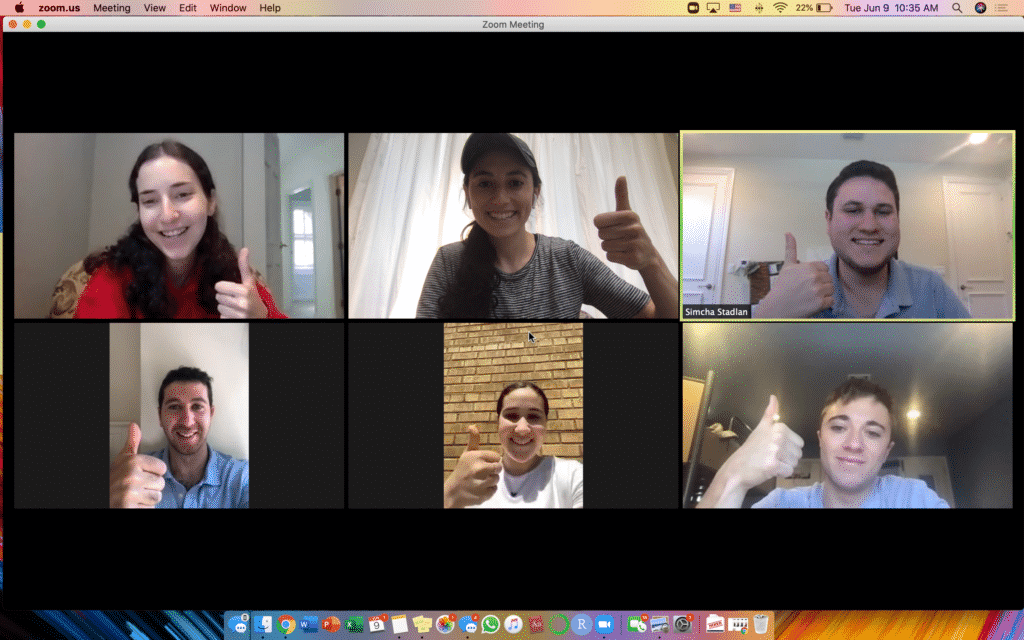
So, SRE held a virtual conference titled Shelter from the Storm on June 8, which was attended by more than 230 people from more than 54 cities in five countries, representing 133 organizations. According to the organizers, the vast majority self-identified as white women, about 30 as men and four as gender nonconforming. 

While a few sessions were prerecorded, the event consisted mostly of live keynotes, facilitated sessions and breakout spaces to talk about gender justice and creating safer, more respectful and more equitable Jewish spaces. Attendees interacted on a platform called Whova, and a code of conduct was circulated in advance to set the norms for the gathering, including refraining from demeaning, discriminatory or harassing behavior and speech. And because of the current elevated awareness of systemic racism and racial equality activism, several of the sessions reflected content relating to that topic.

“As tired as people are with all the Zoom virtual convening and as overwhelming as this moment is, the fact that we had more than 230 people over two days is a testament to the hunger people have for more connection with each other, and to create some sort of compass together to make a better future,” Wien said.

“Our Jewish communal organizations, just like those outside our community, still struggle with these issues as we strive to do better,” said Margalit Rosenthal, the director of the West Coast Region for Foundation for Jewish Camp, an SRE grantee. She said the Jewish community needs to lead in SRE efforts “regardless of race, religious background, gender identity or other markers.” She added that, with a disproportionately large percentage of the Jewish workforce identifying as women, downsizing and furloughs will likely affect women disproportionately. “Workplace culture reflects our institutions’ values, and our values should dictate our governance, philanthropic policies and how we operate both in the Jewish community and outside of it,” she said.

In a session titled “Wrestling with Repair: Teshuva, Restorative Justice and Holding Ourselves Accountable at the Intersections,” Jewish Social Justice Roundtable Racial Justice Director April Baskin said, “There’s a profound need for healing and repair in society in general.” She added her work helps people “build metaphorical musculature, a practice of regularly engaging and taking courageous action, acknowledging shevirah (brokenness), teshuvah (apology) and tikkun (healing).”

She continued, “We’re talking about systemic oppression, whether it’s around sexism and male dominance or racism. Oppression hurts everyone involved. It hurts the targeted community the most but also is incredibly dehumanizing and creates long-term damage in a way that hurts the non-targeted group as well.” 

Recent protests and violence are “tied back to a fundamental profound harm that has never been reconciled,” she added.

“All of us are capable of causing harm and all of us have experienced harm. We are all survivors of something,” said Alissa Ackerman, professor of criminal justice, sex crimes expert and restorative justice facilitator at Cal State Fullerton, during the session. “We need to take all of our relationships seriously, envision ourselves as connected and recognize that our words and actions impact other people and, when we impact them in a harmful way, you have to be responsible for that.” 

Baskin also emphasized connection, urging attendees to understand that “we’re all interconnected, members of a multiracial Jewish community.”

In the same session, author Rabbi Danya Ruttenberg shared her rendering of repentance according to Maimonides, outlining “five steps with some nuance” ranging from public confession and acknowledgment of harm through a victim-centered process of making amends, apologizing before witnesses and making different choices next time.

After the event, Ackerman told the Journal the idea of casting out someone who has inflicted harm is “totally understandable,” but, she added, “simply casting people out doesn’t actually reduce the harm and doesn’t teach anyone the behavior is wrong.” Instead, she said, “it puts everybody on the defensive.” 

“[It’s] a conversation that hasn’t happened on that level in the Jewish community,” Wien said afterward. “How do we take the next step toward developing some kind of a framework that helps heal those who have been directly impacted with the people involved taking responsibility and building a stronger community?”

“A way of being in solidarity with this network is to be there, in conversation and listening to a variety of people, because we’re all in this together,” said Aaron Henne, artistic director of Theater Dybbuk, who attended the first day and led a session on storytelling. 

Wien added that part of the challenge is that in both spaces, defining allyship is complicated. “We’re trying to move toward a future that none of us have actually experienced yet,” she said. “It’s one thing to say as a white ally that you’re committed to eliminating black oppression, but what privileges would you give up for that? It’s a powerful question that points to the unknown. And I think it’s the same thing for gender equity. It will also look like a different world that we haven’t yet experienced.” 

The event was “not about perfection or having the answers or top 10 tips [for allyship] but having the space for dialogue,” Wien said. “And there’s so much more work to be done.” 

Virtual Conference Calls for Safety, Respect, Equity in Jewish Spaces Read More »

Israeli Prof Says Anti-Parasite Drug Could Be Effective Against COVID-19

Eli Schwartz, a professor and founder of Sheba Medical Center’s Center for Travel Medicine and Tropical Disease, told The Jerusalem Post on June 15 that a drug used to treat parasitic infections could be effective in treating COVID-19.

The drug, Ivermectin, kills parasites in the body that can cause infections such as scabies and river blindness. Schwartz said that he started to look into the drug after President Donald Trump touted hydroxychloroquine as a potential therapeutic to fight the virus. On June 15, the FDA revoked its emergency-use authorization for hydroxychloroquine and chloroquine for the treatment of COVOD-19.

“We decided to look more widely for other medications and considered a few drugs that might have antiviral activity,” Schwartz said.

He is launching a study to test the drug’s efficacy on COVID-19 patients; he’s hopeful it will be completed in a few months. So far, 26 people have signed up for the study.

Schwartz believes that Ivermectin could eradicate the virus from a patient’s body in six days.

“The majority of people who get positive results have to be out of life (segregated from the public),” he said. “If [Ivermectin] works, they could take medication for a few days instead and be cured.”

Bangladesh Medical College and Hospital (BMCH) has observed some effectiveness in the use of Ivermectin in combination with the antibiotic doxycycline on COVID-19 patients. The combination has been used on 60 patients; the patients recovered from the virus in 10-11 days, on average.

However, BMCH Head of Medicine professor Tarek Alam told the Hindustan Times that Ivermectin is not effective on COVID-19 patients that have severe symptoms.

“As it works reducing replication of the novel coronavirus in the patient’s body at the early stage, our physicians gave the drug to those police personnel who start showing symptoms even if they were not tested,” he said.

Additionally, Australia’s Monash Biomedicine Discovery Institute released a paper in April finding that Ivermectin could kill the virus in 48 hours.

“We found that even a single dose could essentially remove all viral RNA by 48 hours and that even at 24 hours there was a really significant reduction in it,” the institute’s Dr. Kylie Wagstaff said in a statement at the time. “Ivermectin is very widely used and seen as a safe drug. We need to figure out now whether the dosage you can use it at in humans will be effective — that’s the next step.”

As of this writing, there are 19,122 confirmed COVID-19 cases in Israel and 302 deaths from the virus. Israel has seen a spike in cases since the country started reopening the economy; senior health official Sigal Sadetzky told Kan public broadcaster on June 15, “Right now, we don’t have markers to detect who is spreading the virus, as we did in the beginning. We don’t know where we need to be particularly careful, and where we need to carry out more tests — and this is the problem.”

Israeli Prof Says Anti-Parasite Drug Could Be Effective Against COVID-19 Read More »

We Can’t Pay Attention Long Enough for a Revolution

Attention deficit hyperactivity disorder (ADHD) is characterized by Wikipedia as “difficulty paying attention, excessive activity, and acting without regards to consequences.” 

Now look at your daily or weekly newspaper, your favorite cable news channel, your most frequently visited news site, the demonstration closest to your home. Look at our society and then reread the definition of ADHD, a situation that is usually managed by “some combination of counseling, lifestyle changes and medications.” 

Isn’t it obvious?

Any success handling public policy depends on focus, attention and persistence. A group ADHD mentality is the enemy of wise public policy. This is true when the world must deal with a pandemic and an economic crisis. This is true when the United States must deal with endemic societal diseases. This is true when Israel considers a dramatic move to annex. All of these situations are significant enough to justify a pause, a period of calm consideration, a methodological discussion, a deliberate execution. But in the world today, no such period or deliberation is possible. 

Journal Editor-in-Chief David Suissa touches on this issue, referring to what seems like a year of seismic events: “Epic on top of epic on top of epic. When do we catch our breath?” I have an answer for him. We don’t.

The United States is paying the price for the White House’s delayed and inefficient strategy dealing with the coronavirus. Israel, whose government was formed to deal with the fallout of the epidemic, is now bored with the coronavirus and has turned its attention to annexation. American leaders have put aside the virus in order to deal with social unrest. There is something heartening about this sudden interest by Americans in police procedure. But don’t hold your breath. This important issue will follow its predecessors and fall victim to the next dramatic shift. 

I know it doesn’t feel as if this is going to happen. The outcry, the activism and the discourse seem so real. Surely, this will lead to a change. But count me as a skeptic. Change is necessary but change doesn’t come in a few weeks, and that’s all we have because the next attention-grabbing drama lurks just around the corner. In a few weeks, the presidential campaign begins. Before you know it, cable news will move from the streets of Atlanta to the rallies in Florida. And after the election, winter will return, probably with a flu on top of the coronavirus. And these are just the known unknowns, to which we must add more unknowns. The events will add another layer of mental disruption. 

Surely, this will lead to a change. But count me as a skeptic. 

This is worrisome because when policies change rapidly without much deliberation, they often have unintended consequences that can result in more harm than good. That’s why evolution is preferred to revolution. And if change doesn’t happen because of lack of attention, the result is frustration. The public moves on and the activists become angrier and more radicalized. Then haste and frustration lead to mistrust in the political process. And political process is the thin veneer that guards society from rapid deterioration.

That’s the hard part to digest. Especially in the age of Trump and Twitter. And yet, we must slow down and return to a focused, methodical, less anxious political process. That’s because political process isn’t the enemy, it’s our only friend. It’s our shock absorber. It’s our shield. Political process is the only alternative to two intolerable options that lurk behind our societal ADHD: Anarchy and tyranny. 


Shmuel Rosner is the Journal’s senior political editor.

We Can’t Pay Attention Long Enough for a Revolution Read More »

Can Iran’s Ayatollah Tweet About Cats?

Some social media users can attest to having that one friend who incessantly posts about the same thing, whether a romantic partner, a political issue or a really impressive tub of homemade sourdough bread starter. This may lead followers to wonder if the person has any other interests.

I recently wondered this about Ayatollah Ali Khamenei, Iran’s supreme leader. Nearly every day on his English-language Twitter account, he refers to the same subject: the victimized Palestinians and the deplorable Zionists. There’s rarely anything about Iran. He posts so much about the Palestinians that I imagine Palestinian Authority President Mahmoud Abbas feels guilty if he deviates on his own Twitter account and writes instead about some amazing tabbouleh.

On May 21, the Ayatollah tweeted, “The elimination of the Zionist regime does not mean the massacre of the Jewish ppl. The ppl of Palestine should hold a referendum. Any political sys they vote for should govern in all of Palestine. The only remedy until the removal of the Zionist regime is firm, armed resistance.”

The following day he tweeted, “First, I would like to highlight the magnitude of the tragedy of the occupation of #Palestine and the formation of the Zionist cancerous tumor in that country. Among crimes against humanity in recent times, there is no crime in recent times that equals this crime in terms of scope and gravity.”

Frankly, I’m starting to get a little bored. What I wouldn’t give for the Ayatollah to post about a cat or a rash that just won’t go away. On second thought, a tweet related to the country of 82 million people he rules probably would be more relevant.

I’ve never seen anything like the Ayatollah’s Twitter activity. Any Martian intercepting his tweets would confuse him for the Palestinian president rather than the dictator of Iran. It reminds me of an apt Persian adage: “The pot is hotter than the stew that’s in it.” In this case, Iranian leaders seemingly are more Palestinian than the Palestinians.

What I wouldn’t give for the Ayatollah to post about a cat or a rash that just won’t go away.

If you’re Ayatollah Khamenei, what do you do to break the monotony of posts about #Palestine? You shake things up. A lot.

On May 20, Khamenei posted a cartoon on his website of jubilant Palestinians raising their flag over the Al-Aqsa Mosque, apparently after having captured the Temple Mount compound in Jerusalem from Israel. At the top is written “PALESTINE WILL BE FREE: The final solution: Resistance until referendum.”

Does the Ayatollah know the term “final solution” is a Nazi euphemism for genocide against Jews? Did Mahmoud Abbas write a dissertation downplaying the Holocaust?

The answer to both is yes.

On Twitter, Secretary of State Mike Pompeo responded to the cartoon saying, “The leader of the world’s top sponsor of terrorism and anti-Semitism denies the Holocaust, sends money and weapons to anti-Israel terrorists, and now has invoked the Nazi call for the Final Solution. I ask all nations: Is this someone who can be trusted with deadly weapons?”

Many Westerners would be shocked by the words “final solution” on the poster, but as someone who escaped Iran as a young girl, I immediately was drawn to an image in the bottom left corner of two women (in of a sea of men) wearing hijabs.

Did they have a choice to cover their hair once the triumphant Palestinian fighters conquered Jerusalem? About as much choice as the women of Tehran have had in the past 41 years.

I also noticed the faces of revolutionary leader Ayatollah Khomeini, who died in 1989, and former Al-Quds leader Qassem Soleimani, who was killed by a targeted American airstrike in January.

What are they doing on the wall of a Sunni mosque in Jerusalem? I’d like to ask the average Palestinian if he or she would hang a picture of Ayatollah Khomeini anywhere.

If a peaceful Palestinian state is established alongside (rather than in place of) Israel, Palestinians should invest less in terror leaders and more in tabbouleh cafes. Whether the Ayatollah tweets about that remains to be seen.


Tabby Refael is a Los Angeles-based writer and speaker. 

Can Iran’s Ayatollah Tweet About Cats? Read More »

Canadian Polish-Language Newspaper Publisher Arrested, Then Released for Saying Jews ‘Have Terrorism in Their Blood’

A Canadian publisher of a Polish-language publication was arrested on June 11 and then subsequently released for publishing anti-Semitic articles.

B’nai Brith Canada filed a complaint against Andrzej Kumor in August 2019, citing stories in his publication Goniec stating that Jews and Zionists have “terrorism in their blood” and that “Jews are spying on you.” Other articles alleged that the “Jewish political lobby” controls the United States government. Kumor also made the “terrorism in their blood” remarks in a YouTube video.

The articles and YouTube video have since been removed from the internet; the authorities warned Kumor that he would be charged with inciting hatred against Jews if he posted any further anti-Semitic content.

“We salute the Peel Regional Police for their diligence in pursuing this matter, and hope that Mr. Kumor has learned his lesson,” B’nai Brith Canada CEO Michael Mostyn said. “It is a criminal offence in Canada to willfully promote hatred against an identifiable group. B’nai Brith will continue to relentlessly pursue these incidents, so that incitement against the Jewish community and other groups cannot proceed with impunity.”

Mostyn also told the Toronto Sun, “It’s important news outlets understand that racism, bigotry and anti-Semitism are not fair game and are not going to be tolerated in Canada.”

The Sun noted that during the COVID-19 pandemic, anti-Semitism has been on the rise in Canada, pointing to three Toronto synagogues being Zoombombed — the term used to describe disruptions of video conference calls with anti-Semitic and racial slurs — as examples.

“We’ve seen such a tremendous and overwhelming effort across social media to blame Jews for creating the virus, for spreading the virus, for profiting from the virus,” Friends of the Simon Wiesenthal Center’s Campaign Against Anti-Semitism Director Jaime Kirzner-Roberts told the Sun. “And all of this hate on social media has implications for actual hate incidents. People are not just passively absorbing that information.”

Canadian Polish-Language Newspaper Publisher Arrested, Then Released for Saying Jews ‘Have Terrorism in Their Blood’ Read More »

Home Shalom Monday Message #12

Home Shalom is dedicated to raising awareness of domestic abuse in the Jewish community, encouraging every synagogue and Jewish institution to become a safe sanctuary and providing tools for teens to master the skills of creating healthy relationships. Home Shalom is a program of The Advot Project.

“Bringing healing between two people is one of the greatest virtues of all.” Rabbi Akivah – Talmud Taanit 22a

The story is told in the Talmud of Rabbi Baroka walking in the market place and coming upon Elijah the Prophet. Rabbi Baroka asked Elijah, “Who is the most important person in this marketplace?” He expected the answer to be one of the wealthy individuals who donated the most money to the synagogue or gave the most to support the local community. Instead, Elijah pointed to two individuals who were dressed like clowns and said, “They are the most important people here.” When Rabbi Baroka asked why, Elijah replied, “Whenever they see someone upset or angry, or two people arguing, they use their clown faces and humor to bring joy, to make them laugh and bring peace between any two who are fighting.” That is why Rabbi Baroka is quoted as saying, “A clown may be first in the Kingdom of Heaven if he has helped lessen the sadness of human suffering,” and Rabbi Akiva then added, “Bringing healing between two people is one of the greatest virtues of all.”

In this time of great upheaval and strife across the entire world. People are marching, protesting injustice, standing up for equality and justice and demanding that we in our society take responsibility for the injustices of the past and find reconciliation and resolution of those injustices for the future. Indeed, we need healing now more than ever. Now is the time for each of us to reach out to each other with a kind word, a gesture of compassion, a loving embrace, an outpouring of understanding and a cry of empathy for all the lives that have been disregarded, disempowered, degraded or abused whether because of race or religion, gender or country of origin. Elie Wiesel once challenged us all saying, “We must always take sides. Neutrality helps the oppressor never the victim. Silence encourages the tormentor never the tormented.”  This is our time to stand together as one nation, one community across all races and religions to declare that every human being is created in the divine image and deserving of respect, deserving of compassion deserving of love.

If you are in need of support, please use any of the numbers below to call out for help and know that you are not alone.


Naomi Ackerman, The Advot Project and Rabbi Steven Carr Reuben, Home Shalom.

Home Shalom Monday Message #12 Read More »

My Existence as Transgender and Jewish is not an Oxymoron

‘Modeh ani’ (I give thanks) are the first words I utter in the morning. I am as Jewish as you. I should not be forced out of synagogues because I am transgender.

In 2014, I began to transition from female to male. I attended a secular Australian high school where I fought both to use my bathroom of choice and to wear a kippah. I was the first transgender person to attend my high school. I pushed them to join organizations such as the Safe Schools Coalition, committed to providing a safe education to LGBT students. When medical transition laws relaxed in 2017, allowing transitioning for people aged 16 and over, I became one of the first to do so in South Australia. I have been fighting for my existence within the secular world since I was 13.

I do not want to fight for my existence within the Jewish community, too.

Rabbi Kalman Topp, a senior rabbi at Beth Jacob states that “a [transgender person] is first and foremost a human being who must be treated with dignity, respect, and sensitivity. The way I see it is that the Torah is both Torat emet – a Torah of truth converged through laws and values, as well as Torat chesed —  a Torah filled with compassion.”

However, when I transitioned as a teenager, my Jewishness was ripped away from me because my Jewish community could not accept that I was transgender.

However, when I transitioned as a teenager, my Jewishness was ripped away from me because my Jewish community could not accept that I was transgender. I should not still be fighting for my acceptance within synagogues six years later.

In February 2020 I moved from the United Kingdom to Australia. I belonged to a liberal Jewish synagogue, a community chosen not because they aligned with my religious values, but because it was the only community where, as a transgender person, I was accepted.

It is undeniable that Orthodox Judaism is making strides on LGBT acceptance, with Britain’s Chief Rabbi Ephraim Mirvis publishing the first guide for Orthodox Jewish schools to improve the wellbeing of LGBT students. However, my acceptance within Orthodox synagogues is the exception, not the rule. In my liberal synagogue, I knew that my past would not be met with scrutiny and intolerance.

I should not be forced into liberal or Reform Judaism because I am transgender. Orthodoxy must make strides to accept me as a man. The voice I pray with is one of a man. The soul I thank HaShem for returning to me every morning is one of a man. The body I lay tefillin on every day is one of a man. The statement of “just join a Reform synagogue” is not enough. Reform Judaism has a fundamentally different approach to Torah than Orthodox Judaism and isn’t free of transphobia either. If you want Jews to live a meaningful Jewish life, the answer is not telling them they don’t belong in your synagogue. Forcing transgender Jews to follow Reform Judaism’s different approach to Torah or abandon Judaism altogether is nothing short of transphobia.

One of the top leaders of the modern Orthodox movement, Dr Tzvi Hersh Weinreb, said that nobody should reject a Jew from a religious congregation or community because they are transgender and should be encouraged to “remain within the fold of observant Judaism.” However, most transgender Jews are forced to leave Orthodoxy after coming out due to transphobia from both the rabbinical powers and their congregation.

Rabbis such as Jeffery Fox, the head of Yeshivat Maharat, a religious seminary for Orthodox women and Weinreb agree that with 41% of transgender people attempting suicide, the commandment of pikuach nefesh — saving a human life —supersedes any restrictions against cross-dressing, hormonal replacement therapy, and gender affirmation surgery. Jewish law permits gender transitioning because gender transitioning saves lives.

Rabbi Idan Ben Efraim states in Dor Tahapuchot (A Generation of Perversions) that transgender people should dress as the gender we present as, sit in the section we present as and should be treated as the gender we present as. The Orthodox community needs more rabbis accepting of transgender Jews so we are not forced into secularism by transphobia.

Transgender Jews are not asking rabbis’ permission to transition. We are asking for acceptance of our transition.

My Existence as Transgender and Jewish is not an Oxymoron Read More »

Local Trio Launches Pandemic Assistance Job Platform

Sigal Spitzer knows how tough finding a job can be today.

A recent graduate of the University of Pennsylvania and alumnus of Shalhevet High School, Spitzer, 23, had a position waiting for her at a management consulting firm before the coronavirus pushed her start date to the end of summer. Because she never started the job, she was ineligible for unemployment benefits.

The experience inspired her to find a way to support those who are facing unemployment in an economy hit hard by the nationwide lockdown. So, together with her husband, Zachary Flamholz, and her brother Gilad, the trio created the online employment platform I Lost My Job to Coronavirus, which aims to connect the unemployed with opportunities and resources to help find employment.

The website launched in early April and to date has attracted several hundred users, Spitzer said.  “Our goal,” she explained, “is to destigmatize unemployment and build communities.”

The website features a job search tool, a space for users to create personal profiles that can be viewed by job recruiters, and a chat function that attempts to create community around those seeking to rejoin the workforce.

 “Our goal is to destigmatize unemployment and build communities.” — Sigal Spitzer

The site also has a virtual map for tracking unemployment trends. “We’re tackling the employment ecosystem affected by the coronavirus,” Spitzer said. 

Spitzer asked Gilad, a 2020 graduate of Shalhevet who plans to do a gap year at Bar-Ilan University in Israel this fall, to help create the website. Gilad had taken a class in web development at Shalhevet and, wanting to improve his coding skills, agreed to design the site. Flamholz, a medical student at the Einstein Medical College in New York, also provided vision and strategic support for the site. 

And with additional help from a group of college and high school interns, the three have been working out of Spitzer’s parents’ Beverlywood home, after Spitzer and Flamholz decided to return to Los Angeles from the East Coast at the onset of the quarantine.  

Since then, they have all been working and living together under one roof, holding meetings at all hours in their pajamas. “It’s definitely taken over most of our family dinners,” Spitzer said.

With the outpouring of love and support motivating them, Spitzer said the trio is concentrating on improving the functionality of the site and adding new features, including career mentoring. 

Visit the website here.

Local Trio Launches Pandemic Assistance Job Platform Read More »

david suissa podcast curious times

Pandemic Times Episode 57: Will 2020 go down as the Longest Year?

New David Suissa Podcast Every Monday, Wednesday and Friday.

Reflections on the year of all years– and we’re only half way.

How do we manage our lives during the coronavirus crisis? How do we keep our sanity? How do we use this quarantine to bring out the best in ourselves? Tune in every day and share your stories with podcast@jewishjournal.com.

Pandemic Times Episode 57: Will 2020 go down as the Longest Year? Read More »

New Initiative CANVAS Offers Funding to Jewish Artists

In a time when so many causes and issues are vying for both attention and Jewish community funding, a new funding collaborative, CANVAS, will strengthen arts and culture through grants to five national nonprofit Jewish arts and culture networks, and distribute emergency funds for individual artists. 

The five grantee networks are Asylum Arts, the Council of American Jewish Museums (CAJM), the Jewish Book Council, LABA: A Laboratory for Jewish Culture and Reboot, which collectively represent nearly 2,000 artists and creatives and more than 100 Jewish museums. 

The partnership  — incubated by the Jewish Funders Network (JFN)  —  will provide a total of $736,000 for operating support. An additional $180,000 in immediate emergency relief will go to Jewish artists and creatives whose performances, exhibits and events were canceled because of, or their livelihood otherwise impacted by COVID-19. CANVAS expects to surpass $1 million in funding commitments by September. 

“It might seem like supporting arts and culture isn’t a luxury we have right now, but [these networks represent] 2,000 artists and creatives who are developing responses to the current crisis,” said Lou Cove, the project’s founder. “Their work will spark action and activism, empathy and healing. That is why we need to keep the artists and distribution channels [such as JCCs, Jewish film festivals, Sundance, Art Basel and other gatherings] open and working. They’re giving voice to the voiceless, helping us see through a Jewish lens, to help us understand what our role is in processing it all.”

Even before COVID-19, the Jewish arts and culture space was in need, Shayna Rose Triebwasser, senior program officer at Righteous Persons Foundation, the initiative’s lead funder, said. “We’re investing in CANVAS because we believe in the power of artists and arts,” she said. “Our hope is that this coordinated effort fosters collaboration, strengthens connections between the arts and Jewish communal life, sparks interest from new funders and gets financial and other resources to the field where they are needed most.” 

Cove said CANVAS also would address enhancing media coverage of the field. “If people don’t know the work is out there, they don’t know to go see it.” 

“It might seem like supporting arts and culture isn’t a luxury we have right now, but [these networks represent] 2,000 artists and creatives who are developing responses to the current crisis.” — Lou Cove

CANVAS’ advisory council boasts experts in Jewish arts, culture and media, including former Journal editor and current Forward National Editor Rob Eshman and Mary Melton, former editor-in-chief of Los Angeles magazine and current editorial director at design strategy firm Godfrey Dadich Partners. 

Other funding partners are the Jim Joseph Foundation, the Klarman Family Foundation, the Peleh Fund and the Charles and Lynn Schusterman Family Foundation.

“Arts and culture are where we turn for comfort, for solace, for joy,” said Tzivia Schwartz-Getzug, senior adviser to CANVAS and West Coast director for JFN.  “They help us digest hard truths. They break open our hearts and minds to consider perspectives and positions that we might not be open to otherwise.”

“[Artists and storytellers] also help us make meaning of our lives and shape our moral imagination — something this moment and all its challenges, some new, some centuries old, requires,” Triebwasser added. 

“During this period of social distancing, all of us have been comforted, inspired or moved by a work of art,” said Rebecca Guber, executive director of Asylum Arts, a global network of 676 Jewish artists. “We’ve read poetry, attended online performances, listened to podcasts, or toured museums digitally. All of those experiences are possible only because an artist spent hours working to share their creative voice with the world.” 

Most CANVAS grantees are based in New York, but several have significant West Coast representation in their respective networks, including Asylum Arts, which runs an artist residency in California, and Reboot.

Asylum Arts, which received up to $200,000 for general operating support over two years, offered $1,000 sustaining practice grants to artists who had lost more than half of their household income because of the pandemic, Guber said. “Our application allowed artists to share the pandemic’s impact on their practice and life. We received 141 applications, far more than we can support. And each application is a microcosm of both suffering and resilience.” 

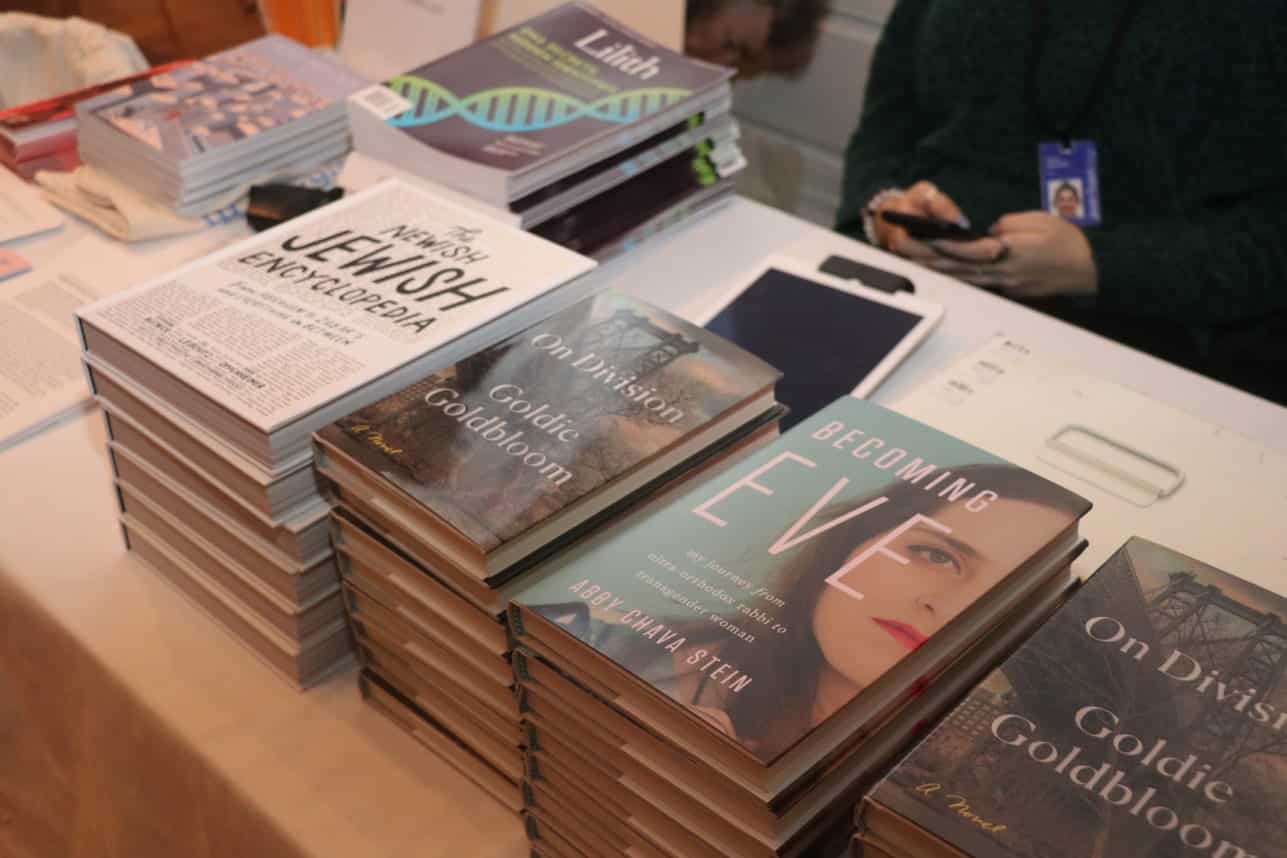
Table of books at the Jewish Book Council “Unpacking” event. Photo by Ethan Segal/Courtesy of Jewish Book Council

The Jewish Book Council was granted up to $150,000 over two years to expand and strengthen the JBC author network and “is focused primarily on loss of job, book sales, other revenue streams, housing, health insurance, etc.,” said Naomi Firestone-Teeter, its executive director. 

CANVAS promises to highlight artists of color and their allies within the grantee networks. COVID-19 and racism “both have challenged our artists to the core — and are providing opportunities for artists to give voice to suffering, to draw our attention to the critical issues of our time and to spur action,” Cove said. “The mission of CANVAS is to add vibrancy and momentum to a field we believe in — through grantmaking, capacity-building support, advocacy and, critically, learning,” he continued. “Investing in and elevating work by Jewish artists of color and work that speaks to the issue of racial justice, is a vital measure of our success. They need to be heard and we need to listen.” 

CANVAS will also partner with JFN on a series of webinars exploring the response of the Jewish creative community to the crises of COVID-19 and systemic racism. They’ll also evaluate how emergency funding is distributed by network grantees to artists of color, to assess how to best continue to support them.

Another goal of CANVAS is network tracking, which Cove hopes will lead to improved relationship and communication between funders and artists. “[I hope] we can find a shared language, where funders can feel comfortable making contributions and having a greater understanding of what the art is and artists feeling comfortable that they’re not selling out by sharing the impact of their work,” he said. “Everyone will have an easier time talking to each other. 

“There’s an important Jewish saying — ‘You can’t have bread without learning and can’t have learning without bread,’ ” Cove said. “We’ve got to do both, particularly in a moment like this.” 

Anyone wishing to support CANVAS’s $180,000 emergency fund for creatives in any amount can do so here. One hundred percent of donations will be distributed to artists and creatives economically impacted by the COVID-19 crisis.

New Initiative CANVAS Offers Funding to Jewish Artists Read More »