A man’s quest to stay in business offers a lesson in facing adversity.
I’ve known Dan Messinger, the owner and operator of Bibi’s Bakery and Cafe and the Kosher Cookie Company, for more than a decade. Dan’s philosophical and practical approach to business during the Corona era can help all of us to weather this storm.
Approximately 1.6 million small businesses have applied for government assistance through the Small Business Administration’s PPP program. At least that many or more are now in significant financial trouble.
Everything from synagogues to stadiums are closed. Whole industries have either shut down or are reinventing themselves. ESPN is streaming Korean baseball. Almost everyone who runs a business, commercial or non-profit, is experiencing a radical transformation of how they are doing business. And have you seen the Taiwanese Baseball online?
Bibi’s is famous for its open-hearth oven, sabich sandwich, pizzas, and Middle Eastern breakfast specials. It’s one of the favorite breakfast and lunch locations on Pico’s Kosher Corridor.
When the stay at home order came, Dan quickly shifted his cafe to pick up and delivery. In response to the a slow-down in foot traffic, Dan created Shabbasket, a service to deliver Challah, dessert and more delivered to homes.
But selling challahs alone can’t keep a bakery and its employees in business.
To keep the business open, and adapt to the new reality, Dan tapped into a need for people to have projects to do at home. Bibi’s will provide the basic supplies, and you can make your own pizzas, challah, and cookies.
We have an old cliche, that when life gives you lemons, make lemonade.
In the world of baking, it means that you don’t have to just accept that “that’s the way the cookie crumbles.” Just because things are difficult, doesn’t mean that we give up.
We find new ways, news paths, and uncrumble the cookie.
Judaism teaches us that women are inherently spiritual and are often the center of the home. Each week on Friday, in households across the globe, families gather for Shabbat. A special tribute to women echoes across tables, the 22-verse poem found in proverbs: eshet chayil (a woman of valor). The “woman of valor” is praised for all that she does, whether seen or unseen.
Eshet chayil has a new meaning for me. Last year, I embarked on a journey to write a book about women in diplomacy (“A Seat at the Table: Women, Diplomacy, and Lessons for the World,” New Degree Press). I asked myself, “Who is a modern-day woman of valor?” I want to learn from her.
Over eight months — whether over the phone sitting in my kitchen, or face-to-face in elegant Washington, D.C. embassies and offices — I asked the same questions of more than 30 women leaders. In these private conversations, most replied, “No one has ever asked me that.”
Women diplomats, dignitaries and officials revealed intimate details of their professional quests, experiences breaking glass ceilings, and the extraordinary impact of their work. Their efforts have saved lives, led to successful peace processes, and strengthened international cooperation. I captured stories of women combating ISIS, fighting on the frontlines for their country’s independence, and standing up to injustice. These powerful stories illuminated how to find balance within one’s personal and professional life.
When you sit around the table, who is there? What is the gender ratio? Who is represented? Looking around the table is the first step.
Shortly after the book was published in early April, the president of an international organization who had read it, reached out to me. “There are not enough books on this important subject and it is so timely,” she wrote.
Having recently given birth to her first child, she explained, “I have been having the hardest time being a mother. I feel like I lost sight of who I am. I am scared of falling behind because as women we are already behind when it comes to things like equal pay. When we have children, it becomes harder to accomplish it all. I need inspiration, so thank you for writing this book.”
Although the book began as a project to share data and stories about women in diplomacy, it became much more than that. It transformed into a culmination of how, as a society, we can reach gender equality, equity, and parity.
“A Seat at the Table: Women, Diplomacy, and Lessons for the World” is not about a fight against patriarchy or women being superior. Countries have complex issues to solve and both genders are needed. As we can see through this global pandemic, all countries face severe challenges. The leaders around the decision-making table matter.
Almost all of the leaders I interviewed were “the first” women professionally to be in certain roles. Many had been rejected at some point in their careers, but that did not stop them from reaching their goals. I encountered the same challenge while writing this book.
First, I was turned down by agents because I am not famous and don’t possess a brand, followers or extensive writing. Second, while there was excitement from friends and family that I was writing a book, some people said, “You are writing a book? Who will publish it?” Third, I went after many women leaders in the hopes they would sit down for an interview. I received some rejections. However, plenty of women and men introduced me to women leaders to capture their astounding stories. I kept pushing and the book blossomed.
Both men and women must be able to see themselves in the structure of an organization.
While working on this project, I had the unique opportunity to gain insight into how gender diversified leadership can change any government, institution, or group — a message all sectors can learn from.
There is a shift going on. While women’s voices rose in the #MeToo movement, we also saw the first visibly pregnant woman — The Wing CEO Audrey Gelman — appear on the October cover of business magazine, Inc. (The Wing is a women’s co-working space founded in New York.) As I speak with contacts locally in Washington, across the country and abroad, we are seeing a wave of change in women coming to the table.
I captured stories of women combating ISIS, fighting on the frontlines for their country’s independence, and standing up to injustice.
Finland has one of the youngest women prime ministers: Sanna Marin. At 34 years old, she is revitalizing how to lead with team dynamics and showcasing that adequate childcare can help bring more women to positions of leadership.
At the time of writing this article, New Zealand’s coronavirus death rate was far lower than the United States’. Under the leadership of Prime Minister Jacinda Ardern, her management of the global crisis is organized, compassionate and unified.
She implemented a practical, step-by-step plan toward a nationwide lockdown, and showcased social distancing by speaking to citizens directly from her home on Facebook while wearing a sweatshirt humanizing her to audiences. Also, her language of “we” and “us” set the tone that New Zealand is united in its actions. It’s an approach that is very different from some male world leaders.
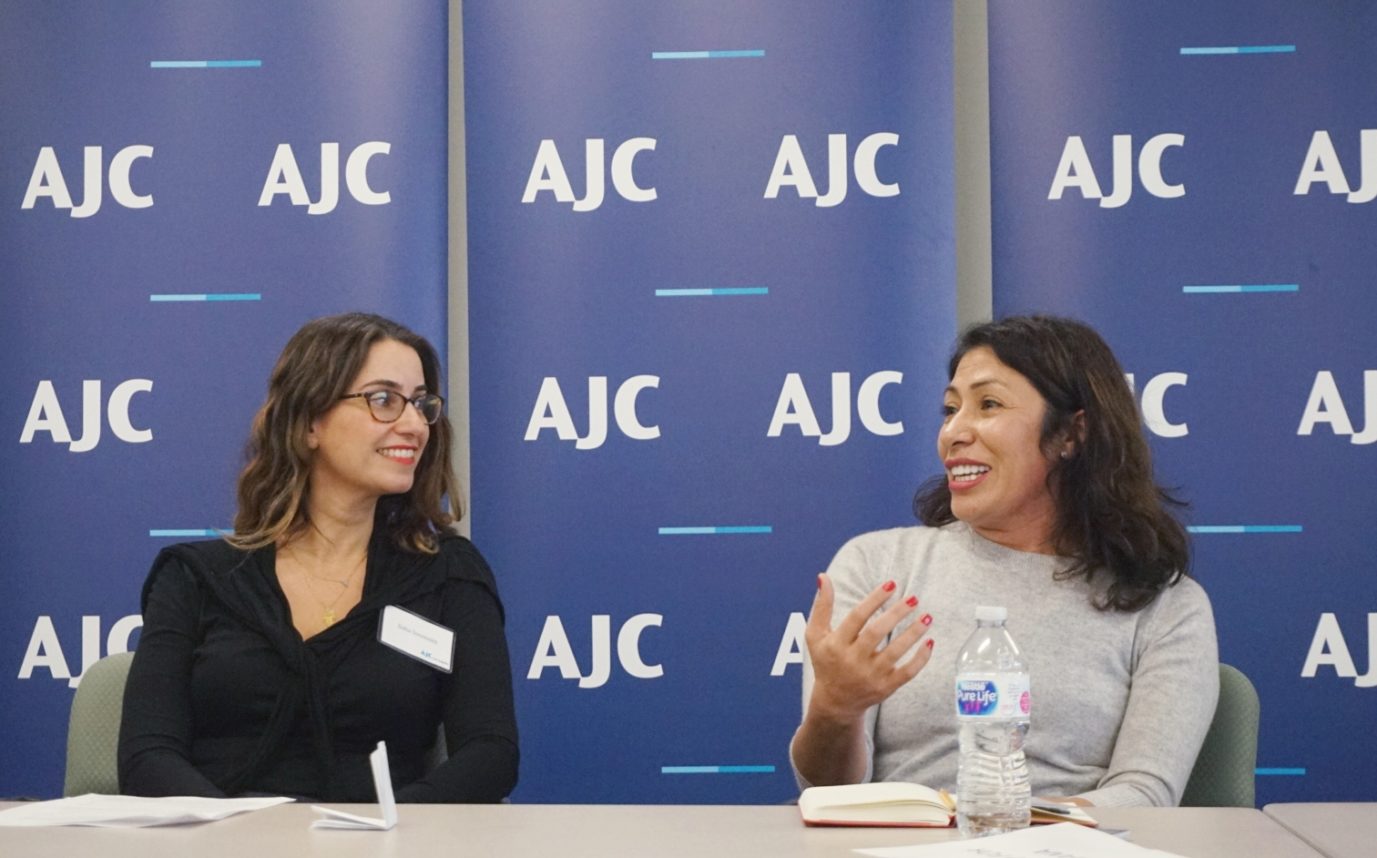
Saba Soomekh, American Jewish Committee (AJC) Los Angeles Assistant Director (left) with Emiliana Guereca, Executive Director of Women’s March Los Angeles (right) Photo courtesy of the American Jewish Committee
Women also are embracing their voices in other sectors. In the Jewish nonprofit world over the past few years, groups were asking why there weren’t more female CEOs. Jewish institutions are looking at the composition of their leaders, boards, and members. Even the American Jewish Committee, founded in 1906 (and where I currently work), has its first woman president in Harriet Schleifer.
But why, exactly, is it important to have gender diversity around the table? Writing this book, I found overwhelming evidence that having both men and women helps balance the angles of attacking a problem and finding a solution.
Are you on an organization board? When you sit around the table, who is there? What is the gender ratio? What about ethnicities, race, socioeconomic status? Who is represented? Looking around the table is the first step. Who is absent? Notice. The next step is to take action.
In an interview with Australian Ambassador Katrina Cooper, she shared how the Australian Department of Foreign Affairs and Trade transformed the Ministry to encourage and promote women in leadership.
While serving on the ministry leadership team as the senior legal adviser, Cooper wondered why there weren’t more women in leadership and management positions. After all, 20 years ago, her foreign service class had 25 people: 13 women and 12 men. She was shocked at the lack of women as she joined the ranks of senior leadership. Cooper began sharing this insight with other senior leaders. She sought advice from Elizabeth Broderick, a former Australian sex discrimination commissioner. Broderick challenged Cooper to get the leader on board. With most cultural change, it starts with the leader.
For 10 months, Cooper discussed and brought up the gender imbalance at the Ministry’s senior levels of leadership. Eventually, she got people on board, including the then-Secretary of the Department of Foreign Affairs and Trade Peter Varghese.
While he agreed the government needed to find out why more women were not in leadership positions, he encouraged Cooper to lead the initiative. She pressed that it needed to come from him. Through negotiation, the Ministry eventually hired an outside consultant to assess what was going on, look at procedures, and provide guidance for a plan.
Cooper served on a steering committee that helped create a plan called “Women in Leadership Strategy: Promoting Equality and Dismantling Barriers.” It won the Australia Public Service Gender Equality Award for creating deep cultural change in the organization. This is the first time this information is being revealed publicly in a book.
What was in this forward-thinking plan? One of the most important aspects was to include targets — not quotas — to increase women in different levels of leadership. Targets were set for the representation of women at two levels of leadership to achieve a 40-40-20 gender balance by 2020.
The breakdown included 40% women, 40% men and 20% either. This ratio was based on evidence from the consultant that “workplace culture becomes more gender inclusive in organizations with more than 40 percent of women in senior leadership positions.”
Having a target rather than a quota was imperative because the Ministry maintained that people should be in positions based on merit. With quotas, organizations run the risk that people are put into positions that may not be the best fit.
Targets are aspirational according to Cooper. The plan included multi-tier goals to get to 40%. While the plan was being created, 25% of Cooper’s leadership level were women. Toward the end of 2018, there was an increase of women in leadership to 32%. In November 2019, the Ministry made its 2020 goal of 40% a full year ahead of the plan.
The plan also looked at other ways to change organizational culture. The Ministry expanded flexible work hours and working from home with approval from managers. This enabled men and women to balance both their professional and personal lives.
Additionally, the plan included updating the photo displays in the government buildings. According to Cooper, the improvement was “powerful.” She said often in an organization’s building, there are far more framed photos of men who have led the organization.
To ensure a gender balance and retain historical accuracy, the Ministry included photo displays with historic and contemporary photos side-by-side.
Both men and women must be able to see themselves in the structure of an organization.
The Ministry did something similar with the names of meeting rooms, which had been named after either men or flowers. Cooper said this was “absurd.” The group updated the flower meeting room names to Australian women who had made a difference in foreign relations. They also added room plaques containing the biography and a photograph of the person.
Both men and women must be able to see themselves in the structure of an organization.
Many of the women I interviewed shared valuable insights into how to overcome the issue of gender imbalance. I also learned that women bring different traits to aspects of leadership. In a conversation with the first woman Hungarian Ambassador to the United States, Reka Szemerkényi, she noted that women add value professionally with a balance of heart and mind.
“You can only be successful professionally if you use your brain to full capacity, but the bravery of adding heart is something that I think makes a difference,” Szemerkényi said. She learned this during her travels with the Hungarian Prime Minister to visit Hungarian troops stationed in the Balkans. At the time, she was State Secretary for Foreign Policy and the National Security Advisor. While she was there in an official capacity, she also viewed the situation through another perspective: as a mother.
Through this lens, she understood what was at stake. The soldiers represented the sons and daughters of other mothers. Szemerkényi said she experienced “a very deep feeling of what could be lost” when using military force. She felt responsible for these soldiers. The decisions of the government and politicians were not solely “paper decisions.” She emphasized that these decisions impacted the “country’s children.”
She said the combination of men and women “creates a dynamic interaction of thinking from different approaches.” Having diverse perspectives helps us come up with solutions that are more practical, resourceful, and beneficial.
Women seek more than basic rights and men allies play a large part in our efforts to attain gender equity.
In 2020, the United States is celebrating the 100th anniversary of women’s suffrage — the right to vote. As a society, we have made strides. Women can vote, serve in government, retain salaries, own land, and maintain custody of their children. However, women seek more than basic rights and men allies play a large part in our efforts to attain gender equity. The stories, research, and lessons in the book are for men and women.
As society evolves, I believe we are redefining the merit of what it means to be an eshet chayil. Yes, far above pearls is her value. She definitely isn’t idle as she spreads her hands to the world. She opens her mouth with wisdom and the laws of kindness in addition to integrity and justice are on her tongue. Strength and dignity are not just her clothing. They serve as her armor. Give her a seat at the table and let her world-shaping actions praise her at the gates.
Susan Sloan is the associate director of AJC Washington (American Jewish Committee) in Washington, D.C., where she focuses on building relationships with diplomats, interfaith leaders and government officials. She is the author of “A Seat at the Table: Women, Diplomacy, and Lessons for the World,” available at Amazon, Barnes & Noble, and Kobo. susansloan.com. Follow her on twitter @realSusanSloan.
Oklahoma City University’s (OCU) virtual graduation on May 9 was disrupted with swastika imagery and the N-word.
Such disruptions, known as Zoombombing, have become more frequent as millions of meetings and school lessons have moved online during the COVID-19 pandemic. The Zoombombing occurred as a graduate, Jay Williams, was giving a prayer against hate.
“We are heartbroken and outraged at the hate-filled attack that occurred at the end of our virtual graduation celebration,” University President Martha Burger said in a statement. “During a time that should have been focused on recognizing our graduating students, an unknown source was able to bypass the system and display racist and offensive language.”
She added that law enforcement is looking into the matter.
“I want to be clear, OCU stands against racism, bigotry, and anti-Semitism,” Burger said.
More than 600 graduates and their family members were on the Zoom ceremony call when the Zoombombing happened.
Williams said on a Facebook live video afterward, “It just hurts so bad to have all of these things taken from you, and the university has tried so hard to try to honor our hard work, and not even get to fully enjoy it. I think that’s the part that hurts the worst.”
A Zoom spokesperson said in a statement to ABC News, “We have been deeply upset to hear about these types of incidents. Zoom strongly condemns such behavior and recently updated several features to help our users more easily protect their meetings.”
Anti-Defamation League (ADL) CEO Jonathan Greenblatt tweeted, “Deeply upsetting that this virtual graduation had to be interrupted with racism and #antisemitism. Truly disgraceful that in a time to come together, some are using #zoombombing to spread hateful messages.”
Deeply upsetting that this virtual graduation had to be interrupted with racism and #antisemitism. Truly disgraceful that in a time to come together, some are using #zoombombing to spread hateful messages. https://t.co/QjuFWykqFP
— Jonathan Greenblatt (@JGreenblattADL) May 12, 2020
Some prior Zoombombing targets include synagogues’ virtual Shabbat services and Jewish student meetings. The ADL held an April 14 webinar with Zoom Chief Product Officer Oded Gal explaining how Zoom’s security settings can be used to protect calls from being Zoombombed.
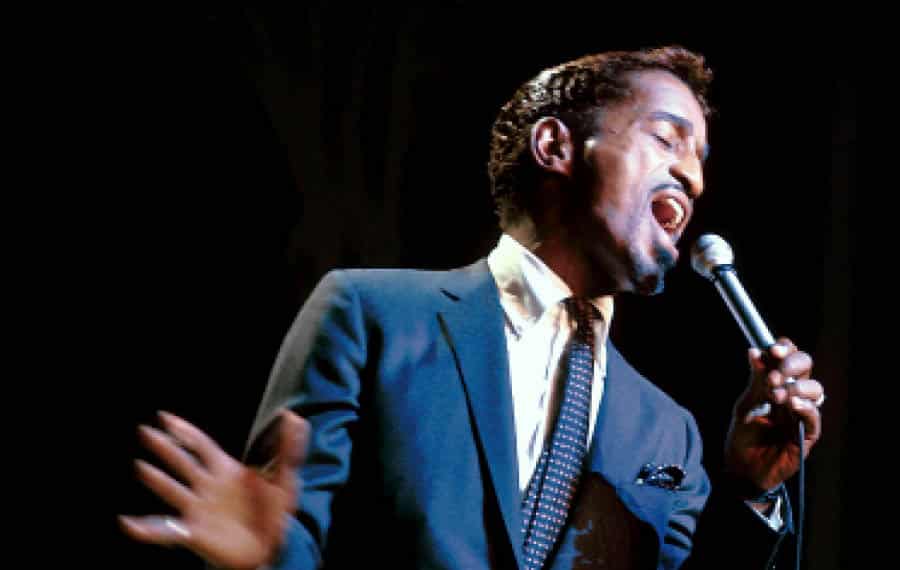
Months before the pandemic I was enthralled by the PBS documentary “Sammy Davis, Jr: I’ve Gotta Be Me,” and how the singer, dancer and actor came to embrace Judaism.
In the early 1950s, Davis met Jewish comedian Eddie Cantor, and the two went on to become great friends. Cantor gave Davis a small mezuzah, which Davis wore around his neck, believing it would bring good luck.
On Nov. 19, 1954, at the age of 28, Davis was driving from Las Vegas to Los Angeles. It was the only time he had forgotten to wear the mezuzah. Shortly after 7 a.m. on Route 66 in the Cajon Pass, Davis’ Cadillac rammed another car. His head plowed into a cone on the steering wheel, and he stepped out of the car holding his left eye in his hand. It was one of the darkest periods of his life. He even attempted suicide.
Cantor stayed by Davis’ side in the hospital and they spent hours talking about the commonalities between Blacks and Jews. But it was a visiting Reform rabbi who blew apart Davis’ preconceptions about Jews, as he wrote in his memoir, “Yes I Can: The Story of Sammy Davis, Jr.” He wrote that the rabbi was “a rugged, athletic looking man in a khaki suit and a button-down collar …. The image of a rabbi with a long beard and silk coat and the big hat, which I’d retained from my days as a child around Harlem was in total conflict with this man.”
Davis said he was particularly moved by two aspects of Jewish culture: deep intellectual dynamism (think talmudic arguments) and overcoming oppression. On Christmas Day 1955, when he discovered the words “Merry Christmas, N—–!” on his garage door, Davis went into his bedroom and found solace reading Abram Sachar’s “A History of the Jews.”
Davis died in 1990, one year after my family and I came to the United States from Iran. As I watched the television montages, I was exhilarated at the sight of the gold Star of David around his neck. It resembled mine, only much bigger.
“Sammy Davis Jr.: I’ve Gotta Be Me”
In his memoir, Davis described his affection for Jews in classic Rat Pack vernacular: “These are a swinging bunch of people.” Maybe that should be the new motto of every Chabad house from Atlanta to Azerbaijan.
He invited the public into his spiritual life through a combination of confidence and humor, once telling an audience, “It is true that I am an American Negro, and I have adopted Judaism as my faith. Everybody knows that, and all the comics make jokes about it. And I do it in self-defense. But I would also like you to know something that you’re probably not aware of: My mother is a Puerto Rican ….This is true — emes. So that means I’m colored, Jewish and Puerto Rican. When I move into a neighborhood, I wipe it out!”
But Davis paid a painful price for his incongruous identity. He never felt completely embraced by blacks or Jews, and his well-publicized friendship with then-president Richard Nixon made him a hated figure in both communities. In addition to his famous visit to the White House, his loving embrace of the president onstage at a Nixon Youth rally in 1972 was the hated hug seen around the world, and the photo haunted him for years.
Photo from the Estate of Altovise Davis.
But that was Davis. He hugged everyone, and he desperately longed to be accepted. In his mind, being close to Nixon signaled he finally had “made it,” but the black community saw him as a loathsome Uncle Tom, or as some called him, “a house Negro.”
At the Operation Push Black Expo in 1972, Davis was almost booed off stage. He responded by pointing his finger and saying, “Good, good, good.” It was almost as if he thrived on dissent. Maybe it was all that talmudic learning. He then declared, “Disagree if you will with my politics, but I will not allow anyone to take away the fact that I am black.” He then sang a soulful rendition of “I’ve Gotta Be Me.” When he was done, the audience rose to its feet, applauded wildly and thrust their fists in the air, signifying Black Power.
Davis was deeply hated in the black community, so why did he attend the event? Because in his words, he had to “face this.” That’s noble and today it’s rare. Imagine if he’d lived long enough to hug President Donald Trump onstage. No amount of soulful singing would have saved his career.
Davis said he was particularly moved by two aspects of Jewish culture: deep intellectual dynamism (think talmudic arguments) and overcoming oppression.
Maybe we needed someone like Davis last winter to address the onslaught of attacks against Orthodox Jews in New York that damaged black-Jewish relations. But I’m no fool. He probably still would not have found a semblance of acceptance.
May 16 marks 30 years since Sammy Davis Jr. died. Today, the words of “I Gotta Be Me” sound dated and cliché, but their emet is eternal:
“I’ll go it alone, that’s how it must be/I can’t be right for somebody else/If I’m not right for me.”
Tabby Refael is a Los Angeles-based writer and speaker.
Coronavirus Blame Game One of the letter writers in the May 1 Journal blamed President Donald Trump for a six-week delay in his response to COVID-19. It seems to be de rigueur for those possessing “Trump Derangement Syndrome” to blame Trump for everything negative that happens.
Let’s put blame where blame is squarely due: China and its Communist authoritarian regime. If China had been honest and informed the world, the virus would have been “nipped in the bud” and we wouldn’t now be prisoners in our homes with our economy in free fall. Frieda Korobkin, Los Angeles
If the coronavirus was the only current cause of death, then there might be some validity to having imminent and pervasive fear and shutting down the country to save one life.
But among the plethora of causes of death in the United States every day, the real question is, how many additional people will die (for lack of emergency room visits, lack of elective surgeries, hunger, substance abuse, child abuse, suicides, mental disorders, etc.) who would not have died if there was no shutdown?
I am more worried about a heart attack or stroke than I am about catching the coronavirus. On the other hand, I am in fear of not being allowed access to Z-Pak or zinc or Remdesivir if I eventually become infected with the virus. Warren Scheinin, Redondo Beach
In the Middle of Pandemic 2020
This virus travels round the world,
Infecting all who cross its path.
No weapons to defeat its grip,
Arousing fear instead of wrath.
Yet many gallant front-line souls
risk their precious lives.
To them we sing in gratitude
And pray that they survive.
When our country is disordered,
As it is today,
We yearn for one wise leader,
Who will guide us on our way.
Though we swim in turbulent waters,
Safe harbor not in view,
We’re certain this dark world
Will turn bright and new.
Oh, yes, we needn’t worry,
We’ll find the better land.
Our good future is ordained,
Even with no leader’s hand.
But now a crucial choice looms,
Weighing who or what to save:
Our economy, fragile as a house of cards,
People heading to their graves.
As we struggle to save them both,
Scientists search at feverish pace
To find prevention and a cure,
To rescue wealth and human race.
Surely at this critical hour,
Wise men and women will appear,
To save us from this tragic storm.
The human race will be reborn. David Rothman, via email
Anti-Semitism and Weaponizing Truth Deborah Lipstadt is a top-of-the-line professor and defender against anti-Semitism (David Irving trial), who opens new windows to thinking about anti-Semitism and stereotypes in the minds of her students (“Deborah Lipstadt on Pandemic Anti-Semitism,” May 8). When she was at UCLA, I was fortunate to take one of her classes.
It’s true — visual metaphors that equate rats with Jews provide plausible reasons to exterminate while other aspects of stereotypes can save lives. “The Protocols of the Elders of Zion” falsely purported to document a shadowy Jewish conspiracy to take over the world and, especially in Russia, it served to foment pogroms against innocent Jewish communities such as Kishinev.
However, during World War II, the Japanese occupation forces allowed the entire Mir Yeshiva as well, like my mother’s German Jewish friend Margot and her family, sanctuary in Shanghai, and my grandparents, who were fleeing the Nazis, passage through Manchuria (then occupied by the Japanese) on their way to Seattle because Japanese leaders who read “The Protocols” believed them to be true.
There’s a part of all of us that looks for the sickly sweet comfort of stereotypical explanations of complex unknowns like wars and the present pandemic. We’re all prejudiced against something or some group.
King Solomon said, “There’s nothing new under the sun.” Does the fact that stereotypes sometimes save lives make them good? Of course not. Let’s try not to eviscerate truth by falsely objectifying what we don’t understand. As Lipstadt alluded, let’s weaponize truth with facts. Let’s make ourselves and our heroes like Lipstadt proud. Mina Friedler, Venice
Farewell to a Beloved Dog Mark Schiff’s column about his dog was beautiful (“Keep Your Promises, Even to Your Dog,” May 8). I want to tell him, “I am sorry for your loss of Glendi. May her memory always be a blessing.” Robert Goldman, Santa Monica
De Blasio and Anti-Semitism With anti-Semitism running rampant throughout the world, it’s very easy to jump on the anti-Semite bandwagon. There are statements and actions by many in this country that should be categorized as blatant anti-Semitism. But does the statement singling out the Jewish community from Mayor Bill de Blasio fall into this category? I think not.
The mayor has held that office for a few years and if he were an anti-Semite, especially in a city with the most Jews per capita in the U.S., we would have known long before last month. Granted, the April 28 funeral in question was for a revered and respected rabbi but every death is just as important to the family that loses a loved one. I have yet to see a story of a Christian or Muslim gathering where police had to intervene.
We as Jews must attack anti-Semitism in this country and around the world with fervor but we have to differentiate where it is truly warranted. Richard Katz, Los Angeles
To Reopen or Not Shmuel Rosner’s column “Israel and the Virus: Hitting the Play Button” (May 8) speaks about the dilemma of whether it was the right time for Israel to reopen its economy. Israel’s prime minister isn’t the only leader faced with the uncertainty of getting back to a normal way of life during this pandemic. I agree, it is time.
A country’s formula regarding when to return to normal life should be based on its population’s mortality rate. I agree that Israel, having one of the lowest mortality rates, has reached the point to allow people to get back to their day-to-day life. Being one of the firsts puts Israel in the spotlight and opens it up to potential criticism.
In reality, Israel doesn’t have all the answers nor the vaccine, but after the people are allowed to get back to their day-to-day life, Israel will get a lot of the answers to their unanswered questions. This is an opportunity for other countries to see what can go right and what can go wrong so they can learn and plan ahead. Dylan Nassir, Beverly HIlls
Students Help Israel Battle Virus A recent story on the Journal’s website with the headline “Israeli Robotics Program Creates Robot to Treat COVID-19 Patients” (May 6), talks mainly about how some high school students from Haifa’s Reali School created a robot that enables doctors to distance themselves from infected patients. There are about 16,314 COVID-19 cases and 238 deaths from the virus in Israel, and they can’t risk the doctors being exposed.
Professor Alan Wolf, Technion vice president for external relations, tasked high school students with creating the robot. I find it fascinating that a person of such authority would call upon a few students to accomplish the goal. This shows how anyone can make a difference no matter how small. It is especially important today to remember that everyone has a voice and should speak up and take on challenges. Don’t lose hope. Remember that Israel got it under control.. Joseph Andron, Valley Village
Now it’s your turn.Letters should be no more than 200 words and must include a valid name and city. The Journal reserves the right to edit all letters. letters@jewishjournal.com.
We don’t know for sure how and when the current COVID-19 crisis will end, but as real conversations begin about reopening establishments and institutions, some contemplation is appropriate.
The world will probably sing a similar tune but on a different note − what my musician friends call “modulation” − as we build a new civilization, hopefully on a higher plane than we’ve been before.
As some call for new attention to climate change, this, too, can be considered in a spiritual and communal context, making more permanent the “enhanced climate” with “cleaner air” − of understanding and selflessness − we have seen by so many, especially first responders, during this trying time. When we do that, we not only will feel better, we will be better.
The unprecedented governmentally and rabbinically mandated shuttering of synagogues and communal infrastructure everywhere have caused prayer and Torah study to increase yet simultaneously plunge us without notice into a personal dimension never quite experienced before. Each individual or family has had to create their own designated spiritual spaces.
As a result of this sudden social distancing and isolation, many of us now certainly know a lot we didn’t know before. At the very least, we know ourselves better, more deeply, and are more aware of what we truly care about and who truly cares about us.
As a result of this sudden social distancing and isolation, many of us now certainly know a lot we didn’t know before. At the very least, we know ourselves better, more deeply, and are more aware of what we truly care about and who truly cares about us.
We will slowly return to normal – whatever that word will mean – at some point, but until then, the opportunity for some very real introspection and proximation to our loved ones and to G-d as a result of even this experience is spiritually welcome and conducive.
Like Noah in the times of the biblical flood, we, too, have in a sense built ourselves an ark over the past number of weeks. The Lubavitcher Rebbe, Rabbi Menachem M. Schneerson, of sacred memory, reminds us of the dual meaning of the Hebrew word “teivah,” or ark, to also mean “word” – namely, the words of Torah and prayer. When the figurative storms and floods hit, we head for shelter in that ark, those “words” that provide us the refuge we need.
But when that flood ends and those torrential rains subside, we need to take the cue and “exit” the ark, or in this case, the “word,” and the comfort it was able to provide and “take it with us.” One can’t stay sheltered forever.
We need to go back out into our world and our routine, as it were, and get to rebuilding civilization. If we do know one thing, it is that the world we face will not be the same as before, in very real terms. Sure, the roads, buildings and other infrastructures survive, but we and our world are different and will remain so for a while.
Having done without so many previously perceived necessities for weeks or more, some things will become all but obsolete. Relationships and priorities will reshuffle into a new order of priority. Watching so many people pass so suddenly from among us certainly gives us pause, individually and collectively. Too many watched relatively healthy friends and relatives felled by the coronavirus, suddenly unable to even breathe properly, then just literally taken from us in a matter of days.
King David concludes the Book of Psalms (150:6) proclaiming, “May every soul praise the L-rd,” The Hebrew word for soul, “neshama,” is also the root for the word “neshima,” or breath. With every breath, life continues every day, 7 billion times around the world, every few seconds. When that is taken from someone, especially suddenly, life stops quickly. Let us then cherish every breath we are fortunate to take, better appreciating He who gives it to us and what we are expected to do with the life force it enables.
My father once told me about a bird he saw flying around an empty storefront near his office. He wondered how the bird survived in there. After some time, he noticed it merely hopping somewhat, unable to make it very far. He called the owner to alert him that the little bird seemed to be suffering in his store. When he came to unlock the place, the all-but-dead-looking bird, barely able to move, shuffled itself to the open door, summoning its last strength, and with a breath of the new fresh air, just flew away! Yes, we’ve been cooped up, losing our routines, and some people their very minds. A friend of mine who is a mental health professional reports skyrocketing prescriptions for medications to treat panic, anxiety and depression. He senses the sudden lack of control heretofore secure people feel is taking a heavy toll quickly.
The breath of fresh air is coming, and it’s time to muster our new strength when it comes, and fly.
But the breath of fresh air is coming, and it’s time to muster our new strength when it comes, and fly.
The biblical Noah is the father of all mankind today, as all who lived at the time of the great flood in his time were destroyed. We might take his cue to be bold and unafraid. The Torah notes that Noah, who was so great, he even walked with G-d, was great “in his time.”
Actually, the Sages teach it cuts both ways. Either he was great despite all the immorality and idolatry of his time, or he was great only because of the contemporary dereliction of his day, but he would not have been as prominent in the time of say, Abraham, who acted with greater alacrity and without query to G-d’s will. Abraham also reached out to all those whom he met while they were spiritually unaware, with openness and kindness, enlightening them with love and compassion, introducing them to sanctity.
It is important to be aware of Noah’s promptly “planting a vine” and “drinking the wine” soon after the flood ended, bringing him pain, and ensure that we avoid the intoxication and missteps that can also follow the giddy relief of returning to (even the new) normal.
It is perhaps better to embrace the Abrahamic path, seeking the way to be more open and honest and kind and faithful, and help bring the world closer to an undisputed G-dly awareness and greatness like Abraham did (which Noah, despite his noted piety, sadly did not).
We will thus persevere until the day soon comes when we see the ultimate fulfillment of the promise made to Abraham by his and our creator, and get to that ultimate “normal” we have prayed for over the course of painful millennia, with the world redeemed and sorrow forever gone.
Rabbi Levi Shemtov is the Executive Vice President of American Friends of Lubavitch (Chabad) in Washington, D.C. His upcoming book, “Capital Sparks,” is scheduled for release in the spring of 2021.
My teenagers don’t always tell me the truth, or maybe it is more accurate to say that there are things they just don’t tell me… period.
It’s not that they aren’t honest. They simply choose not to share some things, a very age appropriate move on their part.
Something came up recently with one of my kids that made me think a lot about transparency and truth telling.
One of them made a choice not to tell me something that I would have liked to know. It wasn’t bad, but it was information that I needed. On the other hand, it was something she didn’t want to share. When I think about it, both of us were right.
Thank god, my children are as amazing as they are.
We try to practice honesty in our house, so in the end it was fine. Everything was out in the open.
In one of my recent Zoom classes it seemed as if one of the participants was under the influence. It also looked like there was smoke around him, which made it feel even more like something was going on.
I didn’t say anything to him, but I did share my concerns with one of the people I work with. She told his case manger and the ball went rolling very fast from that moment on.
The individual’s case manager made accusations based on our concerns. To the credit of the accused person, he called us on that at the next class.
We decided to stay on Zoom after class to discuss it.
“Truth is, it was hot, I was tired and sleepy,” he told us.
“Honestly, we were worried about you,” my amazing, brilliant co-worker said.
“Why didn’t you ask me flat out during class?” he asked.
I genuinely didn’t have a good answer for that.
Why didn’t we simply say what we thought?
Um, well, because it isn’t always so simple to tell the truth, to be honest and/or share.
My co-worker said, “I am not going to lie. We shared our concerns,” and then with great care she said, “We were not mad. We were worried.” It got quiet.
“I got you,” he said. “But why go talking to someone else and not talk to me?”
And then I realized I needed to answer him as honestly as I could.
I said, “You know, you are right. I should have flat out asked you if you were high. Also, I have to tell you that it looked like there was some smoke in your frame on the computer screen.”
My co-worked added, “Maybe someone was next to you.”
I added, “Maybe it was something in the reflection. We really thought something was up. But, honestly, we should have just asked you.”
The moment we were honest, something changed in the conversation and the mood actually got tender.
His anger shifted to understanding, and we all got incredibly emotional. It was actually a little crazy, but then again these are crazy times, and there we were, debriefing a class that happened on Zoom, on Zoom.
“Ema,” my daughter told me, “my business isn’t your business.” She was adamant. “You are right,” I said, “but, alas, it kind of is.” I then simply explained why the information she didn’t tell me was something I needed to know.
“Oh,” she said. “Honestly, I didn’t think about that.”
“I know,” I said, and all was fine or as fine as teenage kids and parents can be when trying to be real.
It is said that the truth will set you free. I don’t know about that one, but I do know that the reason honesty is the best policy is because once you say things as they are, you can move forward from there.
“I understand,” he told us when we told him again that we care and that it was on us to say something to him during class.
There was something powerful in saying that, and also in owning that we could have, and should have done better.
I think that made him feel seen and heard.
More importantly, he appreciated that we were honest with him. I hope he was honest with us. Substance abuse can sometimes take away the capacity to be transparent. In this case I choose to believe him.
Thomas Jefferson said, “Honesty is the first chapter in the book of wisdom.”
I know that by being honest I am definitely wiser. I learned an important lesson that I will now try to implement in my class.
To me that is what is so exciting about honesty.
Most times when you practice it, it is powerful, meaningful and can take you to a place you otherwise would not have gotten to.
So today, at least once, try and be honest about something to someone.
You will be surprised by where it will take you.
Naomi Ackerman is a Mom, activist, writer, performer, and the founder and Executive Director of The Advot (ripple) Project a registered 501(c)3 that uses theatre and the arts to empower youth at risk to live their best life.
The Angelenos behind the Emergency Supply Donor Group (ESDG), a philanthropic initiative responding to the COVID-19 pandemic, have created a new tool for hospitals in urgent need of more resources.
The Greater Los Angeles Hospital Registry creates a public forum for local hospitals to detail their needs — from personal protective equipment (PPE) to snacks — so that the public strategically can provide donations during this crisis.
Ethos Giving founder and CEO Emily Kane Miller, who developed the tool along with LA LOOP CEO Elizabeth Faraut and philanthropist-investor Lisa Greer, told the Journal in a phone interview that she realized that the registry was necessary when her sister-in-law, a resident at a Los Angeles-area hospital, called and shared the staff’s overwhelming need for PPE.
“We wanted to figure out a way to go countywide quickly and we wanted to make sure that generosity was being extended to hospitals across L.A. County regardless of whether they were places that had preexisting relationships with donors,” Miller said.
She added that the registry is modeled after a wedding registry.
“In the same way that if you’re getting married, you say, ‘I want these many things in this quantity,’ we wanted to give hospitals the opportunity to essentially do the same things with PPE and supplies and meals and those sorts of things so that generous donors could go identify what the hospitals needed and also not be creating duplication,” Miller said.
ESDG, a fiscally sponsored project of Jumpstart Labs, launched at the end of March. Donors behind the initiative include former Westfield Corp. CEO Peter Lowy and the Homeland Security Advisory Council of Los Angeles (HSAC), Joe Sanberg and his company Aspiration.com, Tieks luxury footwear founder and CEO Kfir Gavrieli and Go Insurance.
HSAC Chairman Lowy, who is also chairman of Tribe Media, said, “We have been thrilled to support and partner with ESDG and the Greater Los Angeles Hospitals Registry resource, which answers simple but vital questions, such as: Which hospitals need the most help? Which items are most essential? How are we ensuring quality and follow through? By putting donors directly in touch with every participating hospital in an efficient and simple manner, we can improve health outcomes and save lives.”
Hospitals can post on the registry what they specifically need, and donors either can donate money to the hospital; or vendors can donate or sell specific resources to the hospital. For instance, if a hospital indicates it needs cotton swabs, and a vendor is offering to donate cotton swabs, ESDG will see if the vendor and hospital are a match and then arrange the drop-off.
If a vendor wants to sell cotton swabs to a hospital, then ESDG will determine if the vendor’s offer reflects fair market value before getting approval from the hospital. ESDG also can reach out to donors and organizations to see if they can cover the cost of the transaction.
On May 14, ESDG will donate 10,000 reusable face shields to medical workers in nine county hospitals, including LAC + USC Medical Center, Encino Hospital Medical Center and Kaiser Permanente West Los Angeles Medical Center, which were procured from ShieldLA, an organization consisting mainly of furloughed Disney engineers that is reimaging how to manufacture personal protective equipment faster and cheaper to meet heightened demand.
Sanberg, co-founder of online financial company Aspiration.com, told the Journal, “Part of being Jewish is you gotta provide help where help is needed and there’s no more acute need right now than equipping our front-line heroes with protective equipment that they need to protect themselves when they’re helping our family members and neighbors when they’re sick.”
He added: “My hope is that in doing this, we’re going to cast light on the need and that other business leaders and community leaders will step up because this is going to be an ongoing need. What we’re doing is one part of the solution, though. We need more business people in Los Angeles to do their part.”
Miller said ESDG hopes to procure gowns and N95 masks for medical workers in the coming weeks.
“In this moment when everything feels hard and complicated and sad, to be able to engage with these incredible stories and be able to help health care workers and put a smile on their face and have them feel appreciated … is just such incredible medicine for all of us who are able to participate in it,” she said, “and I think that the magic of the registry is that it helps people feel like they have something they can do to be of value right now.”
Tieks’ Gavrieli said, “There is nothing more important for me or Tieks right now than figuring how we can make a difference for the doctors, nurses and front-line health care workers who are risking everything to protect us.”
AIPAC said it would be a “mistake” to allow Israel’s annexation of parts of the West Bank, should it occur, to affect U.S.-Israel ties.
The statement this week was the first from the American Israel Public Affairs Committee on Prime Minister Benjamin Netanyahu’s stated plans to annex parts of the West Bank by July 1. A number of groups on the left are mounting a campaign to get presumptive Democratic presidential nominee Joe Biden, as well as Democrats in the Senate, to speak out against the plans.
“Some have proposed reducing our ties with Israel because they object to the potential decision by Israel’s leaders to extend Israeli sovereignty to parts of the West Bank,” the statement said. “Doing anything to weaken this vital relationship would be a mistake.”
The statement cited Israel’s role as a “pillar of America’s regional security framework” and U.S.-Israel cooperation in a number of areas, including scientific research.
AIPAC, a major pro-Israel group, remains committed to the two-state solution. Those warning against annexation say it would undercut and perhaps kill off a two-state outcome.
A letter is circulating among Democratic senators that would caution Netanyahu’s government against annexation. The letter, first reported by Jewish Insider, has engendered tussling among Middle East advocacy groups in the Democratic camp: J Street backs the letter, while the Democratic Majority for Israel wants changes that would make it clear that assistance to Israel is not in question. Democratic Majority also has expressed opposition to annexation.