Rabbi Wasserman is a graduate of Harvard University, the Jewish Theological Seminary, and the Shalom Hartman Institute’s Rabbinic Leadership Initiative. He has published numerous articles in professional and academic journals. You can access his article, “The Vendor Trap: Why Selling Spirituality Doesn’t Work”
This week’s Torah portion – Parashat Behar/Bechokotai (Leviticus 25:1-27:34) – talks about Sabbatical and Jubilee years, regulations concerning commerce and the redemption of slaves. It also contains a description of the rewards for observing God’s commandments and the series of punishments that will face Israel if they choose to disregard them. The Torah then discusses different types of gifts given to the Temple, and the animal tithe. Our discussion focuses on ownership and the need to let go.
(JTA) — At the beginning of the COVID-19 outbreak, and as recently as a couple weeks ago, some Jewish camps had hoped they could run for part of the summer.
For a growing number of camps, that hope now appears to be vanishing.
Two Conservative Ramah camps look increasingly likely to cancel their sessions this year. And two state governments — Georgia and Connecticut — have prohibited overnight camps from running in their states. Each of the states is home to several Jewish camps.
While neither of the Ramah camps — in Wisconsin and California — is ready to officially confirm that it will be canceling, both sounded dismal notes in comments to the Jewish Telegraphic Agency.
“I think the tea leaves are out there to be read,” said Jacob Cytryn, the executive director of Ramah in Wisconsin, which plans to announce its decision for the summer next week. “None of the things that were the source of optimism have come to fruition. … We’re still holding out on our own timetable with the small possibility that we would make a decision to open for at least part of the summer.”
An email to campers’ families from Ramah in California’s leadership Sunday said “we cannot open camp in mid-June or run our summer sessions as scheduled,” though it is holding out hope for an abbreviated session later in the summer and will make a final announcement by June 2. The camp is the largest Ramah, serving 1,300 campers per summer.
In addition, Ramah in Canada announced Monday that it will be canceling its first session, from late June to mid-July, and said it was “increasingly clear that being able to open camp at all this summer is unlikely …” Other Ramah camps have likewise already canceled the first half of their summers.
More than 20 Jewish summer camps, a bulwark of the American Jewish experience for two months a year, have already said they can’t run this year due to the COVID-19 pandemic. That includes 15 camps run by the Union for Reform Judaism, as well as one Ramah, in Georgia, and an assortment of independent camps and those run by local Jewish community centers.
The remaining others are still trying to project some sliver of optimism that some kind of summer will still happen, somehow. But even that possibility appears to be disappearing. Weeks ago, camps were counting on detailed guidelines from the Centers for Disease Control and Prevention that have yet to materialize, though a version was recently leaked that would limit attendance at any camps that open to children who live in the area.
“There’s been just a tremendous lack of national leadership that would either enable us to open or that would help all the camps to stand together,” Cytryn said.
Testing availability is still far from widespread. And the virus is still spreading.
“Even if the state lets us open, we might not open,” said Mitchell Cohen, director of the National Ramah Commission, which coordinates 10 camps but does not dictate policy for them. “Most of the things that we were hoping would change over the course of the last several weeks have not changed.”
If camps do end up closing, some are worried not only about 2020 but also about 2021. Because camp tuition finances a large portion of camps’ annual budget, a canceled summer can mean a huge revenue gap. Camp Ramah in New England wrote in a notice to parents Wednesday that it spends half of its $6.3 million budget during the 10 months away from camp — on recruitment, maintenance, programs and other preparations for the summer. If it has to refund tuition, it will face a $1.3 million budget shortfall, which it called “devastating.”
Ramah in California is facing similar budget woes. Its executive director, Rabbi Joe Menashe, told JTA that the camp is “facing a net multimillion-dollar shortfall.” On Monday it will give parents guidance on how to either request a refund of their tuition or donate part or all of it to camp.
“It’s a tough world out there and we’re not the only ones that need,” Menashe said. “As we’re all learning day to day, there’s a lot of uncertainty. I certainly am optimistic and banking on being at camp next summer … but I’m mindful that nobody really knows exactly what that will look like.”
In Connecticut and Georgia, the two states that said overnight camps likely will not be able to open this summer, day camps will be permitted with restrictions and social distancing measures.
The Connecticut order changes the equation for one of the only Jewish camps to boldly proclaim, publicly, that it planned to open this summer. Camp Chomeish, a girls’ overnight camp run by a Chabad-ordained rabbi and his wife, was planning on welcoming campers, provided they quarantined beforehand, played in groups no larger than 10, had their temperature taken daily and washed hands often, per state regulations.
“If the state says go, we go,” Chomeish co-founder Rabbi Sholom Ber Stock told JTA last week.
Now that the state has apparently said “stop,” the camp is reevaluating its options.
“We will be in touch with the appropriate authority and will act accordingly, nothing to discuss now,” Chaya Stock, the camp’s co-founder, told JTA on Tuesday.
(According to Chabad spokesman Motti Seligson, Chomeish is not part of the national Chabad camp network, and Stock is not recognized by the global Chabad movement.)
The 300 camps in Chabad’s official international network, all called Gan Israel, are still waiting for official guidance before making an announcement. The camps serve 60,000 campers. If camp proves impossible, two Chabad camp directors said they are considering driving by individual campers’ homes and conducting personalized camp activities from a distance.
“If camp is physically not able to open, we’re looking at options to interact with campers in a tangible way because that’s the whole idea of camp,” said Rabbi Yitzchok Kahan, who runs a Camp Gan Israel in southern New Jersey. “Even if you just drive by my house and all the kids are wearing camp T-shirts and do a camp wave for us, that’s [equal to] sitting five hours at the computer.”
NBC’s “Saturday Night Live” (SNL) star Michael Che joked during a May 9 edition of the show that Miss Israel had the Miss Hitler contest.
Che is a co-anchor on SNL’s “Weekend Update,” a parody news program. The Jerusalem Post reported that Che mentioned during May 9’s “Weekend Update” that GoDaddy had removed the Miss Hitler beauty pageant from its platform, where contestants enter photos of themselves honoring Adolf Hitler.
“Coincidentally, ‘Miss Hitler Beauty Pageant’ was also the working title for ‘The Ingraham Angle,’ ” Che said, referencing Laura Ingraham’s Fox News program.
He added, “If you’re wondering who the winner of the Miss Hitler pageant was: Miss Israel.”
The Simon Wiesenthal Center tweeted, “Pathetic, snarky and by the way not at all funny @nbcsnl.”
— Sarai (Sarah Idan) Miss Iraq (@RealSarahIdan) May 11, 2020
NBC declined to provide an on-the-record comment to the Journal on the matter.
GoDaddy removed the pageant from its platform on May 7 after the Anti-Defamation Commission had urged it to do so on May 3.
“We thank the company for listening to our concerns and for declaring that anti-Semites and Holocaust deniers will never find a safe haven within the GoDaddy home,” the Anti-Defamation Commission said in a statement. “Allowing this site to remain would have crossed many red lines and would have sent the message that it is open season on the Jewish community.”
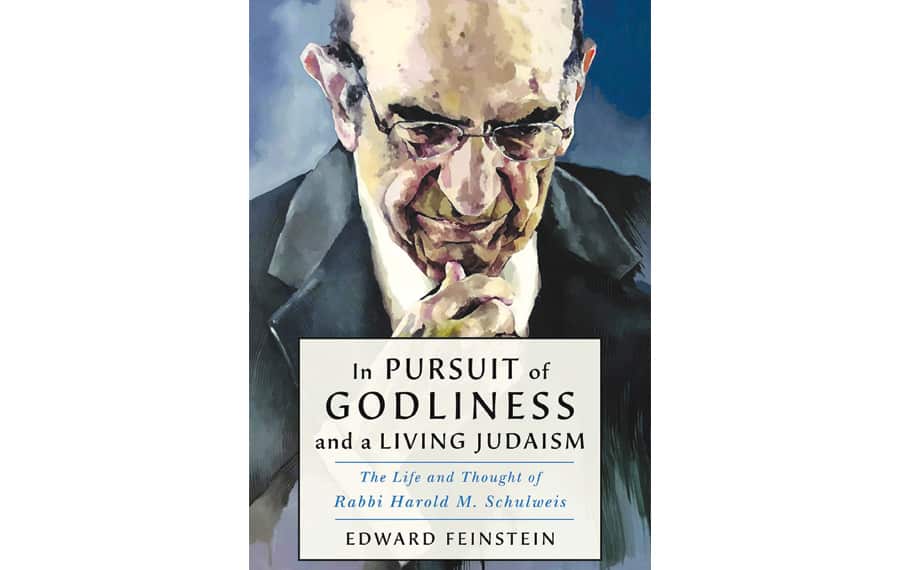
One of the few delights of this period of enforced home stay has been the possibility of reading all those books one has wanted to read but for which one simply did not have the time. Last year, I heard that Rabbi Edward Feinstein was writing his doctorate at the Jewish Theological Seminary on his mentor and colleague, Rabbi Harold Schulweis, and set out to order the thesis. When I heard the book was available, I ordered it and started to read.
Schulweis, the innovative and imaginative rabbi of Valley Beth Shalom (VBS) in Encino for more than 40 years, was widely and deservedly regarded as one of the leading rabbis of the United States. In “In Pursuit of Godliness and a Living Judaism: The Life and Thought of Rabbi Harold M. Schulweis”(Turner Publishing Co.), Feinstein documents why. He begins with what seems like a digression into a discussion of the American rabbinate and what makes for greatness in a rabbi — at least, in a liberal rabbi — but soon, the reader comes to understand that without understanding the rabbinate and the many tasks of an American rabbi, one cannot begin to understand the life and legacy of Schulweis. We who lived in his presence came to see the fragments of what we know form an integrated whole. His person and his role were one, the disparate ways in which he defined his rabbinate also were whole.
Born in the Bronx — then the heart of New York’s Jewish community — his father was a secular Yiddishist, a nonobservant socialist; his mother was enamored of the American experience and the opportunity it offered to the sons — and some daughters — of the immigrant generation; and his grandfather, a traditional pious, learned Jew. Schulweis was pulled in three directions. He even gave his bar mitzvah speech in three languages: English, Hebrew and Yiddish. As his rabbinate evolved, he was to integrate all three formative ancestors, all three approaches to the world, all three sets of values into the way he served as a rabbi, into his very being as a Jew, as man.
The role of rabbi for a post-World War II liberal congregation was most difficult. Congregants wanted their rabbis to be models of piety — to observe what they did not observe, believe what they could not believe. They wanted rabbis to be prophets, demanding of them actions and commitments they were not ready to make, and priests confirming them in who they were and enabling them to go through life-cycle events and the struggles, pain, disappointments and inadequacies so basic to human existence — even for aspiring and affluent suburban professionals.
Schulweis was a social activist embodying the prophetic role of Judaism afflicting the comfortable and comforting the afflicted.
They wanted their rabbis to be scholars; the rabbi’s office is called a “study.” Two generations ago, the rabbis routinely were the best educated of their congregants; in today’s pews, especially in the congregations Schulweis served, congregants are professors and lawyers, physicians and scientists, brilliantly educated women and men who expect their rabbi not only to know Judaism, but also to be conversant in their own fields of specialty. They want them to be fine orators but to speak briefly, be skilled CEOs yet deferential, if not subordinate, to lay leadership. On some levels, they wanted the rabbi to affirm their own modest commitments to Judaism, yet demanded of the rabbi something they were not willing to be. They needed their rabbis for births and bar/bat mitzvahs, marriages and funerals, and for the two or three days a year they entered the synagogue.
Feinstein shows how Schulweis fulfilled these roles as he transformed them. He respects Schulweis the scholar, the Jewish thinker, and like Schulweis, Feinstein explains complex philosophical thought in terms accessible to the non-scholarly reader. Schuweis was one of the first to write of Martin Buber in English, learning from him his concepts of the interpersonal, of I-Thou and I-it, but neither of Buber’s mysticism nor his infatuation with Chasidism. Schulweis was a disciple of Mordecai Kaplan, the Jewish Theological Seminary professor most venerated by his students — a sentiment not shared by his seminary colleagues — as Kaplan was wrestling with their question of how to take Judaism seriously when one did not take its faith claims literally.
Schulweis, like many Conservative rabbis of his generation, was a graduate of Yeshiva University (YU), fully committed to Jews and Judaism, but he was a Jew who could not merely accept the traditions bequeathed to him, most especially in the philosophical language and lifestyle of his teachers. Contemporary rabbis often come to Judaism — not from Judaism. Kaplan was an Orthodox rabbi by training and in the founding class of what became YU: his agenda to demythologize Judaism and provide for a religious humanism relevant to 20th-century Jews. Schulweis continued that task of making Judaism relevant well into the 21st century, and addressed a Jewish community far more open to symbolism and myth-seeking to remythologize a desacralized world.
When the question of evil took center stage in the Jewish conversation in the mid-’60s and as Jews started to grappling with the Holocaust — Schulweis took the conversation a step forward in writing of “predicate theology.”
When the question of evil took center stage in the Jewish conversation in the mid-’60s and as Jews started to grappling with the Holocaust — especially with God’s role in the Holocaust as presented by Richard Rubenstein, Emil Fackenheim and Eliezer Berkovits — Schulweis took the conversation a step forward in writing of “predicate theology.”
For Schulweis, “God is just” became “doing justly is Godly; God is merciful, acting mercifully is Godly; God is good, doing good is Godly.” With such a theology, it is easy to understand why Schulweis saw the presence of God not in the perpetrators and their demonic deeds, but in the rescuers and their lifesaving deeds. It was natural that he established the Jewish Foundation for the Righteous, offering recognition and support to those who risked their lives to save Jews during the Holocaust. As a rabbi, he was looking for a usable history of the Holocaust, one that could inspire Jews and not fill them with fear or guilt.
As Feinstein well understands, Schulweis was a social activist embodying the prophetic role of Judaism afflicting the comfortable and comforting the afflicted. He often told his congregants what they did not want to hear. He spoke out loudly and consistently on civil rights against slumlords and unethical merchants and landlords even when they were congregants. He was one of the first to speak on the acceptance of gays in the synagogue. Offended, some congregants left or moved, some changed. Those who ignored his preaching felt uneasy (not an unimportant accomplishment for a rabbi). He created institutions to ensure the call to action was not a momentary passion but a sustained commitment; the Jewish World Watch was another of his creations.
At a time when other synagogues primarily catered to children and old people — not yet called” seniors,” and when kids were dropped kids off at synagogue but busy professionals would never set foot in it on their own − he created an adult Jewish community.
As a rabbi, he continued to serve his community and create community. At a time when other synagogues primarily catered to children and old people — not yet called” seniors,” and when kids were dropped kids off at synagogue but busy professionals would never set foot in it on their own − he created an adult Jewish community for his congregation, Valley Beth Shalom. His sermons were demanding. They created an agenda for community: chavurot, social actions, outreach to the unchurched.
Perhaps most importantly, Schulweis was a national figure who remained locally rooted in his community. He did not do what many prominent rabbis who had established national reputations of his generation did: “go national or international,” spending much of their time away and gracing the congregation with their presence. Schulweis remained committed to his synagogue, to his community, to these Jews, being with them in joy and sorrow, in times of travail, in moments of exaltation. He never outgrew them; he grew with them as they grew with him. He continued to learn from them and to learn how to teach them.
Feinstein has written a fine book. Clear, concise, moving, loving and humorous. Nevertheless, there are two shortcomings in the work.
If one did not know it, a reader would not learn that Feinstein and Schulweis worked together for many years. Feinstein conceals what was most personal about their relationship, what he observed and learned in the inner chambers, rabbi to rabbi, man to man.
The second is that he did not explore what Schulweis did admirably: manage a seamless transition between a charismatic rabbi and his/her successor. Many synagogues have floundered after the long service of a charismatic rabbi who was so self-absorbed he did not take time to mentor and to think of what would follow. To some rabbis and institutional leaders, the final measure of their importance is their indispensability. Schulweis handled the transition to Rabbi Feinstein, and Feinstein the transition from Schulweis, seemingly effortlessly so VBS has truly gone from strength of strength. And this is a timeless lesson, so timely for so many organizations.
Michael Berenbaum is director of the Sigi Ziering Institute and a professor of Jewish Studies at American Jewish University.
I met Enock Makasi on March 24, 2016 when he was flying from Los Angeles, California to Salt Lake City on his way to his new home in Idaho and he was 15 years old. He had already flown from Uganda to Amsterdam and then California. He “was born in a country called Democratic Republic of Congo, 🇨🇩 faced war in the Eastern part of Congo, moved to Uganda🇺🇬 and then to the USA.” I encouraged him to write his story and he recently sent me this poem from his home in Twin Falls, Idaho where he goes to Canyon Ridge high school. He told me: “I came as refugee with IOM (International Organization for Migration) who helped us resettle in America and they sent us here to Twin Falls and helped us with housing, registration for school, social security card and other things.
In Feb 2019, he published this poem on my website: A Child of the Universe. He just finished his freshman year of college and wanted to share his graduation thoughts with the Class of 2020.
Everything happens for a reason. Most of you guys were born during the period of 9/11, we all know what that means to all of us. In a time of pain and sorrows. An event that stayed and made our hearts bleed.
Now, we have the virus that’s affecting the whole world, not just you, but everyone at this moment. It’s true that whenever we expect something good to happen, yes there’s always that one thing that ruins the plan but it never changes the actual plan.
Yes, some of you had great plans for this year, but it seems like everything is falling apart. Your prom has been denied, the senior trip has been rejected and the graduation that you have been waiting for your entire life has been ruined. Ooh God, What did we do to deserve all this?
But, let’s not forget those that face tsunamis, wars, floods and all we can think of. What happens to them? Do they stop living their normal lives after the disaster? Do they stay in their current situation and deny change or they instead pick themselves up and move on?
Enock for his High School Graduation 2019
And that’s what life’s made of, we accept what it presents in front of us and keep moving forward.You all have a great future and yes I do believe you all do. There is only one way to happiness and that is to cease worrying about the things that are beyond our will.
Your history is not your destiny and will never be, but you will miss it if you keep hanging on to the past. The past where you wouldn’t believe in yourself. Never allow yourself to be controlled by these five things: the past, people’s opinions, relationships, limited beliefs and money.
The best way you can succeed in life is to fail big. You only live once, so do what you feel more passionate about, don’t be afraid of failing. Sometimes you will claim that life is meaningless, especially when you are going through tough times, like keeping your grades up in online classes, current situations about Corona or having a job that consumes your time and it can sometimes be overwhelming. You will think of quitting but just get over everything but ask yourself this question: why did you start all this in the first place? What’s your life’s purpose? Is it meaningful?
I remember having a mentor who had two jobs, two children, divorced and being full time students at college but through all her darkest moments, she found her purpose and made it a target. She was committed to her education and dedicated to provide for her infants with basic needs and wants and she made it in life.
So quitting is never an option, keep this in mind, once you put one step ahead, keep moving forward cause that will prove that you are progressing than putting a step back which proves to all of us that you are losing. But, when I look at most people, especially friends, they always complain about everything, even the simplest tasks. Others are good depending on mentors, they even claim that English is not their first language.
English is not my first language. I came from far east, across the mountains and seas, so English will never be my first language, I understand but remember, being a refugee is never easy, being stateless is not a pride, having no identity is never profound. Being uncertain of tomorrow is not a strength.
Being called a refugee is not what I prefer because inside that refugee exists a human with family, passion, love, and charity. Inside that refugee exists a story of hope, a dream which may be blurry now but nonetheless a dream that could transform the world.
People may graduate with honors and pick a great career, but it can still make them feel unfulfilled. In life, we should always go beyond what’s required and never fear to go outside the box. That’s when I realized that the best way to succeed in life is to be creative in every step we make. Finding every way possible to succeed. Motivation is the key to education. I know it sounds crazy to be called an adult but as you grow older, everything changes.
Nothing will come easy on you, so don’t expect an easy life, we’ve got lots of memories to look up on the past, yet we still have more memories to look up to the future. Things get harder and harder but you know what, find your strength in your weakness. So let what stands on the way become the way. I believe in a bright future ahead.
Thank you. WISH ALL THE BEST AND WE ARE PROUDOF YOUR BRAVERY CLASS OF 2020 by Enock Makasi
“As you prepare to take on the world, I’d like to give you a few tips:
Go for it.Never avoid doing something because you’re afraid to fail. Everything in my life that’s been valuable and precious is something I was almost too scared to do.
Don’t make excuses.If something goes wrong, don’t blame others. Start with yourself.
Find your comparative advantage.I believe that every one of you has a slightly different gift to offer the world. Embrace it, and play to your strength.
Reject pettiness and bitterness.It’s a waste of valuable energy. Generosity will always make everything better. It will lighten your burdens and help you see the way.
Congratulations, Class of 2020, and good luck!”
Also from the Wall Street Journal, Nikki Haley’s advice in “An Attitude of Gratitude” was fantastic:
First, beware of social media. It destroys gratitude.
This brings me to my second piece of advice: Be thankful to be alive in America in 2020. At the U.N., I dealt with countries plagued by violence, lawlessness and intolerance. Even now, we are lucky that our legal system protects our rights. We are lucky to live in a country where we can freely choose our leaders and freely criticize them without fear of punishment.
Ms. Haley served as governor of South Carolina from 2011 to 2017 and U.S. ambassador to the U.N. from 2017 to 2018.
I’ve always loved joining commencements––the culmination of years of hard work and sacrifice. Even if we can’t get together in person this year, Michelle and I are excited to celebrate the nationwide Class of 2020 and recognize this milestone with you and your loved ones. pic.twitter.com/ngR2ykx3A2
The “Commencement: Speeches for the Class of 2020” podcast will kick off on May 15th — just two days ahead of National Graduation Day (which is May 17th) — and will be available on iHeartRadio and everywhere else podcasts are heard. The speeches will also be featured on iHeartMedia broadcast radio stations across the country.
iHeartRadio knows how important the graduation ceremony is. After four long years of hard work, commencement offers one last moment to reflect before you toss your hat into the air and take on the world. We know that during these difficult times, most graduates won’t get to attend their ceremony in person. So, we’ve partnered with some of the biggest names across industries, to write a commencement speech just for you. From 4-star generals to all-star comedians, legendary coaches to John Legend himself, these are the words we hope will inspire you. Thank you to DORITOS® , State Farm® , T-Mobile and the 2020 Census.
“Dear Class of 2020″ is a virtual commencement celebration bringing together inspirational leaders, celebrities, and YouTube creators to celebrate graduates, their families, and their communities. Ring the bell to get notified when the stream goes live!
Featuring: President Barack Obama, Michelle Obama, BTS, Lady Gaga, Sec. Robert M. Gates, Sundar Pichai, Sec. Condoleezza Rice, Malala Yousafzai
Special Appearances by: asapSCIENCE, Alicia Keys, Chloe x Halle, Kelly Rowland, Kerry Washington, The Try Guys, Zendaya, Mr Kate Dude, Perfect Jackie Aina, Zane Hijazi
One of the biggest questions former Vice President and presumptive Democratic presidential nominee Joe Biden faces is whether he can snag younger voters in November. Three Jewish college students are pushing to make sure he does.
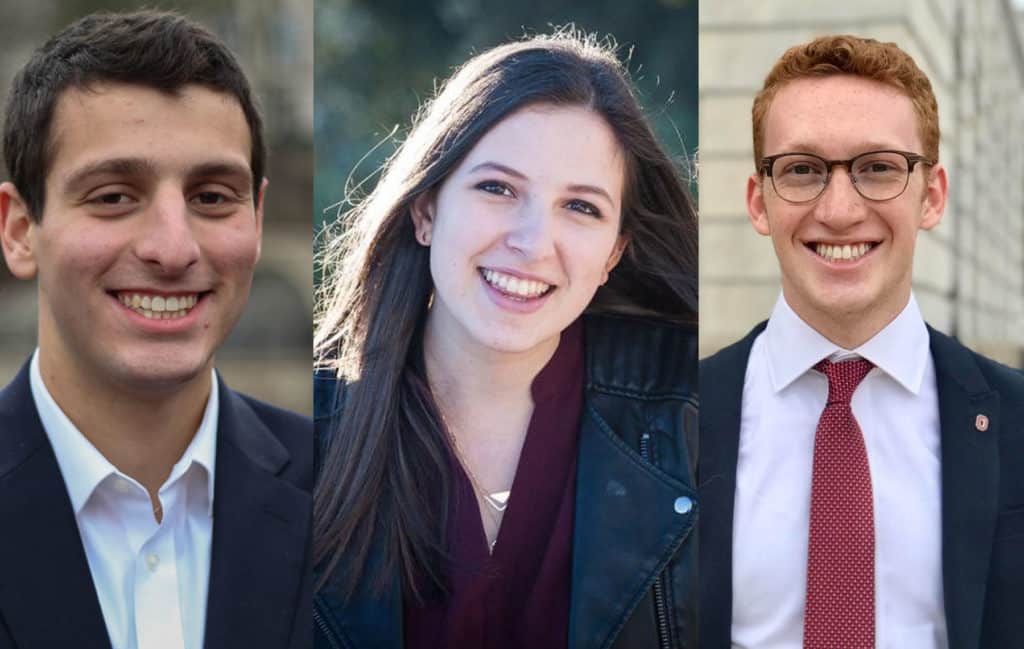
Ohio State University (OSU) junior Ethan Wolf, 20, OSU graduate Ben Kanas, 21, and Columbia University senior Eva Wyner, 22, are the creators behind the political movement Jews 4 Joe.
“Among the three of us we are really involved within our Jewish communities and progressive politics,” Wyner told the Journal. “With Jews 4 Joe, we wanted to figure out how to translate our skills in community organizing and do it in a virtual space that relies on grassroots efforts.”
At the beginning of March, Wolf, Kanas and Wyner reached out on Twitter and Instagram, and connected with influential Jewish figures across the country including former U.S. Ambassador to Israel Dan Shapiro and Pennsylvania Attorney General Josh Shapiro (not related).
“They led us to what our goals are and what our angle is,” Wolf said. “[Jews 4 Joe is for] Ben and Eva, who [are] graduating college, somebody like me still in college, and students fighting for progressive values within the community.”
On April 23, Josh Shapiro tweeted, “Young people stepping up to be the change in our politics and our world is exactly what we need. [applause emoji] for this new generation of leaders from @Jews4Joe for doing their part.”
According to a Gallup Poll from August 2019, since President Donald Trump took office in January 2017, 68% of Jews identify as Democrats or as independents and lean toward the Democratic Party, while 28% identify as or lean Republican.
According to the Jewish Virtual Library, American Jews have favored Democratic candidates, with 71% of Jewish voters choosing Democratic candidates and only 25% choosing Republicans since 1968.
While Jewish voters historically lean left, there is still an urgency to get young Jewish voters to the polls as well as young moderate voters. Many young Jews aligned themselves via other Jews 4 groups including those for Sen. Elizabeth Warren, former Mayor Pete Buttigieg, Andrew Yang, former Mayor Michael Bloomberg and Sen. Bernie Sanders, before Biden became the front-runner.
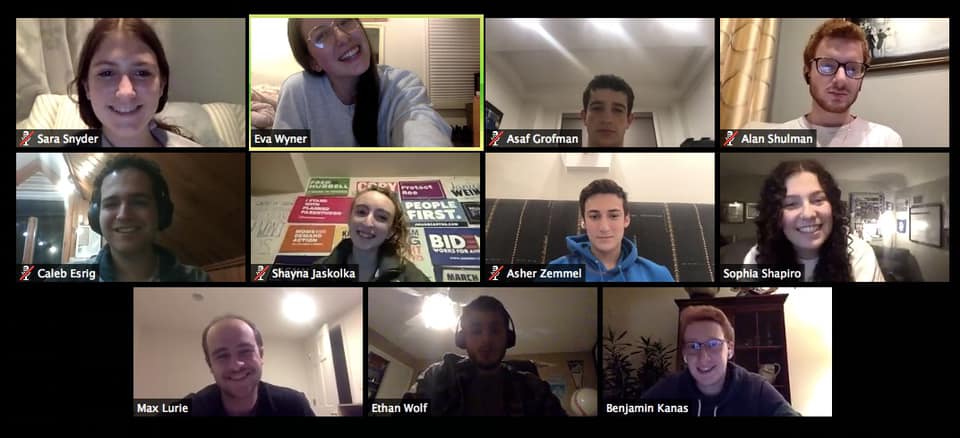
Students participate in a Jews 4 Joe Zoom call as part of their Soul Shabbat initiative. Photo courtesy of Jews 4 Joe.
“We tried to create a big support network ranging from the most liberal people to conservatives members,” Wolf said. “We started during primary season where it was still Bernie and Joe, then we started having conversations with directors of Jews 4 Bernie, Jews 4 Yang as well as Jews 4 Warren to better understand their viewpoints and how can we encompass their support going forward. In terms of more conservative voters, we are doing the same thing. What is their voice? What is their story? When we have that understanding we are able to have a dialogue and determine that ultimately Joe [Biden] is the better candidate because he brings that wide stretch in views that is necessary for a U.S. president.”
Jews 4 Joe also has been organizing events on social media and connecting with more than 100 Jewish high school students, college students and young professionals in addition to political leaders to spread the word about Biden’s platform. It also has performed outreach to the Jewish Democratic Council for America (JDCA) and the Democratic Majority for Israel. The group told the Journal they also are working with the Michigan Jewish Democratic Caucus and Democratic Jewish Outreach Pennsylvania to mobilize the Jewish community in the two swing states.
On April 26, the college students participated in a nationwide “Soul Shabbat” campaign on social media, which coincided with Biden’s “Soul Saturday” campaign. “We saw the effort Joe Biden’s campaign team was undertaking that Saturday to restore the soul of our nation and we wanted to do our own version in an accessible way for the Jewish community,” Wolf said. “We took time to thank those on the front lines fighting the coronavirus, called our grandparents to check in on them and called our synagogues to ask our rabbis what we could do to help.”
On May 14, Jews 4 Joe is partnering with Rep. Brad Schneider (D-Ill.) and former Rep. Steve Israel of New York for a discussion on Biden, Israel and Jewish issues in the upcoming election.
“This is our first major surrogate call and we are thrilled it is with such influential Jewish public servants,” Kanas said.
Photo courtesy of Jews 4 Joe
Wyner added that in addition to supporting progressive values, Zionism and calling out anti-Semitism on the right and left, a major reason Jews 4 Joe backs Biden is because Biden believes in tikkun olam. Wolf, Kanas and Wyner said that it is Biden’s commitment to upholding justice, truth and peace [Pirkei Avot, 1:18 as noted on Jews 4 Joe’s website] that inspires them and can propel Jewish voters to show up for him.
JDCA also applauded Biden for his commitment to tikkun olam in a letter to Biden on April 24 that read in part: “You share the Jewish community’s commitment to the principle of tikkun olam, healing the world, in addition to our commitment to combating the rise of anti-Semitism and supporting a strong US-Israel relationship.”
“In the last four years we’ve seen divisive rhetoric, hateful rhetoric from the White House and the Jews have not been spared. Joe Biden is going to be the restorer of our souls and the person who puts the country back together.” — Ethan Wolf
In addition to the JDCA, J Street and Democratic Majority for Israel also endorsed Biden for president. JDCA Executive Director Halie Soifer told the Journal that young voters will play a critical role in this year’s election. Like Wolf, Kanas and Wyner, many of them are part of the generation that have experienced mass school shootings, joined the fight for climate change initiatives and were deprived of graduations and other social activities because of the coronavirus. Gun control, climate change and COVID-19 are now major talking points in this election and are important to young voters.
“We’re happy to see the emergence of groups like Jews 4 Joe,” Soifer said in an email to the Journal. “We know based on data that when younger and newly-eligible voters turn out, Democrats win. That’s exactly what we are working toward in November, when the overwhelming majority of Jewish voters will support candidates who share our values, including Joe Biden.”
Wolf, who was a junior in high school during the 2016 election was too young to vote and remembers watching the news and exit polls the night Trump became president. He hopes that Jews 4 Joe will have an impact on this election and believes that Biden has what it takes to win.
“In the last four years we’ve seen divisive rhetoric, hateful rhetoric from the White House that has been horrible to all marginalized groups and all different minority groups and the Jews have not been spared,” Wolf said. “We’ve seen it again and again. Joe Biden is going to be the restorer of our souls and be the person who puts the country back together.”
CORRECTION: An earlier version of this story suggested AIPAC endorsed Joe Biden and attributed a quote to the organization, which was from the JDCA’s endorsement letter.
Molly Forrest, head of Jewish Home, on the unprecedented challenge of caring for seniors during COVID-19.
How do we manage our lives during the coronavirus crisis? How do we keep our sanity? How do we use this quarantine to bring out the best in ourselves? Tune in every day and share your stories with podcast@jewishjournal.com.
Yarmulke is such a funny word. Not as funny as phylacteries, which, as 12-year-old I thought had something to do with birth control. The one thing I knew about yarmulkes was I had to wear one in the Conservative synagogue our family attended. The ushers in the sanctuary and the teachers in Hebrew school made certain all us boys put one of those cheap black satin things on our heads the instant we walked in.
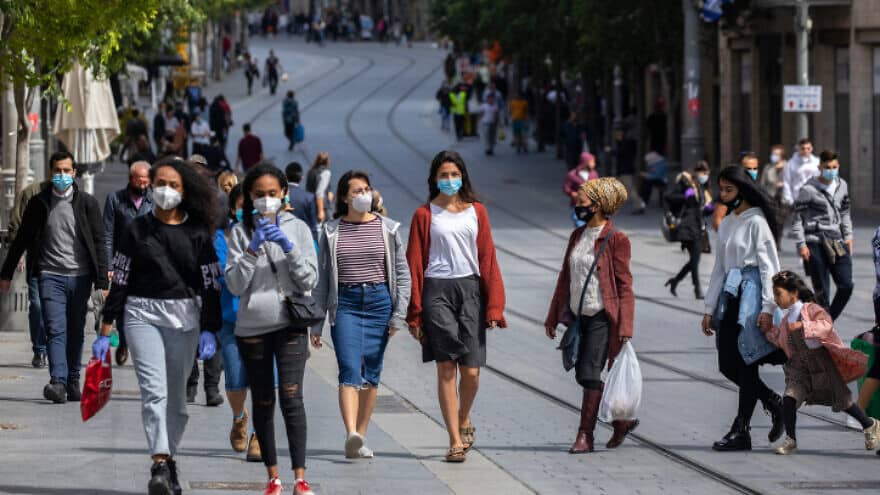
I recalled that early experience as I watched the fierce debate emerging in America about the mandate to wear a mask in public during the coronavirus crisis. In Tuesday’s New York Times, Frank Bruni wrote that to wear or not to wear a mask has become incredibly politicized between those who believe the science of viral transmission follow the guidelines of the Centers for Disease Control and Prevention and the coronavirus task force, and those who think the pandemic is a hoax think and face coverings are unnecessary.
The mask has become a tribal symbol, like the yarmulke.
The mask has become a tribal symbol, like the yarmulke. Back in my Omaha youth, Orthodox Jews always wore yarmulkes. Conservative Jews wore a yarmulke in shul and sometimes at home, but not on the street, and Reform Jews never wore a yarmulke. Over the years, of course, this has changed.
The strange Yiddish word “yarmulke” (probably a variation of the Polish “jarmulke”), has fallen out of use. The Hebrew word kippah (literally “dome”), is more common. Women have moved on from what my Bubbie called a “tichel” — a lacy scarf that looked like a doilie — to wearing all manner of beautiful kippot. Many Reform Jews now wear kippot in synagogue and some Conservative Jews wear one all day long. The style and even the fabric of the kippah often indicates the subgroup one identifies with: “kippah sruga” — a knitted hat, for example, indicates a Modern Orthodox person, unlike the black velvet kippot of the Hasidim.
I sense we are witnessing a similar development with facial masks. The plain paper mask, often distributed in doctor’s offices and hospitals have given way to all sorts of fashion statement coverings. When my wife Susie and I arrived in Rochester, Minn. in early February for her kidney transplant and my living donation at the world famous Mayo Clinic (yes, the one where Vice President Pence refused to wear a mask), we were advised to acquire a Vogmask, a cloth covering made completely of N95 material. The Mayo store had a wide selection. We chose matching ‘60s psychedelic fabric, complete with peace signs and hearts.
A participant wears a kippah during a “wear a kippah” gathering to protest against anti-Semitism in front of the Jewish Community House on April 25, 2018 in Berlin, Germany. (Photo by Carsten Koall/Getty Images)
The creativity that is now on display over masks — everything from Disney characters to American flags — is reminiscent of personalized kippot. At Shalom House, a Judaica store in Los Angeles, you can buy kippot with sporting team logos, scenes of Jerusalem and personalized names painted on leather. And then, of course, there are the ubiquitous kippot stamped on the underside with the names of bar and bat mitzvah kids and wedding couples.
With no end in sight to social distancing guidelines, the idea of wearing a mask for months is challenging. The nurses at Mayo have invented headbands with buttons to secure their masks during 12-hour shifts, rather than endure the painful tug on their ears. “Kippon!” — a Velcro-like strip that replaces bobby pins, helps secure a yarmulke on the head.
What does it all mean? Before the coronavirus, we thought of masks as things criminals wore to hide their identities. Baseball catchers wore them to protect from errant pitches, They were worn by movie villains, the Lone Ranger and the Phantom of the Opera. These masks had purposes as do ours today. Just like yarmulkes.
The purpose of the yarmulke is simple, yet profound. It is worn as a symbol of the relationship between human beings and the Divine. Whether you believe in God in Heaven or God in your heart, the yarmulke is a recognition that we are not alone, that there is a source of encouragement and support to sustain us during this pandemic and beyond.
The purpose of the mask is also simple, yet profound. It is worn to save lives, perhaps others, or maybe even your own. It too is a sign of relationship, between human beings. We wear the mask to reduce the chances of community transmission, even if we are asymptomatic. The mask I wear is not a symbol of a blue state, red state divide. It is not a symbol of whether I’m for or against Trump. It is a symbol of our connectedness and a real life contribution to the safety of the human race.
As a 6-year-old, I remember watching a public service announcement in 1955 from the National Highway Safety Council during an epidemic of tragic speeding accidents on the new Interstate highways killing teenagers. It featured the movie star Gig Young interviewing a young James Dean. Dean was in costume for his role in “Giant,” decked out in a cowboy outfit. Young opened by saying there were probably many young people watching and asked Dean, “As a racing man, what’s your opinion of fast driving on the highway?” Dean said, “People say racing is dangerous… but I’ll take my chances on the track any day than on the highway.” The commercial cut to a slogan that said, “The life you save may be your own.” At the end of the commercial, Dean looked into the camera and said, “Take it easy driving. The life you save might be mine.” Three weeks later he was killed in a speeding accident on a highway.
When you wear a mask, the life you save may be your own. Or, it could be mine. Or, my immuno-suppressed wife’s. Or your loved one. Or your friend.
So, please wear one.
Ron Wolfson is Fingerhut Professor of Education at American Jewish University, and the author of “Relational Judaism” and co-author, “The Relational Judaism Handbook.” (relationaljudaismhandbook.com).
If you were the earth
out of which everyone’s food grew
animal and human alike
you would need a rest too.
You need a rest too. Take one.
Not in seven years.
Every year, a week or two
outside of your element. It will
help define your element.
Every week, a full day.
We keep repeating this
until the time between
instances of that day diminishes
and someone does drink from the
extra cup at the table.
Every day, a full hour
or, do like the Spanish and
take a siesta, a day off
in the middle of your day.
And what are you doing at night?
I hope not thinking about the day.
The two are different.
That’s in chapter one. You
may have to start this
over if you missed that.
Give it a few months and you will start this over.
When the leaves leave
the trees. When the heat of your
summer rest is reduced to
digital memories. When
the round keeps coming around
and the slaves are freed
and the complicated laws of
real estate find their ancient roots.
Take a rest. We are not
the owners here. It would be
generous to call us the caretakers.
Take a rest. Free your slave.
Put your food in the cabinet
for later. This is the Earth. Giver
of all, to all. Goodnight Earth.