fbpx

May 6, 2020

Israel Poised to Start Coronavirus Antibody Testing

JERUSALEM (JTA) — Israel will conduct antibody testing for COVID-19 on 100,000 citizens nationwide to determine how widely the virus has spread.

The testing will begin within the next two weeks, Moshe Bar-Siman-Tov, director-general of Israel’s Health Ministry, told The New York Times on Tuesday.

The results also will be used to assess the possibility of a second wave of the coronavirus in Israel and how prepared its medical system is for a return, which could come during the regular flu season.

The results will show if a sizable proportion of Israelis has been exposed to the coronavirus, meaning that it is achieving “herd immunity,” or if only a small number of Israelis carry the antibodies for COVID-19, meaning a new outbreak could overwhelm the health system.

It is not known whether people who have had the coronavirus and recovered or have developed antibodies against the virus are immune from being reinfected.

Israel obtained 2.4 million antibody tests at a cost of $40 million from two suppliers that have received Emergency Use Authorization from the Food and Drug Administration, according to The Times. But the reliability of the tests is not clear.

The tests will be taken through Israel’s four HMOs. Patients receiving blood tests will be asked to allow their samples to also be tested for coronavirus antibodies. They also will answer questions including whether and when they experienced symptoms of the coronavirus, whether they were isolated at home or hospitalized, and if friends and relatives contracted the virus.

This week, Israel lifted some aspects of the six-week near-total lockdown on citizens to prevent the spread of the coronavirus, permitting visits among first-degree relatives and opening malls, among other things.

Israel Poised to Start Coronavirus Antibody Testing Read More »

Documentary Maker Excavates Sexual Abuse Case Against Cantor in ‘Rewind’

From the get-go, Sasha Joseph Neulinger knew he’d face turbulent waters in creating “Rewind” (May 11 on PBS). However, the 30-year-old also knew confronting his demons was a necessary step toward healing.

Marking his film debut, “Rewind” is an autobiographical documentary that recounts how from ages 3 to 8, he was sexually abused by an adult cousin and two uncles, most notably “Uncle Howard,” Howard Nevison, the much respected and admired longtime cantor at Temple Emanuel on Fifth Avenue in New York. It is a family awash in intergenerational predatory behavior. The investigation and three trials that ensued dragged on for eight years (1998-2006) and generated a lot of media coverage.

Neulinger still struggles with how the venerated synagogue unquestioningly rallied to Nevison’s defense and literally paid for much of it. Prior to the #Metoo movement, the cultural climate was not predisposed to believe a child accuser and was, in fact, hostile toward him, Neulinger said.

He’s aware that for many Jews, the whole event — the trial and now, the film — presents yet another conundrum: the deeply rooted concern that the public airing of such episodes confirms anti-Semitic tropes and, indeed, encourages anti-Semitic sentiment. In fact, a Reform rabbi spelled it out to Neulinger, asserting the movie would only succeed in hurting Jews.

Speaking to the Journal by phone from his home in southwest Montana (he doesn’t want to specify the city), Neulinger stressed, “This is not a Jewish, Christian, black, white, gay, straight issue. It is a human issue. Sexual abuse doesn’t discriminate. And Temple Emanuel’s position was not peculiar to Temple Emanuel. It’s a problem within all organized religion, which can become a trap. We take every word our religious leaders say as the truth and in so doing, surrender our cognizant reasoning.

“There’s deep fear. If my religious leaders, those who connect me to God, are sinister or even evil, what does that say about my faith? This is complex. It’s just easier to say something didn’t happen than to acknowledge the possibility that a cantor abused a child. What incentive would I have had to go public in order to endlessly defend myself? This was not a civil case. There was no money involved. It was about justice.”

“Rewind” initially was slated to open in Los Angeles theaters on April 3, with a national rollout to follow, but because of the COVID-19 outbreak, it was pushed onto a digital platform. The film premiered at the 2019 Tribeca Film Festival, where it received the Special Jury Mention Award, and it won Best Documentary earlier this year at the Atlanta Jewish Film Festival.

Photo courtesy of FilmRise

Old home movies, recording happy times, serve as the story’s backdrop, presenting a stark contrast to the darker truths that existed behind the scenes and cast a long shadow. Interspersed throughout, Neulinger interviews his mother, father, sister and psychiatrist — among others —  recalling their growing realizations that something rotten was transpiring in their own home and the culprits were close family members.

Neulinger’s behavioral changes and plummeting grades were the touchstones. When he was 8 years old, he disclosed what was happening to his psychiatrist, with his mother present. In turn, they told his father, who revealed that he, too, had been sexually abused by both his brothers. Neulinger’s father is one of the more remarkable figures in this film. When, at the age of 10, Neulinger told his father he wanted to drop the family name (Nevison), his father accepted and supported his son’s decision. He chose the name Neulinger in honor of his maternal great-grandfather, Joseph, who heroically risked his own life to lead his family through treacherous terrain to escape the Nazis and make it to America.

Like many documentaries (“Capturing the Freedmans” and “Escaping Neverland” come to mind), this one also raises questions about memory (its distortions); the thin line between private and public arenas; self-revelation and exhibitionism.

Neither Neulinger nor his family saw these as roadblocks, although his sister (admittedly for different reasons) couldn’t understand why he needed to make the film and relive the atrocities, especially after having been through so much already.

“This is not a Jewish, Christian, black, white, gay, straight issue. It is a human issue. Sexual abuse doesn’t discriminate.”  — Sasha Joseph Neulinger

“She felt things were going well for me. I had gotten through it. I was surviving,” Neulinger recalled. “In many ways, she was right. I was doing well in school, had a good internship and was in a place I loved: Montana. I love the outdoors, nature and hiking. Montana was also as far away from Ground Zero as I could get. But I still felt trapped in a secret. I continued to feel dirty, unlovable and responsible for what happened to me. I had to acknowledge and own the story, embrace my childhood self and by extension, embrace who I am now. I struggled with what public disclosure would do for me. That was a big hurdle. Not everyone responds to trauma in the same way. If nothing else, I felt the film might help someone else. That was a big part of my motivation.”

Raised in Montgomery County, Pa., Neulinger grew up in a world of filmmaking. His father, who made his living in film production, was always moving around the house, camera in hand, forever shooting away at big events, small events, even non-events. He had stored well over 200 tapes.

From an early age, Neulinger had his sights set on a film career, although he never thought he’d be launching it with an autobiographical documentary. But, like so much else in life, it came about organically as he began sorting through his father’s old videos in an effort to cobble together a cohesive whole from the chaotic threads of his childhood.

WATCH A SPECIAL CLIP FROM THE DOCUMENTARY HERE.

“I got through six of them and discovered that with each question I answered, I had three more questions, and that’s why I decided to interview my mom, dad, sister and others who were part of my life at the time,” he said. Thus “Rewind,” was spawned, a seven-year project that started when Neulinger was still a film student at Montana State University.

Along with bringing courage and solace to children and adolescents who have been sexually abused, Neulinger hopes the film speaks to religious institutions and makes them own up to their culpability if they remain silent, refusing even to acknowledge the possibility of evildoing within their own ranks.

“They say it takes a village to raise a child,” Neulinger noted. “It also takes a village to rape one.”


Simi Horwitz is a New York-based award-winning feature writer/film reviewer.

Documentary Maker Excavates Sexual Abuse Case Against Cantor in ‘Rewind’ Read More »

david suissa podcast curious times

Pandemic Times Episode 34: The brave souls on the front lines of health care

New David Suissa Podcast Every Morning at 11am.

In honor of National Nurses Day, stories and poems that celebrate an essential profession.

How do we manage our lives during the Coronavirus crisis? How do we keep our sanity? How do we use this quarantine to bring out the best in ourselves? Tune in every day and share your stories with podcast@jewishjournal.com.

Pandemic Times Episode 34: The brave souls on the front lines of health care Read More »

Why We Count the Days in the Worst of Times

The Omer count is up to 25 days as I’m writing this, and for the first time I’ve tallied each one. Remembering to count the Omer every night has been easier this year. After all, its place as an annual period of mourning has felt more than a little on the nose. A week before the Omer started, I already had stopped going to concerts, getting haircuts and attending weddings.

But I also had stopped listening to music, which had more to do with the mood than the circumstances. It seemed inappropriate, especially in the early days of the COVID-19 pandemic, to seek distraction from the avalanche of bad news. Last week, in a fit of fiscal spirituality, I canceled my Spotify subscription.

Jews are not the only people growing out their beards these days. The Omer is having its moment. For example: “Here’s me on Quarantine Day 1” — insert picture of me looking clean cut and handsome — “and here’s me on Quarantine Day 58” — replace with a photo of a dog rolling around in dirty laundry. A veritable Omer meme.

What is it about counting the days during the worst of times? Have we all been reduced to contestants in a game of “Survivor” trying to outlast each other in  physical and mental challenges?

In another example of Jews being millennia ahead of the crowd, gentile neighbors have adopted the ritual of marking time. These days, everyone counts. A newsletter I subscribe to called “Entrepreneurship Today” logs quaran-time through watercolors of objects around the author’s house. The most recent dispatch, Day 50 (assorted scented candles), made me realize that most of us — well, the lucky and responsible ones, at least — have by now endured a full Omer of sheltering at home.

You’ve got to hand it to these non-Jewish quarantiners, they’ve brought fresh ideas and practices to our well-trodden ground. They didn’t even take off Day 33. Just think, if Jews had been forced to wait 50 days at Mount Sinai for the Ten Commandments, we’d have built a whole herd of golden cattle.

What is it about counting the days during the worst of times? Have we all been reduced to contestants in a game of “Survivor” trying to outlast one another in physical and mental challenges, with the habits and comforts of the mainland lost to us in every sense but the rising and setting of the sun? Is it just gallows humor? Or a denominator to calculate the rate of change?

My sense is that when we count the Omer, we are adding up something else. We can’t always see what it is or why we are counting until it’s over. In the meantime, we will paint our watercolors, re-creating life each day anew, looking at the fixtures of our daily life — either intact or on hold — with new appreciation. That’s how we prepare to receive the Torah at the end of a wait that often feels interminable: by treating the journey like the destination itself.

An omer is a unit of dry measurement whose exact quantity is unclear. And who knows when our international, multicultural Omer will end, or what awaits us at the end of it?

It’s a strange Jewish phenomenon that we mourn when we are building holiness; that we should somehow reacquaint ourselves with beauty and royalty and compassion when we are at a loss for answers to mass casualties. But the lesson of the Omer is that these darkest moments can accelerate our closeness to God, that we can use the pursuit of the Omer’s seven sefirot — the three above, plus glory, strength, honor and resilience — to give the tragedy a purpose.

On the afternoon of March 11, I drove to my parents’ house. I remarked that it might be the last time we got together for awhile. My mother rejected that out of hand. No, no, we may be staying in, she said, but we won’t be staying apart. That night, an NBA player tested positive for the coronavirus, American sports shut down, then everything else, and that was that. My quarantine began that day. I’m on Omer Day 25 of 49, Quarantine Day 55 of as long as it takes.

An omer is a unit of dry measurement whose exact quantity is unclear. And who knows when our international, multicultural Omer will end, or what awaits us at the end of it? All we know is where we started. All we can do is make every day count.


Louis Keene is a writer living in Los Angeles. He’s on Twitter at @thislouis.

Why We Count the Days in the Worst of Times Read More »

Israeli Robotics Program Creates Robot to Treat COVID-19 Patients

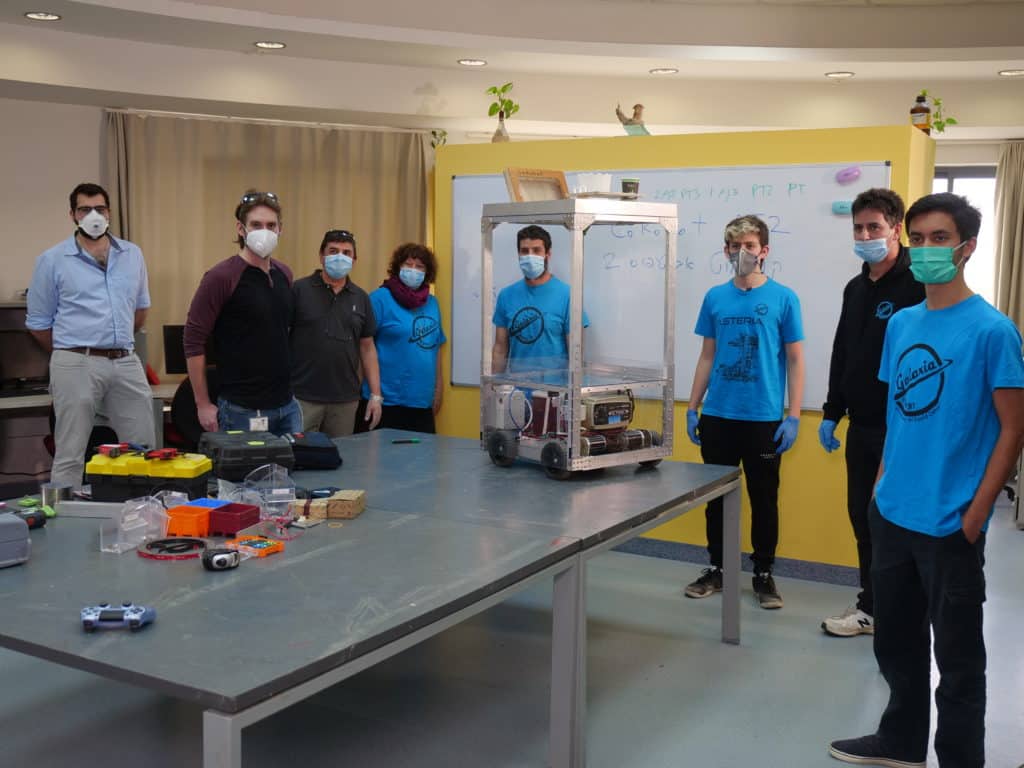
Israeli high school students and alumni of the FIRST Robotics program in Haifa’s Reali School created a robot in April that medical professionals can use to treat COVID-19 patients without risking exposure.

Technion Vice President for External Relations and Resource Development professor Alon Wolf, who heads the FIRST program in Israel, told the Journal in a phone interview that doctors around the country told him that one of the biggest issues with COVID-19 is doctors risking exposure to the infectious disease.

“We’re talking about patients that are lying in bed, you can talk to them, they function, they collaborate,” Wolf said. “So the requirements for the robot is to be able to deliver, food, medications, and have maybe even a censor that could take blood pressure.”

Wolf contacted the robotics team at Reali School about the project and in four days the team was able to create get a working prototype of the robot that medical personnel can control remotely; the team is continually making improvements to the robot. The robot, known as COROBOT, is currently being tested at Haifa’s Rambam Hospital and has had initial success.

Professor Gil Yudilevitch of Technion Faculty of Aerospace Engineering, who heads the robotics team at Reali School, said in a statement that the robot eventually could act as a conduit between patient and doctor.

“In the next stage the robot will incorporate a communication system that will include a screen, camera, microphone and speaker, and will be able to move from patient to patient and transmit information to the medical staff in real time,” Yudilevitch said. “I hope that in the future we will add features that will help with the actual treatment, such as sensors that will check patients’ pulse rates and blood oxygen levels.”

Wolf said that “it’s a very exciting project,” adding that “this is something we can relatively very easily adopt and deploy all over the world by local teams.”

As of this writing, there are 16,314 COVID-19 cases and 238 deaths from the virus in Israel.

Israeli Robotics Program Creates Robot to Treat COVID-19 Patients Read More »

Television’s 10 Most Iconic Jewish Mothers

As we find creative ways to honor our mothers during the COVID-19 crisis, it’s also worth wishing a Happy Mother’s Day to the extra parent in the household: the television. Although Hollywood has manufactured many stereotypes about mothers in general, few are as prevalent as the overbearing Jewish mother. But not every Jewish mother on television was or is a needy, disruptive mess. Quite a few upended the perceptions of Jewish women. Here are some of television’s groundbreaking — and iconic — Jewish mothers.

Screenshot from Youtube

Fran Fine, “The Nanny”
Fran Drescher’s role as the “flashy girl from Flushing” is notoriously Jewish, but “The Nanny” also offers an insightful outlook on motherhood. The 1990s sitcom subverts the pure Catholic governess image Julie Andrews cemented in our minds in “The Sound of Music,” with the crass, stylish and unapologetically Jewish Fran. While both Andrews’ Maria and Dresher’s Fran share a troublemaking spirit and eventually become doting stepmothers, “The Nanny” rebels against Maria’s saint-like image. Nasally voiced Fran didn’t come from a church but her ex-boyfriend’s bridal dress shop. In 2020, Drescher revealed that network executives wanted her character to be Italian rather than Jewish, and the actress-producer fought tooth and nail to showcase her heritage on the show. If the character wasn’t iconic enough, the fight to make her Jewish earns her a spot on this list.

Marvelous Mrs Maisel
Photo provided by Amazon Prime Video

Miriam Maisel, “The Marvelous Mrs. Maisel”
Rachel Brosnahan’s Emmy-winning portrayal of the 1950s comedienne embraces all things Jewish, from getting good seats on Rosh Hashanah to cooking a mouthwatering brisket. Midge is outspoken, outrageous, stylish, silly and intrinsically Jewish. The depiction of a working mother who is unfazed by her era’s expectations is powerful, but even more so is its real-life origins. “The Marvelous Mrs. Maisel” is at its core a tribute to Joan Rivers, a firebrand Jew and survivor of countless setbacks. What these two iconic comics share is at the heart of Jewish motherhood: persistence.

Maura Pfefferman, “Transparent”
The first trans matriarch to hit television, Jeffrey Tambor’s portrayal of Maura humanized transgender people while rooting her realism in the sunny neuroticism of Los Angeles Jewish culture. Maura is a woman of sacrifice. When her daughter is born with a medical condition, she chooses to shelve exploring her gender identity to prioritize parenting.


Charlotte York, “Sex and the City”
As we follow the uptight, non-Jewish preppy girl through the beloved series, Charlotte (played by Kristin Davis) battles with living up to the image of who she should be versus whom she wants to become. In her first marriage, Charlotte nabs the idealized wealthy, handsome, gentile man and is left entirely unsatisfied. It’s not until she falls hard for her bald, chunky and sweaty divorce attorney that she feels valued. But to get her happy ending, Charlotte must convert to Judaism. As she becomes more passionate about Jewish identity than the husband who demanded she join the tribe, her all-in approach is a love letter to Jews by choice. Charlotte’s fertility struggles, given the pressure Jewish women have to conceive, is the icing on the cake.

Photo by JoJo Whilden / Netflix

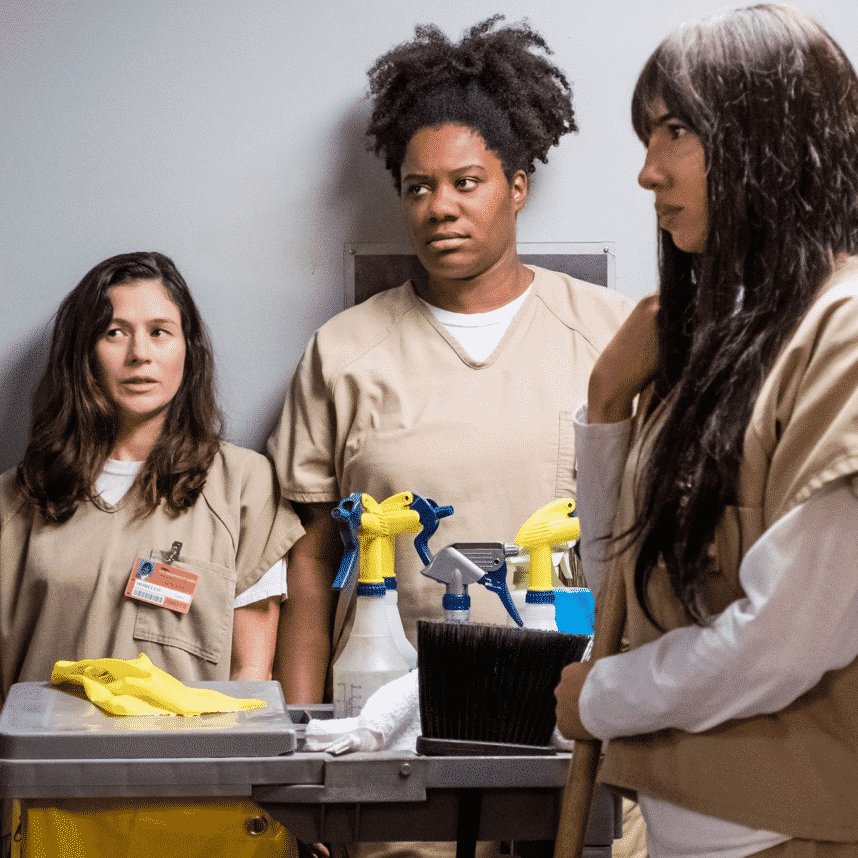
Cynthia Tova (“Black Cindy”) Hayes, “Orange Is the New Black”
Speaking of Jews by choice, few are as memorable as Black Cindy from “Orange Is the New Black.” While incarcerated, Cindy (played by Adrienne C. Moore) fights hard to convert to Judaism. “Why she would want to go from a hated minority to a double-hated minority is beyond me,” says a Jewish cellmate when Cindy approaches a rabbi to help her convert. “I was raised in a church where I was told to believe and pray, and if I was bad, I would go to hell and if I was good, I’d go to heaven. If I’d ask Jesus, he’d forgive me and that is that. And here y’all are saying there ain’t no hell, ain’t sure about heaven and if you do something wrong, you got to figure it out yourself,” Cindy tells the rabbi, tears streaming down her face. As a teenage mom who abandoned her daughter, Cindy uses Judaism to hold herself accountable for her actions, get out of prison and eventually own up to the ways she’s wronged her child – and herself.

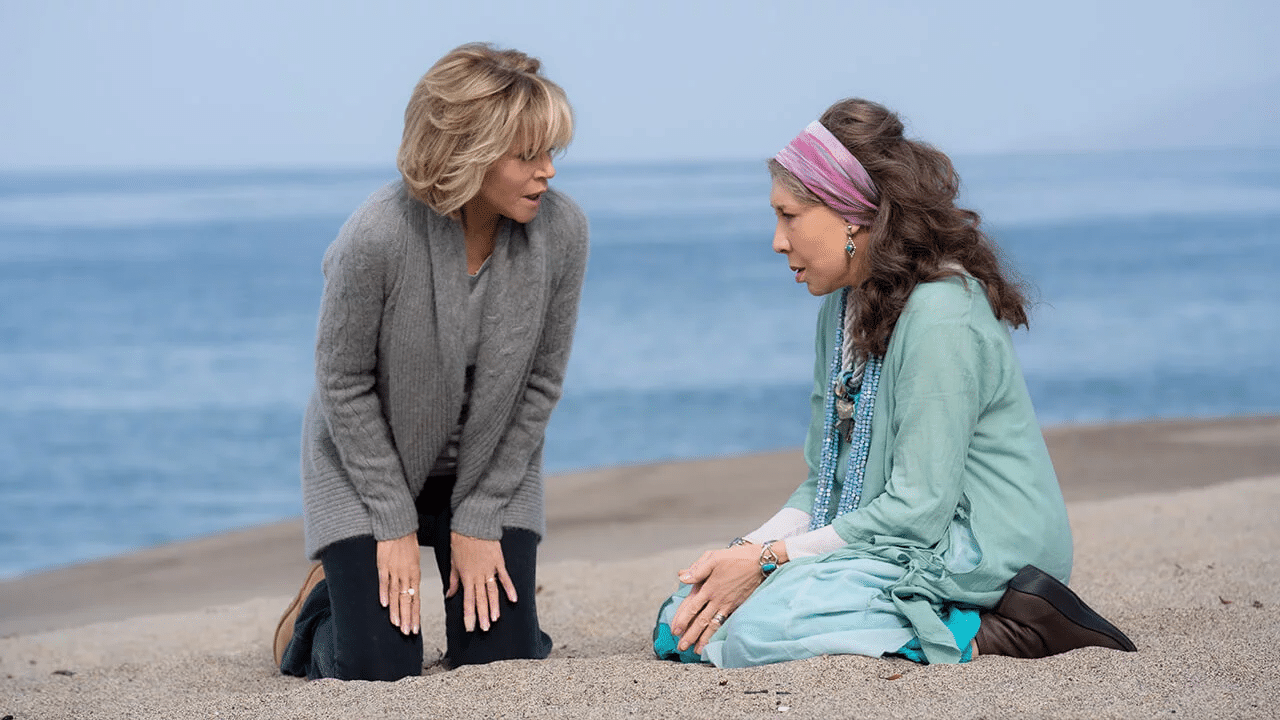
Frankie, “Grace & Frankie”

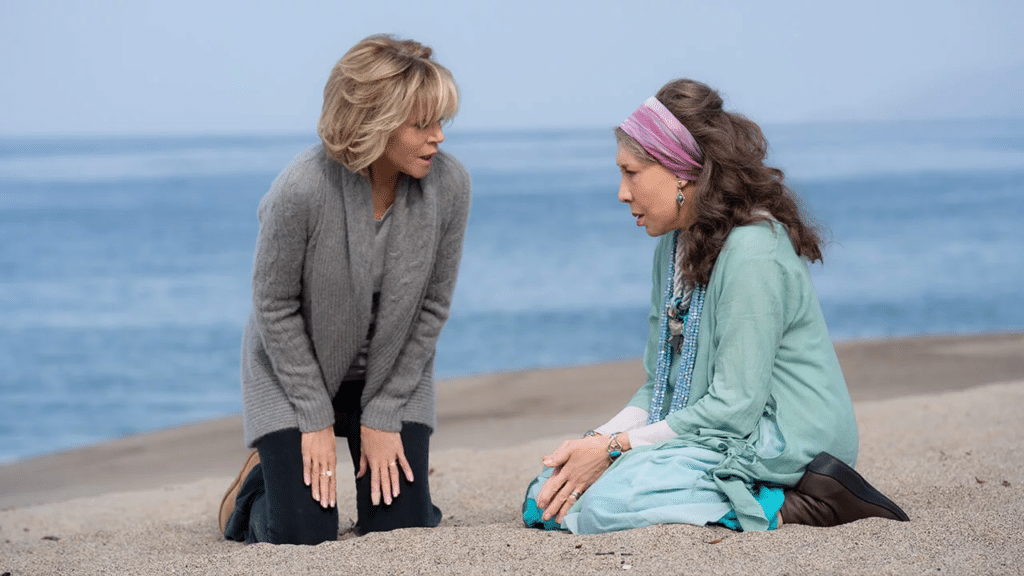
Lily Tomlin’s portrayal of the all-accepting elderly hippy pays homage to secular Jews who see inclusivity as a religious value. Frankie supports her ex-husband as he comes out as gay and her son as he finds his way out of addiction. She gives space for her adopted children to develop relationships with their biological mothers and is firm in her role in their lives. Yes, Frankie is more at home smoking cannabis and praying to an Indian goddess than at Yom Kippur services. However, she leads her family in lighting Shabbat candles to remind them that even as their lives become profoundly disrupted, they will always be part of a Jewish home.

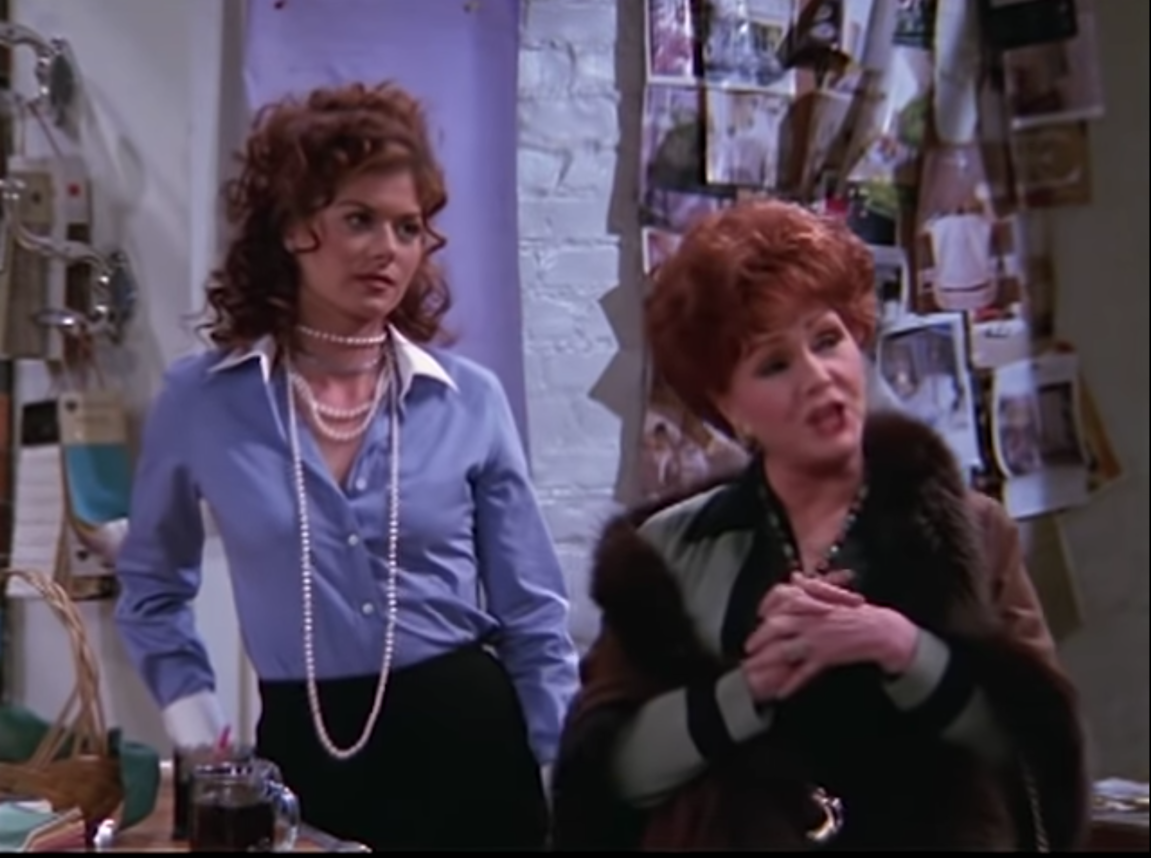
Bobbie Adler, “Will & Grace”

  1. The late Debbie Reynold’s portrayal of Grace’s bubbly Jewish mother shines in its relatability. Bobbie drops in on her daughter to ensure she is celebrating Jewish holidays and sends out a monthly mailer to her family “with three colors and a Yiddish word jumble.” Her playful motherly criticism and meddling nature are authentic, while her love of feminist local theater productions such as “Queen Lear” and “The Music Person” prevent her from becoming a shrill cliche. She smells like “brisket and Aqua Net,” and her dying wishes include for her daughter to finally get breast implants. What could be more characteristic of a Jewish mother than making demands from the grave?

Hannah Horvath, “Girls”

Lena Dunham’s chaotic character is a mess, and that’s why she is so important. Her Jewish 20-something nightmare is insecure, insatiable and incorrigible. She struggles with her weight, her mental health disorders and most of all, her worth. Rather than the picture-perfect Mrs. Maisel, Hannah is a poignant portrayal of the Jewish woman who is better at childhood than motherhood. As we watch her be humiliated over and over, it makes us feel less alone.

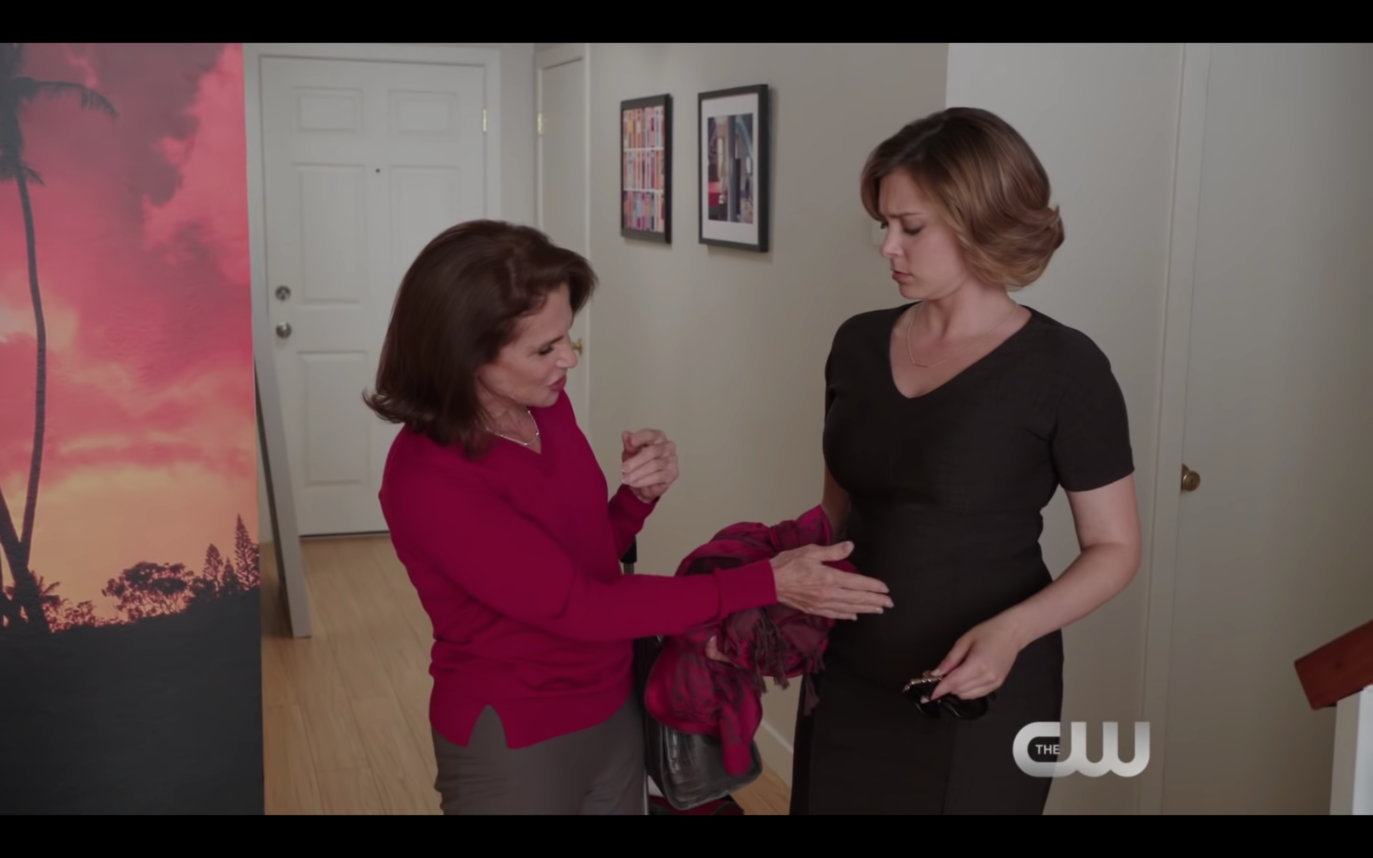
Naomi Bunch, “Crazy Ex-Girlfriend”

It’s the classic Jewish mom, in song. Tovah Feldshuh is Scarsdale-based Naomi  — the hilarious, overbearing matriarch in Rachel Bloom’s musical world. Naomi’s numbers establish her as a Jewish mom icon from “Where’s the Bathroom?” to “Remember That We Suffered.” Her line “A bishop in Wisconsin has said something anti-Semitic so the temple has decided to boycott cheddar cheese” provides flashbacks to Jews everywhere.


Ariel Sobel is the Journal’s social media editor. 

Television’s 10 Most Iconic Jewish Mothers Read More »

Print Issue: May 8, 2020

CLICK HERE FOR FULLSCREEN VERSION

Print Issue: May 8, 2020 Read More »

Episode 192: The Acclaimed Cellist and The Japanese Man Who Saved 6000 Jews

Coming from a long line of musicians and artists, our guests today has been praised by the New York Times as “sensational in concert” and as a “striking virtuoso” by the Los Angeles Times. Her awards and accomplishments are way too long to list, but suffice it to say that she’s performed as a solo artist and a chamber musician at some of the world’s most renowned venues – Carnegie Hall, Lincoln Center, The Kennedy Center, Suntory Hall of Tokyo, the list goes on and on and on.

She’s serving as a visiting professor at Tel Aviv University here in Israel and she has been so kind and brave as to accept our invitation and join us on the podcast today. We are thrilled to be joined by the amazing cellist, Kristina Reiko Cooper.

Kristina’s website and Facebook and the website of the Sugijhara Project

RSS Subscribe

Episode 192: The Acclaimed Cellist and The Japanese Man Who Saved 6000 Jews Read More »

Ripple Effect: Anxiety

Anxiety has a lot of gall. She chooses to show up, uninvited and sits inside you without any intention of leaving.

She can keep you up at night.

Anxiety does not play by the rules. She will surprise you with this unexpected persistence. She will show up for reasons that sometimes make no sense at all.

I have been blessed not to have suffered too much from anxiety, but as I get older and my burdens got heavier anxiety has crept into my life and hit me sometimes harder than I ever could have imagined.

When anxiety comes to visit, I find myself feeling incredibly sad for people who live the majority of their life anxious, worried, and afraid.

Covid-19 has brought out many people’s anxieties.

And because anxiety doesn’t play by the rules, she will show up when you least expect it, keep you awake when you need to sleep the most, and make you sweat and embarrass you.

I once was so anxious I actually started to stutter.

The thing about anxiety is that what makes one person anxious is nothing to others.

The same event that can practically push someone over the edge might not affect another at all.

In the past 10 years I have implemented the Advot Project’s Relationships 101 curriculum dozens of times. At the end of this 10 week curriculum there is always a culmination event.

I have watched my tough gang bangers become riddled with horrible anxiety about performing before a live audience.

When your voice has almost always been silenced, being given a stage can be the most frightening thing in the world.

“Ms.,” she wailed after she peeked out and saw the people in the audience before the show.

“I am going to shit in my pants. I am so fucking nervous.”

“You will not. Don’t worry,” I tell her.

“You don’t know that,” she answers. “I don’t think I can do this, Ms. I can’t go out on the stage.”

I remember looking at this kid who FYI, was locked up because she participated in an armed robbery.

She had a tattoo of a gun on her forehead. I got a little anxious the first time she came to my group. She looked so tough.

“You got this,” I told her. She was so nervous she was shaking.

I put my hand on her back and I stood close to her.

“You know, Ms., when I point my gun at people, they give me attention and then they give me money cause they have to.”

I smile. “No, I don’t know. I usually don’t point guns at people to get money. I go to the ATM.”

“You’re not funny, Ms.,” she says. “Listen. Hear me out. All these people out there, they don’t gotta be here. I didn’t make them come, didn’t point my piece (slang for gun) at them, but they came. They want to be here. They want to hear me. When you told us this gonna happen, I ain’t believe you, Ms. This is scary now, for real.”

I looked at her and that tattoo on her head.

I asked her, “Did it hurt when you got that tattoo?”

“Like a mother fucker.”

“What did you do?”

I held my breath and counted.

“Look at me,” I said. “Take a breath with me and let’s count. Walk through the anxiety. Be in it. Don’t fight it.”

She looked me straight in the eye. We took three deep breaths together and counted to 100. The show started. She was brilliant.

After the show she came to me. She put her arms around me.

“Ms. This was the bomb. I walked right through my shit – and, you know what? It didn’t stink! I had the best time. Your friends are funny, especially the rabbi dude with the hat.” She talked about her experience and the audience’s reaction.

As I lie awake trying to calm my anxiety these days,

I breathe, I count.

I pray the shit will not stink.

I think of my friends.

I think of my beloved “rabbi dude with the hat,” who never fails to show up for me with wisdom, support, and kind words.

I try desperately to walk through my anxiety, hand in hand, and not fight it.

I accept the knot in my stomach. I coexist with it.

I thank god that I don’t experience this every day.

There are nights when anxiety wakes me up. I welcome her.

“Hey, anxiety, it’s been a while. Welcome back,” I whisper.

But what helps me the most is to think of my cherished students, how they rise up, how they push through, and how again and again they surprise and humble me to no end.

“I never sung in front of people,” she told me.

“Well, today that is going to change,” I say.

She asked, “And then what?”

“Then, you will change,” I tell her.

Anxiety can be unbearable, but if you try and hang in there and get to the other side, change will be waiting for you once anxiety decides to leave.

I promise you eventually she will. She always does.


Naomi Ackerman is a Mom, activist, writer, performer, and the founder and Executive Director of The Advot (ripple) Project a registered 501(c)3 that uses theatre and the arts to empower youth at risk to live their best life.

Ripple Effect: Anxiety Read More »

As Israel Considers Annexation, Biden Calls to Keep the Two-State Solution Alive

Joe Biden said the U.S. should press Israel not to take any actions that jeopardize a two-state solution, a reference to reports that Israel may try to annex part of the West Bank.

Biden, in a statement Tuesday to the Jewish Telegraphic Agency, also said that as president he would resume U.S. assistance to the Palestinians, reopen the U.S. consulate in eastern Jerusalem that administers primarily to the Palestinians and would seek to reopen the Palestine Liberation Organization mission in Washington.

“A priority now for the cause of Israeli-Palestinian peace should be resuming our dialogue with the Palestinians and pressing Israel not to take actions that make a two-state solution impossible,” Biden said. “I will reopen the U.S. consulate in East Jerusalem, find a way to re-open the PLO’s diplomatic mission in Washington, and resume the decades-long economic and security assistance efforts to the Palestinians that the Trump Administration stopped.”

The new Israeli government is grappling with whether to annex parts of the West Bank, and as Biden has secured the Democratic nomination for the presidency, he has come under pressure from the Democratic Party’s left to speak out against any such move, which would be seen as highly controversial in the international community.

The peace plan unveiled earlier this year by President Donald Trump embraces Israel’s annexation of parts of the West Bank as long as Israel accepts the plan’s predicate that a Palestinian state would emerge in other parts of the territory. Netanyahu has set July 1 as a deadline to come up with an annexation plan.

A letter this week from 30 former top national security officials in Democratic administrations expressed alarm at the prospect of annexation, and urged Biden to include in this year’s Democratic Party opposition to the occupation of the West Bank and to settlement expansion. That would be a notable change — Democratic platforms have until now not criticized the occupation.

“Past party platforms have rightly stated a commitment to Israel’s security and included condemnations of threats and actions against our ally, in addition to embracing a two-state outcome,” said the letter, organized by J Street, the liberal Jewish Middle East policy group. “Those platforms have, however, also been nearly silent on the rights of Palestinians, on Israeli actions that undermine those rights and the prospects for a two-state solution, and on the need for security for both peoples.”

Biden has also enthusiastically accepted J Street’s endorsement for the presidency.

Tensions between those in the party who, like Biden, are close to the mainstream pro-Israel lobby, and those influenced by J Street are likely to continue. The lobby is urging Democratic senators to sign a letter initiated by Sens. Tim Kaine, D-Va., Chris Van Hollen, D-Md., and Chris Murphy, D-Conn., that would warn Israel’s government not to move ahead with annexation. All three are J Street endorses.

Sen. Ben Cardin, D-Md., who is close to the American Israel Public Affairs Committee, this week said in a conference call organized by the Jewish Democratic Council of America that he is disinclined to add his name to the letter.

Biden’s statement was part of a series of replies to JTA on the presidential candidate’s Middle East policy. Biden has said in the past it is also incumbent on the Palestinians to preserve two-state options. A campaign spokesman noted to JTA Biden’s past calls on both sides to refrain from unilateralism.

“Palestinian leaders should end the incitement and glorification of violence, and they must begin to level with their people about the legitimacy and permanence of Israel as a Jewish state in the historic homeland of the Jewish people,” Biden told the Council on Foreign Relations last August. “Israeli leaders should stop the expansion of West Bank settlements and talk of annexation that would make two states impossible to achieve.”

The statement from Tuesday also takes a cudgel to the Trump administration’s peace plan, which sanctions annexation under certain conditions. It is Biden’s most robust criticism of the recent policies of Israeli Prime Minister Benjamin Netanyahu, who campaigned in the most recent elections on a pledge to move toward annexation.

Biden has separately said he would not reverse President Donald Trump’s decision in 2018 to move the U.S. embassy to Jerusalem.

The Palestinians pulled out of the Trump peace process in December 2017, when Trump recognized Jerusalem as Israel’s capital. Trump subsequently cut off virtually all assistance to the Palestinians, closed the PLO office in Washington, and rolled the eastern Jerusalem consulate’s responsibilities into the Israeli embassy, seen as a downgrading of U.S.-Palestinian relations.

As Israel Considers Annexation, Biden Calls to Keep the Two-State Solution Alive Read More »