fbpx

March 25, 2020

Shifting Our Perceptions to Survive Crisis

Each of us is experiencing anxiety, discomfort and fear right now. We are living with real circumstances that have repercussions, unknowns and yet-to-unfold realities. We are worrying about families, friends, our communities, ourselves and even strangers in far-off lands. We have never been so united as a country and as global neighbors as we are now. Even the fear of death always is present.

Jewish tradition teaches death is not an end, but a beginning — a belief that may allay some fears. But we should remember we are alive now, challenged by new expectations and protocols. Shifting our perceptions may help wade through this new normal.

Time is no longer the same. In one sense, it feels painfully stagnant — each minute, hour and day moving at a snail’s pace. It also feels like our once easily accessible treasured moments — people, places and activities — are slipping through our fingers. What once seemed so urgent now pales in this current reality. What this means is we must change how we view what we face. Seeing the blessing in the difficult and the gift in the challenge is perhaps what we are called to do.

The world has ceased as we know it, so we now have the opportunities to begin or finish projects avoided and neglected: empty and reorganize files, drawers and closets; curl up with a book that has waited to be opened; talk and connect with distant friends and family; play board games with your children; explore documentaries that offer wisdom; or stream shows and movies you have missed.

 “What once seemed so urgent now pales in this current reality.”

Passover is approaching, so the time to clean out our homes of chametz also is an opportunity to clean the chametz from our souls — the unnecessary and outmoded parts of ourselves, such as beliefs and behaviors that prevent moving forward. With more in-home — and at times, solitary moments — an inner search might bring enlightenment.

This is a good time to tap into spiritual resources: prayer, psalms, studying Torah, yoga, nature walks or writing down our deepest fears and concerns as well as our gratitude and gifts. We now have the time to stop, sit, close our eyes and breathe deeply, tapping into the Divine presence. Torah teaches “God formed the human from particles of dust and then blew into the nostrils the souls of life.” With each breath, we touch the gift from the Divine.

We take breathing for granted, but if we get upper-respiratory disease or asthma, we understand how precious this gift is. It nurtures and heals, filling us with necessary oxygen. What we give back feeds all of nature, God’s creation. The breathing technique I suggest has a third part, a pause, resting in the Divine spark. Like half of the Magen David, a triangle, it is three sided.

When we are fearful, we feel alone and alienated. When we take time to sit, close our eyes and breathe — the first step into a place of meditation or mindfulness — we allow ourselves to look inward and be reminded we are not alone. We might even feel safe, if only for a few moments. This is what helps build resilience in times of difficulty. As a caregiver, I have had many moments over the years when I needed to go to that place to affirm and strengthen my core.

Times such as these demand personal attention. The clock is not demanding our attention. Obligations, meetings and schedules have changed and halted in some cases. Shifting our perceptions to see we have been given the gift of time and space creates ease and openness to a more positive attitude. When you are most frightened, stop, sit, close your eyes and breathe: in, out, then pause.

There is light in the dark, sparks to focus on and treasure. Baruch atah Adonai, B’ruchah at Shechinah, Blessed is the One who opens new pathways that are unknown, unexpected and often deep inside ourselves.


Eva Robbins is a rabbi, cantor, artist and the author of “Spiritual Surgery, Journey of Healing Mind, Body and Spirit.” 

Shifting Our Perceptions to Survive Crisis Read More »

Dating During Coronavirus, Everyone is Like An Orthodox Jew

Orthodox Jewish dating isn’t like secular dating. In the Orthodox tradition, there isn’t supposed to be any contact — no kissing, no hugging, no holding hands or playing footsies under the table. Some Orthodox Jews still send a chaperone along on the date. And sex is off the table until marriage. In fact, even after marriage, sex is off the table again until the kids go to medical school or invent a multimillion-dollar app.

Well, ladies and gentlemen and other couple pairings that I don’t have room to acknowledge, welcome to Coronavirus Dating.  Almost everyone who dates during this science fiction movie we’re living through, is to some extent dating Orthodox Jewish style. They even have a chaperone: Mr. Coronavirus.

Mr. Virus is there to make sure there’s no hanky-panky during this trying time. There is no getting to first base. According to the Centers for Disease Control, if you’re in a car, one should sit in the back seat — or better yet the trunk — while the other drives. No visiting crowded restaurants, movie theaters, concerts or sporting events. Restaurants aren’t seating diners and museums are closed. No parties. So, what’s left to do?

What’s left is “Orthodox Jewish Dating.” Don’t worry. She doesn’t have to put on a wig; he doesn’t have to wear a tallit; and no one has to eat flanken. What you do have to do is meet somewhere for a cup of coffee. Sit 6 feet apart and talk and talk and talk. Then later, if you still have more to say (a very good sign), maybe take a walk and talk some more. You might be surprised by the outcome. You might find that you got to know each other on a whole other level and you really like this person. Or you might find that you heard enough to last you 10 lifetimes and you’re changing your phone number and Instagram handle. Either way, you don’t have to decide how far to take this date because after the coffee and walk, one of you climbs back into the trunk and home you go.

This might be a golden opportunity for you to meet your bashert (soul mate).

One problem with Coronavirus Dating is you don’t know if you’re dating someone who’s overly cautious or if that person is a full-blown OCD’er. The behaviors are eerily similar. For instance, if you’re on a first date and it’s not coronavirus season and your date Lysols a doorknob, you might reconsider the relationship. Or if by accident, your date touches you and then runs to the nearest bathroom to scrub his or her hands as if they just touched poison oak, it might be over.

You can learn a lot just by looking at and talking to a person for a few hours. Imagine coming home after a first date and actually knowing a lot about the person. Almost unheard of. Coronavirus has in some ways set the clock back 100 years. In 1920, it wasn’t uncommon for two young people to sit in their mother’s kitchen and get to know each other over some tea and biscuits.

One other way to look at this, though, is that there might be a silver lining. This might be a golden opportunity for you to meet your bashert (soul mate). This might be just what you’ve been hoping and praying for. By not going to the movies or crowded bars or noisy restaurants or boring parties, here’s a chance for a person to get to know another person on a deeper level. And isn’t that what we all want? People to really know who we are. It’s scary because if they find out who we are, they may not like us. But so what.

Listen folks, this reset will not last forever. So, if I were you, I’d try to take advantage of it. The coronavirus might be just what the doctor ordered. And if you do get the virus, you can spend the next two weeks talking to your date on the phone en route, God willing, to a full recovery.

Good luck. Good health. I wish you the best.


Mark Schiff is a comedian, actor and writer.

Dating During Coronavirus, Everyone is Like An Orthodox Jew Read More »

Episode 187: Painting Her Way From a Kibbutz to The Venice Biennale

From the time of the cave-men to this day, painting has been deeply rooted in the DNA of mankind. It’s as primal as humanity itself, and can teach us much about what it means to be human. Maybe that’s why millions of people visit the Louvre to see the Mona Lisa, or to Rome to behold the Sistine Chapel – maybe through these works of art, they can understand themselves.

Miriam Cabesa’s career has reached peaks many Israeli artists can only dream of. For the past 20 years, she’s lived in NYC, devoting herself to her art. Since the 90’s Cabesa has been known as one of the most important Israeli artists. She was born in Casablanca, Morocco grew up in a kibbutz and became extremely influential, showcasing in the Tel Aviv Museum of Art and various galleries in NYC and throughout the United States and even representing Israel in the Venice Biennale.
Now she’s back in Israel, which gives us a rare opportunity to talk with her about her art and her life story.

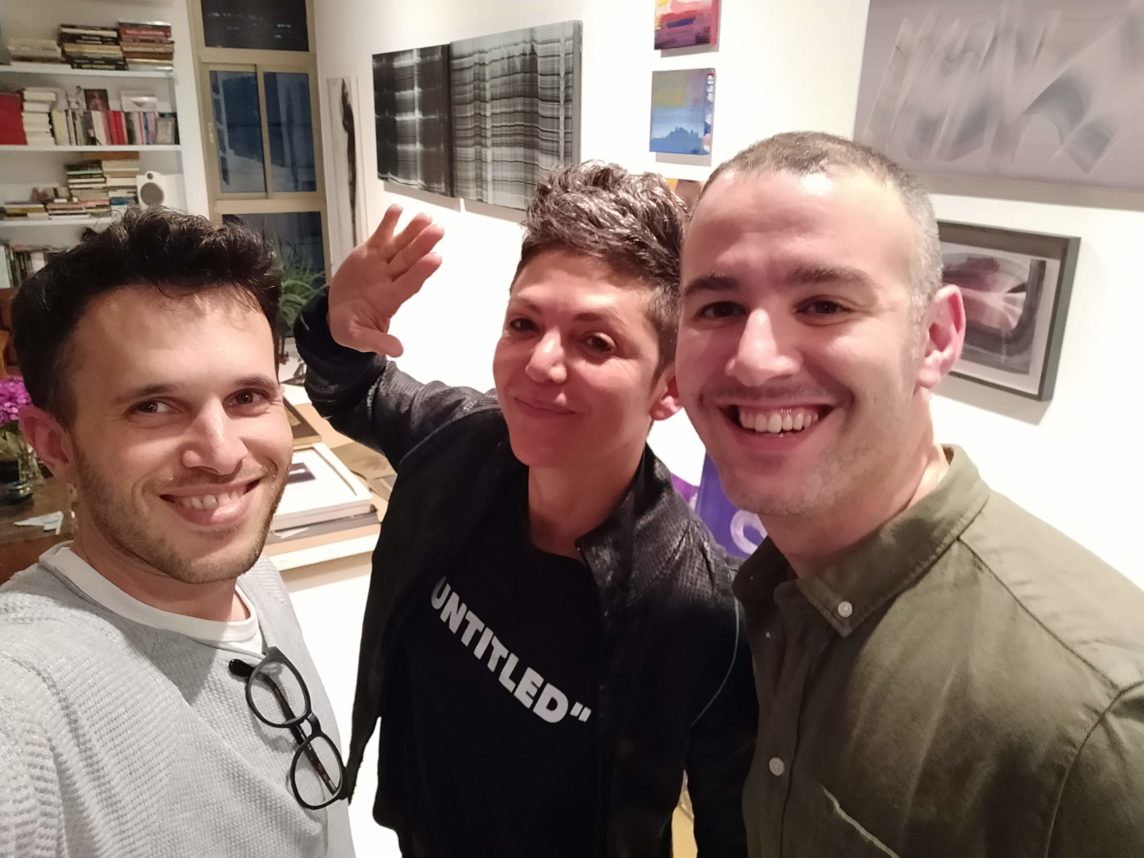
Miriam’s website

RSS Subscribe

Episode 187: Painting Her Way From a Kibbutz to The Venice Biennale Read More »

Musings from the Bunker #12

The Fortress of Solitude

Top of the morning!

In Our Solitude

Everyone needs a break from the world. Even Superman. And when Superman needs to recharge his batteries, he heads straight for his Fortress of Solitude. Seriously. (As you can see from the ice around him, it’s somewhere near the North Pole, but I digress).

Superman is not the only superhuman who takes the time to seek solitude. Albert Einstein wrote:

“I take time to go for long walks on the beach so that I can listen to what is going on inside my head. If my work isn’t going well, I lie down in the middle of a work day and gaze at the ceiling while I listen and visualize what goes on in my imagination.”

Choosing to chill from the daily burden of saving lives or working on the theory of relativity is healthy. Just like the Man of Steel, we now are retreating into our fortresses of solitude. Imagine we are super men and women, who have been working, studying, struggling with life’s problems for years. We now have been forced into our own “fortresses of solitude.” What do you imagine your fortress should include? Loved ones? Favorite movies? Endless television? Nature? Great books? All these things are still available to us.

While this period of solitude is not of our own choosing, we should find the positives in this and take advantage of the “breather” we’ve been provided. A bit more time in nature, music, time with loved ones, calls to old friends, music, hobbies, learning, may be just what the doctor ordered.

Take a closer look at the picture to see what Superman does to relax. He’s not doing nothing—he’s not loafing around in his super-slippers and his super-bathrobe, with a super-beer in hand, watching the super-channel. Instead, he’s floating in space (which is pretty cool), deep in contemplation, reading a book—in a library! Could there be a better image to describe the zen of solitude than being able to sit and read and think?

Reading, while a solitary pursuit, is not really a lonely pursuit. There is a difference. There are many people to meet and many places to go inside a book and with a willing imagination. I remember my mother, Jessica, imparting a love of reading to my sister and me. She would say, “you may not be able to visit everyplace in the world yourself, but books can take you anywhere you want to go.”

We can’t float in the air like Superman and we may not have the genius of Einstein, but we can float in our favorite chair to places far away, with book or Kindle in hand, finding our solitude and, in the words of Einstein, visualizing what goes on in our imaginations.

Recent Literary Travels

Here is “Part I” of some of the notable books that took me to places far away in the past year:

  • French Exit, by Patrick deWitt. This was recommended by the amazing folks at Book Soup. Take a cranky Upper East Side dowager, add in her dog Frank, whom she believes carries the soul of her departed husband Frank, and add in her spoiled, self-indulgent dillitente of a son; then bring them to near-destitution. They then make a “French exit” (i.e., a quick getaway) to Paris, where they encounter another set of crazy people. This is a quick and delightful read.
  • Warlight, by Michael Ondaatje (the author of The English Patient). The parents of two kids in London near the end of World War II move to Singapore. They are deposited by their parents in the care of their boarder and an apparent scalawag (in the vein of Fagin), nicknamed “The Moth.” They meet a number of interesting characters through the Moth, including “The Darter,” a man in a questionable import business. The kids have suspicions about the involvements of their parents and friends in the war effort and the plot shifts to them in adulthood, trying to understand their past and who their parents were and shedding light on their extraordinary story.
  • The Library Book, by Susan Orlean. Besides winning the Scripter Award from the USC Libraries, https://libraries.usc.edu/scripter/scripter-2020, and one of the New York Times Books of the Year, this is a love letter to libraries and librarians everywhere. Using its jumping off point as the 1986 fire in the Los Angeles Central Library. The book goes into subjects like arsonists, how fire investigations are conducted, the central place libraries play in people’s intellectual and physical lives, censorship, the history of librarians in Los Angeles, and more.

If you’d like Someone Great to Read to You…

Esteemed actor Patrick Stewart is reading Shakespeare’s sonnets—one a day! If you love the bard and you love the dulcet tones Captain Picard, tune in: https://www.huffpost.com/entry/patrick-stewart-shakespeare_n_5e79862ec5b63c3b64962d7c or if that link doesn’t work, use this and get to his twitter account via the nerdiest of the nerds: https://comicbook.com/startrek/2020/03/23/star-trek-patrick-stewart-shakespeare-sonnets-quarantine-coronav/

This isn’t just audiobooks…he’s right there…in the flesh, reading to you. Just press play and “make it so.”

 And For Some Background Music for Your Reading

You can listen to all of Tchaikovsky’s symphonies, courtesy the Paris Opera Orchestra: operadeparis.fr Thanks, Ed Nahmias, for this.

Humorous Interlude

Thank you to my beloved cousin, Chris, with whom I grew up and who shares many of my most annoying quirks, for offering this musing:

As I walk the streets, I’m looking at the number of people and cars. Guessing this is what life will be like for us after The Rapture, except the bars and clubs will be open 24/7 and there will be enough toilet paper for everyone…

An on-line reporting of bad behavior:

Well, I finally lost it…was just at CVS and saw a man whose cart was FULL to the brim with hand sanitizers, baby wipes, soaps, everything that people need!!! I called him a selfish @$$hole and gave him a low down about the elderly, moms and people who need these types of things. Told him he should be freaking ashamed of himself! He said: “Are you done? Because I really need to get back to restocking the shelves now…

From my favorite “Kiwi,” colleague Craig, tourists leaving New Zealand with special souvenirs for the folks back home: 

Big Thinkers With Big Post-COVID-19 Ideas

Thanks, Lauren, for forwarding on this thoughtful piece. While we are nowhere near through this crisis, some big thinkers are thinking about the world “Post-COVID-19”:

https://www.politico.com/news/magazine/2020/03/19/coronavirus-effect-economy-life-society-analysis-covid-135579

Here is one more charity looking for help, offered by Dana Gordon:

Blessing in a backpack is an amazing charity that is getting food to our country’s children. David is serving lunch up in Oakland as each child in his school relies on two or three school meals a day. Here is the link. https://www.blessingsinabackpack.org/

Closing Image


Andrea and I had a wonderful walk around Hillcrest’s deserted golf course last week—

Here’s to visualizing what goes on in our imaginations!

Warm regards,
Glenn

Musings from the Bunker #12 Read More »

Print Issue: March 27, 2020

For fullscreen click here.

Print Issue: March 27, 2020 Read More »

No Shul, No Problem: Synagogues Navigate Coronavirus

Since the outbreak of the coronavirus, jewitathome.com is just one collaborative online community that has helped Jews connect and engage now that all communal gatherings have been banned.

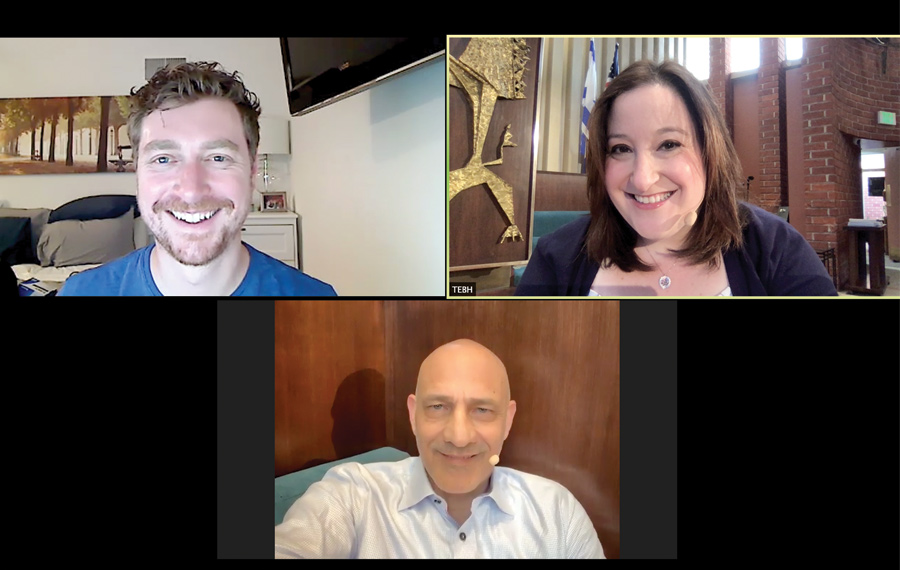
Launched by Temple Emanuel of Beverly Hills (TEBH) and Temple Isaiah, Jew It At Home has been hosting a variety of events, including book clubs, yoga classes, film discussions and children’s song sessions, using such real-time video broadcast and conferencing tools as Facebook Live, Google Hangout and Zoom.

“Basically, the whole idea behind all of this was if our community is going to be locked at home, [I thought] how cool would it be if we, as an entire Jewish community, could come together?” TEBH Rabbi Adam Lutz told the Journal.

The website pooled resources from more than a dozen local synagogues and Jewish organizations including University Synagogue, Temple Akiba, Congregation Kol Ami and Congregation Ner Tamid of Henderson, Nev., along with Jewish breast cancer organization Sharsheret.

The site has both live and static resources. The live resources are listed on the calendar, which color-codes events based on whether they are for children, adults or everyone. Last Friday afternoon, TEBH Cantor Lizzie Weiss led a Shabbat song session for children 2 and under. Earlier in the week, she led a Hebrew boot camp for all skill levels. Jewish people from across the country, including a man from Tennessee, tuned in.

“[That man] hasn’t been able to learn Hebrew and here he was on our hourlong Hebrew boot camp starting to learn Hebrew for the first time in this era,” Weiss said. “I did have the thought as I was sitting there, ‘We can’t end this.’ Hopefully, we will be out of this crazy quarantine in a month or two and even if we are, we have the responsibility to reach out to the Jewish community. It doesn’t matter if you can pay a penny or not — it’s just about putting Judaism in the world.”

The site’s resources also include reading, podcasts and binge-watching recommendations. Streaming suggestions include the Israeli television series “Fauda,” “Shtisel” and “Beauty and the Baker.”

“Just as the rabbis of the first century had to discover what community can look like without the Temple, we are discovering what community can look like without places of worship to gather.”  — Rabbi Jonathan Aaron

Lutz and Weiss worked closely in putting together the website. Lutz, whose background is in aerospace engineering, said he has been building websites since his teens. Even before the coronavirus outbreak, “I have been trying to get this going for 2 1/2 years,” he said. “How do we make use of technology to bring Judaism into people’s homes? Necessity is the mother of invention.”

TEBH Senior Rabbi Jonathan Aaron wrote in an email to the Journal, “Judaism takes place in community, and it is inspiring that all of us are gathering remotely and virtually — actually finding connections even though we can’t physically touch. Just as the rabbis of the first century had to discover what community can look like without the Temple, we are discovering what community can look like without places of worship to gather.”

Other participating congregations include Temple Israel of Highland Park and Eagle Rock, Beth Chayim Chadashim, Temple Judea, Temple Beth Am and Malibu Jewish Center and Synagogue.

After Lutz mentioned the idea to Temple Isaiah Rabbi Dara Frimmer, Lutz’s father, Rabbi Barry Lutz, interim rabbi at University Synagogue, said he would like to get on board. And Weiss is friends with Cantor Jessica Hutchings of Ner Tamid near Las Vegas, so Hutchings brought her community into the mix.

While the website has shown what is possible when many synagogues come together, some of the larger congregations are opting to have their own virtual communities. Sinai Temple has launched Sinai Streamed at youtube.com/sinaitemplepresents; Valley Beth Shalom has launched its own online community, Valley Beth Shalom @ Home; and Wilshire Boulevard Temple has similarly launched WBT@home, with livestreaming of Shabbat morning services, discussions and more.

American Jewish University’s Ziegler School of Rabbinic Studies likewise has turned to engaging its students using online tools, with school dean and professor Rabbi Bradley Shavit Artson teaching classes on Zoom.

“I think the Jewish tradition values community,” Artson said. “While certainly there is a long tradition of private individual prayer, I think Judaism wanted to lean in to making people communal and sees that as a spiritual value.”

IKAR also has created online learning and davening throughout the week and on Shabbat via Zoom and Facebook Live sessions. In an email to the community, IKAR wrote, “These are difficult and unsettling times for all of us. One thing we know: human beings need human contact. So we’re working to establish new opportunities for deeper spiritual connection, even in this time of physical social distancing.”

“The extraordinary leadership of our community’s rabbis to respond to the extreme limitations caused by this virus has been incredible,” said Jewish Federation of Greater Los Angeles CEO Jay Sanderson. “The Los Angeles Jewish community continues to innovate and this innovation is happening within our synagogues. Prayer, study and community are continuing in new ways, and it’s truly inspiring.”

No Shul, No Problem: Synagogues Navigate Coronavirus Read More »

Ripple Effect: Navigation

Long ago I participated in a jeep race in the Sahara Desert. It was an all-women’s very serious competition.

I’m not exactly the rugged jeep type, although I do believe in girl power. Contestants trained for over a year to compete in this race. It was very expensive to participate and I kind of rolled into it by accident. At the time, I was part of an Arab-Jewish theater group in Israel. As a PR stunt they selected one of the Palestinian actresses and me to be the “Peace Team.”

They didn’t really care that we had no idea how to drive a jeep or that in no way, shape, or form were we prepared for an adventure like this.

Since my beautiful, sweet Palestinian sister and I did not know what we were getting into, we decided why not?
We can do this! We can do anything. Ah, the ignorance of youth!

It ended up being much harder than we thought.

We were thrown into an extremely competitive hard-core outdoor 4 x 4 competition. We got lost. We got dehydrated. We were scared out of our minds.
We broke the jeep. We had crazy adventures.
We told each other our darkest secrets and became closer than you can imagine.
It was intense and at times depressing as hell.
We cried a lot and sometimes fought like an old married couple.
But in the end we survived with a kick ass story to tell and AMAZING photos.

I was the navigator on the team and was given the nickname “Dr. Geography,” but not because I was such a great navigator.

Navigating is not an easy skill. You need to know how to calculate. You need precision. You need to know how to read a map, maybe to read the stars and have good intuition.

Navigating new situations in life also requires making good choices, and sometimes stepping out of your comfort zone.
Navigation also requires wisdom.

At Homeboy Industries after you go through the training process, some people become what they call “navigators.” The navigators literally and figuratively help the new trainees plot a course to have a job, stay clean, and leave their old ways behind. That is one hell of a route to navigate.
As I watch my students navigate life, deal with the struggles of finding where to live and the challenges of past mistakes, I’m always in awe.

What I know to be true, what I learned on those long, long rides in the Sahara Desert, is that even the clearest of paths can have unexpected twists, turns, and turbulence.

You need to be creative and willing to take an alternative path while staying in the same direction.
That’s not easy, but always a possibility.

A student of mine recently expressed how hard it is to navigate everything he has going on right now.

“Ms.,” he told me. “I feel lost. I don’t know how to navigate all of this.”

I looked at him and smiled. “One step at a time. You know, when you actually navigate with a map, you need to look at the coordinates and figure out how you’re going to get from point A to point B. You pick a route and start. You might not always get to where you wanted to go, but really, it is about the journey and being in motion.”

He looked down at the floor and said quietly, “I am staying in motion, but I need to keep my line straight and not go in the wrong direction.”

“Okay,” I said to him. “What’s your North Star?”

“What does that mean?” he asked me.

I explain. “Well, old fashioned navigation used the stars. If you look at the sky, you need to figure out which is the North Star. When you know where north is, you figure everything out based on that.”

“Ms., they teach you crazy shit in that army you were in,” he mumbles.

“Actually, I didn’t learn that in the army,” I tell him.

“I learned it in the youth movement I was in. Part of any basic navigation will teach you that. You can download an app on your phone that shows you the star constellations. It will show you the North Star. Seriously,” I add.

He continues to look at the floor.

“Look at me for a second,” I say gently.
He picked his head up. His eyes were moist. He was very emotional. He shook his head and said, “I can’t.”

“Listen to me,” I tell him.

“When you get overwhelmed and you’re feeling lost, think about what your North Star is.”

“I don’t want to go back to jail,” he said quietly.

“That’s not your North Star,” I say.

“Your North Star isn’t something you don’t want. Your North Star is something you do want; it is where you are going, not coming from.”

He laughs out loud, and says to me, “Ms., you are a pain in my fucking ass.”

“Thank you,” I said. “I’m honored.”

We both laugh.

“I can’t do this,” he said to me again.

“I don’t know what my North Star is. I don’t know what the Southern Star is. I don’t know shit.”

“Blah blah blah,” I say.

“That is such incredible BS. Tell me something you want to happen, something that you want really bad, crazy, pie in the sky.”

“Fucking hell, Ms. Now I have to have a pie in the fucking sky?”


I giggle. “Just tell me something you think you could never have, and you want.”

“Okay, Ms. Game on,” he says.

“I want to own my own house.”

“BINGO,” I tell him.

“Being a homeowner is your North Star.”

I turn the attendance paper from class around and I write on the blank side: “Ownership Deed.”

“Navigate yourself to this house, Dude!!”

Something shifted. He got it and relaxed and, for a moment, the sadness subsided.

“Your shit is crazy, Ms., but I get it now.” He smiles.

“That’s all that matters,” I say.

Sometimes when my students get it, it’s a little weird and abrupt. They say goodbye and leave me fast. Maybe because I got too close. Maybe because they want to go.  Maybe I am a little too much or sometimes I push too hard.

He looked at me, snatched the attendance paper from me with his “ownership deed,” laughed, and walked away.

We are navigating crazy times these days.
The path is not clear but, as always, the North Star is there and should lead the way.

For me it is to be safe.

To keep the house clean, because with five of us here that can be a challenge and a half.

I want to be grateful every day for what I have.

And in these crazy times we all must remember to be in service, teach, and be present for those who need us.

Find your North Star in these foggy, hard times and try as best as you can to navigate your way there with patience and conviction.

What I am holding on to the tightest is faith.

I believe it’s going to be OKAY.

I believe we will come out on the other side stronger.

Most of all, I believe in believing.

When I am standing on the edge of the cliff and feeling nauseous and afraid, I literally close my eyes, take a deep breath and look for my North Star of faith. I know it will lead me to where I need to go.

I don’t know if my student ever made it to his house. I saw him a few times after that conversation and then we lost touch.

My North Star tells me he is okay and, hopefully, he is still walking in the right direction.

I pray in these hard times you see your star.

If you don’t, keep looking.

I promise you it’s there.


Naomi Ackerman is a Mom, activist, writer, performer, and the founder and Executive Director of The Advot (ripple) Project a registered 501(c)3 that uses theatre and the arts to empower youth at risk to live their best life.

Ripple Effect: Navigation Read More »

4 Sephardic Recipes for ‘Safer at Home’ Passover Seder

Passover is one of the most cherished dates of the Jewish calendar.

It is a celebration of our redemption from slavery in Egypt to freedom in the Promised Land. We are commanded to tell the story of the Exodus to our children. We read the haggadah, we sing, we drink four cups of wine. We point to the symbols of the holiday: Pesach, a lamb shank that represents the sacrificial lamb of the past; matzo, the unleavened bread that represents the Israelites’ haste in leaving Egypt; and maror, the bitter herbs that we dip in saltwater to represent the bitterness of slavery and the salty tears of our ancestors.

Sharon’s father recalls that as a young boy in Baghdad, right after Purim, the family would learn to recite the entire haggadah by heart and how excited he would be to help his parents make silan, the sweet date honey used for charoset.

As a child in Australia, Sharon remembers how her Iraqi grandparents, Aba Naji and Nana Aziza, worked so hard to make a beautiful seder. They made the story come alive by wrapping silk scarves filled with matzo around their grandchildren. We would walk into the dining room, pretending to be tired and weary. All the adults would ask us who we were and we would answer that we had been wandering in the desert for 40 years. They would cheer and laugh. We’d go to our seats and we’d sing in Judeo Arabic and Aramaic that all the hungry should join us at the seder. The haggadot at the table were old and stained with wine and date honey, reminding me that I was part of a long tradition.

In Morocco, Rachel’s father would hold the seder plate over each of his children’s heads and sing  “Bibhilu,” which translates to “In  haste, we  left Egypt.” It has become a symbolic blessing and a tradition the family waits for in great anticipation at every seder.

Growing up in the Rhodesli community of Los Angeles, Rachel’s husband, Neil Sheff, would celebrate second-night haggadahs with 300 people at the Sephardic Hebrew Center (later merged with Sephardic Temple Tifereth Israel). Led by well-known accountant Lou Hasson, the seder was conducted in Hebrew and Ladino. When it was time to eat the hard-boiled egg, all the firstborns (bechors) would exit the room and eat their egg “hiding” in the lobby, symbolizing God’s miracle of sparing the firstborn Israelites in Egypt. Upon their return, Lou would yell to the leader of the bechors, “Uncle” Jack Aboulafia, “How do you feel, Jack?” Jack would yell back, “Como Lonso!” (Like a fool!). This always elicited a huge laugh from the crowd. In order to dispose of the bowl of wine and water that represented the plagues, the matriarch would go outside while everyone else remained silent, and throw it on the lawn of the least-favorite neighbor or in the gutter. She would return and proclaim “Anyada buena!” (Happy New Year!). When Rachel and Neil started to host the family haggadah, they began a new custom to add a bit of drama. Neil added a piece of dry ice to the bowl and, with the pronouncement of every plague, the drop of wine would create smoke and bubbles, captivating the children.

This year we will gather to celebrate Passover in conditions that we have never experienced. Our cities are under lockdown and we are forbidden to have large gatherings.

But it remains our responsibility to tell the story of the miracles of the Exodus and that God took us out of bondage with an outstretched arm and a mighty hand.

Food is always a big part of any Jewish celebration and these delicious recipes are traditional and comforting and (mostly) easy to prepare.

And hopefully we will all make happy memories.

Rachel’s lamb with dried fruit

RACHEL’S LAMB SHANKS WITH DRIED FRUITS
4-6 lamb shanks, marinated (recipe follows)
1 large onion, thinly sliced
2 tablespoons olive oil
2 large carrots, sliced into thick rounds
2 stalks celery, sliced thinly
1 cup pitted prunes
1/4 cup dried apricots, chopped
2 cups water

Marinade
1/2 cup olive oil
1 tablespoon cumin
1 tablespoon paprika
2 teaspoons salt
1 tablespoon herbs de Provence
6 garlic cloves, grated
1/2 cup red wine

In large bowl, combine all marinade ingredients and rub on lamb shanks. Marinate for 1 hour.

Preheat oven to 350 F.

In heavy pot or Dutch oven, heat olive oil and sauté sliced onion until it starts to soften.

Add vegetables and dried fruits. Place lamb and all marinade liquid in pot.

Add 2 cups of water, cover and bake 2 hours.

Lamb should fall off the bone. If not, bake for another 15-30 minutes.

Serves 8-10. 

Sharon’s ratatouille

SHARON’S RATATOUILLE
1 large eggplant, cut into 2-inch squares
5 Mexican squash, cut into rings
Olive oil, for drizzling
1 red pepper, cut into 1-inch strips
1 orange pepper, cut into 1-inch strips
6 Campari tomatoes, cut into quarters
1 purple onion, sliced
3/4 cup oil
1 1/2 cups tomato sauce
4 cloves garlic, crushed
1 teaspoon oregano
1 teaspoon smoked paprika
1 teaspoon salt
1/2 teaspoon white pepper
Fresh lemon basil for garnish

Preheat oven to 425.

Arrange eggplant and squash in a single layer on baking tray. Drizzle with oil and roast for 20 minutes.

Arrange peppers, tomatoes and purple onion slices on baking tray, drizzle with oil and roast for 15 minutes.

In small bowl, mix tomato sauce, garlic and spices.

Pour half tomato sauce mixture on the eggplant and squash and the other half over peppers and tomatoes.

Roast all vegetables for 10 more minutes. Serve hot.

Serves 10-12.

RACHEL’S NORTH AFRICAN PASSOVER FAVA BEAN SOUP
3 tablespoons olive oil
2 large leeks, white and pale green parts only, cleaned and sliced
1 large onion, chopped
2 large carrots, peeled and diced
4 stalks celery, chopped
2 medium turnips, peeled and diced
2 large potatoes, peeled and diced
2 cups frozen double-peeled fava beans
2 quarts water, vegetable stock or chicken stock
Salt and white pepper, to taste
1 teaspoon turmeric
1/2 cup fresh cilantro, minced

Heat oil over medium heat in heavy soup pot or Dutch oven.

Add leeks, onion, carrots and celery and cook until tender, about five minutes.

Add the turnips, potatoes, 1 1/2 cups fava beans and liquid and bring to a boil. Cover pot, reduce heat and simmer for 30 minutes until vegetables are tender.

Purée soup with hand masher or immersion blender.

Add salt and pepper, turmeric, chopped cilantro and remaining fava beans.

Simmer over low heat for 30 minutes and stir often.

Garnish with cilantro and a drizzle of olive oil, if desired.

Makes about 12 servings.

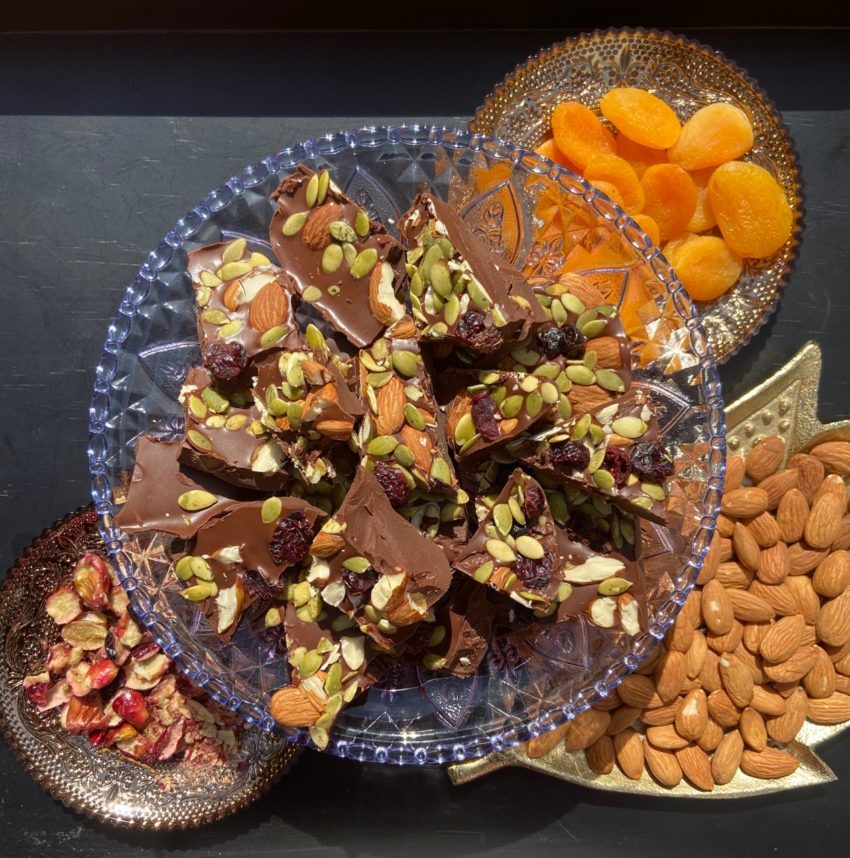
Sharon’s chocolate bark

SHARON’S CHOCOLATE BARK
30 ounces bittersweet chocolate chips
2 tablespoons safflower oil
1/2 cup raw almonds, roughly chopped
1/2 cup pumpkin seeds
1/2 cup dried cranberries
1/4 teaspoon Himalayan pink salt

Place chocolate in microwave-safe bowl. Pour oil on top and microwave on high for 2 minutes. Stir chocolate with spatula to make sure it is completely melted.

Pour melted chocolate onto parchment-lined, 9×13 tray.

Scatter almonds, seeds and cranberries onto chocolate. Sprinkle with salt. Chill in refrigerator.

Chop into rough pieces.

Makes about 3 dozen pieces.


Rachel Emquies Sheff’s family roots are Spanish Moroccan. Sharon Gomperts’ family hails from Baghdad and El Azair in Iraq. Known as the Sephardic Spice Girls, they have on the Sephardic Educational Center’s projects,  SEC Food Group and community cooking classes. Join them on Facebook at SEC FOOD.

4 Sephardic Recipes for ‘Safer at Home’ Passover Seder Read More »

Israel Can Track Cellphones of Citizens with Coronavirus, Its Supreme Court Rules

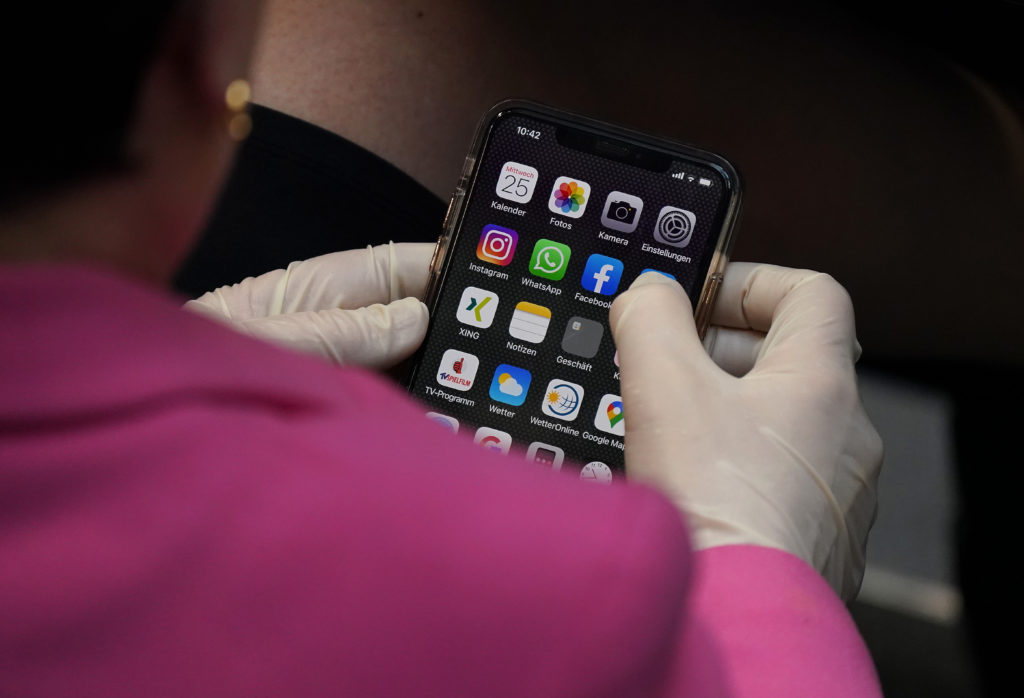
JERUSALEM (JTA) — Israel’s Supreme Court will allow the country’s internal security agency to track the cellphones of Israelis who are infected with the coronavirus.

On Tuesday, the court lifted an injunction against the practice approved last week by the government. The aim is to find where the infected person was and who he or she came into contact with in order to stem the spread of the virus.

Critics have said the tracking would infringe on civil liberties.

The court agreed to allow the surveillance by the Israel Security Agency, or Shin Bet, after the Knesset convened and formed committees that would allow for oversight. But the justices said that if the parliament does not introduce legislation in the coming weeks allowing such surveillance, it would again place an injunction on the practice.

The Foreign Affairs and Defense Committee will review the practice on Thursday, The Times of Israel reported.

The court also ruled that police may use cellphone information to track Israelis who are supposed to be in quarantine to ensure compliance, though it suggested minimal usage.

Israel Can Track Cellphones of Citizens with Coronavirus, Its Supreme Court Rules Read More »

Harvard University’s Jewish President Has Coronavirus

BOSTON (JTA) — Harvard University president Lawrence Bacow and his wife Adele Fleet Bacow have tested positive for the coronavirus.

Bacow, the third Jewish president of the Ivy League university, announced the news Tuesday in a letter to the school’s community.

Bacow, whose mother was a Holocaust survivor, wrote in the letter that the virus can “lay anyone low,” and urged the community to be vigilant and follow the guidelines to limit contact with others.

“The world needs your courage, creativity and intelligence to beat this virus — wishing each of you good health,” he concluded.

Bacow said he and his wife did not know when they contracted the disease but began experiencing symptoms Sunday — coughs, fevers, chills and muscle aches — and contacted their physicians Monday morning. They were tested that same day and received results on Tuesday, according to the letter.

The couple had been working from home and limiting their contacts since March 14, following the recommendations for social distancing, the letter said. Now, they will entirely isolate for two weeks.

A total of 18 members of the Harvard community have tested positive (or “presumptive positive”) for the coronavirus, according to the school.

Like many colleges and universities, Harvard has sent students home, brought classes online and canceled graduation because of the pandemic.

Harvard University’s Jewish President Has Coronavirus Read More »