fbpx

March 25, 2020

Quarantine Crafts: Stamping With Toilet Paper Tubes

Now that we’re all self-isolating in our homes with cases of toilet paper, two questions come to mind: One, how are we going to pass the time and two, what are we going to do with all that toilet paper?

Here’s a craft project that addresses both questions. After the toilet paper is gone, you’ll have a lot of empty tubes. Save those tubes because you can use them for art projects. By bending the ends of the tubes into different shapes, you can create stamps out of them. I found this project online, and some tutorials have some pretty elaborate shapes. Instead of getting too complicated, I prefer working with simpler shapes such as hearts, circles and ovals, and building the stamped drawings from there.

What you’ll need:
Toilet paper tubes
Paper plate
Paint
Paper

1. Bend one end of the toilet paper tube into a heart shape. Experiment with other shapes as well.


2. Squeeze out some different colors of paint onto a paper plate. Dip the end of the toilet paper tube into the paint.


3. Place the toilet paper tube on a piece of paper and press down. Lift to reveal your design.


4. Feel free to dip the tube into mixed colors to create some rainbow effects.


Jonathan Fong is the author of “Flowers That Wow” and “Parties That Wow,” and host of “Style With a Smile” on YouTube. You can see more of his do-it-yourself projects at jonathanfongstyle.com.

Quarantine Crafts: Stamping With Toilet Paper Tubes Read More »

Obituaries: March 27, 2020

Donald Alschuler died March 1 at 84. Survived by wife Lynne; daughters Trina (Eric), Melanie (Michael); 4 grandchildren. Hillside

Arleen Bachner died Feb. 25 at 81. Survived by husband Samuel; daughters Jennifer, Dana, Laurie; 9 grandchildren; sister Sandra. Hillside

Roslyn Benezra died Feb. 21 at 93. Survived by daughters Robin (Peter) Benezra-Herwitt, Lisa Benezra-Poller; son David; 5 grandchildren; 2 great-grandchildren. Malinow and Silverman

Rhonda Lee Bramson died Jan. 22 at 67. Survived by mother Shirley Bramson-Gieras; father Bernard; sister Joanne Dobrowlski; brother Gene. Chevra Kadisha 

Reyna Waller Horesh Bridges died Feb. 10 at 73. Survived by daughters Marnee Horesh, Jenni Bridges; son David Horesh; 5 grandchildren; brothers Randy Ventura, Karl Waller, Eric Waller. Forest Lawn, Hollywood Hills

Marlene Joan Cobin died Feb. 23 at 79. Survived by stepson Michael (Judith). Malinow and Silverman

Jay Reder Epstein-Lev died Feb. 23 at 67. Survived by father Saul Epstein; brother Marc Epstein. Malinow and Silverman

Albert “Al” Feldman died Feb. 22 at 90. Survived by wife Eleanor; daughters Lori (Gary Caine), Jodi (Rob) Fleishman; 5 grandchildren; sister Shirley (Dave) Feldman-Summers; brother Bernie (Sherry). Malinow and Silverman

Benjamin Feldman died Feb. 23 at 99. Survived by sons Charles, Samuel (Robin), Daniel, Harold. Hillside

Galina Gelfer died Feb. 25 at 92. Survived by daughters Sofia (Isaac) Zukerman, Anna (Felix) Livits; son Ilya (Tatyana) Gelfer; 6 grandchildren; 8 great-grandchildren. Malinow and Silverman

Sherri Ellyn Weiner Gross died Feb. 23 at 58. Survived by husband Gary; mother Corinne; sister Lori; brother Kenneth. Hillside

Arthur Helfat died Feb. 20 at 76. Survived by wife Frances; sister Carol McCall. Mount Sinai 

Agnes Kun died March 4 at 93. Survived by daughters Annie (Frank), Marianne (Barry); 3 grandchildren; 3 great-grandchildren. Hillside

Josef Lesser died Feb. 28 at 83. Survived by wife Jo Ann; daughter Rebecca (Michael) Dubowe; son Michael (Al); 4 grandchildren; brothers Robert Charles, Laurence. Mount Sinai 

Sidney Lubin died March 4 at 92. Survived by wife Debra; daughters Susan (Mark) Dubow, Melody (Bobby) Tabesh; 4 grandchildren. Mount Sinai 

Shirley (Sarah) Margolis died Feb. 25 at 90. Survived by cousin Fran Morris and family. Hillside 

Edith Rose “Duczi” Reich Mora died Feb. 12 at 97. Survived by sons David, Jeffrey, Steven; 3 grandchildren. Mount Sinai

Charlaine Beverly Moss died Feb. 29 at 90. Survived by daughters Debbie (Bruce) Marks, Adrienne (Jack) Leftwich; 4 grandchildren. Mount Sinai 

Frances “Geri” Novak died Feb. 29 at 90. Survived by daughters Lorie (Arnold Aronson), Karen (Daniel Dickson), Patricia (Nick Zappas); 6 grandchildren; 2 great-grandchildren; sister Barbara Faierman. Mount Sinai

Lillian Pailet died Feb. 29 at 92. Survived by daughters Debbie (Jack Eisen), Janet Briggs; sons Steven, Jeffrey (Irene), Ron; 7 grandchildren. Mount Sinai

Claudette Nevins Pick died Feb. 20, at 82. Survived by daughters Sabrina (Adam Griffin), Jessica (James) Dabney; 5 grandchildren; sister Harriet Kaley. Mount Sinai 

Gretchen Plotkin died March 5 at 64. Survived by husband Daniel; daughters Abigail, Michelle; mother Phyliss; 1 grandchild; sister Susan; brother John (Virginia). Hillside

Joshua Matthew Ranta died Feb. 23 at 36. Survived by daughter Ava; mother Pamela “Pam”; brother Evan. Malinow and Silverman

Pearl Reep died March 4 at 90. Survived by her daughter Andrea Provenzale; on Scott (Shelley); 7 grandchildren. Mount Sinai

Sali Schlank died Feb. 21 at 98. Survived by daughter Margie (William); son Joseph; 2 grandchildren; 2 great-grandchildren. Hillside

Charles Selarz died March 8 at 101. Survived by daughter Etta (Larry) Kahn; son Murray (Barbara). Mount Sinai 

 Harriet Simon died March 1 at 94. Survived by sons Craig (Joan), Steven (Esperanza), Daniel (Annie); grandchildren; great grandchildren. Mount Sinai 

James Tyre died March 3 at 66. Survived by sister Ellen. Hillside

Marilyn Vecchio died March 5 at 90. Survived by daughters Debra, Lynn (Chuck); son Michael; 3 grandchildren; brother Joseph. Hillside

Beverly Wdowinski died Feb. 27 at 89. Survived by daughter Sharlene (Nimrod) Blau; 2 grandchildren; 2 great-grandchildren. Mount Sinai 

Abigail Sabina Weiner died Feb. 28 at 66. Survived by husband Stephen; mother Lucille Melcher; brothers Carey (Susan) Melcher, Alan (Jodi) Melcher. Mount Sinai 

David Young died Feb. 26 at 92. Survived by wife Barbara; sons Jeffrey (Beth), Larry (Darren Thomas) Young; 1 grandchild. Mount Sinai 

Obituaries: March 27, 2020 Read More »

Garcetti Says Non-Essential Businesses That Remain Open Will Have Water, Power Shut Off

Los Angeles Mayor Eric Garcetti announced on March 24 that non-essential businesses that remain open despite the county’s shelter-in-place order will have their water and power shut off.

Garcetti said that such behavior was “irresponsible and selfish,” adding that it was important to stay home until the shelter-in-place order ends on April 19.

“Your behavior can save a life and take a life, and that life could be yours,” Garcetti said.

He also announced that Runyon Canyon Park will be closed.

“The crowds this past weekend were too big to be safe,” the mayor said.

As of March 24, there were 662 confirmed cases in Los Angeles County and 11 deaths, including a 17-year-old in Lancaster. However, the county said in a statement that “the case is complex and there may be an alternate explanation for this fatality.”

Los Angeles City Controller Ron Galperin announced on March 25 that the city is providing food resources for those in need as well as an online map for people to find the locations to get those resources.

“Even with schools and businesses shuttered, families can still access healthy and nutritious meals,” Galperin said in a statement. “This map connects people in need with neighborhood food resources that will help them get through this extremely difficult time.”

Garcetti Says Non-Essential Businesses That Remain Open Will Have Water, Power Shut Off Read More »

Guardians Real Estate Dinner, Sephardic Temple Centennial Celebration

The Guardians of the Los Angeles Jewish Home held its annual real estate dinner on March 5 at the Beverly Wilshire hotel.

The event drew 525 attendees and raised $472,000.

Morton La Kretz, a real estate developer and the founder of Crossroads Management, a property management company, received the Legend Award for his philanthropic and real estate impact on Los Angeles, according to Jessi Cazary, manager at the Guardians of the L.A. Jewish Home.

The evening included a panel discussion with the three key players in the Crossroads of the World development project in Hollywood: La Kretz; David Schwartzman, president and CEO of Harridge Development Group; and real estate professional Jeff Luster, CEO of Major Properties. They discussed the story behind the largest development deal in Hollywood, Crossroads of the World, a historic landmark built in Hollywood in 1936 that will eventually feature apartments, condominiums, commercial space and a hotel at its location on Sunset Boulevard.

The event chairs were Anthony Behar, executive vice president of Major Properties; real estate broker Kenny Stevens; and Andrew Westling, vice chair of events at the Guardians. Honorary chairs included Luster’s brother, Bradley Luster, president of Major Properties; and past Guardians President Alan Shuman.

Established in 1938, the Guardians of the Los Angeles Jewish Home nurtures young philanthropists to financially support the L.A. Jewish Home, one of the leading senior health care systems in Los Angeles offering residential and community-based programs.

“With more than 1,000 members and donors, it is one of the largest support groups of its kind in the United States,” says the website of L.A. Jewish Home, a volunteer-driven organization.


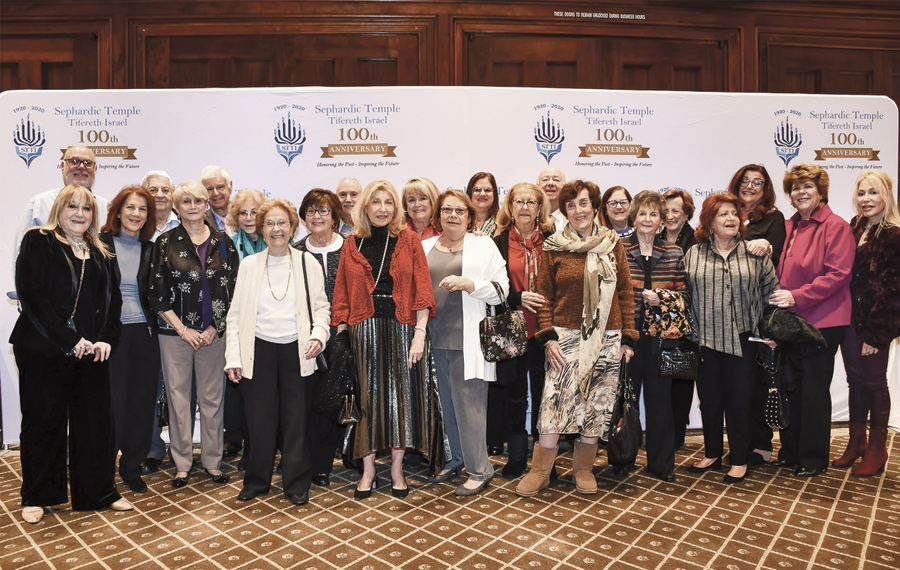
Women of the Sephardic Temple community celebrates the congregation’s centennial.
Photo courtesy of Sephardic Temple

Sephardic Temple celebrated its centennial with a Feb. 9 luncheon that drew some 150 people.

The gathering marked the start of the congregation’s 100th anniversary commemoration and was organized by Centennial Co-Chairs Rae Cohen, Neda Mehdizadeh, Mireille Mathalon and Elaine Lindheim.

Attendees included Sephardic Temple President Kamran Nickfardjam; past presidents Abe Yazdi, Hamid Yashar, Larry Clumeck, Ben Mehdizadeh, Alex Rachmanony and Leon Hasson; Cantor Haim Mizrahi; and longtime congregants Max Candioty, Ness Tiano and Hy Arnesty.

The program was held at Sephardic Temple’s Amado Hall and featured a prepared video reflecting on the congregation’s storied past, present and future; participation by the Levy Family Early Childhood Center and Talmud Torah students; and the launch of the UCLA Sephardic Archive Project, highlighting 100 years of Sephardic Los Angeles.

With a lunch provided by Pat’s Catering, attendees marked the joyous event by remembering community milestones, including the congregation’s founding on Feb. 1, 1920, by a group of 39 immigrants, mostly from Turkey; its years of operation on Santa Barbara Avenue; and its 1975 relocation to its home at Wilshire Boulevard and Warner Avenue.

“We are unique in many ways, as far as our services are concerned, as far as the makeup of the temple is concerned,” Nickfardjam said in a video celebrating the anniversary. And we are very proud to turn 100.”


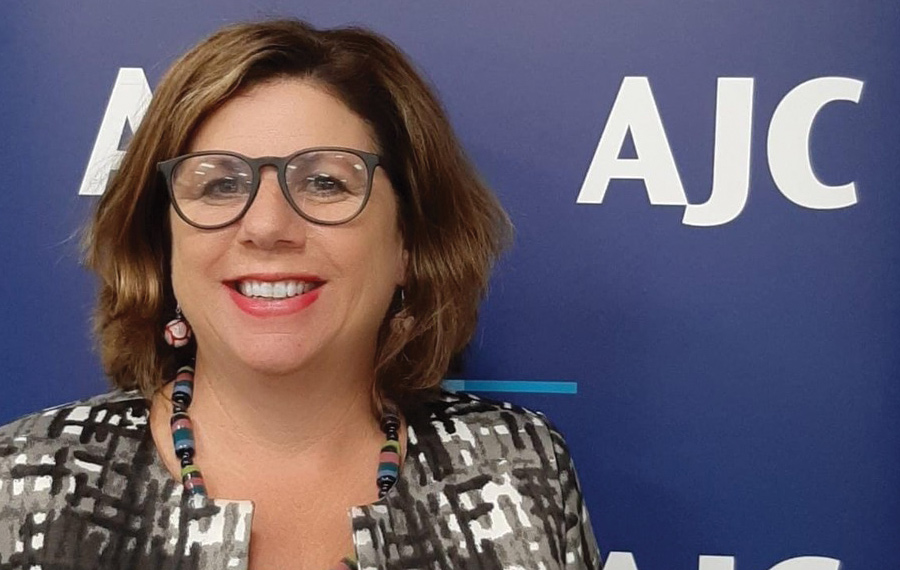
Francine Lis, the recently hired development director at American Jewish Committee. Photo courtesy of American Jewish Committee

American Jewish Committee (AJC) Los Angeles has hired Francine Lis as its development director.

“Francine’s expertise in cultivating new and existing leaders will be a strong asset to AJC,” a statement by the organization said.

Lis joined the AJC L.A. staff earlier this month.

A Los Angeles native and accomplished development professional, Lis has spent the past nine years as a senior member of the Anti-Defamation League staff in L.A.. She was the organization’s director of planned giving, legacy and endowments.

Prior to working for the ADL, Lis served as director of annual giving at the USC Gould School of Law, as an assistant director of development and public affairs at Hebrew Union College-Jewish Institute of Religion, and as director of member services for Southern California Grantmakers.

She joins a team that includes AJC Regional Director Richard Hirschhaut and AJC Regional Board President Scott Edelman, a senior partner at the law firm Gibson Dunn.

AJC describes itself as a leading global Jewish advocacy organization. It has access to government officials, diplomats and other world leaders. AJC’s mission is combating rising anti-Semitism and extremism, defending Israel’s place in the world and safeguarding the rights and freedoms of all people.


The work of Jewish Big Brothers Big Sisters of Los Angeles, which offers one-to-one mentoring for Jewish youth ages 6-17, will continue via virtual meetings. Photo courtesy of Jewish Big Brothers Big Sisters of Los Angeles

Jewish Big Brothers Big Sisters of Los Angeles (JBBBSLA) has announced that it is transitioning from in-person meetings between its “Bigs” (mentors) and “Littles” (youth mentees) to virtual meetings via FaceTime, Zoom, phone calls, texting and email.

In a message sent out to the JBBBSLA community, the organization’s CEO, Randy Schwab, said that the staff has been working remotely and is using videoconferencing to keep engaged with one another; that the staff continues to plan for JBBBSLA summer camp; and that its college guidance, scholarship and teen programs continue to be resources in “uncertain times.”

“A lot has happened over the last few days — these are unprecedented times,” Schwab said. “From all of us at Jewish Big Brothers Big Sisters of Los Angeles, we sincerely hope that you and your family are safe and healthy.”


Want to be in Movers & Shakers? Send us your highlights, events, honors and simchas. Email ryant@jewishjournal.com.

Guardians Real Estate Dinner, Sephardic Temple Centennial Celebration Read More »

Six Mitzvot To Adopt In a Pandemic

You are on a ship in the middle of a tempest. The ship is pitching and heaving. Water is sloshing over the deck. The crew is throwing cargo overboard.

You realize with a sinking feeling: This is all about you.

Anyone else been seasick lately? Peering into the gaping maw of the most dangerous pandemic in centuries and wondering what you are doing so flagrantly wrong to bring it about, or what drastic measure you can take to reverse it? Making it all about you may not be so counterproductive. Maybe you weren’t trying to outrun a prophetic mission, like Jonah was on his way out of Tarshish. On the other hand, maybe the storm helps you realize what your mission is.

I’m not going to be the guy who pins any great calamity on gay marriage — some other Jewish man who is evidently closer to God than I am already has done the honors. Instead, I’m using this time to reflect on my own actions. It was not hard for me to figure out why the ship was taking on water with me in the hold. But this isn’t a confession column. So I will get to work on my problem(s), and offer some suggestions to readers interested in helping me.

Many of my friends are dismayed that Shabbat is not the same with no shul, no minyan, no child care, no Kiddush. And Shabbat not being the same has meant that Judaism has not felt the same. I understand the sentiment, but don’t share it. Over the past year or so, I’ve become a six-days-a-week Jew. Sunday through Friday, I’m saying Shir Shel Yom (the psalm of the day); on Shabbat, I’m rarely at shul in time for it. During the week, I’ll bentsch; Shabbat, I’ll retire to the couch after lunch and forget about it.

The coronavirus has forced me to appreciate what I took for granted; it may unlock a new dimension of observance for others. There are six other days of the week when we can be just as Jewish as we are on Shabbat. Here are six ways you can observe your faith — and practice a kind of Jewish mindfulness along the way — during this Sabbath sabbatical:

  1. Washing your hands before eating bread
    Saying the grace after meals

What if I told you that the Torah predicted COVID-19 and included safety precautions in Jewish ritual? You might answer that washing your hands, like the blessings said before eating, is actually a rabbinic commandment, not a biblical one, and you would be right. They’re a package deal with the grace after meals, which is right there in Deuteronomy. Last week I went shopping for the first time post-quarantine and discovered that food was being rationed. Two of everything.  I came home with gluten-free bread that tasted like raisins dipped in sand. I’ll never take flour and water for granted again, which is why I’ll be praying before and after eating them henceforward. Join me.

  1. Ashrei

You’ve heard of lifehacks; here is an afterlifehack: Reciting Ashrei (Psalm 145) three times a day guarantees you prime real estate in the World To Come. No connection to the coronavirus here, because you are not going to die, because you already started observing No. 1 — washing your hands.

  1. Lighting candles
    Wearing a yarmulke

Lighting candles: a Shabbat-oriented mitzvah (also rabbinic). A good way to separate the stress and exhaustion of the week from the day of rest.

Yarmulke: I rarely wear mine to work. However, now I’m working from home, I can wear it again. It covers my cowlicks. These mitzvot often are gendered so I lumped them together. Also it helps me reach the target number of six.

 The coronavirus has forced me to appreciate what I took for granted; it may unlock a new dimension of observance for others.

  1. Going to shul

If you drive to services every once in a while, you can try it on Zoom. I’ve heard rave reviews of a few congregations doing this. Of course, daily morning prayers on my shul’s Zoom still are being held at 7 a.m. so I can’t testify personally. We’re working on a late service.

  1. Honoring your parents

Popular with older demographics.

  1. Expressing solidarity with Asian American friends

When we get upset about anti-Semitic dog-whistling we want other groups to be outraged, too. President Donald Trump defiantly calling the coronavirus the “Chinese virus” unfairly put a target on the backs of our Asian American friends. Dehumanizing language matters, and Jews should be consistent about condemning it. We can’t control how other people speak, but we can make sure the people who are affected by that speech know we’re hurting, too.


Louis Keene is a writer living in Los Angeles. He’s on Twitter at @thislouis.

Six Mitzvot To Adopt In a Pandemic Read More »

What’s Happening: Virtual Shabbats, Book Club and Festival

Because the community has now been ordered to shelter in place to halt the spread of the coronavirus, the Journal has compiled a list of virtual happenings. If your organization is holding a virtual event, please email us at calendar@jewishjournal.com.


FRI MARCH 27

VIRTUAL SHABBAT SERVICES
Sinai Temple offers a virtual Kabbalat Shabbat service and a virtual Shabbat morning service.. “Even though we will not be together physically, the Kaddish in the virtual minyan fulfills your obligation,” the Sinai website says. 5:45-6:15 p.m. Kabbalat Shabbat.  9:30 a.m.-noon virtual Shabbat morning service. 8 p.m. virtual Havdalah service. For more information, visit sinaitemple.org. Access the videos, which will be recorded, here.

QUARANTINE SHABBAT 2.0
Open Temple holds a community of Shabbat offerings through Zoom, live performance and an interactive chat-room. 7 p.m.

VIRTUAL YOGA
Join yoga teacher Michelle Aaron in your living room and ensure you are in excellent physical condition as Shabbat approaches. You can join her via Vimeo and Facebook at 8:30 a.m. For more information, click the link above.

Chava Mirel

SHABBAT MUSICLAB
Congregation Ori Ami of Calabasas offers a live stream Shabbat MusicLab and service. Acclaimed singer-composer and multi-instrumentalist Chava Mirel performs uplifting Shabbat songs. Best-selling author and Rabbi Paul Kipnes and Grammy-winner Cantor Doug Cotler accompany her. 7:30 p.m. Live-stream link above.

DAILY MEDITATION
The Institute for Jewish Spirituality offers a virtual series, “Daily Jewish Meditation for Challenging Times.” Join master teachers who lead this live, daily-guided meditation of Jewish mindfulness with people from around the world. No experience necessary. 9:30-10 a.m.

TEMPLE JUDEA — THE NEW WAY
Temple Judea of Tarzana welcomes people to experience Shabbat via livestream. The Reform congregation invites you to partake in the holy day with prayer, music and community. 6:15 p.m.

Max Chaiken

SIMPLY SHABBAT
Temple Emanuel of Beverly Hills’ Simply Shabbat services continue uninterrupted as a virtual service only. Worship from the comfort of home as the Reform congregation blends nostalgic and contemporary melodies to begin the weekend with a peaceful start. Simply Shabbat features an hour of music, prayer and a d’var Torah. 6:15 p.m.

KOL AMI LIVESTREAM
Join Kol Ami Rabbi Max Chaiken’s livestream of Shabbat services. A copy of Kol Ami’s prayer book, as a free online flipbook, is available at ccarnet.org/publications/mishkan-tfilah-for-shabbat. Participate in the service at kol-ami.org/livestream or on Facebook Live at facebook.com/kolamiweho. 6:30 p.m.

VIRTUAL TORAH, SHABBAT, HAVDALAH
To remain connected during Shabbat, IKAR is offering plenty of virtual programming via Facebook Live sessions. They include “Virtual Words of Torah,” featuring one of IKAR’s rabbis delivering words of learning before finishing with song and the Mourner’s Kaddish, at 5 p.m.; “Virtual Songs of Shabbat,” with IKAR Hazan Hillel Tigay mixing the liturgical and contemporary at 10 a.m. Saturday; and “Virtual Havdalah” at 8 p.m. Saturday. The congregation is also holding a “Virtual Morning Minyan,” a half-hour of prayer and learning via Zoom, at 8 a.m. Mondays-Thursdays. For more information, visit the link above.

CELEBRATING KABBALAT SHABBAT
San Fernando Valley community Kol Tikvah encourages worshippers to join from the comfort of their home in watching and participating in Kabbalat Shabbat services. Tune in at 6:30 p.m. by clicking on the link above.

Jessica Hutchings

SHABBAT AT HOME
Beth Shir Shalom of Santa Monica brings the services directly into your living room via live streaming. You do not need a Facebook account to connect with the Reform synagogue. Beth Shir Shalom Rabbi Neil Comess-Daniels leads services. 6:30 p.m. Friday. 9 a.m. Saturday.

Rabbi Sarah Bassin

BOOK CLUB: “THE PLAGUE”
Rabbi Sarah Bassin of Temple Emanuel of Beverly Hills leads a book club discussion of Albert Camus’ 1947 bestselling novel “The Plague,” a story of human resilience and unending horror when a bubonic plague ravages a North African coastal town. 1-2:30 p.m. For more information, click on the link above.

SUN MARCH 29

VIRTUAL SING-A-LONG
Cantor Jessica Hutchings and the Shir Heart Girls of Congregation Ner Tamid of Henderson, Nev., lead a virtual Sunday sing-a-long. Hutchings has spent almost a decade conveying the beauty of Jewish music to children and adults in Southern California and Nevada. 4:30-5:30 p.m.

Abby Stein

LIMMUD E-FESTIVAL
Limmud North America hosts its inaugural e-Festival. Presenters include Journal contributing writer and social media consultant Esther Kustanowitz; Sarah Tuttle-Singer, new media editor at The Times of Israel; author-activist Abby Stein; and Ancestry.com genealogist Janette Silverman. Noon-5 p.m. $18-$36. All ticketed attendees will receive program registration access.

THU APRIL 2

RABBI’S MEDITATION
Join Temple Emanuel of Beverly Hills Senior Rabbi Jonathan Aaron for an evening meditation, immediately followed by the rabbi’s weekly parsha study. The portion for Shabbat HaGadol, the Shabbat immediately before Passover, is Tzav. Meditation begins at 5:30 p.m.

GLOBAL ANTI-SEMITISM
Wilshire Boulevard Temple and the American Jewish Committee (AJC) live-stream the final lecture in their ongoing series on “Global Briefing on Anti-Semitism — Past, Present and Future.” The subject is “AJC Practicum: Best Practices in Combatting Anti-Semitism Online, on Campus and on Both Sides of the Aisle,” featuring political experts explaining, analyzing and guiding a response to the growing anti-Semitism around the world. 7:30 p.m.

What’s Happening: Virtual Shabbats, Book Club and Festival Read More »

Virtual Shabbat 

Thanks to the virus, all our friends and synagogues

are taking to the internet to beam Shabbat to us in the

privacy of our own homes where, hopefully

the toilet paper is plentiful. Bidet HasShem!

There are so many choices and here you are

reading this.

I’m reminded of the joke about the man alone on the deserted island

who builds two synagogues. When he’s finally rescued, they ask him,

“Why did you build two?” And he replies, “This is the one I attend

and this is the one I wouldn’t set foot in.”

We Jews have needs. We can’t have our yin without our yang.

If two of us are in a room and there are only two opinions, then

something is not right.

So choose your virtual service wisely.

Consider the benefits — When the rabbi says, “Please rise,”

you don’t even have to. They’ll never know!

Sing as loudly as you want! No one but the cat

will judge you. Don’t have a cat? Talk to me —

I’ve got extras.

You should still turn off your cellphones.

Unless you’re reading this on your cellphone,

in which case you should ask Moses what to do.

Seriously, go to askmoses.com — they’re waiting for you.

When the prayer for healing comes along, remember

it’s also for you. We always forget it’s for us.

We’re getting to the point where there are too many names

to remember to speak out loud.

For the basketball players who have nothing to do.

For the teachers who are rewriting their life’s work for virtual classrooms

For the doctors and nurses who are spreading thin.

For the hospitals that are running out of rooms

For the people across the oceans who are told they can’t cross the oceans.

For the empty shelves.

As a summer camp Jew, I almost don’t know how to pray

without wrapping my arms around the person next to me.

Fist bumps and elbows aren’t quite the same thing.

Here’s to the world yet to come when we can

feel each other’s warmth — hold each other again.

How do a people who yearn to pray with their feet

pray when they’re asked to keep their feet at home?

Like this.

Like this.


Rick Lupert, a poet, songleader and graphic designer, is the author of 23 books including “God Wrestler: A Poem for Every Torah Portion.”

Virtual Shabbat  Read More »

Weekly Parsha: Vayikra

One verse five voices. Edited by Salvador Litvak, the Accidental Talmudist

When you present an offering of meal baked in the oven, [it shall be of] choice flour: unleavened cakes with oil mixed in, or unleavened wafers spread with oil.Leviticus 2:4

Rabbi Mendel Schwartz
The Chai Center

Sometimes the most seemingly arcane Torah verses can have surprising relevance to our modern lives. I run The Chai Center, a Jewish outreach organization, and we hold free High Holy Days services for the Los Angeles community every year. No tickets and no appeals!

We always get a crowd, no matter the venue. Now we’re at the Writers Guild Theater, but we used to hold services at various upscale hotels. We always encountered the same glitch. We needed to serve wine and honey cake to the 600-900 attendees for the advertised “Largest Jewish New Year’s Eve Party,” aka Rosh Hashanah Kiddush. The hotels wanted to charge us a “food and drink fee” that included a $25 corkage fee per bottle. My father, Rabbi Shlomo “Schwartzie” Schwartz, of blessed memory, cleverly told the hotel management that the wine was our holiday “wine libation” dating back to the times of the Temple.

For the sake of religious freedom, the hotels were willing to set aside the corkage fee. But what about the honey cake, they asked? To answer this question, my father referenced this week’s Torah portion: “When you present an offering of meal baked in the oven, it shall be of choice flour: unleavened cakes with oil mixed in.” This explanation convinced them not to charge us a food or drink fee. It’s nice to know that gentiles still respect the Jewish Bible thousands of years later!

These yearly gatherings resulted in dozens of Jewish marriages, and hundreds of children. Shabbat shalom!

Justin Levi
President, The Community Shul

I don’t know about you, but when a global pandemic hits that fundamentally alters our daily life, the part of the Torah I look to for guidance is … the meal offerings. Wait, what? Seems a bit anticlimactic.

In truth, however, some of the Torah’s most seemingly subtle passages offer great depth and insight. This pasuk describes some of the requirements of bringing meal offerings, which are composed of nothing more than wheat flour, oil and frankincense. Very often, the individual bringing such an offering was poor and therefore could not bring an offering of any type of animal. In our current state of affairs, this should be a clue for us all to devote ourselves to helping those around us, no matter how much we are struggling, because, let’s face it, we are all going through hardships right now of one sort or another. Even if all you can do is something small, like delivering food to an elderly neighbor, then even that is something great that will earn God’s favor.

The pasuk also specifies that the offerings are to be unleavened. In a few weeks, we will eat the ultimate unleavened food — matzo. We are taught that the lack of leaven is a metaphor for humility — all the substance but without the hot air. Right now, it’s not about you. It’s about everyone in our society. It’s about doing what is necessary without regard for our own egos or opinions.

Ultimately, we’ll all get through this together.

Miriam Yerushalmi
CEO, SANE (Save A Neshama Endowment); author, “Reaching New Heights Through Prayer and Meditation”

How does oil “mixed in” a cake differ from that “spread on” a wafer? Chassidus teaches that there are two levels of meditating on the greatness of HaShem: with the head and with the heart.

When your connection to HaShem is only through your mind and thoughts, it is like the oil spread on the wafer. The connection is easily broken when your concentration slips. A higher level of connection, re’usah delibah (the will of the heart), is formed when your thoughts become “mixed in” and absorbed into your heart. This actualization of the meditative wisdom allows one to experience the essential love connecting a Jew to HaShem, a love like that of a parent and child, for, as the Lubavitcher Rebbe explained, “the father and a son are a single entity sharing one essence.”

How can you mix the oil in, to rise to re’usah delibah? Through genuine, happy teshuvah (repentance) that cuts through the layers blocking your heart and allows God’s wisdom to intermingle with our own essence. There are two levels of teshuvah, as well. Teshuvah tataah (the lower level) springs from bitterness. Teshuvah ilaah (the higher level) comes out of happiness. When a person is bitter, their connection to HaShem is tenuous, like a thin layer of oil floating on but not penetrating a wafer.

Happiness, though, makes a person expansive, accepting, like oil permeating flour to create a cake. Teshuvah from that source serves to strengthen and expand our connection to HaShem.

Heftsibah Cohen-Montagu
Arevot Women’s Beit Midrash, Sephardic Educational Center

The meal offering is one of the voluntary offerings in the Temple. In the hierarchy of the sacrifices from the most expensive to the cheapest, the meal offerings are at the lowest level. Rambam makes the point that anybody can make a voluntary offering; even a poor person can bring “one of the types of bread that were common in those days” (Guide for the Perplexed III, 46).

Poor people typically have fewer options. Here, too, the ingredients are prescribed in advance: flour, water and oil without leavening. But from then on, there is a range of options: The dough can be shaped into cakes (round loaves) or rolled out into flat wafers. The loaves have oil mixed in and the wafers have oil drizzled on top. The oven is one of three possible cooking methods (along with a griddle or a pan).

The simplest food, poor people’s daily bread, is what marks them as poor. Here in the context of a voluntary offering, it takes on a new significance — it is the product of a free choice made in a moment of liberty. The badge of poverty changes its meaning and becomes an offering, and the poor person becomes an equal partner in the sacred service. Through this baseline offering, the Torah grants the poor person a sensation of freedom and endows society with an awareness that everybody’s contribution has an equal value — no portion is too small, and every individual is part of a greater whole.

Rabbi Avraham Greenstein
Professor of Hebrew, Academy for Jewish Religion California

This verse is part of a series of verses that give instruction as to how the voluntary meal offerings were to be brought. Each one had to consist of fine flour, olive oil, frankincense and salt. The manner of preparation, however, was up to the one bringing the offering.

This verse addresses the options one had when bringing a baked offering. Although the details of this Mincha (gift offering) may seem somewhat removed from our day-to-day experience of Judaism, they nonetheless play a significant role in the biblical narrative, and they offer us insight even now. The first person to offer a Mincha was Cain. He brought a simple offering of “the earth’s fruit.”

Unlike Cain’s simple offering, which God did not find acceptable, the Mincha brought in the Tabernacle and in the Temple was complex and involved. The Mincha required time and an attention to detail. Before it was even fit to be offered, the grain had to be milled and sifted, and the olives had to be pressed. Each cake or wafer needed to be kept unleavened. In this manner, the Mincha offering rectifies Cain’s error by requiring a level of attentiveness and personal investment that perhaps Cain’s offering lacked.

It is noteworthy that both the words “challah” and “matzah” appear in this verse. These breads are still central to Jewish life and are even emblematic of it. In Jewish life, and life in general, we must harness our attentiveness for things of substance and offer our very best.

Weekly Parsha: Vayikra Read More »

david suissa podcast curious times

Pandemic Times Episode 8: The Plot Thickens


New David Suissa Podcast Every Morning at 11am.

How do we manage our lives during the Coronavirus crisis? How do we keep our sanity? How do we use this quarantine to bring out the best in ourselves? Tune in every day and share your stories with podcast@jewishjournal.com.

Pandemic Times Episode 8: The Plot Thickens Read More »

‘Shtisel’ Star Shira Haas Leaves the Charedi Life in ‘Unorthodox’

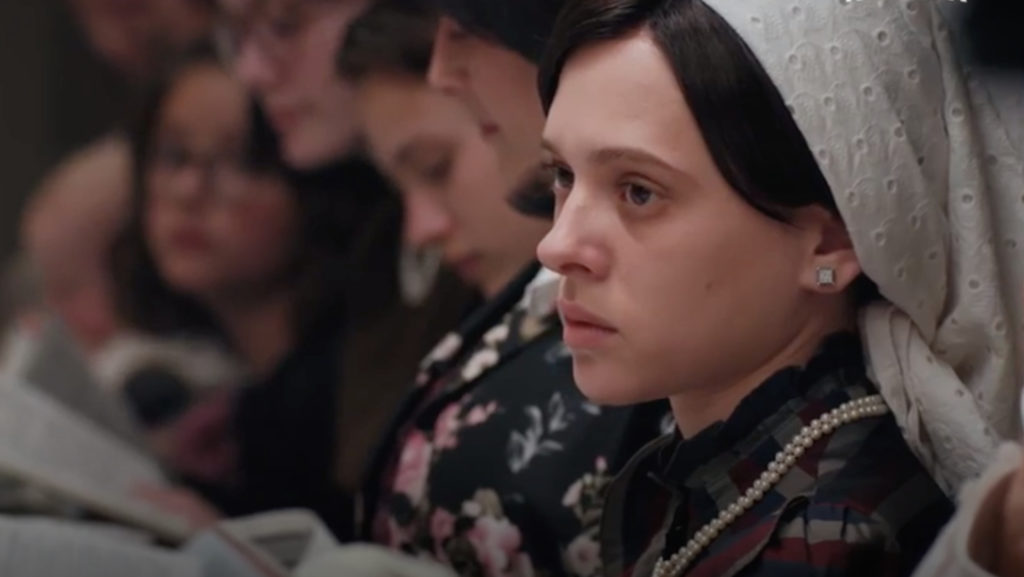
A young woman tries to break away from the restrictions of her ultra-Orthodox community and discovers that it’s easier said than done in “Unorthodox,” a Netflix miniseries inspired by Deborah Feldman’s best-selling 2012 memoir “Unorthodox: The Scandalous Rejection of My Orthodox Roots.” Written by Anna Winger and Alexa Karolinski and directed by Maria Schrader, the four-part drama stars Shira Haas (“Shtisel,” “The Zookeeper’s Wife”) as Esty Shapiro, who makes the wrenching decision to leave her arranged marriage to seek independence and personal fulfillment in Berlin.

“The people who don’t live in the community now love where they come from, and they all struggle with the tension between their individuality and their desire for belonging,” Winger (“Deutschland 83”) said. It was important to her to depict Charedi life accurately and show  “the universality of our characters’ experiences,” she added.

The project grew out of the friendship between Berlin residents Winger, Karolinski and Feldman, who have a common Jewish heritage. “We had spent a lot of time talking about Jewish identity, German history, all the things you think about when you live and raise kids here. Identity becomes more important when you’re conscious of being a minority,” Winger said, noting that her first piece as a writer was about celebrating Passover in Berlin. The daughter of anthropologists who met in Africa, she lived in Kenya and Mexico in her youth. “I had a lot of exposure to Jewish culture but not religion so this show was a deep dive into that. It was the most unusual Jewish experience and yet it felt very right.”

Written, shot and edited last year and told in the present and via flashbacks, “Unorthodox” was shot in English and Yiddish. Former cantor Eli Rosen, who plays a rabbi, served as Yiddish translator and cultural advisor. “For all of us who had Yiddish-speaking grandparents, it was so much fun to make something in Yiddish, to be part of the revival,” Winger said, noting that the production faced some challenges, notably the hundred-degree heatwave that had the men sweating under their wigs and hats, even though those shtreimels were made of faux to save money (and spare minks).

Casting was a major concern. “We needed to find people who spoke Yiddish and were comfortable with it, or at least familiar with it. We couldn’t expect [the actors] to master it overnight,” Winger said. The mostly Jewish cast includes many Israelis, including Haas. According to Winger, “She was our only choice. We did a casting and saw 60 girls, but we didn’t show Netflix anyone else.”

Familiar with the Charedi world from playing Ruchami Weiss on “Shtisel,” Haas also has Orthodox members of her family. “None of this is new to me,” she said. But she found the two frum characters very different, and she seized the opportunity to play Esty. “It was the strongest feeling I’ve ever had for a role. This character was so challenging emotionally, one of the most complex characters I’ve done. She has so many conflicts within her. She’s very brave but also scared. She’s curious but she hesitates. She’s naïve and has all these questions. I could go on forever.”

“We took so much effort to tell this complex story with empathy, and all the smallest details–the props, mezuzahs, the dining table, everything”—Shira Haas

She prepared by reading Feldman’s book multiple times and talking to the author when she came to the set. “I did my research and I came to the production more than a month before. I love learning new stuff, new languages and accents. I don’t know Yiddish so I took Yiddish lessons. And piano lessons and vocal lessons,” she said. “We took so much effort to tell this complex story with empathy, and all the smallest details–the props, mezuzahs, the dining table, everything.”

The youngest child born to sabras of Polish, Hungarian and Czech heritage, Haas was a shy child and loved writing and theater. Accepted to an arts high school in Tel Aviv, she was approached by the casting director for her first film, “Princess.” Raves and honors for that led to “Shtisel” and “The Zookeeper’s Wife.” “I worked hard, of course, but I was very lucky. My family was very supportive. It happened in a good way that allowed me to process it,” she said.

Based in Tel Aviv, Haas traveled often for projects before the coronavirus brought that to a halt. “I love languages, accents, different cultures. I have the drive in me to tell those stories. I want to do it in Israel and abroad. I love having the ability to dive into something, learn new stuff about people and cultures,” she said. She also hopes to write and direct. “Being able to affect other people with something and bring people together to have discussions about it, like with ‘Shtisel,’ is amazing.”

She already filmed “Asia,” an Israeli mother-daughter drama in which she plays the dying daughter, and “Esau,” a family story starring Harvey Keitel, but release plans are now uncertain. Production on the third season of “Shtisel” was to begin in May, but that, too, is in limbo.

Winger, whose next two projects also have Jewish characters and themes, believes that “Unorthodox” will bring home the message that “we have a lot more in common as Jews and humans than we realize,” she said. “I think we spend a lot of time thinking about our differences and my experience with this project is that we have more in common and need to recognize that in each other.”

Haas thinks that the story may prompt some people “to question the world they live in and find the power to use their voice to do something else,” she said. “Other people will watch the show and see a community that they don’t know–or thought were very different–and see that they’re real human beings with desires and dreams, and have more empathy for them.”

“Unorthodox” premieres Mar. 26 on Netflix.

‘Shtisel’ Star Shira Haas Leaves the Charedi Life in ‘Unorthodox’ Read More »