fbpx

March 20, 2020

San Fernando Valley Family’s Facebook Live Dance Party Draws 2,000 People

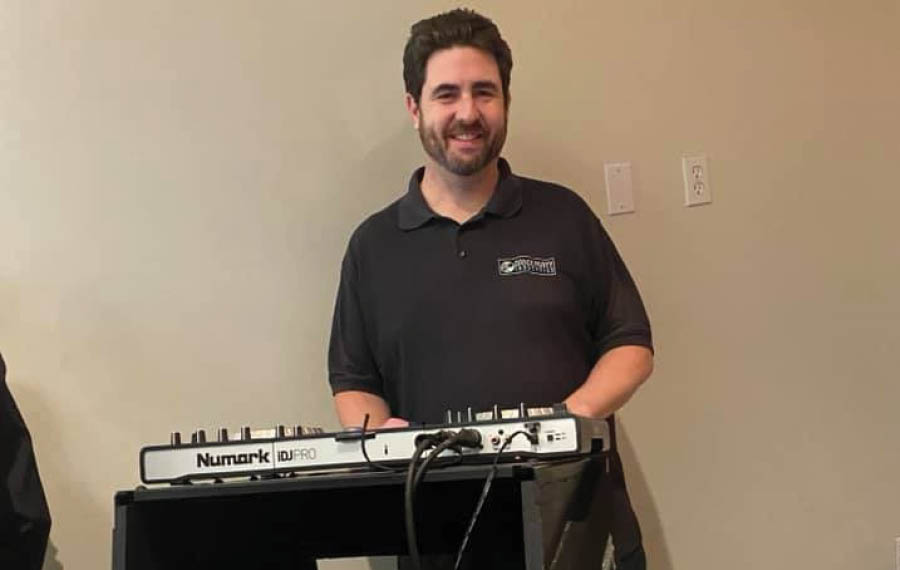
Valley Beth Shalom congregant and Los Angeles Unified School District (LAUSD) drama teacher Brent Rosen also owns and operates Dance Party Industries, a DJ company specializing in b’nai mitzvahs, weddings and school dances.

With schools closed due to the coronavirus outbreak, Rosen and his wife Rachel came up with the idea of holding an interactive dance party via Facebook Live for families with small children. The seeds of the event were planted after seeing celebrities performing concerts live on social media.

With an audio system, a microphone and his two children as his backup dancers, Rosen set up the event in his garage. More than 2,000 people tuned in to his dance party that included the Cha-Cha Slide, the Macarena and freeze dance. Even CBS television covered the event. He played a variety of songs, including the Black Eyed Peas’ “I’ve Got a Feeling,” Motown music and songs from the 60s, 70s, and 80s.

“The idea is for families to take a break from the craziness,” Rosen told the Journal. “Maybe this is a time for the kids to get their wiggles out; to be out dancing and doing stuff in their living room.”

In the wake of the LAUSD school closures, Rosen said he and his wife have been trying to explain to their  10 and 5-year-old children why they are stuck at home. “We told them why we’re doing this, how soon we can do [normal] things again but we don’t know how long it will be,” he said.

The dance party was a  welcome diversion and given its success, Rosen plans to host another one on March 25.

San Fernando Valley Family’s Facebook Live Dance Party Draws 2,000 People Read More »

Coronavirus in Milan: Life in a Northern Ghost Town

(JTA) — From his home in Italy’s wealthiest city, Rabbi Moshe Lazar can see deserted streets and squares that were bustling with life only two weeks ago.

“Public life is standing still,” he said on Monday. “No one goes out unless they absolutely need to.”

Lazar, 85, moved from New York to Milan 62 years ago with his wife Judy as emissaries for the Chabad Hasidic movement. About a quarter of Italy’s entire Jewish population lives in the northern city.

The Lazars spend some time each day devising solutions for Jews in Milan with urgent needs. When they aren’t coordinating, they read, learn and talk to each other and on the phone with relatives.

It’s a necessity to stay distracted in Italy, which now has the highest toll from the virus in the world — more than China, the country of 1.4 billion people where the pandemic started. On Wednesday alone, the virus killed 475 people in Italy.

Last week, the country placed all its citizens on lockdown indefinitely. Lombardy, the northern region where Milan is the capital, is the epicenter of the disease, which has overwhelmed local health services and morgues.

On Monday, the virus claimed the life of a former leader of the Jewish Community of Milan, Micky Sciama. He was 79.

Many Italians have stopped visiting elderly family members for fear of infecting them. Milo Hasbani, the president of Milan’s Jewish community, encouraged such behavior in a message following Sciama’s death.

“We owe it to our community and beyond to do everything to limit the spread of the virus,” he wrote.

Coronavirus in Milan: Life in a Northern Ghost Town Read More »

Palestinians Adjust to Coronavirus Lockdown in Bethlehem

The Palestinian Authority wasted no time when seven staff members of a Beit Jala hotel tested positive on March 5 for the COVID-19 virus, contracted from of a group of Greek pilgrims who had stayed at the hotel and some of whom were diagnosed with the virus when they returned to Greece.

Beit Jala is a traditionally Christian Palestinian town adjacent to the western border of Bethlehem.

The infected staff members along with the rest of the staff—and a group of 13 American pilgrims who had just checked out of the Angel Hotel—were immediately quarantined in the hotel and police cordoned off the area. The Palestinian Authority sent a doctor to the hotel for daily check-ups and local restaurants sent in food for those quarantined.

On the same day the cases were identified, Palestinian President Mahmoud Abbas declared a state of emergency and ordered the closure of the Bethlehem area to all tourist groups but those that were already there were permitted to remain until the end of their planned stay. Nobody was allowed in or out of the area. All schools, universities, shops, restaurants and group activities were ordered closed as were all mosques and churches, including the Church of the Nativity, revered by Christians as marking the birthplace of Jesus.

As of March 20 the Palestinian Ministry of Health had reported 48 confirmed cases of the virus, all defined as non-critical—with 901 people quarantined in government facilities, 8778 people in self-quarantine and zero deaths. Seventeen people have already recovered, they said. Most of the cases have been in the Bethlehem area, with two cases in Tulkarem and one in Ramallah. Palestinians have largely applauded the PA’s handling of the coronavirus crisis.

“The first three days people here were in trauma; how can we deal with this situation? We couldn’t believe what happened, we are [always] busy living our lives 24-hours-a day,” said Arwa Hodaly, a PA-employed social worker who counsels women survivors of domestic abuse. “But then we started seeing our Palestinian Authority was containing the situation.  We are committed to our PA quarantine and we don’t go out. Our government is working in a perfect way and that strengthens the relationship between our people and the Palestinian Authority.”

But while the people understand the need for a strictly enforced lock-down, which prevents them from visiting with family in their close-knit community, and going out other than for essential needs, their biggest concern now lies with what will came afterwards and they wonder when, and if tourists will return to the area.

“Bethlehem has been through a lot of setbacks, difficulties, wars, obstacles, many hard times during the first and second Intifada, but [none like] the current situation we are having nowadays with the COVID-19.”  — Diana Babish

With between 17,000 and 20,000 people from the three sister towns of Bethlehem, Beit Jala and Beit Sahour employed in the tourism sector and another 15,000 employed in Israeli construction (the majority as day laborers), Bethlehem’s economy has been dealt a hard blow, said Samir Hazboun, chairman of the Bethlehem Chamber of Commerce.

“Tourism is the most important branch for our economy and basically for all the Palestinian territory. We also have financial obligations for factories,” he said. “In the coming weeks we will feel the impact.”

Israel also closed off all checkpoints, preventing movement between Israel and the Palestinian territories.  But Major Yotam Shefet, head of the international department of the Civil Administration in the West Bank, said Israel has issued permits for several thousand Palestinian workers to enter into Israel—but not from the Bethlehem area. These permits allow them to work in the construction and agricultural sectors as well as in a Jerusalem industrial zone right outside of Ramallah, with the condition their Israeli employers provide them with lodging in Israel during the current 30-day lockdown also being enforced in Israel.

Diana Babish, who runs the Animal and Environmental Association Bethlehem animal shelter in neighboring Beit Sahour, had just started a new job as the manager of the Bethlehem’s bus station, which saw hundreds of tourist buses coming in every day just before the outbreak of the crisis.

“I had a lot of hope to change the bus station to better condition[s], but was disappointed because with the virus…tourism will not be back as before,” she said. “We don’t know when tourists will visit Bethlehem or Jerusalem or Palestine again. We don’t know when this nightmare will end. Many families are…now living [with] the fear of [not] having tourists back.”

The closure, which also prevents movement between the three towns, is also making it difficult to run her shelter, which is challenging even in normal times, she said.

“Bethlehem has been through a lot of setbacks, difficulties, wars, obstacles, many hard times during the first and second Intifada, but [none like] the current situation we are having nowadays with the COVID-19,” she said.

Dr. Gerald Rockenschaub, who lists his title as head of office, World Health Organization occupied Palestinian Territory, said the PA has “put the right measures in place” with assistance from WHO and noted that Israel, the PA and neighboring countries of Jordan and Egypt have been coordinating behind the scenes to contain the virus.

Palestinian journalist Daoud Kattab wrote that the coronavirus has managed to do what politicians and activists have not.

“It has sparked an extraordinarily high level of cooperation and coordination between Palestinians and Israelis,” Kattab said, noting that Palestinian officials told him the relationship has improved as both governments struggle in a joint effort to contain the outbreak and that the cooperation is “necessary and important” because it is serving a humanitarian purpose.

Nonetheless, Hodaly said the talk of collaboration cannot gloss over the fact the Palestinians are under occupation, and, she believes many of the conditions are being dictated by Israel.

“There is a constant dialogue between Palestinians and Israel. Both are aware the virus doesn’t respect any borders,” Rockenschaub said. “We are in this jointly so we will jointly succeed or we will jointly even have a bigger problem.”


Judith Sudilovsky is a veteran freelance journalist covering Israel and the Palestinian territories.

Palestinians Adjust to Coronavirus Lockdown in Bethlehem Read More »

Andy Cohen Tests Positive for Coronavirus, Halts Plans for Home Talk Show

“Watch What Happens Live” host Andy Cohen says he has tested positive for coronavirus according to a statement he made on Instagram March 20.

“After a few days of self-quarantine, and not feeling great, I have tested positive for Coronavirus,” Cohen wrote on the social platform. ” As much as I felt like I could push through whatever I was feeling to do #WWHLfrom home, we’re putting a pin in that for now so I can focus on getting better. I want to thank all the medical professionals who are working tirelessly for all of us, and urge everybody to stay home and take care of themselves.”

https://www.instagram.com/p/B9-LVMpBe9p/?utm_source=ig_web_copy_link

Cohen was supposed to start a self-produced “Watch What Happens Live” from his West Village apartment in New York City March 23.

“My show has always been something of a little coffee klatch, party-line type show. And this seemed like a very natural extension of not only the show, but obviously the times that we’re in right now,” Cohen told Variety.

The first guests were supposed to be Jerry O’Connell, Nene Leakes, and Ramon Singer, all participating remotely. To end the half hour on an uplifting note, Cohen’s rabbi, Sharon Kleinbaum of Congregation Beit Simchat Torah, was going to deliver the first of several messages of hope. Singer John Mayer, who has his own DIY show on Instagram, was slated to be the guest on Monday night.

“I’m leaning on people that I know to help get us through this. Which is, by the way, exactly how ‘Watch What Happens Live’ started,” Cohen said. “I was relying on my friends to come on and prove to the world that I could do this show. And here we are, actually 11 years later, doing something similar.”

Erin Ben-Moche contributed to this piece.

This story has been updated since original publication to include up to date information.

Andy Cohen Tests Positive for Coronavirus, Halts Plans for Home Talk Show Read More »

Israeli Company to Donate 6 Million Tablets of Drug to U.S. That Could Help Against Coronavirus

The Israeli pharmaceutical company Teva announced in a March 20 press release that it is donating more than 6 million tablets of a drug that could potentially treat coronavirus to the United States.

The 6 million tablets of hydroxychloroquine will be sent to the U.S. by March 31 and at least an additional 4 million tablets during April.

Teva North American Commercial Executive Vice President Brendan O’Grady said in a statement, “We are committed to helping to supply as many tablets as possible as demand for this treatment accelerates at no cost. Immediately upon learning of the potential benefit of hydroxychloroquine, Teva began to assess supply and to urgently acquire additional ingredients to make more product while arranging for all of what we had to be distributed immediately.”

The American Jewish Committee tweeted, “Thank you, Israeli pharmaceutical company Teva, for prioritizing human lives during this pandemic! #BeAMensch”

Hydroxychloroquine, also known as plaquenil, typically has been used to treat malaria and autoimmune diseases like arthritis and lupus. Its possible side effects include upset stomach and possible damage to vision down the road.

The China Academy of Sciences in Wuhan wrote in a March 18 report that its experiments with the drug show that “it has good potential to combat the disease.” Twenty coronavirus patients in France were treated with the drug and 70% tested negative for the virus in six days. Six of those patients took hydroxychloroquine with azithromycin — an antibiotic — and all six tested negative at the end of six days, according to the New York Post.

President Donald Trump said on March 19 that the Food and Drug Administration (FDA) will be fast-tracking hydroxychloroquine for approval to patients in need of treatment.  National Institute of Allergy and Infectious Diseases Director Dr. Anthony Fauci cautioned on March 20 that the research on hydroxychloroquine and coronavirus so far has been anecdotal and the drug therapy needs to be tested on a larger scale through clinical trials.

Israeli Company to Donate 6 Million Tablets of Drug to U.S. That Could Help Against Coronavirus Read More »

obituaries funeral obits death

Rabbis Grapple with Funerals and Sitting Shivah During COVID-19

Update: This article has been updated following the Los Angeles County Department of Health’s more stringent rules announced the night of March 21. Under  previous orders, groups of up to 10 were allowed to gather. Now no gatherings will be allowed.

Valley Beth Shalom Rabbi Ed Feinstein has officiated at four funerals since California Gov. Gavin Newsom’s orders on March 15 in the wake of the novel coronavirus COVID-19 outbreak. They included closure of many businesses, and together with Los Angeles County orders, limited gatherings to no more than 50 people and required people age 65 and older and those with compromised immune systems to self-quarantine.

None of the funerals Feinstein officiated at during that period were coronavirus-related, but the son of one deceased man is a pulmonologist at a local hospital and attended the funeral “heavily gloved, masked and terrified,” Feinstein told the Journal. He said they have been among the most challenging funerals he’s held in his decades as a rabbi.

Now, with the governor’s March 19 order that the entire state of almost 40 million people must shelter in place, with only essential services to remain open, Jewish funerals and the seven days of shivah (mourning) are going to be challenging, given that as of March 21, the Los Angeles County Department of Health banned all gatherings, no matter how small.

“This has broken up our normal patterns of connection with each other in a brutal way,” Feinstein said. “We are a connecting people. The opposite of Judaism is social isolation. We gain our sense of sanity through community. When you break that apart, you create a coldness, and the hurt of a loss becomes redoubled.”

“We’re not gathering. It’s that simple,” Sinai Temple Rabbi David Wolpe said. “It’s part of a much larger societal shift. It’s unprecedented, so it will be hard to figure out how that will work. The reality that we’re not able to be each other’s physical comfort will test us — how much we’re willing to give to each other.”

“There’s just no sugarcoating that it’s going to make grieving more difficult,” Wilshire Boulevard Temple’s Rabbi Steven Leder said. “We as rabbis have to do as much as we possibly can to soothe people’s souls, because it’s now going to be done mostly in the absence of community.”

He added, “This is what it is.  It means that only one person other than the rabbi can be at the graveside and everything else needs to be done before or after on zoom or google hangout or some other platform.  We have no choice and therefore we will adapt.  This will make mourning more painful than it already is.  It will be lonelier and take longer to move forward, but somehow we will.  We always do.”

Temple Kol Tikvah Rabbi Jon Hanish, who is the incoming chair of the Board of Rabbis of Southern California’s funeral practices committee, told the Journal the board emailed its approximately 250 member rabbis on March 22, outlining the new policies of each of the four major Jewish cemeteries in the Los Angeles area.

The message stated in part, “Our goals are the same — to protect everyone from the coronavirus while still showing respect to the deceased. Changes are happening on burial issues rapidly.” 

As Leder predicted, on the morning of March 22, Hanish led the final minyan for a family sitting shiva via Zoom and conducted a meeting with a recently bereaved family, also by Zoom. He said that perhaps surprisingly, using technology to facilitate these mourning rituals has enhanced them. “Saying kaddish for a shiva minyan now everyone is looking right into the camera. No one is fidgeting or staring into space,” he said. And having family members and friends visit via FaceTime or another online platform, “gives greater depth to it right now. I’m not sure as much is being lost as we think because everything is so raw for everyone, and every moment of caring really affects other people.”

“The newest order to ban any gatherings will make us re-evaluate the entire process during these extraordinary times,” said Rabbi Denise Eger of Congregation Kol Ami. “If families or mourners cannot gather at the graveside nor for shiva, we will have to use a combination of delayed mourning when we can gather or perhaps a virtual memorial service without the body present or witnessing the lowering of the casket.  This will change our rituals, albeit temporarily. It may have a difficult effect on the process of Jewish mourning as well since our expectations for how to mourn must change.”

She added, “As good as FaceTime and Zoom and the other virtual platforms are, there’s nothing like being in the presence of somebody and being able to offer a hand and a hug. It is just so much a part of Jewish tradition. What’s it like not to make the lines at the cemetery mourners walk through? Even in the numbness of grief, hearing words of consolation, and walking literally in the midst of your community, is so powerful. How do you mourn sheltering in place if it’s your parent or sibling and you’re not in the same city? How will that work now? These are the questions I’m asking. And I have more questions than answers at this point.”


Debra Nussbaum Cohen is a journalist in New York City. 

Rabbis Grapple with Funerals and Sitting Shivah During COVID-19 Read More »

Israel Reports First Coronavirus Death

Israel has suffered its first death from the coronavirus.

The Times of Israel reported that the deceased was an 88-year-old man who had underlying conditions. He died at Shaare Zedek hospital in Jerusalem on March 20 and had been hospitalized with the illness for a week.

One of the nurses who treated him, Rachel Gemara, was featured in the Journal’s March 20 Humans of Israel section. She is volunteering for the new coronavirus department. Gemara told the Journal that it was tough to fathom that some of the patients could end up dying alone in quarantine.

“Every time I come in to my shift there are more and more patients,” she said.

There are currently 705 confirmed cases in Israel and nine in serious condition.

Israel Reports First Coronavirus Death Read More »

Why Are Jewish Communities Keeping Mikvahs Open Amid the Coronavirus Outbreak?

NEW YORK (JTA) — When the rabbis of New Jersey’s suburban Bergen County took the bold step of shutting down almost all facets of communal Jewish life last week, they left the doors of one institution open: the women’s mikvah, or ritual bath.

That pattern has been repeated in place after place this week as the Jewish world has responded to the coronavirus epidemic. In multiple communities in the United States and across Israel, women’s mikvahs have stayed open even after synagogues, schools and even men’s baths have closed.

Found in virtually every significant Jewish community in the world, mikvahs enable Jewish women who observe religious law to resume physical relations with their husbands following the completion of their menstrual cycle. For Jews who observe the laws of mikvah most scrupulously, closing the women’s baths could mean not only no sex, but no hugging or touching their spouses in any way for the foreseeable future — an extreme privation and technical challenge for families stuck at home together.

“To be stuck here in the midst of a global pandemic, where there’s a lot of people dying and it’s emotionally challenging, and to not be able to have human contact is something that my husband and I are very much dreading,” said one 24-year-old Jerusalem woman who declined to give her name.

Women familiar with mikvahs say that with some minor adjustments, the baths meet all the requirements for a safe environment. But at a time when nearly all public spaces are temporarily closing, the continued operation of the baths raises questions.

“It would be safe to say that most epidemiologists would suggest that if there was a way to have an opportunity to put a stay on this type of activity until this epidemic has passed, that would be prudent,” said Ted Cohen, an epidemiologist at Yale University’s School of Health.

A decision Thursday by the Village of Kiryas Joel, a Hasidic enclave an hour north of Manhattan, may hint at what’s to come. The town announced a complete lockdown, including its ritual bathhouses, to stop the coronavirus’ spread.

Erin Piatetsky, the board president of a mikvah in the Washington, D.C., area, said that although the facility is staying open, board members are “extremely concerned” about the spread of COVID-19.

“We are all wondering when will the time come when perhaps we will have to [close],” she said. “We think that hasn’t come yet. We’ve been constantly putting in stricter and stricter cleaning precautions and checking precautions.”

Jewish women’s ritual immersion has distancing built into the process. Typically a woman goes in the water only in the presence of an attendant who checks that her immersion is done in accordance with Jewish law, which requires women to be clean and unadorned when they submerge themselves. That means that women who visit the mikvah face a lower risk of disease transmission than those who attend services in a synagogue crowded with other worshippers.

“You’re talking about one person immersing and one volunteer,” said Carrie Bornstein, the executive director of Mayyim Hayyim, a community ritual bath in Newton, Massachusetts, which has closed its education and art centers but kept open its mikvah.

Mayyim Hayyim has ramped up its disinfecting of public areas, treats the water regularly with a sanitizing agent, and is replacing pumices and other supplies for each visitor. Visitors must schedule their visits in advance and now prepare at home. And attendants responsible for making sure that women have met the Jewish legal requirements for immersion now do so from a distance.

“We’re also having people stay distant from each other when they are in the mikvah so it’s a much more controlled and contained environment,” Bornstein said.

The Eden Center, a Jerusalem-based group that works to educate women about mikvah usage, wants all mikvahs to adopt similar regulations. The center is pushing for mikvahs in Israel to remain open, and its director, Naomi Grumet, said she thinks closing the baths would be a last resort for the Israeli government.

“It’s part of the way of life of many, many people here, and I think in deference to that, the government officials will certainly want to try to keep it open as long as possible,” Grumet said. “That’s part of keeping a healthy and stress-free environment.”

Nishmat, an Orthodox women’s seminary in Jerusalem, has published guidelines with safety measures for mikvahs.

“This is a critical part of Jewish practice, and assuming all of the rules of social distancing and disinfection are kept, according to the health professionals with whom we have consulted, a visit to the mikvah should not pose any extra health risk,” said Atara Eis, the director the North American branch of the seminary’s program to train women in the laws of mikvah usage.

Rabbi Lila Kagedan, a graduate of the Orthodox women’s seminary Yeshivat Maharat who has a background in bioethics, said she has provided guidance to some 50 mikvahs since the outbreak of the coronavirus.

“This is really a rapidly evolving situation, so guidelines are going to evolve over time, but in the here and now there is certainly a move to keep mikvahs open and operational with restrictions,” she said.

The closure of mikvahs would pose a challenge to many traditionally observant couples, according to Rabbi Dov Linzer, the head of Yeshivat Chovevei Torah, a Modern Orthodox rabbinical school, but not one that is insurmountable. While Jewish law calls for new communities to build the mikvah before a synagogue, many women have historically been unable to visit ritual baths because of where they live or their particular medical needs.

“The stress that this can bring to the marriage and the human difficulty that this means, I don’t mean to in any way minimize that, but it is important to realize that we’re talking about a few months and people have managed,” Linzer said.

Jewish law offers other options. Natural bodies of water, including lakes and oceans, can be used as a mikvah. Private pools can in some cases serve as mikvahs, and in fact Rabbi Moshe Feinstein, a prominent American Orthodox rabbi, helped construct such a pool for a community he served in Belarus in the 1920s.

But especially in the early days of spring, natural mikvahs might be dangerously cold. And few people have access to swimming pools at this time, unless they have a private one. Because Jewish law requires a mikvah to have a certain volume and be connected to a well of naturally occurring water to be kosher, not all pools would qualify.

“Under the right circumstances there are definitely people who have ruled that a swimming pool is OK,” Linzer said, “but you have to have those right circumstances.”

Linzer added that he thought the coronavirus pandemic might result in some flexibility.

“I would not be surprised that if this goes on for awhile and the mikvahs are shut, that there will be rabbis who will come out with that ruling,” he said.

Another area of potential flexibility could be the possible lifting of some stringencies around non-sexual touch. The biblical prohibition is against sexual intercourse, but rabbinic stringencies include non-sexual touching, too.

“That’s an area that I think some rabbis will consider,” Linzer said. “This doesn’t totally solve the problem, but it might solve it partly.”

The 24-year-old woman in Jerusalem says that regular touch — like “a comforting pat on the back” — concerns her more than sexual intimacy.

“Sex is not even the point, but just about the comfort and closeness that touch can give when you’re feeling alone and scared,” she said.

Peninah Feldman’s mind is also on closure — and how it would affect her home life. The 29-year-old doctoral student, who lives with her husband in Highland Park, New Jersey, has already considered alternate scenarios, including going to a secluded area at a nearby lake or beach if her local mikvah closes.

“It’s not like it’s the end of the world,” she said. “But so much of the way I’m hoping to keep myself sane in the course of this process is to make things as normal as possible. It would be such a big disruption to have that part of our lives inaccessible.”

Why Are Jewish Communities Keeping Mikvahs Open Amid the Coronavirus Outbreak? Read More »

Jewish Heritage Doesn’t Mean You Can Be Anti-Semitic

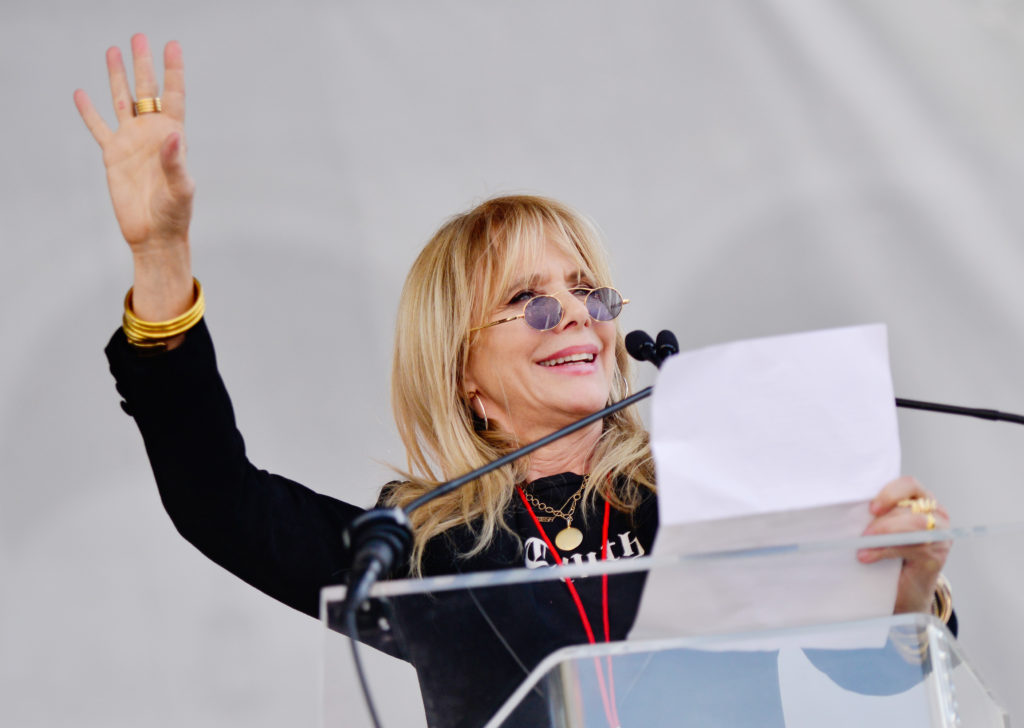
On March 17, actress Rosanna Arquette published an anti-Semitic tweet about the coronavirus and Israel. She then tried to dodge the backlash by announcing that her deceased mother was Jewish. 

The tweet, which has since been deleted, broadcast an absurd conspiracy theory that Israel knew about the virus a year in advance and hid that information to profit off developing a vaccine. She also claimed that President Donald Trump’s Jewish son-in-law, Jared Kushner, is somehow part of this conspiracy against public health.

“So Israel has been working on a coronavirus vaccine for a year already? (so they knew it) Vaccines take a long time to know if they are safe and KUSHNER OSCAR is the major investor in the new vaccine that is supposedly coming here. Lives at risk for profit,” Arquette tweeted.

This assertion was quickly debunked; Israeli scientists had been working on treatments for different viruses that could help the fight against COVID-19. Josh Kushner, Jared’s brother, is a major investor in Oscar Health, a healthcare company whose website helps users find coronavirus tests. Although a March 2020 Mother Jones report claimed that Jared Kushner was involved in the company back in 2013, this project is not for profit nor does it risk lives. The website itself is free.

After Arquette was fact-checked by Tablet, Simon Wiesenthal Center’s Rabbi Abraham Cooper asserted that Arquette’s tweet was a blood libel — which has been used to incite mass violence against the community for epochs.

Rather than apologize for her misstep, Arquette first claimed she couldn’t have incited against Jews because she herself has Jewish heritage.

“First of all I’m Not anti Semitic  I was born to a Jewish mother,” (sic) she tweeted. 


This is not the first time Arquette has been accused of disseminating an anti-Semitic trope, or of hiding behind her mother’s heritage to avoid taking responsibility. In June 2019, the actress faced criticism for singling out Jewish people for “turning their backs” on immigrant detention centers at the U.S.-Mexico border.

Having Jewish heritage doesn’t mean you can’t be anti-Semitic. Furthermore, touting that someone in your family tree is Jewish doesn’t vindicate you. 

One person who recently took this “but I have Jewish relatives” defense was the self-avowed white supremacist James Alex Fields Jr. During the 2017 white nationalist rally in Charlottesville, Va., Fields plowed his car into a crowd of counter protesters murdering 32-year-old Heather Heyer. While he was on trial, Field’s lawyers exploited the fact that his grandfather was Jewish, even going so far to claim that his grandfather’s misdeeds were responsible for the bloodshed.

But it didn’t matter if Fields’ grandfather kept Shabbat. Fields kept a picture of Adolf Hilter on his nightstand. 

Anyone is free to engage with his or her Jewish heritage. However, it’s exploitive to suddenly take it up when it’s a convenient shield against people calling out your bigotry against Jews. Even if you fully identify as a Jew, you are capable of working against the safety of your own people, just like LGBTQ people who oppose gay marriage, or women who continue to campaign against gender equality. Every marginalized community has been plagued by people who (as Arquette astutely noted), risk lives for profit.

Just as having a mother who is female doesn’t excuse a misogynist from victimizing women, having a Jewish parent or grandparent doesn’t minimize the behavior of an anti-Semite. By blaming their familial strife on a relative’s Jewishness, some — as Field’s lawyers asserted — take pleasure in using Jews everywhere as a punching bag for their anguish. 

But unlike inanimate objects, Jews punch back. We know that a bigot cannot tear down a limb of their family tree and be shielded from consequences. We also can tell that tokenizing a relative to avoid anti-Semitic accusations involves cutting a Jewish person down. That’s why Jews did not let up until Rosanna Arquette issued an apology for what she admitted were “negative careless words.”

Jewish Heritage Doesn’t Mean You Can Be Anti-Semitic Read More »

Our Elderly Need Us Now More Than Ever

We all are hunkered down. Schools, shuls and community centers are closed. Restaurants are empty. There is little joy in life right now, especially for our elderly, who have been told to stay in their homes or assisted living communities and avoid contact with anyone. They are hearing messages about how vulnerable they are and that our health care system is limited.

Our most vulnerable population needs us now more than ever.

Geriatric specialist Dr. Matthew Lefferman says, “We need to think proactively about the future and plan ahead with medications, food and supplies for the elderly.”

He adds, “Hopefully, with time, defensive panic will give way to more outward planning and assistance.” Lefferman makes house calls to serve the vulnerable community at residential homes as well as at assisted living and nursing homes. “We need to keep seniors active with virtual visits with family members and physicians,” he says.

To prevent further risk to the elderly, assisted living communities have canceled all outside entertainment and lecturers. Patricia Will, president and CEO of Belmont Village, says staff has taken “draconian measures” to enhance the health, safety and security of its residents.

“During the past several days, we have conducted many resident council meetings and explained our policies and restrictions during this crisis,” Will says. “The reaction on the part of the residents has been very uplifting, and they have applauded our efforts. They understand they are the most vulnerable.”

“Our most vulnerable population needs us now more than ever.”

To keep the atmosphere positive, Belmont has challenged its programming specialists to come up with creative ways to engage residents with purposeful learning, including tech classes on communicating with family via Skype and Facetime. Will says the residents have been “journaling to help with emotions and morale.”

Many seniors live at home with private care. Beverly Woznica and her sister, Miriam Zacuto, share in the care of their elderly mother, who is at home with full-time assistance. While Woznica attended the annual AIPAC conference in Washington, D.C., Zacuto carried the load. Upon her return, Woznica made the wise decision to avoid contact with her mother for at least two weeks. If not for Zacuto, she would have had no backup to manage their mom’s care. Even with caregivers, they both accompany Mom to doctor’s appointments, provide food, medications and all necessities for home care. This successful partnership between siblings is necessary to share responsibilities.

What about active seniors blessed with good health and who still live on their own, maintaining social connections at senior centers, volunteering, attending book groups and card games? This group has been hit hard as the thought of sitting at home in front of the television all day may be demoralizing.

Many local synagogues are offering spiritual and learning opportunities. Stephen Wise Temple streams Friday night services live on Facebook and beginning this week, the clergy will offer a daily thought for those who seek comfort and guidance. Rabbi David Woznica of Stephen Wise Temple, who is Beverly’s husband, said, “I think of our spiritual, intellectual and emotional well-being. While there are times when electronic devices can distance us, this is a time they can connect us. In addition to phone calls, many of our elderly are comfortable with Facetime and other options, and it’s a wonderful way to stay in contact with one another.”

It is during times such as these that we question whether living alone is the right answer for seniors. One major advantage to living in a community is you are never alone. You have a “built-in” family and community. Although most seniors prefer home, family members need to be aware if Mom or Dad are isolated.

There is a silver lining during this difficult crisis. It is the random acts of kindness that continue to pop up. The myriad neighbors offering help to seniors in their particular areas has been heartwarming. Facebook messages from strangers have offered pickup and delivery of any item for seniors or others in need.

Life will return to normal at some point. This is a wake-up call to plan ahead for the most vulnerable in our lives. They need us.


Sandra Heller, a senior living advocate and placement specialist, is the owner of Compassionate Senior Solutions in Los Angeles.

Our Elderly Need Us Now More Than Ever Read More »