fbpx

March 20, 2020

We Found The Perfect Synagogue. We Know That Now That We Can’t Attend.

There have been very few times when I encountered someone or something and immediately thought, “This just feels right.”It happened when I met my husband, Daniel; when I attended my first Shabbat dinner; and when we walked into our shul, Knesset Israel in Los Angeles.

Ten years ago, when I began converting to Judaism and Daniel was becoming more observant, we went to a historic synagogue in Brooklyn, N.Y., called Greenpoint Shul. The leader, Rabbi Maurice Appelbaum, was sincere and welcoming, and the shul itself was beautiful, with big stained-glass windows and lovely wooden pews. There were about 50 members, so we had the chance to get involved right away.

We sought out a similar synagogue when we landed in L.A. in 2012. We ended up shul hopping for six years. One had a fantastic rabbi and rebbetzin who became our close friends; another satisfied Daniel’s longing for a Sephardic davening; one had great Kiddushes; and another featured amazing classes. I wanted to combine them all into one mega shul but, of course, that wasn’t possible.

We felt so lost without a shul of our own for so many years that by the summer of 2018, we were ready to pack up and leave L.A. Then I felt we needed to check out a shul near us called Knesset Israel.

Attending on a Shabbat morning, a “this is right” feeling swept over me. There was a hand-carved wood bimah, old-school paneling on the walls, and a vintage Israeli flag. The rabbi, Jason Weiner, was an incredible orator with a warm personality who reminded me of Appelbaum. At Kiddush, everyone was so friendly. The vegetarian cholent was the best I’d ever tasted.

We fell in love with Knesset Israel. We became consistent about our synagogue attendance. Eventually, I joined the board, was appointed the president of programming and helped lead the women’s group.

I learned the amazing history of the shul. It was started in 1956, and the vast majority of the founders were Holocaust survivors. It was a Conservative shul, and it became Orthodox to adjust to the changing neighborhood. Today, it’s the only shul south of Cadillac Avenue that’s still part of Pico-Robertson.

We fell in love with Knesset Israel. … Our shul is a place where everybody matters.

One day, when we were talking to Weiner, we mentioned Appelbaum and how much Knesset Israel reminded us of the Greenpoint Shul.

“Rabbi Maurice Appelbaum?” Rabbi Weiner said. “He was my chavruta.”

That explained one of the reasons we fit in there.

Our shul is a place where everybody matters. The congregants rotate leading the davening, and if you’re a newcomer, you can bet that you’re going to get an aliyah. On Shabbat, Daniel sings “Ein Keloheinu” in a Sephardic tune, and all the little kids chant the Ashkenazi version of “Adon Olam.” One Chabadnik member leads a Chasidic class, and we learn about a variety of great Jewish leaders from different backgrounds during seudah shelishit.

We have had to take a break from Knesset Israel lately, as has everyone, because of the coronavirus. While I was sad to see the email telling us the shul would be closed for Shabbat, we were proud that Weiner was one of the community leaders making that tough decision in an effort to combat the spread of the virus and save lives.

Throughout our time in isolation, I’ve been grateful to receive emails, phone calls and texts from fellow congregants offering support. We know that even though we’re isolated, we’re in this together. And one day soon, God willing, we’ll be davening with the Torah, catching up on one another’s lives, and eating that delicious cholent again. When we go back to our new normal, we hope that it will feel like it always has: just right.


Kylie Ora Lobell is a Journal contributing writer.

We Found The Perfect Synagogue. We Know That Now That We Can’t Attend. Read More »

B’nai B’rith Announces Emergency Fund for Coronavirus Aid

B’nai B’rith International announced in a March 19 press release that it’s launching an emergency fund to provide aid against the coronavirus outbreak.

According to the press release, B’nai B’rith is diverting $10,000 from the organization’s Disaster Relief Fund toward the cause.

“The funds we raise will go to international assistance to help struggling communities around the world,” the press release states. “As an international organization, we will work with our members and supporters across the globe to determine the most urgent needs and best meet them.”

The Journal’s Debra Nussbaum Cohen previously reported on how various Jewish free loan associations are ramping up efforts to make capital available to small businesses that are adversely affected during social distancing as well as to those who are having trouble paying medical bills. Some, such as San Francisco’s Hebrew Free Loan Association (HFLASF), are offering interest-free loans of up to $10,000.

“By offering this type of support, it provides the financial help people will desperately need right now, and also gives everyone who hears about it a sense of emotional support — that there are agencies willing to provide this kind of relief,” HFLASF Executive Director Cynthia Rogoway told Cohen.

B’nai B’rith Announces Emergency Fund for Coronavirus Aid Read More »

The Israeli Nurse Treating COVID-19 Patients

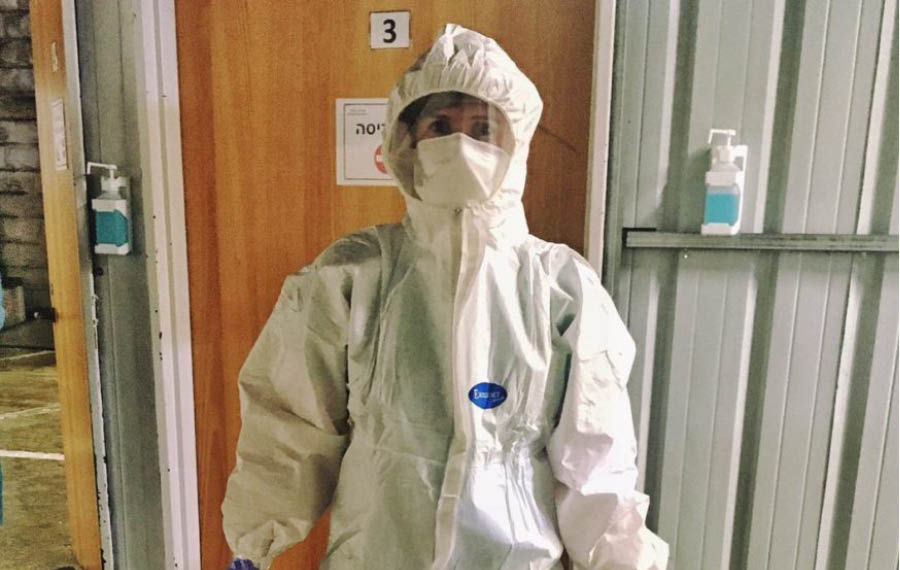
When 32-year-old Rachel Gemara volunteered for the new COVID-19 ward in Jerusalem’s Shaare Zedek Medical Center at the end of February, she had no idea what she was getting herself into. At the time, only 15 people had been diagnosed with the novel coronavirus (COVID-19).

“We were being very careful and people were being quarantined,” she said. Her father, a high school principal with no medical background, told her months earlier that what was happening in Wuhan, China, would soon spread throughout the world. But, Gemara said,  “I didn’t think it was going to grow.”

Trained as an oncology nurse, Gemara left her own ward to volunteer for the newly formed COVID-19 department. She said unlike in many of the hospitals in Italy, where staff had to be forced to transfer to COVID-19 units, doctors and nurses at Shaare Zedek readily volunteered. “I’m proud to be part of that kind of system,” she said.

The ward has about 40 staff members and can house 20 patients. Within three weeks, however, the staff was told that another ward would be built. As of March 19, Israel had 529 confirmed cases, but the number was ballooning at a rate of about 100 a day. Two were in critical condition. On March 20 Israel reported its first death due to the virus — an 88-year-old man.

The virus’ contagion means that patients are isolated from the health workers. Almost all of the care is done virtually. Patients wear sensors on their chests that constantly monitor their vital signs. The results are broadcast on a screen in a separate room for staff that Gemara refers to as the headquarters. Medications are passed through a special glass door. Occasionally there is a need to go into the room to perform hands-on tasks, but the staff take care not to stay inside for longer than is absolutely necessary. Each patient has a video intercom and most of the care is conducted via video conference. “We’re very grateful for such advanced technology,” Gemara said.

Gemara credits the other patients, those with mild symptoms, as holding down the fort. Empathizing with the nurses’ need to maintain distance, the moderate patients have become surrogate caregivers for the older, more critical ones. “They’re on the inside and we’re on the outside,” Gemara said.The younger patients help the older ones to call their families, readjust their oxygen masks or fluff their pillows. “They’re angels. It’s heartwarming to watch. They feel like they’re a family because they’re so distanced from their real family.”

The absence of family, Gemara said, is the most painful part of the entire situation. One of her patients is an elderly man in critical condition, who may not survive. (Editor’s note: After this article was posted, the man mentioned here is the one who passed away on March 20.) “That they have to end their lives alone is devastating,” she said.

Tiredness seeping into her voice, Gemara admitted she is overwhelmed. “Every time I come in to my shift there are more and more patients.”

Nonetheless, there’s nowhere she’d rather be.

“I want to save lives.”

Update: This article has been updated to reflect the 88-year-old man who passed away on March 20 – marking Israel’s first fatality from the virus. 

The Israeli Nurse Treating COVID-19 Patients Read More »

China Rabbi Says Synagogue Shutdowns Shielded Congregants From Coronavirus

(JTA) — A rabbi in China who urged the members of the Chabad community there not to congregate for worship said the concession shielded them from the coronavirus.

“Throughout all the 13 Chabad houses in China and Hong Kong, not one community member contracted this virus. And the reason is because they listened,” Shimon Freundlich, a Chabad emissary in Beijing, said in a voice note he sent out Friday, referencing government orders not to gather with anyone outside household members.

Freundlich said his message was in response to the many questions he has received about conditions under which it would be safe to hold a minyan, the quorum of 10 Jewish men required for some prayers in Orthodox Judaism.

Theoretically, “if it’s done in a certain way, perhaps it would be possible, but it’s not practical,” he said of holding a minyan at a time when the virus has infected hundreds of thousands of people in dozens of countries since its appearance in China late last year.

Freundlich said the issue is “pikuach nefesh,” Hebrew for a situation where saving a human life supersedes religious rules and practices.

“Listen to the poskim, listen to the dayanim and stay home,” he said, using the Hebrew words for makers of religious rules and rabbinical judges.

“You think you’re a ‘groiysse chochem’ [Yiddish for ‘great sage’] that you know better than the doctors?!” he asked. “All the scientists in the world who are telling you how dangerously quick, fast this virus spreads?!”

China Rabbi Says Synagogue Shutdowns Shielded Congregants From Coronavirus Read More »

david suissa podcast curious times

Pandemic Times Episode 5: How do we get our lives back?

New David Suissa Podcast Every Morning at 11am.

How do we manage our lives during the Coronavirus crisis? How do we keep our sanity? How do we use this quarantine to bring out the best in ourselves? Tune in every day and share your stories with podcast@jewishjournal.com.

Pandemic Times Episode 5: How do we get our lives back? Read More »

Living in Petri Dishes, We Must Flatten the Curve

Earlier this month, Pat James, 77, started to feel sick in the duplex he shared with his wife, Jean, at the Texas Masonic Retirement Center in Arlington. High fever. Wheezing. Last Tuesday, March 10, he was checked into a hospital. As the entire Utah Jazz NBA team and its traveling party were tested for the coronavirus (COVID-19), James wasn’t.

Until Saturday, March 15.

The next day, he died.

On Tuesday, March 17, his family got the test results. Yes, he had been infected.

From Washington state to Georgia, we have created a heart-wrenching de facto triage in society in the face of this catastrophe. The people who changed our diapers and cheered us at graduation are at the bottom: our precious parents and grandparents.

As the federal Coronavirus Task Force quarantines senior care centers as adult children wave to their elderly parents through windows, we must fix something devastating happening behind closed doors. Where they once played bingo, our parents and grandparents now live in potentially toxic Petri dishes, under the same roof as infected peers, too often without adequate testing, isolation or strategy to “flatten the curve” and slow the spread of the devastating coronavirus. We must widen testing to include the elderly and chronically ill in centers, and we must better isolate and treat them if they’re positive.

About 15% of the U.S., or 49 million people, is 65 or older, an at-risk group for fatality from COVID-19. About 3%, or about 1.5 million, live in skilled nursing facilities. There are another estimated 28,900 assisted living facilities with 811,500 residents. In Jewish nursing homes, residents in quarantine, like in other homes, struggle with loneliness and confusion.

With the current triage as it is, the virus will spread, as it has in King County, Wash. In a report released on March 18, the Centers for Disease Control and Prevention (CDC) said many of the 29 deaths linked to Life Care Center in Kirkland, Wash., were because sick workers flowed through many centers in King County, as the virus went undetected. Workers and residents went without testing for too long, celebrating Mardi Gras in late February, with family, patients and staff packed into a room, as a band played “When the Saints Go Marching In.” New patients, later dying from COVID-19, were admitted after Life Care knew it had infections.

In Seattle, Pam Norick, who has spent a career working in global health, has parents in a nearby assisted living center. She said, “In King County and nationally, as the federal Coronavirus Task Force wisely puts senior facilities under quarantine, there is a potentially deadly situation kindling inside the centers.”

She is concerned too many of these facilities are not testing their residents for the deadly coronavirus virus, even when the virus is known to be inside a facility. Today, she argues, there is insufficient capacity and inadequate protocols for testing patients and residents in these care facilities. “If coronavirus is present, many of our loved ones, living inside these now closed off centers, are sitting ducks needlessly vulnerable to infection and death,” she said.

Even if tests are available, the current protocol is to test only seniors and the chronically ill who exhibit symptoms of the virus. “At my parents’ center,” she said, “we were lucky to have CDC on site briefly, and a select group of residents were tested, a significant number of whom were without symptoms — but who still tested positive. My parents’ center was then able to redouble its quarantine efforts.

“All of the vulnerable residents and patients in these centers and their health care workers deserve to be tested so the spread of the virus can be managed, especially among the elderly and chronically ill who are already so vulnerable with weakened immune systems. We must save their lives.”

She has three recommendations she sent the White House Coronavirus Task Force this week, and we need to implement them: prioritize the chronically ill and elderly in facilities for testing; do on-site testing; and test new patients entering facilities and inform them if the facility is coronavirus free.

This is very personal to many of us. My parents are healthy in their 80s, living in Morgantown, W.V., with their 20-something grandchildren, one of them a nurse, but we are hypervigilant they don’t fall or fall ill. My father survived the Bengal famine of 1943 in India. My parents lived through World War II and India’s war for independence. I want them, and all of our parents, to survive the quarantine of 2020.


Asra Q. Nomani is a former reporter for the Wall Street Journal. With others, she has started an all-volunteer Coronavirus Civilian Task Force to advocate for health education and community building. Coronavirus Civilian Task Force with: citizenstaskforce.org

Living in Petri Dishes, We Must Flatten the Curve Read More »

Bernie Sanders Calls for U.S. to Rescind Iran Sanctions Because of Coronavirus

Sen. Bernie Sanders (I-Vt.) called for the Trump administration to rescind sanctions against the Iranian government, to help the country deal with the coronavirus.

Sanders tweeted, “Iran is facing a catastrophic toll from the coronavirus pandemic. U.S. sanctions should not be contributing to this humanitarian disaster. As a caring nation, we must lift any sanctions hurting Iran’s ability to address this crisis, including financial sanctions.”

Former Deputy National Security Adviser Ben Rhodes, who served in the Obama administration, similarly tweeted, “It is a moral abomination that the United States is continuing to enforce sanctions on Iran while its people die because of a virus that threatens all humanity.”

Some on Twitter disagreed with Sanders and Rhodes.

Foundation of Defense Democracies senior adviser Richard Goldberg, who previously served on the National Security Council during the Trump administration, tweeted, “The Islamic Republic of Iran is a moral abomination. Actually it is a virus and many have died from it for decades. We need to counter the Islamic Republic virus in addition to the new coronavirus.”

Pro-Israel activist Arsen Ostrovsky similarly tweeted, “Iran has consistently sought to circumvent sanctions & use JCPOA money to abuse human rights and sponsor global terror. Seriously, have you met a terrorist, dictatorial regime you did not like yet @BernieSanders?”

On March 17, Secretary of State Mike Pompeo announced further sanctions against nine entities and three individuals in Iran, arguing they “provide revenue to the regime that it may use to fund terror and other destabilizing activities, such as the recent rocket attacks on Iraqi and Coalition forces located at Camp Taji in Iraq. Our sanctions will deprive the regime of critical income from its petrochemical industry and further Iran’s economic and diplomatic isolation.”

The rocket attacks, which occurred March 11, resulted in two Americans and one Brit dead. In response, the U.S. launched strikes against Kataib Hezbollah the next day, the Iranian-back Shia militia group believed to be behind the attacks.

Iran’s foreign minister, Javad Zarif, argued in a March 18 video message that the Trump administration’s sanctions have hindered Iran’s ability to fight the coronavirus. “The economic siege imposed on us impedes all legitimate trade and deprives us from our own resources — the ones necessary to address the needs of our people, including their health and livelihoods,” Zarif said. “Even amid this pandemic, the U.S. government has fully refused to lift its unlawful and collective punishment, making it virtually impossible for us to even buy medicine and medical equipment.”

A U.S. official told Reuters the Trump administration doesn’t think Iran can “be trusted to channel whatever money it would gain from the easing of pressure toward humanitarian activity. The likelihood is the elites will steal it and/or funnel it toward malign activity.”

There have been at least 1,135 coronavirus deaths in Iran, although the World Health Organization believes the actual death toll is five times higher than that, according to Foreign Policy. Iran’s vice president as well as several other government officials and members of parliaments have tested positive for the virus.

Bernie Sanders Calls for U.S. to Rescind Iran Sanctions Because of Coronavirus Read More »

Trump Administration Offers $1 Million in Funding for ‘Marginalized’ Israelis

WASHINGTON (JTA) — The Trump administration is offering up to $1 million in funding for projects that accelerate full inclusion for “marginalized groups” in Israel, naming among them Ethiopian and Arab Israelis.

“Program activities should focus on addressing the barriers to economic opportunities in marginalized groups, particularly the Arab-Israeli and Ethiopian communities, with a specific focus on political and civic engagement,” said the offer posted Friday by the State Department’s Bureau of Democracy, Human Rights and Labor.

It says preference will be given to proposals that allow local organizations to take the lead.

Trump Administration Offers $1 Million in Funding for ‘Marginalized’ Israelis Read More »

Coronavirus Storytime: Josh Gad Reads Children’s Books on Twitter

Josh Gad, whose voice is known to millions of kids as the voice of Olaf the snowman in “Frozen,” has given parents a break by entertaining their homebound youngsters with a daily story. Since March 19, Gad has read a children’s picture book on Twitter, among them “The True Story of the 3 Little Pigs,” “The Day the Crayons Quit,” and “The Giving Tree.”

“I’ll try to provide at least 10 minutes of daycare to you and your families a night while we’re going through this unprecedented global event,” Gad, the father of two, said in one video. “Just trying to bring you all a dose of sanity and find a little sanity for myself,” he said in another, before addressing the adult viewers.

“Thank you all for quarantining,” he said. “Those of you watching this at a beach or a nightclub, please stop. Go home and keep yourself and everyone else safe. Even if you yourself aren’t displaying symptoms you can still infect others. I’m wishing you all a safe and sane ride through this unexpected detour.”

Gad can also be seem reprising Olaf in “Frozen 2,” now streaming on Disney+ three months ahead of schedule.

Coronavirus Storytime: Josh Gad Reads Children’s Books on Twitter Read More »