fbpx

January 2, 2020

The Power of the Second Chance

In honor of the completion of the 7 1/2-year cycle of Talmud study this month, and the publication of its new translation of the Talmud, Jerusalem-based Koren Publishers recently donated an entire set of its Talmud to Cedars-Sinai Medical Center’s chapel. To help mark the event, we unveiled the original luchot (tablets) of the Ten Commandments used in the movie of the same name. Director-producer Cecil B. DeMille had these tablets carved from stone of the Sinai desert, and in the 1956 movie, Charlton Heston, who played Moses, held them aloft. DeMille later gifted them to Mount Sinai Hospital (before it merged with Cedars of Lebanon).

At our event, the tablets were displayed in our chapel during a keynote lecture by Rabbi Meir Soloveichik, director of the Straus Center for Torah and Western Thought at Yeshiva University and rabbi at Congregation Shearith Israel in Manhattan. Soloveichik argued that the famous Rembrandt painting of Moses “breaking the tablets of the law” is actually a depiction of him holding up the second set of tablets, reminiscent of the way the Torah is held up in synagogues after it is read.

Soloveichik maintained that these second tablets actually were holier than the first, which Moses smashed, because they embody a central idea of Jewish history — “the ability to come back after disaster, to not lose hope after all we had was shattered, to re-create anew what has been destroyed.” The second tablets affirm faith in our ability to achieve consolation and re-creation after desolation. While the first tablets were entirely a product of the Divine, the second tablets required Moses’ human effort in partnership with the Divine.

Soloveichik pointed out that although today it is customary to step on a glass at a Jewish wedding, in the past, a glass would be thrown down to the ground at the end of the wedding ceremony, symbolically shattering the tablets. Soloveichik suggested that this was intended to remind us of the rebuilding that followed the breaking of the original tablets, and that despite past tragedies, we must always rebuild and re-create Jewish homes. 

Soloveichik linked this concept to our celebration of the Talmud, “the first tablets were the ethereal production of the divine, but the second helped create an oral law through extraordinary human intellectual exertion.” The Talmud represents a covenant renewed through human initiative; tablets of the law created not only by the Divine but in partnership with painstaking human intellectual effort. Re-creation after disaster is itself the foundation of the oral law.

“While the first tablets were entirely a product of the Divine, the second tablets required Moses’ human effort in partnership with the Divine.”

Indeed, after the Holocaust, Jewish refugees asked the leaders of the American armed forces to help publish a Talmud. Although its primary role isn’t publishing books, the U.S. Army saw this as a way of preserving Jewish civilization in the face of totalitarian forces of evil. And so, in 1948, the U.S. Army used a printing plant in Heidelberg, Germany, which during the war had printed Nazi propaganda, to publish 500 sets of “the U.S. Army Talmud.” Soloveichik read us the moving preface from his set of this Talmud: “This edition of the Talmud is dedicated to the United States Army. The Army played a major role in the rescue of the Jewish people from total annihilation. … This special edition of the Talmud, published in the very land where, but a short time ago, everything Jewish and of Jewish inspiration was anathema, will remain a symbol of the indestructibility of the Torah.”

Human initiative and effort created the second tablets and the Talmud, ensuring the Talmud’s transmission and interpretation throughout the generations in the face of all we have endured. In this way, argued Soloveichik, the contents of our Talmud can be seen as even more connected to Sinai than our tablets, donated by DeMille, which were literally carved from Sinai. 

The story of tablets lost and tablets regained does not pertain only to Cedars-Sinai. Every one of us embodies the miracle of Jewish fortitude and survival. Continued talmudic study, after so many communities have been destroyed, remains a timeless force of our creativity and endurance.


Rabbi Jason Weiner is senior rabbi and director of spiritual care at Cedars-Sinai Medical Center.

The Power of the Second Chance Read More »

De Blasio Politicized Anti-Semitism — and Endangered Jews

Last week, a flurry of anti-Semitic attacks plagued New York City during the Festival of Lights. On Dec. 23 in Manhattan, an assailant reportedly punched and kicked an elderly Orthodox man, shouting, “F—you, Jew bastard!” That evening in Brooklyn, police received a report that teenagers assaulted a Jewish 6-year-old and 7-year-old. 

On Dec. 24, a group hurled a drink and anti-Semitic hate speech at a Crown Heights resident. Two days later, police arrested a woman for spitting slurs and then bashing a Jewish woman in the face with a bag.

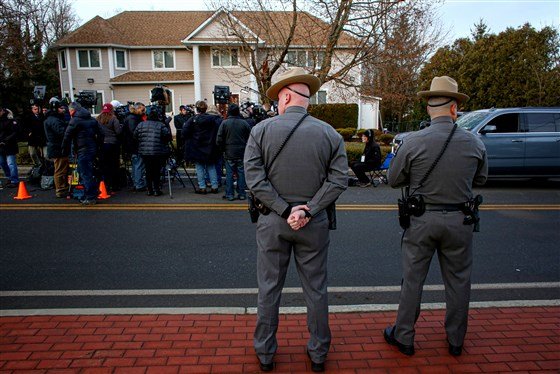
By Dec. 27, an attacker slapped three other Jewish women while shrieking anti-Semitic epithets. Hours later, a man entered the Lubavitch World Headquarters, threatening to shoot the Jews inside. On Dec. 28, another assailant carried out a similar threat. A man trespassed into a rabbi’s home and started stabbing people at a Hanukkah party. 

This pogrom is not a sudden phenomenon; it’s an escalation of assaults Jews have experienced in NYC for years. 

How did this happen? How did New York Mayor Bill de Blasio fail to stop it?

De Blasio, like many in office, only confronted anti-Semitism when he could pin it on a political rival. “The ideological movement that is anti-Semitic is the right-wing movement,” de Blasio said last June. His inability to acknowledge, let alone address, anti-Semitism without politicizing it may have contributed to the violence in his city.

“I want to be very, very clear. The violent threat, the threat that is ideological, is very much from the right,” the mayor said of anti-Semitic hate crimes, which spiked by 20% in NYC this year. Yes, right-wing hate has led to Jewish bloodshed in Pittsburgh and Poway. However, there is no evidence those individuals beating Jews in New York hold reactionary views.

It took until September for de Blasio to admit mainly youth and mentally ill people, not neo-Nazis, perpetrate assaults on Jews.

Still, days after four people were murdered in a Jersey City kosher supermarket, de Blasio continued “right washing” anti-Semitism. “The violence overwhelmingly is coming from right-wing forces, white supremacist forces, direct linear descents of Nazism and fascism and the Ku Klux Klan. That’s the reality,” de Blasio said in December, refusing to ascribe any ideology to the Jersey City shooters. However, the Anti-Defamation League uncovered numerous social media posts linking one of those assailants to the anti-Semitic offshoots of the Black Hebrew Israelites movement.

The truth is, this anti-Semitic frenzy never should have escalated to the point where these tactics were necessary.

Given the kosher supermarket shooting was 2019’s most lethal anti-Semitic episode, claims like “anti-Semitism is a right-wing force” no longer are valid. This idea is even less valid when you take into account the assailants planned to murder 50 Jewish children with a pipe bomb in the yeshiva
next door.

Yet, de Blasio continued to put politics before Jewish people’s safety.

While Jews were being beaten on his streets, the mayor scolded his conservative predecessor, Rudy Giuliani, for comments about George Soros the ADL said promoted Jewish conspiracy theories. “I know Rudy Giuliani is determined to set new lows in pathetic, spineless behavior these days — but this anti-Semitic rant is particularly dangerous,” de Blasio immediately tweeted in response.

It’s not that New York’s and Jersey City’s violent hate crimes are coming from de Blasio’s left-wing allies; however, they aren’t in the name of conservativism, either. The brutal anti-Semitism on the streets of those cities has been mostly apolitical, unlike de Blasio’s response to them.

It took until anti-Semitic assaults were occurring daily for the mayor to finally try to protect Jewish New Yorkers. After the sixth anti-Semitic Hanukkah attack, de Blasio announced he would increase police presence in Borough Park, Crown Heights and Williamsburg. The decision has raised legitimate concerns about increased police brutality in minority neighborhoods. But the truth is, this anti-Semitic frenzy never should have escalated to the point where these tactics were necessary.

De Blasio refused to acknowledge anti-Semitism as anything other than the fault of his political enemies. Unwatched, the pot boiled. Now it’s overflowing.


Ariel Sobel is a screenwriter, filmmaker and activist.

De Blasio Politicized Anti-Semitism — and Endangered Jews Read More »

Ha’od Avi Chai? Is My Father Still Alive?

Forty-six years ago, my parents took our family to Israel for my bar mitzvah. I often reflect on the amazing legacy gift they gave me in linking my Jewish coming-of-age ceremony to the city of Jerusalem. That gift still lives deep within me.

This week, we read my bar mitzvah portion, Vayigash, which contains the dramatic encounter between Joseph and his brothers. This year, with new perspectives, I have gained fresh insights into this story, which seem particularly relevant for the field of Jewish camp and for our broader Jewish community. 

After listening to Judah’s emotional plea, Joseph can no longer contain himself and he orders all of the Egyptians out of the room. Twenty-two years after being thrown into the pit, he reveals himself privately to his brothers in a cry that is “heard throughout all of Egypt, even in the house of Pharaoh.” Joseph declares, “I am Joseph” and immediately asks, “Ha’od Avi Chai — Is my father still alive?”

How appropriate to have this very question asked this particular week, when one of our Jewish community’s most impactful philanthropic foundations officially sunsets. 

The Avi Chai Foundation, established 35 years ago by Sanford “Zalman” Bernstein, has invested over $1.2 billion to strengthen Jewish education, culture, practice and peoplehood in North America, Israel and the former Soviet Union. In North America, its support has been focused on the most intensive and immersive educational experiences that exist today — Jewish day schools and Jewish camps.

Avi Chai’s initial work in Jewish camping began in 2000, with funding a study of the field, called “Limud by the Lake,” conducted by researchers at Brandeis University. The report inspired and guided much of the foundation’s support for overnight camping — developing counselors as Jewish role models, strengthening the bench of current professionals, and expanding facilities and capacity — all to deepen and broaden the camps’ lifelong impact on the Jewish identity and connection to Israel of its many participants. At the same time, Foundation for Jewish Camp (FJC), created by visionary lay leaders and business entrepreneurs Rob Bildner and Elisa Spungen Bildner, became a key vehicle and effective partner for Avi Chai’s investments in the field.  

We must carry forward the Avi Chai Foundation’s inspired work.

Together, the dream of a dynamic, growing, vibrant field has become reality. In 20 years, the number of youth, teens and college-age counselors attending one of the 300-plus Jewish camps across North America has increased by over 25% to more than 180,000 during the summer of 2019. This represents almost 20% of kids ages 4-17 growing up in households with at least one Jewish parent. Over this two-decade time span, more than 600,000 individuals have spent at least one summer in a Jewish camp!

Throughout my 10 years leading FJC, I have had the honor and good fortune to benefit from a very strong, effective partnership with Avi Chai, especially as we approached the planned sunsetting of its grant-making at the end of 2019. Working collaboratively during those years, we have found support from dedicated funders including the Harold Grinspoon Foundation, the Jim Joseph Foundation, the Maimonides Fund and the Marcus Foundation, among others, who have followed Avi Chai’s leadership to invest significantly in the field of Jewish camping. 

This past week, as I considered and reviewed my bar mitzvah portion once again, amazingly, the Torah’s relevance jumps out just at the right time, speaking to us in such a powerful, relevant way: “Ha’od Avi Chai — Is my father still alive?”

After 35 years, we must answer in a strong, affirmative way. Yes, indeed, the amazing legacy gift of the Avi Chai Foundation will live on, as we continue to help Jewish camps work their “magic” forging powerful, joyous Jewish identities and lasting connections to Israel.

Those involved with Avi Chai should be justifiably proud of what they have achieved. Indeed, they have set the standard for extraordinary funder-grantee partnerships. In addition to their significant funding over the last 20 years, their advocacy, imprimatur and thought leadership have been key catalysts for growth and vibrant change in the field of Jewish camp.  

To best express our profound gratitude, we must continue to carry forward their inspired work. May their lasting legacy still live deep within all of us.


Jeremy J. Fingerman is the CEO of the Foundation for Jewish Camp.

Ha’od Avi Chai? Is My Father Still Alive? Read More »

A Story of Media Bias

The Los Angeles Times recently reported what to some was an uncomfortable fact. In a front-page story about the horrific attack at a rabbi’s house last week in Monsey, N.Y., the Times reported the attacker was black. It quoted Rabbi Marvin Hier, founder and dean of the Simon Wiesenthal Center and Museum of Tolerance, who said the rash of attacks in the New York area has been perpetuated by African Americans.

On one level, you have to give credit to the L.A. Times for having more journalistic courage than The New York Times. In story after story, the N.Y. Times didn’t identify the attackers as black. Why is this important? As the Talmud states, “knowledge of the illness is half of the cure.” If the Jewish community is to stop this newest round of hatred, it needs the partnership of responsible black leaders. With their help, we can better understand the challenge and find solutions. 

However, hiding the identification of any attackers as being black will not solve the problem. (Note: Many mainstream publications and broadcast media have a policy to not specify the race of a suspect unless it is germane to the story.)

L.A. Times reporters Maria La Ganga and Laura King faced a dilemma. This detail didn’t fit into the neat box that says “all anti-Semites are white nationalists.” In response to that dilemma, the reporters contacted Rebecca Pierce, whom the reporters called a Bay Area writer and filmmaker familiar with the intersection of Judaism and challenges of the black community. Pierce is a black Jew and a supporter of anti-Israeli measures such as the boycott, divestment and sanctions movement.

Clearly, Pierce is someone whose views are an anathema to the majority of American Jews. Now, the story had a new angle: Pierce said she was troubled that increased police presence in Jewish neighborhoods would make black residents uncomfortable. The subtle message was that Jews defending themselves might be racist.

“I had thought that after the Times came under new management, the havoc inflicted by its Chicago owners would be undone and the Times would return to the glory days of real journalism.”

Neither La Ganga nor King interviewed a Jewish leader from New York. They didn’t quote a resident of Monsey, where the attack occurred. (The story, which ran in the Dec. 30 edition, had a local angle. La Ganga reported from L.A. and King from Washington, D.C.) The reporters could have sought out black Orthodox Jews in L.A. or New York and asked for their reactions. Instead, they contacted an outlier to Jewish life, someone who lives in San Francisco to comment on black and Jewish relations in New York.
This not journalism. It’s not even “fake news.” It’s a report with the agenda of “Oh, we found out the uncomfortable truth that blacks are attacking Jews, and now we even found a black Jew who says, “Don’t defend yourself because you might upset me.’”

One might wonder if there is a responsible adult at the L.A. Times who would ask, “Is this really the story? Maybe we should interview some of the Jews in New York who were attacked. Why are we searching out an anti-Israel propagandist from San Francisco to opine on hatred in New York? And if we are quoting her, at least, why not identify her as a black Jew whose views are hostile to Israel and most Jews?”

I had thought that after the Times came under new management, the havoc inflicted by its Chicago owners would be undone and the Times would return to the glory days of real journalism. In an era of Facebook feeds and political polarization, we desperately need this. As Californians, we look to the Times to inform us, challenge us and even anger us with quality journalism.

The rise of anti-Semitism is deeply troubling. We desperately need greater wisdom to better understand how to face this challenge. Sadly, the Times failed in its mission as a news outlet to do this, and failed us, the readers.


Rabbi David Eliezrie is the president of the Rabbinical Council of Orange County. His email is rabbi@ocjewish.com.

A Story of Media Bias Read More »

The Symbols Behind the Hate

I’m getting dizzy. A string of anti-Semitic attacks is putting all of us on edge. I’m on information overload — the horrible facts, statistics, “thoughts and prayers,” condemnations, defiant responses, etc. What can I add to the conversation?

Perhaps just one thing: some reflections on symbolism. 

I guess I’m obsessed with symbols. I want to believe that life is more than what we see, that there’s some mystery and meaning behind the dry facts, even dry facts about terrifying hate crimes.

Let’s start with the 2018 Tree of Life synagogue massacre in Pittsburgh.

There’s something disturbingly symbolic about attacking Jews as they pray in solemn observance. They’re sitting ducks. And an attack on their house of worship symbolizes that Jews everywhere ought not feel safe in the one place they’re supposed to be able to congregate.

And then there was the kosher market shooting in Jersey City, N.J., where two Jews — a mother of three who was co-owner of the store, and a rabbinical student — were killed on Dec. 10. The student was a shopping duck. The symbolism was hard to ignore because the message was clear: Jews won’t even be safe in a market.

Next, there’s the sidewalk. It seems that every week, Jews are attacked on New York sidewalks. They’re walking ducks. Everyone ranging from corporate executives to the homeless walks on the sidewalk but the symbolism is obvious: Yes, the sidewalks are for everyone except religious Jews, who ought to stay home.

That is, until they’re targeted at home, as were the victims in the Dec. 28 machete attack in Rabbi Chaim Rottenberg’s home in Monsey, N.Y. If a Jew can’t even be safe in his or her home, there’s only one symbolic conclusion: The Jew — his or her mind, body and soul — ought not to exist at all.

All hate crimes are abhorrent but there’s something particularly cowardly about attacking the pious.

And what about Jews themselves? What’s our symbol? Well, there are many. But in the case of the Orthodox Jews in distinguishable Jewish attire on the sidewalk who get sucker-punched in the back of their heads, I see only one symbol: unguarded piety.

All hate crimes are abhorrent but there’s something particularly cowardly about attacking the pious, whether Christian worshippers in Sri Lanka or a Jew on the way to afternoon prayers in Crown Heights, N.Y. Some Jews in Monsey reportedly have armed themselves with assault rifles but all I see is the sheer cowardice of their attackers.

New York’s response has been to ramp up police presence in Jewish neighborhoods. This, too, is symbolic in two ways: First, the fact that, like in France or Israel, Jews need police presence to ensure their safety is a crucial turning point in our history in the United States.

Second — and this is important —  increased police presence, even if it’s to protect Jews, could be construed by some as symbolic of possible police harassment of others. One friend posted on Facebook this week about a conundrum of identity versus morality: As a Jew, he was clearly grateful about police presence but as a social justice warrior, he was concerned that the police would racially profile black people in the neighborhoods where Jews had been beaten up, slapped and stabbed.

My final column of 2019 was dedicated to Nessah Synagogue in Beverly Hills. My first column of 2020 was spurred by Congregation Netzach Yisroel in Monsey. Whether spelled “Nessah” or “Netzach,” the word means “eternal.”

The prophet Samuel understood symbolism. He wrote, “Netzach Yisroel Lo Yishaker” (1 Samuel 15:29), meaning, “The eternity of Israel will not lie.”

No, we won’t lie down. 

And we won’t stop sitting in a synagogue. 

Or shopping in a kosher market. 

Or walking on the sidewalk.

Or celebrating Judaism at home. 

In fact, a few hours after the attack in his home, Rottenberg led dozens in thunderous prayer and song as a way to “close” Shabbat. Why? Because he believed the incident was “an open miracle,” given how much worse it could have been. 

Clarity rooted in gratitude. There’s nothing more eternal than that.


Tabby Refael is a Los Angeles-based writer.

The Symbols Behind the Hate Read More »

Jan. 3, 2020

Click here for fullscreen.

Check out our archives here. 

Jan. 3, 2020 Read More »