fbpx

January 2, 2020

Trauma and Hope in Holocaust Documentary ‘We Shall Not Die Now’

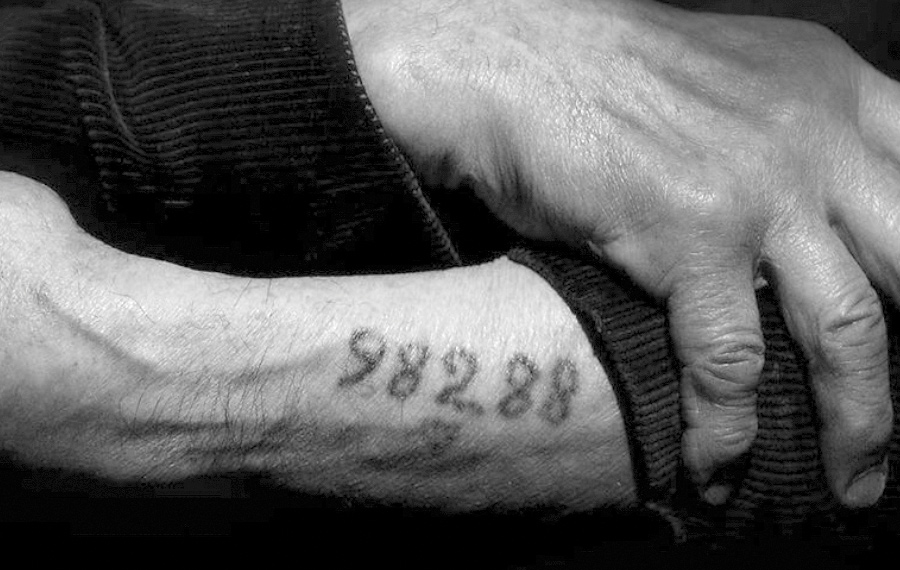
Ashton Gleckman has been obsessed with the Holocaust ever since he attended an Anne Frank exhibit at the Children’s Museum of Indianapolis when he was 6 years old. Watching the films “Schindler’s List” and “Defiance” and discovering that his great-uncle was one of the liberators of Buchenwald, intensified his interest. In 2019, at 18, Gleckman made his debut film about the Holocaust titled, “We Shall Not Die Now.” The documentary is haunting, disturbing and skillfully made, comprehensive in its scope and clear in its message.

“I can’t wait 20 years because survivors of the camps are in their 90s now,” Gleckman told the Journal. “I felt a strong need to get out everything I’ve been thinking about and put it on film.” 

In making the documentary, Gleckman used archival photographs and footage — including some from Claude Landsmann’s “Shoah”— obtained from the United States Holocaust Memorial Museum archives. He combined those with 25 interviews he conducted with survivors and their families, perpetrators, liberators and historians. “I wanted to tell the story linearly and take the audience on a journey through the horrors of these events and blend the perspective of the survivors with information about how the Holocaust was engineered,” he said. 

Gleckman obtained the interviews at survivor appearances, through Facebook and email. They included Cantor Moshe Taube, rescued by Oskar Schindler; Ben Ferencz, the lead prosecutor at the Nuremberg trials; and Holocaust scholar Michael Berenbaum. “I didn’t get turned down once,” he said. “Survivors want to tell their stories. They’ve made it their obligation to write books and speak at events because they feel that talking about the Holocaust helps us to learn from it and make the world a better place.”

After an intensive research period, Gleckman began interviewing in March and finished with a trip to Poland to film at concentration camps. He described standing alone with his camera in an empty field at Treblinka, at the exact spot where the gas chamber was: “It was a life-changing experience, to say the least.” 

To prepare for the project, he took an online filmmaking course with Ken Burns, his role model, and sought donations for production and travel expenses. “I thought about crowdsourcing but decided I wanted to do it by myself. The flights were the biggest expense,” said Gleckman, who lives with his parents and younger sister in Carmel, Ind. “In Poland, I stayed with families I met on Facebook.”

“I can’t wait 20 years because survivors of the camps are in their nineties now. I felt a strong need to get out everything I’ve been thinking about and put it on film”—Ashton Gleckman

His cyber-aided, do-it-yourself approach continued in the editing process. He learned editing via YouTube tutorials and on the Master Class website. “But it was still a lot of trial and error,” he said. He also collaborated on the music for the film with Michael Frankenberger and Benjamin Wallfisch, whose grandmother appears in the film. She played the cello in the orchestra at Auschwitz.

Now 19, Gleckman has been playing music since he was 7 and composing for the past six years, with three albums and a symphony to his credit. As a high school sophomore, he got a job working for Oscar-winning composer Hans Zimmer at his studio and began to score feature and short films. “I never went back to school and I don’t plan on it,” he said. 

He has found filmmaking to be complicated and challenging. But he’s enjoying the problem solving, collaboration and travel his inaugural effort required. He plans to shoot his next film, a five-part miniseries about the Battle of Gettysburg, in the spring. He doesn’t rule out making more films about the Holocaust. “There are infinite amounts of stories to tell, maybe as narrative dramas,” he noted. “I have a lot of ideas now.”

Although Gleckman is Russian-Jewish on his father’s side, his mother is not Jewish and he has never practiced Judaism. He does feel a strong connection to Jewish culture and his lineage, however, “especially after making this movie. I’m definitely interested in learning more about [Judaism] now,” he said. “I definitely want to go to Israel.”

Another goal is meeting filmmaker Burns. “I wrote him a handwritten letter and got a call from his producer. I haven’t spoken to him directly yet,” he said. “I hope I get to.”

Right now, Gleckman wants to make sure as many people see his film as possible. “We’re going to make it available for free on YouTube’s Timeline World History channel as well as Amazon and streaming platforms,” he said. “And we have a trimmed-down, 50-minute educational version and study guide that we’re making available to schools”. 

Gleckman pointed out the documentary’s relevance in light of the rise in hate in the world. “The Holocaust was not an isolated event, and it’s still going on in different forms, like it did in Rwanda and Cambodia and now Syria,” he said. “We don’t seem to learn from the past, and this film is dedicated to trying to remember the past in order to inform the present.”

He hopes viewers come away with “a sense of hope and a sense of vigilance. We have to stand up. The Holocaust happened because people let it happen. Enough
is enough.”

“We Shall Not Die Now” is available on Amazon Prime video.

Trauma and Hope in Holocaust Documentary ‘We Shall Not Die Now’ Read More »
Beethoven Meets Philip Glass at the Wallis

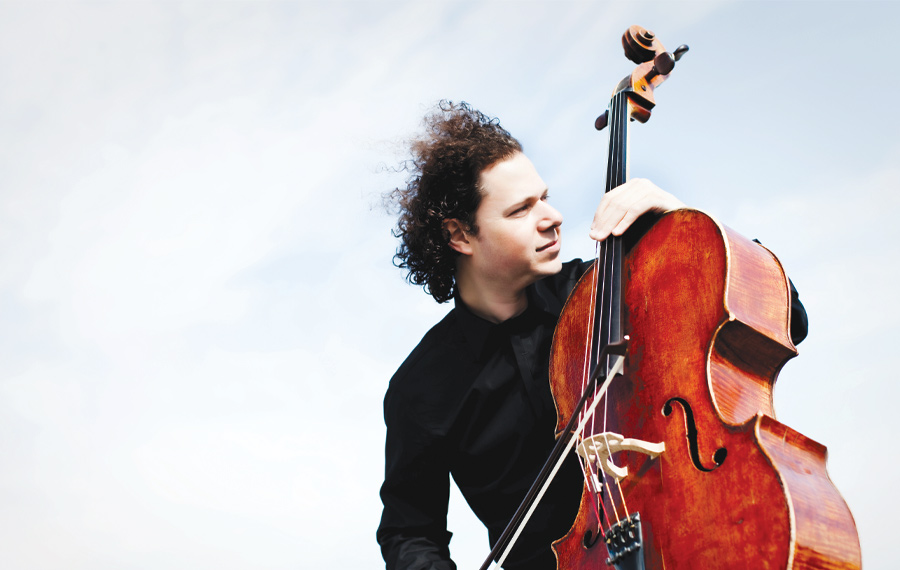
A pianist hailed by Britain’s The Independent for her “majestic originality” and a cellist dubbed by The New York Times as “ferociously talented,” will perform the works of two composers at the Wallis Performing Arts Center on Jan. 9.

Pianist Simone Dinnerstein, 47, and cellist Matt Haimovitz, 49, will perform — solo and jointly — compositions by Ludwig van Beethoven and Philip Glass.

The composers were born more than 150 years apart yet both profoundly influenced the dominant musical styles of their eras. 

The Jan. 9 concert officially celebrates the 250th anniversary of Beethoven’s birth, although purists may object that nobody knows the exact date of Beethoven’s birth. The first extant record lists his baptism as Dec. 17, 1770.

Haimovitz was born in the coastal city of Bat Yam in Israel, but at age 5 moved with his parents to the United States. He made his musical debut at 13 with the Israel Philharmonic, conducted by Zubin Mehta. Later, he joined the all-star string quartet with violinist Isaac Stern, violinist-violist Pinchas Zukerman and cellist Mstislav Rostropovich.

“Beethoven was the first modernist,” Haimovitz told the Journal. “He transformed the often unintelligible music of his time into the language of the Enlightenment.”

Haimovitz and Dinnerstein met at a Canadian awards ceremony in Ottawa, and a professional linkup followed. Both said they were profoundly influenced by the music of Johann Sebastian Bach; Dinnerstein won early recognition for her interpretation of Bach’s Goldberg Variations.

“Beethoven was the first modernist. He transformed the often unintelligible music of his time into the language of the Enlightenment.” — Matt Haimovitz

Today, she lives with her husband and 5-year-old son in Brooklyn, N.Y. She has created a program called “Bachpacking,” in which she takes her digital keyboard and teaching skills to elementary schools in her hometown.

Dinnerstein told the Journal constant parental nudging might account for the prominence of Jews as composers and performers of classical and popular American music in the early to mid-20th century. She added, however, that while her parents valued the arts and culture, the decision to devote her life to music was completely her own.

She also noted that today, a rising generation of Asian — predominantly Chinese — young composers and performers are very much part of the American classical music landscape.

Asked what advice she would give a parent whose child wants to become a professional musician, Dinnerstein said that the life of a solo performer requires immense self-discipline and fortitude. “It never gets any easier,” she observed. “Nothing stays static. You always have to keep exploring and growing.”

For more information and tickets visit The Wallis.

Beethoven Meets Philip Glass at the Wallis Read More »

Man of God or Fraud? Netflix Miniseries ‘Messiah’ Seeks the Truth

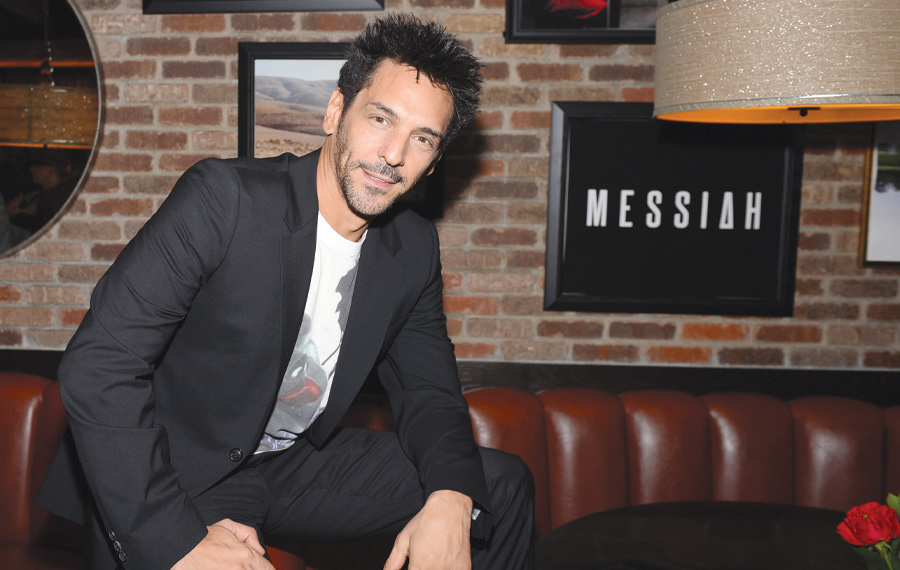
A mysterious man suddenly appears in the Syrian Desert calling himself Al-Masih and claiming to be sent by God. Credited with a series of seemingly miraculous events that go viral, the charismatic figure becomes a worldwide phenomenon. But is he a divine savior who wants to unite a divided world or a false prophet out to wreak havoc? The provocative drama unfolds in the 10-part miniseries “Messiah,” now streaming on Netflix.

The story is told from the perspectives of multiple characters, including a Texas preacher, a journalist, a Palestinian refugee and the CIA operative and Israeli Shin Bet officer who are determined to uncover the truth. Tomer Sisley, whose father was born in Israel, plays the latter, Aviram Dahan.

“The script was so well written; one of the top three scripts I’ve ever read,” Sisley told the Journal at the Los Angeles launch party for the series. “It’s so filled with subtext. The characters have all these super-charged backstories but the most interesting thing about this show is that it’s challenging for the viewers. You have to find your own truth in it; your own point of view. I think it will trigger a lot of conversations.”

Sisley speaks Hebrew and English and learned some Arabic for his role in the miniseries, which was filmed in Nashville, Tenn.; New Mexico; Washington, D.C.; and Jordan, where most of the scenes set in Israel were shot. He didn’t need to talk to intelligence agents for research. “I have a few cousins and uncles who were in the Israeli Special Forces,” he said. 

“[‘Messiah’] is challenging for the viewers. You have to find your own truth in it, your own point of view. I think it will trigger a lot of conversations.” 

— Tomer Sisley

The role required quite a bit of action, but Sisley said, “The most challenging part was acting with a 3-year-old” who plays his daughter. While shooting in Jordan, he took advantage of its proximity to Israel. “I went [to Israel] on the weekend. All my relatives are there,” he said. “I go back every year and stay for about a month.”

Although he wasn’t very observant while growing up and is even less so now, Sisley has “a very strong connection to my religion.” He lives in Paris with his family, which includes three children he has taught to speak Hebrew. 

Born in Berlin, where his family relocated for his father’s job as a research scientist in dermatology, Sisley is of Lithuanian and Belarusian ancestry on his father’s side and Yemeni heritage on his mother’s. His parents met as schoolmates in Ramat Gan, Israel, and after they split up, he moved to southern France with his father, who was offered a position there.

Sisley wanted to become an actor ever since he saw Burt Lancaster in the Western “Vera Cruz” (1954), when he was 7. Later, he studied the craft for 10 years before landing roles in French films and TV, most recently in the series “Philharmonia” and “Balthazar,” in which he plays the title role and recently directed an episode. He’s currently writing a script for another French TV series. Sisley also has a background in stand-up comedy and hopes to express his lighter side in a romantic comedy down the line. 

Otherwise, he is open to what comes next, and is ready to go anywhere for the right role. “Most of the interesting shows are not shot in Los Angeles. I’m not sure you have to live here,” he said. Although “Messiah” is his highest-profile role so far, he doesn’t consider it his big break. “I don’t know if I’ve had it yet,” he said.


“Messiah” is streaming now on Netflix.

Man of God or Fraud? Netflix Miniseries ‘Messiah’ Seeks the Truth Read More »

Anti-Semitic Graffiti Found on Two WeHo Businesses

Anti-Semitic graffiti was found on two businesses in West Hollywood in a span of three days.

According to TV station KTLA and Wehoville.com, the words “Hitler was right” and a five pointed star (perhaps an attempt to render a Star of David) were found spray-painted on The Bayou WeHo restaurant on Dec. 29. On Dec. 31, the letters “GD” and “LK” were found spray-painted with Stars of David on the Block Party WeHo clothing store; it’s unclear what the letters are supposed to mean.

West Hollywood Sheriff’s Station Service Area Lt. William Moulder told Wehoville.com that the police are investigating the graffiti and that the graffiti is “worrisome in light of the increase in attacks against Jews across the country.”

Bayou owners Matt Chase and Graham Norwood told the Journal in an email that their team removed the graffiti later on Dec. 29 and urged the perpetrator to never do it again.

“West Hollywood is too strong of a community and will always overcome these attempts at voicing hate,” Chase and Northwood wrote.

Congregation Kol Ami condemned the graffiti in a Dec. 31 Facebook post.

“We decry the anti-Semitic graffiti scribbled on two West Hollywood business including one [Block Party] owned by our member Larry Block,” they wrote. “This has no place in our city of welcome and diversity and we stand with our member and ask our neighbors and friends and family to fight this kind of hatred and bigotry and every kind of racism and bigotry everywhere and especially in our own backyard.”

West Hollywood Mayor Pro Tempore Lindsey Horvath wrote in a Dec. 31 Facebook post, “Hatred has no place in our City. We must stand together with our Jewish community members to keep them safe and protect them from harm.”

Anti-Defamation League (ADL) Los Angeles similarly said in a statement to the Journal, “The reported vandal attacks add to the anxiety the Jewish community is already experiencing in light of the recent spate of anti-Semitic incidents. ADL works with law enforcement and schools to respond to and prevent hate incidents. We encourage people to report them to us and remain vigilant.”

American Jewish Committee Los Angeles Regional Director Richard Hirschhaut told the Journal in a phone interview that the graffiti was piggybacking off prior recent anti-Semitic incidents in the Los Angeles area, most notably the vandalism of Nessah Synagogue in Beverly Hills on Dec. 14.

“Our challenge is to raise our own voices and to lock arms with our neighbors and with people we know… and with people for whom we have bridge building to do and some familiarity to create,” Hirschhaut said. “That should be a broader communal resolution for 2020 as we begin a new year that we really re-dedicate ourselves as Americans to finding common ground and exposing and rebuking and punishing the haters among us.”

UPDATE: Block wrote in an email to the Journal that his initial “feelings were [to] clean the window and move forward and probably would not have reported it but the media connected the dots to the other Hitlerspeak a week ago at the Bayou on the next block.   Hard to imagine this is 2020 and still the same saying from years back – can’t we all get along?”

Anti-Semitic Graffiti Found on Two WeHo Businesses Read More »

A Night of Female Comedy: ‘Three Jews and a Blonde’

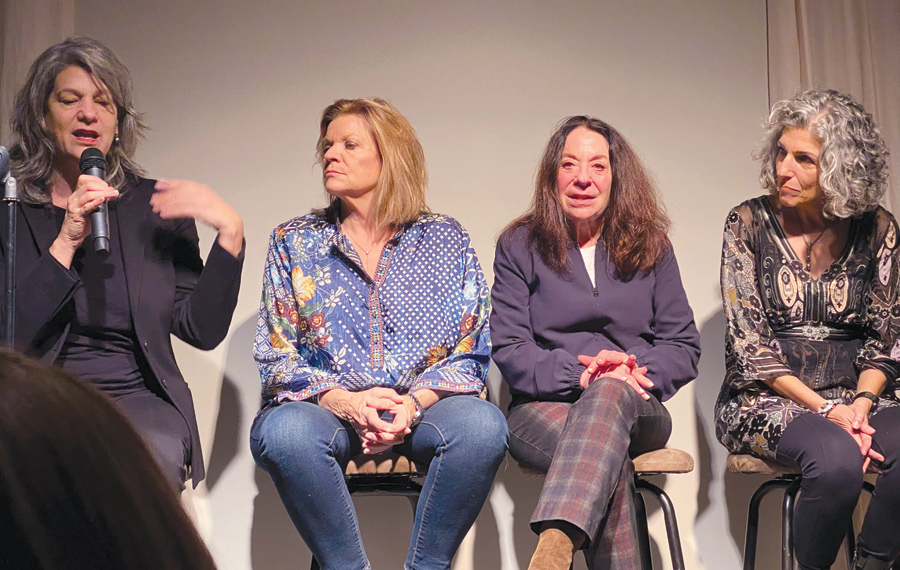
The Jewish Women’s Theatre (JWT) presented its first stand-up comedy show, “Three Jews and a Blonde Walk Into the Braid,” with two performances on Dec. 14.

JWT Artistic Director Ronda Spinak asked Monica Piper, Abby Freeman artist-in-residence and one of JWT’s first creative contributors, to put together the show. Envisioning Spinak’s JWT as women in babushkas, Piper told the Journal she initially responded, “But Ronda, I’m not Jewish enough.”

Clearly, Spinak thought differently. Over JWT’s 11-year-history, Spinak has commissioned several salon pieces from Piper, including her “A Shayna Meydele,” “Shmatitude” and “The Tip of the Icepack.”

Piper, an Emmy Award-winning writer and comedian, asked her funny friends Cathy Ladman, Sue Kolinsky and Debbie Kasper to join her in The Braid’s first night of stand-up. 

As to the title of the show, Piper said, “We knew we had the four comics and we wanted a catchy title, and we knew that Debbie wasn’t Jewish, and she was blond.”

Unfortunately, in the week leading up to the performances, Kolinsky injured her back, unintentionally changing the show to “Two Jews and a Blonde …”

The three women entertained the packed Braid salon at the Santa Monica performing arts facility, eliciting laughs and knowing nods (except for one stoic man they periodically targeted). Each mined comedy gold drawing on her personal experiences: Piper on her aging, her diminutive height and her 28-year-old son; Kasper on her mother’s uncomplimentary compliments and navigating the 405 Freeway; and Ladman’s failed attempts at getting pregnant with her Swedish husband, adopting a Chinese girl and what it’s like raising a teenager at the age of 64.

“You would never see three women on a show unless they called it ‘The Estrogen Festival’ or ‘Shiksas.’ There’s so much sexism involved.” — Debbie Kasper

Following the show, the three comics told the Journal that while they had performed on the same stage at comedy nights over the years, they had never worked together on a show. 

“You would never see three women on a show unless they called it ‘The Estrogen Festival’ or ‘Shiksas,’ ” Kasper quipped. “Thirty years later, 40 years later, you go out on the road, nothing’s changed. There’s so much sexism involved. I feel like there’s just a little movement of the needle moving toward perhaps some equality in the comedy field and in the world. But it is slow in evolution.”

Piper added, “I can’t tell you how many men comics would say to me, ‘You’re funny for a woman.’ ”

Kasper credits Piper as one of her early influences. “Her act helped shape my act. Very theatrical characters. She was one of the women who inspired me.”

Both Kasper and Piper used their jobs as waitresses to try out their comedy routines on their customers. “I would write jokes,” Piper said. “I didn’t have the nerve to get onstage. So I would try them out on my customers and if they laughed, I’d go, ‘That’s a keeper.’ ”

Kasper had a self-admitted drinking problem, running up bar tabs. “Fifty dollars in the ’80s, if you can imagine,” she said. “I overheard somebody say, ‘Comedians get their drinks for free.’ And I literally started doing comedy so I wouldn’t have to pay for drinks. And I haven’t paid for one since.”

Growing up in San Francisco, Kasper started doing improv at the famed Holy City Zoo. “That was the big comedy club there,” she said. “I watched everyone. I watched Robin Williams [and] Dana Carvey.”

Piper said being a Jewish stand-up has never been an issue for her. “People kind of assumed that there were more Jews in comedy than non-Jews,” she said. “Jews tended to be funny. Funny Jews gravitated toward comedy.”

She added that she loves performing for Jewish audiences. She takes her one-woman show, “Farmisht, Farklempt and Farblungit,” to fundraisers, temples and various Jewish organizations. “There’s a shorthand,” she said. “They get my jokes and my facial expressions right away. I grew up with a Yiddish-speaking grandma and grandpa, and so much of their terminology [and] expressions come out when I’m with Jewish audiences.”


Gil Kaan is a writer in Los Angeles.  

A Night of Female Comedy: ‘Three Jews and a Blonde’ Read More »

House of David Store Is a Family Affair

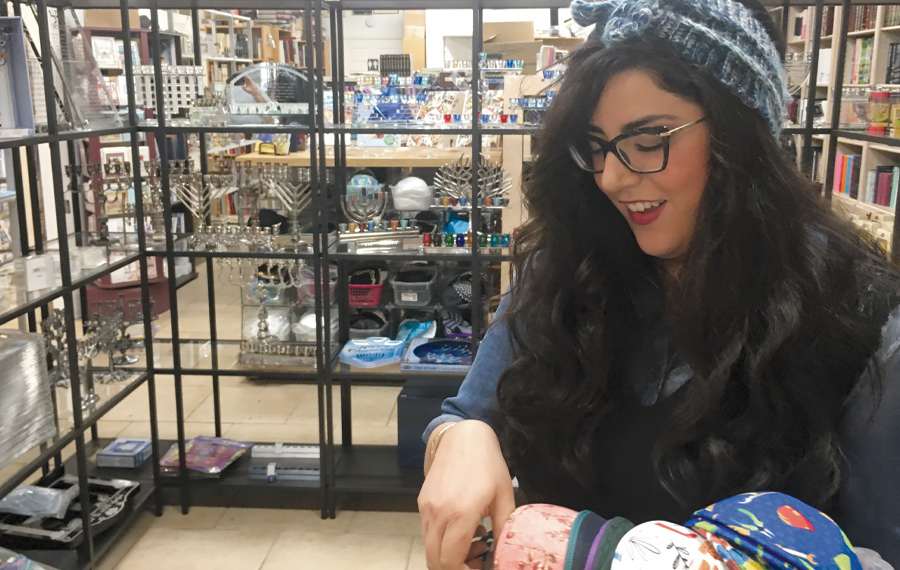
House of David: Gabay Jewish Books & Gifts in Valley Village is very much a family affair. Plastic bins burst with children’s yarmulkes decorated with images of Mickey Mouse, Minions and school buses. The store was purchased by the late Moshe Gabay in the 1990s, and today his Moroccan American daughter, Odelia Gabay, says, “We have a zillion different kippahs.” 

“He was kind, generous and humble,” Gabay says of her father, who died five years ago and also went by Maurice or Mauricio. “He was small in size but very big in life.”

Following his death, Gabay quit her teaching job at an Orthodox all-girls school to work at House of David full time. Like her late father, the 28-year-old is attempting to provide Jewish experiences through the sale of Judaica to Jews from all walks of life at a time when brick-and-mortar stores are struggling to compete with the exploding growth of online retailers like Amazon.

The store recently held a sidewalk sale, featuring children’s toys, ArtScroll texts and Jewish gifts marked down for Hanukkah. Inside the store, the shelves display a variety of playful, pretty and practical inventory, including a Judah the Maccabee robot toy; a kosher Shabbat lamp with a twistable shade; Yemenite shofars; and mezuzot sold with glass cylinders for holding shattered pieces of the ceremonial broken glass from Jewish weddings. Beside the counter, artist-designed ketubot were arranged on a rack for customers to browse through.  

“I grew up here and I love continuing what my father did. It keeps his memory alive.” — Odelia Gabay 

Operating since 1956, House of David is located in a predominately Jewish area of the San Fernando Valley. The store has historically attracted those who live in locations where they do not have easy access to Jewish products, whether El Salvador, South Korea or even Palm Springs, Gabay said. “People would come from places where there wasn’t any Jewish stuff around them,” she said.

While the store continues to attract those seeking Jewish items for life cycle events, holidays or enhancing their respective Jewish journeys, the store is struggling, employee Howard Schwartz said. 

“The internet has changed a lot of things,” Schwartz said. His late father was a cantor who also worked at the store for 15 years before his death in 2017.

Due to the changing nature of the retail business, some of House of David’s stock can now be found online. The business also has WhatsApp and Instagram accounts, allowing the store’s staff to share photos of their products with the public and for shoppers to photograph items they are looking for and send them to the store’s employees.

Meanwhile, Gabay does what she can to find customers what they need and give them the type of attentive experience online retailers cannot provide. “I grew up here and I love continuing what my father did,” she said. “It keeps his memory alive.”

House of David Store Is a Family Affair Read More »

North Hollywood Community Creates Interfaith Food Pantry

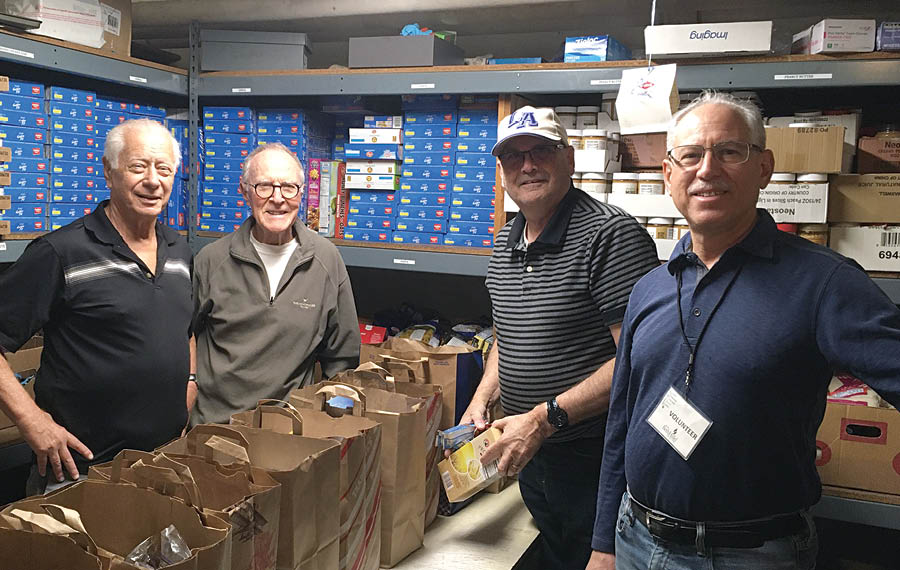
It’s Friday morning and the basement at Temple Beth Hillel in Valley Village is abuzz. Most of the regulars are here, including a group of men from Temple Beth Hillel and Adat Ari El synagogues. 

They begin by loading all the donated goods from the temple lobby onto carts to take to the basement. Once there, they sort everything: beans with beans, peanut butter with peanut butter, etc. Then they assemble bags of food, which are distributed twice weekly at First Christian Church of North Hollywood. Each month, the North Hollywood Interfaith Food Pantry distributes about 1,000 bags of food.

“It’s one of the few groups where politics doesn’t enter into anything. People aren’t looking for recognition and everyone just pitches in,” said Harvey Reichard, a retired workers’ compensation attorney and former Temple Beth Hillel president who has been doing this for nearly 15 years. “We’re all just volunteers working together for a common cause: feeding people.”

It all started in 1982, when five women representing five congregations — Temple Beth Hillel, Adat Ari El, First Christian Church of North Hollywood, St. Michael & All Angels Episcopal Church in Studio City and Faith Presbyterian Church of North Hollywood —came up with the idea to start an interfaith food pantry. 

Rabbi Jim Kaufman, now rabbi emeritus at Temple Beth Hillel, was the senior rabbi at the time. He remembers when one of the women, temple member Florence Adler, requested a meeting together with Marj Luke of what was then called First Presbyterian. The women told him they had secured a room at First Christian to distribute food to people in need. “But we don’t have a place to store it and bag it and do our stuff,” he recalled them saying.

Kaufman was on board immediately. “I said, ‘Great idea. We’ve got plenty of room here I think.’ ” Ten minutes later, the three headed down to the basement. Because it had long been a repository for everything, there was some cleaning out to be done. But a small area near the entrance was earmarked for the pantry, which officially opened in 1983. Kaufman also saw this as an opportunity for additional interfaith work and suggested an interfaith service be held the night before Thanksgiving. This annual service has continued year after year, rotating among the participating congregations.

Since those early days, pantry activities have grown to occupy a much larger portion of the expansive basement space. Nine additional congregations have joined the original five, although Temple Beth Hillel and Adat Ari El remain the only Jewish organizations. The food pantry also receives support from the Bagel Brigade, which sources still good, day-old baked goods from markets and bakeries around the city.

The volunteers who deliver, unload, organize and pack food in the Temple Beth Hillel basement are diverse. On this particular morning, the groups consist mainly of retirees. But for the past few years, a small group of young adults from Tierra del Sol, which serves people with disabilities, has been volunteering at Temple Beth Hillel and in doing so, learning warehouse skills. Several have gone on to land paid warehouse jobs elsewhere.

“Volunteering for the food pantry has been a rite of passage for so many people. It is at the heart and core of the congregation.” — Rabbi Sarah Hronsky

It is not uncommon to have an elementary school student working alongside an octogenarian in the basement. Students and families from many of the local schools, public and private, including Temple Beth Hillel’s day school and religious school, regularly volunteer. And many a bar and bat mitzvah student has made the pantry their mitzvah project, including Ben Brachman. 

The 14-year-old Sherman Oaks resident started volunteering with his mother, Rachel, well before his bar mitzvah. But he decided to make it his mitzvah project and continues to volunteer most Sundays because, “I know I’m making a difference.” Plus, it’s quality time with his mother, not to mention the two have become quite the tag team over the years, able to assemble bags extremely efficiently.

“Volunteering for the food pantry has been a rite of passage for so many people,” said Sarah Hronksy, senior rabbi at Temple Beth Hillel. “It is at the heart and core of the congregation.”

Hronsky also emphasizes that the pantry serves a much wider swath of Angelenos than many might imagine. “People think the pantry only provides to the homeless,” she said. But it also serves many senior citizens who would otherwise have to choose between heat, rent or food, she said. “There’s a family that attends all of our local schools. That’s where they get their food every week,” she added. “You don’t know that the kid sitting next to your kid in class doesn’t have food. To serve those who are at risk, but also your neighbor who you don’t realize is having a hard time. … It’s a very large and beautiful endeavor of interfaith work.”

North Hollywood Community Creates Interfaith Food Pantry Read More »

‘Fiddler on the Roof’ Revisited in ‘Encore!’ TV Reunion

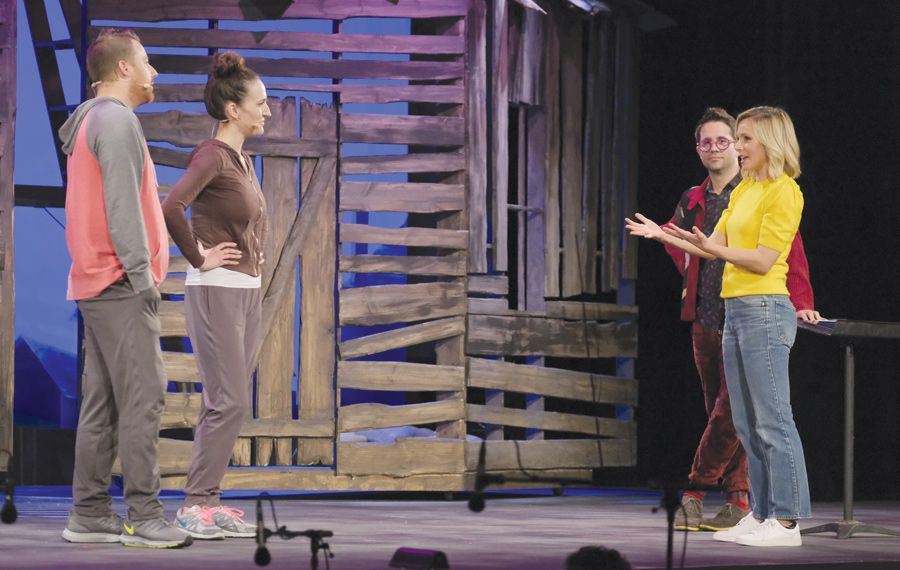
In 2001, students at Katella High School in Anaheim put on a production of “Fiddler on the Roof.” Eighteen years later, seven of the cast members reprised their roles with the help of Broadway professionals and host Kristen Bell for the Disney+ series “Encore!” During an intensive, emotional six days of rehearsals before a public performance at the Pasadena Playhouse, the alumni rekindled relationships and learned some truths about themselves. 

The “Fiddler” cast members include Jeff Simpson and Michelle Jeanette Anderson, who discussed reprising their roles as Tevye and Golde in emails. Simpson, a voiceover artist now living in Orem, Utah, jumped at the chance to “take another crack at Tevye” and hang out with his high school friends. 

“In a way, I feel like I’ve walked on the moon,” he said. “I was given this incredible opportunity that has only been made available to a handful of other people. My former castmates and I resealed a bond I hadn’t realized was there all those years ago. I was grateful for the gift of seeing my drama pals again. I was surprised at how little we’d changed and how it seemed hardly any time had passed. Performing in ‘Fiddler on the Roof’ after almost 20 years helped me remember how much I love to perform, and how I really ought to make it a part of my life over the years, even if it’s only in a regional capacity.”

For Anderson, who has continued to act, participating in the reunion validated her decision. “I’m where I’m supposed to be,” she told the “Encore!” cameras. She felt “honored and excited” to reprise her role as Golde “because this was such a special time in my life, and an important musical to me and my family. It was one of the best weeks of my life, and I wouldn’t trade it for anything. I know I’ll never get the chance to do anything like this again and I’ll be forever grateful.”

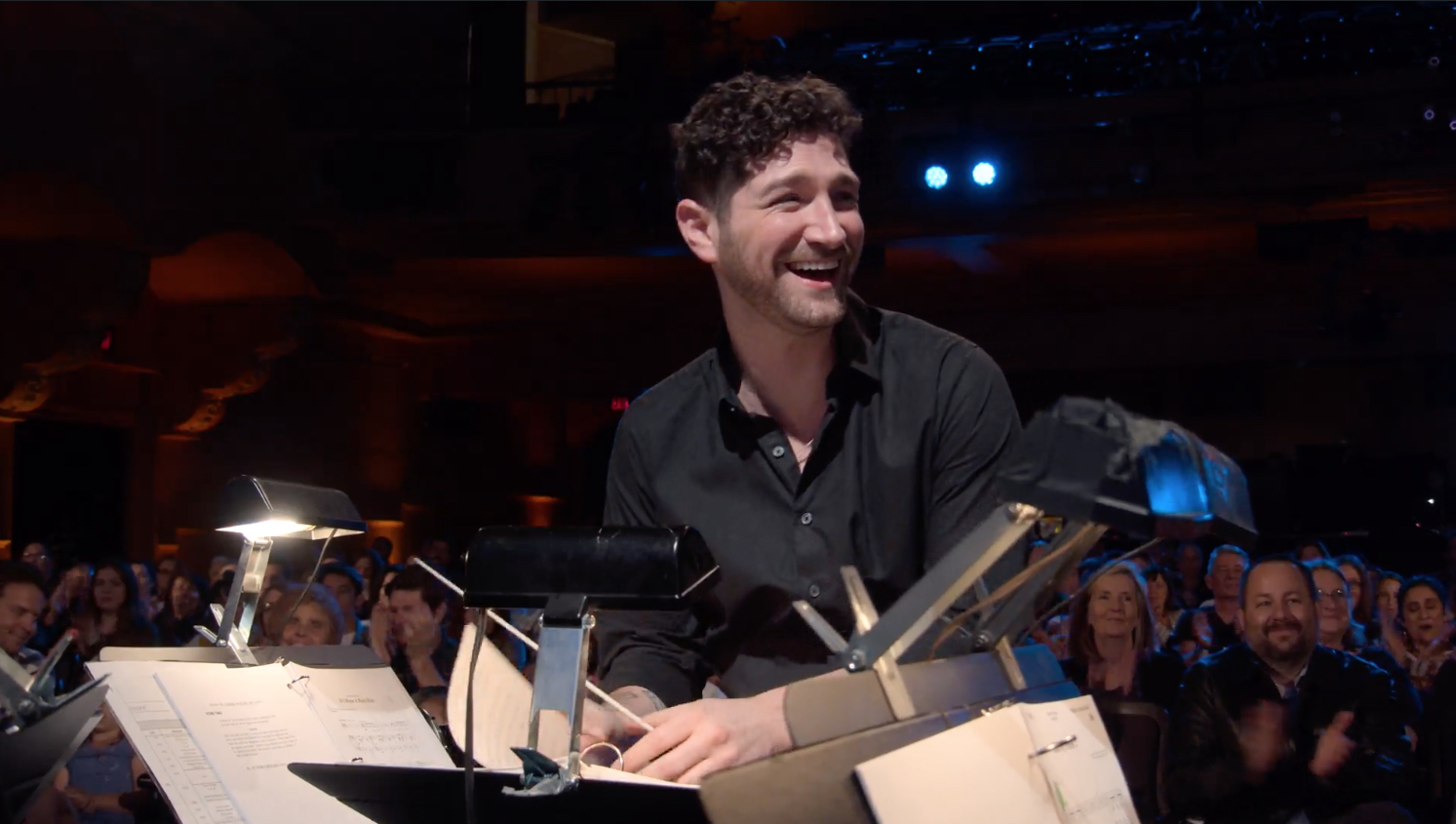
It was music director Adam Wachter’s challenge to get the cast into stage-ready shape, and he applauds their efforts under fire. “It’s a very rushed process but we always come across with some kind of entertaining product,” he told the Journal. “I think what people are really enjoying about ‘Encore!’ is the heartwarming nature of it. These people are at very different places in their lives, and to see them reflecting on high school, reconnecting and recapturing their love of performing and theater is so moving.” 

Adam Watcher

Wachter, who was the music director on the “Into the Woods” pilot for “Encore!” in 2016, returned for six more of the episodes and calls “Fiddler” his favorite so far. “It has a special place in my heart,” he said, explaining that he was in a community theater production of the musical with his parents and sister when he was 10. Growing up in one of three Jewish families in Holland, Mich., “ ‘Fiddler’ was a way for us to connect to our neighbors and the community through putting on this musical and [representing] our traditions,” he said. 

“I think what people are really enjoying about ‘Encore!’ is the heartwarming nature of it. These people are at very different places in their lives, and to see them reflecting on high school, reconnecting and recapturing their love of performing and theater is so moving.” — Adam Wachter

Wachter believes that the Tony Award-winning show is enduringly popular for reasons beyond its “stunning” score. “It’s so specifically about the Jewish experience, but at the same time it’s completely accessible to anyone who has any kind of tradition,” he said. “At its heart, it’s about a community dealing with change and progressive ideas in the world. That’s something everyone can understand and relate to.”

With immigrant German roots on his father’s side, Czech-Hungarian ancestry on his mother’s and a grandmother who survived the Holocaust, Wachter can relate on several levels. He grew up in family that kept kosher and belonged to a Conservative congregation where he became a bar mitzvah. Although he no longer is observant, he nevertheless feels a strong Jewish connection. “Even if we move away from the faith and the rituals, the essence of it, the culture and the pride in being Jewish, never goes away,” he said.

Wachter’s life has revolved around music and musical theater from an early age, when he took piano and viola lessons and followed his older brother onto the community and summer theater stage. In his senior year of high school, he was cast as Motel the tailor in “Fiddler.” It was to become a pivotal moment. “ ‘Miracle of Miracles’ was too high [in range] for me,” he said. “I volunteered to transpose it and rewrite the orchestra parts, but the theater director said no. So I quit the play and joined the orchestra, and from that moment I never looked back.”

Today, Wachter composes and writes musicals and is a professor of musical theater at Point Park University in Pittsburgh. He looks forward to doing more episodes of “Encore!” “It’s never too late to have a transformative experience that can fundamentally change who you are and allow you to explore sides of yourself you may have forgotten about, and reconnect with people from the past,” he said. “That’s the transformative power of musical theater.”

“Encore!: Fiddler on the Roof” is now streaming on Disney+.

‘Fiddler on the Roof’ Revisited in ‘Encore!’ TV Reunion Read More »

Expanding Community Roles for Young Persian Jews

In November 2018, 250 mostly Iranian American Jews gathered at the  Iranian American Jewish Federation for a first-of-its-kind program: the Taboo Summit. Panels explored mental health awareness, body image, LGBTQ+ and dating — topics not usually addressed in the traditionally conservative Los Angeles Persian Jewish community. 

The project was an outgrowth of the fifth cohort of the Los Angeles-based Iranian Jewish organization 30 Years After’s Maher Fellowship — a six-month leadership-in-training program developed by and for young-professional Iranian American Jews ages 21-35. 

Persian Jews, said Sam Yebri, co-founder of 30 Years After (30YA), are “to some extent tethered to the trauma of our families leaving Iran, and the Old World mentality and norms that grow out of that. … [We are] balancing what it means to be an American and maintaining Iranian traditions.” 

When many Persian Jews left Iran after the 1979 Islamic Revolution and came to the United States, they started over. They learned English, became educated, became successful professionals, married and had children. The first-generation Americans — now in their 20s and 30s — became donors, volunteers and Jewish professionals. But many of them lacked an awareness of their own heritage. 

The Maher Fellowship is designed to fill this gap by training young Jewish Iranian American professionals to “take responsibility over the millennia-old narrative and heritage that they have, that was actively suppressed by the fact that they were immigrants and refugees in America,” said Tabby Davoodi, 30YA’s first executive director.

“We need to talk about these things to create our own exodus out of the trauma of the revolution and become this great community,” said Arya Donay, the Maher Fellowship’s current director.

Fellowship founder Jason Youdeem, who was raised in Orange County and went to UCLA, said that while growing up he was more invested in the Jewish part of his identity, including being involved in United Synagogue Youth, the AEPi fraternity and Hillel. When he started his professional life, he established the fellowship to get Persian Jews to participate in the greater Jewish/civic community by training the next generation to tell their story. The program was incubated through PresenTense, a Jewish social entrepreneurship incubator program. 

The intention, Youdeem said, was to “start from our grandparents in Iran, [through] our parents’ transition and to our generation, to start telling that story,” which many young Persian Jews have not heard before. “There’s pride in owning your own story.” 

“[Persian Jews are] to some extent tethered to the trauma of our families leaving Iran, and the Old World mentality and norms that grow out of that. … [We are] balancing what it means to be an American and maintaining Iranian traditions.” — Sam Yebri

Davoodi added, “A lot of Persian parents didn’t tell the story. A generation later, you have people who don’t know who they are and where they came from.”

“There are plenty of Jewish leaders fellowships, but Persian Jews tend to stay in our own bubble,” Donay said, noting that the Maher Fellowship aims to “get [Persian Jews] out of the bubble and learn how to better mingle and work with other Jews in the community.” 

In addition to the Taboo Summit, Maher fellows encounter and connect with experts, thought leaders, politicians and influencers in the Jewish, Iranian and greater American communities, and participate in a fully subsidized trip to the AIPAC Policy Conference in Washington, D,C. 

Davoodi added that fellows are expected to talk about their heritage and “confront things that aren’t being discussed. …This new generation is American born and raised but there’s no escaping growing up in a Persian household — the fierce traditionalism of it, the tension between East and West.” 

For the first three or four years, Youdeem led recruitment and co-facilitated the fellowship. Now, he describes his role  as “more advisory,” an intentional move to ensure that the program is “sustainable beyond me,” he said.

“If this was United States history, [the previous generation] would be Christopher Columbus,” said Oron Maher, the program’s initial benefactor, who continues to support the program. “They came here first and laid the groundwork. The message that they give today’s generation is what will carry their 3,500-year-old ancestry for generations to come.”

Maher supported the program based on his commitment to tithing, the tradition of giving a portion of one’s income to charity. He added that for him that also includes offering his time and energy.

“Giving 10% of yourself to something greater is part of living a balanced life in today’s world. … Tithing and giving and doing your part is the formula for success,” he said. 

Applications for the fellowship’s new cohort have closed, but Donay said his vision for the current group of participants is “to understand where they came from and their heritage, and use that and [their] skills to understand their own story better and create a lasting impact through work in the community after that.”

The core of the fellowship’s curriculum focuses on topics including why politics matter, why Israel and the Jewish community are important, and Jewish leadership development, but the dialogue changes year to year, Davoodi said. He predicted that with the increase in anti-Semitism worldwide and in particular the recent ransacking of the Nessah Synagogue, anti-Semitism will be a central topic in 2020. 

Yebri noted, “As an organization, we’ve done the big conferences with lots of speakers, and as impactful as they are, we’ve come to realize that training and inspiring the leaders to go out and do the work is far more valuable than having lots of people in a room [and] really where we can have the greatest Jewish value-add as an organization.” 

Another 30 Years After fellowship, focusing on public service, will launch in March, Yebri said.

To date, around 110 leaders have been trained, Maher said, adding that many now serve on nonprofit boards or as professionals in existing organizations, or have founded their own initiatives. 

“People graduating from our program are going to go on as young adults to help lead and shape the future of Persian Jewry,” he said. “To me, there’s no higher calling than cultivating Jewish leaders.”

Expanding Community Roles for Young Persian Jews Read More »

Stirring Radicchios in Risotto

It’s hard for me to accept that some people just can’t stomach radicchio because I love it so much that I stock my fridge with it at all times. I believe that its bitterness, along with its magnificent magenta tone, is its unique beauty.

For those of you who aren’t radicchio fans, I wonder if you have ever tried it cooked? In creamy risotto? With butter? And homemade chicken broth? And Parmigiano Reggiano?

I first ate radicchio risotto prepared by family friend Jeff Thickman, a private chef to the Florentine nobility. (Yes, there’s still nobility in Italy although many of them have run out of money because of a congenital aversion to work.) Anyway, it’s unheard-of for an American — from Wyoming, no less! — to become a prestigious chef in any Italian city. But Thickman’s a remarkable character. While getting a doctorate in musicology from Columbia, his professor told him he should play piano with the passion he had for baking cakes. And that was it. In that moment, Thickman understood his true calling and became a chef.

I met Thickman in a World War II-era hospital in Florence, while I was waiting for an appendectomy. My mother knew him through the ever-exciting game of Jewish geography and asked him to visit me while she booked a flight. Tired, bloated and with horribly greasy, unwashed hair, I welcomed him onto the ward and we became fast friends. After I recovered, he invited me to his best friend Elisabetta’s house, which happened to be a medieval tower on a private beach on the Tuscan coastline. This kind of thing happens in Italy.

Thickman made us the most delicious risotto. I’m not sure I even really had an appreciation for risotto before that. His secret: Use lots of radicchio, cut it very finely and let it cook down for as long as you have the patience. Use only homemade broth if you want the full effect, and don’t ever stop stirring the rice.

Prepared with red wine, this risotto takes on a deep purple color. Try it — this could be your chance to fall in love with radicchio.

Radicchio Risotto
from “Meal and a Spiel: How to Be a Badass in the Kitchen

8 cups vegetable broth or chicken broth (recipe follows)
4 tablespoons butter, divided
2 tablespoons extra-virgin olive oil
1 large yellow onion, finely chopped
2 medium heads of radicchio, cored and cut into 1-inch strips
1 1/2 cups arborio or carnaroli rice
1 cup red or white wine
1/2 cup grated Parmigiano Reggiano, plus more for serving
1/4 cup grated pecorino Romano, plus more for serving
Freshly grated black pepper

Chicken Broth
3 pounds chicken necks and backs (if necks and backs are unavailable, use wings and legs)
2 whole onions
4 to 5 whole garlic cloves
3 whole carrots
3 to 4 celery stalks
2 bay leaves
5 to 6 peppercorns
1 large handful flat-leaf parsley
Kosher salt

For the broth:

Place all ingredients in a stockpot and add enough water to cover. (No need to chop anything.)

Bring water to a boil, cover and simmer slowly for at least a couple of hours or all day. Skim off any unappealing foam.

Let cool.

Season well with salt. If not tasty, add more salt. (see note)

Once cooled, it can be refrigerated. If desired, skim off fat the next day.

Makes 3 quarts.

For the risotto:

In large saucepan, bring broth to a gentle simmer. Make sure it’s seasoned with salt.

Melt 2 tablespoons of the butter and the olive oil in a heavy-bottomed pan over medium heat.

Add the onion and sauté́ until translucent.

Add the radicchio and stir for a few minutes until it’s coated in oil and slightly wilted. Cover, lower heat to medium low and cook for 30 minutes, checking every so often to stir.

Uncover, increase heat to medium/medium high, and let any water remaining from the radicchio evaporate.

Add rice and stir. After rice becomes translucent, 2 to 3 minutes, add 2 big glugs of wine, about 1 cup. Let it evaporate.

After the wine is absorbed and evaporated, add 2 ladles of broth, about 1 1/2 cups at a time. Stir the risotto (with a wooden spoon) constantly from this point on.

After the liquid is completely absorbed, add another ladle or so of broth, until the rice is well covered. Continue like this, stirring constantly, adding broth only when the previous ladle of broth has fully evaporated and the rice softens but is still al dente, about 20 minutes.

Off the heat, add the remaining butter, both cheeses and an extra ladle of broth. Stir and let it sit for a minute or two. The consistency of the risotto should be like porridge, and if you tilt the pan, it should flow like a wave.

To serve, place immediately on individual plates, topping with freshly grated Parmigiano-Reggiano, pecorino Romano, and fresh ground pepper.

Serves 4 to 6.

Make-ahead prep: Onion and radicchio can be cooked in advance. Then restart the process by adding the rice in step 6.

Note: This recipe doesn’t call for salt because the saltiness should come from the broth. Taste the broth to make sure it has enough kosher salt. This amount of broth (8 cups) will need about 2 1/2 teaspoons kosher salt. If your broth isn’t salty enough, your risotto will suffer. Remember that the addition of cheese also will add saltiness.


Elana Horwich is the author of “Meal and a Spiel: How to Be a Badass in the Kitchen” and the founder of the Meal and a Spiel cooking school.

Stirring Radicchios in Risotto Read More »