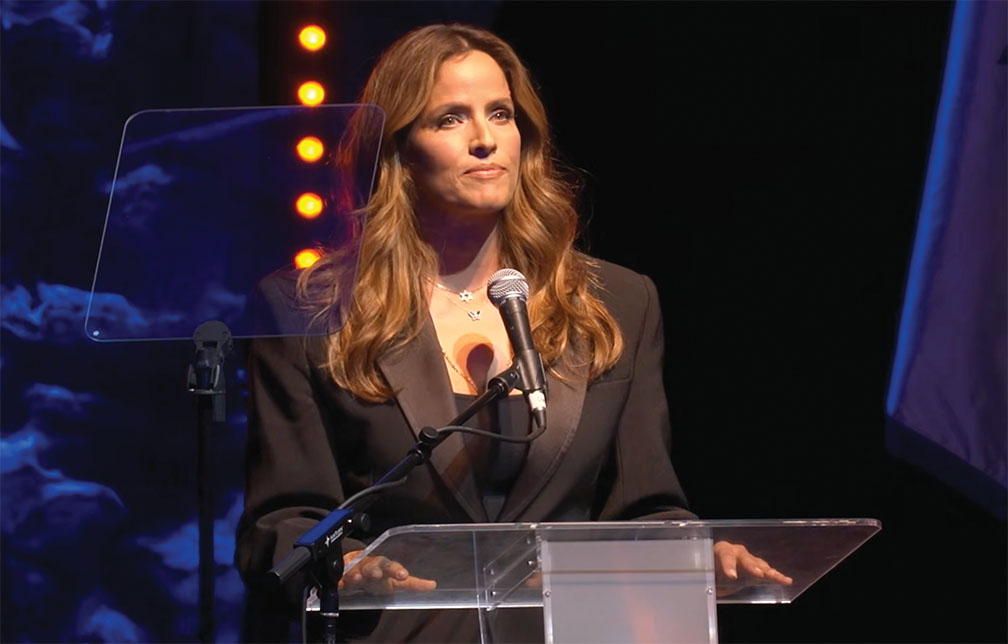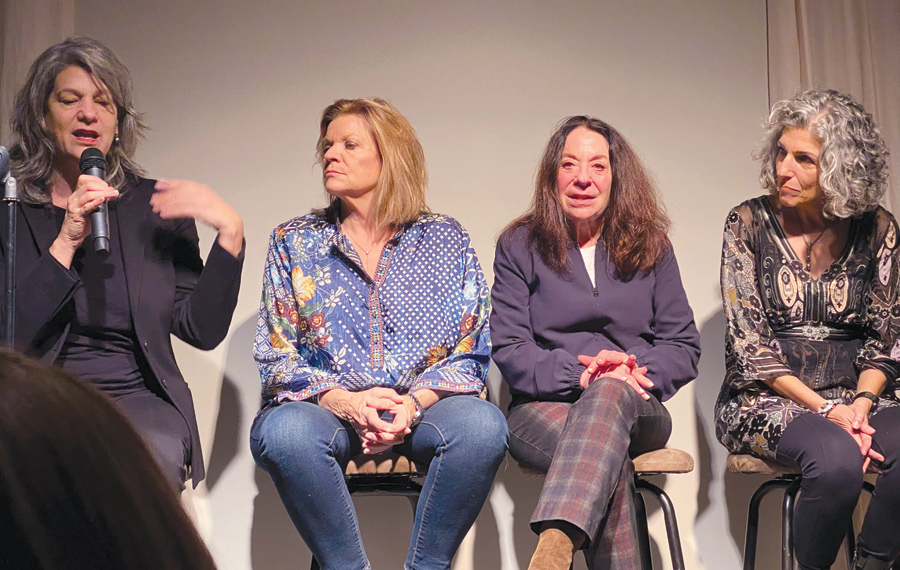
The Jewish Women’s Theatre (JWT) presented its first stand-up comedy show, “Three Jews and a Blonde Walk Into the Braid,” with two performances on Dec. 14.
JWT Artistic Director Ronda Spinak asked Monica Piper, Abby Freeman artist-in-residence and one of JWT’s first creative contributors, to put together the show. Envisioning Spinak’s JWT as women in babushkas, Piper told the Journal she initially responded, “But Ronda, I’m not Jewish enough.”
Clearly, Spinak thought differently. Over JWT’s 11-year-history, Spinak has commissioned several salon pieces from Piper, including her “A Shayna Meydele,” “Shmatitude” and “The Tip of the Icepack.”
Piper, an Emmy Award-winning writer and comedian, asked her funny friends Cathy Ladman, Sue Kolinsky and Debbie Kasper to join her in The Braid’s first night of stand-up.
As to the title of the show, Piper said, “We knew we had the four comics and we wanted a catchy title, and we knew that Debbie wasn’t Jewish, and she was blond.”
Unfortunately, in the week leading up to the performances, Kolinsky injured her back, unintentionally changing the show to “Two Jews and a Blonde …”
The three women entertained the packed Braid salon at the Santa Monica performing arts facility, eliciting laughs and knowing nods (except for one stoic man they periodically targeted). Each mined comedy gold drawing on her personal experiences: Piper on her aging, her diminutive height and her 28-year-old son; Kasper on her mother’s uncomplimentary compliments and navigating the 405 Freeway; and Ladman’s failed attempts at getting pregnant with her Swedish husband, adopting a Chinese girl and what it’s like raising a teenager at the age of 64.
“You would never see three women on a show unless they called it ‘The Estrogen Festival’ or ‘Shiksas.’ There’s so much sexism involved.” — Debbie Kasper
Following the show, the three comics told the Journal that while they had performed on the same stage at comedy nights over the years, they had never worked together on a show.
“You would never see three women on a show unless they called it ‘The Estrogen Festival’ or ‘Shiksas,’ ” Kasper quipped. “Thirty years later, 40 years later, you go out on the road, nothing’s changed. There’s so much sexism involved. I feel like there’s just a little movement of the needle moving toward perhaps some equality in the comedy field and in the world. But it is slow in evolution.”
Piper added, “I can’t tell you how many men comics would say to me, ‘You’re funny for a woman.’ ”
Kasper credits Piper as one of her early influences. “Her act helped shape my act. Very theatrical characters. She was one of the women who inspired me.”
Both Kasper and Piper used their jobs as waitresses to try out their comedy routines on their customers. “I would write jokes,” Piper said. “I didn’t have the nerve to get onstage. So I would try them out on my customers and if they laughed, I’d go, ‘That’s a keeper.’ ”
Kasper had a self-admitted drinking problem, running up bar tabs. “Fifty dollars in the ’80s, if you can imagine,” she said. “I overheard somebody say, ‘Comedians get their drinks for free.’ And I literally started doing comedy so I wouldn’t have to pay for drinks. And I haven’t paid for one since.”
Growing up in San Francisco, Kasper started doing improv at the famed Holy City Zoo. “That was the big comedy club there,” she said. “I watched everyone. I watched Robin Williams [and] Dana Carvey.”
Piper said being a Jewish stand-up has never been an issue for her. “People kind of assumed that there were more Jews in comedy than non-Jews,” she said. “Jews tended to be funny. Funny Jews gravitated toward comedy.”
She added that she loves performing for Jewish audiences. She takes her one-woman show, “Farmisht, Farklempt and Farblungit,” to fundraisers, temples and various Jewish organizations. “There’s a shorthand,” she said. “They get my jokes and my facial expressions right away. I grew up with a Yiddish-speaking grandma and grandpa, and so much of their terminology [and] expressions come out when I’m with Jewish audiences.”
Gil Kaan is a writer in Los Angeles.