fbpx

December 4, 2019

Letters: Victory for Vegans, Judaism and Christianity Are Not the Same

Responding to Rosner
I believe that Israel will never experience peace, and global anti-Semitism will not be reduced, until there is a real home for 5 million Palestinians (“Violence Erupts: Questions and Answers on Policy and Politics,” Nov. 15). I also believe that there is a fear that any Israeli leader who agrees will probably suffer the same response from the ultra-Orthodox as did Yitzhak Rabin.
Martin J. Weisman, via email

The Truth About the Arabs
David Suissa (“Grateful for a Ray of Light,” Nov. 29) and Jenni Frazer (“Newly Formed Arab Council Publicly Decries BDS,” Nov. 29) are cautiously optimistic about this incredible turn of events in the Arab world, yet both are unwilling to discuss the elephant in the room, the realpolitik in the Middle East: The Muslim world has been in a schism between Shiite and Sunni for many years. Today, that conflict is playing out in battlefields in Yemen, Iraq and Lebanon. 

The Arab Sunni world is extremely worried about encroaching Iranian hegemony and its spreading military tentacles across the Middle East. The Palestinian Sunni Arabs in Gaza oddly have been supported by their ideological enemies, the Iranian Shiites. That reason might play a major role in the new peace offensive by Arab states, who realize having Israel and even the United States as allies  might be an existential necessity.
Richard Friedman, Culver City

A Deal for Netanyahu
Smart Israeli Jews should find a solution to avoid a third election, the results of which may not be different than the previous two. It is my opinion that now that Prime Minister Benjamin Netanyahu has been indicted, a compromise solution is possible. Of course, the best compromise is one nobody is happy with but everyone can live with.

Benny Gantz (Blue and White) refused to join a coalition with Likud because it was headed by Netanyahu, who was about to be indicted. With the indictment, a deal should be given to Netanyahu of no jail time, provided he will never run for public office again and will give up leadership of Likud. Thus, the new leader of Likud and Gantz can have a coalition government with an alternating premiership.
Andrew Friedman, via email 

More Than Deterrence Needed
David Suissa eloquently explains the importance of deterrence in Israel’s attempts to put an end to the terrorism emanating from Gaza and other parts of the Arab world (“Israel and the War of Deterrence,” Nov. 15). Every effort by Israel, including giving the Palestinians the Gaza Strip, has failed.

It is clear that the Palestinians and their allies in Arab nations are intent on pushing the Jews/Israelis into the sea and taking full possession of the State of Israel. They have so proclaimed over and over.

It should be obvious by now that efforts must go beyond deterrence. 

The free world, including Israel, must put an end to organizations that support terrorism, such as the boycott, divestment and sanctions (BDS) movement.

In addition, means must be found to end the teaching of anti-Semitism and anti-Zionism that so poisons the minds of Arab children.
George Epstein, Los Angeles

A Victory for Vegans
Mazel tov to meat-free mensch Jenny Goldfarb for proving that all of us can enjoy delicious Jewish deli staples while “moo-ving” away from the suffering that comes with eating cows and other animals.

Vegan delights like Goldfarb’s corned beef make it easy to enjoy the foods that we associate with our bubbes and zaydes, while also rejecting an industry that maims and kills billions of animals every year and disproportionately contributes to deforestation and greenhouse gas emissions.

It’s clear that Goldfarb understands the connection between going vegan and the Jewish tenet of tikkun olam. Who knew that being a “Reuben Hood” to animals could also involve a dense slab of rye, sauerkraut, pickles and egg-free mayo?
Jessica Bellamy, Norfolk, Va.

Judaism and Christianity Are Not the Same
In the story “Hanukkah on the Hallmark Channel” (Nov. 15), Nina Weinman, a writer of a Hanukkah Hallmark movie for this year, says that in her intermarried family, they celebrate both Christianity and Judaism because they want their kids to know “they’re saying the same thing but just calling it by a different name.”

So, when Christianity says that Jews are going to hell because we won’t accept a man as a God, as compared with Judaism’s one God and view that people of all faiths have a place in heaven, or Christianity’s promotion of belief in lieu of questions, and Judaism’s strong encouragement of any and all questions and debate, are these messages the same?

They are but two of many differences, each with large implications. Isn’t it ironic that the writer of a Hanukkah story is not aware of one of the main messages of Hanukkah — that as Jews we should be learned about Judaism so we do not assimilate and are able to know that Judaism and other religions, such as Christianity, are clearly not the same.
Jason Kay, Los Angeles

Perspective on the Prime Minister
Although I hold no brief for Prime Minister Benjamin Netanyahu, one cannot deny all the advancements achieved in his many years as prime minister. From his first term to his latest term, Israel has seen remarkable improvements and innovations in security, defense, economics, medical and computer technology, and other fields. It has gone from a second-rate country to a leader in many of these areas.

While this is not justification to not hold Mr. Netanyahu responsible for possible legal malfeasance, Micha Odenheimer finds the prime minister guilty before trial because some of his appointees have taken a stand against him (“Netanyahu Blames Everyone but Himself,” Nov. 29). And, in his defense, Netanyahu has made the charge that this is coming from his leftist opponents. Besides, of the three charges brought against him, none reach the level of a major infraction, and for which any leader can be accused.
C.P. Lefkowitz, Rancho Palos Verdes

The Sadness of Losing Parents
Monica Osborne’s first-person essay (“The Great Lie,” Nov. 15) was shot with an arrow whose emotional poignancy was unwaveringly accurate and forever spot-on.

My father died in January 2002 and my mother in January 2018, events that give credence, and ironically life, to the maxim that “not only do things not get easier, but, in fact, they get infinitely harder.”

I diligently and fervently followed all the time-honed and venerated Jewish traditions of dealing with grief: I sat shivah for the full seven days, lived a stoic and austere existence for the next 30 days, and recited Kaddish three times a day for a whole year.

Today, however, 17 years and 23 months after their respective demises, I am still saddled with intermittent bouts of grief that manifest without warning. An errant voice, a kind word, a Broadway smile or a cliched hello can set off a train of memories. 

I have read more books on grief and dying than I knew ever existed, and filled journals with my pain-wracked musings and ruminations.

I threw myself into work, heading into the sunrise (rather than the sunset). I was a lark at night and an owl during the day, and in-between, I just was.

When your parents die, the forces that gave you metaphorical and literal life, the hearts that cosseted you during periods of searing pain, and the heads that seemed the repository of answers to all of life’s problems, are reached for, grasped at, but, of course, are never again encountered.

I wish I had sagacious words of sanguinity to pile high on Osborne’s plate of life, but my finite limitations have foraged around in a box whose contents are, ultimately, more pungent than saccharine.

But, in all these troughs and valleys of despair, your father still lives in the meaning with which you live and conduct your life.

Practice tikkum olam; knock on the door of an elderly neighbor whose life may be lived under a sword of Damocles; forgive what is minor and remember what is immortal; talk when you want to scream and whisper when you want to talk; and most of all, never stop speaking to your father, because while he may not answer, I can guarantee you that he is listening.
Marc Rogers, North Hollywood


Now it’s your turn! Don’t be shy, submit your letter to the editor! Letters should be no more than 200 words and must include a valid name and city. The Journal reserves the right to edit all letters.
letters@jewishjournal.com.

Letters: Victory for Vegans, Judaism and Christianity Are Not the Same Read More »
What’s Happening: IDF ‘Shabbat of Heroes,’ Sephardic ‘Papers’

FRI DEC 6

Zamru Friday Night
Shomrei Torah Synagogue holds Zamru Friday Night, a unique, musically rich kabbalat Shabbat service and dinner. Cantor Jackie Rafii and guitarist Daniel Raijman headline the event, “Music to Move Your Soul.” Guests bring their own kosher wine. 6-9 p.m. Dinner for members: $20 adults, $12 children 12 and under. General: $30 adults, $15 children. Shomrei Torah Synagogue, 7353 Valley Circle Blvd., West Hills. (818) 854-7650.

Middle East Discussion
Given decades of conflict between the same rivals, punctuated by intermittent treaties, the Middle East is arguably the politically messiest region on earth. Jordan Reimer, policy analyst at the RAND Corp., helps to unpack the conflicts. A scholar who served under two White House administrations and the New York City Police Department, Reimer explains effects of the constant conflicts in the Middle East on Israel and the United States. 6:15 p.m. service. 7:30-9 p.m. lecture. Temple Isaiah, 10345 W. Pico Blvd. (310) 277-2772.

IKAR Feast
It is the first Friday of the month again, which means it’s time for IKAR’s monthly TRIBE Feast, a schmooze and groove at food-filled tables with Jewish and Jew-adjacent 20- and 30-somethings. RSVP requested so sufficient food is prepared. 6:30 p.m. Shabbat service. 7:45 p.m. TRIBE Feast. IKAR’s Event Space, 1729 S. La Cienega Blvd. (323) 634-1870.

SAT DEC 7

Shabbat for Women
Lev Eisha, a community of and for joyous Jewish women, celebrates a Shabbat infused with music and enlightened by teachings by Rabbi Toba August. She and cantorial soloist Cindy Paley lead Shabbat services. Everybody is welcome. 8:15 a.m. teaching. 9:30 a.m. service. Beth Shir Shalom, 1827 California Ave., Santa Monica. (310) 575-0985.

“Max & Willy’s Last Laugh”
When German comedian Max Ehrlich and his best friend, composer Willy Rosen, were caught in Holland in 1942 and sent to a concentration camp, the commandant recognized Ehrlich. He made an irresistible offer: Every Monday night before the train leaves for Auschwitz, Max and Willy will perform a cabaret. If they are funny, they will perform it the following week. If not, they will be put on the train. The performers carried on for 18 months before finally being sent to Auschwitz. Tonight and Sunday afternoon, Temple Emanuel of Beverly Hills presents a staged reading with live music of “Max and Willy’s Last Laugh.” Proceeds benefit Temple Emanuel of Beverly Hills. 8 p.m. tonight, 5 p.m. Sunday. $100 reserved seats, $36 general admission, $18 students. James Bridges Theater at UCLA, 235 Charles E. Young Drive East. (310) 825-6792.

Beth Am Film Night
After Shabbat ends, Temple Beth Am resumes its film series with “Laces,” the story of a special needs son’s complex relationship with the aging father who abandoned him when he was a child. Film buff Michael Berlin leads a post-film discussion. Snacks served. 7 p.m. $12. Temple Beth Am, 1039 S. La Cienega Blvd. (310) 652-7353.

Shulem Lemmer

Our IDF Heroes
After a “Shabbat of Heroes” at Pico-Robertson synagogues Adas Torah, Beth Jacob, B’nai David-Judea and Young Israel of Century City, a meet and greet with heroes of the Israel Defense Forces (IDF) takes place at The Mark. Ezer Mizion, the world’s largest Jewish bone marrow registry, organizes this gathering, highlighting how as of August, 2,000 IDF soldiers have donated their stem cells to 2,000 patients around the world. The evening features musician Shulem Lemmer performing during Havdalah and former Israeli Chief Rabbi Yisrael Meir Lau bringing greetings from the Jewish state. Israeli wines and food served. Adults only. RSVP required. 7:30 p.m. The Mark, W. 9320 Pico Blvd. (310) 247-2266.

SUN DEC 8

Sarah Abrevaya Stein

“Family Papers: A Sephardic Journey”
For centuries from the Greek port city of Salonica, the large Levy family of editors and publishers reported how the ever-changing state of modernity affected Sephardic Jews across the Ottoman Empire, including how 20th-century wars altered the borders around them. Historian Sarah Abrevaya Stein shares the true story of a frayed family that has been preserved through their letters. She discusses her award-winning book, “Family Papers: A Sephardic Journey Through the Twentieth Century,” with race and gender scholar Brenda E. Stevenson. 2 p.m. Free. Skirball Cultural Center, 2701 N. Sepulveda Blvd. (310) 440-4500.

Community Service Day
Attention all people who seek to make a difference immediately: The Jewish Federation of Greater Los Angeles’ Community Service Day lasts all day and is a partnership between Federation and social service organizations working to make life better for their neighbors. Free. Prior registration required. For more information, email volunteer@jewishla.org.

“The Golden Gelt Room”
Join the Congregation Kol Ami community in “The Golden Gelt Room,” for an afternoon of comedy, casino games and pre-Hanukkah celebration. Comedian Liz Glazer performs. Mingle, nosh, drink, play and laugh with Kol Ami’s inclusive community. 4-6:30 p.m. $100. Congregation Kol Ami, 1200 N. La Brea Ave., West Hollywood. (323) 606-0996.. 

Hanukkah Angels Gift-Wrapping Event
There still is time to become a “Hanukkah Angel” in Kehillat Ma’arav’s community mitzvah program. Purchase a gift of any amount for one of 10 Chai Lifeline children with life-threatening illnesses, then bring it to the synagogue starting at 9 a.m. and join the synagogue’s religious school students in gift-wrapping from 11:30 a.m.-12:30 p.m. Latkes and sufganiyot served. To learn about each child’s wish list or to become a “Hanukkah Angel,” contact Rose or Sharone Weizman at eddirector@km-synagogue.org. 1715 21st St., Santa Monica. (310) 829-0566.

Jewish ID Hanukkah Party
Even though Hanukkah doesn’t start for two weeks, Jewish Big Brothers Big Sisters of Los Angeles (JBBBSLA) starts early. Bring the children to Stephen Wise Temple for a huge Hanukkah celebration co-organized by JBBBSLA and Kibbutz Bob Waldorf. Ideal for all ages. Candlemaking, Israeli dancing, dreidel games and camp activities highlight the event. If the $5 per person charge is too expensive (children 3-and-under are admitted free), contact Sofia Varona at (323) 456-1162 or sofia@campbobwaldorf.org. 4 p.m. $5. Stephen Wise Temple, 15500 Stephen S. Wise Drive.

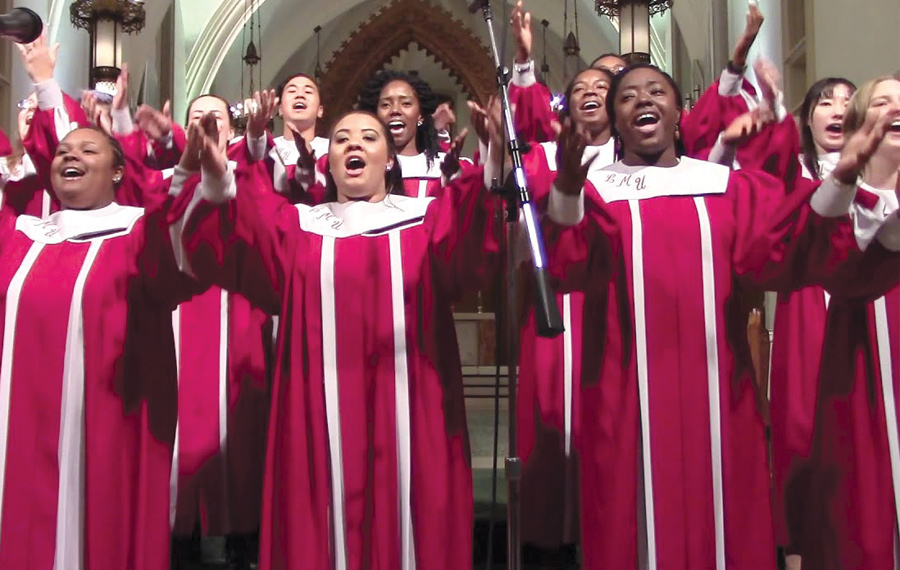
BYTHAX Gospel Choir

Hanukkah and Christmas Concert
Wilshire Boulevard Temple stages a performance of peace, love and harmony. The congregation’s “Let There Be Light” concert of Hanukkah and Christmas melodies, co-organized by the Faithful Central Bible Church, features performers Dr. Dee, the BYTHAX Gospel Choir, Cantor Don Gurney and the Wilshire Boulevard Temple Adult Choir. Sufganiyot and holiday cookies are served after the concert. 4 p.m. Free. RSVP required. Wilshire Boulevard Temple, 3663 Wilshire Blvd. (213) 388-2401.

WED DEC 11

“Let’s Talk About Religion”
In the latest round of American Jewish University’s (AJU) discussion series “Let’s Talk About Religion: Jews, Christians and Muslims in Conversation,” a Jew and a Muslim examine rival and converging views on “Is Life Sacred?” Tonight’s topics are medical ethics, abortion and end-of-life issues, with Rabbi Elliot Dorff, rector and professor in philosophy at AJU, in discussion with Dr. Sana Khan, chairman and founder of the
AiM Radiology Medical Group. 7:30-9 p.m. $10. American Jewish University, Alan Shapiro Memorial Synagogue, 15600 Mulholland Drive. (310) 440-1572.

“The Holocaust and the Danish Exception”
The Los Angeles Museum of the Holocaust holds a book signing and artist’s reception with acclaimed photographer Judy Glickman Lauder. Her photos are on exhibit in “Beyond the Shadows: The Holocaust and the Danish Exception.” Lauder, a Bay Area native, has been photographing Holocaust sites since the 1980s. She talks about her experiences. 7-8:30 p.m. $10 suggested donation. Los Angeles Museum of the Holocaust in Pan Pacific Park, 100 The Grove Drive. (323) 651-3704.


Have an event coming up? Send your information two weeks prior to the event to ryant@jewishjournal.com for consideration. For groups staging an event that requires an RSVP, please submit details about the event the week before the RSVP deadline.

What’s Happening: IDF ‘Shabbat of Heroes,’ Sephardic ‘Papers’ Read More »

Challah Bake, NDF Gala, Ji’s New Leader

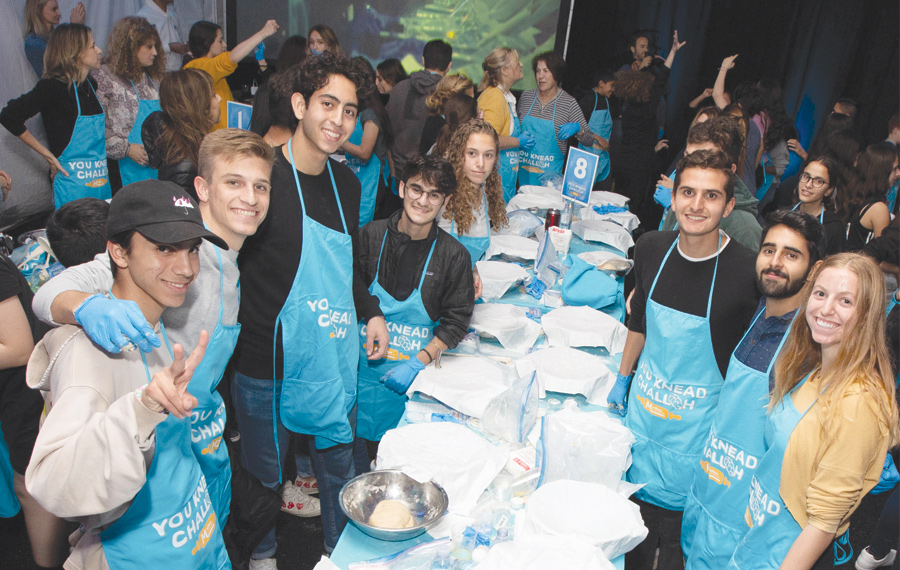
Milken Community Schools held its third annual community-wide challah bake, during which 500 people prepared challah for Shabbat. 

Attendees at the Nov. 14 event at Milken’s Bel Air campus included Head of School Sarah Shulkind.

People used 2,000 cups of flour, 1,000 cups of oil, 250 cups of sugar and 500 cups of eggs to bake challah, and 50 volunteers were on hand to help people bake.

The event was followed on Friday night by Shabbat Across Milken, which featured more than 500 people celebrating Shabbat in each other’s homes.

“Seeing over 500 parents, students, faculty and friends braiding challah together here at Milken followed by a Shabbat celebration in each other’s homes across Los Angeles is a testament to our kehillah — our community — supporting one another through joyous times like these and times of need,” Shulkind said. “Leaning on each other is at the heart of Milken, and I’m grateful to be a part of this amazing community.” 


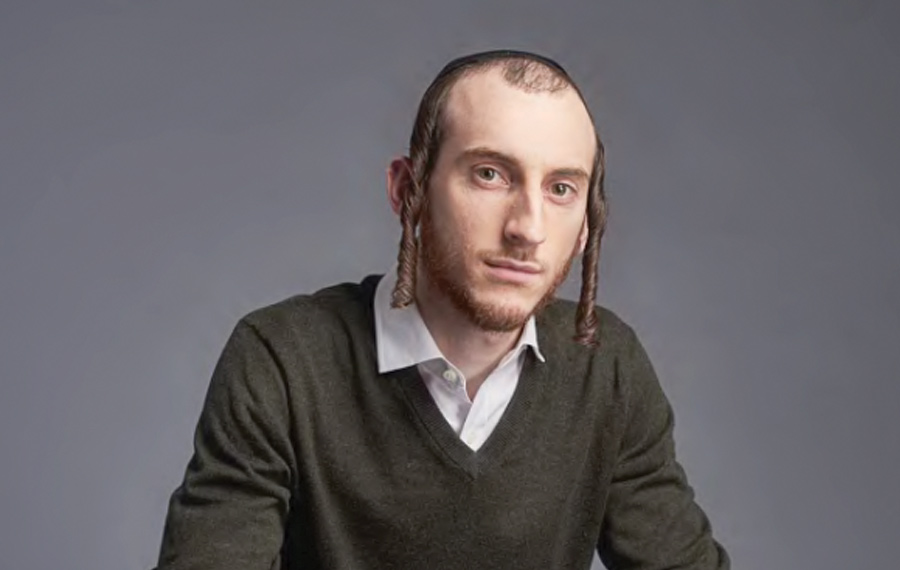
Yechiel Hoffman, inaugural U.S. director at Jewish Interactive. Photo courtesy of Yechiel Hoffman

Jewish Interactive (Ji) has hired Rabbi Yechiel Hoffman as its inaugural U.S. director, after an extensive national search. 

Hoffman — whose hiring became effective Nov. 1 — is overseeing the daily operations of Ji, which aims to provide high-quality Jewish and Hebrew education to students through their families and schools. 

“Jewish Interactive’s growth and creativity ignited my passion to marry technology and student-centered educational approach to make our tradition relevant and present for Jewish children’s lives,” Hoffman said in a statement. “I want Ji to be the conduit for collaboration, exploration and experimentation for schools, teachers, parents and students.”

Ji CEO Chana Kanzen said, “With Dr. Rabbi Hoffman on board, Ji has secured the ideal candidate to drive forward our U.S. growth strategy enabling us to further develop and provide dynamic learning tools and solutions for schools and families across North America and beyond.”

Hoffman previously served as director of youth learning and engagement at Temple Beth Am and earned his doctorate of education at Northeastern University in Boston, where he studied innovation in Jewish education. He is a recipient of the Covenant Foundation’s prestigious Pomegranate Prize for emerging Jewish educators.

Ji’s mission includes providing families with Jewish and Hebrew educational technology products that develop children’s knowledge of holidays, Torah, prayer and more.

Hoffman said he was eager to bring these tools to Jewish families. 

“Ultimately, I want every parent and teacher to know these tools are available to them, and that we want to learn from their experience to craft Jewish learning that meets their needs in a world where being online is where life happens.”


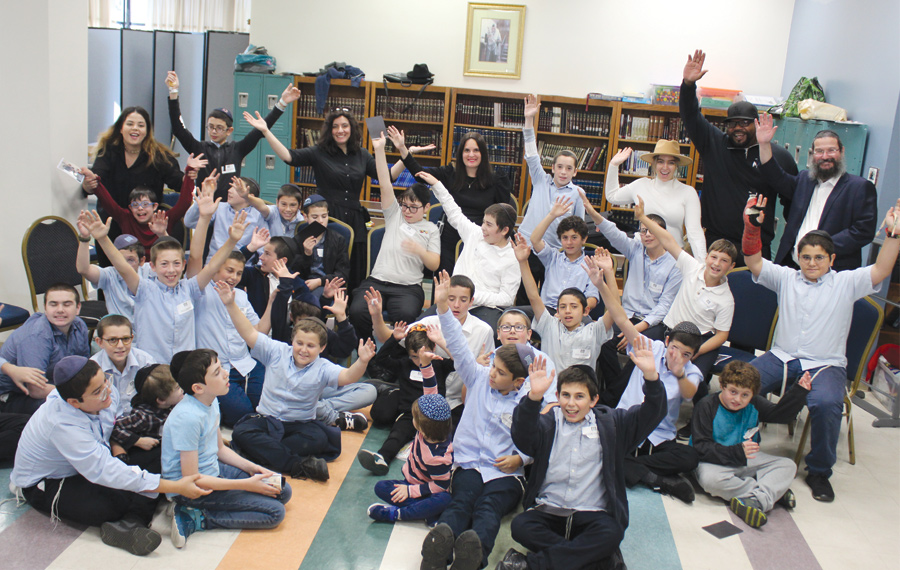
Friendship Circle of Los Angeles (FCLA) and Cheder Menachem partnered on FCLA’s second annual Inclusion Collaboration Day. Photo courtesy of Friendship Circle of Los Angeles

Friendship Circle of Los Angeles’ (FCLA) second annual Inclusion Collaboration Day saw the nonprofit partnering with Orthodox day school Cheder Menachem.

Coinciding with Veterans Day, the Nov. 11 event paired Jewish boys with special needs or delays in behavioral, social and motor abilities, and two seventh-grade buddies from Cheder Menachem. The children took part in davening and in interactive lessons on Hanukkah and Jewish observances, led by Cheder Menachem rabbis.

Gail Rollman, development director at FCLA, said Cheder Menachem went “above and beyond” preparing for the inclusive experience, providing the children with Cheder Menachem yarmulkes, a photograph in front of a step-and-repeat and a magnet picture to remember the day.

With the aim of providing Jewish educational and enrichment programs for special needs children and their families, FCLA currently partners with three Jewish day schools and one high school. 

The collaborative morning sought to provide FCLA kids, whose special needs prevent them from enrolling in Jewish day schools, with the opportunity to spend a few hours in a Jewish classroom. Rollman said Veterans Day was the perfect day for this kind of collaboration.

“For kids in public school, legal holidays mean school is out but for Jewish kids who have special needs in Los Angeles, it is a chance to go to Jewish school,” she said.

Rabbi Mendel Greenbaum, principal at Cheder Menachem, thanked FCLA for the opportunity to host the organization.

Chanie Lazaroff, director of inclusion at FCLA also participated in the event.


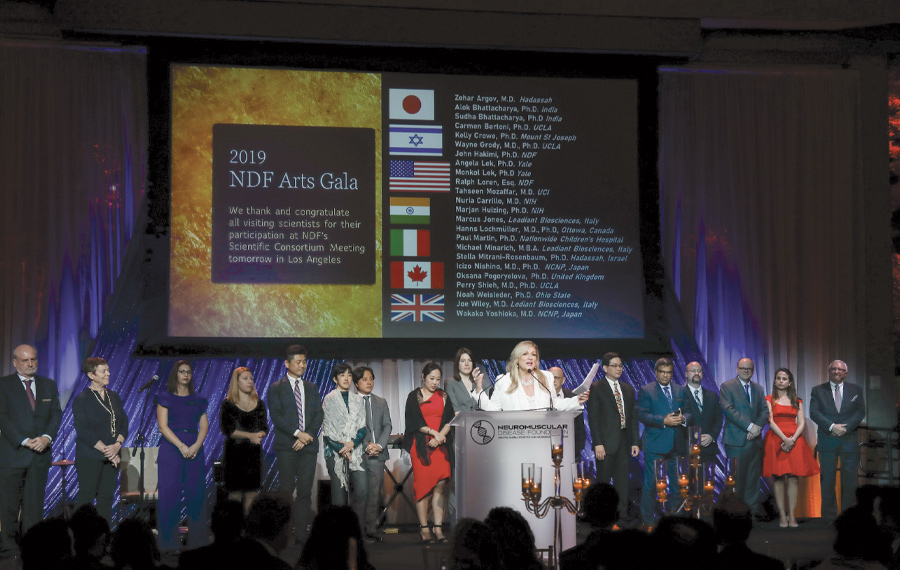
At the Neuromuscular Disease Foundation’s (NDF) Arts Gala, international scientists who are working on a cure or treatment for GNE Myopathy flank NDF CEO Lale’ Welsh (at lectern). Photo courtesy of the Neuromuscular Disease Foundation

The Neuromuscular Disease Foundation (NDF) held its second annual NDF Arts Gala on Nov. 17 at the Skirball Cultural Center. 

The organization is committed to enhancing the lives of those with GNE Myopathy, also known as hereditary inclusion body myopathy (HIBM), a rare muscle disease most frequently found in Persian Jews. 

According to NDF CEO Lale’ Welsh, the event helped NDF raise the balance of the foundation’s $2.5 million challenge grant. The $5 million total will fund pre-clinical studies for gene therapy .

“To the surprise of many, we have proven that we really are ‘the little engine that could,’ ” Welsh said in a statement. “With the help of key stakeholders as well as devoted scientists, we have achieved a fundraising goal thought to be impossible by any nonprofit organization our size. We owe this to the dedication of our patient population and their families, who have risen to this challenge.”

The evening’s honorees included Dr. Nuria Carrillo, who received the Scientific Advancement Award. Carillo is the principal investigator of GNE Myopathy clinical studies at the National Institutes of Health. Michael Minarich, CEO of Leadiant Biosciences, a pharmaceutical company, also received the award.

The event drew more than 530 attendees, including several NDF ambassadors, a group of young adults that works with NDF to promote its outreach, awareness and education efforts. 

Challah Bake, NDF Gala, Ji’s New Leader Read More »

On Black Friday, Who Dwells in Tents?

It is the central irony of American life that the national holiday about gratitude anchors the biggest shopping frenzy of the year. Here’s what I have, here’s what I want. Or to be more precise: Here’s what I’m so thankful for that I’ll break bread with my most quarrelsome relatives, and here’s what I’m so desperate for that I’ll spend my day off waiting in line.

I, too, am guilty of deal hunting, perhaps guiltier than most. I tell myself that I’m only doing it to be one with the zeitgeist, among the hungry masses, buzzing from store to store with a kind of nostalgic retail enthusiasm that for much of my adulthood has seemed bygone. I’m looking for a new phone and new socks and I’m not sure which I need more. But I’m also just looking.

Reporting on Black Friday in 2017, I interviewed “sneakerheads” who take it far more seriously than they take Thanksgiving. Setting up shop outside a boutique as early as Wednesday, they endure two full nights in the cold to keep their place in line. A few of them — the more experienced, perhaps — pitch tents on the sidewalk and host Friendsgiving inside.

My days of camping out for discounts are behind me. Nevertheless, this Black Friday, I surveyed the wares with a couple of friends visiting from out of town. The four of us walked along Melrose and then down Fairfax, catching up and catching some rays. Two boys with payot, standing on a corner in black suits and white shirts, invited us to wrap tefillin. But I already had, and my friend, despite my nagging, was too cool for it. “I had no idea you were so pious,” he said. “Not pious,” I cautioned, “only observant.” (And hardly that.)

The juxtaposition of these contrasting American attitudes — gratitude and wanting more — is also present in Judaism. In prayer, we mix our pleading with praise, thanks and literal bowing. As we count our blessings — the same ones, every day — we remind ourselves to ask for things that matter. I’m not sure that the proximity of Thanksgiving to Black Friday has the same effect, but who’s to say that flat screens and nice kicks aren’t the things that matter?

Just off Fairfax, we passed by a tent surrounded by a mess of personal belongings still soaked from yesterday’s rain. It struck me that the tent, an essential motif in the book of Genesis, has possessed unusual staying power both as technology and as a symbol. The biblical tent is a site of hospitality and news breaking, a recovery unit, a hiding place and a crime scene — and that’s just in sefer Bereshit. Generations later, a tent becomes our spiritual core while we nation-build in the desert. 

On Black Friday in Los Angeles, a tent embodies the paradoxes of late capitalism. On the same block one can find a tent being used as housing of both privilege and last resort — used by a person who can wait two days in line for free Nikes, and by a person who has been waiting months to receive Section 8 housing. Our prosperous, international city produces these disturbing scenes of extreme inequality everywhere you look. Yet when we’re feeling distraught, society tells us to go shopping. And I did: I bought a pair of socks.

On more recent assignments, I’ve been interviewing Los Angeles’ unhoused for stories about the city’s failure to prevent homelessness. The people I met were strung out in a dozen different ways, and were on the streets for reasons well within and way beyond their control. All of them deserve of our fullest humanity. 

The day after Black Friday, we read in the weekly Torah portion that Jacob, unlike his brother Esau, a fierce hunter, was an ish tam — a man, Rashi says, who was not inclined to chase deals. The verse further describes Jacob as yoshev ohalim, a man who dwelled in tents. 

Maybe the nonmaterialistic satisfaction Thanksgiving elicits is so unfamiliar that we eagerly bleed out our wallets in search for something to show for it. If Black Friday momentarily turns us into fierce hunters, we should remember that our roots — the Jewish imperative of past and present — are in the tent.


 Louis Keene is a writer living in Los Angeles. He’s on Twitter at @thislouis.

On Black Friday, Who Dwells in Tents? Read More »

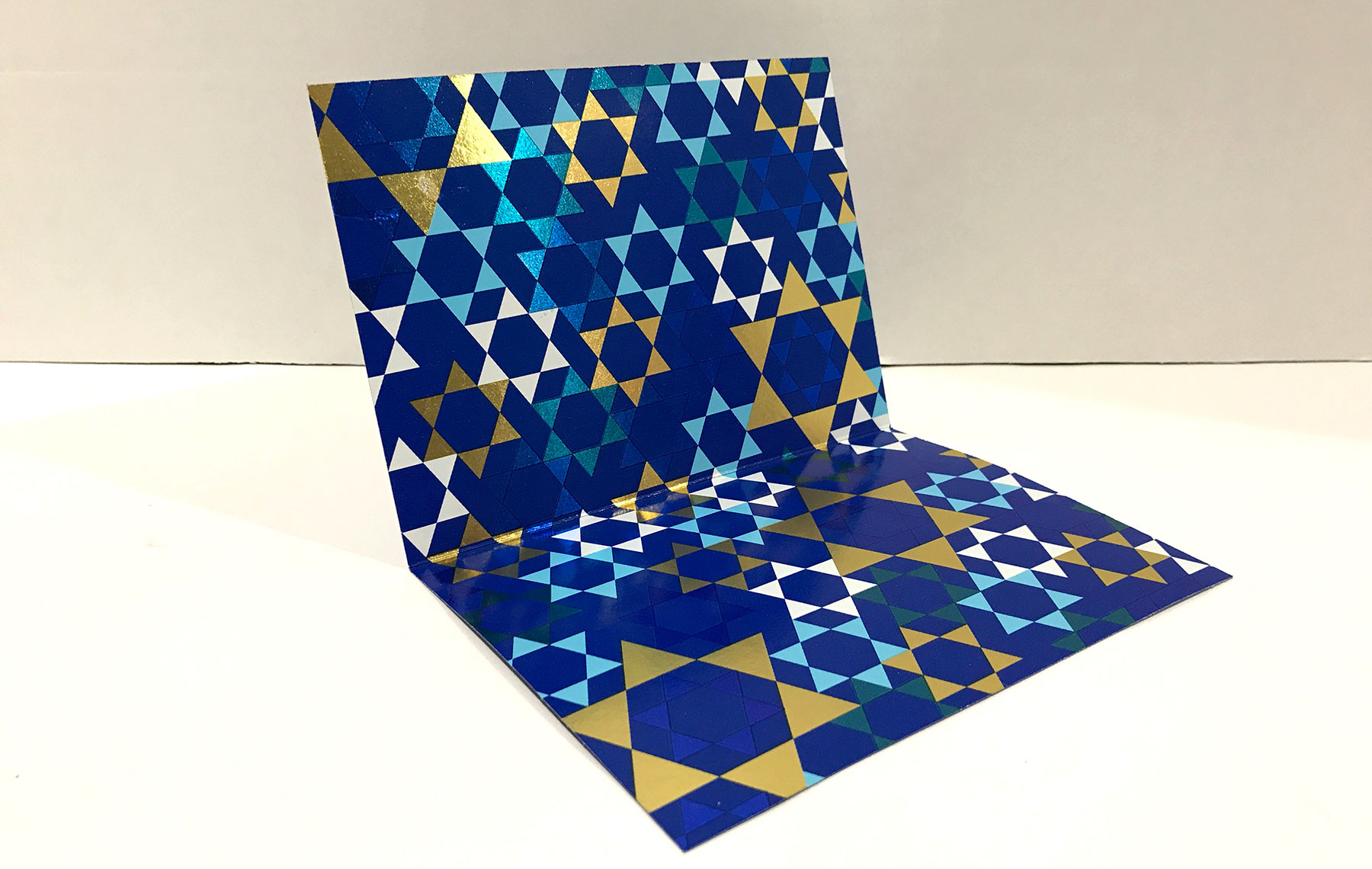
Jazz Up Holiday Cards With Pop-Up Gift Card Holder

I love receiving gift cards, but I do feel a little guilty giving them because I’m afraid the recipient will presume I didn’t put any thought into the gift. (That’s not true, I swear.) One way to jazz up a gift card is to create this pop-up holder to present it in. It says “voilà,” like you’re unveiling something very special. 

What You’ll Need:
Card stock
Scissors
Ruler
Stapler
Glue or double-sided tape


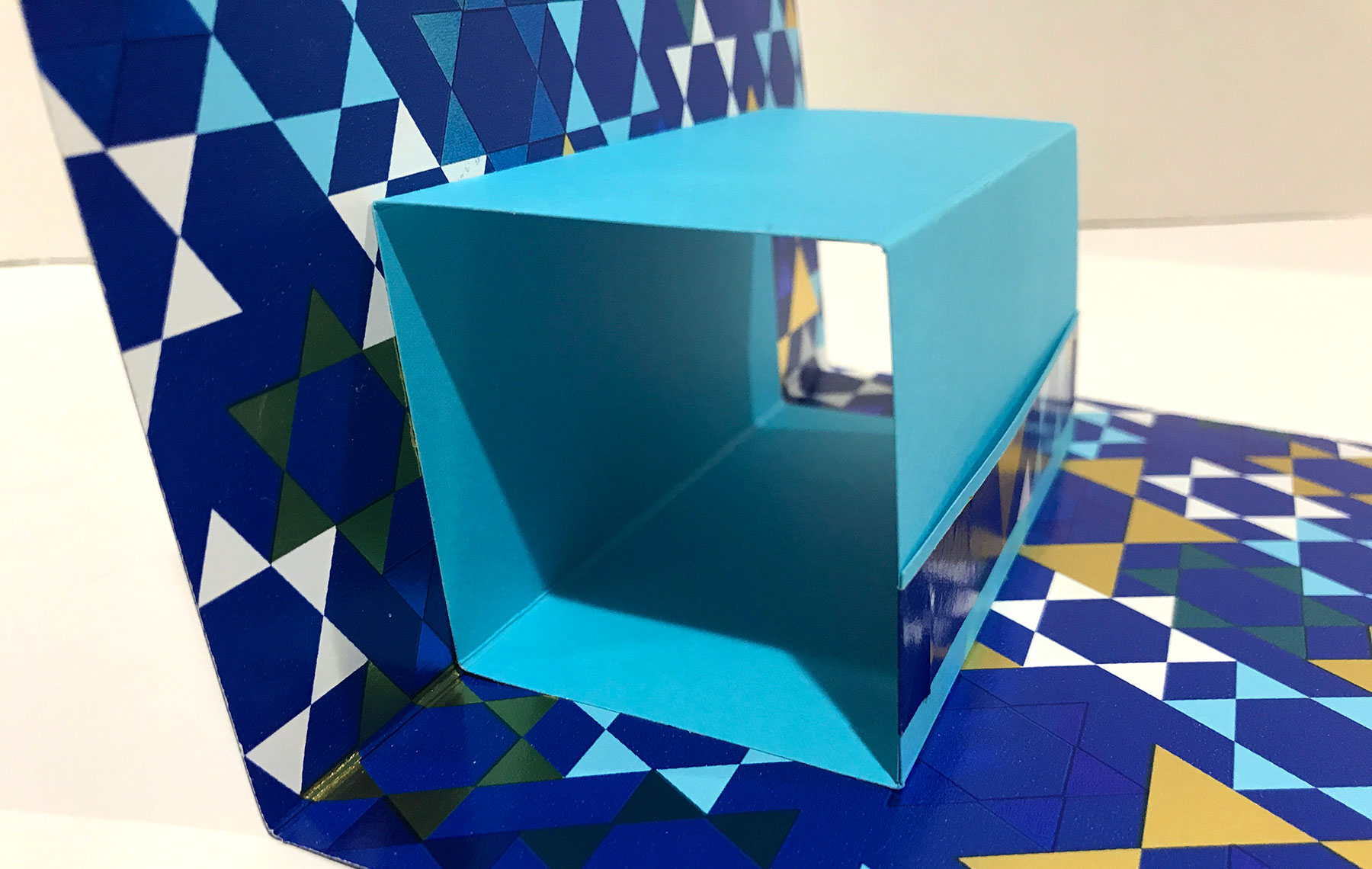
1. Cut a piece of card stock to 10 inches by 7 inches, and then fold it in half to create a 5-by-7-inch card.


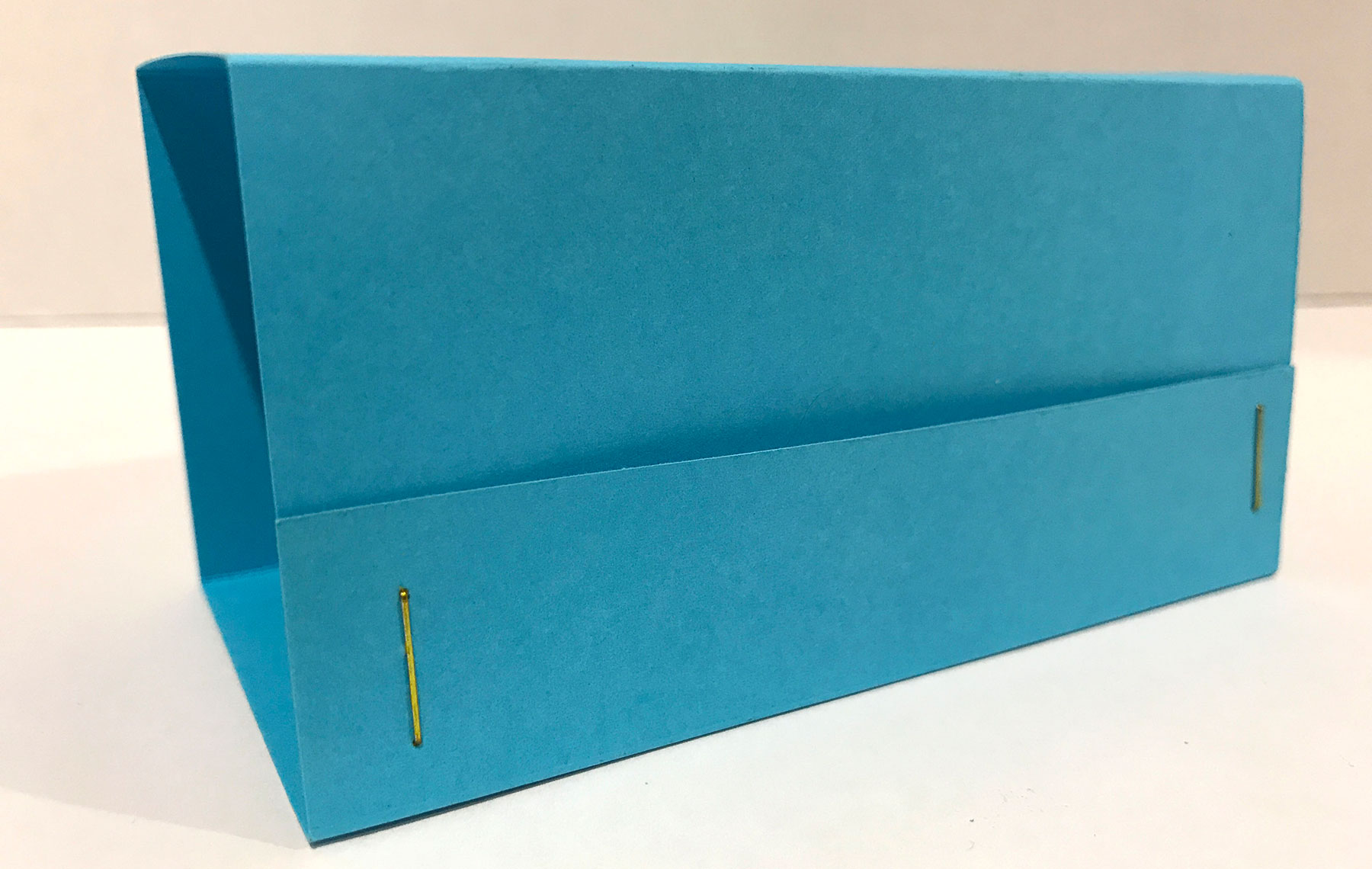
2. Cut another piece of card stock to 9 inches by 4 1/2 inches. Fold it crosswise every 2 1/4 inches to create a four-sided box with a half-inch flap.


3. Staple the left and right ends of the flap to the main box.


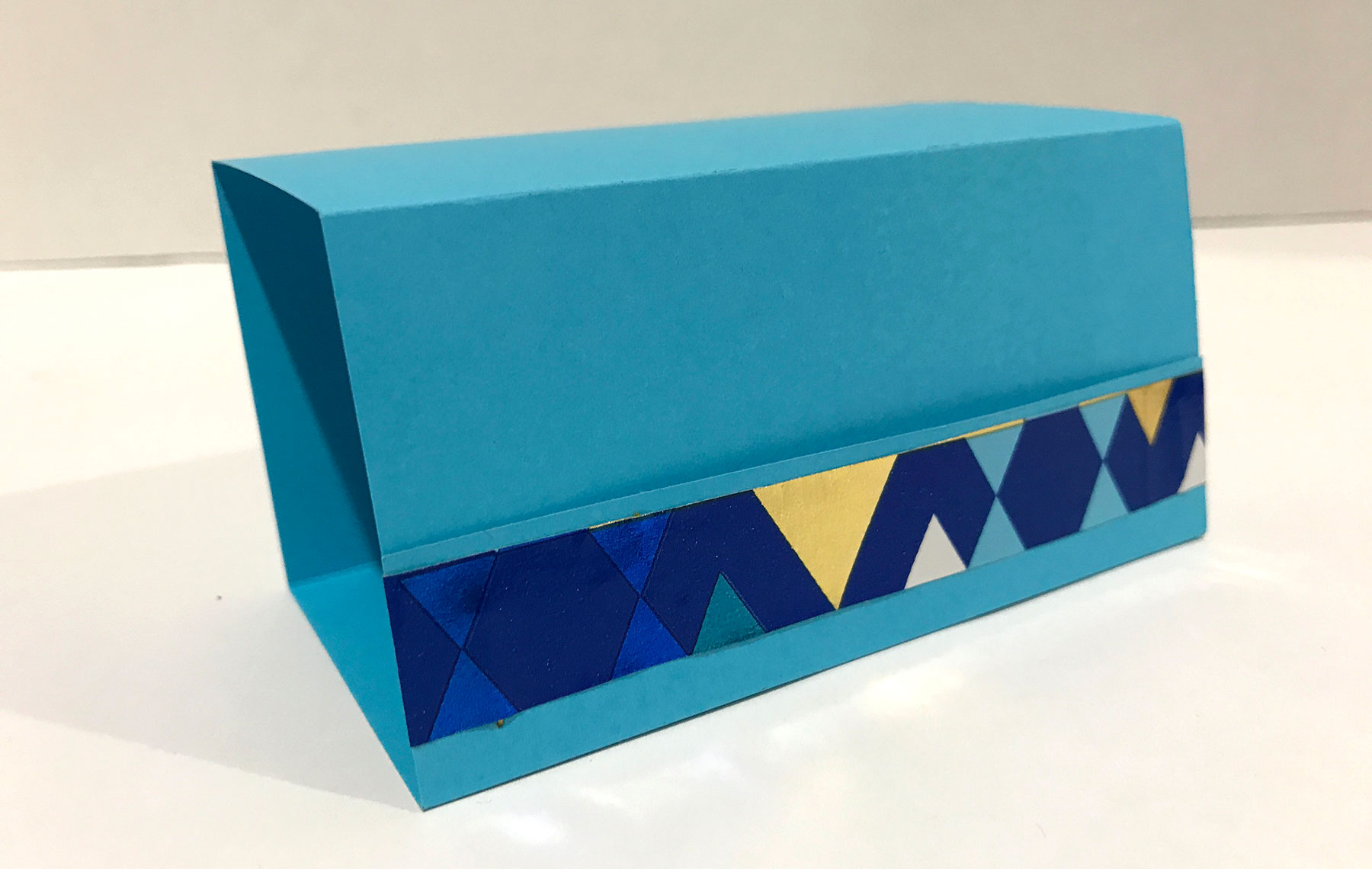
4. Cover the staples by gluing on a strip of paper or card stock over them.


5. Adhere the back and bottom of the box to the card with glue or double-sided tape. When the card closes, the box will fold flat.


6. Place your gift card in the pocket in front of the box.


Jonathan Fong is the author of “Flowers That Wow” and “Parties That Wow,” and host of “Style With a Smile” on YouTube. You can see more of his do-it-yourself projects at jonathanfongstyle.com.

Jazz Up Holiday Cards With Pop-Up Gift Card Holder Read More »

Obituaries: Dec. 6, 2019

Sylvia Bar died Oct. 26 at 92. Survived by daughter Jeanine; son Malchi; 1 grandchild. Hillside

Tully Becker died Oct. 9 at 86. Survived by daughter Hannah (Brent); sons George, Jonathan (Dani); 3 grandchildren. Hillside

Edward Cherney died Oct. 22 at 69. Survived by wife Rose; sister Leslie. Hillside

Rima Cohn died Oct. 21 at 73. Hillside

Rosa “Lenore” Erlich died Oct. 10 at 95. Survived by daughter Cynthia; 3 grandchildren. Hillside

Nicole Fleiss died Oct. 10 at 35. Survived by mother Marilyn; father Joel; sisters Traci, Jill; brother Jeff. Hillside

Jason Fox died Oct. 20 at 69. Survived by daughter Emily (Carlos Gestrin); sons Benjamin (Ruthlyn), Nathan; 4 grandchildren. Malinow and Silverman

Kim Hecht died Oct. 21 at 49. Survived by mother Kue; sister Kimberly. Hillside

Lilya Grebelskaya died Oct. 28 at 87. Survived by son Eugene (Stella) Leibman; 3 grandchildren. Mount Sinai 

Sheila Hutman died Oct. 11 at 82. Survived by husband Richard; sons Jon, Ted, Mark; 2 grandchildren; brother Philip. Hillside

Evelyn Itzhaki died Oct. 24 at 84. Survived by daughter Edna (Ronny); son Rafael (Alexandra); 4 grandchildren. Hillside

Theresa “Terry” Kagan died Oct. 25 at 100. Survived by daughter  Sandra; son Spencer (Laurie); 6 grandchildren; 8 great-grandchildren; sister Roberta Tischler. Mount Sinai 

Lawrence Kritzer died Oct. 22 at 85. Survived by wife Elaine; daughters Robin (Kenny) Marshall, Carol (Larry) Poindexter; son  Alan (Claudia); 4 grandchildren; 4 great-grandchildren; brother  Marc (Debbie). Mount Sinai 

Barbara Levey died Oct. 29 at 84. Survived by husband Gerald; daughter Robin Berkhardt; son John (Michael Kersman); 3 grandchildren. Mount Sinai 

Standley Magid died Oct. 12 at 82. Survived by wife Joan; sons Micha (Denise), Nikolai; brother Fred; 2 grandchildren. Hillside

Baruch Link died Oct. 27 at 72. Survived by wife Teri Cohan Link; daughter Tal; son Shmuel (Christina Gambacorta); sister Shlomit (Oli) Azaria. Mount Sinai 

Ralph Mannheimer died Oct. 26 at 89. Survived by daughters Marcie (Dan), Jody; sister Inge. Hillside

Sylvia Marcus died Oct. 26 at 92. Survived by daughters Andrea, Donna (Michael), Leslie (Richard); 2 grandchildren. Hillside

Hanna Renn died Oct. 17 at 92. Survived by sister Adrienne. Hillside

Robert Rifkind died Oct. 20 at 91. Survived by wife Stephanie; sons Joshua (Jennifer), Max; 1 grandchild; brother Richard. Hillside

Rachel Esther Schwarz died Oct. 30 at 88. Survived by sons Sidney (Elisa), Larry (Joanne); 4 grandchildren; 3 great-grandchildren. Malinow and Silverman

Michael Sherman died Oct. 30 at 88. Survived by wife Adele Sherman; sons Ronald (Julie), Mark (Denise Barilla); 3 grandchildren; brother Ted Wittcoff. Malinow and Silverman

Marla Slack died Oct. 27 at 72. Survived by daughters Antonia (Duane) Aikins, Janelle. Mount Sinai 

Marilyn Stampler died Oct. 9 at 85. Survived by sons Rick (Ann), Dan, David; sister Anna; 4 grandchildren; brother Jerry. Hillside

Susan Strauss died Oct. 23 at 74. Survived by daughters Marnie, Paige (Scott), Robin (Jon); 2 grandchildren; sister Beverly. Hillside

Gordon Tishkoff died Oct. 24 at 88. Survived by wife Lee; daughters Diane, Catherine; son Joe; 5 grandchildren; brother Jerry. Hillside

Stanley Varon died Oct. 24 at 84. Survived by wife Dianne; daughter Venita (Jonathan); sons Ric (Debbie), Lance; 6 grandchildren; sister Marilyn; brother Don (Rachel). Hillside

Marilyn Waldman died Oct. 15 at 88. Survived by husband Joseph; daughters Julie, Amy; son Thomas; 8 grandchildren. Hillside

Allan Wallach died Oct. 15 at 77. Survived by brothers Jeffrey, George (Susie). Hillside

Sydney Wartell died Oct. 19th at 100. Survived by 1 grandchild. Hillside

Ida Wolf died Oct. 27 at 100. Survived by daughter Ileene Link; 2 grandchildren; 3 great-grandchildren. Malinow and Silverman

Sandra Wolf died Oct. 19 at 82. Survived by sister Diana. Hillside

Vera Wolinksy died Oct. 9 at 98. Survived by daughter Iris; son David. Hillside

Gail Audrey Williamson died Oct. 27 at 72. Survived by daughter Robin Shapiro; son Adam (Sheri) Shapiro; 2 grandchildren. Mount Sinai 

Rita Yates died Oct. 28 at 87. Survived by husband Edwin; daughter Karen (Jonathan); sons Kenneth (Leslie), Gary (Susan); 6 grandchildren; 2 great-grandchildren. Hillside

Beverly Zisner died Oct. 22 at 64. Survived by husband Martin; daughters Aimee (Justin), Java; son Jeff (Shayna); 3 grandchildren; mother Shirley; brothers Cary (Linda), Avery. Hillside

Obituaries: Dec. 6, 2019 Read More »

Halo-Heart Designs: Giving Back Is in Fashion This Hanukkah

A unique women-owned business is helping charities while promoting Hanukkah this year.

Amanda Foley was busy working as a casting director in Los Angeles, while her lifelong friend and former college roommate Lindsay Flack was creating the first paint-your-own-pottery business in Cleveland. However, although they were both successful, neither was following their dreams.

“We got married, had families and found ourselves not fulfilling that creative need we had,” Foley told the Journal. “So we joined forces and tried to create something mindful.” 

Working out of their respective studios on the West Coast and in the Midwest, they decided to open Halo-Heart Designs, an accessories company that sells cuffs, bracelets, necklaces, key chains and clutches with pre-made inspirational messages or custom words. That was in January 2018, and since then, Halo-Heart Designs products have been worn by celebrities including Idina Menzel, Gwen Stefani and Adam Levine. 

The duo uses their jewelry to give back, which is how they’ve had the opportunity to work with celebrities. They made word cuffs, a word bar necklace, a keychain and a mantra in a bottle for Menzel and her nonprofit A BroaderWay, which provides arts programs to girls in underserved communities. The mantra in a bottle features a custom charm stamped with Menzel’s signature, as well as a handwritten mantra that says, “She believed she could. So she did.”

Foley met Menzel when she was working as a casting director and the two went to the same Mommy and Me play group. “Idina called me and said, ‘I need something for my foundation. I want to use something to fundraise. I love your concept.’ ”

From there, Halo-Heart Designs also teamed up with YourMomCares, started by Sharon Feldstein — mother of Beanie Feldstein and Jonah Hill —  and Adam Levine’s mother, Patsy Noah. Twenty-five percent of the proceeds from Halo-Heart Designs cuffs goes to their organization, and raises money for mental health programs for children. Levine gave one of the bracelets to Stefani to wear when they were on “The Voice” together. 

In addition, Foley and Flack work with OWN IT, an organization that inspires women through events and opportunities, and F— Cancer, which funds cancer education and prevention. 

“We do a lot of giving back,” Foley said. “It’s the core of who we are. It’s a great way to fundraise and spread our message and what we want to achieve.” 

Foley and Flack are using Halo-Heart Designs this holiday season to promote Hanukkah. Foley takes great pride in her religion. She grew up in a Reform Jewish family and had a bat mitzvah. When she gave birth to her son, she wanted to make sure he knew his ancestry and where he came from. 

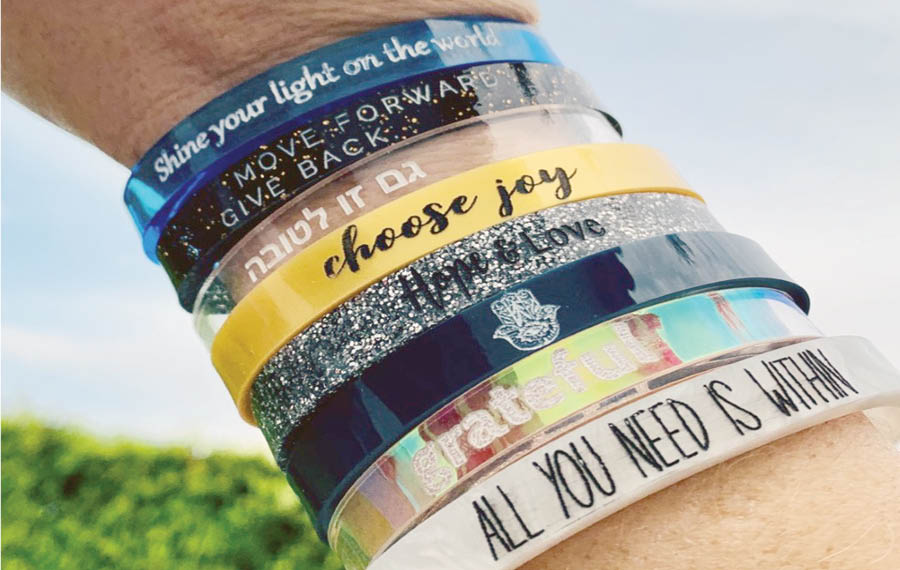
This year, she and Flack wanted to give people something to wear to express their Judaism during Hanukkah so they created eight cuffs, one for each night, with inspirational sayings. They include: “Shine your light on the world,” “Move forward, give back,” “Choose joy” and “All you need is within.”

“When we decided to jump into the holiday season, it was very important for Lindsay and [me] to make these cuffs because at the store there’s only one little corner part of the aisle for Hanukkah.”

— Amanda Foley 

“When we decided to jump into the holiday season, it was very important for Lindsay and [me] to make these cuffs because at the store there’s only one little corner part of the aisle for Hanukkah,” Foley said. “We wanted to make sure that we could wear our words in our faith.” 

Halo-Heart Designs also offers a Charm Bar for bar and bat mitzvah parties, where attendees can create their own keychains or charm bracelets. Right now, Foley said, they’re working with a bat mitzvah girl who is designing handwritten cuffs and selling them. The proceeds will go to a dog rescue. 

Most of the designs are custom. When Foley’s father died a few years ago, she made a piece of jewelry she wears every day with the words he wrote to her on a note. She said a child could write their name and the date, or grandparents could wear their grandkids’ signatures on a cuff. 

No matter how much the company expands or how many celebrities they work with, Foley said she hopes Halo-Heart Designs has a philanthropic reputation. 

“We want to get it as big as possible, where people feel they are really empowered to wear their words, and they know that Halo-Heart Designs is a company that gives back,” she said. “We want to be looked at as a women-owned business that empowers everybody.”

For more information visit thier website.

Halo-Heart Designs: Giving Back Is in Fashion This Hanukkah Read More »

Sending Lone Soldiers Love from Los Angeles

Drew Leach was completing her undergraduate degree at the University of Arizona during the Second Lebanon War in Israel in 2006. On her campus, she said her fellow students were saying horrible things about Israel, and especially about the Israeli army. Leach didn’t know how to defend the country or whether her peers knew what they were talking about. 

“I thought the only way I could know what was really going on was if I served in the Israeli army,” Leach told the Journal. “If what these people were saying was right, then I had to go and be a different kind of soldier. If they were wrong, I wanted to spread as much truth as possible about what it’s really like to be in the Israeli army.” 

When Leach arrived in Israel, she worked in the public relations department of the Israel Defense Forces (IDF) spokesperson’s unit, as well as the civil administration’s foreign relations department. She said she learned that there wasn’t any truth to the slander from her peers, and she saw sides of the IDF that were the complete opposite of what people had said on campus. 

While Leach had a positive experience in the IDF, being a lone soldier (a soldier from outside of Israel with no family in the country) was not always easy. She was the only American in her group, she was experiencing culture shock and she barely knew Hebrew. What comforted her was receiving care packages and letters from Congregation Bet Shalom in Minnesota, where her uncle was the rabbi. 

Receiving those packages inspired Leach, who now lives in San Pedro, to start M’ever LaYam (Over the Sea), a nonprofit that sends care packages to American lone soldiers in Israel. 

“Here’s an opportunity to continue personal connections with 25 soldiers. I’d love for our community to be able to support all the ones from L.A. this Hanukkah.” — Drew Leach

Leach, who worked for Hillel at UC Irvine and Jewish Federation & Family Services, Orange County, started the organization in 2016. She said the lone soldiers respond to the care packages by saying things like, “This is exactly what I needed. This has given me the boost to keep going, knowing there is a community that cares about me.”

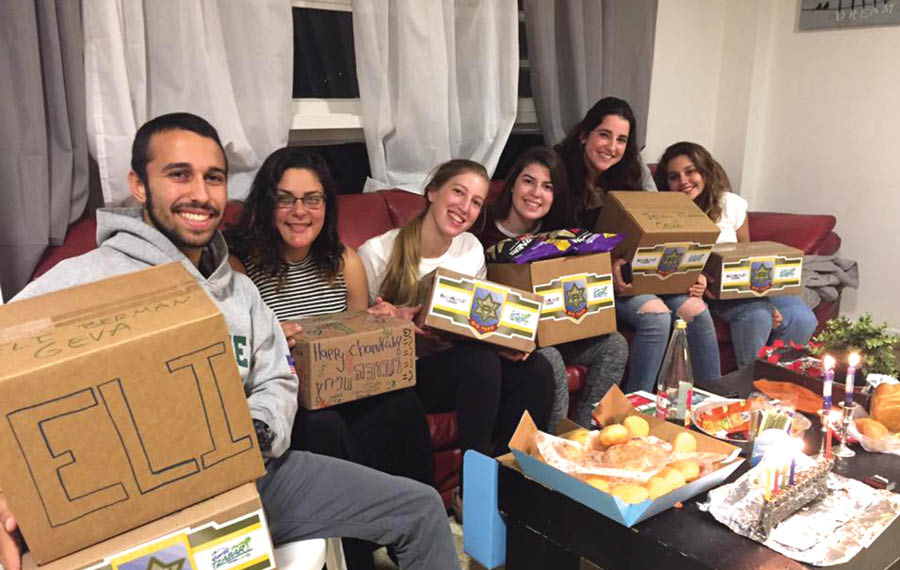
The care packages, which are sent twice a year — on Hanukkah and Yom Ha’atzmaut — contain around $60 worth of items. They are filled with American snacks, fuzzy socks and blankets. This Hanukkah, Leach put out a call to lone soldiers for specific items. She expected only 45 requests but received over 180, including 25 from Los Angeles. 

M’ever LaYam has partnered with organizations including Garin Tzabar, Families of Lone Soldiers, the Lone Soldier Center in Memory of Michael Levin and the Israeli-American Council in Washington, D.C. It has also partnered with local Los Angeles synagogues, schools and organizations including Sinai Temple, Or Hachaim, YULA, Hillel at CSUN and Valley Beth Shalom.

Yet despite all the local and national support, Leach said she still needs help fulfilling the orders this holiday season, so she is holding local packing parties and asking people to sponsor packages for $125 each. 

“Here’s an opportunity to continue personal connections with 25 soldiers from L.A. and more from around the country,” she said. “I’d love for our community to be able to support all the ones from L.A. this Hanukkah.”

Leach shared testimonials from a couple of lone soldiers including Letal from Beverly Hills, who has been in the IDF for nearly two years. She wrote, “When I saw the gifts, I realized how much people appreciate what I do and will always be there when I need someone. I have also received letters from the kids from Sinai [Temple] and it got me so emotional seeing little kids on my side and counting on me to protect them and be their hero.”

And Tova, who is from San Diego, is training to be an IDF officer. She received packages filled with blankets and face wash from Whole Foods. “M’ever LaYam is such a gift for lone soldiers, [and] it’s great to know that people are thinking of you from back home,” she wrote. “I wouldn’t trade this experience for anything, but it’s definitely a challenging one, and just a simple box with a few items makes the world of difference.”

While Leach is focusing on the Hanukkah packages in the short term, in the future she said she’d love to expand by hiring staff and having a dedicated warehouse space for packing. Then, she could make even more of an impact on the lives of lone soldiers through M’ever LaYam.

“It’s been incredibly fulfilling and has opened my eyes to the tremendous gap in the Diaspora we need to fill when it comes to lone soldier support,” Leach said. “Each care package, letter from the community and connection really affects and increases the morale of the soldier who gets them.”  

For more information, visit their website. 

Sending Lone Soldiers Love from Los Angeles Read More »

Bikel’s ‘Artistic Voice in Service of Tikkun Olam’

“Theodore Bikel’s The City of Light” is based on a short story by Theodore Bikel but the book’s author is his widow, Aimee Ginsburg Bikel. Born in Los Angeles, raised in Israel and long based in India as a foreign correspondent for Israel’s largest newspaper, Yedioth Achronoth, she met and married Bikel while visiting Los Angeles. She is the founder and director of the Theodore Bikel Legacy Project, which supports projects that “strengthen and support the values close to Theo’s heart: social justice and Jewish folk culture.’

Ginsburg Bikel spoke with Journal book editor Jonathan Kirsch on the occasion of the publication of “Theodore Bikel’s The City of Light.”

Jewish Journal: What aspect of Theodore Bikel’s long and varied career was most important to him? How would he want to be remembered — as an actor, as a singer or perhaps as an activist?

Aimee Ginsburg Bikel: Theo would always say ‘that is like asking me to choose between my children!’ It is unusual for someone to put so much energy and attention into so many separate careers, but all of these careers were important to him. He certainly started out, as a young man, intending to become an actor, and he did . His singing career was something that happened by accident, after he was “discovered” by Jac Holzman at Elektra Records. He had always loved to sing his folk songs but did not intend to do that professionally.  And he would not have been able to look at himself in the mirror if he were not an activist.

JJ: The publisher suggests that “Theodore Bikel’s The City of Light” is appropriate for readers who are 10 and older. The story you tell about the events leading up to the Holocaust are certainly child-safe, but what do you want your younger readers to learn about that tragic history?

AGB: I like to say that the book is appropriate for readers “from 10 to 120.” I’ve spoken with fifth-graders and sixth-graders, and the conversation mostly to come back to the fact that bigotry is alive and strong in our world. It’s one of the saddest parts of human experience but it’s real. While we want our children to spend of most of their days and most of their thoughts on feeling good and feeling safe, they are certainly old enough to know that people behave in ways that are unkind and unfair, and that sometimes there are negative consequences, not only for an individual but for a whole society. Most of them have experienced these things themselves, in one way or another. I talk with the kids about our job to stand guard; and where we see injustice, when we see people behaving badly toward each, we have the obligation to speak up. We talk about our need to remember, even when it’s hard, that all people are our brothers and our sisters. I think it is not too early to have these conversations at that age.

I am also happy for children to hear an intimate account of what it means to be a refugee. I want them to know that a refugee is someone who, a minute before becoming a refugee, was probably a happy child having a happy life, and suddenly, overnight, for reasons as unfathomable as those in “City of Light,” their world became a hostile world and they had to flee. When the children, when all of us, look at a refugee, that’s what we should see.

Finally, we are all concerned that the Holocaust is quickly being forgotten. This book does not detail the horrific facts, but the Holocaust not only happened, it happened to our own parents or grandparents or great-grandparents, and we want our children to know of those experiences so they can honor their ancestors, respect them for what they have been through, and learn from history.

JJ: Although the book recalls some of the darkest moments in Theo’s life, you tell a tale that is ultimately redemptive. You write in the book that he was “full of goodness and joy,” that he “loved being Jewish and worked hard to make this world a better place for all people everywhere.” How did he manage to be so optimistic despite his experiences in childhood?

AGB: Theo was very much an optimist, and he really was full of joy. But that does not mean I did not find him, many a night, in the middle of the night, sitting by his computer, reading Berthold Brecht and listening to socialist songs, weeping away at the plight of the people of the world. As his life drew to a close, he would weep in heartbreak that despite all of his activism, the world was not fixed and did not turn out the way he had hoped it would. Usually, I was able to remind him that we ARE in a better place because of his and many others’ activism. I reminded him that, for example, the marches in the South for civil rights- he had been arrested at one of them-  helped put President [Barack] Obama in the White House.

JJ: He lived long enough to see Israel change in some profound and unsettling ways. What did he make of the contrast between Israel in its pioneering days and Israel today?

AGB: Theo’s love for Israel was unconditional the way one loves a family member. The strength of his love was never shaken. He often quoted the saying “America right or wrong,” pointing out that when it’s right, it’s right, but when it’s wrong, it’s to be made right. He used the same phrase about Israel. He was a true lover of Israel, and to him that included caring to the depth of his being that Israel should be the just country it was meant to be. Theo suffered greatly over the occupation, over the plight of the Palestinians, the children of Gaza, and the deterioration of civil society in Israel. The last article he contributed to the Jewish Journal, shortly before he passed away (in 2015), expressed those heartfelt concerns.

JJ: What is the work of the Theodore Bikel Legacy Project?

AGB: We are using Theo’s artistic voice in service of Tikkun Olam. We continue to publish his words and his songs, and we created a short documentary film that we show at venues all over America. His archives have been curated and will soon be available for viewing at UCLA. We also engage in civic events, such as a fundraising concert for an Israeli organization that treats Syrian children, and a large event, including the mayor Garcetti and 45 faith leaders from the many religions represented in LA, against the desecration of Jewish cemeteries in Philadelphia. At the event, at Mt Sinai cemetery and in the presence of our ancestors, we declared Los Angeles to be a city of brotherly and sisterly love, and that everyone’s sacred place is sacred to all of us, to defend and to respect. And we’re still not finished! It’s quite incredible: when I talk to audiences about Theo, anywhere I go, in every city and in any venue, half the audience members have their very own Theodore Bikel story.


Jonathan Kirsch, author and publishing attorney, is the book editor of the Jewish Journal.

Bikel’s ‘Artistic Voice in Service of Tikkun Olam’ Read More »

Children’s Book Based on His Childhood Takes Theodore Bikel’s Legend to Another Stage

Over his long and remarkable career, Theodore Bikel achieved the status of living treasure. He is perhaps best known for the roles he played on the stage and in motion pictures and television, including the Broadway production of “Sound of Music” — the song “Edelweiss” was written especially for him — and the film version of “My Fair Lady.” And you need only listen to a Spotify playlist titled “This Is Theodore Bikel” to understand and appreciate the stature he achieved as a collector and performer of Yiddish, Israeli, American, Russian and world folk music. 

Bikel died in 2015, not long after a thrilling 90th birthday concert tour that I was privileged to attend, and an especially important episode in his remarkable life story is now retold by his widow, Aimee Ginsburg Bikel, in “Theodore Bikel’s The City of Light,” a co-publication of Mandel Vilar Press and MomentBooks, with illustrations by artist Noah Phillips.

The tale was first told by Bikel himself in the pages of Moment magazine, where he described his family’s escape from Vienna in 1938 and the bittersweet journey of return that he undertook in old age. Now the story has been transformed by his widow into an illustrated children’s book, highly appropriate for Hanukkah gift giving, but full of both pleasures and challenges that will last all year long.

Ginsburg Bikel and Phillips have risen to an extraordinarily difficult task by foreshadowing the events of the Holocaust without confronting her young readers with its atrocities. Indeed, “Theodore Bikel’s The City of Light” is a book that can be used to open a conversation about events in Jewish history that will be revealed in full only when the child is much older. 

“Te’o could not imagine the horrors that would come so soon,” she writes, using the nickname that Theodore Bikel would carry throughout his life. “He could not imagine that almost overnight their neighbors, their teachers, would become enemies, full of hatred and malice, simply because he was a Jewish boy.”

At the same time, and as the title suggests, the story of Bikel’s childhood harks back to the Festival of Lights and conjures up the heroic figure of Judah Maccabee himself. He loved hearing Bible stories, “some quite sad and some very funny,” but Hanukkah was always a peak moment.

“On Chanukah, there were even more songs and stories, about courage and miracles, and Oma [Grandma] made her special latkes,” the story goes. “On these special evenings, surrounded by the light of the chanukiya (menorah), and the love of his family, the boy felt especially happy.”

The peril that would fall on Te’o, his family and all of the Jews in Vienna is depicted only obliquely. The illustrations, which are endearing up until this point, suddenly turn harsh — we see a tank with a swastika flag, the figure of man who has been pushed to the ground, a broken shop window on which the word “Jude” has been scrawled. Te’o himself, we are told, is beaten by his classmates and chased by thugs. We are witnessing Kristallnacht through the eyes of a young boy who cannot fully understand what is happening but who knows enough to be terrified.

“Theodore Bikel’s The City of Light” is a book that can be used to open a conversation about events in Jewish history that will be revealed in full only when the child is much older.

“Where, oh where, is Judah Maccabee now?” young Te’o frets. “Where is the liberator of my people? But, even if he were to come, the eternal light was so thoroughly demolished that not even one drop of pure oil remained — the light could not be rekindled.”

Yet the story ends on a hopeful note. Now an old man, a grandfather himself, Te’o returns to Vienna and visits the synagogue where the eternal light was extinguished on Kristallnacht. He is inspired to sing the hopeful words of “Maoz Tzur.” “Maybe we cannot fix everything that has been broken,” he muses, “but with our song and with our love, we can always find our way back to the light.”

The book is considerably enriched by the little treasures that Ginsburg Bikel has assembled and presented to her readers. We are given his grandmother’s recipe for the honey cake that was his favorite, a glossary of Yiddish words and phrases to familiarize the reader with the mama loshen of European Jews, and the music and lyrics to a Hanukkah song that “Theo recorded especially for you, because he knew that someday you would be reading this book and thinking about all of the things you learned.” And, in fact, we can hear Theodore Bikel’s recording of the song by visiting the website where it is available (theodorebikel.org/thecityoflight).

Ginsburg Bikel provides an illuminating afterword that brings the story full circle. On Nov. 9, 2013, the 75th anniversary of Kristallnacht, Theodore Bikel performed a concert for the Parliament of Austria. “He said a prayer for the Austrian people, that they should always live in goodness and peace,” Ginsburg Bikel recalls. And she closes the book with her husband’s own words: “ ‘The mass murderers are gone,’ Theo said, his voice both soft and strong, ‘and I am still here, singing my people’s songs of peace and freedom.’ ”

His very words apply to “Theodore Bikel’s The City of Light.” Truly, and thanks to Aimee Ginsburg Bikel, Theo is still here, and we are privileged to hear him sing his people’s songs.

“Theodore Bikel’s The City of Light,” is available on Amazon. 


Jonathan Kirsch, author and publishing attorney, is the book editor of the Jewish Journal.

Children’s Book Based on His Childhood Takes Theodore Bikel’s Legend to Another Stage Read More »