MAZEL TOV! TIFFANY HADDISH BAT MITZVAH CELEBRATION
MAZEL TOV! TIFFANY HADDISH BAT MITZVAH CELEBRATION Read More »
MAZEL TOV! TIFFANY HADDISH BAT MITZVAH CELEBRATION
MAZEL TOV! TIFFANY HADDISH BAT MITZVAH CELEBRATION Read More »
One verse, five voices. Edited by Salvador Litvak, Accidental Talmudist
And he dreamed, and behold! a ladder set up on the ground and its top reached to heaven; and behold, angels of God were ascending and descending upon it. –Genesis 28:12
Sara Brudoley
Torah teacher and lecturer
Abarbanel points out that Jacob ran away for fear that Esau would kill him. He was poor and distraught. That is why HaShem caused him to come to Mount Moriah, to calm him down. There, he revealed to him in a prophetic dream that the blessings will be carried out, that Esau will not harm him, and that in the future, Israel will inherit the land and achieve abundance and greatness.
Rav Hirsch writes that the ladder was “set up” by a Higher Power and even though it is upon Earth, its top reaches the sky. Man’s life is not meant to be lived on a horizontal plane, but rather vertically, with aspiration for spiritual elevation. The ladder indicates that there are no separations between the physical and spiritual worlds.
Midrash Tanchuma explains that the angels going up and down the ladder represent the nations that will rule Israel. Jacob saw the spiritual angels of Babylon, Persia and Greece, going up and then coming down; these nations will rise to power and then lose it. The angel of Edom (Esau, Western civilization), however, went up and up, but didn’t come down. Jacob feared and asked, “Is there no downfall for him?” HaShem replied, “Fear not, Jacob my servant (Jeremiah 30:10), for even if he ascends up to Me, from there I will bring him down, as is written ‘Even if you soar like the eagle, and make your nest among the stars, from there I will bring you crashing down, declares the Lord’ (Obadiah 1:4).”
Rabbi Elliot Dorff
American Jewish University
This was my father’s bar mitzvah Torah reading, and as we read it each year, I think of him. His father also had a dream — of leaving Poland and making a new life for himself and his family in America — and at the age of 12, my father was part of that dream come true.
The dream, of course, only vaguely included all the hardships that it would entail — a new language, new customs, new friends. His father built houses in Poland, and my father became a civil engineer and built houses, office buildings and bridges. So with the help of actual ladders, he built many things from the ground up — literally so.
His real import for me, though, was the many angels he brought down from heaven in teaching me how to live life morally, sensitively and productively. He also taught me that such lessons cannot be only from the top down; that our experience in our own era must reflect back on how we respond to both God and the Jewish tradition. This, of course, is the mark of any deep relationship: It is not a one-way street but rather one of mutual concern, interaction and, yes, change. Remember that God changes course in response to Abraham, Moses and others, so this kind of mutuality in our relationship with God is deeply rooted in our tradition. May the angels of care, morality, learning, community and mutual interaction with God be part of all of our lives.
Rabbi Chanan (Antony) Gordon
Prominent motivation speaker
Yaakov, the last of our Patriarchs, clearly showed his desire to be “a man of the tents,” dedicated solely to spiritual growth. Nevertheless, Yaakov’s mother, Rivka, understood that the personalities of her two sons, Yaakov and Esav, were irreconcilable, which compelled her to push Yaakov into Yitzchak’s room, to ensure that her spiritual son would be given the blessings of physical and economic strength that would ensure his survival.
With total deference to his mother’s Divine insight, Yaakov agreed to accept the blessing from his father Yitzchak — not only to be the spiritual beacon of his family but also to acquire the physical and economic blessing supposedly intended for Esav.
The inherent tension between these antithetical aspirations is finally resolved in Parashat Vayeitzei in Yaakov’s dream of a ladder that is set up on the ground with its top reaching the heavens, and on which angels of God appear to ascend and descend.
The vision of the ladder was a Divine lesson regarding the life mission not only of Yaakov, but also his descendants, the Jewish people. Our role in this world is to create harmony between the physical, mundane life of the field and the spiritual life of the tents of study and prayer. This is the life to which Yaakov must aspire, and the imperative he bequeaths to each and every one of his descendants: keep your feet on the ground and reach for the stars!
Robin Sarah Davina Meyerson
Author, teacher, motivational speaker
Where did Jacob have this dream and what does the dream mean? Jacob departed from Beersheba and went toward Haran. He left his parents to begin his personal exile. He was tired and it was dark. Jacob found the place where Abraham had bound Isaac and decided to spend the night there. Jacob knew it was the place of the future Temple.
What do we learn about God from this parsha? We learn that God is everywhere — literally in every place. God is with us whether we notice him or not. God is with us in the day and God is with us in the night. God is with us in good times and in dark times. God is with us in freedom and in exile. How do we increase our constant God connection? By noticing God’s angels in our lives and doing God’s will. And we must be angels in other people’s lives.
God stood atop the ladder directing the angels because He is intimately involved with our lives. With deep self-knowledge, we can identify the ladder rungs in our lives that need improvement. Each of us have a middos (character trait) ladder to step up and improve. Just as the ladder bridges heaven and Earth, the Torah is the ladder that connects us to God. And no matter where we are on the ladder, God loves us.
Rabbi Aaron Finkelstein
Milken Middle School
“What went well this week?” I always begin my Friday class with this question, a practice inspired by positive psychology pioneer Martin Seligman. In his book “Flourish,” Seligman explains that the simple act of sharing our “3Ws” (what went well) can actually boost overall well-being if we commit to this practice. To prepare for Shabbat, my students recall the best parts of their week and perhaps more importantly, discover highlights even amid times of stress or struggle.
Yacov’s dream occurs during one of the most difficult times in his life. He’s alone, far from family and fleeing the wrath of his brother Esav. The Netziv, Rabbi Naftali Tzvi Yehuda Berlin (1816-1893, Lithuania), is struck that the angels in Yacov’s dream first ascend to heaven and only then descend to earth — don’t angels begin their journey in heaven?! He explains that “from this, Yacov understood that the presence of God was found below, on Earth.”
We have to train ourselves to discover the good that surrounds us. More and more, we resemble Yacov before his dream: harried and disconnected, stressed and isolated. Yacov (and the Netziv) reminds us that there are angels all around us. Even difficult weeks contain blessings and bright spots as well. All we have to do is take a few minutes to consider what went well in a day or a week, and we will suddenly remember what Yacov realizes when he wakes up: “Behold, God was in this place and I didn’t know it.”
Weekly Parsha: Vayeitzei Read More »
On Sept. 18, one day after election day, the numbers came in — and they said nothing new.
Prime Minister Benjamin Netanyahu of Likud didn’t have a bloc of 61 Knesset members. Blue and White leader, retired Lt. Gen. Benny Gantz, didn’t have a bloc of 61 Knesset members. To form a government, either one had to perform a miracle, or they had to join forces.
However, there are no longer rabbits in their hats, nor any great incentive to hold hands. Like the rest of us average Israelis, they were trapped. On good days, I feel sorry for them. On bad days, I feel sorry for us.
The day after the election, I called Haim Ramon to speak about an unrelated matter, but like everybody else, we drifted into a political conversation. Ramon is a former deputy prime minister, former minister and a former political operative. He was a reformer as a member of the Labor Party; he was a revolutionary in forming the Kadima Party; and he once was a prospective prime minister.
Now he is retired and writes about politics.
During our conversation, he asked what I think the odds are of a third election. Remember, this was the morning after election day. Pundits and analysts were busying themselves with creative scenarios for the next government. Because I felt somewhat disillusioned, I gave what I considered to be a fairly bold answer: 30% to 40%, meaning there was a significant chance that the September election, coming on the heels of the April election, would not be the last election.
With only eight days until a new government must be formed, a Dec. 3 meeting about the possibility of a coalition government of Netanyahu’s Likud Party and Gantz’s Blue and White Party ended after 45 minutes with no agreement.
Ramon was bolder. He estimated the chances at 80%. In the weeks after our conversation, I found myself in the position of having to adjust my assessment until it reached Ramon’s original, then surpassed it. Eighty percent is yesterday’s number. Today, it feels higher. Much higher.
Is Israel going to have another election?
That was the opening statement of a Journal story I wrote on Dec. 2, 2018.
My answer was accurate: probably, yes. But my analysis of what would happen next wasn’t quite as accurate. In my defense, at that time no one could have foreseen Israel’s political roller coaster that took up the next year. Yet, I feel a need to mention my failure of imagination as we move forward into the uncharted waters of a possible third round of elections. I feel the need to remind myself that whatever we see today might not be true tomorrow. Or next week.
So is Israel again going to have another election?
The answer is the same: likely, yes. The election committee already informed the Knesset that it can be ready for a next round by Feb. 25 (but as of now, unless the law changes, the expected date is March 17). Yet, a note of caution. There is more than a week for politicians to come up with a solution for the deadlock in which Israel finds itself.
A week in Israel can feel like an eternity.
With only eight days until a new government must be formed, a Dec. 3 meeting about the possibility of a coalition government of Netanyahu’s Likud Party and Gantz’s Blue and White Party ended after 45 minutes with no agreement. In a statement, Likud said the prime minister offered to pass “creative legislation that would set rules for the rotation in the prime minister’s office” but Blue and White refused to allow Netanyahu to go first as prime minister for even a short time. “Despite our significant concessions, Blue and White continues to prevent a unity government.” Blue and White said that Netanyahu did not present “any new proposal that is commensurate with his current legal situation or election loss,” concluding that “in short, Netanyahu has chosen elections.”
In late December 2018, the Knesset decided to hold a new election in April 2019. Since then, there have been maneuvers and spins, campaigns and faux pas, twists and turns, ups and downs. There was a lot of noise but only a handful of meaningful actions.

Six decisions deadlocked Israel:
1. Gantz and Yair Lapid formed Blue and White, a party that could present itself as an alternative to Likud. Had the center-left remained fractured, Netanyahu probably could have convinced one party to join his coalition.
2. Naftali Bennett and Ayelet Shaked formed the New Right Party. By coming up a few hundred votes short in the April election — robbing the right of four seats in the Knesset — this party’s failure blocked the right-wing-Charedi coalition’s path to power. Had the religious right remained united, Netanyahu probably could have formed a 61-62 coalition back in April.
3. Avigdor Lieberman of the Yisrael Beiteinu Party insisted on a unity government and was consistent in his refusal to support any other option for government. Lieberman made the option of a religious-right government go away. Lieberman made the option of a narrow center-left coalition supported from the outside by Arab parties go away. Had Lieberman agreed in April or September to join the religious-right bloc, there would have been a coalition.
4. Gantz and other leaders on the center-left (including Labor’s Amir Peretz) decided not to join a coalition headed by Netanyahu if the prime minister was indicted. Had Gantz or Peretz agreed to sit under Netanyahu, Netanyahu would have had a government.
5. All religious-right parties, except Lieberman’s Yisrael Beiteinu, chose to stick with Likud and Netanyahu. This bloc of 55 was Netanyahu’s shield against any attempts to create an alternative coalition. Had one or two of these parties decided to dismantle the bloc, Gantz might have had a chance to form a coalition.

6. Attorney General Avichai Mandelblit indicted Netanyahu. Had Netanyahu not been indicted, he might have had a chance to form a coalition with both his bloc and Blue and White.
Each of these six decisions had its own rationale and its own motivation — not one of which intended to deadlock Israel the way it did. In fact, all were aimed at creating a better and stronger government. Politicians and parties wanted to advance stability and/or the rule of law, morality, efficiency and democracy.
Bennett merely wanted a party that represented the not-too-religious hard-core right. Lieberman thought it was time to rein in Charedi political power. Gantz wanted Netanyahu gone after more than a decade in power. Netanyahu wanted to keep his government together and keep Israel safe.
If there was ever an example that the road to hell is paved with good intentions, this was it. They resulted in Israel wasting an entire year on nothing. They made a third election and another few months of wasted time very likely.

There is one more thing that makes a third election likely: Netanyahu’s insistence on keeping his job. Twice, he failed to form a government. Twice, he failed to make Likud victorious. He set the record and is Israel’s longest-serving government leader. He already established a precedent by being Israel’s first prime minister to be indicted while in office.
Yet, he still would not let go. Why? There is more than one possible explanation, and the one people tend to choose usually reveals their preference. A negative explanation goes along the lines of, “He doesn’t care about the country; all he cares about is going to trial as prime minister (or avoiding trial by getting immunity).” A positive explanation might be, “He is the only one who can navigate Israel through the treacherous waters of a volatile Middle East. And besides, why should he let go? Because his rivals can’t beat him at the polls?”
Some interpretations of his actions portray Netanyahu as a villain; others, as a victim. Some portray him as an obstacle to Israel’s well-being; others, as Israel’s only hope.
There is more than a week for politicians to come up with a solution for the deadlock in which Israel finds itself. A week in Israel can feel like an eternity.
He probably is both. The indictments against him raise many questions. They are based on questionable legal precedent and on testimonies of state witnesses who were left without much choice. Earlier this week, the total number of people expected to be called to testify was a staggering 333. Netanyahu has good reason to suspect the legal establishment was against him from the day he first was elected. He has good reason to argue the legal establishment makes it impossible for a politician to raise questions and propose necessary reforms in the legal system without being cast as an enemy of democracy and the rule of law.

Yet, there is no way to look at the facts the attorney general presented without a sense of unease about Netanyahu’s actions. Is this criminal behavior? There can be debate about that. Is this exemplary behavior? With this question, having a debate is more problematic. Netanyahu acted obsessively with the media, greedily with wealthy friends, and irresponsibly with his staff. Since a decision was made to indict him, he acted dangerously in an attempt to delegitimize the police and the state attorney, which delegitimizes Israel’s system of law and order on which we rely.
Be it because of legal considerations or because he believes he is destined to be Israel’s leader, Netanyahu has decided to fight. His personal drama is at the center of Israel’s political drama, with all other actors paling by comparison. Gantz? A nice guy who happened to be at the right place at the right time. Lapid? Not as lucky as Gantz; he wanted to be in Gantz’s position and must play, obediently if reluctantly, second in command to a man who has no command. Other Likud leaders? For the past year, most of them disappeared in Netanyahu’s shadow. They were (to paraphrase Winston Churchill) the political characters who step out of an empty car.
Is this about to change?
The last batch of Israeli polls are depressing. What we see in them is, well, nothing. No sign of change, no sign of hope, no sign of coalition. If elections were held today, the outcome would be much like the ones of last April and September: no majority for the bloc of the right, no majority for any feasible coalition of the center-left. That is, unless someone is willing to undo one of the six decisions that brought us to where we are. It might be Lieberman deciding to join the religious-right bloc or supporting a narrow coalition that relies on the Arab parties. It could be Gantz, deciding to enter a coalition with Netanyahu. It could be the Charedi parties deciding to abandon Likud. It could be Likud leaders deciding to throw Netanyahu under the bus.
Most of these scenarios seem like flights of fancy.
Lieberman doubled down, Gantz wouldn’t sit with an indicted Netanyahu, and the Charedis had no reason to abandon Likud. Where we did see some movement is within Likud. One Likud leader, Gideon Saar, openly questioned Netanyahu’s ability to ever form a coalition. Another Likud leader, Yuli Edelstein (Speaker of the Knesset), reportedly tested the waters to see if he could get 61 supporters and become prime minister.
These are early signs, but they told a big story: Within Likud, the race to succeed Netanyahu had begun. Saar positioned himself as Netanyahu’s main rival. Foreign Minister Israel Katz and former Jerusalem Mayor Nir Barkat chose to be loyal to the end, assuming Likud members are going to punish those who rush to unseat the prime minister.
They are all running — possibly along with Deputy Defense Minister Avi Dichter, Minister Tzachi Hanegbi, Minister Gilad Erdan and others. They call Saar’s move “hasty” or “disloyal” as they compete with him for the votes of Likud members, but his move served them well in putting the succession process into motion. Behind closed doors, they plot and strategize, prepare and maneuver. They smell blood in the water — Netanyahu’s blood. They look at him and see a dead leader walking. But since they’ve known him for some time, they also take into account the possibility of sudden resurrection. Saar decided he has nothing to lose because of the existing animosity between the prime minister and himself. Barkat and Katz might hope to get Netanyahu’s blessing when the day comes. And if not a blessing, at least a nod.
The question for many of them is not “if” but rather, “when.” Should they announce only when a new election is called, only after another failure to win an election, or after another failure to form a government? Will they be able to form the next government or have to lead Likud through tough years in the opposition and only then get a chance to occupy the prime minister’s office? They must not rush, but they also must not wait too long lest the train of succession leaves the station without them.
As I write this story, there are a few days for all parties to reconsider their positions and search for ways out of this political mess without having to go through another election. And yet on Dec. 3, Blue and White leaders decided that there is no point in having more meetings with Likud to discuss unity unless Netanyahu accepts the demand that Gantz be the first to serve as prime minister (and Netanyahu second, if the court finds him not guilty).
What could happen in the coming weeks and months?
Options are not many. It could be Netanyahu deciding to step aside, maybe in exchange for a deal that will save him the need to stand trial. It could be Lieberman deciding to go with a right-wing Charedi coalition after all, with the Charedi parties giving him some achievement with which to justify a turnabout. It could be Gantz deciding to trust the untrustworthy Netanyahu and serve under him for a few months in exchange for a promise he will become prime minister next summer or next fall. It could be 61 members of the Knesset deciding to end the madness and support a coalition headed by neither Gantz nor Netanyahu.
Behind closed doors, Likud leaders plot and strategize, prepare and maneuver. They smell blood in the water — Netanyahu’s blood.
If all these ideas sound farfetched, it’s because they probably are. This means another election in March and another attempt to form a coalition with numbers that don’t match the prerequisite. This means more months without a functioning government to pass a budget, more months without important decisions being made, more months of bickering and political fatigue.
Might this mean a fourth, fifth or sixth round of elections? You might say, “That’s impossible. No one wants that.”
True — but remember that no one in Israel wanted this; yet, somehow, this is where we are.
Shmuel Rosner is senior political editor. For more analysis of Israeli and international politics, visit Rosner’s Domain.
Israel’s Political Stalemate Read More »
Writing a book about Israel can be frustrating for many reasons, the first of which is that it constantly needs to be updated. Reality changes faster than people imagine. In the past few weeks, reality changed dramatically without anyone truly taking note.
In “#IsraeliJudaism,” which I co-wrote with professor Camil Fuchs, we write that “the question of the character of Shabbat in the State of Israel is, in fact, three separate questions.” The first concerns what Israeli Jews, as individuals, consider to be the desired character of Shabbat in Israel; the second concerns the appropriate price for preserving this character; and the third concerns “the desired level of state involvement in dictating the culture of its citizens.”
Let’s look at one case that is under considerable transformation: public transportation on Shabbat. Traditionally and legally, the state doesn’t provide subsidized public transportation on Shabbat. But for many years, most of Israel’s public wanted this policy to change. According to recent polls, it’s about 70 percent (many of whom support a limited volume of public transportation to central locations).
Some Israelis want transportation because they see a need for it (young people who go out to drink on Friday night, or people who don’t own cars who want to head to the beach the next morning). And there also are those who want it as a matter of principle, or to spite the political power of Orthodox parties who prevent such development.
Now consider the three questions we presented. In this context, they would be: What is your opinion about having transportation on Shabbat? Where on your list of other priorities is this issue? Is it a matter for the state to resolve or should it be a matter for private initiatives?
It is much easier not to let people have something than it is to take away something they already have.
Asked, and recently answered. For the past couple of weeks, municipalities started providing transportation — buses — on Shabbat. These municipalities provide it because officials know that this is what residents want. These municipalities also provide it because they can.
Why now? Apparently, there are some consequences associated with not having a functioning government. When the government is busy with elections, municipalities can establish their own policies. So your answer is: Israel wants it; for some Israelis it is a pressing priority; the government should minimize its involvement in such matters and let city halls serve their constituents.
Simple? Not really. The municipalities are forbidden (by law) to charge for public transportation, so riding the buses is free. The municipalities must budget for it. There is also the looming possibility that the government, when there is one (hopefully Israel eventually will have a functioning government), will attempt to reverse the policy.
But here’s the important thing: The government is quite bad at reversing such trends. As our book argues, “ultimately, the public is stronger than the establishment because it decides who holds the steering wheel. So, in the long run, Israel will be roughly as traditionalist or secular as the public wants it to be.” When the public, after a long fight, forced the government into allowing movie theaters to open on Friday nights (that was many years ago), a new status quo was born from which there was no return. I suspect that public transportation on Shabbat is currently at the same crossroads. The more time that elapses with buses running from Ramat Hasharon to the Tel Aviv beach, the more difficult it will become for any government to restore the old policy. That’s human nature: It is much easier not to let people have something than it is to take away something they already have.
Shmuel Rosner is senior political editor. For more analysis of Israeli and international politics, visit Rosner’s Domain at jewishjournal.com/rosnersdomain.
Israel’s Busing Revolution Read More »
Israel is known as one of the world’s most vegetarian- and vegan-friendly countries. Perhaps it’s the abundance of fresh and delicious produce, Jewish dietary laws or the pressure to have a fit body in a seemingly endless beach season. In fact, Israel has the highest population of vegans per capita in the world and Israel’s research sector is at the global forefront of research and development in the burgeoning “food tech” sphere.
Nir Goldstein, managing director of the Israel branch of the global nongovernmental organization the Good Food Institute (GFI), believes Israel’s academic and research sector is uniquely poised to help usher in the massive shifts in food production and consumption needed to “nourish the world sustainably.” The GFI, he said, believes in the “power of food innovation and markets to accelerate the transition of the global food system to plant-based and cell-based meat, eggs and dairy.”
According to Goldstein, although the general public understands the health, environmental and economic dangers of continuing to produce and consume animals, as consumers we cannot change our behaviors fast enough. So the GFI tries a different strategy to promote widespread systemic change. Instead of targeting the “morality of the consumer,” Goldstein said the institute has “decided to go with the consumers: develop tasty, price-conscious, easy-to-use foods without all of the negative parts of animal agriculture.”
Goldstein got his start in food tech as a patent attorney and business consultant while working with some of Israel’s largest companies, mostly in the food industry. There, he began observing market growth. “The strongest growth engine for a traditional dairy company is their milk alternatives, such as soy,” he said. Goldstein explained the potential for exponential market growth, saying, “We are using technology, so the saturation will be faster than traditional food products. I don’t think we can do much more with chicken than we have been doing up to now.
“The scientists eventually get a steak that was a few cells. It’s steak, but it doesn’t involve raising or slaughtering an animal.”
“Our senior scientist in Israel, Dr. Tom Ben Arye, is actually growing real meat, but outside of the animal,” Goldstein said. “He invented the cultivated steak.” The scientists, he explained, “take cells in a small biopsy, take them outside of the animal, feed those cells and make a whole tissue out of them, and eventually get a steak that was a few cells. It’s steak, but it doesn’t involve raising or slaughtering an animal.”
Goldstein noted that gene editing is an emerging field in Israel. “Today, we can take animal genes and put them into plants and teach the plants how to grow animal protein,” he said. “For example, we can take genes from a cow and insert them into a soybean and teach the soy how to produce cow’s milk. So the soy milk that you drink will actually be cow’s milk.”
Sitting in his brand new and still largely empty office, Goldstein said, “I had a great time working with Israel’s biggest companies, but I wanted to know what I could do to develop a better world.”
And that world, he believes, will be developed in Israel. The same country that brought the world drip-irrigation, water desalination and the cherry tomato will soon be bringing us cow’s milk made from soybeans and lab-grown filet mignon.
Creating Cell-Based Foods: Science Fact, Not Fiction Read More »
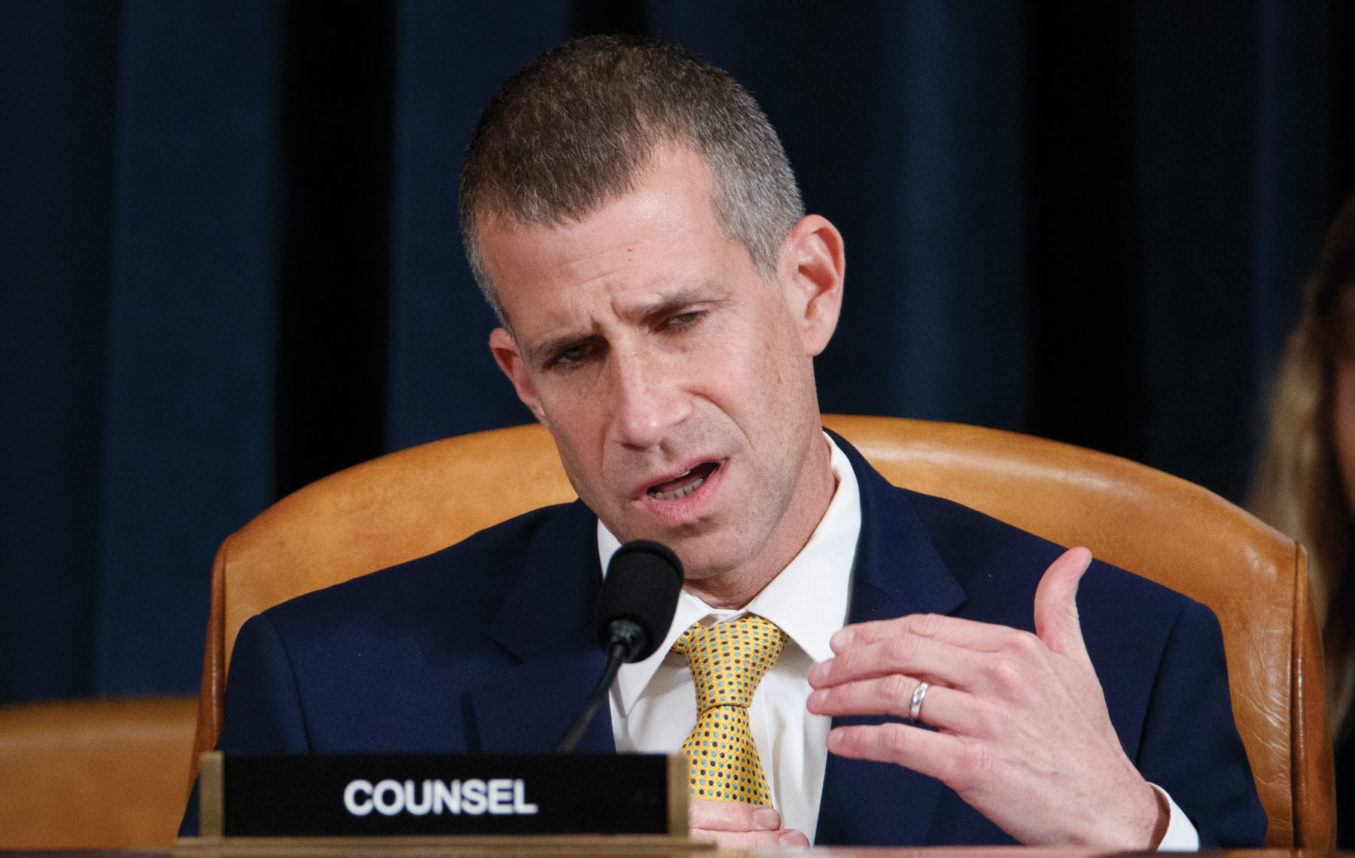
When Republican impeachment lawyer Steven Castor and Republican representatives implied Lt. Col. Alexander Vindman might have dual loyalty to the Ukraine, many Jews cringed. After all, the accusation of dual loyalty has a long and dishonored place in Jewish history.
Jewish historians cringed for a very different reason. Imagining the American son of Jews who fled the Ukraine when it was part of the Soviet Union might be loyal to Ukraine was a statement of ignorance and incongruent with the historical experience of Soviet Jews.
In the center of Kyiv, there is a monument to Ukrainian hero Bohdan Khmelnytsky, leader of the Cossack and peasant uprising against Polish rule in the Ukraine. For Jews, the 1648 Khmelnytsky revolt — known as “gezerot tach v’tat” in Jewish history — resulted in the deaths of tens of thousands, perhaps more than 100,000 Jews and the destruction of numerous Jewish communities. The reverberation of that revolt was felt in Jewish history with the rise of the Sabbatean messianic movement a decade and half later, and even of Chasidism, which spiritualized the messianic yearning and Zionism that secularized that same yearning. Ukrainian nationalist hero Khmelnytsky was the most effective pre-Hitler killer of Jews since the Crusades.
During Vindman’s father’s lifetime, Ukraine was the site of German massacres of Jews. In Babi Yar, the killing field just outside the town, Germans killed more than 33,000 Jews in two days, between Rosh Hashanah and Yom Kippur in 1941. Ukrainian neighbors looked on, and many went on to take possession of Jewish property, homes and apartments, furnishings and clothing. They slept in Jewish beds; they ate off Jewish dishes.
Ukrainian nationalists who thought cooperating with the Nazi German state would result in an independent Ukraine no longer under Soviet domination, staffed the death camps of Treblinka and Belzec, among others, where 1.4 million Jews died. At Belzec, 500,000 were gassed within 10 months by a staff of 104, of whom 14 were Germans and 90 Ukrainian. At Treblinka, some 925,000 were killed by a staff of 120, of whom 90 were Ukrainian and 30 German. The decimation of Jews in the Ukraine was overwhelming; many were killed by Ukrainians, not by Germans. Even the roundups of Jews from the Warsaw Ghetto were conducted by Ukrainians, providing the bulk of the personnel required for collaboration with the Germans.
In accusing Vindman of loyalty to the Ukraine, his accusers broadcast their ignorance.
Post-Holocaust, these Jews posthumously were denied the Jewish identity for which they were killed and were referred to (if at all) as “Soviet citizens” who died in the fight against fascism.
In the immediate post-World War II years, Stalin was guilty of crimes against the Jews: the Night of the Murder of the Yiddish Poets, the Doctors’ Plot, and the pervasive fear of — if not altogether planned — deportation of Soviet Jews. Stalin’s actions didn’t engender Jews’ loyalty to the country, aside from the enthusiastic Communists whose Jewish identity was marginal at best.
Jews who applied to leave the Soviet Union before the glasnost era weren’t permitted to leave. They often were fired from their jobs, assigned to menial labor, their children were deprived of educational opportunities and their families harassed. Some Jews were sent into internal exile. Many Jewish activists from abroad met with these refuseniks. We are impressed by their bravery. They were willing to speak out for themselves, for their fellow Jews and for human rights in the Soviet Union.
Richard Slotkin, a preeminent historian of immigration, described immigrants as “gamblers.” They left their homes and gave up their language, their culture and all things familiar in the gamble that their children would have better lives. Jews who came to the United States came for freedom and opportunity — values they cherished and couldn’t find in the land of their birth.
When Vindman addressed his father in his opening statement to the House Intelligence Committee on Nov. 19, he essentially assured him the gamble had paid off — that he and his brothers understood his father’s sacrifice, his father’s values and were grateful to be Americans. These are the statements of an American patriot, the statements of central and enduring values of American national life.
In accusing Vindman of loyalty to the Ukraine, his accusers broadcast their ignorance. They do not know what they are speaking about.
But we Jews know.
Michael Berenbaum is director of the Sigi Ziering Institute and a professor of Jewish Studies at American Jewish University.
How Ignorant Can They Be? Read More »
Eighty-eight pro-Israel groups sent a letter to the Department of Education and Secretary of Education Betsy DeVos urging her to ensure that federal funding to universities isn’t being used toward faculty members’ political biases.
The letter, which was spearheaded by the AMCHA Initiative, states “more than half the directors of currently Title VI-funded Middle East Studies National Resource Centers (NRCs) have pledged support for an academic boycott of Israel or engaged in boycott-compliant behavior, including attempts to shut down their universities’ study abroad programs in Israel, as have these centers’ affiliated faculty.”
The letter also notes that Middle East studies programs were five times more likely to sponsor pro-boycott, divestment and sanctions (BDS) speaking events if the programs featured at least one pro-BDS faculty member.
“An academic boycott calls for cutting off linkages with educational institutions in the boycotted country and unavoidably impairs the ability of students to travel to or study about the country or its language, and the ability of faculty to write, teach, and pursue scholarly research in this region of the world,” the letter states. “In particular, the academic boycott of Israel urges faculty to work towards shutting down study abroad programs in Israel and refusing to write letters of recommendation for students who want to study there; sabotaging colleague’s research collaborations with Israeli institutions and scholars; and blocking or canceling campus events and educational activities that ‘promote’ the normalization of Israel in the global academy.’”
Therefore, the letter argues, academic boycotts against Israel are anathema to Title VI requirements for federal money to provide access to international education resources.
“In light of your September ruling that it is unlawful for institutions of higher education to use Title VI funds for purposes not intended by the law, we ask that you take executive action now to ensure this ruling is followed,” the letter states. “Your immediate action is critical until Congress can permanently fix this problem.”
The Department of Education did not respond to the Journal’s request for comment.
Nearly 90 Pro-Israel Groups Call for DeVos to Prevent Federal Funding of Boycotts Read More »
When Brooke Goldstein was in her third year at Yeshiva University’s Benjamin N. Cardozo School of Law in New York City, her graduation was almost delayed because she had to skip so many classes.
At the time, she was in the midst of filming a documentary on terrorist groups that recruit children for suicide bombings. Ironically, while the professor of a class called Human Rights and Genocide Clinic wanted to delay her credits, Goldstein was working to expose a human rights issue.
Goldstein told the Journal that filming the 2006 documentary “The Making of a Martyr” “was an eye-opening experience for me. I used to think that the so-called Israeli-Palestinian conflict was very black and white; that there were good guys and bad guys and that was the end of it. But when I spent time with 6-year-old Muslim children who were repeating to me terrorist slogans like ‘We have nowhere to go but up [blow up],’ I realized there’s a complexity to the situation, and I became extraordinarily empathetic to these innocent children.
“I decided to dedicate my life to exposing human rights violations, and not just against these children. These children, like children anywhere in the world, deserve their right to life. How tragic is it that they are being continually abused and, frankly, murdered for political gains?”
With Goldstein, there’s no equivocating, no relativizing, no virtue signaling. She simply is a proud Jewess, speaking the truth about our history, Israel and the threats of our various enemies.
Inspired by her experience exposing human rights violations — and using facts and the law as her weapons — Goldstein has transformed how the Jewish community defends itself. In 2010, she created The Lawfare Project (TLP), an international pro-Israel litigation fund that has facilitated nearly 80 lawsuits around the globe. It maintains an international network of more than 400 attorneys dedicated to defending and upholding the civil and human rights of the Jewish community.
“There is this very liberal, democratic tradition in our country: using the courts to engage in litigation to uphold the basic rights of minorities,” Goldstein said. “Yet, while Jews have always been at the forefront of advocating for other minorities — Rabbi [Abraham Joshua] Heschel marching with Martin Luther King [Jr.], for example — we have never ourselves, as a minority community, really taken advantage of our rights to equal protection under the law, by strategically using the legal system to fight against anti-Semitic discrimination.”
Throughout most of our Diaspora history, the reigning governments typically used the law against Jews. There often were two sets of laws: one for Jews and one for everyone else. In 1913, B’nai B’rith founded the Anti-Defamation League (ADL). The ADL’s original mission statement was “to stop, by appeals to reason and conscience and, if necessary, by appeals to law, the defamation of the Jewish people.” But it rarely went the legal route.
“If we don’t fight to enforce our rights, why should we expect anyone to respect them?”
— Brooke Goldstein
The big changes of the mid-20th century, such as removing quotas for Jews at universities and ending exclusions at restaurants and country clubs, largely were results of cultural shifts after the 1964 Civil Rights Act. Groups including the National Jewish Commission on Law and Public Affairs (COLPA) and Agudath Israel of America did use litigation, but mostly to help Orthodox Jews obey Jewish law while maintaining employment.
Born and raised in Toronto, Goldstein first practiced entertainment law after graduating from Cardozo. However, the release of “The Making of a Martyr” moved her in a different direction. “Exposing the state-sponsored indoctrination and recruitment of innocent Muslim children was eye-opening,” she said. “This hate education is the root cause of terrorism.”
Goldstein began working as in-house counsel for Daniel Pipes’ Middle East Forum (MEF) and also ran MEF’s legal fund, which provided pro-bono counsel and financial support to members of the counterterrorist community and moderate Muslims speaking out against Islamist terrorism.
She then came up with the idea of creating a legal defense fund for Jews — using the law to defend and enforce the basic civil rights of Jews just as it is used to defend the rights of every other minority group.
TLP stands on its own, outside the realm of hasbara, leaflets and protests. Goldstein stated, We file groundbreaking cases around the world to tackle the major issues facing the Jewish people — from BDS (boycott, divestment and sanctions) to national origin or religious discrimination to state-sponsored discrimination. “We are like the pro-Israel ACLU.”
Not everyone, though, saw Goldstein’s use of litigation as a positive.
“When I first proposed a Jewish civil rights litigation fund there was backlash from some of the traditional Jewish leadership,” Goldstein said. “ ‘That’s too aggressive,’ they said. ‘This is not how we do things.’
“As a civil rights attorney, aggressively asserting the rights of my clients to be free from unlawful discrimination is a compliment. That means you’re a good lawyer. Can you imagine the NAACP (The National Association for the Advancement of Colored People) being accused by the black community of too aggressively advocating for black civil rights? If we don’t stand up for ourselves, who will? And if we don’t fight to enforce our rights, why should we expect anyone to respect them?”
Goldstein believes many Jews in the Diaspora have a problem with Jewish pride. “We should be able to stand up like every other minority group in this country and say we deserve justice — and say it loudly. We have every right to avail ourselves of the legal system, to equal protection under the law.
“The community spends so much money on so-called pro-Israel advocacy, and it’s not moving the needle. Dollars are being spent educating Jewish students how to defend themselves, handing out pamphlets and leaflets for them to memorize, as though it’s the job of a Jewish student to defend Israel. The change you can make with one lawsuit or even one legal letter is enormous,” she said. “Not only can you ensure that the rights of your clients are respected and protected, and that similar unlawful behavior is deterred, but you go from defense to offense. And when one minority community enforces the law, all minority communities benefit.”
Nine years after its launch, TLP successfully has litigated or helped litigate 79 cases in 17 jurisdictions around the world. TLP’s website points to these cases as the most significant thus far:
San Francisco State University (SFSU)
SFSU has earned a reputation as one of the most anti-Semitic campuses in the country, after more than three decades of discrimination and abuse of Jewish students by peers, professors and administrators.
With Winston & Strawn LLP, TLP represented five SFSU students and two non-student San Francisco residents. They filed two lawsuits against the California State University (CSU) public university system, one in federal and one in state court, alleging violations of the First Amendment, 14th Amendment (Equal Protection Clause), Title VI of the Civil Rights Act and the California Unruh Civil Rights Act.
In March 2019, TLP and Winston & Strawn reached a landmark settlement against CSU, which ensured that CSU recognize Zionism as an integral part of Jewish identity.
“We have never ourselves, as a minority community, really taken advantage of our rights to equal protection under the law, by strategically using the legal system to fight against anti-Semitic discrimination.” — Brooke Goldstein
National Lawyers Guild (NLG)
NLG, a public interest association of legal professionals, refused to sell advertisement space in its annual gala journal to an Israeli company. According to an email the NLG national office sent, the guild’s refusal was based on an official “resolution barring [NLG] from accepting funds from Israeli organizations.”
TLP is lead counsel representing Bibliotechnical Athenaeum, the Israeli organization whose ad NLG rejected. TLP argued that New York City and state human rights and anti-discrimination laws prohibit an entity from engaging in BDS-related discriminatory conduct based on national origin and/or citizenship.
The NLG’s second motion to dismiss the case most recently was rejected on March 2, 2018.
Kuwait Airways Corp. (KAC); Saudi Arabia Airlines (Saudia)
KAC refuses to recognize Israeli nationals’ passports or fly them on any of its flights. After alerting the U.S. Department of Transportation of KAC’s discriminatory behavior in 2017, TLP took steps to force the airline to choose between complying with federal and international law or face the termination of its lease at JFK International Airport. KAC canceled its JFK-London route, resulting in millions of dollars in pecuniary loss.
At the same time, TLP brought a suit against KAC in Switzerland, which resulted in KAC shutting down all its inter-European flights. TLP now is litigating in Frankfurt, Germany, to force KAC to comply with German anti-discrimination law on its flights to non-Arab League destinations with transfers in Kuwait. More than half of all KAC flight paths have been canceled because of TLP’s anti-discrimination actions.
Spain
Numerous city councils throughout Spain have adopted discriminatory resolutions and other official policies of refusing to enter into any agreements or contracts (political, commercial, cultural) with Israeli entities and non-Israeli entities that cooperate or do business with Israeli companies.
TLP initiated legal action in various Spanish courts to invalidate the discriminatory council decisions. To date, its Spanish counsel successfully has nullified 65 city council and local resolutions, and paved the way for criminal action against government officials and city councils that continue to adopt BDS-related policies.
As a result of legal action taken last year by Spanish Jews represented by TLP, Google LLC reached an understanding with TLP’s lawyers to block defamatory content, including material promoting Nazi ideology and Holocaust denial. The settlement came about when TLP filed several take-down notices with Google LLC, identifying content in its search results that included extreme and defamatory racism against the Jewish people. Google’s lawyers examined the complaints and subsequently, various examples of anti-Semitic content identified in the notices were blocked from appearing in Google searches in Spain. This is the first time Google blocked illegal content against the Jewish people based on defamation complaints.
Leila Khaled
Khaled, a notorious plane hijacker and member of the designated terrorist group the Popular Front for the Liberation of Palestine (PFLP), has been traveling throughout Europe with impunity and giving speeches glorifying terrorism, including at the European Parliament.
TLP submitted a criminal complaint to the National Court of Spain against Khaled, charging her with public exaltation of terror financing, while applying for a European arrest warrant and lobbying for Khaled’s inclusion on EU and Interpol databases.
In coordination with its Italian counsel from the Solomon Project, TLP engaged in a media and legal campaign that successfully resulted in Italy’s Interior Ministry barring the entry of Khaled into the country.
Hamas and Hezbollah TV
TV channels run by terrorist groups such as Al-Aqsa TV (Hamas) and Al-Manar (Hezbollah) regularly air programming targeting children that incites violence against Jews and promotes acts of terrorism.
TLP, upon discovering that a U.S.-based Internet Protocol TV (IPTV) provider was giving customers access to the two channels, drafted a memorandum of law analyzing potential criminal and civil liabilities to which the provider was exposed. After sharing the memorandum with law enforcement, an investigation was launched into the IPTV provider and the broadcast was shut down.
Correcting the Narrative
While TLP is tackling BDS in the courts, Goldstein believes there is an urgent need to change the underlying ideological narrative.
“If you can’t articulate why Jews, a minority community, deserve the right to sovereignty, then you have already ceded that space to the Jew-haters who are invading the left, and who seek to move the left toward a place that denies the right of Israel to exist,” she said.
“I’m reminded of M.J. Nurenberger’s ‘The Scared and the Doomed,’ ” Goldstein said. “During our people’s darkest hour, as Hitler’s war machine kicked into high gear, much of the Diaspora establishment eschewed collective action to save European Jewry. These cosmopolitan, assimilated Jews did not want to risk their hard-earned place in American society by speaking out of turn. They wanted to be a part of the prevailing culture, not disturb it.”
Goldstein said that in 2019, “the price of anti-Semitism in the U.S. is plummeting. And it’s only going to get cheaper if American Jews avoid demanding respect and asserting their Jewish Zionist pride. It’s time for the Jewish community as a whole to reject the anti-Semitic regressive left, not empower it,” she said.
Some progressives have tried to tarnish Goldstein with the “right-wing” brush because she appears on Fox News and commends President Donald Trump for supporting Israel. Asked what she calls herself, she laughed and said “I’m Canadian.”
She added, “Don’t expect any civil rights movement to respect you if you don’t respect yourself. We are strong when we lead by example, not when we bow to radicalism or partisanship.”
What’s next for TLP? “We will continue to do what we do best,” Goldstein said. “Advocate against Jew-hatred and file groundbreaking civil rights cases to ensure our clients achieve the respect they deserve.”
On the front burner is responding to a November ruling by the Court of Justice of the European Union (CJEU). The court declared that European Union law now requires labels to be placed on products imported from disputed Israeli territories (West Bank, East Jerusalem, the Golan Heights). “They have effectively mandated discrimination,” Goldstein said. “The law now treats Jewish-owned and Muslim-owned businesses differently, even if they operate in the same geographic location.”
Moreover, the CJEU added that any consumer’s “ethical considerations” — whether political, social, economic or environmental — also necessitates labeling. “Europe has opened up a Pandora’s box of politicized product labeling and unleashed unintended consequences that could wreak havoc on international trade,” Goldstein said.
How will TLP fight it? “We will argue, on the basis of anti-discrimination law, against applying the requirements exclusively to Israel,” Goldstein said. “We are committed to challenging enforcement in every country and every locality that attempts to discriminate on the basis of ethnicity or religion.”
At the same time, Goldstein said she’ll work toward creating “an intelligent, forceful Jewish pride movement… Jews have always supported other minority pride movements. Now it’s time for ours.”
Karen Lehrman Bloch is an author and cultural critic living in New York City.
Brooke Goldstein Upholds the Civil Rights of Jews Read More »
Fifteen years ago, the Journal published a story about cellphone use in synagogue. Some parents justified the practice, as they needed to call “Rosa” during services to check on their kids at home. The deeper issue is not whether to use a phone but why the children are home with Rosa when their parents are in shul.
Many parents see bringing children to services as pointless if they’re too young to understand the services, and even counterproductive, because they might make noise and distract the adults from their prayers. This betrays a fundamental, although all too common, misperception about Jewish religious practice.
In explaining the Torah portion Bo, Rabbi Saul Berman offered a contrast between Egyptian and Israelite understanding of religious ceremony. When Moses communicates God’s command, “Let my people go, that they may serve Me,” Pharaoh grants that request, but not everyone may go. Only the communal leaders perform ritual acts, so in the Egyptian concept of religious service, only their presence is needed.
Moses understands religious service differently: “We will go with our young and our old, our sons and our daughters” (Exodus 10:9). The purpose of the Israelite service is not just to perform an act but to inspire and elevate the entire community, young and old, sons and daughters. If a shofar is blown but nobody hears it … we have not fulfilled the mitzvah.
The sound of the shofar is just one example of mitzvot perceptible by the senses, which can captivate even — or especially — children: the sight of Shabbat or Hanukah candles, the smell of the etrog or Havdalah spices, the feel of the breeze (or sun!) in the sukkah, and the taste of just about every holiday food. All these traditions are accessible to the “pre-literate.” And children are the central actors in the most widely observed Jewish practice, the Passover seder.
If we want synagogues to attract the teenagers of tomorrow, we must bring the toddlers of today.
Of course, children cannot understand the service as well as adults but we must start somewhere. The adolescent who has stayed home until reaching bar or bat mitzvah age won’t know much more than a toddler — and will feel more uncomfortable about it, being at an age when they are starting to master other activities like sports or music. Too many adolescents, left with “Rosa” throughout their childhood, approach bar/bat mitzvah as if visiting a foreign country, where they don’t know the language and can’t read the map. Small wonder they try just to endure the ceremony, and then return as rarely as possible.
If we want synagogues to attract the teenagers of tomorrow, we must bring the toddlers of today. When my son was 3, he climbed all over stacked chairs — and under them. Perhaps it was not perfect decorum, but he became comfortable in shul, and felt at home. By the time he reached high school, he was a full-time baal kriah, reading the entire Torah portion every week for our congregation, the Westwood Village Synagogue.
Fortunately, our congregation does more than tolerate its children. We bring them
all up front near the end of services, when they not only participate in the concluding songs but lead them. Some read Hebrew perfectly, some can’t but learn the words eventually through their weekly exposure, and even those who can barely walk help by clapping or banging their hand on the table, joining their older peers in the kinderchorus. And when, after diligent practice, a 7-year-old masterfully reads a line before the entire congregation, it solidifies not just her sense of achievement and self-confidence but also her attachment to tefillah and the community.
At some moments, such as the rabbi’s sermon, quiet is imperative. But for most of the morning, absolute silence should be a lower priority than children’s presence. During shofar-blowing on Rosh Hashanah, a young boy asked his father why the blasts (tekiah, shevarim, teruah) were different. Rather than “shush” him for making noise, his dad whispered a brief explanation. Who is more likely to participate throughout high school and beyond: the children who kept the synagogue quiet by staying home with Rosa, or the boy who was there to ask a question and hear an answer?
Mitchell Keiter leads the children of the Westwood Village Synagogue in song every Shabbat morning.
The Fundamentals of Bringing Your Kids to Shul Read More »
I’ve always had a low threshold for pain. Whenever I bump into a wall or get a little cut, I act as if I’ve been run over by a semi.
When I found out I was pregnant with my first child last February, I cried tears of joy for an hour. I couldn’t wait to meet our baby.
I started to think about names, whether we’d want to know the gender before the birth, classes at My Gym I was going to enroll him or her in … and then the worry kicked in: How was I going to withstand the pain of giving birth?
When I told people I was pregnant, women I know as well as strangers started to tell me their horrifying childbirth stories. I heard about epidurals gone wrong, how difficult it was to recover from an emergency C-section, how long labor took, and the incompetence of the hospital staff.
My very smart doula, Yulia Edelshtain, gave me some great advice: “If anyone starts going into their story, just tell them you don’t want to hear it.”
She also said that even if the delivery was painful, it would be worth it. It wasn’t like some pain that you suffer for seemingly no reason. This pain was going to result in a beautiful life coming into the world.
Aside from Edelshtain’s insight, what also helped, was my faith. I had gotten through many rough situations before and come out on the other side stronger and happier. Why would labor be any different?
Before I became religious, I used to be anxious about everything. I would obsess over future events and think about all the horrible things that could happen to me. It was my odd way of taking control of a situation, I suppose.
I had gotten through many rough situations before and come out on the other side stronger and happier. Why would labor be any different?
As I strengthened my faith in HaShem, I started to live by the phrase, “Tracht gut, vet zein gut,” or “Think good, and it will be good.” Why worry when everything else in my life was so amazing? Hadn’t HaShem proven to me over and over that there was no need to stress?
While pregnant, to reassure myself, I read Rabbi David Ashear’s “Living
Emunah,” stories of people putting their complete trust in HaShem, and miracles occurring as a result. I trusted that HaShem would give me only pain I could handle and ensure everything would turn out
all right.
When my water broke, the pain wasn’t that bad. I labored for eight hours at home and then four in the hospital. Although I wanted to forgo an epidural, when I was dilated 6 centimeters, I couldn’t bear it anymore. When the staff was administering the epidural, I endured the worst pain of my life. I couldn’t move to distract myself from it, either. I could only sit still, squeeze my nurse’s hands, pray and cry.
But I got through it. After the numbness set in, I took a lovely three-hour nap, woke up, and joked around with my husband. When it was time to push, I used all my strength. It didn’t hurt at all — thank you, modern medicine.
Then came our gorgeous baby girl, who immediately fell asleep on my chest. I ate an entire box of Reese’s Pieces to celebrate and thought, “This wasn’t so bad. I could do it again.”
I feel accomplished not only because I gave birth, but also because I did it with very little anxiety. I’m now carrying that same mindset about parenting because I’m experiencing how stress-inducing it can be (if I let it).
I know that no matter what happens, HaShem is here for me throughout this wonderful new experience. And I’m certain that everything, as always, will be good.
Kylie Ora Lobell is a Journal contributing writer.
How Faith Helped Me During Pregnancy Read More »