fbpx

October 2, 2019

Shoah Survivors Featured in David Kassan Paintings at USC

Surrounded by painter David Kassan’s moving and painstakingly detailed portraits of Holocaust survivors, Executive Director of USC Museums Selma Holo quoted novelist Hermann Hesse: “When artists create pictures … it is in order to salvage something from the great dance of death.” What Hesse meant is that artists, when they create, are aware that their art will outlive them. 

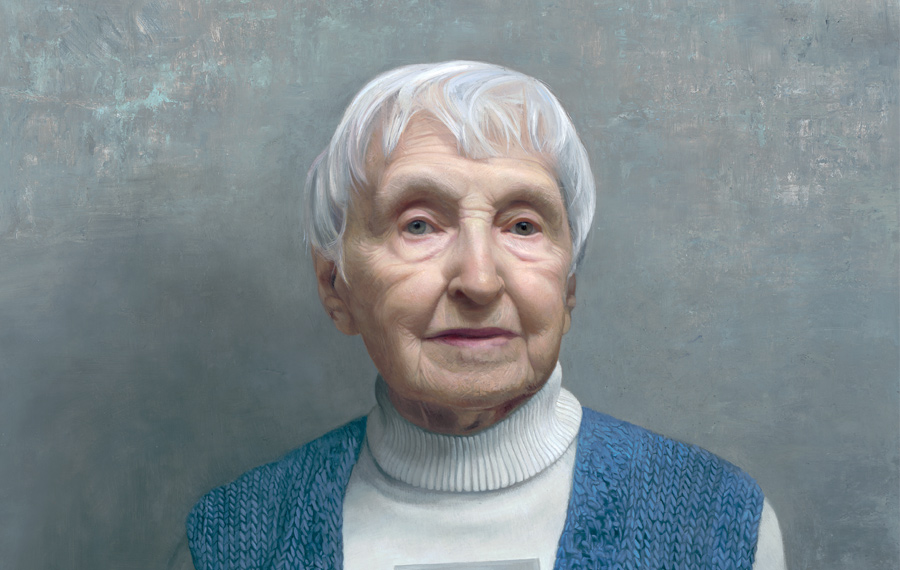
Holo made her comments in reference to “Bearing Witness, Survivors of Auschwitz,” a massive (17 1/2- by-8-foot), luminous, hyperrealistic, multipanel, lifesize painting of 11 Auschwitz survivors, all of them based in Los Angeles. It is a masterwork that took Kassan two years to complete. Look at the painting long and hard and you’ll begin to see traces of the survivors’ suffering and strength, their disasters and their triumphs, their inner light, even their very souls. 

The “Bearing Witness” survivors look out at you without self-pity. It’s impossible to face them without having a strong emotional reaction. There is so much to focus on: the hands, the veins in their arms, the shadows in their faces, their stalwart expressions, the dreamlike background and edges, drawn from actual scenes Kassan saw when visiting Auschwitz.

This painting is the centerpiece of “Facing Survival,” the not-to-be-missed current exhibition at the USC Fisher Museum of Art. But Holo, who co-curated the exhibition with USC Shoah Foundation Executive Director Stephen Smith, said Kassan’s talent and sensitivity also can be seen and felt in his other works in the exhibition, including other paintings of survivors and old masters-like sketches of faces, arms and hands that he executed as studies for “Bearing Witness.”

The son of a U.S. Air Force pilot, Kassan, 42, is Jewish and was brought up in Little Rock, Ark., as well as on military installations. “I grew up very secular and I never had any cultural understanding of what it meant to be Jewish,” Kassan told the Journal. “When I grew up, being Jewish was something to be ashamed of, unfortunately. And then that all changed when I went to Israel six, seven years ago, and I studied there. Actually, I taught there for two, three weeks, and I got this tattoo when I was there.” 

“Paintings like David’s are not disposable items … and by combining the [survivors’] testimonies with the paintings, we are left with something immortal.” 

— USC Shoah Foundation Executive Director Stephen Smith

He points to the Hebrew letters spelling out the word shorashim (roots) tattooed on his forearm — the same area where Jewish concentration camp prisoners had their ID numbers tattooed by the Nazis. Kassan committed himself to what would become an obsession to memorialize some of those who survived.

“I’ve met almost 40 survivors who have adopted me in a way,” Kassan said. “They all wanted to feed me. They all wanted to Facetime with my fiancée, whose name is Shayna. [They said:] ‘Shayna! Beautiful!’ So I’ve grown to understand my culture and be proud of being Jewish by doing this project. … I’m so proud now —proud of Jewish artists, proud of meeting these people and learning what they’ve been through, learning what they’ve overcome. 

“People are always asking me, ‘Being with Holocaust survivors, does this depress you?’ No, because I don’t define them as being Holocaust survivors. I define them by Ed being a developer and real estate guy, and meeting the family that Joshua has built and his four kids — just the joy they have in their family. And Pinchas being this amazing educator and cantor.” 

In fact, Pinchas Gutter plays a key role in “Facing Survival.” A resident of Toronto, some years ago Gutter gave taped testimony to the Shoah Foundation, which, along with the Fisher Museum, is a co-sponsor of Kassan’s current exhibition. 

Since its founding by Steven Spielberg in 1994, the Shoah Foundation has videotaped, catalogued and digitalized more than 50,000 interviews relating to the Holocaust, in 32 languages and 56 countries. Most interviewees were survivors, but there was also testimony from soldiers who had liberated camps, those who had lived in hiding or escaped to the East, even lawyers from the Nuremberg trials.  

In recent years, the Shoah Foundation has expanded its mission, having become a resource for information and education about other genocides, and broadened its technical capabilities. 

One of the highlights of the “Facing Survival” exhibition is that a visitor can interact with Gutter on a lifesize screen. Apart from his original testimony with the foundation, Gutter was filmed for five days, speaking about his life. Those answers have been programmed so that the on-screen Gutter can answer questions put to him — a technology useful in setting the groundwork for visitors not fully aware of the Shoah.

“I think it’s important for people, especially young people who may not know much about the Holocaust, for them to have portals of entry, and sometimes regular paintings or things that we grew up with are not as compelling to young people who have so much action all the time. Their attention span can be so diverted by all the stimuli they’re subjected to,” Holo said. “So for them to come here, sit down and have a virtual conversation with Pinchas, it’s a portal, first of all, into the experience of the Holocaust and they can learn something about it. And then, I think, they’re more positioned to go calmly through the exhibition and get what you want them to get out of it.”

What any visitor gets out of the exhibition is that Kassan has a lot in common with venerated old masters who honed their craft for the sake of the transcendent experience they had while working on a painting. 

“I do the paintings because I want to learn about these people,” Kassan said. “I don’t even like the idea of showing and exhibiting. I like doing the painting for me, to have an experience and to understand things. Having to show it is the anxiety. And within painting, I don’t want any anxiety or stress because that’s kind of my sacred place.”

“But there must have been a turning point,” Holo said to Kassan, “when you realized that these [paintings] have to be shown … these [paintings] are you extracting a visual testimony that simply doesn’t even belong to you anymore at some point. It has to be part of the public experience.”

Kassan’s work is “a form of testimony,” Smith said, “and when I saw his work online, I wanted the Shoah Foundation to be involved. There is a literary and poetic quality to his visual art. David’s methodology is that he goes to the survivors’ homes and talks with them and listens to their testimonies as he paints them. Paintings like David’s are not disposable items … and by combining the [survivors’] testimony with the paintings, we are left with something immortal.”

“Facing Survival” is on view through Dec. 7 at the USC Fisher Museum, 823 W. Exposition Blvd. Admission is free. For more information, visit the website

Shoah Survivors Featured in David Kassan Paintings at USC Read More »

Former Obamas’ Speechwriter Discovers Judaism Was There All Along

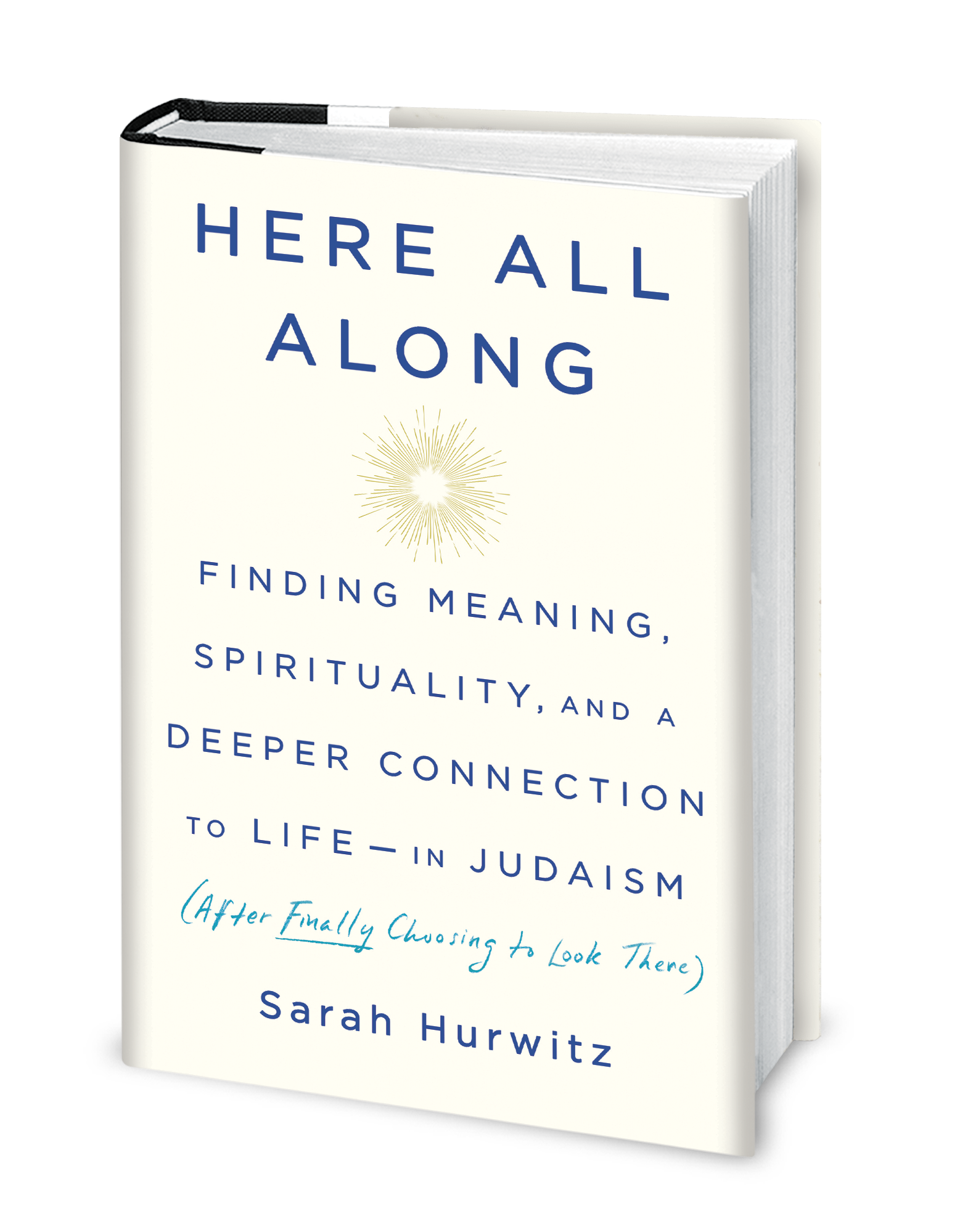
There’s that scene in every romantic comedy where the protagonist suddenly realizes they’re in love with someone who was there all along. This is that story, except it’s renowned political speechwriter Sarah Hurwitz who has fallen in love — with Jewish history, life, tradition and practice. She’s written about it in her new book, “Here All Along: Finding Meaning, Spirituality, and a Deeper Connection to Life — in Judaism.”

Hurwitz documents her Jewish journey beginning in her childhood, when after a bad Hebrew school experience she writes she was “just kind of done with Judaism. I was unable to own my Judaism, but unable to disown it either. So I mainly ignored it. … After all, I was busy.” 

Busy working as a speechwriter for the Obamas: first for candidate Barack, then for first lady Michelle.

After attending an Introduction to Judaism class at the Washington D.C., Jewish Community Center, Hurwitz writes in her book that she discovered a Judaism that “wasn’t the stale, rote Judaism of my childhood. It was something relevant, endlessly fascinating and alive.” She began to study in earnest. 

Some of what she learned was “counterintuitive at first,” she told the Journal in a phone interview. For instance, Shabbat “seemed like a lot of rules and very in the weeds, so legalistic,” but after spending time with people observing, she was “blown away. It was profoundly moving, wise and beautiful and I hadn’t known. All those rules created something extraordinary.” 

Now Hurwitz identifies as “a fan of Shabbat. It really helps to have all of those rules to plug up the many nooks and crannies through which the modern world is always looking to seep,” she said. “Keep out screens and electronics and noisy appliances and work, create a beautiful container, be present with the people you love and reflect and be refreshed. That doesn’t just happen, you have to do some work to create that.”

Hurwitz’s book is a crash course in Jewish literacy, the book she says she wished she had when she started learning five years ago, that provides the “basics but also uncovering the deeper insights.” 

Although she calls synagogues “amazing spaces for community,” Hurwitz is not a synagogue member, instead finding community in her Shabbat group and speaking about the Jewish meditation world’s retreats, classes and teachers as “spiritual companions.”

She also noted that the “unit of engagement” in synagogues is often built on the assumption of family. And although she never felt unwelcome, “being a single person without children … what’s being offered [in a synagogue] isn’t the right fit for what’s going on in my life.” 

She does, however, appreciate Jewish holidays that “tie us to ethics, history and spirituality,” and lifecycle rituals that honor big life transitions like marriage and having children. 

So what are the challenges standing in the way of connecting to Jewish tradition? For Hurwitz, it boils down to basic [Jewish] literacy. “It is so vitally important,” she said. “It gives you a foundation to dive in and learn deeply. Attaining [Jewish] literacy as an adult isn’t easy [but] the rewards are so vast. What you get out of it corresponds to what you put into it.”

Hurwitz has done that work and is reaping the rewards. She cites New York’s Hadar Institute CEO Rabbi Elie Kaunfer, who taught her that many prayers quote from the Tanakh. 

“Understanding where those verses come from adds an entire new meaning to it,” Hurwitz said. “And there’s an importance of saying the same prayers that your grandmother said and that Jews around the world have said.”

She also spoke about the classic liturgical cornerstone of the High Holy Days: Unetaneh Tokef. “I thought it was a simple reward-and-punishment theology,” she said. “But learning that it frequently quotes from the Book of Job changed my mind. A book where God punishes a righteous man due to a challenge from Satan is not clear-cut reward and punishment at all. It is complex and embraces the complexity of what happens to us.” 

One complexity that she opted out of addressing at length in her book is Israel.

“It’s painful for me to see this diverse country with millions of people from different backgrounds, complex and diverse, reduced to a political conflict,” she said, adding that she didn’t have the depth of expertise to address it properly. “Israel is very important and because it’s so charged and divisive, it becomes loud and pushes out everything else. It’s a 4,000-year tradition with culture and language; it’s important to make room for the rest of Judaism.” 

Hurwitz cites many influences in the book including writers Anne Lamott and Anita Diamant. And although her approach is through a lens of love, she doesn’t shy away from criticizing certain tenets. The book has a sub-section called “Let’s all calm down about chosenness.“ The idea of being chosen means that “we have our own way of relating to the divine and other people, based around our core texts, as do the other faith traditions,” Hurwitz said. 

She also advocates for embracing the moral truths of the Torah instead of the historical ones. Just like we have “interpreted away” stoning people for working on Shabbat or for being rebellious children, Hurwitz said, we can deal with problematic biblical statements “as we have done for 2,500 years” by adapting them for today. 

“People say gender-egalitarian Judaism or Judaism that embraces queer people is radical and I deeply disagree,” Hurwitz said. “The process of reinterpreting the Torah and Talmud is the most traditional kind of Judaism. As our moral horizons develop, we reinterpret our laws to catch up. Focusing on difficult parts of the Torah is like saying the Constitution doesn’t give women the right to vote … but we changed that. Frankly, the reality is that for most of Jewish history, men have been the ones doing the interpreting. It is crucial to have all backgrounds and all genders at the table.” 

Hurwitz’s book is a crash course in Jewish literacy, the book she says she wished she had when she started learning five years ago, that provides the “basics but also uncovering the deeper insights.” Asked what else she would include in a Jewish starter kit, she said,  “All of Judaism is hyperlinked to all of Judaism, so ‘where do you start?’ is a very stressful question. There isn’t a natural place to start. You have to explore; figure out what strikes your passion.”

Former Obamas’ Speechwriter Discovers Judaism Was There All Along Read More »

Natalie Portman Returns to Earth in ‘Lucy in the Sky’

Once you’ve been to outer space, life on Earth seems small and mundane by comparison. In “Lucy in the Sky,” that unique perspective consumes astronaut Lucy Cola, who finds it increasingly difficult to cope with life in the real world. Natalie Portman stars as the woman whose life begins to unravel after returning from a space shuttle mission. 

“It’s really about this existential crisis; what happens when you have this experience that makes you feel more alive than ever and have more meaning than ever,” Portman said at a press conference for the film. “But part of that experience is realizing how small we are and how meaningless everything that we care about in the universe is.”

The screenplay by Brian C. Brown & Elliott DiGuiseppi and director Noah Hawley was inspired by the story of astronaut Lisa Marie Nowak, a robotics specialist who flew on the Space Shuttle Discovery in July 2006. Jealous of Colleen Shipman for stealing the affections of the astronaut she was in love with, Nowak attacked Shipman and was arrested and charged with attempted kidnapping, burglary and assault. Her career at NASA and the U.S. Navy came to an abrupt, dishonorable end. 

Rather than dwell on the sensational aspects of the story, though they are depicted, “Lucy in the Sky” focuses on the psychological ramifications of Cola’s experience. The love triangle is still a major plot point, however. Cola has a husband (Dan Stevens), but begins an affair with fellow astronaut Mark Goodwin (Jon Hamm). It becomes apparent that she is more invested in the relationship and wants more out of it than he does. 

Natalie Portman in “Lucy in the Sky;” Photo by courtesy of Fox Searchlight Pictures

That isn’t the only thing raising Cola’s stress level. Her marriage is disintegrating, her beloved grandmother (Ellen Burstyn) is dying and she feels discriminated against at work. First-time feature director Hawley (“Legion,” “Fargo”) “built it in a way where the pressure keeps mounting and mounting until this tightly wound spring just explodes,” Portman said. She added that the cause of the meltdown “is not one thing and that’s true of most human behavior. It’s many things. It’s how her family was when she was growing up. It’s sleep deprivation. It’s returning from space and seeing things differently. It’s feeling gender-based discrimination and unfairness at work. It’s a man who is treating her badly. It’s a result of all of those things.”

Portman, known for her Oscar-winning portrayal of an increasingly unhinged ballerina in “Black Swan,” her Oscar-nominated turn as Jacqueline Kennedy in “Jackie,” and writer Amos Oz’s mother in her screenwriting and directorial debut “A Tale of Love and Darkness,” filmed in her native Israel, was not originally set to play Lucy. Reese Witherspoon was attached to star, but had to drop out due to a conflict with “Big Little Lies.” (She remained a producer.) 

Portman was eager to step in, as she admits to an obsession with space and fantasizes about going there. “I’m trying to convince NASA,” she said. In her preparation and research, she visited NASA and spoke to astronauts who had been on missions to the International Space Station. “They were describing how hard it was physically to come back from space. It’s so hard to pick up your feet after being in no-gravity,” she said.

“There is a whole protocol about psychological well-being. There’s quite a lot of vetting that they do of potential astronauts of their emotional well-being,” Portman continued. “Being up there with a small group of people in a confined space for an extended length of time under sometimes very stressful conditions, you have to be pretty stable to even get the opportunity to go. It makes it even more remarkable that someone could have such an extreme unraveling upon their return.”

Portman, who will next play the titular hero in the gender switching “Thor: Love and Thunder,” scheduled to be released in November 2021, said she seeks an important common denominator in her characters: “A woman as a complex human being with her own very specific intentions, flaws and strengths.” 

She added, “The more [we have] different kinds of representations of women, the more complicated [they are], the more they are agents of their own narratives, [the more] it shows women as an infinite array of possibility.”

“Lucy in the Sky” is in theaters Oct. 4.

Natalie Portman Returns to Earth in ‘Lucy in the Sky’ Read More »

Thoughts on Atonement at the Age of 94

To be perfectly honest, I’ve never been much of an atoner and now, at 94, it takes an effort to move fast enough to catch up with long-ago transgressions.

However, in the last two months an odd set of circumstances has led me to wrestle with questions of personal guilt and — for good measure — collective and historical guilt. This introspection was triggered by an invitation to visit Berlin, the city of my birth, extended by Dr. Benjamin Kuntz, a tall, handsome 34-year-old public health researcher at Germany’s prestigious Koch Institute.

In line with his professional interest and unbeknownst to me, Kuntz was writing a biography of my father, the noted German pediatrician Dr. Gustav Tugendreich. In groundbreaking research with Max Mosse more than a century ago — on the high mortality rate among German children between the ages of 2 and 6 — they showed how much depended on the social and economic level of the children’s parents, especially if the mother had to do menial work outside the home.

By happy coincidence, some 6,000 miles away in Los Angeles, I had rather reluctantly written a cover story about my deceased father for the 2006 Father’s Day issue of the Jewish Journal. Shortly after the article was published, it resurfaced in the quarterly German magazine Aktuell, published by the municipality of Berlin for former (mainly Jewish) residents, now scattered across the globe.

That’s how Kuntz learned of my existence and my father’s death in Los Angeles in 1948. The elapsed decades and the fact that I had changed my father’s unpronounceable last name to Tugend raised doubts in Kuntz’ mind whether he would find me alive and/or coherent, but he persisted.

An intensive email correspondence ensued, followed by the first of two visits to Los Angeles, and he reciprocated in July of this year by inviting me, together with my journalist daughter Alina Tugend, a frequent New York Times contributor, to visit Berlin.

In a jam-packed five-day schedule, we met with German intellectuals, civic officials, the favorite professional soccer team of my boyhood and a passel of journalists. Wherever we went, we were accompanied by a camera crew under the direction of documentary filmmaker Hans-Dieter Rutsch, whose plans include a documentary on the Tugend/Reich family.

I can forgive a nation that in general seeks atonement for the sins of the fathers, but it is perhaps harder to forgive my teenage self for what I did to my own father. 

One key event, and a trigger for our trip in the first place, was the laying of “Stolpersteine” — literally “stumbling stones,” but actually small brass-plated cubes of which some 70,000 now mark the front of homes left behind by the victims of Nazi terror throughout Europe. Most of the victims commemorated in what has been called the largest decentralized memorial in the world were Jews who died or were murdered in concentration camps. However, also included are those families, such as mine, who left Europe before the Holocaust hit full force. This massive undertaking is essentially the one-man effort of German artist Gunter Demnig, who designs the Stolpersteine and then personally plants them in front of the designated homes.

Around 100 people attended our ceremony in front of our old home at Reichstrasse 104, including Berlin’s deputy district mayor and the taxi driver who picked us up at the airport. The event concluded with the distribution of the first copies of my father’s biography, and while Kuntz was the author, a large contingent at the outdoor ceremony waved copies in front of me requesting autographs.

After the ceremony, the present owner of the second-floor apartment where we had lived invited us for a tour of the elegantly refurbished premises.

Given all that unaccustomed attention, I felt like the unlikely embodiment of Andy Warhol’s prediction that in the future everyone would enjoy15 minutes of fame in his or her lifetime. Be that as it may, I (and I think Alina, too) was having a wonderful time. We were wined (or rather beered) and dined and kept meeting interesting people, who seemed genuinely interested in who we were and what we had to say.

Best of all, despite our differences in age and background, we were forging a genuine friendship with the ever-ebullient and thoughtful Bennie Kuntz. But given our tribe’s rich history of (justified) paranoia, I wondered if Bennie’s grandparents, or great-grandparents, had met me some 75 years ago, would they have shunned me, or worse? And would I, as an infantryman in the U.S. Army, have tried to kill his grandfather wearing a German uniform?

But if there is anyone to whom I owe atonement, it is my father, who served four years in the Kaiser’s army in World War I and in 1931 was publicly honored as one of the 100 leading German physicians of the preceding century. But then, in 1933, he was stripped of his honors and means of livelihood and forbidden to treat “Aryan” patients.

As a boy in Berlin and later in America, I sensed little of my father’s pain. Both my parents were non-observant Jews. My earliest holiday remembrance was of standing around the Christmas tree with the governess, nanny and cook singing carols. But there was one line my father would not cross. In 1911, he was offered the directorship of Germany’s royal institute for infant care, on the condition that he convert to Christianity. My father declined.

In 1937, my father immigrated to England — initially for one year, and then to the United States. He was safely abroad when the 1938 Kristallnacht led to the first mass incarceration of Jewish men in concentration camps. Yet his expulsion from the land of his ancestors and professional standing broke my father spiritually and physically. And that was largely the picture I retained of him from our reunion in America in 1939 — four months before the outbreak of World War II  — until his death in 1948.

Looking back on those years, while I was still in Berlin I was too preoccupied with the fortunes of my boyhood soccer career and those of my favorite professional team to notice my father’s misfortunes. This insensitivity became more pronounced when my mother, sister and I joined our father in America in 1939. My father’s heavy Teutonic accent embarrassed me, but one particular incident still haunts me.

One afternoon, I decided to balk at my assigned task of watering our small lawn, telling my father, “Why don’t you do it? You’re not doing anything, anyhow.” Thereupon something snapped in my characteristically quiet and restrained father, and even with a heart condition, he tried to chase and beat me in a violent rage. Realizing too late what I had done, I screamed, “No, you do a lot, you do a lot.” Of course, there is no way to remedy the hurt I had inflicted on my father, and my later realization that my action was that of a thoughtless teenager didn’t really change anything.

Toward the end of our Berlin trip, Alina and I met with Dr. Susan Neiman, who helped broaden our perspective from coping with personal guilt to collective guilt — with a twist a lot of Americans may not appreciate.

During the mid-1930s, I lived and studied for two years at the superb Jewish boarding school in Caputh, a Berlin suburb. I lived in the Einstein House, the former summer residence of the Albert Einstein, which he turned over to the boarding school when he moved to Princeton, N.J. His legacy is guarded and expanded by the Einstein Forum, which tackles some of the thorniest problems of our time under Neiman’s direction. The Atlanta native and moral philosopher is now a Berlin resident and has just come out with a new book sure to generate controversy. Titled “Learning from the Germans: Race and the Memory of Evil,” the book asks whether Americans in general will assume responsibility for past national sins of decimating Indian tribes, enslaving African Americans and embarking on unnecessary wars, as the third generation of post-war Germans is assuming national responsibility for the Holocaust.

My Berlin trip ended with a paradox. I can forgive a nation that in general seeks atonement for the sins of the fathers, but it is perhaps harder to forgive my teenage self for what I did to my own father.

Thoughts on Atonement at the Age of 94 Read More »

Teens Talk Teshuvah During the High Holy Days

When it comes to teshuvah on Yom Kippur, what does it mean to truly atone for our sins? Who do we apologize to? Will that person accept our apology? Will someone who hurt us apologize? How can we ensure we don’t repeat our mistakes?

Adults are told to answer these questions but what about teenagers? After their b’nai mitzvahs, they are required to fully engage in services, especially during the High Holy Days.

Now more than ever it’s important to talk to teens about teshuvah and the High Holy Days so it can become a personal journey for them, Open Temple Rabbi Lori Shapiro told the Journal. 

“After [the b’nai mitzvahs] we set teens off into the commencement of the Jewish adult spiritual journey [and] it’s just the first step,” Shapiro said. “High Holy Days [are] our annual alarm clock setting to check in and ask the question: ‘How am I doing?’ … It becomes a great opportunity for parents to engage teens in that conversation.”

Shapiro works with teens year round to integrate Judaism into their everyday lives and said, “We need to offer them a safe space to explore [Jewish themes] on their own.”

Ann Mizrahi, a senior at de Toledo High School, told the Journal she loves the High Holy Days because they enable her to spend time with her family and feel connected to renewal and Teshuvah. 

“I want to go into the New Year with the idea that those little moments mean so much and to channel that into helping our world and change it for the better and for those around me,” she said, adding that although  “we’re younger, that doesn’t mean we feel different toward the holidays. People look down on the younger generation because they think we don’t have enough experience or care enough but that isn’t the case. If people change their attitude, they can learn more and understand what the High Holy Days mean to us and what Judaism means to us.” 

Adam Sina, a senior at Milken Community High School, told the Journal that his appreciation for the High Holy Days has grown over the years because “the holidays remind me to think about my actions each day, and the implications of what I’m doing and how it affects others.” 

He also takes the responsibility of teshuvah seriously by making an effort to approach friends whom he’s hurt during the year. He said it’s impactful for parents and religious leaders to ask if teens are “having a meaningful High Holy Days like, mentally present throughout the services. … That way, you’re not just sitting in services for the sake of sitting in services. You’re actually there to think and be involved.” 

Another de Toledo senior — Noa Blonder — told the Journal she’s always had a positive experience attending High Holy Day services at Nashuva because her family encouraged her to think and grow. Her family also has a tradition of hiking trails and taking part in tashlich.

She also feels that it’s important to remember teshuvah is all about returning to your “purest, holiest, best self. Betraying ourselves and others is seemingly unavoidable, everyone makes mistakes,” Blonder said, “but one of the biggest mistakes we make is betraying ourselves because it’s so easy to become a traitor to your own body and soul and dismiss yourself from self-love. I’m really thankful that the Jewish religion gives us a chance to repent and reflect on where we went wrong in the past year and what we can do in the upcoming year.”

“People look down on the younger generation because they think we don’t have enough experience or care enough but that isn’t the case. If people change their attitude they can learn more and understand what the High Holy Days mean to us.” 

YULA Boys High School senior Ben Simon attends services at the Chabad in Tarzana and said the High Holy Days offer him relief from his hectic school life. 

“With the pressure of classes and college applications, we can step away from that for a second and step into our relationship with God,” he said. “Teshuvah can be an amazing and unique opportunity because no matter what you’ve done during the year, you can wipe it clean and start over. It’s something I always hope to take full advantage of. It’s very important to me.” 

He added that hearing the shofar during services really puts him into a “retrospective” state where he can think about “who I am as a person and what I’ve done and how I can make teshuvah for the following year.” 

Chloe Messian from Milken Community High School said her experience going into Yom Kippur this year will differ from years past because her recent trip to Israel gave her new meaning.

“I just got back from studying in Israel and it opened my eyes to Judaism in the spiritual sense instead of just learning about the laws in school,” Messian, who attends services at Stephen Wise Temple, said. “Sometimes when I was younger, I used to dread going to services just because I thought it was boring and I couldn’t find a connection, but after going to Israel and connecting to the land, I feel like this year will be different.”

Yaakov Willner, a senior at YULA, said attending services and feeling connected to Judaism always has been one and the same for him. His advice for those who find it difficult to immerse themselves in the holidays is to make it personal.

“Whatever denomination you come from, the High Holy Days are important. Try to fit yourself in the equation. Don’t just do it because you have to and it’s tradition, even though that’s a very powerful thing. Put yourself into it because it could help you in everything else.”

Teens Talk Teshuvah During the High Holy Days Read More »

Orthodox Community Confronts Obsession With Technology

Our heavy reliance on smartphones and the internet exacts a heavy toll. It damages our ability to think, learn and retain information. Our communication and social skills are slipping as texting replaces conversation. Increasingly, couples or friends out to dinner sit together at a table … texting other people.

For years, some corners of the Orthodox world tried simply to push the problem away, clinging to their flip phones, banning smartphones in schools and forbidding internet use for high school students. 

In today’s wired world, these are not viable approaches for most people. To offer guidance, solutions and inspiration, the Los Angeles Orthodox community presented “Project Focus: Focusing on Connection, Upgrading Our Lives” at the Saban Theater in Beverly Hills on Sept. 15. 

Brochures given to attendees included a “focus tip” on each page, including: “I will spend quality time with my family, device free” and “I will think twice before forwarding an email, text or picture.”

Following opening remarks by Rosh Kollel Merkaz Hatorah Rabbi Boruch Gradon, the main speaker — internet safety expert Gavriel Fagin, director of Tikunim Counseling Services in New York — noted the many positive uses of the internet and online apps, including those for students with learning challenges. However, he also documented numerous adverse effects of our overuse of technology.    

One example he cited revealed that nearly 40% of teens reported they are online “almost constantly,” detracting from time they would otherwise spend socializing with friends, exercising or being involved in other activities. 

“The more time kids spend online or on a phone,” Fagin said, “the more likely they will suffer sleep deprivation, falling school performance, memory lapses, feelings of alienation, insecurity and anxiety — often due to cyberbullying — and depression.” Related problems, he added, include rising rates of ADHD, poor emotional self-regulation and the inability to sit and absorb information.  

He went on to say that the four essential communication skills — speaking, thinking, listening and nonverbal cues — all suffer when texting becomes the default mode of communication. “Tone and intention are lost, and emojis can’t make up for that. We set up our children for major difficulties in school when we give them smartphones,” he said. 

Beyond that, Fagin said, pornography addiction is always damaging, but young, sheltered Orthodox boys may suffer even more with guilt, confusion, an inability to process what they are seeing and depression. They also may not feel they have anyone to talk to about it. Fagin emphasized how crucial it is for parents to establish trust with their children, becoming a safe place to make difficult disclosures.   

“Tone and intention are lost [in texting] and emojis can’t make up for that. We set up our children for major difficulties in school when we give them smartphones.” — Gavriel Fagin 

“If a child or teen is willing to disclose a problem with the internet,” Fagin said, “do not lecture, nag, preach or give unwanted advice. Don’t inflict help. Just listen.” Professional help, he added, is the next step.

Additionally, parents need to be role models in their own use of technology, Fagin said. He asked, “Do you put down the phone when your kids are talking to you? Do you make sure to have family time
without any phone distractions?” In one survey he cited, 86% of parents said there are times when everyone is home but all are in separate rooms on their devices.
And yet, he said, kids crave their parents’ attention.

Rabbi Dovid Revah of Adas Torah shared a story about a father whose 19-year-old daughter insisted on hiding the afikomen one Passover, even though there were younger siblings in the family. The daughter named her price as she presented the afikomen: dinner out with her father alone — no phone allowed. Revah said the father told him: “It felt like a knife.” 

Fagin said many parents feel overwhelmed or are in denial about their technology troubles. This is a mistake, he admonished. “Your kid will find a way to access the internet even on your flip phone and even if you think you disabled it.”

For more information about tech solutions that create a safer online environment, visit taglosangeles.com or call (310) 546-3300.


Judy Gruen is the author of “The Skeptic and the Rabbi: Falling in Love with Faith.”

Orthodox Community Confronts Obsession With Technology Read More »

Adam Schiff Responds to President’s Criticism

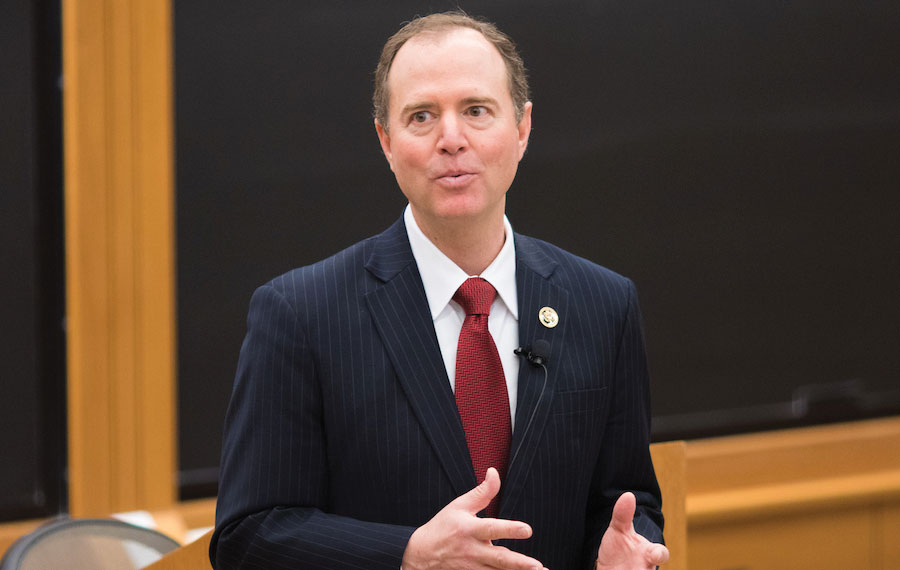
Rep. Adam Schiff (D-Burbank), who has become the face of the impeachment inquiry into President Donald Trump, expressed commitment to the task of investigating Trump despite heavy criticism from the president.

“This is an incredibly serious and somber task that we are undertaking in the House Intelligence Committee,” Schiff, chair of the House Intelligence Committee, told the Journal in an email. “We are committed to conducting a serious and thorough investigation, and we are treating the whistleblower complaint as our roadmap.”

On Sept. 24, Speaker of the House Nancy Pelosi (D-San Francisco) announced an impeachment inquiry into Trump in connection with a July 25 phone call between Trump and Ukrainian President Volodymyr Zelensky. The call became the subject of a whistleblower complaint. During the call, Trump allegedly asked Zelensky to dig up dirt on Joe Biden, a potential opponent in the 2020 presidential election, and Biden’s son, Hunter. 

Schiff said the transcript of the call, which the White House released to the public, was pivotal to the investigation.

“The call record released by the White House is Exhibit No. 1, and we’ll be hearing directly from the whistleblower very soon to discuss the issues raised in the complaint,” he said.

Acting Director of National Intelligence (DNI) Joseph Maguire provided the House Intelligence Committee with the whistleblower complaint on Sept. 25. This was later than the complaint should have been provided to the committee, according to Schiff’s office. The Intelligence Community’s Inspector General told the House Intelligence Committee that the office of the DNI withheld the complaint and should have transmitted it by Sept. 2, Schiff’s office said.

“We are committed to conducting a serious and thorough investigation, and we are treating the whistleblower complaint as our roadmap.” — Rep. Adam Schiff

Last week, Maguire testified before Schiff and the House Intelligence Committee about the complaint. During his opening statement, Schiff — whose district includes Glendale, Burbank and West Hollywood — said the transcript of Trump’s phone call with Zelensky revealed Trump violating his oath of office. The remarks were widely criticized by the president and his supporters, with Trump saying Schiff fabricated Trump’s remarks to make them sound worse than they were.

“Yesterday we were presented with the most graphic evidence yet that the president of the United States has betrayed his oath of office, betrayed his oath to defend our national security and betrayed his oath to defend our constitution,” Schiff, who is Jewish, said during his opening remarks.

Trump reportedly withheld $400 million in bipartisan-approved U.S. military aid to Ukraine days before the phone call, prompting critics to assert that Trump used the aid as a quid pro quo with Zelensky — meaning that the aid would be released if Zelensky helped investigate the Bidens, as Trump had asked. 

Several House committees are involved in the impeachment inquiry, including the Judiciary committee, led by Rep. Jerrold “Jerry” Nadler (D-N.Y.), and the House Foreign Affairs Committee, led by Rep. Eliot Engel (D-N.Y.). Pelosi has said that she wants Schiff’s House Intelligence Committee to lead the probe. Schiff has a close relationship with the Speaker and was actively involved in the Robert Mueller investigation into whether Trump colluded with the Russians during the 2016 presidential campaign. 

Trump criticized Schiff’s handling of the Russian investigation. Likewise, since the announcement of the impeachment inquiry into Trump’s call with Zelensky, Trump has continued to criticize Schiff, calling him treasonous. 

For his part, Schiff is undeterred.

“No sooner had Mueller testified about this collusion, than the president was at it again, this time trying to shake down the Ukraine government to help him in the next presidential election,” he told the Journal. “But I’m used to the president’s attacks and tweets — and they’re only going to get worse — as he grows more erratic.”

Adam Schiff Responds to President’s Criticism Read More »

One People, One Voice

 In the two weeks before I went to hear a panel hosted by Bnai Zion Foundation called “What Will It Take to Combat Anti-Semitism?” a spate of attacks in Brooklyn included a 63-year-old rabbi being hit in the face with a large brick. Assaults also have involved the wielding of leather belts and metal, and kicking baby strollers.

“I’m not sure if there are more anti-Semites today or they feel more emboldened,” said historian Deborah Lipstadt at the panel at Congregation Kehilath Jeshurun (KJ). “It’s probably a little bit of both.” She broke down the surge of anti-Semitism into four sources: the radical left, white supremacists, Islamists and sectors of the mainstream Muslim community.

This categorization represented the only false note of an otherwise highly informative evening. In 2019, there already have been 152 reports of anti-Semitic hate crimes in New York City; the vast majority of the suspected perpetrators have been young black males.

Is there a fear of naming this fifth category? How is denial of this category helping the Orthodox and Chasidic Jews in Brooklyn, who are under near-weekly attacks?

KJ’s Rabbi Chaim Steinmetz soon corrected the record. “There are segments of hate in the black community, possibly whipped up by Louis Farrakhan.” 

Yet, “it’s not the 1930s,” Steinmetz said. He pointed out that the headquarters of the German American Bund was one block north of the synagogue at that time, with regular marches down 86th Street. 

According to Elan Carr, U.S. Special Envoy for Monitoring and Combating Anti-Semitism, today Jews have “many friends and allies around the world.”

“We’re not just fighting against anti-Semitism,” Carr said. “We’re fighting for our society. Anti-Semitism indicates a disease of democracy, of civil society.” He mentioned that President Donald Trump refers to it as the “vile poison of anti-Semitism.”

I have to note that, after he said that, there wasn’t a snicker or hiss in the crowd. KJ is an Orthodox shul, but the Upper East Side in general is somewhat of an oasis of centrism —Trump has plenty of detractors, but I hear more about how progressives are destroying the Democratic Party. Three Israeli clothing stores thrive on Madison Avenue, underscoring the point that “philo-Semitism” — Jewish contributions to humanity — has to be part of the fight.

“Instead of coming together, we’re fighting with each other. We are saying, ‘I’m allowing my political identity to take primacy over my Jewish identity.’”
— Rabbi Chaim Steinmetz

Carr pointed out that in the United Kingdom, the problems started on campuses but little was done because the thinking was “It’s only students.” Now, 40 percent of European Jews say they want to leave Europe.

Here, Carr said, we now have “24/7 indoctrination” against Jews and Israel on college campuses. He noted that anti-Israel propaganda — from professors — has even infiltrated math classes.

The AMCHA Initiative released a report this month stating that in 2018, anti-Semitism from the boycott, divestment and sanctions (BDS) movement skyrocketed on campuses, while instances of classic anti-Semitism declined. Most alarmingly, expressions “promoting or condoning terrorism against Israel” increased by 67 percent, and BDS supporters, including professors, fueled the majority of harassment against Jewish students.

Carr said the Trump administration is creating an “interagency process on anti-Semitism” that will unite the departments of State, Justice, Treasury and Education to confront this swelling scourge, on campus and off.

Carr, an Iraqi Jew, also is very focused on the inculcation of Jew hatred in Arab countries: “What starts in the Middle East never stays in the Middle East.”  But he said that Arab leaders are becoming more receptive because of the fight against Iran. Carr said he would be going to the Gulf states soon to engage Arab leaders specifically on this issue.

A main point of the evening was Jewish infighting — the weaponizing of anti-Semitism for political gain. Said Steinmetz, “It’s a great concern that when we’re coming under threat, instead of coming together, we’re fighting with each other. We are saying, ‘I’m allowing my political identity to take primacy over my Jewish identity.’ ”

Carr pointed out that it’s only because the Jews in the U.K. have been united that progress has been made. “We have to do that here,” Carr said. “One people, one voice, united.”

“Unity is not uniformity,” said Steven Savitsky, president of Bnai Zion. We have to unify on the issue of safety, even with Jews who have vastly different political views.

Then there was a very big “but.” We don’t have to include in this “big tent” — what Journal Publisher and Editor-in-Chief David Suissa has called Big Judaism — Jews who have made it their life’s work to destroy the Jewish people. All the panelists agreed that groups such as Jewish Voice for Peace should be ostracized. “A line must be drawn,” Savitsky said.

On the good-news front, a couple of “Jewish solidarity” events have taken place since the panel discussion: one in Manhattan and one simultaneously in Brooklyn; Poway, Calif.; and Pittsburgh.

Sadly, exactly one week after the panel, a 24-year-old Chassidic man was beaten in the Brooklyn neighborhood of Bedford-Stuyvesant. Surveillance footage shows four young black males chasing him; two then punched and kicked him and ran away with his cellphone. The Anti-Defamation League is offering a $10,000 reward for information leading to an arrest and conviction in the case.

“This incident comes at a time when visibly observant Jewish individuals are unable to walk the streets of Brooklyn without feeling fearful that they may be assaulted or attacked because of their religion or faith,” ADL NY/NJ regional director Evan R. Bernstein said in a statement. “This is completely unacceptable and contrary to everything we stand for as New Yorkers. The violence must stop now.”

The New York City Police Department will increase their presence in Jewish neighborhoods ahead of the Jewish holidays, Mayor Bill de Blasio and New York Police Department Commissioner James O’Neill announced. “We will not accept hatred in New York City,” de Blasio said.

“This is the fight of our generation,” Savitsky said. “This is a fight we cannot lose.”


Karen Lehrman Bloch is an author and cultural critic living in New York City.

One People, One Voice Read More »

Algerian ‘Petits Pains’ for Before and After the Fast

I first learned about the sweet little breads of Yom Kippur from “Sephardic Holiday Cooking” by Gilda Angel. This book puts each food in its cultural context and explains why it’s eaten, how it’s made, when it’s eaten and where it originated.

On Yom Kippur, the fast will allow us to focus us on our actions and prayers and a special, wholesome, holiday meal is in order before the fast. Some Ashkenazim don’t eat bitter foods like vinegar during the holiday. Some don’t eat certain nuts because the letters that spell nuts in Hebrew bear a suggestion of sin. It’s a Sephardic custom to eat foods that aren’t too salty or spicy, because that can make for a thirsty and unpleasant fast.

In the spirit of seeking something that offers something for everyone, try these little Algerian sweet rolls. You can form each roll in the shape of each of diner’s initial. Eat one before the fast and one to break the fast.

May the breads you eat before your fast power your prayers. May your holiday be a sweet one, starting with your own sweet little initial. May you be sealed in the Book of Life, and our prayers answered with goodness and sweetness. On the most personal and prayerful day of the year, at the end of that long, long fast, know that your personalized treat awaits you.

Petits Pains
4 1/2 cups bread flour
1/4 cup granulated sugar
1 scant tablespoon of rapid-rise yeast
1 1/2 teaspoons kosher salt
3/4 cup rinsed currants or seedless raisins (optional)*
1/2 cup coarsely chopped almonds (optional)
1 large egg
2 to 4 tablespoons canola oil (see below)
1 1/2 cups lukewarm water
Cooking spray
Egg wash (1 egg yolk mixed with 2  teaspoons water)
Sugar or turbinado sugar as garnish (optional)

Mix all dry ingredients. Crack egg into a liquid measuring cup and beat. Carefully add just enough canola oil to egg to equal 1/2 cup. Add warm water to total 2 cups of liquid ingredients. Add liquid ingredients to dry ingredients and mix until well combined to form a rough dough.

Knead the dough until smooth and silky, adding flour 1 tablespoon at a time if the dough becomes sticky. Knead 15-20 minutes by hand, 8-10 minutes in a large mixer, or 60 seconds in a 14-cup food processor.

Spray a large mixing bowl with cooking spray. Place the dough into the prepared bowl, turning once to coat. Cover loosely with plastic wrap and allow the dough to rise until doubled in bulk, 1 hour or so.

Punch down the risen dough gently, kneading slightly to remove all air bubbles. Divide dough into 24 pieces.

Roll each piece of dough into a little “snake.” Cut the “snake” in lengths of dough and press them together to form the shape of the initials.

Spray a large cookie sheet with cooking spray. Place the letters on the cookie sheet, spacing them about an inch apart. Spray the letters lightly with cooking spray and cover loosely with plastic wrap. Allow letters to rise for about 30 minutes.

Preheat oven to 375 F.

Uncover the letters. Lightly paint each letter with egg wash and sprinkle generously with sugar or turbinado sugar.  Place cookie sheet in the center of the preheated oven and bake for 15 to 20 minutes or until crust is golden. Serve warm or at room temperature.

Makes about 24 Algerian sweet rolls.

*Although initially inspired by “Sephardic Holiday Cooking,” this recipe has been changed significantly from the original: 

I use my challah recipe: I use less oil and one fewer egg.

I don’t typically use the optional currants or almonds because they make forming the dough letters a little tricky.

I add a sprinkle of sugar on top of each letter. As the sugar melts, it forms a crunchy glaze.

Traditional recipes are treasures, but they also need to be flexible. Over the years, even the most traditional recipes have been adapted to taste. Feel free to substitute optional ingredients, e.g., use dried cherries instead of currants, or pine nuts instead of almonds. Be creative.


Debby Segura lives in Los Angeles. She designs dinnerware and textiles, and teaches cooking classes.

Algerian ‘Petits Pains’ for Before and After the Fast Read More »

High Holy Day Table for Five: Yom Kippur

One verse, five voices. Edited by Salvador Litvak, Accidental Talmudist

And the Lord appointed a huge fish to swallow up Jonah, and Jonah was in the belly of the fish for three days and three nights. –From the Yom Kippur haftorah,
Jonah 2:1


Nina Litvak
AccidentalTalmudist.org 

Jonah is a prophet, a holy man of great spiritual elevation. When he tries to run from God, this elevated man is brought low, thrust into the innards of a fish in the depths of the sea. Jonah is completely trapped by oppressive physicality: cold blubbery flesh, dank and smelly air, scary sounds. But he elevates himself, even in this low place, by praying and expressing gratitude to God. Within physical degradation, Jonah finds spiritual elevation. 

The Vilna Gaon teaches that we are all Jonah. We are all pure spiritual souls inhabiting brute physical vessels. Jonah was helpless to escape his surroundings physically, but his sincere prayer enabled him to fly high spiritually. The challenge of human existence is to maintain our connection with the Holy One even while trapped in an animalistic, physical body. Jonah cries out to God from the depths, and his prayer helps him transcend oppressive physical surroundings and experience the Divine. 

We read the Book of Jonah on Yom Kippur, a day when we strive for spiritual elevation by ignoring our most basic physical needs: eating and drinking. For many of us, the fast is very difficult. We struggle to pray with passion and intentionality while feeling weak and sick. But just as God was with Jonah in the physical discomfort of the fish, God is with us in the physical discomfort of the fast. The way to elevate ourselves is to connect with and thank God. And that’s what Yom Kippur is all about.


Rabbi Shlomo Seidenfeld
Scholar-in-residence, Aish/JMI

What on earth was Jonah thinking? He couldn’t have been under the delusion that he could hide from God. Prophets with direct access to the Creator of the Universe were very plugged in. So how are we to understand Jonah’s very non-prophet-like behavior? Did he become disillusioned? Jonah’s actions aren’t only curious, they are theologically troubling. Something’s fishy! 

There’s no question that Jonah was neither a heretic nor a rebel. If anything, Jonah was a passionate advocate of the Jewish people who didn’t want to play a role in a mission that would negatively impact them. If Jonah was guilty of anything, he was guilty of putting the Jewish people’s welfare above his unconditional faith in God and above his own very life! What chutzpah! What self-sacrifice! What love! On some level, I imagine that God delighted in Jonah’s treasonous behavior much like a parent takes deep pride/nachas when a child defends a sibling. 

Perhaps the reading of Jonah on Yom Kippur is to remind us that God doesn’t want us to merely fast, pray and pound our chests. He doesn’t want dramatic resolutions. Personal declarations are easy on Yom Kippur and personal observance can sometimes be self-centered. What God really wants is what every parent wants. He wants us to care deeply about his children. He wants us to feel their pain, celebrate their success and even defend them when they are not perfect. There is no greater gift we can give God. Shanah tovah.


Rivkah Slonim
Education director, Rohr Chabad Center at Binghamton University, New York

Yonah is more than a tale about a prophet who lived long ago. The Zohar teaches — and Chassidut amplifies — that it is actually the story of our lives. Yonah is another name for the soul, which upon arrival on Earth, sometimes loses its way, even going as far as “ boarding a ship” to run away from its Master.

But the “Captain” will find us; no matter how we try to run, we cannot hide. The Captain will come “down into the bowels” of whatever vessel we board and rouse us from our slumber. And, inevitably, our Yonah will be stirred and will respond “Ivri Anochi, I am a Jew, and the God of heaven and Earth I do serve.”

But sometimes, that’s not enough. That feeling might be fleeting and ephemeral, and again we might find ourselves casting about, thrashing at sea. This time, our Yonah might be swallowed up by a great fish, a force larger than itself that pulls it inexorably, seemingly, away from its life force. But in that constraint, from within the belly of danger — physical or spiritual or both — precisely because of that constriction, Yonah will cry out to God from a place of deep, essential love. Transformed, and newly reunited with his Maker, Yonah will be brought ashore, to safety. 

Please God, that we not be tested with difficulties, but rather, that we calibrate our Yonahs with the Almighty’s will, provoked only by our desire to be one.


Rabbi Aaron Lerner
Executive director, Hillel at UCLA

You cannot outrun The Divine. Jonah tries to get away from God, but he’s thwarted by a storm and then a bizarrely huge fish. Whether we take the narrative as historical fact or fiction, the lesson is the same: Yom Kippur will arrive whether or not we like it. And for that matter, so will the rest of life. 

Some of us choose to spend our lives fighting against the natural flow. We demand from life, our partners, our kids and ourselves unnatural outcomes. Instead of tuning in to the signals we are receiving from the Universe / The Divine / Nature and the myriad other places we could be hearing God’s voice, we try to design our own life. Oftentimes to our own detriment. 

There’s nothing wrong with striving. In fact, this is the season for Jewish self-improvement. But whose goals are you striving toward? Yours? Or God’s? 

Our egos are insatiable, and often wrong. They propel us in the opposite direction we’re supposed to be traveling. Do you feel like you’re always swimming upstream? Are you often told that your expectations are unreasonable? Do the people around you need to change to receive your love, or for you to feel close to them? Are your kids going to “stretch-schools” where they feel anxious and stressed instead of places which are the “right fit”? 

If so, it’s worth slowing down to listen before we try to keep pushing forward. Otherwise, the fish might just swallow us whole.


Rabbi Chanan (Antony) Gordon
Motivational speaker

Jonah was given a Divinely Ordained mission to urge the people of Nineveh to repent. From Jonah’s perspective, the mission made no sense. The Jewish people were spiraling into a spiritual abyss and yet he was being asked to save the archenemies of Israel. 

In an attempt to escape from his mission, Jonah fled Israel by ship and, knowing he was the cause of the storm that eventually endangered its crew, he implored the sailors on the ship to toss him overboard so they could save themselves. 

As we read in the haftarah on Yom Kippur, “the Lord appointed a huge fish to swallow up Jonah, and Jonah was in the belly of the fish for three days and three nights” (Jonah 2:1) 

In the dark innards of the fish, Jonah finally recognized what he had never truly been willing to see, i.e., God’s intimate knowledge and care over each life and each moment. It was then that Jonah did teshuvah. 

On the holiest day of the year, we all need to take stock of the lesson Jonah internalized: the fact that God guides each of our lives based on pure mercy and love for our own benefit. Just like Jonah couldn’t understand why his life was being guided in a specific direction, similarly, very often in our lives things happen that are inexplicable and often painful. Once we acknowledge the altruistic Source guiding our lives, we can return to God with joy and love.

High Holy Day Table for Five: Yom Kippur Read More »