Our heavy reliance on smartphones and the internet exacts a heavy toll. It damages our ability to think, learn and retain information. Our communication and social skills are slipping as texting replaces conversation. Increasingly, couples or friends out to dinner sit together at a table … texting other people.
For years, some corners of the Orthodox world tried simply to push the problem away, clinging to their flip phones, banning smartphones in schools and forbidding internet use for high school students.
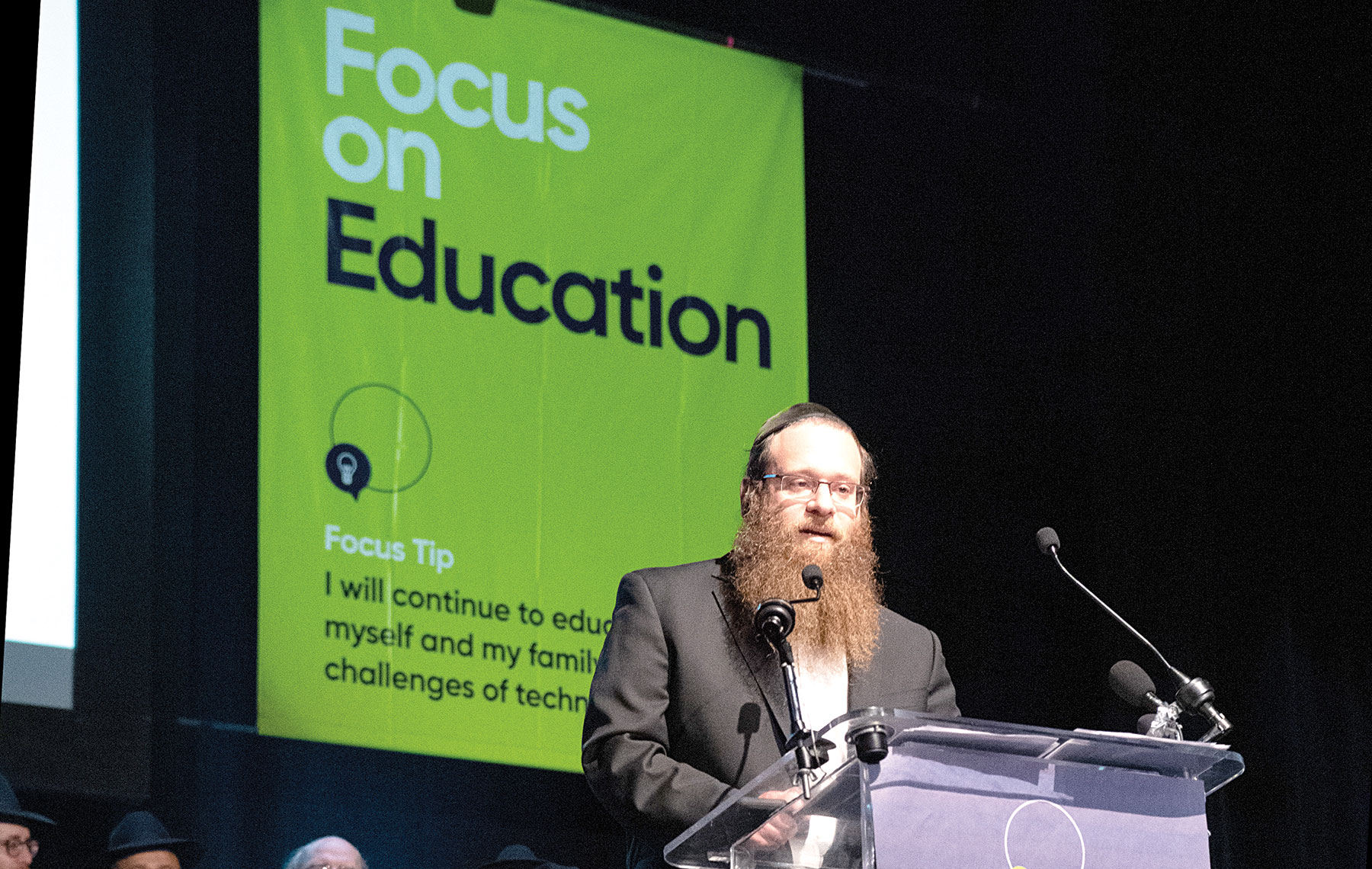
In today’s wired world, these are not viable approaches for most people. To offer guidance, solutions and inspiration, the Los Angeles Orthodox community presented “Project Focus: Focusing on Connection, Upgrading Our Lives” at the Saban Theater in Beverly Hills on Sept. 15.
Brochures given to attendees included a “focus tip” on each page, including: “I will spend quality time with my family, device free” and “I will think twice before forwarding an email, text or picture.”
Following opening remarks by Rosh Kollel Merkaz Hatorah Rabbi Boruch Gradon, the main speaker — internet safety expert Gavriel Fagin, director of Tikunim Counseling Services in New York — noted the many positive uses of the internet and online apps, including those for students with learning challenges. However, he also documented numerous adverse effects of our overuse of technology.
One example he cited revealed that nearly 40% of teens reported they are online “almost constantly,” detracting from time they would otherwise spend socializing with friends, exercising or being involved in other activities.
“The more time kids spend online or on a phone,” Fagin said, “the more likely they will suffer sleep deprivation, falling school performance, memory lapses, feelings of alienation, insecurity and anxiety — often due to cyberbullying — and depression.” Related problems, he added, include rising rates of ADHD, poor emotional self-regulation and the inability to sit and absorb information.
He went on to say that the four essential communication skills — speaking, thinking, listening and nonverbal cues — all suffer when texting becomes the default mode of communication. “Tone and intention are lost, and emojis can’t make up for that. We set up our children for major difficulties in school when we give them smartphones,” he said.
Beyond that, Fagin said, pornography addiction is always damaging, but young, sheltered Orthodox boys may suffer even more with guilt, confusion, an inability to process what they are seeing and depression. They also may not feel they have anyone to talk to about it. Fagin emphasized how crucial it is for parents to establish trust with their children, becoming a safe place to make difficult disclosures.
“Tone and intention are lost [in texting] and emojis can’t make up for that. We set up our children for major difficulties in school when we give them smartphones.” — Gavriel Fagin
“If a child or teen is willing to disclose a problem with the internet,” Fagin said, “do not lecture, nag, preach or give unwanted advice. Don’t inflict help. Just listen.” Professional help, he added, is the next step.
Additionally, parents need to be role models in their own use of technology, Fagin said. He asked, “Do you put down the phone when your kids are talking to you? Do you make sure to have family time
without any phone distractions?” In one survey he cited, 86% of parents said there are times when everyone is home but all are in separate rooms on their devices.
And yet, he said, kids crave their parents’ attention.
Rabbi Dovid Revah of Adas Torah shared a story about a father whose 19-year-old daughter insisted on hiding the afikomen one Passover, even though there were younger siblings in the family. The daughter named her price as she presented the afikomen: dinner out with her father alone — no phone allowed. Revah said the father told him: “It felt like a knife.”
Fagin said many parents feel overwhelmed or are in denial about their technology troubles. This is a mistake, he admonished. “Your kid will find a way to access the internet even on your flip phone and even if you think you disabled it.”
For more information about tech solutions that create a safer online environment, visit taglosangeles.com or call (310) 546-3300.
Judy Gruen is the author of “The Skeptic and the Rabbi: Falling in Love with Faith.”