Michael Z. Cahana is the rabbi of Congregation Beth Israel in Portland, Oregon. Rabbi Cahana’s academic interests are the interface of religion and science with a particular emphasis on medical ethics. He has served on the Central Conference of American Rabbi’s Committee on Human Sexuality and chaired its ad hoc committee on Physician Assisted Suicide. He currently chairs the Resolutions Committee.
In 1999, Rabbi Cahana was featured, along with his family, in the critically acclaimed documentary “The Last Days.” The film tells the true stories of five Hungarian survivors of the Holocaust, including Rabbi Cahana’s mother – the renowned Holocaust artist Alice Lok Cahana (z”l). “The Last Days” won the 1999 Academy Award for “Best Documentary.” In 2009.
Our discussion focuses on the King’s reading of the Torah for the people.
Shmuel’s book, #IsraeliJudaism, Portrait of a Cultural Revolution, is now available in English. The Jewish Review of Books called it “important, accessible new study”. Haaretz called it “impressively broad survey”. Order it here: https://amzn.to/2lDntvh
JERUSALEM (JTA) — Alleged child sex offender Malka Leifer will be released to house arrest while a new panel of psychiatric experts evaluates whether she is mentally fit to face extradition and trial, the Jerusalem District Court ruled.
The prosecution has until Friday to appeal the house arrest. The court ordered the new evaluation last month.
Leifer, 52, fled to Israel from Australia in 2008 amid allegations that she had sexually abused students at the Adass Yisroel school in Melbourne. She is wanted in Australia on 74 charges of child sexual abuse.
Australia officially filed an extradition request in 2014.
Leifer was arrested in Israel in 2014 and then released after being deemed mentally unfit for the legal proceedings. She was rearrested last year after an undercover investigation found that she lived a normal life and was mentally fit to face extradition proceedings.
The most recent psychiatric report had found Leifer mentally fit to remain in prison and attend extradition hearings. Evaluations in 2016 and 2014, however, had found her too unstable to be deported.
Deputy Health Minister Yaakov Litzman is facing accusations that he attempted to illegally intervene on Leifer’s behalf. Litzman is accused of pressuring the Jerusalem district psychiatrist into falsely stating that Leifer is mentally unfit to be extradited and stand trial.
Pickling Persian Cucumbers Tabby Refael’s ode to the Persian cucumber (“The Crispy Wonder of the Persian Cucumber,” Sept. 27) hit that sweet, foodie spot of being informative and mouthwatering at the same time. I’d like to add that Persian cucumbers are fantastic for pickling. Their thin skin and relatively small size absorb the brine more potently than other cucumbers. Their juicy texture and profuse flavor can be enjoyed on their own as a snack or added to a salads and sandwiches. Making Persian pickles is fun and easy. The recipe I use can be found in “The Book of Jewish Food” by Claudia Roden. Guy Handelman, North Hollywood
Fond Memories of Nibblers Restaurant I so enjoyed your story and recipe from Nibblers restaurant. It brought back a flood of memories because it was considered a neighborhood gem for many, many years. Nothing fancy but good quality food and a welcoming environment. I still fondly remember the barley mushroom soup and “Western Night,” when all the staff wore gingham bandanas.
Often as I drive down Wilshire Boulevard in Beverly Hills where Nibblers operated for years, I wish that dining option was still available. Aviva S. Monosson, Los Angeles
Roy Cohn’s Legacy Two factual misstatements ought not to go unrecognized in the story about a documentary on Roy Cohn. (“Roy Cohn Documentary Reveals the Rise of President Trump,” Sept. 20). The reporter wrote that the film asserts, “(Cohn) … obtained the death penalty for Julius and Ethel Rosenberg despite lack of evidence.” Oh? Read Rosenberg v. U.S. 346 U.S. 273 (1953) and absorb the Supreme Court’s recitation of the evidence. It was overwhelming.
The other observation the reporter depicted from the film is that Cohn “conspired to get (Ronald) Reagan into office …” Oh? Conspired with about 79 million other Americans, known as voters. Nathaniel J. Friedman, Beverly Hills
Christian Reads Journal I am a Christian and have been reading the Journal since January 2019. I enjoy the stories that are written by many Orthodox rabbis and your paper’s staff. Some of your stories are deeply meaningful for Christians, as we are all in this together for the peace of Israel.
Shalom! Gerald Steven Tlapa, Los Angeles
Must-Read Book About Guns in America An addendum to Larry Greenfield’s column (“Guns: Reason Not Rage,” Sept. 13) should be the “must-read” new book “Why Meadow Died: The People and Policies That Created the Parkland Shooter and Endanger America’s Students,” written by her father, Andrew Pollack, and Max Eden, an education policy analyst. It details a policy handed down from the Obama White House, through Eric Holder’s Justice Department and Victoria Hammer’s Education Department to Florida’s Broward County then to the school district and Marjory Stoneman Douglas High School.
It was an effort to get incorrigible, at-risk youth off of the “school to prison” train, where incidents were ignored by school officials and law enforcement. The shooter, aka “#181…,” had a long history of disciplinary and mental health problems. He even threatened his fellow students that he was going to kill them — several times. Even campus security surmised that if anything evil was going to happen, he’d be the perpetrator.
A similar policy has been instituted in California, recently signed by Gov. Gavin Newsom. It will hold that unruly, incorrigible students cannot be disciplined by school officials.
Government policy was and is complicit in the murders of the innocent students — not guns. Enriqué Gascon, Westside Village
Philippines Opened Doors for Jewish Refugees In 1939, refugees fled fascist regimes in Europe to find no other countries would take them in. In a notable humanitarian act, Manuel L. Quezon, who served as president of the Commonwealth of the Philippines from 1935-44, in cooperation with U.S. High Commissioner Paul V. McNutt, facilitated a rescue plan. Herbert Frieder and sons, owners of a cigar and cigarette manufacturing company and family friend of Quezon, raised money to transport the refugees to Manila, provided housing and built schools for their children.
Quezon and McNutt previously proposed 30,000 refugees to settle in Mindanao and 30,000 to 40,000 on Polillo Island. Quezon offered a 10-year loan to the Manila Jewish Refugee Committee a tract of land adjacent to his family’s estate.
During World War II, upon invitation of the U.S. government, Quezon established the Commonwealth government-in-exile with headquarters in Washington, D.C. There, he served as a member of the Pacific War Council, signed the Declaration of the United Nations against the Axis powers. He died Aug. 1, 1944 in Saranac Lake, N.Y.
On Nov. 29, 1947, the Philippines became the only Asian nation to cast a crucial vote in the U.N. General Assembly for the partition of Palestine and the creation of the State of Israel. Willie Florendo Ordonez, Altadena
Holiday Security Measures in the Mideast All crossings into and out of Gaza, Judea and Samaria were closed beginning at midnight on Sept. 27 until midnight Oct. 2. The purpose of the closure is to thwart Palestinian terrorists who might attack during Rosh Hashanah.
Remember the Passover massacre suicide bombing in 2002 (30 dead and 140 injured) and the Yom Kippur War? In contrast, Muslim residents of Gaza, Judea and Samaria have no reason to fear terror attacks during Ramadan or Eid (though there could be a false flag attack by their own).
The attitudes toward Jewish religious holidays held by some Arab nations compared with the respect for all religions that always hascharacterized Israel offers an insight into why direct negotiations without preconditions, leading to peace, is not something we can realistically anticipate in the foreseeable future. Julia Lutch, Davis, Calif.
Family Shabbat Dinner Just when you may be feeling stuffed from the many meals for the High Holy Days, along comes Temple Aliyah with a family Shabbat dinner at the synagogue. Services feature the Shir Aliyah Youth Choir and recognition for all attendees celebrating birthdays. RSVP required. 5:45 p.m. family Shabbat dinner. 6:30 p.m. family Shabbat services. $18 adults, $8 children. Temple Aliyah, 6025 Valley Circle Blvd., Woodland Hills. (818) 346-3545.
Shabbat Unplugged Aiming to make Friday night memorable, Temple Emanuel of Beverly Hills’ in-the-round service features spiritually uplifting meditation and poetry. At Shabbat Unplugged, the energy and music of Zack Lodmer’s clarinet and Ava Nahas’ hand-drums blend with Rabbi Jonathan Aaron’s guitar and Cantor Lizzie Weiss’ vocals — and everyone in Belle Chapel
joins in the singing for a Shabbat symphony. 8-9:30 p.m. Free. Temple Emanuel of Beverly Hills, 300 N. Clark Drive, Beverly Hills. (310) 288-3737.
Tiny Tot Shabbat Since the rabbis teach it never is too early to introduce children to the concept of Shabbat, join Temple Akiba and partner organization PJ Library for Tiny Tot Shabbat, intended for infants to 2-year-olds. Story-time and music highlight the event while parents and children are surrounded by the glow of Shabbat. RSVP to nurseryschool@templeakiba.net or (310) 398-5783. 9 a.m. Free. Temple Akiba, 5249 S. Sepulveda Blvd., Culver City. (310) 398-5783.
A Welcome to the New Year Celebrate the new year with the Valley Outreach Synagogue, which holds a holiday celebration of music, PJ Library stories and art, among other activities. RSVP at judy@vosla.org. 10-11 a.m. Free. We Rock the Spectrum Gym, 23010 Ventura Blvd., Woodland Hills. (818) 822-4867.
SAT OCT 5
Cantor Lonee Frailich
Tashlich at the Beach Congregation Kol Ami invites the community to Will Rogers Beach for the informal, widely practiced ritual of tashlich, casting away of one’s sins. Bring your favorite beach chair and don’t forget the umbrella. Enjoy bagels, music and the sand as families and people of all ages mingle and celebrate. 10 a.m.-Noon. Free. Will Rogers Beach, Meet at Tower 10 by Lot 2. (323) 606-0996.
Tashlich and Havdalah Just before sunset, join Temple Akiba Rabbi Zach Shapiro and Cantor Lonee Frailich at Toes Beach in Playa del Rey for tashlich, the ritual of using bread crumbs to cast away one’s sins, and Havdalah, marking the conclusion of Shabbat. 5:30 p.m. meet at Toes Beach. 6 p.m. services. Free. Toes Beach, 6935 S. Trolley Place, Playa del Rey. (310) 398-5783.
SUN OCT 6
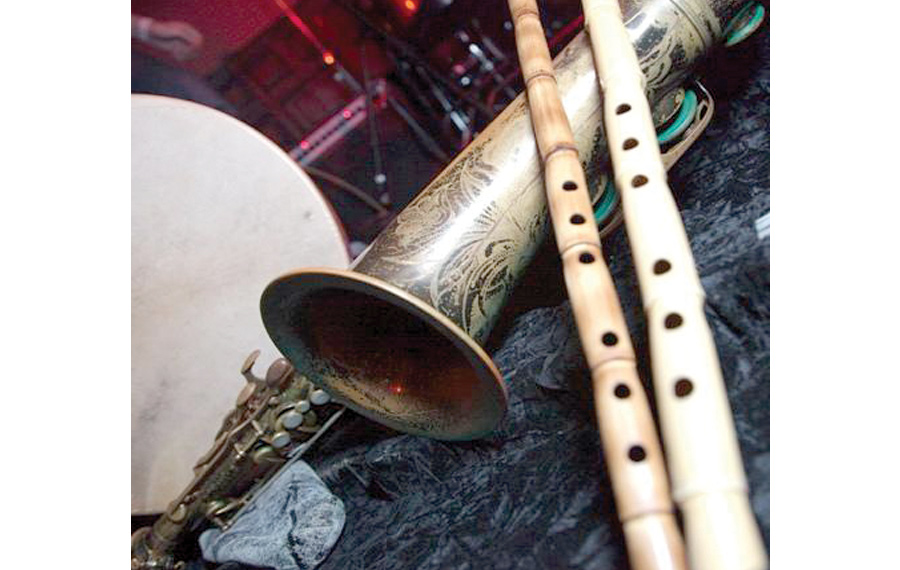
Sehardic Slichot Concert Join the Sephardic Educational Center for its annual Selichot concert, featuring Sephardic chazzanim accompanied by a Middle Eastern ensemble. Refreshments served. Valet parking provided. 6 p.m. doors, 7 p.m. program. $18. Kahal Joseph Congregation, 10505 W. Santa Monica Blvd., Los Angeles. (323) 272-4574. To RSVP, email info@secjerusalem.org.
Paddle Boarding and Prayer Seeking an alternative way to participate in tashlich? Join Wilshire Boulevard Temple Rabbi Joel Nickerson for stand-up paddle boarding and prayer to welcome the new year. Paddle board in the calm waters off Malibu and engage in a brief prayer service on the ocean. There will also be time to paddle along the coast at your comfortable pace. Core strength and balance help, but no experience necessary. 9:30 a.m. $40. Meet at Malibu Surf Shack, 22935 Pacific Coast Highway, Malibu. Contact srosen@wbtla.org. (213) 388-2401.
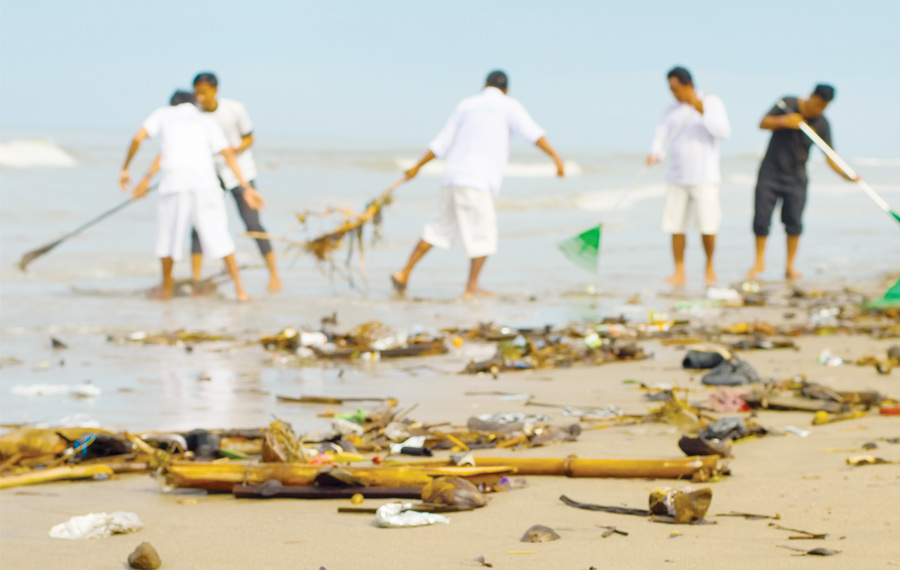
Tashlich and Beach Clean Up The environmentally conscious IKAR Green Action members bring a contemporary tone to tashlich. Before the ceremony, IKAR Green Action, which aims to heal the Earth through education, advocacy, sustainable living and urban gardening, clean the beaches before cleansing their souls. Meet up at Santa Monica Beach, Lifeguard Station 26, at Ocean Park Boulevard. Green Action provides materials and safety tips for the one-hour activity. Children with parents are welcome. Signed waivers required. 3 p.m. Start cleaning the beaches. Email questions to mtgreenaction@ikar-la.org. 4 p.m. tashlich. Lifeguard Tower 26, 2559 Ocean Front Walk, Santa Monica. (323) 634-1870.
Visiting Home of Peace Inspect the graves of early Hollywood moguls. Enter a Byzantine/Moorish-style mausoleum. Learn about Sephardic Jews and crypto-Jews. These are but a few of the attractions on the next tour of early Jewish life in East L.A., led by Shmuel Gonzales, aka the Barrio Boychik. With the solemnity of Yom Kippur just ahead, Home of Peace cemetery can be an ideal outing. Noon-3 p.m. $25. Home of Peace Memorial Park and Mortuary, 4334 Whittier Blvd., East Los Angeles. (323) 261-6135.
Ramat Zion Tashlich The Temple Ramat Zion community visits the five-acre, orange tree-laden grove at Cal State Northridge (CSUN) for the tashlich ritual of casting out sins of the past year. Destination is the CSUN Duck Pond, barely a decade old. Members gather at the Haskell Walk, which connects the Orange Grove Bistro and the Mike Curb Walk. 9:30 a.m.-1 p.m. Free. (818) 360-1881. trz.org.
“Middle East Beyond the Headlines” Curious about what is happening in the Middle East these days? Sign up for this first-of-its-kind pop-up think tank. The one-day Washington Institute program offers briefings by scholars with a balanced, realistic understanding of American interests in the region. Speakers include Ghaith al-Omari, Soner Cagaptay, Ambassador Barbara Leaf and David Makovsky. Sessions include “The Middle East in 45 Minutes,” “Iran’s Unrelenting Quest for Regional Domination” and “The Crisis of Modern Turkey.” Email popup@washingtoninstitute.org. 10 a.m.-4 p.m. $100. American Jewish University, 15600 Mulholland Drive.
Hight Holidays Food Drive Only one week remains until the Oct. 13 deadline for Kehillat Israel’s 19th High Holy Days Food Drive. Bring a bag of canned food to services on Kol Nidre, Yom Kippur or on Shabbat. Or you also can contribute through an interactive shopping experience. Every $25 buys 125 pounds of food, 100 meals for those in need. The monthlong goal for this program, which benefits the Westside Food Bank, is 215,000 pounds, 5,000 more than last year’s record. Kehillat Israel, 16019 W. Sunset Blvd., Pacific Palisades. (310) 459-2328.
THU OCT 10
Learning About Three Jewish Leaders When the Tikvah Fund holds its first West Coast event, author and attorney Rick Richman explores three American Jewish leaders you should know more about. Richman, author of “Racing Against History: The 1940 Campaign for a Jewish Army to Fight Hitler,” speaks about Supreme Court Justice Louis Brandeis (1856-1941), screenwriter Ben Hecht (1893-1964) and conservative journalist Norman Podhoretz, who is 89 years old. Shining a light on the Tikvah Fund, high school students Jennifer Peled and Adriel Ghadoushi reflect on the two weeks this past summer they spent at Yale studying politics, economics, Zionism and Jewish thought. The evening includes dinner. Registration ends Oct 3. 6:30 p.m. Suggested donation $72 one guest, $150 two guests. Young Israel of Century City, 9317 Pico Blvd., Los Angeles. Register here.
Have an event coming up? Send your information two weeks prior to the event to ryant@jewishjournal.com for consideration. For groups staging an event that requires an RSVP, please submit details about the event the week before the RSVP deadline.
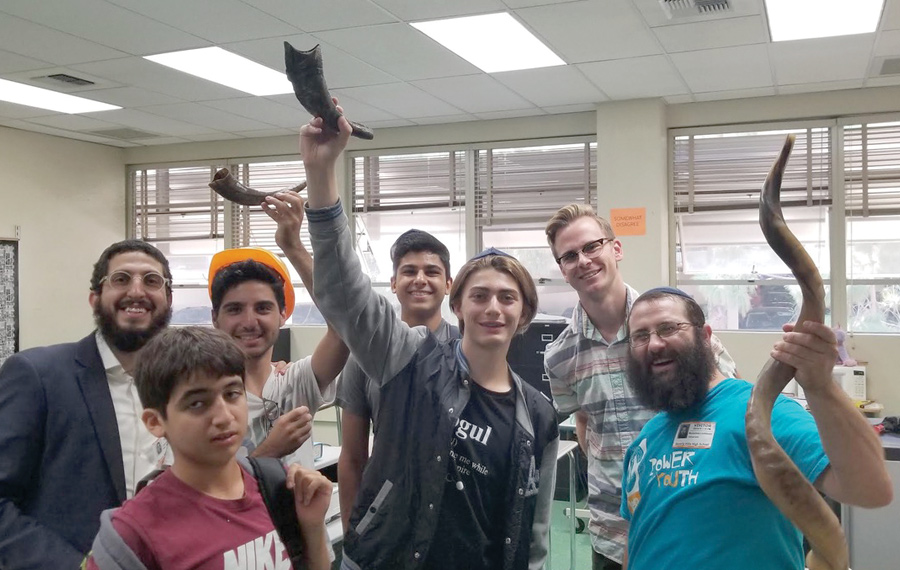
Rabbi Danny Illulian, director of education at the JEM Community Center, orchestrated the inaugural Shofar Factory event at Beverly Hills High School’s Jewish Culture Club on Sept. 24.
Daniel Rabkin, president of the club, taught the students the history and importance of the shofar.
The class then manufactured actual shofars for the students to take home. Sunny Sassoon, executive chairman of Coffee Bean & Tea Leaf, sponsored the event. Sassoon provided each of the children a Coffee Bean gift card upon successful completion of their shofar.
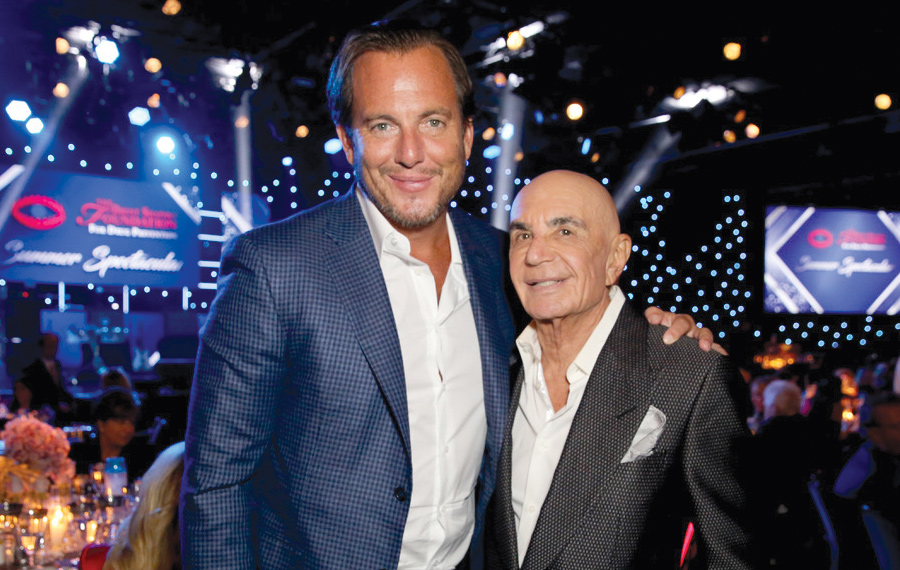
Actor Will Arnett (left) and Robert Shapiro of the Brent Shapiro Foundation. Photo by Rachel Murray/Getty Images for The Brent Shapiro Foundation
The Brent Shapiro Foundation for Drug Prevention held its Summer Spectacular on Sept. 21 at the Beverly Hilton.
The invitation-only gala marked the 14th year of the foundation, which seeks to build strong educational and social communities in some of L.A.’s most socioeconomically challenged neighborhoods in order to offer positive alternatives to drug use.
Robert and Linell Shapiro created the Brent Shapiro Foundation following their son Brent’s death due to an accidental overdose in 2004. The couple wished to honor their son’s life and promote prevention and awareness of chemical dependence. The foundation’s mission is to save lives through awareness and effective programs that incentivize kids to abstain from drugs and alcohol.
The evening was hosted by actress Eva Longoria and featured musical performances by Sheila E. and Pia Toscano. The foundation gave the Spirit of Sobriety Award to actor Will Arnett, who has been candid about his sobriety, both personally and through his work on the Netflix series “Flaked.”
Prominent entertainment industry leaders and celebrities gathered to recognize advances in the fight against addiction and rally around the growing movement to end the disease. Notable attendees included Priscilla Presley, Harry Hamlin, Adrienne Maloof, Anne Winters, Evan Ross, John Savage, Kathy Hilton, Maksim Chmerkovskiy, Mike Binder, Rick Hilton and Sugar Ray Leonard.
The Shapiros presented three full-ride college scholarships and 10 $5,000 college scholarships to members of Brent’s Club, its educational drug prevention program, for successfully completing high school without failing a drug test.
The gala raised money for Brent’s Club, which works in conjunction with the Boys & Girls Clubs of America. Brent’s Club programs educate preteens and teens about the consequences of drug use and works to prevent the formation of dangerous habits, actively showing children how to lead drug-free lives. Members participate in regular drug testing, and as a free, rewards-based program, the club sponsors community outings and once-in-a-lifetime activities.
— Ayala Or-El, Contributing Writer
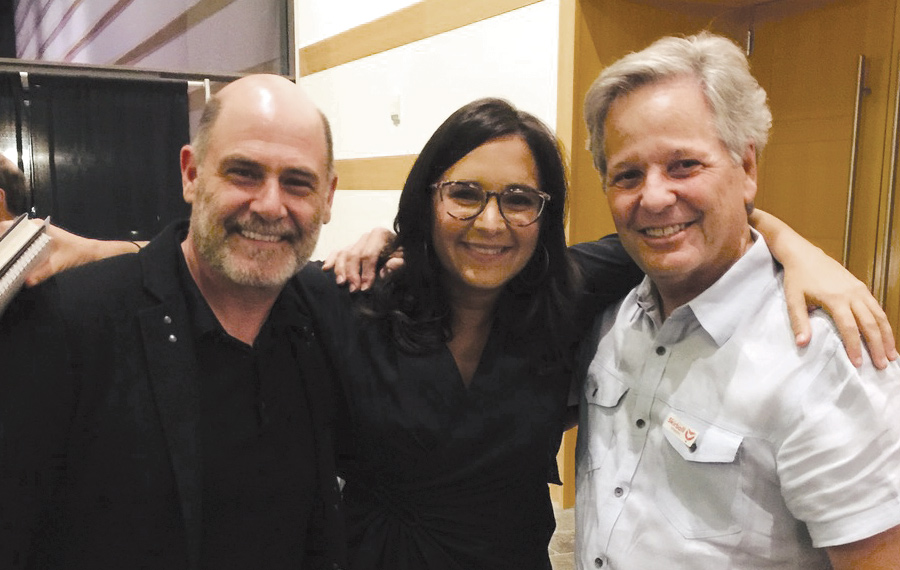
From left: “Mad Men” creator Matt Weiner, New York Times writer Bari Weiss and Temple Israel of Hollywood Rabbi Emeritus John Rosove at the Skirball Cultural Center. Photo courtesy of Rabbi Rosove
New York Times writer and editor Bari Weiss appeared with “Mad Men” creator Matthew Weiner to discuss Weiss’ recently released book, “How to Fight Anti-Semitism,” examining contemporary hatred against Jews.
Held Sept. 22 at the Skirball Cultural Center, the hour-plus discussion, like Weiss’ book, focused on the history and current rise of anti-Semitism in the United States.
“I don’t think it’s ever possible to fully eradi-cate anti-Semitism,” she said. “Anti-Semitism is in the DNA of Western civilization.”
The 450 attendees included Skirball Cultural Center Founding President Uri Herscher; Temple Israel of Hollywood Rabbi EmeritusJohn Rosove; Iranian American professor and author Saba Soomekh; New Israel Fund Founding Director Jonathan Jacoby; Maura Resnick of the UCLA Y&S Nazarian Center for Israel Studies; Writers Bloc founder Andrea Grossman, whose nonprofit literary organization co-sponsored the event; and Joel Bellman, who was press deputy to former Los Angeles County Supervisor Zev Yaroslavsky.
In an interview after the event, Weiner said he was inspired by Weiss’ book. “It’s about pride and standing up for yourself,” the TV producer said. “It made me hopeful.”
From left: Andrea Goldrich-Cayton, Jewish Community Foundation of Los Angeles President and CEO Marvin Schotland; Bet Tzedek CEO Jessie Kornberg; and Sam Yebri. Photo courtesy of the Jewish Community Foundation of Los Angeles
The Jewish Community Foundation of Los Angeles on Sept. 18 held “What’s Next in Jewish Innovation?” at the Beverly Hills home of Foundation Trustee Lynn Bider and her husband, Les.
The event brought together Foundation donors and leadership with recipients of the institution’s Cutting Edge Grants in the arts, for the empowerment of individuals with disabilities and the engagement of people at all ages in Jewish life.
Cutting Edge Grants are multiyear awards of up to $300,000 to social entrepreneurs and innovative organizations to develop and implement programs of high visibility and impact in the L.A. Jewish community. The Foundation has awarded Cutting Edge Grants totaling more than $21 million to 100 initiatives since their inception in 2006, according to a statement by the organization.
The evening’s highlight was a panel discussion moderated by Foundation Trustee and Cutting Edge Grants Committee Vice Chair Sam Yebri in conversation with Andrea Goldrich-Cayton, a philanthropic and community leader, and Jessie Kornberg, president and CEO of Bet Tzedek, a public interest law firm.
Friendship Circle of Los Angeles’ Walk4Friendship L.A. drew families of children with special needs to Shalhevet High School, on Sept. 22. Photo courtesy of Friendship Circle of L.A.
The 10th annual Walk4FriendshipLA, a 2-kilometer walk and festival benefiting Friendship Circle Los Angeles (FCLA), was held Sept. 22 at Shalhevet High School.
Walk4FriendshipLA is the annual community awareness program and fundraiser for FCLA, a nonprofit organization that supports Jewish children and young adults with special needs and their families.
FCLA Chairman of the Board Michele Weiss, whose son has been a recipient of FCLA services for 16 years, said the organization has been indispensable to her family.
“We are thrilled that the event was a success in raising critical funds for programming that encourages social, developmental and educational opportunities,” Weiss said. “Our family has seen its impact on our son Joseph’s life firsthand, and our other teenage children have also gained tremendous skills as longtime volunteers who have developed leadership and sensitivity to inclusion in the Jewish community.”
“It was so exciting to see over 600 enthusiastic people of all ages in blue and pink T-shirts that said, ‘Step Up and Walk 4 Friendship,’ ” FCLA Development Director Gail Rollman told the Journal.
The afternoon was filled with celebration beginning with an opening ceremony and shofar blowing by FCLA Executive Director Rabbi Michy Rav-Noy, who led the charge through the neighboring streets.
When the walkers arrived back at Shalhevet, they were greeted with a variety of free activities and entertainment, including inflatables, bungee jumping, a Lego party, Hot Wheels race cars, a puppy party, the Shofar Factory and a live concert by Distant Cousins. A Rosh Hashanah
festival featured holiday crafts and a photo booth where children made New Year greeting cards to send to friends
and family.
“It was such a strong feeling of unity,” a parent of a special needs child said. “Our family loves how Friendship Circle makes everyone feel welcome, accepted and important.”
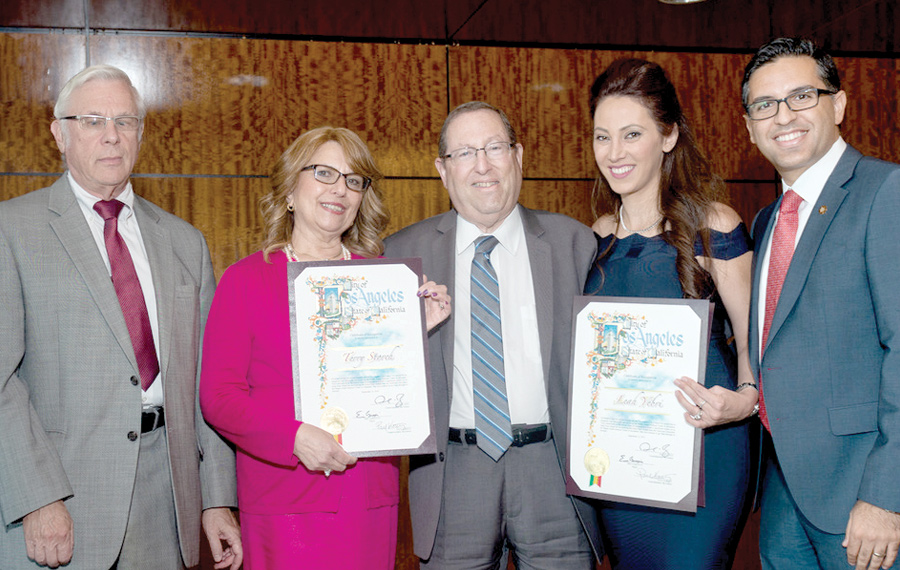
From left: Joel Storch, Terry Storch, L.A. City Councilman Paul Koretz and Leah and Sam Yebri. Photo courtesy of Western Region of the American Committee for Shaare Zedek (ACSZ) Medical Center in Jerusalem
The Western Region of the American Committee for Shaare Zedek (ACSZ) Medical Center in Jerusalem presented its Eshet Chayil award to Terry Storch and Leah Yebri on Sept. 12.
Sinai Temple SeniorRabbi David Wolpe gave the dvar Torah and Sinai Cantor Marcus Feldman chanted the Avinu Shebashamayim prayer and Eshet Chayil blessing.
Comedian Marc Schiff had the audience laughing and Regional Campaign Advisory Council Chair Barak Raviv made the presentations on behalf of Shaare Zedek.
L.A. City Councilman Paul Koretz gave the honorees a special presentation from the city.
Special guests included former L.A. Mayor Antonio Villaraigosa and Jewish Journal Publisher and Editor-in-Chief David Suissa.
Want to be in Movers & Shakers? Send us your highlights, events,
honors and simchas. Email ryant@jewishjournal.com.
A synagogue in Brooklyn, N.Y. was vandalized during Rosh Hashanah services on Sept. 30, Jewish Telegraphic Agency reports. Police are currently searching for two young females as suspects.
Video from Williamsburg News shows two youths throwing milk crates into the windows of the Rivnitz shul. At least one other can be seen appearing to be a lookout.
VIDEO: At Throop av x Bartlett st, 4 youngsters punched out a window of the Rivnitz shul with a heavy object during High Holiday prayers on Rosh Hashana, please contact @NYPD90Pct or @WspuShomrim 7182370202 with any info. pic.twitter.com/q2Mvavpdey
New York Gov. Andrew Cuomo (D) announced in an Oct. 2 press release that the New York State Police Hate Crimes Task Force will be assisting the New York Police Department in investigating the matter.
“I am disgusted and enraged by yet another anti-Semitic act of vandalism, the desecration of a synagogue in Williamsburg over Rosh Hashanah, one of the holiest days in the Jewish calendar,” Cuomo said. “It is simply unconscionable.”
Anti-Defamation League (ADL) New York and New Jersey Regional Director Evan Bernstein said in a statement that the ADL is “deeply disturbed” over the vandalism.
“At a time when the Brooklyn Jewish community is already on edge in the wake of a series of anti-Semitic incidents, it is extremely upsetting to see this congregation targeted during what is otherwise supposed to be a joyous celebration of the Jewish New Year,” Bernstein said. “We all have an important role to play in sending a clear message that these kinds of incidents will not be tolerated in our city.”
In regards to the video footage of a synagogue in #Brooklyn being vandalized on #RoshHashanah, "it is extremely upsetting to see this congregation targeted during what is otherwise supposed to be a joyous celebration" – Regional Director @bernstein_evan. Full statement below: pic.twitter.com/l4X8p7ofu0
Another Williamsburg News video shows an unidentified perpetrator pulling down a Jewish woman’s headscarf and wig on the evening of Sept. 30.
SHOCKING ATTACK on Jewish women during high holidays, gangsters pulled down her headscarf and wig on Sunday night in front of her kids at Marcy x Myrtle ave (close-up video) pic.twitter.com/ksQQwmlS5U
Before the High Holy Days, we reach out to anyone we have wronged during the year and ask for their forgiveness. And then on Yom Kippur, we turn to HaShem to seek forgiveness for any transgressions we have made.
Forgiveness isn’t always easy. Thankfully, our community leaders are here to help us navigate this challenging task.
Rabbi Judy Greenfeld, the founder and spiritual leader of Encino’s Nachshon Minyan, known as “the relationship rabbi,” spoke with the Journal about what it takes to ask for and accept forgiveness, as well as the positive benefits that come from doing so.
Jewish Journal: What does forgiveness entail?
Rabbi Judy Greenfeld: The word forgiveness is a tough one. I tell people it’s like looking in your closet at things that aggravate you and people who hurt you. It comes from dropping into where your anger is coming from. There’s a dramatic loop in an argument: I’m right, and this is something that’s wrong. Where are the places you feel like you were right and there was an injustice? Then, you have to look at your part in it. Any relationship is two people. Even if there’s a situation where you feel you have been victimized, you have to forgive yourself for not knowing better. It’s threefold: Forgiveness of yourself, forgiveness of the other and on Yom Kippur, forgiveness between you and God.
Be willing to get a different perspective. Take responsibility for your part in it. Do you have to be right? Can you see the other person’s point of view? Can you see a way to fix it? Forgiveness is not about letting somebody off the hook or making somebody pay. Forgiveness is for your peace of mind so you can unhook yourself from your pride or ego. You can let it go. It’s like a tug of war. It’s draining. When you let it go, you’re giving it to God, who is the ultimate judge. God has the energy to take it off your plate. When you get to a place of forgiveness, it’s absolute freedom.
JJ: How do you ask for forgiveness?
JG: That is really terrifying. Keep a mantra in your head of, “I’m not doing this for their response.” Put up a shield for what their response is going to be. Otherwise, you can’t stay in yourself to get what you need. The person may not even remember what you’re talking about. That’s when you’ll realize, “Wow, this is really for me.” This is to build your self-esteem, self-love and self-respect and not worry about the response. You do have to spend time in regret. You can’t hurt somebody’s feelings and say, “I’m sorry” right away. It can’t be empty.
Forgiveness is not about letting somebody off the hook or making somebody pay. Forgiveness is for your peace of mind so you can unhook yourself from your pride or ego.
JJ: How do you ask God for forgiveness?
JG: I write letters to God and ask him to take a painful scenario from me. I wake up in the morning, put pen to paper, light a candle because it puts me in a solid place, and thank God for another day. I will write down what I might be feeling angry at or upset about and throw it away. I give it to God. I ask God to guide my steps and not beat myself up when I make mistakes.
JJ: Was there a time when you had trouble forgiving someone but had to look past it?
JG: I’ve been a victim of gun violence. When I was 16, my father was murdered in downtown Cleveland. These three young boys held him up and that was it. It was very traumatic. I brought Holocaust survivor Eva Kor here. She was one of [Joseph] Mengele’s scientific experiments and she made this documentary about forgiving him. She explained that she gave away [her anger] because it was ruining her life. She gave it to God.
I asked my mother if I could forgive these boys for killing my father and ruining my life. I would like to practice forgiveness so I don’t feel like I have to hunt them down. I pray they are brought to justice. If I worried about where they were, then I wouldn’t be able to live. I turn my weakness into strength. I open my hands, let go of the rope, and don’t have to play tug of war anymore.
JJ: In these divisive times, how does forgiveness come into play?
JG: There is so much that polarizes us. Our times are in flux. Turn your focus on yourself. Before Rosh Hashanah, you’re in a monthlong period of working on changing your perspective and reframing how you see things. You have no control over the world, so turn your focus on forgiving yourself. Turn to Judaism to strengthen your values and what you believe is crucial. Rosh Hashanah is about the idea that we went from chaos to order, and God brings us order. The best thing we can do in these times is to anchor ourselves in what we believe to be good and true.
While the political environment is always changing, Judaism is an anchor that hasn’t changed for 5,000 years. I want to encourage people to focus on cleaning up the things in themselves. You’ll be surprised at how much changes around you.
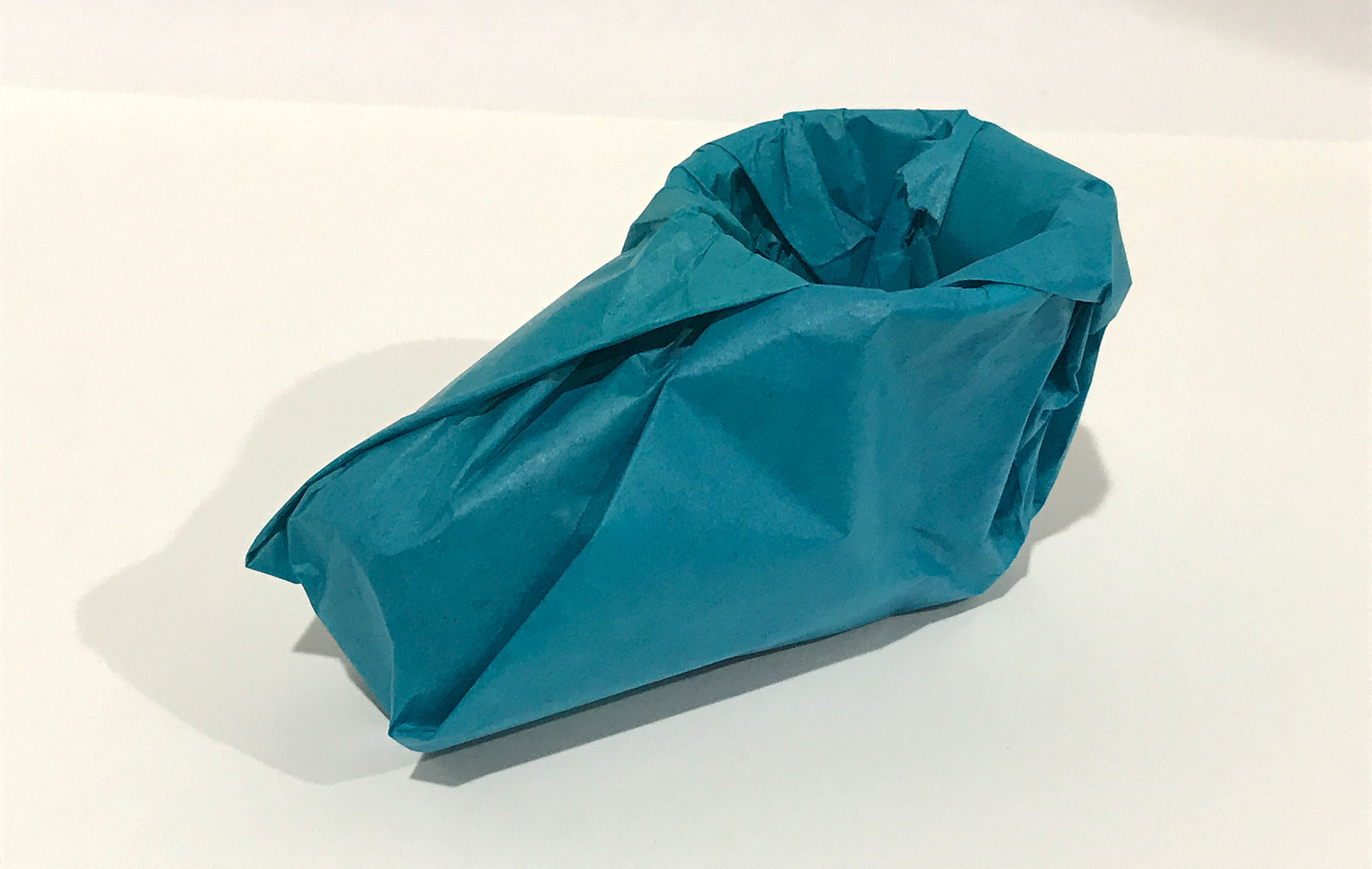
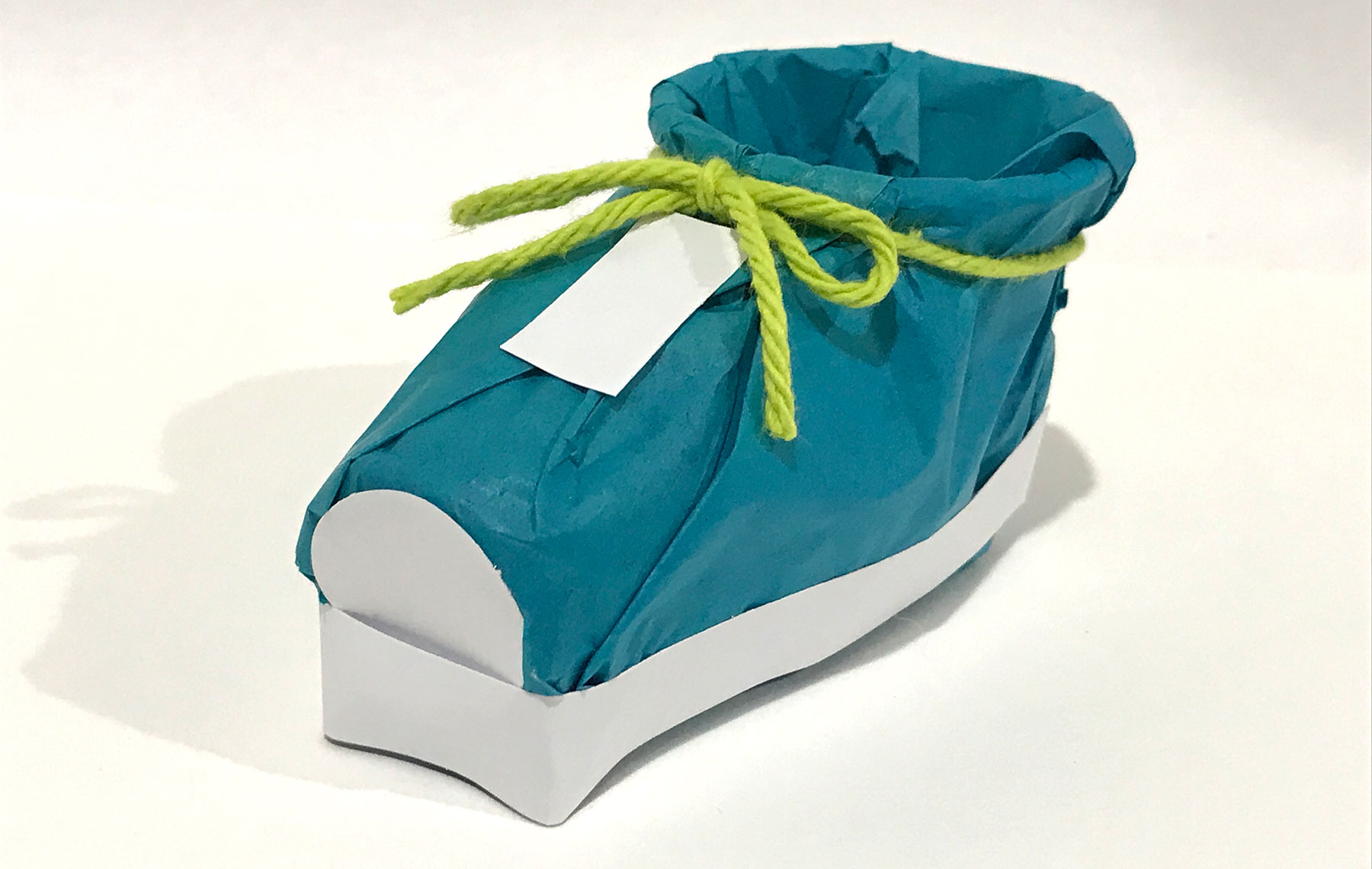
On Yom Kippur, you see a lot of canvas and rubber sneakers, but here’s something different — easy to make paper shoes. While you actually can’t wear these shoes, they’re a creative way to teach kids about this particular Yom Kippur tradition. Plus, you can use them as cups for holding nuts, candies and other treats during your break-fast meal.
What you’ll need: Mini paper or plastic cups
Tissue paper
String or yarn
White paper
Glue stick
1. Cut a 10-inch square piece of tissue paper. Place two paper or plastic cups in the middle of the tissue paper, one cup standing up straight and the other on its side in front of the first cup. The best cups for this project are the miniature ones used for bathrooms.
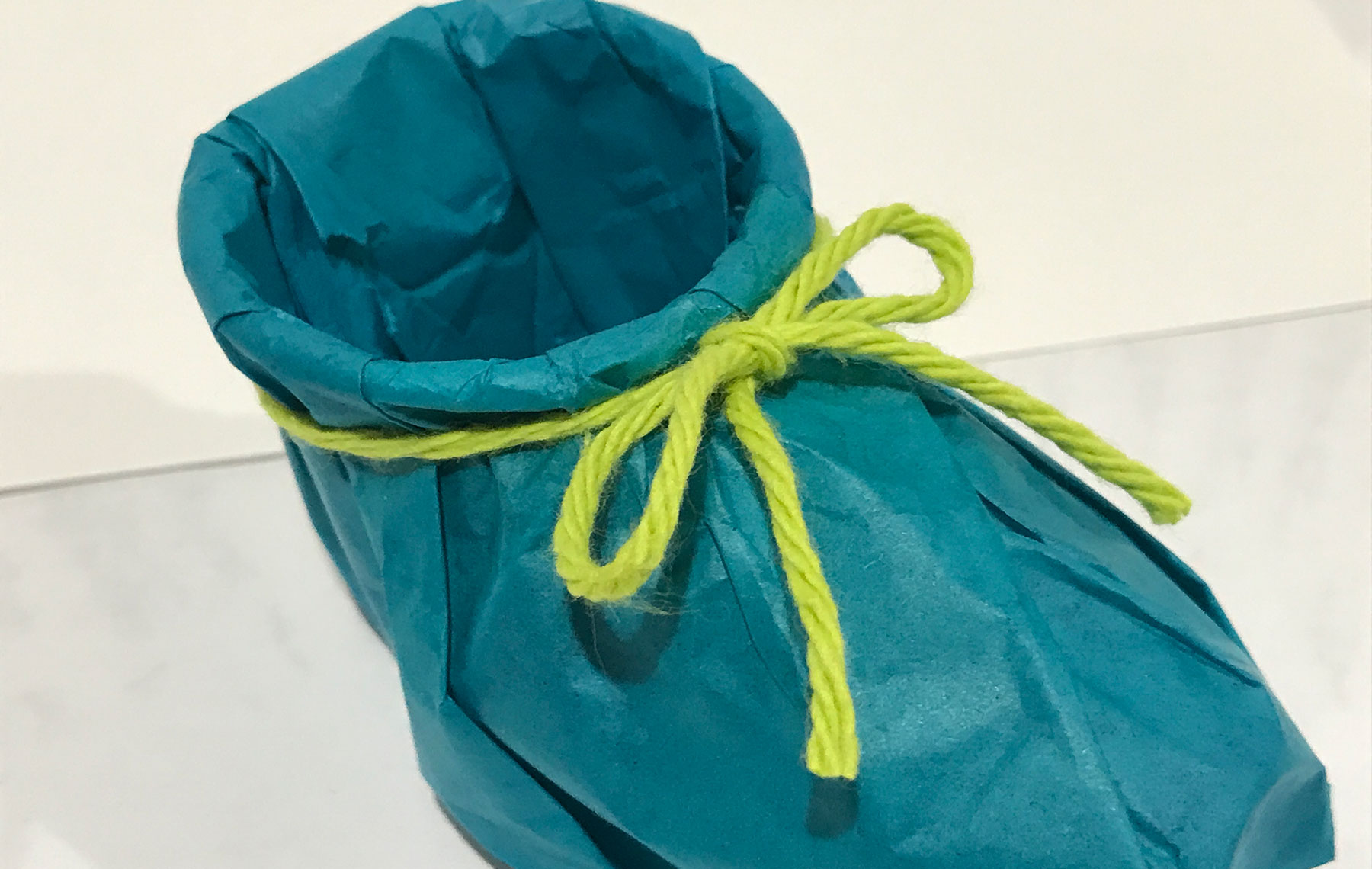
2. Wrap the tissue paper around the two cups, tucking the extra paper into the cup that is standing up. Press a third cup into that cup to lock the excess paper in place, and then remove it.
3. Tie a piece of string or yarn around the rim of the cup. This serves as the shoelace, but it also secures the paper to the cups.
4. To give the paper shoes some sneaker details, adhere a half-inch strip of paper around the bottom of the shoes with a glue stick. Also, add a 1-inch diameter circle of paper at the front of the shoe for the toe cap, along with a small strip in the center where the eyelets would go.
Jonathan Fong is the author of “Flowers That Wow” and “Parties That Wow,” and host of “Style With a Smile” on YouTube. You can see more of his do-it-yourself projects at his website.
Nancy Aspaturian died Sept. 5 at 60. Survived wife Laurie Aronoff; daughters Lilia Aronoff-Aspaturian, Emma Aronoff-Aspaturian; sister Heidi Aspaturian. Mount Sinai
Alice Berk died Sept. 6 at 88. Survived by daughters Marcia (David) Nimmer, Jill; sons Greg (Silvana Boroukhim), Jeremy; 7 grandchildren; 2 great-grandchildren. Malinow and Silverman
Nina Blumberg died Sept. 3 at 87. Survived by daughter-in-law Margaret Christine; 2 grandchildren; 5 great-grandchildren; sister Mary Catherine. Hillside
Stuart Cooper died Sept. 3 at 75. Survived by daughter Adrienne (Jerry) Witherspoon; son Scott (Geena); 4 grandchildren; sister Linda Birnbaum. Mount Sinai
Asher Fausett died Aug. 30 at 20. Survived by mother Hilary; father Bret; sisters Eleanor, Claire. Mount Sinai
Ira Fine died Sept. 7 at 79. Survived by wife Barbara; sons Daniel “Dan,” Richard “Rick” (Wendy), Kenneth “Ken” (Jill); 4 grandchildren; 3 great-grandchildren. Mount Sinai
Hella Fletcher died Sept. 4 at 94. Survived by son Seymour; sister Sharon (Daryl) Herbert; 4 grandchildren. Mount Sinai
Edith Gold died Sept. 4 at 96. Survived by son Seth (Julie). Malinow and Silverman
Ruben Gordon died Aug. 31 at 85. Survived by wife Minda; daughter Bluma (Alex) Chernobelysky; 2 grandchildren; brother David (Hasya). Mount Sinai
Beatrice Helfand died Sept. 4 at 98. Survived by sons Bernard Shoeps, Ted; 2 grandchildren. Mount Sinai
Ronald S. Isacoff died Sept. 3 at 71. Survived by wife Barbara; daughter Jennifer (Mack) Hill; son Joseph Luftman; 4 grandchildren; brother Howard. Mount Sinai
Gerald Klaz died Aug. 24 at 83. Survived by wife Paige Holliday Klaz; daughtersJulie, Ilana; 1 grandchild. Mount Sinai
Shirley Mae Klein died Sept. 1 at 85. Survived by sister Shelly Arons. Mount Sinai
Lloyd Leighton died Sept. 1 at 78. Survived by son Matthew (Rachel); 1 grandchild. Chevra Kadisha
Norma G. Lustig died Aug. 26 at 82. Survived by sister Marsha (Barry) Waldman. Mount Sinai
Michael Murry died Sept. 4 at 72. Survived by daughters Gina, Jennifer (David) Stapleton, Christina (Nelson) Campos; son David (Lillian); 7 grandchildren; 1 great-grandchild; sister Michelle Kingston; brother Dennis (Alisha); mother-in-law Nancy Filkow. Mount Sinai
Jack Nomberg died Sept. 5 at 101. Survived by daughter Bella; 2 grandchildren; 2 great-grandchildren; sister Barbara. Hillside
BenTzion Novack died Sept. 6 at 64. Survived by wife Yocheved; daughters Tzipora Lifchitz, Bryna Webb, Rivky, Chavi, Esther; sons Hershey, Shmuli, Mendel, Yossi; 15 grandchildren; brothers Steve, James. Mt. Olive Cemetery, Los Angeles
Eshagh Refah died Sept. 2 at 98. Survived by daughters Roohi (Mansoor) Radparvar, Mehri (Kamran) Firooz, Vida (Kouroush) Kohanteb; son Iraj Refah; sister Zinat Kohantab. Malinow and Silverman
Harry Reis died Sept. 7 at 96. Survived by wife Ruth; daughters Melanie (Jonathan) Steiner, Claudia; 1 grandchild. Mount Sinai
Thomas R. Robinson died Sept. 7 at 78. Survived by wife Irene; daughter Theresa Nivon; son Nathaniel (Girlie); 8 grandchildren; 8 great-grandchildren; sisters Pat (Joel) Founier, Joann Scrowder; brother John (Pauline). Mount Sinai
Stanley Sackler died Sept. 3 at 82. Survived by wife Betty; sons Robbie (Amy), Jerry (Marla); 4 grandchildren; brother Allen. Hillside
Herbert J. Simons died Aug. 29 at 78. Survived by wife Sharon Alfers; daughter Jennifer (Josh) Luchs; sons Jordan (Vanina), Benjamin David; 4 grandchildren. Mount Sinai
Lenore M. Starr died Aug. 3 at 89. Survived by daughters Mona (Jeff) Platt, Rhoda (Bob) Meyer, Sharyn; 5 grandchildren; 5 great-grandchildren. Mount Sinai
Sylvia Steinberg died Aug. 30 at 98. Survived by daughter Marsha; sons Carl (Ruth), Marc; 2 grandchildren. Hillside
Joanne Trumer died Aug. 23 at 73. Survived by husband Gary; sister Marilyn (Carol) Frankel; brother David (Rebecca) Frankel. Mount Sinai
Morton Tubor died Aug. 22 at 102. Survived by son Larry (Suzan Znoy); 2 grandchildren; 2 great-grandchildren. Mount Sina
The late Rabbi Mordecai Kaplan is best remembered as the father of Reconstructionism, a movement that regards Judaism as “the evolving religious civilization of the Jewish people.”
But Kaplan’s life and work cannot be encapsulated in a single phrase. He was also a co-founder of the Young Israel movement in Orthodoxy and, with Rabbi Solomon Schechter, the United Synagogue of Conservative Judaism. He was the founding rabbi of the first synagogue to install recreational facilities for its congregants and its community, a “shul with a pool.” His daughter Judith was the first young woman in America to be called to the Torah as a bat mitzvah.
Kaplan, who died in 1983 at the age of 102, passed along his vision and wisdom to the countless number of young men and women who were his students. One of them was our own Rabbi Steven Carr Reuben, senior rabbi emeritus of Kehillat Israel, a Reconstructionist congregation in Pacific Palisades. Kaplan was 90 when Reuben was invited “to sit in his apartment, study Jewish texts, and discuss his vision of contemporary Jewish life with him,” as Reuben recalls in his book “A Year With Mordecai Kaplan: Wisdom on the Weekly Torah Portion” (Jewish Publication Society), which has a foreword by Rabbi David A. Teutsch.
“It is almost impossible to adequately capture the remarkable impact that Mordecai Menahem Kaplan has had on the religious and communal life of the American Jewish community,” writes Reuben. “His unapologetic critique of the flaws and failures of Reform, Conservative and Orthodox Jewry to capture the minds and hearts of American Jews in the first two decades of the twentieth century led to his sweeping visions for reconstructing and reimagining contemporary Jewish life.”
Strictly speaking, Reuben’s book is neither a history of Reconstructionism nor a biography of Mordecai Kaplan. Rather, Reuben presents Kaplan’s “wisdom, passion and insights” in a series of short Torah commentaries. Starting with Torah readings drawn from the gender-sensitive translation titled “The Contemporary Torah,” Reuben adds a short explanation of the text, quotations from Kaplan’s teachings and anecdotes from his own experiences as a congregational rabbi. He designed the book “to be read and used each week to help illuminate the Torah one portion at a time.”
Yet “A Year With Mordecai Kaplan” aspires to illuminate more than the received text of the Torah. Reuben also reminds us of Kaplan’s willingness to “challenge our assumptions about God, Torah, Israel, prayer, community, education, values, rituals, traditions, and every other aspect of what it means to live a contemporary Jewish life.” While Reuben casts his book in the classical rabbinical categories of P’shat (explanation) and D’rash (commentary), he urges us to see the sacred text in a wholly new light.
Rabbi Steven Carr Reuben offers what he has extracted from Rabbi Mordecai Kaplan’s teachings: “He understood that the fundamental human need for love and connection to others fuels every relationship, every act of kindness to strangers, every expression of compassion, and ultimately the very search for the meaning of our lives.”
By way of example, the very first entry is a quotation from Bereshit: “God said, ‘It is not good for the Human to be alone; I will make a fitting counterpart for him’ ” (Genesis 2:18). As Reuben points out, God is shown to acknowledge that the divine act of creation is not perfect and something crucial is missing: “The Torah suggests that each of us seeks a spiritual partner with whom to share our lives,” Reuben writes.
Then he offers what he has extracted from Kaplan’s teachings: “He understood that the fundamental human need for love and connection to others fuels every relationship, every act of kindness to strangers, every expression of compassion, and ultimately the very search for the meaning of our lives.” And he quotes Kaplan for the credo that “God is in the faith by which we overcome the fear of loneliness, of helplessness, of failure and of death.” And he concludes the entry by revealing his own anxiety: “I was as a young rabbi doing my best to be there for everyone who needed me, and at times I felt like I was just faking it.” His salvation turned out to be Didi, the woman who married him. “Her touch, her smile, her attentiveness, and her delight in others remind me over and over of the magic of making another person feel he or she matters.”
When we reach the crossing of the Red Sea in Exodus — “Then Adonai said to Moses, ‘Why do you cry out to Me? Tell the Israelites to go forward.’ ” (Exodus 14:15) — Reuben sees a communal rather than a personal message. “[T]oo often we squander our time and credibility by continually talking about our intentions to help our communities rather than simply taking action,” he writes. From Kaplan’s writings, he extracts a passage about the uses of history: “Our past is not merely to supply wants but to create wants,” Kaplan wrote. As two examples of what Kaplan meant, he cites the founding of the State of Israel and his own father’s decision to leave Russia and join the “millions of immigrants who possessed the strength of character and faith in themselves to follow the American dream.”
One way to understand what is meant when Reconstructionism describes Judaism as a “religious civilization” is that it encompasses all aspects of human life. So, too, does Reuben write about topics on which the Torah itself is mostly or entirely silent, including animal rescue, gay and lesbian marriage, the Boy Scouts, the Vietnam War, the Equal Rights Amendment, Nelson Mandela and the reason why a rabbi might go to church on Christmas Eve as an affirmation of his Jewish values.
The point is made in the stirring words of Kaplan himself: “The search for truth is hampered by the universal tendency to treat as the last word what is really only the first word in any revelation or discovery.” For Reuben, as for Kaplan, the words of the Torah are only the starting point for understanding and fulfilling what it means to be a Jew in the world.
Buy “A Year With Mordecai Kaplan: Wisdom on the Weekly Torah Portion” on Amazon here.
Jonathan Kirsch, author and publishing attorney, is the book editor of the Jewish Journal.