fbpx

August 14, 2019

What’s Happening: Kids Shabbat, Short Films, Movie Night

FRI AUG 16

“Kidz, Kibbitz & Cocktailz
Join families at Mishkon Tephilo’s child-friendly “Kidz, Kibbitz and Cocktailz,” held every third Friday at the Santa Monica congregation. Children romp across the playground while their parents socialize around music and cocktails. A short Shabbat service geared for children is held before a community potluck vegetarian and peanut-free dinner. Guests are asked to call the Mishkon office for potluck guidelines. A Kabbalat Shabbat service concludes the evening. No RSVP necessary. 4-5 p.m. kids on the playground and adult kibbitzing. 5-5:30 p.m. Shabbat service for young children. 5:30-6:30 p.m. community potluck dinner. 6:30 p.m. Kabbalat Shabbat services. Free. Mishkon Tephilo, 201 Hampton Drive, Venice. (310) 392-3029.

Community Shabbat Dinner
Conservative congregation Temple Beth Am holds “Shabbat Under the
Stars,” featuring an outdoor summer Kabbalat Shabbat Sovev services and
a community dinner reuniting campers from Alonim, Ramah, the USY Israel Pilgrimage, the Ramah Seminar and more. Dinner reservations required. 5:30 p.m. early Camp Keshet dinner. 6:15 p.m. services. 7:30 p.m. camp reunion, main dinner. $20 per adult. $16 per child ages 2-12. Temple Beth Am, 1039 S. La Cienega Blvd. (310) 652-7353.

Shabbat Under the Stars
Music is key when Shomrei Torah Synagogue (STS) convenes “Back to School Shabbat Under the Stars” on its Early Childhood Center lawn. The STS House Band and STS choir members perform, and attendees are asked to bring school supplies (markers, pencils, pens, colored crayons, colored pocket folders, notebook paper, spiral notebooks or pencil boxes) to donate. Bring a dairy dinner, too. 6 p.m. Shomrei Torah Synagogue, 7353 Valley Circle Blvd., West Hills. (818) 854-7650.

N’ranena
N’ranena Shabbat at Adat Ari El is a time for rejoicing while engaging in a dynamic musical experience. During the participatory services, the synagogue provides challah, and worshippers bring a vegetarian or non-dairy picnic dinner to eat and a dessert to share. Hearty barbecue meals ordered in advance are available. All are invited to hang out after services. 6-8:30 p.m. $18 for BBQ meal. Adat Ari El, 12020 Burbank Blvd., Valley Village. (818) 766-9426.
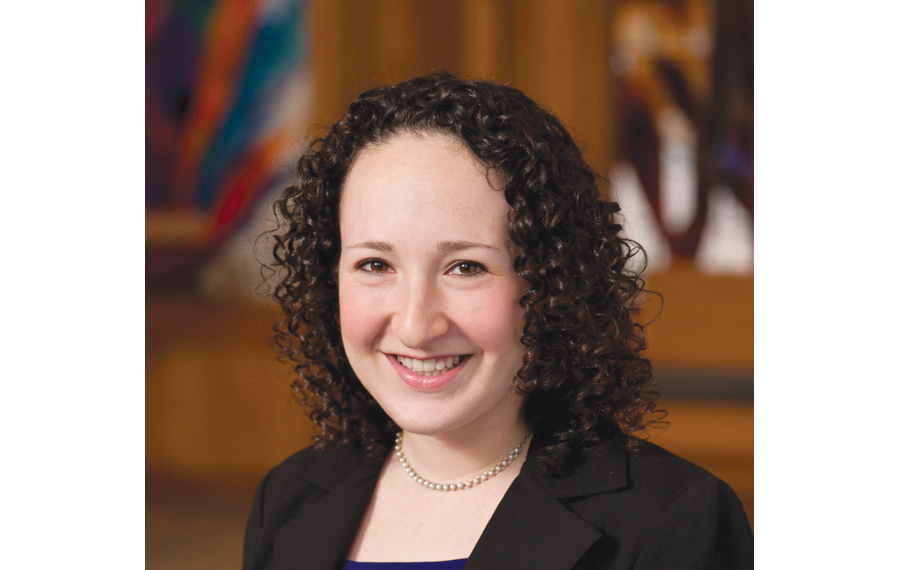
Rabbi Shayna Golkow

Shabbat Welcoming New Rabbi
Join Temple Aliyah in Woodland Hills at a community Shabbat dinner welcoming the Conservative synagogue’s newest clergy member, Rabbi Shayna Golkow, ordained earlier this year by the Jewish Theological Seminary. A native of Cherry Hill, N.J., she interned at Conservative synagogues in Manhattan and Buffalo, N.Y. 6:30-8 p.m. $23 members, $13 per child 13 and younger. $28 general, $18 per child 13 and younger. Temple Aliyah, 6025 Valley Circle Blvd., Woodland Hills. (818) 346-3545.

Pray and Stay
The synagogue does the cooking while you do the connecting during IKAR’s Pray and Stay Shabbat, a high-energy musical Kabbalat Shabbat service and catered community meal. Kosher pescatarian served with vegetarian options. 6:30 p.m. scotch and services. 8 p.m. community dinner. $10 members. $12 general. $5 children. RSVP online. Shalhevet High School, 910 S. Fairfax Ave., Los Angeles. (323) 634-1870.

Rooftop Ruach
Usher in Kabbalat Shabbat above Wilshire Boulevard Temple (WBT) at Rooftop Ruach. The evening begins with family-friendly services led by WBT Rabbi Joel Nickerson and Cantor Lisa Peicott. Dinner and entertainment follow. 7 p.m. $15 adult dinner. $10 children 10 and younger. Free for those who bring own dinner or picnic. Wilshire Boulevard Temple Glazer Campus, 3663 Wilshire Blvd., Los Angeles. (213) 388-2401.

Boyle Heights Shabbat
Have you ever tried gefilte fish with salsa? Join Shmuel Gonzales, aka the Barrio Boychik, and the Boyle Heights Chavurah, a close-knit Jewish community in Boyle Heights, for a unique erev Shabbat celebration. Worshippers bring their own candles for candle lighting and flood the space with light. Gonzales, founder of Boyle Heights Chavurah, leads services with liturgy in Hebrew, Spanish and English. A kosher meat meal is served with vegetarian options. 7:30-10:30 p.m. Donations accepted. Boyle Heights History Tours and Studio, 2026 E. First St., Los Angeles. (323) 902-6953.

SAT AUG 17

Havdalah Movie Night
Families seeking fun and friendship for their children ages 7-12 attend Havdalah Movie Night at Nessah Synagogue in Beverly Hills. Nessah Youth Programs Director Moshe Eshaghian leads the Havdalah service followed by video games, pizza, snacks, ice cream, a hit movie and a raffle with prizes. 9-11:30 p.m. $15 per family. Nessah Synagogue, 142 S. Rexford Drive, Beverly Hills. (310) 273-2400. RSVP to nessahyouthdirector@gmail.com.

“Friendship & Harmony”
Musical organization the Los Angeles Jewish Symphony (LAJS) teams up with the orchestra and choir from the Los Angeles Korean-American Musicians’ Association for “Friendship & Harmony,” a concert performance at Walt Disney Concert Hall. The uniquely collaborative program celebrates shared humanity and strength of community. This evening marks the West Coast premiere of Grammy-winning conductor-composer Lucas Richman’s newest work, “Symphony: This Will Be Our Reply” and the U.S. premiere of Byunghee Oh’s “The Spirit of Korea.” LAJS Conductor Noreen Green, L.A. Korean-American Musicians’ Association conductor Im Sang Yoon and baritone and Rabbi Ron Li-Paz participate. 8 p.m. Tickets start at $20. Walt Disney Concert Hall, 111 S. Grand Ave., Los Angeles. (818) 646-2844.  
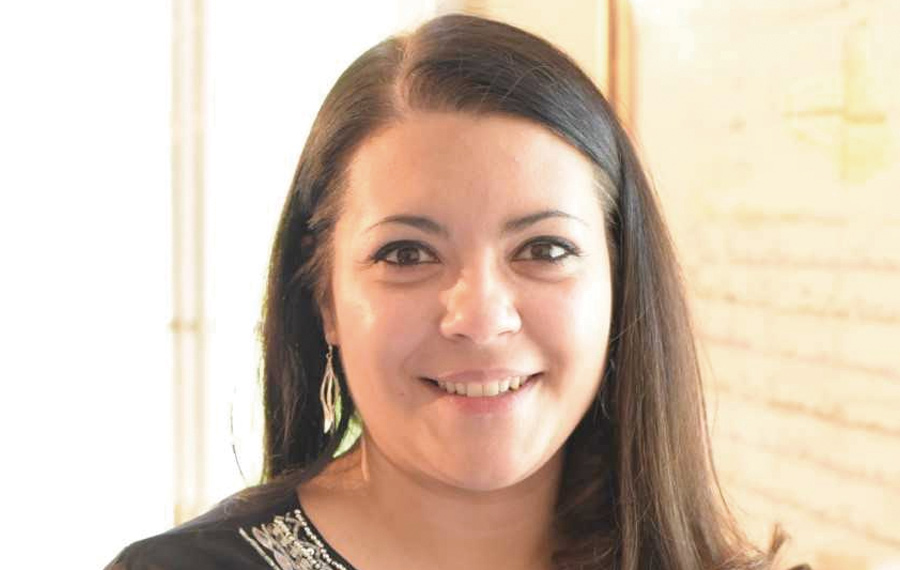
Aziza Hasan

“Making Space For Difference”
Is it possible to open minds and hearts to people with whom we disagree? Can political and cultural differences be exchanged in ways both courteous and productive? As part of the monthly “Nosh ’n Drosh” at B’nai David-Judea, Aziza Hasan, executive director of NewGround: A Muslim-Jewish Partnership for Change, discusses “Making Space for Difference: Civil Discourse in a Charged Political Climate.” Join Hasan and NewGround change-makers for an afternoon of deep disagreement with deep listening. Child care provided. 5 p.m. Free. Private home. For information, contact bdj@bnaidavid.com. (310) 276-9269.

SUN AUG 18
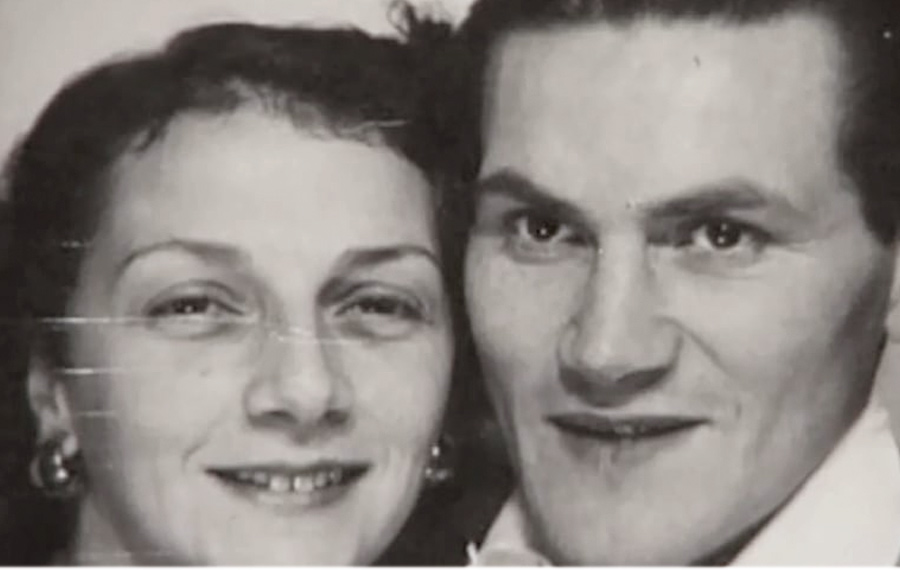
“Say I Love You: The Story of Betty Cohen”

3G Short Film Series
A group of Holocaust survivors’ grandchildren screens three short films exploring how the descendants use narratives of the past to effect change in the current climate. Organized by 3G@LAMOTH, the films are “Say I Love You: The Story of Betty Cohen,” featuring photographs and documents weaving together a memoir of an inspirational woman; “The Sarid Family,” following four siblings recalling how their father turned his experiences into his family’s foundation; and “Boxes,” about a wife packing up belongings of her recently deceased husband. Conversations with filmmakers follow the screenings. 5-5:45 p.m. reception. 5:45-7 p.m. screenings and conversations. $10 suggested donation. RSVP requested. Los Angeles Museum of the Holocaust, 100 The Grove Drive at Pan Pacific Park. (323) 651-3704.

MON AUG 19

“Heckles for Shekels”
The young leadership division of Friends of the Israel Defense Forces (FIDF) holds its second annual “Heckles for Shekels,” an evening of stand-up comedy at the Improv. Proceeds are used to raise awareness about the health of soldiers after active duty and to meet their health needs. 6:30 p.m. doors. 7 p.m. seating. 7:30 p.m. show. $45 or $125 VIP admission. The Improv, 8162 W. Melrose Ave., Los Angeles. (323) 843-2690. For additional information, contact julia.goldman@fidf.org.

THU AUG 22

Mitzvah Food
Join members of Nessah Synagogue in distributing dry and uncooked free food to low-income families on the day before Shabbat. No questions are asked of those being served. 10:30 a.m.-12:30 p.m. Nessah Synagogue, 142 S. Rexford Drive, Beverly Hills. (310) 273-2400.
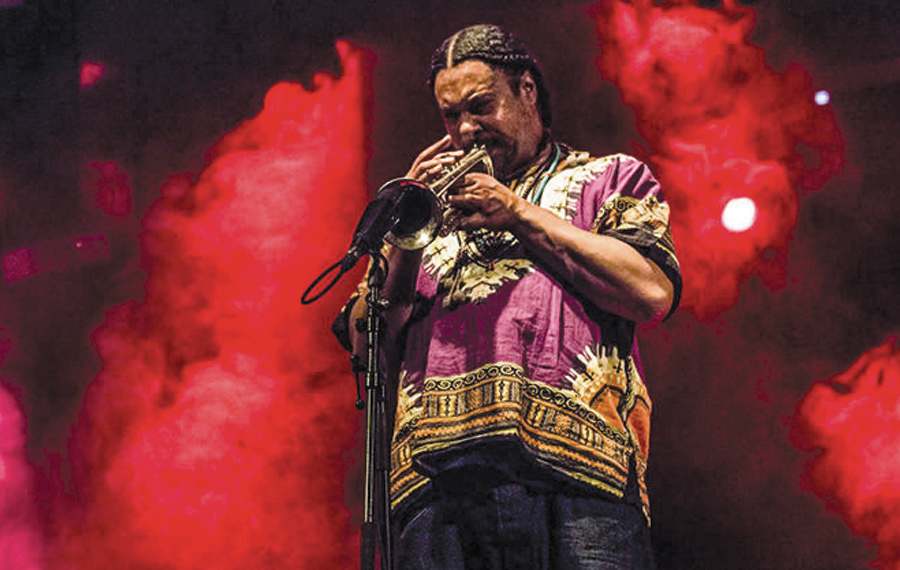
Josef Leimberg

Leimberg at Skirball
Trumpeter-lyricist Josef Leimberg closes out the Sunset Concerts season at the Skirball Cultural Center with a tapestry of Afro-futurist sounds. The half-Jewish performer fuses jazz, world music, R&B and hip-hop. Early arrivals are treated to a DJ set by KCRW’s Novena Carmel. 6:30 p.m. doors and DJ set. 8 p.m. show. Free. Skirball Cultural Center, 2701 N. Sepulveda Blvd., Los Angeles. (310) 440-4500.


Have an event coming up? Send your information two weeks prior to the event to ryant@jewishjournal.com for consideration. For groups staging an event that requires an RSVP, please submit details about the event the week before the RSVP deadline.

What’s Happening: Kids Shabbat, Short Films, Movie Night Read More »
Movers & Shakers: New Leaders; Associates Honor Women

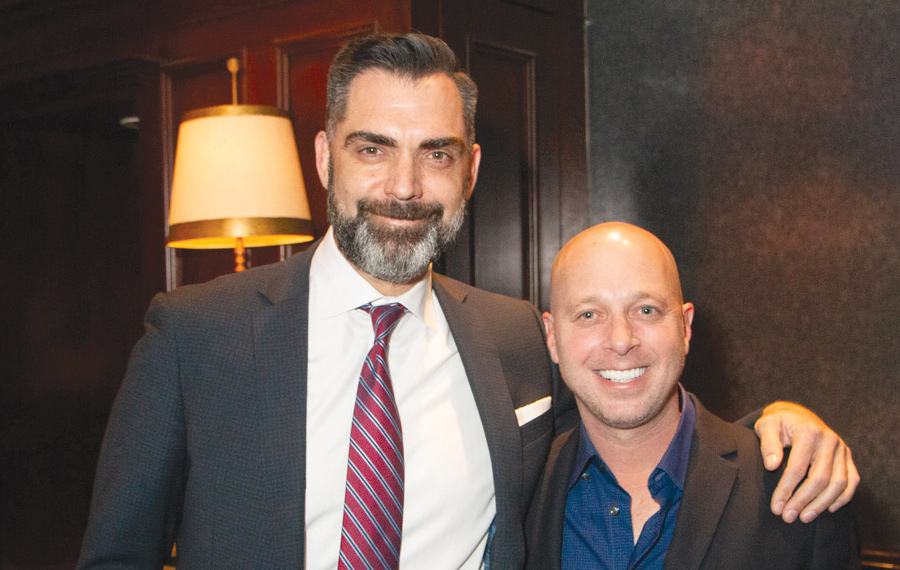
The Guardians of the Los Angeles Jewish Home, which provides financial support for elderly and needy members of the L.A. Jewish community, has named Zane Koss and Peter Steigleder as the presidents of its board, effective Sept. 1.

Koss and Steigleder succeed Larry Schnaid and Jeff Schlesinger, who are wrapping up a two-year term.

Koss, a third-generation Angeleno, works in the real estate industry with his family’s namesake company, Koss Real Estate. He also owns iconic Los Angeles restaurants from Malibu to Hermosa Beach, including Italy’s Little Kitchen and Zane’s. He was introduced to the organization through his father, Michael, over 20 years ago at one of the group’s comedy nights at the Hollywood Palladium. 

“The Guardians has been not only a philanthropic passion of mine for
almost two decades, but my family,”
Koss said. “I have met some of my
dearest friends through this group and I cannot wait to continue to share it with the rest
of L.A.”

Steigleder, who was born in Germany, has been involved with the Guardians for over 15 years alongside longtime friends who introduced him to the organization through the young men’s divisions. He is the COO of Fidelity Mortgage Lenders.

“We know we have big shoes to fill following Jeff and Larry, but we’re excited by the challenge and we’re ready to make the next two years even more memorable and impactful,” Steigleder said.


Rabbi Shayna Golkow, the new second rabbi at Temple Aliyah in Woodland Hills.
Photo cfrom YouTube

Rabbi Shayna Golkow has joined the clergy team of Temple Aliyah, a Conservative congregation in Woodland Hills. Golkow’s hiring as the congregation’s second rabbi became effective in July.

The former rabbinic intern at Park Avenue Synagogue in New York City and at Temple Beth Tzedek in Buffalo, N.Y., is a graduate of the Jewish Theological Seminary, where she was ordained in 2019. She earned her bachelor’s degree in religious studies from the University of Pennsylvania. 

Golkow has served as a hospice chaplain, scholar-in-residence at Camp Ramah in the Poconos and as a High Holy Days service leader at Johns Hopkins University Hillel. 

“Rabbi Golkow is passionate about deepening meaningful Jewish living and learning, and she is thrilled to be part of the Temple Aliyah family,” according to the congregation’s website.

Her hiring follows the departure of Rabbi Ben Goldstein, who recently was hired as the senior rabbi for the Jewish addiction rehabilitation organization Beit T’Shuvah.


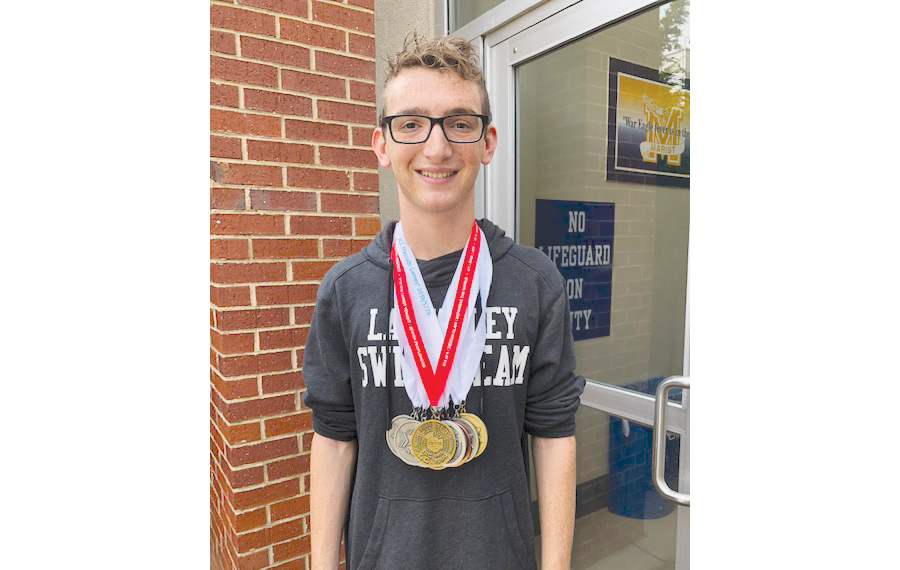
Connor Friedman, a Temple Etz Chaim member who competed in the JCC Maccabi games. Photo from Earl Roth

Connor Friedman, a Temple Etz Chaim member and an incoming junior at Thousand Oaks High School, represented the Valley Jewish Community Center this summer at the national JCC Maccabi Games in Atlanta.

More than 1,600 athleties from Jewish communities in the United States, Israel, Mexico and other countries competed in 13 sports at the games.

Friedman was one of the most decorated athletes from any California delegation as he earned eight swimming medals and the Maccabi Midot award for exemplifying the six values of midot: tikkun olam, respect, joy, pride, big heart and Jewish peoplehood.

In 16-and-under boys swimming, Friedman earned gold medals in the 400-meter freestyle relay and the 50 backstroke.  He also earned silver medals in the 100 freestyle, 100 backstroke, 200 individual medley and 200 freestyle relay.  In addition, Friedman earned bronze medals in the 400 medley relay and the 200 freestyle.

At the Atlanta airport for his return home, TSA security required that his backpack be opened because of the heavy medals.  

Friedman trains with Class Aquatics Swim Club in Westlake Village.


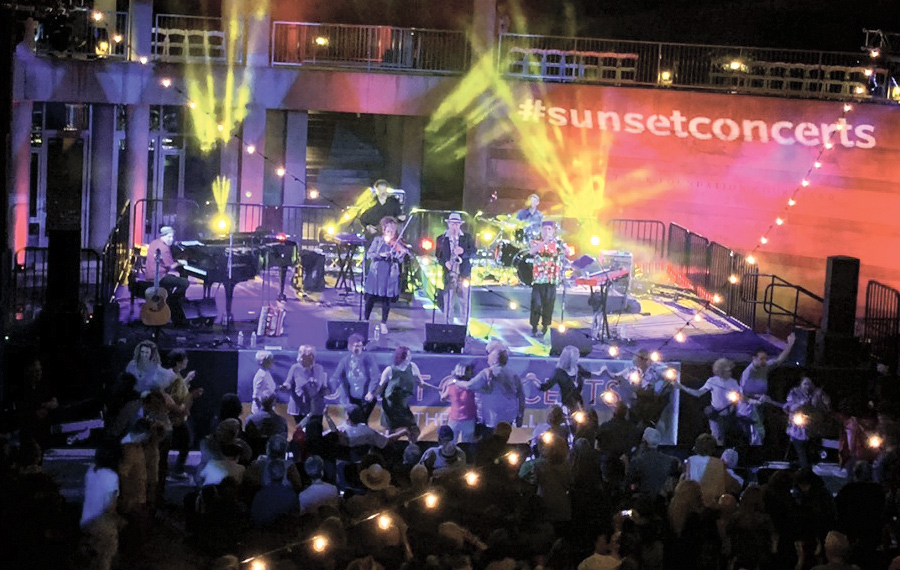
The Klezmatics performed at the Skirball Cultural Center on Aug. 1. Photo courtesy of the Skirball Cultural Center

The Eastern European Jewish roots band the Klezmatics performed at the Skirball Cultural Center on Aug. 1. 

Band members Richie Barshay, Lorin Sklamberg, Paul Morrissett, Frank London, Lisa Gutkin and Matt Darriau performed music from their latest album, “Apikorsim” (“Heretics”) as part of the Skirball’s 23rd annual Sunset Concerts series, featuring an eclectic lineup of artists performing in the courtyard of the museum.

According to the Skirball’s Facebook page, the Klezmatics entertained the
crowd with “wildly danceable and reflective Jewish roots music. Communal hand-clapping and hora dancing abounded all evening.”

The Grammy Award-winning group has been together for over 30 years, has performed in more than 20 countries, released 11 albums and collaborated with violinist Itzhak Perlman, playwright Tony Kushner and the late actor Theodore Bikel. Over the last three decades, the band has helped change the “face of contemporary Yiddish culture,” the Klezmatics’ official website says.

The evening kicked off with a DJ set by Maral of dublab.

The Sunset Concert series wraps up Aug. 22 with a performance by Josef Leimberg.


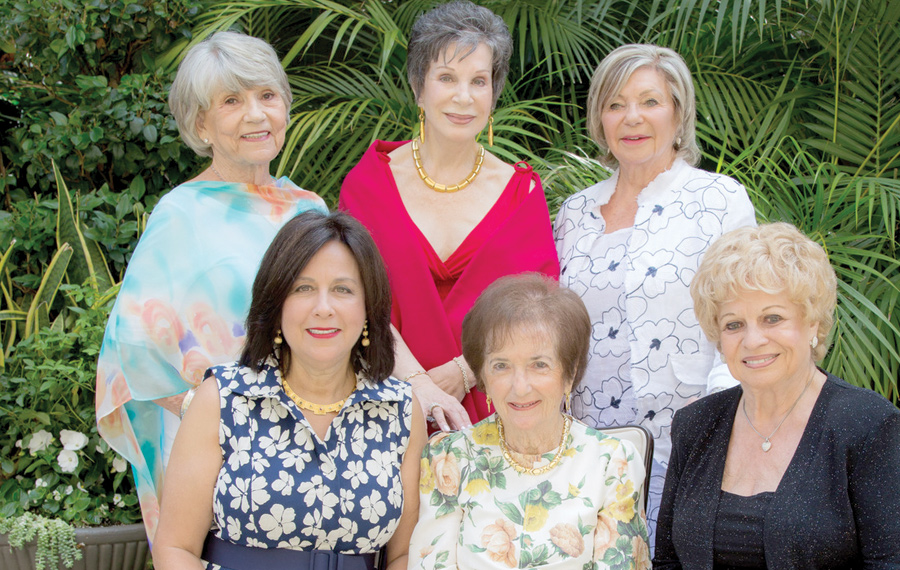
Seated from left: Gail Millan, Barbara Miller-Fox Abramoff and Ruth Flinkman-Mirandy and (standing from left) Joy Brook, Lynn Ziman and Sandy Stackler.

On Aug. 8, The Associates, a women’s auxiliary support group of the Los Angeles Jewish Home, held its 89th Tree of Life Luncheon at the Four Seasons Los Angeles at Beverly Hills.

As the “Women Who Care,” the organization honored mother and daughter Barbara Miller-Fox Abramoff and Gail Millan with the “Woman of the Year” Achievement Award and Ruth Flinkman-Marandy with the Humanitarian Award. All three have been dedicated supporters of the Jewish Home and share decades of service to their communities,
the Jewish Home said. Their involvement includes supporting medical centers in the United States and Israel, as well as a number of organizations involving the arts.

Attendees included The Associates President Sandy Stackler, luncheon chair Joy Brook and honorary luncheon chair Lynn Ziman. Dr. Noah Marco, chief medical officer at the Jewish Home, spoke and Cantor Marcelo Gindlin from the Malibu Jewish Center and Synagogue provided a musical interlude.  

The event’s boutique began at 10 a.m. and the ballroom doors opened at noon.

All proceeds from the event will help sustain the thousands of seniors the organization serves each year, the L.A. Jewish Home said.


Want to be in Movers & Shakers? Send us your highlights, events, honors and simchas.
Email ryant@jewishjournal.com.

Movers & Shakers: New Leaders; Associates Honor Women Read More »

Olivia Cohen-Cutler is Helping Couples Say ‘Yes’

You can find Olivia Cohen-Cutler most Wednesdays at the Van Nuys County Courthouse. There, clad in her law school graduation robe, she serves the state of California as a deputy commissioner of civil marriages. She has a box of tissues in case someone cries and a box of Hershey’s Kisses to help couples start their marriages with something sweet. 

But before she was helping people say “I do,” she had a 29-year career at the American Broadcasting Company (ABC), first in labor relations and business affairs, then as senior vice president of policy and standards. During her tenure, she helped to eliminate hate speech from the airwaves and to support accurate portrayals of faith on television. She also chaired the MorningStar Commission, an organization founded by Hadassah, the Women’s Zionist Organization of America, to advocate for a healthier diversity of portrayals of Jewish women in the media and entertainment industry. 

Now, 3 1/2 years after retiring, she’s marrying between 12 and 15 couples a day and reflecting on the reasons people decide to legally commit to each other.

Jewish Journal: At ABC, you often decided what made it to air. What kinds of things did you prevent from airing and to what extent did your Jewish identity or experience inform your work?

Olivia Cohen-Cutler: My Jewish identity, especially in the last 16 years of my career at ABC, was my moral compass. It was part of my job to be the moral compass for the content. We said no to all manner of hate speech. We took out the stereotyping, [terms like] spic, wetback, kike, the n-word. … You have no idea how many times we heard those kinds of things and didn’t allow them on the air, because to allow them on the air would make them acceptable in a larger context. We had to find a way to say what they wanted without proliferating hate speech, trying to give writers and creative people the most leeway we could to tell their stories. I would insist upon Jewish practices being right, and we had to make sure you weren’t using the stereotype of Jews being stingy and miserly with money. We made sure things having to do with the Catholic religion were also done with the right tenets of their faith. 

Part of our mission was to make sure things were accurate. Especially as a Jewish woman, and then chair of the MorningStar Commission, it was important to create strong and diverse portrayals of Jewish women, not all Jewish American Princesses and overbearing Jewish mothers. It was important [during my work at ABC] that [faith portrayals] be accurate and relatable. Most people in the U.S., the only experience they have with a Jewish person is what they see on a screen. If you live in Los Angeles or New York or Florida, you forget that.

JJ: It’s the Jewish holiday of love, Tu b’Av, so let’s talk marriage. What’s it like spending a day of your week helping people say “I do”?

 “It’s so crazy that I say three minutes of words and they’re legally bound to each other. It’s so interesting to me that in this day and age, this tradition is so powerful. There’s a psychic power to the marriage ceremony that defies explanation.” 

OCC: It’s so crazy that I say three minutes of words and they’re legally bound to each other. It’s so interesting to me that in this day and age, this tradition is so powerful. There’s a psychic power to the marriage ceremony that defies explanation. I have a ceremony template I tweaked to reflect things I wanted to include in addition to the required vows and pronouncements to make the ceremony a little more meaningful. They can say vows, but most don’t. Sometimes I ask, “What made you decide to get married today?” In my notebook, I write down the first name and age of both, and a paragraph about what transpired so I can remember and honor the experience.

Many couples have divorced and found they couldn’t live without each other and are remarrying. Some couples have just the two [of them] present; sometimes [there’s] a lot of people. 

When I introduce myself, [couples sometimes] give me a sign that they’re happy that I’m Jewish. “Someone who understands who I am,” they’ll say. [With] one couple, one of the bride’s parents was born in Israel. At the end, everyone said “mazel tov.” I said, “Let’s get the whole mishpachah up here,” and they flipped out, [saying], “I knew we had a Cohen!”  After a life of saying “no” [at ABC], I’m saying “yes” to everyone. I love the hell out of doing it. Talk about a slice of life.

JJ: You’ve been married to your husband, Andy, for 42 years. What’s your best piece of relationship advice? 

OCC: Forget a lot. Look for the good and forget whatever’s sticking in your craw. It’s not about forgiveness because some things you can forgive but not forget and the forgetting enables you to make the next day clean. Everything passes, the good and the bad, unless you hang on to it. And the forgetting is how you don’t hang on to it. Life happens and the person that you’re with bears the brunt of how that life is happening to you and vice versa.

[On anniversaries] we each try to be the first to say happy anniversary. It compounds the importance of our bond, that we don’t let that go. Ritual is important to everything. We’ve gone through a lot of ups and downs. You have to hold on to the stuff that is important to get you through the times that are tough.

Olivia Cohen-Cutler is Helping Couples Say ‘Yes’ Read More »

Get Ready for Class With DIY Back-to-School Clothespins

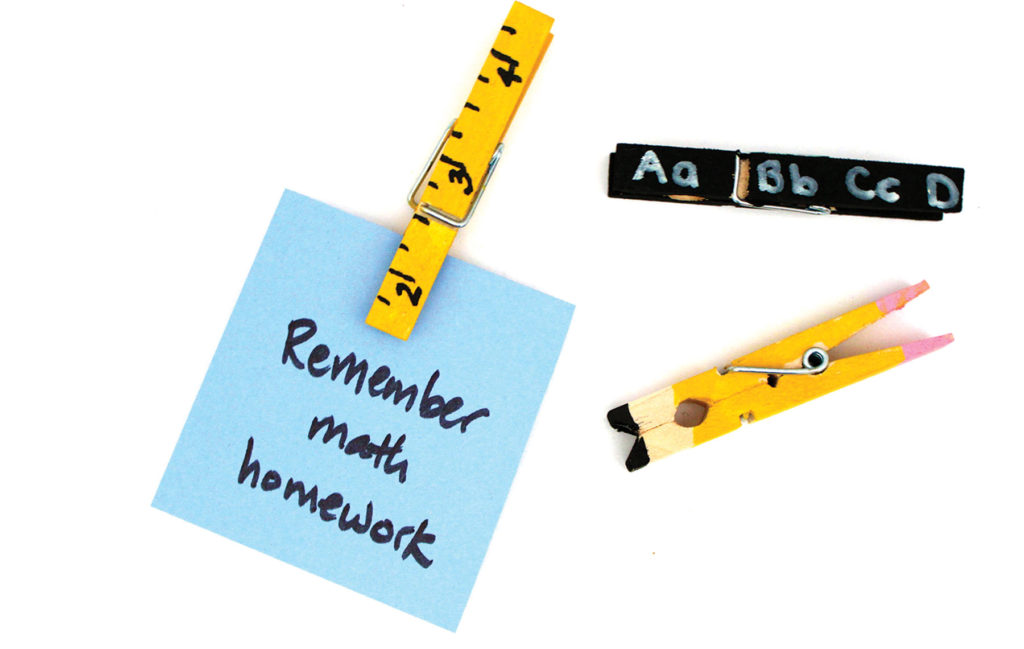
Clothespins are so handy to have around, and it seems like they’re used for practically everything except hanging clothes out to dry. Now that it’s back-to-school season, be sure to stock up on clothespins for organizing papers, sealing lunch bags, keeping books open to the right page, clipping reminders about homework and chores — the uses are endless. 

And not only are clothespins versatile. They can also be fun and colorful when you snazz them up with these back-to-school designs.


What you’ll need:

Clothespins
Yellow acrylic paint
Pink acrylic paint
Black acrylic paint
Paintbrushes
Black paint marker
White paint marker

Ruler Clothespins:

1. Paint the clothespin with yellow paint. Try not to get the paint on the metallic hinge, but if you do that’s fine.

2. When the paint is dry, use a black marker to draw lines on the clothespin to indicate inch and half-inch measurements. You can use an actual ruler as a guide.


Pencil Clothespins:

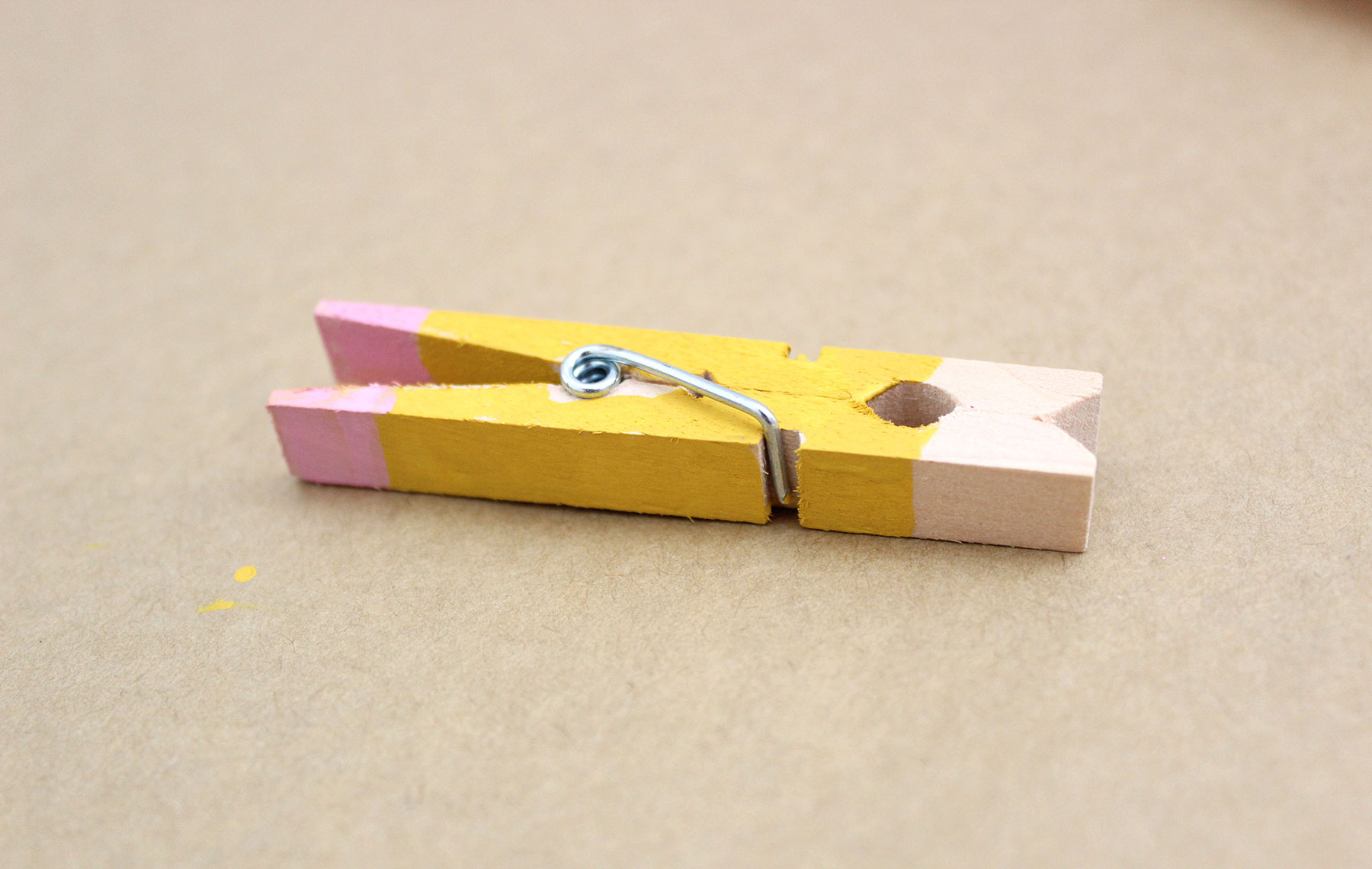
1. Apply yellow paint on most of the middle part of the clothespin, leaving the two ends alone. Paint one end pink for the eraser.

2. Use a black marker to color in the other end to make the tip of the pencil.


Chalkboard Clothespins:

1. Paint the clothespin with black paint.

2. When it’s dry, write what you’d like on the clothespin with a white marker. I wrote a few letters of the alphabet, but you can personalize it however you’d like.


Jonathan Fong is the author of “Flowers That Wow” and “Parties That Wow,” and host of “Style With a Smile” on YouTube. You can see more of his do-it-yourself projects at online.

Get Ready for Class With DIY Back-to-School Clothespins Read More »

Obituaries: Aug. 16, 2019

David Meyer Appelbaum died Dec. 27 at 70. Survived by daughter Shoshawnah; son Aaron (Sasha); 3 grandchildren; sister Debra Manlove. Chevra Kadisha

Alan Barbakow died July 5 at 77. Survived by wife Rise; daughters Carly (Jason) Friedberg, Laura (Scott) Marcus, Julie (Sami) Levy; sons Jeremy, Craig; 9 grandchildren. Mount Sinai

Herbert Ivan Cooper died June 18 at 91. Survived by wife Francine; daughter Jennifer (Bob) Macracken; sons Neal Allen, Peter (Yunhee Min) Tolkin, Paul (Donna), Jonathan Tolkin; 13 grandchildren; 4 great-grandchildren. Mount Sinai

Raymond Fausner died June 16 at 82. Survived by wife Barbara; sons Mark, Ian; 3 grandchildren; sister Laura; brother David. Chevra Kadisha

Milton A. Gordon died July 3 at 92. Survived by daughter Patricia (Jonathan) Dern; sons Steve (Michelle), Richard; 4 grandchildren; 1 great-grandchild; sister Madeline (Phil) Cooperman; brother Jack (Linda). Mount Sinai

Kenneth Kleitman died Nov. 19 at 73. Survived by daughter Emily; son Jonathan; sister Jean (Jack Brown) Lesavoy. Mount Sinai

Phyllis Leshowitz died June 7 at 76. Survived by husband Barry; daughter Risa (Eric) Katz; sons Michael, Daniel (Rebecca); 3 grandchildren; sister Janice Yeadon. Malinow and Silverman

Hyman Levy died July 1 at 93. Survived by daughter Kathleen Devan; son Jack. Malinow and Silverman

Martha Ludmir-Gorenbein died March 8 at 86. Survived by daughters Sharon (Jaime), Lorie Rice; sons Bruce (Nili), Steven Garren; 5 grandchildren; 2 great-grandchildren; sister Adela Elow. Chevra Kadisha

Germaine Mastey died July 6 at 90. Survived by husband Michael; daughter Veronique (Richard Benichou); son Laurent. Mount Sinai

June Rosenbaum died Aug. 17, 2018, at 84. Survived by son Paul Rosenbaum; daughters Ellen McCance, Judith Davis, Leslie Moody; 10 grandchildren; 3 great-grandchildren; sister Myrna Ramsey. Chevra Kadisha

Rita Sharon Rosenthal died July 10 at 71. Survived by husband Eric; sister Ellen Howard. Mount Sinai

Michael Ruth died July 30, 2018, at 83. Survived by wife Janice; daughter Danna; sons Darren, Duane; 3 grandchildren. Chevra Kadisha

Selma Sarf died July 6 at 82. Survived by daughter Lynne (Jerry) Gillick; son Jack; 4 grandchildren; sister Elaine (Natan) Kemelman. Mount Sinai

Gerald M. Schwartz died July 8 at 85. Survived by wife Raquel; son Marc (Jodi); 4 grandchildren; sister Delores Gadbury. Mount Sinai 

Bernie Winner died July 4 at 79. Survived by daughters Michelle (Bobby) Swann, Andrea (Ed) Novick; son Barry (Debbi); 7 grandchildren; brother Sheldon (Shelly). Mount Sinai

Amir Yadidi died July 4 at 86. Survived by daughter Mojgam; sons Cameron, Kambiz (Sharon). Chevra Kadisha n

Irene Shapiro died July 15 at 86. Survived by son Bruce (Merril); 1 grandchild; brother David (Anne) Katz. Mount Sinai

Sylvia Weiner died July 17 at 94. Survived by daughters Judy (David Scott), Ivyetta (Burt) Liebross, Marsha (Mark) Edelheit; son David; 6 grandchildren; 8 great-grandchildren; sister Ester Lisner. Mount Sinai

Lillian White died July 15 at 95. Survived by daughters Linda Silvas, Lorraine Bame; 4 grandchildren; 8 great-grandchildren; 1 great-great-grandchild. Mount Sinai

Holly York died July 13 at 64. Survived by husband Steve; daughters Alicia, Jennifer (Brian) Cole; 1 grandchild; sisters Cheryl Bezher, Amy Masters. Mount Sinai 

Edward Richard Zemechman died July 13 at 73. Survived by daughter Staci (Jonathan) Labovitz; son Michael (Robin); 2 grandchildren. Mount Sinai 

Joel W.H. Kleinberg died July 14 at 76. Survived by wife Laurie; daughter Leslie (Beatrice Mallen); son Seth; brother David. Mount Sinai

Lawrence F. Leventhal died July 15 at 66. Survived by brother Stephen. Mount Sinai

Bernard “Bernie” Kattler died July 16 at 87. Survived by wife Nancy; daughters Deborah (David Kupetz) Kattler Kupetz, Elizabeth, Jennifer (Lawrence Trilling) Kattler Trilling; 7 grandchildren; sister Mitzi Goodis; brother-in-law Marty Bischoff. Mount Sinai

Les Berman died July 12 at 72. Survived by daughter Amanda (Peter) Hill; son Daniel; brothers Joel (Sandy Postal), Barry. Mount Sinai

Gilbert Tobias Katz died July 17 at 100. Survived by sons John (Cynthia McDermott) Curtis, Robert Curtis; 4 grandchildren; 1 great-grandchild; sister Dyane Adler. Mount Sinai

Martin Rudolph died July 11 at 87. Survived by wife Beverly; daughter Sherill (Shalom) Hogeg; sons Mike (Stephanie), Craig (Carol); stepson, Lenny (Karen) Berg; 8 grandchildren; 8 great-grandchildren; brother Charles (Valjean). Mount Sinai

Obituaries: Aug. 16, 2019 Read More »

Social Justice Activist Helen Gail Katz, 79

Helen gail Katz, a fixture in the Los Angeles volunteer community, died on Aug. 5 at the age of 79. 

Katz spent every day committed to doing something that nudged the balance a little more toward social justice, expanded her horizons, or helped the Jewish community. In return, she was blessed with a loving family, including a marriage of  58 years to Sid, whom she met on a trip to Lake Arrowhead when she was 15. 

The couple were avid travelers, reveling in natural beauty and unfamiliar communities, taking in such far-flung outposts as Turkey, India, Ireland, Australia, Peru, Bhutan, Vietnam, Cambodia, Iceland, England, France, Italy and Japan.

Katz was also a tireless activist. She was a fervent believer in everyone receiving fair and ethical treatment. She put her values into action, including taking part in the recent protests at immigration centers. She volunteered with the League of Women Voters, Common Cause, Progressive Jewish Alliance, Habonim Dror-Camp Gilboa, and the L.A.C.E.R. (Literacy, Arts, Culture, Education and Recreation) Afterschool Programs. She also was the first female president of the Jewish Community Centers Association of Greater Los Angeles.

Friends recall Katz’s fabulous cooking, her shrewd card playing and how she was always ready with a book she thought you should read. 

Katz is survived by her husband, Sid, three children and six grandchildren.

Katz was buried Aug. 7 at Hillside Memorial Park. The family has requested that donations in her memory be sent to L.A.C.E.R. Afterschool Programs and Habonim Dror-Camp Gilboa. n

­­— Steven Mirkin

Social Justice Activist Helen Gail Katz, 79 Read More »

Author Widens the Lens to Capture ‘Narrow Waist’

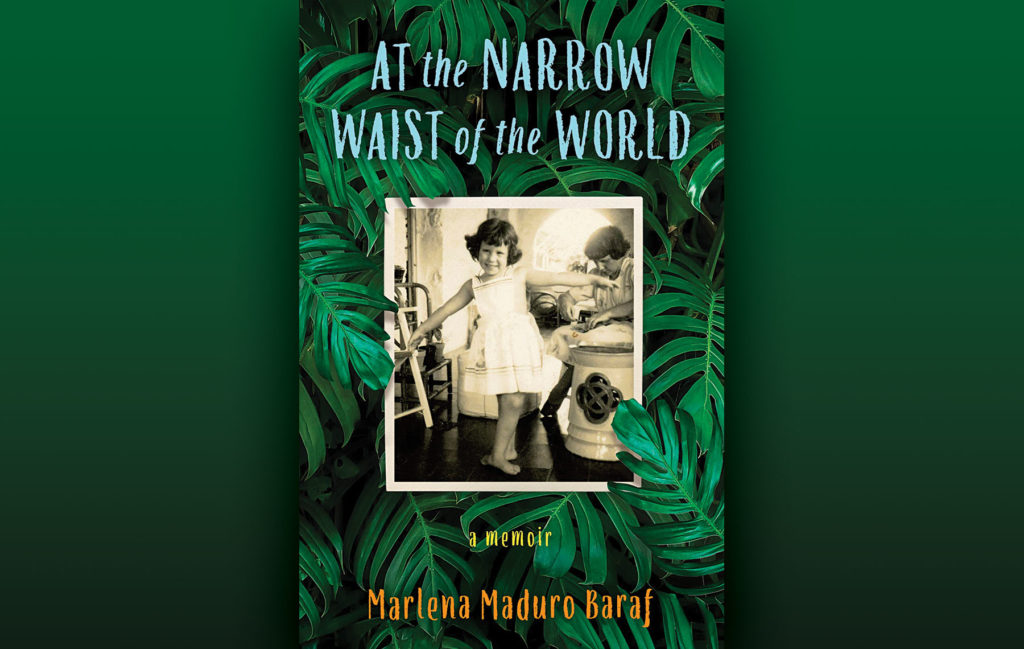
The evocative title of “At the Narrow Waist of the World: A Memoir” by Marlena Maduro Baraf (She Writes Press) is a reference to a familiar geographical feature: the Isthmus of Panama. That is where Baraf grew up in the 1950s, and she evokes the time and place.

Baraf has an eye for telling details and an ear for the nuances of language as it falls on the ear. The book opens with her musings on the differences in meaning between English and Spanish that are beyond the powers of the translator. “Tone of voice, a phrase, a snapshot in my mind — this is how my memories began,” she explains. “Judía, with the harsh jota sound, meaning ‘Jew,’ arrived chained to ancient epithets, loathing, and fears, though my Sephardic Jewish family was generally treated with delicacy in a country of easygoing people who lived in a steaming heat that was almost impossible to escape.”

The stories Baraf tells are intimate and intense. For example, her mother suffered from mental illness and was subjected to shock therapy — “the sugar kind,” her uncle revealed, an apparent reference to insulin rather than electrical shock. “For me and Patricia and our baby brother Carlitos,” Baraf writes, referring to the three siblings in the family, “mami was ours, inescapably our mamá.” Baraf goes on to describe the points of connection between a mother and her children in language that soars far beyond cliché. “She was a piece of us, like a nose or budding breasts.  When she pressed the fleshy part of her thumb against her teeth — again and again — we were her thumb. ‘Stop, mami!’ we begged.”

Baraf depicts her childhood as alternately rhapsodic and horrific. Her papi buys handmade kites, fashioned of colored paper and bamboo from the boys who sell them door-to-door, and he teaches his children how to “feed the kite air” to send it aloft and keep it there. Yet he uses the same whip — a “handsome wand … finished in lustrous dark-brown leather with long, loose, leather straps at one end” — to discipline both his horse and his son when they displease him.

Now and then, the author widens the lens to capture the origins and destiny of the community to which she belongs. Baraf’s ancestors were expelled from Spain in 1492, moving first to Holland, England, then to the Virgin Islands, finally settling in Panama in the middle of the 18th century. Even so, history and politics remain in the background, and she succeeds in showing us what life was like in glimpses of daily life. “Though we were Jewish, we had a Christmas tree at the front window,” she writes. “But we didn’t have a crèche like my friends did.” Baraf shares a photograph of the “baby-naming dress” both she and her father wore in imitation of the garb their Catholic neighbors used in the christening of their infants.

Baraf depicts her childhood as alternately rhapsodic and horrific… Now and then, the author widens the lens to capture the origins and destiny of the community to which she belongs.

Almost inevitably, America beckoned. Mami was thought to resemble Loretta Young, whose television show beamed into Panama from the U.S.-controlled Canal Zone, which the author recalls as “a little bit of heaven.” A local seamstress sewed dresses from patterns from Vogue or McCall’s, “bodice and skirt quarters printed on thin yellow paper with skipping lines and dots for the pins when making pinzas under the bust (if you had a bust).” Some relatives already had reached the United States, and Baraf’s mother was sent to Massachusetts for psychiatric care because her brother lived nearby. Baraf joined her sister at a boarding school in Pennsylvania. “There was no gold on the streets,” she recalls, but the opportunity to make angels in the snow was magical.

Baraf started her college studies at Occidental College in Eagle Rock, and she pursued a career as a book editor in New York. She returned to Panama to marry her American husband, and she shows him a memorial tablet at Kol Shearith Israel synagogue. Readers see a photograph of the same plaque, and a lump came to my throat as I recognized the last names of her extended family, so many of whom have been introduced to us in her recollections. The author, too, ponders how she is connected to the men, women and children who have entered and passed out of her life.

“I have narrow wrists and pointed shoulders and a long neck,” she muses. “My eyes are brown. Sometimes, they are blue. I have white skin, an inclination to art, to music and emotion.” Her mother, so tortured by mental illness, is “one of the digits, a part of the hand.” But Baraf is compelled to distinguish herself from her mother: “The finger does what it can. It is not like the other fingers, and this makes me take special care. I am family.”

By the end of “At the Narrow Waist of the World,” we have come to know, admire and even cherish its author in a way few memoirists manage to achieve. The point is made in the author’s account of a childhood episode in which her mother imagined the maids in the family home were trying to poison her food. “Etonces pruébalo,” her mother says. “Then taste it!” Baraf writes: “Good little girl that I am, I taste the bitter truth.” And so do her readers.


Jonathan Kirsch, author and publishing attorney, is the book editor of the Jewish Journal.

Author Widens the Lens to Capture ‘Narrow Waist’ Read More »

Palestinian Rep Says Zionism Is Racism At UN

A representative for the Palestine Liberation Organization (PLO), which runs the Palestinian Authority (PA), said that Zionism is a racist ideology during a United Nations committee hearing on Aug. 14, the Jerusalem Post reports.

Speaking before the U.N. Committee on the Elimination of Racial Discrimination, PLO Ambassador Ibrahim Khraishi said, “In 1975, the General Assembly adopted Resolution 3379, indicating that Zionism is a form of racism. That is the root of the problem that we face.”

Israeli U.N. Ambassador Danny Danon tweeted, “In response to the UN’s first report on racism and discrimination in the PA, @ibrahimkhraishi chose to claim ‘Zionism is racism’, evoking a despicable UN resolution that was revoked. Such statements encourage anti-Semitism, proving that the PA leadership encourages incitement.”

The day before, members of the U.N. committee grilled the PA delegation about PA officials inciting anti-Semitism through their statements as well as textbooks in the PA education system. The PA delegation deflected and blamed Israel instead.

U.N. Watch Executive Director Hillel Neuer tweeted out a cartoon from the PA ruling party Fatah as an example of the PA’s anti-Semitism.

The Anti-Defamation League (ADL) has a fact sheet explaining that statements accusing Zionism of being an inherently racist ideology are “false and biased” because “Zionism is an ideology that celebrates the Jewish national connection to Israel,” noting that “Israel is a multi-ethnic and multi-religious society, comprised of Jews and non-Jews from at least 100 different countries.” The fact sheet also states that such accusations are part of “a deliberate effort to delegitimize the right of Jews to a national homeland and undermine the Jewish nationalist movement.”

Additionally, the 1975 U.N. resolution equating Zionism with racism was repealed in 1991, according to the ADL.

Palestinian Rep Says Zionism Is Racism At UN Read More »

Channeling Leonard Bernstein: A Musical Response to Violence

His prolific musical output has won awards and spanned every conceivable genre. He has produced orchestral compositions, chamber and choral works, collaborated with film composers and seen his work performed by more than 200 orchestras across the country. But despite repeated urgings by friends over the years to tackle a symphony, Lucas Richman hesitated. 

“It takes a lot of ego to write a piece that compels people to sit in a seat and listen for 35 minutes or, in the case of Mahler, for an hour and a half,” said Richman, a Los Angeles native who is also the music director at the Bangor Symphony Orchestra in Maine. “While I don’t doubt my ability as a composer, I wanted to make sure I had something compelling to say.” 

That hesitation ended three years ago. Richman’s first symphony — the 35-minute “This Is Our Reply” — will be part of the “Friendship & Harmony” concert, a collaboration between the Los Angeles Jewish Symphony (LAJS) and the Los Angeles Korean-American Musicians’ Association Philharmonic on Aug. 17 at the Walt Disney Concert Hall. The piece’s title indicates that, indeed, Richman has a significant subject. 

The man who helped give Richman something to say was himself a celebrated composer as well as a former teacher: Leonard Bernstein, with whom Richman had studied during the last five years of his life. Bernstein’s message resonated not only with Richman but with the mission of LAJS and with a key tenet of Jewish liturgy. 

In 1963, two days after the assassination of President John F. Kennedy, Bernstein delivered a speech at the United Jewish Appeal of Greater New York’s fundraising event, a speech that has since been titled “An Artist’s Response to Violence.” “This will be our reply to violence,” Bernstein said, “to make music more intensely, more beautifully, more devotedly than ever before.”  

With America celebrating Bernstein’s centenary in 2018, Richman reflected on Bernstein’s words, on the concept of tikkun olam and — at various points — on the fact that the world is still broken. With the permission of the Leonard Bernstein Office, Richman created “This Is Our Reply,” a symphony in three movements for chorus and orchestra. 

In an acknowledgment to the Bernstein quote, the three movements of “Reply” are “Intensity,” “Beauty” and “Devotion” and the final movement contains an original poem from the Jewish liturgy around the subject of tikkun olam. 

“Every time something tragic would happen or another mass shooting would occur, it certainly underlined my drive to complete this piece and make it available for people to play and hear.” 

— Lucas Richman

“I cast the piece in those three movements — ‘Intensity,’ ‘Beauty’ and ‘Devotion’ — and then promptly discarded just about every bit of music I tried to write to fill those parameters,” Richman  said. “It became clear to me that I needed to focus on third movement, that devotion that would be the ultimate message of the piece and form that movement. All the melodic material is derived from that and that forms the basis of the first and second movements.”

Unlike the event that prompted Bernstein’s quote, Richman said there was no specific incident that inspired “Reply,” although there have been numerous acts of violence over the nearly three years he has been working on the symphony. 

“Every time something tragic would happen or another mass shooting would occur, it certainly underlined my drive to complete this piece and make it available for people to play and hear,” he said. 

“Reply” was co-commissioned by the Oak Ridge Symphony in Tennessee, the Bemidji Symphony Orchestra in Minnesota and LAJS. LAJS was a natural creative partner, as Richman has worked with the symphony and Artistic Director Noreen Green practically since the orchestra’s founding. 

In 2016, LAJS performed Richman’s “In the Day When I Cried Out,” a gospel-style work based on the psalms of David and the cry for religious freedom as part of a Passover concert at the American Jewish University’s Gindi Auditorium. The LAJS has also performed several of Richman’s arrangements of traditional Jewish and Israeli songs.  

“He has a very Jewish soul — neshamah — which always comes out in his music, whether it’s meant to be Jewish or not,” Green said of Richman. “Every time we work together, I’m always impressed with the depth of his arrangements in addition to the wonderful musicality and the attention to detail, which he always puts into everything he does, whether it’s conducting, composing or writing.”

The timing of bringing “This Is Our Reply” to the Disney Concert Hall was particularly fortuitous. A couple of years ago, the Los Angeles Korean-American Musicians’ Association approached Green about participating in the 2018 “Friendship & Harmony” concert. The orchestra was not available, and Green targeted the 2019 event. In the interim, Richman approached her to be part of the “Reply” commissioning consortium. 

Not only did she join the commission, Green knew instantly that “Reply” would be an ideal piece for “Friendship & Harmony.”

“The mission of the Korean-American Musicians’ Association is to heal the world through music,” Green said. “It was like synergy with ‘This Is Our Reply’ being based on tikkun olam.  [For the 2019 concert], they are doing a piece about Korean ideology and the beauty of the land, and at the end, we all sing together on Beethoven’s ‘Ode to Joy,’ which is all about brotherhood.”

Richman also embraces the harmonic components of his work and of the evening’s program. Raised in Southern California in a “not very Conservative” Jewish upbringing, the composer says he now often explores his cultural heritage through his work. Richman calls “This Is Our Reply” “a touchstone along my path of becoming more and more aware of my Judaic background.”

That said, the composer emphasizes that the piece is for people of all backgrounds. 

“The themes are very universal,” he said. “In the same way that ‘Fiddler on the Roof’ had a universal theme of tradition played to sold-out audiences in Japan and to many diverse cultures, I hope that this piece will also be able to cross all cultural lines to unite people in a common quest for peace.” 

The “Friendship & Harmony” concert will take place at 8 p.m. Aug. 17 at the Walt Disney Concert Hall. info@lajs.org, (818) 646-2844.  

“Hippie Woman Wild” performance and author talk with Carol Schlanger is 10 a.m. Aug. 11 at the Braid, Jewish Women’s Theatre. 

“Finding Your Roots” airs at 8 p.m. Tuesdays on PBS. 

Channeling Leonard Bernstein: A Musical Response to Violence Read More »

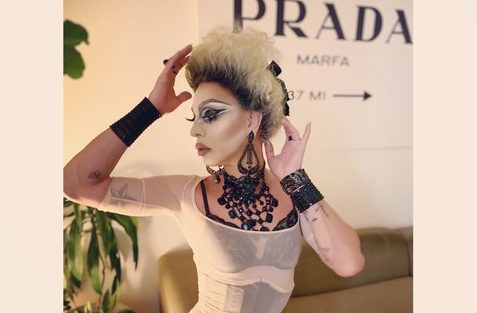
Ms. ‘Persianality’ Makes His Comeback in Stilettos

When Matthew Nouriel was 15, he would hang out at a club in Hollywood that was open to all ages and had a drag show on Friday nights. When his mother continued to nag him about why he would go to such a place, Nouriel said, “Well, Mom, I’m gay.”

Today, Nouriel, who has done stand-up comedy and currently is working toward getting his real estate license, is an LGBTQ activist and drag queen (or Her Royal Highness the Empress, as he calls himself). A Persian Jew who lives in West Hollywood, Nouriel is dressed for this interview in jeans and a white V-neck shirt. However, he describes himself as gender fluid or gender nonconforming, noting that dressing in drag is his way of shutting down the binary that exists between the two sexes. “If you consider me female, that’s fine,” he said. “If you consider me male, that’s fine.”

Born in London, Nouriel moved to Los Angeles when he was 15, with his mother and brother, after his parents divorced. At the same time, he began to explore his sexuality and dressing in drag. But a year later, he stopped doing drag. “I swapped out [drag because] I felt a sense of responsibility to my family that I should not be myself, I guess,” he said. “So I lost that sense of self-awareness and self-strength, and it took so long for me to get it back.” 

It actually took 21 years, but Nouriel said he has no regrets. “I don’t believe in mistakes,” he said. “I believe things unfold as they’re supposed to in your life … but you can’t live your life for other people.”

Matthew Nouriel and one of his stand-up comedy friends did a spoof on the documentary “Blackfish” called “Orange Fish” about the “massacre of goldfish on Persian New Year.”

And so, in 2014, Nouriel and one of his stand-up comedy friends did a spoof on the documentary “Blackfish” —  about the controversy over killer whales being kept in captivity — called “Orange Fish,” about the “massacre of goldfish on Persian New Year.” Traditionally, Persians who celebrate the holiday place a bowl of goldfish on the table to symbolize life. But, Nouriel quipped, “They start out with 10 goldfish and by the end of Persian New Year, there’s maybe two.” 

For his role in the documentary, Nouriel dressed as a woman, his friend’s Louis Vuitton bag on his shoulder, and sported a beard, a bad wig, huge black sunglasses and a blanket wrapped around his body. That led to another spoof called “The Real Housewives of the Shahs of Sunset.” When a good friend of his saw how funny it was, he invited Nouriel to his YouTube channel. Nouriel called his female Persian character Fereshteh Shoorkhakianian.  

https://www.youtube.com/watch?v=Sf3BvvwmqO8

Those gigs led eventually to an original series on YouTube called “Persianality” in 2016. The videos are a series of interviews with Shoorkhakianian. “It was 2016 when I said, ‘You are a drag queen. You like doing this. You feel good doing this and there’s no reason why you shouldn’t.’ ” The second season of “Persianality,” called “Persians in Palm Springs,” now is  available on the queer streaming website, Revry.

And although Nouriel finally is comfortable in his own drag queen skin, it’s been a long, hard road. His mother died from ALS when he was 28, and his Iranian Jewish background also made things difficult. His mother told him that she would accept him more if he were a transsexual rather than gay.

“I think that speaks to the binary,” Nouriel said. “You could fit into being a man, you could fit into being a woman — anything in between is too confusing.” However, his father, who still is alive, has given Nouriel his blessing. 

And although Nouriel doesn’t subscribe to the religious tenets of Judaism, he is thankful for the traditions. He said that if he ever has children, they would celebrate Shabbat with the traditional Friday night meal and have a brit milah. “We’re a culture, we’re a people of survival and that feeds into my experiences as a queer person, for sure,” he said.  “I’m a survivor.”


Michelle Naim is a senior studying English with a concentration in journalism at Stern College for Women in Manhattan and a Jewish Journal summer intern.

Ms. ‘Persianality’ Makes His Comeback in Stilettos Read More »