
fbpx

July 17, 2019

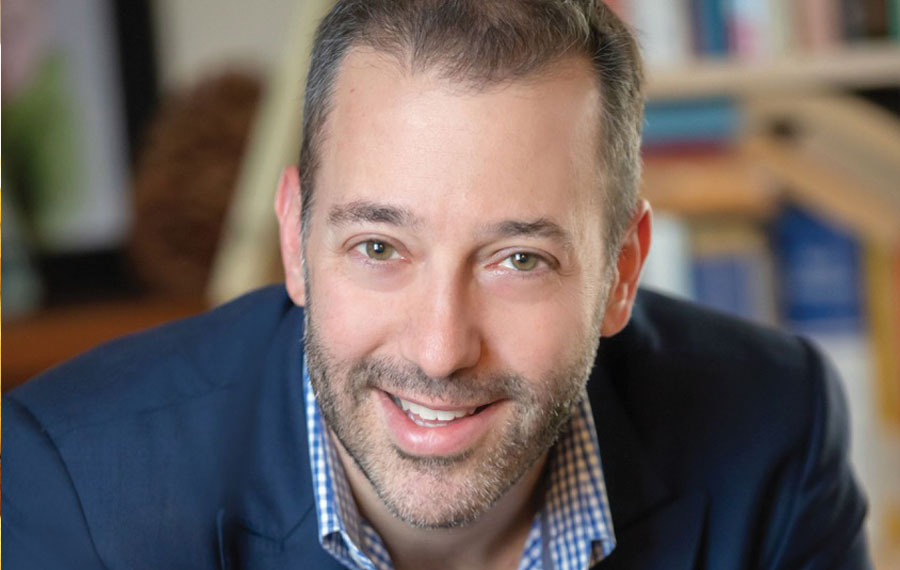
Beit T’Shuvah’s New Senior Rabbi Ben Goldstein

When Rabbi Ben Goldstein was hired as the new senior rabbi at Beit T’Shuvah, beginning July 1, an acquaintance said to him: “‘You’re going to raise your children around addicts?’” 

Goldstein, 42, who has spent the past three years at Temple Aliyah in Woodland Hills, turned to that person and said of his decision to take the position at the Jewish residential addiction treatment center, “Absolutely.”

“The amazing thing about Beit T’Shuvah and the residents here,” Goldstein told the Journal, “is [they] understand the need for personal spirituality and religion in a way not everybody does.”

Established in 1986, the 138-bed center offers a faith-based approach to helping people in recovery by integrating psychology, spirituality, 12 steps and the arts. It also runs a congregation celebrating Shabbat and Jewish holidays year-round. 

Since its inception, Rabbi Mark Borovitz has helmed Beit T’Shuvah. However, Borovitz stepped down to dedicate himself to directing Beit T’Shuvah’s Elaine Breslow Institute. The institute educates clergy and medical professionals about the nature of addiction, including treatment and prevention.

Beit T’Shuvah Board of Directors Chair Janice Kamenir-Reznik said in a statement, “We are thrilled to welcome Rabbi Goldstein to Beit T’Shuvah. His distinctive skill set, coupled with his passion for the work of Beit T’Shuvah make him uniquely qualified to assume the role of senior rabbi.” 

“Whether you identify as an addict or not I think there is a piece of all of us that is in recovery.”
— Rabbi Ben Goldstein 

“There is nobody to who I would rather pass the torch,” Borovitz said in a statement.

Goldstein however has no plans to try and fill Borovitz’s shoes. “They are literally big and they are flashy and different,” he said. 

However, he does come to the position with some experience. Thirteen years ago, Goldstein was a rabbinic intern at Beit T’Shuvah, working as a spiritual counselor while still a student at the American Jewish University Ziegler School of Rabbinical Studies. 

Back then, Goldstein said he had no idea what it meant to be a spiritual counselor but Borovitz told him: ‘You are an advocate for the soul.’ “That was my second year of rabbinical school,” Goldstein recalled, “and since then, I have seen myself as an advocate for the soul wherever I have been … and returning to Beit T’Shuvah is a perfect fit for that.”

Raised in an Orthodox home in Rochester, N.Y., Goldstein had a crisis of faith after the assassination of Israeli Prime Minister Yitzhak Rabin in November 1995. Goldstein was in Israel at the time on a gap-year program and said after Rabin was killed by the Orthodox Yigal Amir, “I was horrified by the response I saw around it. It was one of the things that started my departure [from Orthodoxy].”

Returning to the States, Goldstein graduated from Boston University and moved to Los Angeles to pursue acting. He simultaneously held down jobs in the Jewish community as a youth director at Congregation Beth Shalom in Santa Clarita and as an educator at the Museum of Tolerance, before attending rabbinical school.

Goldstein recalled his decision came when  “I was in the car, on the on-ramp to the 101 Freeway and I asked myself, ‘At the end of the year, do you want to be known as a great actor or a great youth director?’ I said to myself, ‘I can be known as a great actor and still be a jerk but if I am a great youth director, I can be making lives better.’ ” 

Goldstein graduated from Ziegler School of Rabbinic Studies in 2010 and his first pulpit position was at Temple Beth-El Mekor Chayim in New Jersey. He invited Borovitz — whom he’d grown close with during his time interning at Beit T’Shuvah — to lead his installation ceremony.

Returning to Beit T’Shuvah as senior rabbi 13 years after that internship, Goldstein said, “The core mission and core job hasn’t changed; the personalities have changed somewhat. It is amazing to get to work with this staff and residents.” 

He added he’s looking forward to serving a congregation that is not a suburban Conservative community and the challenges that come with working with people wrestling with addiction, as well as with non-addicts who find themselves alienated from more traditional communities.

“Whether you identify as an addict or not,” he said, “I think there is a piece of all us that is in recovery and I think more and more that will resonate with people who don’t find themselves comfortable in a Saturday morning service.” 

Drawing on his passion for theater, Goldstein hopes to expand the arts programming at Beit T’Shuvah. “There are a lot of artistic people who come through the house,” he said. “Music and theater are definitely part of their therapy.”

Additionally, he hopes to expand the meditation and mindfulness offerings and, less than a month into his tenure, he said he already has been inspired. 

“Somebody got up last week [during services] and said something like: ‘We never thought as atheists we would be involved with members of the synagogue.’ They found their spiritual home here. As somebody who has worked [on] the pulpit for 10 years and [has seen] diminishing returns of Shabbat and Saturday morning services, I think Beit T’Shuvah, with its emphasis on spirituality and mindfulness and psychology and walking the path toward recovery, has so much to say to people who otherwise feel alienated from religion. I hope I can be a good person to facilitate that.”

Beit T’Shuvah’s New Senior Rabbi Ben Goldstein Read More »

Powerful Powerless Cooking with ‘The Storm Gourmet’

Power outages have been part of my everyday life in Uganda for more than a decade, and they’ve trained me to set my watch to about 15 minutes into a big storm before being plunged into total darkness.

At that point, there’s a procedure: turn off major appliances, fridge, freezers and fans and hope the inverter power supply lasts long enough to charge my phone and computer because I can never find the flashlights I hide around the house until the power comes back. That’s Uganda; we’ve come to expect frequent power outages from Umeme, Uganda’s only and extremely overburdened electric company. But when a transformer blew in New York City this past weekend leaving at least 72,000 Con Edison customers without power, I realized it could happen anywhere. 

Earthquakes in California, hurricanes on the Gulf Coast, all potentially disastrous situations that require some advanced planning for food preparation. In 2004, four catastrophic hurricanes slammed into Florida and the Caribbean causing destruction and leaving thousands without power.

But when the going gets tough, the tough get resourceful. Although her house was not damaged by the hurricanes, lifelong Florida resident and author Daphne Nikolopoulos was without power for a full two weeks. While the utility company worked round the clock to restore power, and neighbors pitched in to help one another batten down the hatches between storms and rebuild in their aftermath, the award-winning author, journalist and editor-in chief of the upscale Palm Beach Illustrated magazine realized the stormy weather was a golden opportunity to help others better prepare for future calamities. 

Writing “The Storm Gourmet” cookbook was a labor of love for Nikolopoulos, taking advantage of the natural bounty in her garden and setting up a well-stocked and organized “storm pantry,” she shows us that even without power, with a little advance preparation, one doesn’t have to make do with potato chips and stale Halloween candy when the power goes out.

I used many of the recipes in this book in Uganda, even when I did have power — on warm days when I couldn’t fathom turning on an oven, or when I had unexpected company, and as a bonus I also followed her instructions for planting a herb garden. I found that between my pantry and garden, with my stash of long-life ingredients, I could whip up a satisfying lunch or dinner that looked and tasted gourmet and usually took no more than 20 minutes start to finish.

Nikolopoulos also lists a treasure trove of her favorite dressings from her Mediterranean upbringing in Athens, featuring a scrumptious Greek-style bean salad using canned beans and some classic shortcuts to electricity free classic Salade Nicoise, chunky hummus, curried chicken salad and the author’s favorite recipe: poached Moroccan fruits. 

In case you need to replenish your summer reading supplies, Nikolopoulos, using the pen name D.J. Niko, has written a series of historical fiction thrillers, the second of which is titled “The Riddle of Solomon.” It takes readers on a journey set in India, Jerusalem and an ancient Judean wilderness. Make sure you aren’t like me and can actually find your flashlight —  the books, dubbed the “Sarah Weston chronicles,” are real page turners. After all, not being able to have a hot shower during a power failure is one thing — getting stuck in the dark in the middle of an exciting chapter — that’s going to drive you crazy.

All recipes reprinted with permission from “The Storm Gourmet: A Guide to Creating Extraordinary Meals Without Electricity” by Daphne Nikolopoulos, published by Pineapple Press, available on Amazon.

SALADE NICOISE

2 (5-ounce) cans light tuna in extra-virgin olive oil
1 tablespoon fresh lemon juice
2 (14 1/2-ounce) cans sliced white potatoes
1 (14 1/2-ounce) can French green beans
1 cup marinated artichokes, quartered
1 tablespoon capers
1/4 cup pitted and halved Kalamata or other black olives
Anchovies (optional)
Salt and pepper

For the Dressing:

7 tablespoons extra-virgin olive oil
3 tablespoons red wine vinegar
1 1/2 tablespoons prepared Dijon mustard
Pinch salt
1/4 teaspoon cracked pepper

In a small bowl, toss tuna with lemon juice. Set aside.

In a large salad bowl, combine potatoes, beans, artichokes, capers, olives and anchovies. Season with salt and pepper and toss well. Add tuna.

In a screw-top jar, combine dressing ingredients. Shake vigorously until creamy and frothy. Pour over salad and serve.

Serves 4.

CURRIED CHICKEN SALAD

12 1/2-ounce canned premium chicken breast, drained
1/2 cup canned sliced water chestnuts, drained
2/3 cup canned pineapple tidbits, drained
2 tablespoons raisins
1/3 cup slivered almonds
1 1/2 teaspoon curry powder
1 tablespoon fresh lemon juice
1 teaspoon soy sauce
2 tablespoons table cream

Pepper to taste

Place chicken, water chestnuts, pineapple, raisins and almonds in a medium-sized bowl and toss together. Season with pepper.

In a screw-top jar, combine curry powder, lemon juice, soy sauce and table cream and shake vigorously. Pour over chicken mixture and toss to coat.

Serves 2.

CHUNKY HUMMUS
2 cups canned chickpeas, drained and rinsed
1/4 cup extra-virgin olive oil
3 tablespoons raw organic tahini
3 tablespoons lemon juice
1 tablespoon dried parsley flakes
2 garlic cloves, finely minced
1/4 teaspoon each, salt, pepper and paprika

Place the chickpeas in a medium-size bowl and squeeze by hand until they reach a thick, pasty consistency. Add the remaining ingredients and mash with a fork until blended well. The mixture should be chunky but moist (not crumbly).

Serve with flatbread or crackers. 

Serves 4.

POACHED MOROCCAN FRUITS

1 cup dates, pitted and julienned
1/2 cup dried apricots, julienned
3 tablespoons dried cherries
1 orange, peeled, white pith removed, and sectioned
3 tablespoons slivered almonds
1 teaspoon sugar
1 teaspoon cinnamon
1/2 cup orange-blossom water
2 tablespoons fresh lemon juice
2 tablespoons honey

Place dried fruits, orange sections and almonds in a small bowl. Sprinkle cinnamon and sugar over mixture and toss well to coat.

In a small cup or bowl, combine orange-blossom water, lemon juice and honey with a wire whisk until thoroughly blended. Pour over the fruit and toss.

Let marinate for 15-20 minutes before serving.

Serves 4.


Yamit Behar Wood, an Israeli-American food and travel writer, is the executive chef at the U.S. Embassy in Kampala, Uganda, and founder of the New York Kitchen Catering Co. 

Powerful Powerless Cooking with ‘The Storm Gourmet’ Read More »

Weekly Parsha: Balak

One verse, five voices. Edited by Salvador Litvak, Accidental Talmudist

How goodly are your tents, O Jacob, your dwelling places, O Israel! –

Kylie Ora Lobell
Contributing Writer, Jewish Journal 

Balak is a doozy of a parsha. There are curses and blessings, yet another anti-Semitic ruler and … a talking donkey (not voiced by Eddie Murphy, but by God). This parsha is the perfect example of what the Jewish people have been experiencing since we were born. Other nations try to eliminate us, but we always survive. In the Torah, it was apparent that we survived because of God’s intervention. When revelation stopped occurring, we had to believe that we still had miracles without seeing God’s work with our own eyes. 

In this verse, the non-Israelite Bilaam is blessing the Jewish people, despite King Balak’s fervent desire that he curse them instead. Bilaam believes in HaShem and fears the wrath of Him more than his king. He sees the magnificent splendor and holiness of the Jewish people. I can only hope that there are more Bilaams instead of Balaks around us. 

Lately, it seems like the latter, with growing anti-Semitism around the world. Thankfully, we have many non-Jewish allies like Bilaam, but that alone won’t help us. We also need to uphold our end of the bargain with God and be a light unto this world. We must be the best versions of ourselves while following the principles of the Torah and fulfilling God’s will. This is what is going to strengthen the Jewish people. We’ve survived much worse and we will continue to thrive, but only if we do our part, staying strong in our beliefs and putting total faith in HaShem. 

Rabbi Benjamin Blech
Professor of Talmud, Yeshiva University

Names are extremely important in the Torah. They are the key to our identity. The Hebrew for name is shem — the very two letters central to the Hebrew word for soul, neshamah. 

The first of our patriarchs was Abram. Once he discovered God, his name was forevermore changed to Abraham, a shortened form of his mission to be “father of many nations.” Never again would he be referred to as Abram. 

Jacob also had his name changed. After his fight with the angel of Esau, he became Israel. Yet strangely enough, the change of name does not remain exclusive. It is almost as if the Bible cannot make up its mind whether he is one or the other. And remarkably enough in this blessing from the prophet Bilaam — a verse so important that it is commonly recited as the first prayer upon entering the synagogue — both names are used in the very same sentence! 

Even as the verse starkly presents us with the problem, it also offers the solution. 

Jacob is the man of peace; Israel is the warrior. Jacob chooses flight, Israel prefers fight. Which is the correct path? Ecclesiastes pithily told us: “There is a time for peace and there’s a time for war.” The wise person understands life demands both approaches. 

When to be Jacob and when to be Israel? “How beautiful are your tents, O Jacob.” Our homes must be guided by compromise. “Your holy places, Israel.” For the sacred, we must be willing to sacrifice and even to fight in defense of the holy. 

Rabbi Elliot Dorff
Professor of Philosophy, American Jewish University

What did Bilaam see that made him praise the tents of Jacob? The Rabbis say it was that the opening of the tent of one family faced the wall of the tent of their neighbor so that each family enjoyed privacy (B. Bava Batra 60a).

This is one of several verses in the Torah (another, for example, is Deuteronomy 24:11) that produced a robust set of Jewish laws to guard our own privacy and that of others. This includes both concerns of intrusion and disclosure. Privacy is important because it is the core of our sense of individual identity and dignity, as well as the foundation for relationships of trust and friendship. 

American law seeks to protect privacy as a matter of individual liberty, while Jewish law views privacy as central to being created in the image of God (as God is partly revealed and partly hidden, so should we be). Judaism also values privacy as part of our communal identity: We are a holy people that respects boundaries. 

As I describe in some detail in Chapter Two of my book “Love Your Neighbor and Yourself,” these differing approaches to privacy produce different applications of the concern for privacy in the two legal systems, including varying approaches to such issues as abortion, spying on employees, videotaping and photographing, and internet usage. The concern for privacy, though, must be squared against our equally important need for safety, and modern sophisticated technology has made balancing these two concerns much harder than it used to be. 

Rabbi Ari Segal
Shalhevet Head of School

There’s a quote that has become overused. No one is quite sure who said it first, but I love it, “Great minds discuss ideas, average minds discuss events, small minds discuss people.” 

That’s a lot to unpack, but I think the quote is essentially a plea for developing interiority. It is easy to spend your life talking about other people, gossiping about celebrities, talking about the countertops in your neighbor’s kitchen — but such a life leads to shallowness and an emphasis on externality. Great minds leap to focus on the compelling ideas that emerge from the tapestry of our thoughts. How does one develop such a perspective? It may depend on the direction of your sight. 

Bilaam remarks about the Jewish people, “How goodly are your tents, O Jacob, your dwelling places, O Israel!” Rashi explains that this comment referred to the fact that the tents of the Jewish people did not align with one another so they couldn’t peek into one another’s homes. Great nations, like great minds, emerge from a concern not for your neighbor’s life but rather your own inner world. 

Maybe that is why we begin morning prayers with this verse. It is a reminder that focused prayer can only emerge from a focused inner world. If our tents are facing our neighbors, the depth of our inner ideas will be left wanting. To develop a great mind, make sure your tent is facing in the right direction.

Shaindy Jacobson
Director, Rosh Chodesh Society (Jewish Learning Institute)

Entry level. We’ve all been there. Maybe we still are. Perhaps we’ve just begun scaling that never-ending mountain, or blessedly made it to the top! Regardless, it all begins with that opening — that initial portal we each must enter in order to move forward. 

Herein lies the quintessential message of Bilaam’s curse-turned-blessing to the Jewish people. Rashi comments that Bilaam uttered these words in amazement when “he saw that the openings [of their tents] were not lined up one with the other.” Why the focus on their openings? 

Reb Boruch of Mezhbizh quotes the Midrash Rabbah on Song of Songs (5:2) when God urges the Jewish people, “Pitchu li petach kechudo shel machat ve’Ani potei’ach lachem petachim shetiheyu agalot nichnasot bo” — “Make a small opening like that of the head of a needle and I will open for you an opening through which caravans can enter.” 

All a Jew needs to do is begin the teshuvah process and God will help lead him or her to greater goals. The opening that a Jew has to make is incomparable to the opening God makes in return. Hence, Bilaam, both in praise and envy, could not refrain from uttering, “You Jews are blessed! Your opening and God’s opening are not ‘aligned’ — equivalent — to each other. All God asks of you is to make a minuscule effort and He responds by opening the vast gates of teshuvah.” 

It all begins at entry level. As Mark Twain famously said, “The secret of getting ahead is getting started.” 

Weekly Parsha: Balak Read More »

Game Face

At playoff games, I almost kiss
the guy in G-14,
conjoined in Final Fever,
we rise together
for each full court press,
toes clenched as though it’s our feet
launched in size 15 Adidas for the dunk. 

G-14 high fives me (H-13, behind),
we whoop and slosh our beer,
his hand a trifle clammy, as is mine
from cold draft condensation
and raw thrill.

Regular season
we barely say hello,
absorbed in cellphone screens and nacho chips,
the game more pleasant MUZAK
than battle to the death.

We take the requisite selfies,
fingers crooked in v’s or No. 1’s
but our fire is a flicker,
cheers mumbled reluctant
when the announcer begs for NOISE.

G-14’s a contract plumber,
the type I don’t run into
till my main line cracks,
I’m a West Coast liberal elite
who likes my Chardonnay with oak.

But during playoffs, we become
one nation indivisible —
I disregard his MAGA cap,
his “Duck Dynasty” beard,
he overlooks my silk-screened tee
with Che Guevara’s face. 

We chat all night of stats, DL’s,
the likelihood of trades,
not politics or world events
or Fake News/Fox News lies.  

United for the W, we root
our home team home,
hearts swelled with eager bonhomie
distrust diluted in sweat,
devoted band of brothers
when we’re driving for the net.

Game Face Read More »

The 80-Plus Generation

The 16 seniors profiled in these pages are inspiring examples of how to stay active and engaged as we age. When putting this issue together, we received an overwhelming response from the community. Unfortunately, we could not feature everyone, but those selected reflect a wide cross section of our amazing Jewish senior citizens in Los Angeles. — Ryan Torok

Click on the links below to read about our 16 amazing Jewish senior citizens:

Trudie Strobel, 82 

Martin Sturman, 86

Bertha Schneider, 87 

Lester Helmus, 90

Eileen Greene, 90

Stanford Sanoff, 93

Joe Witt, 82

Caroline Rauchwarger, 95 

Rabbi Israel Hirsch, 86

Dorothy Salkin, 84

George Epstein, 92

Jackie Fromm, 96

Asher Aramnia, 83

Jean Katz, 87

Hy Arnesty, 96

Margie Monroe, 80 

The 80-Plus Generation Read More »

A Passion for Teaching Children

Margie Monroe, 80

When Margie Monroe learned she had been nominated and then selected for the Journal’s seniors issue, she called her friend and asked her to go on a tricycle ride. Yes, Monroe rides a tricycle. She received it at her Shabbat retirement party after spending 24 years teaching at Ilan Ramon Day School in Agoura Hills. The school principal rode out on the tricycle and gave it to her. “I probably was crying, I was so touched,” she said. 

Monroe began her career as an early childhood teacher at Heschel Northridge before transferring to what was then Heschel West, now Ilan Ramon. These days, she occasionally acts as a substitute teacher at a Chabad preschool.  

Monroe’s passion for teaching kindergarten comes from her love for beginnings. “I love starting [out] young children,” she said. “It’s like the beginning of the process and I’m a very process-oriented person.” 

She added she’s been persuasive in convincing parents that their child should “be in class a second time” if she feels they are not ready to move up, for fear that they may slip through the cracks later in life. “I never say the word ‘again,’ ” she said, “because it’s not again. It’s not going to be the same. It’s about being in the process a second time.” 

Monroe met and married her second husband, Bob, when she was 53. She said when she first met him, she liked the way he walked. “He walked like a person who felt good about being Bob,” she said. 

“I love starting [out] young children. It’s like the beginning of the process and I’m a very process-oriented person.”

The couple love camping and hiking, and Monroe said she makes sure to include some sort of exercise in her day, even if it’s something as simple as walking. 

She eats the same thing for breakfast every morning — oatmeal with raisins and a dish of strawberries and blueberries. “Now comes the fun,” she said. At 2 p.m. every day, she drinks a mocha latte for the caffeine (at one point it was orange soda, then Coca-Cola and then chocolate milk). 

In the summer, she goes swimming and rides her tricycle on most days. “The newest thing is, we bought a ukulele,” she said. Now she attends regular jam sessions, dances and activities at Leisure Village, the senior community where she and Bob live. “When people retire, often they’re lost because they don’t have a job and [wonder], ‘Who am I without being the doctor or the nurse or the teacher?’ ” she said, explaining these are people who had something that they felt good about but sometimes didn’t develop more of themselves.

After years of teaching young children, Monroe said she loves seeing children play and wrote a poem called “A loving thought.” The last stanza reads: “We marvel at the world. / that they alone can see. / May each as they grow / say, “I’m glad to be me.”

A Passion for Teaching Children Read More »

Veteran of the Year

Hy Arnesty, 96

Hy Arnesty has been involved with the Sephardic Temple in Westwood since he was a child. His Turkish parents attended services at the congregation’s former home on Santa Barbara Avenue and, nearly a century later, Arnesty remains active in the congregation, chairing the cemetery and burial committee, helping congregants with their funeral plans. Few people plan for death, he said. Though far from glamorous, he is proud of his work on the committee. “Now I am more at home in a cemetery than I am in my own home,” he said. 

He also loves the congregation. “This is a second home for me,” he said. “I’m here every Shabbat.”

Born in Chicago in 1923, Arnesty’s family moved to Los Angeles to escape the cold weather when he was 2 years old. The family settled in the then-predominately Jewish Boyle Heights area before relocating to the Westside.

In his youth, Arnesty showed athletic prowess. As a member of the gymnastics team at Fairfax High School, Arnesty set an interscholastic world record in rope climbing, ascending a 25-foot rope in 5.5 seconds. His nickname was, appropriately, “Spider.”

In 1943, after graduating from Fairfax High, Arnesty enlisted in the U.S. Army and served in New Guinea, the Philippines and Japan during World War II. He was later called back to service during the Korean War.

Following his military service, Arnesty spent a brief period in the garment industry before being hired by Pensick and Gordon Toys. Over the next 36 years, he rose through the ranks to become one of the company’s top employees. 

“There are those who said Jews never went to war. We went to every war representing the United States government.”

“I sold the first Barbie doll. I sold G.I. Joe. I did the first hula-hoop,” he said. “I started in the warehouse and I worked my way up to be the No. 1 salesman.”

Arnesty retired in 1986 and his life has since become about volunteering, with a focus on supporting military veterans. At the Sephardic Temple, he wore a Jewish War Veterans cap, a tie featuring stars and stripes and a pair of eagles, and a pin of the U.S. and Israeli flags on the lapel of his sports coat.

Named L.A. County’s 2011 Veteran of the Year, Arnesty, who is involved with the Jewish War Veterans of the U.S.A., said not enough people appreciate the Jewish contribution to this country’s military history.

“There are those who said Jews never went to war,” he said. “We went to every war representing the United States government.”

Arnesty has been married and divorced and currently has a girlfriend. He has three daughters who all live in Northern California and work in the medical field, and he also has two grandchildren. 

His philosophy in life is taken from a phrase coined by his boss in the toy industry, and which you can hear on his outgoing voicemail message or see on his business card: Arnesty is the best policy.

Veteran of the Year Read More »

A Life of Community Service

Jean Katz, 87

Jean Katz is an educator, planner and organizer. She is the co-founder of the Very Special Arts Festival, which showcases the talents of people with special needs, at the Music Center downtown. 

A speech pathologist who worked for the Los Angeles Office of Education for 20 years (and later as a consultant in organizational development and leadership), Katz instituted new methods that benefited nonverbal children with cerebral palsy. 

As an active member and past president of the Ahavat Torah congregation in West Los Angeles, she organized and coordinated a six-part lecture series about Israel with the Shalom Hartman Institute last year. With many congregants divided on Israel’s policies, the lectures “made it possible for our members to talk to each other in a civilized way,” Katz said. 

At Ahavat Torah, which shares rented space with Lutheran and Sufi Muslim congregations, Katz has organized interfaith events and co-founded a Jewish-Muslim women’s discussion group that’s been going strong for 16 years. Besides attending Shabbat services, she participates in a weekly Torah study group. “I’m very interested in Jewish literature and writings about Jewish culture and find myself drawn to prayer,” she said. “Jewish values are very important to me. Seeing what improvements you can make in the world — tikun olam — is really important to me.”

“I like to observe small, amazing, beautiful details in life.”

Of Polish and Russian descent, Katz grew up in Cedar Rapids, Iowa, and Fond du Lac, Wis., where she and her mother lived with her mother’s Orthodox parents after her parents split up. Dealing with the divorce, her mother’s worsening mental illness in its aftermath, and “living in a small town where I didn’t fit in” were difficult, Katz said. But life got better when she left for college and met her husband, Norman, marrying in 1954. They relocated 14 times for his work before settling in Los Angeles. “I had to start over in a new community, too,” she said. “The benefit is I have friends all over the country.”

Widowed since 2008, the mother of two and grandmother of three is a published poet, attends a weekly poetry class, a monthly book club and loves going to the theater, movies, concerts and lectures. She cherishes the conversations she has with her loved ones. “I’m more of an extrovert than an introvert, but I’m a poet and need alone time to write,” Katz said, noting that she hopes to publish her third collection of poems. She finds inspiration in her surroundings.

“Nature fills me in an extraordinary way and I think it connects with the poet in me,” she said. “I like to observe small, amazing, beautiful details in life. I have a deep appreciation for beauty and the extraordinary moments I share with people. I feel blessed.”

When she turned 60, Katz threw herself a simchat chochmah (joy of wisdom) party to celebrate becoming a senior. In the years since, “I have liked myself better,” she said. “I’m more comfortable in my own skin.”

A Life of Community Service Read More »

Omar Introduces Pro-BDS Resolution and Compares BDS to Boston Tea Party

Rep. Ilhan Omar (D-Minn.) introduced a resolution supporting the Boycott, Divestment and Sanctions (BDS) movement on July 16 and drew an analogy between BDS and the Boston Tea Party in 1773.

The resolution states “that all Americans have the right to participate in boycotts in pursuit of civil and human rights at home and abroad” and that anti-BDS legislation is “unconstitutional.” The resolution cites the Boston Tea Party and American efforts to boycott Nazi Germany during World War II as part of the American tradition of boycotts. Omar told Al-Monitor on July 16 the resolution focuses on “the American values that support and believe in our ability to exercise our First Amendment rights in regard to boycotting. And it is an opportunity for us to explain why it is we support a nonviolent movement, which is the BDS movement.”

Omar called for the end of Israeli “occupation” as well as a two-state solution for the Israeli-Palestinian conflict before the House Foreign Affairs Committee on July 17.

“We should condemn in the strongest terms violence that perpetuates the occupation, whether it is perpetuated by Israel, Hamas or individuals,” Omar said. “If we are going to condemn violent means of resisting the occupation, we cannot also condemn nonviolent means. We cannot simultaneously say we want peace, then openly oppose peaceful means to hold our allies accountable.”

Omar then said she introduced the resolution with Reps. Rashida Tlaib (D-Mich.) and John Lewis (D-Ga.).

“[The resolution] recognizes the importance of boycott movements in this country dating back to the Boston Tea Party,” Omar said. “We should honor these movements and our history.”

Rep. Brad Sherman (D-Calif.) downplayed Omar’s resolution to The Jerusalem Post, saying, “I can’t imagine that any committee is going to mark up or take seriously any pro-BDS resolution.”

Omar initially said she opposed the BDS movement in August while she was still a candidate for Congress, saying at the time that BDS “stops the dialogue” toward a two-state solution. Omar then came out in support of BDS shortly after she was elected to Congress in November.

Omar will also be visiting Israel and the Palestinian territories in the coming weeks:

This article has been updated.

Omar Introduces Pro-BDS Resolution and Compares BDS to Boston Tea Party Read More »

The Iranian Matchmaker

Asher Aramnia, 83

Local Iranian Jews know the jovial Asher Aramnia either from events he has helped plan at local community centers, learning math from him at a Jewish school in Iran, or from his volunteer matchmaking services for scores of Jewish couples.

Today, Aramnia, who moved to Los Angeles more than 40 years ago, works as an event planner for the Westwood-based Southern California Jewish Center (SCJC) and also sells advertising for a local online Persian radio station.

“You are truly are as young as you feel and I honestly feel 26 years old,” said Aramnia, who lives in West L.A. “I’ve always remained hopeful and optimistic in all occasions in my life.”

With a degree in electrical engineering from Iran and having worked as a director in Iran’s Ministry of Industry and Mining,  Aramnia is among Iran’s first generation of Jews that benefited from the greater freedoms the Pahlavi kings offered religious minorities.

“I know people think this matchmaking thing is for women, but I don’t care about that because seeing two people find their partner in life gives me the greatest joy.”

“I was very active,” Aramnia said. “Whether it was working at the ministry or working as a private tutor of math to an affluent Muslim businessman’s child, or teaching math classes at the Jewish school, there was never a dull moment.”

In L.A., Aramnia has owned various businesses and worked in different industries, but his greatest satisfaction comes from helping people through his volunteer work and his matchmaking efforts.

“I know people think this matchmaking thing is for women, but I don’t care about that because seeing two people find their partner in life gives me the greatest joy,” said Aramnia, who has been married for 61 years. “We’ve also had successful marriages between Mexican and Iranian Jews as well as between Iranian and American Jews.” He even has managed to find partners for octogenarians.

“The secret to our success is not asking them what they want but rather asking what they don’t want in a mate or would despise in a mate,” Aramnia said. “This allows us to better match up couples.”

His matchmaking, he said, has allowed him to challenge many cultural taboos in the community, including helping facilitate marriages between Iranian and other Jews or marriages between divorced people — both areas that were once frowned upon. 

“Over the years, I’ve tried to help people find their true match regardless of their background, income or past marriages,” Aramnia said. “What’s truly important is they have hope that there is a special someone out there for them.”  

The Iranian Matchmaker Read More »