fbpx

July 17, 2019

Turn Clothing Tags Into Bookmarks

OK, I admit it. I’m a bit of a clotheshorse. And when you buy a lot of clothes, you get a lot of tags that you have to cut off before wearing the garments. Besides the price tags from the stores, the manufacturers attach their own tags featuring branding messages and logos. These manufacturer tags are usually made of thick, premium-quality paper stock, so I always save them for art projects. 

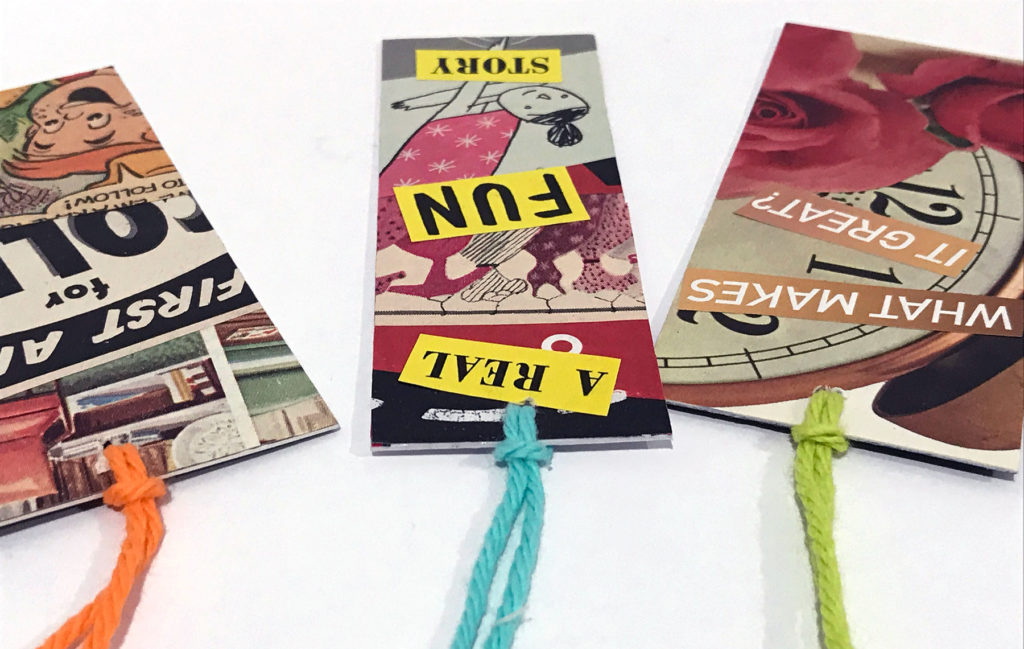
One way I like to repurpose clothing tags is to turn them into bookmarks. They are the perfect blank canvas to create collages with images cut out of old magazines — something else I don’t throw away. 

What you’ll need:
Clothing tags
Magazine pages
Scissors
Glue stick
Nail
Yarn


1. Gather your clothing tags. 


2. Cut out pictures from magazines. Also select words that you find interesting. 


3. With a glue stick, create a collage with the pictures and words on the tags. Cut off any excess paper on the edges.


4. Use a nail to pierce through any paper that has covered the original hole in the tag. Thread a piece of yarn through the hole for the bookmark tassel.


Jonathan Fong is the author of “Flowers That Wow” and “Parties That Wow,” and host of “Style With a Smile” on YouTube. You can see more of his do-it-yourself projects at jonathanfongstyle.com.

Turn Clothing Tags Into Bookmarks Read More »

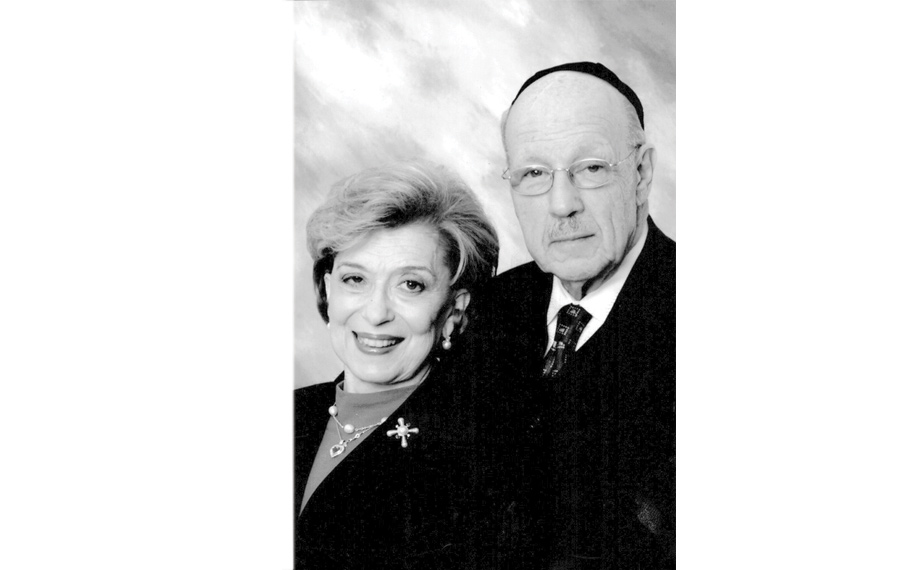
Bible Scholar, Historian Leila Bronner, 89

Leila Leah Bronner, a Jewish history and Bible scholar died in Los Angeles on July 2. She was 89.

Bronner was a community leader and Orthodox feminist and the first woman to receive a doctorate in Bible and Jewish studies in South Africa. The author of eight books, Bronner contributed hundreds of articles to scholarly and popular publications. She was an assistant professor at the University of Judaism (now American Jewish University) in Los Angeles, a visiting professor at Harvard University, Bar Ilan University in Israel and USC, and a frequent presenter at academic conferences around the world. A resident of Hancock Park for the past 35 years, Bronner also taught Shabbat afternoon Torah classes for women out of her home. 

Born Leila Amsel in Czechoslovakia in 1930, she was the youngest of seven children. In 1936, her father, Rabbi Yitzhak Amsel, a respected Hungarian Chasidic leader and scholar, perceived the growing threat of anti-Semitism and procured visas for his family. With aid from the Hebrew Immigrant Aid Society, the Bronner family settled on the Lower East Side of New York in 1937, before moving to Williamsburg, Brooklyn.

At 10, Bronner convinced her father that, like her brothers, she should receive a Jewish education. She attended Bais Yaakov in Williamsburg, and in 1948 delivered the school’s valedictory address in modern Hebrew. She attended teacher’s seminary and took classes at Hunter College, and in 1949 married Rabbi Joseph Bronner, who had escaped Berlin with his family in 1941. They moved with their newborn daughter to Johannesburg in 1951.

Bronner had two more children while earning her bachelor’s in Bible studies at Witwatersrand University in 1955 and a master’s in Jewish history in 1960. When she was told that women were not welcome in the doctoral program at Witwatersrand, she transferred to Pretoria University, where in 1964 she earned her doctorate in Northwest Semitic Languages. She became an associate professor at Witwatersrand.

The Bronners were founders of Yeshiva College, the first and still largest Orthodox day school in South Africa. By 1974, Bronner had published four books and was a celebrity in the South African Jewish community, and regularly filled auditoriums and synagogues for standing-room-only lectures. 

She became a pioneering Jewish feminist, writing in a South African newspaper in 1974: “Let us have less sermons, speeches and articles teeming with apologetics trying to prove that Judaism places woman on a pedestal, and more concrete actions showing that she has equal opportunity with her male counterpart to develop her talents and make a meaningful contribution to every sphere of Jewish life.”

In 1984, Yeshiva College rededicated the Leila Bronner Girl’s High School. 

The Bronners opposed apartheid, but feared the violence that had taken over in Johannesburg. In 1984, they moved to Los Angeles, where Bronner taught at the University of Judaism and several other venues. She became president of Emunah Women and was involved in Amit Women, Builders of Jewish Education and Jewish Federation. 

In 1994, Bronner published her most successful book, “From Eve to Esther,” one of the first books to analyze midrashic and rabbinic attitudes toward Biblical women. She was an early member of the Jewish Orthodox Feminist Alliance, and wrote often about women’s issues. Her book “Stories of Biblical Mothers” was published in 2004. 

Bronner never retired, publishing a book on the afterlife, “Journey to Heaven,” in 2011, and her personal memoirs, “The Eternal Students,” in 2017. She continued teaching until just a few months before her death.

Bronner is survived by her husband, Joseph; her children Temi (Bernard) Monderer, Esther (Walter) Feinblum and Moshe (Amira); 9 grandchildren and many great-grandchildren; and her brother, Avraham.


Julie Gruenbaum Fax, a writer in Los Angeles, co-authored Bronner’s 2017 memoirs, “The Eternal Students.”

Bible Scholar, Historian Leila Bronner, 89 Read More »

Obituaries: July 19, 2019

Rosalie Behar died June 16 at 87. Survived by daughters Rachel (Andy) Sees, Rebecca (Michael) Johnson, Anna (Brian) Russell. Malinow and Silverman

Charles Bercy died June 14 at 73. Survived by wife Elaine; 3 children; 4 grandchildren. Mount Sinai

Irvin Milton Broudy died June 15 at 98. Survived by wife Bonnie; son Robert (Tammy); 2 grandchildren. Mount Sinai

Herbert Ivan Cooper died June 18 at 91. Survived by wife Francine; sons Peter (Yunhee Min) Tolkin, Neal Allen, Paul (Donna Chisolm), Jonathan Tolkin; daughter Jennifer (Bob) MacCracken; 11 grandchildren; 4 great-grandchildren. Mount Sinai

Richard Clay Crummett died July 7 at 72. Survived by wife Loreli; sons Jason Irvin, Thomas (Cheryl), Daniel (Amber); daughter Leigh-Ann (Harrison); 3 grandchildren. Mount Sinai

George Dern died June 13 at 81. Survived by sons Jonathan (Patricia May), Michael (Wendy), Randy (Michelle Rene Savala); 5 grandchildren; sister Marilyn (Rabbi Jonathan) Berkowitz; brother Jordan (Cindi). Mount Sinai

Sheila Ellman died May 12 at 70. Survived by husband Bruce; daughter Heather (Adam); son Josh; 2 grandchildren; sisters Naomi, Pamela, Francyne. Hillside

Stanley Maurice Feldman died May 30 at 88. Survived by daughters Sharon (Stuart) Levine, Judy (Russell) Smith; son David (Maureen); 6 grandchildren. Mount Sinai

Blossom “Bobby” Fink died June 8 at 91. Survived by daughters Donna Hoffman, Martina (Alan) Fink Sternfeld; 3 grandchildren; 2 great-grandchildren. Mount Sinai

Eileen Harriet Gill died June 17 at 77. Survived by husband Raymond; cousin Michael (Penny) Berman. Mount Sinai

Rachel Giser died June 17 at 98. Survived by sons William (Margaret Locke), Arthur Steve; 2 grandchildren; 1 great-grandchild; sister Helen Warshaver; brother Morris Saidel. Mount Sinai

Mildred Blank Greene died June 14 at 91. Survived by niece Ellen Adams; nephews Andy (Geanne) Adams, Reuvan (Esther) Adams, Fievish (Meitra) Adams. Mount Sinai

Israel Gross died June 20 at 90. Survived by wife Lenore; daughter  Vivienne Bocarsly; sons Joel, Howard; 3 grandchildren. Mount Sinai

Annette Hartman died June 15 at 97. Survived by daughter Hilary (Bob) Hartman Kip; 2 grandchildren. Mount Sinai

Marc I. Hayutin died June 11 at 75. Survived by wife Stephanie; daughter Amy (Jesse) Contreras; son Matthew (Lizette); 4 grandchildren; sisters Diane Geller, Randi Storm, Adele. Mount Sinai

Sally Marie Kaplan died June 16 at 67. Survived by husband William; son Zachary; sister Maureen (Stan) Herbert brother Elliot Klein. Mount Sinai

Edna Kohn died June 12 at 101. Survived by nieces Judy Wendor, Sue Nober, Dorie Fasbender; nephews Irwin Greenberg Michael Garfinkel. Mount Sinai

Stanley S. Levin died July 8 at 83. Survived by wife Judy; daughters Sandra, Ann (Stephen) Stonehouse; son Allan; 2 grandchildren. Mount Sinai

Ruth Ockman died June 16 at 98. Survived by daughter Carol (Peggy Waller); son Stuart (Carol); 2 grandchildren; 3 great-grandchildren. Malinow and Silverman

Stanley Pesner died June 12 at 86. Survived by wife Lila; daughters Vicki (Gregory) Bischoff, Linda (Robert) Redhead; sons Barry (Jeannie), Gary; 9 grandchildren; 2 great-grandchildren; sister Roberta Becker. Malinow and Silverman

Bracha Rappaport died June 15 at 79. Survived by husband Morton; sons Oren (Orit), Ron (Sari); 6 grandchildren. Mount Sinai

Sally M. Roberts died June 14 at 85. Survived by daughters Pamela (Robert Grlick), Gwen (Michael) Sokoloff; son Craig; 2 grandchildren; sister Barbara Trellis. Mount Sinai

Barry Rose died June 18 at 72. Survived by wife Gari; daughter Lisa Rose Mangano; son Jason Michael Rose; 1 grandchild; sister Nancy. Mount Sinai

Carol Ann Rosen-Higgins died June 8 at 79. Survived by husband Scott. Mount Sinai

Lois Eve Rosenfeld died May 13 at 81. Survived by sons Paul (Sue), Lee (Sally); 7 grandchildren; 9 great-grandchildren; brother, Michael (Ellen) Sternfeld. Mount Sinai

Leonard J. Roth died July 7 at 84. Survived by wife Joann; sons Brad (Justine), Bill (Kara), Keith (Daisy) Kops; daughters Luanne (Adam) Markowitz, Mimi (Terry) Robinson; 12 grandchildren. Mount Sinai

Edward Ruby died June 8 at 94. Survived by daughter Marla (Roger) Inman; son Neal (Andee); 5 grandchildren; 6 great-grandchildren. Malinow and Silverman

Noah T. Saxe died June 13 at 84. Survived by wife Nancy; daughters Ruth Strode, Dana Brener; son Jay; 6 grandchildren; 3 great-grandchildren; sister Minna. Mount Sinai

Rhoda Unger died June 9 at 73. Survived by cousins Susan Jischefske, Lorraine Arnold, Barbara Artson, Joanie Friedman. Mount Sinai

Betty Rubinstein Walla died June 7 at 95. Survived by daughters Arlene (Doug) Braun, Marsha (Douglas) David; 3 grandchildren; 4 great-grandchildren; sisters Miriam Feldman, Shirley Mednick, Carol Waters; brother Jack Haber. Mount Sinai

Richard L. Warner died June 19 at 89. Survived by wife Harriet; sons Scott (Susan Bell-Warner), Kevin (Ronnie); 4 grandchildren. Mount Sinai

David William Wilkin died June 7 at 56. Survived by wife Cheryl; mother Judith; brothers Jon, Douglas, Richard. Mount Sinai

Tmira Yaoz died June 7 at 83. Survived by son Erez (Jill); 1 grandchild. Malinow and Silverman

Sofiya Zask died June 12 at 80. Survived by husband Yakov; son Ross; brothers Alexander Brantvein, Jim Brunt. Mount Sinai n

Obituaries: July 19, 2019 Read More »

Charles Levin, Played Mohel on ‘Seinfeld,’ 70

Charles Levin, an actor best known for his role as the mohel in the 1993 “Seinfeld” episode “The Bris,” has died. He was 70.

Levin was discovered July 15 near his car on a remote road in southwest Oregon. Levin was reported missing by his son, Jesse, on July 8. No cause of death has been announced, but local authorities have ruled out homicide and suicide.

Levin, who moved to the Northwest after retiring from acting in the late 1990s, was a versatile performer with 63 credits listed on the Internet Movie Database. He appeared in the movies “Annie Hall,” “The Seduction of Joe Tynan” and “This Is Spinal Tap,” and had recurring roles on the TV shows “Hill Street Blues,” “Alice,” “Punky Brewster” and “NYPD Blue.” But it was his appearance on “Seinfeld,” as a shaky mohel who accidentally cuts Jerry’s finger, that brought him a new level of recognition.

Jesse told The New York Times that “every bris that I go to now, every mohel compares himself to him,” adding that his father became “the team mascot for that profession.” 

When the episode was taped, the younger Levin said, his father’s performance was “so over the top and ridiculous that Jerry Seinfeld fell out of a chair laughing at how ridiculous he was.” He described his father as “incredibly comedic. He just had a humongous personality. He was extremely charming. It’s very sad what’s happened.”

Charles Levin, Played Mohel on ‘Seinfeld,’ 70 Read More »

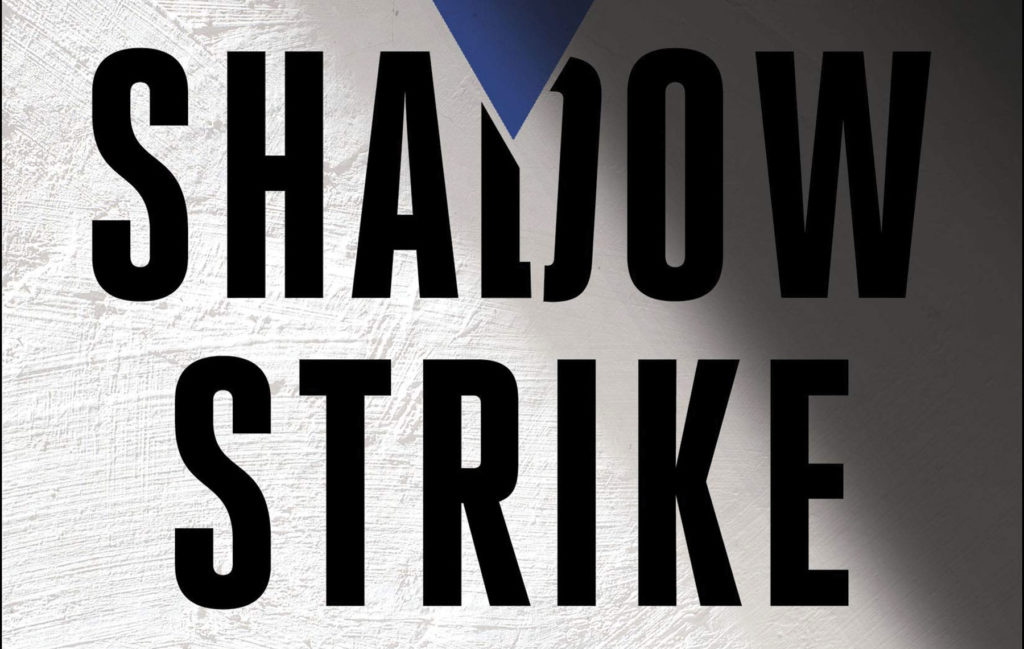
‘Shadow Strike’ Is Potent History and Potential Playbook

Much has been spoken and written in recent years about the prospect of a military strike to eliminate Iran’s nuclear capability, whether by the United States or Israel, or the two countries acting together. Now comes a book that is required reading for anyone who is contemplating such a daring and dangerous mission.

“Shadow Strike: Inside Israel’s Secret Mission to Eliminate Syrian Nuclear Power” by Yaakov Katz (St. Martin’s Press) reads like an international thriller, but it is actually a compelling factual day-by-day (and sometimes hour-by-hour) account of an incident of acute threat and decisive action by the Jewish state — the 2007 airstrike that destroyed a Syrian reactor and denied President Bashar al Assad a nuclear arsenal.

Katz, author of “The Weapon Wizards,” was the longtime military and defense reporter for The Jerusalem Post, the newspaper for which he is now editor-in-chief. He also served as an adviser to the minister of economy and the minister of Diaspora affairs in Israel. But the best evidence of his credentials can be found in the pages of “Shadow Strike,” where he describes the history and politics of Israel in extraordinarily intimate detail, naming names and describing encounters that took place behind closed doors.

Katz opens the book on the day in 2014 when ISIS captured a place in Syria called Deir ez-Zor, and he recalls that it was the site of a nuclear reactor that Israel had succeeded in destroying seven years earlier. If Israel had not acted, Katz insists, ISIS would have come into possession of radioactive materials and possibly even nuclear weapons. “Israel would have found itself living under an unimaginable threat, and ISIS would have come into possession of a nightmarish capability, morphing it from a ruthless terrorist group into an existential threat not just for Israel, but for the entire Western world,” he writes.

The story that Katz tells is heroic, but it never loses sight of both the geopolitical origins and strategic implications of Israel’s decision to take out the Syrian nuclear target. In early 2007, Israel detected the reactor when it was still under construction, using personnel and nuclear technology provided by North Korea, in a wadi in the Syrian desert — precisely the same existential threat that now looms so large in the Iranian nuclear program.

Prime Minister Ehud Olmert urged President George W. Bush to take the lead in destroying the Syrian reactor before it “went hot.” “I think this is a great opportunity for America and for you to send a signal to the Iranians that will not be missed,” Olmert told Bush, who was unpersuaded and preferred a diplomatic initiative before resorting to a military option. Olmert warned Vice President Dick Cheney that “if America didn’t act, Israel would,” as the author puts it. 

“Shadow Strike” is a compelling factual account of an incident of acute threat and decisive action by the Jewish state — the 2007 airstrike that destroyed a Syrian reactor and denied Bashar al Assad a nuclear arsenal.

Olmert convened a meeting of Israel’s Security Cabinet, which included a key political adversary, defense minister Ehud Barak, a former chief of staff of the Israel Defense Forces (IDF) and, briefly, prime minister of Israel. The mission under discussion would be required to achieve two equally difficult goals: destroying the nuclear reactor beyond repair while creating a “deniability zone” that would allow Assad to forgo a retaliatory strike against Israel and “carry on after a strike as if nothing had happened.” Indeed, as it turned out, the attack on the Syrian reactor in 2007 “remained an operation that, for more than a decade, Israel would neither confirm nor deny.”

The preparations for the attack were highly sophisticated, as Katz reveals. An elite commando unit was sent into the Syrian desert to “get as close to the reactor as possible and return home with pictures and soil samples,” thus supplementing the images captured by spy satellites with facts on the ground. Israeli military intelligence and the Mossad “consulted with expert psychologists and psychoanalysts to try and predict what Assad would do after the bombing.” Katz reveals that a variety of approaches were considered, including both a ground attack and a large-scale aerial attack, but a decision was finally made only when Israeli Air Force (IAF) Commander Eliezer Shkedi scribbled a new approach on a napkin — a “quiet” operation that would require only “a handful of aircraft.” 

The operational details are described in a few breathless pages. Eight fighter-bombers, carrying “around” 20 tons of bombs, managed to penetrate Syrian air space without detection and destroyed the target “beyond repair,” and returned to base without engaging the Syrian air force. The code name bestowed on the operation by the IDF was, tellingly, “Soft Melody.” The code word for the “mission accomplished” message that was sent back to the IAF control center was “Arizona.” Four hours after takeoff, all of the warplanes were back at their airbases in Israel.

The reason for the author’s discretion hangs over every page of “Shadow Strike” — can Israel do it again in order to prevent Iran from acquiring a nuclear arsenal? Not until the closing pages of the book does Katz offer an answer: “This book shows how, if needed, it can still be done,” he concludes. “What happened in 2007 is a playbook for how one country neutralized an existential threat.” But I think that it
will take yet another book to explore the differences between the world in 2007 and the world today, and the differences between Syria and Iran, before the case is made.


Jonathan Kirsch, author and publishing attorney, is the book editor of the Jewish Journal.

‘Shadow Strike’ Is Potent History and Potential Playbook Read More »

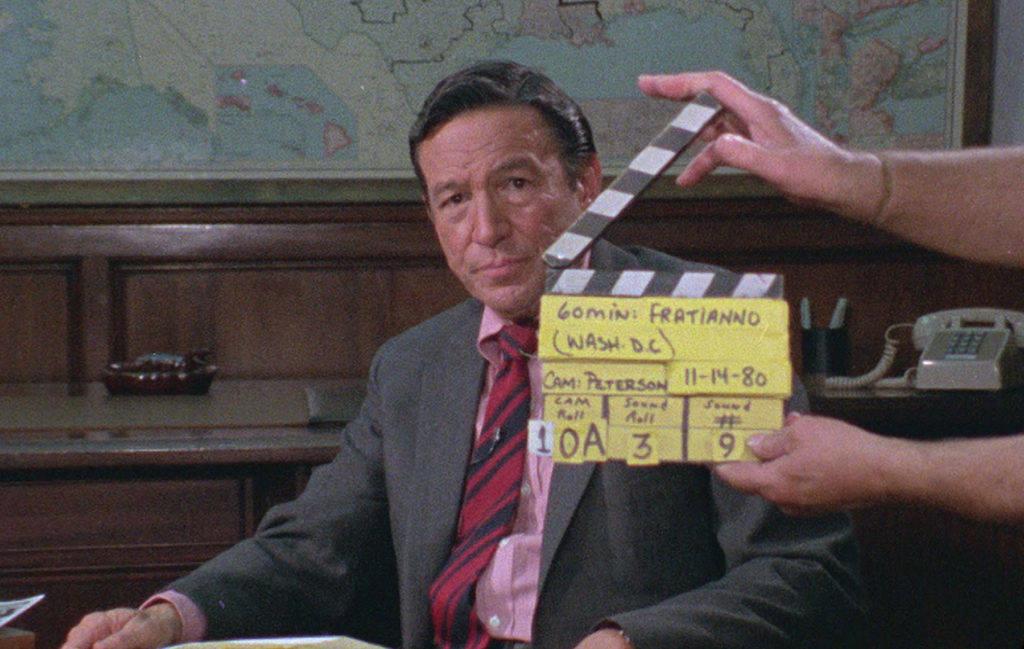
How Mike Wallace Changed the Face of Television

When Mike Wallace, the original and chief interrogator of CBS-TV’s “60 Minutes,” had finished giving the treatment to Joseph Coors in a 1982 interview, the beer magnate sighed and observed that “the four most frightening words in the English language are ‘Mike Wallace is here.’ ”

Avi Belkin, a Tel Aviv-born film director, producer and screenwriter, has taken these rueful words as the title of his feature film and documentary “Mike Wallace Is Here,” which opens in Los Angeles at the end of this month.

Belkin, who now lives in L.A., said in a phone interview that after first watching “60 Minutes” in Israel, he became intrigued how Wallace had changed the nature of television news — particularly investigative journalism — during his 60-year career.

The filmmaker decided to create a documentary about Wallace, regardless of the obstacles, which included the fact that Wallace no longer was alive. Wallace died in 2012, shortly before his 94th birthday. In addition, neither CBS nor “60 Minutes” had ever allowed an outsider to take control of the program’s used and unused footage.

But 39-year-old Belkin was both highly persuasive and persistent, and convinced the network to give him full access to its film vault. He spent a total of 1,400 hours watching all the footage. Wallace’s son, Chris, a veteran Fox News anchor, helped Belkin. “Two-thirds of the footage in the current movie has never been shown before,” Belkin said.

Mike Wallace’s parents came to America as Russian-Jewish immigrants and quickly Anglicized their surname, changing it from Wallick to Wallace. They subsequently named their son Myron Leon Wallace, which morphed into “Mike” after he became a journalist, game-show host, advertising pitchman, actor and media personality.

“Wallace was proud of being Jewish but to him, it was really another facet of his life. It wasn’t central … . If we had included all available material, the film would have been nine hours long.”  — Avi Belkin

Given the Jewish backgrounds of the film’s sole character and of its director, it seems surprising the word “Jewish” isn’t once uttered in the 90-minute film.

Surely, with all the enemies Wallace made with his exposures, some victim must have muttered something about an “S.O.B. Jew” or a similar expletive.

Perhaps the closest Wallace ever came to alluding to his ethnicity on-air was during his interview with Louis Farrakhan, the anti-Semitic leader of the Nation of Islam (although none of that interview is used in the documentary). At one point, Wallace turned to Farrakhan and said, “You don’t trust the media. You’ve said so. You don’t trust whites. You said so. You don’t trust Jews. You’ve said so. Well, here I am.”

Regarding the absence of any Jewish references in the film, Belkin said, “Wallace was proud of being Jewish but to him, it was really another facet of his life. It wasn’t central. … If we had included all available material, the film would have been nine hours long.”

By most worldly measures, Wallace was a success. “Wallace was the first rock-star journalist on TV and changed the game of television,” Belkin said. Yet there was a dark side to Wallace’s life. He suffered from deep bouts of depression and at one point, attempted to take his own life. Apparently, none of his four marriages was particularly happy, and he deeply mourned the death of his younger son, Peter, who died at age 19 while mountain climbing in Greece.

On the other hand, Wallace could look back on his professional life to proclaim,
“I love the urgency of what we do and I like the battles — the jousting — that takes place.”

“Mike Wallace Is Here” opens July 26 at the Landmark 12 in West L.A.; at the Playhouse7 in Pasadena; at Edwards Westpark 8 in Irvine on Aug. 2; and at the Marketplace 6 in Long Beach on Aug. 9.

How Mike Wallace Changed the Face of Television Read More »

Jazz Singer Jesse Palter Leaves ‘Paper Trail’ With Debut Album

Jewish jazz and pop singer-songwriter Jesse Palter has just released her debut jazz-folk-pop album, “Paper Trail.” The singer, who admits to being “30-something,” said the album is an objective she’s been working toward for nearly two decades. 

“Clearly, I’m an overnight sensation,” she joked. “I’m just now finally starting to get to my next phase of my career and get to make music that I believe in.”

Bitten by the performance bug at a young age, the Detroit-area native said her parents have always supported her — through rehearsals and voice lessons, and acting as her cheering squad during school productions. By the time she turned 13, they realized her passion for music was more than a “cute little hobby.”

Palter started writing songs and performing covers and original music in historic venues large and small throughout Detroit. She caught the attention of the late singer-songwriter Andrew Gold (known for the 1970s hits “Lonely Boy” and “Thank You For Being a Friend”), who took her under his wing. 

Whether she was singing in Detroit or performing as a cantorial soloist at her synagogue, Palter said she did whatever she could to absorb music history and experiences. While most kids her age were spending time at the mall, Palter said, “I was performing jazz in clubs that the Funk Brothers and Martha Reeves performed at. I wasn’t old enough to drink yet. [My mom and I] would be the only two Jewish women in the Eastern Market [area of Detroit] singing jazz music at 3 in the morning.”

As she grew musically, Palter had the opportunity to perform with Grammy-nominated pianist Geoffrey Keezer, jazz bassist Christian McBride, Israeli jazz musician Avishai Cohen and jazz trumpeters Sean Jones and Marcus Belgrave.

She also connected with the Detroit music producing team Mark and Jeff Bass. Rather than sign with the Bass Brothers (who helped groom Detroit rapper Eminem), she turned down their offer and enrolled in the music program at the University of Michigan.

“Paper Trail” album cover

“I wanted to be a credible musician,” Palter said. “I didn’t want to be just another chick singer. It was important to me to be respected and have musical theoretical knowledge.”

Palter eventually went on to perform bigger gigs and connected with songwriter-producer Sam Barsh, known for writing over 100 songs for musicians including Aloe Blacc, Kendrick Lamar, Anderson Paak and Logic. Together, they created Palter Ego productions to continue their jazz careers together before moving to Los Angeles in 2010.  

 “I wanted to be a credible musician. I didn’t want to be just another chick singer. It was important to me to be respected and have musical theoretical knowledge.” — Jesse Palter

“It made sense for us to be in a city — working together, collaborating together — that didn’t feel like it had a ceiling to it,” Palter said. “Detroit is an amazing place to grow up and be a musician and I got all the amazing training. As far as connecting the dots with career moves, there’s still a ceiling, so Los Angeles was the right move.”

Palter said the pressure to succeed crept up on her countless times and she would be lying if she said she hadn’t thought about quitting. 

“It’s truly, truly hard. At the end of the day, I couldn’t imagine doing anything else,” she said. “I don’t think I picked being a singer or a songwriter or an artist — I think it chose me. I sometimes think, ‘Maybe I should try something a little more stable,’ but there are ups and downs and I’ve known that since I was a teenager. … It’s how I navigate my life; it’s how I process what I’m going through. You just have to figure out how to make it work.”

But once she moved to L.A., Palter said her music network grew exponentially. She had a solid stream of jazz gigs around L.A., even singing alongside actor and jazz enthusiast Jeff Goldblum. That led to her opening for her idol, Carole King. 

Meeting King was a pivotal moment for Palter, who was raised on King, Joni Mitchell, James Taylor, Michael Jackson, Stevie Wonder and Smokey Robinson.

Palter said “Paper Trail” was heavily influenced by “Carole King, Joni Mitchell, all the great singer-songwriters, the people who were really crafting songs and stories and there were no throwaways, nothing was gimmicky. It was about the stories and the melodies and the lyrics and the chord changes. They all worked in tandem to create a beautiful song.” 

One of the songs on her album that she cites as being close to her heart is “Goodbye My Friend,” because of its bittersweet backstory.

“The day that I signed my record deal, my aunt, who was a brilliant, brilliant artist, she took her own life,” Palter said. “That was really hard on me. ‘Goodbye My Friend’ was written about my friend who was struggling with alcoholism and I had a dream that he died. …When I went to record it, it became very much about what I was going through with my aunt and I was extremely emotional. … We were recording it one take through, completely live, and you can even hear at the end my voice cracked.” 

In addition to letting her music be her therapeutic guide, Palter also goes to therapy and wants to incorporate mental illness and trauma into her music so that the stigma behind it can disappear. 

“I think we’d all be better off if we could talk about it,” she said. “My journey, even to trying to make it in the music industry, I wouldn’t have been able to do if I wasn’t totally open with what I was going through. I gotta throw it all into the music.”

“Paper Trail” is available on Spotify, Amazon Music and Apple Music. Learn more on her website.

Jazz Singer Jesse Palter Leaves ‘Paper Trail’ With Debut Album Read More »

A Rebbetzin Steps Into the Spotlight With ‘Bronco Billy’

As an actress, Michelle Azar Aaron has starred as Bella in the 2009 La Mirada Theatre production of “Lost in Yonkers”; as Melinda in the 2015 Boston Court theater production of “My Barking Dog”; and has guest starred in television shows including “How to Get Away With Murder,” “The Magicians” and “Dig.”

She is married to Temple Emanuel of Beverly Hills Senior Rabbi Jonathan Aaron. But now, the rebbetzin — who goes by Michelle Azar when acting — has stepped into the musical spotlight in “Bronco Billy: The Musical,” now playing at Skylight Theatre in Los Feliz through July 21. 

“It is all so lovely and synergistic for me,” Azar said. “A return to my roots in musical theater but with a very current and present anchoring for my life as rebbetzin/community leader of sorts.” 

“Bronco Billy,” based on the 1980 Warner Bros. film starring Clint Eastwood and Sondra Locke and written by Dennis E. Hackin is about trying to keep a traveling Wild West show alive. Hackin also wrote the book for the musical.

“I loved the material,” Azar said. “It’s all about misfits and elected family. How do people find their way into community? By coming together and deciding to stick it out even when things are hard or weird or uncomfortable.”

Azar plays Constance, who is “the head of the villains,” Azar said, adding that the role has drawn comparisons to other powerful, evil characters such as Cruella de Vil (“101 Dalmatians”).

“Good conquers evil and ex-cons become a group of stand-up citizens who take care of each other. It’s a really sweet and beautiful message,” she said. “You can decide whoever you want is your trusted family.”

“Good conquers evil and ex-cons become a group of standup citizens who take care of each other. It’s a really sweet and beautiful message.”

 — Michelle Azar Aaron

Many congregants from her temple family came to see the show, Azar said, adding that choreographer Janet Roston is a longtime Temple Emanuel member and Hackin was married at Temple Emanuel. The play’s sound designer, Daniel Tator, grew up at Emanuel where, as a child, he played in Aaron’s office. Tator also was the sound designer for Azar’s one-woman show “From Baghdad to Brooklyn,” which will play at the Skirball on November 10.

Azar and Aaron have been at Emanuel for 25 years, where Azar regularly has sung in the choir and in the synagogue. It “never felt like performing,” she said, “but the kernel of what that means to be the messenger of the voice of people’s experience is kind of home for me.”

Azar has had to step away from some temple involvements to leave services early on a Friday night to get to performances. She recalled a similar conflict when her first big television role had to film on Yom Kippur.

“I was really embarrassed by it,” she said. “But we’re serving the congregants in our community and deeply invested in that constant question of what it means to [also] be an artist and a plumber and a lawyer. When I slow down, I would like to be shomer Shabbat completely. In my heart of hearts, that’s where I lie. But that said, the modeling of the question of where do I fit within the structure and maintain a daily sense of self as a Jewish person and an artist … I never want to override one with the other. If I’m at the theater, I’m saying Shabbat prayers with my cohort.”

Azar also looks to prayer to help in challenging onstage moments. “I get scared before every single show and before I lose my nerve, I think about my grandmother, who was an actress in the Yiddish theater, and go into the Hebrew prayers.” She particularly connects to “Mah Tovu,” a morning prayer that praises the tents of the children of Israel.

“I like that prayer because it is a reminder that whatever ‘tent’ you find yourself standing in, in that very moment is the good tent,” she said. “Being backstage, cramped and strange, fun and scary, can be both a place of aversion and comfort, so that prayer just solidifies for me that maybe it is all good, all part of a bigger whole for me.”

“Bronco Billy: The Musical” runs through July 21 at Skylight Theatre, 1816 1/2 N. Vermont Ave., L.A., 90027. Information and reservations: (213) 761-7061 or (866) 811-4111. Online ticketing: SkylightTix.org

A Rebbetzin Steps Into the Spotlight With ‘Bronco Billy’ Read More »

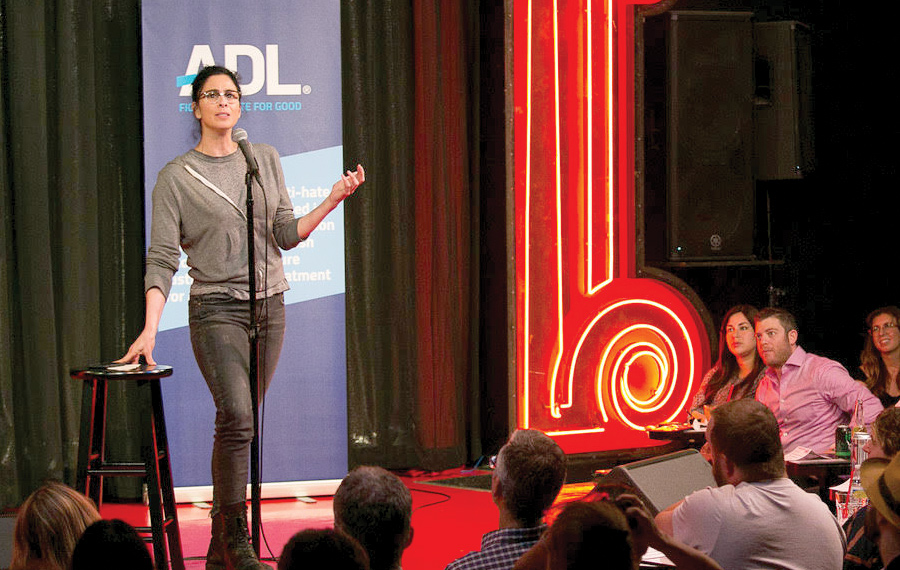
Sarah Silverman Headlines ADL’s ‘Stand-Up Against Hate’

Renowned Jewish comedienne Sarah Silverman was among a long line of A-list comedians who performed at the Anti-Defamation League’s NextGen young professionals’ “Stand-Up Against Hate” comedy night at the Comedy Store in Hollywood on July 11.

Other comics on the roster were Wayne Federman, Sammy Obeid, Michael Yo, Justin Martindale and master of ceremonies Bruce Fine.

But it was Silverman who was the big draw, performing in front of 275 attendees. She opened with bathroom humor, speaking about the logic or lack thereof of a sign by a swimming pool prohibiting swimmers who have had diarrhea in the last 14 days. She then segued into a joke about Hanukkah before covering everything from being single to abortion, and an existential crisis prompted by an underwear commercial.

Silverman quipped she had intended the existential bit to be the first “non-Jewy” joke but then noted the joke was on her because is there anything more Jewish than having an existential crisis?

Comedian Justin Martindale embraced the ADL message, saying, “What’s up, non-haters?”

Federman continued the theme, telling the audience, “Next Saturday, I’m doing a pro-defamation benefit.”

Obeid said, “It’s an honor to be a Palestinian-American performing for a Jewish-American organization fighting hate for 100 years.”

“It’s an honor to be a Palestinian-American performing for a Jewish-American organization.”
— Sammy Obeid

With his Lebanese-Palestinian-Syrian-Italian-American background, Obeid gave new meaning to the term “multi-hyphenate,” openly joking about being Palestinian. He also bravely joked about Jesus being Palestinian.

ADL Senior Associate Regional Director Natan Pakman told the Journal the annual comedy event is a way of getting young people involved in the ADL.

One of those people is Debbie Paperman, a graduate and now co-chair of the ADL’s Glass Leadership Institute program for young adults, focused on advocacy and leadership training. Paperman said she felt the evening was a success not only because it drew a large crowd but because it brought attention to the ADL’s work in supporting justice and fairness for all.

“I thought it was a great event,” she said. “I love the ADL and I’m very passionate about their mission. I think that it’s one of the most important organizations to support right now, and I am so glad that it was such a well-attended event.”

Paperman added she was attracted to the ADL in part because it helps both Jews and non-Jews, noting, “This is an organization that I know can impact so many people, and it is important for the Jewish community as well as the community at large.”

At the event, ADL Regional Director Amanda Susskind wore a blazer over a T-shirt that read “Stand-Up Against Hate!” Susskind said the evening was an opportunity to take a break from the serious work the ADL does every day to combat hatred and bigotry.

“We are dealing with a difficult topic all year round and it is nice when we can have a moment of levity,” she said, adding, “Heavy topic, light evening.”

Sarah Silverman Headlines ADL’s ‘Stand-Up Against Hate’ Read More »

Saving Lives One Safety Vest at a Time

After surviving a hit-and-run accident a year ago, Los Angeles entertainment industry life coach Sherri Ziff is now a devoted advocate for road and pedestrian safety.

“I feel strongly about this,” Ziff said. “Not many people survive what happened to me. HaShem gave me a second chance and I need to make my life worthy of the second chance.”

According to the American Automobile Association, there is a hit-and-run every 43 seconds in the United States. In 2016, 2,049 deaths were caused by hit-and-run accidents, 337 of them in California. These statistics troubled Ziff, so in the past year she has been working to save  lives through her advocacy group, You’ve Been Hit and Run, and  her eBook, “You’ve Been Hit and Run: What You Must Do Now.” 

Ziff said she is working closely with the Los Angeles Police Department and the Department of Motor Vehicles to help them obtain the search software they need to solve hit-and-run cases and to help provide support to hit-and-run victims.

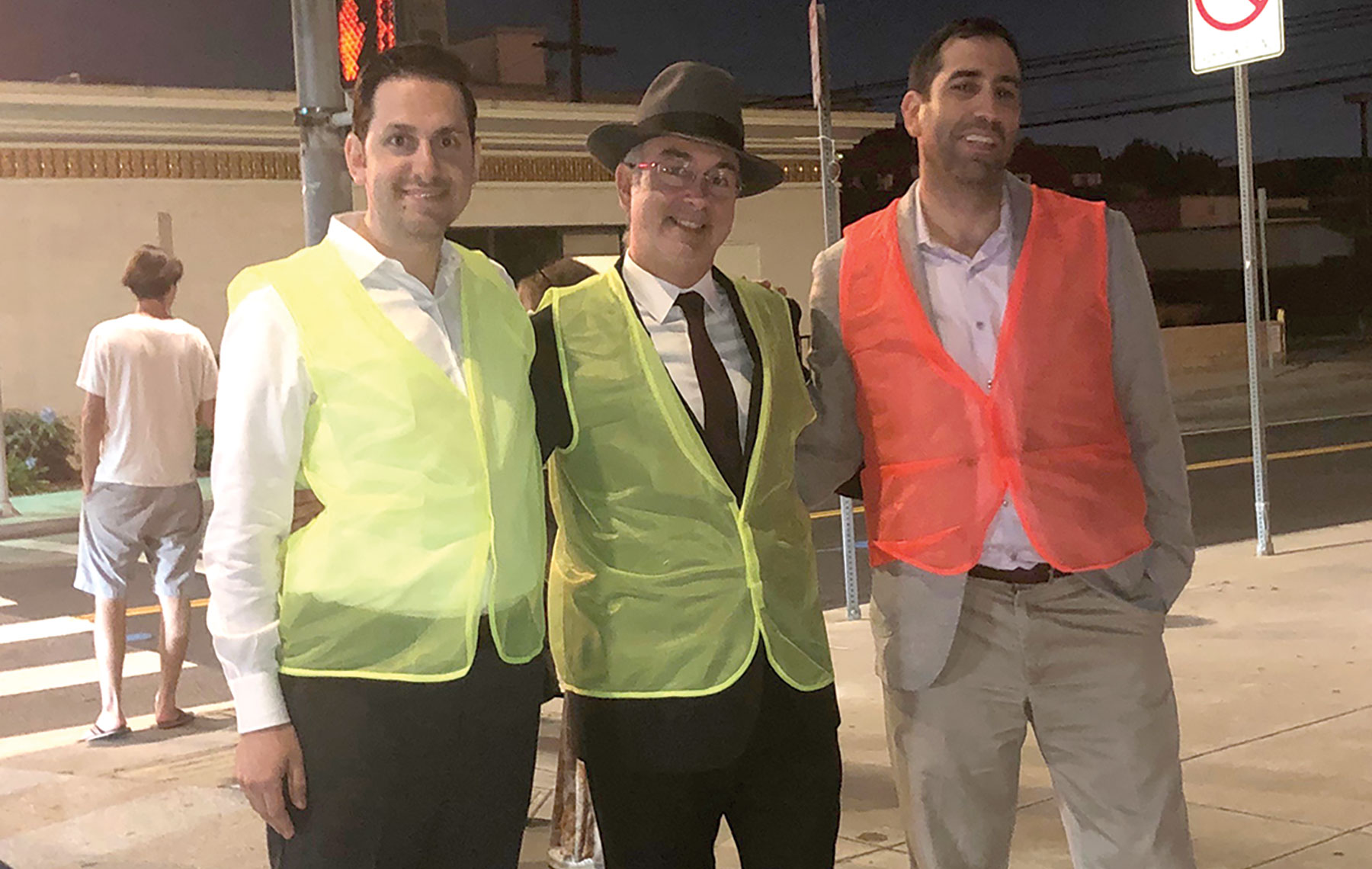
She also found a quick and simple way to help ensure pedestrians and cyclists stay safe: handing out neon safety vests to passersby on the street.

Sherri Ziff captures a biker wearing one her of safety vest.

“I flag down joggers and people on bikes all the time and say, ‘I’m advocating for pedestrian safety — can I give you this?’ And they say, ‘Whoa, yeah.’ People respond when you offer them. The challenge is how do you get them to wear [the vests] again?”

Last month, Ziff handed out 3,000 safety vests for people to wear going to and from synagogue in time for Shavuot. She said it’s easy for people to blame drivers alone for hit-and-run accidents, but pedestrians also need to be proactive.

“We can’t blame it all on the drivers,” Ziff said. “We have to take responsibility for ourselves. A guy in a dark suit running across the middle of a dark street? You’re flat out playing Russian roulette with your life.”

“I flag down joggers and people on bikes all the time and say, ‘I’m advocating for pedestrian safety — can I give you this?’ And they say, ‘Whoa, yeah.’ People respond when you offer them.” — Sherri Ziff

Prior to Shavuot, Ziff had already been purchasing the vests at the 99-cent store but decided to make a  bigger push for the holiday. In a last-minute effort, she called her friend Greg Yaris who reached out to rabbis at The Happy Minyan and Pico Shul to see if they could donate so Ziff could buy more vests. In a matter of hours, she had a couple of thousand dollars and was running to every 99-cent store in the area. There are now safety vests available at a dozen shuls including The Happy Minyan and Pico Shul for congregants to pick up.

Ben Schwartzman, David Notowitz and Josh Klugman wearing safety vests after services.

“She is a really special person and a powerhouse of a human being,” Aleph Institute Rabbi Zvi Boyarsky said. “It’s remarkable how she transformed her experience into a movement to save lives. I am definitely connected and on board to help.”

While Ziff now has many area synagogues on her side, she also has personally handed out vests while hiking up to the Hollywood sign, at the grocery store and at a cafe in Beverly Hills. But, she said, more and more drivers are speeding through side streets in the Pico-Robertson neighborhood. 

“It’s not safe,” she said. “You [can] stand on any intersection on Pico-Robertson for 15 minutes and you will see someone run a stop sign or you will see someone speeding through. It’s just the new norm now.” 

Ziff is working with Boyarsky to coordinate distributing safety vests in the La Brea area in September, during California Pedestrian Safety month. She is also reaching out to state assembly members to sponsor hit-and-run safety bills and Ziff hopes to create safety vest decorating events at schools.

“Kids, at whatever age, could draw on them and they get to keep that one and then they get a plain one for their parents,” she said. “I think parents can get on board when they hear, ‘Mommy, Daddy, wear this. I want you to be safe.’ I’d like to think you can’t argue with that.”  

Ziff said she hopes that as long as the vests are easily available, she will continue to hand them out and hopes others will join her cause. Her main goal is to prevent more hit-and-run accidents from happening.

“My experience has made me acutely aware of the fragility of life as well as the traffic dangers in our community,” she said. “Our Jewish values inspire tikkun olam and taking immediate action.” 

For more information or to get involved, email Sherri@YouveBeenHitAndRun.com or visit her website. 

CORRECTIONS: This story has been corrected with information regarding the amount of money raised for the safety vests and where they were distributed.

Saving Lives One Safety Vest at a Time Read More »