fbpx

April 10, 2019

LAMOTH Focuses on Conflicts’ Violence Against Women

A new exhibit at the Los Angeles Museum of the Holocaust (LAMOTH) urges the visitor to think of war, genocide and mass atrocities in a different way. In “Women at the Frontline of Mass Violence Worldwide,” the faces of the women, especially their eyes, are haunting. And so are their stories.

The exhibit focuses on different eras and locations, but as the introductory text points out, “the brutality inflicted upon women during genocide and mass violence … shares similarities from one conflict to another. … [W]omen are systematically targeted by perpetrators of mass violence, humiliated … raped, deprived of their motherhood, sterilized, and used as slaves.”

The exhibit was curated by Marco Gonzalez, executive director of Yahad-In Unum, a Paris-based organization founded in 2004 by leaders of the French Roman Catholic and Jewish communities to locate mass graves of Jewish victims of the Nazis’ mobile killing units — the infamous Einsatzgruppen, which killed approximately 1.5 million Jews but are not as well documented as the killings in the concentration camps.

Some Jewish women who survived the “Holocaust by Bullets” by the mobile units in Eastern Europe are part of the LAMOTH exhibit. However, the exhibit also gives voice to 20 women from four conflict zones: Holocaust survivors; survivors of the genocide against the Romani (Gypsy) people during World War II, mostly in Romania; survivors of the Mayan genocide in Guatemala in the 1980s; and Yazidi survivors who were tortured by ISIS in Iraq beginning in 2014. 

Among the stories is that of Alexandrina, a survivor of the Romani genocide by the Nazis. Alexandrina recalls how mothers carrying babies in their arms had no choice but to leave their infants on a road so they could escape approaching soldiers. “These children,” she said, “were run over by horses that were chasing us.”

“Things like sexual violence, rape and forced prostitution are not well documented. … We believe these stories need to be added to the history.” — Beth Kean

A woman who survived Guatemala’s genocide against the Mayan people in the 1980s said she was pregnant when soldiers barged into her house. “[The soldier] abused me,” she said. “As a result of the rape, my child was born handicapped.” 

Klara, Jewish survivor, 79 years old, Shklov, Belarus
Photo by Aleksey Kasyanov/Yahad-In Unum

The stories of atrocities committed against the Yazidi women are particularly horrifying. Yazidis are followers of a monotheistic faith that has Abrahamic elements but is not Islam, which has made them targets of ISIS, whose adherents consider Yazidis “impure.” Until a few years ago, Yazidis were protected by living in areas of Iraq and Syria controlled by Kurds, but in recent years, with ISIS’ gains, the Kurds have not been able to protect the Yazidis.

“An ISIS chief came and chose 35 girls. I was among them,” Nasrin, a Yazidi survivor, says in her story. “We were taken to a two-story building and locked in a room. The first night that he brought me [there], he undressed me and raped me. Then he made four of his guards come back to the room and they raped me, one after the other.”

Other Yazidis tell similar stories. One was 14 when she was interviewed. “I was given to an ISIS guardian as a gift,” she said. “For months I was handcuffed to a bed.”

Jill Brown, LAMOTH’s director of communications and outreach, said the exhibit breaks new ground for the museum.

“In my recollection, we’ve never done a temporary exhibit on this scale, that focuses so much on historical events beyond the Holocaust,” Brown said. “I think people will see the similarities among these experiences and, also, the differences. We talk about the six million Jews who were murdered, but that’s an overwhelming number. It’s easier for people to relate to one person or one family at a time, so this exhibit follows a similar path: focusing on individual survivors whose suffering is emblematic of a whole group of people whose experiences were similar.”

Ashoaq, Yazidi survivor, Kadya camp, Kurdistan
Photo by Victoria Bahr/ Yahad-In Unum

Beth Kean, LAMOTH’s executive director, said historians often overlook women’s experiences in conflicts. She hoped that by sharing these stories of female victimization, “it will make us understand that we need to work harder to prevent this from happening in the future.

“Things like sexual violence, rape and forced prostitution are not well documented,” Kean said. “And even other experiences, like women having their heads shaved, not having underwear, things like how they stopped having their periods; and for many of the young teenagers, wondering if they will be able to have kids if they survive.

“Women are the ones doing a lot of the work, taking care of their siblings, or farming, or doing the heavy lifting … so this is a chance to give them a voice. We believe these stories need to be added to the history.”

LAMOTH Focuses on Conflicts’ Violence Against Women Read More »

Sunrise, Sunset: ‘Fiddler on the Roof’ Revivals in Los Angeles and New York

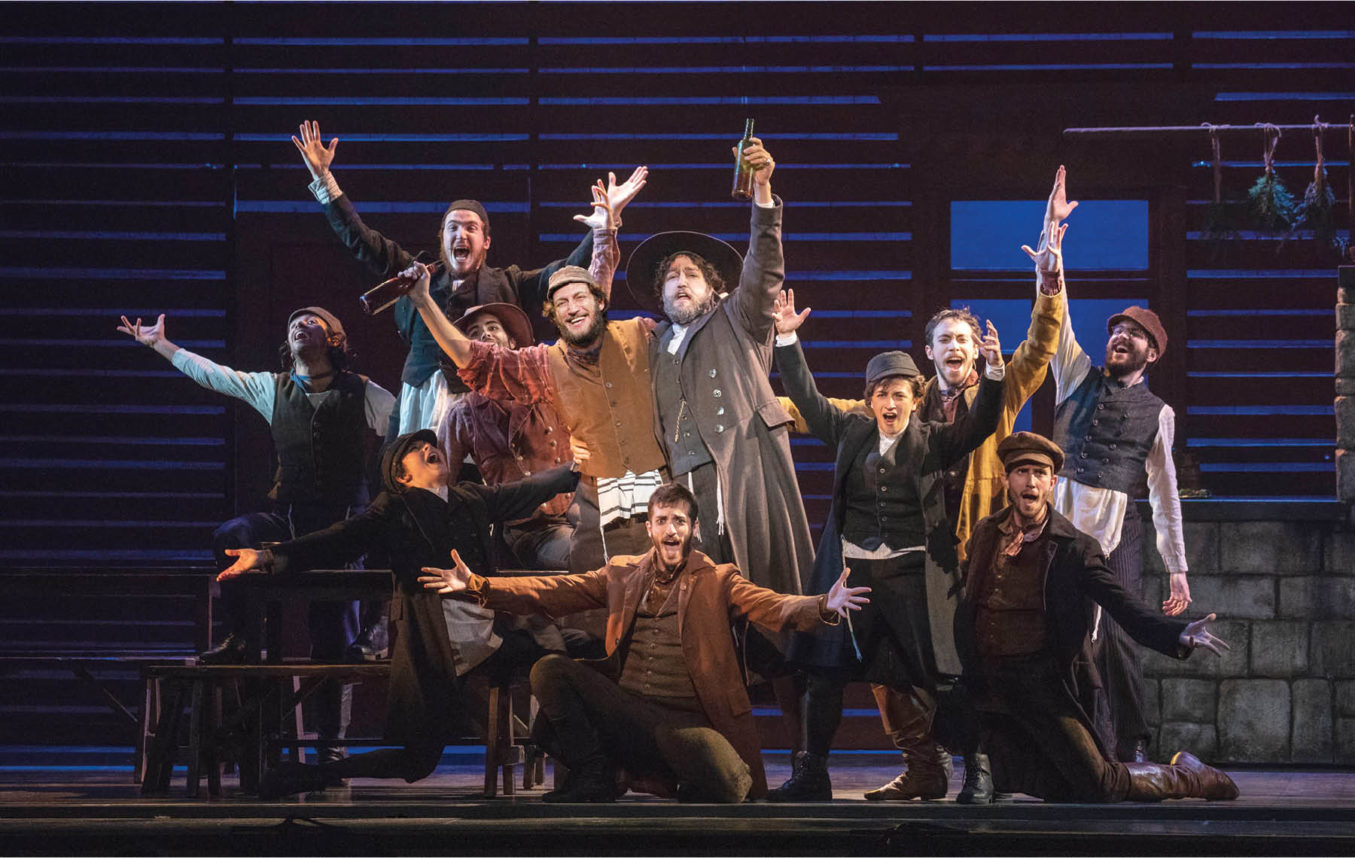
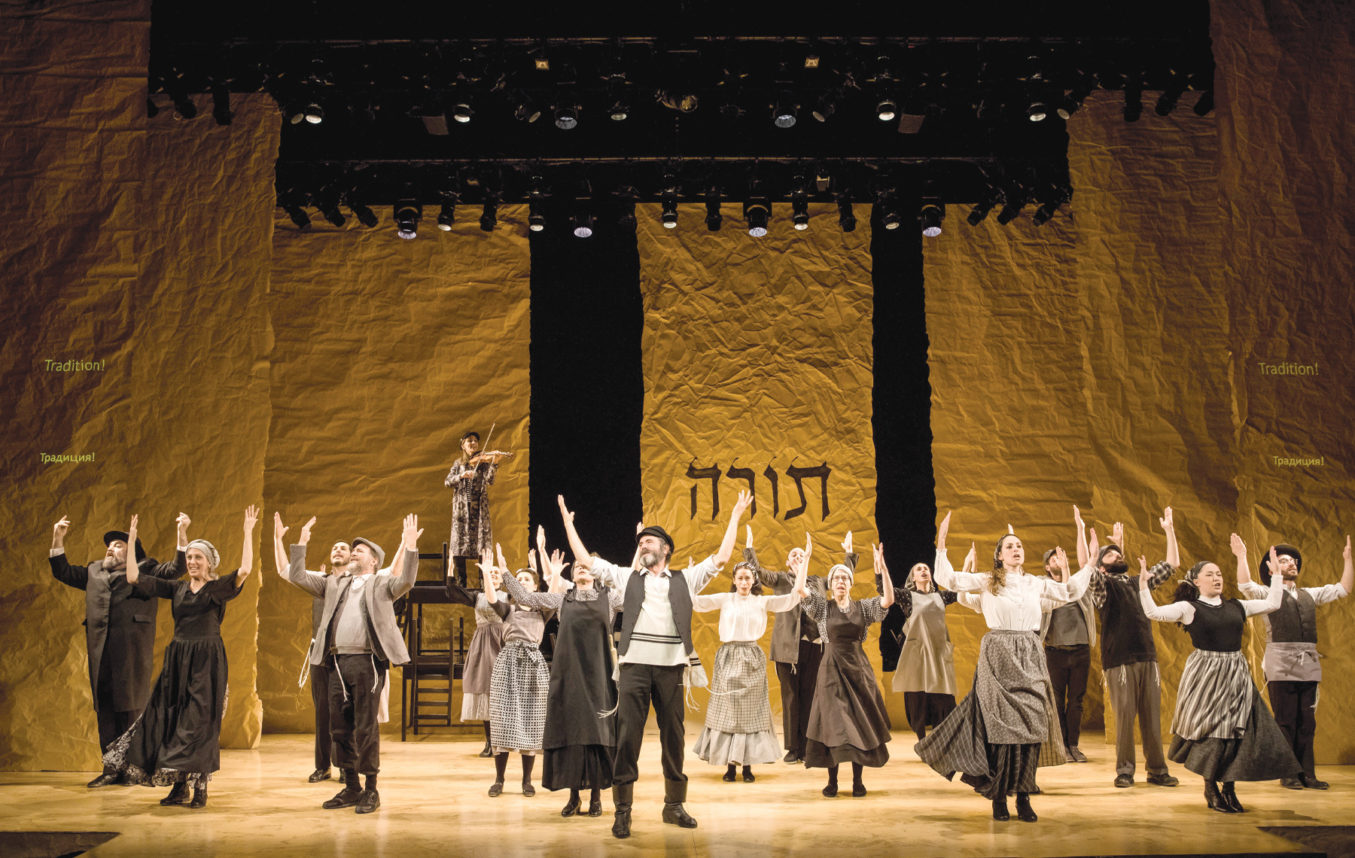
Set in a shtetl in czarist Russia in 1905, the beloved musical “Fiddler on the Roof” has been staged hundreds of times around the world since its Tony Award-winning Broadway debut in 1964. With universal themes of family, tradition and inhumanity that perennially resonate, especially in today’s turbulent times, ‘Fiddler’ is ripe for a revival — or two. The national touring company arrives in Los Angeles at the Pantages Theatre on April 16 while a Yiddish-language version is playing to packed houses off-Broadway in New York. 

Following in the footsteps of Zero Mostel, Chaim Topol, Herschel Bernardi and Harvey Fierstein, Israeli actor Yehezkel Lazarov takes on the central role of Tevye the dairyman in his first American tour. While he was familiar with the stage and screen versions of the musical, he had his own approach. “Thinking about [other portrayals] can throw you off. I’m not here to imitate things,” he told the Journal. “It’s the wrong way to do a role.”

Having played the part since September, “I’m discovering more and more layers, how this character is deeply connected to me, to my history,” Lazarov said, elaborating that his grandparents fled pogroms in Russia with their siblings, later meeting in Israel. “Having that in my own history brings more connection to Tevye for me.” 

Raised in a religious family, he doesn’t consider himself very religious, but he continues to lay tefillin and keep kosher, the traditions he grew up with.

As for “Fiddler’s” enduring popularity, “It’s perfectly written as a comedy and a tragedy and shows tradition in such a beautiful way, with the Sabbath candles and the family sitting around the table,” he said, noting that tradition is also at the root of heartbreak: Tevye’s daughter Chava must choose between her family and her non-Jewish love. “Tradition can bring people together and drive them apart, as well,” he said.

Lazarov emphasized that “Fiddler” is “not just a sad and beautiful Jewish story. It’s a human story, a universal story about people who have been kicked out of their homes and are looking for somewhere to go. It rings a bell for everyone in the audience,” he said. “It’s so relevant and it’s something I’m proud to do, especially right now.”

WATCH: The Cast of “Fiddler” singing “Tradition”

Lyricist Sheldon Harnick, who collaborated with composer Jerry Bock on “Fiddler’s” songs, spoke about the musical’s appeal in a telephone interview. “It’s a family show. It’s about a father and his children. So many people can identify with the problems of fatherhood and raising a family,” he said, calling the musical’s success “astonishing. It’s the most popular and the most performed of everything that Jerry Bock and I did. I’m very surprised and very gratified.”

“ ‘Fiddler’ is a human story, a universal story about people who have been kicked out of their homes and are looking for somewhere to go. It rings a bell for everyone in the audience.” — Yehezkel Lazarov

Harnick studied the Sholem Aleichem source material for inspiration while writing the show’s iconic songs, for which he and Bock won a Tony Award. “They’re so rich as stories and have so many things in them that I could translate into music and lyrics. Becoming familiar with those stories was a joy all by itself,” he said. Harnick said he found the themes “very personal. It reminded me of growing up in Chicago and studying for my bar mitzvah and going to the synagogue.” 

The son of Russian and Austrian Jewish immigrants, Harnick grew up in a musical family and began playing the violin when he was 8. His other credits include “Fiorello!” “She Loves Me” and “The Rothschilds.” The Tony-, Grammy- and Pulitzer Prize-winning nonagenarian currently is adapting a French play into an operetta and is among the interview subjects in the documentary “Fiddler: Miracle of Miracles,” due out in August. “I play the violin at the beginning and at the end,” he said. 

Lazarov brings 36 years of stage experience to “Fiddler,” mostly in nonmusical plays. His talent for performing emerged in kindergarten and by age 8 he was tap dancing onstage. He danced with the Batsheva Dance Company and acted with the Gesher Theatre in Israel, sang in a band while doing his army service and studied at the Actors Centre in London.

A photographer and filmmaker, Lazarov has curated art shows and written plays. He has played leading roles in more than 40 films and television productions, and for the last 10 years he has directed for the stage, in addition to choreographing shows and designing sets. “If I’m not doing a few things at the same time, I’m not enjoying myself,” he said. But of everything he’s done, Lazarov is proudest of the interdisciplinary arts school he founded, “where kids can study all the arts and not have to choose.” 

All of that is on hold through July as he tours with “Fiddler.” This is the Tel Aviv native’s sixth trip to the United States and his fourth visit to L.A. (the first was for the premiere of “The Dybbuk” when he was 23). This time, his wife and three home-schooled daughters, ages 8, 12 and 15, are with him. “They come to every premiere,” he said. “We see a lot of beautiful roads and cities, and amazing museums in every city.”

At first, Lazarov hesitated to play Tevye because he thought of him as man much older than he, but he realized that at 45, he was just the right age. “This is one of the greatest, most professional productions and casts I’ve been with,” he said. “I’m so happy I took this opportunity.”


“Fiddler on the Roof” runs April 16-May 5 at the Pantages Theatre and May 7-19 at Segerstrom Center for the Arts in Costa Mesa. 

Sunrise, Sunset: ‘Fiddler on the Roof’ Revivals in Los Angeles and New York Read More »

Pennsylvania Lawmakers Hold Memorial for Pittsburgh Synagogue Shooting

(JTA) — Pennsylvania lawmakers held a joint session of the state’s General Assembly to remember the victims of the Pittsburgh synagogue attack.

The memorial on Wednesday came a day after the city’s mayor signed into law new gun control legislation introduced in the aftermath of the Oct. 27 shooting by a white supremacist that killed 11 worshippers.

Lawmakers from the state House of Representatives and Senate were joined by members of the three congregations that met in the Tree of Life synagogue building in the Squirrel Hill neighborhood, The Associated Press reported.

April 10 was designated “Stronger Than Hate Day” in Pennsylvania, the hashtag used to support the Jewish community of Pittsburgh after the attack.

“A dark and despicable act inspired thousands to reach out and find ways to lift up their grieving and terrified neighbors,” Gov. Tom Wolf said in a statement before the session.

The gun control legislation has already been challenged in court, with critics saying that state law prohibits municipalities from regulating guns.

Under the legislation, the AR-15 assault-style rifle used by the synagogue gunman would be banned.

Pennsylvania Lawmakers Hold Memorial for Pittsburgh Synagogue Shooting Read More »

‘Fiddler on the Roof in Yiddish’ Captivates New York

Ever since it opened at New York’s Museum of Jewish Heritage last July, audiences have been kvelling over “Fiddler on the Roof in Yiddish,” the first production of the Shraga Friedman translation of the musical in the United States. Produced by National Yiddish Theatre Folksbiene and directed by Joel Grey, “Fidler Afn Dakh” moved to Stage 42 off-Broadway in February and just scored four Lucille Lortel Award nominations for best revival, director, lead actor and featured actress.

Presented in the language of Sholem Aleichem’s stories, this Yiddish version — with English and Russian supertitles — has an element other “Fiddlers” do not. “It has more authenticity, more earthiness. It connects you in a deeper way to the old country, to Eastern European Jews,” Lisa Fishman, who plays Grandma Tzeitel, told the Journal. 

“It has obviously touched a nerve for Jewish people and Yiddish speakers, but also non-Jewish people have been so moved by it and exhilarated by it,” said Steven Skybell, who stars as Tevye. “That was a surprise. But it’s also not surprising because ‘Fiddler on the Roof’ is a classic that’s being done every day somewhere in the world. It’s the perfect classic play with incredible songs and depth of character and storytelling. It’s not like we unearthed an obscure Jewish musical.”

“[With] immigrants being forced out and ethnic cleansing, it’s as relevant today [as ever], if not more,” Fishman said. “I think that’s why it’s touching so many people. When is it going to stop? When are we going to be able to say ‘never again’ and truly mean it? We have to learn a lesson from this and learn to live together in peace.”

Skybell confided that he used to think of the Anatevka villagers’ ultimate exile as a positive thing, because it would send Tevye and his family to America. “But with the turn of current events and the rise of anti-Semitism, hatred and bigotry, that nostalgic view is now a dire message,” he said. “This is a story about family and generations and how best to provide for your children, but also what it means to be displaced.” He does see the ending as hopeful, however. “It says you can be tossed and buffeted by the world, but you don’t have to lose your Jewishness or tradition.”

Skybell, of Polish ancestry with a “very strong” Jewish identity, was born and raised in a small, tight-knit Jewish community in Lubbock, Texas, attending a Reform synagogue. His grandparents spoke Yiddish, so he was familiar with it but wasn’t able to speak it until he decided to study it on his own. “I hoped one day it would be an avenue I could pursue in the theater,” he said. “It really is beshert that it’s happening.” 

This is Skybell’s fifth production of “Fiddler.” At 11, he held the chuppah in a community theater production, then at 17 and 23, he played Tevye at Interlaken music camp and at Yale University, and he portrayed village butcher Lazar Wolf in the 2016 Broadway revival. 

He likened Tevye to the greatest Shakespearean roles and finds playing him a “three-hour workout,” adding that doing it in Yiddish made it easier to make the character his own. “I don’t have to stand against those greats who have preceded me,” he said.

While Grandma Tzeitel is her first “Fiddler” role, the “over-the-top” character is not Fishman’s first experience with Yiddish. Of Russian, Polish and Latvian heritage, she was raised Reform in Highland Park, Ill., with a Yiddish vocabulary limited to meshugge and shayna punim. But she later got into klezmer music and sang
with a touring band and did Yiddish theater in New York. She also studied
Yiddish with the same teacher who taught Skybell.

Singing, writing songs and acting since childhood in camp and at school, Fishman is a musical theater veteran, with roles in “Funny Girl,” “Oliver,” “Cabaret,” Tintypes” and the Folksbeine’s “On Second Avenue” to her credit. 

Skybell, whose numerous theater credits include “The Full Monty,” “Pal Joey,” “Camelot” and several Shakespearean roles including Hamlet, also teaches acting. He has appeared often on television in New York-based shows, “Blue Bloods” most recently. He said he would love to do “King Lear” in Yiddish and a Yiddish film version of “Fiddler.” The show is set to run through Sept. 1, but that may be extended, and a cast album will be released soon, with bonus tracks of songs cut from the original production.

“We’ve been doing it now for almost nine months and I could do it for a lot longer. It’s so rewarding because the material is so deep,” Skybell said. “To be able to embrace my Jewishness so wholeheartedly with a role like Tevye and a play like ‘Fiddler on the Roof’ is empowering and feels larger than just an acting gig. It’s emblematic of me and my people.”

Fishman hopes that the production eventually will tour or be staged in other cities.

“It’s proving to be something that people even outside the Jewish community are responding to,” she said. “This is a universal story. It has a theme that humans have been dealing with since the beginning of time and keep repeating over and over. We are all connected to each other in one human family. We have to move forward from this ‘us versus them’ mentality and start learning to live together.”

“Fiddler on the Roof in Yiddish” runs through Sept. 1 at Stage 42 in New York.

‘Fiddler on the Roof in Yiddish’ Captivates New York Read More »

Yachad Fills Passover Boxes for Jewish U.S. Troops

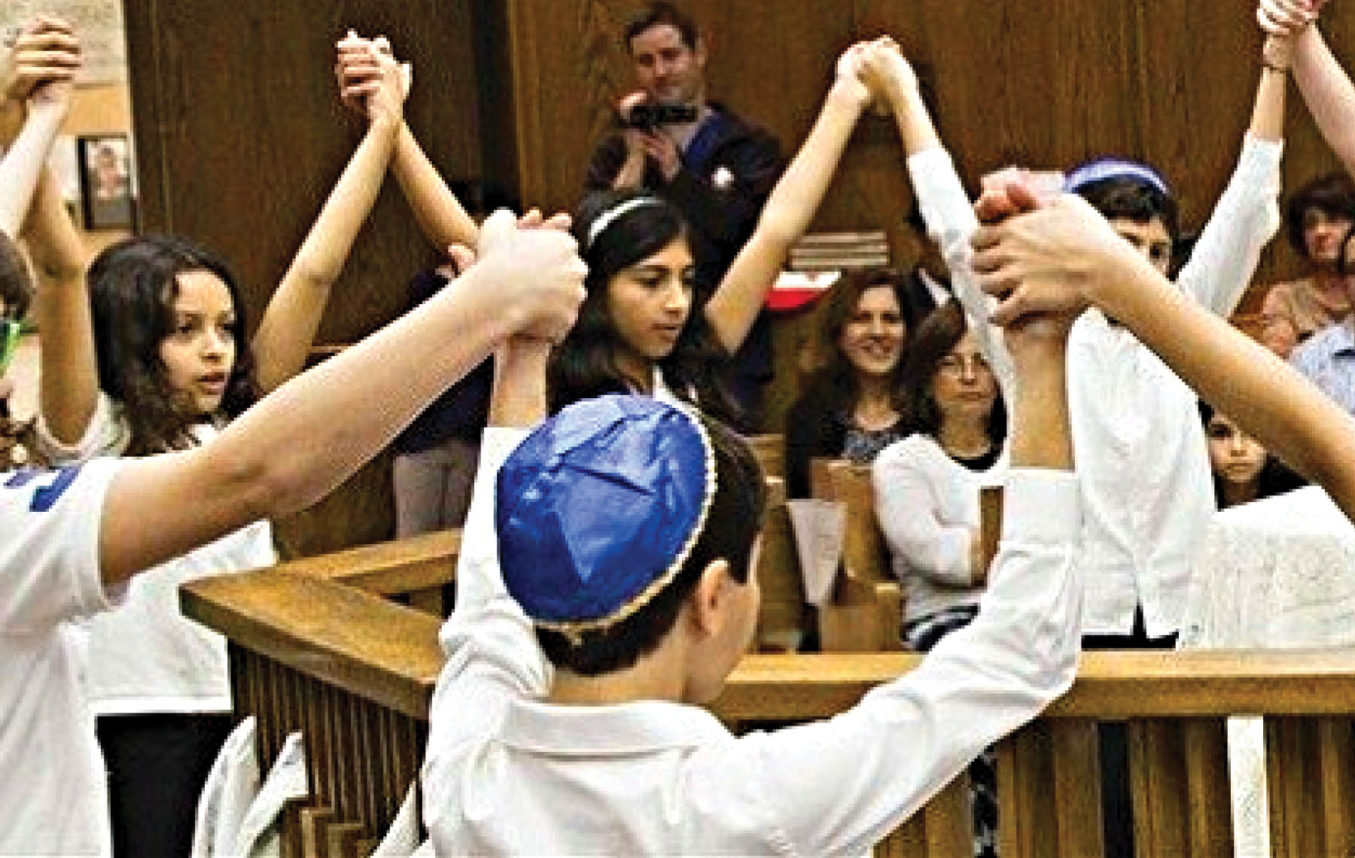
Amid blasting music and a stack of mostly empty pizza boxes, the teens and 20-somethings at the National Council of Synagogue Youth’s West Coast headquarters on Pico Boulevard looked like they were indulging in a regular get-together.

But the 15 young people were participating in an important project spearheaded by Yachad Los Angeles — putting together Passover boxes for Jewish soldiers in the U.S. armed forces. Inside the boxes were packages of matzo, grape juice, kosher-for-Passover candy, chocolates and a personalized note from the volunteers. 

“We did an event like this for Hanukkah and it went really well, so we figured this would be the easiest and fastest way to help again for Pesach,” said Yachad L.A. Director Monica Kohan Rukhman. “At Yachad, we help others and make them feel included, so it made sense to help Jewish people in the military.” 

Yachad (which means together) is a global organization dedicated to helping people with disabilities and creating inclusive environments for them within the Jewish community. The organization also provides resources for people of all ages, including Shabbatons, parent support groups, professional programs, dating classes and summer camps. 

“We are giving different things such as food, candles, a mini haggadah and a note with our love and support.” — Rebecca Wizman

For this event, Yachad partnered with Rabbi David Becker, a U.S. Army chaplain, and American Friends of the Armed Forces, which was going to deliver the boxes to Jewish military personnel in time for Passover. 

“We are giving different things such as food, candles, a mini haggadah and a note with our love and support for them to show that we are thinking of them,” said Santa Monica College freshman and Yachad student intern Rebecca Wizman. “Our packages are packaged with love.”

With its five-step assembly line, the group prepared a couple dozen baskets — the number within the project’s budget. 

Shoshana Lizer, 21, of Brentwood, has been involved with Yachad since she was 15 or 16. “I really liked making the boxes because I know the people really deserved them,” she said. 

Malki Mintz, Yachad L.A.’s assistant event coordinator, said her sister, Basya, a Yachad member working at Yachad in Israel, got her involved with the organization.

“My sister kept begging me to drive her from the [San Fernando] Valley to the city [for Yachad events] … and then I saw it and fell in love,” Malky said. “I’ve been volunteering for six years and working here for two. I love it.” 

She said the L.A. chapter currently has about 50 people involved and hopes to expand.

Basya added, “at Yachad, everyone feels like a somebody,” she said. “You come here and you can be yourself and nobody is comparing each other. No one judges each other. Everyone is just friends.”

Yachad Fills Passover Boxes for Jewish U.S. Troops Read More »

Unanswered Questions Over Abrupt Lainer School Name Change

In the summer of 2017, school officials at Sinai Akiba Academy in West Los Angeles lauded an announced gift as “transformative,” prompting a name change. After nearly 50 years as Sinai Akiba Academy, the educational arm of Sinai Temple began the 2017-18 academic year as the Alice and Nahum Lainer School, named for the longtime supporters of the school responsible for the gift. 

At the time, Head of School Sarah Shulkind didn’t disclose the amount of the Lainer’s gift, but told the Journal it comprised “a significant portion” of her institution’s $40 million goal in its 50th-anniversary fundraising campaign. 

“I am excited that this gift will help secure the school’s future,” Shulkind said back in July 2017. 

Now, less than two years later, the gift has gone bad, a Head of School is set to depart and questions abound. 

In 2017, the temple board voted to accept the Lainer’s gift proposal with limited details given, according to multiple anonymous sources close to temple board members. By the spring of 2018, the temple’s legal independent counsel notified school officials that portions of the charitable gift agreement weren’t in compliance with sections of state law that mandate religious nonprofit organizations. 

“Both the Temple and the Lainer Family Foundation and their legal representatives worked for many months to try to resolve these issues,” the October 2018 community update read. The Lainer Family Foundation is the Lainer’s charitable nonprofit, through which the family has donated generously for many years to the day school, where they’ve sent three children and three grandchildren. 

Sinai Temple then called for a special board meeting on Oct. 22, 2018, to vote again on whether to accept the gift. This time, board members were forced to sign non-disclosure agreements (NDAs) beforehand, a decision that angered many board members, according to multiple sources. In the end, they voted to decline the gift, but details on the vote and what was discussed are murky, to say the least. 

“The School is well-positioned for the future,” the post-vote community update email stated. “Its finances are strong, and its commitment to tuition assistance remains unchanged. With ongoing support from our community, we will continue to invest heavily in faculty, programs and facilities.”

The Lainers didn’t respond to the Journal’s request for comment. Head of School Sarah Shulkind and Rabbi David Wolpe also declined to comment. Wolpe directed the Journal to a statement issued by the Temple’s general counsel: “The mutual rescission confidentiality clause provides that the parties to it will not disclose terms and conditions to the general public or third parties. Notwithstanding that, a party may disclose that the charitable gift annuity (CGA) has been rescinded or terminated by mutual agreement.” 

“It is an amazing professional opportunity, and I am really excited to pursue it,” Shulkind told the Journal after the announcement. She also noted that her Sinai Akiba exit has nothing to do with the Lainer gift episode. 

Sinai community members close to board members, who spoke to the Journal on the condition of anonymity, estimated that the Lainer’s proposed gift was in the $15 million to $20 million range. Upon the 2017 announcement, the school launched a full-scale marketing effort, complete with everything from new signage, printed materials and even staff emails reflecting the name change.  

“They started doing all this stuff without a dollar ever being transferred,” one Sinai parent who asked not to be identified said. “This is coming from a lot of people, from school, from people on the temple board, people from all over. Nobody was happy. People were complaining and they were upset. This school has a 50-year history with its name and nobody was told anything about what was happening.” 

Per a second community email update that went out, the name change back to Sinai Akiba Academy will be complete by the end of June. Diplomas for this year’s graduating class will read “Sinai Akiba Academy.” One person who won’t be there next year is Shulkind, who was tapped as the new head of school at Milken Community Schools in February, effective July 1. 

“It is an amazing professional opportunity, and I am really excited to pursue it,” Shulkind told the Journal after the announcement. She also noted that her Sinai Akiba exit has nothing to do with the Lainer gift episode. 

But not everyone is buying that. 

“One-hundred percent it has to do with this,” said another Sinai parent who asked not to have her name printed. “People here think she looked for another job because this whole situation blew up and she wanted to make an exit. She has a long-term contract. She didn’t need to leave. There was no contractual reason to leave. It wasn’t due to expire for a few more years.” 

Few Sinai parents were willing to go on the record, stating that the community is divided over whether the board’s members, who are handcuffed by NDAs, acted in the best interest of the school in declining the gift. “It was a lot of money to turn down,” one parent said. Parents said they feared retribution for having an opinion linked to them. 

One person in the community who spoke on condition of anonymity told the Journal she heard the decision by the board to decline the Lainer’s gift was partly because the Lainers wanted their name to be on both the school and the temple. However, no one corroborated that rumor.

Danny Brown, 47, who lives in Cheviot Hills and sends three kids to the school, was willing to speak on the record. With close friends on the board and at the school, Brown has heard all the conflicting narratives and, although critical of what transpired, tried to remain optimistic. 

“Regardless of what side of the debate you are on, the entire process was shrouded in secrecy and non-disclosure and there’s no excuse for that at an institutional level,” he wrote in an email. 

“The gift was clearly never appropriately vetted in a professional manner or it would’ve never been announced publicly until all terms were resolved and accepted by both parties.  There’s plenty of blame to go around and it is unbelievable that this could even happen. I don’t know if I’d believe this story if I saw it in a movie. That said, at the end of the day we hopefully learn from our mistakes, make significant adjustments and move forward in a productive manner to build a stronger school and temple.”

Unanswered Questions Over Abrupt Lainer School Name Change Read More »

Creating Art for the Streets of L.A.

When Los Angeles artist and graphic designer Michele Weisbart had the opportunity to showcase her work at the Mar Vista Art Walk in 2017, she had no idea it would lead to having her art literally displayed on the city’s streets two years later. 

In December 2018, the Mar Vista Art Walk posted on social media a call for 15 artists to create designs for the Bigbelly trash bins situated along a mile-long stretch of Venice Boulevard as part of Mayor Eric Garcetti’s Great Streets of LA initiative, announced in 2013. The initiative aims to transform streets throughout the city into more vibrant, safer and community-oriented public spaces. In 2014, a Great Streets mile corridor was identified in each of the 15 city council districts for the project. Venice Boulevard from Inglewood Boulevard to Beethoven Street was designated for Councilman Mike Bonin’s 11th District, which includes Mar Vista. 

Lenore French, president of Green Communications Initiative Inc., a nonprofit that organizes the Mar Vista Art Walk, said the art walk was looking for the best interpretations of the Mar Vista neighborhood identity and artists’ ability to work with the dominant light blue color palette to harmonize with the preformatted trash bins that display the city’s departmental logos and the councilman’s office crest. 

When Weisbart heard about the contest, she treated it as she would any other client, researching Mar Vista and its history.

“Even though I do brush painting and flowers, I also wanted to see what would be important to them,” Weisbart told the Journal. “I took some of my flowers — you had to match the three blues, because of the recycling part on the side of the bin — and also did some mandalas, because they represent wholeness, unity, harmony. These are things that I thought would express Mar Vista and how they support the artistic community.”

Weisbart submitted two designs in December and both were accepted within the month. She then received a template for creating the designs, which she submitted in January. The Bigbelly bins hit the streets the first week of February.

“I love Michele’s work because of her use of mandalas,” French told the Journal, “and that her work is at the same time abstract and references a very specific spiritual belief system.”

“Mar Vista has a very vibrant art community,” said Weisbart, 61. “While I plan to do more things along these lines — public art — the fact that this is the first place [to have my art displayed on the street] is really exciting.”

“I love Michele’s work because of her use of mandalas, and that her work is at the same time abstract and references a very specific spiritual belief system.” — Lenore French

The designs are displayed on both sides of the bins, so people can see them from all angles. 

“They are solar bins, so they compact the trash using solar energy, which is part of the city’s new interest in implementing projects that can be seen as part of the sustainable future for Los Angeles,” French said. 

Weisbart, who grew up in Thousand Oaks and now lives in Westwood, said, “I love the idea of trying to bring beauty to all the [streets of Los Angeles] in little steps. I love that [my work is] in a part of the city that is very active for the artistic community, is very cognizant of going green and does a lot for street planning. I’ve worked with urban planners, so it does many things that align with my personal philosophy.” 

Her appreciation for the arts along with a focus on education was a major part of Weisbart’s life growing up. “Education goes hand in hand with Jewish upbringing,” she said. “My parents have always opened my eyes. We were members of museums, we were taken to plays. They made sure we weren’t just educated in the traditional sense, but also in fine arts. Everything we’ve done, we look at [things] in a Jewish way.”

A graphic designer and illustrator for more than 18 years, Weisbart has worked with clients in the entertainment, financial, medical and food industries. Among other projects, she was the lead designer for the award-winning 2011 “Model Design Manual for Living Streets,” commissioned by the Los Angeles County Department of Public Health.

“As an artist, I do things for clients all the time,” she said. “This was the first time I put myself out there just as an artist, and it was very self-affirming.”

Creating Art for the Streets of L.A. Read More »

Connecting Polish Students to Israel

When philanthropist David Wiener is trying to decide what causes to support, one question is often the driving factor: Does it help Israel? Answering this question is how he came to fund Polish students’ trips to Israel.

In the fall of 2017, Wiener, 92, who continues to put in office hours four days a week at the Beverly Hills headquarters of his real estate development and management company, attended a Jewish National Fund dinner in Los Angeles. One of the speakers was Rabbi Leor Sinai, Co-CEO of the Alexander Muss High School in Israel (AMHSI), which the JNF acquired in 2013.

Wiener asked the rabbi to tell him more about AMHSI, an accredited college preparatory study abroad program about 20 minutes outside Tel Aviv. The school offers various programs, from a full semester to just a few weeks. AMHSI had just piloted a summer program called Roots Israel, targeting the “global Jewish community.” These three-week long summer sessions focus on community service and volunteering.

Wiener, a Holocaust survivor who was born in Lódz, Poland, was intrigued. 

“He said, ‘What are you doing in Poland?’ ” Sinai told the Journal. Sinai himself typically travels to Poland two or three times a year, often with students from the school. And he works closely with the Taube Foundation for Jewish Life & Culture, which created the Taube Center for the Renewal of Jewish Life in Poland. But Polish students weren’t coming to AMHSI.

Sinai told Wiener they would love to bring high school students from Poland to AMHSI. “Send them back to their country so they can be the future of their Jewish communities,” Sinai said. “[Wiener] loved the idea. That’s when he decided to make this gift that resulted in over 10 Jewish high school students [from Poland] joining us last summer with our program.”

The normal cost of the program is upward of $3,000 per person, not including airfare, although financial aid is available.

“I made a quick decision,” Wiener — whose two brothers died in Auschwitz — told the Journal. “As a whole, young kids have to know what happened to us. So many young kids in Eastern Europe, they are half Jewish. They don’t know. During the war, parents were afraid to say they were Jewish.”

Sinai said all the Polish students who participated last summer identify as Jewish.

“There are young Jewish high school students who deserve to be connected to their heritage. If the Jewish world is calling for us, we have to answer the call.” — Rabbi Leor Sinai

“There are young Jewish high school students who deserve to be connected to their heritage and are thirsty to learn,” he added. “And we want to help ensure that they are connected to their narrative. If the Jewish world is calling for us, we have to answer the call.”

The students who participate in Roots Israel come from all over the world, but primarily from the United States and Europe. Over the course of the three-week sessions, they spend about 70 percent of their time on the Alexander Muss campus. The rest of the time they are “traveling the land … getting to know the communities of Israel from the bottom up,” Sinai said. That includes visiting historic sites and the locations of “modern historical happenings.” But Sinai said the experiences that resonate most with students is their work with programs that serve students with disabilities. 

“We have an opportunity to impact the course of our people’s trajectory moving forward,” Sinai said. “This is an opportunity to be proactive, to invest in our children, to provide them an entry point to their own narrative, which will lead to not only an understanding of themselves but also to a conviction that they are part of something special: the Jewish people.”

That was certainly Zuzanna Wiewióraq’s experience. “These three weeks were the best weeks in my life,” wrote Wiewióraq, who was one of the students Wiener sponsored last summer. “I’ve learned many things about Israel, about people, about really hard work. These experiences changed my mind/life 180. I am so happy that I could learn and help! I had the feeling that I’m really strong and important. This trip really changes our perception of the world. When you are a part of the trip, you are part of the family.”

Connecting Polish Students to Israel Read More »

Six Delicious Desserts, Kosher for Passover

Matzo served during Passover is traditionally prepared from wheat specially ground and guarded so it is not in contact with water until just ready to be baked; the flour is quickly mixed with water, shaped and baked in a very hot oven (800 degrees) without allowing time for any fermentation. Ground matzo may be made into matzo meal as well as the finer grained matzo cake meal, and it can be used for cooking and baking. 

Over the centuries, Jewish cooks have produced a rich array of foods for the weeklong Passover holiday, and desserts are an especially important course of the meal. One of our special family Passover desserts is Chocolate Brownies filled with nuts and frosted with a silky rich chocolate frosting. Farfel Almond Cookies, Honey Sponge Cake, Farfel Nut Clusters and a Passover Potato Starch Sponge Cake will also add to your Passover dessert table.

CHOCOLATE BROWNIES
3/4 cup oil
2 cups sugar
4 eggs, separated
1/2 cup cocoa
1 cup matzo cake meal
2 tablespoons potato starch
1/2 cup black coffee
1 cup chopped walnuts or pecans
1/4 cup ground walnuts or pecans

Preheat the oven to 350 F.

Blend oil and sugar. Beat in egg yolks, one at a time, beating well after each addition. Combine cocoa, matzo cake meal and potato starch. Add to oil mixture alternately with coffee. Stiffly beat egg whites, fold into batter along with chopped nuts. 

Brush an 8-inch square baking pan with oil and dust with ground nuts. Pour in batter.

Bake for 1 hour or until a wooden toothpick inserted in the center comes out clean. Frost with Chocolate Glaze or serve plain.

CHOCOLATE GLAZE:
2 tablespoons nondairy margarine or butter
3 tablespoons honey
1/4 cup water
6 ounces semisweet chocolate

Combine margarine, honey and water in a saucepan. Bring to a boil, remove from heat. Add chocolate and beat until stiff. Spread or drizzle over the cake.  

FARFEL ALMOND COOKIES
1 cup matzo farfel
1 cup matzo cake meal
1 cup sugar
1/4 teaspoon salt
1/2 cup margarine, melted
1 egg
1 teaspoon vanilla or 1 tablespoon orange juice
1/2 cup ground almonds
Preheat the oven to 325 F.

Combine matzo farafel, matzo cake meal, sugar and salt and mix well. Pour melted margarine over farfel mixture and blend until sugar dissolves. Add egg and vanilla and blend. Mix in almonds.

Line a baking sheet with ungreased foil and drop in farfel mixture by teaspoon, 2 inches apart. Bake for 8 to 10 minutes or until golden brown. Cool. Cookies will peel off foil. Makes about 8 dozen cookies. 

CHOCOLATE FARFEL NUT CLUSTERS
16 ounces semisweet chocolate
1 1/2 cups toasted matzo farfel
1 cup chopped toasted pecans

Melt chocolate in top of a double boiler over simmering water or in a microwave oven. Pour chocolate into a large bowl. Add matzo farfel and pecans and mix thoroughly. Spoon chocolate mixture onto a wax paper-lined baking sheet. Refrigerate until set. Peel clusters off of wax paper and place in paper cups or on a wax paper-lined platter. 

Makes about 30 clusters.

HONEY NUT CAKE
8 eggs, separated
1 cup sugar
1 pound honey
1/4 cup strong coffee
1 1/2 cups matzo cake meal
1/2 cup potato starch
1 teaspoon cinnamon
1/2 teaspoon cloves
1/4 teaspoon salt
1/2 cup walnuts, chopped

Preheat the oven to 325 F.

Beat egg yolks and sugar until thick and lemon color. Add honey, coffee and dry ingredients and blend thoroughly. Beat egg whites until stiff, but not dry. Fold egg whites into yolk mixture and then fold in walnuts. Pour into an ungreased 9-inch tube pan. Bake for 1 1/4 hours or until a cake tester inserted comes out clean. Invert cake and cook thoroughly. Loosen sides of cake with sharp knife, remove from pan and place on a serving plate.   

PASSOVER POTATO STARCH SPONGE CAKE
9 eggs separated
1 2/3 cups sugar
1/4 cup orange or lemon juice
1 tablespoon grated lemon peel
1 cup sifted potato starch
1/2 cup ground almonds
1/4 teaspoon each ginger, nutmeg and cinnamon
1/4 teaspoon salt

Preheat oven to 350 F.

Beat egg yolks and sugar until light in color and fluffy. Blend in juice and lemon peel. Combine potato starch, almonds, ginger, nutmeg, cinnamon and salt. Blend into egg yolk mixture thoroughly. Beat egg whites until firm. Fold 1/4 of egg whites into batter. Fold in remaining egg whites gently until blended.

Pour into an ungreased 10-inch tube pan. Bake 45 minutes or until toothpick comes out clean. Invert pan immediately and cool thoroughly. Loosen sides of cake with sharp knife. Remove from pan and transfer to a serving plate. Serve plain and sprinkle with pulverized sugar and cocoa or chocolate glaze.


Judy Zeidler is a cooking teacher and cookbook author.

Six Delicious Desserts, Kosher for Passover Read More »

Rosner's Domain Podcast

Ambassador Avi Gil and Dr. Shlomo Fischer: Israeli Elections Aftermath

Ambassador Avi Gil, Dr. Shlomo Fischer and Shmuel Rosner discuss the election results and its possible outcomes.

Ambassador Avi Gil Dr. Shlomo Fischer

Dr. Shlomo Fischer, a senior fellow at the Jewish People Policy Institute, teaches sociology in the School of Education at Hebrew University and at Ben-Gurion University of the Negev. He is also currently a research fellow at the Van Leer Institute.Along with his extensive academic research, he was the founder and Executive Director of Yesodot – Center for Torah and Democracy which works to advance education for democracy in the State-Religious school sector in Israel. He was also one of the founders and is on the Board of the International Summer School for Religion and Public Life which is based in Boston, Mass.

Ambassador Avi Gil Served as the Director General of Israel’s Ministry of Foreign Affairs from April 2001-November 2002. He also served as Director-General of Israel’s Ministry of Regional Cooperation, Deputy Director-General of the Peres Center for Peace; the Prime Minister’s Chief of Staff, Media Advisor to the Minister of Foreign Affairs and the Minister of Finance, and Executive Policy Advisor to the Minister of Foreign Affairs. He has been closely involved in Israel’s policy-making and peace efforts, including the negotiations that led to the Oslo Accords and the peace treaty with Jordan. He is a Senior Fellow at the JPPPI and a was a close advisor to President Shimon Peres.

Follow Shmuel Rosner on Twitter.

Ambassador Avi Gil and Dr. Shlomo Fischer: Israeli Elections Aftermath Read More »