fbpx

March 13, 2019

Jewish Vampire Is Out for Blood in Israeli Series ‘Juda’

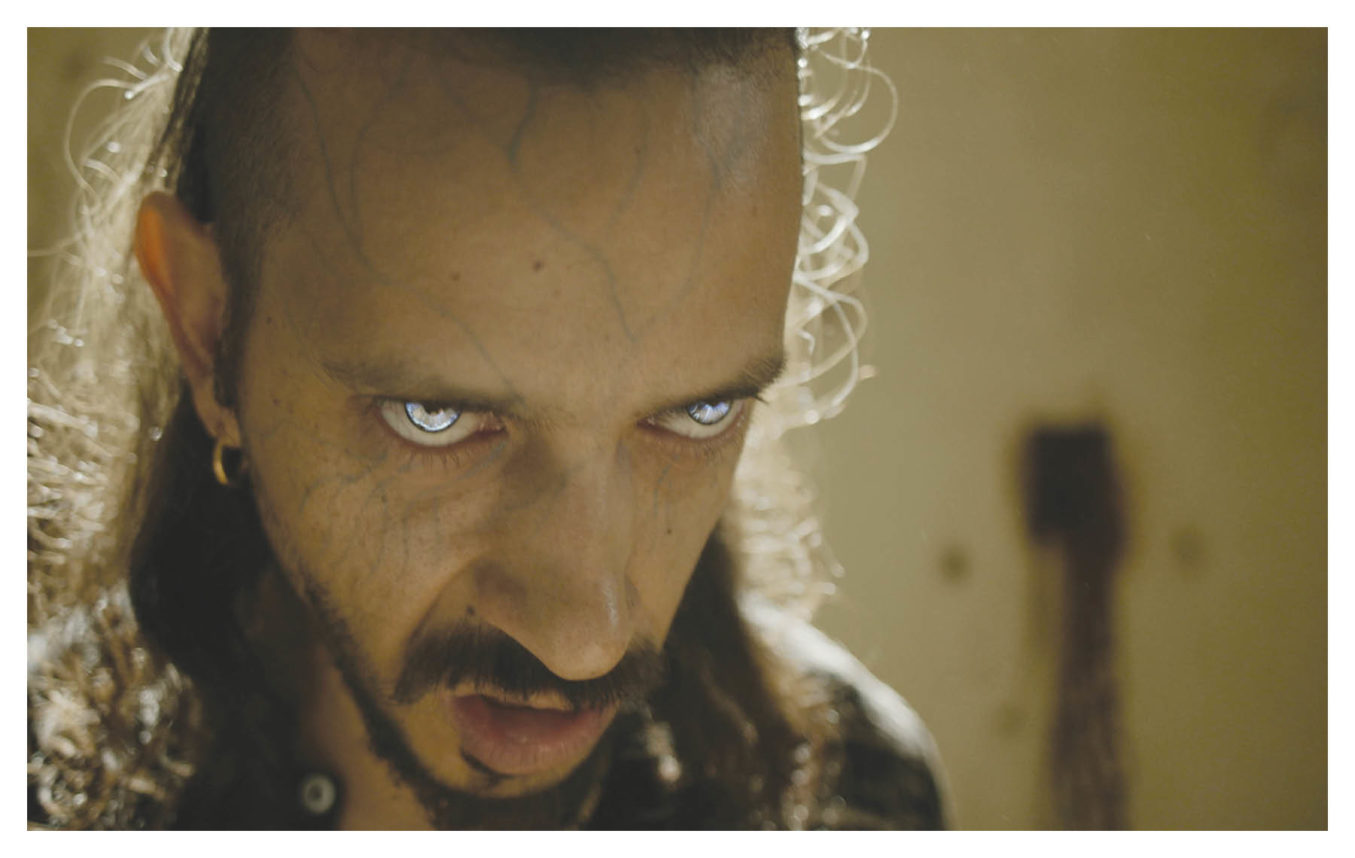
The scary bloodsuckers of “Dracula” and “Nosferatu” can be found at one end of the spectrum of film and television vampires, while the immortal heartthrobs of “Twilight,” “True Blood” and “Interview With the Vampire” are on the other. But the quirky, hapless undead hero of the Israeli series “Juda” defies categorization. To start with, he’s Jewish.

The eight-episode sci-fi/caper/horror/comedy hybrid, which premieres on March 19 on Hulu, introduces petty criminal and gambler Juda Ben-Chayim. Juda heads to a poker game in Romania, where a beautiful vampire bites him in the neck and takes his winnings. Suddenly, he’s super strong and literally bloodthirsty, and she’s horrified to realize her victim is a Jew because the vampire code prohibits biting them. The consequences are dire, because feeding on Jews means vampires lose their powers. And as Juda later learns from a rabbi, his destiny is to destroy all other vampires.

The series was created by and stars Israeli actor, director, writer, musician, radio host, painter and comedian Tzion Baruch. Baruch, 39, came across the idea for the show in a dream seven years ago. He was also inspired by his love of superheroes, movies including “Interview With the Vampire,” “Bram Stoker’s Dracula,” and films by Quentin Tarantino and Tim Burton. In creating “Juda,” Baruch wanted to make up for the lack of Jewish vampires in cinematic lore and take a bite out of the age-old anti-Semitic myth that Jews feed on the blood of Christians.

“That’s what makes this series different than others,” Baruch told the Journal. “The hero’s name is Juda and the name has a negative connotation [to other vampires] because he’s Jewish. We cleanse his name. The audience falls in love with him and, with that, I make a spiritual correction. Vampires were always associated with the Christian world. The Jewish people were persecuted throughout history, and it’s time for a Jewish superhero,” Baruch said.

He describes the show as “the vampire world meets Judaism meets ‘The Da Vinci Code.’ ” As for the theme that feeding on Jewish blood is forbidden, Baruch said, “You can look at it from two angles: that the blood is cursed or that it is actually blessed.”

In the series, Juda’s adviser is a rabbi who “explains everything through kabbalah,” Baruch said. “He explains that nothing was made up. Everything is in history. You just need to read things correctly. If we look at the Torah as a vampire story, then Cain killed Abel in one bite and Esau said to Jacob, ‘Let me swallow some of this red, red pottage for I am faint.’ If you take all of this and put it in a vampire story, it all connects.”

Baruch is the son of a Tunisian-Jewish mother and a Russian-Jewish father. His family escaped to Israel before World War II. Baruch said he leads “a traditional and spiritual life. I am very connected to Judaism. “[‘Juda’] is a very personal story for me. My wife (actress Yana Yosef) converted to Judaism. [Ours] was a forbidden love that became possible.” 

Growing up in a “tough neighborhood” in Ramla in central Israel, “I had an amazing childhood,” Baruch said. “I was different from people around me. My escape was art. I sat in my room and painted all day long. I knew I wanted to be an actor and performed onstage for the first time at 13. I started off as a comedian. I’m part of a famous comedic trio (Shlishiyat Ma Kashur) in Israel.” 

 “Vampires were always associated with the Christian world. The Jewish people were persecuted throughout history, and it’s time for a Jewish superhero.” — Tzion Baruch

Although he’s acted for seven years in the series “The Arbitrator” (2007-13) and movies including “Hallelujah” (2003) and “The Bubble” (2006), “Juda” is the first project Baruch created. It was a hit with Israeli audiences, winning top ratings and awards at the Series Mania Festival in 2017. 

“We were worried at the beginning and afraid of anti-Semitism, but in the end [audiences] loved it,” Baruch said. “It was No. 2 on the top-10 series downloads on VOD in Israel. The broadcaster thought it would be a niche series, but at the end, it spoke to everyone.”

The series’ second season is now in production. “It’ll be even crazier than Season 1,” Baruch promised. His next projects are a movie titled “The Rabbi’s Pledge” and a series titled “The Guard,” about an Israeli who moves to the United States “and gets in trouble with his identity. It has a spiritual [angle],” he said.

An English-language version “Juda” is also in the works, “which we are very excited about, but the details are still under wraps,” he said. “I will be involved.” 

However, Baruch is eager for American audiences to see the show in its original form, and thinks viewers will be drawn to the action, music, comedy and its unlikely Jewish hero as he comes to understand his powers and begins to enjoy them. 

“From the beginning, I wanted to touch the entire spectrum of human emotions: to scare them, to excite them, to entertain them and make them laugh. They can expect entertainment and fun,” he said. And fodder for discussion as well. “After each episode they’ll want to check the Holy Books to make sure that what they saw is true.”

“Juda” begins streaming on March 19 on Hulu.

Jewish Vampire Is Out for Blood in Israeli Series ‘Juda’ Read More »

Actress Rafaëlle Cohen Explores Israelis’ Love of Berlin

The “Cities of Love” film franchise showcases great metropolises around the world. “Berlin, I Love You” features 10 vignettes set in the German capital, introduced by the Israeli character, Sara, played by Los Angeles-based French-Jewish actress Rafaëlle Cohen. However, it’s easy to miss Cohen’s name in the marketing materials, especially alongside some of her famous co-stars, including Keira Knightley, Helen Mirren, Luke Wilson and Mickey Rourke. 

The film was released in the United States in February to lackluster reviews, many of which blasted the vignettes for barely scratching the surface of what makes Berlin so lovable. It only received a two-star rating on the Internet Movie Data Base (IMDb) and a one-star rating on Rotten Tomatoes. The film can be streamed now on Amazon Prime.

But the story of an Israeli singer (Cohen) and her German love interest, a street performer named Damiel (Robert Stadlober), frames and anchors the film. A review in Variety said, “But at least these two characters offer a semblance of continuity, against which the shorts serve as variably amusing digressions.” 

Brushing off critics, Cohen told the Journal at a restaurant in West Hollywood that she would rather focus on the film’s beauty as well as her good fortune in being cast in a tale that resonated with her as a Jew who periodically visits friends and family in Israel. 

Having spent several weeks living in Berlin in the summer and fall of 2017 to film the movie, Cohen said she sees Israelis’ attraction to Germany among third-generation Holocaust descendants as a unique, postwar act of German-Jewish reconciliation. 

While the Israeli Embassy in Germany has no official statistics on how many Israelis currently live in the German capital, NPR’s Daniel Estrin reported that according to Tal Alon, the Berlin-based editor of the Hebrew-language magazine Spitz, at least 10,000 of them are estimated to have moved to Berlin in the past decade.

“I know there was a movement of Israelis for many years to Berlin, and it fascinated me to see that the flower that blossomed out of the crack of the war was coming back to meet its root.” — Rafaëlle Cohen

Of her time in the European hot spot, Cohen said, “First of all, I felt the presence of Israelis in Berlin who had true open minds. And I know there was a movement of Israelis for many years to Berlin, and it fascinated me to see that the flower that blossomed out of the crack of the war was coming back to meet its root. I found that so beautiful.”

Berlin, Cohen added, is “the only place in Europe that I felt was really willing to seek forgiveness and ask for forgiveness, and realize the harm that has been done.”

Cohen was born in Paris. Her mother is from Tunisia and her father is from Morocco. The family moved to London when she was 3. Cohen originally became an engineer in London but abandoned the profession in 2011 to follow a career in the performing arts. She landed the role in “Berlin, I Love You” just two months after moving to Los Angeles from London in 2017. 

“I believe in divine alignment and divine timing,” Cohen said. “I believe I create my own reality and I came [to Los Angeles] to create what I was here to create, and I see the magic every day.”

She also described meeting the director of “Berlin, I Love You,” Josef Rusnak, as one of those magical moments. “I was told he met many celebrities, but he really wanted to find someone who could sing and have this Israeli feel,” Cohen said. 

With her long curly hair and olive skin tone, Cohen certainly looked the part. But more importantly, Cohen found the Israeli character intriguing. In the film, Sara takes her German beau on a mini-journey from the home her Holocaust survivor grandmother was forced to flee, to the steamy dance floor of the famous Berghain nightclub and the beloved public outdoor karaoke extravaganza at the Mauerpark Sunday flea market.  

“It was a dream to be able to interpret so many different aspects within one character,” Cohen said. “There’s this angelic kind of innocent being who wants to enjoy life. There’s the peaceful being. There’s the raw woman who has sensuality who wants to eat [Damiel] up and to give him so much pleasure. There’s the singer, with the ability to sing in front of 2,000 people and share music.” 

These days, some Jews look askance at Jews who make their lives — and loves — in a capital stained by its attempt at Jewish genocide. Sara, Cohen said, captures that third generation who find healing in returning to Germany. It’s part of the process of forgiveness, she said. 

“There is no resentment to be had. There is only now,” Cohen said. “Sara’s grandmother is proof of that. If there is one thing that the Shoah survivors teach us, it’s let’s be grateful for the life that we have. And let’s not darken our days with resentment.”

Cohen notes the contrast between Berlin and Paris, where today, bubbling anti-Semitism is making headlines in the French capital. She said she believes these expressions of Jew-hatred come in part from a lack of honest confrontation over the past among descendants of French Nazi collaborators, and she would rather they express their frustrations, however negative, and begin to heal.

“Anti-Semitism is mostly unspoken, precisely because it is so shamed, so people don’t even want to go near their thoughts on the matter, let alone express [them],” Cohen said. “They use the conflict in Israel, which is talked about on the news, to express their hidden frustrations against Judaism; hence the many amalgamations between French Jews and Israelis or French Muslims and Palestinians.”

Cohen still regards Paris as one of the most beautiful cities in the world but said she is now falling for Los Angles. And since shooting the film, Berlin has given L.A. some competition. 

“I sensed the same sense of freedom that I feel [in Los Angeles in Berlin],” she said. “The freedom [to become] who you want to be. And it’s the only place I felt that way in Europe. I think it’s totally linked to the fact that Berlin is the only city that really faces its darkness. I fell in love there.”  


Orit Arfa is a journalist and author based in Berlin. Her second novel, “Underskin,” is a German-Israeli love story. 

Actress Rafaëlle Cohen Explores Israelis’ Love of Berlin Read More »

Israeli Actress Moran Atias Moves Into ‘The Village’

The intertwined lives, loves and crises of neighbors in a Brooklyn apartment building play out in the new NBC ensemble drama “The Village.” The residents include a post-traumatic stress disorder-afflicted veteran, a single mom with a pregnant teen daughter, a law student rooming with his grandfather and a woman fighting cancer. Israeli actress Moran Atias plays Ava Behzadi, an Iranian immigrant who has been living in New York for 10 years. However, because of a technicality, she finds herself facing deportation and losing her 6-year-old American-born son. 

Atias was instantly drawn to the project. “I fell in love with the script and its poetry, humanity and kindness and how these characters celebrate each other’s joys and help each other through their daily difficulties,” Atias told the Journal. “Ava is detained for possibly entering the country illegally, and through the course of the season we’ll find what brought her here and what her chances are to remain. Even though it does deal with deportation, more importantly, the story is about how the community comes together to help her, whether it’s with legal help or emotional support, which is what we all need to face a challenge.”

As an immigrant herself, Atias understands the desire to leave the country of one’s birth for a better future. “[America] is still the land of opportunities, the land of dreams,” Atias said.  It has been for me and for so many people. I feel a great deal of compassion for Ava and others in difficult situations and the sacrifices they have to make.”

Atias has never lived in an apartment building like The Village, where the neighbors are close as family and have regular get-togethers on their rooftop, “but growing up in Israel, you feel like your hometown is your village,” the Haifa native said. “I have a very big family so I always felt a sense of community. Our door was always open and people came to visit. My grandparents are Moroccan and there were always guests they were hosting.”

Atias spent five months living in New York while filming “The Village.” During that time, she said, “I was lucky enough to meet a beautiful Jewish community that hosted me for Shabbat dinners. I think it’s one of the most beautiful things in our culture, people coming together and blessing the wine and bread and what we have. I’m hosting 18 people for Shabbat tonight, trying to continue the tradition.”

The granddaughter of a rabbi, Atias grew up in a Conservative home. “I love being Jewish, especially after learning about other cultures that don’t respect women,” she said.

Even though her “Village” character is in crisis, “It was a joy to be part of ‘The Village,’ ” Atias said. “When you work on such material, it opens your heart. I felt like it softened me a lot.” 

Atias is no stranger to playing Muslim characters. In the 2016 television series “Tyrant” she played Leila al-Fayeed, the first lady of a fictional Arab country married to a sadistic, abusive despot. In the third and final season, her character ran for president, “which is pretty unheard of in the Muslim world — and many worlds,” she said. 

The story is about how the community comes together to help her, whether it’s with legal help or emotional support, which is what we all need to face a challenge. 

— Moran Atias

Atias is also known for TV roles in “Crash,” “24: Legacy” and “The Resident” and the films “The Next Three Days” and “Third Person,” both from writer-director Paul Haggis. “I enjoy the transformation into very different characters,” she said. “That’s the part I like best about acting. Not only do I get to grow and expand my own personal experience, I learn so much from playing these women of different cultures.”

Ironically, she hasn’t yet had the chance to play an Israeli in American projects. 

While growing up, Atias thought she’d become a psychotherapist. But a detour into modeling took her to Italy, where she segued into TV and films. She moved to Los Angeles 11 years ago, but visits Israel often. Last year, she was a judge on “Israel’s Got Talent.” 

But the projects she’s proudest of are philanthropic. Atias traveled to Haiti after the 2010 earthquake to help in the rescue effort and raised money to build a high school there via Haggis’ nonprofit Artists for Peace and Justice. “It was a life-changing experience,” she said. 

Now writing and developing a comedy “to give balance to the other material I like to work on,” Atias said she is looking forward to “creating and playing wonderful, complicated characters and bringing personal stories to audiences. I’d like to continue to grow personally, to always find more compassion, help more people and play roles about courageous people that have to overcome challenges that can inspire us.”

“The Village” premieres March 19 on NBC.

Israeli Actress Moran Atias Moves Into ‘The Village’ Read More »

Local Administrator Charged in College Cheating Scandal

A local man is among those who have been charged as part of a nationwide college admissions cheating and bribery case.

Director of the West Hollywood College Preparatory School (WHCPS), Igor Dvorskiy, is accused of accepting thousands of dollars in bribes to help students gain admission to prestigious colleges and universities. 

WHCPS, which is located in a series of buildings at Hollywood Temple Beth El, currently employs Dvorskiy. Dvorskiy spent the last seven years as director for the school. Prior to his appointment, he spent 10 years as a math, science, physical education and computer teacher at the school. 

Rabbi Dr. Norbert Weinberg of Hollywood Temple Beth El told the Journal they have “no affiliation or connection with the school” and said March 14 that WHCPS’ “tenancy is with the Iranian American Jewish Federation” which is the “title holder to the facility.”

Dvorskiy, 52, of Sherman Oaks, is accused of allowing a third party to either take the test for students or replace the answers students had already given. Those results were then allegedly certified by Dvorskiy and sent to either the ACT or SAT College Boards.  

According to WHCP’s website, the school “offers students the best ‘cradle-to-college’ education by providing a family like, nurturing academic environment with small class sizes. We chart our students’ progress from early childhood through high school, and our program is responsive to children’s individual strengths and weaknesses.”

The link to the administration page has now been removed from the website.

Dvorskiy is one of a slew of defendants, including “Full House” actor Lori Loughlin and “Desperate Housewives” actor Felicity Huffman.

The scheme was allegedly orchestrated by the Edge College & Career Network established by William Singer, 

According to the indictment, “Parents generally paid Singer between $15,000 and $75,000 per test.” The payments were then made as donations to the KWF. Singer also allegedly coached parents in claiming their children had learning disabilities, which meant that ACT Inc. and the College Board would grant students an extended time frame to take the tests.

The fixed applications were then submitted to high profile schools across the country including USC, UCLA, USD, Stanford, Georgetown University, Yale University and Wake Forest University. 

ACT responded to the investigation in a statement saying they have and will be fully cooperating with the U.S. Attorney’s Office in Massachusetts and other law enforcement units.

“ACT commends the actions taken by the U.S. Attorney’s Office in Massachusetts and other law enforcement units to investigate and uncover these unlawful activities by several individuals. We appreciate the efforts of the authorities and the attention that they have brought to the importance of fairness in testing,” the organization said in a statement March 12. “ACT is committed to ensuring that all students have an equal opportunity to demonstrate what they’ve learned in school through their hard work. No student should have an unfair advantage over any other.”

The suit is seeking $198,000 from Dvorskiy. WHCPS and Dvorskiy did not return messages from the Journal seeking comment.

Update: This story was updated March 14 to incorporate comments from Hollywood Temple Beth El.

Local Administrator Charged in College Cheating Scandal Read More »

Holocaust Survivors and LGBTQ Grandchildren Connect in ‘Boxes’

It may seem strange to say LGBTQ Jews and their Holocaust survivor grandparents have similar experiences. But an intimate short film titled “Boxes” reveals similarities.

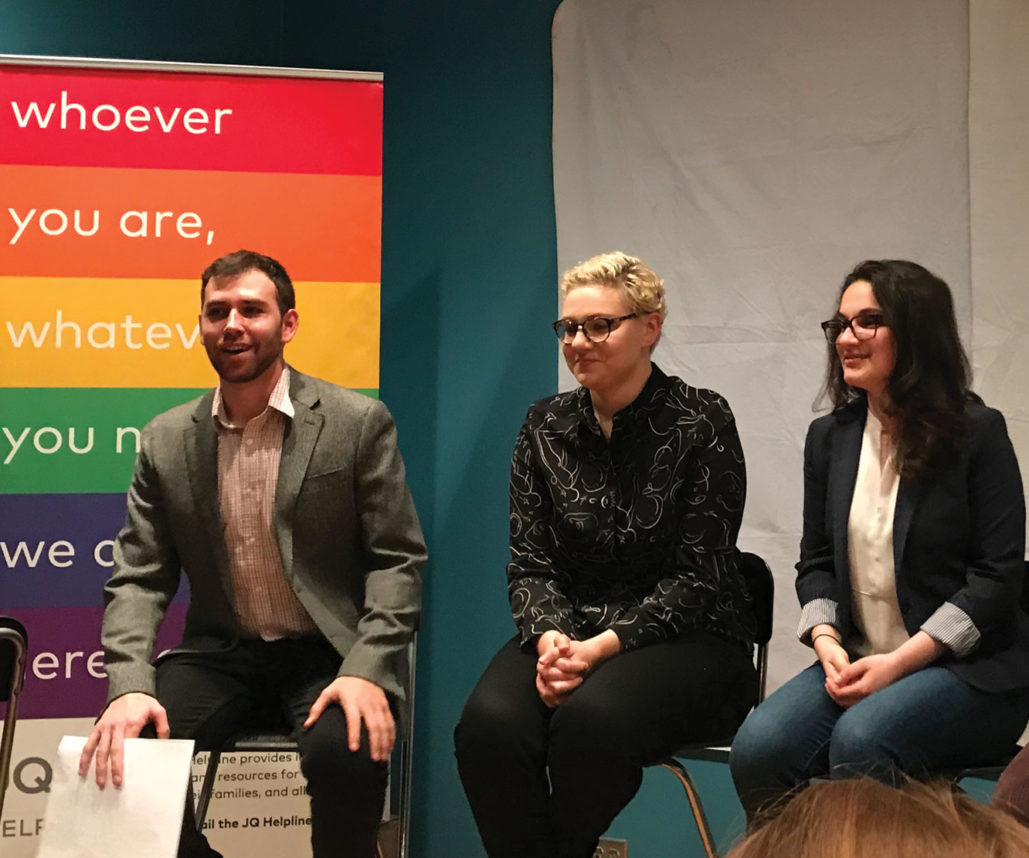
“Boxes,” produced by Shira Steiner and directed by Jeremy Borison, made its Los Angeles debut Feb. 26 at an event hosted by JQ International, the Jewish LGBTQ nonprofit, at its West Hollywood headquarters. 

Around 50 people attended the screening, which was followed by a panel discussion with Steiner, Borison, Dr. Shelby Weltz, who holds a master’s degree in Holocaust studies and researches the experience of lesbians in the Orthodox Jewish community, and Rebecca Katz, a founding member of 3G @ LAMOTH, an organization comprising grandchildren of Holocaust Survivors.

The film is based on Steiner’s grandmother’s life, and follows the relationship between a Holocaust survivor and her granddaughter. The grandmother is hiding a secret marriage that took place before the war while her granddaughter is hiding that she is gay. 

Steiner learned about her grandmother’s prior marriage after her grandmother died several years ago, when she discovered the marriage certificate.

Steiner, now 26, never had the chance to come out to her grandmother. In the film, she created a hypothetical scenario in which grandmother and granddaughter shared their secrets. Steiner said doing so provided a voice to many Jewish LGBTQ grandchildren. 

Steiner said the most important thing about the film wasn’t what the secret was, but the build-up of curiosity and wanting to share something difficult to a loved one. 

“It was clear to both of us from the beginning that the film would not solely be a coming-out story for either character, but rather a story about secrets and how we deal with our own,” Borison told the Journal. “Only after making the film did I realize how many people shared the same story as Shira.”

Panelists Weltz and Katz are also grandchildren of Holocaust survivors. They said their grandparents were also not always willing to share their stories. 

“Part of being Jewish and being part of the LGBTQ community, the film shows secrets can do a number on you in so many ways,” Katz said. “I am currently struggling with coming out to my grandmother because I am getting married in June.” 

Weltz, who describes herself as an ally, said that there is a “general perception of fragility among this population,” which is why many grandchildren don’t want to “rock the boat” after [survivors] have been through so much. She added a major reason many religious LGBTQ youth don’t come out is because of their grandparents’ concern with Jewish survival. 

“[The Holocaust] pushed the responsibility” of procreating, she said. “So when we think about gay families, we are not thinking of procreation. We are thinking it’s not possible.” 

Jason Eisner, 26, who attended the event, told the Journal he was grateful that his grandparents gave him their blessing when he came out to them. “A few months ago, I was debating [coming out to my grandparents] and my parents would ask, ‘Why now? They are fragile. What good will it do?’ I told [my grandparents] over Thanksgiving, and it went better than I expected. My grandfather said, ‘OK, I still love you the same as I did 10 minutes ago.’”

“Boxes” will be shown at several upcoming film festivals including the New Jersey Jewish Film Festival, Detroit Jewish Film Festival, Cleveland International Film Festival and Poland LGBTQ film festival. It will screen in Los Angeles at 6:30 p.m. on March 18 at a private theater in Studio City, followed by a Q-and-A. To RSVP,  email borisonj@gmail.com.

Holocaust Survivors and LGBTQ Grandchildren Connect in ‘Boxes’ Read More »

Shula Mozes: Helping At-Risk Young Adults

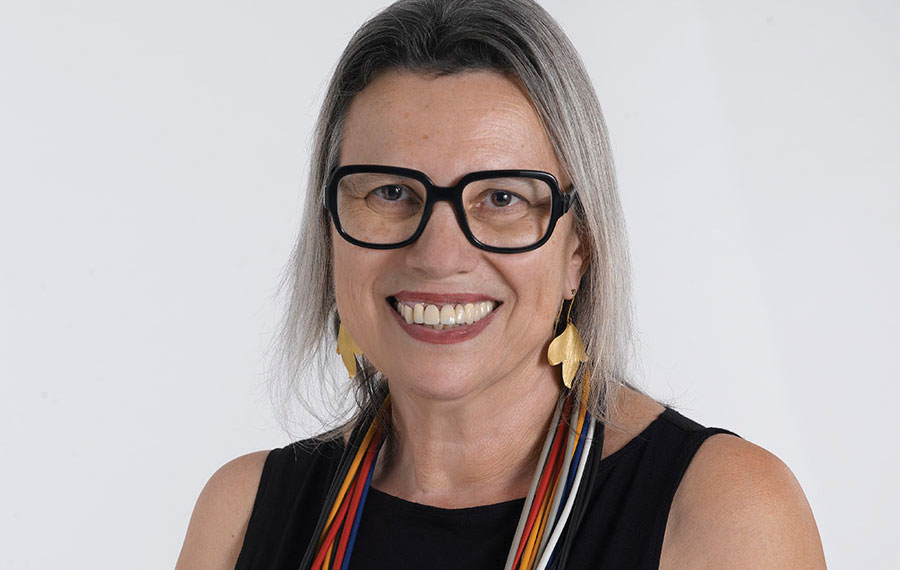
In 2001, Israeli philanthropist Shula Mozes established an organization called Lamerhav, to help at-risk young adults between the ages of 18 and 26 who had outgrown foster care or an at-home living situation. The organization is part of the Mozes Wolfowitz Foundation, which she co-chairs with her husband, Ze’evi.  

Speaking with the Journal via Skype from Israel, Mozes, 67, said, “Until the age of 18, children in foster care were taken care of by the state. At 18, suddenly everybody thought that they were already grown up and didn’t need support, but this is not true.”

Of Lamerhav, Mozes said, “We are like the family, but [also] the friends, big brothers, counselors. The organization also employs professionals to counsel the young adults participating in the program. They do personal, group and social counseling.”

Over the years, other organizations have come under Lamerhav’s umbrella, and two years ago, the Israeli government created a national program for at-risk young adults. 

The much-needed attention and resources for this demographic also caught the attention of the large philanthropic organization the Jewish Funders Network (JFN). Last year, JFN undertook a study on young adults at risk in Israel. It will release its Greenbook findings at its international conference in San Francisco on March 19, as well as at a private event in Los Angeles on March 21. (The JFN Greenbooks are topical, user-friendly research reports for funders.)

Mozes said bringing the Greenbook findings to the international conference is an opportunity to connect and cooperate with other organizations and people in the United States.

Citing Los Angeles’ Jewish Community Foundation supported programs for at-risk young adults, Mozes said, “It will be very interesting for them to read this. We can learn from them; they can learn from us.”

She added that the Greenbook research reveals that there is a great deal of philanthropy coming out of Israel. “All the time, Americans tell us, ‘We are helping Israel, but where are the Israelis?’ Well, the majority of [those giving to our organization] are Israelis.”

Mozes said she is hoping the Greenbook report will both highlight current and spur further collaboration between organizations and philanthropies active in the field of at-risk adults, and will provide an opportunity for more people to become involved. 

Born in Romania, Mozes’ family moved to Israel when she was 13. She graduated with a bachelor’s degree in chemistry and biochemistry from the Hebrew University of Jerusalem, and worked in computers, published an Italian cookbook, owned the first Italian deli and café in Tel Aviv from 1992 to 1998, and even studied to be an opera singer. The mother of four and grandmother of 10 said everything she has done in her life has prepared her to help others. 

“[In Judaism] there are eight degrees of giving, and one of the highest is to give without anybody knowing,” Mozes said. “There is a higher one. You have to talk about what you are doing in order to give inspiration to others.

“Today,” she added, “there are many organizations working in the field. We are all joining hands to make it succeed, so that all young adults in Israel who are in at-risk situations will be able to have a productive life, an independent life. And they will be able to take care of others like we took care of them.”

Correction: A previous version of this article stated Los Angeles’ Jewish National Fund (JNF) programs for at-risk young adults, instead of the Jewish Community Foundation supported programs. We regret the error. 

Shula Mozes: Helping At-Risk Young Adults Read More »

Screen Time Is Parents’ Top Concern

According to a January 2018 CommonSense Media/SurveyMonkey online poll, 47 percent of parents believe their children are addicted to mobile devices. Half of the 1,024 parents with children younger than 18 surveyed said they were concerned about how their child’s mobile device is having a negative effect on his or her mental health.

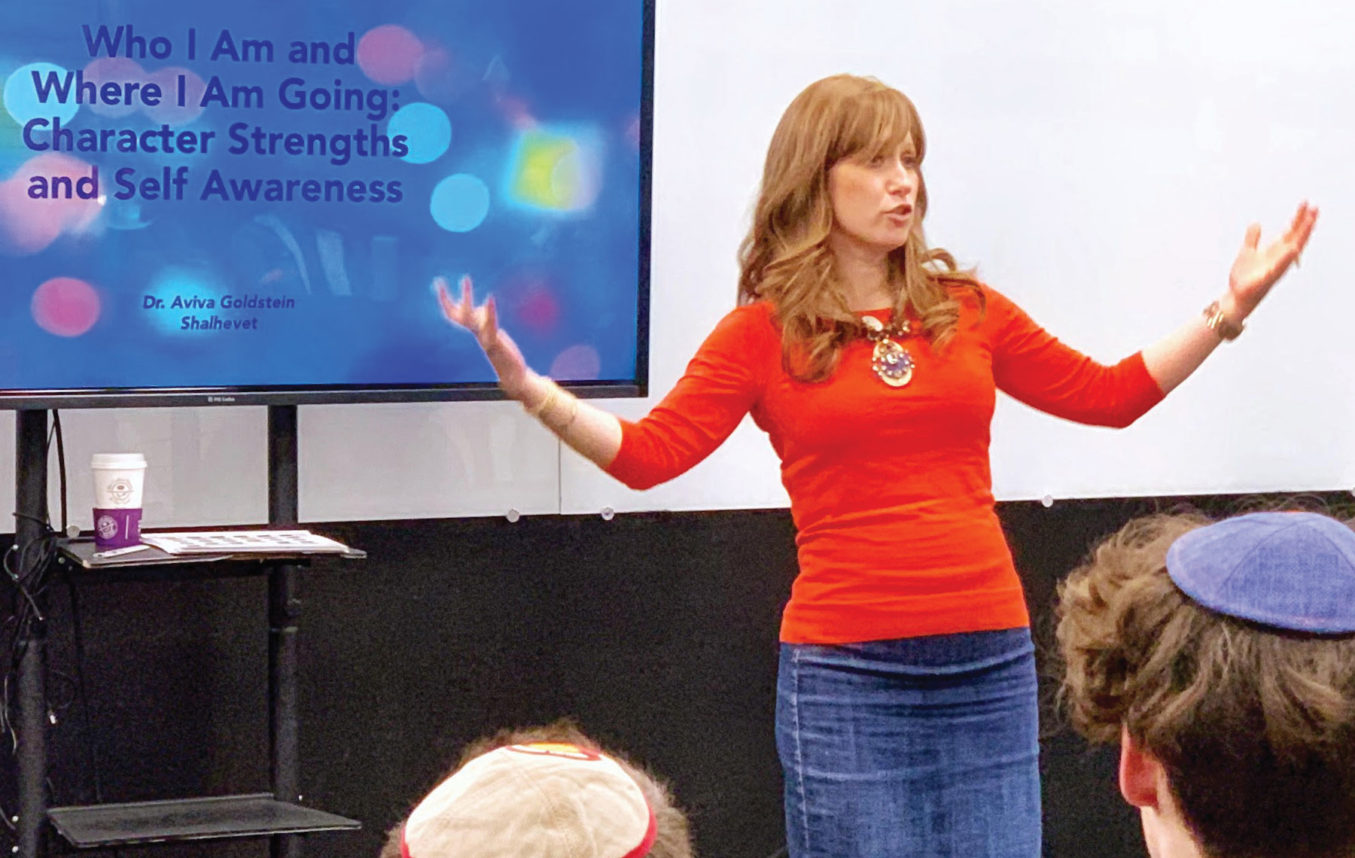
Hoping to address these concerns and other parenting issues in an increasingly digital world, Shalhevet High School and Young Israel of Century City brought Aviva Goldstein, a Jerusalem-based educator and family counselor, to Los Angeles last month. 

Goldstein was a scholar-in-residence for a week at Shalhevet, where she spoke with parents and children, and gave talks on issues ranging from screen time to adolescent religious development to how to raise resilient kids. 

Sarah Emerson, chief operating officer at Shalhevet, told the Journal the school decided to bring in Goldstein because of her background in Jewish education and positive psychology. “We appreciate her unique approach of translating research findings from positive psychology to her lay audience while demonstrating relevance of Judaism to contemporary life,” Emerson said. “Her energy, enthusiasm and infectious smile permeated the halls of Shalhevet this week and our entire community benefited.”

In a phone interview with the Journal, Goldstein said she decided to speak about screen time because it’s a topic that comes up most frequently with parents. “Of all the concerns that parents have now, this is the greatest question. No one really knows what to do about it. For better or worse, unfortunately a lot of work is on the parents themselves to see what kind of behaviors they’re modifying for kids. It’s hard to tell your kids to put their screen down when you’re constantly checking [your own].”

“Parents need to have an awareness that when a kid is acting up it’s not about the content of the argument but what’s happening beneath the argument.” — Aviva Goldstein

The tips Goldstein offered to parents include treating mobile devices like candy. Maybe no devices are allowed in the home, or they are locked in a cabinet or parents simply teach their children when it’s appropriate to use devices and trust that their children will use their best judgment. Some families don’t want anyone using phones as they enter the house after work or school. Others don’t allow their children to use their devices in their bedrooms or when the family is in the car. It’s all about creating no-phone zones, Goldstein said.

However, Goldstein did acknowledge that mobile devices are part of our everyday lives, and sometimes there’s no getting around them. Instead of being passive about children’s mobile-device usage, she suggested parents take a more active role. Examples include playing games with their children on these devices, or sharing with them interesting content they find online and encouraging their children to do the same. 

“You can use it as an opportunity to nurture the relationship between parents and children instead of throwing up your hands and saying there’s nothing you can do about it, because that’s not the case,” Goldstein said.

Along with the screen time talk, Goldstein touched upon the difficulties teens have with their religious development. She said that adolescents have a hard time with double standards, because they focus on justice and fairness and things making sense. They don’t know what to think when parents come down hard in certain areas but are very lax in others. For example, she said, parents may prioritize going to shul, but they still speak lashon-harah (derogatory speech about others). 

“I don’t think it’s my job to tell parents what they should be doing,” Goldstein said. “Most parents have a pretty good sense as to what works for their families. Parents need to have an awareness that when a kid is acting up, it’s not about the content of the argument but what’s happening beneath the argument.”

Screen Time Is Parents’ Top Concern Read More »

Swastika Flyers Found at Newport High School

Several flyers displaying swastikas were found at Newport Harbor High School, the same school whose students posted a photo of a swastika shaped out of cups.

According to the Los Angeles Times, school officials informed police about the flyers on March 10; there were around 10 flyers found around the school. No one has claimed responsibility for the flyers.

“We condemn all acts of anti-Semitism and hate in all their forms,” Principal Sean Boulton said in a March 13 statement. “We will continue to be vigilant with our stance, and the care of our students and staff.”

Students responded putting up messages preaching “kindness” around campus. Additionally, a task force was established at the March 12 Newport-Mesa Unified School District board meeting that will focus on creating a “positive culture” on campus, The New York Times reports.

The flyers come after a March 2 photo of several Newport Harbor students giving the Nazi salute, with a swastika formed out of cups underneath, circulated on social media. Two community town halls have been hosted since then on March 4 and March 6; the latter featured Eva Schloss, Anne Frank’s stepsister. The campus Young Republicans Clubs is also spearheading an effort to remove “all hateful symbols” around campus, according to the Orange County Register.

Swastika Flyers Found at Newport High School Read More »

Israel Education Re-Envisioned

Israel education is getting an overhaul thanks to the Atlanta-based Center for Israel Education (CIE) and its three-year initiative to bring resources and expertise to select day schools in the United States and Canada. 

A three-year grant from the Legacy Heritage Foundation is enabling the CIE — an offshoot of the Emory University Institute for the Study for Modern Israel — to work with nine schools, including Sinai Akiba Academy and Pressman Academy of Temple Beth Am. 

“Israel is an organic part of the Pressman fabric and Israel education is interwoven into our curriculum,” said Yonatan Rosner, Judaic Studies principal at Pressman. He pointed to the school’s rich Hebrew immersion program, school holiday celebrations and a 22-year-long Jewish Federation twinning partnership with the Magen School in Tel Aviv. Many Pressman families travel to Israel every year and many graduates study in Israel and even make aliyah, he added. 

“The grant with CIE allows our faculty and staff to further their knowledge and understanding about Israel and create a platform that allows further collaboration between Judaic and general studies around themes such as Israel’s people, places and environments; Israeli and Jewish identity; and Israel’s science, technology and society,” Rosner said.  

The program isn’t about creating a political bias to the right or to the left, said Tal Grinfas-David, the CIE faculty member who is working to boost Israel education in day schools across North America. 

“It’s not about narratives,” she said.  “It’s apolitical. We do the history. When you’re a historian, you look at as many primary sources as you can to identify what transpired without a monolithic narrative. Zionism wasn’t monolithic. Similarly, Arabs living in Israel before the state have many reactions to Jews living in the land.” 

The CIE provides sources, including maps and correspondence, Grinfas-David explained, to uncover as many authentic materials as it can to accurately tell what’s happened. “Providing students with these materials will better prepare them [to become] “informed consumers of information.”

We’re training teachers how to understand modern Israel’s history, and how to understand the approach to teaching apolitically.
— Tal Grinfas-David


The program is running in multiple cities including Detroit, Denver and Vancouver, in various educational settings and for various age ranges. This is why it’s “so important to create tailored professional development and resources,” Grinfas-David said. “We’re training teachers how to understand modern Israel’s history, from Zionism to the present day, the connection of people to the land and how to understand the approach to teaching apolitically, allowing students to access the primary sources.”

Grinfas-David said she leaves it up to each school’s administration to decide how the grant will be used (which may include in-person or virtual trainings) and works with the teachers to help them infuse their curriculum with information about modern Israel, bringing in ideas from STEM and innovation. One example of a lesson is a comparison between the American and Israeli declarations of independence, especially the presence or absence of God in the documents.

The Pressman faculty learned with Grinfas-David in the fall and winter of 2018, and another professional development seminar took place at the end of February. 

Rosner said the CIE grant will enable Pressman leadership to examine “how we engage students in understanding the past and present state of Israel and its global connections.” 

Pressman teachers Julie Schimmel and Meghan Stein Hart attended last June’s CIE conference and are now CIE coordinators at the school for kindergarten through eighth grade, identifying what is being taught already as well as opportunities for integration and curriculum development in the years ahead. 

“After having attended CIE twice, I am grateful for the education that they have provided,” said Schimmel, who teaches third-grade Judaic and Hebrew immersion studies. “They are masters at providing learning about Israel to enrich yourself and also learning how to implement Israel learning utilizing best practices. I would attend CIE every summer if I could.”

Israel Education Re-Envisioned Read More »

Mail-Order DNA Test Reveals 60-Something Women Are Half Sisters

Last year, 63-year-old Agoura Hills resident Miriam Carmona took one of those popular mail-order DNA tests. She was hoping to maybe discover relatives on her mother’s side. Originally from Poland, Carmona’s mother was one of the only members of her family who survived the Holocaust. 

Meanwhile, across the country in New Jersey, 61-year-old Melinda Wagner took a similar test. Wagner was adopted when she was 4 months old through the Jewish Federation of Northern New Jersey. She took the DNA test hoping to find out more about any potential medical history she might have.  

On Oct. 1, 2018, the women learned they shared 26.8 percent DNA and are, in fact, half-sisters.

In a Skype interview with both women, Carmona told the Journal their father, Yurek Litmanovich, was part of the last group to escape the Warsaw Ghetto via sewage lines. He eventually settled in Tel Aviv, where he and his wife raised their family, before later moving to Los Angeles. 

“Our father was an amazing guy: generous, philanthropic, loved by everybody,” Carmona said. However, he died in 1979 at the age of 57. 

“The women point to their bowlegs and bouncy, almost dance-like way of walking, their unfortunate shared susceptibility to migraines, and ears that stick out.”

When Wagner came to Los Angeles to meet her half-sister in person for the first time late last year, their first stop was their father’s grave at Hillside Memorial Park in Culver City. Carmona is convinced that had their father known about Wagner’s existence, he would have wanted her in his life.

Stories about long-lost relatives turning up or unknown relatives coming into each other’s lives don’t always go smoothly. But Carmona and Wagner have completely embraced each other, as have their extended families. 

In January, Wagner, her husband, and oldest son flew to Los Angeles for the wedding of one of Carmona’s twin sons at Valley Beth Shalom in Encino. Wagner’s younger son, a student at Cal State Fullerton pursuing his master’s degree in music performance, has grown close to Carmona and her husband. They even gave him a key to their house. And although the women “discovered” each other only a few months ago and had no inkling the other existed before that, they have formed a fast friendship. They have spoken every day since they learned of each other’s existence and are looking forward to getting together again this spring.

WATCH: Wagner and Carmona Meeting at the airport.

“It’s so amazing,” Carmona said. “The connection I feel with Melinda is almost spiritual. She’s like my soulmate.”

“I feel like we’re twins separated at birth,” Wagner added.

The women point to their bowlegs and bouncy, almost dance-like way of walking, their unfortunate shared susceptibility to migraines, and, Carmona said, “ears that stick out.” They even share similar tastes. A video of them meeting for the first time at Los Angeles International Airport shows them dressed nearly identically, as if planned (it wasn’t). In addition, both have dedicated their lives to helping others. Carmona is a recently retired school psychologist; Wagner is a dentist who does a lot of volunteer dentistry.

For Wagner, the connection has provided some answers. She always wondered how she and her husband parented a son with perfect pitch who became an accomplished bass clarinet player when both of them are, in her words, “tone deaf.” Then she walked into her sister’s home and saw, in the corner of the living room, a piano, a didgeridoo and a bass clarinet. Carmona has played multiple instruments over the years and plays the piano by ear. One of her sons played the clarinet and still picks it up on occasion.

Carmona too has made discoveries. “I always assumed my music gift came from my mother’s side,” she said. “Meeting Matt [Wagner’s younger son] and his giftedness, I realized it is from our father’s side.”

Carmona admits to moments of sadness in the wake of the discovery of her sister. “I wish she was in my life for at least the last 20 years,” she said. “We could have done more activities. But I can’t look back. I have to look forward. Everybody is telling me, ‘Your timing is perfect.’ ”

Both women said they are incredibly grateful that they finally met. “When people ask me how I describe my sister,” Wagner said, “I say, ‘take all the nice things about me. Take away the anxiety. Take away the impulsivity. Just imagine me without my faults, and that’s my sister.’ ” 

And in true sisterly fashion, Carmona responded, “It’s so not true.”

Mail-Order DNA Test Reveals 60-Something Women Are Half Sisters Read More »