2019 Golden Globe Awards – Red Carpet
2019 Golden Globes Awards – Red Carpet
2019 Golden Globe Awards – Red Carpet Read More »

2019 Golden Globes Awards – Red Carpet
2019 Golden Globe Awards – Red Carpet Read More »

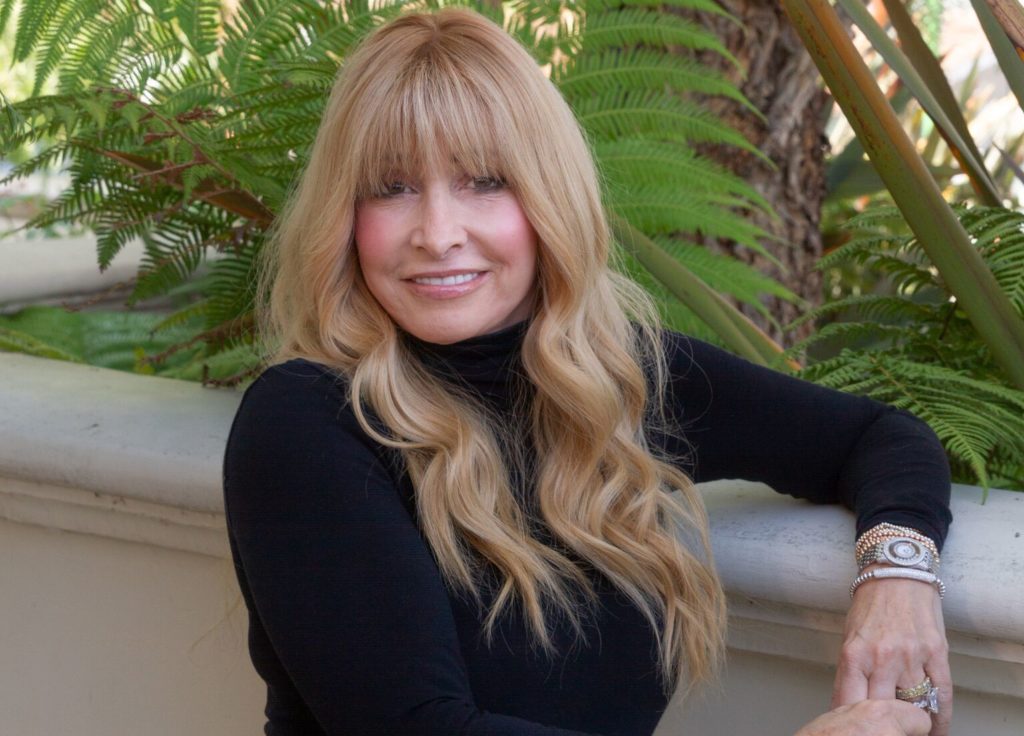
Michele Rodri is a powerhouse. The 83-year-old French Holocaust and cancer survivor spends her time engaging in philanthropy, connecting teens with survivors, sharing her story and enjoying life.
Her husband of 47 years, Jack, survived Bergen-Belsen.“He and I had one policy,” Rodri told the Journal. “We were not going to be victims. We were going to be survivors. And we lived like survivors.”
When Jack died in 2004, Rodri, who already had been serving her community (she spent 30 years assisting B’nai David-Judea founding Rabbi Philip Schroit and fundraised for the Israeli Cancer Research Fund), amped up her philanthropy efforts. She started speaking about her Holocaust experiences at local schools and at the Los Angeles Museum of the Holocaust (LAMOTH).
“I put all of my energies into this with love,” she said, “because to me it’s not work, it’s my heart doing the right thing.”
At LAMOTH, Rodri met then-Museum Director Samara Hutman. The two became good friends. When Hutman went back to work at the Righteous Conversations Project, she asked Rodri to take part there, too. Of all the programs at the Righteous Conversations Projects, Rodri holds a special place for the Remember Us Holocaust B’nai Mitzvah Project.
“When the [students] have their bar or bat mitzvah, at the end of the service, they take the name that I provide from Yad Vashem (The World Holocaust Remembrance Center in Israel) of a child that was killed,” Rodri said.
In April 1942, at the age of 7, Rodri was playing in the street with friends when Nazis threw her into a truck and took her to a selection camp. Three months later, her brother, Abel, posing as an SS officer, rescued her and hid her in a convent. She spent 14 months there and another 14 months living with a family on a farm.
Rodri, her parents and two of her three brothers survived the war. Her youngest brother, Maurice, was killed in Auschwitz when he was 17.
“I have one philosophy. If I am put against the wall, I cannot back up, so I have to go forward.”
Last year, at his bar mitzvah at Valley Outreach Synagogue, Asher Mehr memorialized Rodri’s brother and asked guests to sponsor a fundraising concert in Maurice’s name. It’s something he plans to do every year.
“Asher is a very talented young man who is a musician too,” Rodri said. “At his bar mitzvah, he [recalled] my brother. It was very moving.”
Three years ago, Rodri faced another battle when she was diagnosed with stage 3 lung cancer. “I have one philosophy,” she said. “If I am put against the wall, I cannot back up, so I have to go forward. And this is what I did with my cancer, too.”
Rodri has been cancer-free for 18 months and said she couldn’t have done it without her friends and family. Her son Kurt, daughter-in-law Samantha and 20-year-old grandson, Jacob David, “are my rock.”
When not volunteering or speaking, Rodri runs errands, goes to theater, movies and classical music performances and reads. On Tuesdays, she attends a French poetry class and plays mah jong once a week.
“I try to do as much as I can in a day,” she said. “If you stay home, particularly at my age, you become wilted.”
Read more about our 2019 mensches here.
Michele Rodri: Double Survivor Read More »
Advertising executive Meryl Kern had just celebrated her one-year wedding anniversary when she was diagnosed with breast cancer in 2015. “Breast cancer does not run in my family and I don’t have the BRCA gene. It really came as a shock,” Kern told the Journal. A double mastectomy, 18 rounds of chemotherapy and 36 rounds of radiation at Cedars-Sinai Medical Center over two years erased all evidence of cancer, but the emotional scars remained.
“In the beginning, I was angry at God. I always did good things. I thought, ‘How could God do this to me?’ I felt that God had let me down, and I battled with that,” Kern said. Her rabbi at Beit T’Shuvah helped her realize that God got her through her ordeal. But she still searched for meaning and purpose. She found it by continuing the tradition of philanthropy her parents had in instilled in her by helping others who have cancer. She established the Meryl Kern Survivorship Program at Tower Cancer Research Foundation to help patients cope post-treatment.
“I faced so many difficult issues following treatment and thought, ‘If I’m facing them, other cancer patients are facing them.’ I knew there were other women that needed help and support,” Kern said, noting that the program offers educational and discussion groups and underwrites wigs for women who can’t afford them.
Kern knows firsthand how important appearance is to women who have lost part of their femininity to surgery and treatments that rob the body of estrogen. “I didn’t feel good about myself. I didn’t like what I saw in the mirror,” she said.
“I believe God wanted me to do more in the world, and I’m trying to do more. That’s the legacy I want to leave.”
Her solution was to put on a wig, makeup, a dress and high heels for her treatment sessions. “It was my way to control part of my life,” she said. “When you look good, you feel good. It’s not about vanity. It’s about being able to look at yourself and say, ‘I look good,’ and gain the confidence that you lost.”
The desire to improve her appearance motivated her to launch a new business called Liftique, a nonsurgical, minimally invasive procedure that rejuvenates and tightens the skin. Kern donates a portion of the revenue to fund cancer research and provides free procedures to women who can’t afford them. “The more money I can make, the more I can give back,” she said.
Kern explained that philanthropy has always been a part of her life, thanks to her mother, who worked for the Reiss-Davis Clinic at Vista Del Mar Child and Family Services. Philanthropy is her greatest joy in addition to her son, daughter and four grandchildren.
Having gone through a devastating illness and survived, “I’m trying to learn to live with my new normal,” she said. “I’ve become stronger in my belief to give back. I believe God wanted me to do more in the world, and I’m trying to do more. That’s the legacy I want to leave. Even if it’s a dollar, you always give back. I teach my children that and they in turn will teach their children.”
Read more about our 2019 mensches here.
Providing Cancer Patients With Hope and Support Read More »
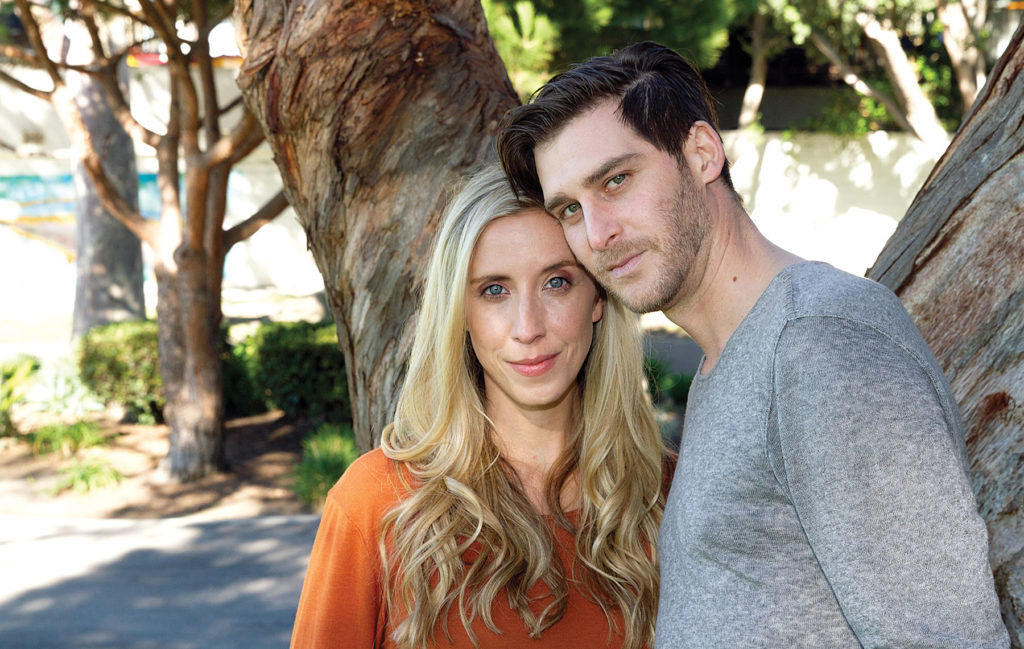
On the last Thursday of every month, homeless children in Los Angeles have the opportunity to attend something many kids take for granted: a birthday party. The parties are the brainchild of Mary “Mandie” Davis and Ari Kadin, founders of the nonprofit Worthy of Love. Since January 2013, the husband and wife have been throwing birthday parties for kids on Skid Row to make them feel celebrated and loved.
What started in the family room at Union Rescue Mission with 15 or 20 children is now a huge birthday blowout for 270 children, ranging from newborns to 18-year-olds, on the Mission’s rooftop.
“The parties are amazing,” Davis told the Journal. “Everyone gets to celebrate their birthday once a month.” The parties include a DJ, dancing, airbrush artists, a photo booth, face painting, glitter tattoos, party favors, cake and pizza. “It’s like a monthly bar mitzvah,” Kadin added.
“We see families that have the look of trauma on their faces,” Davis said. “And what we try to do is lighten that load. The kids have the best time. There’s joy and laughter; they can be a kid again. But it’s bittersweet because there are so many of them.”
“One of my dreams is to have Worthy of Love in baseball stadiums nationwide, and do this for the 2.5 million children who are experiencing homelessness in our nation.” — Mary Davis
A Jew by Choice, Davis, 37, is from a Southern evangelical background, while Kadin, 36, is the son of an Orthodox rabbi from Brooklyn. He is a business manager at a luxury living apartment complex, and Davis is the “mayor” at Kidville Brentwood, a preschool alternative, and in the MBA program for nonprofit management at American Jewish University. She will graduate in 2020.
The two met in the summer of 2010 while volunteering on Skid Row. Helping homeless individuals has been Davis’ passion since she was a little girl. “I fell for Ari’s tender heart,” she said. “He has so much compassion.”
Their daughter, Zivah, was born in 2017. “She comes [to the parties] and dances and laughs and brings a lot of light to a dark world on Skid Row,” Davis said. “We named her Zivah, which means radiant. We didn’t know she’d be born during the solar eclipse, but it was bashert.”
Davis has big plans for Worthy of Love. “One of my dreams is to have Worthy of Love in baseball stadiums nationwide, and do this for the 2.5 million children who are experiencing homelessness in our nation,” she said. “Another is to start a social enterprise, where I can employ teenagers who are experiencing homelessness to do parties for kids all over Los Angeles.
The ultimate goal, Davis said, is for there to be no need for the parties because all children have homes.
“One of those things that’s always been instilled in me is that as a Jewish person, it’s extremely important to see society as a whole,” Kadin said, “and make sure we are giving back and that those who are less fortunate are given a helping hand.”
“The Jewish community for me is all about love and peace and togetherness and family,” Davis added. “I feel like that joy and peace that I feel on Shabbat, where I don’t have to worry and stress, that is what I want for these kids.”
Read more about our 2019 mensches here.
Blowout Birthday Parties for Homeless Children Read More »
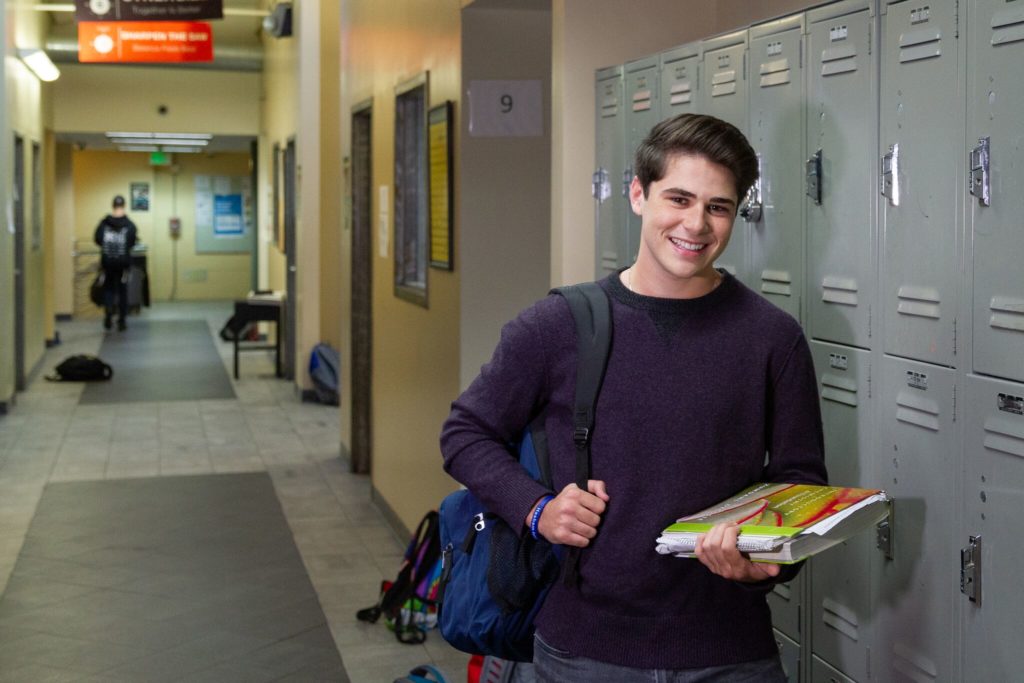
While Jake Schochet volunteers with a variety of organizations, he said ETTA was his “gateway drug” that led to his involvement with other groups.
Four years ago, the 17-year-old Valley Torah High School senior began volunteering with the nonprofit that provides a spectrum of services to people with autism, Down syndrome and other intellectual and developmental disabilities. He is the president of the ETTA youth board and spends his summers at Summer@ETTA, which offers recreational activities to intellectually and developmentally disabled people.
Schochet said the people who attend the summer program learn valuable independent living skills and he has come to know that the special needs community is capable of much more than is widely believed.
“It just shows me that everyone has so much potential,” he said. “A lot of people think, ‘OK, they can’t necessarily do certain things, we’ll help them out,’ but you can have real conversations with them, and it just showed me everyone has so much potential and it’s sad they’re not necessarily given the opportunity to express it and to find themselves.”
Schochet also volunteers with Chai Lifeline, which works with children battling cancer and other serious illnesses. One evening a week, he spends time with the sibling of a Chai Lifeline child because parents cannot always give these siblings the attention they need. Schochet visits a family’s home and hangs out, does homework and talks with the sibling.
“When I see something that is not necessarily right and there should be a change, I’m not afraid to step up and try to make a difference.”
As the head of the North Hollywood chapter of Bnei Akiva, a religious Zionist youth organization, Schochet promotes positive relationships between Israel and his peers. In March, he will take part in the Jerusalem Marathon on Team Shalva, raising awareness for the Israeli organization that serves people with developmental disabilities.
Schochet also is a blood drive coordinator for the American Red Cross. He has helped organize blood drives at his school and at Shaarey Zedek synagogue in Valley Village.
“I think it is very important to give back to everyone because you never know who is going to need to give back to you one day,” he said.
At his school, Schochet is both class president and the founder of the Chesed (kindness) club. In 2017, he led an effort to ship toothbrushes, shampoo and toiletries to Hurricane Harvey victims.
Next year, he plans to study at a yeshiva in Israel. Afterward, he will attend college and is considering a career as an early-intervention therapist for young people with developmental disabilities.
The youngest of five siblings, his mother is a teacher at Gindi Maimonides Academy and his father is an administrator at an assisted living facility. He grew up enjoying Friday night dinners with his family and taking surfing lessons with them in Santa Monica.
Schochet credits his father, a certified emergency medical technician and a volunteer with the Jewish emergency response organization Hatzolah, and his grandmother, a former nurse, with instilling in him the importance of giving back to others.
“When I see something that is not necessarily right and there should be a change,” he said, “I’m not afraid to step up and try to make a difference.”
Read more about our 2019 mensches here.
Class Pres and Special-Needs Advocate Read More »

Donating phones and laptops aren’t the first things people think of when wanting to give to the homeless. But Heather Wilk realized technology was a necessity and made it a priority to use technology to help homeless teens.
Wilk is the executive director of Straight But Not Narrow (SBNN), a nonprofit founded in 2011 that provides resources to homeless LGBTQ youth. Forty percent of homeless youth identify as LGBTQ, according to Wilk.
“We wanted to be more hands-on,” Wilk told the Journal. “Not just talk about awareness but do something about it and actually help them.”
To this end, SBNN takes donated cellphones and laptops, refurbishes them and gives them to homeless teens and young adults as an incentive to connect with shelters and LGBTQ support centers. SBNN also provides them with tech courses and resume services.
“I think we take for granted the digital world,” Wilk said. “This isn’t a luxury anymore. It’s a necessity to have a phone now. The phones are filled with information [including apps, resources and hot spots] so [teens] will always have a safe place to go to and a number to call if they need.”
Wilk, 33, said that many of the teens she’s worked with haven’t met someone “like them” until connecting on social media. To date, SBNN has distributed 825 devices and reached more than 35,500 LGBTQ teens all over the country. Among the 12 centers it works with, SBNN has partnered with the Trevor Project and its resources to help bridge the divide for teens who feel they don’t belong.
“I think we take for granted the digital world. This isn’t a luxury anymore. It’s a necessity to have a phone now.”
“High school is already an alienating place,” Wilk said, “and if you don’t have someone out there looking out for you, to mentor you, you can feel really lonely. Their first real communication that’s safe with someone is through the internet, especially if you are in a rural area. You need the device to connect with others.”
Wilk, once part of the small Jewish population in Oklahoma (in school, she’d play teacher and educate her classmates on the Festival of Lights), knows what it’s like to feel different.
“I think growing up in Oklahoma as a Jewish person, you immediately felt like an outsider, so I’ve always empathized and clung to people who maybe don’t feel they fit the norm,” she said. “I always loved being able to help out if I can. I think allies are really important. We all need to be allies for one another.”
The need to supply homeless teens with solar charging portals for phones was one of the most valuables pieces of feedback Wilk received. Since teens on the street rarely have regular access to electrical outlets, they need to be able to use a charging port that generates its own power.
“I think familiarity and knowledge changes everything,” she said. “Once you are more informed, you will be more accepting and empathetic, and so I [want to] do what we can to get people to understand what’s going on.”
Wilk said her compassion for others comes from her father, Larry. “He puts everyone’s needs before his own. He was always welcoming and grateful, and happy to have any of my friends come over no matter who they are. I think [from] that open-door policy, we learn about other people and then become better people ourselves.”
Read more about our 2019 mensches here.
Empowering Homeless Youth With Technology Read More »

Iran has been holding a United States veteran hostage since July, according to media reports.
The imprisoned American, 46-year-old Navy veteran Michael White, had been visiting his girlfriend in Iran in July and never returned home. White’s mother, Joanne, told The New York Times that the State Department had told her three weeks prior that her son was being held hostage.
“I’m very worried about his health,” Joanne told CBS News. “He just got over cancer and I’m worried about his condition. It’s very scary to me.”
White had been undergoing chemotherapy and radiation treatment for a neck tumor. He also has asthma.
Ivar Farhadi, a cyberactivist who had been serving in prison at the same time as White, told CBS that “White was suffering psychologically and was being held in a ward with dangerous criminals.”
A State Department official told The New York Times in an email, “We are aware of reports of the detention of a U.S. citizen in Iran. We have no higher priority than the safety and security of U.S. citizens abroad. Due to privacy considerations, we have no additional information to provide at this time.”
White is one of four American hostages currently being held in Iran. According to CBS, sources have told them “that Iran is holding the Americans to try to extract concessions such as those received in a deal reached with President Obama,” an apparent reference to the $1.7 billion the Obama administration sent to Iran in exchange for the release of five American hostages.
Iran Has Reportedly Been Holding a U.S. Veteran Hostage Since July Read More »
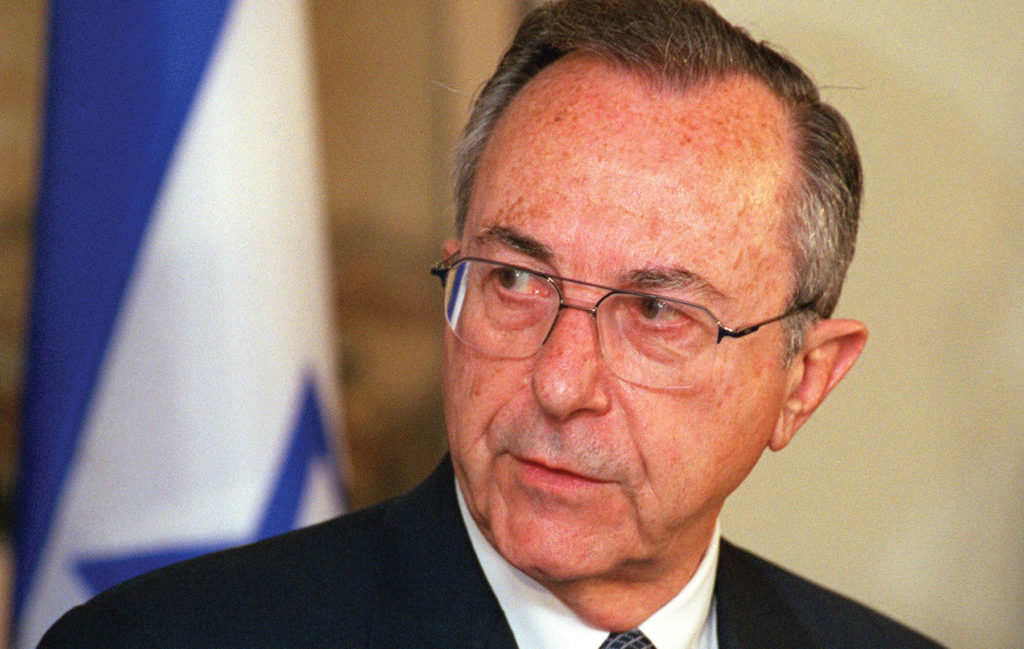
Moshe Arens, who died on Jan. 7 at 93, was one of the finest politicians in Israel’s history. He served as foreign minister and several stints as defense minister in the 1980s and ’90s. He discovered and groomed current Prime Minister Benjamin Netanyahu (but don’t hold it against him). He was gentle, wise, caring and optimistic. He loved Israel, even though he was not born in Israel. Perhaps he loved it as only someone who was not born in Israel can. We last spoke three or four months ago. The topic was his idea for a book he thought about writing.
He was a thoughtful man, and his thoughtfulness often led him in directions not in line with a party or a government of which he was a member. As news of his death saddened me, I contemplated some of these instances. While he was still involved in public life, Arens was a member of the polite yet stubborn opposition to some of Israel’s most crucial decisions. Looking back at his actions, one can imagine an alternative history for Israel. A “what if” history. I think he would appreciate such intellectual exercise.
What if Arens had the upper hand in the late 1970s, when he was part of a small faction opposing the peace agreement with Egypt? He never retracted his opposition to the Camp David Accords. Yes, he would say, peace with Egypt has its many advantages. And yet Arens believed that Israel’s decision to hand back all of Sinai to the Egyptians, to the last mile, was a strategic mistake that still haunts Israel. It was a precedent from which Israel can’t quite release itself. If Egypt got back the territory, why not Syria in the Golan Heights? Why not the 1967 line in the West Bank? Arens believed that Egypt didn’t have many cards at that time — that then-Egyptian President Anwar Sadat couldn’t initiate another war if his maximalist demands were not met. He voted no. What if?
More than a decade later, Arens demanded action but was rebuffed by his boss, Prime Minister Yitzhak Shamir. On Jan. 7, when veteran politicians reminisced about their relations with Arens, Aryeh Deri, the leader of the Sephardic-Charedi party Shas, said they were shouting at each other. Arens? Shouting? Apparently, this well-mannered man could do that when the stakes were high. And in the early ’90s, the stakes were high. The United States just launched operation Desert Storm against Saddam Hussein’s Iraq, and missiles were raining on Israel from the skies.
“Moshe Arens believed that Israel’s decision to hand back all of Sinai to the Egyptians was a strategic mistake that still haunts Israel.”
But there was a problem: The United States was leading a well-forged coalition of many nations — including Arab nations — against Iraq. And its leaders — President George H.W. Bush, Secretary of State James Baker and Secretary of Defense Dick Cheney — wanted Israel to sit out this one, so as not to hand the Arabs a reason or an excuse to abandon the coalition. In other words: Israel was asked to get beaten up by the bully – Iraq – and do nothing.
This was not an easy request to swallow. Israel is not used to letting its neighbors attack it without paying a price. It is not used to letting others (the coalition) guarantee its security. Arens believed that Israel should act. Last year, a recording of an interview with then-Chief-of-Staff Gen. Dan Shomron was released in which Shomron describes how Arens — then the defense minister — approved a plan of attack. Arens didn’t realized that Shomron merely intended this to be a presentation of what Israel could do, not of what Israel ought do. Arens hurriedly called Cheney to warn that Israel was about to send in the air force. But in the cabinet meeting, the Israel Defense Forces took the the Americans’ side, and Arens, with several other ministers, remained in the minority.
Would the international coalition against Iraq collapse? Arens believed until his last day that Secretary of State James Baker was bluffing, and that the coalition would have survived an Israeli counterattack. Could Israel launch a successful operation against the scud missile launchers in western Iraq? Many military analysts have doubts. Was an Israeli response essential to maintaining its deterrence against Arab belligerents? It’s impossible to know.
What if? Arens insisted that his positions concerning Egypt and Iraq stand the test of time, but didn’t waste his days rehashing past debates. When he celebrated his 90th birthday, he said that all his dreams came true. As I mourn his passing, I envy his peace of mind.
What If Arens Had His Way? Read More »

Ahava Emunah Lange was diagnosed with late-stage ovarian cancer in 2012. In the years since, she has tried a vast array of treatments, ranging from chemo and radiation therapies to immunotherapies such as Keytruda to taking part in experimental drug testing. By last summer, the cancer had metastasized throughout her body and Lange had come to terms with the fact that she was going to die.
“I was on the brink of death. I was ready to accept it and didn’t want to drag it out,” she said.
Then, the faintest sliver of hope came from the most unlikely of places: Turkey. Lange’s father, Dr. Martin Grogin, himself a cancer survivor, discovered Chemothermia, an Istanbul-based clinic that endorses a metabolic approach to treating cancer combining the popular ketogenic diet with hyperthermia, hyperbaric oxygen and low-dosage chemotherapy sessions.
The results have been nothing short of miraculous. After just two months of treatment, a CT scan showed 70 to 80 percent fewer tumors in Lange’s body. Her doctors and her radiologist were blown away and told her to continue.
However, the costs are steep. Two weeks out of the month, Lange travels back and forth to Istanbul with her father for treatment. She is then given a 12-day respite before starting the process again. Then there is the physical toll on her body. Lange describes the hyperthermia as “torture.”
The treatment is also expensive. Each round costs close to $14,000, and that’s before other expenses such as flights and hotels. A crowdfunding campaign was launched and to date, nearly $117,000 has been raised by 1,417 people. Lange puts it bluntly. “The only reason I am alive right now is because of the donations. The unbelievable generosity and love and care of friends and strangers.”
“I don’t have it in me to hold onto anger and sadness all the time. It’s not going to do me or my family good.”
Lange’s reasons for agreeing to be interviewed date back to 2012 and her crushing diagnosis. For several months, she had been pestering doctors that something wasn’t right. She ate well, exercised regularly and yet she was feeling like her energy was constantly depleted. Even after she voiced her fears that perhaps it was cancer — and noting that her grandmother had died from the disease at a young age — doctors rationalized that, as the mother of five children, it made sense she was feeling tired, and that perhaps she needed a boost of vitamin D.
The next 6 1/2 years could have turned out very differently if Lange’s concerns had been taken seriously. “That can never happen again,” she said. “If you feel something is wrong, never let a physician blow you off.”
But while she’s hoping to raise awareness among her peers and medical professionals, she doesn’t hold a grudge. “I don’t have it in me to hold onto anger and sadness all the time. It’s not going to do me or my family good.”
Lange is cautiously optimistic about the future. “There’s a certain look of a person who’s dying,” she said. “Before the [current] treatment, I had that look. But now everyone who sees me says, ‘Oh my gosh you’re a different person.’ I look alive.”
To donate to the campaign, visit www.gofundme.com/ahava-emunah-lange-cancer-treatment.
A Woman of Unshakable Faith Read More »
In third grade, the social studies teacher at the Hebrew day school I attended flipped off the lights and switched on an 8mm projector. Looking back, I suspect he didn’t trust his words to adequately convey what we were about to see.
The newsreel, the kind my parents watched in movie theaters at the end of World War II, showed scenes from the liberation of Auschwitz.
Images from that film stay with me to this day — such as the man with sunken cheeks, bones sticking out under his striped prisoner’s uniform staring blankly into the camera.
I knew that his eyes would haunt me for the rest of my life. I wondered what he might have said if given the chance.
Thirty years later, I stood inside Grand Central Terminal in New York as the nonprofit I founded, StoryCorps, opened its first booth. Its goal was to encourage everyday people to interview a loved one and to celebrate the stories we can find all around us when we take the time to listen. Since that day, more than 500,000 Americans have recorded StoryCorps interviews, each of which will live forever in the Library of Congress.
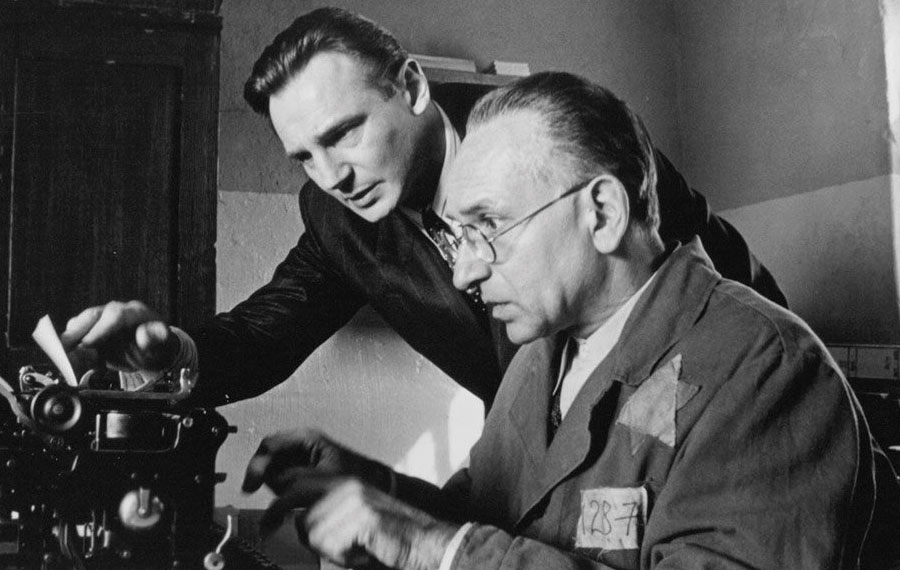
As we mark the 15th anniversary of StoryCorps, I’m reminded that it’s also the 25th anniversary of another effort to illuminate, honor and preserve the human story: producer-director Steven Spielberg’s masterpiece “Schindler’s List.”
My appreciation for the film and for Spielberg is rooted in his belief that there are few actions more important than reminding people that their lives and stories matter. That they won’t be forgotten. That they are not alone.
I spent the days leading up to Thanksgiving debating whether it was time for my 10-year-old son to watch this film.
My son has been asking me questions about the Holocaust for years, but it’s hard to know when the time is right for your child to have that moment, the one I’d had all those years ago.
So while thinking about “Schindler’s List,” I shared with him a StoryCorps interview. In it, Debbie Fisher asks her father to tell her about Auschwitz. Her father had always downplayed his experiences there as a child, insisting that she not “knock on the door.” But when he was gravely ill in the hospital, she knocked one last time. He said, “I’ll let you in, but if I let you in this room, you will never, ever get out. Do you want to come in?”
After a few days, my wife and I decided it wasn’t the right time to let our son in the room.
But late one night recently, I sat down and screened the film alone. As I watched Amon Goeth stand on his balcony and casually pick off Jews with his rifle, I was transported back to my third-grade classroom.
I thought about the word Untermenschen — subhuman — which the Nazis used to call Jews,
blacks, the disabled — anyone who posed a threat to an Aryan “master race.” I thought about how they branded people in concentration camps with numbers, not names.
Which is to say: They didn’t think of them as human beings at all.
This is why, 25 years after its debut, “Schindler’s List” matters more than ever.
Rabbi Abraham Joshua Heschel once said, “Words create worlds.” He would remind his children that the Holocaust didn’t start with the gas chambers. It began with words. With Hitler putting calculated, dehumanizing speech out into the ether.
In the United States today, words of loathing and disgust directed at fellow human beings — whether they be asylum seekers or those we disagree with across political divides — are in the air as they have never been in my lifetime. Something dangerous and toxic has been unleashed in this country and it demands our attention.
Let’s be clear. Are we in 1930s Germany? No.
Are we treating one another in ways that could lead us further down an extremely perilous path? Unfortunately, yes.
With StoryCorps’ new initiative, One Small Step, we are, for the first time, putting strangers across the political divides together in StoryCorps booths, not to talk about politics, but to be reminded of the fact that we are all living, breathing human beings. We hope to convince our countrymen that it is our patriotic duty to recognize the humanity in people who we may have regarded as “the other.”
So far, One Small Step has been working in all the ways StoryCorps hoped it would. Looking another human being in the eyes and asking, “Who are you?” “What lessons have you learned in life?” “How would you like to be remembered?” reminds us that listening is an act of love. Coming face to face with the stories of strangers we may have feared — or even hated —reminds us of our shared humanity.
History has taught us what can happen when we forget those inviolable truths. History also has shown what can happen when the world hears the voices of the most vulnerable among us, as they did a quarter of a century ago in Spielberg’s film. Numbers became names.
Soon after the release of “Schindler’s List,” Spielberg created the Shoah Foundation to ensure
that the voices and memories of all Holocaust survivors could whisper in our ears forever; that their words would help to create a different world, where we listen to one another, where we recognize that what’s at stake are individual human lives, not statistics.
That’s the world I want my son to grow up in.
I await the day when my son watches “Schindler’s List.” He’ll knock when he’s ready to come in the room.
And just as Debbie’s father did for her, I’ll open that door, and sit right there beside him.
Dave Isay is the founder and president of StoryCorps.
‘Schindler’s List’: 25 Years Later Read More »