fbpx

January 9, 2019

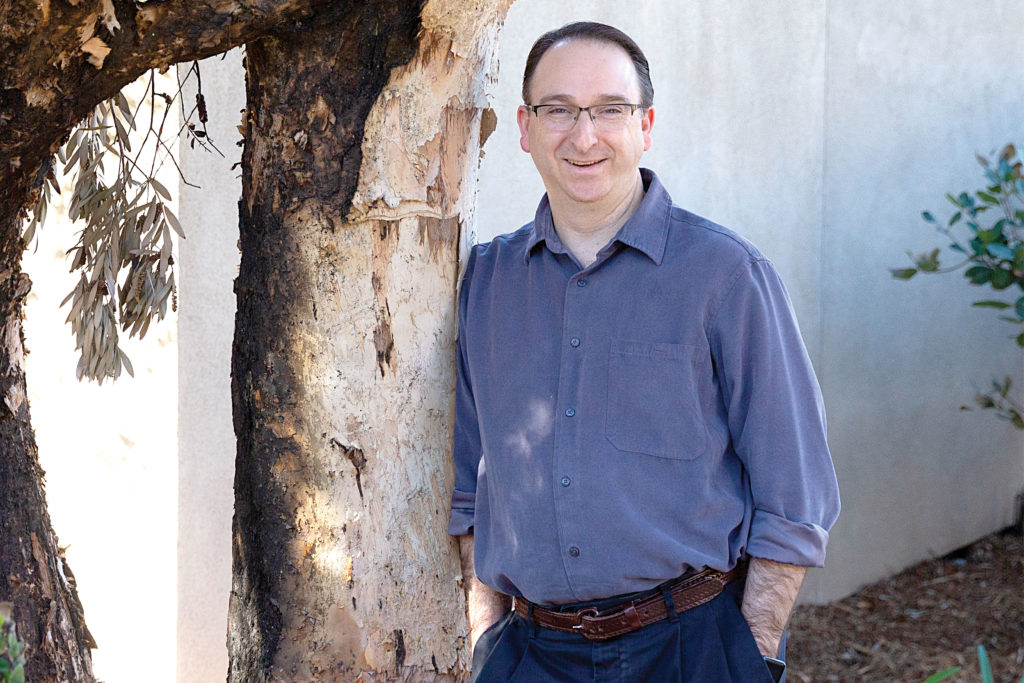
Saving a Shul From the Woolsey Fire

The Conejo Valley community was still reeling from the Borderline Bar and Grill shooting in Thousand Oaks in November 2018 when the Woolsey Fire broke out. Cantor David Shukiar of Temple Adat Elohim (TAE), a Reform Congregation of the Conejo Valley, received a frantic call from a congregant who had seen smoke near the temple building. Shukiar headed to the temple, called the facilities manager, and for three hours, the pair used hoses to put out hot spots at the campus and at the elementary school. 

“I was shocked at how much water it took,” Shukiar said in a phone interview. When members of the fire department came through, they explained that under the ash, the embers were still hot, “resulting in a creeping fire that works its way slowly and has the potential to reignite. The fire department said they were grateful for our firefighting ability. I was grateful she [the congregant] called. I don’t know what made her call us.”

Regarding the fires, Shukiar said, “there was a lot of heroics around our community,” including TAE Rabbi Barry Diamond who ran into the temple to rescue their  Torahs, and the congregants who organized right after the fire.

“Within two days, we had reached every member to figure out what they needed [and] how many congregants lost homes. It was a pretty heroic couple of days for the whole community,” Shukiar said.

“The fire department said they were grateful for our firefighting ability. I was grateful she called.”

Shukiar’s road to becoming a cantor was far from traditional. While growing up in Canoga Park, Shukiar was “disillusioned with organized Judaism,” but loved musical theater. In 1995, he moved to New York to try to make it on Broadway. His then-fiancée, Leasa, who was studying Judaism, urged him to find a temple for the High Holy Days. He chose Congregation Rodeph Sholom on Manhattan’s Upper West Side, which welcomed them as members. Rodeph Sholom also premiered his original Hanukkah musical, “Benjamin and Judah.”

“Seeing Leasa’s excitement and being welcomed by a community — that started my journey home to Judaism,” he said. “Seeing the beauty through her eyes was really what enabled me to come back for myself.” 

The two were married in 1996, spent six months performing on a cruise ship, and returned to Los Angeles. Facing a house payment and preparing for a child, Shukiar realized spending five years at cantorial school wasn’t an option, so he studied privately at TAE. He became choir director at TAE in 1997 and then spent five years at Beth Shir Shalom in Santa Monica, where Rabbi Neil Comess-Daniels gave him what he called “a foundation that I continue to build upon.”

For the past 13 years, Shukiar has been back at TAE, where he oversees and facilitates all aspects of the music program, including Shirei Elohim, the junior choir; the junior cantors; the Temple Adat Elohim Chorale; The Band of Milk and Honey; and the TAE Community Orchestra. He also wrote “Chamilton,” a Purim parody of “Hamilton,” and “The Shushan Schlepper’s Purim Chai Club Band,” the story of Purim through 21 Beatles songs. And he’s a member of the Guild of Temple Musicians, which has twice awarded him the Ben Steinberg Young Composer’s Award. 

“As much as the sermons our rabbis give are meaningful and powerful, I don’t think there’s any vehicle that can express the power of a moment more than music,” he said. “Music takes a moment and elevates it so people can connect through something higher.”


Read more about our 2019 mensches here.

Saving a Shul From the Woolsey Fire Read More »
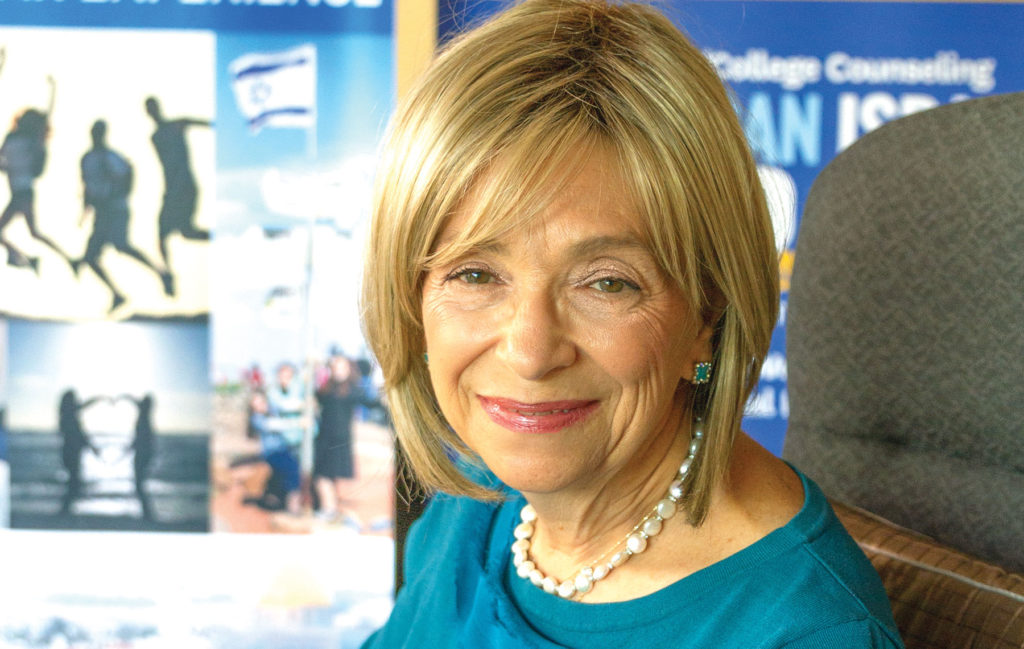
Helping Navigate Israel Gap Year

After high school, many students take a “gap year” before heading to college.  Jewish students often spend that year in Israel. But to make sure they know the diverse range of available experiences, Phyllis Folb founded an annual Israel Gap Year Fair in 2013. Today, it is the largest of its kind on the West Coast and represents more than 40 programs: living on a kibbutz, doing an internship, serving in the Israeli army or taking part in any number of traditional learning programs across the denominational spectrum in Israel. 

“We want them to have the best year and that only comes with exposure to all the options so they can make an informed and thoughtful choice,” said Folb, the volunteer, full-time executive director of the American Israel Gap Year Association (AIGYA). “I literally spend my whole life on this.” 

AIGYA’s goal is to be an inclusive and nonjudgmental educational resource to families and organizations, so Folb’s mission isn’t “vested in one outcome or the other, just in [students] loving Israel and being proud to be Jewish,” she said.

More than 400 students attended the 2018 fair, held at Yeshiva University Girls High School in November, which included breakout sessions on addressing the concerns of the Sephardic community and on safety, health and emotional well-being during a gap year. Support for the fair comes from Jewish schools of all denominations, as well as non-Jewish secular public and private schools. The fair’s location rotates. 

“It’s the only cross-denominational fair in the country and it was born here in L.A.,” Folb said. “I like to say it is a ‘Red Sea-parting moment’ to see everyone together, all in the same room with a singular mission.” 

“All the things you’ve learned, when you come to Israel, it all jumps off the page and it’s just real. You can hear your ancestors and feel the power and inspiration.” 

She added, “Students develop a solid sense of who they are and what kind of Jew they want to be and ask, ‘What am I going to bring back, and what’s my relationship with the land and the Jewish people?’ It’s life-changing.”

Instead of  “gap year,” Folb prefers the term “bridge year.” 

“That year is a vulnerable time for young people,” she said. “My feeling is that if we provide a bridge, they can build a real relationship with Israel and engage. They come back energized and excited both in an academic direction and in a personal-identity direction.”

Folb runs the organization on her own with a few volunteers. This year, the Rosina Korda Gap Year Scholarship will award $5,000 to three students to be put toward a year in Israel. Having more philanthropic support, she said, would help her “move the peanut forward to make it better, bigger and reach more people.” 

“These young people are going to be our leaders,” Folb said. “I would love people to recognize this fragile, important, vulnerable time as worth the investment and attention. I like to say I’m in the Jewish continuity business and I hope that other people will invest in that with me.”


Read more about our 2019 mensches here.

Helping Navigate Israel Gap Year Read More »

Passion for Sephardim

Ray Mallel is passionate about connecting Sephardic Jews with Sephardic culture. The 82-year-old is the co-founder of the Sephardic Educational Center (SEC), leads operations of the SEC board in Los Angeles and serves as vice president of the Israeli-based SEC nonprofit. Headquartered in Jerusalem and with branches in the United States, SEC offers Diaspora rabbis and young people the opportunity to experience educational programs in Israel and enjoy local learning events.

“Sephardic culture is Jewish culture,” Mallel said in a phone interview from Israel, which he visits two or three times a year. “If we’re going to be this beautiful coat of colors, we have to have our own identity because we have differences amongst ourselves.”

Mallel also is a supporter of the Israeli organization Mashev L’kol Yeled (Computers for Every Child). Established in 1996, Mashev attempts to close Israel’s digital divide by distributing computers to disadvantaged families from all sectors of Israeli society, including the ultra-Orthodox, Bedouins, Druze, Arabs and new immigrants.

To date, more than 74,000 computer kits have been delivered to 360,000 children and parents, according to the website of the Israeli Prime Minister’s Office, one of the project’s funders. Serving as the chairman of the recently launched U.S.-based fundraising arm of Mashev, Mallel has raised nearly $1 million for the effort.

“The fire department said they were grateful for our firefighting ability. I was grateful she called.”

Mallel speaks fluent Ladino and traces his family’s history to Spain and to the nascent State of Israel. During the fledgling days of the Jewish state, the Turkish military hung Mallel’s uncle from a scaffold at the Jaffa gate in the Old City. A photo of his execution appeared in the Palestine Post, the precursor to the Jerusalem Post.

Mallel’s father was born 120 years ago in the Old City of Jerusalem and came to the United States at age 16, finding work in concessions in the cabaret business. Mallel was raised in a predominately Sephardic Brooklyn neighborhood. The family went on welfare after Mallel’s father was diagnosed with Parkinson’s disease and had to stop working. “It was not easy to be in a Jewish neighborhood and be on welfare,” Mallel said.

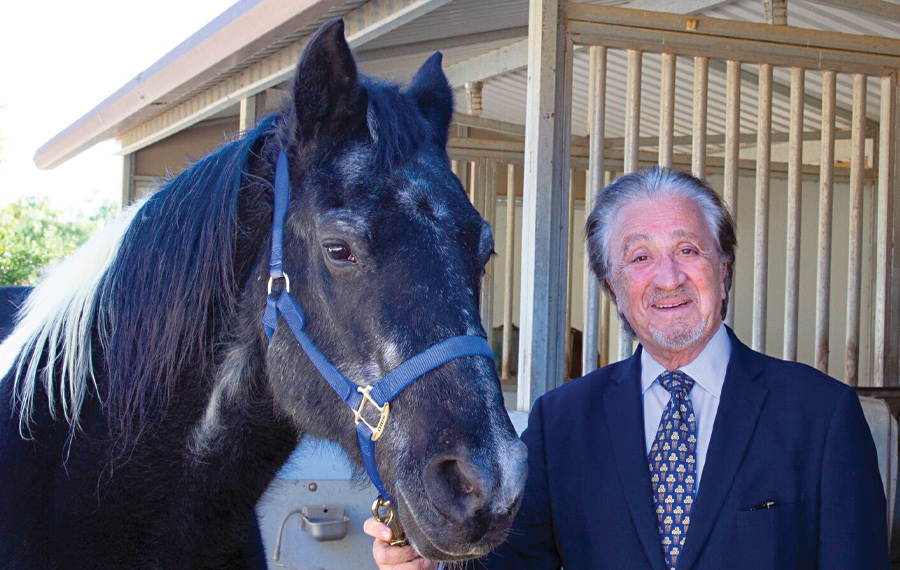
Mallel moved to Los Angeles in 1972 to work in the clothing business before joining the banking industry. Today, the father and grandfather of two, Mallel lives on a sprawling property in Agoura Hills that was threatened during the recent Woolsey fire. As the flames reached within 300 yards of his home, Mallel packed up his dogs, loaded his horses in a trailer and evacuated.

He spends his rare free time traveling, enjoying good food and reading The Wall Street Journal cover to cover, preferring the print edition to the digital version, saying, “I’m old school.”

But most of his day is devoted to assisting fellow Jews. “It is the responsibility of the Jewish people to help other Jews,” he said. “That’s our mantra. That’s what we believe in.”


Read more about our 2019 mensches here.

Passion for Sephardim Read More »

Educating Jews and Non-Jews

Luisa Latham, a Los Angeles native who has been teaching since the 1970s, was born to educate. “I have a tremendous enthusiasm for learning,” she told the Journal. “I’ve taught across the age spectrum and have found all of it tremendously rewarding.”

Latham, who lives in Sherman Oaks with her husband, got her master’s degree at Hebrew Union College and in 1974 began to work at Abraham Joshua Heschel Day School, where she was their first Head of Judaic Studies. During her 25 years there, she got to know the students and make an impact on their curriculum.

“I had the opportunity to know each child, because I was working in a school with only 500 students,” Latham said. “You know everyone by his or her first name, and you know the families. It was not a typical day school. It was very up close and personal, which is something I really treasured.” 

In 1993, she won a Jewish Educator Award. Looking back on her 25-year stint, she said she always cherished “the opportunity to connect students and families to the legacy of Jewish living and practice.”

After leaving Heschel, Latham helped Michael Zeldin of Hebrew Union College-Jewish Institute of Religion start DeLet, a program that trains the next generation of Jewish communal leaders and educators. “Well over 100 teachers have graduated and they have gone out and really done a sea change in Jewish education,” she said. 

Today, Latham, a mother and grandmother, is retired, but still spends many hours each week educating others inside and outside of the Jewish community. “My husband likes to joke that I’m retired but working full time,” she said.  

“I’m moved by the idea that an individual can open up a perspective and shine a positive light on who the Jewish people are.”

Latham volunteered to be the chair of education at her synagogue, Shaarey Zedek Congregation, where she and her husband have been members for 25 years. 

She also works with School on Wheels, where she tutors homeless children at shelters, public libraries, motels or wherever they can meet up to learn. In addition, Latham is mentoring a young woman through the Fulfillment Fund, and making sure she has the skills to develop a résumé, interview successfully and find a good job post-college.

Another organization close to Latham’s heart is Court Appointed Special Advocates (CASA). For the past four years, Latham has supported and advocated for three brothers in foster care. She visits them regularly and goes to court every six months to ensure they have what they need. 

Along with working with local youth, Latham teaches Spanish-speaking adults how to read during a weekly class at her local public library. “That’s been a very exciting program to work with,” she said. 

Latham said she enjoys working outside of the Jewish community, whether it’s with children or adults, because she wants there to be a good representation of Jews out there in the world. “They may not have had exposure to the Jewish people. You’re kind of an ambassador. I think that’s powerful and important. I’m moved by the idea that an individual can open up a perspective and shine a positive light on who the Jewish people are.”

In all of her educationtal work, Latham also loves helping people achieve their goals. “You see someone being able to go forward in their lives,” she said. “Their lives are enriched and you’re making a difference.”


Read more about our 2019 mensches here.

Educating Jews and Non-Jews Read More »

Giving Kidney Patients Hope

When Gabriel Schenkman was 9 days old, he was diagnosed with hypoplastic kidney disease, meaning his kidneys were smaller than normal. In June 2016, just before his 15th birthday, Gabriel received a kidney from his mother, Elisa, and he’s now healthy. But his story doesn’t end there. 

Gabriel, his mother, his twin sister, Amanda, his older sister, Shelby, and his father, Michael, established the GOFARR Fund (which stands for Gabriel’s Organization Funding All Renal Research) to support renal disease treatment and research at Children’s Hospital Los Angeles (CHLA), where Gabriel has been treated since infancy and where Elisa serves on the board. They have always been involved in fundraising for the hospital, persuading friends and relatives to donate, and participating in toy drives. But their efforts kicked into high gear five years ago when the twins were preparing for their bar and bat mitzvahs at Stephen Wise Temple.

Amanda suggested they hold a benefit event as a mitzvah project, and the whole family got to work. Their inaugural bowling party raised over $100,000, and their efforts since then have brought in more than $7 million. “I want to make a difference every single day, and this is the best way I can do it,” Gabe told the Journal, adding that he hopes to expand GOFARR beyond L.A.

“Nephrology is a poor stepchild to cancer in terms of funding and we’re aiming to fill that gap.” — Michael Schenkman

He also works with the virtual reality technology company EVRLAND to bring headsets featuring travel and nature videos to Children’s Hospital patients. “It gives the kids experiences that they never would have otherwise and gives them hope for the future,” he said.

Amanda, who grew up feeling guilty that her brother was afflicted and she was not, is equally committed. A budding filmmaker, she made a short film in 2016 about her family’s story in order to bring attention to the work of GOFARR. “For me, the goal is global awareness,” she said. She hopes to shoot a new video to spread the word.

With 100,000 people awaiting kidney transplants in the United States, there’s no time to waste. “Nephrology is a poor stepchild to cancer in terms of funding and we’re aiming to fill that gap,” Michael, an entertainment attorney, said. He noted that GOFARR has funded research at CHLA that is investigating regenerative and stem-cell therapies “to prevent the need for transplants in the future.” GOFARR also refurbished the hospital’s dialysis center. 

Elisa is proud of the twins, now 17-year-old juniors at Brentwood High School, as well as USC graduate Shelby, who works at United Talent Agency. “They’ve put their hearts and souls into this and they’ve made a difference,” she said. “The beauty of the whole journey is we took a very difficult situation have turned it into a positive, life-changing one.”


Read more about our 2019 mensches here.

Giving Kidney Patients Hope Read More »

Guiding Teens and Their Parents Through Tough Times

At a young-at-heart but wise 80, Dennis Poncher said he doesn’t plan to stop his work anytime soon. He provides shelter for at-risk teens at his home, focusing on helping them become successful adults. He also creates programs for families facing challenges, and meets with parents who are hesitant about attending support meetings for their children.

“I won’t give up. I’ll be doing this for as long as I can. I don’t want to lose any more kids,” he said in a phone interview with the Journal.

Poncher accomplishes this work through Because I Love You (B.I.L.Y.), the nonprofit he founded in 1982. The idea grew out of personal tragedy. Poncher’s wife, Joyce, the mother of their two children, died in 1981. On the way to the funeral, his 15-year-old daughter, Lesli, announced that she was pregnant. 

Not only did he learn that his daughter had been dating a “boy with a van” in an on-again, off-again relationship, but that his son, Ian, was using and dealing marijuana. Both children were expelled from school and Poncher was drowning in debt from his late wife’s medical bills. He soon filed for bankruptcy, and closed the clothing stores he had been running.  “I didn’t want to live anymore,” Poncher recalled. “I wanted out.”

One afternoon, when his kids were on the porch, he wrote a goodbye letter and grabbed his wife’s medication, intending to take his life. A friend, who came by to check on him and the kids, found Poncher writing his letter and ripped it out of his hands.  

Poncher was then introduced to a parent-therapy group and said he was blown away by the number of parents and families talking about issues similar to his. 

After attending a handful of meetings, Poncher realized he loved the idea of meetings but not their philosophies. Together with eight other parents, Poncher started a parenting group session, which ultimately became B.I.L.Y. 

“It’s called Because I Love You because we’re not here to be your friend. We are your parents and you might not like us and we might not like you at the moment, but we will always love you.”

As the group continued to grow and Poncher’s son started to get better, he suggested to his father that he start a youth group along the same lines. Now, B.I.L.Y. runs support groups for parents and kids. 

B.I.L.Y., Poncher said, saved not only his life and his children’s, but to date, has helped more than 700,000 families around the country. All of B.I.L.Y.’s services are free. 

Over the years, B.I.L.Y. leaders and Poncher have helped shut down teen clubs dealing drugs, built camps, founded weekend programs for family counseling, and informed parents on how to protect, support and love their children. 

“We do it because we love them,” Poncher said. “That’s why it’s called Because I Love You, because we’re not here to be your friend. We are your parents and you might not like us and we might not like you at the moment, but we will always love you.”

Poncher said one of the hardest things for parents to grasp is the transition period after their kids return from programs. He said if parents don’t change with their kids, it’s harder to be a successful family unit.  

“It’s not that what [they’re] doing [as parents] is wrong. It’s just not working,” Poncher said. “If you fall apart while you’re raising your kids, you’re no help to them.”  


Read more about our 2019 mensches here.

Guiding Teens and Their Parents Through Tough Times Read More »

Lessons From Her ‘Shanghai Jew’ Father

As a child growing up in New York, Naomi Goldman often heard her father’s wartime stories. A Holocaust survivor, Robert Goldman spoke to Naomi of trying times in the ghetto — in China. 

The late Robert Goldman was one of the “Shanghai Jews” — one of 20,000 Jewish refugees who fled Nazi-occupied Europe in the 1930s and 1940s for Shanghai. At the time, aside from the Dominican Republic, the Republic of China was the only viable option for Jewish refugees.  Robert grew up under brutal Japanese occupation in Shanghai’s Hongkou District ghetto until his teens. 

“My father’s challenging past to get to this country was very formative for me,” Naomi Goldman said. “Because of that, he was someone who placed great importance on the community and was so proud to be part of his local Jewish community and all that entailed. I got that from him.” 

When she was 12, her family moved to Torrance, where they became members of Temple Menorah in Redondo Beach. Her mother, Faith Goldman, remains on the board to this day. The family also volunteered with local social justice causes. 

“I was always taught to think about how to give my time, talent and resources to good causes and vulnerable populations, such as immigrants like my father,” Goldman said.

Today, Goldman lives in Westwood and divides time between her childhood synagogue and Sinai Temple. She began her career in talent management after graduating from UCLA. 

“But I was only enjoying the part where I’d get clients connected to charities,” she said. “So I made a life change. I decided I wanted my life’s work to impact causes and communities.” 

“I was always taught to think about how to give my time, talent and resources to good causes and vulnerable populations.”

Today, as the head of her own successful communications company, Goldman carries on the legacy of her parents, supporting a bevy of progressive causes. She previously ran the state of California’s HIV/AIDS Prevention Campaign for several years and shepherded faith-based partnerships and educational programs that served as models for AIDS service organizations nationwide. She currently handles strategic communications for the chief executive office of the Los Angeles County Homeless Initiative. 

“Whatever I’ve done in my life, whether it’s around community engagement, volunteering, philanthropy, serving on boards, it comes from being raised by exceptional role models — my parents,” she said. 

During the recent midterm elections, Goldman canvassed, phone banked, rallied and fundraised for local progressive candidates. Recently, she started a magazine for the Visual Effects Society called “VFX Voice,” focusing on how digital animation and special effects can merge the worlds of emerging technology and social justice. 

“I’ve written about how the Shoah Foundation has been using virtual reality to share Holocaust testimony and preserve things for next generation,” she said. 

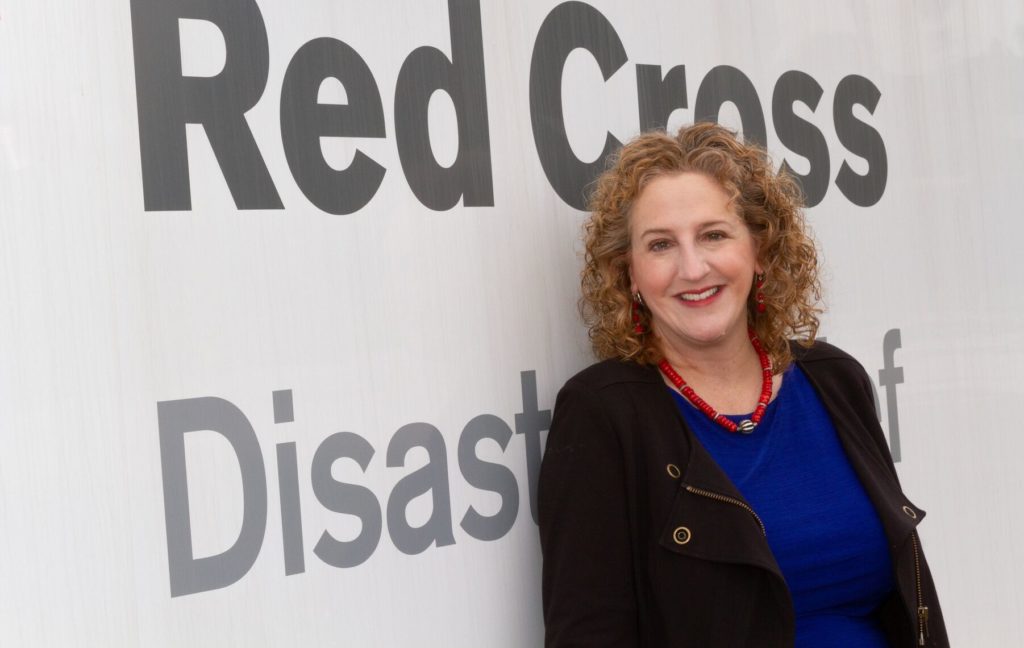
Another of her deepest passions is disaster relief. For years, she has volunteered extensively with the Red Cross, providing comfort to displaced families affected by wildfires. For someone who always tries to make change and think big, those experiences have shown her that it’s often the small moments that matter most. 

“I remember the Shabbat after the Woolsey Fire, sitting in a shelter with a family with four kids that had no home,” she said. “All we did was color together, read books, and they taught me about cartoon characters they loved. I also like intimate experiences like that, just being a part of a few moments of peace in that really tough time.”


Read more about our 2019 mensches here.

Lessons From Her ‘Shanghai Jew’ Father Read More »