fbpx

January 9, 2019

Angela Davis Says Human Rights Award Was Revoked Because of ‘Support of Justice for Palestine’

Progressive activist Angela Davis is claiming that a civil rights award was rescinded from her because of her “support of justice for Palestine.”

The Birmingham Civil Rights Institute (BCRI) announced on their website that they had chosen Davis in September to receive the Fred Shuttlesworth Human Rights Award at their February 2019 gala; however myriad “concerned individuals and organizations” prompted them to re-evaluate their choice.

“Upon closer examination of Ms. Davis’ statements and public record, we concluded that she unfortunately does not meet all of the criteria on which the award is based,” the statement read. “Therefore, on January 4, BCRI’s Board voted to rescind its invitation to Ms. Davis to honor her with the Shuttlesworth Award.”

They added, “We regret that this change is necessary, and apologize to our supporters, the community and Ms. Davis for the confusion we have caused. We will move forward with a keen focus on our mission: to enlighten each generation about civil and human rights by exploring our common past and working together in the present to build a better future.”

In a Facebook post, Davis claimed that it was her support for the Palestinians that caused her to lose the award.

“Although the BCRI refused my requests to reveal the substantive reasons for this action, I later learned that my long-term support of justice for Palestine was at issue,” Davis wrote. “This seemed particularly unfortunate, given that my own freedom was secured – and indeed my life was saved – by a vast international movement.”

Davis added that she supports “Palestinian political prisoners just as I support current political prisoners in the Basque Country, in Catalunya, in India, and in other parts of the world.”

“I have indeed expressed opposition to policies and practices of the state of Israel, as I express similar opposition to U.S. support for the Israeli occupation of Palestine and to other discriminatory U.S. policies,” Davis wrote. “Through my experiences at Elisabeth Irwin High School in New York City and at Brandeis University in the late ‘50s and early ‘60s, and my subsequent time in graduate school in Frankfurt, Germany, I learned to be as passionate about opposition to anti-Semitism as to racism.”

Davis highlighted her work “with Jewish organizations and individuals” on numerous issues, which she said was key in “my growing consciousness regarding the importance of protesting the Israeli occupation of Palestine.”

The New York Times pointed to a December piece from Southern Jewish Life editor Larry Brook that was published around the same time as BCRI says they started hearing concerns from several people. Brook’s piece notes that Davis is a staunch supporter of the Boycott, Divestment and Sanctions (BDS) movement and that she has referred to Israel as an “apartheid” state. Brook also points out that Davis has lavished praise on Rasmea Odeh, who was convicted of a 1969 Jerusalem supermarket bombing that killed two college students, and has called for the release of Marwan Barghouti, the Al-Alqsa Martyrs terrorist who has called for “a Third Intifada.”

Harvard law professor Alan Dershowitz wrote in his 1991 book Chutzpah that when he urged Davis to denounce the Soviet Union’s imprisonment of Jews, Davis’ secretary told him that she wouldn’t do so because “they are all Zionist fascists and opponents of socialism.”

In 1970, a then-17-year-old named Jonathan Jackson conducted a courtroom shooting in an attempt to create a hostage situation that would result in his older brother, George, being freed. The shooting resulted in four dead, including a judge. At least two of the firearms that Jackson had brought with him were purchased by Davis, which resulted in her being indicted for being complicit in Jackson’s crime. Davis was eventually acquitted.
Angela Davis Says Human Rights Award Was Revoked Because of ‘Support of Justice for Palestine’ Read More »

Changing ‘Little’ Lives With Jewish Big Brothers Big Sisters

Jewish Big Brothers Big Sisters of Los Angeles (JBBBSLA) matches boys and girls ages 6 and up with mentors to support them and help them realize their potential. 

According to JBBBS, the children/mentees, who are called “littles,” develop increased confidence and self-esteem as their lives are changed by the support and encouragement of their mentors, known as the “bigs”. The bigs also often find the experience rewarding and enriching. 

Megan Koehler is the vice president of mentoring services at JBBBSLA. A licensed clinical social worker, Koehler said, “I’ve always been in program development and oversight, and I love it. My clinical background and training is helpful in keeping a clinical eye over the program. Many of the kids have a variety of needs and it’s important to have the capacity for assessment along the way, to make sure matches are a good fit, and also for understanding when we need to look for other interventions.”

Jewish Journal: How do you ensure a “good fit”? 

Megan Koehler: We have match support specialists whose role is to do whatever is needed to make sure we are supporting healthy, safe and productive matches that are positive for the child and rewarding for the volunteer. We also make referrals as needed for other services. 

JJ: What kind of person makes a good volunteer?

MK: Anyone Jewish and over 21 can apply. You have to like kids, but you don’t need experience with them. We look for people who are flexible, open-minded, caring and dependable. Also nonjudgmental and nurturing.

JJ: JBBBSLA has been around for over 100 years. To what do you attribute its longevity?

MK: I believe that the Jewish community in Los Angeles is so strong and the spirit of service is one that really sustains a community that cares about children. By having Jewish mentors for Jewish kids, we provide continuity of Judaism in their lives. We support Jewish identity and reinforce Jewish culture and traditions. 

JJ: Do the mentors and mentees have to be religious?

MK: No. We have a range, from people who identify culturally as Jewish to the most observant and Orthodox. We embrace and support every denomination of Judaism. In terms of matches, I find it interesting that for some mentees it’s important to be matched with a mentor with a similar background, but for others, it only matters on a logistical level. When you have some crossover, you find that there’s education, appreciation and learning that takes place. There’s an expansion of acceptance that happens. 

JJ: What do you take into consideration when making a match?

MK: There are pragmatic issues such as geographic proximity. We usually, but not always, match the same gender. There’s also compatibility of personality and interests. We look for mentors who will respond well to the child’s needs and challenges and who are prepared to support them if there are difficulties in their life. There are many factors involved, including strong assessment and keen skills in terms of understanding the balance that goes into a match. There’s nothing arbitrary about the matches. 

JJ: Why do you think there’s a need specifically for a Jewish BBBS?

MK: I think there are Jewish kids around the country who are fine with mentors from any background. But others are strengthened by having their Jewish identity reinforced and having a role model who may not only strengthen the Jewish cultural part but help them understand it. There are Jewish single-parent households, usually headed by women who want their sons to have a Jewish mentor. They might feel that they can’t teach their son the way a father would. When it comes to the importance of Judaism to Jewish families, that can be a factor that’s missing. 

JJL Aside from mentoring, what are some of the ways JBBBS fosters Jewish culture?

MK: We have match and family events throughout the year, such as our annual seder and Hanukkah parties. Last year, we partnered with Moishe House and held a fun match event for Tu B’Shevat. We did a Mitzvah Day in partnership with USC Hillel’s Jewish Alumni Association. We also have extensive teen programming, including partnerships with the LA Jewish Teen Initiative, focused on teen wellness and leadership and using Jewish role models. And we own and operate a 112-acre camp in Glendale where we have a summer camp, year-round retreats and social justice programs steeped in Jewish values.

JJ: What’s the most challenging part of your work?

MK: Any time you service youth, they have more needs than you can meet. There’s always more that can be done. It’s hard having the knowledge of what additional needs could be met and the reality that there’s a limit as to what any organization can do. We’re always striving to achieve that balance, and we do it well because we’re very intentional and always keep an eye on it. 

JJ: And the most rewarding?

MK: I know our mentors tell us that they get more out of [the program] than their “littles.” We learn so much from kids. Getting outside of ourselves and connecting with young people whose needs are greater than ours — those relationships are an amazing gift. And personally, I feel so fortunate. I couldn’t have a more rewarding career. 


Allison Futterman is a writer based in North Carolina. 

Changing ‘Little’ Lives With Jewish Big Brothers Big Sisters Read More »

Relax With a DIY Microwaveable Neck Warmer

Some people are always hot and some are always cold. I am of the latter persuasion. During this chilly winter season you can find me on the sofa, wearing thermals, fleece-lined sweatpants, a cashmere sweater and a down jacket — sometimes with a blanket across my lap. But I just discovered a game changer for us perpetually freezing people: a microwaveable neck warmer. 

You can create one yourself with a sock and some rice, with no sewing required. Just pop it in the microwave for about two minutes and then wrap it around your neck for instant warmth. It also can provide relief for sore shoulder muscles. And while you’re at it, add a few drops of essential oils for a little aromatherapy. 

If you make this project, we’d love to see it!
Post it on social media with #JJcrafts

What you’ll need:
Tube sock or knee sock
Uncooked rice
Essential oil like lavender
Paper plate

1. Start with a long tube sock. I used one that is 24 inches long. A tube sock works better for this project because its straight, without a heel section; but if you can’t find a tube sock, a knee sock will do just fine. Also, try to use a sock that is mostly cotton. Acrylic socks are basically plastic and don’t microwave well.


2. Depending on the length of your sock, you will need about three to four cups of uncooked rice to fill it. Before putting the rice in the sock, mix into the rice about 10 drops of an essential oil, such as lavender, to give it a relaxing aroma. 

 

3. Fold a paper plate so it looks like a taco and insert it halfway into the sock. Pour the rice from a measuring cup into the paper plate, which will act as a funnel so you don’t spill rice everywhere. Keep in mind that, although you want the sock to be full, you don’t want it so full that the sock doesn’t bend.


 

4. Tie a knot at the open end of the sock, and your neck warmer is done. When you want to use it, put it in the microwave and zap it for one-minute intervals until it is warm enough for you. For me, two minutes was enough. Don’t heat it too much, as you don’t want it to burn your skin. You can reuse your neck warmer over and over, adding drops of essential oils to the outside of the sock as you wish. You can also replace the rice with a new batch by untying the knot.


Jonathan Fong is the author of “Flowers That Wow” and “Parties That Wow,” and host of “Style With a Smile” on YouTube. You can see more of his do-it-yourself projects at jonathanfongstyle.com.

Relax With a DIY Microwaveable Neck Warmer Read More »

Former AIPAC President Larry Weinberg, 92

Lawrence (Larry) Jay Weinberg, a major contributor to the founding of the American Israel Public Affairs Committee (AIPAC), a Purple Heart winner and a prominent homebuilder and philanthropist,  died on Jan. 1. He was 92.

His family sent a message to the Journal stating, “It is with sadness that the family and friends of Larry and Barbi Weinberg mourn the passing of their beloved “Larry,” affectionately known as “Gamu” to his four children, 12 grandchildren, 13 great-grandchildren and their spouses. After a valiant years-long battle with bone marrow cancer, Larry succumbed to his illness at Cedars-Sinai Medical Center, surrounded by his adoring family. He was days short of his 93rd birthday.”

After his death, AIPAC issued a statement saying Weinberg “was a deeply respected leader in the pro-Israel community. Larry and his wife, Barbi, were critical in forging the movement to strengthen the relationship between the U.S. and the Jewish state. Their dedicated efforts over many years educated scores of political and community leaders about the importance of our bipartisan alliance with our democratic ally. Perhaps most importantly, Larry’s example inspired his family to join him in pro-Israel activism.”

Weinberg lived a storied and righteous life, grounded firmly in his Jewish faith, energized by an unshakable American patriotism, tempered by the legacy of the Holocaust and inspired by the miracle of the modern State of Israel. Whatever he achieved in life, he was quick to attribute his success to God and to the unwavering support of Barbi, his wife of 71 years. 

Weinberg was born in Brooklyn, N.Y., on Jan. 23, 1926, to parents who were Jewish emigrees from Augustow, Poland. Along with his younger brother, Bill, Weinberg was raised in a traditional Jewish home where Yiddish was spoken alongside English. He attended the Yeshivah of Flatbush, and later went on to study chemistry at Cornell University under a special U.S. government program for gifted math and science students. 

“Weinberg lived a storied and righteous life, grounded firmly in his Jewish faith, energized by an unshakable American patriotism, tempered by the legacy of the Holocaust and inspired by the miracle of the modern State of Israel.

In September 1943, Weinberg enlisted in the U.S. Army and was sent to France with the 339th Infantry Regiment of 100th Infantry Division, where he fought against the German Winter Line in the forests of the Vosges Mountains. 

On Nov. 12, 1944, while on a reconnaissance patrol, Weinberg was with a soldier who triggered a land mine. Weinberg received the full force of the blast. Lying on the ground for 13 1/2 hours, and after being bayoneted by a German soldier, he was rescued by his friends, that fellow soldier and a Christian chaplain with whom he had become friendly while arranging Jewish services while on the ship to Europe. Two German prisoners were ordered at gunpoint to transport Weinberg back to base camp. 

Weinberg survived 18 blood transfusions and narrowly avoided having his leg amputated. He spent six weeks in a hospital in France and underwent multiple surgeries to save his leg. He then spent 11 months at Cushing General Hospital in Framingham Mass., recovering from his wounds. Honorably discharged in September 1945, Weinberg earned a Purple Heart, the Combat Infantry Badge and later, the Bronze Star for meritorious service in a combat zone. 

Returning home, he met and fell in love with Barbi. The two married the day before Weinberg’s 21st birthday, one week after Barbi turned 18. They moved to Los Angeles in 1947. 

When the U.S. entered the Korean War, Weinberg bought Com-Air Products, Inc., in 1950 and built it into a vital sub-component parts supplier to the U.S. military. 

Using his disability savings and funds borrowed from a lender, Weinberg created the Larwin Group of Companies (a fusion of his first and last names) and built his first four houses. With a loan from his father, he built his first 35 tract houses. By the late 1960s, Larwin was the largest privately owned single-family housing producer in the country. 

A key to Larwin’s success was the development of communities designed around families, featuring modern conveniences and affordable for those entering America’s burgeoning middle class. At its height, Larwin had operations on both U.S. coasts and in more than a dozen states. The company employed more than 2,800 people and generated $500 million in annual revenue. By the 1970s, Larwin was constructing in excess of 8,000 single-family homes and townhouses and 4,000 apartment units per year. Over the years, Larwin built more than 70,000 homes. 

Larwin wasn’t just a business for Weinberg. He saw it as a way to promote the Jewish ideals of social equality and to improve the standard of living for all Americans. At a time when African-Americans were barred by many of the major building companies from buying into predominately white communities, Weinberg made it clear that Larwin would not engage in, or condone, discrimination toward any minority. 

In 1968, Democratic presidential nominee Hubert H. Humphrey asked Weinberg to serve as his Housing and Urban Development cabinet secretary should he be elected president. 

In 1969, Larwin merged with the insurance giant CNA. Weinberg remained chairman of the Larwin building division for the next five years. After leaving the company, he founded Americal Management Co., a diversified real estate investment firm. He served as CEO of Americal until his death. And in the 1980s, Weinberg invested in a deal to bring cable television to Puerto Rico. 

However, one of Weinberg’s most heralded achievements was bringing professional basketball to Portland, Ore. In the 1970s, in partnership with nine other homebuilders, Weinberg bought the Trail Blazers for $3.7 million. He served as president and CEO until 1988, and as chairman of the board of governors of the NBA from 1980 to 1983. 

Weinberg’s strong commitment to, and passion for, Israel was spurred by the Six-Day War and the realization that the survival of the Jewish state could be secured only through an unshakable alliance with the United States. In 1969, he and Barbi joined the three-person American-Israel Public Affairs Committee. By 1976, he had become AIPAC’s president and CEO, expanding and refining its activities and earning the unofficial title of “Founder of Modern AIPAC.” 

His family said that Weinberg’s death is “another reminder that America’s greatest generation is fading from our sight, though not our hearts.”  n

Former AIPAC President Larry Weinberg, 92 Read More »

Roberta Weintraub, Philanthropist and Civic Leader, 83

Roberta Weintraub, a philanthropist, civic leader and a member of the Los Angeles Unified School District board for 14 years, died Jan. 1. She was 83. 

The third-generation Angeleno, who first gained prominence as a firebrand leader of the antibusing movement in the late 1970s, became a coalition builder, and was elected president of the school board four times. After stepping down in 1995 for an unsuccessful run for the Los Angeles City Council, she became a powerful voice for education and law enforcement. 

In 1995, Weintraub founded the Police Academy Magnet School Program, a partnership between the LAUSD and the Los Angeles Police Department. The program, which teaches high school students the principles of law enforcement, constitutional law and the criminal justice system, has grown to nine campuses. In 2007, Weintraub started the Police Orientation Preparation Program, which spanned the gap between a young person’s high school graduation and the minimum age of 20 years and 6 months required to become an L.A. police officer. An advocate of magnet schools, she created “Students Run LA,” a physical fitness and nutrition initiative, and she was the host of the Emmy-winning “School Beat” TV show. 

After the 1994 Northridge earthquake, Weintraub moved from Sherman Oaks to the Westside, where she was an active member of Beverly Hills’ Temple of the Arts.

She is survived by her husband, Ira Krinsky, son Richard Weintraub (Liane), stepson Brian Krinsky (Estelle), and three grandchildren. She was preceded in death by a son, Michael Weintraub.


Roberta Weintraub, Philanthropist and Civic Leader, 83 Read More »

Revealing Los Angeles

David Kipen is a real mensch. He is the celebrated founder of Libros Schmibros, the nonprofit lending library in Boyle Heights. As the former literature director of the National Endowment for the Arts, he supported the work of countless writers and artists, and he did the same during his tenure as the book editor and critic of the San Francisco Chronicle. Today, he continues to play a crucial role in California arts and letters as a writing instructor at UCLA, a book critic for Los Angeles magazine and a critic-at-large for the Los Angeles Times. 

Now Kipen has made yet another contribution to the literature of Los Angeles, something audacious, unique and valuable. “Dear Los Angeles: The City in Diaries and Letters, 1542 to 2018” (Modern Library) is an anthology of musings about Southern California that span four centuries, each one a little gem of observation or reminiscence or commentary and, taken together, a glittering constellation of lapidary prose. Somewhere in those points of light, we begin to see the shape and meaning of the elusive place where we live.

“This book is a collective self-portrait of Los Angeles when it thought nobody was looking,” Kipen explains. “Joyous, creative, life-giving. Violent, stupid, inhospitable to strangers. Cerebral, melancholy. Funny.”

The entries for Jan. 1, for example, start with the pioneering attorney and jurist Benjamin Hayes (1853) and end with contemporary urban activist Aaron Paley (1985): “What a city! Widen the streets! Tear down the past! Destroy the trees.” And the entries for Dec. 31 start with an 1889 snippet from Charles Lummis, whom Kipen describes as not only a newspaperman, librarian and archaeologist but “also a booster, self-promoter, windbag, mountebank, and rapscallion,” and ends with English expatriate author Christopher Isherwood, the bard of Santa Monica Canyon (1975): “What I am trying to say is that it is doubtless easier to feel that God is the only refuge when you don’t have any human being to love and be loved by. But I do.”

Kipen is unapologetic about what he calls its “hiccupping” principle of organization: “One step forward, two centuries back — the perennial, quixotic spectacle of L.A. forever finding fresh mistakes to make.” He includes many luminaries of Western letters, ranging from Richard Henry Dana to Nathanael West to Jonathan Gold, although he confines his selections to diary entries and letters with only an occasional blog posting or other published work. As if to make the point, we read a line written in 1903 by the Californio diarist Don Juan Bautista Bandini: “Bought a book for a diary in Los Angeles,” and Anaïs Nin’s private affirmation of “my belief that if one goes deeply enough into the personal, one transcends it and reaches beyond the personal.”

Even so, the principle of selection produces an extraordinarily rich and diverse collection of writing. The authors range from Fray Juan Crespi to Albert Einstein to Brian Wilson, from Helen Hunt Jackson to T.S. Eliot to Octavia Butler, and include such odd literary bedfellows as Simone de Beauvoir and Richard Feynman, George Patton and Groucho Marx, Charlton Heston and Allen Ginsberg, Sylvia Plath and Eric Idle, Rudolf Schindler and John Lennon. Kipen even finds room for a fateful, if hateful, remark about Robert F. Kennedy by Sirhan Sirhan in advance of their rendezvous with destiny at the Ambassador Hotel.

Kipen’s discerning eye has sought out a few deserving figures who otherwise are mostly forgotten. To be sure, he quotes the famous photographer Edward Weston: “I am disgusted this morning for not having slept longer. Probably I overworked yesterday, having made 12 enlargements from as many negatives on an order. It will bring me $120, then I’ll sleep better.” But he also includes Charis Wilson, Weston’s much-photographed muse and model, whose nude images are remembered but whose words are forgotten: “Through San Clemente — all white blgds. with red tile roofs — such an uncomfortable looking place — one rebel gas station has painted green bills on his window and we bet the town council will soon see to him.” 

“This book is a collective self-portrait of Los Angeles when it thought nobody was looking.” — David Kipen

Kipen is respectful and savvy enough about Los Angeles’ literary and journalistic traditions to include writers whose bylines have long since disappeared from our public prints. “Medieval castles will tumble and antique oriental temples will fall,” wrote beloved L.A. Times columnist Jack Smith in 1959. “It will be the end of a make-believe world — the 176-acre acre; false-front world of film sets on the famed 20th Century-Fox lot … will be razed and cleared to make way for a $400 million complex of steel and concrete towers to be known as Century City.”

Indeed, and on a strictly personal note, I am moved to point out that my late father, Robert Kirsch, is one of the writers whom Kipen invokes in “Dear Los Angeles.” Robert Kirsch was the literary pole star of Los Angeles for the four decades during which he wrote daily book reviews in the Los Angeles Times, but his name has not appeared in print since his death in 1980, except when one of his reviews is quoted in an obit or when the Times bestows the lifetime achievement award that bears his name. I can imagine no greater tribute to my dad than what Nin wrote in the letter to him that Kipen quotes in “Dear Los Angeles”: “Of all the things which have been said, written about the Diaries, you wrote what has the deepest meaning for me — you answered as only someone who is a writer and a critic and a human being could.”


Jonathan Kirsch, attorney and author, is the book editor of the Jewish Journal.

Revealing Los Angeles Read More »

Members of the Tribe Celebrate at the Golden Globes

https://www.facebook.com/JewishJournal/videos/2004804293159361/

It was a triumphant night for a handful of  Jewish artists at the 76th annual Golden Globe Awards ceremony on Jan. 6 at the Beverly Hilton.

Hosts Andy Samberg and Sandra Oh teased that the evening would be light and raunchy and kept their promise while killing the ballroom with kindness. It was basically your average Shabbat family dinner. And in Jewish family fashion, everyone arrived at the party together, yelling over the noise. 

The Journal attended the star-studded evening, when even before the stars headed for interviews on the red carpet, models were handing out Fiji waters and small bottles of Champagne. 

The cast of Amazon’s growing hit “The Marvelous Mrs. Maisel” walked the red carpet in Noah’s ark fashion, with Tony Shalhoub (Abe Weissman) and Marin Hinkle (Rose Weissman) walking hand in hand, as did Caroline Aaron (Shirley Maisel) and Kevin Pollak (Moishe Maisel). 

“It’s so weird that you want to talk to us,” Pollak joked before he and his on-screen wife listed their favorite moments from Season 2.


“That Catskills scene was really fun,” Aaron said. “Driving into the Catskills and wearing a full length mink all the time. It was also fun to be out of town with your cast mates.”

Pollak interjected like the older Jewish husband he is: “I mean, cast and crew staying in the same hotel, it was like sleepaway camp.”

Michael Zegen, who plays the titular character Miriam (Midge) Maisel’s ex-husband, Joel, reveled in how he was getting more love in his second year on the red carpet. “It’s interesting. People used to come up to me and tell me how much they hated Joel and now people tell me, ‘You know, I sort of feel bad for him,’” Zegen said. “I just love playing him and learning new things about him.”

The show has been renewed for a third season, and honorary Jew Rachel Brosnahan took home her second Golden Globe for best actress in a TV series, musical or comedy, for her role as Midge. She told the Journal that playing a loud, proud and funny Jewish woman like Midge was something she never thought she’d be able to do. 

After winning the category of Best Performance by an Actress in a Television Series – Musical or Comedy for her role in “The Marvelous Mrs. Maisel,” actress Rachel Brosnahan poses backstage in the press room with her Golden Globe Award at the 76th Annual Golden Globe Awards at the Beverly Hilton in Beverly Hills, CA on Sunday, January 6, 2019. Photo courtesy by the Hollywood Foreign Press Association

“I have never done comedy, don’t come from comedy, was and remain absolutely horrified of the idea of doing stand-up on television,” the two-time Golden Globe winner said. “I rarely read about women who are as unapologetically confident as Midge, who are proud of their voices, who are curious and wanting to ask questions about the world around them. I find that inspiring and aspirational and it has been incredible to hear the same from other women.”

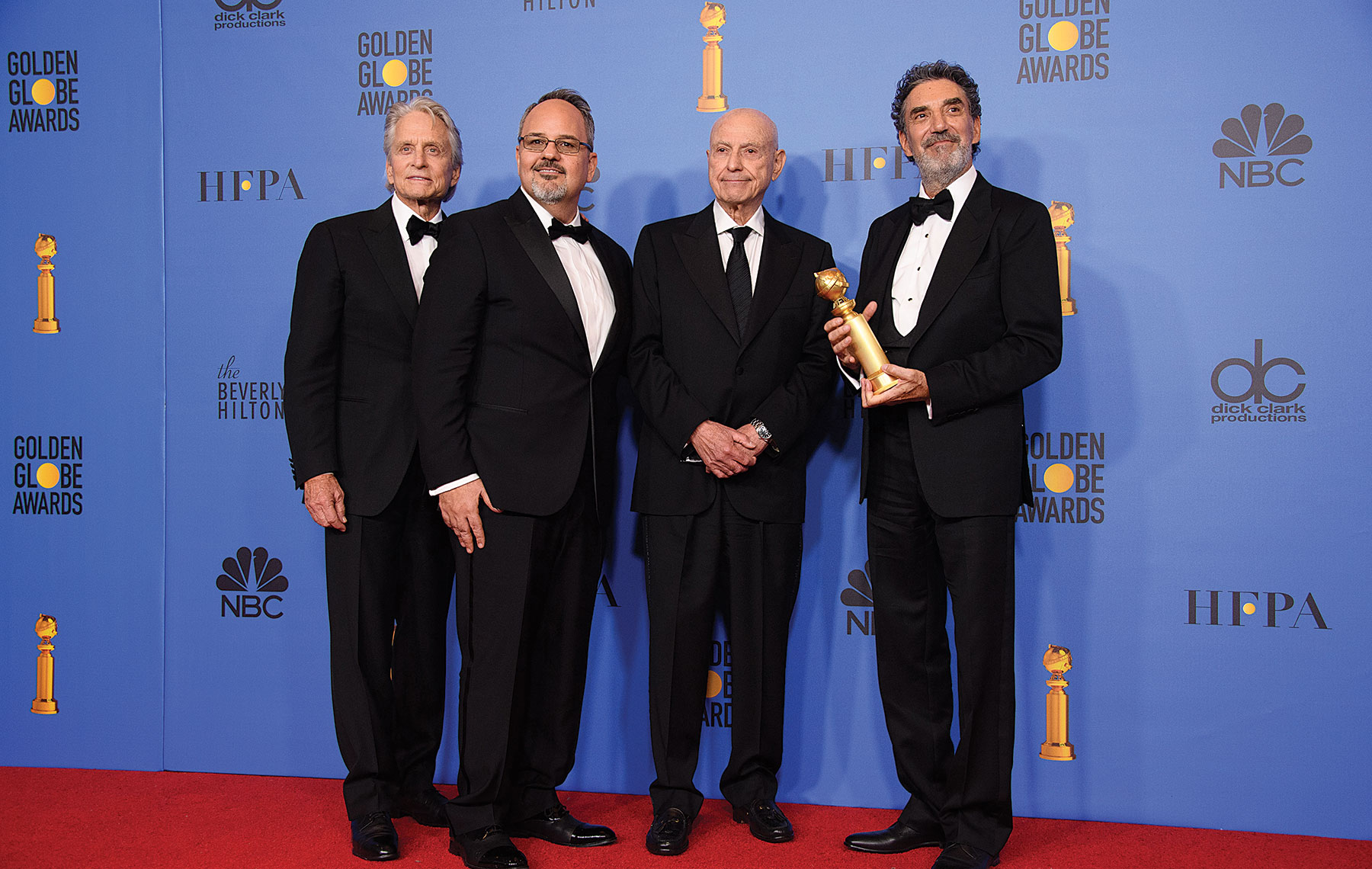
Netflix’s “The Kominsky Method” also received major Golden Globes love. The half-hour series follows an aging talent agent (Alan Arkin) and acting coach (Michael Douglas) who navigate faded life together. Douglas took home the trophy for best actor in a TV series, musical or comedy. The show won the award for best television series, musical or comedy.    

Douglas winningly ended his acceptance speech by thanking his father, saying, “And I guess this has got to go to my 102‑year‑old father, Kirk. Alter-kackers rule.” 

“The Kominsky Method”‘s Michael Douglas, Al Higgins, Alan Arkin and Chuck Lorre pose with the award backstage in the press room at the 76th Annual Golden Globe Awards Photo courtesy by the Hollywood Foreign Press Association

In the press room after the ceremony, showrunner Chuck Lorre kvelled over his cast. “I should say the very first scene [Arkin and Douglas rehearsed] was these two gentlemen having lunch at Musso & Frank’s, and that was a moment I’ll never forget,” Lorre said. “Looking at these two guys and wondering if I might be fighting out of my weight class.”

Other memorable Member of the Tribe moments featured Mark Ronson celebrating his award for original song “Shallow” from ”A Star Is Born” with co-writers Lady Gaga, Andrew Wyatt and Anthony Rossomando; Patricia Arquette winning for actress in a limited series for her role in “Escape at Dannemora,” directed by Ben Stiller, who presented her the award; and neighborhood “nice Jewish boy” Charles Wessler, one of the producers of “Green Book,” which took home the award for best motion picture,  musical or comedy. 

A big yasher koach to Justin Hurwitz, who took home his third Golden Globe for original score for the film “First Man.” In 2017, he won two Globes for “La La Land.”

Hurwitz told the Journal he enjoyed the challenge of writing music for an iconic moment in history. 

After winning the category of Best Original Score for “First Man,” Justin Hurwitz poses with the award backstage in the press room at the 76th Annual Golden Globe Awards at the Beverly Hilton. Photo courtesy by the Hollywood Foreign Press Association

“‘First Man,’ in a lot of ways, was the most challenging score we’ve done just because it’s a story we all know the end of and it’s very triumphant but what most people didn’t know and what I didn’t know until reading the script was that Neil [Armstrong] and Janet [Shearon] were dealt some very difficult pain and losses, and a lot of their success came from a pain that motivated them and pushed them through those years, and trying to get that through with music was challenging.” 

Although he didn’t win, we give an honorable mention and mazel tov to “Mary Poppins” super-fan and composer Marc Shaiman, who was nominated for best original score for “Mary Poppins Returns.” He said he has loved the original movie since he was 4 years old.

“It’s been part of my DNA ever since,” Shaiman said. “I learned everything you could learn from the Sherman Brothers [Richard and Robert] and Irwin Kostal, the orchestrator of the first movie ­— all nice Jewish boys — and now this was our chance to say, ‘Thank you’ to them.”

Members of the Tribe Celebrate at the Golden Globes Read More »

Jewish Genealogy Explored in ‘Finding Your Roots’

Over four seasons, the PBS genealogy series “Finding Your Roots With Henry Louis Gates, Jr.” has traced the ancestry of many Members of the Tribe, including those of Barbara Walters, Alan Dershowitz, Tony Kushner, Carole King, Gloria Steinem, Julianna Margulies, Dustin Hoffman, Carly Simon, Paul Rudd and Amy Schumer. 

Thanks to DNA testing, non-Jews Jessica Alba, Gloria Reuben and political commentator Ana Navarro learned about heretofore hidden Jewish roots, and Sen. Bernie Sanders (I-Vt.) and his “Saturday Night Live” impersonator Larry David were revealed to be distant cousins. With producer and host Gates, a professor of African-American studies at Harvard University serving as genealogical guide, the surprises continue in the 10-episode fifth season, airing Tuesdays on KOCE.

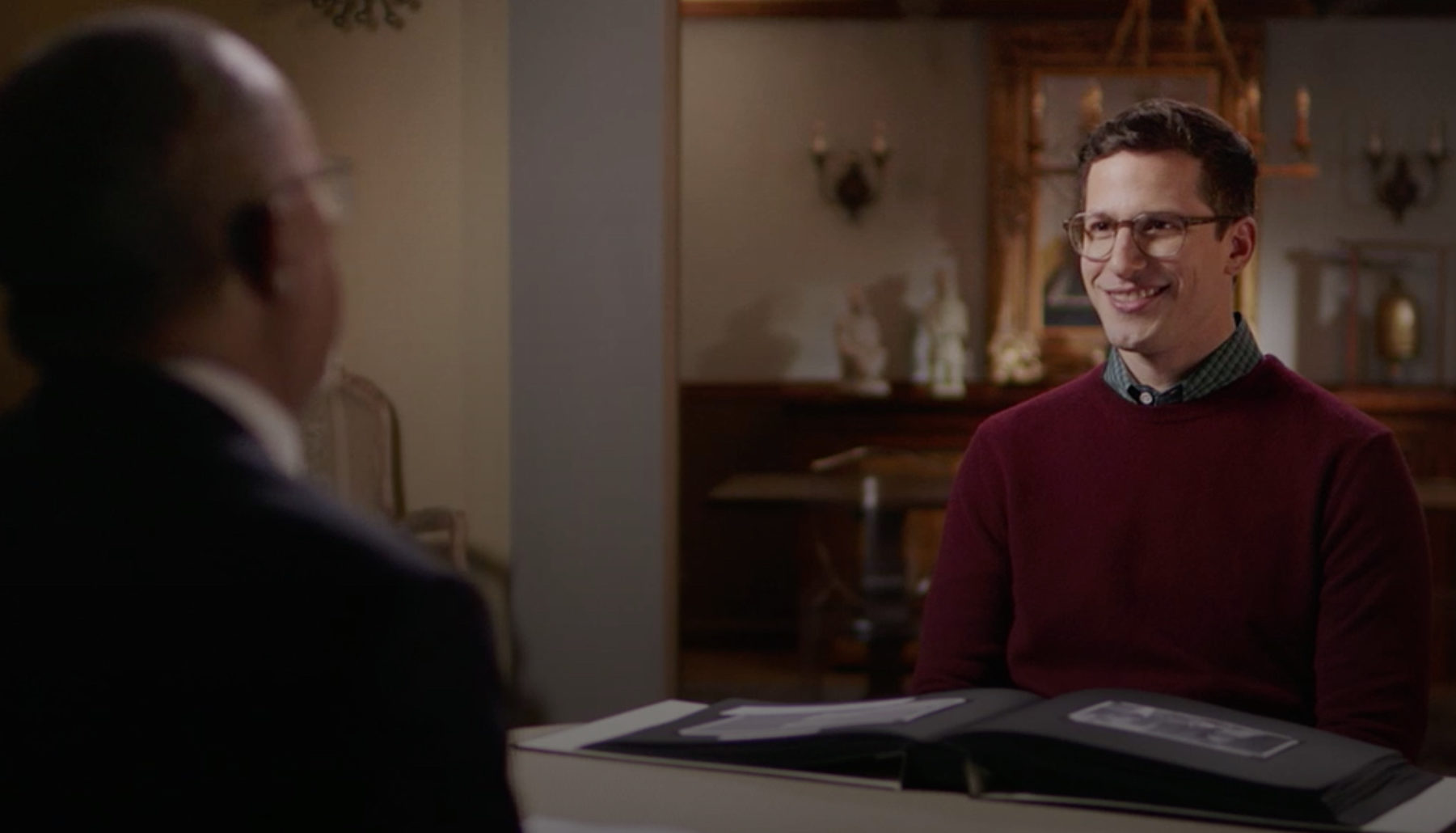
The revelations begin with Andy Samberg in the premiere episode, which repeats at 11 a.m. Jan. 13 and will be available on PBS digital platforms. The “Brooklyn Nine-Nine” star, whose mother, Marjorie, was adopted, sought Gates’ help in finding her birth parents. Marjorie knew her birth mother was Jewish and born in Germany in 1920, and that her mother had a sister, a famous singer who had lived in India in the 1940s. That provided Gates’ researchers with a vital clue that led to her identity. 

Then, DNA testing and matching enabled researchers to find Sandberg’s Sicilian paternal grandfather, who met his grandmother in San Francisco when she was studying in Berkeley and he was in the U.S. Navy, stationed nearby. She became pregnant in 1945 and gave up her daughter for adoption. Samberg and Marjorie were able to meet her half-brothers and several cousins from her Italian-American family.

“I’m overwhelmed with happiness for my mom,” he told Gates. It’s fantastic. It’s finally something my mom gets to know. She can explore all of this now.”

“Game of Thrones” author George R.R. Martin; Photo courtesy of McGee Media/Ark Media

The episode also features “Game of Thrones” author George R.R. Martin, whose pie chart reveals British-Irish heritage on his mother’s side and 22.4 percent Ashkenazi Jewish heritage on his father’s. Martin had always thought his paternal line was German-Italian, and family lore had it that his grandfather cheated on his grandmother and then abandoned her. As it turns out, his grandmother was the one who had the affair, with an Ashkenazi Jew.

“You’re uprooting my world here. I’m descended from mystery,” Martin said. “I would not have guessed this. This is a bombshell here.” Alas, that was where the information trail ended. Gates’ team was unable to find any additional details about Martin’s grandfather.

“At a time when immigration has become such a deeply controversial and sensitive matter, I believe that the more each of us understands about where we came from, the more richly we can live our lives.” 

— Henry Louis Gates Jr.

In the fifth episode, airing Feb. 12, former Speaker of the House Paul Ryan (R-Wis.) discovers he has Jewish roots in his mother’s German line. His DNA chart reveals 3 percent Ashkenazi-Jewish ancestry, meaning one of his third-great-grandparents was Jewish. The surprise news “about knocked his head off, to tell you the truth,” Gates said at a panel discussion promoting the series. “And then he was very proud of it.”

Ashkenazi-Jewish immigrant stories are explored in the segments featuring Facebook executive and author Sheryl Sandberg and comedian Sarah Silverman, who appear in the third episode (Jan. 29) and sixth episode (Feb. 19), respectively. Sandberg learns about the hardship and tragedy her maternal forebears faced after fleeing anti-Semitism in Russia. 

Silverman’s great-grandparents on both sides were from Russia and Poland, entrepreneurial immigrants who came to the United States and started businesses. Her maternal great-grandfather became a jeweler and her paternal great-grandfather was a peddler and his wife was a dressmaker. 

DNA analysis and comparisons to a database of previous “Finding Your Roots” guests provided Silverman with a match and an unexpected revelation. She learned she’s a distant cousin of actress Maggie Gyllenhaal, who is also descended from Russian- and Polish-Jewish immigrants on her mother’s side. Gyllenhaal appeared in the show’s first season in 2012. 

“Finding Your Roots” was a spinoff of Gates’ 2006 project “African American Lives,” which probed the backgrounds of black celebrities including Whoopi Goldberg, Quincy Jones, Oprah Winfrey and Chris Tucker. “We could not predict or foresee how it would mutate into the marvelous thing that it’s become,” Gates said.

“Our series demonstrates each week, in vivid detail and with moving storytelling, that a continuing source of strength for our country is the fact that we are a nation of immigrants,” he said. “I find it inspiring that our fellow Americans are so determined to explore their own ancestral heritage, precisely at a time when immigration has become such a deeply controversial and sensitive matter. I believe that the more each of us understands about where we came from, about what our ancestors experienced, and how those experiences have shaped us, whether we knew about them or not, the more richly we can live our lives.”


“Finding Your Roots” airs at 8 p.m. Tuesdays on PBS. 

Jewish Genealogy Explored in ‘Finding Your Roots’ Read More »

Valley of the Boom Tells Three Tales of the Dotcom Boom and Bust

Wild Tales of the World Wide Web in ‘Valley of the Boom’

The 1990s dotcom boom gave rise to mega-successful companies that changed the world. But for every Netflix, Amazon, Facebook or eBay, there are dozens more that crashed and burned when the internet bubble burst. The fascinating true stories of three of those startups play out in the six-part series “Valley of the Boom,” which premieres Jan. 13 on National Geographic. 

Blending scripted drama with documentary interviews with tech figures including Mark Cuban (MicroSolutions, Dallas Mavericks) and Arianna Huffington (a series producer), creator Matthew Carnahan (“House of Lies”) dramatizes the “browser war” between Netscape and Microsoft; reveals the fugitive con artist behind the bogus video streaming platform Pixelon; and tells the tale of two college students who launched the social networking site theGlobe.com in their Cornell University dorm rooms, a decade before Facebook. 

Reminiscent of “The Big Short,” Carnahan’s unconventional storytelling method often breaks the fourth wall and incorporates irreverent humor, a rap battle, a flash mob, a dance sequence, a puppet representing tech mogul Bill Gates and a one-man Greek chorus (Lemorne Morris).

“[The show] never tells you what to feel about the internet or these characters. It becomes this existential conversation, and that’s all you could ever want from entertainment.”

 — Oliver Cooper

Jewish actors Oliver Cooper and Dakota Shapiro portray theGlobe.com founders Todd Krizelman and Stephan Paternot, who appear in interviews interspersed throughout the series. Cooper didn’t meet Krizelman, but Shapiro met and got to know Paternot. Shapiro initially was concerned about how he would match up to the person he was portraying, but realized that “an imitation would not have been very interesting,” he told the Journal. “[Oliver and I] thought that if we embraced the energy and dynamic that they had, it would work and I feel like it did.” 

Neither actor had heard of theGlobe.com before being cast. While growing up in Byron Bay, Australia, Shapiro knew little about Silicon Valley, and relied on research to prepare. But Cooper has a relative with a similar rise-and-fall story. “My uncle Mark Holtzman was the CEO of Webvan, an online grocery delivery service,” he said. “It became huge, then it failed miserably. He’d given my parents and grandparents stock. My grandfather was like, ‘I should have sold that damn stock!’ ”

Cooper, whose recent credits include “The Front Runner,” grew up in the Toledo, Ohio, dreaming of a career in stand-up. “Most of my favorite comedians, my inspirations, were Jewish — Mel Brooks, Adam Sandler,” he said. Of Polish and French-Jewish heritage, he was raised in a Reform family with a “pretty traditional Jewish upbringing. I had a bar mitzvah, went to a Jewish summer camp.”

He moved to Los Angeles at 19 and got a brief internship at “Conan” through a family connection. He aced his first audition for a role in “Project X,” and from there, “it’s been a slow and steady trudge up the mountain that is Hollywood,” he said. “I’m a legend in the Jewish community now, according to my grandmother,” he said.

Shapiro had his sights set on becoming an actor from an early age, and came to Los Angeles at 14 to attend the Idyllwild Arts Academy. He continued his studies at the Royal Welsh College of Music & Drama in Cardiff, Wales. Returning to L.A., he was cast in a small role in “The Affair,” but considers “Valley of the Boom” his big break.

His American mother is of British heritage and not Jewish, and his father’s parents were Russian Jews who immigrated to South Africa. They met in India, where his father was doing spiritual studies and his mother had gone with her then-fiancé. “My father saw my mother dancing and he fell in love with her. I was unplanned, and they went to Australia to raise me,” Shapiro said. “I wasn’t really raised with Jewish traditions but when I visited my dad’s family in South Africa, we would observe and I really enjoyed that. I enjoyed the community and spirit of it. I understand it more now than when I was a kid. I think there’s beauty in the tradition.”

Although he relished working on “a fast-paced, light-spirited piece with some dramatic moments” in “Valley of the Boom,” Shapiro is generally more attracted to “characters that are a bit darker and contradictory in nature, characters at odds with themselves,” he said. “Any character that’s fleshed out and unique is interesting to me and is what pulls me.”

“I want to be a sex symbol for the Jewish community. It’s why I got into this,” Cooper quipped before giving a serious response. “I love playing in the dramedy world. I don’t love straight comedies. I find it harder than doing drama. I love playing believable characters, with a humorous tone but rooted in real drama. I want to do something with a romance in it. You don’t usually see a guy like me in those types of movies.”

Cooper is eager for viewers to see “Valley of the Boom” and thinks they’ll be surprised by the stories and the way they’re told. 

“Valley of the Boom,” he added, “never tells you what to feel about the internet or these characters. It becomes this existential conversation, and that’s all you could ever want from entertainment.”


“Valley of the Boom” premieres at 9 p.m. Jan. 13 on National Geographic.  

Wild Tales of the World Wide Web in ‘Valley of the Boom’ Read More »

Compensation for Kindertransport Survivors

On Dec. 17, 2018 — the 80th anniversary of the Kindertransport — the Conference on Jewish Material Claims Against Germany (the Claims Conference) announced it had reached an agreement with the German government that finally will see Germany providing compensation payments to Kindertransport survivors.

The fund, which will issue one-time payments of 2,500 euros (about $2,800), is intended to acknowledge the suffering of Holocaust survivors who endured unimaginable trauma in their childhoods.

“There’s a real importance in such an action by the German government, and then by inference the German people,” Paul Nussbaum, board president of the Los Angeles Museum of the Holocaust (LAMOTH), told the Journal. “This recognition is long in coming, but it is to be saluted.”

The Kindertransport started in 1938 when British authorities agreed to allow children under age 17 to enter the country from Germany and German-annexed areas. More than 10,000 Jewish children were saved when parents found refuge for them in England. In most cases, the children never saw their parents again.

“These kinders lost all the world that was precious to them, their families, their Jewish culture,” Nussbaum said. “They went as orphans, some at very young ages, on trains to a country where they didn’t speak the language. For some of them, they were so young it was hard to comprehend, so the trauma was very significant.”

He called the Kindertransport a bright light in a period of great darkness. “What the United Kingdom did is they stepped up to save 10,000 Jewish children. Moral action in periods of awful immorality are very significant.” 

According to LAMOTH, there are approximately 10 Kindertransport survivors in Los Angeles and another eight or so in Ventura and Santa Barbara counties.

“They can’t undo the damage that was done 80 years ago,” Kindertransport survivor Lina Edwards, 95, told the Journal, “but of all the countries that persecuted the Jews, the Germans are the ones who are really doing their best to make amends to whatever is possible.” 

“If we get [money], that’s a good thing. But they can never give us enough for what all these kinder like me suffered.”
— Hilda Fogelson

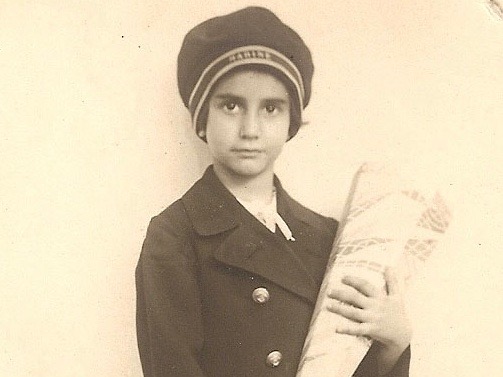
Edwards, who lives in Camarillo, was sent on the Kindertransport at 15. The family that took her in expected her to help with their new baby and in their shop.

“At the time, I resented it because I came from an affluent German Jewish family and wasn’t used to any of this,” she said. “In later years, I appreciated it because of what I learned in that household. I was able to stand on my own feet and be an independent woman. They did the best they could.”

After World War II, Edwards went back to Germany with the American occupation army. She discovered her parents had been killed but that her brother survived the concentration camps. In Germany, working for the Americans, Edwards met her husband, a German Jewish refugee. He was10 years older than her and had spent six years in the British army. They came to Los Angeles in 1952.

“I had a very happy 58-year marriage until he died,” Edwards said. “I always say the first 23 years of my life were very hard and the next 70-plus were very good.”

Studio City resident Hilda Fogelson, 92, who was born in Berlin, told the Journal, “If we get something, that’s a good thing. But they can never give us enough for what all these kinder like me suffered.”

Fogelson was 13 when she and her two older sisters were sent on the Kindertransport to live with their uncle. One year later, her parents, who had managed to escape, joined them. The family then headed to Boston before taking a Greyhound bus to Los Angeles in 1940.

“It was really scary to leave your parents and you don’t know if you’re going to see them again,” Fogelson said. “I was lucky, but a lot of them never saw their parents again. Even if you get money, that’s not going to bring your parents back.”

Compensation for Kindertransport Survivors Read More »