fbpx

September 17, 2018

Rosner’s Torah Talk: Five Rabbis on Yom Kippur


Today, we gathered for you the five Torah Talks that we have in our archives on Yom Kippur.

And don’t forget to read the thought provoking article about Yom Kippur on bicycle.


Rabbi Arie Folger, Vienna, Austria


Rabbi Burt Visotsky, New York


Rabbi Meir Azari, Israel


Rabbi David Gelfand, New York


Rabbi Walter Homolka, Germany


https://www.youtube.com/watch?v=5ZIyn3fWT6w


Rosner’s Torah Talk: Five Rabbis on Yom Kippur Read More »

The Tribe at the Emmys: Big Wins for ‘Mrs. Maisel,’ Henry Winkler — and a Surprise Proposal

It was a triumphant night for Members of the Tribe at the 70th Emmy Awards, with Jewish talent taking home gold statuettes for their work on camera and   behind the scenes.

The first four awards of the night were won by MOTs, starting with veteran actor Henry Winkler, who finally got his first Emmy after three previous nominations decades ago: He’d been nominated twice for playing Fonzie on “Happy Days” in the 1970s and again in 2000 for a guest role on “The Practice.”

70th ANNUAL PRIMETIME EMMY AWARDS — Pictured: Henry Winkler, “Outstanding Supporting Actor in a Comedy Series” during the 70th Annual Primetime Emmy Awards held at the Microsoft Theater on September 17th, 2018 — (Photo by: Paul Drinkwater/NBC)

Accepting his award for supporting actor in a comedy for “Barry,” Winkler said, “If you stay at the table long enough the chips come to you. Tonight I got to clean the table.” He mentioned his three kids in his thanks. “You can go to bed now. Daddy won!”

70th ANNUAL PRIMETIME EMMY AWARDS — Pictured: Alex Borstein, “Supporting Actress – Comedy Series for The Marvelous Mrs. Maisel”during the 70th Annual Primetime Emmy Awards held at the Microsoft Theater on September 17th, 2018 — (Photo by: Paul Drinkwater/NBC)

Alex Borstein, who took home an Emmy for her voiceover work in “Family Guy” at the Creative Arts Emmys last week, won in the supporting actress category for playing Susie in “The Marvelous Mrs. Maisel.” She thanked her children in her speech. “Thank you for giving me a life,” she said. “I’m going to try to be there for more of it.”

70th ANNUAL PRIMETIME EMMY AWARDS — Pictured: Amy Sherman-Palladino “Directing – Comedy Series for The Marvelous Mrs. Maisel”during the 70th Annual Primetime Emmy Awards held at the Microsoft Theater on September 17th, 2018 — (Photo by: Paul Drinkwater/NBC)

“Mrs. Maisel” creator Amy Sherman-Palladino picked up a pair of Emmys in quick succession for writing and directing the show. Besides giving props to her husband and writing/producing partner Daniel Palladino, the cast and the crew, she gave a shout out to her comedian father. “I had to turn a 6-foot-2 Jew into Rachel Brosnahan,” she said. Holding up her trophies after the second win, she declared, “My panic room is going to be so pretty!”

70th ANNUAL PRIMETIME EMMY AWARDS — Pictured: Rachel Brosnahan, “Lead Actress – Comedy Series, The Marvelous Mrs. Maisel” during the 70th Annual Primetime Emmy Awards held at the Microsoft Theater on September 17th, 2018 — (Photo by: Paul Drinkwater/NBC)

The favorite to win for best actress in a comedy, Mrs. Maisel herself, Jew-by-association Rachel Brosnahan, proved prognosticators right. She used part of her acceptance speech time to remind people to vote in the midterm elections. “[The show] is about a woman who finding her voice anew, and it’s happening all over the country right now. We can use our voices to vote. If you aren’t already registered, do it now,” she said. “Vote, show up, and bring a friend to the polls.”

Towards the end of the third hour ‘Mrs. Maisel” was named best comedy series, and an army of cast and creative team members joined Daniel Palladino at the mic as he thanked the usual array of individuals associated with the production and others, including his and his wife’s single mothers. “Guys, they’re available,” he said.

The writing team of Joel Fields and Joe Weisberg won in the writing for a drama series category for “The Americans,” while “Game of Thrones” won the final award of the night, best drama series. Creators D.B. Weiss and David Benioff accepted, surrounded by members of the cast and creative team.

70th ANNUAL PRIMETIME EMMY AWARDS — Pictured: Glenn Weiss “Directing – Variety Special for The Oscars” proposes to his girlfriend during the 70th Annual Primetime Emmy Awards held at the Microsoft Theater on September 17th, 2018 — (Photo by: Paul Drinkwater/NBC)

But awards excitement aside, the surprise highlight of the night was the onstage marriage proposal Emmy winner Glenn Weiss made to his girlfriend Jan Friedlander Svendsen after accepting his award for directing the Academy Awards telecast.

Weiss called the win “bittersweet,” as his mother, who died two weeks ago, wasn’t alive to witness it. “Mom always believed in finding the sunshine in things, and she adored my girlfriend Jan. Jan, you are the sunshine in my life, and mom was right, don’t ever let go of your sunshine,” he said before kneeling and presenting the stunned woman with the ring his father gave his mother more than 65 years ago.

Of course, she said yes! Mazel Tov!

The Tribe at the Emmys: Big Wins for ‘Mrs. Maisel,’ Henry Winkler — and a Surprise Proposal Read More »

Survey: Lack of Jewish Leaders with Disabilities

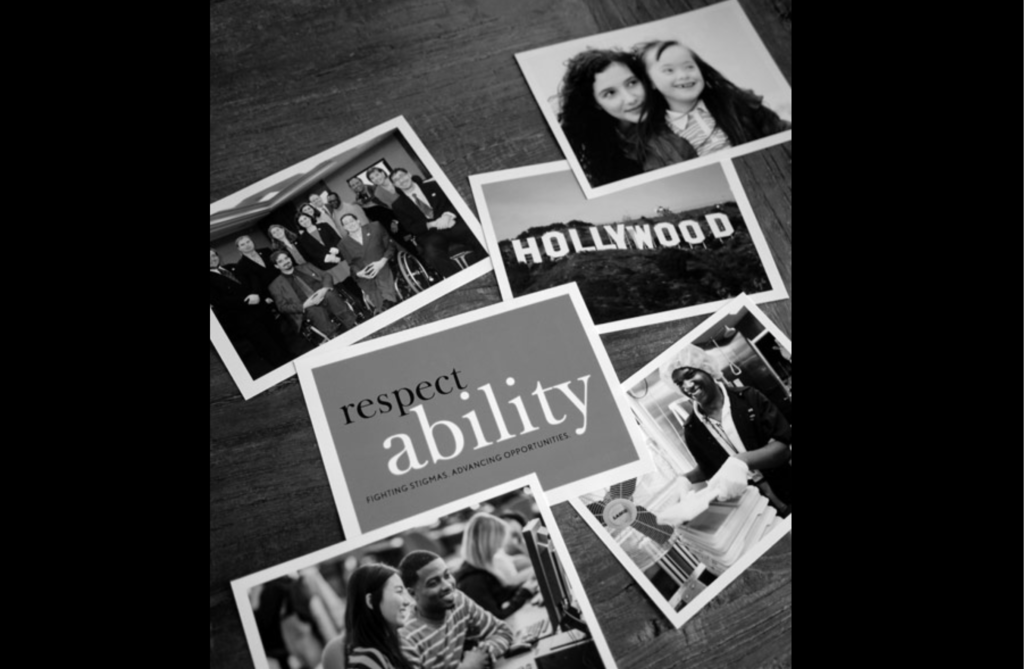
Most Jews don’t know any rabbis or staff with disabilities, according to a newly released report by RespectAbility, a nonprofit organization that fights stigmas and advances opportunities for people with disabilities. RespectAbility was founded five years ago by three Jewish philanthropists: Jennifer Laszlo Mizrahi, Donn Weinberg and Shelley Cohen

More than 4,000 respondents, including more than 900 individuals who self-disclose as a person with a disability, participated in the survey on Faith and Disability Inclusion. Top concerns also consist of access to healthcare, education and jobs, as well as fighting stigmas and Jewish inclusion.

The Jewish respondents with disabilities point to a lack of people with disabilities in leadership roles as clergy or staff at Jewish institutions and do not fully feel welcomed to serve as leaders. Only 15 percent of Jews with disabilities know of a person with a disability in leadership. Less than 10 percent  of Jews without a disability connection know of a person with a disability in leadership. Only 18 percent of people with disabilities answer “yes” that they “feel that people with disabilities are encouraged to serve on the boards and committees of your faith-based institutions.”

“This lack of role models in the Jewish community and the feeling that people with disabilities are not being invited to be a part of a leadership process is a new piece of information,” Laszlo Mizrahi, president of RespectAbility, told the Journal via phone.

“There’s a philosophy in the disability community: Nothing About Us Without Us. And what we’ve see is that people without disabilities have been doing things for people with disabilities and that’s much less successful than when they do them with people with disabilities. I’ve been seeing this in my work, but we weren’t able to quantify it until this survey.”

“This lack of role models in the Jewish community and the feeling that people with disabilities are not being invited to be a part of a leadership process is a new piece of information,” -Laszlo Mizrahi.

While RespectAbility has been doing surveys for years, this is the first time people were asked whether they knew someone with a disability working in leadership in the Jewish community and if they felt people with disabilities were being recruited to be active in Jewish life, serve on boards, serve on staff, etc.

“The reason that we ask those questions is that we really saw a lack of role modeling,” she said. “There are a couple people in the Jewish community who have a disability who self-disclose. I self-disclose that I have dyslexia, because I know that other people have dyslexia and it’s good for them to know they are not alone. Steve Rackitt, [President of] the Genesis Foundation, who used to head the Jewish Federation in Washington, is hard of hearing and he self-discloses.”

“It is important that each of us – as participants and as leaders in the Jewish community – be open about our own disabilities,” Rakitt said. “The fact that most respondents cannot name a Jewish leader with a disability simply highlights that many disabilities are not visibly evident.  By modeling openness and candor, we can change the perception that being a Jewish leader and being a person with a disability are not mutually exclusive.”

Overall, Jews with and without disabilities are not fully satisfied with the level of inclusion in the Jewish community, but they do see things as getting better. Encouragingly, 43 percent of both Jews with and without disabilities feel that the community is doing “somewhat well” on inclusion of people with disabilities (PWDS), and 38 percent of Jewish PWD respondents feel that the community is doing “a little better” on inclusion over the past five years. Of note, 36 percent of Jewish respondents with no disability connection “do not know” if there has been any improvement over the past five years, pointing still to a lack of awareness and an opportunity to increase inclusion.

When asked, “Aside from an individual’s family and friends, which part of the community is most responsible for increasing inclusion of people with disabilities,” the leading responses are synagogues (35 percent ) followed by Jewish Federations (23 percent). Jews with disabilities also point to the synagogues (20 percent ) and social organizations (21 percent) as the most challenging areas for inclusion.

Fully 85 percent  of Jewish respondents are concerned about increasing inclusion of people with disabilities in their faith community, including 35% who are extremely concerned. Still, while it is important to them to increase inclusion, it is also clear that of primary concern are healthcare, education and jobs.

Of Jewish respondents (2,570), protecting access to healthcare, Medicaid, and SSDI for people with disabilities (44 percent), and enabling them to get the education and jobs that they need to succeed (30 percent), fighting stigmas (18 percent), and increasing inclusion for people with disabilities in faith-based institutions (8 percent) all are seen as relevant. 

“One of the things that RespectAbility is interested in is what we as an organization can do in Los Angeles to help build the talent pipeline of people with disabilities/disability experience who can play key leadership roles in Jewish organizations,” Mizrahi said. “You don’t go from not being active in an organization to being president of the organization. You have to build skills, build networks, contribute time and talent, prove your mettle, you have to pay your dues.”

More than a third of Jewish respondents with a disability identify the biggest barrier as “prejudice and unacknowledged stigma against people with disabilities.” Jews with no disability connection also note prejudice first at 28 percent. A combined 37 percent point to the largest barriers being a lack of information: “Religious leaders and activists want to be inclusive, but they don’t know how” (19 percent ). “Including people with disabilities can be complicated and we don’t have the expertise to serve every need.” (18 percent)

To change the stigma, RespectAbility is looking toward setting up model practices in Los Angeles that can be replicated in other communities. 

“When [viewers] start to see people with disabilities [being successful] on TV, in videos, in film, or in the news media, they’ll understand that people with disabilities can be successful. And that magic, what happens on screen, is in Los Angeles,” she said. “The Jews of the Los Angeles area can help improve the situation for people with disabilities around the world by understanding and modeling this inclusive nature both within our Jewish institutions and also and what people are putting on camera when they are creating entertainment and news programming.”

Mizrahi continued, “One out of every five human beings has a disability. On earth there are 1.2 billion people with disabilities. People with disabilities are financially the poorest people on earth, more than African-Americans or Hispanics or any other demographic. Then if they have what’s called multiple minority status (a minority with a disability in America), they really are the poorest of the poor. I do believe this is also an anti-poverty strategy and a social justice strategy which really speaks to my Jewish heart.

“I really believe that the destiny of success for people with disabilities both in the Jewish community and outside the Jewish Community is this mantra of; Nothing about us without us,” Mizrahi said. Let those people with authentic, lived experience be a part of the solutions, and we’ll see so much more success going forward.”


Read the Survey, learn more about RespectAbility, and get resources on Jewish inclusion.

Survey: Lack of Jewish Leaders with Disabilities Read More »

Pompeo Calls Kerry’s Meetings With Iran Official ‘Unseemly and Unprecedented’

Secretary of State Mike Pompeo criticized former Secretary of State John Kerry for meeting with Iranian Foreign Minister Javad Zarif multiple times during Donald Trump’s presidency as being “unseemly and unprecedented.”

Pompeo told reporters on Friday, “This is a former secretary of state engaged with the world’s largest state sponsor of terror and according to him, he was talking to them, he was telling them to wait out this administration. You can’t find precedent for this in US history and the secretary ought not engage in this kind of behavior. It’s beyond inappropriate.”

Matt Summers, a spokesman for Kerry, told CNN in a statement, “Like America’s closest allies, Kerry believes it is important that the commitments Iran made under the nuclear agreement, which took the world years to negotiate, remain effective. He was advocating for what was wholly consistent with US policy at the time. There’s nothing unusual, let alone unseemly or inappropriate, about former diplomats meeting with foreign counterparts.”

Kerry told conservative radio host Hugh Hewitt on Wednesday that he has met with Zarif “three or four times” during the Trump presidency, although Kerry denied that he was coaching Zarif on how to preserve the Iran deal. Kerry also didn’t deny telling Zarif to simply wait until 2020, when Trump could be voted out office.

Pompeo Calls Kerry’s Meetings With Iran Official ‘Unseemly and Unprecedented’ Read More »

Yom Kippur (A Day Like Purim)

I beat the door of my chest ‘till my heart is open to You, ‘till my ribcage bursts forth with soulmates and new life!

Yosef treats God like a celebrity. I know God is my sister. Rivka sees God as her friend. Sheryl the Great Mystery. Noa feels God as her divine lover. Carl takes God as his drug. Oh, playmate, brother, father, Dream, Queen, all this world is You in various costumes.

This day is like Purim.

Reciprocity, receptivity. Impregnate me as I beat my heart open to you
As I vow to love all.

Yom Kippur (A Day Like Purim) Read More »

My belated answer to Ari Fuld

You never think when you don’t answer a message from someone that they’ll die eight months later, the victim of a suspected Palestinian assailant. But I left Ari Fuld hanging on Facebook. He said he needed an answer, but since we were only acquaintances, I felt no need to justify what I had written.

He needed to know why I wrote an article in the Jerusalem Post about what major Israeli cities can learn from Berlin. Since moving to Berlin over two years ago, I have been open about the quality of life the German capital offers its residents: the affordable cost of living, public transportation, green spaces. Of course, it doesn’t offer Zionist sentimentality. For many, Berlin is not the land of Jewish dreams but of Jewish nightmares.

In my article, I also wrote that Israel takes advantage of our idealism. I made aliyah from Los Angeles over 15 years ago, a bright-eyed Zionist intent on ensuring the Jewish future. I lived in Israel during the Second Intifada when terrorists blew up my favorite cafes and bars every few months. I lost friends and acquaintances. Then I suffered through Israel’s withdrawal from Gaza, which I warned was a fatal capitulation to Islamic terror.

But even though Israel disappointed me many a time, not only in its weakness in defending citizens but also in the contempt with which I felt the system sometimes treated Israelis (through overbearing taxes, bureaucracy, lack of infrastructure, and constantly rising prices), I stayed. I fought. I made videos. I wrote books. For a time, I became an activist, seeking to ensure not one more piece of land would be given away for a peace that would only come through military strength.

Finally, I decided I paid my dues. Berlin welcomed me, made me feel at home, and gave me a better quality of life on a material, intellectual and even spiritual level than Israel did. Saying so angers Zionists, especially principled men like Ari, but Berlin is the perfect place for a Zionist “strike,” for the left and right alike.

I knew Ari from the activism scene, and he was always a passionate fighter for Israel. He believed, even with its flaws, that Jews should make their home in Israel and shape its future. He never seemed to get tired. He believed that his words and deeds defending the integrity of the land, Jewish lives, and the valor of the IDF would some day make a difference, the difference I never really felt I could make, no matter how hard I tried.

And here I am, ready to give him the answer as to why I left: Ari, your death is the answer.

You gave your life to Israel—and now, literally. You were what I felt like when I left: a sitting duck. The Israeli government was always too afraid of public opinion to heed your words and win the war against the Palestinian-Islamic movement of hate and violence, a movement that has now made Germany dangerous for Jews once again.

The Israeli people deserve better than what the government gives them, but we Zionists have become suckers. Our love for the land, our love for the people, are exploited. The Israeli establishment knows that we won’t leave because of our ideals. That we won’t air our “dirty laundry” lest people think less of the Jewish state. That we’ll take the abuse in the form of political weakness, taxes, and so on because we’re so loyal, like you were. So loyal. Now, you and your family have suffered that abuse at the highest level.

And Israelis and friends will mourn and cry, too paralyzed by pain and politeness to protest yet again. Israeli politicians will recognize his heroism but ultimately appeal to the United States and the “international community” to do or condemn something because Jews have a sickness in believing their defense requires permission from the non-Jewish world. Ari knew we didn’t need permission, but his words—and the words of like-minded activists—go largely unheeded by a supposedly “hawkish” government.

What’s so sad in all of this is that now Ari will (hopefully) have more impact on the political and military direction in his death than in his life. Because Israel doesn’t heed the living; it counts the dead. Only after a certain threshold of casualties does it act; otherwise, Gaza terror would have been finished long ago. But not enough Jews have died to justify the complete military defeat and re-takover of Gaza.

What’s so scary about Fuld’s death is that he was in my circles. It could’ve been me. It could still be me, in Germany. That same Islamic terror is ready for ambush in Europe. But at least here there is a growing, vocal movement against it, a movement that gets damned as “Nazis” and “racists” (even by Jews) in the same way that I’m sure Ari’s activism got him labeled “extremist” by the mainstream. A movement that could be the Jews’ allies in the fight against Islamic terror but which Israeli leaders reject lest they too be called “Nazis” and “racists” by the “international community.” They’ll make beautiful social media tributes but then do nothing meaningful in retaliation lest it ruin some sort of impending peace plan.

It will take a miracle for Israeli leaders to get the courage needed to obliterate the antisemitic Palestinian movement once and for all. Ari tried. Maybe he needed to be closer to the Source to make his case for an Israel that defends its citizens without apology.

Don’t rest in peace, Ari. Keep fighting up there. Meanwhile, please forgive me, but I’ll still stay in Berlin, a cowardly shadow in your heroic light.


Orit Arfa is an American-Israeli journalist and author based in Berlin.

My belated answer to Ari Fuld Read More »

Dutch Performance Artists Re-Create Life in Auschwitz … in Miniature

The atrocities at Auschwitz cannot be contained by any existing theatrical space or any single 60-minute performance, no matter how innovative, which is one reason why critics have found “Kamp,” the mixed-media work by the Dutch company Hotel Modern, so audacious. The scope of the project may be immense, but the company works — quite literally — in miniature, using puppets and models to depict the working life of the Nazi concentration camp.

“Using models, you can bring the whole world into the theater literally, very big themes, not only emotionally but physically,” said Pauline Karker, one of the three performing artists who created “Kamp.”

Audiences witness what might have been a typical day at Auschwitz, with the horror of the camp on full display. Trains arrive with new prisoners. Hundreds of Plasticine figures in black-and-white-striped pajamas are gathered for “roll call.” A garish sign over the entrance proclaims, “Arbeit Mach Frei” (Work makes you free). Here, it doesn’t. You witness people scrubbing floors and toting sandbags. You also see prisoners beaten or murdered in the gas chambers.  

All of this plays out on a cardboard stage filled with scale models of buildings and more than 3,000 miniature figures manipulated by three performance artists. There is a soundtrack but no dialogue. Cameras zoom in to bring elements of the action into close-up on screens surrounding the action.

“If you say, ‘They’re using puppets and miniature buildings and dolls to examine the Holocaust,’ it sounds like a terrible idea. But as you can see from the reviews and the ways that people have responded to it, it’s highly effective, profoundly moving and very sensitive.” — Mark Murphy

Photo by Redcat

“The stagecraft is ingenious,” said Mark Murphy artistic director of the Roy and Edna Disney/CalArts (REDCAT) Theater , where “Kamp” will play for four performances Sept. 20-23. “But also there’s the incredible sensitivity to the horror of the material they are addressing. They are very matter-of-fact in the way they approach it.”

“If you say, ‘They’re using puppets and miniature buildings and dolls to examine the Holocaust,’ it sounds like a terrible idea,” Murphy conceded. “But as you can see from the reviews and the ways that people have responded to it, it’s highly effective, profoundly moving and very sensitive.”

“Kamp’s” inspiration was Joseph Kalker, a doctor who died at Auschwitz, and the grandfather of company performing artist Pauline Kalker. Following the success of their World War I project, “The Great War,” Kalker felt the need to produce a work that had a stronger personal connection to the Holocaust.

Her two fellow Hotel Modern company members, Arlène Hoornweg and Herman Helle, were receptive to the idea, but Kalker still had some lingering doubts.

“It was difficult on many levels, first because my father was Jewish and my mother is not,” Kalker said. “Also, I had this feeling of ‘Am I allowed to tell this story?’ But later I thought, ‘That’s stupid. My grandfather was killed and my father was in hiding,’ but I felt like I had to ask permission of the Jewish community to see how they would feel.”

Photo by Redcat

The artists began to build the piece, researching the extermination camps at Auschwitz-Birkenau and re-creating the layout via models created by Kalker’s husband. They brought Auschwitz survivors and members of the Jewish community into the studio to discuss the concept of the show and to look at the models. Even on the miniatures, several survivors were able to identify barracks where they had been housed. According to Kalker, some survivors have said they found “Kamp” to be cathartic and have seen the show multiple times. Others have given the performance their blessing but couldn’t bring themselves to watch it.

After each performance, audiences are invited to come down to the stage to take a closer look and to ask questions. “There’s a chance to speak directly with the artists and also to break that fourth wall and for a moment commune with the set and the objects that were used to convey such a difficult story,” Murphy said. “That’s a very important part of the experience.”

Hotel Modern created “Kamp” in 2005 and has taken the performance across Europe, and to Canada, Japan and Australia. In 2019, dates scheduled for France and in Kalker’s hometown of Rotterdam in the Netherlands.

Photo by Redcat

Kalker has not been part of every engagement and she notes that the work is by no means easy to perform. Seven years ago, she had to return to “Kamp” a few months after giving birth to her daughter.

“That was hard. To tell this horrible story again,” Kalker said. “Sometimes I’ve felt I wish I could leave it all behind, but then I think I can’t do that. It’s such a part of my father’s life and a part of my life. It’s been very rewarding to have found a way to share this history with an audience.”


“Kamp” will be performed at 8:30 p.m. Thursday-Saturday and 7 p.m. Sunday at REDCAT, 631 W. Second St., Los Angeles. redcat.org.

Dutch Performance Artists Re-Create Life in Auschwitz … in Miniature Read More »

Remembering Ari Fuld: The Lion of Zion

This article was never meant to be written. The intended subject of this week’s “Humans of Israel” column was hi-tech guru Hillel Fuld. But when his older brother, Ari, was reportedly stabbed by a Palestinian terrorist in Gush Etzion on Sunday, everything changed. It was impossible to stem the flow of tears rereading the piece on Hillel, who said during our interview last week that he felt he was “living a dream” in which he had to “pinch myself every day.”

Hillel’s life, and that of his family, has since turned into a nightmare.

The tears flow afresh every time I open Facebook, which is almost exclusively filled with posts about the elder Fuld. I did not know him personally, but the effect he had was wide-reaching. As someone put it to me, “Everyone knew Ari, even those who didn’t know him.”

In keeping with his namesake, he was eulogized as a “lion of Zion,” a “hero” and a “warrior of the Jewish state.”

At his funeral, his brother Moshe said, “Who else could manage upon sustaining a fatal injury, to draw his pistol, jump a fence and shoot his attacker to make sure that his attacker would not hurt anyone else? Only my brother, only my brother.”

One mourner described the scene at Kfar Etzion cemetery, where many thousands turned up despite the late hour. At close to midnight, the mourners were informed that it would be at least another 40 minutes before Fuld’s body would arrive and were told to go and get some air. Yet no one moved. Instead they started singing songs about Jewish unity.

“Who else could manage upon sustaining a fatal injury, to draw his pistol, jump a fence and shoot his attacker to make sure that his attacker would not hurt anyone else? Only my brother, only my brother.”

“Ari was giving us hope that even though he was taken away from us we should keep going on, fighting and battling,” Kenny Braun told the Journal. “Ari gave us all a present Erev Yom Kippur. Something that klal Yisrael could take inspiration from and use it as a tool right now at this critical time.”

Another mourner, Gedalyah Reback, a former resident of Gush Etzion, told the Journal, “I feel like I’ve gotten numb to news of these attacks. But hearing Ari’s name it sort of broke me out of my complacency. And seeing his family –  his wife, his father – give eulogies, really made it sink in.”

Fuld, who left behind a wife and four young children, was a staunch activist who doggedly defended the Jewish state.

“We lost a general today,” Joshua Hasten, a friend of Fuld’s and the international spokesman for the Gush Etzion municipality told the Journal. “Somebody who was at the forefront of pro-Israel advocacy.”

A former paratrooper, Fuld was also the assistance director of Standing Together, an organization that assists lone soldiers. Fuld was not a person who waited for people to come to him to ask for help. He reached out. When Eric Schorr was drafted into the army, Fuld contacted his mother to ask for Schorr’s address in Israel. “He had never met me, but he wanted to send me hamantaschen for Purim and to make sure that my first holiday in uniform was a happy one,” Schorr told the Journal. “It was the kind of person he was, going that extra mile.”

Ruth Waiman said she connected with Fuld over a shared love of martial arts. Fuld was a fourth-level black belt in Karate who taught self-defense to children. “He gave everyone the feeling [that] what they’re doing is important, all the while doing such vital work himself,” Waiman said. “With such strong passion about everything he set his mind to, it was hard not to absorb a bit of that from him.”

“He understood the concept of a win-win and was willing to keep seeking it, even though he was 99% sure there was no immediate chance of finding it. Ari Fuld lived – and died – by embodying the ideal that this entails.”

Elie Shechter who has known Fuld his entire life, said, “He could give you the biggest hug just by looking at you.”

Several people commented that Fuld’s personality and compassion shone through even when he was embroiled in heated debate. Writer Laura Ben-David said she and Fuld “disagreed, often and publicly” but that his assertions came from a place of “deep caring for Israel and the Jewish people.” Their last argument took place eight minutes before he was stabbed. “I left his last counter-argument hanging; and there it shall remain. Forever,” Ben-David posted.

Another person who had left Fuld hanging was journalist Orit Arfa, who wrote that she had failed to answer Fuld when he questioned some provocative statements made in an earlier op-ed about her decision to move to Berlin. “Don’t rest in peace, Ari. Keep fighting up there,” Arfa wrote. “Meanwhile, please forgive me, but I’ll still stay in Berlin, a cowardly shadow in your heroic light.”

Michael Freedman also commented that he and Fuld “didn’t agree on everything.”

“But this was a man who listened intently to views that opposed his own, or if they overlapped a bit, was keen to seize on the common ground,” he wrote. “He understood the concept of a win-win and was willing to keep seeking it, even though he was 99% sure there was no immediate chance of finding it. Ari Fuld lived – and died – by embodying the ideal that this entails.”

Remembering Ari Fuld: The Lion of Zion Read More »

Two Nice Jewish Boys: Episode 107 – TLV: Building a Bauhaus City

Walking down the streets of Tel Aviv, it’s practically impossible to ignore the humble, yet still extraordinary architecture of this seaside city. Rothschild boulevard, the Neve Tzedek neighborhood, Allenby street – certain parts of Tel Aviv really feel like a film shoot set in the early parts of the last century.

One of the styles that strongly influenced this period and today is so iconic to Tel Aviv, is Bauhaus, or more accurately, International Style Architecture. In Tel Aviv, you can’t miss it. Minimalistic, aesthetically symmetric, low and generally white, these buildings dominate the Tel Aviv landscape.

But Bauhaus is more than just an architectural style, it’s buildings tell the story of a certain part of Zionist history.

To tell this fascinating story, we’re joined by Yigal Gawze. Yigal is a photographer, artist, architecture graduate and a Tel Aviv Bauhaus explorer. His careful examination of Tel Aviv’s International Style Architecture has led to a photography exhibition and now to a private walking tour of the “White City”. Yigal’s new book : Form and Light- from Bauhaus to Tel Aviv is due to be released next month. We’re excited to have Yigal on the podcast to talk about the Bauhaus Movement and TLV.

Yigal’s tour Facebook page

Yigal’s bauhaus photo books

RSS Subscribe

Direct Download

Two Nice Jewish Boys: Episode 107 – TLV: Building a Bauhaus City Read More »

The Impossible Story – Addendum: THE VIDEO


Link to full series

On August 28th, an Independent Review Board, hired by the Baltimore Police Department  to analyze the shooting death of Homicide Detective Sean Suiter, released a report concluding that his death was a suicide. The report’s findings were shared with BPD and the Office of the Medical Examiner, who have not yet overturned its homicide determination in this case. The IRB’s report relies on a combination of forensic, audio, video, and eyewitness evidence.

The report and its conclusions are a large subject to tackle, as is the very nature of the IRB and its work on this case. However, for those interested in figuring out what happened to Sean Suiter, the report’s release did come with additional hard evidence, particularly surveillance footage.

This article provides an analysis of this video evidence, with links to many of its moments. It is recommended that you watch the challenging video all the way through, more than once, especially if you are not used to watching police videos. It can help to download the video from youtube. 

DISCREPENCIES

Surveillance video released in the shooting death of Baltimore Police Department (BPD) Homicide Detective Sean Suiter was intended to supplement and support the findings of the Independent Review Board (IRB) report. The IRB relied on video, audio, forensic, and eyewitness evidence to determine that Suiter’s death in a vacant lot in Harlem Park neighborhood of West Baltimore last November was a suicide.

The surveillance video is the most substantial hard evidence the public has thus far obtained in the death of Sean Suiter. Yet, local media has largely ignored what it shows. It doesn’t help that the video shows individuals so far in the distance that their identities cannot be confirmed. The video’s timestamp is also “out of sync” by “eleven hours and four minutes,” according to a footnote in the report.

Still, presuming that the video has been verified to show the time, date, and individuals in question, a close frame-by-frame analysis reveals several discrepancies between what it shows and what is described in the IRB report. These discrepancies could undermine the report’s conclusions.

For instance, the report omits one clear-as-day moment showing an individual, who seems to be Suiter’s partner that day, David Bomenka, entering the crime scene area almost two minutes before any responding officers capture it on body-worn camera (BWC). That moment would be low-hanging fruit for any investigator, especially as the IRB’s suicide conclusion relies in part on the integrity of the BWC capturing an unspoiled crime scene.

THE DEAD ZONE AND THE CORNER

The Bennett Place video uploaded by BPD to youtube is challenging but not impossible to analyze. It includes four sections. The first section shows the surveillance video with a circle highlighting the area in question, just outside of a vacant lot on Bennett Place near the intersection of Schroeder Street. The lot is just to the left of the white van and tall tree in the distance. The video starts at 5:27:01 (camera time)/ 4:31:06 (real time), as pictured:


Beginning of the surveillance video


The second section of the youtube video provides a blurry close-up of the same events. This is followed by an audio loop of Suiter’s last dispatch call and the same raw video as the first section, only longer and without the circle.

The IRB report identifies two figures in the video – Suiter, a black man in dark clothes, and his partner that day, Detective David Bomenka, a white man in a long tan jacket. Bomenka’s light skin and clothing make him appear ghost-like on occasion. When the officers first appear, they emerge from the vacant lot area and cross Bennett Place. They immediately cross back.

The report describes the moments before Suiter’s fatal shooting largely from Bomenka’s point-of-view. First, he describes the two officers staking out the L-shaped vacant lot from both of its entrances, while keeping each other in view:


At 4:32:44 p.m., Suiter walked back behind the white van, and Bomenka went to the corner of Bennett Place and Schroeder Street. Bomenka recalled that Suiter directed him to take this position so that he could see if someone came out of the opening between the two houses on Schroeder Street… That opening leads east directly to the vacant lot.


On screen, Suiter can be seen standing behind or near the white van, beginning around 5:28:50/4:32:50pm. Yet, Bomenka’s figure does not clearly appear on the corner of Bennett and Schroeder.

For about the next four minutes, Suiter stays behind or just to the left of the van, at one point moving back and forth behind the van a bit. At 5:32:10/4:36:10pm, he suddenly ducks out of view to the left. According to the IRB, he was fatally shot by a gunshot wound around this point, which the report concludes was self-inflicted.

Suiter may not have been alone for the entire four minutes before the shooting. Upon many repeated viewings, it’s clear that there is an area between the white van and the vacant lot that is hard to view, a “dead zone.” Shadows appear and disappear in this area, giving the impression of activity. Objects generally appear clearer in its background, like the cars driving past on Schroeder.

At one point, Suiter walks from behind the van into the dead zone and slowly turns into a black dot. Then, almost a minute later, he returns behind the van and is clearer again as a human-shaped form.

The close-up footage shared by BPD reveals a smudge over the dead zone. It’s not the only smudgy area on the video, but it’s the most pronounced. The left image shows the close-up footage, as provided by BPD; the right image shows the smudged area circled in red:


The dead zone creates major issues for anyone reviewing this evidence. A lot of important activity takes place in that spot, including Suiter’s last moments on screen.

The dead zone also holds the key to Bomenka’s location and activities. The detective claims to be on the corner during the entire four minutes that Suiter is behind or near the van. He reports seeing Suiter “wave” at him just before the shooting, signifying that “something was happening in the vacant lot.”

For the most part, Bomenka is not clearly visible on the corner. A couple of times, there is a faint white figure moving in the background of the dead zone, which is near the corner of the building. This is somewhat visible, for example, at 5:29:30/4:34:30 or here on the close-up footage. Yet, in the moments just before Suiter’s shooting, several cars pass by that corner unobstructed.

Moments after the shooting, Bomenka is seen running through the dead zone and into the street. It’s remarkable how much clearer he is on the other side.

BOMENKA’S SPEEDY RESPONSE

The IRB describes Bomenka’s response to Suiter’s shooting in a way that is not entirely supported by the video evidence:


As Detective Bomenka ran to the vacant lot, he unholstered his gun and scanned the area for a potential active shooter. Bomenka did not see anyone other than his fallen partner, nor did he see anyone fleeing the area. He then ran west on Bennett Place, crossed Bennett Place to the north side, and called 911 at 4:36:51 p.m. from the northeast corner of Bennett Place and Schroeder Street….


This all happened quickly, according to the report:


The Bennett Place Video shows Bomenka running towards Schroeder Street (away from the lot) just eight to nine seconds after he began running towards the lot where Suiter was shot.


Note that the report mentions seeing Bomenka running away from the lot and not towards it. Why would Bomenka only be visible running in one direction?

Even more, the video doesn’t clearly show Bomenka running on Bennett Place at all. What it does show is the detective running due north on Schroeder, starting about ten seconds after the shooting, around 5:32:20/4:36:20, or here on the close-up footage.

Either the IRB received a clearer version of the video, without the dead zone smudge, or they extrapolated about what happened from what Bomenka told them.

On the video, Bomenka does seems to pause for a brief second at the edge of the building before taking off, quickly, across the street. There is a bit of motion for a second or two, and it could be what the IRB interprets as him running from the lot up to the corner. It’s not that clear. The dead zone makes depth perception challenging.


The IRB report claims that Bomenka “scanned” the lot in the eight to ten seconds before running across the street. From the video evidence, it is just as plausible that he did this from the lot’s other entrance, on Schroeder.

Bomenka also may not have “scanned” the lot at all. According to the report,


Detective Bomenka provided varying accounts of Suiter’s position when first observed: falling, just finishing a collapse to the ground, or fallen to the ground…

In one account, Detective Bomenka stated he heard shots after he saw Suiter down or falling. Detective Suiter’s gun was not visible.  Detective Bomenka would later see that Detective Suiter had fallen on top of his gun.


This is the only time the report acknowledges that Bomenka could have been a flawed narrator.

The IRB accepts Bomenka’s description of his long route following the shooting, as well as his testimony that there was no shooter in the lot. Thus, it concludes that Suiter’s death was a suicide: “All of the actions that led to Suiter’s death could have only taken a couple of seconds at most.”  

The report does provide one corroborating witness, who looked out of his second-floor window facing Bennett Place after hearing shots. The witness saw a plainclothes officer “scan the area where Suiter was found.” The witness “correctly described” what Bomenka was wearing but described him as African-American. Bomenka is white.  

The report notes that that the witness “then saw the plainclothes officer return as uniformed officers arrived on the scene.” It would be helpful to read transcripts of that witnesses’ two interviews. Video evidence suggests that those events – Bomenka’s return and the uniformed officers’ arrivals – happened nearly two minutes apart.

FIRST ON THE SCENE

The IRB report entirely leaves out a moment on the video of an individual, who appears to be Bomenka, entering the crime scene almost two minutes before patrol officers respond with body-worn cameras (BWC).

Around 5:34:06/4:38:06pm, about a minute after Bomenka’s 911 call, a minivan is driving west on Bennett Place, towards the vacant lot. What looks like an officer jumps out from the north side of Bennett place to stop the vehicle, sending it all the way back down the one-way street, in reverse. This moment can be seen here on the close-up footage.

This figure appears to be an officer mostly because he is able to quickly and easily stop a vehicle and send it back down the street. The figure also looks like Bomenka, as he seems to be wearing a long tan jacket:


This officer then heads towards the vacant lot, but steps back out into the street three times to make sure that the minivan is still going backwards. Why is this officer so concerned about a witness passing by the shooting scene? 911 has already been called. If he didn’t want the witness disturbing the crime scene, he could’ve hurried it along to the corner rather than creating the safety issue of a car backing down a long block.

After the car retreats, this officer disappears into the lot area. He doesn’t seem to be in any kind of a hurry.

Since we never see another person cross Bennett Place towards the lot, it further follows that this officer is Bomenka. The next time we see the detective, he is filmed on a patrol officer’s BWC outside of the lot, almost two minutes later:


(The yellow captioning is how the image appears in the IRB report. BPD hasn’t released the full BWCs yet.)

The IRB’s description of what happens after Bomenka’s 911 call leaves a two-minute gap during which the minivan encounter happens:


Within one minute, at 4:37:55 p.m., the 911 operator activated a “Signal 13” (officer down) alert. Officer Santiago, a patrol officer who was in uniform and wearing a BWC, was the first responding officer to approach the scene. He saw Detective Bomenka, and together they returned to the vacant lot.

Figure 10 is a still shot from Officer Santiago’s BWC at 4:39:55 p.m., about 3.5 minutes after the shots were fired… That same minute—4:40 p.m.—Officer Millon reached the scene.


Notice how vaguely the report describes exactly when and how Officer Santiago arrived at the scene. It is not at all vague on the surveillance video. At 5:35:42/4:39:42pm, a patrol car pulls up alongside the lot. An officer rushes out into the lot:


This corresponds with the still from Santiago’s BWC capturing the scene at 4:39:55pm, as pictured.

Several other police cars next arrive on video at once, which corresponds to the multiple officers shown in a still from Officer Millon’s BWC:


So the IRB report omits the clear-as-day evidence that Bomenka crossed back to the crime scene after his 911 call, despite an otherwise detailed account of his activities. It then describes Officer Santiago’s arrival in a vague enough manner to suggest that the patrol officer arrived with Bomenka to the lot.

The IRB reportedly re-interviewed Detective Bomenka but not Santiago. The patrol officer could have shared exactly where he found Bomenka and whether they, in fact, entered the crime scene together.

The video evidence does not prove that Bomenka and/or another officer manipulated the crime scene. It just shows him heading there. However, it does undermine the certainty that the crime scene was pure.

The IRB report relies extensively on the premise that BWCs captured the crime scene undisturbed. In footnotes, the report admits to using BWC footage to determine, for instance, that Suiter had a gun and radio in his hand while approaching the lot before the shooting. This is not clear from the video; it’s how the detective appeared on the ground on BWCs.

The IRB report includes several other discrepancies from the video evidence. For instance, Suiter and Bomenka reportedly visited Bennett Place the day before the shooting, but no video is provided of that visit or mentioned about it.

Overall, one wonders if the panelists were provided with the exact same video that BPD uploaded to youtube, and, if so, how much time they were able to spend carefully studying it. Were they guided through the video by the BPD officials and investigators that attended several meetings of the independent panel?

One also wonders if whoever wrote the final draft of the report was aware enough of these omissions and discrepancies to dance around them repeatedly.

Link to the final article in this series: Conclusion – The Enhanced Video and Audio Shows a Homicide




The Impossible Story – Addendum: THE VIDEO Read More »