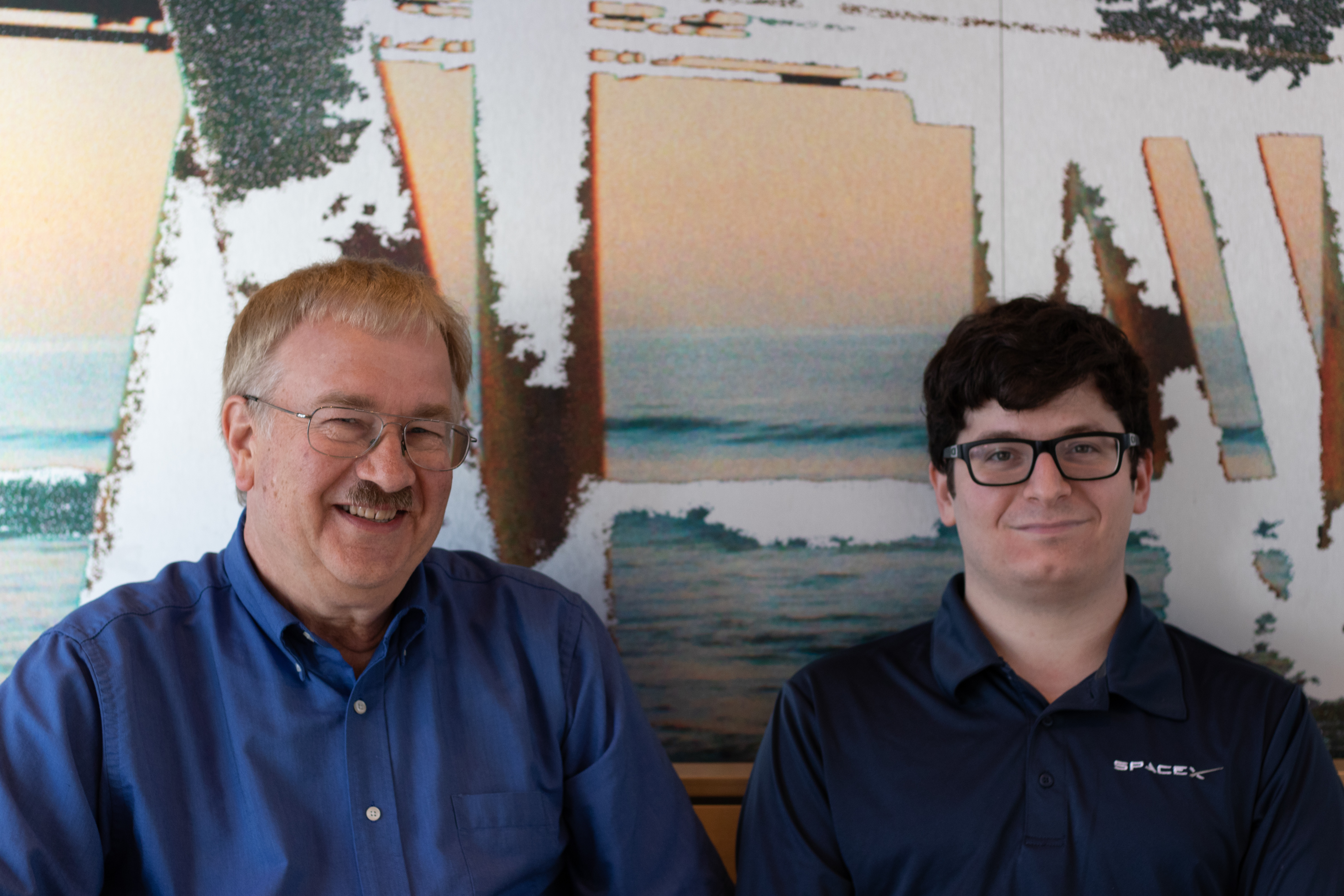
David Keyes, Israeli Prime Minister Benjamin Netanyahu’s foreign media spokesperson, is taking some time off in response to allegations of sexual misconduct, the Times of Israel reports.
As the Journal has reported, New York state senate Democratic candidate Julia Salazar accused Keyes of sexually assaulting her in 2013, an allegation Keyes denied. But the Times of Israel found 11 other women who accused Keyes of inappropriate conduct:
Besides Salazar, one other woman who spoke to The Times of Israel accused Keyes of “physically aggressive” behavior that could be considered sexual assault. According to this woman’s account, he kissed her against her will and tried to undress her, and she had to use force to extricate herself from his embrace.
The other women described encounters they found either aggressive, offensive, overly flirtatious or otherwise inappropriate.
Additionally, Wall Street Journal reporter Shayndi Raice tweeted that Keyes is a “predator”:
Keyes has denied the allegations, but announced in a statement on Thursday that he was taking some time away from his position.
“In light of the false and misleading accusations against me and in order not to distract from the important work of the prime minister, I have asked to take time off to clear my name,” Keyes said. “I am fully confident that the truth will come out.”
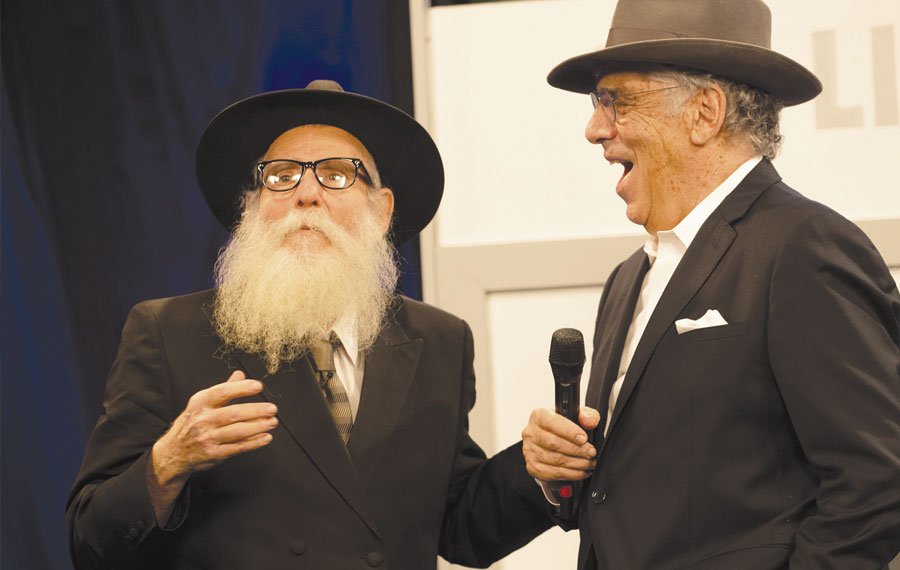
The 38th annual Chabad “To Life” telethon on Labor Day weekend raised more than $3.6 million for Chabad West Coast, according to Rabbi Simcha Backman, co-director of Chabad of Glendale and the Foothill Communities.
The nationally televised event, broadcast live on Sept. 2 from Illuminate Hollywood in Studio City, benefited Chabad-Lubavitch’s West Coast headquarters, which funds day schools and preschools, a drug rehabilitation program, community outreach programs and other activities and services.
Participants included Rabbi Boruch Shlomo Cunin, director of Chabad-Lubavitch of California; Rabbi Shalom Cunin, director of Chabad of Westwood; actors Jon Voight and Elliott Gould; attorney Marshall Grossman and his daughter, actress Leslie Grossman; Donna Miller, director of Chabad Treatment Center; Los Angeles City Councilman Paul Koretz; and L.A. City Controller Ron Galperin.
Chabad emissaries who recently moved to Los Angeles also attended, which energized the telecast, Backman said.
“That’s the future of the Jewish people,” Backman said in a phone interview after the telethon. “We’re really doing a lot in those arenas to try to engage young people Jewishly, early on, to try to counter all the negativity you read in the news today about the polls, where the Jewish people are heading, the nonaffiliation rates. One by one, we have to engage people, and we’re doing a lot of that.”
Longtime telethon producer Michael Levin produced the event.
The Chabad telethon first aired in 1980 after a fire struck the organization’s headquarters in Westwood.
Backman said the event always enjoys a broad appeal.
“Many different types of people come together for a common cause, and that common cause is to help others,” he said. “That to me is the most important thing — to see people from all walks of life, all denominations of Judaism, politicians, white people, black people, Asian people — coming together for a very simple cause. It’s a beautiful thing to see in this day and age.”
Nonprofit organization Big Sunday’s ninth annual Back to School Night sent low-income students back to school with the supplies they need. Photo by Bill Devlin, Temple Ner Simcha
Nonprofit organization Big Sunday held its ninth-annual Back to School Night on Aug. 9, which provided new backpacks and school supplies to low-income students.
The gathering drew hundreds of volunteers to Big Sunday’s headquarters on Melrose Avenue, where they collected supplies, including 1,500 backpacks, for students enrolled at 24th Street Elementary School, Hooper Elementary School and other schools across Southern California.
Participants sorted, counted and stuffed all kinds of donated items into the backpacks — such as notebooks, pocket folders, pens, pencils, crayons, markers, colored pencils and more. Representatives of the schools were present to receive the backpacks.
Volunteers also hand-wrote and decorated cards, which were placed into the backpacks to welcome children to the new school year.
The all-ages event concluded with a dinner for the participants.
Founded in 1999 by David Levinson, Big Sunday is a Los Angeles-based organization that holds year-round social service activities. The nonprofit grew out of a mitzvah day at Temple Israel of Hollywood and is one of the nation’s premiere groups for pairing people with volunteer opportunities. The philosophy of the organization is there is something everyone can to do pitch in and give back.
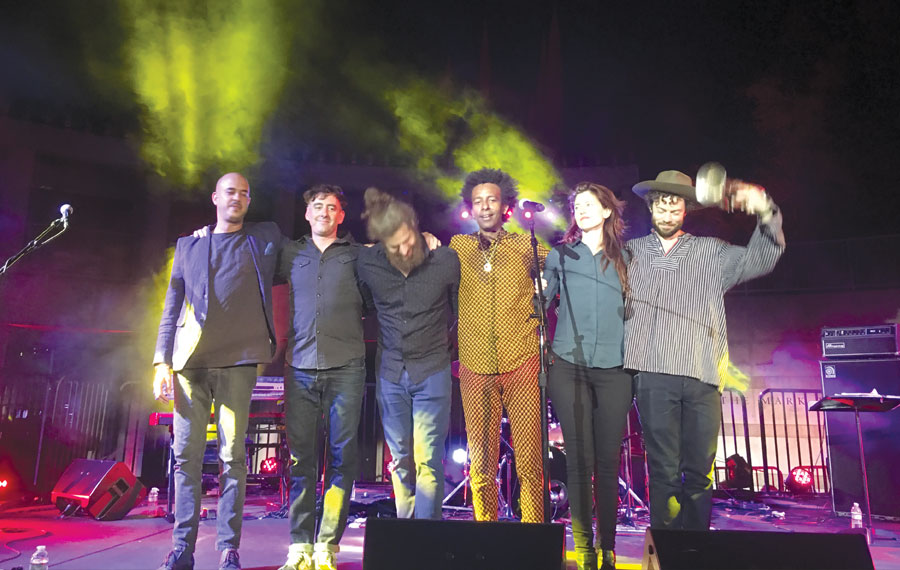
Ethiopian singer Gili Yalo and his band take a bow on the final night of the Skirball Center’s Sunset Concerts series. From left: Daniel Mindelman, Brian Griffin, Navad Peled, Yalo, Hagar Ben-Ali, Stewart Cole. Photo by Ryan Torok
The Skirball Cultural Center’s Sunset Concerts series came to a rousing conclusion Aug. 30 with the Los Angeles debut of singer Gili Yalo. The Ethiopian Jew, who escaped the war and famine of his birthplace and now resides in Tel Aviv, charmed the audience, which filled the cultural center’s Mark Taper Courtyard.
A lithe, charismatic performer whose voice at times resembles Ziggy Marley’s, Yalo performed an hourlong set of his rhythmic songs that add a touch of reggae and schmears of jazz and rock to slinky Afro-Middle Eastern grooves.
“You cannot hear Ethiopian music sitting down,” he joked, and many people in themultigenerational audience were on their feet, dancing and singing along.As one member of the crowd told the Jewish Journal, “This might be the only time you’ll see hipsters dancing alongside Holocaust survivors.”
Backing Yalo was a tight, supple five-piece band that included Hagar Ben-Ari, an Israeli-born bassist best known as a member of the band on “The Late Late Show With James Corden.”
In her introduction to the show, the Skirball’s Mia Cariño said that by presenting Yalo and other international performers, such as South Africa’s Goapele, Zimbabwe’s Peter Mawanga, and South Carolina’s Ranky Tanky, previously in the concert series, the Skirball embraces the Jewish value of welcoming strangers. Yalo said he hoped he would have a chance to welcome the crowd to his adopted home. “I grew up in Israel,” he said. “It’s a wonderful country.”
— Steven Mirkin, Contributing Writer
Photo by Betsy Annas, City of Los Angeles
A Sept. 4 celebration at Los Angeles City Hall drew city leaders, clergy and Jewish Federation leaders to honor the Jewish New Year.
Speakers at the pre-Rosh Hashanah celebration included city council members Paul Koretz, Bob Blumenfield and David Ryu; City Attorney Mike Feuer; Controller Ron Galperin; Rabbi Jason Weiner, president of the Board of Rabbis of Southern California and director of Cedars-Sinai Medical Center’s Spiritual Care Department; Eitan Weiss, deputy chief of mission at the Consulate General of Israel in Los Angeles; Becky Sobelman-Stern, executive vice president and chief program officer at the Jewish Federation of Greater Los Angeles; and Valley Beth Shalom Rabbi Joshua Hoffman, vice president of the Board of Rabbis.
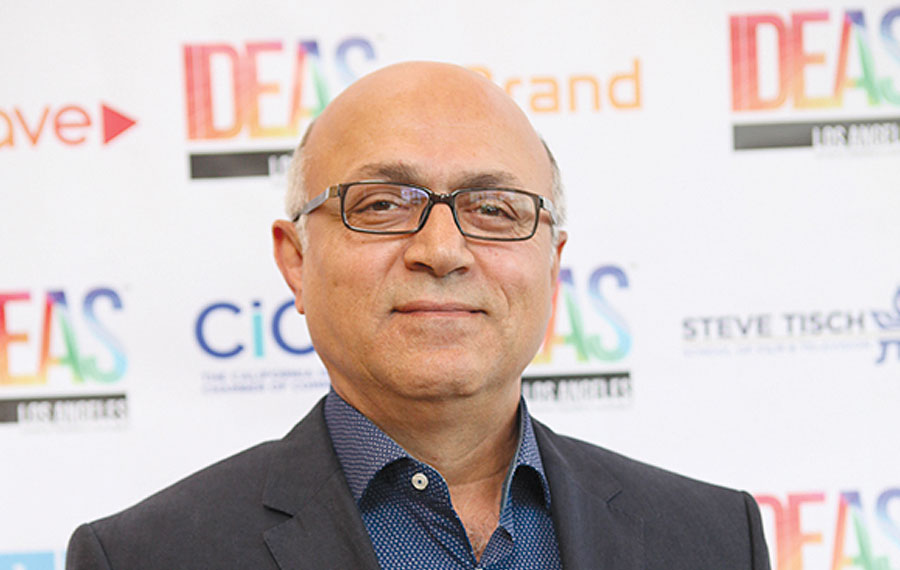
Los Angeles entrepreneur and philanthropist Behzad Kianmahd was recently elected to the American Friends of Tel Aviv University’s board of directors. Photo courtesy of Amer. Friends of Tel Aviv Univ.
Los Angeles entrepreneur and philanthropist Behzad Kianmahd recently was elected to American Friends of Tel Aviv University’s (AFTAU) board of directors, the nonprofit organization announced.
Kianmahd is chairman and CEO of Maxim Commercial Capital, a specialty finance company dedicated to providing capital to underserved, small and midsize businesses. He has served on the board of for-profit and nonprofit organizations and is a co-founder and advisory board member of TAU Ventures, a university-sponsored fund investing in early-stage startups, AFTAU said in a press release.
“We are delighted and fortunate to welcome Behzad to our board of directors,” AFTAU President and CEO Gail Reiss said in a statement. “Behzad is a distinguished leader in the philanthropic and business communities, with a passion for strengthening higher education in Israel and elsewhere. I know he will serve as an important partner as we work to further elevate Tel Aviv University’s visibility and stature on the global stage.”
AFTAU board Chairman Richard Sincere echoed Reiss’ words of praise.
“The commitment of our board members allows us to continue to support and advance the most prestigious, prolific and entrepreneurial academic institution in Israel, and we are proud to count Behzad among them,” Sincere said.
Want to be in Movers & Shakers? Send us your highlights, events, honors and simchas at ryant@jewishjournal.com.
The lunch rush is quieting down during a weekday afternoon at Mizlala in Sherman Oaks. The restaurant’s casual, intimate space contrasts with the steady thrum of traffic outside on the dauntingly wide Sepulveda Boulevard and the hulking interchange of the 101 and 405 freeways.
Saffron-colored accent walls lend pops of color to the unpretentious decor. Above the kitchen window, a mural is emblazoned with a mashup of Israeli and Southern California imagery, while a row of ceramic Moroccan tagines stand at attention below.
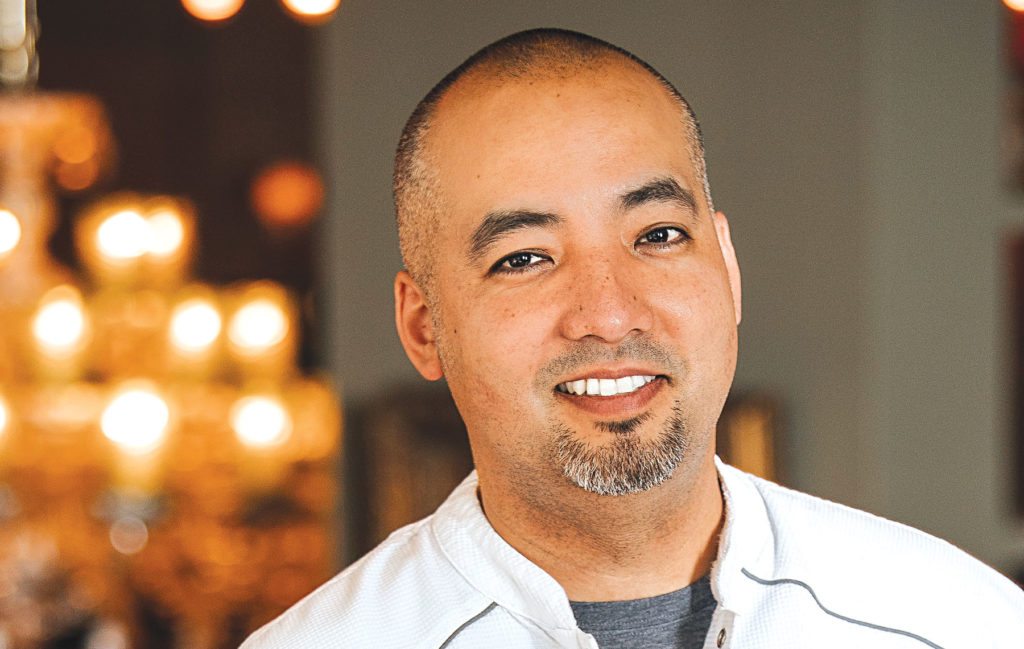
Chef-owner Danny Elmaleh is in back, restocking and arranging jars of colorful spices on shelves. For the past two years, Elmaleh has continued his family’s business since taking over what used to be Simon’s Café, a local institution operated by his father.
The family’s longtime clientele and Mizlala’s new customers are in very capable hands. After training at the Culinary Institute of America in Hyde Park, N.Y., Elmaleh honed his skills for more than two decades over a career that has taken him from Japan to Italy and landed him the job of executive chef with the hospitality giant SBE Entertainment Group and its Cleo Mediterráneo restaurant chain, with Los Angeles locations in Hollywood and Beverly Grove.
Elmaleh — who has close-cropped, salt-and-pepper hair and a relaxed, warm demeanor — said that when his Israeli-Moroccan father and Japanese mother decided to retire and have him take over the space, “I didn’t want to put the word out there too much. I just wanted it to be a neighborhood restaurant and start a new brand that was more Israeli than Mediterranean.”
The change required transitioning away from his father’s Moroccan specialties and broadening the offerings — although he’s kept some of Simon’s customer favorites. The menu is now expansive, ranging from substantial apricot lamb tagine and kebabs to green falafel and a green goddess salad.
The name Mizlala was his father’s idea to convey a down-home vibe, since the word means “cafeteria” in Hebrew, as well as “ ‘to pig out’ in slang,” Elmaleh said.
Given the recent trend of Mediterranean and Israeli restaurants opening in Los Angeles, Elmaleh has been ahead of the curve for some time.
To Elmaleh, the cuisine is a natural, given Southern California’s and Israel’s commonalities. “The climate is similar and the ingredients are similar,” he said. “Israel is always strong with agricultural [products], and the produce is always beautiful.”
And yet, this is a chef for whom few cuisines are off-limits.
“I just wanted to start a new brand that was more Israeli than Mediterranean.”
— Danny Elmaleh
Elmaleh was born in Israel and moved with his family to Japan, his mother’s native country, at the age of 9. His parents met while his Israeli-Moroccan father worked for Zim, the cargo shipping company, and spent extended periods in Tokyo. His father’s heritage remained strong, and he opened Japan’s first Moroccan restaurant when the family lived in Kobe, Japan. The oldest of three sons, Elmaleh attended English-language Catholic school, and returned to Jerusalem for his bar mitzvah at the Kotel. (His father, at one point, was the leader of the synagogue in Kobe, one of two in Japan at the time.)
After graduating from culinary school, Elmaleh spent almost a year at the famed Ristorante Giannino dal 1899 in Milan, and then came back to Japan to work for a prominent Japanese chef who operated a celebrated French restaurant.
The 1995 Kobe earthquake and its devastating economic impact prompted the Elmaleh family to consider relocating. They decided on Los Angeles, since Elmaleh’s father had friends in the area, and arrived here in 2001.
Even though he personally didn’t have any contacts or friends in L.A.’s restaurant scene, Elmaleh recalls that he “was pretty motivated to do something.” He spotted Josiah Citrin, the chef behind the acclaimed restaurant Mélisse, on a TV show and found Citrin’s somewhat stereotypical chef’s bluster appealing. “I wanted to work for somebody who was one of the best,” he said. He was hired by Citrin at Mélisse and worked with him on running the erstwhile Lemon Moon Café daytime restaurant in West L.A., while also juggling various private chef and culinary teaching jobs.
Elmaleh left Citrin’s operations in 2006 to open an inventive Asian restaurant, Celadon, on Third Street near Fairfax with a business partner. When he was there, he was approached by master sushi chef Katsuya Uechi, of Studio City’s iconic Sushi Katsu-Ya, who suggested he join him at the SBE chain of hotels, restaurants and nightclubs run by Sam Nazarian.
At the worldwide hospitality company, Elmaleh helped Uechi expand and glitz up a new iteration of Katsuya restaurants in locations from Hollywood to Miami. “I wanted to always make sure that we always operated at the highest level, and I wanted to honor what he was doing and his vision,” Elmaleh said of working with Uechi.
That project led to other opportunities in his capacity as a corporate executive chef at SBE. Elmaleh created Cleo, an upscale Mediterranean and Middle Eastern restaurant at the Hollywood Redbury Hotel. The Hollywood location currently is closed for renovations but, in addition to the restaurant on Third Street in Beverly Grove, there are Cleo outlets in Las Vegas, New York, Kuwait and the Bahamas. Elmaleh remains a partner in the brand.
Since investing more time at Mizlala, he’s also been traveling frequently to Israel. His menu features Moroccan specialties such as tagines and merguez sausage, Israeli salatim, as well as different types of hummus. Dishes like sea bass ceviche reveal his international perspective.
Elmaleh grew up mostly kosher, but Mizlala is not. “We don’t have any pork. We have shellfish,” he said, adding that in Israel, “the people eat very freely.”
At Mizlala, “I want people to be able to order a lot of different dishes and have a blast. Sometimes you see a lot of food on the table. People want to try different things.”
In that spirit of convivial dining and fresh experiences, Elmaleh has shared a hearty recipe to celebrate the new year.
BEEF SHORT RIB TAGINE WITH POMEGRANATE GREMOLATA
For the braise:
4 pounds beef short ribs
Salt and pepper
Canola oil
2 cups sliced onion
1 cup sliced fennel
4 tablespoons chopped garlic
4 teaspoons paprika
4 teaspoons ground cumin
Pinch of cayenne
2 cups red wine
1 cup pomegranate molasses
5 cups milled tomato
2 quarts chicken stock
Pinch of ground allspice
8-12 bay leaves
4 tablespoons salt
4 cups cooked chickpeas (2 cans)
For the gremolata:
1 cup fresh pomegranate seeds
2 tablespoons chopped parsley 1 tablespoon fresh lemon juice
2 tablespoons olive oil
Salt as needed
Season the short ribs with salt and pepper, and sear in hot oil until brown on all sides. Preheat oven to 350 F.
In a separate, large, oven-proof pot (such as enamel cast iron), caramelize the onions and fennel slowly with a little oil. Once caramelized, add garlic and spices, followed by all ingredients, except the chickpeas.
Add the short ribs, bring to a boil, cover and bake for 2 1/2 hours until fork-tender. (Transfer to a Pyrex dish if you don’t have an ovenproof pot.)
Once cooked and soft, add the cooked chickpeas. Mix all the ingredients for the gremolata in a bowl. Top the braised short ribs with the pomegranate gremolata and serve.Serves 5-6.
If you have any doubt that The Temptations were the greatest R&B group of all time, go see this incredible production at The Ahmanson theatre and you will come away a believer. The show is headed for Broadway where it will no doubt win several Tony Awards.
“Ain’t Too Proud” is the story of the original five members. Written by Dominque Morisseau, directed by award winning director, Des McAnuff and choreographed by the brilliant Sergio Trujillo. We get a poignant glimpse into their lives which included drugs, egos gone wild, friendships, loss, death and some of the most incredible music written by Smokey Robinson, Norman Whitfield and several others.
At the opening night performance on Friday, August 24 the crowd which included Berry Gordy, Mary Wilson of the Supremes, Sheldon Berger (The Temptations manager) John Legend, Lily Tomlin, Billy Crystal and Otis Wiliams, the founding and the only living member of the ‘Classic Five’, you could feel the excitement in the air. In fact, applause broke out even before the cast sang the first note.
This is an extraordinary show about an extraordinary group. The show features the group’s classic hits including “Just My Imagination,” “Papa Was A Rolling Stone,” “My Girl,” “Cloud Nine,” “I Wish It Would Rain” just to name a few of the greatest numbers from the legendary Motown Catalog.
But that’s not all. “Ain’t Too Proud” takes you on a powerful emotional journey through those turbulent times when The Temptations were making their way up the Motown ladder touching on Martin Luther King’s death, the Vietnam War, racism, segregation and political unrest.
What makes The Temptations so unique is after all these years, the group is still performing. The members may be different but the sound is the same.
Founded in 1960 by Otis Williams, Elbridge ‘Al’ Bryant (who was soon replaced by David Ruffin), Melvin Franklin, Eddie Kendricks and Paul Williams they became known to this day as the Classic Five. There has been more than 24 members of The Temptations which span 60 years.
The cast including Derrick Baskin as Otis Williams, Ephraim Sykes (David Ruffin), James Harkness (Paul Williams) Jawan M. Jackson (Melvin Franklin), Jeremy Pope (Eddie Kendricks) Saint Aubyn (Dennis Edwards) are absolutely extraordinary from their singing to their moves, they will have you applauding and shouting Bravo even before their numbers are finished.
This is a musical that will stay with you long after the curtain falls.
“Ain’t To Proud” runs through Sept. 30, 2018
Show times are 8 p.m. Tuesdays through Fridays; 2 p.m. and 8 p.m. Saturdays; 1 p.m. and 6:30 p.m. Sundays.
You’re never too young to start changing the world.
It’s this thinking that propelled a 27-year-old MIT graduate to co-found Founders Bootcamp for teenagers last year.
MIT and Milken Community School graduate Richard Dahan, now 28, conceived the program with his former Milken science teacher and mentor, Roger Kassebaum.
Founders Bootcamp is a first-of-its-kind accelerator and venture capital fund designed specifically for high school students. Teams applied to be part of the program in January of this year, and there were 1,100 applicants from 26 countries.
The selected teams were paired with MBA students at UCLA or recent graduates, who worked with them remotely and acted as their mentors. In April, the teams were whittled down to five finalists, who then participated in an eight-week summer program in Los Angeles.
In August, the finalists pitched their startups to an audience of advisers and investors at an event at UCLA’s Anderson School of Management. In October, the same teams will participate in a demo day in Silicon Valley.
Two teams are already “mind-blowing success stories,” Dahan told the Journal. He singled out students from Harvard-Westlake and Brentwood schools, who worked together on Trill, a safe and anonymous social network app that builds communities and, according to its website, “is perfect for anyone grappling with issues, thoughts, or ideas they aren’t ready to publicly share, or are not supposed to be sharing. This especially includes people in countries with restricted or censored internet, people in the LGBT+ community, and people dealing with the stigma around mental health issues.”
The app already has 10,000 users and has garnered media attention and venture capital interest.
The second major success Dahan cited was Agronet, created by teams from Malawi and Zimbabwe. Agronet is an e-marketplace for agriculture in Africa that connects farmers directly with crop buyers, eliminating predatory middlemen. It already has received support from Malawi’s government.
Co-founders Roger Kassebaum and Richard Dahan.
The three other startups that participated in the UCLA event were Loop, a party-hosting app created by students from Milken; Hero, which is jewelry that deters assault by sending an alert when activated, that was created by students from YULA Girls (which the Journal reported on in March when they won a grant for their device); and WaterPoint, a portable machine that inexpensively delivers water by extracting it from the moisture in the air.
WaterPoint was created by students from France, Israel, the Palestinian territories, the Czech Republic, Vietnam, Brazil, Belgium and the United States, all of whom attend the Eastern Mediterranean School in Israel.
Dahan said he believed all five teams are on track to build viable companies.
The idea for Founders Bootcamp came about after Dahan, who graduated from MIT in 2012 with a degree in engineering, returned to Los Angeles in 2016 and reconnected with Kassebaum.
When Milken reopened the Guerin Institute for Advanced Sciences in September 2016. Kassebaum, who considered Dahan one of his star students, invited Dahan to the grand opening. Dahan said he was particularly impressed with the quality of the Milken lab and the abilities of its students.
“Richard was my robotics team captain during high school,” Kassebaum said. “In those days, it took us four weeks to get a robot to move and drive. With [Milken’s new] Fab Lab, students are able to design, fabricate, assemble and drive a robot in one day. Students do all of the design work — coding, electrical, fabrication. Seeing how capable high school students are, we decided that [they] have what it takes to start their own companies.”
What was supposed to be “a 10-minute conversation between a student and his favorite high school teacher turned into a six-hour conversation,” Dahan said. “We saw that a bunch of funds, VCs [venture capitalists], accelerators were geared toward college students, but there were none really geared toward high school students.”
“Our educational model is thousands of years old. The elders in the village helped the youth. We want to surround the students with the expertise and the guidance to keep going forward in their area of passion.”
— Roger Kassebaum
That’s when the pair decided to launch the pilot for Founders Bootcamp in the summer of 2017. However, the teams were all Los Angeles-based. Students came from Milken, Shalhevet, Hamilton High, Luskin High, Harvard-Westlake, High Tech Los Angeles high school, Stephen Wise Elementary and STEM Academy Hollywood.
The students learned from a variety of speakers including former Keurig CEO Nick Lazaris, Clutter founder Bryan Thomas, former U.S. Ambassador Frank Baxter, Super Bowl-winning linebacker turned venture capitalist Ryan Nece, and multibillionaire Michael Milken. They then formed teams and created their startups with $5,000 in seed money, donated by Dahan and Kassebaum. By the end of the program, the students had collectively acquired more than 25,000 users and secured over $1 million in signed investment commitments.
This year, along with opening up the competition to students worldwide, teams received $50,000 in startup funds. Kassebaum explained that while the funds are still provided by himself and Dahan, they have 5 percent equity in each of the teams’ companies. They also are planning to create a venture capital fund for accredited investors to put money into the student companies.
“Our educational model is thousands of years old,” Kassebaum said. “The elders in the village helped the youth. We want to surround [the students] with the expertise and the guidance to keep going forward in their areas of passion.”
Dahan added, “Nothing would give us greater pleasure or greater satisfaction than if entrepreneurship programs spread out to high schools throughout the country and eventually the world.”
What happens when you merge a 2,000-year-old fortress in the Old City of Jerusalem with some of the hottest minds of the 21st-century Startup Nation?
The answer can be found in a Herodian-era hall in the Tower of David, where a bustling tech hub develops ways to bring the ancient stones of Jerusalem to life.
At first, the physical tension between old and new can be jarring. The ancient hall is littered with supersized screens, VR headsets and wireless joysticks. Even the lighting poses a challenge for the hall’s preservation and had to be installed using wire suspensions embedded in tiny nooks between the powdery Jerusalem stones.
One of the main problems facing technologists hoping to augment the museum-going experience, is shifting the mindset of the individuals who run them. It’s what Tower of David Director Eilat Lieber calls the “dinosaur” attitude in which museum directors, curators and, more often than not, stuffy local government bureaucrats are steeped in antiquated notions of what it means to be a producer of historical storytelling.
The Tower of David, in this respect, stands apart from its peers, especially from historical landmarks in Europe. Last year, the museum launched the Innovation Lab, which specializes in the integration, piloting and development of tech solutions that support and enhance the visitor experience.It allows companies to use the entire museum — not just the physical space but everything from exhibitions to visitor analysis to PR coverage — as a beta site for new augmented reality/virtual reality applications. In return, the museum gets access to cutting edge technologies that it would otherwise never have the budget for.
According to the Innovation Lab’s Manager, Devora Mason, the program’s success is partially due to the willingness of the companies to invest their money and resources, essentially making them equal partners with the museum. However, Mason is quick to add that opening the lab was by no means an easy feat.
“Creating a commercial project inside an NGO is an extremely challenging endeavor,” Mason told the Journal. The museum and the companies need to prepare themselves for failure. But that too, she said, is part of it.
“We guide the companies in every step of the process. They then have a proof of concept that they can market on. The beauty of the lab is that we can tell other museums not just what worked but what didn’t.”
The lab’s flagship project, set to open over the Sukkot holiday, is the first VR mobile walking tour of Jerusalem. The guided tour bills itself as experiencing Jerusalem the way the pilgrims did two millennia ago. Stopping at landmark sites in the Old City, users don a VR headset that allows them to experience the Western Wall, Cardo and David’s Citadel the way they looked during the Second Temple era.
“Stopping at landmark sites in the Old City, users don a VR headset with computer-generated imagery that allows them to experience the Western Wall, Cardo and David’s Citadel the way they looked during the Second Temple era.”
Thetour was created by Lithodomos VR, a Melbourne, Australia-based companyfounded in 2016. Co-founder Simon Young said the idea came to him while on a morning jog. “I realized that people visit historical places like the Colosseum or the Roman Forum, and for the most part they don’t know what they’re looking at.” Basing their work on intensive archeological exploration as well as historical texts, artists and software developers were able to replicate roads, sites and landmarks from antiquity.
“I hate the analogy but it’s kind of like Pokemon Go,” he said, referencing the wildly popular augmented reality game.
Young came up with the idea while working on his doctorate at the University of Melbourne. The university was pushing him to monetize his research. “My dilemma was how was I going to monetize archeology?” he said, laughing. Today, Lithodomos VR operates virtual reality tours in dozens of historical sites all over the world, including in Rome, Athens and London.
However, Young said implementing the project in Jerusalem was a refreshing change. Israelis, he said, “really fast-tracked the launch which hasn’t happened anywhere else.”
He recalls the day he struck the deal with the Tower of David. “There was this weird, spiritual moment where we’re sitting with the four ladies who run this place in this massive crusader hall in the basement of the tower,” he said of the meeting between himself, his co-founder Tony Simmons, Mason, Lieber, Deputy Director Tamar Berliner and Director of External Relations Rose Ginosar. “This quiet and calm settled around the room. We all love Israel and we all really want this to happen. It was a real Game of Thrones moment.”
Young said the Jerusalem venture was also extra special because of the city’s significance, not just historically, but in the real, everyday lives of millions of people from the three Abrahamic religions.
While live-testing Lithodomos’ software at the Western Wall, Young asked a religious man there on his wedding day to try the headset on. Shocked at finding himself suddenly transported to the site of Herod’s Temple — replete with hairline cracks on the flagstones and a smooth sheen on the temple’s gold-tipped pillars — the young groom burst into tears.
“It brought home for me just how much Jerusalem still means to so many people,” Young said.
For Lieber, no less important is that despite the fact that although Jerusalem has been besieged or destroyed dozens of times, the Tower of David remained intact. As such, it has always been a bridge between different cultures, religions and now, with the help of the innovation lab, between the past and the future.
During the Second Lebanon War in 2006, Israeli Defense Forces tank commander Ron Weinreich was paralyzed from the waist down after a building collapsed on his tank during a Hezbollah strike. He was 20.
“My injury put my hotshot tank commander days to an end. I turned into a broken sack of bones. I had to learn how to live my life once again,” he told the Journal.
Weinreich, who was born on the East Coast and moved to Israel with his family when he was 15, now lives in Los Angeles after moving here in 2013.
After his injury 12 years ago, Weinrich refused to accept doctors who told him he would probably never walk again and went looking for practitioners and therapists who could possibly help him.
In 2009 he visited a Danish therapist in Israel — Dan Tager. After speaking with Weinreich for 10 minutes, Tager urged him to get up out of his wheelchair.
“He put my arms on his shoulders, pressed his knees against my knees and his hands on my hips,” Weinreich recalled. “And he goes, ‘1, 2, 3, stand.’ And then he pulls me up. There I am, standing for the first time in 2 1/2 years.”
Weinreich is still in a wheelchair, but Tager’s work with him has given him hope and helped improve his quality of life — a rehabilitation strategy he thinks needs to be made more available to others.
“If the medical community doesn’t believe something can be done, [it] cuts off the chance of recovery,” he said. “It is possible to significantly improve the quality of life of people with disabilities, but it’s never really put into action.”
For years Weinreich has had a vision of creating a state-of-the-art rehabilitation center that looks like a gym, not a hospital. “It would be a place that when you walk in, you are told, ‘Welcome. So great to see you. Let’s throw everything we’ve got and the kitchen sink at you to see what we can do to reverse your condition.’”
“My injury put my hotshot-tank-commander days to an end. I turned into a broken sack of bones. I had to learn how to live my life once again.”– Ron Weinreich
He added the caveat that “Of course, there would be no guarantees,” but such a center would “employ the modalities and therapies that will come with the kind of mindset where anything is possible. … Places for yoga, Pilates, etc. — they don’t exist for people with disabilities.”
Today, Weinreich is turning his vision into reality. He plans to establish a facility in Israel for people with mobility disorders.
Despite the fact that he now lives in the U.S., Weinreich said he chose Israel for the center because “It’s my home base. I know that many of my peers and my very good friends who are disabled IDF veterans, who were injured either with me or in previous wars, [feel] hopeless and don’t have an outlet for where they can get this kind of treatment.”
To that end, Weinreich is working with a team that includes Los Angeles kinesiologist Taylor Kevin Isaacs and Dr. Avi Ohry of the Reuth Medical Center and Tel Aviv University’s Sackler Faculty of Medicine. He hopes to open the center by the end of 2019.
“The center will be called Nua,” Weinreich said. “Nua in Hebrew means move or advance.”
And while he is starting in Israel, Weinreich hopes other countries will eventually embrace his concept.
“Israel is a pillar in the world medical community,” he said. “I truly believe if we can implement this, other countries will see [it], and it will be the most prominent stamp of approval.”
Standing in the middle of her Century City penthouse with sweeping views of Los Angeles, Dina Leeds told 40 assembled female community leaders, “We take every day of this month of Elul to prepare for going into the [High Holy Days]. We tell God that we’re here to do our particular good in this world.”
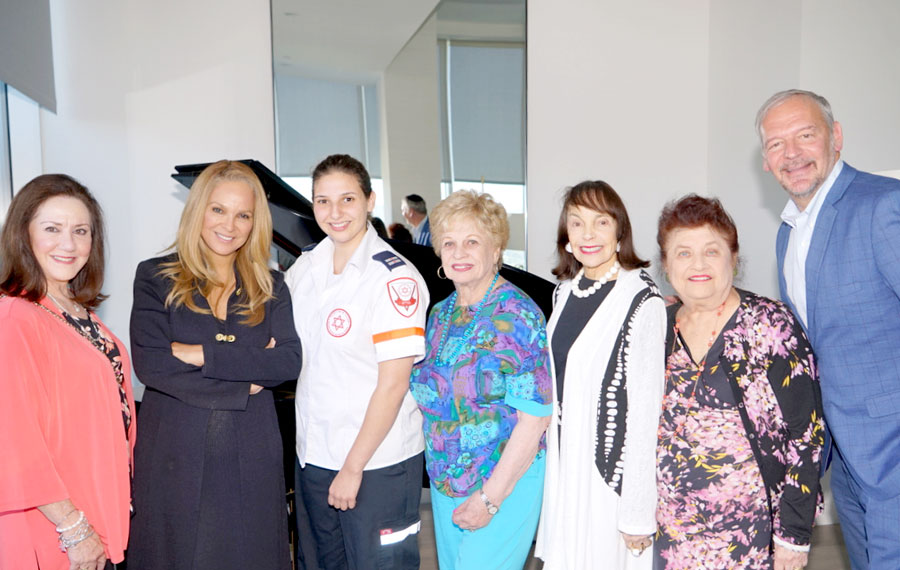
That good includes Leeds’ role as the Western region board president for the American Friends of Magen David Adom (AFMDA). Leeds’ speech was part of an exclusive Women’s Division of AFMDA luncheon held at the end of August.
The event kicked off with a warm welcome from Leeds and the sounding of the shofar by AFMDA Western Region Executive Director Yossi Mentz.
“When you see women getting together, women of this caliber, to support our people, to support the State of Israel, to support Israel’s humanitarian effort not only to its people [but] around the world in natural disasters, in humanitarian relief, in technology, we are here to give, and we fulfill our purpose,” Leeds said.
The special guest at the event was Tal Rabin, a 28-year-old senior MDA paramedic, instructor and medical student at Tel Aviv University. Using slides, Rabin, who began working with MDA in 2004 and became a paramedic in 2008, spoke about her journey in helping others, including her participation in a delegation to Nepal after a 2015 earthquake, and her most recent visit to Guatemala in the wake of the Fuego volcanic eruption in June.
“Rabin told the Journal that she signed up to be a medical clown for her teen community service in Israel and then decided to be a youth volunteer for MDA ‘for fun.'”
Rabin recalled how her boss called her after the June 3 eruption and asked her when her finals started. When she told him they began in nine days, he said, ‘Never mind.’ But after hearing what had happened, Rabin said, ‘I have to finish up my homework,’ but then agreed to go to Guatemala.
Speaking of the destruction she encountered there, Rabin also spoke about the amazing results delegation members discovered using the pineapple enzyme they brought from Israel, which removes dead skin tissue and reduces the need for post-burn surgeries.
After her presentation, Rabin told the Journal that she signed up to be a medical clown for her teen community service in Israel and then decided to be a youth volunteer for MDA “for fun.” She quickly
went from volunteer to instructor, before doing her compulsory three-year military service starting at the age of 18. Rabin served as a combat medic in the Israel Defense Forces and returned to MDA after completing her military service.
“I love doing what I do,” she said. “I feel like part of my job is to be that person who is in the wrong place at the wrong time for the right reasons.”
Even when she’s not on duty, Rabin said she is always on alert for accidents. “I really believe that whoever’s in need, whoever you can help, you should help. For me, that is part of being a Jew and part of being Israeli and part of being Magen David Adom.”
Rabin added that she was thrilled to attend the luncheon. “I’m really excited that I get to say thank you,” she said. “I save lives, but I couldn’t save as many lives without the help from these people.”
Former Secretary of State John Kerry, who is promoting his new memoir, admitted on Wednesday that he has met with the Iranians multiple times during Donald Trump’s presidency, although he denied that he was doing so to save the Iran nuclear deal.
In May, prior to Trump’s decision to leave the Iran deal, the Journal reported that Kerry met with Iranian Foreign Minister Javad Zarif and other foreign leaders to salvage the deal. Kerry told conservative radio host Hugh Hewitt on Wednesday that he met with Zarif a few times.
“I met with him [Zarif] at a conference in Norway,” Kerry said. “I think I saw him in a conference in Munich at the World Economic Forum. So I’ve probably seen him three or four times.”
Hewitt followed up by asking Kerry if he was coaching Zarif on preserving the Iran deal, which Kerry denied.
“You know, that’s not how it works,” Kerry said. “What I have done is tried to elicit from him what Iran might be willing to do in order to change the dynamic in the Middle East for the better. You know, how does one resolve Yemen? What do you do to try to get peace in Syria? I mean, those are the things that really are preoccupying, because those are the impediments to people, to Iran’s ability to convince people that it’s ready to embrace something different.”
Kerry added, “I’ve been very blunt to Foreign Minister Zarif, and told him look, you guys need to recognize that the world does not appreciate what’s happening with missiles, what’s happening with Hezbollah, what’s happening with Yemen. You’re supporting you know, an ongoing struggle there. They say they’re prepared to negotiate and to resolve these issues. But the administration’s taken a very different tack.”
Kerry also said that he thought Trump should have stayed in the Iran deal, arguing that under the deal “you have China, Russia, these other countries with you in the effort to leverage this different behavior from Iran rather than unilaterally pulling out and isolating yourself and making it much more difficult to sit down with any Iranian.”
Later in the day, Kerry was asked by Fox News’ Dana Perino if he told the Iranians to simply hold out until 2020, when Trump could be voted out of office. Kerry replied with a chuckle, “I think everybody in the world is sitting around talking about waiting out President Trump,” but he said that was in regard to other matters, not the Iran deal.
“When I met with the Iranians, the policies of the United States was still to be in the Iran deal because the president had not decided and not pulled out,” Kerry said. “Secondly, every former secretary of state continues to meet with foreign leaders, goes to security conferences, goes around the world. We all do that, and we have conversations with people about the state of affairs in the world in order to understand them. We don’t negotiate. We are not involved in interfering with policy.”
According to the Jerusalem Post, Kerry allegedly told Hussein Agha, who is described as a “close associate” to Palestinian Authority President Mahmoud Abbas, that Abbas should not make any concessions to Trump in a peace agreement until 2020, as Kerry argued that Trump would be out of office by then. Kerry also said he was “seriously considering running for president in 2020,” per the Jerusalem Post report. When CBS News asked Kerry if he was going to run for president in 2020, he didn’t rule it out.
One Question, Five Voices: How do we make an atonement that lasts?
Miriam Yerushalmi Director of SANE (Soulful Advice for a New Existence); marriage and family counselor; author of the “Reaching New Heights” books.
Yom Kippur is such an awesome holy day that some people have the misconception that God expects only perfection from us and judges us accordingly. Not so! God wants us to do teshuvah, repentance, to return to the truth. HaShem is not focused on our reaching perfection; it’s the process of teshuvah that counts.
To be at peace with this process of becoming our truest self is the best aid to successful positive change. The way the land of Israel was acquired — territory by territory, piece by piece — teaches us how to achieve our best selves: step by step.
Yes, teshuvah revolves around minimizing our faults as much as possible, but this involves forgiving ourselves with mercy and developing ourselves with joy.
On Yom Kippur, HaShem bestows upon us extra strength to accomplish all of this and more.
The Yom Kippur prayers feature the verses listing the Thirteen Divine Attributes of Mercy. With this recitation, not only do we beseech HaShem to judge us with compassion through the medium of these attributes, but we also focus on emulating these holy attributes — remembering always that they are qualities of mercy, not strictness. HaShem wants us to treat ourselves with the same compassion we hope to receive from Him. With our own compassion, we arouse God’s compassion. This frees us from the toxic burden of guilt that can lead to stagnation and worse.
With peace, mercy and joy, we can reach our Divinely orchestrated potential.
David Sacks The Happy Minyan of Los Angeles
Most people approach teshuvah — or change, or even better, return — in the following way: These are the things I need to do more of, and these are the things I need to do less of. Makes sense.
The problem is, when we focus only on our actions, it often doesn’t work. Maybe it does in the short term, but usually not over the long haul. Why? Because before I examine my deeds, the first thing I need to decide is who it is I want to be. Once I decide with all my heart that this is the new me, the choices I make will be different.
How do you know? Because you yourself will want them to be different. Because your old behaviors will be inconsistent with who you are now.
This is one of the cornerstone teachings of the Baal Shem Tov, which is you are where your thoughts are. Imagine you want to go to a new place. There are two ways to get there. The first way is to lug all your belongings there. The second, easier way is you just go there and then send for your stuff. The first process is extremely labor intensive. The second process is much easier. I just pick the place I want to go and there I am.
Use these precious days to craft that vision of the better you, and then let your deeds paint the portrait of who you are now.
Shaindy Jacobson Director of the Rosh Chodesh Society of the Rohr Jewish Learning Institute
It is said, to err is human, to forgive is divine. Each of us has the capacity to fuse the human with the divine.
You may be familiar with these words penned by Ernest Hemingway in “A Farewell to Arms”: “The world breaks everyone and afterward many are stronger at the broken places.”
Yes, while life may break us, it’s what we do with the pieces that matters most. Think of atonement as a circle. In fact, the word for “forgiveness” in Hebrew is mechila, which is related to the word machol, meaning “circle.” Life is a circle, encompassing all our relationships, deeds and experiences. With the occurrence of a negative action, the circle is broken. With your atonement, the break is mended.
When the circle is again complete, you are embraced by the wholeness of God and all His creations, of which you are, indeed, an integral part.
The gift of lasting atonement is the birth of hope. It takes far greater effort to rebuild a relationship after it was fractured than to build it in the first place. But when you succeed, the rebuilt entity is so superior that it can never be broken again.
As Rabbi Menachem Mendel of Kotzk said, “There is nothing so whole as a broken heart.”
The Yamim Noraim are a time of heightened spirituality and self-reflection that stand out from the rest of the year. But how do we carry the energy of these holy days with us once Yom Kippur ends?
A beautiful practice gives us insight into how we can make our atonement lasting. The Rama records that immediately after Yom Kippur ends, we begin building our sukkah for Sukkot. When our preparation for Sukkot is on the heels of Yom Kippur, one mitzvah is juxtaposed with another. Why do we do this? Because the sukkah reminds us of what God put us in the world to do, of what we were saved for at Yom Kippur. And if we are clear on this mission, we can more easily brush off the temptation to fall back into our old ways.
As Jews, we are called to build “sukkat shalom” — God’s dwelling place of peace in this world. A sukkah is warm, welcoming and accessible. It represents God’s clouds of glory, God’s loving presence that led us in the desert and that continues to guide us through our lives today. If we are busy with the holy work of creating peace, wholeness, warmth and awareness of God, our atonement will not only be lasting, but expansive, constructive and worthwhile. And so, as Yom Kippur ends, let’s ask ourselves, what does it look like for each of us to build God’s “sukkat shalom”?
Rabbi Tzvi Freeman Chabad.org
My pal Sal wants to achieve everlasting at-onement. I figure he must mean being at one with God, since God is the only one who is everlasting.
I mean, you know those moments of bliss in life that you want to hold onto forever — and then they’re gone as though they never were, often with more pain than gain. Because nothing in this world is ever everlasting.
But a mitzvah is not of this world. A mitzvah is a glistening droplet of infinite light extracted from the divine. We bring it alive in our world, through a partnership of divine providence and free will. Yet, even as this mitzvah plays out through our hands, it remains a mystery beyond our grasp.
And so the moment of a mitzvah is a moment of at-onement everlasting. A moment with family and guests at my Shabbos table. A moment of binding myself with my God with those black leather boxes. A moment of a helping hand, a kind word, an ear lent to a broken heart on behalf of my Creator. A moment of swimming in the endless waters of the wisdom of His Torah.
If I could make every moment of my life into a mitzvah moment, I would always be at-onement. But even if I fall away and disconnect from that eternal source — may God protect me from myself — that moment of my life remains my everlasting moment of at-onement. Nothing in this world or the next can ever take it away. It is, indeed, the only thing I truly own.