fbpx

June 7, 2018

Letting Her Passions Be Her Guide

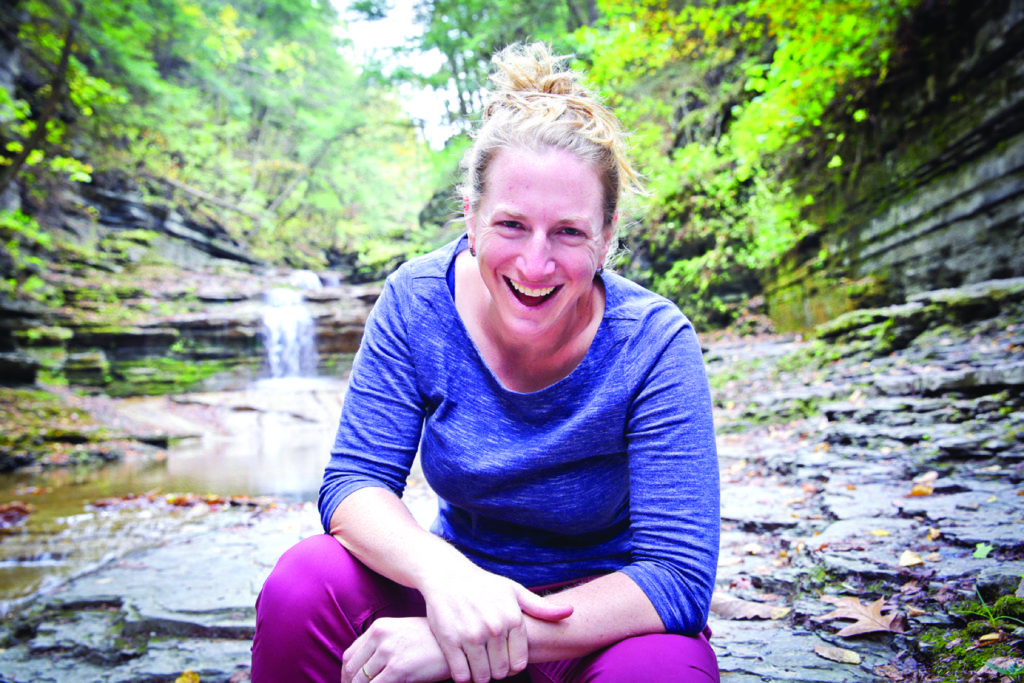
With her flair for drama and A predilection for life-shaping epiphanies, it comes as no surprise to learn that 35-year-old Yonit Schiller was born in the mystical city of Tzfat on Nov. 29. That was the date 35 years earlier, in 1947, when the United Nations voted in favor of the partition of what was then Palestine into two states, one Arab, one Jewish. 

Her auspicious birthday also may have set the tone for her personality. The Torah-observant Schiller professes an “ardent love of Zionism” with a deeply held devotion to the spiritual, facets that she says are infused in every aspect of her twin careers as a licensed tour guide and a professional photographer. 

She simultaneously approaches the subject of her sexuality with disarming frankness and cautious trepidation. The realization that she could see herself building a life with a female partner was one of her many lightning bolt moments and came after a long time on the heterosexual dating scene.

“It was a thought that popped into my head as I walked down the street,” she said.

In 2016, Schiller married Liah under a chuppah in Jerusalem in a ceremony they co-authored that contained blessings without God’s name, so as not to transgress the commandment of taking God’s name in vain. Based on the accounts of her colleagues — some of whom are far more to the right on the Orthodoxy spectrum — the wedding represented a true Kiddush haShem, a sanctification of God’s name. It was a sign that such matters in the conservative capital are beginning to open up, she said, and people no longer have to live in hiding. 

“Whether I’m photographing milestones or sharing an anecdote with Jewish tourists, I’m helping shape people’s experiences.” — Yonit Schiller

“My orientation doesn’t preclude me from being religious,” she said. “If anything, my collective identity and the challenges it brings is something that fortifies me.”

A little over a month ago, Liah gave birth to a baby boy, Yair Tzion. Having received the call that Liah’s contractions had started, Schiller excused herself from a group of American youths she had been guiding in Degania, a kibbutz in northern Israel, and returned to Jerusalem at breakneck speed with a taxi driver by the name of — as coincidence would have it — Yair. That day, Israel experienced some of the worst flooding in recent memory, with thunder, lightning and hail. 

“It was crazy, eerie, amazing and nuts,” Schiller said. “He shot out and I started to wail. I was in this crazy, ecstatic state but also in shock and disbelief.”

Although born in Israel in 1982, Schiller moved with her parents to Buffalo, N.Y., when she was 6 years old. Twelve years ago, while weighing her options after teaching history and English at a Jewish day school in Boston, it suddenly occurred to her that moving to Israel was the obvious next step. Schiller selected the date of her return to Israel to coincide with the date of her move to America.

The Seventh of Tammuz would be a “tikkun,” or rectification of her parents’ decision, she said. Not that she blames them for moving back to the U.S. Her father’s kosher, soy-based cheeseburger joint in Jerusalem was doomed to failure for being ahead of its time and in a decade plagued by a crippling recession.

She reflects on her early childhood in Israel with fondness, recounting vignettes — or “memory bytes” as she calls them — that paint a picture of her enduring attraction to the country. 

Her love for the land seamlessly fits in with her careers, which at first glance seem incongruous. As a photographer, Schiller takes on the role of silent observer behind the lens, but as a tour guide, she is an example par excellence of verbal expression that is out front and center stage. 

“Whether I’m photographing milestones or sharing an anecdote with Jewish tourists linked to their ancestral past, I’m helping shape people’s experiences in Israel,” she said. “And they, in turn, are shaping my life, as well.”

Letting Her Passions Be Her Guide Read More »

The Flavor of Israel and Why She Gets Me

When poet Kahlil Gibran wrote, “All our words are but crumbs that fall down from the feast of the mind,” he perfectly described the difficulty we have in expressing our feelings about our most treasured experiences. I identify with this sentiment most strongly when I am traveling to Tel Aviv from Addis Ababa, Ethiopia, which is the transit point from where I live in Uganda. 

Granted, part of the reason for this sensory overload in recent years is that I am usually going to a funeral, but that’s not the whole picture. Even when I’m going home for a joyous occasion, as was the case this past week, I still find myself overwhelmed by emotion on the way there. And don’t think I cry easily — after all, I’m a sabra through and through, and we are nurtured into being brave and tough. 

Perhaps it’s the feeling I get when I arrive at Ben Gurion International Airport and inhale that particular Israel smell, the scent of my childhood I’m unable to find anywhere else — and believe me, I’ve tried to find it. Perhaps it’s when I hand my battered Israeli passport to the immigration agent, and she welcomes me in a familiar way and makes a sarcastic remark that makes me laugh. Perhaps it’s the pushing and the shoving I’ve come to expect at baggage claim when I look around me; Israel is like a long-lost friend that I’ve not even realized how much I’ve missed. 

Maybe it’s the thought of all the misplaced souls who arrived here and fell to their knees to kiss this sacred ground beneath them, because that’s a normal sight in Israel. Perhaps it is the knowledge, pure and simple, that I no longer live there. That as Israeli as I feel, as much as my Hebrew is unaccented, as much as my heart and soul is there, I’m no longer a resident of my own country, rather the occasional visitor. 

It’s where everyone in my family is buried or will be buried. It’s the last place I saw my grandparents, uncles and aunts, and it’s the last place I will see my parents one day. It’s the earth I will return to when I die. It’s the place I first belonged to and the place where I learned to be a woman. It’s one of two places I would be willing to sacrifice my life, and even the lives of my loved ones, to defend.

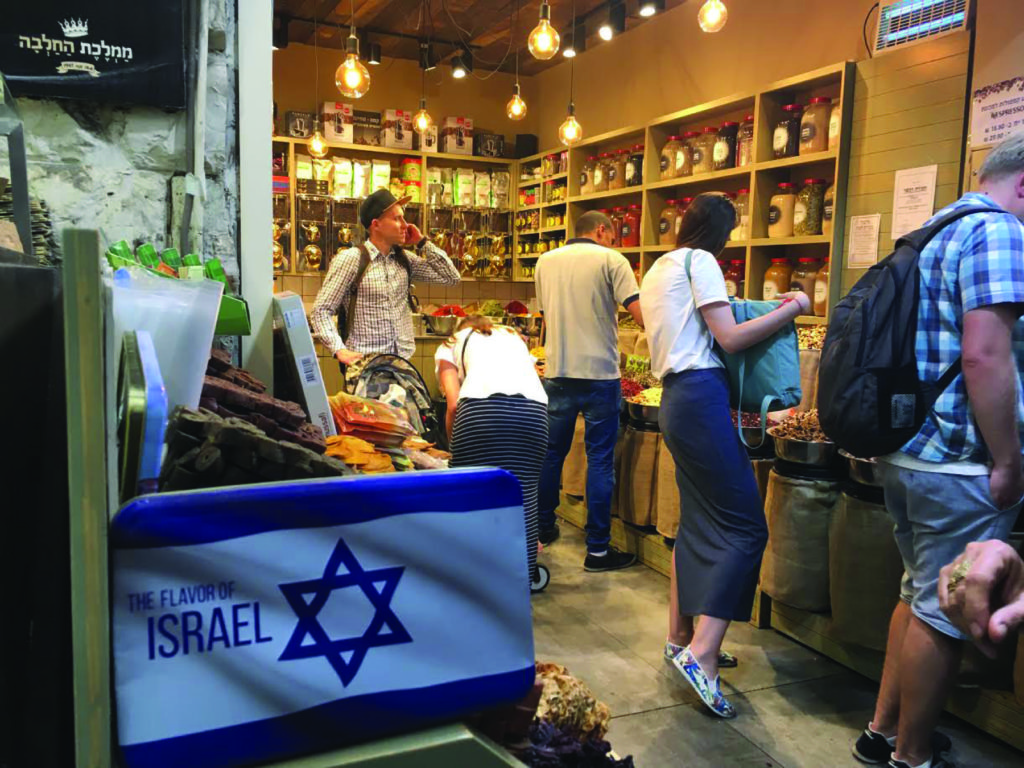
Maybe it’s the colorful abundance of the markets bursting forth with endless heaps of fresh and dried fruits and spices. Maybe because it’s where my palate was born, the place where I developed a taste for the ancient flavors of the Middle East — with labne and tahini, with smoky eggplant, roasted peppers and pickled vegetables, with prehistoric grains such as freekeh and the delicate Mediterranean umami of bottarga. It’s where we eat the world’s sweetest seedless watermelon with a side of salty, creamy Bulgarian feta. 

It’s where, no matter how sophisticated I think I am or how well traveled, I always find a new culinary experience that has been imported by the most creative minds in my industry. It’s where I can walk into an aunt’s house, stick a spoon into a pot of chorba and be transported to another time by a taste. It’s where I had my first crush, where I first understood what real patriotism means, and the high price that must be paid for freedom.

It’s the one place in the world where I am liable to open a photo album and find photographs of myself or my parents. Each time I return, I’m a little prouder to call myself an Israeli, this tiny island of hope that is surrounded by hatred yet represents more love, goodness and generosity per capita than anywhere else in the world. 

It’s a place that gives of itself to anyone and everyone whether they ask nicely or not, whether they are grateful for it or not. Like a mother who gives us love unconditionally, Israel gives unconditionally to the world. Love us, hate us, treat us contemptuously and boycott us, misunderstand us, refuse to play at our venues, take us for granted, smear us with bad publicity, we still will be the first people to come to your rescue, whether you have suffered from an earthquake or tsunami, a flood or a savage war. When your water supply runs out or when you can’t feed yourself, you don’t even need to call us, we will help you, and we will send our children to come to your aide. Even when you are trying to blow us up, kill our soldiers and infiltrate our cities, we will show you more compassion, more heart and more care than your own will. We still will defend your rights; we still will use our brains, our best selves and turn the other cheek to help you.

And we know we will be condemned for it, no matter what we do, sometimes even from within our own community. We understand how the world works. It’s just a fact that when we have children, that there could come a time when two soldiers in uniform will come to our door and slay us with the ultimate words. 

We know she will wait for every Jew, this Israel of ours, whether they want to visit occasionally or not at all, whether they want her or not, whether they deserve her protection or not, they will have it. It’s the first place where I felt a part of something larger than myself, first my magnificent family and then the brilliant Jewish people. It’s the beginning of me and the end of me, too. 

And I know it, deep down in my bones, from a place of certainty, that she always will be there, not just for me but for every Jew who will ever be born, no matter where and no matter when. Although I’m not a fatalist, there is something about my special country and her people that has withstood all battles as if protected and, yes, chosen by God. Unlike the Vikings, ancient Romans and Greeks, unlike the Mayas and the Incas, unlike all the people who have built empires and had their day, some even for centuries. Israel, our Jerusalem, our Galil, our Dead Sea, our Kotel, my country has always been there and always will be there, not only because our people planted our Jewish hearts on this piece of land, but because our ancestors, our blood, our family will simply never give up on it. We will fight until the end of time for our place if we have to. 

And don’t misunderstand if you hear us complaining about how hard it is or, like me, if we don’t even live there — it is still our place and it’s always going to be. No matter where we are, we still will wake one another in the middle of the night screaming and crying with joy when one of our own has won a song contest — against all the odds. It still will be a victory for every one of us whether we live there or not. 

This is the place where I learned what real food was supposed to taste like, what the food made for you by someone who loves you — just because you were born — tastes like. It’s the place where I understood what family means and how to treat people. That of all the degrees a person can earn, the most important one to a Jew is a B.A. In Israel, you’re taught first to be a “Ben Adam” before you’re taught anything else. It’s where we are taught that every life is important. It’s where we are taught Arabic, English and Hebrew in school, where the street signs are written in all three languages. Israel is the only country on the planet that will send her best doctors to operate on an enemy during a time of war. It’s a place that looks for peaceful solutions to problems that are unfathomably complex, yet never gives up hoping and striving toward the elusive goal of shalom. 

It is a society in which people are raised to be guileless and to tell a hard truth when need be. It’s a place where I can have an hourlong conversation about where the best hummus, sushi, steak or anything else is to be eaten, not just in Israel, but anywhere in the world. It’s a place alive with possibility and heavy with responsibility. It’s where we know that amid all the struggles, it won’t be long until we are dancing and laughing, where we will always have a party to look forward to, where we will always celebrate weddings, holidays and Shabbat every single Friday. 

It’s a place where the inimitable Jewish sense of humor thrives and continues to imbue everyday interactions with astute hilarity. It’s where amid the tears, we will experience the singular Jewish phenomena of the “stand-up” comedy that takes place at every shivah and the unbridled joy of every brit milah. It’s where we will all say the same words when we lose our parents as they said when they lost theirs. Where we always will be cooking, always be planning the next meal right after cooking the previous one, and where we will make sure our elderly are not only looked after but a fixture in our lives until their very last breath. 

She’s my Israel, and I fall in love with her flavor and the soul of her a little bit more each time I step onto her parched terrain, reeling from gratitude to have been lucky enough to have been born on her brazen, hubris-enriched soil. And she, for her part, gets me — every single time.

Yamit Behar Wood, an Israeli-American food and travel writer, is the executive chef at the U.S. Embassy in Kampala, Uganda, and founder of the New York Kitchen Catering Co. 

The Flavor of Israel and Why She Gets Me Read More »

Medical Aid for Palestinians NGO Accused of Supporting Terrorism in Complaint

The Medical Aid for Palestinians (MAP) NGO has been accused of spending their money on propaganda that supports terror organization in a complaint filed by The Lawfare Project and UK Lawyers for Israel.

In a statement released on June 7, The Lawfare Project stated that their complaint alleges that MAP has ties to the Popular Front for the Liberation of Palestine (PFLP) terror organization and promotes anti-Semitic content, including a video of former Ku Klux Klan leader David Duke and a play called “The Seven Children,” which has been accused as anti-Semitic for its portrayal of Israelis as uncaring toward the suffering of Palestinians.

“Medical Aid for Palestinians is advertised as a charity involved in the provision of health care. MAP is also involved with NGOs linked to a terrorist organization, the PFLP, designated as such by the UK government among others,” The Lawfare Project’s Brooke Goldstein said in the statement. “The complaint asks the Charity Commission to take appropriate steps to conduct a review of the organization and ensure its work is limited to lawful activities for the public benefit.”

An MAP spokesman claimed that the complaint was a “smear.”

“This appalling smear appears to be part of a wider pattern of attacks on legitimate NGOs,” the spokesman said. “Should the Charity Commission raise points with us, we would be pleased to respond.”

According to NGO Monitor, MAP has partnered with the Hamas-run Gaza Health Ministry and from 2013-2014 had Dr. Majer Nasser, who has links to the PFLP, as their Director of Programs in the West Bank. NGO Monitor’s report on MAP accuses the organization of using “highly biased and politicized language, accusing Israel of ‘indiscriminate attacks’ and ‘collective punishment’ against the Palestinian population while alleging that Israeli defensive measures are ‘arbitrary.’”

Medical Aid for Palestinians NGO Accused of Supporting Terrorism in Complaint Read More »

Israel-Iran: The European Theater

Israeli Prime Minister Benjamin Netanyahu traveled to Europe on June 4 with only two items on his agenda — or so he said. The two were “Iran and Iran.” And you must wonder about the meetings he was about to have with the leaders of Germany, France and Great Britain, the three key European powers. You must wonder about Netanyahu’s expectations — what can he possibly tell these leaders that they don’t already know? You must wonder about German Chancellor Angela Merkel, French President Emmanuel Macron and British Prime Minister Theresa May — are they coming to these meetings with an open mind, expecting to hear something they don’t already know? 

A fly on the wall in the rooms where these meetings take place — if it has the ability to dissect the talks — would see that there are three dimensions to the conversation. 

One: the factual arena. The Europeans do not dispute most of the facts advanced by Israel. The intel they see, including intel shared by Israel, is hard to argue with. Netanyahu might have shown them more details; Israel acquired a plethora of new information and perhaps not all of it was shared with the public after the much-publicized “secret files” press conference in late April. 

Two: the analysis that is based on these facts. That is, an assessment of where Iran is going, and what its leadership’s intentions are. On these issues, there is disagreement between Israel and some of the Europeans, and one never knows which of these differing views is a result of biases. Israel is biased because it has more to lose and hence is more prone to interpret every data on Iranian moves in the strictest way. Europe is biased because it does not want new information to disrupt its relatively cozy relations with Iran. 

Benjamin Netanyahu’s trip was designed to show Europe that it matters, that Israel values its input and sees it as an important player.

Three: the remedy proposed based on the facts and the analysis. Israel would like Europe to support harsher measures against Iran. The Europeans are reluctant to tickle the Islamic Republic, perhaps because of the aforementioned economic coziness, or perhaps because they are afraid of Iranian retaliation, or perhaps because they truly believe that their current policy is the best way to deal with Iran. 

Each of these dimensions must be dealt with in a high-profile meeting. Netanyahu needed to establish the facts, make the case for his country’s analysis, then move to propose a remedy that the Europeans can swallow. It must be a remedy that doesn’t put them at too much risk — compounded by the implied warning that the current track means trouble, not only for Israel, but for them. The Europeans will not lift a finger unless they are convinced that they have a dog in this fight against Iranian expansionism. Iran is intimidating; it is remote; it is a tempting economic partner; it annoys the Americans —  Europeans often respond to U.S. annoyance with a certain, if well hidden, delight. If you live in France or Germany, you need a strong reason to pick a fight with it.

Netanyahu meets Europe when everybody is aware that he just had scored a win in the last battle — a battle against Iran but also against Europe. The U.S., in spite of EU reservations, pulled out of the Iran deal. Netanyahu played a role in prompting this decision. Still, he did not go to Europe to brag about his achievement and further annoy his hosts. In fact, his trip was designed to show Europe that it matters, that Israel values its input and sees it as an important player. Netanyahu, as he was making his case, was essentially pleading with the Europeans not to take the wrong path only because they are displeased with recent U.S. moves (and Israel’s endorsement of it). 

There currently is a battle between Israel and Iran. It is a battle for Europe. Iran is hanging onto this thread, hoping that the Europeans will agree to counter U.S. moves. Israel is telling Europe: Our disagreements concerning the nuclear deal is not a good enough reason to throw Iran a lifeline. Not when Iran is on the ground. Not when the prospect of real change again seems realistic.

Is it realistic though? The data was presented to these leaders. Israel’s analysis was shared with them. Ideas for possible action were mentioned. And as difficult as it is to admit — Israel’s level of trust in Europe in not high — their decision could truly matter.  n

Shmuel Rosner is senior political editor. For more analysis of Israeli and international politics, visit Rosner’s Domain at jewishjournal.com/rosnersdomain.

Israel-Iran: The European Theater Read More »

The New Jewish Temper Tantrum

There’s a new specter haunting liberal rabbis, educators and parents. A decade ago it was J-Street — until Jewish Voices for Peace’s (JVP) anti-Israel venom made J-Street look tame. For about five minutes it was JVP until it became clear how unhinged — and marginal — that organization is. But now, what organization strikes fear in the hearts of baby boomer Jews — IfNotNow (INN)!

INN has mastered the reverse guilt trip — from kids to grown-ups. The organization’s “You Never Told Me” campaign has idealistic young people saying, “We were never told the honest truth about the Occupation.”

An angry frontal assault, JVP-style, is easiest to resist — your muscles tense and you push back. But this… These are graduates of our finest day schools and summer camps. These are insiders who spent their Memorial Day Weekend running “Camp Counselor Training on the Occupation” — for counselors preparing to lead this summer in at least “eight Reform, Conservative and liberal Zionist camps,” according to JTA.  

These ideologues are spreading Jewish guilt. They kill the conversation — and three-dimensional, truly critical thought — with apparent kindness, but often mask the harsh, one-sided political agenda they push.

The historian’s favorite text is context. INN distorts context repeatedly, starting with its name. “If not now” is the last of Hillel’s three phrases in “Ethics of the Fathers” 1:14, generating a three-dimensional vision, not a Johnny-one-note slogan. 

These ideologues are spreading Jewish guilt. They kill the conversation — and three-dimensional, truly critical thought — with apparent kindness, but often mask the harsh, one-sided political agenda they push.

Hillel starts, “If I am not for myself, who will be for me?” That suggests that the Zionism 101 you necessarily first encounter in school and camp must establish your fundamental identity, your core loyalties. Jews who teach Jewish identity through a Palestinian lens or start Zionist history with the Palestinian problem are as foolish and confused as Palestinians who teach Palestinian identity through Zionism (but, alas, far more prevalent — not many Palestinians are “you-never-told-me-ing” their parents).

Hillel’s sayings suggest a values hierarchy. Identity comes before altruism. And self-preservation comes first; if people threaten you, defend yourself. Once you’re safe, only then do you process others’ motives, your enemies’ troubles.

The second teaching INN neglects is also challenging. “But if I am only for myself,” Hillel asks, “who am I?” We all know America too well to accept the smugness of those who reduce Israel to “the Occupation,” without addressing America’s ills. I’m not talking President Donald Trump here. Wander around those areas you dare not visit in any major American city — as I did in Atlanta recently, visiting Ebenezer Baptist Church where Martin Luther King Jr. preached. Welcome to the desolation. Note the epidemic of broken buildings and broken lives. Note that the once-racially loaded term “the underclass” now includes Blacks and whites crushed by the opioid epidemic and America’s deindustrialization. Millions of Americans aren’t enjoying most INN Jews’ happy-dappy upper-middle-class bubble.

If these INNers consider not being “only for myself,” why not scrutinize neighborhoods mere miles from them, rather than caricaturing a target 6,000 miles away?

Do these students confront their parents, saying, “You never told me our wealth comes from Mommy or Daddy stripping working-class people of jobs by exporting them abroad or leveraging them out of existence”? … “You never told me about your creative tax deductions that helped finance our grand house and lavish lifestyle”? …  … “You never told me how monstrous our ecological footprint is — no matter how many newspapers we recycle”? … “You never told me our full-time nannies have to leave their kids before dawn and come back way after dusk so we can lead our cushy lives and you can enjoy your dual careers”? 

Of course, if INNers ever stop being offended by me for daring to disagree with them (although when they bash Israel they insist we need to learn to criticize one another), they’ll probably respond defensively. They’ll say: “It’s complicated” … “America’s more than the desolation” … “My family’s philanthropic, we give back to the community” … “The situation has improved, but of course there’s still work to do.”

And I’ll respond: “Gotcha!”

Of course it’s complicated. So is Israel’s position, surrounded by Palestinians seeking Israel’s extermination, who have used Israel’s land withdrawals as opportunities for more violence. Israel is much more than “the Occupation.” The rest of Israel is what they were being educated about, in age-appropriate ways. And Israel contributes to the world. But, of course, there’s still work to do, and big mistakes are occasionally made.

But here’s our Trumportunity. Liberal critics of America’s president are showing how to criticize our leaders or their policies without abandoning the nation. No country’s legitimacy hinges on it being perfect — except, apparently, Israel’s.

INN calls itself “a movement led by young Jews to end the American Jewish community’s support for the Occupation.” Oversimplification alert! Most American Jews, like most Americans, support Israel. Most Jews, including most Israelis, wish they could wish the occupation away just like Americans want to wish the desolation away. But good smart people, trying hard, have failed for decades. Maybe the problem’s more complicated. And maybe we also have to scrutinize the Palestinians, assessing their hostility to Israel’s existence.

Moreover, beware categorical statements. The sweeping, self-righteous claim that INNers didn’t receive “an honest Israel education” invites defensiveness. I know some of the accused counselors and teachers can specify moments when they addressed complexity, including discussing the Palestinian narrative — which these students didn’t absorb. Perhaps they were tired. Perhaps it wasn’t age-appropriate. Admittedly, things taught to kids are more simplistic than what they now need to hear as 20-somethings.

Nevertheless, the INNers have a point: all-too-often Israel education is simplistic. Seventeen years ago, I sat on a committee in Montreal and we developed a plan to work complexity into the Jewish day schools’ Israel narrative, grade-by-grade, gradually, sensitively. For 17 years that plan has sat on a shelf.

Israel education often is all-or-nothing. Some leftists only teach through the conflict, while some rightists only teach through a sense of crisis. Both unwittingly make our multidimensional story pivot around the Palestinians. Others teach Israel as this perfect, blue-and-white, fragile glass bowl. The first time a friend or professor challenges that narrative, the whole illusion shatters.

I don’t fear the tough questions. Israel has done much more right than wrong, and far better than most fellow democracies faced with similar enemies. I named my new book “The Zionist Ideas,” not “The Zionist Idea,” to open up the conversation. But INN must decide. Is it going to be a genuinely “honest” constructive, educational force that teaches all three dimensions of Hillel’s verse, or is it actually a politicized attempt to turn Jewish schools and summer camps into Palestinian indoctrination camps, replacing one political theology with another?

Moreover, is INN ready to deal with the moral challenges of Israel education in an age of delegitimization, when Palestinians have created the poisonous context surrounding us?

I know how hard many of us in Zionist and Israel education are working to get it right. Let’s hope these young zealots will realize they are just reinforcing the bad-faith narrative of the pro-Palestinian, anti-Zionist left.

Gil Troy, a distinguished scholar of North American History at McGill University, is the author of “The Zionist Ideas: Visions for the Jewish Homeland — Then, Now, Tomorrow,” published by The Jewish Publication Society.

The New Jewish Temper Tantrum Read More »

Why L.A. Needs to Bring Back the JCRC

In 1933, with the rise of anti-Semitism in this country and the emergence of Nazi influence in this city’s film industry, the Jewish Community Committee (later, the Community Relations Committee) was formed. Dramatically portrayed by USC historian Steven Ross in his recent book, “Hitler in Los Angeles,” the JCRC has operated as an essential civic instrument in this community for more than six decades. 

What’s in a name? While the CRC remained the official acronym of this Los Angeles  entity for much of its existence, across the country, community relations entities were pressed to demonstrate their “Jewish” credentials, both in terms of policy and practice. As a result, beginning in the late 1960s, communities were adding the “J” to express their special connection to the primary policy issues of Israel, Soviet Jewry and anti-Semitism that would be increasingly important to their mission.

During the earliest years of the JCRC, according to historians Max Vorspan and Lloyd Gartner in their book on the Jews of Los Angeles, the committee not only had to deal with the presence of neo-Nazis in Southern California but also confronted communist sympathizers operating inside the Jewish community. Despite these major political challenges that confronted JCRC leaders in the 1930s and beyond, the work of this extraordinary group of leaders would be singularly acknowledged in sociologist Robert MacIver’s 1951 report on Jewish community relations in America. 

The rich history and significant contributions of the Jewish community relations enterprise ought not to be minimized. In such distinctive areas as promoting intergroup understanding, advancing interfaith relations, fighting racism and anti-Semitism, and promoting Jewish public policy interests, the JCRC played a constructive and essential role for this community.

Today, every major ethnic and religious community in Southern California has an organization representing its key interests. 

During the immediate post-World War II era, the JCRC was involved with such issues as civil liberties, immigration legislation, religion in public schools, interracial relations, discrimination in housing and fair employment practices. During this period, the Jewish Community Relations Committee was active as well with the Hollywood community in dealing with stereotyping of Jews and other minorities, employment discrimination and issues of religious tolerance.

Mobilizing support for Israel, fighting for Soviet Jewry, opposing cults and missionaries, and building connections with African-American and Latino leaders would be among the issues that defined the work of the committee during the second half of the 20th century. Along with other communities in California, the JCRC helped to create a Sacramento presence, JPAC (Jewish Public Affairs Committee of California), in order to address Jewish interests on a statewide basis.  At times the committee played a convening role in representing the Jewish community at city hall or in Washington, D.C. Indeed, its monthly meetings provided a venue for city, state and national political leaders to address the concerns of the Jewish community, while presenting JCRC leaders the opportunity to consider critical policy issues. 

The legacy of the JCRC has indeed left its imprint not only on a generation of Jewish activists but also with key leaders in government and civic groups across this city.

In the 1980s and ’90s, its groundbreaking work with Hispanic leaders, culminating in the first Latino-Jewish leadership missions to Mexico City and Jerusalem, resulted in ongoing political relationships and cultural connections between these two communities. The 1987 visit to Los Angeles of Pope John Paul II would see the JCRC working with Catholic leaders in planning the interfaith activities associated with that historic gathering. After the 1992 civil unrest, JCRC leaders helped to facilitate opportunities for healing and education by bringing together Korean and African-American leaders and in working with government, the private sector and ethnic group representatives in developing plans for rebuilding L.A.

The legacy of the JCRC has indeed left its imprint not only on a generation of Jewish activists but also with key leaders in government and civic groups across this city who were the beneficiaries of the work undertaken by lay leaders and professionals engaged in these efforts at building a stronger community.

Today, across the country, federations and their community relations agencies are caught between the pressures to speak out and act on the public policy issues that are a priority for many Jewish Americans, and the pushback of others who oppose such initiatives. Yet despite these challenges, the educational and grass-roots organizing work of the community relations field continues to thrive in many parts of this country. As national leaders in this field recently reported, “For the first time in more than two decades, federations that had previously cut their JCRCs are now re-investing. … Community relations is once again on the rise.” In this complex political environment, local communities are seeking to leverage their influence and connections with political elites and other civic, religious and ethnic leaders. At this time, this pattern of reinventing JCRC’s is taking place in such communities as Phoenix, Atlanta and Seattle.

One of the critical assets of the JCRC was its ability to identify and train new leaders.

Today, every major ethnic and religious community in Southern California has an organization representing its key interests. The L.A. Jewish community requires such a similar representation. As important and essential as are the roles performed by the American Jewish Committee, the ADL, the Simon Wiesenthal Center, Bend the Arc and other civic organizations within this city, L.A. is the largest Jewish community in America without its own Jewish public policy body.

Over the past several years, groups such Jews United for Democracy and Justice have emerged to fill the vacuum of a community forum dedicated to the discussion of the significant policy issues of importance to our Jewish community. Similarly, organizations such as Reform California have been formed to provide a Jewish response to statewide issues of concern to Jews and to other constituencies.

In this current political environment where there are deep divisions within our community, a reorganized JCRC might best operate outside of the Jewish Federation, similar to the organizing model that exists today in such communities as New York and San Francisco. It should be noted that for much of its early history, this body operated outside of any umbrella structure, enabling it to address the primary concerns of the community. 

In re-inventing the JCRC, five key elements ought to drive this initiative:

The community today requires a neutral space for political discourse to occur; the JCRC can be that address. This communal entity can establish Jewish “town halls” where public policy issues can be vetted and where thoughtful, civil discourse can take place without the necessity of requiring policy statements or joint action. The community today requires a gathering point where Jews who hold differing views can come together for thoughtful conversations around issues that impact our society. JCRC’s policy and advocacy functions should be limited to those compelling issues of Jewish security, and where its constituents embrace collective action. In this context, we will be creating “communities of conversation” designed to frame the essential issues in these critical times. 

In creating this new venture, it is essential that its organizers move away from the “silo” and “competitive” institutional system that defined the institutional culture of the 20th century, adopting instead a 21st-century organizational approach that promotes a collaborative, integrative communal framework. This shared-engagement model permits a seamless interconnect or synergy among partner organizations with the JCRC, permitting its participants a gateway of organizational choices with reference to their specific political orientation and policy preferences. Where the JCRC may act on the shared interests of the L.A. community, this model permits access to specific interests of its many participants.

One of the critical assets of the JCRC was its ability to identify and train new leaders. A leadership development program for this new generation of public policy wonks and community organizers represents a central ingredient in this proposal. Reseeding our community with knowledgeable and engaged professionals and lay leaders must be seen as core to building the next iteration of the JCRC. 

As in the past, the JCRC can be the vehicle for mobilizing community volunteer opportunities, including projects such as Koreh L.A., with its focus on student literacy. Building into this organizational model a commitment to community involvement ought to be an essential part of its mandate. 

The JCRC ought to be seen as the central community public policy organizing body, bringing together the organizations and synagogues of Los Angeles, being in a position to help mobilize our community around common concerns and joint political action. 

The Time Is Now
At this moment when many Jews are in search of a venue for thoughtful deliberations and collective action, the establishment of a 21st-century version of the JCRC would seem to be in order.

Steven Windmueller is the Rabbi Alfred Gottschalk Emeritus Professor of Jewish Communal Service at the Jack H. Skirball Campus of the Hebrew Union College-Jewish Institute of Religion, Los Angeles. Windmueller’s writing can be found on thewindreport.com. From 1985-95, Windmueller served as the director of the Jewish Community Relations Committee of the Jewish Federation of Los Angeles.

Why L.A. Needs to Bring Back the JCRC Read More »

Leadership, Debate and Giving Back

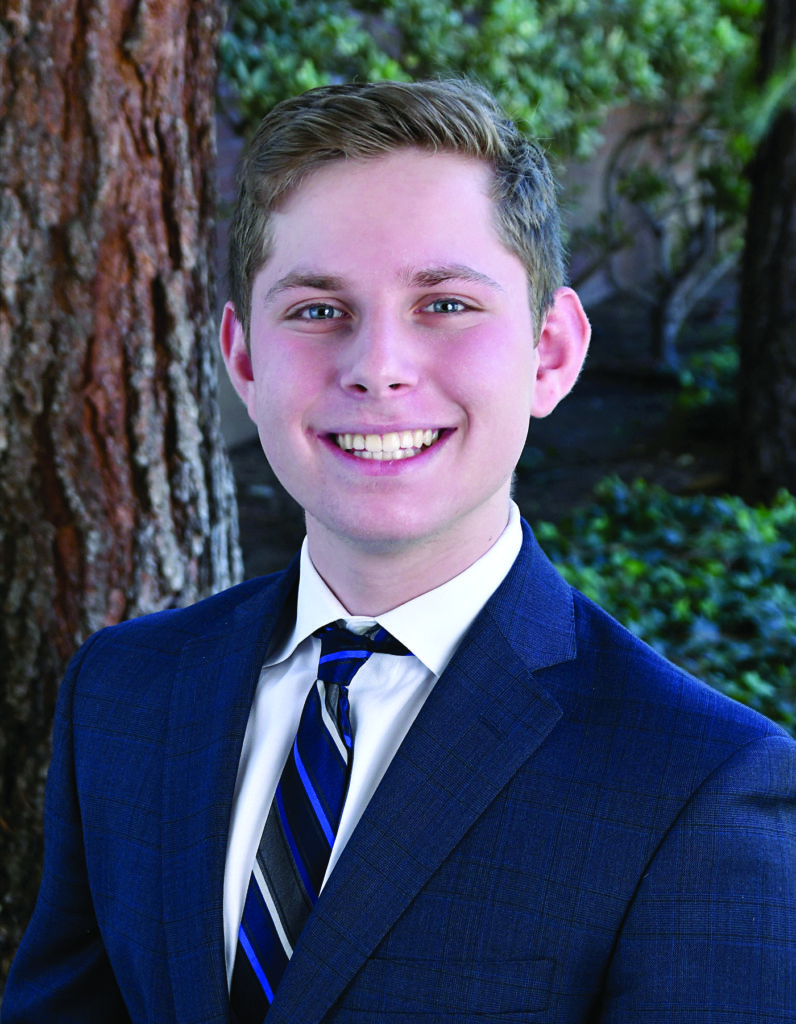
Ryan Ofman, 18
High School: de Toledo High School
Going To: Yale University

Taking 10 advanced-placement classes, serving as student council president and captain of the Speech & Debate team, participating in special interest clubs and school and community events, and playing on the varsity tennis team might be too much activity for some people to handle. Ryan Ofman is not one of those people.

“I’ve always loved keeping busy, doing as many things as I possibly can. That’s when my brain is the most satisfied,” the National Honor Society member told the Journal. He rattled off a diverse set of passions including physics, philosophy, astronomy, computer programming and coding, and reading and writing poetry. He co-runs the chess club, contributes to his school’s literary magazine, and tutors fellow students. With Sherut L’Olam, a Jewish youth leadership organization, he has distributed food to the needy and planted trees in fire-affected Topanga Canyon.

“When I was young, I loved doing jigsaw puzzles. I did my first 500-piece puzzle when I was 8,” Ofman said. “It was intensely difficult, but I pushed through. I feel the same way about academics. I love smashing down walls because I know I’m going to come out on the other side that much stronger.”

As student council president, Ofman recently succeeded in getting tampon dispensers installed in the school bathrooms, but is quick to credit his fellow students for the idea. He attributes his success in student government to “Speech & Debate teaching me that what I say and how I say it matters,” he said. “I think we have a bit of a tendency to be overly defensive and not listen to opposition. Having to debate both sides of an issue has changed my ability to look at anything, whether it’s an argument with my sister or a huge political event.”

“I love smashing down walls because I know I’m going to come out on the other side that much stronger.”

Now living on Los Angeles’ Westside, Ofman grew up in Calabasas with his parents, Josh and Julie, older brother Jason, now a Rice University student, and twin sister, Lauren, who plans to enter George Washington University this fall as a journalism major. 

He had his bar mitzvah at Temple Judea in Tarzana and recently went to Israel with March of the Living. “It’s an amazing place, a flawed place. But you love Israel because you love what Israel means to the Jewish people,” he said.

Ofman described himself as “not very observant. But I feel unbelievably connected to the Jewish community. That’s what it’s about for me,” he said. “I think my love for academia and my thirst for knowledge stems from Jewish culture and asking questions, thinking more deeply about things. The incredible rabbis I’ve had, the members of my community and my grandparents have been my symbols of Judaism, rather than God. I’ve never needed a divine force.”

Ofman toured several colleges but chose Yale after attending a particularly engaging philosophy lecture and discovering that the university offered a combined major in philosophy and physics. 

After a trip to the National Speech & Debate Association’s national tournament in June, Ofman will spend the summer working as a camp counselor and robotics specialist at Camp Alonim in Simi Valley.

Leadership, Debate and Giving Back Read More »

Writing Her Future in Journalism

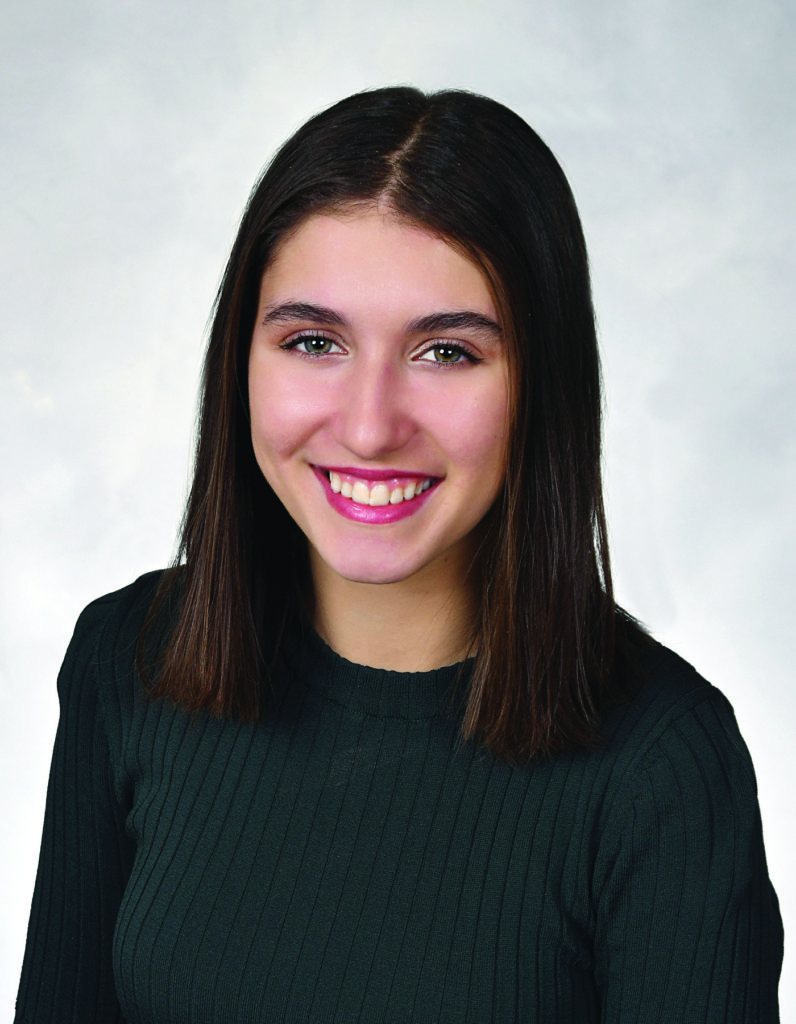
Hannah Jannol, 18
High School: Shalhevet High School
Going to: The New School

Hannah Jannol, 18, has dreams of being a journalist, and she’s certainly gotten off to a good start as editor-in-chief of The Boiling Point, Shalhevet High School’s student newspaper. She also has written for the Jewish Journal and the Santa Monica Daily Press, and has won multiple awards for her writing.

This summer, the Venice native will undertake a paid internship at The Jewish News of Northern California in San Francisco. Jannol met the editor, Sue Fishkoff, at the American Jewish Press Association conference in fall 2017. 

“I was talking to her and she said she’s a fan of The Boiling Point,” Jannol said in a phone interview, “and we discussed maybe me interning there. So I emailed her to follow up and I got accepted.”

Following her internship, Jannol will head to New York this fall to study at The New School’s Eugene Lang College of Liberal Arts. 

“I opted for The New School because it’s in New York City and it has a really strong writing curriculum, and it’s a very creative and interdisciplinary space,” she said. “Every time I’m [in New York], I feel such a sense of belonging. I feel like I just need to be there.”

 “I really believe in the power of journalism and it being the fourth estate; that it holds officials accountable and keeps people honest when you ask hard questions.” 

Jannol credits Shalhevet with preparing her to spread her wings. 

“It’s a very loving and supportive community,” she said. “I’ve had close relationships with teachers. I’ve had a lot of mentors, one of them being Mrs. [Joelle] Keene. I’ve learned everything from [Associated Press] style, reporting techniques, just general life skills.”

Jannol also praised Shalhevet’s weekly Town Hall, where the student-body president leads discussion.

“It’s just a really great exercise in critical thinking and listening and conversation,” Jannol said.  “I think I’ll take a lot of the skills [with me] so I can have in-depth conversations and think critically beyond the walls of high school.”

When not working on news articles, Jannol has written one-act plays for the school’s drama department, and she enjoys writing fiction. She also likes volunteering at a nonprofit thrift store in Santa Monica, bike riding, doing anything at the beach and hanging out with friends.

But writing is her passion.

“I definitely think I can impact the world most through writing,” she said. “I really believe in the power of journalism and it being the fourth estate — that it holds officials accountable and keeps people honest when you ask hard questions.”

Writing Her Future in Journalism Read More »

Guided by Strong Jewish Values

Frederick Cushnir, 18
High School: Hamilton High School
Going to: Brown University

Participating in Jewish life is in Freddy Cushnir’s blood. The Hamilton High School senior is the son of Andrew Cushnir, the executive vice president of the Jewish Federation of Greater Los Angeles, and Sharon Spira-Cushnir, the executive director and chief operating officer at Stephen Wise Temple. 

“We’re definitely a very Jewish family,” Cushnir said in a phone interview. “We do Shabbat every Friday night, we keep kosher. Tzedakah, helping other people — we try live by Jewish values as much as we can and treat others the way we want to be treated.”

Cushnir is the president of the Hamilton chapter of the Jewish Student Union, run by the Orthodox Union. The organization attempts to bring Jewish culture to public schools across the U.S.

Cushnir said having a more centrist political viewpoint at his school is challenging, particularly at a time when most students his age are liberal.

“I am center-left, which, in today’s world, living in West L.A., means I am slightly to the right of people, even though I consider myself liberal,” he said.

Cushnir is involved with AIPAC, the pro-Israel lobby that is widely considered conservative, but when he has visited Israel he has taken the time to interact with Eritrean refugees, Palestinian teenagers and Israeli kids with social issues living on a farm.

“I am center-left, which, living in West L.A., means I am slightly to the right of people, even though I consider myself liberal.”

Aside from his Jewish-engagement work, Cushnir, who is his school’s valedictorian, has made gun-control advocacy and public policy part of his high school years. He is the founding president of Hamilton’s Brady Teen Anti-Gun Violence Club, and he participated for four years in the YMCA California Youth & Government program, which he said taught him the invaluable skill of public speaking. He recently gave a two-minute address on health care in front of 3,000 of his peers in the program.

“In my speech, I talked about health care and how the prices are way too high and there should be controls on them,” he said.

Recently, he tore his anterior cruciate ligament while playing on Hamilton’s varsity basketball team. The incident provided him with a greater appreciation for having health insurance. 

“If we didn’t have insurance, I wouldn’t have been able to get physical therapy and get better and be healthy again,” he said. “[President Donald Trump] trying to take it away from people who can’t afford it — I think it’s terrible.”

At Brown University, Cushnir hopes to study economics and maybe politics, which he said is the “best way to improve people’s lives on a big scale. The same with economics,” he added, “it governs the way everything works, so going into political economics is a great way to change peoples lives at the base level.”

Before he begins college, Cushnir plans to be a counselor at Camp Alonim, marking his 11th summer at the Simi Valley camp.

“I love working with kids,” he said. “It is so rewarding seeing how happy you can make them, becoming so close to them. I look forward to it every year. Being a counselor and giving kids experiences I had is something I am excited for.”

Guided by Strong Jewish Values Read More »