I subscribe to a meal kit service that, each week, delivers a box of fresh meats and produce to my door. It must be in season, because lately I’ve been getting a lot of baby bok choy. Now, I love cooking with baby bok choy. But do you know what I really love doing with it? Painting.
The next time you’ve got some baby bok choy, take a look at the root end that you chop off. Notice that it looks just like a rose, with petals circling around a tight center. This stub, which you would normally just throw in the trash, makes a perfect stamp. Use it to stamp roses for artwork, greeting cards or custom wrapping paper. You can even stamp designs to customize T-shirts and aprons.
Other vegetables such as celery and romaine lettuce also work in a similar way, so see what you have in the refrigerator. Today’s vegetable scraps can be tomorrow’s masterpieces.
What you’ll need:
Baby bok choy
Paper towel
Acrylic paint
Foam paint brush
Paper
Carrot (to make images of leaves)
1.
1. Cut the end off of a stalk of baby bok choy. Pat the stub dry with paper towels to remove excess moisture.
2.
2. Apply some acrylic paint to the baby bok choy stub with a foam paint brush.
3.
3. Position it face down on a piece of paper and press firmly to stamp the design.
4.
4. To stamp the images of leaves, cut the end of a carrot at an angle. Apply paint to it and press down on the paper next to the roses.
Jonathan Fong is the author of “Walls That Wow,” “Flowers That Wow” and “Parties That Wow,” and host of “Style With a Smile” on YouTube. You can see more of his do-it-yourself projects at jonathanfongstyle.com.
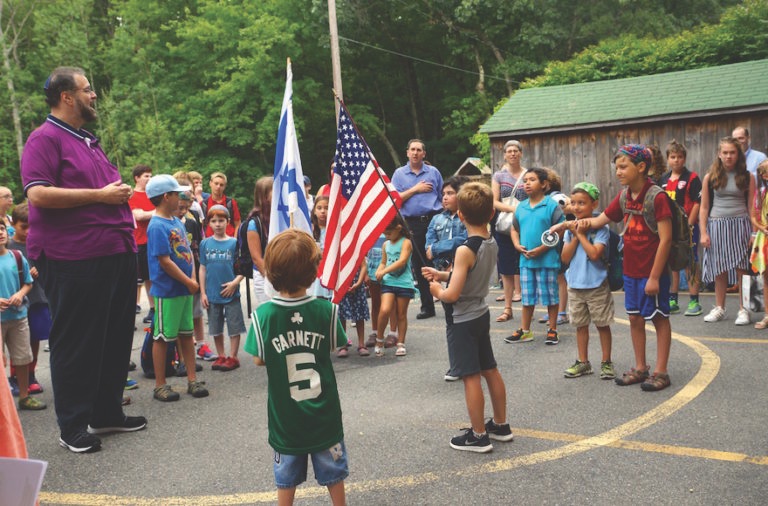
When the Jewish Community Day School in Watertown, Mass., decided several years ago to hire a former MTV producer to bring a “fresh voice of Jewish spirit” to the school, it was part of a broader goal: To bring the joys of summer camp to the school year.
The institution already was on its way. A tradition had begun on Yom Kippur eve. The whole school dresses in white and heads to a bridge over the Charles River, where they sing, listen to stories and throw birdseed into the water as part of the traditional tashlich ritual of casting away sins.
After hiring the producer, Oren Kaunfer, as a spiritual educator, he began leading the service.
“Everyone is sitting on the ground. It’s got a camp feel to it,” Kaunfer said. “It’s taking Jewish experiences and making them more memorable and exciting and deepening them.”
Increasingly, schools are emphasizing informal learning rather than lectures and drills.
Kaunfer also accompanies students on two camp-like overnight nature trips for sixth- and seventh-graders as part of the pluralistic school’s Jewish environmental education curriculum.
“When trying to describe my job, I do often say, ‘I bring camp to school,’ ” he said.
The annual transition from summer camp’s informal and highly spirited atmosphere to the more regimented, high-pressure and maybe even occasionally boring environment of school long has been one of the jarring changes of fall, right up there with cooler nights and earlier sunsets.
Yet increasingly, the differences between school and camp aren’t as stark as they used to be.
The trend of Jewish schools trying to integrate more of the positive elements of camp into the school year — without sacrificing academic rigor — mirrors what’s going on in American education overall.
Schools increasingly are emphasizing informal, experiential and project-based learning rather than lectures, worksheets and drills. This approach, the thinking goes, will better prepare students to be lifelong learners in the global economy and the internet age.
With Jewish education, there is particular interest because research has found that the Jewish identity-building benefits of summer camp are particularly strong.
“Adults who had a Jewish overnight camp experience as children are significantly more likely to exhibit Jewish behaviors as adults,” said University of Miami demographer Ira Sheskin.
The key, of course, is not just to bring elements of camp into the classroom, but to do so in a way that enhances day schools’ Judaic and academic rigor.
Schools are adopting a variety of camp-like tactics and strategies, including mentor relationships between older and younger students, character education and field trips, noted Rabbi Avi Orlow, vice president for program and innovation at the Foundation for Jewish Camp.
At MetroWest Jewish Day School in Framingham, Mass., teachers are called by their first names to make them more accessible. The school day begins with the singing of “Hatikvah,” the Israeli national anthem.
‘‘What can we do to make school feel more like camp is very prevalent,” said Bil Zarch, director of Camp Yavneh, a Jewish overnight camp in New Hampshire. Having led day schools in Baltimore and Massachusetts, he has seen both sides of the issue.
When his own child attended Lander-Grinspoon Academy, Zarch said, the school marked Sukkot by having students harvest crops on the adjacent farm, learning about the biblical commandments of pe’ah and leket, and then delivering the harvest to a food pantry that helps low-income families and individuals.
Day schools have to contend with many constraints absent from camp, including state mandates, grades and report cards. Increasingly, though, educators are realizing that the team-building, leadership and energy of a summer camp-like experience may be critical to preparing students for college — and for life.
Ira Stoll reports for the Jewish Telegraphic Agency.
Elana Naftalin-Kelman has directed the Tikvah program for children with special needs at Camp Ramah of California for a dozen years. She consults with Jewish organizations, encouraging and teaching them how to be more inclusive of special needs youngsters and their families. She is the co-founder of Edah, a Jewish after-school program in Berkeley, where she lives with her husband and their three sons.
Jewish Journal:What is the biggest challenge you face?
Elana Naftalin-Kelman: The challenge does not come at camp but in my interactions with the rest of the Jewish community, and as I talk to new potential campers and participants. I try to help them understand we are an inclusive Jewish community. For many families, it is a new feeling, to be included in the Jewish community.
JJ:What dynamic brought about the new feeling of inclusion?
ENK: This has changed in the last five years. Many (families with special needs children) have not been able to find a home in the Jewish community, whether for a Shabbat service or in a Jewish school. For that reason, Camp Ramah has become their Jewish home where they feel included as a family.
Inclusion seems scarier on the outside than it actually is.
JJ: What has changed in the last five years?
ENK: Awareness in the Jewish community is growing. Professionals are more aware of the variety of needs. Jews in general are realizing our community includes lots of different types of people with a variety of needs. Awareness has a long way to go, but we are better off than we once were.
JJ:Can the attitude change be traced to an increase in the number of special needs children?
ENK: I am not sure whether there are more children with disabilities. But more children are being diagnosed than before. Awareness has grown also because people are noticing a segment of the community has not been served.
JJ:How did the awareness develop and evolve?
ENK: It happens in some communities because parents are making noise. In other places, it is because the kids want it. And because professionals come in, look around and see kids with disabilities not being served. Camp Ramah is one of the pioneers. We have been serving kids with special needs for more than 30 years.
JJ:How has the majority population at Camp Ramah responded?
ENK: It definitely has been an evolution. I tell people that the work we do with our campers and young adults with disabilities is really important — but almost more important is the impact on our typical campers. So a whole generation of campers, my own (three sons) included, are growing up understanding that people with disabilities are part of their Jewish community in a real way that they do not see in their real world.
JJ:Over your 12 years at Camp Ramah and three years in Jewish special education, what have you learned new about special needs children?
ENK: Inclusion seems scarier on the outside than it actually is. The most important word is “yes,” and then to figure out how to make it work. Do not be scared by the challenges in front of you. Seek the help and advice when you need to figure out how to support different types of kids differently. The basis is: Everybody deserves a place in our community. Camp Ramah has done that.
JJ:Have you developed a philosophy or policy to assure that each camper receives maximum opportunities and benefits?
ENK: My philosophy is: I always try to say yes. At Camp Ramah, we try to individualize programs that benefit each type of camper who comes through our door. I meet individually with families. I talk to parents. I meet with teachers and educators to figure how we could we make camp successful for all different types of kids. I work with typical campers, too, to see how we can make camp successful for them.
I sat down to interview a prospective summer camp counselor, and suddenly I felt a wave of anxiety.
The meeting, more than a decade ago, was no ordinary interview. Ilan, in green fatigues, was shouldering a semi-automatic weapon.
He was among a special pool of Israeli young adults near the end of their army service who had applied to serve as shlichim (ambassadors) at North American Jewish camps in a program administered by the Jewish Agency for Israel. Nervously eyeing his gun, I was tempted just to say, “Take the job! It’s yours!”
The truth is, there was anxiety on both sides of the table. Ilan and I came from different worlds. He was born into a secular, Zionist household to parents who made aliyah from India. I grew up Los Angeles, in a family that was deeply involved in the Jewish community. At the age at which Ilan was training as a soldier, I was leading Shabbat services at my college Hillel.
For most Israelis, being Jewish is an unquestioned part of their core identity. But their engagement in Jewish practice tends to be more complex, concentrated on the extreme ends of the secular/religious spectrum. North American Jews, in contrast, have increasingly rich and diverse approaches to Jewish life and learning.
I have made 11 trips to Israel to recruit shlichim — previously for Camp Ramah in California and more recently for Camp Bob Waldorf in Glendale, where I am the director. When I interview these candidates, I can’t help but wonder what they will make of camp — our gleeful approach to prayer, our particular Shabbat rituals and our obsession with Israeli folk dancing (an activity that, ironically, isn’t often part of their lives).
While the stated goal of bringing these young Israelis to camp is to strengthen American campers’ and staff members’ connection with Israel, I am routinely inspired by how the experience affects the Israelis themselves.
This year, the Jewish Agency will invest $3 million in its Summer Shlichim Program. Roughly 4,500 candidates will be screened and 1,400 matched with 180 day and overnight camps. They arrive eager to teach about history and culture, facilitate difficult conversations around conflict and peace, and inspire Americans to visit Israel. Often they succeed. In the process, many develop an emotional attachment to camp. They forge deep and lasting friendships and their own Jewish identity evolves. It’s an investment with multiple returns.
“Camp really opened my eyes and taught me to see and appreciate different shades in Judaism.” — Erez
Consider Erez, whom I met more than a decade ago when I worked at Ramah. Erez had grown up Orthodox in Israel, and the idea of liberal Judaism was completely unfamiliar to him. That summer, I watched him build relationships with other staffers and his 15-year-old campers over cups of Turkish coffee that he prepared. He was warm and curious and took his programming duties seriously. By summer’s end, he felt proud of how he had represented Israel and was acutely aware of his own growth as a Jew.
“Camp really opened my eyes and taught me to see and appreciate different shades in Judaism. It deeply influenced my spirituality,” he told me recently. “Every time I look for a synagogue now, I search for services that are fun, happy and full of song.”
Elinoy had spent three years as a combat and fitness instructor in the Israel Defense Forces (IDF) before she came to Camp Bob Waldorf as a shlicha in 2016. Raised in a secular family on a kibbutz, she found that working at a Jewish summer camp in the United States made her see her Jewish identity in a new light. For the first time, she came to view Judaism not just as a religion, but as a source of meaning, inclusion and cohesion.
Before camp, she had never recited the Birkat ha-Mazon, the blessing after meals, but she soon found herself singing it along with the campers. “I do not find meaning with the entire blessing, but at camp, I found some strong points,” Elinoy told me recently. “Reciting it makes me grateful for the food on my table and appreciative of my life.”
Even more surprising to shlichim like Erez and Elinoy is how being at camp makes them grow in their relationships with Israel. Both arrived eager to teach about the diverse range of people who have a claim on Israel and the complex ethical issues the IDF soldiers confront. Elinoy recalls an IDF training simulation she ran at camp that provoked an important discussion.
“It gave campers an opportunity to ask questions about growing up in Israel and opened serious conversations about what it means to serve our country,” she said. “These conversations emphasized my identity as an Israeli and opened my eyes to how people in the U.S. view the IDF.”
By stepping into their roles as educators, shlichim also become students of Israel through the eyes of non-Israelis. Encountering American Jews and their varied opinions of Israel, they are sometimes forced to confront unexpected points of view. Their perspective on political and religious issues may evolve, as does their understanding of what it means to be a Zionist in the Diaspora.
Just as invaluable are the lifelong relationships that camps nurture between Israelis and Americans — and among the Israelis. At Bob Waldorf, Elinoy started running each morning with Stevie, an American staff member, and soon their friendship blossomed into a serious
relationship. This month, Stevie plans to enroll in a graduate program at Tel Aviv University and is relieved to know that camp friends await.
He and Elinoy plan to return this summer to Camp Bob Waldorf, where Elinoy — to her own surprise — has applied to be the camp’s Jewish educator.
Erez, who spent four summers at Ramah, still considers his camp friends to be his closest. Of the six buddies with whom he spent his entire wedding day, four were from camp.
On my most recent Israel trip, I met my old friend Ilan at a Tel Aviv café. No longer in his fatigues, Ilan now works as a film editor. He is eager to share how much his camp experience transformed his connection to Judaism and Israel.
“The contact with the staff and campers all gave me a sense of belonging a stranger would not understand,” he said.
Then, just before we parted ways, he smiled. “I was hoping you were going to invite me to return to camp,” he said, “with my wife and 2-year-old son!”
Zach Lasker is director of Camp Bob Waldorf on the Max Straus Campus in Glendale and the former camp director at Camp Ramah in California.
One of the great ironies of Yiddish literature is that many of the stories for which Isaac Bashevis Singer won the Nobel Prize in 1978 first appeared in the pages of the Jewish Daily Forward, one of many Yiddish newspapers that served as the great engines of Americanization of Jewish immigrants. Yet Singer’s fanciful stories ran side by side with daily reports of crime, suicide, scandal and sexual outrage.
The earthier and weirder aspects of Yiddish journalism are on display in the intriguingly titled, richly illustrated and utterly charming “Bad Rabbi: And Other Strange but True Stories From the Yiddish Press” by Eddy Portnoy (Stanford University Press).
“A chronicle of Planet Jew, the Yiddish press opens a window onto everything one could and could not imagine Yiddish-speaking Jews doing,” Portnoy explains. “Jewish opium addicts? Jewish tattoo artists? Jewish drag queens? They’re all there.”
Significantly, “Bad Rabbi” is the latest title in the Stanford Studies in Jewish History and Culture series, which is edited by David Biale and Sarah Abrevaya Stein, both distinguished scholars. Portnoy is senior researcher and director of exhibitions at the YIVO Institute for Jewish Research. While “Bad Rabbi” is a decidedly a work of scholarship, it is also — and fittingly — a surprising and sometimes shocking glimpse of the mishegoss that was eagerly reported in the Yiddish press, which Portnoy describes as “one huge, crazed mash-up of an intensively lived Jewish life.”
“The millions of crumbling, yellowed newspaper pages disintegrating in archives and on library shelves contain some of the most bizarre and improbable situations in Jewish history, products of the concrete jungles that migrating Jews fell into during the late nineteenth and early twentieth century,” Portnoy writes. “No similar record of Jewish life appeared before, and nothing like it has appeared since.”
Portnoy drilled down into those archives, mostly in Warsaw and New York, and came up with a treasury of strange but true stories, some of them suitable for a Singer story but others that seem more like pulp fiction. Each story is expertly retold by Portnoy, who also gives us the backstory and thus puts the scandalous details into a cultural and political context.
“The Great ‘Trunk Mystery’ Murder of New York City,” for example, starts with the discovery of the body of a beautiful young woman in a malodorous trunk at the Hudson River train depot in 1871 and ends with lurid revelations of seduction, betrayal, and an abortion gone wrong. Abortion was not illegal at the time, but the abortionist, Dr. Jacob Rosenzweig, was tried and convicted of manslaughter for the accidental death of his patient. The case “opened the floodgates for the anti-abortion crusaders,” and by the time Rosenzweig was granted a new trial, abortion was a crime, a fact that “drove the profession into the back alleys, which resulted in event more accidental deaths.”
“The Great Tonsil Riot of 1906,” as another example, describes how some 50,000 Jewish mothers, “an enraged army of Yiddisha mamas,” poured into the streets of the Lower East Side by rumors that “doctors from the New York City Board of Health were in the schools slashing their children’s throats.” As it happens, a well-meaning school principal had arranged for doctors from Mt. Sinai Hospital to visit P.S. 100 to examine the poor youngsters who would not otherwise be able to see a doctor, and some 83 children were given tonsillectomies. “When the children returned home from school after their procedures, they did so drooling mouthfuls of blood, barely able to speak,” Portnoy reports. The Yiddish newspaper Di varhayt “launched into a tirade about how Irish principals have no respect for Jewish immigrant parents.” But, as Portnoy points out, the whole affair was forgotten by graduation day, when the students “performed scenes from The Merchant of Venice to their Yiddish-speaking parents, none of whom rioted or even panicked.”
‘Bad Rabbi’ is a surprising and sometimes shocking glimpse of the mishegoss that was eagerly reported in the Yiddish press.”
The title story of Portnoy’s book features Shmuel Shapira, known as the Radimner Rebbe, who traveled from Poland to New York in 1923 and found himself accused of fathering a child with the widow of one of his relatives. The woman, whose name was Zlate, claimed that she had aborted the pregnancy and demanded a bribe of $11,000 to keep quiet about it. “The rebbe alleged that after he refused to make any kind of deal with Zlate, she pulled out a revolver and threatened to blow a hole in his Hasidic head if he didn’t agree to step under the chuppah and marry her,” Portnoy writes. But the plot thickens: The rebbe demanded that Zlate pay him a dowry of $16,000 as a condition for marriage, and she consented. And, remarkably, the tale only grows more sordid as Portnoy reveals the astonishing twists and turns of the Bad Rabbi’s downfall. Yet the Yiddish press sided with the rebbe and dismissed Zlate as “a klafte, a crazy bitch,” and “the Friday humor sections were full of Zlate poems, dialogues, and cartoons.”
Portnoy is plainly a disrupter. One of his chapter titles, for example, cannot be printed in a family newspaper, and the photograph on the book cover shows a Coney Island sideshow freak named Martin “the Blimp” Levy, who weighed between 600 and 700 pounds. “Nobody knew exactly how much he weighed because normal scales couldn’t contain him,” notes Portnoy, who also pauses to report that the Blimp was described as “ ‘a seething volcano of sexual passion,’ evidently some kind of Semitic Pantagruel.”
If “Bad Rabbi” is something of a freak show, the book serves a higher purpose. Portnoy points out that “[i]f ordinary people have any familiarity with pre-World War II Eastern Jews, it usually comes from such hypermediated pop culture fantasy phenomena as Fiddler on the Roof, the paintings of Marc Chagall, or perhaps the photographs of Roman Vishniac.” The image that is embodied in these cultural artifacts can be “rich and compelling,” as he writes, “but one that has also become saccharine and glib.” He offers “Bad Rabbi” as a corrective, always strong stuff and sometimes mind-blowing.
Portnoy concedes that he is focusing on “the flotsam and jetsam of Jewish history,” but he convinces us that we learn something important when we contemplate them. “[T]he nitty-gritty of daily life, the quotidian grind, the stories of the criminals and lowlifes, the human detritus that gets washed away and forgotten, the undocumented losers, failures, and freaks who are so common in immigrant neighborhoods of big cities” — all of these unsung heroes are celebrated in the pages of “Bad Rabbi,” a book that took chutzpah to write but is a sheer pleasure to read.
Jonathan Kirsch, author and publishing attorney, is the book editor of the Jewish Journal.
People may remember Rhonda Shear from “USA Up All Night,” a cult-classic show she hosted. Or they may have seen her modeling in Playboy, guest starring in various TV shows and movies or selling her line of lingerie on the Home Shopping Network.
Now, Shear has written a book documenting her wild ride of a career. “Up All Night: From Hollywood Bombshell to Lingerie Mogul, Life Lessons From an Accidental Feminist” details Shear’s journey from beauty pageant contestant to owner of a global enterprise, revealing her
life’s ups and downs. On Feb. 11, Shear will sign her book at Barnes & Noble at
the Grove.
“I had this wonderfully eclectic life that has led me in many directions,” Shear said. “I was always told I was too this or too that, or not to do this or to do that. I wanted to share with everyone that not only will you hear ‘no,’ but you can still persevere and get ahead.”
Shear, a New Orleans native, was raised in a Reform Jewish household. Although she said she was never bat mitzvahed, she did go to Sunday school and had a confirmation. Then, when she was in her teens, she started to enter beauty pageants. “I became Jewish Miss Louisiana. I wanted to get experience so I could do future things like acting,” she said.
At 22, Shear was accepted to law school but decided to come to Los Angeles instead. She enrolled in acting classes and landed roles in “Spaceballs,” “Happy Days,” “Dallas” and “Married … With Children.”
In “Up All Night,” Shear, 63, writes about the sexual harassment she encountered in Hollywood. Once, she was asked to meet a producer from Universal at his home in Palm Springs.
Another producer called her parents and said if she slept with him, he’d help her become a star, Shear said. “He got me one audition for a soap opera and threatened me, saying, ‘I’m never getting you another audition if you don’t sleep with me. I’ll blackball you.’ I believed him.”
At that age, Shear said, “You’re scared. This is your career and your dreams and one person is telling you, ‘If you don’t sleep with me, I’m going to take away all your education and training and everything you’ve ever wanted.’ I hope there is more awareness of that.”
At 22, Shear was accepted to law school but decided to come to Los Angeles instead.
Eventually, in 1990, Shear got a steady gig hosting “USA Up All Night,” a comedy and variety program on the USA network. It ran from 1989 to 1998 and aired from 11 p.m. to 5 a.m.
“To keep the attention of people watching at the time, I made the character very sexy and over the top,” said Shear, who made many of the outfits she wore on the show.
A few years after the show ended, she came up with the idea for the Ahh Bra, a wire-free, seamless pullover bra. She marketed it on HSN and to date has sold more than 35 million units worldwide.
Although Shear still takes acting roles, she auditions from her home in Florida, where she lives with her husband of 17 years, Van Fagan. The two were childhood sweethearts, and reconnected when Fagan reached out to Shear through Classmates.com in 2000.
Although she was in a long-term relationship with a comedian, she agreed to meet with Fagan. They instantly fell in love again and got married 15 days later. “I never dreamed that after dating producers and Hollywood types that I’d end up with the boy from down the block,” Shear said. “He is perfect.”
Together, Shear and Fagan have five dogs, and she is stepmom to his children, who are 33 and 31.
To promote “Up All Night,” Shear is doing stand-up again in cities around the country. “Even though I have this wonderful intimate brand, it’s still good to have other things on the side, too,” Shear said. “It keeps life exciting and I still have that childlike wonderment. Life is never boring.”
The artist Man Ray led a productive and celebrated life in Paris, where he was a leading figure in the Dadaist and Surrealist movements of the early 20th century. But that life was interrupted by World War II, forcing the American-born artist to flee war-torn Europe in 1940 and move to Los Angeles, where he lived until 1951, rubbing shoulders with glamorous actors, artists and intellectuals. You can see images from that period at Gagosian in Beverly Hills, where about two dozen of his Hollywood portraits are on view through Feb. 17.
Man Ray’s best-known avant-garde images from the 1920s and ’30s became iconic: a reclining woman reaching her arm toward a giant pair of lips floating in the sky; a woman’s bare back with a violin’s F-shaped holes painted on it; a closeup shot of upturned eyes with glass bead tears; and a woman’s head turned sideways, with her hand holding a carved black mask. He always made a living in Paris shooting for fashion magazines and fashion houses, but upon his return to the United States, he renounced commercial photography in order to dedicate himself to painting.
“He didn’t want to stay in New York because he didn’t want to go back into that middle-class, struggling-artist lifestyle that he remembered from his earlier years. And so he took the risk to go out to L.A. and paved his own way,” said Max Teicher, the exhibition’s curator.
But he couldn’t leave portrait photography behind for long once he entered the world of glamour and wealth of 1940s Los Angeles.
In his 1963 memoir, “Self-Portrait,” Man Ray observed that L.A. “was like some place in the South of France with its palm-bordered streets and low stucco dwellings. Somewhat more prim, less rambling, but the same radiant sunshine.”
“Man Ray really brought art into photographs, portraits specifically, in a way that was unique for the time.” — Max Teicher
Emmanuel Radnitzky was born in Philadelphia in 1890, the oldest child of Russian-Jewish immigrants. In 1912, the Radnitzky family changed its last name to Ray in reaction to ethnic discrimination and anti-Semitism. Emmanuel, nicknamed “Manny,” changed his first name to Man and eventually began to use the full name Man Ray. A true Renaissance man, he explored painting, photography, sculpture, printmaking, film, poetry and prose.
In Los Angeles, he met a dancer and artists’ model, Juliet Browner, whom he married. He had moderate success as a painter, with a series of solo shows, including a highly regarded 1948 show at the Copley Galleries in Beverly Hills. His images of Hollywood stars helped keep him afloat financially.
Man Ray was introduced to the Hollywood elite through patrons such as Walter and Louise Arensberg, and through two of his friends, the directors Jean Renoir and Albert Lewin. That connection allowed him to shoot Ava Gardner in costume for “Pandora and the Flying Dutchman,” a 1951 film that Lewin directed (and Man Ray did some set design for). In his photo, Gardner is bare-shouldered in an elegant sequined dress, looking off to the side, with a playful smile on her lips. A color version of the photo is displayed in the film on her character’s bedside table.
His portrait of Jennifer Jones was taken in 1944, the same year she won the Academy Award for best actress for her starring role in “The Song of Bernadette.” She is wearing a plaid dress, reclining in a chair next to a chandelier and holding what looks like a cross-stitch in progress. That photo, and one of actress and dancer Tilly Losch, were published in Harper’s Bazaar. Other subjects include actresses Ruth Ford, Leslie Caron and Paulette Goddard, and composer Igor Stravinsky.
“They’re very stylized,” Teicher said. “Now we’re used to seeing images like this. You think of [Richard] Avedon. You think of some of the great photographers of the second half of the 20th century. That’s what they’re known for. But earlier, that wasn’t necessarily the case. And so Man Ray really brought art into photographs, portraits specifically, in a way that was unique for the time. And I think he brought that talent to L.A. during these important years.”
Man Ray’s deadpan humor comes through in his self-portraits. “Self-Portrait With Half Beard” shows the artist looking seriously at the camera, the left side of his face shaved and the right side with a scruffy beard. In another, he is sitting and chatting on a street curb on a Hollywood set of Paris with his close friend, the conceptual artist Marcel Duchamp, with a street sign in French behind them.
Only one of the photographs makes a direct reference to the war. In 1945, Man Ray photographed James Roosevelt, the oldest son of President Franklin D. Roosevelt and Eleanor Roosevelt. After working in Hollywood for a few years as an assistant to motion picture producer Samuel Goldwyn, Roosevelt served as a Marine Corps officer during World War II and received the Navy Cross for extraordinary heroism. He is photographed in his uniform with military awards pinned to his chest.
Another striking photo is of Isamu Noguchi, a Japanese-American artist and landscape architect who was known for his sculpture and public works, his furniture designs and for designing stage sets for Martha Graham dance productions. Noguchi is shown in profile, his eyes cast downward and to the side in a contemplative pose.
Man Ray, who returned to Paris in 1951 and died there in 1976, did dabble in Hollywood moviemaking, writing for fellow surrealist Hans Richter’s 1947 experimental film, “Dreams That Money Can Buy.” But he mostly eschewed a Hollywood career.
“He was photographing everybody. He was friends with the most celebrated actors and actresses,” Teicher said. “But deep down he was an artist, and he was an outsider.”
“Man Ray’s LA” is on view through Feb. 17 at Gagosian in Beverly Hills.
In Anatevka, fictional young women yearned for a match who, for Papa, should be a scholar and, for Mama, as rich as a king. In 21st-century Los Angeles, matchmaking is different from how it was portrayed in “Fiddler on the Roof,” but is alive and well, bringing single citizens together for serious relationships.
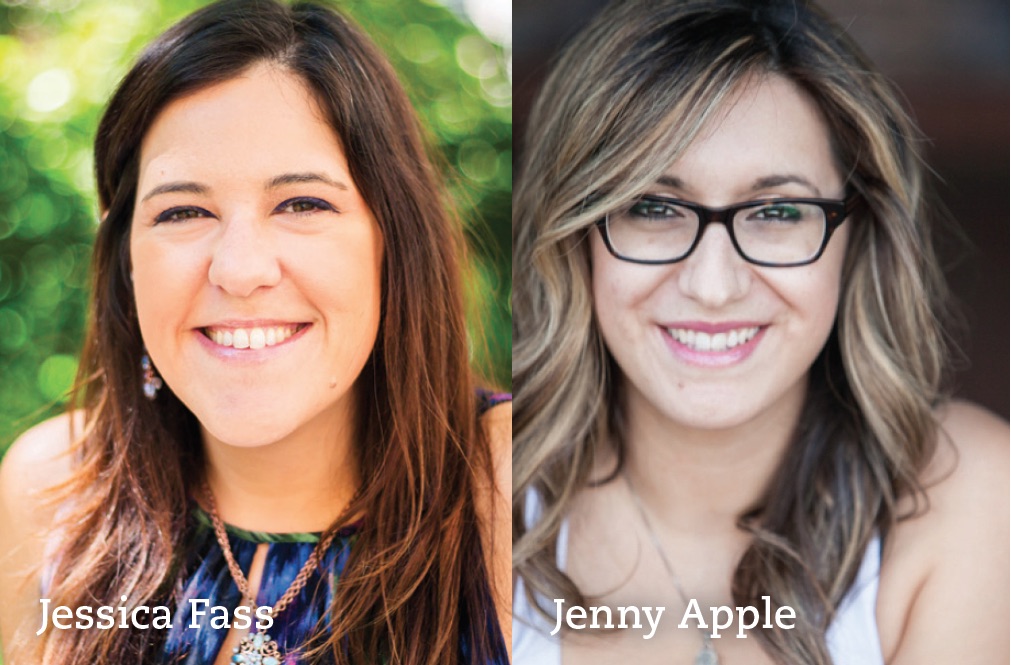
“The best feeling in the world is making a match,” said Jenny Apple of Jenny Apple Matchmaking, who started introducing people in 2013.
“Our clients like that we’re coaches, friends and mentors all rolled up ino one,” said Jessica Fass, of Fass Pass to Love.
Apple, who attended high school in Calabasas, launched her business after years of programming Jewish events. She offers matchmaking, dating consultations and coaching.
Fass, who grew up in Northridge, got into professional matchmaking in 2013 after making three matches on her own, which, according to Jewish legend, earned her a place in the World to Come.
Apple has matched 10 couples who have gotten married or are in long-term relationships. Two of the married couples now have children. Fass, who specializes in international matches, has matched six couples for marriage and two couples who are in a long-term relationship. And through their work, they’ve set up hundreds of first and second dates with local and international singles seeking partners.
Matchmaking isn’t as simple as pairing two single people, Fass and Apple explained in a joint conversation with the Journal. Matchmakers have to get to know their clients really well before they go on a date. Clients fill out a questionnaire, which generally is followed by a personal consultation. (Fass and Apple both focus on matching heterosexual couples; they connect LGBTQ singles to another matchmaker in their network.)
“Singles I’ve met with who are not successful are obsessed with the fantasy.” — Jenny Apple
To understand clients’ goals and outlook, Fass asks where clients see themselves in five years and what they consider a fun date. “Most smart people just say: ‘It doesn’t matter what I’m doing, as long as I’m with good company/the right person.’ That’s the smartest response and the truest in my book,” Fass said.
Fass helps clients plan the date and asks them to write down everything afterward. A few days later, she interviews both parties and provides feedback. Fass noted that attending events with clients helps her see how they interact in person.
Traditionally, making Jewish matches is considered a mitzvah, and only when matches lead to marriage are matchmakers paid. But matchmaking is hard work, and today’s matchmaking professionals want to get paid.
“You orchestrate the date like a producer,” said Fass, who formerly worked in television as an on-set assistant and script manager. “We have to educate people that it’s a service that you pay for up front.”
High-end matchmakers can command fees of $15,000 to $20,000 or even more. Apple and Fass charge about $5,000 for matchmaking services but offer dating coaching and consulting for less.
The matchmakers don’t see dating apps as competition; they’re just part of the dating industry landscape.
“I’m a huge advocate for online dating,” said Apple, who used JDate when she was single and met her husband on JSwipe (now owned by JDate).
Fass echoed Apple’s enthusiasm. “I used to use [JDate] back in the day when there were no apps.” In Israel, she used Tinder and OKCupid, because there, “everyone’s Jewish.” Now, she said, “clients and people I talk to at events say, ‘No one’s on JDate and JDate sucks’ — I believe they [dating apps] all work, you just have to invest time in it. But millennials would all rather be on swipe apps.”
Dating apps make people think “it’s the boyfriend/girlfriend store and there are endless options,” Fass said, but with the apps’ high potential for miscommunication, “we need to just get you on the freaking date.”
Clients should treat app matches like “a hot sales lead,” she added. “If you have time to get on the phone, just talk … you see instant results.” Fass stated a preference for sites like Match.com and eHarmony.com, where people can share and learn more about each other.
In today’s Jewish matchmaking, dating and partner preferences skewer the layers of traditional community expectations, idealized dating scenarios and contemporary realities like financial stability.
Apple noted that entrepreneurs say they want women who are busy, but not too busy for them. Fass said that beyond “Jewish,” her male clients are looking for someone “attractive to them,” for a “nonjudgmental place to land when they come home,” and for partners with some kind of passion, like volunteering. Some want to be the sole breadwinner others understand that many families need two incomes.
The women Fass has seen are looking for men with a good or at least stable, job, a sense of humor, and someone who’s physically attractive to them, but notes that she’s seen attraction grow for women (but less often for men). Women are often picky about height, Apple added, and although women say “sense of humor” is a priority, matchmakers often have to find out what that really means.
“Remember not to judge height, age or location,” Fass said. “There are only so many Jews in the world who have the same religious level as you. You need to cut some things off your list. Also, Jews like to eat! Our mothers are the best cooks in the world. So stop judging weight.”
One client of Apple’s would accept only dates with oval-shaped faces. “he was not attracted to a round face. I never heard that before.” Fass had one client who insisted that all of his dates wear dresses. “You can’t force someone to wear a dress,” she said.
“Singles I’ve met with who are not successful are obsessed with the fantasy,” Apple said.
While Apple and Fass are not business partners, they often collaborate on events — their next one is on Feb. 11 — and are fiercely committed to singles.
“Being married isn’t the cure and being single isn’t a disease,” Apple said.
Apple added that singles should take a multipronged approach — attending events, or hosting their own singles gatherings, in addition to hiring a matchmaker. She also notes that singles 40 and older is “a growing niche” that needs more programming.
Fass and Apple believe that there’s a match for everyone, with some caveats.
“We are always trying to make our clients happy but make them understand what is a healthy and happy relationship. It’s OK to be picky about things that you want, but do you know what’s important in a long-term monogamous relationship?” Apple said. Negativity toward a match, sometimes even before a first meeting, can be lethal, she said. “Love’s about giving and not taking.
In terms of a match’s potential, Fass keeps it simple: “Could you see yourself kissing them, and do they make you feel good? Then go for a second date.”
No matchmaker can guarantee love. But, Apple said, “we’re there to give you the best options in the most realistic way possible.”
“We can introduce you to your perfect match,” Apple said, “but you have to be open.”
The Reconstructionist movement’s central organization has changed its name to Reconstructing Judaism.
Since 2012, the Philadelphia-based organization has been known as the Reconstructionist Rabbinical College and Jewish Reconstructionist Communities.
The organization’s president, Deborah Waxman, announced the change on Jan. 29.
“Since our founding, the Reconstructionist approach to Judaism has been grounded in expressing Jewish action,” Waxman said. “We think this verb form, rather than an adjective or noun, communicates that more clearly.”
The movement’s rabbinical school, which celebrates its 50th anniversary this year, also has been renamed the College for Reconstructing Judaism.
“We are not imagining with this that people will shift how they refer to themselves,” Waxman said. “This is a rolling out of a new name of the 501(c)(3) [the nonprofit organization] on behalf of Reconstructionist Judaism.”
“The Reconstructionist approach to Judaism has been grounded in expressing Jewish action. We think this verb form … communicates that more clearly.” — Deborah Waxman
The change occurs as the movement prepares to open its first West Coast camp this June, Havaya Arts, at the University of Redlands. It also is planning its first movementwide convention in 10 years for November, while preparing to launch Evolve, an endeavor to engage Reconstructionist thinking on key questions facing the 21st century Jewish community.
“Together in conversation we will tackle the questions that cannot be Googled,” Waxman said.
Seth Rosen, chair of the movement’s board of governors, said during the press conference that movement leaders spent over a year consulting with more than 1,000 Reconstructionist rabbis, educators, staff members and students before the board unanimously approved the name change in October.
Senior Rabbi Amy Bernstein of Kehillat Israel in Pacific Palisades was one of the rabbis consulted before the vote. In an interview, she said active Judaism resonates with young people who express Judaism through social action.
“Younger Jews trend toward ‘doing’ Jewish,” she said. “A lot of what we’re hearing from research is young people don’t have this sense that ‘I am associated with the Jewish people because I am Jewish.’ It’s much more: ‘I’ll associate with the Jewish people and its institutions if it helps me do something in the world I feel is of value.’ You have a lot more focus on social justice, social action.”
The previous name of the central organization was created after the 2012 merger between the rabbinical school and the congregational union. Today, the central organization represents approximately 100 Reconstructionist congregations in the United States and abroad, including nine California synagogues. The two Reconstructionist synagogues in Los Angeles are Kehillat Israel and Malibu Jewish Center and Synagogue (MJCS).
“We think of modern Judaism as dynamic and constantly changing and adapting,” MJCS President Steven Weinberg said. “Moving it into the verb form is consistent with the way we view Judaism.”
Reconstructionist Judaism is the smallest of the four denominations of Judaism. Based on teachings by Rabbi Mordecai Kaplan, the movement has helped lead the way for change on issues including bat mitzvah, patrilineal descent, admitting gay rabbis into the seminary and permitting rabbis to officiate same-sex weddings.
Singing original, improvised music in front of a small crowd would be intimidating for most people. But the dozen or so autistic teens and young adults in Spectrum Laboratory’s Monday afternoon music class, held in a rented room at Leo Baeck Temple, seem to relish their moment in the limelight.
Garth Herberg, one of Spectrum Laboratory’s co-founders and the principal music teacher, helps the students by having them first create what he calls a jam board. Their assignment is to answer the following question on a large white board: What makes you smile and feel good? They file up to the board in small groups and write their responses: “dancing,” “meditation,” “seeing exciting, all new, action adventure movies,” “hotdogs,” “girls,” “traveling.”
Then one by one, they are invited to the microphone. Herberg asks them for their preferred music genre and tempo. Most request pop. Whatever they want,
Herberg, on guitar, and a friend of his, on cello, deliver.
The students sing, while their classmates watch. “I like traveling. I like seeing exciting, all new, action adventure movies.” They move around. They get into it. It doesn’t matter if they repeat themselves or if the lyrics are pedestrian. Everyone is respectful and supportive. One young woman keeps speaking, instead of singing, the lyrics, when it is her turn. Herberg encourages her to sing, again and again. And then she does. When she finishes,
she pumps her fist in the air and cheers, “I did it.”
“So much growth happens in the classes.” — Atticus Couger
It is moments like this, simultaneously big and small, that make clear why Jason Weissbrod, the other half of Spectrum Laboratory, said he and Herberg find so much more fulfillment in this work than they ever did when they were pursuing more traditional industry careers,
Herberg in music and Weissbrod in acting and directing.
The San Fernando Valley natives, friends since high school, started Spectrum Laboratory in 2015 with a single class for six students. Today, Herberg and Weissbrod, who are Jewish, have upward of 50 students ranging in age from 6 to 37 in their music, animation, film and acting classes. Neither of them has a personal connection to autism. But both had done significant work with autistic kids and teens before launching the nonprofit.
One thing that distinguishes Spectrum Laboratory classes is that in most, students finish with a completed project: an original composition for example, or a short film. These works are showcased at the organization’s annual Spec Fest. (This year’s ticketed event will take place the afternoon of May 19 at the Huffington Center near downtown Los Angeles.) The festival always includes a performance by the Spec Band, a group of autistic players.
The Spec Lab founders, who collaborate with a handful of other entertainment industry professionals who help teach, hope that they can one day do this work full time. For now, Herberg continues to teach music privately to pay the bills. Weissbrod bartends. “Our big picture/dream is to have a fully functioning production facility in Los Angeles where we can employ many of our autistic students to work on projects and have a creative and fulfilling lifestyle,” Weissbrod said.
“What’s really great is that they are able to take kids of different levels of cognitive function, and they all work together,” said Studio City resident Sara Graham-Costain, whose son, Atticus Couger, 18, has taken several Spec Lab classes. “It elevates everyone.”
Couger, whose goal is to become an actor, is equally enthusiastic. “So much growth happens in the classes,” he said. “You can feel it happening within yourself as well as seeing it happen with your peers. Over the course of a year, you’ll see people become way better at improv or following along with a script. It’s just a really fantastic way to learn in a low-pressure environment.”