fbpx

November 22, 2017

Relationships: The Multiplying Effect

Two weeks ago, we looked eastward and saw 60,000 Polish nationalists, with hatred in their hearts, marching against Jews & Muslims. And here too, in America, we know both the Muslim and Jewish communities are being targeted in a different ways. Despite forces trying to pit us against one another, as we approach Thanksgiving this year, we are grateful for the wide variety of partnerships being built between Muslims and Jews. These partnerships, no matter how small, accumulate to create deep and meaningful relationships, which reinforce and strengthen our ability to show up for each other. This is why we are especially grateful right now to have a front row seat to the flourishing relationships created through the work we do at NewGround: A Muslim-Jewish Partnership for Change, an organization working for over a decade to build relationships between Muslims and Jews to  transform our communities through lasting partnership.

Over the past several years, the inquiry of one of our Change-Makers, Deanna Neil, afforded her and another one of our community members, Hadir Elsayed, the opportunity to build on extant relationships in a way that has impacted our individual communities, and gone on to impact our city beyond the border of our individual relationships.

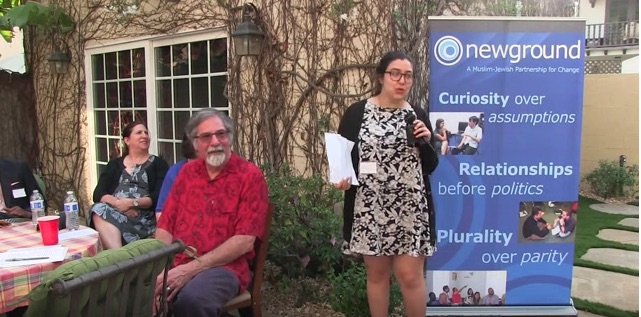
Until this past spring, Deanna was the Director of Jewish Innovation, running a Sunday program at the Silverlake Independent Jewish Community Center (SIJCC). As one of her final projects this past May, nearly 200 kids and their parents from Jewish and Muslim Sunday Schools held a book drive, and met to share an inter-communal, interfaith experience. The event came into being a few years ago, as a result of her NewGround Change-Maker experience. Tasked with doing a project as part of the Change-Maker program, Deanna turned to the resources closest at hand: A school of secular Jews and their families. The staff at NewGround were able to connect her with Hadir, the head of the Sunday School at the Islamic Center of Southern California.

https://www.facebook.com/mjnewground/videos/1552534214838840/

Hadir, relatively new to Muslim/Jewish engagement, enjoyed the sessions shared session for adults, and it changed her perspective on so many levels– allowing her to see both the differences and the many commonalities. She, like the students and parents who participated, was surprised by the parallels in both of our faiths, languages and experiences. As only one example, both the Jewish and Muslim traditions help those less fortunate through what is called tzedakah in Judaism and sadaqah in Islam. “Supporting the needy is not an optional good deed, but an obligatory act, like breathing or drinking. Over the past two years, our communities have found learning from one another priceless.” Hadir’s experience brought to life for her and her community this often-quoted Quranic verse: “People! Behold, We have created you all out of a male and a female, and have made you into nations and tribes, so that you might come to know one another. 49:13 Learning together makes us more conscious of the holiness in and around us.

In 2015, the launch year of the project, the Silverlake JCC community went to the Islamic Center of Southern California. Deanna had attended many NewGround meetings there, and was excited to share this connection with her community. She coordinated with Hadir, and together, they brought the entire SIJCC contingent to this, as yet, unfamiliar space.

While the kids learned with each other and made kits for the homeless, the adults also gathered, and the takeaways were profoundly simple – “Yes, there are differences, but you’re just like us. You’re parents in a secular American world, trying to connect to community and build religious identity for your kids at a relatively progressive institution.” In the second year, this past spring, the SIJCC hosted, and the experience was just as moving. Deanna and Hadir were amazed at the success of the program and how touched people were – just to be brought into an unfamiliar space, yet be made to feel safe and build relationships.

There is a verse in the Quran that instructs people of faith to hold constructive discussions with the people of the book *(Jews among them) weaving ideas together as if in a braid, creating a conversation and a relationship that is stronger and based on respect. “And do not argue with the People of the Scripture except in a way that is best, 29:46 Concluding that even when there are significant differences, we must focus on our common commitment to the values outlined in our traditions. The idea of using our resources to strengthen our own community, and the broader community in which we find ourselves, is clearly a value held by both our traditions.

Deanna and Hadir built a relationship out of their pre-existing relationship with NewGround. Together they reached out to their communities, helping to form new relationships, which are now invested in institutionalizing their work as conveners. Their project now serves to inspire similar projects between other institutions.

Although Deanna is moving on from her position, one of her greatest joys is knowing this experience will carry on after she’s gone. The project is now a staple of the year – expected by both Sunday Schools. The communities were so excited and only want more. The Jewish students will grow up and be able to say they’ve been to Muslim prayer space, or they’ve met a Jew. They asked questions they were afraid to ask anywhere else. And the same, of course, is true for the Muslim students.  They know that together, they have addressed issue that impact people in the City of Los Angeles outside of either of our communities.

There is a saying in the Mishnah: “It is not your responsibility to finish the work of perfecting the world, but you are not free to desist from it either.”  It is not each individual’s contribution alone that makes the difference.  It is the accumulation of each act — and the multiplying effects of the relationships between these actors — that moves us toward change. Whatever your resources and relationships, it is time for each of us, with gratitude and purpose, to get to work.

NewGround: A Muslim-Jewish Partnership for Change empowers Jewish and Muslim change-makers with the skills, resources, and relationships needed to improve Muslim-Jewish relations and strengthen cooperation on issues of shared concern. Through a professional fellowship, high school leadership council and innovative public programming, NewGround impacts a broad political and religious spectrum of Muslims, Jews and the institutions. http://mjnewground.org/


Aziza Hasan, Executive Director of NewGround, has extensive experience in program management and coalition building. Aziza’s work has been featured in several outlets including Yahoo News, Public Radio’s “Speaking of Faith” with Krista Tippett, and the LA Times, among others. Aziza currently serves on Los Angeles Mayor Eric Garcetti’s Interfaith Advisory Council.

Andrea Hodos is currently the Program Co-Director at NewGround, where she facilitates the High School Leadership Council and the adult Changemaker cohorts. She is also the Director of Sinai & Sunna: Women Covering, Uncovering and Recovering, a performance-based community venture harnessing the power of theater to move the Muslim and Jewish communities—literally and figuratively.

Relationships: The Multiplying Effect Read More »
How Do You Say ‘Wishbone’ in Hebrew?

If an American holiday falls on the Jewish calendar, does it make a sound? That’s a question we American immigrants ask ourselves annually with the coming of Thanksgiving.

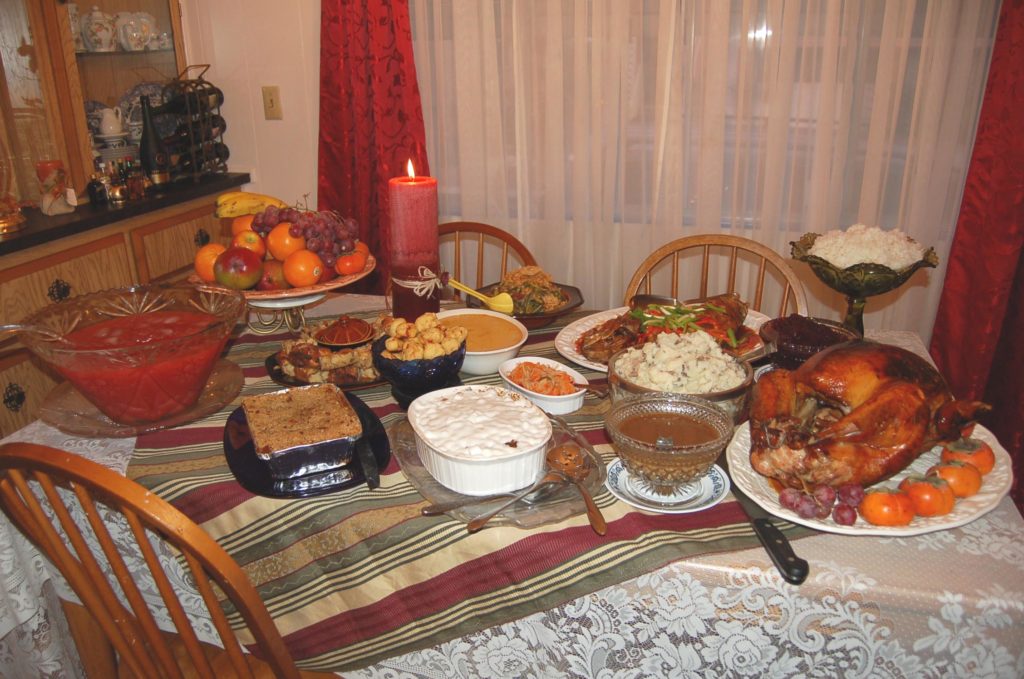
Ahh, Thanksgiving. That special holiday, rich with delicious foods unknown to most of humankind, commemorating a story that none of us over here can seem to remember. As an expat living in Israel, on no other day do I feel more American. No longer am I the Jewish kid in the public school cafeteria, trying to explain why my people eat a roll substitute made of “matza farfel”. In November, I become the American immigrant who defends the practice of adding marshmallows to yams (and pumpkin spice to coffee).

And why wouldn’t you? What is Thanksgiving, if not a day to stuff your face in the presence of loved ones? That’s a question I get every year from my Israeli friends.

Yossi: “Ehhh, Benji, so waht eez Tenksgeeving?”

Me: “So the Pilgrims came to Plymouth Rock…..and they met an Indian named Squanto….although he wasn’t from India….and then they had a big feast with the Indians….and at some point, umm….I think they…kinda killed them all through genocide and disease….(long pause)….hey, who wants cranberry sauce?!

(Under my breath) “I really need to look this up before next year.”

Anyway, who has time to explain? There’s a meal to prepare! At least for those Americans who step up to embark on a wild goose turkey chase through Israeli supermarkets. As Dorothy told Toto, we’re definitely not in Kansas anymore. At this time of year, the immigrants come out of the woodwork seeking community and shopping tips.

Even if the unthinkable were to happen and you weren’t to find cranberries, life would go on, right? As long as you have a turkey, which is its own adventure. Since Israelis don’t buy whole turkeys, you have to make a special request to the supermarket or butcher (a week in advance to be safe) and ask them not to cut it. You might pay three or four hundred shekels (make sure you’re seated before converting that to dollars) AND you might even discover that your Israeli oven doesn’t fit a big bird. Hey, nobody said life was easy.

No oleh (someone who makes aliyah) remains 100% American so it’s fitting that we put our own Israeli twist on the day. Since Thanksgiving is a normal Thursday here, its proximity to the weekend means we all just push it back a day and celebrate Friday night. Voila…Shabgiving! If it’s your custom, you can begin with the traditional Sabbath prayers or if you’re the creative type, you can make up your own, like “hamotzi stuffing min ha’turkey”. (Note: To this date, no one has ever actually done this.)

Actually, Thanksgiving dinner would be more fun if we ran it like Passover Seder. You want pumpkin pie? Go find it.

A Shabbat meal is always nice but let’s not lose focus: tonight is about the traditional holidays foods: turkey, stuffing, green beans, pumpkin pie, and more. Which brings us back to the yams, marshmallows, and bending over backwards to explain to the locals why a country with such expensive health care would ever eat them together.

And speaking of the locals: just as our Israeli friends open their doors to us for holiday meals, it’s only fitting that we do the same and welcome them to our feast. Keep in mind that they’ll be confused and bewildered by our bizarre food combinations. So why waste them on their unappreciative palettes? Give them some oatmeal and a taco shell and they won’t know the difference. “This is our traditional food, Sivan, which our forefathers have eaten for thousands of years. Now turn to page 45 and lead us in the bracha over the 4th cup of gravy.”

Jokes aside, it’s a great time. So maybe we don’t have the Macy’s Day parade, the Cowboys before 11 PM, or the proverbial crazy uncle who you only see once a year and argue politics with. This country is tiny, you can see him every weekend if you want (or send him daily texts through the family WhatsApp group).

What we do have is a few hours of camaraderie, community, and a chance to remember the traditions of where we came from and how delicious it tastes. And just remember: no matter how many carbs you ingest, you’ll burn them off running around town for cranberries.

Happy Thanksgiving!

This column originally appeared in Dallas Jewish Monthly. 

How Do You Say ‘Wishbone’ in Hebrew? Read More »

David Broza Brings Musical Message of Peace to the Holidays

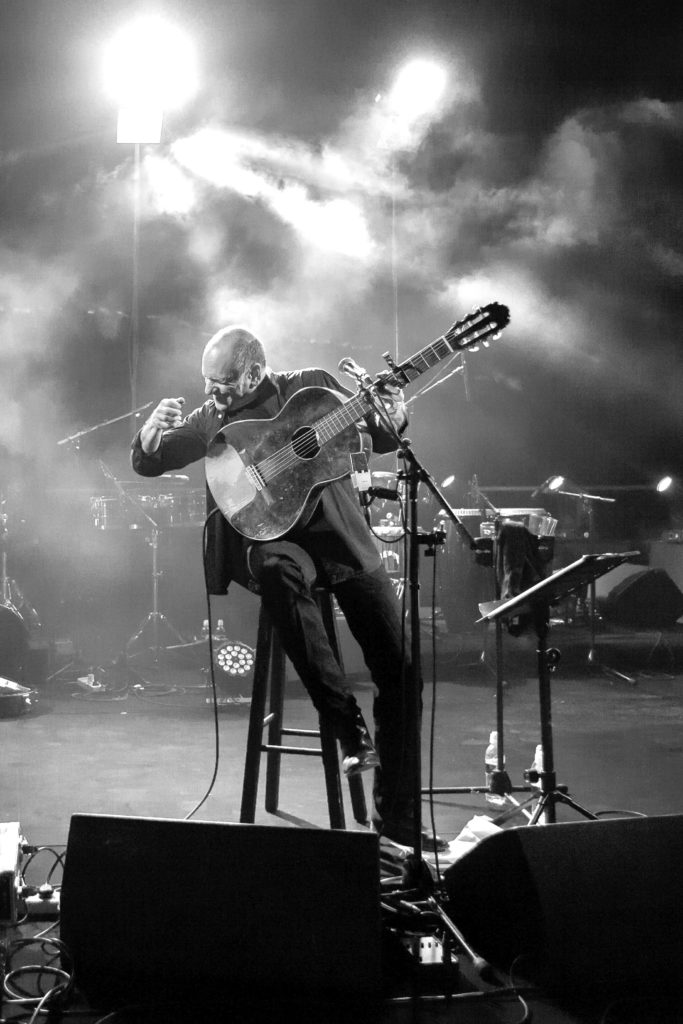
For the past 40 years, Israeli folk-rock singer-songwriter David Broza has been an advocate for peace, even when it proved unpopular. His hit song “Yihye Tov” (roughly translated as “Things Will Be Good”), written upon the occasion of Egyptian President Anwar Sadat’s first trip to the Jewish state, has become an Israeli anthem since it hit the airwaves in 1977.

Broza continues to talk about coexistence among Israelis and Palestinians at his annual sunrise concerts at Masada, where he has performed alongside musicians such as Jackson Browne. He also explored the issue on his 2014 “East Jerusalem/West Jerusalem” album and a documentary film of the same name, which recounted how Jewish and Palestinian musicians recorded that album in a small studio on the Arabic side of the city.

The Haifa-born Broza will bring his unity message, flamenco-tinged guitar style and dynamic rhythms to The Broad Stage in Santa Monica on Dec. 21.

His “Not Exactly Xmas Show” will fall between Chanukah and Christmas, but don’t expect holiday songs on the set list.

“We’re just celebrating the times by getting together and playing good music,” the affable, enthusiastic Broza said in a telephone interview from his apartment in the Tribeca section of Manhattan.

Broza, 62, has decades of hits to choose from when he performs. Many of his songs touch on themes of love, longing and a desire for peace. The lyrics are in English, Hebrew and Spanish and range from country-tinged rock (“Chileno Boys”) to upbeat ballads (“Haifa”) to intimate confessionals (“Time of Trains”).

David Broza will be at The Broad Stage on Dec. 21. Photo by Gil Lavy

Broza, a founder of the dovish political organization Peace Now, was greatly influenced by the work of his grandfather, Wellesley Aron, a founder of the Zionist youth movement Habonim as well as the Israeli-Arab peace village Neve Shalom.

His music borrows heavily from the flamenco-style fingerpicking he learned in Spain after his father moved their family to Madrid for business when Broza was 12. It was the late 1960s, when the country was under the dictatorship of Francisco Franco; the Brozas stayed longer in that country than they had intended after David’s father lost his savings in a failed deal.

David eventually returned to Israel for his military service, and was inspired by its multicultural ethos.

Among the instruments that will be featured at the Broad concert is the qanun, an Arabic stringed instrument that looks like the inside of a piano and is plucked like a guitar, played by a young Palestinian musician, Ali Paris.

“It’s got a ringing tone like a dulcimer but from ancient Arab music, which really dates back way before the lute,” Broza said.

The artist has enjoyed a number of significant music collaborations during his career. The renowned American singer-songwriter Steve Earle co-produced Broza’s “East Jerusalem/West Jerusalem” album.

Texas music icon Townes Van Zandt, a country-folk songwriter, left Broza a shoebox of unreleased poems and lyrics in 1994. Broza set those texts to music to create an album titled “Night Dawn: The Unpublished Poetry of Townes Van Zandt.”

“At the time, I was living in the States and was really working the circuits: small clubs, back roads, getting to know America,” he said.

Broza first came to prominence after his performance at the Nuweiba Pop Festival in October 1978 — a mere month after the signing of the Camp David Accords. An estimated 10,000 attendees erected a Woodstock-like tent city at the small beach town of Nuweiba on the Sinai Peninsula for the occasion.

Broza, who had just turned 23 at the time, recalled playing his hit, “Bedouin Love Song,” with Bedouins from a nearby village.

With his wife, fashion designer Nili Lotan, Broza now splits his time between the United States and his home in Tel Aviv. He also tours relentlessly, performing with American, Palestinian and Israeli musicians and with children in refugee camps.

“I do believe that there will be a more stabilized life between Israel and Palestinians, and a more sober understanding of what is needed to create a more safe society,” he said “[But] that’s a matter of time.”

Music can help, he said. “When people try to play together, they have to play in harmony.”

David Broza and Friends’ “Not Exactly Xmas Show” will be performed at 7:30 p.m. Dec. 21 at The Broad Stage in Santa Monica. Tickets are $55–$95. For more information, visit thebroadstage.org.

David Broza Brings Musical Message of Peace to the Holidays Read More »

Dealing with a Death and ‘Chasing Mem’ries’

How does one come to terms with the death of a spouse after a happy, fulfilling marriage of 57 years? That’s the struggle facing the protagonist, Victoria (Tyne Daly), in Joshua Ravetch’s “Chasing Mem’ries: A Different Kind of Musical,” at the Geffen Playhouse in Westwood.

We meet Victoria in her attic, where all the action takes place, as she is rummaging through items that bring back bittersweet memories, while her husband’s memorial is being conducted on the back lawn.

During a recent interview, Ravetch said the theme for his play emanated from what he had witnessed in his family after his mother lost his father six years ago, and his aunt lost his uncle eight years ago — both couples that had had lifelong, happy marriages. He found that generation seemed to have these beautiful relationships, which, while they weren’t perfect, managed to endure.

“I watched both of these remarkable women have to embrace the idea that they were going to have to live a certain part of their life without the person that they had been with for a lifetime,” Ravetch said. “And it felt like nobody had really addressed that time in a person’s life. … Your entire life has been formed with somebody, and suddenly you have to embark upon a completely new life, and how that’s even possible, or if it’s possible, and how you cope. And so, it began to interest me.”

He said he developed the play in collaboration with lyricists Marilyn and Alan Bergman, whose songs, both original and previously released, are threaded throughout the proceedings. Audiences will certainly recognize “The Way We Were,” which the Bergmans wrote with composer Marvin Hamlisch.

However, the play is billed as “a different kind of musical.” Marilyn Bergman explained that “The songs come from the interior dialogue that the characters are expressing. They are not performance songs, and there are no dancing girls.”

Alan Bergman agreed. “We always wanted to have, in this play, actors who sing, not singers who act,” he said.  “There’s a big difference.”

Accordingly, Victoria expresses her sense of loss through the lyrics of a song titled “Where Do You Start?” She sings, “How do you separate the present from the past? How do you deal with all the things you thought would last? That didn’t last?”

Her son, Mason (Scott Kradolfer), tries to get her to join the memorial service, but she, cynically and often with sharp humor, vents her feeling that the people who came don’t really care about her and are there only out of a sense of obligation.

In addition, it seems that Mason is contending with his own issues. He was engaged to an astronaut who was chosen for a future five-year mission to Mars. After he missed one of her launches and also objected to such a long separation, she broke up with him via an email from space. As a product of the modern world, in which most of his friends are divorcing, he longs for the kind of old-fashioned, committed and secure relationship his parents enjoyed.

Then there is Victoria’s late husband, Franklin (Robert Forster), who appears as a projection of what is going on in her mind. Ravetch said Franklin’s function is to help Victoria take the next step and move forward. “He becomes the facilitator to help her find her way, with wisdom and calm, and love and support. And it’s just a sense that death is not necessarily the end of a relationship; that it continues on in the mind of the survivor.”

This is a Jewish family, and in the play there is mention of Franklin’s bar mitzvah, when he received a dictionary from his father. “We talk about … these ritual rites of passage that bring a family together and give a child a sense of the next step in his life,”
said Ravetch, who grew up Jewish in Los Angeles. “So there’s all those gorgeous ceremonies that I myself lived through and experienced, and they’re very much a part of
this play.”

The playwright stressed that, although he is a secular Jew, many of the good things about him come from having been raised in a Jewish family. In fact, his grandfather was a rabbi. Ravetch commented on why it was important that his characters be Jewish.

“I think that there’s something in Judaism that involves tradition and family and humor and a kind of pact that we’re on this journey together, and we’re going to make it work somehow.

“It feels that being Jewish means you’re a member of a larger community that isn’t focused on what’s going to happen after you die, but is focused really on the quality of the life and the character of honor that you live in the present.”

Ravetch said audiences seem to relate to the story and are starting to bombard him in the theater lobby, telling him they lost their mothers … or their father is in hospice, or even that they can’t make a relationship work.

“It would be lovely if the play said … we’re not alone, and we’re all struggling with the same things at the same moment in this period of American history,” he concluded.

“Chasing Mem’ries” is at the Gil Cates Theatre at the Geffen Playhouse, 10886 Le Conte Ave., Los Angeles, through Dec. 17. For tickets and information, call (310) 208-5454 or visit tickets.geffenplayhouse.org.

Dealing with a Death and ‘Chasing Mem’ries’ Read More »

Anat Cohen: One Reed, Many Sounds

Praised by The New York Times for “beautifully crafted” and “eloquent” solos, jazz saxophonist and clarinetist Anat Cohen also will take on the role of bandleader when her newly formed ensemble, the Anat Cohen Tentet, makes its West Coast debut at the Valley Performing Arts Center in Northridge on Nov. 30.

Forming a tentet (a 10-piece band) was an idea Cohen, 37, discussed a year ago with her musical director, Oded Lev-Ari, a composer-arranger-producer she’s known since high school growing up in Tel Aviv. The two friends played in the school’s orchestra — Cohen on saxophone; Lev-Ari on piano.

“For the tentet, we wanted a small band flexible enough to produce a variety of sounds,” Cohen, who is now based in Brooklyn, said in a telephone interview. “The idea was to be able to swing like a Benny Goodman or Lionel Hampton, and since several of our musicians play more than one instrument, we can create a lot of different combinations.”

Aside from Cohen, the group’s multi-instrumentalists include pianist-accordionist Vitor Gonçalves and trumpeter Nadje Noordhuis, who also plays the trumpet-like flugelhorn. Cohen’s tentet performs on her new album, “Happy Song,” on the Anzic label, which she co-owns with Lev-Ari.

Versatility is a must for Cohen’s tentet, because these 10 musicians cover a lot of musical ground. To name just a few styles: modern and traditional jazz, Afro-Cuban, Brazilian choro and Argentine tango. “Everybody in the ensemble gets to shine,” Cohen said. She and Lev-Ari wrote a few of the arrangements.

Although Cohen’s been highly honored for her clarinet playing, including being named multiple times by the Jazz Journalist Association as Multi-Reeds Player of the Year and Clarinetist of the Year, it took her years to discover and develop her distinctive personal voice on the clarinet.

After a stint playing saxophone in the Israeli Air Force Band as part of her military service, Cohen left Israel for the Berklee College of Music in Boston where she discovered Brazilian choro — music characterized by the joyful spontaneity of its melodic leaps, breakneck speeds and unpredictable harmonic changes.

“Brazilian choro brought me back to the clarinet,” Cohen said. “I went to Rio in 2000 and fell in love with the culture and language. There’s a lot about the sound quality that reminded me of Tel Aviv, because Brazilian music was imported into Israel. I grew up hearing these sounds.”

Cohen said she was also inspired and encouraged by her two siblings, who were aspiring jazz musicians. Her older brother, Yuval, plays soprano saxophone; younger brother, Avishai, is a trumpeter. The trio often performs together as the 3 Cohens.

“There was no competition,” Cohen said. “I wanted to be like them. The only problem was finding time to have dinner together.”

Cohen, who is giving a master-class at Cal State Northridge on Dec. 1, said she doesn’t play klezmer music, although her roots show on “Happy Song.”

“There is a nod to klezmer on the new CD,” Cohen said. “I heard it growing up, so it’s in my DNA, but I have too much respect to say I play klezmer. Someone like clarinetist David Krakauer has a master’s feel for the ornamentations, the way you bend the sound.”

Another influence on Cohen’s playing was hearing different cantorial styles. “Clarinetist Artie Shaw talked about this,” Cohen said. “The way a cantor sings — the music is there to enhance the expression, the importance of a certain word. I play one note at a time with my focus on expressing the melody and making it meaningful.

“A cantor has a very deliberate way of reaching us and making us feel something,” Cohen added. “With the clarinet, the idea is to humanize the instrument. It’s a magic wand, but the challenge of every instrument is always the same — to find your own voice and express who you are.”

The Anat Cohen Tentet performs Nov. 30 at Cal State Northridge. For tickets and information, visit valleyperformingartscenter.org.

Anat Cohen: One Reed, Many Sounds Read More »

Authors Offer Insight Into Filmmakers, Faith and Family Trees

Chanukah and Jewish Book Month, which precedes the annual Festival of Lights — from Nov. 12 to Dec. 12 this year — are great occasions for selecting a few of the choicest titles from publishers large and small, whether for giving as gifts or keeping for ourselves. This year’s titles span topics ranging from film and the Coen Brothers to local rabbis sharing lessons on suffering and the future of Judaism. Here are a few of my favorites.

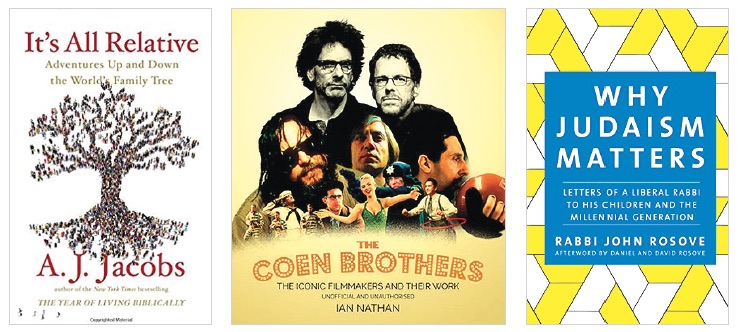
A particularly sumptuous book is “The Coen Brothers: The Iconic Filmmakers and Their Work” by Ian Nathan (Aurum Press) A richly illustrated and slip-cased hardcover, it serves as a kind of scrapbook for both fans and serious students of America’s most distinctive auteurs, a couple of Jewish boys from the Midwest whose cinematic work ranges from film noir (“Blood Simple” and “The Man Who Wasn’t There”) to Westerns (“No Country for Old Men” and “True Grit”) to a movie that might be described as pure theology (“A Serious Man”). As the author explains: “Just as ‘O Brother, Where Art Thou?’ was a comic variation of ‘The Odyssey,’ ‘A Serious Man’ was ‘The Book of Job’ played for laughs.”

The author is a London-based film critic, author, producer and journalist. His book is prominently marked as “unofficial and unauthorized,” but it’s the real thing when it comes to authoritative film history and penetrating film criticism, a deep dive into the influences that shaped the Coen brothers and the craft, imagination and sheer genius that define their highly distinctive work. It’s the perfect companion volume for any of the films in the Coen brothers’ oeuvre or, for that matter, the movies to come.

A.J. Jacobs is best known for his remarkable book, “The Year of Living Biblically,” and he is back now with an account of his relentless search for the roots of humankind, “It’s All Relative: Adventures Up and Down the World’s Family Tree” (Simon & Schuster). The high-spirited and often comic adventure began when the journalist received an email from a dairy farmer on a kibbutz in Israel: “You don’t know me, but you are an eighth cousin of my wife, who, in my opinion, is a fine lady.”

Inspired by the idea that somewhere in the distant past are “the real Adam and Eve,” whom Jacobs defines as the “Y-Chromosomal Adam” and the “Mitochondrial Eve,” he travels the world to find out everything that can be known about ancestry, both his own and everyone else’s, too. He quickly discovers that his own family tree includes 80,000 men and women, although he confesses that “I’d be happy to trim a few branches.”

By the end of his smart and rollicking book, Jacobs seeks to convince us that the biblical notion of universal descent from a single pair of “uber-grandparents” makes it possible to imagine — and to actually convene — a global family reunion. After all, “we are all cousins, whether we like it nor not,” as Henry Louis Gates Jr. announced to one of the gatherings that took place simultaneously in 40 cities and attracted some 10,000 “cousins.”

Closer to home — geographically at least — two of Los Angeles’ most distinguished spiritual leaders have published books that draw on their years of service as congregational rabbis. The first is Rabbi John Rosove, senior rabbi of Temple Israel of Hollywood and the author of “Why Judaism Matters: Letters of a Liberal Rabbi to His Children and the Millennial Generation” (Turner/Jewish Lights).

Each entry in the book is addressed to his two adult sons, David and Daniel: “The question I want each of you to ask yourself is: ‘Why stay Jewish?’ ” And his own daunting mission is to suggest the right answers: “I’d like to make the case that to identify as a liberal Jew in America today is to connect with a deeply intellectual, skeptical, activistic, and optimistic tradition that has at its core a nuanced spirituality, strong ethical roots, and clarity of values.” Along the way, he touches on ethics and theology, politics and social justice, love and marriage (including intermarriage), good and evil, war and peace.

In a touching coda, his sons respond to their father’s teachings and blessings. “What’d you think?” asks David at the outset of their extended conversation on Google Hangouts. “I was just beaming,” Daniel replies. More than that, Rosove’s message has gotten through to his sons. “My identity is very much tied to our tribal past and present,” Daniel explains. “[W]hat is most important is raising Jewish children — to uphold, as Dad said in his letter to us, ‘Jewish continuity.’ ”

Steven Z. Leder, senior rabbi of Wilshire Boulevard Temple, draws on a lifetime of experience in comforting his congregants at moments of pain and loss in “More Beautiful Than Before: How Suffering Transforms Us” (Hay House) — “I call the couch in my office ‘the Couch of Tears,’ ” he writes — and presents his readers with a redemptive message.

“I don’t intend to glorify suffering or suggest that the lessons we learn from pain are somehow worth the cost,” he writes. “But the truth is that most often for most people, real change is the result of real pain.” His points of reference range from Moses to Maimonides to Marlene Adler Marks, a much-beloved and much-missed contributor to the Journal. “I know nothing about bravery,” she wrote about her own final illness. “I know only about need, [about] reaching out, to friends who are close at hand.” Whether the suffering originates with injury, divorce, death or any of the other afflictions of life, Leder delivers a wholly redemptive message: “Pain cracks us open,” he writes. “It breaks us. But in the breaking, there is a new kind of wholeness.”

If the title of “The Abu Dhabi Bar Mitzvah: Fear and Love in the Modern Middle East” by Adam Valen Levinson (Norton) sounds like a joke, it’s no accident.  The author is a high-spirited young man — “an un-barmitzvahed Jewish boy,” as he puts it — who acquired a rudimentary knowledge of the Arabic language and set out to wander through the Muslim world with the intention of finding out why we fear it so much.

As it happens, a couple of Chabad rabbis from Brooklyn catch up with him in Abu Dhabi, conduct a candlelighting for Chanukah (“a more Jewish gathering than I’d ever gone to in Pennsylvania”), and arrange for him to be called to the Torah in a ceremony in what he describes as “the Jewish liturgical version of a Las Vegas wedding.” That’s only the beginning of his adventures, and we are invited to witness all of them. Thus does Levinson follow in a long tradition of Westerners who have written travel books about the Middle East with great wit, insight and verve. And now is exactly the right moment for an open-minded and good-humored book on the subject.


Jonathan Kirsch, author and publishing attorney, is the book editor of the Jewish Journal.

Authors Offer Insight Into Filmmakers, Faith and Family Trees Read More »

With ‘Mrs. Maisel,’ Creator Goes Back in Time, Just for Laughs

When Amy Sherman-Palladino was growing up in Van Nuys, her father, the former Catskills comic Don Sherman, would hold court in the backyard with fellow comedians like Jan Murray and Shecky Greene. Everyone would be eating deli food and trying to outdo each other with jokes.

Young Amy found the conversation “foreign and exotic and fabulous, when you’re sitting bored in the Valley waiting for a Ralphs to open so you have someplace to go,” the effusive Sherman-Palladino recalled in a telephone interview.

And when she repeatedly played the comedy album “2000 Years With Carl Reiner & Mel Brooks” — a gift from Dad — she knew she had found her “inner Jew.” The banter was “fast and furious and human and exhausted and hilarious,” she wrote in an essay for Vulture. “It dawned on me, ‘That was Jewish.’ ”

Sherman-Palladino brought the same frenzied Jewish chatter to distinctly WASP-y characters when she created her hit television show, “Gilmore Girls,” set in the New England enclave of Stars Hollow, Conn. “We wrote it as a Jewish show that just happened to feature a couple of Protestants running around,” she said. “They were the most Jewish goyish girls in the entire world.”

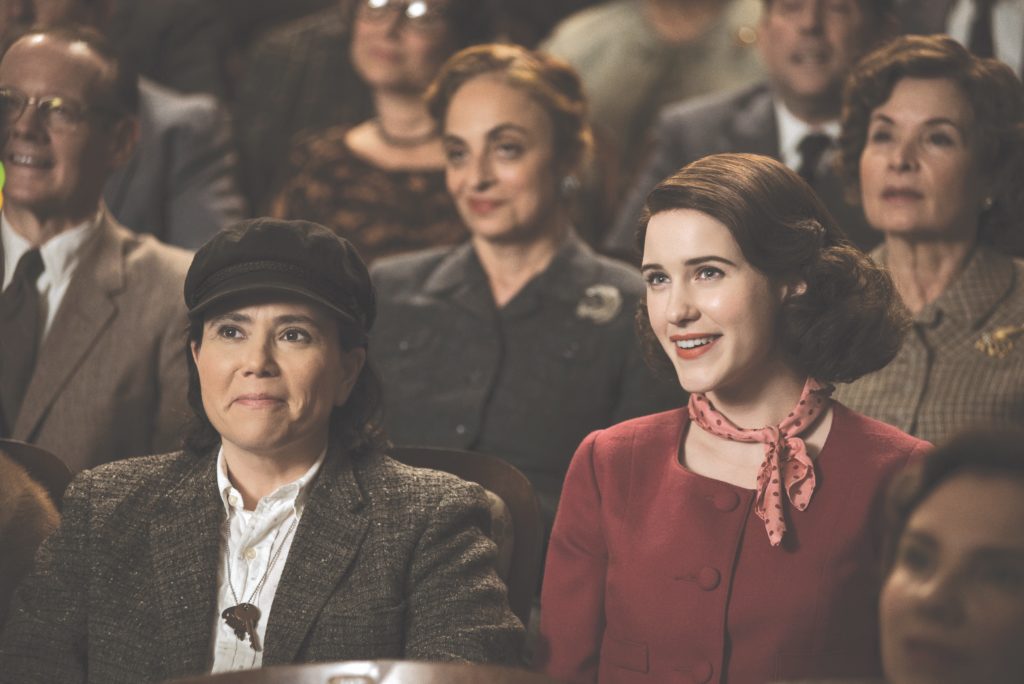
Now Sherman-Palladino is bringing her shtick to the overtly Jewish Amazon series “The Marvelous Mrs. Maisel,” which premieres Nov. 29 and spotlights a contented Jewish upper-middle-class housewife in New York in 1958. The series opens as Miriam “Midge” Maisel (Rachel Brosnahan) gives a speech at her wedding, quipping that shrimp was an ingredient in the egg rolls served. A panic breaks out as the rabbi and various guests flee the reception.

Four years later, she’s bribed the rabbi with a dreidel signed by Sammy Davis Jr. to attend her Yom Kippur break-the-fast meal. But the dinner is canceled when her husband, Joel, an aspiring comedian, leaves her for another woman.

The desperate Midge rushes to Joel’s gritty comedy club, takes the stage, exposes her breasts and kills with her rant about her loser hubby. She thereafter reinvents herself as a stand-up comic in the burgeoning Greenwich Village scene. But not without a dose of Jewish guilt. As Midge munches on nuts during a meeting at the club, she suddenly realizes it’s Yom Kippur. “I’m supposed to be fasting, atoning for my sins,” she tells a prospective comedy manager. “You showed your [breasts] to half of Greenwich Village,” the manager replies. “You think some nuts are going to piss Him off?”

When asked why her new show is so, well, Jewish — perhaps the most Jewish show to hit TV since Amazon’s “Transparent” — Sherman-Palladino said, “Why the hell not? I come from Jews. … I don’t want to say that Jews invented comedy — but Jews did invent comedy,” she added.

She set the series in 1958 because it was a time when artists were “taking the old, very structured ‘ba dump bump’ comedy and bringing it into social and political arenas. Lenny Bruce was like the new Jewish comedy. I wanted to take a woman who was expected to be a housewife and mother, who suddenly finds herself with this weird, hidden superpower onstage.”

Bruce pops in and out of Midge’s life “like a weird kind of muse,” Sherman-Palladino added. “Joan Rivers once told a story about a show she did where the audience didn’t laugh at a thing. But Lenny Bruce sent her a note saying, ‘You were right; they’re wrong.’ I give him a lot of credit that he could reach out to a female comedian at that time and see what was special about her.”

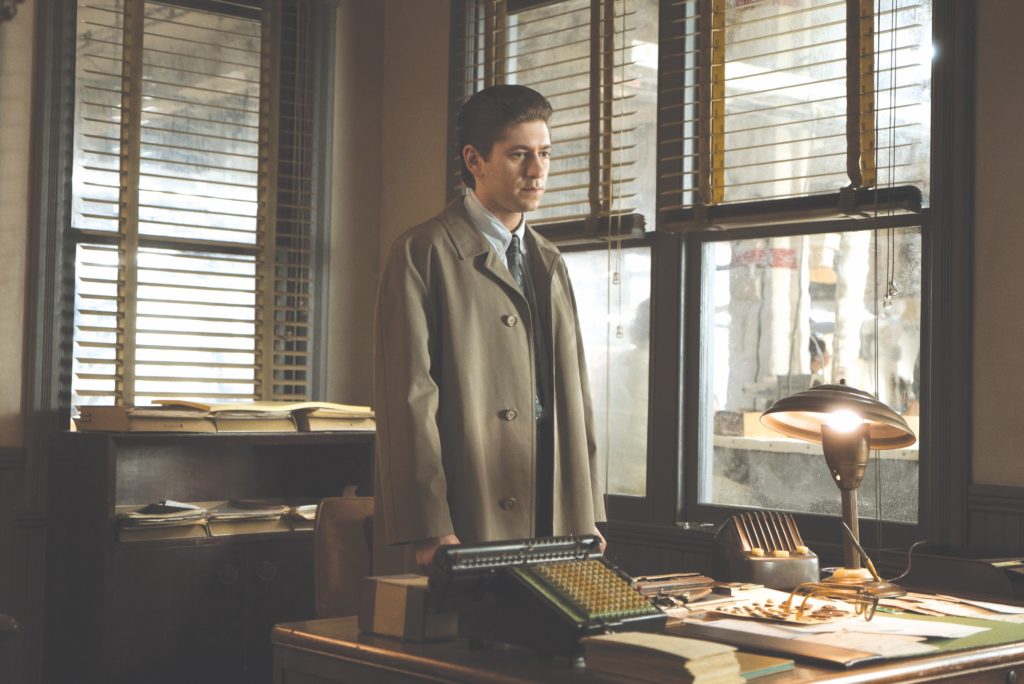
Michael Zegman plays Joel in Amy Sherman-Palladino’s new comedy series, “The Marvelous Mrs. Maisel.” Photo courtesy of Amazon Studios.

Rivers was, in a way, an inspiration for the character of Midge. “When it comes to female comedians, Joan Rivers is the queen,” Sherman-Palladino said. Rivers and Midge “are similar in that they were both raised in very comfortable Jewish families, expected to go a certain way, but went another way altogether.”

The series was born when, at a meeting with Amazon executives last year, Sherman-Palladino blurted out that she was “thinking about an upper West Side, Jewish-American housewife who suddenly gets drawn into the comedy scene. And they said, ‘OK, go do that.’ ’’

As Sherman-Palladino created the show with her husband and longtime collaborator, Dan Palladino, she said, “I didn’t want Midge to be a character staring out the window, thinking, ‘There’s something better for me out there.’ I wanted her to be someone who had thought she had gotten everything she had ever wanted, only to have it blow up in her face.”

Sherman-Palladino drew on her experiences working odd jobs at The Comedy Store decades ago to create the club scene Midge tackles in the series.

“Stand-up comedy is the worst job in the world,” she said. “If you’re in a bad play or ballet, you can always say that the director was a moron or your [co-stars] showed up drunk. But if you’re a comic, it’s just you and your thoughts up there. If the audience rejects you, you can’t blame it on anybody else. It’s a pure, intimate rejection of
who you are.”

Nevertheless, Midge is drawn to the craft because “when the audience laughs, it’s very powerful,” Sherman-Palladino said. “When comedy hurts, nothing hurts worse. But when it hits, it’s probably the best high in
the world.”

Sherman-Palladino grew up in a culturally Jewish home with her comedian father and her Mississippi native, Baptist mother, a dancer. Amy eschewed Hebrew school in favor of wearing a tutu to ballet class.

Eventually, she gave up dancing to write for the TV series “Roseanne” and went on to create “Gilmore Girls” as well as “Bunheads” (2012-13), which was set in the dance world.

She married Palladino in 1997 in a ceremony officiated by Rabbi David Baron of Temple of the Arts in Beverly Hills. “Dan is not Jewish, but he knew there was going to be a chuppah and that he was going to step on a glass,” she said. Sherman-Palladino named the fictional rabbi in “Gilmore Girls” after Rabbi Baron.

In “The Marvelous Mrs. Maisel,” Midge’s husband complains that their rabbi, in a sermon, “got more laughs in five minutes than I got in five months.” Midge replies, “He was in Buchenwald — throw him a bone.”

Before her husband dumps her, Midge bribes his open-mic night producers to give Joel better time slots by bringing them platters of her Jewish brisket and latkes.

Sherman-Palladino is now on a worldwide media junket to promote her series, but she aims to take a much-needed break after the tour. “I think I’ll check myself into the Betty Ford Center,” she quipped.

“The Marvelous Mrs. Maisel” premieres Nov. 29 on Amazon.

With ‘Mrs. Maisel,’ Creator Goes Back in Time, Just for Laughs Read More »

Israeli Film ‘Foxtrot’ Examines a Dance with Fate

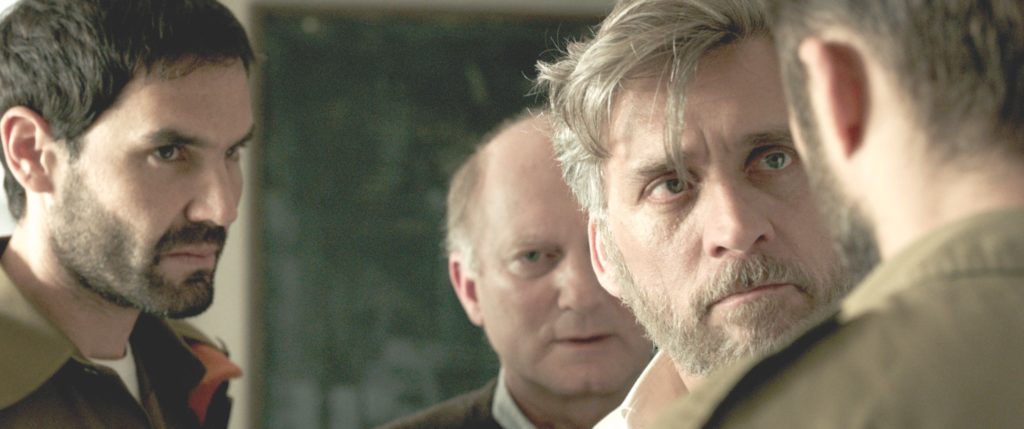
The controversial film “Foxtrot” opens with two somber-faced soldiers arriving at the front door of a successful architect, Michael Feldman (played by Lior Ashkenazi), and his wife, Daphna (Sarah Adler). Daphna immediately guesses their mission and faints, while the emissaries regretfully inform Michael that the couple’s son, Jonathan, has fallen in the line of duty.

As family and friends gather for the funeral, a third military messenger arrives to announce that there has been an unfortunate mistake. Another soldier, also named Jonathan Feldman, has been killed, but Michael and Daphna’s son is alive and well.

The mood and locale of the film then change abruptly to a remote army checkpoint on Israel’s northern border, guarded by Jonathan and three fellow soldiers. They live in a large, converted container and operate a manual gate to allow an occasional camel to pass through. Even more rarely, a car with a Palestinian family stops for inspection.

During one such stop, the bored Israeli soldiers get their kicks by making the nervous driver and passengers, dressed up for a wedding, stand in the pouring rain during a lengthy car inspection. During another inspection, something goes horribly awry,
but the Israeli army brass quickly covers up the traces.

“Foxtrot” is a wrenching film about parental grief, the joys and stresses of marriage, the boredom of army life, and how Israel’s occupation policy humiliates the occupied and hardens the occupiers.

The drama won the Grand Jury Prize at the prestigious 2017 Venice International Film Festival and racked up 13 Ophirs (Israel’s version of the Academy Awards), including best film, which automatically makes it the country’s entry in the Oscar race for best foreign-language picture.

In a telephone interview from Tel Aviv, director Samuel (Shmulik) Maoz described “Foxtrot” as “the dance of a man with his fate.”

Despite its superb artistry and acting, the film has become somewhat of a political and ideological football in Israel. As in many other countries, the predominantly left-liberal filmmakers (in Tel Aviv) often have been at loggerheads with the right-conservative government (in Jerusalem). Another factor in the tense relationship is that the government-supported Israel Film Fund contributes to the budget of practically every film made by Israeli talent, including “Foxtrot.”

The movie has come under fire publicly from Miri Regev, minister of Culture and Sports in Prime Minister Benjamin Netanyahu’s cabinet. “It is inconceivable that movies which shame the reputation of the Israel Defense Forces are those that are supported by the Israel Film Fund, which is supported by the state,” Regev declared in an interview on Israel’s Channel 2 TV station. “And those are selected to showcase Israeli cinema abroad.”

In the interview, Maoz pointed out that Regev had not actually seen the film, adding, “When my brothers are dying, I have the right to make such a movie.”

When “Foxtrot” screened in various European cities, Israeli diplomats frequently told Maoz that the film single-handedly had negated years of Israeli public relations efforts.

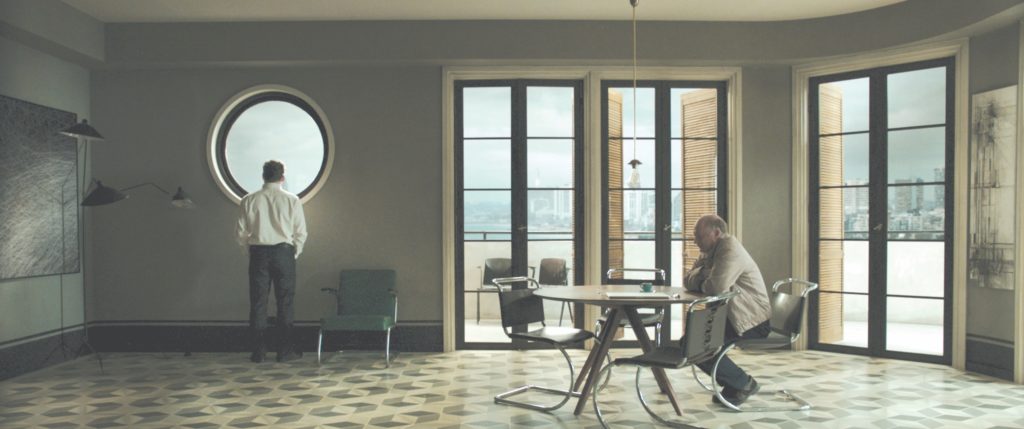
Actor Yehuda Almagor (seated) as Avigdor Feldman, tries to console his brother in “Foxtrot.”
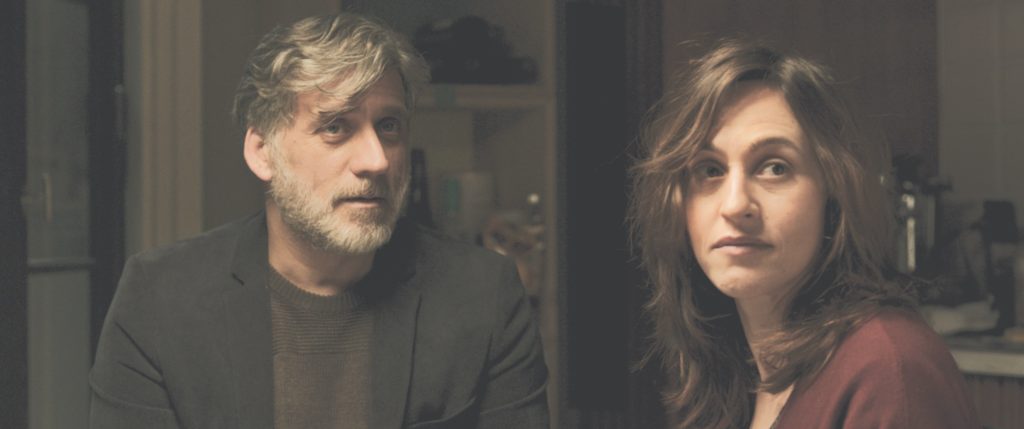
Actress Sarah Adler portrays Daphna Feldman, mother of Israeli soldier Jonathan in “Foxtrot.”

The director believes that underlying many of Israel’s actions is the enduring trauma of the Holocaust. But he also maintains that Israelis who have seen action in the defense forces have been supportive of “Foxtrot.”

When he speaks of combat, Maoz, 55, is talking from personal experience. He was a gunner in a tank during the first Lebanon invasion in 1982, and his harrowing experiences are reflected in his first film, “Lebanon” (2009).

Maoz also knows firsthand the trauma of believing, mistakenly, that one has lost a child. It happened when his oldest daughter ran consistently late for school and always asked her father to call (and pay for) a taxi to get to her class in time.  After a while, Maoz concluded that the habit was not only expensive but also bad for the girl’s education, so one morning he told her to take a public bus — Line 5 — to school like all the other students.

About half an hour after she had left, her father heard on the radio that a No. 5 bus had been blown up by terrorists, with dozens of people killed. Desperately, he tried to get through to her on the phone, but all the lines were tied up. “The next hour was worse than all my time at war put together,” he said.

Later, his daughter returned home. She had just missed the bus that was blown up by terrorists.

“Foxtrot” will screen for one week at Laemmle’s Royal Theatre in West Los Angeles, starting Dec. 8 — its qualifying run to compete in the Academy Awards. The movie will be released in Los Angeles theaters on March 2.

Israeli Film ‘Foxtrot’ Examines a Dance with Fate Read More »

Holiday Preview 2017 Calendar

SUN NOV 26
BILL NYE

Scientist, engineer, comedian, author and inventor Bill Nye appears in Beverly Hills as part of the Distinguished Speakers Series of Southern California. Nye, who currently can be seen on Netflix’s “Bill Nye Saves the World,” discusses his fascination with how things work, his celebrated career — he began as a comedy writer and performer on a Seattle ensemble comedy show and broke through with his Emmy-winning “Bill Nye the Science Guy” — and inspiring life lessons on the importance of education. 7 p.m. Tickets start at $260. Saban Theatre, 8440 Wilshire Blvd., Beverly Hills. (310) 546-6222. sabantheatre.org.

THU NOV 30
100 YEARS OF BUDDY RICH

The Grammy Museum commemorates the life and legacy of Jewish-American jazz drumming legend Buddy Rich, who was born in 1917 and collaborated with towering talents ranging from Frank Sinatra to Thelonious Monk. The evening features a Q-and-A with his only child, Cathy Rich; Gregg Potter, the drummer for the current incarnation of the Buddy Rich Band; and Red Hot Chili Peppers drummer Chad Smith, whose playing has been influenced by Rich. A special live performance follows the conversation. 7 p.m. (doors), 7:30 p.m. (show). $20. Grammy Museum L.A., 800 W. Olympic Blvd., Los Angeles. (213) 765-6800. grammymuseum.org.

MICHAEL CHABON AND ZADIE SMITH

The two literary heavyweights participate in a conversation. Chabon is a Jewish author known for the Pulitzer-winning “The Amazing Adventures of Kavalier & Clay,” and Smith is an Brit of Jamaican descent whose debut novel, “White Teeth,” garnered critical acclaim. They may not seem as if they have much in common, but the novelists’ latest works — “Moonglow” and “Swing Time,” respectively — explore the influence of family, cultural heritage and politics in shaping identity. 8 p.m. $15 students; $29-$59 general. Royce Hall, UCLA, 340 Royce Drive, Los Angeles. (310) 825-4401. cap.ucla.edu.

FRI DEC 1
“WONDER WHEEL”

Writer-director Woody Allen’s latest film is set in Coney Island in the 1950s, following a lifeguard, played by Justin Timberlake, who tells the story of a middle-aged carousel operator and his beleaguered wife. When the wife and the operator’s estranged daughter fall in love with the lifeguard, problems ensue. Jim Belushi, Juno Temple and Kate Winslet co-star. Various theaters. wonderwheelmovie.com.

“THE DISASTER ARTIST”

James Franco directs and stars in this acclaimed look at the making of Tommy Wiseau’s “The Room,” the real-life cult classic considered the “Citizen Kane” of bad movies. An adaptation of a nonfiction book of the same name, “The Disaster Artist” follows Wiseau, an aspiring filmmaker who pursued his dream of making it big in Hollywood against insurmountable odds. Franco’s younger brother Dave; Seth Rogen; Alison Brie and Ari Graynor co-star. Various theaters. a24films.com/films/the-disaster-artist.

SAT DEC 2
HADAG NAHASH

Funky hip-hop grooves with rock, reggae and Middle Eastern flavors set apart Hadag Nahash in the crowded Israeli music scene. The group features a full electric band, turntables, samples and lyrics about ending corruption and racism in Israeli society. The group performs at American Jewish University with Mizrahi artist Hanan Ben Ari. 8:30 p.m. $45-$75. American Jewish University, Gindi Auditorium, 15600 Mulholland Drive, Los Angeles. (818) 483-8818. teevtix.com.

THU DEC 7
RITA RUDNER

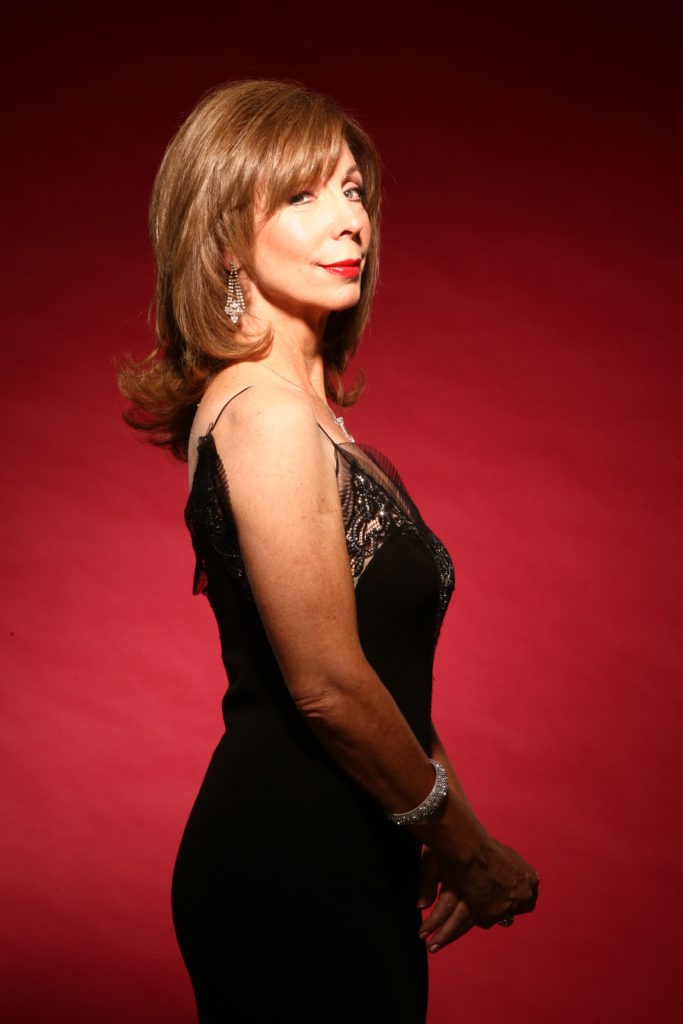
Stand-up comedian and best-selling author Rita Rudner often alludes to her Jewish upbringing in her act. Don’t miss an evening with the funny lady who claims to have the longest-running solo comedy show in Las Vegas’ history. 8 p.m. $40-$75. Smothers Theatre, Pepperdine University, 24255 Pacific Coast Highway, Malibu. (310) 506-4522. arts.pepperdine.edu/events/rita-rudner.htm.

FRI DEC 8
“BIG SONIA”

Holocaust survivor. Grandma. Diva. Big Sonia. Director Leah Warshawski’s documentary film follows her octogenarian grandmother, Sonia Warshawski, a Holocaust survivor who runs the last store in a defunct shopping mall, a tailor shop she’s owned for more than 30 years. When Sonia, one of the last remaining survivors in Kansas City, is given an eviction notice, the specter of retirement forces her to confront her harrowing past, which includes concentration camps and death marches. The film weaves Sonia’s current conflict with stories about her diva-like personality from family and friends. Various times. Laemmle Music Hall, 9036 Wilshire Blvd., Beverly Hills. Laemmle Town Center 5, 17200 Ventura Blvd., Encino. (310) 478-3836. laemmle.com.

A MICHAEL FEINSTEIN HOLIDAY CELEBRATION

Michael Feinstein.

Five-time Grammy nominee Michael Feinstein performs holiday classics from his album “A Michael Feinstein Christmas.” Feinstein has been called the “Ambassador of the Great American Songbook” for preserving and presenting the meld of old and new vocals. The crooner will belt out holiday classics including “Sleigh Ride,” “Have Yourself a Merry Little Christmas” and “Santa Claus Is Coming to Town.” 8 p.m. $38-$98. Valley Performing Arts Center, 18111 Nordhoff St., Northridge. (818) 677-8800. valleyperformingartscenter.org.

SUN DEC 10
HANUKKAH FESTIVAL: LA/LA

All ages enjoy live music, dance, art and food at the Skirball Center. Latin-Jewish bands Klezmer Juice and Pan Felipe perform; dance ensembles Versa-Style and Mambo Inc. teach attendees salsa, cumbia, mambo and hip-hop moves; visual artist Sandy Rodriguez leads attendees in creating a visual art installation; Maite Gomez-Rejon, founder of Art Bites, teaches about Mexican chocolate and decorating chocolate gelt; and storytellers Mario Ibarra and Julia Garcia-Combs recount the age-old story of Chanukah in English and Spanish. The museum’s current exhibitions, “Another Promised Land: Anita Brenner’s Mexico” and “Surface Tension by Ken Gonzales-Day: Murals, Signs and Mark-Making in L.A.” will be open. 11 a.m.-4 p.m. $12 (general), $9 (seniors, full-time students and children older than 12), $7 (children 2-12). Skirball Cultural Center, 2701 N. Sepulveda Blvd., Los Angeles. (310) 440-4500. skirball.org.

WED DEC 13
DANIEL ELLSBERG

Whistleblower Daniel Ellsberg, who leaked the Pentagon Papers, a study of government decisions related to the Vietnam War, to the media when he was an analyst for the Rand Corp., discusses his new book, “The Doomsday Machine: Confessions of a Nuclear War Planner,” a nonfiction account of the nuclear arms race. The event takes place in a run-up to the January release of Steven Spielberg’s new film, “The Post,” in which Ellsberg is a key figure. 8 p.m. $20 (general admission), $30 (reserved seat), $45 (reserve seat plus book). William Turner Gallery, Bergamot Station Arts Center, 2525 Michigan Ave., Santa Monica. livetalksla.org.

SAT DEC 16
KLEZMATICS

Renowned klezmer band the Klezmatics perform a “Happy Joyous Hanukkah” concert at the Valley Performing Arts Center. The evening is a celebration of Yiddish culture at a time of year when candles and family warm the dark nights. The event embraces audiences of all cultures and backgrounds. 8 p.m. $33-$68. Valley Performing Arts Center, 18111 Nordhoff St., Northridge. (818) 677-8800. valleyperformingartscenter.org.

WED DEC 20
BARRY MANILOW

American singer-songwriter Barry Manilow, whose more than five-decade career has spanned hits including “Mandy,” “Can’t Smile Without You” and “Copacabana,” performs “A Very Barry Christmas.” He will sing holiday standards, including “I’m Dreaming of a White Christmas.” 7:30 p.m. $39-$216. The Forum, 3900 W. Manchester Blvd., Inglewood. ticketmaster.com.

Holiday Preview 2017 Calendar Read More »