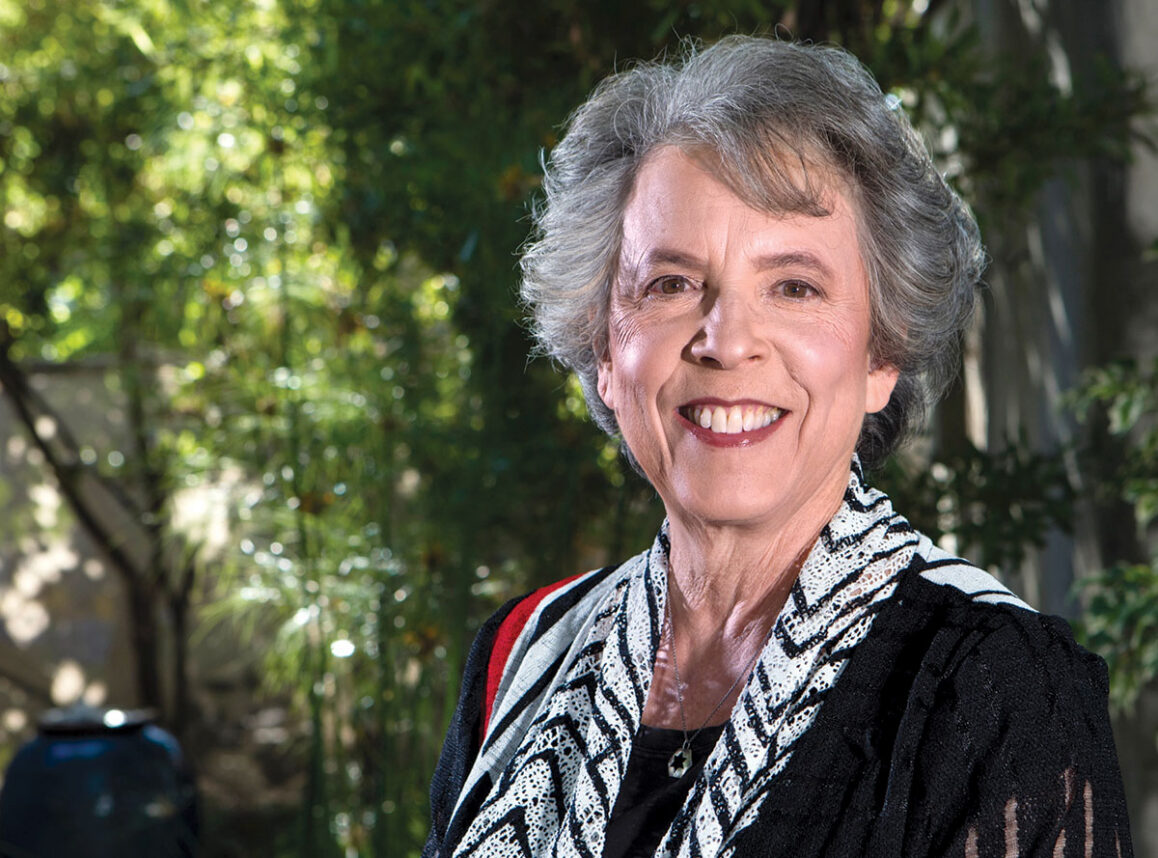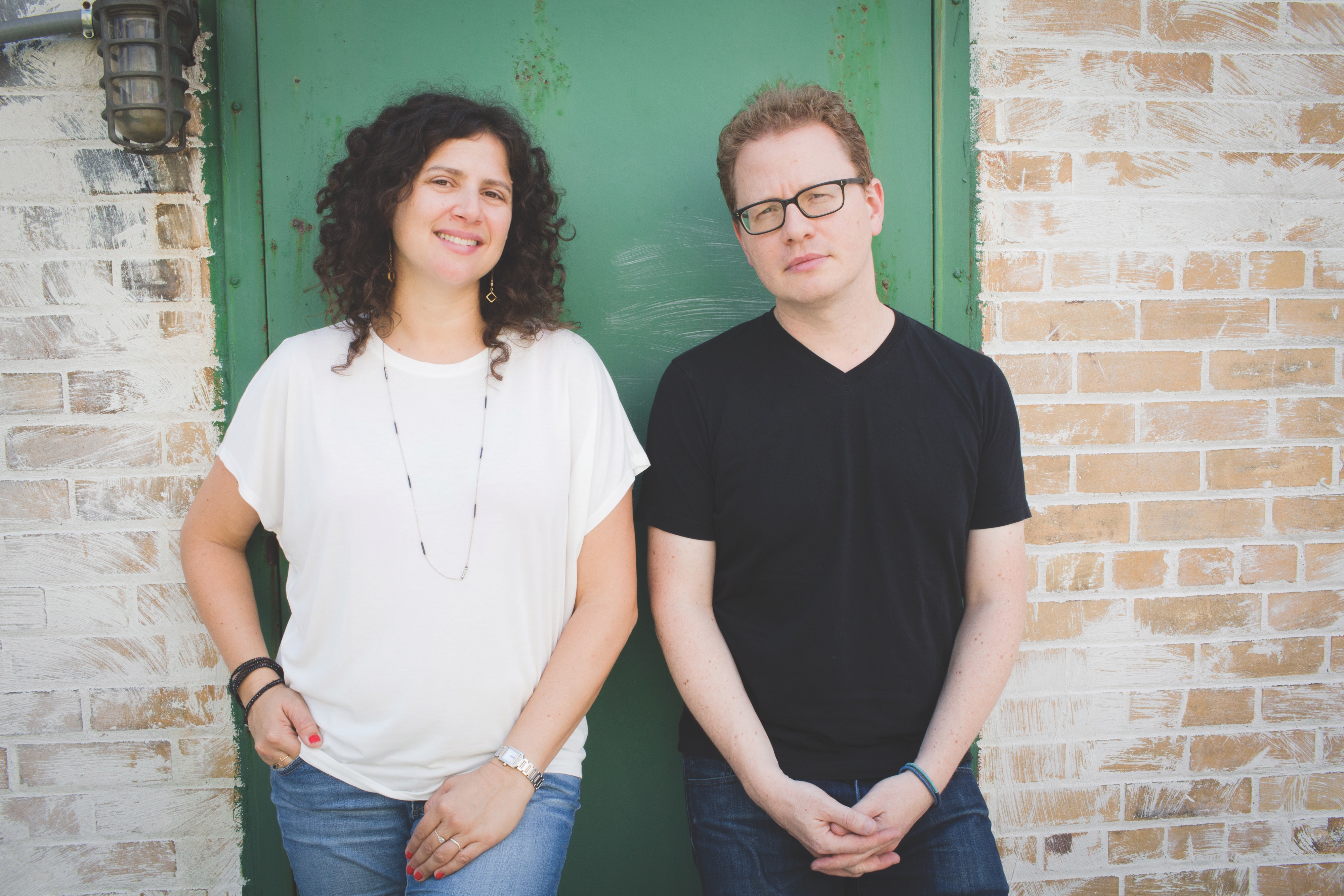
Praised by The New York Times for “beautifully crafted” and “eloquent” solos, jazz saxophonist and clarinetist Anat Cohen also will take on the role of bandleader when her newly formed ensemble, the Anat Cohen Tentet, makes its West Coast debut at the Valley Performing Arts Center in Northridge on Nov. 30.
Forming a tentet (a 10-piece band) was an idea Cohen, 37, discussed a year ago with her musical director, Oded Lev-Ari, a composer-arranger-producer she’s known since high school growing up in Tel Aviv. The two friends played in the school’s orchestra — Cohen on saxophone; Lev-Ari on piano.
“For the tentet, we wanted a small band flexible enough to produce a variety of sounds,” Cohen, who is now based in Brooklyn, said in a telephone interview. “The idea was to be able to swing like a Benny Goodman or Lionel Hampton, and since several of our musicians play more than one instrument, we can create a lot of different combinations.”
Aside from Cohen, the group’s multi-instrumentalists include pianist-accordionist Vitor Gonçalves and trumpeter Nadje Noordhuis, who also plays the trumpet-like flugelhorn. Cohen’s tentet performs on her new album, “Happy Song,” on the Anzic label, which she co-owns with Lev-Ari.
Versatility is a must for Cohen’s tentet, because these 10 musicians cover a lot of musical ground. To name just a few styles: modern and traditional jazz, Afro-Cuban, Brazilian choro and Argentine tango. “Everybody in the ensemble gets to shine,” Cohen said. She and Lev-Ari wrote a few of the arrangements.
Although Cohen’s been highly honored for her clarinet playing, including being named multiple times by the Jazz Journalist Association as Multi-Reeds Player of the Year and Clarinetist of the Year, it took her years to discover and develop her distinctive personal voice on the clarinet.
After a stint playing saxophone in the Israeli Air Force Band as part of her military service, Cohen left Israel for the Berklee College of Music in Boston where she discovered Brazilian choro — music characterized by the joyful spontaneity of its melodic leaps, breakneck speeds and unpredictable harmonic changes.
“Brazilian choro brought me back to the clarinet,” Cohen said. “I went to Rio in 2000 and fell in love with the culture and language. There’s a lot about the sound quality that reminded me of Tel Aviv, because Brazilian music was imported into Israel. I grew up hearing these sounds.”
Cohen said she was also inspired and encouraged by her two siblings, who were aspiring jazz musicians. Her older brother, Yuval, plays soprano saxophone; younger brother, Avishai, is a trumpeter. The trio often performs together as the 3 Cohens.
“There was no competition,” Cohen said. “I wanted to be like them. The only problem was finding time to have dinner together.”
Cohen, who is giving a master-class at Cal State Northridge on Dec. 1, said she doesn’t play klezmer music, although her roots show on “Happy Song.”
“There is a nod to klezmer on the new CD,” Cohen said. “I heard it growing up, so it’s in my DNA, but I have too much respect to say I play klezmer. Someone like clarinetist David Krakauer has a master’s feel for the ornamentations, the way you bend the sound.”
Another influence on Cohen’s playing was hearing different cantorial styles. “Clarinetist Artie Shaw talked about this,” Cohen said. “The way a cantor sings — the music is there to enhance the expression, the importance of a certain word. I play one note at a time with my focus on expressing the melody and making it meaningful.
“A cantor has a very deliberate way of reaching us and making us feel something,” Cohen added. “With the clarinet, the idea is to humanize the instrument. It’s a magic wand, but the challenge of every instrument is always the same — to find your own voice and express who you are.”
The Anat Cohen Tentet performs Nov. 30 at Cal State Northridge. For tickets and information, visit valleyperformingartscenter.org.