I frequently write about the importance of listening to the other side on tough issues, but are some positions so odious that they never deserve a hearing?
A couple of years ago, an Australian friend was directing a documentary about a difficult subject: child sex-abuse in his Jewish community. One of the interviewees was a former abuser who had gone on to live a normal family life for decades.
My friend had filmed a conversation between this man and a well-known sex-abuse survivor who had become a whistleblower. He needed someone to film the former abuser — now living in Los Angeles — reading a statement in his home. I’m a film director too, so my pal reached out to me. I figured that if a victims’ rights advocate was OK with interviewing this man, I was OK with filming him.
As I entered his house, I couldn’t help noticing that it was nicer than mine. Evidently, paying for his crime had not impeded his business. We were about the same age, and from the pictures on the fridge, his kids looked about the same age as mine.
His movements were a bit jittery, but he came across as intelligent and upbeat. It felt weird to be in a room with a man who had been convicted of child sex abuse. As a father, it occurred to me that it might be my obligation to clobber him with my tripod rather than film him.
As his story came out, there were some surprises. He had been relatively young when he committed the crime, about 10 years older than his teenage victim. Both had grown up in an ultra-Orthodox environment where people never expressed sexuality publicly and rarely discussed it privately. Masturbation was strictly prohibited. His ideas about sexuality were juvenile even after he became a legal adult.
The man in my viewfinder could have lain low. Instead, he chose to speak up because he felt a responsibility before God and his community.
He made it sound as if the episode that changed his victim’s life and his own was a bit of experimentation that occurred because he was such an immature adult.
In any case, he did what he did, got caught and paid a price. He then moved to a new country, rebuilt his life, started a family, and never again engaged in criminal conduct, according to his telling of the story. He could have sealed his past in a never-to-be-reopened box, he said, except that he now felt a responsibility to help other boys and young men who engaged in similar “experimentation” and then felt so much remorse that suicide seemed like their only option.
Apparently, this happened pretty often.
He noted that God forgives the truly penitent, and so should we.
As I filmed, my mind was racing. Suppose a kid does a dumb thing that doesn’t even rise to the level of criminal conduct, but he feels so bad about it that he becomes suicidal. He can’t discuss it with anyone in his ultra-Orthodox world, but hearing this guy’s statement might help him realize he’s got options.
The man in my viewfinder could have lain low. Instead, he chose to speak up because he felt a responsibility before God and his community. I wouldn’t call him a hero, but his teshuvah — his atonement and turning — appeared genuine.
If the harm he had caused years earlier was a one-time mistake, then this shoot would serve a valuable purpose.
But what if the film’s director and I were being manipulated to cover for a predator? My gut told me the guy’s statement was genuine, but, as my wife often reminded me, I was not always the best judge of character.
Maybe this guy was and continued to be a pedophile, I thought. Maybe I should just run out of there and trash the footage.
Then I learned that people in his current community knew about his past and accepted him anyway. His wife was supportive. He seemed to be the poster boy for rehabilitation.
Isn’t that a value to be promoted? Sure, but do I want him around my kids? There are limits to positive ideology. A halfway house sounds like a great idea — until the parole board puts it next to your home.
In the end, I completed the shoot and sent the footage to Australia. I pray I participated in a worthy project, and that the man I filmed will live out his life on the right path. Perhaps someone else’s life will even be saved. Please God, let it be so.
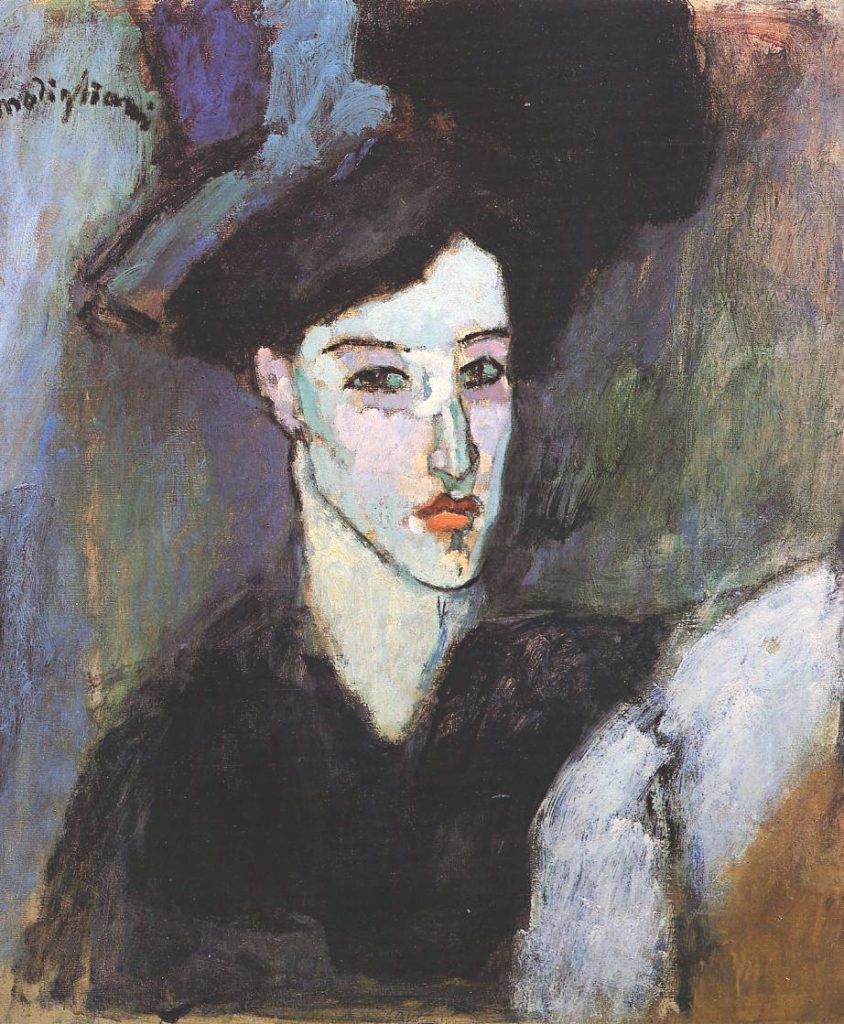
“The Jewess” (oil on canvas, 1908) was the first painting Modigliani exhibited after he moved to Paris in 1906. It currently is on view at the Jewish Museum in New York City as part of the “Modigliani Unmasked” exhibition.
Photo: Laure Denier Collection, Paul Alexandre Family, courtesy of Richard Nathanson, London
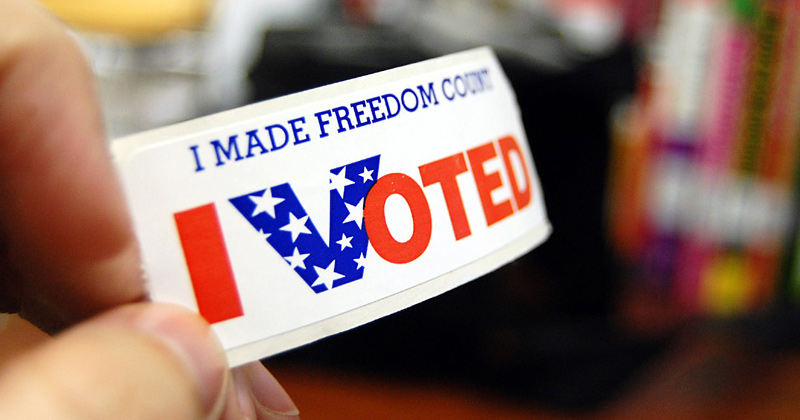
That was Politico senior writer Jake Sherman’s answer to a question I asked during a panel on politics at the Jewish Federations of North America General Assembly about how journalists can maintain objectivity in our hyperpartisan age.
He was joined on stage at the Nov. 12 session in downtown Los Angeles by New York Times’ L.A. bureau chief Adam Nagourney, Los Angeles Times Assistant Managing Editor Christina Bellantoni and conservative commentator and radio host Hugh Hewitt — though none of the others, nor I, copped to taking such a measure for our craft.
Sherman is surely not the only journalist willing to sacrifice a civil right for an ideal, and his ruthless pursuit of fairness and balance in journalism is admirable. But I confess I’m skeptical of what his forfeiture costs.
“So, does that mean you consider yourself a journalist before a citizen?” I asked.
Sherman batted away that question, essentially saying no. But surrendering his most fundamental right as a citizen in order not to appear partisan in his vocation is an alarming solution.
To give up one’s vote is a dereliction of duty.
My knee-jerk reaction to his declaration was mild disturbance. To give up one’s vote — the most essential unit in a democratic system, the axis around which everything else spins — is a dereliction of duty, and takes for granted the principal privilege of living in a free society.
On the other hand, Sherman spends most waking hours of his life contributing to the cause of a free press, upholding one of the essential institutions of democracy. His willingness to guard the integrity of the enterprise is an inspired choice, especially in an age of partisanship and rampant media bias, when almost every major journalistic institution in the country is associated with one political bent or another. “Free press is as fundamental a responsibility as voting,” Sherman told me. “And I can’t do it responsibly while expressing private or public preference for a candidate.”
Can journalists do their jobs if biased towards particular political outcomes? At the very least, should they disclose their bias in the interest of transparency?
The conservative commentator Hewitt said he’d like to see this happen, but I’m not convinced that more partisan declarations would repair what’s broken in our media. Maybe Sherman is on to something.
It’s no secret that hyperpartisanship has paralyzed our politics and produced a brutal political warfare that has resulted in government stasis and inefficiency.
Right now, a majority of Americans view our nation’s government with varying degrees of rage, disillusionment or utter disbelief. According to a recent Gallup report, American confidence in government remains abysmally low, with slightly more than a quarter of Americans (28 percent) saying they’re satisfied with national governance. That number is better than the historic low of 2013, when the government approval rating was 18 percent, but it is well below the 38 percent average since 1971.
“Most U.S. adults are dissatisfied with how the executive and legislative branches are doing their jobs, and majorities hold unfavorable views of both major political parties,” the report stated.
Even Republicans, who control both houses of Congress, disapprove of the way it operates. In fact, “The federal government has the least positive image of any business or industry sector measured; Congress engenders the lowest confidence of any institution that Gallup tests; and Americans rate the honesty and ethics of members of Congress as the lowest among 22 professions in Gallup’s most recent update.”
Under these circumstances, it’s easy to see how a vote might offer validation to a fractured political system — or worse, serve as an exercise in obsolescence. Because when Americans were surveyed about the biggest problems facing our nation, our government came out on top.
Think about it: What bothers Americans most is not North Korean or Iranian nuclear aggression, not China’s growing economy or rampant domestic mass shootings, it’s the unremitting bickering, obstructionism and partisanship that characterizes 21st century American democracy.
During a Shabbat lecture at Sinai Temple in Westwood on Nov. 10, New York Times columnist Bret Stephens suggested that what America needs more than anything is a restoration of citizenship over partisanship. He called for rededication to the values we share as citizens of this nation — not least among them, the beloved right to exercise our moral and political will at the polls.
Not every American citizen is a journalist, but every American journalist is a citizen. It would be a shame to forsake the thing we have in common in order to stand apart. For citizens, voting is an act independent of any result. It is not a partisan exercise but an expression of belonging.
On Day Two, Valley Beth Shalom’s Rabbi Ed Feinstein gave an impassioned speech, invoking Abraham Joshua Heschel’s plea for Jewish authenticity and encouraging Federations to make it a top priority. “You can’t build … Jewish identity with crisis and fear,” he said. “It’s the wrong language.”
In another session, Tinder founder Sean Rad, a graduate of Milken Community High School, waxed philosophical on his connection to Judaism and what millennials want. He also noted that his best Jewish education came from his family’s Shabbat dinner table.
Rad noted that the average person with an iPhone today has more access to more information than an American president would have had 10 years ago. (I wondered, if the Jewish community is fragmenting because millennials have access to too many people and too much information, doesn’t a dating app like Tinder become part of the problem?)
At a session called Millennial Roundtable, Jackie Rotman, founder of Everybody Dance Now, said that federations can be alienating for young professionals, and that the key to engagement is to earn loyalty and engage people early. She also described various types of donors, saying federations need to expand their definition of how a donor looks and acts.
Swipe Out Hunger’s Rachel Sumekh said that “If you want to engage millennials, the first step is to be curious about who we are.” Jason Leivenberg, who runs NuRoots, an L.A. Federation effort aimed at millennials, charged the attendees: “If we can’t answer ‘Why be Jewish?’ for ourselves, how can we ask others that question?”
Jodi Schwartz, JFNA’s treasurer, introduced a panel on relations between American Jews and Israel by saying, “We all love Israel but it’s sometimes hard to feel at home there.” Gidi Grinstein, founder and president of the Reut Group, said that “A vibrant Diaspora is a Zionist imperative.”
Ambassador Dani Dayan, Consul General of Israel in New York, emphasized the strength of ties between Israel and U.S. Jews. “Despite the fact that we are Jewish, our marriage is Catholic — there is no divorce in this marriage,” he said, adding that, “Our obligation is to put aside our different opinions and promise never to neglect one another.”
“I study Israel education, teaching Israel to American Jews,” said Bethamie Horowitz on that panel, noting the shift in Israel support from a “solidarity” or “blue-and-white model” to something that’s “more bruising: the black-and-blue model.” Horowitz, who is a research professor at NYU Steinhardt School of Culture, Education and Human Development, added that there is a “great need to address the complexities that Israel now opposes. We have to teach ourselves how to decode the complexities.”
At a session examining Hollywood through a Jewish lens, television executive Nina Tassler praised “Wonder Woman” star Gal Gadot for her reported decision not to sign on for a “Wonder Woman” sequel if producer Brett Ratner — who has been accused of sexual misconduct — is involved.
“She took a stand — it was an Israeli woman who took a stand, and I think it is important,” said Tassler, former chair of CBS Entertainment. The audience responded with enthusiastic applause.
Staff Writer Ryan Torok contributed to this report.
The 2017 General Assembly (GA) featured three giants of Israeli leadership — Israeli Prime Minister Benjamin Netanyahu, Israeli President Reuven Rivlin and Jewish Agency for Israel Chairman Natan Sharansky.
Netanyahu’s appearance on the final day of the three-day gathering was virtual, as he participated in a live conversation via satellite. The Nov. 14 interview conducted by Jewish Federations of North America (JFNA) Chair Richard Sandler marked the conclusion of the GA.
During a 15-minute conversation, Netanyahu said he appreciates U.S. President Donald Trump’s stance on Iran as well as U.S. Ambassador to the U.N. Nikki Haley’s willingness to fight against Israel bias.
But he specifically stressed that his issues with Iran are with the country’s leadership, not its people. In fact, he said he had just announced hours earlier that Israel would provide medical assistance to the Red Cross to aid in the recovery effort for Iranians and Iraqis after the recent earthquake on the Iranian-Iraqi border.
“We have no quarrel with the people of Iran,” Netanyahu said. “Our quarrel is only with the tyrannical regime that holds them hostage and threatens our destruction.”
Rivlin, whose in-person appearance on Nov. 13 prompted ramped up security, discussed the need for Israel and Diaspora Jewry to work together in confronting anti-Semitism.
“We are one nation,” he said, appearing before a backdrop decorated with Los Angeles landmarks, including the Hollywood sign, the Capitol Records building, the downtown skyline and the Santa Monica Pier. “As one nation, we shall continue to fight together against anti-Semitism in all its forms; from the vandalism of Jewish cemeteries, to terror attacks against our brothers and sisters around the world, from BDS [the Boycott Divestment and Sanctions movement] on campuses, to attacking Israel’s legitimacy in the U.N. There is no room for hesitation; we must continue the fight against it as one united front.”
As he walked on the GA stage on Nov. 14, shortly before Netanyahu’s appearance, Sharansky, a living legend who escaped the Soviet Union, drew a standing ovation. In a heavy accent, he said how important it was that there was Jewish unity in America during the time of the free Soviet Jewry movement.
“As one nation, we shall continue to fight together against anti-Semitism in all its forms.” — Reuven Rivlin
“That’s how the struggle was developed. That’s why for many years in prison, whenever the KGB was trying to tell me I was alone, I knew the Jewish people were behind me,” he said.
That sense of a need for Jewish unity carried through other sessions at the GA. The previous day, during a panel titled “Philanthropy, Politics and Federation,” Jay Sanderson, CEO and president of The Jewish Federation of Greater Los Angeles, said Jews need to stand together in the face of challenges — and how they do it is important.
“A lot of people in the community want us to be their voice, but their voice is not every voice,” Sanderson said, explaining the role of Federation is to be a convener, not to release statements about political situations.
Sanderson’s remarks followed a discussion about the backlash the L.A. Federation faced after releasing a statement of opposition to the Iran deal during the Obama years.
Tablet Magazine founder and editor-in-chief Alana Newhouse, participating on the panel with Sanderson, said she wished Jews, even when they disagreed, would be willing to lose an argument with each other for the sake of unity.
“I think the challenge for Federation is in trying to relay that message, trying to explain to people in fact their voice is going to be heard much more clearly and much more loudly when they have solidarity with other Jews,” she said.
I have an important message about the Thanksgiving meal for all you moms, dads, bubbes and holiday feast-makers out there: It’s not about the food.
There, I said it.
The truth is, holiday meals are never about the food. They are about family traditions, friends who are family, lively discussions, screaming kids and ranting in-laws. They are about making memories and laughter and having enough leftover turkey to make sandwiches the next day.
No matter how creamy your mashed potatoes are or how many Michelin stars your meal might earn, the fact is, no one is going to remember the food. What they will remember is your radiance, your happiness, your warmth and maybe even your dance moves.
So please, if you are preparing for the upcoming Thanksgiving meal, give yourself permission to take some shortcuts. If your meal is five-star but your face says “I just want to crawl back into bed,” you have lost. This year, commit to not being that frazzled person who is too stressed to be grateful on the official day of gratitude.
This year, commit to not being that frazzled person who is too stressed to be grateful on the official day of gratitude.
I speak from experience. For many years, I’ve prepared the Thanksgiving meal for almost 200 Foreign Service Officers at the U.S. Embassy in Uganda. Not only do I have the added pressure of cooking for people who would rather be home for the holiday, but I have to start well before Thanksgiving arrives — after all, I’d end up in a straitjacket if I woke up Wednesday morning still needing to make hundreds of pies and peel 200 pounds of potatoes.
Yet, many home cooks do just that sort of thing before big meals. This Thanksgiving, take it from a person who cooks for a living: Follow this schedule I’ve put together to take some anxiety out of the holiday.
Monday, Nov. 20: Do your shopping
Nothing spells heartbreak faster than running to 20 stores on Thanksgiving morning in search of croutons — or cranberry sauce or pumpkin pie filling. Don’t forget extra herbs and seasonings, salt, butter (or schmaltz or oil), flour, cream, milk, coffee, tea, sugar and large, disposable foil containers. Also, buy a meat thermometer with a pop-up timer. They cost next to nothing, and you will need to know when your turkey is cooked.
Tuesday, Nov. 21: Start preparing
Today is the day to make dough and desserts, and to prep the veggies, the frozen turkey and the fridge.
Apple pies can be made in advance and frozen unbaked. Pumpkin and pecan pies can be made today, and they will sit happily in your fridge until Thursday.
Figure out the challah/roll/biscuit situation and deal with that. You can make the dough and shape it in advance, then put it in the freezer to pop into the oven on Thursday.
This is also the day to peel regular and sweet potatoes and cover them with cold water. Trim the ends off string beans, blanch them in salted water and freeze in bags.
For the stuffing, prepare croutons, celery, onions and garlic before storing them in the fridge in Ziploc bags.
Clear out your fridge to make as much room as you can. Be brutal: Throw away those jars of condiments you’ve had in there since 1986. Then — and this is critical — if your turkey is frozen, put it in the fridge to thaw. Many Turkey Days have been ruined by underestimating how long it takes to thaw a big bird.
Wednesday, Nov. 22: Side dish day
Make the stuffing, the mashed and sweet potatoes, the green bean casserole, rice, couscous or whatever dishes your traditions dictate. Grease those disposable foil containers, put side dishes in them, cover them with foil and throw them in the fridge, ready to go into the oven the next day.
And if you bought a kosher turkey, you have even more to be grateful for. You can skip all that messy brining because kosher turkeys have already been brined.
Thursday, Nov. 23: Thanksgiving
While everyone else is trudging to the store looking for cranberries, here’s all that’s left for you to do this morning:
Preheat your oven and remove the side dishes and turkey from the fridge, so they come to room temperature. Rinse your turkey well with plenty of cool water, dry it with paper towels and let it sit on the counter for about an hour.
If you need to bake a pie or rolls/challah/biscuits, now is the time. While those are baking, set the table. Go all out. This is the most fun part of entertaining, and if you have mismatched plates and platters, all the better. If you’re like me and almost each one of your serving dishes tells a story, recalls a place you’ve been or reminds you of a relative you miss, this is a great chance to remember.
When the bread and pies are out of the oven, turn up the temperature to 500 F. Put your meat thermometer in the deepest part of the turkey’s thigh — where it meets the breast — and rub oil all over the bird. Season the inside and outside with your choice of herbs and spices. In the roasting pan, pour a few cups of wine or water and add the giblets and neck you reserved.
Pop the turkey into the oven for 30 minutes to brown all over. Then remove the turkey from the oven and lower the temperature to 350 F. Cover the breast meat with a small piece of foil and put the turkey back in the oven until your timer goes off or your thermometer reads 165 F. An unstuffed turkey will take about 9 minutes per pound.
Basting is unnecessary, and opening the oven door will just increase the cooking time. Let your cooked bird rest for at least 30 minutes or longer. This allows the juices to redistribute and make the meat moist and flavorful. Avoid covering the turkey during the resting period to prevent rubbery skin.
While the turkey is resting, put the foil-covered side dishes in the oven to warm.
Before getting showered and dressed, take a few minutes to remove the pan drippings from your resting-turkey pan, discard the giblets and neck, and prepare the gravy. If you want to be a super chef, pour the gravy into microwave-safe gravy boats to be warmed for 2 minutes before serving.
At this point, you’ll probably be remembering frantic meals of holidays past and wondering why you’re done already — without even breaking a sweat. Keep the good times rolling: Talk someone else into carving the turkey and browning the tops of the side dishes before transferring them to serving platters. Then kick back and enjoy a pre-dinner Thanksgiving l’chaim!
Yamit Behar Wood, an Israeli-American food and travel writer, is the executive chef at the U.S. Embassy in Kampala, Uganda, and founder of the New York Kitchen Catering Co.
When Amedeo Modigliani arrived in Paris in 1906, at the age of 22, the city was still roiling with anti-Semitism spawned by the Dreyfus affair. Although Modigliani was a Sephardic Jew from Italy, the young artist also had Mediterranean good looks and a fluency in French. He could have “passed” as gentile.
Instead, feeling revulsion toward a racist climate that he had never experienced in Italy, Modigliani proudly declared himself the “other” before anyone else could. “My name is Modigliani. I am Jewish,” is how he introduced himself.
The fact that Modigliani was rambunctiously Jewish is probably the most interesting aspect of “Modigliani Unmasked,” an exhibition at the Jewish Museum in New York City through Feb. 4, with a gorgeous accompanying catalog by Yale University Press.
Modigliani began to refer to himself as a “Jewish artist.” The first painting he exhibited in Paris was “The Jewess.” “Je suis Juif et je vous emmerde,” he once shouted at a table of loudly singing French nationalists. “I am Jewish and to hell with you.”
As many Jewish artists in the past few decades have gone to great lengths to mask their Jewishness — showing trendy disdain for Israel as a way to say, “See, I’m not one of them” — here is one of our most brilliant artists doing what real artists do: not conform. He embraced his unique identity as a form of protest; he refused to assimilate. “Rather than be victimized or silent,” curator Mason Klein wrote in the exhibition notes, “he asserted himself as a Jew.”
Modigliani’s ethnicity was largely “invisible” because he neither looked nor sounded like the caricature of an Eastern European from the shtetl. By contrast, Marc Chagall, who came to Paris from St. Petersburg in 1910, later said, “I felt at every step that I was a Jew. People made me feel it.”
According to Klein, Modigliani’s embrace of his Jewish identity helped to fuel his artistic vision. In the years before World War I, Modigliani largely stopped painting, using drawing and sculpture as ways to develop his ideas. “The works in the exhibition reveal the emerging artist, enmeshed in his own particular identity quandary, struggling to discover what portraiture might mean in a modern world of racial complexity,” Klein writes.
Klein interprets Modigliani’s refusal to assimilate as an “unmasking” of his Jewishness, while viewing the concept of the mask as a metaphor of modern identity. “Modigliani, having felt what it was to be the unknown foreigner, the invisible Jew, moved toward a conceptual portraiture, one that considered the very representation of identity to be problematic, even false.”
The exhibition, which I visited last week, is the first in the United States to focus on the artist’s early work, nearly 150 pieces, mostly drawings, from the collection of Paul Alexandre, his close friend and first patron.
Until now, Modigliani’s incorporation (“appropriation”) of a host of diverse influences — from ancient Greece, Egypt and Africa — was seen as merely a mark of his signature style. But his very personal struggle with and rejection of European notions of race give his multiculturalism a radical new meaning. “Modigliani sought to directly challenge the assumption of European cultural superiority,” Klein writes.
Modigliani was mesmerized by non-Western art, Egyptian in particular; you can see it in the attenuation of the figure and the angularity of form. Ultimately, he demonstrated a modernist understanding of identity as heterogeneous, beyond national or cultural boundaries.
He could have “passed” as gentile.
While his avant-garde cohorts were merely fascinated with the “primitive” exotic, Modigliani identified with the exotic — the sensual other.
By fusing a diversity of ethnicities, the drawings deviate dramatically from the aesthetic standards of the time. As a result, they feel timelessly modern. One is struck by their inherent grace and elegance, by their aristocratic bearing. White Europeans, Modigliani seems to be saying, are not the only ones who are beautiful; so are we.
Modigliani died penniless from tuberculosis in 1920, at the age of 35. Today he is considered one of the greatest artists of the 20th century, celebrated for revolutionizing modern portraiture. The lessons of nonconformity, of embracing our unique identities, are profound.
“Always speak out,” Modigliani wrote. Ultimately, though, the artist may have been presciently pessimistic about humanity’s ability to speak out when necessary. In his late paintings, according to Klein, “there are those who see, those who do not see, and those who cannot be seen or known.”
Karen Lehrman Bloch is a cultural critic living in New York City.
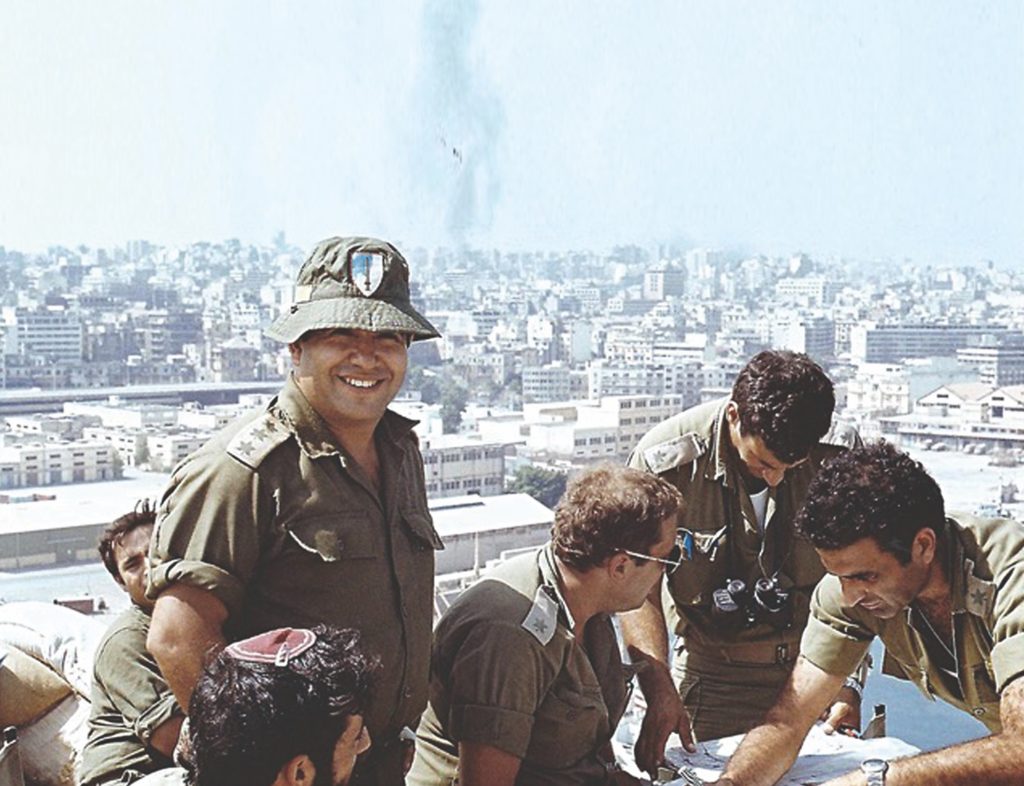
The 188th, along with infantrymen from the Golani Brigade, fought in the battle of Kfar Sil, a close-quarter bare-knuckle brawl against well-entrenched Syrian commandos who were propping up Hezbollah’s forces; the battle was described by many as the toughest of the war. There were cease-fires and skirmishes, and sometimes all-out hellacious fighting. At the end of July the brigade was ordered to get ready to enter Beirut. It was the first time that Israeli forces were poised to seize an Arab capital. Days later, the 188th brigade advanced on Beirut International Airport. The control tower became [Col. Meir] Dagan’s headquarters. From there, according to one of his battalion commanders, he conducted and choreographed the opera of war.
The battle for the airport was hard fought. At dawn on the morning of August 4, Syrian commandos unleashed a lethal barrage of antitank missiles against one of Dagan’s battalions near the main terminal. Later that day, toward afternoon, Palestinian and Syrian artillery poured a deadly and pinpointed rain of fire onto the Israeli positions. Thirteen soldiers were killed in the barrage, including Captain Tuval Gvirtzman, the commander of a company of tanks codenamed “Crusher”; he had been killed rushing to the aid of an armored personnel carrier that had suffered a direct hit and had burst into flames.
Gvirtzman, known by the nickname of “Tuli,” was Dagan’s favorite officer in the brigade. “Dagan loved Tuli very much,” a former officer in the brigade remembered. “He was the most beloved officer in his command.” Lieutenant Colonel Eyal Ben-Reuven was Tuli’s commanding officer and had to break the news to Dagan. Under fire, Ben-Reuven climbed up the stairs leading to the control tower toward the brigade command post. Dagan was peering through high-powered field glasses; marked‑up maps were strewn about the floor amid broken glass. When Dagan heard that Tuli had been killed, he stopped what he was doing and his body slumped inward. He broke down in a loud and gut-wrenching cry that could be heard amid the gunfire. No one had ever seen Dagan cry before news of Tuli’s death reached him. Even though Dagan’s brigade lost twenty-five men in the conflict, and he had seen his men killed and wounded before, Tuli’s death changed Dagan forever.
Other events during his service in Lebanon made a lasting impression as well. Upon Dagan’s return home on leave in 1985, he informed his wife, Bina, that as a result of the fierce carnage he had witnessed in the fighting he no longer felt able to eat meat. It simply disgusted him, brought up difficult memories and images, and he insisted that he and his family become vegetarians. Just like that he swore off meat forever.
Thirty years had passed since the battle for Beirut International Airport. Israel endured numerous intifadas and suicide bombing campaigns, SCUD missiles from Iraq, and a second war in Lebanon against Hezbollah. The country also endured a ceaseless terrorist campaign of attrition in between. But the biggest threat Israel had to face now was Iran.
Meir Dagan hated war and wanted to do whatever he could to avoid it; this was part of the genius behind Harpoon — an effort to shock and awe the bankbooks of terror and not the crowded refugee camps where the perpetrators hid shielded by women and children. This revolutionized how nations waged war on terror. There were some in Israel pounding war drums to keep Iran from becoming a nuclear power. Israelis well understood that much of the terrorism being waged against them was being funded directly by the mullahs in Tehran, and they had no illusions what kind of threat the Islamic Republic would pose with nuclear capabilities. Dagan knew when war was necessary and when it could be avoided. In the eighth year of his tenure as Mossad director, Dagan was in a position to put actions in motion that could prevent war — even if it meant that some had to die as part of a larger and more important policy of preemptive deterrence.
Excerpted from the book “Harpoon: Inside the Covert War Against Terrorism’s Money Masters” by Nitsana Darshan-Leitner and Samuel M. Katz, published on Nov. 7 by Hachette Books, a division of Hachette Book Group. Copyright 2017 Nitsana Darshan-Leitner and Samuel M. Katz.
There are many ways to begin a story about Israel’s fight against terrorism. In this case, let’s open with a story about an armed robbery of a bank and the generous dish of eggs and cheese consumed by the robbers at the crack of dawn, hours before the bank opened.
As described in “Harpoon” — a new book by Nitsana Darshan-Leitner and Samuel M. Katz about Israel’s financial war on terror — the main target was a branch of an Arab bank in the Palestinian city of Ramallah, although there were secondary targets as well.
The year was 2004. Suicide attacks by Palestinian terrorists on Israeli civilians were still an almost daily occurrence, and Israel decided to diversify its response to the threat — including by turning to bank robbery.
So at 10 a.m. Feb. 25, during business hours, Israeli commandos “raced out of their vehicles, rushing to the main doors of the targeted banks,” the authors write. Forty million shekels were seized, boxes of documents were taken and files were downloaded directly from the bank’s computers. Some of the bank managers were held for a few hours of questioning.
The war against terrorism is an endless struggle, without clear boundaries and rules. All countries struggle with legal and moral questions as they fight against it. They strive to maintain a delicate balance between the need for security and the right to privacy. They are challenged by situations in which civilians are suddenly and inevitably hurt by their actions. They attempt — if they have any respect for morality — to win the fight without losing their soul.
And so what should be made of Israeli’s decision to follow the money? International response to the robberies perpetrated by Israel was not sympathetic and, one must say, also not surprising. In 2004, the world was not yet ready to recognize this kind of aggressive financial warfare as an acceptable tool in the war against terrorism.
Maybe that’s why the planners of the operation, led by Meir Dagan — the head of Mossad at the time who formed Harpoon, a task force and secret unit that “redefined the way that Israel — and the United States — waged war on terror” — decided not to consult with Israel’s allies in Washington, D.C., ahead of time.
This book is Start Up Nation all over again, only this time the ingenuity, innovation and flexibility of mind is not about technology but about fighting terror.
“Dagan could have sent Uri to Washington, D.C., to plead Israel’s case and measure the American administration’s feelings about an operation against the Arab Bank,” write the authors, referring to a man whose full name they cannot reveal. “But Dagan decided against it. There wasn’t time to shake hands and beg for permission.”
In the absence of permission there was condemnation. “We prefer that Israel work with the legal Palestinian authorities to stop the flow of money to terror groups,” the State Department said.
To the Israelis, this suggestion was no more than a joke, because the “authorities” referred to by the Americans often were the problem, not a possible solution. The Americans didn’t see things that way, though, and when the Israeli team that led the operation met with the U.S. ambassador at the time, Daniel Kurtzer, “the ambassador’s mood was dour and he reiterated President [George W.] Bush’s anger,” the authors write.
Still, Israel was pleased with the outcome of this operation. From its leaders’ perspective, it was worth the risk to show that the Arab Bank was a legitimate and valuable target, along with many other banks. Indeed, this is the central premise — and lesson — of “Harpoon: Inside the Covert War Against Terrorism’s Money Masters.”
Consider the example of the bank in Ramallah: It was “the bank of choice for many who were fighting Israel — especially for governments eager to finance the intifada,” the authors write. Terrorist groups such as Hamas and the Islamic jihad relied on funds that were transferred through this supposedly safe channel. And much like the Americans at the time, these enablers of terrorism also assumed that no one would be bold enough to rattle the banking system in such a brazen manner as to acquire information kept by the banks, in order to go after the people and institutions that transfer it to terrorists.
Much like the Americans at the time, these enablers of terrorism also assumed that no one would be bold enough to rattle the banking system.
But that is exactly what Israel decided to do, adding an important tool to the toolbox of anti-terrorism action. It looked at the ways money was moving around, at the institutions enabling terrorist activities, at the people controlling the accounts, at the launderers cleaning the blood money, at the criminals cooperating with terrorism for financial gain, at the countries transferring funds for buying weapons or for compensating the families of suicide bombers. All these became legitimate targets for action. Moreover, they became a priority.
Following a money trail can lead to many attractive outcomes. Consider another story, like that of Salah Ezzedine, a man in his 40s with ties to Hezbollah, who made a fortune and invested for others. In 2007, Ezzedine was in Dubai, and was persuaded by some men, whose identities were never revealed, to invest with them. They were persuasive to begin with, and became even more persuasive when Ezzedine saw the hefty return on his investments with them. So he handed them even more money, and persuaded some of his friends to invest with these unknown figures. Many of these friends were Hezbollah officers, who never asked where all this profit was coming from.
Then, one day, the money was gone. Hundreds of millions of dollars “simply disappeared into thin air.”
Ezzedine “was devastated by the discovery. Devastation soon turned to panic,” according to the authors. The strangers he met in Dubai, with whom he did business and of whom he knew very little “were nowhere to be found; their mobile phones, the BlackBerries, iPhones, and Nokias they displayed so proudly, no longer accepted calls. Panic soon turned to horror. … Ezzedine soon realized that he had been the victim of a diabolical scam perpetrated by highly sophisticated players who had had millions of dollars at their disposal.”
It took more time for Hezbollah to realize that it just had lost a lot of money, and then even more time to decide that it would be better for the organization not to be publicly associated with this incident. Ezzedine was charged by the Lebanese authorities in a relatively minor manner.
Have no pity for him. As this book argues, Israel was not just bold in going after the money; its actions also were creative, entrepreneurial and essential. It was a strategy based on the sober realization that fighting terrorism must not be confined to the violent routines of police and military action.
So, yes, an occasional bank robbery is somewhat violent. And the occasional manhunt whose target is a man dealing with transfers of monies rather than direct transfers of ammunition can also become violent — as the book chronicles. But the purpose of financial targeting is the opposite of violence: to stop the flow of funds that enables violence. It is to drain the swamp rather than having to kill every mosquito.
Co-author Darshan-Leitner, also a character in the story, is a scarred warrior in the financial battle against terrorism. As director of Shurat HaDin, a nongovernmental organization dedicated to lawfare against Israel’s enemies, she has her own good stories to share. She has filed lawsuits in the United States against institutions supportive of terrorism, battling them in court, harassing them, disrupting their tranquil operations. (Her co-author, Katz, is the author of many books on security and military affairs.)
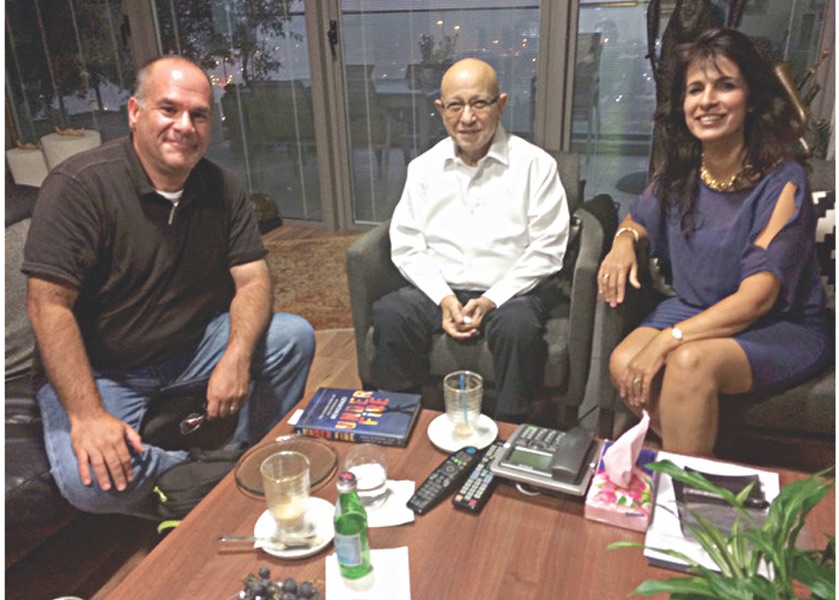
Authors Samuel M. Katz (left) and Nitsana Darshan-Leitner with Dagan after his retirement.
The American role in the book is thus the role of an initially reluctant and eventually enthusiastic partner in the financial war against terror networks and the countries supporting them. Israel cannot take all the credit for altering U.S. policies in this field, but the book argues that its influence was significant enough to make a convincing case for intensifying these efforts.
The larger story of this book is how Israel transformed the war against terrorism, and its main character is a man well-known to Israelis: the late Maj. Gen. Meir Dagan.
Dagan, while head of Mossad, with Prime Minister Ariel Sharon.
No book can be boring with a leading character such as Dagan. He was the son of Holocaust survivors, whose grandfather, Dov Ehrlich, was photographed in 1944, just moments before Nazi soldiers shot him dead. As most Israelis know, this chilling, heartbreaking photo hung in Dagan’s office. His grandfather was on his knees, wearing a tallit, his hands were above his head. It was photographed in the fall of 1944, less than three years before his grandson was born. This was Dagan’s daily “never again” reminder.
He was a heroic and at times controversial warrior. He specialized in missions tougher than usual, often operating in gray areas, where the laws weren’t clear, and the rules of the game were written and rewritten by him.
He was called to fight in Gaza in 1971, when the situation seemed dire, and was called to fight in Lebanon in 1982. Ariel Sharon — a general in 1971 and defense minister in 1982 — trusted him with the most sensitive missions; clearly, he loved Dagan. He loved his “wild imagination and courage — and his capacity to turn outside-the-box thinking into success on the battlefield. It was said that the two men were cut from the same cloth; some said that the two could communicate telepathically, carrying out entire conversations without ever uttering a word. It is clear that Sharon viewed Dagan as his prodigal son, and their great admiration and friendship lasted a lifetime.”
In an era when the term “outside the box” is a cliche, Dagan was the real deal. He was the one who realized that the new face of terrorism must be met with new ways of warfare. He was the one who understood that waiting for others to ponder the possibilities, and waiting for others to wonder about the repercussions, and waiting for others to debate the boundaries — are all too often luxuries that a country under attack cannot afford.
As a result, this book about Dagan and his plan is “Startup Nation” all over again, only this time the ingenuity, innovation and flexibility of mind is not about technology but about fighting terror. It chronicles how Israel was hit by terrorists and was forced to come up with solutions earlier and quicker than most other nations. It also divulges fascinating details about covert operations, and more than a handful of frustrating stories — the stories of bureaucrats, politicians and governments that fail to understand the need for changing the rules of the game.
Shmuel Rosner is senior political editor. For more analysis of Israeli and international politics, visit Rosner’s Domain at jewishjournal.com/rosnersdomain.