fbpx

October 11, 2017

When the Torah Opens Our Hearts

To welcome new families to our religious school, we bring the Torah to their homes, parading through the rooms. A blessing of nourishment in the kitchen. Communication in the family room. Comfort and affection in the bedroom. We open the Torah on the dining table and show children the words they will chant when they are 13, when they’ve barely left childhood and hardly know who they are.

It may seem strange to take that which is so sacred out of its pristine sanctuary and bring it to a world of domestic untidiness. However, Torah goes there on its own. This book we extol on Simchat Torah with dancing and singing has something to say to soldiers about packing a spade with which to bury their excrement during war (Deuteronomy 23:13). It concerns itself with menstruation, skin ulcers and fallen sheaves. It speaks of blood, sex and death. It doesn’t shy from humanity’s appetites and lusts; in fact, Torah assures humankind that in spite of the “sin that crouches at your door” (Genesis 4:7), “you shall be holy, for I, the Lord your God, am holy” (Leviticus 19:2).

When I was in rabbinical school, studying Torah night and day, I suddenly became frightened. What if this wasn’t meant for me? One Thursday, I was supposed to lift the Torah. I hesitated. How many Jews believe a woman shouldn’t carry the Torah? What if they were right? I loved Torah and I feared God. I wept to a male Conservative rabbi. “I don’t want to touch something I’m not supposed to,” I said. “I want to be a good Jew. But I’m impure.”

He took no pity on me. He said sternly, “If you think you have the power to contaminate the Torah, then you are incredibly arrogant.”

And with that, I was permitted. The Torah, while about our flaws, is far and away above our flaws.

With Simchat Torah, we complete an ancient Jewish recovery program. The program began with Rosh Hashanah, a celebration of our creation, for in order to improve ourselves, we first need to decide we are worth the effort. Then we move through the Ten Days of Repentance, making amends to those we have wronged, to reach Yom Kippur, a spiritual summit from which we take stock of our experiences and chart our next steps.

Then we build a sukkah, hammering together a loose, temporary construction. Yom Kippur is dedicated to the imperfections of character, and Sukkot to the imperfections of body. We move from an exalted dream of the possible to the hard and often futile work of realizing the dream. Sukkot teaches that everything is vulnerable to collapse. It is the festival of the wilderness, and despite the battles, rebellions, hunger and thirst, we are explicitly commanded to be joyful.

The “program” culminates in Simchat Torah, the holiday upon which we celebrate reaching the final chapter of Torah, only to reroll the scroll right back to the beginning. The story ends before we arrive, just before the Israelites cross the Jordan into the Promised Land.

So, what are we celebrating? The opportunity to start again? But why celebrate going back to the beginning when we haven’t even completed the journey?

The wisdom of Simchat Torah is to recognize and elevate the journey, and not the arrival. The destination of our lives is uncertain. We set goals, trying to anticipate storms, when in fact, all we do know is that none of us gets out of here alive.

The Hebrew word for ark, aron, means “cabinet” and “casket.” On the desert journey, one aron carried the covenant and the shattered fragments of the first tablets. A second aron carried the remains of Joseph. Shards and bones.

At the beginning of our Kol Nidre service at Temple Isaiah, when we open the Aron Kodesh, the Holy Ark, it is empty. A hollow, dark rectangle. A grave. The Torah scrolls are carried in silent procession from the back. The heart is restored to its chest. At the closing of Yom Kippur, during Neilah, we pass our Torah scrolls throughout the entire congregation, an usher at the end of each aisle helps, and a thousand people hold a Torah against their hearts.

The day after we held the Torah so tight this year, the deadliest shooting massacre in modern U.S. history was perpetrated in Las Vegas, with 58 people dead and nearly 500 injured. 

The wisdom of Simchat Torah is to recognize and elevate the journey, and not the arrival. 

How is it possible to dance with the Torah now? To observe z’man simchateinu, a “time of our joy”? How do we hold tightly to a holy scroll at a moment of such darkness?

Simchat Torah is a celebration, yes, but it is also a protest. It is a spiritual resistance. Torah champions a radical idea: One God. A universal moral code of conduct. The opening words, “In the beginning,” are already a polemic against history being cyclical and fate being predetermined. Genesis unfolds into Exodus, the inspiration behind nearly every revolution against bondage and injustice.   

Simchat Torah is a celebration of the power to protest, even against God. “Will not the Judge of all the earth do justly?” Torah asks (Genesis 18:25). Torah even names its protagonist Yisrael, “One who wrestles with God and with man and prevails” (Genesis 32:29).

In the short story “Yosl Rakover Talks to God,” Zvi Kolitz writes: “I love [God]. But I love His Torah more. Even if I were disappointed in Him, I would still cherish His Torah. God commands religion, but His Torah commands a way of life — and the more we die for this way of life, the more immortal it is!” In times of darkness, when we question and even rail against God the most, we still hold fast to our Torah.

We are the inheritors of our biblical ancestors’ audacious optimism when they packed timbrels as they rushed out of Egypt, with the faith that, no matter how long the journey, good will triumph and we will sing and dance.

We celebrate Simchat Torah not because we are in denial of the darkness, but because the very act of celebrating ignites a spark and edges us closer to redemption.

There is a Chasidic story of a boy who asks his father for an apple but is refused. The boy quickly recites the blessing over eating fruit. Not wanting his son to be guilty of reciting a blessing in vain, the father gives him the apple. Rabbi J. Immanuel Schochet used this story to teach that we celebrate with joy despite a world of darkness, because by putting blessing into the world, we necessitate a good response. He taught the Chasidic maxim: “Simchah breaks through barriers.” He wrote, “We can draw an analogy between this maxim and the fact that Mashiach, too, is referred to as ‘The one who breaks through’ (Micah 2:13). This comes to teach us that simchah, joyfulness, has the power to break through the walls … and hasten the coming of Mashiach!”

We celebrate Simchat Torah not because we are in denial of the darkness, but because the very act of celebrating ignites a spark and edges us closer to redemption.

My favorite Simchat Torah was in the mountain city of Safed, the people spilling out onto the crooked streets singing and stamping, the Torah sailing above as they marched past crumbly buildings pocked with bullet holes. Am Yisrael chai! The people of Israel live!

We set our goals on Yom Kippur. But try as we might, there is no guarantee those goals will be achieved in our lifetimes. We don’t know who will live and who will die. On Simchat Torah, we remember that our lives, however fleeting they may be, are bound up in an eternal story. We make peace with the fact that the journey may never be completed, our dreams may not all come true, and still rejoice that we are links in a chain of tradition that affirms life and hope.

When Rabbi Haninah ben Teradion was burned at the stake, he was wrapped in the blessed Torah scroll with wet wool over his heart to prolong his death. His disciples cried out to him, “Master, what do you see?” He answered, “I see the parchment being consumed by the flames, but the letters soar upward!”

Rabbi Levi Yitzchak of Berditchev said, “I do not ask You to tell me why I suffer, but only whether I suffer for Your sake.”

On Simchat Torah, we celebrate the power to turn darkness into light by transforming chaos into meaning.

The Israelites had to have a lot of courage to leave Egypt, but they weren’t yet free. They were lost. The difference between being free and being lost is direction. On Shavuot, we celebrate the receiving of our set of directions. On Simchat Torah we celebrate our continuing interpretation of this treasure map, and our faith that there is indeed a way for this impoverished world to reach the X that marks redemption. 

As in many congregations, we will open one of our scrolls on Simchat Torah so that the parchment is entirely revealed. The Torah we will open is one that traveled with me to London, wrapped in a baby blanket.

That Torah was one of the 1,564 Czech scrolls gathered by the Central Jewish Museum in Prague during the Holocaust. Under Nazi supervision, every scroll was labelled in Czech and German, giving the name of the community and congregation from which it came. Ours was one of the 216 scrolls that had lost their tags. It is known as an Orphan Scroll. Twenty years after the war, the scrolls were discovered and brought to Westminster Synagogue, from where many were distributed to temples all over the world. I was taking the Torah to London for a reunion of the scrolls, 50 years after their rescue.

In the TSA security line at the airport, two Charedi men kept looking back at me, whispering to each other. Finally, one man asked, “Are you holding a Torah?” I nodded. His eyes widened. Then he declared, “You must go before us in line,” and he cleared a path. “The Torah should always go first!”

At the museum at Westminster Synagogue, I saw the piles of scrolls that were too damaged to be lent out. Some by fire, some by water. Some had their skin nibbled by rodents. Some were rotten or torn, grim testimony to the fate of the people who had once prayed with them.

Our Orphan Torah is not as beautiful as others I saw, with their flourishes and ink as bright as patent leather. Ours is all scratches and stains, faded chunky letters, ungraceful lines, age spots, wrinkles and puckers. It is considered nonkosher.

What does our Orphan Scroll tell us, that heralds from not one, but all destroyed congregations? What does it say about racism, fear and hate? About survival and hope?

It says: All of humanity is descended from one couple. Every person is made b’Tzelem Elohim, in the Image of God. Here is the Sabbath, the world’s greatest religious gift. Here are the Ten Commandments, an ethical blueprint of civilization. Love your neighbor as yourself. Welcome the stranger in your midst. Proclaim liberty throughout the land. I turn a slave people into a nation of priests. I am the voice of Sinai. I am the DNA of history. I am the hard consonants brought to life by the soft vowels of your breath. I am the Tree of Life. I am witness to the worst and best humanity has to offer. When there are no more human witnesses, I will remain, my letters soaring into the sky.

Simchat Torah is a celebration, yes, but it is also a protest. It is a spiritual resistance. … It is a celebration of the power to protest, even against God.

The first letter of the Torah is the beit of bereshit and the last letter is the lamed of Yisrael, and together lamed-beit spells lev, which means heart. The whole covenant is framed with love. A love letter addressed to a world aching with pain and sorrow, hand-delivered and sealed with a kiss.

At Simchat Torah, we dance to open our hearts. So let’s dance. 


Rabbi Zoë Klein Miles is senior rabbi of Temple Isaiah and author of the children’s book “The Goblins of Knottingham: A History of Challah” (Apples & Honey Press, 2017).

When the Torah Opens Our Hearts Read More »
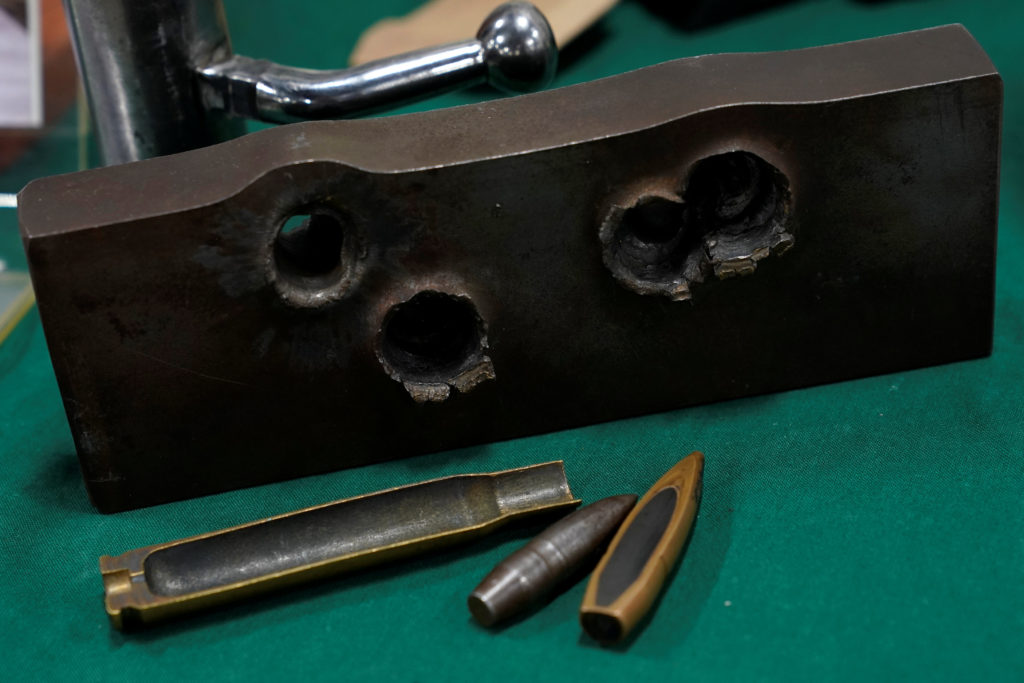
The Second Amendment Does Not Exist in a Vacuum

The Second Amendment to the United States Constitution does not guarantee the right to own arms, unless you happen to be in a well-regulated militia. It would be reasonable and consistent with a strict construction of the Second Amendment to argue that since there are no such militias in 2017, the issue is moot.

Nonetheless, many Americans seem to believe that the Second Amendment guarantees everyone the right to own arms — in any number, of any type, anywhere and at any time. It would be patently absurd to view the amendment as a guarantee of that magnitude. Weapons that are created solely for the purpose of killing human beings have, at most, a very limited place in modern civil society. Do we or do we not want to protect American lives?

We often overlook the fact that the Constitution was written shortly after the American War of Independence, in which well-regulated militias fought for the security of the soon-to-be-born United States of America. Militiamen didn’t have access to the weapons of modern-day warfare. They were authorized to use their muskets and musket balls for military use to protect the security of their nation; i.e., the lives of Americans.

But if we must parse the amendment beyond literal reading, let’s remember that it wasn’t until 2008 that the law of our land expanded the right to own guns beyond militias, to the legal use of handguns for self-protection in the home. The landmark U.S. Supreme Court case, District of Columbia v. Heller, was a very controversial 5-4 decision with powerful dissents. It provides the broadest interpretation of the Second Amendment to date — and it provides absolutely no constitutional protection to automatic or semi-automatic weapons.

There is nothing in the Constitution nor in Supreme Curt jurisprudence that restricts the government from limiting the purchase or ownership of weapons capable of mass slaughter, such as assault weapons and the retrofitting of ostensibly legal weapons to empower them to fire automatically. Shouldn’t our government therefore be enacting policies and laws to limit ownership of such weapons?

In our recent history, assault weapons were banned by federal law, constitutionally, without violating the Second Amendment.  Unfortunately, the ban expired and was not renewed by Congress. But since it is clearly constitutional to prohibit the ownership of certain weapons used for the killing of others, we must acknowledge that said prohibition is lawful; it would not restrict the right to defend yourself in your home with a handgun or to hunt with a hunting rifle.

Have we forgotten the basic premises upon which our nation was conceived, built and exists today? Have we abdicated common sense at the expense of our lives?

The Second Amendment does not exist in a vacuum. Before there was a Constitution, there was a Declaration of Independence, without which the Constitution would have been irrelevant and unnecessary. Our government was created specifically to protect the life, liberty and pursuit of happiness of our citizens.

To date, we have failed miserably in the mission our Founding Fathers entrusted to us. 

The Constitution declares in its preamble that its purpose is to ensure domestic tranquility and promote the general welfare, among other things. Both terms refer to the protection of the lives of our citizens — in common parlance, public safety.  When we allow mass murders of Americans to occur day after day, under the guise of Second Amendment protection, we ignore the most fundamental mandate of the Constitution.

The public safety that America allegedly holds dear, and which our various levels of government purport to be their raison d’être, obviously requires policies and laws that prevent the mass murders of civilians.  And if we don’t believe in anarchy, this requires a prohibition on the ownership of military-style weapons, at the very least.

Simply put, the Second Amendment does not guarantee the right to own arms. It is much more nuanced than that. The current state of the law interprets the amendment to allow limited use of certain weapons, by qualified people, for specific purposes. Anything beyond what is protected may be and should be prohibited.

To date, we have failed miserably in the mission our Founding Fathers entrusted to us. We have not done our best to safeguard American lives. We know what has to be done. 


Karen Kaskey is a Pennsylvania attorney who volunteers at CeaseFirePA.

The Second Amendment Does Not Exist in a Vacuum Read More »

Good Gun Policy Starts With Reality

Whenever a mass shooting occurs, good-hearted people immediately begin looking for ways to prevent the next act of evil. That’s natural, and it’s worthwhile. What isn’t worthwhile is substituting emotional manipulation for evidence-based policymaking. And unfortunately, after the Las Vegas massacre, that’s precisely what’s been happening.

We’ve heard from Democratic politicians that those who don’t immediately leap to “do something” — anything, presumably — about guns are somehow cold-hearted. Jimmy Kimmel went so far as to suggest that those who don’t support his gun control agenda have blood on their hands.

But here’s the problem: Not a single gun law short of full-scale gun confiscation would have prevented Las Vegas or any of the other mass shootings we’ve seen. Furthermore, there is no correlation between states with high rates of gun ownership and states with high rates of gun homicide.

So, how do we make good gun policy?

Let’s begin with the facts: You have an individual Second Amendment right to keep and bear arms. Any supposition that your rights to self-defense are relegated to your membership in a “well-regulated militia” are legally groundless and historically ignorant. That’s why the Supreme Court held in District of Columbia v. Heller (2008) that “the operative clause’s text and history demonstrate that it connotes an individual right to keep and bear arms.”

There’s a reason for the Founding Fathers’ logic here — and that reasoning is still relevant .

First, bad people are capable of getting arms in the U.S. That is a simple fact. According to epidemiologist Anthony Fabio of Pittsburgh’s Graduate School of Health, the vast majority of perpetrators in crimes involving guns in Pittsburgh — nearly 80 percent — obtained their guns illegally. And relying on the police to defend you is often impossible — the police can only respond to crimes, they can’t forestall them. That means that your last line of self-defense is your ability to use a weapon. Gun rights advocates state that guns are used millions of times a year to stop a crime — but even the Bureau of Justice Statistics says that guns are used in this way well over 67,000 times per year.

Second, the Founders feared the possibility of tyranny, and they supported state militias and individual gun ownership to prevent such tyrannies from arising. It makes perfect sense that the first gun control laws promulgated in the United States were pushed by the Ku Klux Klan, which was seeking to prevent Black gun ownership after the Civil War. As UCLA constitutional scholar Adam Winkler has written, “It was a constant pressure among white racists to keep guns out of the hands of African-Americans, because they would rise up and revolt. … The KKK began as a gun control organization.” There also is a reason that when it attained power, Hitler’s regime sought to remove guns from Jews. It’s somewhat ironic to hear those who think President Donald Trump is an incipient fascist insist they trust Trump to seize millions of firearms from law-abiding Americans.

With all of that said, there are limitations on the Second Amendment: Your right to keep and bear arms does not apply to nuclear weapons, for example. In determining the best policies, we must balance the need and right to firearms with public policy concerns, including the risk that a machine gun will be used in public.  That’s why federal machine gun sale has been illegal since 1986.

Not a single gun law short of full-scale gun confiscation would have prevented Las Vegas or any of the other mass shootings we’ve seen. 

So, what do we do about situations like Las Vegas? We begin with the premise that we’re all brothers and sisters who want to prevent evil acts. Then we move on to the evidence.

It’s well worth discussing the banning of “bump stocks” (devices added to semi-automatic rifles that allow them to simulate automatic rates of fire), for example. We also should look at ways of enforcing federal laws banning the sale of guns to the mentally ill, without violating the due process rights of those suspected of mental illness. But to suggest banning all guns would be unwise as well as immoral: How exactly do gun control proponents suggest disarming 100 million Americans of 300 million guns, when we’ve been told that we can’t even identify 11 million illegal immigrants? Such an effort would end in bloodshed, even if it were desirable — which, of course, it isn’t, since criminals don’t tend to pay much attention to laws. 


Ben Shapiro is editor-in-chief at The Daily Wire, host of the most listened to conservative podcast in the nation, “The Ben Shapiro Show,” and author of The New York Times best-seller “Bullies: How the Left’s Culture of Fear Silences Americans.”

Good Gun Policy Starts With Reality Read More »

Dancing With Darkness

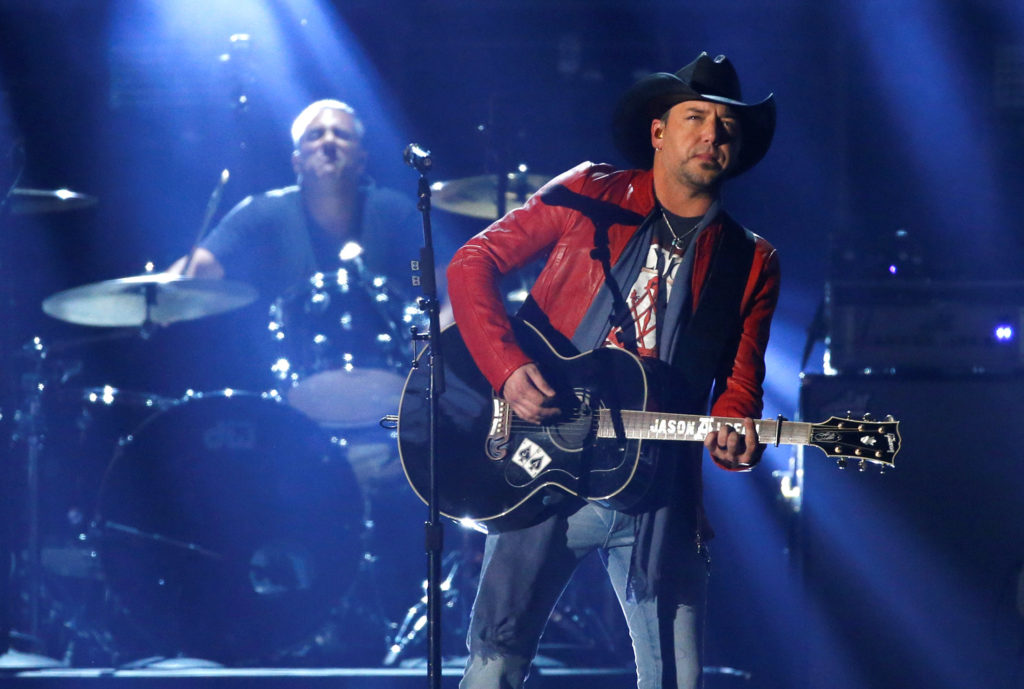
Country music star Jason Aldean, performing at the outdoor Harvest Festival in Las Vegas on the night of Oct. 1, was just beginning a new song when bullets from the 32nd floor of the Mandalay Bay Hotel began raining down on thousands of unsuspecting concertgoers.

After the killer was done, 58 people perished and nearly 500 were injured.

We still don’t know what motivated Stephen Paddock to commit this monstrous act, but we do know what enabled him to do it: Living in a free and open society.

Paddock was free to book two adjoining hotel rooms and bring along an arsenal of high-powered guns and rifles. The hotel’s personnel were not free to check his luggage, lest they violate his rights. Had a security official said to him, “Excuse me, sir, this luggage is unusually heavy, we have to check it,” he could have sued the hotel.

Paddock knew that America had given him a safe space to carry out his destruction. He knew he was living in a country where the right to be left alone is sacred. He had complete confidence that if he acted “normally,” he would be free to crack open his hotel window and start shooting.

We soon realized that the two stories were connected by a difficult question: How do we rejoice when darkness strikes? We are not robots. When tragedies consume our consciousness, how can we be expected to dance and celebrate? How does the Jewish tradition handle such dilemmas?

Paddock used his freedom to destroy the same freedom in others. Through the long lenses of his weapons, he must have seen the faces and bodies of those “others” exercising their freedom to be left alone, their freedom to enjoy a concert under the stars. With each pull of the trigger, he killed the freedom of movement that he himself cherished and gorged on.

“Some days it’s tough just gettin’ up” were the words Jason Aldean was singing when Paddock’s gunfire intruded. He kept singing for a bit (“Throwin’ on these boots and makin’ that climb / Some days I’d rather be a no-show lay-low ‘fore I go outta my mind”) before quickly running backstage.

Journalists can’t run backstage when mayhem happens. We do the opposite — we run toward the mayhem. We put our emotions aside and hunt for facts. To help our readers make sense of the senseless, we look for smart analyses and insightful commentary. We did all of that in preparing for this issue.

But we had a conflict: We had planned a beautiful cover story for this issue on the joyful holiday of Simchat Torah. What should we do with it? Our first instinct was to move it inside the paper and put the Vegas tragedy on the cover, as we usually do when disasters strike. In this case, however, I decided to call the writer of the Simchat Torah story, Rabbi Zoë Klein Miles, and discuss the issue with her.

We soon realized that the two stories were connected by a difficult question: How do we rejoice when darkness strikes? We are not robots. When tragedies consume our consciousness, how can we be expected to dance and celebrate? How does the Jewish tradition handle such dilemmas?

My friend Zoë seized the moment and decided to rework her piece. Hence the cover: “How do we rejoice at Simchat Torah during times of darkness?” It’s worth a read.

Three of our columnists — Danielle Berrin, Marty Kaplan and Monica Osborne — also weigh in on the difficult questions that have come out of Vegas. A Chabad rabbi living in Las Vegas writes about how he will dance at Simchat Torah despite the darkness. Reporter Kelly Hartog details how the local Jewish community in Vegas is responding. Rabbi Naomi Levy offers a special prayer for the victims. And our millennial poet, Hannah Arin, who was raised in Las Vegas, writes about a “desert that speaks.”

On our debate page, we have two views on the Second Amendment, one by our columnist Ben Shapiro and the other by Philadelphia attorney and gun-control activist Karen Kaskey.

Meanwhile, Karen Lehrman Bloch weighs in on the Harvey Weinstein sex scandal that has provided its own source of darkness, while new columnist Dr. Jennifer Yashari writes about the challenges of living with a degenerative muscular disease that strikes mostly Persian Jews.

As consumed as we are by one event, the weekly rhythm of our stories continues. Senior Writer Eitan Arom reports on the plight of the Yazidis, which the community learned more about during Yom Kippur services, while Kelly Hartog writes about a newsstand owner in Brentwood who is taking a stand against Whole Foods.

So yes, darkness hits us time and time again, but life and Torah continue…. In our free society, maybe that is the best message we can deliver to the forces of darkness: no matter what comes, we ain’t going nowhere.

From Israel, our political editor Shmuel Rosner weighs in on the Iran deal, while Debra Kamin profiles a biker, former drug addict and dog rescuer in “Humans of Israel.” You’ll find many more stories throughout the paper, including a book review on “The Salome Ensemble” and Naomi Pfefferman’s story on a new film about Supreme Court Justice Thurgood Marshall.

To coincide with the new beginning of the reading of the Torah, we are launching this week a new feature called “Table for Five,” in which five different voices comment on a verse from the weekly Torah portion. In this issue, we have American Jewish University’s Rabbi Elliot Dorff, Sephardic Rabbi Marc Angel, Jerusalem scholar Tova Hartman, Venice Rabbi Lori Shapiro and Hancock Park Chassidic Rabbi Reuven Wolfe weighing in on a seminal episode from the Garden of Eden.

So yes, darkness hits us time and time again, but life and Torah continue. When Jason Aldean was interrupted by the guns of evil, he was about to sing, “But when she says baby / Oh, no matter what comes ain’t goin’ nowhere.”

In our free society, maybe that is the best message we can deliver to the forces of darkness: No matter what comes, we ain’t going nowhere.

Dancing With Darkness Read More »

Water, Blessing, and Puerto Rico

I’m back, and here’s my Yom Kippur sermon—sadly, still relevant.

I’ve been thinking about water a lot this Yom Tov season—and not just because a part of me really wishes I could have some now. It all started when I decided to level up on my practice of gratitude. We learn in Menachot 43b that, “Rabbi Meir used to say, חייב אדם לברך מאה ברכות בכל יום שנאמר A person must make one hundred (meal) blessings each day, as it is stated (דברים י, יב) ועתה ישראל מה ה’ אלהיך שואל מעמך (Deuteronomy 10:12), “And now Israel, what ( mah) does HaShem, your God, ask of you.”

This comes down to a blessing about once every 10 minutes that a person is awake. (If one prays the daily liturgy, the custom almost takes care of itself—although today it’s much harder since we don’t eat or drink or smell nice spices until we make Havdalah and it becomes another day.)

Even if one doesn’t daven every day, the idea here is to be awake and aware—to appreciate every bite of food one eats and every gorgeous sunset and every exceptionally beautiful sight—including people: ברוך…שככה לו בעולמו (Blessed is the One who enlivens creation with such beauty) and new wine Baruch Atah Adonai HaTov VeHaMeitiv (Blessed is the One who is good and does good) beginning with conscious gratitude in the morning for getting to wake up: מוֹדֶה אֲנִי לְפָנֶיךָ מֶלֶךְ חַי וְקַיָּם שֶׁהֶחֱזַרְתָּ בִּי נִשְׁמָתִי בְּחֶמְלָה, רַבָּה אֱמוּנָתֶךָ (thank You for returning my soul to life).

But the blessing for water is the catchall blessing for food when we are not sure if it’s grain or fruit or some other kind of sustenance for which there is a specific blessing. For water, we just usually say בָּרוּךְ אַתָּה ה’ אֱ-לֹהֵינוּ מֶלֶךְ הָעוֹלָם שֶׁהַכֹּל נִהְיָה בִּדְבָרוֹ., Baruch Atah H’ our God, Sovereign of the Universe by whose word everything is.  (If you come to our synagogue on Shabbos, you might be familiar with that one, because it’s the blessing over whiskey, the one that many of us make for our Kiddush when we get our single malt on.)

Lumping water in with ha col (everything or, in this context, all the rest) began to bother me. Water is life. The average adult body is more than half water. We might live for 3 weeks without food, but 3 days without water could be fatal. And, not to torment you on Yom Kippur, that feeling of slaking our thirst with water—and if we hold out until break fast, how wonderful it will be to finally feel that relief—goes way beyond ha col, the everything else.

Thank God for the internet. I consulted the Jewish Facebook hivemind, and guess what? Mishnah Berachot 6:8 gives us an opinion from Rabbi Tarfon according to which we bless on drinking water: בורא נפשות רבות, Baruch…boreh neshamot rabot. Blessed be the One who creates many souls. The version in the Gemara, Berachot 45 is resonates even more acutely for us right now: רבי טרפון אומר בורא נפשות רבות וחסרונן: Blessed be the Holy One who creates many souls and their needs—or more pointedly, their lacks, their deficiencies. This, by the way, is different from the ruling of the great Rabbi Akiba who says that we bless ha col (We’ll get back to him). About that, “Rava bar Rav Ḥanan said to Abaye, and some say to Rav Yosef: What is the halakha in this dispute? He said to him: Go out and observe what the people are doing and act accordingly.” I suggest that our community becomes a place where people say Boreh neshamot rabot v’hisronan.

Rabbi Israel Lipschitz, the 18th Century author of Tiferes Yisrael a commentary on the Mishnah, writes in the section called Yachin that we are actually blessing on the thirst being quenched rather than on the water. I love this take on Rabbi Tarfon’s blessing, because it suggests that we bless having needs—we bless on our very vulnerability. These holy days—and this year especially—impel us to reflect on the fragility, and precariousness of human life and, therefore, on its infinite worth. On what it means to be a contingent creature, always possessed of imperfect knowledge and imperfect capacity—and therefore always capable to do better, to grow and change. Our very dependence—on one another, on creation, on the water the Creator put on this earth—is the ground for our goodness. It conditions the ways we can be present for one another and the other creatures. As the great 20th Century Jewish philosopher Emmanuel Levinas teaches, “The word of God speaks through the glory of the face,” that is, the naked face of another person. In that face, we find a trace of her Creator and also a summons for us to choose our response to human vulnerability, the choice to harm or help—and a reminder of our own susceptibility, our own potential need. Why does the crying of a child provoke a response to us that short circuits any rational consideration of our self-interest in helping? We have all been that child and know in our guts how she feels.

Generosity then, and solidarity, come from self-awareness and humility. Paradoxically, it’s this awareness of vulnerability which strengthens our courage to risk giving up a bit of what we have, because we know in our bodies how it feels to be without.

Generosity, solidarity, water.  So, now let’s talk about Puerto Rico, that island commonwealth of the United States whose residents are U.S. citizens. An island devastated by two hurricanes that knocked out its power grid, flattened its buildings, overcame its hospitals—and fouled its water. First the island was flooded with more water than it could stand and now people there don’t have enough to drink. This happened over a week ago, and the death toll will still rise, because people who survived the storm are dying of neglect now.

How long can a person survive? Three weeks without food, three days without water. That’s assuming they are not sick or injured and feverish or just very young or old and frail. Yesterday (the day before Kol Nidrei), the mayor of San Juan Carmen Yulín Cruz said, “”I will do what I never thought I was going to do. I am begging, begging anyone who can hear us to save us from dying. If anybody out there is listening to us, we are dying, and you are killing us with the inefficiency.” Mayor Cruz responded to Homeland Security Secretary Elaine Duke’s comments who called the federal administration’s response to the devastation “a good news story.” Said Mayor Cruz, “When you don’t have food for a baby, it’s not a good news story… We are going to see something close to a genocide if we don’t get more help.”

Chevre, we are responsible. This is our government, these are fellow Americans. Last night I suggested that, in addition to calling for the mobilization of our military, we also donate personally to help. But what are we to do about the donated goods that are piling up undelivered to the people who need them because the roads are gone?

I confess myself to be baffled. We can drop special forces into the most hostile impassable territory in the world, we can send a drone to kill somebody watching TV in his house, and we can’t get needed supplies off the docks and out to the villages where the roads have been destroyed? Where is our military when the lives, let alone the security, of American citizens are in terrible danger? (And these are American citizens who were annexed into that condition whether they wanted to be or not by the US Congress 100 years ago.)

If the people of Wisconsin or Oklahoma—or California—had been struck by a disaster that leveled most of their territory, would the response look like this? (Well, maybe if it were California it might—we haven’t forgotten Katrina and the fate of New Orleans.) Do some Americans count for more than others? Why did it take so long to suspend the Jones Act that prohibits foreign ships from offloading in Puerto Rico? Why were military ships, planes, and personnel sent home from the Bahamas even though the hurricane was on its way? Has someone confused Spanish speaking Americans with the people they want to build a wall to keep out?

Forgive me for veering in the direction, on our holy day, of what might be called politics. To me this is far beyond politics, it is a matter of human rights, human decency and human dignity—what Jews call cavod  ha briot—the dignity of the created ones.

Again—we, the human beings, were made to be vulnerable to thirst and heat and cold. We were made to be interdependent with one another, to thrive in networks of relationship, communities of obligation. This understanding of the human is the Jewish way. To do something about that understanding is also the Jewish way.

The same Rabbi Tarfon who taught our water blessing is also quoted famously in Pirkei Avot 3:16 to teach, “It’s not up to you to finish the work, but you are not free to neglect it.” Rabbi Tarfon may be an odd guy to rely on in this context—he was associated with the House of Shammai, those strict rabbis against whom the halacha goes in almost every case. He argued with the great Rabbi Akiba, one of our most brilliant teachers. Of course, respecting someone enough to argue with them was a great sign of favor for the rabbis.

One lesson that Akiba taught Tarfon was about generosity. Rabbi Tarfon was very rich. Rabbi Akiba, who was born a shepherd, once said to him: “Would you like me to buy some properties as your agent?” Rabbi Tarfon gave him four thousand gold coins. Rabbi Akiba gave that money to poor Torah scholars. When Rabbi Tarfon met Rabbi Akiba later, he asked to see the properties that Rabbi Akiba was to have bought for him. Rabbi Akiba took him by the hand and led him into the Beth HaMidrash where the scholars were making Torah. Rabbi Akiba reciting Psalms from the beginning until he reached Psalm 112:9: “He gives freely to the poor; his beneficence lasts forever.” Rabbi Tarfon arose and kissed Rabbi Akiba on his head and exclaimed: “My teacher in wisdom and my leader in conduct.”

Rabbi Tarfon learned that in responding to those who—currently—have less than we do, we build an everlasting legacy. We hear that same message in today’s haftarah from Isaiah: “This [says God] is the fast I desire: To unlock chains of wickedness…To let the oppressed go free; To break off every yoke. It is to share your bread with the hungry.” That indicates we should indeed accept accountability, as members of polities, for how our institutions behave. But then the text continues: “And not to desert your own flesh and blood.”

So we are counseled to be caring and generous with the widow, orphan, and stranger—and with the people in our household, those closest to us. We are told to feed the hungry and also to care for the soul-hunger, the need for connection of our families and friends.

For this to be possible, returning now to the demands of this day and this moment, we cannot ignore the hunger within our own souls. Our spirits are hungry for meaning, for the assurance that it does indeed matter what we do, whether we are wealthy like Rabbi Tarfon or not, whether we are the ones who can give or the ones who need to receive. Most often we are both.

Today we dive deep. We look at the times in which we have failed to be generous—and we look at how very much we ourselves need. We are the strong and we are the weak. As we chant the Vidui, the Ashamnu, the Al Chet (the confessions) again and again, we make ourselves see where refusing to admit our weaknesses can lead us. In trying to be hard, we make ourselves brittle, and we break. Can we be strong enough to embrace vulnerability? Do we have the guts to admit our faults and misdeeds, trusting that, with support, we can and will do better?

None of us could finish the work by ourselves. And none of us is at liberty to pretend it doesn’t need to be done.

Water, Blessing, and Puerto Rico Read More »

A Moment in Time: National Coming Out Day

Dear all,

The article below is longer than my usual moment in time.  Today (October 11) is National Coming Out Day, and I wanted to share my story (from an article I wrote a few years ago).  I am reminded that while coming out can often be pinpointed to an event, in reality coming out is an ongoing process occurs in any given moment in time.  (Think about daily interactions with people who don’t know you.  They see a ring, for example, and ask, “What is your wife’s name?”  Or making travel arrangements, etc.)

My hope is that you read my story and think about the stories of so many others.  We ALL know someone who has a story.  Each one deepens the soul of humanity,

With love and shalom,

Rabbi Zach Shapiro

June, 1997, Cincinnati, Ohio
It was the end of a journey.  It was the beginning of a transition.  I had spent five intense years of study, learning, mistakes, and growth at the Hebrew Union College – Jewish Institute of Religion.  Those years had transformed me from a college prep to a religious leader.  (Well, a potential religious leader).  The following day, I would be ordained “Rabbi.” The journey had been difficult, and it was just short of a miracle that I completed all my academic requirements in time for Ordination.  I had secured a job as Assistant Rabbi of University Synagogue in Los Angeles.  I was exuberant.  And I was terrified.
Jews love to mark transition with ritual ceremony.  So on this “Erev-S’micha (day before Ordination),” three soon-to-be rabbis joined me on a pilgrimage to the Cincinnati Mikvah.  We had decided to prepare texts for group study after individual immersions.   
Now the Cincinnati Mikvah is not your glamorous health spa!  The space was dark and even a bit moldy at the time.  But we had it to ourselves, and we created holy space.  I showered, carefully cleaning my body and mind in preparation for immersion.  I was nervous and even admittedly embarrassed at the thought of removing my clothes before my colleagues.  I waited my turn, and then entered the Mikvah chamber.
Standing at the top of the steps, I wanted to enter the mayim-chaim (living waters) slowly and deliberately.  I stepped down.  The water was lukewarm.  Another step.  I got goose bumps.  Finally, I descended all the way and carefully lifted my feet allowing the river of transformation to fully acknowledge me.  And as I recited the She-he-chi-anu, I closed my eyes.  Tranquility embraced me.
Soon after, the four of us sat clad in towels, studying Pirkei Avot, Midrash, and Commentaries.  After discussing the voices of our people, we then shared the texts of our souls.  What a beautiful moment it was.  We had all come so far.  Soon it was my turn.
“You know, “I began, “I was about to say that this was my first time to the Mikvah.  But I’ve actually immersed once before …”
I continued to relate the story about the day I “came out.”

August, 1994, Great Barrington, Massachusetts

It was the summer of 1994, and I was working as an Educator at the UAHC Eisner Camp in Great Barrington, Massachusetts.  I kept myself busy, and I dreaded being alone.  For whenever I was alone, I would ask myself, as I had every day of my life since I was sixteen, “Am I gay?”  I hated asking that question, and I constantly pushed the answer deep into the canyons of my heart.  I could not bear denying the truth any longer.  Too many nights without sleep had already tortured my soul.  Something had to change.  I needed to take a stand.  So I arranged a day off with two close friends.  I had it all planned out.  We would stay up late and engage in a deep conversation.  

And I would come out to them.
But things never seem to happen the way we plan.  
The three of us left camp in the evening and soon arrived at a country hotel.  As they relaxed, my heart began to pound harder and harder.  How was I supposed to do this?  I wanted so very much for them to ask the question of revelation, as God asked Adam in the Garden of Eden, “Aye-ka (where are you)?” And I wanted to respond with the strength of Abraham, Moses, and Isaiah when they shouted, “Hineini! (Here I am!).”  
But they never asked.  And I never answered.  Another sleepless night.
The next day, the three of us drove up through the Berkshires to Pittsfield where we saw a movie.  “OK,” I thought, “after the movie we’ll talk.”  But after the movie we ate.  “OK, after we eat, we’ll talk.”  But after that came more excuses.   My friends didn’t understand why I was so reclusive.  We then drove over to a small lake nestled in the rolling hills of Southwest Massachusetts.  
My friends fell asleep in the car.  They were bonded.  I was apart.  And I was jealous.  So I got out of the car and walked into the serenity of an August afternoon.
I was alone.  And I was a nervous wreck.
But I took a deep breath, and for the first time in my life, as I saw my reflection in the lake, I got myself to say out loud, “I might be a gay man.”  I think I said it twice.  And as the words lingered on my tongue, an incredible emotion enveloped me.  
Just allowing for the possibility that I might be gay released me from those chains of years of denial.  I was alone, yet I was no longer afraid of being alone.  I undressed, and I entered that lake.  And as soon as my head slid beneath her surface, I transformed the lake into a Mikvah.  
And that Mikvah transformed me.  It was glorious!
When I finished, I dried myself off, dressed, and got back into the car.  I woke up my friends, but didn’t tell them a thing.  I didn’t need to anymore.  I came out to myself, and that was a big step.  Later, in the appropriate time, I would come out to them.
That was my first trip to the Mikvah.

June, 1997, Cincinnati

As I finished my story, my colleagues looked on.  I had never before shared that experience.  I had never before even thought to share it.  Sure, they knew I was gay.  But my account put into perspective that Jewish ritual can sanctify all of life’s passages.
The following day we marched into the historic Plum Street Temple to the call of the Shofar.  As HUC-JIR President, Rabbi Shelly Zimmerman, reached out to ordain me with the title of “Rav b’Yisrael,” I said to myself, “Hineini/I am here, and I am ready!”

Los Angeles, 2001 (When I originally wrote this memoir)

While my first trip to the Mikvah released me, my second trip to the Mikvah transformed me.  I haven’t yet immersed a third time.  I am waiting for my next life-cycle, which will occur when my life-partner and I stand beneath a chuppa in the near future.  And yet I am at the Mikvah throughout the year, accompanying others who make time to nurture life transitions through Jewish ceremony.  Each of them has a story.  Each of them has a journey.  And each of them has answered the question, “Aye-ka?”  
 
Epilogue: 2015, Culver City, CA

Two days before Ron Galperin and I were married in 2002, we immersed as one in the mikveh.

A change in perspective can shift the focus of our day – and even our lives.  We have an opportunity to harness “a moment in time,” allowing our souls to be both grounded and lifted.  This blog shows how the simplest of daily experiences can become the most meaningful of life’s blessings.  All it takes is a moment in time.
 
Rabbi Zach Shapiro is the Spiritual Leader of Temple Akiba, a Reform Jewish Congregation in Culver City, CA.  He earned his B.A. in Spanish from Colby College in 1992, and his M.A.H.L. from HUC-JIR in 1996.  He was ordained from HUC-JIR – Cincinnati, in 1997.


A Moment in Time: National Coming Out Day Read More »

7 haiku for Parsha Vezot Hab’rachah in which everything ends and begins again by Rick Lupert

7 haiku for Parsha Vezot Hab’rachah in which everything ends and begins again by Rick Lupert

I
The final blessings
Line up you tribes – these words come
from right hand of fire

II
God is not above
striking Levite foes in the loins
Loyalty’s treasure

III
Flashback to Joseph
the ending montage includes
the colors we’ve missed

IV
Descendants of Gad
and Zebulon be proud – For
your parents did good

V
What would you do with
the sky or the sea if they
were your divine gifts?

VI
Moses takes his last
steps – a one way trip up a
mountain – God is there

VII
In the beginning
No, the record didn’t skip
Let’s make a new world


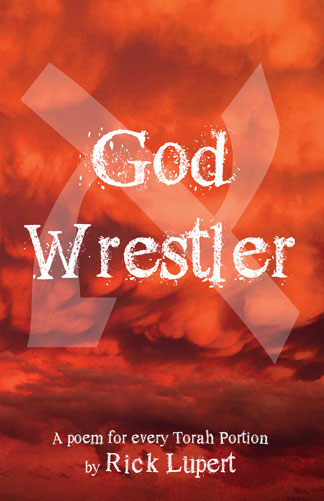
God Wrestler: a poem for every Torah Portion by Rick LupertLos Angeles poet Rick Lupert created the Poetry Super Highway (an online publication and resource for poets), and hosted the Cobalt Cafe weekly poetry reading for almost 21 years. He’s authored 21 collections of poetry, including “God Wrestler: A Poem for Every Torah Portion“, “I’m a Jew, Are You” (Jewish themed poems) and “Feeding Holy Cats” (Poetry written while a staff member on the first Birthright Israel trip), and most recently “Donut Famine” (Rothco Press, December 2016) and edited the anthologies “Ekphrastia Gone Wild”, “A Poet’s Haggadah”, and “The Night Goes on All Night.” He writes the daily web comic “Cat and Banana” with fellow Los Angeles poet Brendan Constantine. He’s widely published and reads his poetry wherever they let him.

7 haiku for Parsha Vezot Hab’rachah in which everything ends and begins again by Rick Lupert Read More »

Rosner’s Torah Talk: Simchat Torah with Rabbi Riccardo Di Segni

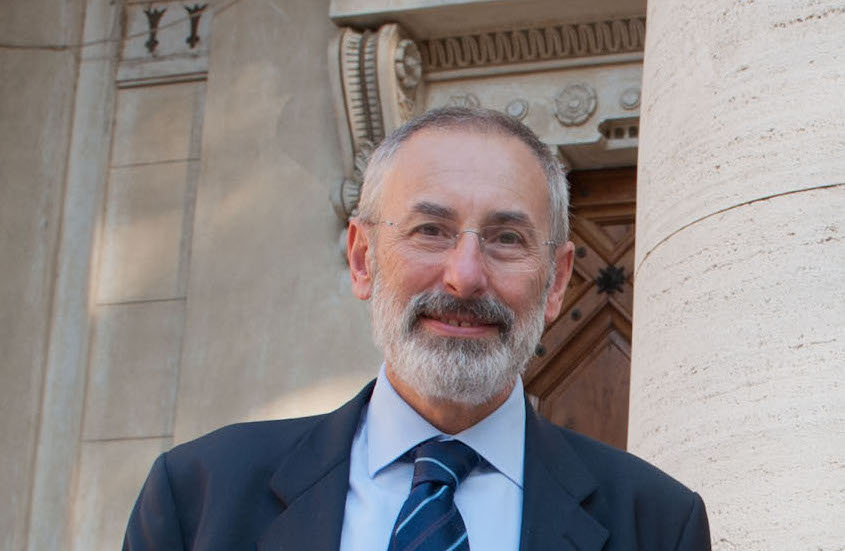
Our guest this week is Rabbi Riccardo Di Segni, Chief Rabbi of Rome. Rabbi Di Segni is descended from three generations of rabbis. He completed his rabbinical studies in 1973 and was elected chief rabbi of Rome in 2001. Rabbi Di Segni is also a trained physician who has served as the chairman of the radiology department at the San Giovanni Hospital in Rome. Additionally, he has served as vice president of the Orthodox Conference of European Rabbis and as a member of the Italian government’s National Council for Bioethics.

Our Simchat Torah conversation focuses on the notion of ending and beginning that characterizes the holiday and on the human diversity among the people of Israel.

https://youtu.be/A3D4dp7a3NI

Our past Simchat Torah talks:

Rabbi Daniel Freelander on the transition of power between Moses and Joshua

Rabbi David Silber the curious intricacies of the Torah’s description of the death of Moses


Rosner’s Torah Talk: Simchat Torah with Rabbi Riccardo Di Segni Read More »