fbpx

July 5, 2017

Obituaries, 7/7 issue

Abraham Alkana died June 23 at 92. Survived by wife Thelma; sons Terry (Helen), Jeffrey (Judy), Eugene (Rosangela); 8 grandchildren; 6 great-grandchildren; sister Stella Wilder; brother Leslie. Mount Sinai

Alexandra Eichhorst died June 18 at 47. Survived by husband Adam; daughter Avery Madaline; son Adam Paul; mother Sheryl Lewis; father Robert Lewis; brother Michael (Jennifer) Lewis; mother-in-law Marion Belushi. Mount Sinai

Lorraine Ellenbogen died June 23 at 93. Survived by sons Eric, Mark; brother Seymour Ross. Mount Sinai

Peter J. Faerber died June 15 at 71. Survived by wife Linda; brother-in-law John (Caroline) Pulinski; sister-in-law Barbara Kalicki. Mount Sinai

Lois Goldsmith died June 21 at 94. Survived by daughter Ellen (Mel) Kaluzny; son Carl (Michelle) Goldsmith; 4 grandchildren; 3 great-grandchildren. Mount Sinai

Zanne Kibbee died June 23 at 57. Survived by husband Jefferson “Jeff”; sons Zachary (Rachael), Jacob (Lyndy), Maxwell; 2 great-grandchildren; brother Allan Margolis. Mount Sinai

Sara Langer died June 22 at 93. Survived by daughters Connie (Ellis) Cohen, Hana Berman; 3 grandchildren; 3 great-grandchildren. Mount Sinai

Ronald L. Linder died June 19 at 77. Survived by wife Kate; daughters Karyn (Joel) Blair, Janis (Frank) Pupo; sons Jay (Liliya), Jon (Nika); mother Dorothy; 9 grandchildren; sister Jorjann Buzzella; brothers David (Marilyn), Gene; mother-in-law Molly Wolveck; brother-in-law Randy (Gina) Wolveck. Mount Sinai

Herbert Miller died June 12 at 94. Survived by daughter Phyllis (John) Miller-Saavedra; sons Robert (Patti), Barton Miller. Malinow and Silverman

Allen Stuart Moss died June 21 at 90. Survived by wife Tobey; sons David (Jane), Kenneth (Patricia), Howard (Adrea); 7 grandchildren; sister Sarene Meyers; sisters-in-law Roselyne Swig, Miriam Handel. Mount Sinai

Ruth Pilberg died June 20 at 100. Survived by husband Morris Elle; daughters Aileen (Wayne) Winter, Jeannette (David) Jackson, Marilyn (Bruce) Mandel; 8 grandchildren; 5 great grandchildren. Mount Sinai

Philip Rosenberg died June 21 at age 93. Survived by wife Helen; daughter Susan (Al) Simon; son Scott; 4 grandchildren; 5 great-grandchildren. Mount Sinai

Sholem Weiner died June 21 at 99. Survived by wife Helen; daughter Marsha (Norman Jerome) Spieler; sons Allan (Rebecca), Barry (Patti); 5 grandchildren; 5 great-grandchildren. Mount Sinai

Obituaries, 7/7 issue Read More »

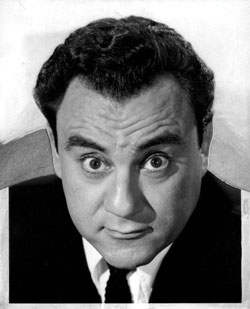
Bill Dana, created Jose Jimenez, dies at 92

Bill Dana

Bill Dana, whose English-mangling character Jose Jimenez made him one of the most famous comedians of the 1960s, died June 15 at his home in Nashville, Tenn. He was 92.

The Emmy-nominated writer, who was of Hungarian-Jewish descent, was born William Szathmary on Oct. 5, 1924, in Quincy, Mass. He served in the infantry in Europe during World War II and returned home to attend Emerson College in Boston. He graduated with a degree in speech and drama.

He had been writing for television and performing stand-up comedy for a decade when he created the character of Jimenez, a Mexican immigrant who first appeared in a sketch on “The Steve Allen Show” in 1959. The character took on a series of eclectic professions: an Olympic skier, dancer, animal trainer, deep-sea diver and astronaut, the latter making him a “mascot” of the Mercury astronauts as the space race was heating up.

Dana, as Jimenez, performed at John F. Kennedy’s inaugural gala, which also featured Frank Sinatra, Nat King Cole, Ella Fitzgerald and Gene Kelly.

As Jimenez, Dana appeared as an elevator operator on “The Danny Thomas Show,” which spawned the sitcom “The Bill Dana Show” that ran from 1963 to 1965.

Dana recorded several comedy albums, and appeared on “The Ed Sullivan Show,” “The Tonight Show,” “The Jackie Gleason Show” and the “The Andy Williams Show.” He also appeared on numerous TV series, sometimes playing dramatic roles.

But many people saw Jose Jimenez as a negative stereotype, and over the course of the 1960s the character became the target of protests. By 1970, Dana stopped performing as Jimenez.

Dana wrote a 1972 episode of “All in the Family” that featured an appearance by Sammy Davis Jr., playing himself. In it, Davis famously kisses bigoted Archie Bunker (played by Carroll O’Connor) on the cheek. In 1997, TV Guide ranked the episode 13th on its list of the “100 Greatest Episodes of All Time.”

Dana is survived by his wife of 36 years, Evelyn Shular.

Bill Dana, created Jose Jimenez, dies at 92 Read More »

love heart meant2be marriage

When family boycotts a wedding

“Does it bother you that my father is not coming to our wedding?” my husband-to-be Harry asked as we were picking out a tie for him to wear at our civil ceremony.

“No, it doesn’t,” I said. And that was the truth. I did not want someone who did not support our wedding to be present, to ruin the occasion with a long face and to mar the atmosphere with thoughts of tragedy.

Furthermore, I understood why my father-in-law was boycotting our wedding — he had survived the Holocaust, had managed to raise a Jewish family in post-World War II Germany and now his worst nightmare was coming true: His son was marrying not only a non-Jewish woman, but a German one.

The fact that all this was happening in Germany in 1988 put the horrible legacy of the Holocaust into sharp relief. No matter that I was planning to convert. The fact was, I was not Jewish at that point. Harry and I had decided to go ahead with a civil ceremony despite his family’s objections because we were about to move to the United States so I could attend graduate school at the University of Chicago, and it would be a lot easier to build a new life there as a married couple.

I did not, however, entirely get my wish of unconditional support from our wedding guests. Our witnesses, yes. My brother and sister, yes. Harry’s brother, yes.

Harry’s mother attended with a cheerful face — in that way, she was a wonderful actress. My grandmother, however, wore the sourest expression she could muster. She would never have committed the social affront of not attending. It was inconceivable to her that she should not be at her granddaughter’s wedding. No, she would keep with the social mores and be there, but she did say to my mother, as we were leaving the city hall, that this would not have happened had my father still been alive. This was as much a dig at the tragedy of my marrying a Jew as it was at my mother’s inability to keep her daughter in check. It was also typical of her to say this to my mother, who might pass it on, rather than tell me directly.

My grandmother did not object out of anti-Semitism but rather because she had experienced, during World War II, the persecution of the Jews. Her brother-in-law had been Jewish, and the families had been very close. That connection, once the Nazis took over their hometown in Czechoslovakia, put the entire family in mortal danger.

Incidentally, parents who boycott their children’s weddings run in the family, and oddly, to no ill effect. My father’s parents had not attended my parents’ wedding. Why, I could never quite figure out. It always struck me as odd because my father was their only surviving child. There were the travel costs, of course, as my grandparents lived in Germany and my dad was getting married in the U.S. Perhaps the language barrier was intimidating. But they could have afforded the trip, and they did like to travel.

Because no solid reason was ever put forth, I believe my grandparents’ reservations were the real reason they did not attend their son’s wedding. I still have a binder of my grandfather’s correspondence with my dad from that time — letters that bear witness to his severe opposition to his son’s choice, mainly on the grounds of culture and language. After he met my mom, on my parents’ honeymoon in Germany, my grandfather conceded to my dad that he could see why my dad had fallen in love with her.

Our wedding photos, taken on the front steps of the city hall, show my grandmother with a stone face. At the reception, after some wine, she loosened up. Later that year, when we were already living in the U.S. and my husband’s birthday rolled around, she sent him an envelope. It contained the same amount of money she customarily gave my siblings and me for our birthdays. When I asked her about it, she said, “Well, it’s only right. He’s my fourth grandchild now.”

My father-in-law, more reserved and more concerned with the family lineage, always seemed a little on the fence about me — even after I converted, after he attended our Jewish wedding a year later in Zurich, and when I was raising his Jewish grandkids.

But that, I think, had more to do with the fact that we came from such different worlds. Oddly enough, I could get him to do things nobody else could, such as when I persuaded him to book in advance a cruise to celebrate his and my mother-in-law’s 40th wedding anniversary — he never booked trips in advance.

In the grand scheme of life, the fact that he boycotted our civil wedding bore no ill effects on our subsequent relationship; on the contrary, it was a genuine manifestation of his values, and I respected him for it. 


Annette Gendler is the author of “Jumping Over Shadows,” the true story of a German-Jewish love that overcame the burdens of the past.

When family boycotts a wedding Read More »

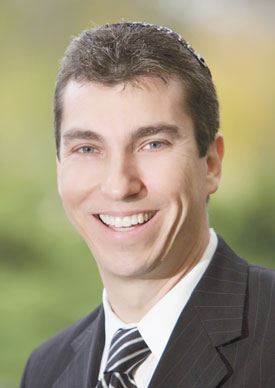
Rabbi Joseph Krakoff talks about his book on loss and grieving

Rabbi Joseph H. Krakoff. Photo courtesy of Rabbi Joseph H. Krakoff

As senior director of The Jewish Hospice & Chaplaincy Network, Rabbi Joseph H. Krakoff has plenty of experience hearing what not to say when trying to console a loved one who is grieving. Now, he’s taken his wisdom and channeled it into his first book, “Never Long Enough: Finding Comfort and Hope Amidst Grief and Loss,” illustrated by Michelle Y. Sider.

The son of Label’s Table owner Bruce Krakoff, he grew up in Los Angeles and could often be found helping out at the delicatessen after school and on weekends. Now 47 and a married father of three, Krakoff lives in Michigan, where he spent 16 years as a rabbi at Congregation Shaarey Zedek in a Detroit suburb before joining The Jewish Hospice & Chaplaincy Network.

The Journal spoke with Krakoff — who will be doing a 10 a.m. book signing July 7 at Label’s Table — about the role of hospice, dealing with loss and his book.

JEWISH JOURNAL: What advice would you give to a family looking at hospice for a loved one?

RABBI JOSEPH H. KRAKOFF: My words would be, as hard as it is, to speak honestly about the fears, the concerns, the anxiety. So often we walk on eggshells around someone who is dying. To be able to open up and see if the person wants to talk about it, it creates a sense of tranquility. Also, to find out what the person who is dying believes about what is going to happen to them.

Being a rabbi puts me in a unique position to open up conversation. When the doctor says we can’t do anything else to heal the body, then what we do is go to work on healing the soul, and there’s a lot of work that can be done in terms of healing the soul.

JJ: What do you mean by “healing the soul”?

JK: It goes in part to the Jewish belief that when we are born, a soul goes into a body, and while we are alive that body and soul are together. But in the process of dying, what’s really happening is that the physical body is letting go of the soul through disease
or illness, through old age sometimes, because our bodies are not meant to last forever. It’s a vessel for the soul, which is eternal. What I really mean is getting the soul or person ready to accept the inevitability of physical death.

JJ: What are some common mistakes people make?

JK: There are people who wait too long for hospice. If people wait until the last few days, there is less we can do.

In Detroit, we bring them music, we sing with them, we treat them as if they are fully in this world because they are. We do what we can to give them the highest quality of life for whatever time is left. Hospice does not bring about the death. People come to us because they are dying.

We can life review with them. People want to talk about their values and their ethics, and especially their legacy: What do I hope I have taught my children and grandchildren? What do I hope I have stood for and modeled for them? Having these conversations is so important and healthy. It gives a sense of closure.

JJ: Why did you decide to write “Never Long Enough”?

JK: I wrote it as a rabbinical student in my senior year at the Jewish Theological Seminary in New York. One of the things I was concerned with is that well-meaning people would often say to those who are bereaved, “When will you be normal again? When will you be over your mourning?” I don’t think they were trying to be hurtful. They just wanted the person they knew before the death back.

I also heard people say things like, “At least they are in a better place.” I recoiled at that. My other concern was if someone was 80 years old, they would say, “At least you had them for 80 years.” That is where I gave birth to the concept of “never long enough.” Whether you have them for 50 years or 80 years or 100 years, it’s never long enough.

I knew people did not mean to be dismissive or insensitive. They just didn’t know what to say. When someone is ill or dying, everyone thinks they are going to come up with the most brilliant thing to say. The truth is, there are no words that are brilliant. To be there, to give a hug, to be sincere, is the only thing that’s brilliant.

JJ: Who is the audience for the book?

JK: At its core, it is designed for families and loved ones of all ages to read and reflect on their feelings, and feelings of remembering and sadness and loss. But an additional piece that myself and the illustrator have discovered is that this is also useful for people who are dying and are doing their own life review. Although that was not our original intent, it has evolved that way, which is very meaningful.

Rabbi Joseph Krakoff talks about his book on loss and grieving Read More »

How to puppy-proof your home

Welcoming a new dog into the family can mean a lot of joy, unconditional love and adorable Instagram posts. But a big part of taking care of your fur baby is keeping the little one safe from harm. You may not realize it, but your home can hold many hidden dangers, so it’s a good idea to be prepared. These 13 precautions apply whether your dog is a mischievous pup or a full-grown adult.

And no matter what happens, just accept that there will be accidents, broken items and pet hair everywhere. When you look into your dog’s loving eyes, you’ll know it’s all worth it.

1. Dogs like to chew on things they’re not supposed to, so place tempting objects on higher shelves and cupboards. My dogs love to eat paper — mail, books, facial tissue, you name it — and I have to survey the entire home before leaving to make sure there is no paper within reach.

2. Install childproof latches on lower cabinets to prevent dogs from poking their noses into them.

3. Chewing on furniture can occur when dogs are bored or anxious. Training can go a long way in preventing this behavior, but in the meantime, you can apply some bitter spray to the furniture. These deterrent sprays are available at pet stores, or you can make your own version by searching for recipes online.

4. Use blankets and throws on sofas and chairs. They’re easier to clean than the furniture.

5. Do some research on your houseplants to see if they are toxic. You’ll be surprised at some of the plants that are poisonous for dogs — for example, ivy, aloe vera, philodendron and asparagus fern.

6. Keep toxic food out of reach. Dogs can’t eat chocolate, onions, grapes, coffee, avocados and many other common foods you have in the kitchen.

7. Childproof lids on medications are no match for a dog’s teeth. Keep all your medicine out of reach because Fido may think pills are treats.

8. If your dog likes to drink out of the toilet, keep the seat cover down at all times and avoid using automatic toilet bowl cleansers. Open toilets also are a drowning hazard for puppies. A safe bet is to keep the bathroom doors closed at all times.

9. Change open trash cans to “step on” canisters with lids to keep dogs from doing scavenger hunts through your garbage.

10. Watch out for electrical cords. If dogs chew on them, they can be electrocuted. Wrap them with cord covers and tuck them out of sight.

11. Dogs love your dirty laundry because it smells like you, but if they swallow your socks or other clothing, it can lead to serious digestive tract problems. Now you have another reason to put away your clothes. And invest in tall hampers with lids instead of using open laundry baskets that sit on the floor.

12. Drapery cords that extend to the floor can cause strangulation. Knot up excess cord so your dog doesn’t accidentally get caught in it.

13. Many dogs scratch at the door when they want to go out. Mine scratch the door when I come home and they can’t contain their excitement. To prevent scratch marks on the door, install a plastic or metal kick plate to the bottom. 


Jonathan Fong is the author of “Walls That Wow,” “Flowers That Wow” and “Parties That Wow,” and host of “Style With a Smile” on YouTube. You can see more of his do-it-yourself projects at jonathanfongstyle.com.

How to puppy-proof your home Read More »

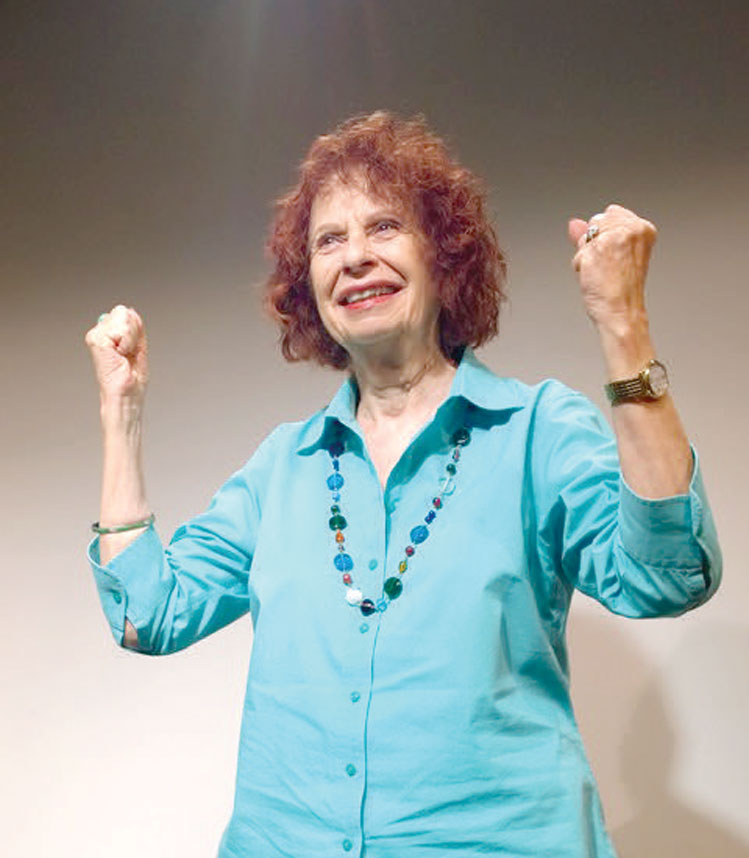
The uncommon life and times of Annie Korzen

Coral-rimmed glasses that match her hair dangle around Annie Korzen’s neck. The spry 78-year-old actress plays a piano situated offstage left inside the cozy Braid Theatre in Santa Monica.

Perhaps best known for a small, recurring role on “Seinfeld” as obnoxious Florida retiree Doris Klompus, she steps out from behind the keys and onto a sparsely decorated stage against a bare, white wall while rehearsing a monologue.

A brief conversation ensues over a cue with her handpicked director, Jewish Women’s Theatre (JWT) veteran Susan Morgenstern. Korzen waltzes downstage.

“I hate it when you’re right,” Korzen says, contorting her malleable face into a droopy shape. Morgenstern and other crew laugh. This is the woman whom producers of hit shows like “Jane the Virgin,” “New Girl” and “Brooklyn Nine-Nine” call when they need someone who can get a laugh off one line — and she’s the first to remind you.

The discussion and laughter end, Korzen takes the direction and continues rehearsing.

As evidenced by her new one-woman show, getting laughs comes easily but relinquishing control and accepting change is harder. “Annie Korzen Famous Actress,” written and performed by Korzen, is an equally funny and moving exploration of her life onstage, on camera and off.

The show is being produced by JWT, a nonprofit, independent theater company created in 2007 to provide Jewish women a voice onstage.

In the play, Korzen juxtaposes her status as a bit player in films and television with being a diva-like, leading lady in her son’s life. She channels an opinionated, exasperated, yet appealing alter ego that sometimes raises the question: Who’s the real Annie Korzen?

“I have, like most performers, created an onstage character,” she said. “I always say that I’m much more likable onstage than I am in real life, even though my onstage character is quite sardonic and opinionated. But she does it with a charm that I don’t have in my personal life. So onstage Annie is really fun to be with. Real-life Annie, not so much all the time.”

Partly as a result of the success of Monica Piper’s 2014 autobiographical one-woman show at JWT, “Not That Jewish,” which went on to enjoy an off-Broadway run, the company commissioned Korzen to develop her own show.

Korzen mentioned Piper’s show and several other solo stage plays as references, then paused, mulled it over and concluded:

“Nope. Never mind. I’m better than all of them.”

Korzen has written and performed pieces for JWT for the past five years. She has been working on her latest show for nearly two years.

“I find great bliss in speaking my own words,” she said after a recent rehearsal. “Just as a creative person, I think I have something to say. I think people enjoy hearing me say it. And I don’t know anything that’s more fun.”

That comfort level is on full display in “Famous Actress” as Korzen reopens painful wounds of the past onstage, including long-simmering issues with a controlling mother and doubts about her own failings as a parent — but all with a punch line right around the corner.

The jokes are nuanced and complex. Talk of Korzen’s helicopter parenting over her son well into adulthood goes beyond a Jewish mother stereotype, leaning on the pathos of a woman learning to cede control and learn from mistakes. Korzen lambastes her own mother onstage for making her grow up behind a piano while taking endless lessons, then wordlessly thanks her by performing a show that wouldn’t pack the same punch without its piano-playing star.

“I guess it’s a way of wanting to feel loved, I don’t know,” she said, almost dismissively, about opening up onstage. “There’s a great showbiz saying that comedy is turning your pain into money. Maybe that’s what I’m trying to do.”

In “Famous Actress,” Korzen, a Bronx native, recalls taking up acting with grandiose ideas of becoming the type of marquee star she saw as a kid lighting up Broadway stages — usually on Yom Kippur, she said, because “it’s the easiest day of the year to get theater tickets.”

Her acting career didn’t pan out quite that way, but a prominent theme in her show is being at peace with how things turn out.

“It’s OK to change your script. That’s the real point of the piece,” she said. “You can be different. People think they know what they want in life and if they don’t get that, they feel frustrated, angry and bitter. What I’m trying to say is, yes, of course we have our dreams and our fantasies, but at the same time we have to be open to what comes our way.”

Korzen’s turn on “Seinfeld,” which she credits with opening many doors, came only because a more established actress turned down the part, saying it was too small.

“Always say yes,” she said. “That’s definitely another theme of the show.”

An art exhibit, which includes a painting from Korzen’s film producer husband Bennie Korzen, will accompany the show.

“Annie Korzen Famous Actress” starts previews July 8 and opens July 12 for a six-week run. Tickets can be purchased on JWT’s website at http://www.jewishwomenstheatre.org/up-next/performances/.


The uncommon life and times of Annie Korzen Read More »

UCLA hits the right notes in new course in klezmer music

From southeastern Europe in the 16th century to … UCLA in 2017?

With its clarinets, accordion, trombone and trumpet, the Klezmer Music Ensemble at UCLA has emerged this year from a class in the Herb Alpert School of Music, Department of Ethnomusicology, and the group is breathing new life into music that originated in southeastern Europe and spread throughout Europe where Jewish populations were present. The UCLA group, which is available for performances, is made up of nine students with a passion for the genre, and fewer than half of them are Jewish.

The UCLA course was started by Mark Kligman, the Mickey Katz Endowed Chair in Jewish Music, and Michel Klein, the ensemble’s leader, and it studies a variety of recordings, from pre-World War II European klezmer to contemporary experimental music. Although it’s a UCLA course, it’s not restricted to university students; anyone who is attracted to klezmer-style music is welcome.

“In addition to seeing it as an offshoot of Mickey Katz’s musical life, which was very much infused with klezmer music, it was important for the sake of Jewish music to have this ensemble available on campus,” Klein said.

The class is scheduled to be offered in the academic year ahead, an encouraging sign for its returning members and leader.

“I think it would be cool for the ensemble to get more performances outside UCLA in the future out in the community,” said Sam Robertson, the group’s accordionist. “Mainly because that means more performance opportunities and we get to interact with more people interested in the music.”

As the group continues into its first full year in the fall 2017, it is expected to perform at least three concerts in the UCLA music library.

“I see really good things,” Klein said. “Last year, we had the ensemble for winter and spring quarter. Next year, the ensemble will be active for the full year, which opens up the door to really exciting possibilities. I’d like to expand our ensemble, including more members with a broader diversity of instruments, as well as to explore the subtler elements of the klezmer genre and style.”

Some students, such as Robertson, have been members of other klezmer groups and were eager to join the ensemble when the class became available.

“I played accordion before the ensemble. I started when I was 11, so I’ve been playing for about nine years now,” Robertson said. “I was originally interested because I liked Greek and Russian music. Now I mostly play Eastern European and Middle Eastern music on [the accordion].”

The ensemble had its first public concert on June 4 at the Breed Street Shul in Boyle Heights as part of the UCLA Alan D. Leve Center for Jewish Studies exhibit “From Brooklyn Ave to Cesar Chavez: Jewish Histories in Multiethnic Boyle Heights.” More than 200 people attended.

Although the neighborhood’s once-thriving Jewish community has long since moved west, the performance brought back the kind of community celebrations that were typical in Boyle Heights, where the temple, built in 1915, once was home to three minyans each morning.

As the ensemble played, a dance circle formed and visitors stomped their feet. The set list included instrumental and lyrical pieces, belted out by Nicholas Nissim Nati, including a traditional horah.

Klein said he was pleased with the performance and the energy that the audience contributed to the group’s music.

“There is a certain element to this music that necessitates audience participation: clapping, singing along, dancing, etc.,” he said. “Klezmer music was never meant to be a formalized music meant for viewing like classical music was. It was primarily music that accompanied the dancing at weddings and other joyous occasions. In a certain sense, the audience stops being an audience and becomes part of the music-making process.”

Ensemble members said they valued how much the audience appreciated them.

“I always enjoy performances like that where we get to play klezmer for audiences that are familiar with the music, like the one in Boyle Heights,” Robertson said. “They know how to respond and dance to it.”

UCLA hits the right notes in new course in klezmer music Read More »

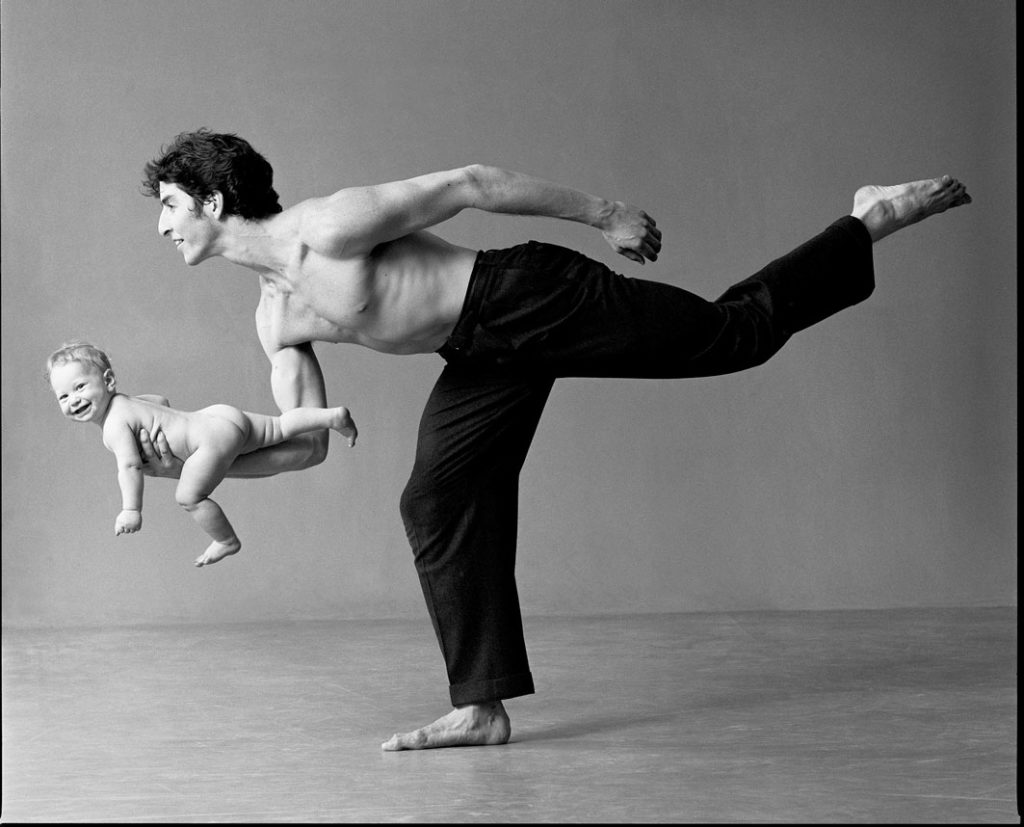
Ezralow to share first steps at his old stomping grounds

When does the act of looking back qualify as a step forward?

When Daniel Ezralow is the man orchestrating the steps and the reflection.

In bringing his Ezralow Dance to the Wallis Annenberg Center for the Performing Arts in Beverly Hills for a second consecutive season, the Los Angeles-based director-choreographer is presenting a selection of performances under the title “Primo Passo.” The name is Italian for “First Steps,” and the concept of origins is what fired up Ezralow and his wife, Arabella, Ezralow Dance’s co-artistic director.

“We started to think about what is it to be a ‘first step’? What are your first steps as a child, as a young man, as a teenager, as an adult? What are your first steps in love?” Ezralow said. “We got very excited about it. But everything I do morphs all the time. I create very much through spontaneity and through kind of a wellsource that you didn’t know was there. So initially when you have ideas, you’re very excited. Then I came to terms with, ‘OK, what is this show going to be?’ ”

Over the course of an eclectic career spanning four decades, Ezralow has been a founding member of MOMIX and ISO Dance; has worked with Paul Taylor, Lar Lubovitch and Pilobolus; and has created commissioned pieces for Hubbard Street Dance Chicago and Batsheva Dance Company. He choreographed the opening ceremony of the 2014 Winter Olympics in Sochi, Russia, as well as dances for David Bowie, U2, Cirque du Soleil and director Julie Taymor’s Broadway shows.

“He’s truly an international artist, which makes it doubly exciting that he is returning to his hometown of Beverly Hills to debut his latest retrospective work,” Wallis Artistic Director Paul Crewes said.

Ezralow, who studied biology at UC Berkeley with the aim of becoming a cardiologist, took a detour into modern dance and has been a creative moving target for his entire professional career. Given that his work spans popular and artistic mediums, he said with a chuckle that he has been criticized both for being “too dancy and not dancy enough,” depending on what field he is working in at the time.

So in reflecting on his own “primo passo,” Ezralow selected a sampling of several of his works from 1982 through 2013. “There’s a certain amount of my work that holds the test of time, that is still applicable,” he said. “Those are the ones I have chosen to put together for ‘Primo Passo,’ which, in a sense, is a first step for me in putting together a real dance company.”

The July 13-14 performances will include “Brothers,” a 1982 duet he created with David Parsons when both men were with Paul Taylor’s company; “SF,” a joyous meditation on the concept of “why,” commissioned by Hubbard Street; and “Chroma,” a playful piece involving dancers dashing behind panels, which was part of a program Ezralow brought to the Wallis in 2016.

Ezralow also is toying with incorporating the “first steps” of his now 3-year-old son into the program.

“I can’t guarantee it at the moment,” he said, “but I’m hoping you will see an element of those young bodies on the stage.”

The discussion of his son took Ezralow back to a memory from his own childhood when, as a 3-year-old at his home in Coldwater Canyon, he would stand in front of the TV and kick up his legs to grab the attention of his father and older siblings.

“Every step of your career, you can look back and say, ‘Well, it was meant to be,’ but it’s not really like that,” Ezralow said. “Every decision you make, the choices you made are always determining your future. And for me, I got a little encouragement from standing in front of a TV when I was 3. It was never in a dance class. I played sports, and the next iteration was my wanting to dance with my girlfriend, so I started watching ‘Soul Train.’ ”

“There are all these places that influence you,” he added. “I would like to weave that into the show in moments.”

Ezralow’s father’s family came from Russia, and his father grew up among the Jews of Boyle Heights. His Polish-born mother immigrated to Palestine at a young age and was part of the Jewish paramilitary organization, the Haganah, the forerunner of the Israel Defense Forces. His parents met in Los Angeles, where his upbringing partially informed his faith.

“I grew up with Jewishness that is traditional because my mother’s family is still in Israel,” Ezralow said. “Judaism, of course, has fantastic human tenets, but I didn’t see that the devout practice of it would necessarily take me to where I needed to go. My discovering creativity, in particular, became my religion and became the way I could express my deepest
care for the human race. How I want to help people, how I want to serve people comes through my creativity. I didn’t see that in any religion particularly.”

Growing up in Coldwater Canyon, Ezralow and his family had a Beverly Hills ZIP code and dropped off mail at the old post office at the intersection of Cañon Drive and Santa Monica Boulevard. That post office is now the site of the Wallis.

“I have worked a lot around the world in many different places,” Ezralow said. “So to come back to where I lived, and play at a theater that emerged from an old post office, it just makes me chuckle. It’s fantastic and it’s a beautiful theater.”

Ezralow Dance presents “Primo Passo” July 13-14 at the Wallis Annenberg Center for the Performing Arts, 9390 N. Santa Monica Blvd., Beverly Hills. For more information, call (310) 746-4000 or visit thewallis.org.

Ezralow to share first steps at his old stomping grounds Read More »

Israel is losing support among minorities and millennials, study finds

What do you think of when you think of Italy?

Maybe you picture beautiful works of art set against rolling Tuscan hills. Maybe a steaming plate of spaghetti topped with marinara sauce served with a deep red wine.

Now what do you think of when you think of Israel?

If you’re like most Americans, you picture walls of concrete enclosing an austere and strict country. The men wear black hats, the women long skirts. Everyone looks pretty serious.

That’s what Brand Israel Group, former advertising professionals who set out to sell Israel to Americans, found in a series of focus groups beginning in 2005. Brand Israel has since commissioned two surveys of the American public — in 2010 and 2016 — and hasn’t liked what it found.

According to the surveys, Israel has pretty broad backing among American citizens, but is losing support among a range of growing demographics. As pro-Israel advocates tout “shared values” between the United States and Israel, fewer and fewer Americans actually think they believe the same things as Israelis.

“Shared values are the bedrock of our relationship, and young Americans do not believe Israel shares our values,” said Fern Oppenheim, one of the group’s co-founders. “That’s a huge issue. We have to have a narrative about the heart and soul and humanity of the Israelis.”

The survey was conducted online last September and October by the polling firm Global Strategy Group, and sampled 2,600 Americans among a range of demographic groups. Here’s some of what it found:

Knowledge of Israel has gone up — but favorability is down.

More people say they know more about Israel now than they did in 2010. While only 23 percent of Americans said they knew at least a fair amount about Israel in 2010, the number rose to 37 percent in 2016. Knowledge of Israel grew among every demographic group except college students, where it fell precipitously — from 50 percent to just 34 percent, a number on par with the national average.

But it appears that the more Americans learn about Israel, the less they like it. In 2010, 76 percent of Americans viewed Israel favorably. In 2016, the number fell to 62 percent. Levels of support dropped as well. In 2010, the study found that 22 percent of Americans were “core” supporters of Israel, which dropped to 15 percent by 2016.

Israel is losing out among a range of growing demographics, from Latinos to millennials.

The groups with relatively high levels of favorability toward Israel, according to the study, included men, Republicans and older Americans. The groups that like Israel less are the mirror image: women, Democrats and millennials, along with African-Americans and Latinos. And those population groups are all growing.

A majority of all these groups still sees Israel favorably, but the numbers are falling. Favorability among Democrats dropped 13 points, from 73 percent to 60 percent. Among women, it dropped from 74 percent to 57 percent.

Among African-Americans and Latinos, favorability toward Israel fell 20 points each, from about three-quarters each to just over half. Fewer than half of African-Americans and Latinos believe “Israel shares my values.”

Most college students hardly hear about Israel at all.

Colleges are hotbeds of anti-Israel fervor, right? Not so much. The study found declining results for Israel among college students, but a majority still view Israel favorably. Moreover, most college students hardly encounter the Israel debate at all.

Favorability toward Israel fell 17 points among college students between 2010 and last year, but still stands at 54 percent. Nearly all Jewish college students used to view Israel favorably, but even after a 13-point drop, the favorability stat still stands at 82 percent.

Still, Oppenheim noted a shifting picture among Jewish college students. While 84 percent of Jewish college students leaned toward the Israeli side of the conflict in 2010, only 57 percent do now. Support for the Palestinian side, meanwhile, grew more than sixfold, from 2 percent to 13 percent.

Notably, nearly a third of Jewish college students said they experience anti-Semitism on campus. Of those, more than 40 percent said the anti-Semitism was not connected to Israel.

But what college students can agree on most regarding Israel is that they barely hear about it. More than three-quarters of college students said Israel rarely or never comes up. On college campuses with an organized pro-Palestinian presence, the number drops only slightly, to 70 percent.

Americans see Israel as ultra-religious and war-torn.

Israel has spent years and millions of dollars trying to portray itself as the place where Gal Gadot invented the cherry tomato on the beach using Waze. Or something.

Israel’s touting of its tech industry, warm climate and Mediterranean food may have worked a bit on Americans, who view Israel as innovative (78 percent) and cool (63 percent). But about three-quarters of Americans still see Israel as dominated by conflict. And although only 10 percent of Israeli Jews are Charedi Orthodox, 73 percent of Americans view Israel as ultra-religious.

So while American Jewish leaders have protested this week that a small Charedi minority dominates Israel, that minority, for many Americans, is the image of the Jewish state. 

Israel is losing support among minorities and millennials, study finds Read More »

A Polaroid master gets her due in Errol Morris’ documentary

Before digital photography made selfie images just a cellphone click away, Polaroid filled the desire for immediate gratification with its portable instant cameras.

But for Elsa Dorfman, Polaroid means the 20×24 camera, a 235-pound behemoth that produces instant images 20 inches by 24 inches. She has used it to photograph the famous (including Bob Dylan and her good friend, the late beat poet Allen Ginsberg) and the nonfamous in her Cambridge, Mass., studio.

Her work is now the subject of “The B-Side: Elsa Dorfman’s Portrait Photography,” by documentary filmmaker Errol Morris, best known for “The Thin Blue Line” and the Oscar-winning “The Fog of
War: Eleven Lessons from the Life of Robert S. McNamara.”

“There’s something about the experience of having your picture taken by Elsa — being part of her world, going to her studio, having your photo taken and watching it develop,” Morris said.

He and his family have posed for Dorfman many times since they first met her 26 years ago — after Morris’ wife, Julia, commissioned a portrait of their 4-year-old son as a Father’s Day gift. They became friends, and Morris floated the idea of making a film about her. Dorfman didn’t take him seriously.

“I’d say, ‘Sure, whatever.’ I blew it off,” Dorf-man said. “Then one day, he said, ‘I have the crew for next week.’ ”

In early 2016, Morris interviewed her as she talked about her life and displayed her archive.

“Making the movie was like psychoanalysis,” Dorfman said. “It made me think about the different periods in my life.”

Now 80, the “not observant but very Jewish” Dorfman always was a people watcher, a self-described “starer” and, at times, an eavesdropper. As a teenage exchange student, she chronicled a 1954 trip to Germany with a Kodak Pony that friends gave her, but she didn’t start taking photos professionally until 10 years later, when she received a Hasselblad at the age of 27. In 1976, Polaroid produced just five 20×24 cameras, and after a few years of pleading, she got to use one for the first time in 1980. It was love at first snap.

“This camera was very magnetic,” she said, comparing the immediate attraction to falling in love with her husband, Harvey, a defense attorney, when they met in 1967. She also loved that it freed her from the time-consuming darkroom, because she was a busy mom to her toddler son, Isaac, now 40.

“She kept making these Polaroids, not getting a tremendous amount of attention as an artist, selling them at modest prices and collecting this amazing array of photographs,” Morris said.

The film’s title has both a literal and metaphorical meaning, he said. In her work, Dorfman would take two photographs and have the buyer choose one; she would keep the other, or B-side.

But like a 45-rpm record, Morris said, a B-side is “something discarded, rejected. Elsa was a B-side artist. She was never really given her due, never taken seriously, certainly not by Polaroid. The irony, of course, is the B-sides are some of her best photographs.”

Morris owns many photos that Dorfman has taken of his family, but not all are on display in his Cambridge office or his homes there and in Vermont because the prints are fragile. Too much light and too much or too little humidity can damage them. That’s why Dorfman stores her archive in the dark.

Today, she continues to occasionally shoot with the 20×24 camera — at $5,000 and up per session — but film for it is rare and of questionable quality as it degrades over time. She owns a digital camera, “but I never use it,” she said. “To me, a photograph is something you have in your hand, you put on your wall.”

As for the future of her archive, she said she doesn’t want her son and grandchildren to be burdened by having to care for it but probably will leave it to them. “And they can decide what to do with it,” she said.

Morris said that he saw Dorfman as “a kindred spirit” who shares an interest in people presenting themselves to and being recorded by a camera. He compared “The B-Side” to his documentary “Fast, Cheap & Out of Control,” which profiled people with unusual careers.

Ironically, although he’s known for his documentaries, he doesn’t particularly like the genre and said he got started making them by “happenstance.”

Raised by a Polish-Jewish single mother, a Juilliard-trained pianist, in Hewlett, N.Y., Morris wanted to be a writer but got interested in film at the University of Wisconsin. As a graduate student, he met filmmakers Wim Wenders and Werner Herzog at the Pacific Film Archive in Berkeley and worked with Herzog on his film “Stroszek” in 1976. He released his first documentary, “Gates of Heaven,” about the pet cemetery business, two years later.

To a resumé that now includes features, shorts, commercials and TV series, Morris will add “Wormwood,” a Netflix series starring Peter Sarsgaard and Molly Parker, and may go to Russia to make a film about Mikhail Gorbachev. “Nazis always interest me,” he said, mentioning a possible project about Hitler’s chief architect, Albert Speer.

Morris’ personal agenda includes a trip to Israel; he hasn’t been back since his son’s bar mitzvah. “I’m very proud to be a Jew,” he said.

The director hopes “The B-Side” will bring Dorfman the recognition she and her work deserve. “She’s a fabulous underdog who worked hard, is unpretentious and yet has created work that is deeply interesting and profound,” Morris said. “To know Elsa is to love Elsa.”

“The B-Side” is playing at the Laemmle Royal in Los Angeles and opens July 7 at the Laemmle Playhouse in Pasadena and Laemmle Town Center 5 in Encino. 

A Polaroid master gets her due in Errol Morris’ documentary Read More »