fbpx

July 5, 2017

When the dream of Israel clashes with reality

“I had rocks thrown at me.”

This is what my sister remembers most from her 2007 visit to Israel.

She was 23 years old, just out of college, visiting her nice Jewish boyfriend at the time, a student at the Sackler School of Medicine. She had done nothing wrong that day or said anything untoward to anyone. She was just walking. And not through a French banlieue with a big Star of David around her neck, where you might expect this sort of thing, or through the center of Ramallah, waving an Israeli flag.

She was in Jerusalem, making her way through the ultra-Orthodox neighborhood of Mea Shearim, when a woman standing on a sidewalk saw her, cursed at her in hysterical Hebrew and started lobbing rocks at her.

This punishment-by-stoning was biblical penalty for the indefensible crime of wearing pants.

When I first heard this, I was upset but not surprised. Mea Shearim is famous for its strict halachic observance and the community’s insistence that even visitors adhere to Jewish law. Ominous street signs warn: “TO WOMEN AND GIRLS, PLEASE DO NOT PASS THROUGH OUR NEIGHBORHOOD IN IMMODEST CLOTHES.” To do so is to risk menacing stares, Hebrew profanity, projectile spittle — and rocks launched at your body. I’m not aware of any men being stoned for ripped jeans.

Did my sister make a mistake? Or is it crazy that a woman can be pelted with stones for her choice of clothing on a public street in a state that claims to be a bastion of liberal values?

I remember how upset she was, how ashamed. That her shame was the product of her gender, no more than a random trick of nature, was astonishing. I remember telling her, “Just don’t go there anymore. There is plenty of Israel to love and plenty of Israel that loves you back.” Let the ultra-Orthodox have their tiny slice of 20 B.C.E.

A decade later, though, that fringe cluster has metastasized. Today, it isn’t only some small neighborhood where secular, liberal Jews must tolerate retrograde gender rules for an hour in order to buy Judaica, but an expanding religious mandate that chokes the Israeli government and inhibits democracy. Today, the rock throwers get their way at the Kotel, Judaism’s holiest site, where if women dare don tallit or tefillin or pray aloud — God forbid men hear their voices and succumb to sexual mania — they are harassed, spat on or beaten. Perhaps even more disturbing, the secular police that serve as the enforcers of Israeli law might arrest them and drag them away.

This is a strange reality for a country that aspires to be Jewish and democratic. But there is precedent for this: Ever since David Ben-Gurion signed a 1947 deal ceding control of Israel’s Jewish character to the ultra-Orthodox, they have maintained sovereignty over Jewish life there.

“Despite the fact that the vast majority of Jews in Israel and around the world are not Orthodox, in Israel, Orthodoxy has a monopoly on Judaism,” Women of the Wall Executive Director Lesley Sachs wrote in a July 1 op-ed for The New York Times. “The Chief Rabbinate (all male and all Orthodox) controls all religious aspects of a person’s life, cradle to grave.” 

That control extends over marriage laws, circumcision, burial and conversion. Just last week, a controversial bill granting the Chief Rabbinate complete authority over conversion in Israel was delayed after a public outcry. In addition to life events, the rabbinate also controls Israel’s holy sites.

The internecine tension over who has the right to worship according to their custom at the Western Wall is part of a long-running saga. It reached fever pitch June 25 when Israeli Prime Minister Benjamin Netanyahu capitulated to the most conservative elements in his governing coalition and reneged on his commitment to establish a contiguous, egalitarian prayer space at the Kotel in which liberal Jews, and women in particular, can worship as they please.

His about-face has caused much of American Jewry to convulse with rage, igniting what some have termed “a civil war.” Because what is under assault in Israel today is not only immodest dress, but the values of religious freedom, egalitarianism and pluralism.

The stakes in this battle are enormous. Beyond the politics is a larger theological struggle over how much traditional Judaism should tolerate change in order to adapt to the
modern world. And let us be clear: The link between religious freedom, egalitarianism and pluralism in their threat to the religious establishment is that all three represent the emancipation of women.

So let us not pretend that the Kotel controversy is about “Diaspora Jewry” or “liberal Jewry” or “American Jewry.” Rather, it is a clash between an ancient, traditional way of life, in which women function primarily as child-bearers and challah-braiders, and 21st-century Western liberalism, in which women can run companies, run for office and read Torah — as rabbis.

Every earthly society grapples with issues of inclusion. In America, the legal barriers to equality have, for the most part, been torn down, so while our egalitarianism is hardly perfect, separation is seen for what it is: inequality.

For the Israeli government to withdraw its support for this symbolic measure represents to American Jews a regression of democracy and an injustice. President Donald Trump’s tweets and behavior notwithstanding, Americans have, for the most part, removed the major obstacles to gender equality in public life. So the decision about the Kotel is a stark reminder that in the Israel so many of us adore, elements of fundamentalist religion stand in the way of a just and fair society.

The Jewish world is quick to criticize religious extremism in other religions, but how many of us are honest about the way it poisons our own? The biblical literalism that defines decorum at the Western Wall is the same malaise that has, in part, corrupted Israel’s ability to end the Israeli-Palestinian conflict. Too many ultra-Orthodox leaders don’t believe there is a conflict: When land is given to you by God, it is neither your prerogative nor your right to compromise about it. And so 2.7 million Palestinians and the future of Israeli democracy languish in limbo. 

Criticism isn’t betrayal, and it beats abandonment.

The ultimate status of liberal Jews at the Kotel depends on how the State of Israel wants to define itself for the future: Will it be a semi-“Sharia” state, where Jewish law is indistinguishable from national law? A hybrid of democracy and theocracy, where citizens vote but civil rights emanate from an ancient religious text?

These choices would constitute an irrevocable breach with liberal Jews and compromise global Jewish solidarity.

Zionism has never been a question for me. For as long as I can remember, I have loved and supported Israel. There was never any complicated calculus: I was born a Jew and Israel is the Jewish homeland; therefore, Israel is mine, and I will be faithful to her.

But by now, I’ve suffered such a series of insults to my standing as a Jew, a woman and a person of conscience that I sometimes wonder if there is a limit to that support. I wonder what would happen if, for example, Israel went the way of far right-wing leader Naftali Bennett and annexed the West Bank without vesting the Palestinians with full voting and civil rights. Would that stop me from traveling there? Would it silence my defense of Israel before her detractors? Where, exactly, is my red line?

American Jews have been wrestling with questions about hard limits on their support for decades. This isn’t new. But it is getting more intense, more divisive, more intractable. Some of us are reaching a point of no return; others are clinging tighter than ever to unconditional, uncritical acceptance, no matter the policies of Israel’s government. But when a staunch defender of Israel such as Rabbi Daniel Gordis proposes a boycott of El Al Israel Airlines, can other gestures of mainstream protest be far behind?

The other day, I asked a politically progressive, gay friend of mine if Israel could do anything to end her support. “No,” she said, without hesitating.

Not even if it does things that contravene your values?

“Oh, it crossed that line a loooong time ago,” she said. “I don’t love the Israeli government. I love the Israeli people. If the government does things I don’t like, I’ll protest.”

This is a healthy position. And probably not far from the attitude of most Israelis. As American intellectual Leon Wieseltier says, “Self-criticism is the hallmark of a mature community.”

Criticism isn’t betrayal, and it beats abandonment. After all, half of Americans consider the current U.S. leadership a stain on the democratic system but have not absconded to Canada in protest. We all have our hypocrisies.

But as Jews, we also are fortunate that there are great leaders throughout the world who can show us a better way. A month ago, during an interfaith panel I moderated on the Six-Day War for the Shalom Hartman Institute, I asked Orthodox Rabbi Yosef Kanefsky of B’nai David Judea if Jews fetishize the Western Wall.

He said something shocking and profound: He admitted — in public, before a room full of Jews — that he avoids visiting the Kotel when in Jerusalem. “The reality of it is never quite as sublime as it is in my head,” he said.

Imagine: Here was an Orthodox rabbi, who keeps the Sabbath, who keeps kosher, who davens with a mechitzah, but who also understands that no single sect of Jewry can claim dominion over a historic relic meaningful to all. He’d rather protest the reality and revel in the dream.

Kanefsky’s attitude is instructive. Although she disappoints me, and disappoints me often, I continue to love and support Israel because she is sublime in my head. To help her realize her potential requires my dissent when she falls short.

Yes, Israel is a nation-state with a flawed government that has caused innocent people suffering and heartache. But Israel also is the people Israel — a dysfunctional tribe, a community of myriad colors, all of whom are bound together by history and destiny. This Israel has produced philosophers and scientists and artists and visionaries whose contributions extend far beyond Israel’s borders. Israelis have the resources to resolve the issues of their day, and Diaspora Jews have an obligation to aid them in their struggle for improvement.

If world Jewry means anything at all, it means working together for the success and viability of our mutual interests and to ensure that we actually have some. An Israel that serves as the guardian of all Jewish traditions sounds like a good place to start.

Because of all her various expressions, Israel is, above all, a dream. She is the expression of a religious aspiration for a better world, a world redeemed.

So while we cling to a vision of justice, freedom, dignity and peace for all her inhabitants and guests, let us avoid the complacency that favors the current reality.

There is much to be proud of when it comes to Israel’s existence and her gifts. But when the symbolism of a state — and her holy sites — becomes more meaningful than her people, what follows isn’t love but idol worship. 

When the dream of Israel clashes with reality Read More »

Moving & Shaking: JFLA gala, Bret Stephens lecture, and LA Jewish Comedy Festival

The Jewish Free Loan Association (JFLA) held its annual gala on June 14 to “highlight the work of JFLA and its impact on the community,” said Rachel Grose, JFLA’s new executive director.

The event, attended by about 300 people at the Luxe Sunset Boulevard Hotel, began with a cocktail reception, followed by dinner and the event program.  

JFLA has been providing interest-free loans to people of all faiths in Greater Los Angeles for more than 100 years. The annual gala provides a setting to thank and reward those in the community who have contributed to the organization’s success.

Four awards were given out. The Salter Family Foundation Client Recognition Award was presented to the Tashman Family in honor of their successful use of a JFLA loan they took out in the 1960s to realize their dream of starting a hardware store. They made Tashman Home Center in West Hollywood a community landmark.

Emily and Alan Feit received the the Mitchell Family Foundation Philanthropy Award. With the help of JFLA, the Feits started the Feit 4 KidZ Fertility Loan Fund, a program for families that cannot conceive children on their own but who instead decide to conceive through in vitro fertilization.

The Nathan Shapell Memorial Lifetime Commitment Award was given to immigration attorney David Gardner for creating a citizenship loan fund through JFLA. His loan fund helps people who are in the process of gaining citizenship by aiding in paying for attorney fees and other necessities.

The Ben and Anne Werber Communal Service Award went to Randy Schwab, CEO of Jewish Big Brothers Big Sisters of Los Angeles, recognizing his leadership and commitment throughout the community.

— Isabella Beristain, Contributing Writer


New York Times columnist Bret Stephens (right) participates at Stephen Wise Temple in a Q-and-A with Stephen Wise Temple Senior Rabbi Yoshi Zweiback. Photo by Ryan Torok

As a New York Times columnist, Bret Stephens expresses views on some of the most complicated topics of the day, including terrorism, immigration and President Donald Trump. He also recognizes the value in a healthy dose of self-doubt.

“The challenge of a columnist, I think the challenge of all intelligent people, on the one hand is to express your views confidently, but to have enough internal security to know you might be wrong — to know that there is some floating small percent of wrongness in any single point of view,” Stephens said on June 20 at Stephen Wise Temple.

Stephens delivered a lecture and participated in a Q-and-A with Stephen Wise Senior Rabbi Yoshi Zweiback at an event titled “The Jewish Future in a Changing America.” Among the topics Stephens discussed were anti-Semitism in the Arab world, free speech on college campuses and the future of journalism.

“The people who have been most damaged by anti-Semitism in the long run have been the anti-Semites,” Stephens said. “In this case, the Arab world has done itself irrefutable harm by expelling 800,000 talented people, as they did in the wake of the creation of the State of Israel.”

Stephens lived for several years in Israel while serving as editor-in-chief of The Jerusalem Post. The former Wall Street Journal columnist predicted the top newspapers in the United States will survive well into the future, despite predictions about the death of traditional journalism.

“I have no doubt there is going to be a New York Times in 20 years,” he said. “I have no doubt there is going to be a Wall Street Journal. And I have no doubt that people do want reliable, authoritative news that they don’t have to double check or wonder [if] that could be true.”

Stephens appeared before a crowd that featured many of Los Angeles’ Jewish leaders, including Valley Beth Shalom (VBS) Rabbi Ed Feinstein, Stephen Wise Temple Senior Rabbi Emeritus Eli Herscher, former L.A. County Supervisor Zev Yaroslavsky, UCLA Jewish history professor David Myers, Community Advocates Inc. President David Lehrer and VBS Rabbi Noah Farkas.

Stephens expressed frustration with the culture on college campuses that has fomented the Boycott, Divestment and Sanctions movement against Israel while stifling other speech found by some to be disagreeable.

“One of the things I find disturbing at colleges [is] they seem to be incapable of dealing with an opposite point of view,” he said. “Their way of dealing with it is saying, ‘That’s evil,’ ‘That’s stupid,’ or something like that, as opposed to saying, ‘That’s another approach to the truth.’ ”

— Ryan Torok, Staff Writer, and Jakob Marcus, Contributing Writer


Israeli comedian Gali Kroup performs at the June 24 Jewish Comedy Night at Temple Emanuel of Beverly Hills. Photo by Mark Rius

Jewish comedians cracked jokes about bar mitzvahs and guilt-tripping mothers at the June 24 Los Angeles Jewish Comedy Festival, held at Temple Emanuel of Beverly Hills (TEBH) and organized by the production group Comic Cure.

Proceeds from the show benefited YoPro, TEBH’s social group for young professionals.

Among the 23 performers was headliner Kira Soltanovich, a stand-up comedian and former correspondent on “The Tonight Show With Jay Leno.” Alex Kojfman, a comedian and TEBH director of communications and marketing, was the emcee.

Israeli stand-up comedian Gali Kroup won the Judges’ Choice Award, receiving $100 and a spot in one of Comic Cure’s “Comedy Upstairs” shows at The Social Attic in Eagle Rock.

The event’s 200 attendees cast ballots and awarded performer Brandon Morganstein with the Audience Choice Award, consisting of the same prizes. Three runners-up — Kari Assad, Adam Gropman and Jared Goldstein — won guest spots in a Comedy Upstairs show.

The judges were local entertainment producer Samantha Shahi, comedian Greg Berman and public relations agent Penny Vizcarra.

Comic Cure produces live comedy events to raise awareness, funds and volunteers for local charities.

— Gabriella Kamran, Contributing Writer


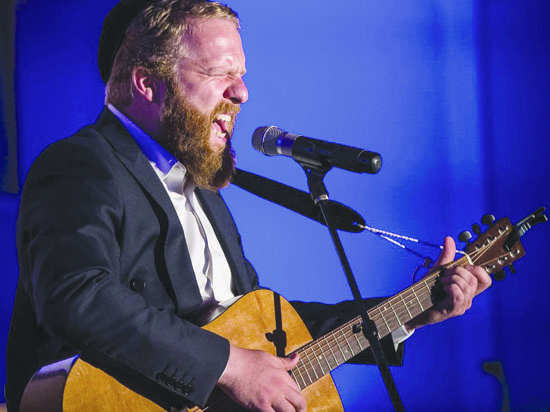
Singer Alex Clare performs in honor of the 23rd yahrzeit of Rabbi Menachem M. Schneerson.
Photo courtesy of Chabad of California

“An Evening With the Rebbe,” an event honoring the 23rd yahrzeit of Rabbi Menachem Mendel Schneerson, was held June 19 at the Beverly Hills Hotel.

The Lubavitcher rabbi, also known as the Rebbe, for four decades was the face of Chabad, a sect of the Chasidic religious movement. Schneerson was the last of seven rabbis who led the Chabad movement.

The event featured performances by Alex Clare and the Cunin Brothers. Clare is a pop music star and baal teshuvah Orthodox Jew who sings in the secular world but observes Shabbat and Jewish holidays. The Cunin Brothers is a group of six shluchim, or emissaries, of the Rebbe. The six, all rabbis, performed together and then sang with Clare.

Also featured at the event was guest speaker David Suissa, the president of TRIBE Media and the Jewish Journal, who spoke about the Rebbe’s unique contributions to the Jewish world. A short film, “Marching Orders,” which explains the importance of the Rebbe’s legacy, was shown.

The legacy of the Rebbe, who died in 1994, lives on, said Rabbi Chaim Cunin, CEO of Chabad of California.

“The Rebbe’s marching orders to each and every one of us was to seek out every opportunity to spread goodness and kindness, and in so doing, to unite world Jewry and all of humanity, and bring about an era of peace and redemption,” he said. “Despite the chaos and darkness that seems to continue and intensify throughout the world, the flip side is that you see a coming together like never before.”

— Clara Sandler, Contributing Writer


From left: Rabbi Richard Camras and Carolyn Reznik-Camras, Benjamin Reznik and Janice Kamenir-Reznik, Daniel Farkas, David and Jeanne Herman, Claudia and Sandy Samuels, Ivy and Burt Liebross, Tzivia Schwartz Getzug and Steve Getzug, and Orly and Howard Fisher are honored by L.A. Hebrew High School. Photo by Curtis Dahl Photography

More than 200 people attended the 68th anniversary of Los Angeles Hebrew High School (LAHHS) on June 4 at Hillel at UCLA.

The gathering, titled “A Night of Dinner and Comedy,” honored the organization and nine alumni couples that have emerged over the course of the part-time religious school’s years. Honorees were Carolyn Reznik-Camras and Rabbi Richard Camras; Tzivia Schwartz Getzug and Steve Getzug; Anita and Theodore Farkas; Dalia and Daniel Farkas; Orly and Howard Fisher; Jeanne and David Herman; Ivy and Burt Liebross; Claudia and Sandy Samuels; and Janice Kamenir-Reznik and Benjamin Reznick.

Hebrew High is a supplementary school and program that teaches teens the Hebrew language and a variety of subjects pertaining to Judaism and Israel.

Attendees included Amittai Benami, head of school at LAHHS; Carolyn Reznik-Camras, the outgoing board president; Karen Freed, the incoming board president; and Debbie Holzer, development coordinator at LAHHS.

Organizing partners for the event included Hillel at UCLA, Judith Boteach of Kosher Express Catering and Jeremy Broekman, the event producer.

Emcee Elon Gold provided the laughs as the comedian roasted LAHHS, which raised about $180,000 at the event.

— Avi Vogel, Contributing Writer


Moving & Shaking highlights events, honors and simchas.

Got a tip? Email ryant@jewishjournal.com. 

Moving & Shaking: JFLA gala, Bret Stephens lecture, and LA Jewish Comedy Festival Read More »

Calendar July 7-13: Disney Hall, Franken + Handler, and Shabbat Under the Stars

FRI JULY 7

“Never Long Enough” Book Signing

In their new book, “Never Long Enough: Finding Comfort and Hope Amidst Grief and Loss,” Rabbi Joseph H. Krakoff, who will hold this book signing, and artist Michelle Y. Sider have brought together their many years of professional expertise to create an interactive keepsake for families and friends to be read along with someone nearing the end of life (or read by mourners after a death). 10 a.m. Free. Label’s Table Deli, 9226 W. Pico Blvd., Los Angeles. (248) 592-2684.

SHABBAT UNDER THE STARS

Join 100 young Jewish professionals by the pool for an open bar and a four-course dinner. The Young Jewish Professionals of Los Angeles Shabbat dinners bring together a diverse group of people to connect and network over a meal. 7 p.m. $50; tickets available at eventbrite.com. Address provided upon RSVP; location is in Hancock Park. yjplosangeles.com.

SAT JULY 8

“ANNIE KORZEN Famous Actress”

Annie Korzen, best known for her role as Doris Klompus, Jerry Seinfeld’s parents’ next-door neighbor on “Seinfeld,” will perform a show she has written about her hectic and eclectic life. In “Annie Korzen Famous Actress,” Korzen tackles poignant personal issues and divulges stories about the road she has traveled as an actress. 8 p.m. Tickets start at $30. Through Aug. 13. The Braid, 2912 Colorado Ave., Santa Monica. (800) 838-3006. jewishwomenstheatre.org.

SEN. AL FRANKEN AND CHELSEA HANDLER

U.S. Sen. Al Franken (D-Minn.) presents his new book, “Giant of the Senate,” the story of an award-winning comedian who runs for office and discovers why award-winning comedians tend not to follow that path. The book shares the story of an unlikely campaign that had an even more improbable ending: the closest election outcome in Sentate history and an unprecedented eight-month recount saga. In this candid personal memoir, Frankin goes behind the scenes of some of the most dramatic and hilarious moments of his new career in politics. He will be in conversation with comic and talk show host Chelsea Handler. Tickets include a copy of the book; book signing to follow the talk. 8 p.m. Tickets start at $45. The Alex Theatre, 216 N. Brand Blvd., Glendale. (818) 243-2539. livetalksla.org.

“THE RABBI’S MISSION”

A rabbi’s life gets really interesting when two women visit his office — one his former girlfriend, the other a younger woman who is engaged. This humorous stage production examines the thorny topic of what makes someone Jewish. “The Rabbi’s Mission” is the sequel to “The Rabbi & the Shiksa.” Written and directed by Art Shulman. 8 p.m. Fridays and Saturdays; 2 p.m. Sundays. Through Aug. 27. $24; $18 for seniors; $10 for students younger than 26. T.U. Studios, 10943 Camarillo St., North Hollywood. (818) 285-8699. therabbismission.com.

SUN JULY 9

“RODGERS, HAMMERSTEIN AND THE ORGAN”

Composer Richard Rodgers and lyricist Oscar Hammerstein II are perhaps the most beloved songwriting duo of all time. During this concert, the California Philharmonic, along with vocal soloists Annalise Staudt and Kevin Earley, will take their audience down Broadway with hit songs from Rodgers and Hammerstein musicals, including “Oklahoma!” “The Sound of Music” and “The King and I.” The concert also will feature the powerful Walt Disney Concert Hall organ, with organist Philip Smith playing the beautiful “Organ Symphony” by Camille Saint-Saens and the rarely performed “Festival Prelude” by Richard Strauss. 2 p.m. Tickets start at $30. Walt Disney Concert Hall, 111 S. Grand Ave., Los Angeles. (323) 850-2000. calphil.com.

GRAPPLING WITH THE GREAT WAR: SEARCHING FOR SGT. KAUFFMAN

On Sept. 26, 1918, U.S. Army Sgt. Joseph Leon Kauffman, who was just shy of his 23rd birthday, was killed by a shell and buried where he lay during the heavy fighting in the Battle of the Argonne Forest in France. Nearly 100 years after his death, the story of Kauffman essentially was unknown until journalist Edmon J. Rodman saw his name in a stained-glass window honoring alumni of Los Angeles High School who died in World War I. This sent Rodman on a journey of discovery that eventually brought him to the Homestead Museum. Hear the story of Kauffman as told by Rodman and museum director Paul R. Spitzzeri. 2 p.m. Free. Workman and Temple Family Homestead Museum, 15415 E. Don Julian Road, City of Industry. (626) 968-8492. homesteadmuseum.org.

AUTHOR BETHANY BALL

Bethany Ball will discuss and sign her debut novel, “What to Do About the Solomons.” The book, with razor-sharp humor, tells the story of Marc Solomon, an Israeli ex-navy commando now living in Los Angeles, who is falsely accused of money laundering. As the Solomons’ Santa Monica home is raided, Marc’s American wife, Carolyn, attempts to hold their family of five together while concealing her own dark past. As secrets and rumors are revealed through various memories, tales and interactions with family and friends, readers witness the things that keep the Solomons together and those that tear them apart. 4 p.m. Free. Book Soup, 8818 Sunset Blvd., West Hollywood. (310) 659-3110. booksoup.com.

“SOLOMON: KING, POET & LOVER — A TALE OF ONE MAN & 700 WIVES”

See the show that won the Hollywood Fringe Festival’s Encore Producer’s Award. This hourlong one-man play about power, women and religion takes you on a satirical roller-coaster ride through the life of King Solomon. Marcus J. Freed plays the wise king, his 700 wives, 300 concubines and court counsel, morphing into the many characters while incorporating gymnastics, break

dancing and rap into the traditional theater format. 7:30 p.m. $10. Asylum@Studio C, 6448 Santa Monica Blvd., Los Angeles. solomonplay.com.

THURS JULY 13

“PRIMO PASSO”

Los Angeles native Daniel Ezralow returns to the Wallis Annenberg Center for the Performing Arts to premiere “Primo Passo,” which is Italian for “first step.” This deeply personal dance work is a career retrospective in which Ezralow revisits his works to explore their initial artistic impulse. Whether he’s creating modern dances or choreographing for Broadway, all dances begin with the first step. 8 p.m. Additional performance on July 14; 8 p.m. Tickets start at $39. Wallis Annenberg Center, 9390 N. Santa Monica Blvd., Beverly Hills. (310) 746-4000. thewallis.org. 

Calendar July 7-13: Disney Hall, Franken + Handler, and Shabbat Under the Stars Read More »

For refugee families, Miry’s List is an angel in America

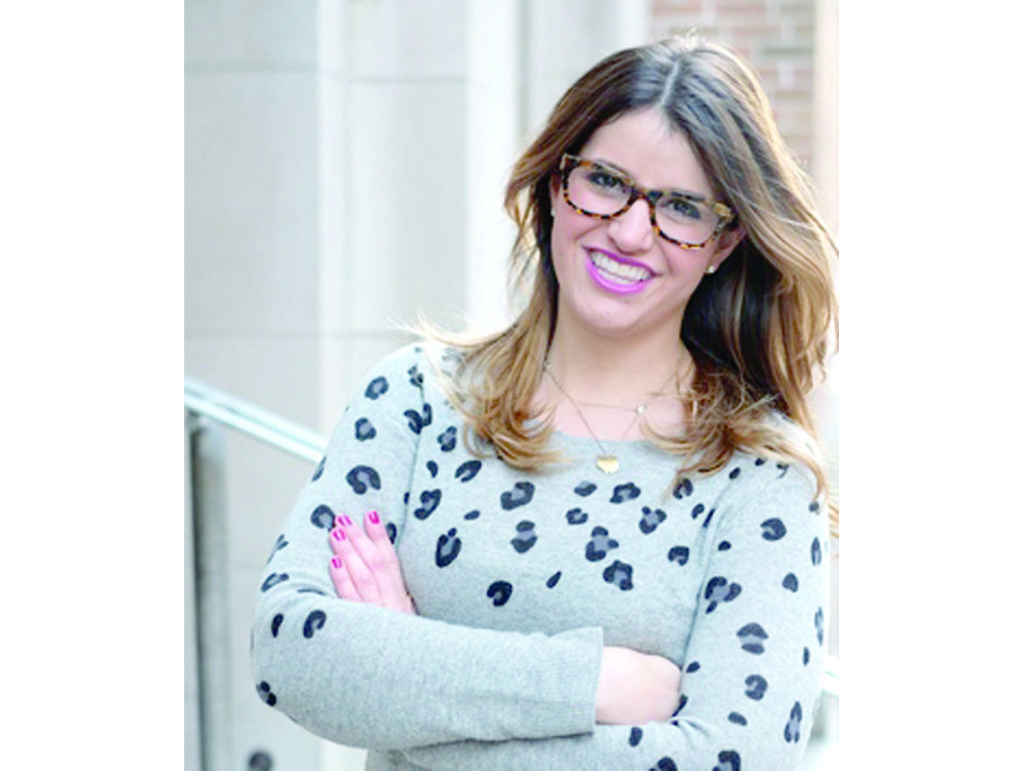
When Miry Whitehill-Ben Atar visited a Syrian family newly arrived to Los Angeles about a year ago, with a friend who knew them through church, the 31-year-old mother of two noticed that the refugee family shared much in common with hers: The Syrian woman was her age with a baby her son’s age. But she also noticed a striking difference in their home — the apartment was almost empty.

Whitehill-Ben Atar drove home, pulled a crib from her garage and stuffed it into the trunk of her car.

“Why did I have two cribs when their family had none?” the Eagle Rock resident said. “I felt like I could help them.”

The refugee family members didn’t speak English, but when they saw Whitehill-Ben Atar pushing a crib into their apartment, they couldn’t hide their smiles.

Shortly after setting up the crib in the couple’s bedroom, Whitehill-Ben Atar and the young parents developed a list of missing household supplies they would need, including an iron, blender, clothes and books in Arabic and English.

That list became the first of many that Whitehill-Ben Atar and her team, known as Miry’s List, composed in the following months. Since then, the group has grown into a nonprofit organization with a network of friends, neighbors and volunteers that helps resettle newly arrived immigrants.

Whitehill-Ben Atar grew up in an Orthodox Jewish family in Potomac, Md. But despite her religious upbringing, she struggled to connect with Judaism.

That changed after she moved to Israel in 2008 to work for a technology company. A few months later, she left the job but stayed in Tel Aviv.

She leased an apartment near the beach and spent her days learning Hebrew, exploring her neighborhood and chatting with market vendors. She also started dating an Israeli.

Back then, she learned that being a stranger in a foreign country could be either terrifying or rewarding, depending on whether one has a support system. She eventually got a job in L.A., married her Israeli boyfriend and move to California.

When Whitehill-Ben Atar met the Syrian family last summer, she shared the list of needed clothes, furniture and household supplies with her Facebook friends. A wave of responses popped up on her computer screen from people offering help.

“There are a lot of things that [refugee]families were missing,” she said. “We have a surplus of those things. It was that simple.”

In the next few weeks, Whitehill-Ben Atar visited the family every other day with a trunk packed with furniture, electronics and food. She didn’t speak Arabic and the Syrian family didn’t understand English, but they found a way to communicate, cooking a meal together and watching their children play.

“It was inspirational to be involved with them,” Whitehill-Ben Atar said. “It opened my eyes to reality with families when they move here from Iraq and Afghanistan.”

After Whitehill-Ben Atar delivered the first supplies, she reached out to immigration case workers and asked them to connect her with other recent arrivals. At first, she worked with one family a month; then two. Within a few months, she was working with six.

Soon, the formula Whitehill-Ben Atar discovered with the first Syrian refugees became a model. Her team met a family, determined their needs, created a list and shared it with donors. Team members also shared a dinner with the refugee family.

At first, Whitehill-Ben Atar felt awkward sitting at a dinner table with strangers, unable to communicate in their native language. But she learned to embrace frustration.

“For these families, coming here with no English forces them to deal with awkwardness all the time,” she said. “That’s just their reality, but they don’t have to be in that awkwardness alone.”

When families arrive, the team gives them a few days to relax and get accustomed to their new lives. Then volunteers come and bring the newcomers a Department of Motor Vehicles book in their native language, educate them about apartment prices in their neighborhood and help them navigate public transportation.

One of Miry’s List’s recent arrivals was Bashir Kashefi, 45, who moved from Afghanistan, where he worked as a translator with the United States Army units that handled bomb detonation.

Kashefi arrived in March with his 2-year-old daughter and a pregnant wife. They stayed with a former colleague’s family, nine people in a one-bedroom apartment. A few days later, the colleague asked Kashefi and his family to leave.

The Kashefis spent three nights sleeping on the street, their young daughter curled up in her father’s lap.

One afternoon, Kashefi started a conversation with a woman who happened to be one of Whitehill-Ben Atar’s volunteers, who spoke Pashto, his native language. The woman offered help.

A few days later, Miry’s List’s team placed the family into a hotel room where they spent two days. Whitehill-Ben Atar brought them breakfast and lunch until the family was transferred to her friend’s house in Pasadena. A month later, the family moved into an apartment in Anaheim.

“If not for Miry, it was impossible for us to live here,” Kashefi said. “We didn’t have money to live here.”

Since last June, Whitehill-Ben Atar and her team have worked with more than 100 families, helping them with household supplies, emotional support and housing. Miry’s List has expanded into a network of three full-time employees, 40 volunteers and 12 translators, who speak several languages, including Arabic, Pashto and Farsi. 

Earlier this month, the Los Angeles City Council honored Whitehill-Ben Atar for her work.

“I don’t have millions of dollars,” she said. “I don’t have connections, but I use my network of moms and families to solve those problems.”

Whitehill-Ben Atar says dealing with recent arrivals might be difficult and frustrating, but she never doubts the importance of her work.

“Those families need to know that someone would stand by them no matter what,” she said. “We are here to serve them. We don’t want them to wonder if they should go back to Aleppo.”

For refugee families, Miry’s List is an angel in America Read More »

Parashat Balak: Turning a tent into a Mishkan

From the air, Denver International Airport looked like a city of white tents erected on a desert plain, its billowing white roofs meant to evoke the snow-capped Colorado Rockies and the historic dwellings of the region’s Native Americans.

For me, the resonance was different.

As my plane descended, on that trip three years ago, my head filled with the well-known Hebrew words from this week’s Torah portion: “Ma tovu ohalecha Yacov, mishkanotecha Yisrael” (How good are your tents, Jacob, your holy dwelling places, Israel!) (Numbers 24: 5).”

These are the words of the sorcerer Balaam. Balak, king of Moab, where the newly freed Hebrews had temporarily settled, had hired Balaam to curse their encampment. But as Balaam looked down from the mountaintop and began to pronounce the curse, out came these words of blessing.

Both his intention to curse and his words are transformed.  His phrase begins with mundane tents and Jacob’s secular name. Yet, by the line’s end, “Jacob” becomes “Yisrael” and the “ohelim” (tents) become “mishkanot” (holy places for God to dwell). Both words, “mishkan” and “Yisrael,” contain names for God, “Shekhinah” and “El” respectively. Both Jacob and his tent become suffused with holiness. 

As I looked out the airplane window, I chanted the phrase to myself. It described my trip’s mission, a pilgrimage to turn my own tent into a mishkan.

My pilgrimage was not to a place but to a community that had grown around a profound teacher, Reb Zalman Schachter-Shalomi, who had died a month earlier, on July 3, 2014. It was one of many trips I have made over the past four decades — not only to Colorado but to Berkeley, Philadelphia, the Catskills and elsewhere — in search of making this transformation from a body in the secular world to a vessel in which God can dwell.

Reb Zalman said he began each day with the exclamation: “Here we are again, God! What kind of ride can I give you today?” It is this sense that we are vessels for bringing holiness into the world that has made Jewish practice so precious to me.

Reb Zalman was a temporal Colossus of Rhodes, standing with one foot in the 19th century and the other in the 21st, despite having witnessed the atrocities of the 20th century. Narrowly escaping Vichy France as a young man, he came to the United States in 1941. Ordained and fully rooted in Orthodox Judaism, his life kept teaching him. He interacted with mystics of other religions and the countercultural world of the 1960s and ’70s.

He evolved, creatively blending Jewish mysticism, progressive environmental and feminist politics, and the shared spiritual wisdom transcending religious boundaries; enabling him to give his followers an alternative to the post-Holocaust Judaism that looked outward as it reconstituted itself after Hitler’s attempt to banish us from the material world. 

The Judaism of my youth was Judaism of the ohel/tent. Our people’s losses were so monumental that our bereft leaders could do little but attempt to reestablish footholds in the material world. They built Israel and they built buildings, as if to say to the world (and to themselves), “Am Yisrael Chai! (The people of Israel live!) 

In the 1950s, as I sat on hard chairs in the un-air-conditioned classrooms of New Orleans’ Touro Synagogue, my teachers rarely attempted to transmit a connection with God. How could they? So many survivors, whether they had actually suffered the Shoah, had lost their faith. How could God have abandoned God’s people?

Much of this God-wrestling was unconscious. So soon after World War II there was as yet no language for the theological metamorphosis that followed the Holocaust. The teachers before us had not found words for what was rumbling in their shocked and tormented psyches. They foisted upon us a rote Judaism, whose essence we could not understand.
God bless them, and may they rest in peace. They were stunned and grieving — wrestling with God.

Reb Zalman, founder of the Jewish Renewal Movement, provided an alternative to this exoteric Judaism, making Jewish esoteric teachings available to those locked out of the gates of Jewish wisdom by assimilation and gender. Diving deeply into Judaism as a spiritual path, he taught us to be Jews who danced with God and prayed with our feet as we marched for social justice, as well as Jews who sat in silence and felt the movements of holiness within.

“Each of us has been deployed, our call imprinted at birth,” Reb Zalman said. “We are arrows shot from a Holy Quiver as our souls take bodies when we exit our mothers’ wombs. Each of us is different, yet we are all in the image of God, each with a unique purpose.”

Our task, he taught, was to continually refine our souls so that we could remain aligned with that purpose, in order to manifest our distinct face of God.

In memory of my beloved teacher, I strive daily to turn my tent into a mishkan. 


Rabbi Anne Brener, a Los Angeles-based psychotherapist and spiritual director, is a professor at the Academy for Jewish Religion, California.

Parashat Balak: Turning a tent into a Mishkan Read More »

The summer our rainbow flag became a red flag

The Jan. 31,1969, cover of Time magazine bore the headline “Black vs. Jew: A Tragic Confrontation.” Our rabbi brought a copy to our class of high school juniors and seniors, and used it as an opportunity to teach us a Latin expression.

Cui bono?” he asked. “ ‘Who benefits’ from a cover and a story like this?”

I walked away from our discussion that night with an understanding that has served me all these years. Of course there will be disagreements among friends and those with shared values and passions, but can we avoid letting those disagreements distract us from the causes and people most deserving of our attention?  

The disputes we’re encountering this summer stop us from working together and, more importantly, from sitting together and making a deliberate effort to understand where we are coming from and where we might go together.

My brother, Larry Edwards, is rabbi emeritus of the LGBT synagogue Congregation Or Chadash in Chicago. Long a participant in the Chicago queer Jewish community, he has been reflecting on the recent conflicts, especially the one that originated in Chicago last month.

He writes: “By now many are familiar with the controversy surrounding Chicago’s Dyke March on June 24. (And I want to clarify up front — because there does seem to be some confusion out there — that the event was not the Chicago Pride Parade. The Pride Parade, held the next day, has always been open to wide and diverse participation.) My friend Laurie Grauer, a longtime member of my former congregation and a long-time participant in Chicago Dyke Marches, was asked to leave because of a flag. Or perhaps not just because of the flag, but because she was closely questioned about her Zionist affiliation, and told that there was no space for a Zionist in this Dyke March.

“The flag in question was designed and produced by members of Congregation Or Chadash in Chicago during the time that I served as its rabbi. As far as I know, this was the first version of this flag, a Star of David on a Rainbow flag, though similar versions may have been produced elsewhere. It was a fundraiser, as well as a way to express — both playfully and seriously — queer Jewish identity. It was carried by us in numerous Pride Parades, typically to cheers from many in the crowd. So it was a bit surprising to hear that Laurie was harassed for carrying our flag, or that it was perceived by some in the crowd as a ‘trigger’ which made them feel threatened.”

My brother recommends a recent article in response to the Dyke March controversy by historian Judith Rosenbaum of the Jewish Women’s Archive, who offers some nuanced and historically informed insights into the current dilemma.

“Intersectionality,” she explains, “is not about enforcing alignment of identities and politics. In fact, by definition, ‘intersectionality’ is the opposite of alignment! Intersecting lines touch at only one point; everywhere else, they are heading in different directions. The purpose of intersectionality is to help us all realize that identities are complex and diverse and multi-faceted; that we can’t create simple equations to explain, describe, or prescribe them. …

“As a historian, I am keenly aware that social movements have often come undone over the attempt to enforce rigid ideological alignments. … In this historical moment, we do not have the luxury of splintering in pursuit of ideological purity.”

Rosenbaum, my brother and I join a growing number calling for real dialogue rather than absolutes, in the hopes, as my brother says, “such dialogue will lead to a stronger (if less pure) coalition — something sorely needed in a time when powerful forces are seeking to reverse the gains of recent decades.”

Indeed, in a decades-long struggle for queer rights, and in this time of angst, of threats real and perceived, none of us is lacking for examples of the way dismissals, quick judgments, assumptions and demands for apologies serve to alienate us from one another.

Cui bono?

Not our aching hearts nor our anxious minds, and not our community nor the people and causes we seek to support. We know it is easier asked for than accomplished, but we have some walls of our own to dismantle. Let’s talk.  


Rabbi Lisa Edwards is senior rabbi of Beth Chayim Chadashim (bcc-la.org), an inclusive Los Angeles congregation founded in 1972 as the world’s first lesbian and gay
synagogue. This article was written in conversation with
Rabbi Larry Edwards, rabbi emeritus of the LGBTQ synagogue Congregation Or Chadash in Chicago.

The summer our rainbow flag became a red flag Read More »

Western-Wall

Leaders from U.S. speak out on Kotel

The fact that Israeli officials and Jewish leaders in the Diaspora are butting heads again — this time after the suspension of an agreement to create an egalitarian prayer space at the Western Wall — is no surprise to Jay Sanderson.

“Israelis don’t understand the challenges American Jews face, and American Jews don’t always understand challenges Israelis face, and this is symbolic of that,” the CEO of The Jewish Federation of Greater Los Angeles said.

But that doesn’t mean American Jews are any more likely to condone recent events. During a town hall meeting on June 29, Rep. Brad Sherman (D-Sherman Oaks) lambasted the Jewish state’s action.

“It’s outrageous,” he said in response to a question from the Journal, “and it shows Israel … [kowtowing] to a few and to the extreme right of the religious spectrum.”

“I think this is something that a number of us [are] trying to meet with the Israeli ambassador [about] to drive home how important this is to Israel’s relationship with American Jews,” Sherman added.

Rep. Adam Schiff  (D-Burbank) called the decision “distressing and unfortunate.”

“Both as a member of Congress committed to Israel’s security and as a Jew who feels a profound connection to Israel as the homeland of the Jewish people, I urge the Israeli government to reconsider this decision,” Schiff said.

At issue is a June 25 vote in which the Israeli Cabinet decided to freeze a plan promoting a pluralistic prayer space, reversing course on a January 2016 agreement. The plan called for expanding the non-Orthodox prayer space at the Kotel where men and women can worship and placing it under interdenominational control. The suspension of the agreement was viewed widely as a capitulation to the ultra-Orthodox parties that form part of Prime Minister Benjamin Netanyahu’s coalition government.

Consul General of Israel in Los Angeles Sam Grundwerg said Israel is concerned about issues important to American Jews and stressed the “deep appreciation Israel has for Jewish communities in the Diaspora.”

Still, he said, political realities sometimes compel the Israeli government to take steps that may not sit well with Jews outside of Israel. “What we witnessed … is an unfortunate example of that,” he said.

Grundwerg added that recent events are not as negative as some may perceive them to be.

“The Western Wall agreement was not canceled or nullified. It was suspended and frozen. As a matter of fact, the prime minister has instructed to move forward at this time with the physical construction of the space for egalitarian prayer,” he said. “That may sound like merely a technical distinction, but it’s still a distinction that’s important because efforts to find a satisfactory solution are ongoing.

“Nullification of the agreement is something the ultra-Orthodox parties would have preferred. People have talked about the capitulation to the ultra-Orthodox. Full capitulation would have been to nullify, not to suspend, it.”

Richard Sandler, board of trustees chair at The Jewish Federations of North America, was in Israel participating in the Jewish Agency for Israel board of governors’ meetings when Israel announced the suspension. Afterward, he took part in meetings with Israeli officials.

“It was, in many ways, extraordinary in terms of how quickly everybody was able to meet,” Sandler said. “[Israeli officials] showed concerns about our reaction and made themselves available.”

Sandler and Israeli officials also discussed legislation advanced June 25 that would, if passed, give the Chief Rabbinate a monopoly over conversions, critics say.

Less than a week later, on June 30, the Israeli government announced plans to shelve the conversion bill for six months. Sandler and Sanderson welcomed the development.

“There’s a lot of work to be done, there’s a long way to go, but I do appreciate how we got to this step,” Sandler said.

“We have to be cautiously optimistic that the worst-case scenario did not happen,” Sanderson said.

Barbara Kavadias, executive director of the Masorti Foundation for Conservative Judaism in Israel, said support for the Masorti movement is more important than ever in the wake of developing events in the Jewish state. Her organization, based in New York, provides funding and support to the Masorti movement in Israel and pays the salary for Rabbi Sandra Kochmann, who oversees the existing egalitarian prayer site at Robinson’s Arch.

“We need to raise our voices and need to support efforts of the Masorti movement to raise their voices,” Kavadias said. “For better or worse, the best way to do that is give us money. If every Conservative Jew gave money every year to the Masorti Foundation for the Masorti movement, they would be unstoppable.”

The Israeli Supreme Court will determine what happens next regarding a non-Orthodox section at the Wall. Meanwhile, community leaders, including Sanderson, want to repair the rift between Israel and the Diaspora.

“I just want every Jew to be comfortable everywhere. This negotiation over an egalitarian part of the Wall was a way to accomplish that,” he said. “The Wall is symbolic to every Jew, the Wall is a place every Jew can pray, and the agreement didn’t do anything to jeopardize the religious observance and prayer of any Jew, whether they were Charedim or they were secular.

“I was surprised it was suspended and I’m disappointed but I believe Israel is an extraordinary country and this is not the end of this. There will be a way forward.” 

Leaders from U.S. speak out on Kotel Read More »

Westwood seniors get reprieve from orders of eviction

decision by the Los Angeles Housing and Community Investment Department will halt the eviction of dozens of seniors from a Westwood retirement facility — but it may have come too late to save the building’s community of elders.

In December, the new owners of the Vintage Westwood Horizons moved to evict the 117 seniors living there, most of them Jewish, intending to conduct extensive renovations. While the city decision stays the evictions, many onetime residents already have moved out, leaving fewer than 50 still in residence.

“There’s not enough for a minyan,” said resident Emiel Meisel, 92, referring to a Jewish prayer quorum, traditionally of 10 men. “That ought to give you a clue.”

In a June 13 letter, the Housing Department informed the building’s new owners, Tucson, Ariz.-based Watermark Retirement Communities, that the city considers the building to be a residential hotel. Los Angeles Municipal Code defines a residential hotel as any building with six or more guest rooms serving as the tenants’ primary residence, often occupied by elderly or low-income tenants.

The classification blocks Watermark’s intended eviction.

“Those eviction notices are no longer in effect, and so the threat of displacement has been removed. That brings peace of mind and stability to a vulnerable population,” said Jessie Kornberg, president and CEO of Bet Tzedek Legal Services, a legal aid clinic that represented a group of tenants fighting eviction.

The determination comes after a February resolution from the Los Angeles City Council, asking the Housing Department to consider the facility for protected status. The resolution was introduced by City Councilman Paul Koretz, who represents Westwood.

Kornberg said the designation prevents Watermark from using a California statute to convert the use of the building from an unofficial senior home to a state-licensed Residential Care Facility for the Elderly that would provide services such as care for the memory-impaired, as the company had intended.

“While we are disappointed by this determination, we remain committed to our plan to make much-needed repairs and improvements to the Westwood Horizons building,” Watermark President David Barnes said in a statement responding to the decision.

Watermark maintains the building is in dire need of repairs that would require residents to temporarily relocate. The building began life as a UCLA dorm in the 1960s.

“Its mechanical, electrical and plumbing systems are so old that they are vulnerable to outages, leading to potentially unsafe conditions in the future,” Barnes said in the statement.

A Watermark representative said in an email that the company would appeal the city’s decision, but Bet Tzedek’s Kornberg said an appeal is unlikely to succeed.

Kornberg said under the building’s new status, Watermark would be required to pay the cost of temporary relocation should it become necessary during renovations.

She sees the city’s move as a victory that will lead to a restoration of the building’s former vibrancy.

“I would love to see people who relocated based on those invalid eviction notices be able to return to the building and be able to rebuild the community that was there before,” she said. “I’m hopeful that it’s possible.”

Jeannine Frank, who advocated against the evictions and whose mother is a resident, said she shares that hope.

Frank said she disapproves of the way the eviction was handled and that damage was done when Watermark posted eviction notices in December, saying the residents had 120 days to vacate their units.

“The community was really torn apart by fear and uncertainty,” Frank said.

The 120-day deadline turned out to be misleading, failing to account for exemptions that give seniors and those with disabilities more time to comply with an eviction order.

The notices nonetheless sparked an exodus of dozens of tenants.

“They kind of jumped the gun, and they left early when they didn’t have to,” said resident Flossy Liebman, 96.

She said those who left are having trouble finding a place on par with the Westwood location.

“It’s a delightful, wonderful place,” she said of her current home. “It’s friendly, and that’s the one complaint that we’re hearing from people who leave: It’s not friendly anyplace.”

Meisel said he is not planning to move unless absolutely necessary.

“They’re going to have to blast me out of here,” he said.

But he may be an exception. He said he and his wife, Harriet, soon will be the last married couple in the building. Meal service is down to four or five dining tables, from about 40, he said. Of the three residents who had survived concentration camps during the Holocaust, two are planning to leave, according to Meisel.

“One of the ladies lost her Rummikub [tile game] partner,” Meisel said, “and that was like taking her husband away from her.” 

Westwood seniors get reprieve from orders of eviction Read More »

Large gift will bring new name, tuition assistance to Sinai Akiba Academy

School officials at Sinai Akiba Academy in West Los Angeles are hailing a recently announced gift as “transformative,” something that will help ensure its future for years to come.

That future will feature a new name.

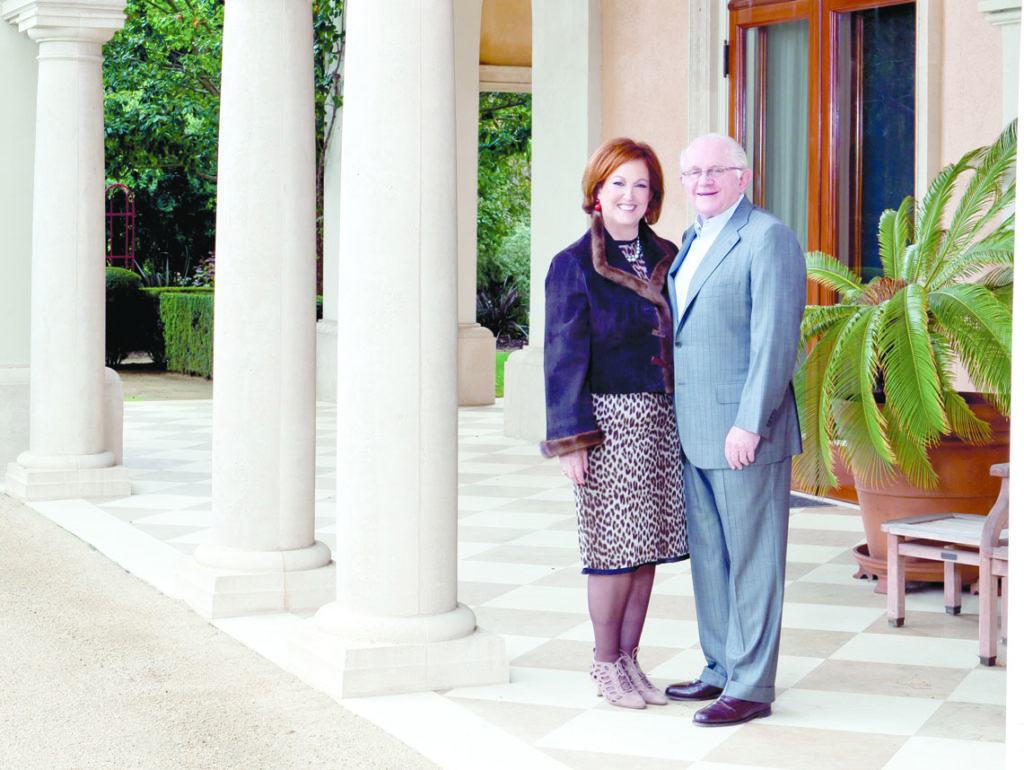
Beginning in the upcoming 2017-18 academic year, the school officially will be known as Alice and Nahum Lainer School in honor of the large donation — officials declined to disclose the exact amount — made by the Lainers, longtime supporters of the school who have sent three children, all now adults, as well as three grandchildren there.

“This is huge news,” said Head of School Sarah Shulkind. “I wrote to colleagues, other Jewish day school heads, that this is a win for all of us. It says that there’s a significant investment in Jewish schools being a critical part of Jewish continuity and Jewish sustainability in the future.”

Shulkind said the gift will help the school continue funding academic programs such as JSTEAM (Science, Technology, Engineering, Arts and Math through a Jewish lens), as well as tuition assistance.

Nahum, a real estate developer, and his wife, Alice, live in Beverly Park. The Lainers were one of the first families to send their children to the school when it was still known as Akiba Academy. In the past, they’ve given generously to Jewish philanthropic causes such as the Israel Museum in Jerusalem. 

In a joint public statement, the Lainers expressed their desire to encourage other families in the community to follow their lead.

“With this endowment gift, our goal is to ensure that more Jewish families have access to such a wonderful education,” they said. “We hope that our leadership will inspire our old friends, our new friends, the parents of today, and the whole community, to join us in donating to the financial stability and sustainability of a great and important place of learning and creativity, for generations to come.”

According to Shulkind, accessibility for Jewish families has been an issue of late in the world of private Jewish education, with many Jewish schools around the country experiencing dips in enrollment numbers or even shutting their doors after the 2008 recession. Shulkind said her school hasn’t seen a noticeable drop in enrollment, partly due to its widespread tuition assistance program.

“We give 30 percent of our kids tuition assistance,” Shulkind said. “I’m extremely proud of our commitment to our central mission: making the school accessible to any Jewish family seeking a quality Jewish education. In order to sustain that and to continue to grow the excellent academic programming we’re known for, we had to have this kind of endowment gift.”

The school, a Sinai Temple school that is a member of the Schechter Day School Network, opened in 1968. It now serves students from birth to eighth grade and has more than 600 students. Annual tuition for its lower school is $26,195; for the middle school, it is $29,480, according to its website.

In 2015, Shulkind and the school’s board passed a strategic financial plan to raise $40 million. When they thought about how to get there, the answer seemed obvious.

“We talked about families with a passion for Jewish education and philanthropy that had the interest and the capacity. The very first family on everyone’s mind was the Lainers,” she said.

Shulkind said the Lainers’ gift made up “a significant portion” of the school’s $40 million goal and that it already has helped raise interest in making contributions from other prominent philanthropic families tied to the school. She also referred to the Lainers’ donation as a “lead gift” in the school’s upcoming 50th anniversary fundraising campaign.

Rabbi David Wolpe of Sinai Temple reacted to the gift by saying, “We are grateful and blessed — and strengthened in our resolve to inspire the souls of our students.”

Gary Lainer, board chair of the school, and his wife, Lisa, have sent three children there. But in this case, he’s more than a school leader — he’s a proud son.

“I am grateful that our school has received such a consequential gift, a lead gift to begin our celebration of the school’s 50th anniversary, and I am excited that this gift will help secure the school’s future.”

Similar to actions taken by deToledo High School officials after its renaming from New Community Jewish High School in 2014, Shulkind said her school has hired a marketing firm to help with rebranding. By this fall, the school’s website and campus signage will reflect the name change, but it still may take some getting used to.

“There will be a transition time. You can’t just flip a switch,” she said. 

Large gift will bring new name, tuition assistance to Sinai Akiba Academy Read More »

Hiring ordained woman to teach at Shalhevet accentuates Orthodox rift

The recent hiring of an ordained woman to teach at Shalhevet High School has underscored the ongoing conflict between traditional Orthodox groups that oppose female clergy in title and function and more progressive groups that believe women deserve the same opportunities as men.

Ramie Smith is joining the school’s Judaic Studies faculty, making the Modern Orthodox school the second Orthodox institution in Los Angeles to have an ordained Orthodox woman on its staff. In 2015, B’nai David-Judea added Alissa Thomas-Newborn to its clergy team.

Shalhevet High School Head of School Ari Segal addressed the potential controversy of hiring Smith in a June 14 statement.

“While we recognize this legitimate point of contention, at this juncture, our priority is focused squarely on the quality of our education. Ramie is a superstar, plain and simple,” he stated. “She will serve as a dynamic role model and a significant force in our school.”

In 2016, Smith graduated from Yeshivat Maharat in New York, the first yeshiva to ordain women as Orthodox clergy. She was hired to teach a class, be involved in prayer and co-author a Jewish sexual ethics curriculum, according to Segal.

Smith said she understands that not everyone is ready for a female clergy member — and that’s OK with her.

“Embracing diversity means respecting each institution’s choice to do what works for them,” she told the Journal.

While Thomas-Newborn’s hire clearly is at odds with the umbrella organization Orthodox Union’s (OU) policy, which discourages its members from elevating women to the highest clerical positions, Allen Fagin, OU executive vice president in New York, declined to comment on Smith’s hiring at Shalhevet.

Critics of the progressive wing of the movement, which is often known as Open Orthodoxy, argue that the acceptance of ordained women is a break from Orthodox tradition. Rabbi Joshua Spodek, incoming head of school at YULA Girls High School, said his school’s worldview — hashkafa — falls in line with the OU. 

“We align ourselves and we view ourselves as a feeder school to Yeshiva University Stern College [for Women], and we’re aligned with the Orthodox Union in terms of their hashkafa,” he said.

Part of the debate among those who accept female clergy has focused on what to call them. Titles have ranged from “maharat” — a Hebrew acronym for “Jewish legal, spiritual and Torah leader” — to “rabba” or “rabbanit.”

Following the recommendation of Yeshivat Maharat, which encourages its graduates to work with the communities that hire them in establishing titles, Shalhevet is giving students the freedom to call Smith whatever they want, provided it is respectful. She was known as “rabba” at the Hebrew Institute of Riverdale in New York, where she worked before coming to Los Angeles.

“We aren’t determining a title and so parents and students will work out what they call her directly with her,” Shalhevet Principal Noam Weissman said.

Smith dismissed concerns over her title. “There is a time and place for the politics of women’s titles; that place is not my Gemara classroom. I am more than happy to talk to students about my title, the politics of women’s ordination, or anything else, but not at the expense of the Torah I am here to teach,” she said.

Smith earned a bachelor’s degree in English communications with an emphasis on television writing and public relations and a focus in women’s studies at Yeshiva University. She previously worked on Comedy Central’s “The Colbert Report” as a production assistant and intern.

She joins a Judaic Studies faculty that includes Segal’s wife, Atara Segal, who has been studying Jewish law at Nishmat, a Jerusalem-based Modern Orthodox institution for women; and Ilana Wilner, who holds two master’s degrees from Yeshiva University.

Since its establishment in 2013, Yeshivat Maharat has ordained 14 women. In 2010, Nishmat created a program for women to become yoetzet halachah, advisers on family purity laws.

The changes come despite strong opposition by the OU. “We feel that the absence of institutionalized women’s rabbinic leadership has been both deliberate and meaningful, and should continue to be preserved,” the group said in a February announcement, supporting a ruling signed by seven rabbis.

B’nai David-Judea denounced the OU statement at the time of its release, with Rabbi Yosef Kanefsky describing female clergy as “halachically valid.” In a recent interview, Kanefsky said his intention had not been to cause controversy but that he had been acting in what he believed was the best interest of his shul.

“One of the things I fear just in general is that people might perceive what I am doing, what we were doing, as divisive,” he said. “It is certainly never the intention to be divisive and my hope always is that we can all express our Orthodox commitments in ways we can be mutually respectful of.”

Known as a “rabbanit” at her shul, Thomas-Newborn can perform many — but not all — clergy functions at the shul.

This past spring, OU representatives on a fact-finding mission visited B’nai David-Judea and the other three OU-member synagogues not in compliance with the OU.

“They’re going to take what they discovered back to their board, who will have to render a decision as to what to do with the four synagogues not in compliance,” Kanefsky said. “That’s as much as I know.”

The other synagogues not in compliance with the OU position are the Hebrew Institute of Riverdale — Smith’s previous employer — Ohev Shalom in Washington, D.C., and Beth Sholom in Potomac, Md.

Thomas-Newborn, when hired by B’nai David-Judea, was “morateinu,” a term created by the synagogue, meaning, “our teacher.” Last year, the synagogue changed the title to “rabbanit.”

“ ‘Rabbanit’ is the title that was best for our shul,” Thomas-Newborn said. “It recognizes my education, speaks to the female role, gives kavod to the work I do, is tied to our tradition already, and is being used in Israel and America by other Orthodox women serving in similar positions. It is a beautiful title that I am honored to have.”

Thomas-Newborn welcomed Smith to the community, one ordained woman to another.

“I am thrilled she is joining the L.A. Orthodox community and teaching at Shalhevet,” she said. “I look forward to continuing to learn with her and from her.”  

Hiring ordained woman to teach at Shalhevet accentuates Orthodox rift Read More »