fbpx

May 24, 2017

Rooting out extremism is an evolving battle

Less than a week before the May 22 attack at a concert in Manchester, England, I returned from a 10-day fact-finding trip to Europe on countering violent extremism.  

It is tragic that the trip, organized by the U.S. State Department, proved to be so timely. But I gained insights that helped me process and confront the all-too-frequent tragedies like Manchester. Despite countries’ differences in approaches, the core takeaways were consistent:  

1. “You can’t investigate your way out of this.” — A representative of New Scotland Yard SO15 (the London Metropolitan Police Counter Terrorism Command)

Using only a criminal lens — surveillance, investigation, disruption, prosecution, etc. — limits the success of law enforcement in identifying threats. Our delegation heard from law enforcement and government officials across the spectrum that the most important tool in their kit is the trust of those communities most vulnerable to extremism.

Community-based organizations are essential to this strategy. The more robust the civic fabric, the greater the sense of social cohesion; the more people see themselves as having a stake and a voice in society, the less rationale there is for attacking the system. Communities most vulnerable are not blind to the problem in their midst. When engaged and supported as partners (not potential threats), they often will identify ways to address the problems with a greater cultural literacy and legitimacy than any government or law enforcement official could ever bring.

2. “Safeguarding against extremism is no different than safeguarding against drugs, gangs and sex trafficking. It’s out there and we want you to be able to protect yourselves from it.”— Prevent instructor to British students

Messaging matters. Great Britain’s Prevent program — a centralized governmental effort to safeguard against violent extremism — still suffers from a faulty launch that undermined its effectiveness. Many people perceived its focus to be solely on the Muslim community and treating the community as criminals in waiting.

By shifting to a message of safeguarding people vulnerable to recruitment by extremists and making it clear the program addresses all forms of extremism, Britain is just now starting to repair the perception and increase trust, though one nonprofit leader articulated concerns that the “horse has already left the barn” and that the program always will be tainted by the bad branding of its faulty launch.

Community leaders and parents need to know that when they have concerns about their kids or friends radicalizing, they will be given the intervention and help they need. The collaboration of mental health professionals, schools, faith communities and other community-based organizations are essential partners in identifying people who are at risk of or already on the path to radicalizing. Understanding this kind of violence as a public health issue can help engage a broader network of partners in the fight.

3. “Targeting Muslims is counterproductive. You have to identify extremist behavior.”  — Horace Frank, Los Angeles Police Department deputy chief of counterterrorism

Focusing exclusively on Muslims undermines the relationships needed in the Muslim community to identify and uproot real ISIS-inspired threats. It also ignores a rising statistical threat from extremist right-wing nationalists.

Nearly 20 percent of referrals for suspicious behavior in England are for right-wing extremism. While one might think that’s because the problem is grossly over-reported, about 10 percent of those serving time in prison for terrorism-related charges are radical right-wing nationalists.

In our American context, Muslim organizations correctly claim they are more likely to be on the receiving end of a violent hate crime than guilty of committing one. When law enforcement is present to protect minorities, it builds trust in those communities.

Like many Jewish institutions in Los Angeles, some local mosques received threats of violence in recent months. Those threats against the mosques were credible. Police arrested an Agoura Hills man with an arsenal of weapons and a plan to attack. The way that law enforcement stood with Muslim community leaders in that moment reflected the deep relationship-building that has happened for years at the local level.

Unfortunately, the rhetoric at the national level has framed violent extremism as an exclusively Muslim problem. It undermines the extraordinary work that has happened locally between Muslim leaders and law enforcement. Many Muslim organizations have built sophisticated programs to safeguard their communities from ISIS-inspired extremism.

But some are now having second thoughts about moving forward with these programs or are considering outright rejection of federal funds to support their work. This is not because they no longer think it is needed. They fear the money will come with problematic strings attached or that it may undermine their internal legitimacy for collaborating with those who amplify anti-Muslim sentiment. Local trust-building can go only so far in the midst of a toxic national conversation.

4. Despite our best efforts, governments now treat acts of violent extremism as a question of when, not whether, they will happen.  

Part of the holistic approach to this work also includes effective disaster response that can help contain the impact and lessen the casualties. In the aftermath of Manchester, there will be new lessons learned in this ever-evolving battle.

I also returned from the delegation with three lessons on how the Jewish community can be on the front lines of safeguarding against extremism.

First, our community must become more nuanced in our relationship with the Muslim community. The more integrated the Muslim community is in America, the less ISIS-inspired extremism can take hold here. We isolate and reject mainstream Muslim leaders at our own peril. Undermining these leaders empowers extremists who think ISIS is fundamentally right about the incompatibility of Islam and democracy. If you care about ISIS-inspired terrorism, then you also should care about fending off Islamophobia. We can and should disagree fiercely with our Muslim counterparts about the Israeli-Palestinian conflict. And we should not be afraid to call out when we see rhetoric cross the line into anti-Semitism. But isolation and exclusion feed the narrative of extremists. This is not merely a progressive talking point — it is a best practice from among the most experienced law enforcement professionals and government officials in the world.

Second, language matters. We must apply consistent rhetoric when speaking about various forms of extremism. The shooter at the AME Church in Charleston, S.C., and the thwarted attacker on the Los Angeles mosques are extremists just as much as the shooters in San Bernardino.

As part of this strategy of thoughtful language, I now will refrain from using the term Islamism when referring to extremism that emerges cloaked in religious garb. While this term seeks to differentiate ISIS and al-Qaida from Islam proper, it still retains the association that violence is inherent to Islam. I take my cue from a former Department of Homeland Security employee who uses the terminology “ISIS-inspired” or “al-Qaida-inspired” to refer to this kind of extremism. It ensures both that we avoid vilifying Islam and that we make it harder for vulnerable Muslim kids to see ISIS as a legitimate expression of Islam.  

Third, the great work of Jewish organizations in mental health, social services, refugee assistance and interfaith collaboration — from Jewish Family Service to NewGround: A Muslim-Jewish Partnership for Change to HIAS — are going to be on the front lines of safeguarding against extremism in American society. They do this by serving the vulnerable in our midst, spotting potential issues before they become credible threats, and by modeling for other minority communities with less developed infrastructures.  

The Los Angeles mayor’s office frames this work as “building healthy communities.” The Jewish community has tremendous experience and expertise to contribute on this front. This week has taught us we have no choice but to work even harder toward our goal. 

Rooting out extremism is an evolving battle Read More »

Daily Kickoff: Lieberman no longer being considered for FBI Director | Huckabee disappointed with Trump’s Israel trip | Uber’s legal battle in Israel

Have our people email your people. Share this sign up link with your friends

NO DIRECTOR JOE — “Trump administration hits reset in FBI director search” by Sara Murray and Eugene Scott: “The team tasked by the White House with finding a new director for the FBI is resetting its search, a senior administration official told CNN… At one point, former Sen. Joe Lieberman was considered a leading candidate, but Trump has since decided he wants to see a broader range of candidates for the job, the official said. Lieberman is partners at the same law firm as Marc Kasowitz, whom Trump is expected to hire as part of a team on matters related to the inquiry into his campaign’s alleged ties to Russia. The official said Kasowitz’s hiring hasn’t affected the FBI director search.” [CNN]

Worth noting — Lieberman campaigned for Hillary in Florida and told us at the time: “I think for people who have thought at some point about supporting Trump and have gone increasingly concerned in recent days about his focus on the election being rigged – which there’s no evidence of that, whatsoever – what he said last night, persuaded the persuadable that Hillary Clinton is their best choice.” [JewishInsider]

PRESIDENT-IN-LAW: “Sources Say Chris Christie Gave Jared Kushner Legal Advice About Trump” by Emily Jane Fox: “Last week, New Jersey Governor Chris Christie told people that Jared Kushner… asked him if Trump should hire a lawyer… An administration source said that the conversation about retaining counsel “simply did not happen.” Both sides confirmed that a phone call between them took place, as the two talk frequently… In private, according to one person who said Christie recounted his conversation with Kushner, Christie is said to have cautioned that the president “better lawyer up and keep his mouth shut,” this person told me. That Kushner would seek Christie’s legal advice on a matter pertaining to a family member raises eyebrows. Christie, after all, prosecuted a case against Kushner’s father, Charles, more than a decade ago.” [VanityFair]

ON THE HILL — Top Senate Democrat Dismissive of Rouhani Victory — by JI’s Aaron Magid: “I don’t believe their elections are free and fair. They certainly don’t have a democratic government,” Sen. Ben Cardin (D-MD) told Jewish Insider yesterday. “It doesn’t give me great hope whoever would have been elected. Their conduct before and after the Iran nuclear agreement shows anything but that they want to join the international community.” Speaking after a lunch celebrating American Jewish Heritage Month on Tuesday afternoon, Sen. Richard Blumenthal (D-CT) offered a more optimistic view of the outcome in Tehran. “It seems to be a more moderate Iranian segment of leadership, but the hardliners still have significant strength so we can’t be complacent,” he explained.

Both the Senate Foreign Relations Committee and the House Foreign Affairs Committee are expected to vote on Thursday to apply tougher sanctions against the Iranian government for its support of terrorism, ballistic missile programs and human rights violations. The votes were delayed until after the Iranian Presidential elections so not to appear as American intruding in Tehran’s domestic affairs. [JewishInsider]

JERUSALEM DAY: “Huckabee disappointed Trump didn’t mention embassy move during Israel visit” by Sally Persons: “I’m going to be honest, there were a couple of disappointments. It would have been a great time to announce that the U.S. Embassy is moving to Jerusalem, the true capital of Israel,” [Mike] Huckabee said on Fox News. “I think it’s a missed opportunity,” he said. “I think it’s the right thing to do, [and] it’s the right time to do it.” [WashTimes]

SIGHTING: Mike Huckabee performing with his guitar in Jerusalem [YouTube] h/t Yehuda Joel Friedman and Jeff Ballabon

TRUMP TRIP POSTGAME: “How Trump stayed out of trouble in the Middle East” by Annie Karni: “A decision was made early on… to pack his schedule so that he mostly stayed on message and, according to one aide, “didn’t have time to tweet.” But a key factor was the role played by Dina Powell, H.R. McMaster and Jared Kushner… [Powell] was one of a smaller cadre of top aides who stayed on with Trump on Air Force One en route to Israel… There, she accompanied Trump to bilateral meetings with Netanyahu and Abbas, as well as the president’s visit to the Western Wall… Trump’s aides on Monday night said they were pleased with the trip, but they were also eager to keep the focus on the president. At the King David Hotel in Jerusalem, one aide vented that Trump gets blamed when things go wrong, but his aides receive all of the credit when things actually go right.” [Politico] • Heather Hurlburt: Trump’s Messy, Mostly Successful Israel Visit[NYMag]

Ezra Klein: “Trump’s foreign trip is a reminder he’s much better suited to be a ceremonial head of state than President” [Twitter]

HEARD YESTERDAY — An unnamed senior administration official briefed the press on AF1 en route to Rome concluding that the President’s visit to Saudi Arabia and Israel was a “big success.” The overall objective on the trip, the official said, was to create a new direction for peace in the Middle East. “Where it’s gone for the last 15 years has not been a good direction and we have to figure out how we do change that direction so that we obviously can have less war and more opportunity people there to live a better life.”

Asked about what the next steps are to relaunch the peace process, the official said, “The first step there is to bring relationships (between the Arab world and Israel) that are warm and strong privately and bring them more public and also set forth a common set of principles that everyone wants to abide by” in order “to create a lot of momentum and optimism around the prospect for peace.” The official added, “You can’t just walk in on Day One and sign a deal that no one has gotten done in 35 years… We’re very optimistic that we have the ability to do some very transformative things that will really surprise a lot of people.”

KAFE KNESSET — by Tal Shalev and JPost’s Lahav Harkov: There is a growing understanding in the Knesset corridors that if President Trump is indeed determined to launch a peace process, it will entail some internal political shuffle. Jason Greenblatt is expected to return to the region on Thursday. Plus, before departing, Jared Kushner met for a side meeting with opposition leader, Isaac Herzog, and told him that “This President always surprises” and assured him that the administration does not intend to leave a vacuum after the visit and will continue the momentum.

The soft side of Melania Trump: The media’s spotlight has been following Melania Trump’s hands for a few days now, including a video angle that appeared to show her rejecting her husband’s hand. But in Israel, Melania’s hands might have produced the most touching and human moment of the whole visit. While arriving at the President’s residence on Monday, Nechama Rivlin welcomed Melania out of the limousine, and when the two first ladies walked down the red carpet – they were holding hands. Rivlin, who suffers from a chronic lung disease, has to walk with an oxygen tank, and when she met Melania, she whispered in her ear that she would try to keep up with the pace “but it could be slower.” According to officials in the President’s office, Melania replied: “We will walk with you at any pace you choose,” and embraced her hand strongly. The photo of the two ladies holding hands went viral in Israel, and Mrs. Rivlin wrote a special Facebook post elaborating on their encounter. “In the hustle and bustle of this important and historic visit, I also got to know the First Lady Melania. A charming woman inside and out, sensitive and special,” she wrote of Melania Trump, adding that she gave her a gift, a children’s book titled “Hug” by David Grossman in 3 languages – Hebrew, Arabic and English. “It was great to sit with her and with the wonderful Ivanka who joined us, and to discuss bringing together strangers who might be less afraid of getting closer if they only were interested in each other.”

Everyone was so ecstatic about the warm hug that Trump gave Israel, that nobody was really talking about the mega-billion dollar arms deal the US signed with Saudi Arabia. According to the White House readout of the Trump-Netanyahu meeting, the President assured Netanyahu that the US will maintain Israels qualitative military edge, but Defense Minister Avigdor Liberman said today that “we have our ways to deal with it.” Speaking on Army Radio this morning, Liberman reacted to the deal for the first time, stating he does “not live in peace with the whole Mideast arms race. Regional deals have reached $215 billion, which is a significant sum, so I do not live well with the arms race and the huge Saudi acquisition.” In the same interview, Liberman all but confirmed that Trump leaked intelligence that came from Israel, saying that the Defense Ministry “drew conclusions” from the incident. Read today’s entire Kafe Knesset here [JewishInsider]

TRUMP’S SALES PITCH: “Trump’s Saudi Arabia Trip Figures Into Plan for Palestinian Deal” by Ben Hubbard and Ian Fisher: “With the gusto of a salesman pushing a limited-time offer, [Trump] cast the Saudi monarch in a leading role and invoked his name to push Mr. Netanyahu toward progress with the Palestinians. It was a case study in wheeler-dealer diplomacy, aimed at unlocking progress in a conflict that has bedeviled decades of peace efforts.” [NYTimes

“Trump’s Israel Love Offensive Might Carry a Hefty Price Tag” by Barak Ravid: “The hugs and kisses that Trump scattered everywhere in his Jerusalem speech did not distract him from the message he’d been hammering home… Trump wants a deal between Israel and the Palestinians, and thinks that achieving such a deal will be difficult but not impossible… Trump believes that both Netanyahu and Abbas are ripe for making history. As of now, Trump has no plan, but he’s determined to try and determined to succeed, and fast.” [Haaertz]

Dore Gold, former MFA Director General and current President of the Jerusalem Center for Public Affairs, emails us… “There are two elements in the ties between the US and Israel that President Trump addressed. First, America is connected to the historical narrative of the Jewish people. He spoke about the links of the Jews to the Holy Land dating back thousands of years. The Jews did not come back to their land as a response to the Holocaust alone. Against a background of centuries of oppression, which he detailed, he assured his Israeli audience that America will stand at Israel’s side. Second, he focused on Iran’s genocidal threats and offered his own personal guarantee of Israel’s security, including that Iran would never obtain nuclear weapons. What was remarkable about his speeches in the Middle East was that his guarantees to the Saudis and his guarantees to Israel did not contradict each other. He understood that the region had fundamentally changed and he was moving American diplomacy forward in recognition of that fact.”

“In Trump’s private moments, it’s small talk and compliments” by Josef Federman and Aya Batrawy: “President Donald Trump spent part of his two-day visit to Israel with open microphones nearby, giving the world a small glimpse into his private banter with Israeli Prime Minister Benjamin Netanyahu between official appearances. They chatted about paint on the walls, their wives and where to stand during a ceremony. And they exchanged compliments – lots of compliments.” [AP]

“Mahmoud Abbas, Donald Trump, and the Politics of Peace” by Bernard Avishai: “The recent meetings with Trump have given Abbas a boost. During his visit to the White House, earlier this month, he reportedly proposed restarting negotiations with Israel where he and Olmert left off, in 2008. Those negotiations covered most major issues—security, borders, Jerusalem, and refugees—and both leaders considered the remaining gaps bridgeable. He is also turning up the heat on Hamas in Gaza, in an effort to force a genuine reunification—an action that may backfire, as Gazans are suffering in the process.”[NewYorker]

FAKE NEWS — Qatar says state news website hacked, fake article published: “Qatar says hackers broke into the website of its state-run news agency… The fake article claimed the small, gas-rich nation had ordered its ambassadors from Bahrain, Egypt, Kuwait, Saudi Arabia and United Arab Emirates withdrawn over “tension” with the administration of U.S. President Donald Trump. The fake article also quoted Qatar emir Sheikh Tamim bin Hamad Al Thani calling Iran an “Islamic power” and saying Qatar’s relations with Israel were “good.”” [AP]

** Good Wednesday Morning! Enjoying the Daily Kickoff? Please share us with your friends & tell them to sign up at [JI]. Have a tip, scoop, or op-ed? We’d love to hear from you. Anything from hard news and punditry to the lighter stuff, including event coverage, job transitions, or even special birthdays, is much appreciated. Email Editor@JewishInsider.com **

BUSINESS BRIEFS: Icahn Guides Trump’s Policy and Scores $60 Million[Bloomberg] • US Marshals to auction Aby Rosen’s longtime UES home: Sale to settle judgement against his landlord, the African nation of Niger [RealDeal] • Microsoft reportedly acquires Israeli cybersecurity startup Hexadite for $100 million [VB]

SPOTLIGHT — Uber Finds Itself Facing a Legal Battle in Yet Another Country:“Uber faces a legal challenge in Israel, adding to the list of places where it is under scrutiny, after the country alleged unauthorized drivers were illegally paid using its network for a new carpooling app the company is piloting. Israel’s Transportation Ministry said on Wednesday an undercover investigation had found Uber recruited private drivers to operate the network without the necessary licenses, and that Uber took 25% of the cost of each ride. Uber, which said it was operating within Israeli rules, is running a pilot of UberNight in Tel Aviv where it says passengers only pay to help cover the expense of the ride.” [Fortune]

Startup nation or left-behind nation? Israel’s economy is a study in contrasts: “For a country with many highly educated people, Israel scores poorly in the Programme for International Student Assessment (PISA), a test of the science, maths and reading skills of 15-year-olds from across the world run by the OECD… Israel also scores poorly on the OECD’s measures of restrictiveness in product markets and services… The cost of living is about 20% higher than in Spain and 30% higher than in South Korea. Kosher certification makes food more expensive, and the panoply of quotas, tariffs, regulatory barriers and guaranteed agricultural prices has piled on extra costs. Strikingly, a country that has produced globally popular taxi and navigation apps does not allow Uber to offer its cheap car-for-hire services because of resistance from the taxi lobby.” [Economist]

“Shavuot Could Prevent Orthodox Jews From Attending ICSC 2018” by Guelda Voien: “The important Jewish holiday of Shavuot will fall during next year’s ICSC RECon and may prevent observant Jewish real estate professionals from attending the convention, brokers told Commercial Observer. Because Jewish holidays are based on the lunar calendar, the issue hasn’t arisen in eight years or so, said Ira Zlotowitz, the president and chief executive officer of Eastern Union Funding who observes orthodox Judaism… A spokesperson for ICSC said the organization is aware of the problem and is “working on a solution,” but as of now the schedule remains unchanged.” [Observer]

TOP TALKER: “Hannity backs off story about murdered DNC staffer” by David Bauder: “Fox News Channel’s Sean Hannity said Tuesday he’s backing off his speculation about the 2016 murder of Democratic National Committee employee Seth Rich after talking with Rich’s family, which had appealed to the media to stop… Hannity said Tuesday that he had corresponded with Rich’s brother and that “out of respect for the family’s wishes for now, I am not discussing this matter at this time.” … Hannity sent mixed signals about whether he was actually through with the Rich story, both on his show and in a later tweet. “To the extent of my ability, I am not going to stop trying to find the truth,” he said.” [AP] • “We’re Seth Rich’s parents. Stop politicizing our son’s murder” [WashPost]

“The Shame of Defaming Seth Rich” by John Podhoretz: “I’m no fan of former DNC chief Debbie Wasserman Schultz but even the suggestion she might have been a party to murder is so far out of bounds there aren’t even good similes or metaphors to capture how far out of bounds it is.” [CommentaryMag]

TOP-OP: “How the Ebb-and-Flow of American Politics Affects American Jewish Attitudes toward Israel” by Jordan Chandler Hirsch: “Israel’s achievements generated American goodwill. When asked in the 1970s whether a so-called Jewish lobby was taking over Congress, Henry “Scoop” Jackson, the Democratic Senator from Washington, responded that Americans of all kinds, far from being in the thrall of lobbyists, “respect competence. They like that we are on the side which seems to know what it’s doing.” … American Jews, for their part, largely adhered to the same views… And this seamless support would persist, at least on the surface, throughout the Reagan presidency and until the collapse of the Soviet empire—after which the tectonic plates undergirding the U.S.-Israel alliance and, correspondingly, the American Jewish relationship with Israel began to shift.” [Mosiac]

“What Progressives Miss About Arms Sales” by Andrew Exum: “Donald Trump obviously has no moral qualms about selling weapons to our partners and allies abroad. And so while Democrats leave points on the board with working-class voters by not talking about how much Democrats do to support U.S. industry, Republicans swoop in to take credit with assembly line workers for even those things that Obama approved and set in motion.” [TheAtlantic]

Adam Grant tweets: “Instead of telling boys to “be a man,” we should encourage them to “be a mensch.” [Twitter]

DESSERT — Ethan Daniel Davidson’s latest track: “A beautiful, crawling soundscape is what you will find in avant-garde Americana artist Ethan Daniel Davidson‘s new track “I Might’ve Been Wrong”. The Detroit, Michigan-based musician consistently and successfully rounds out his sound with a talented full band, including Jordan Schug, Gretchen Gonzales, Warren Defever, Kara Meister, Julie Benjamin, and Steve Nister, and we’re expecting a great deal from the lot with the release of his upcoming album in mid-June. Until then, we’ve got the exclusive premiere of “I Might’ve Been Wrong” to tantalize your eardrums.” [ImposeMag]

BIRTHDAYS: Professor at Brooklyn College and painter whose realist art works appear in many museums, Philip Pearlstein turns 93… Co-founder of the law firm Wachtell, Lipton, Rosen & Katz, a premier firm known for complex transactions and litigation, he is discussed in Malcolm Gladwell’s book “Outliers,” Herbert Wachtell turns 85… Film director and daughter-in-law of Rabbi Abba Hillel Silver, Joan Micklin Silver turns 82… Born Robert Allen Zimmerman, his Hebrew name is Shabsi Zissel, he is one of the most influential singer-songwriters of his generation, Bob Dylan turns 76… Member of Congress since 2007 [D-TN-9], his district includes almost three-fourths of Memphis, he is Tennessee’s first Jewish congressman, Stephen Ira “Steve” Cohen turns 68… Former Mexican Secretary of Foreign Affairs (2000-2003), author of articles in magazines such as Newsweek and Foreign Affairs, author of more than a dozen books, Jorge Castañeda Gutman turns 64… First-ever Jewish member of the parliament in Finland, first elected in 1979, in 2011 he was elected as the acting speaker of the Finnish parliament, Ben Zyskowicz turns 63… Constitutional historian, lecturer and writer, Richard B. Bernstein turns 61…

Pulitzer Prize-winning novelist and short story writer, one of his novels is “The Yiddish Policemen’s Union,” Michael Chabon turns 54… US Ambassador to Singapore (2010-2013), member of the the Georgia State Senate (2003-2010), now a partner in the global law firm Reed Smith, David Adelman turns 53… Ukrainian businessman, patron of the Jewish community in Ukraine, collector of modern and contemporary art and politician, Hennadiy Korban turns 47… Actor, who starred in the HBO original series “How to Make It in America,” Bryan Greenberg turns 39… Chief of Staff at The National September 11 Memorial and Museum, previously Deputy Chief Of Staff at the Department of the Interior during the Obama administration, Benjamin E. Milakofsky turns 33… Director of Development at Schwarzman Scholars, previously VP for Development at ProPublica and SVP for Development at the Center for American Progress, Debby Goldberg… President of Rosemont Seneca Advisors and board chair of DC-based non-profit 826DC, helping teachers and students with creative and expository writing skills, Eric D. Schwerin (h/t Playbook)… Senior Development Director in AIPAC’s Northeast Region, Nora Berger (h/t son Aylon)…

Gratuity not included. We love receiving news tips but we also gladly accept tax deductible tips. 100% of your donation will go directly towards improving Jewish Insider. Thanks! [PayPal]

Daily Kickoff: Lieberman no longer being considered for FBI Director | Huckabee disappointed with Trump’s Israel trip | Uber’s legal battle in Israel Read More »

‘Monsters’ looks at young prisoners hoping to change the script of their lives

Filmmaker Ben Lear. Photo courtesy of The 2050 Group

Ben Lear was a bit nervous before he visited a juvenile hall while making what ultimately would become his new documentary, “They Call Us Monsters,” about teenagers awaiting trial as adults after being accused of heinous crimes.

He never before had met anyone accused of a violent felony, and had grown up in a world far removed from the gang-infested streets his subjects called home. The 28-year-old is the son of comedy legend Norman Lear (“All in the Family,” “Maude”); he attended the elite Crossroads School in Santa Monica; became a bar mitzvah at Leo Baeck Temple; and was raised in a Brentwood home where actor Walter Matthau was a frequent guest.

But the younger Lear also inherited his father’s penchant for work and activism that tackles major social issues, and so one day in 2013 he found himself sitting down with accused felons taking a screenwriting class at a facility called the “Compound” at Sylmar Juvenile Hall.

“I was expecting them to be just hard, kind of inhuman criminals,” Lear said during a recent interview in Hollywood. “I thought I would feel like they wanted to [physically attack] me. But it turned out that I didn’t feel that for a second. They didn’t want to fight me. They were happy [and] grateful that I was there.

“They wanted to talk, to communicate, to connect, to share, even as they faced spending their entire lives in prison. It was just profoundly human, more human than your everyday experience, because of the barriers between us in terms of where you come from and your circumstances.”

Not just differences in terms of race and class, but also “the fact that they had been accused of these crimes and I hadn’t,” Lear explained. “So it makes you ask the question, Could I be capable of that? …  [And] the answer is yes … under the wrong circumstances.”

“They Call Us Monsters” primarily revolves around three teens facing trials as adults and long prison sentences for gang-related offenses. Antonio, 14, expresses no remorse for two attempted murders; Juan,16, could receive more than 90 years for a first-degree murder; and Jarad, also 16 and the clown of the group, faces some 200 years for four attempted murders in a shooting that left a woman paralyzed.

The documentary follows the boys as they attend a screenwriting class, taught by director-producer Gabriel Cowan, who helps them shape their own movie about a 12-year-old boy’s loss of innocence — all based on their own lives.  At that age, Jarad witnessed his father attempting suicide by repeatedly stabbing himself.

Paralleling their story is the journey of California bill SB 260, which allows some youths tried as adults the possibility of parole after serving a number of years. It became law in early 2014.

The question at the heart of the documentary is whether teenagers should be sentenced as adults — to lengthy prison sentences — or whether they deserve a second chance at freedom after they serve some time. Experts in the film say adolescents’ brains are not fully developed, so they are capable of change.

Lear said he didn’t want to make a white-savior film, with Cowan essentially “riding in on a stallion” to help the teens. Nor was he attempting to create an advocacy movie, though he understands how some viewers could perceive the documentary that way.

But he does believe that SB 260 “made enormous sense to me … because it incentivizes hope. … I would say these kids deserve the opportunity to earn their way out of prison through proving that they’ve changed their lives and that they can be productive, safe members of society.”

He added, “I don’t advocate letting people out of prison just because … obviously, you have to honor the victims as much as you can. … But at a certain point, you have to accept that a human being is capable of change. … You’ve got to work years and years on yourself, emotionally, academically, in terms of job training. … You have to show insight, responsibility and remorse on a really profound level.”

Lear grew up with a father committed to social change and who founded the progressive advocacy organization People For the American Way in the 1980s. The younger Lear said he was aware from a young age that his father was prominent in the television industry, though at the time he was growing up, Norman Lear’s most famous shows were off the air. “But I had an understanding of the cultural resonance,” the younger Lear said of his father’s sitcoms.

Yet as an aspiring filmmaker from age 11, he said he put pressure on himself to match his father’s success in show business “in a ridiculous, childish way. But you’ve got to escape that trap or you’re just going to be stuck feeling like s— about yourself forever.”

Lear switched his youthful ambitions from cinema to music because “on some level, it was something completely different, totally separate and unique,” he said. “And it was nice to have a phase of my life when I was doing something that was completely in my own realm.”

He studied guitar from age 11 — Lear created all the music for “They Call Us Monsters” — earned a degree in musical composition from New York University and penned a folk opera, “Lillian,” a fantasy that also tackled environmental issues.

But by the age of 24, Lear was ready to return to filmmaking. In 2013, he saw the potential for a fictional feature based on a New York Times article he had read involving prison life. “I never intended to make a documentary,” he said.

Instead, Lear set out to research his fictional idea with Cowan, an old family friend, who ultimately decided to teach a screenwriting class at the Compound. The collaborators then turned to Scott Budnick, a producer of “The Hangover” films who also was an ardent activist for juvenile justice. Budnick arranged for Lear and Cowan to visit a variety of youth facilities and to meet people who had been tried as adults when they were teenagers.

“I’d never met anyone from that world before,” Lear said. “And slowly over that period, the idea for a documentary started to form.”

Lear found it difficult to reconcile the ebullient boys he met at the Compound with their vicious criminal charges. “That was one of the challenges that [also] inspired me to make the film,” he said. “I wanted to present that challenge to the world.”

To create some balance in the film, Lear also interviewed the one victim he was able to locate and persuade to appear on camera, Yesenia, the young woman Jarad left paralyzed. She was eager to be in the movie, according to Lear.

“I told her … ‘You’re going to be the voice … of the survivors of violent crime,’ so there’s a lot of dignity in that. It was the same thing that got Juan, Jarad and Antonio to do the film. … I said, ‘You guys are going to be the voice of thousands of teenagers who are locked up and aren’t going to get heard from otherwise.’ ”

At one point during the Journal interview, Lear was surprised to see his friend Frank Carrillo sit down at a nearby table at NeueHouse Hollywood. Carrillo, who was tried as an adult at 16 and given a life sentence for murder, was exonerated of his crime after 20 years in prison and released about six years ago. He was one of Lear’s early consultants for “They Call Us Monsters.”

After giving Carrillo a hug, Lear said, “He is exactly what my movie is not about. His is a very different story … the wrongful conviction story. This is the rightful conviction story. Now let’s figure out what to do about it.”

“They Call Us Monsters” is streaming now at pbs.org. 

‘Monsters’ looks at young prisoners hoping to change the script of their lives Read More »

Trump-Netanyahu

Politicians can’t solve every problem in the Israeli-Palestinian conflict

Journalists and pundits are having a field day with the ironies swirling around President Donald Trump’s dialectic on ending terrorism, delivered last week to the leaders of nearly 50 Muslim nations during his visit to Saudi Arabia.

Not least was his effort to single out Iran as the primary funder and fueler of terror while ignoring Saudi support for a vast network of madrasas teaching Wahhabism, an extremist sect of Islam. Also unmentioned by Trump was a reminder that 15 of the 19 Sept. 11 hijackers — plus mastermind Osama bin Laden — were from Saudi Arabia, a country one former U.S. ambassador described as the “ideological and financial epicenter” of “theofascism.”  

But there was another more significant omission in Trump’s prescription for combating terror. You can drive out terrorists from a country physically, but how do you drive hatred from their heart? What do you replace it with? 

“Starving terrorists of their territory, their funding and the false allure of their craven ideology will be the basis for defeating them,” Trump said.

The president deployed his vision for combating terrorism mostly through the prism of  “hard power”: a top-down leadership approach that ostensibly involves international diplomacy, military might, policy-making, spying and the international banking system. He’s the American president, after all, and that is his purview.   

But is there an alternative?

Perhaps Trump didn’t want to get too specific about a more grass-roots approach because that would creep too eerily into Saudi funding of madrasas and offend his “gracious hosts.”

But hard power can go only so far. The pursuit of violent conflict and economic warfare does not lay the foundation for a profound cultural shift that would offer viable alternatives to would-be terrorists. Trump himself said he does not wish to “impose our way of life” on any other nation. But in one sense, our way of life — upheld by a liberal education — is exactly what is needed.

When it comes to the world’s most intractable conflicts — and Trump’s framing of the fight against terrorism as a “battle between good and evil” certainly qualifies — hard power must be met with partners in social change.

So let’s pivot to another seemingly insurmountable conflict, the one between Israel and Palestine. Last week, while Trump was en route to the Middle East, a group of scholars and teachers from that region headed to Los Angeles for the conference “Learning the Other’s Past,” organized by Professor David N. Myers, chair in Jewish History at UCLA.

The focus of the conference was an Israeli-Palestinian educational partnership, PRIME (Peace Research Institute in the Middle East), which produced a “dual-narrative” textbook teaching Israeli and Palestinian histories “Side by Side,” as the volume is titled.

At a certain point, the creators of the project reasoned, the only way to bridge the chasm that divides Israelis and Palestinians is to expand educational possibilities. Palestinians need to understand the Jewish imperative for statehood in their ancestral land and learn about the Holocaust. Likewise, Israelis need to recognize Palestinian claims to the land and understand how Jewish statehood triggered a Nakba, Arabic for “catastrophe.” 

Hard power can go only so far. The pursuit of violent conflict and economic warfare does not lay the foundation for a profound cultural shift that would offer viable alternatives to would-be terrorists.

“For me, the theory of change that really resonates most powerfully is bottom-up, people to people, community by community, school to school,” Myers told me. “That’s the kind of work that culture and education and the arts and history can promote in advance, [and which] seems to stitch together the fabric of a meaningful nonviolent coexistence.”

Trump, Israeli Prime Minister Benjamin Netanyahu and Palestinian Authority President Mahmoud Abbas can negotiate borders, sovereignty, holy sites and settlements. But no amount of dealmaking can undo the fear, hatred, distrust and resentment that have built up between two peoples for more than a century. Only individual contact with the other side — and The Other’s story — can do that.

It is a shame and a disgrace to “hard power” that both the Israeli Ministry of Education as well as the Palestinian Ministry have banned the dual-narrative textbook from public school curriculums. A daring few are teaching it anyway, as are several other countries. The overwhelming resistance within Israel and Palestine to teaching this broader narrative, one that encompasses multiple perspectives, is a cynical attempt to entrench future generations in a protracted conflict.

It also proves that education is just as threatening as violence: Knowledge can inculcate one-sided, nationalistic ideology or it can unlock human empathy and understanding. A madrasa can be a gateway to God — or hell.   

The process of unraveling a narrow worldview, especially if one’s identity depends upon it, is always fraught.

I asked Myers, an observant Jew and a lover of Israel, what it’s like to sit in conference rooms listening to Palestinians tell stories of Israeli-inflicted pain. How does he hold his love for Israel in the same heart that aches for the suffering on the other side?

“It’s the great challenge of my life,” Myers said. “I wake up in the morning obsessed with the question, and I go to bed at night obsessed with the question. I have a deep, searing, powerful, emotional connection to [Israel], the people, the culture, the language. And yet, it often tortures my soul.”

The only solution is reconciliation, empowering people through knowledge.

The writer Adam Thirlwell teaches that power is “always an assault on individual integrity” and thrives when there is “communal blur.”

If that’s the case, Trump’s words in Saudi Arabia were sadly out of focus.

Politicians can’t solve every problem in the Israeli-Palestinian conflict Read More »

Episode 39 – The yeshiva kid who made it big … in China

Dr. Shmulik Hess is the CEO of Valin Technologies and he joins 2NJB to talk about his amazing life story and his inspiring career.

Episode 39 – The yeshiva kid who made it big … in China Read More »

Film festival to honor documentarian Marcel Ophuls

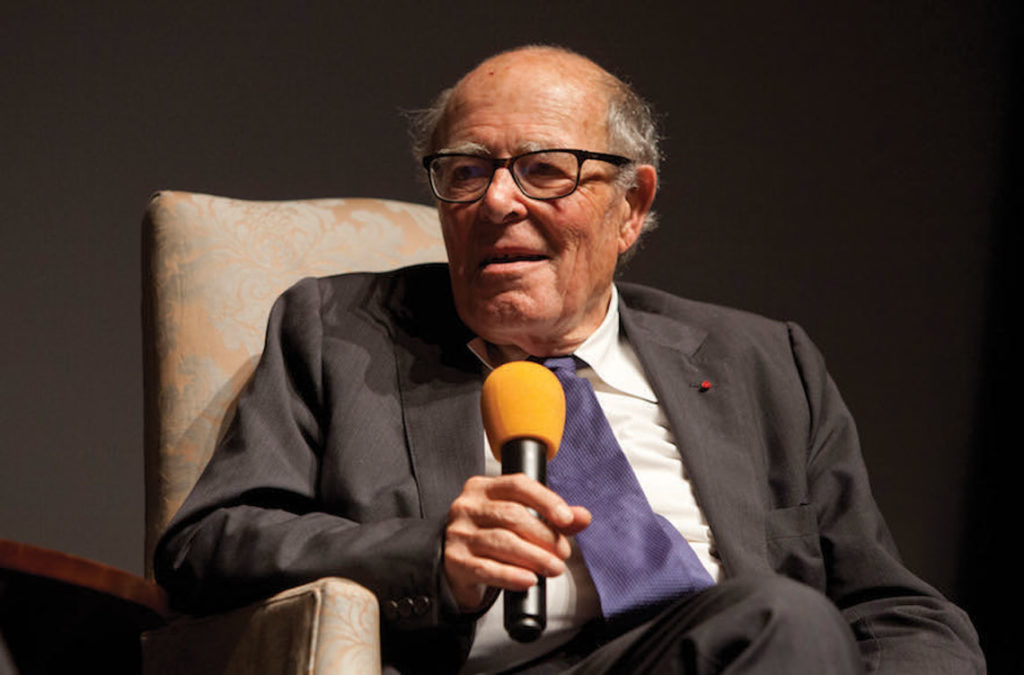
German-born director Marcel Ophuls has dedicated his career to shattering cultural myths about the darkest moments of the 20th century. His documentaries, some more than four hours long, stand as reminders of the human capacity for bravery, cowardice and indifference in the face of evil.

Ophuls, the son of Hollywood director Max Ophuls, attended Hollywood High School and Occidental College. He’s now 89 and lives in a village in the French Pyrénées, but he plans to return to Los Angeles for “Shadows of the 20th Century: Ophuls Film Festival,” scheduled for June 1-8 at UCLA and other venues. The series of screenings and discussions will feature the filmmaker in conversation with Los Angeles Times film critic Kenneth Turan, scholars and students.

Ophuls’ best-known documentaries address the desire for justice and the denial of responsibility in a trilogy of Holocaust-themed films: “The Sorrow and the Pity” (1969), about France’s occupation during World War II; “The Memory of Justice” (1976), about the Nuremberg Trials; and “Hotel Terminus: The Life and Times of Klaus Barbie,” a portrait of the Nazi war criminal for which Ophuls won the 1989 Academy Award for best documentary.

Unlike a journalist who might attempt to remain unbiased, Ophuls has a clear point of view in his interviews.

“All of the documentaries I’ve made are controversial and they’re always highly subjective,” he said in a phone interview. “They are based on my opinions and sometimes my moods. I’m the man behind the camera. … I don’t hide my feelings and I don’t hide my convictions.”

Ophuls’ current project, “Unpleasant Truths,” which focuses on the Israel-Palestine conflict, is entangled in financial and legal troubles and may never be completed. He’s currently dealing with a court case involving his former co-director, Israeli filmmaker Eyal Sivan, while trying to raise money to edit the footage he already has.

“I consider Gaza to be a concentration camp,” Ophuls said. “For Jews who consider themselves right-wing Jews, a state that has become not only right-wing but militaristic and authoritarian, the idea that Jews who consider themselves to be the heirs of the Shoah … to bomb what I consider a concentration camp, seemed to me scandalous.”

The movie originated out of a conversation over a decade ago between Ophuls and French director Jean-Luc Godard. They discussed collaborating on the film, Ophuls said, but Godard lost interest. The film actually begins with a scene in which Ophuls fails to convince Godard to go with him to Tel Aviv, to collaborate on the film.

Ophuls began his career as a feature film director, achieving some success with his 1963 comedy debut “Banana Peel,” a detective film starring Jeanne Moreau and Jean-Paul Belmondo. A follow-up two years later, “Fire at Will,” was a box office flop. He turned to documentaries, focusing first on the Munich crisis of 1938 (“Munich”) and then on France under Nazi occupation with “The Sorrow and the Pity.”

The two-part 1969 documentary, 4 1/2 hours long, examined the Vichy government through archival footage and interviews with former German officers, French collaborators, resistance fighters and residents of the small French city of Clermont-Ferrand.

In one scene, a local merchant named Marius is interviewed about a small advertisement he placed in a newspaper, in which he declared himself “100% pure French.” The ad appeared in 1940, after the Vichy government voluntarily adopted laws that excluded Jews from certain jobs and stripped them of basic rights. When Ophuls asked him why, Marius explained that he was Catholic, but his surname, Klein, led some people to accuse him of being Jewish. Even as Marius insists he’s not racist, by publicly denying his perceived Jewishness he is revealed to be complicit in the anti-Semitism of the time.

“The Sorrow and the Pity” was originally banned in France, and it took a dozen years for French TV to broadcast the film. It was nominated for an Academy Award in 1971 for best documentary.

The film is also referenced in Woody Allen’s 1977 classic “Annie Hall,” in which Allen’s Alvy Singer asks Diane Keaton’s Annie Hall to go see “The Sorrow and the Pity” at the theater. She tells him, “I‘m not in the mood to see a four-hour documentary on Nazis.” Later, after they break up, Singer describes a feeling of triumph after learning that she took her new boyfriend to see the movie.

Ophuls’ films show the capacity for heroism as well as barbarity. One of the characters in “The Memory of Justice” is a nurse charged with committing horrifying crimes, such as injecting gasoline into Jewish concentration camp inmates.

“That was the whole point, in my opinion, of the Nuremberg trials, was to condemn people” for inflicting suffering that went beyond Nazi commands,” Ophuls said.

“They thought they were legitimized because they could do anything in that situation,” said Andreas-Benjamin Seyfert, Ophuls’ grandson and co-organizer of the film festival. “He’s trying to show the whole spectrum of what humans can be, rather than just saying evil can be banal, as Hannah Arendt was showing. [Arendt, a Jewish political theorist, reported on the Adolf Eichmann trial and wrote a book, “Eichmann in Jerusalem: A Report on the Banality of Evil,” in which she argued that ordinary people’s evil acts often result from conformance to mass opinion, without reflection upon the consequences of their actions.] He shows it can be very special to be evil. … Klaus Barbie was no Eichmann, he was a torturer … and that takes a certain kind of mind as well.”

Another person in “The Memory of Justice” is Albert Speer, Hitler’s chief architect and later the Third Reich’s minister of armaments. Speer accepted moral responsibility at Nuremberg and served 20 years in prison. When Ophuls interviews him in the film, Speer comes off as sophisticated and likable.

“For me, [Speer] is the embodiment of evil, because he comes through as a good and gentle person,” said Paul Dominik Kurek, who runs a film screening series at UCLA and organized the Ophuls festival with Seyfert.

With the apparent recent rise in anti-Semitism coinciding with the gradual loss of Holocaust survivors, are people forgetting the lessons of the Holocaust? Perhaps, Ophuls said, but “I think that forgetting about the Shoah once in a while is not such a bad thing.”

“It is not a terribly good thing for the psyche to identify — especially if you have feelings that you’re unique — to identify all your life with the victims of a genocide. I think it’s important to remember that there have been other genocides — the Armenians and in Rwanda.

“We Jews may be unique in some ways. I think we are, actually. I’m rather proud of being Jewish. … I don’t believe in the chosen people, but I think we’re remarkable.”

Ophuls’ probing curiosity challenges a reductionist attitude toward history. He shows that war can be complicated, and that people don’t always act bravely. That perspective is summarized in “The Sorrow and the Pity,” when former British Prime Minister Anthony Eden tells Ophuls, “One who has not suffered the horrors of an occupying power has no right to judge a nation that has.”

By not resorting to abstractions or offering easy answers, he shows that the truth is more complicated than we would like to think.

“We all have a different approach to the truth,” Ophuls said, “and if there’s one thing I really don’t like, in documentaries in particular … I don’t like truth merchants. I don’t like people that think they have a monopoly on the truth and their job is to tell other people what the truth is.”

“Shadows of the 20th Century: Ophuls Film Festival” will take place June 1-8 at various locations on the UCLA campus and around Los Angeles. The keynote on June 5 at 4 p.m. in the Luskin Conference Center will feature Marcel Ophuls in conversation with Los Angeles Times film critic Kenneth Turan. For more information, go to cjs.ucla.edu.

Film festival to honor documentarian Marcel Ophuls Read More »

The Halacha* of Mayim Bialik

*Halacha (noun): set of Jewish religious laws

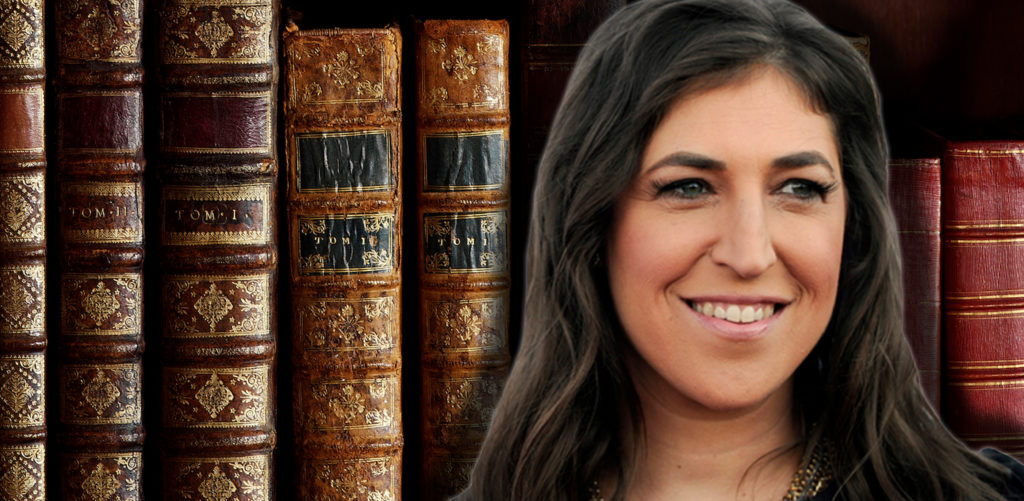
“It’s my job to be a public person and I get that,” actress Mayim Bialik told a packed crowd at the Barnes & Noble book-signing of her third book, Girling Up: How to Be Strong, Smart and Spectacular (Penguin), a manifesto, of sorts, for girls going through puberty. Somebody in the audience had just asked her how she dealt with the pressures of fame.

“But,” she continued, “it’s not my job to be super-anything.” (Still, it might be noted that she is donning a superhero cape on the cover of “Girling Up.”)

The actress-comedian-author-neuroscientist-feminist-Zionist is somewhat of an anomaly. “I think you’d be hard-pressed to find a celebrity who wants to be as authentic as I do. Like I literally posted a photo of me holding a toilet bowl brush,” she said, referring to a Facebook post where she’s holding aforementioned toilet bowl accoutrement.

“I posted that because I don’t want to be that celebrity who’s like, ‘I’m supermom!’ I’m not.”

Bialik, a real-life scientist, plays a neurobiologist in what’s being hailed as the most watched show on television today: “The Big Bang Theory” on CBS. But, in a culture downright obsessed with celebrity, she’s the polar opposite of a Kardashian. She wants (and makes a solid effort) to display her humanness, her Jewishness, her flaws.

In some ways, the 41-year-old actress wrote her newest book for herself, although perhaps a younger version of herself. “I think I basically wrote the book that I wish I had when I was in this age range and going through all those changes,” she told the Journal.

Bialik is still going through changes – not to mention a divorce in 2012 to her now ex-husband – but, when undergoing major life events, she turns to Judaism for answers. On Kveller, an online community for moms, grandparents and women, Bialik wrote a post about Rabbinit Alissa Thomas-Newborn of B’nai David-Judea, the first woman to be hired as Orthodox clergy in Los Angeles.

Well, when I was getting divorced, I spoke to male rabbis. I spoke to their wives. I spoke to therapists, and mentors, and other women who had been divorced. But there were questions I longed to ask a woman who was trained in halacha. I needed her then.

“The Big Bang Theory” star said if she weren’t acting, she probably would’ve pursued a rabbinical career. She first became aware of this yearning at the age of 15, she wrote on her website GrokNation. Bialik admits that had her life path been different, she could’ve easily pursued a rabbinical education at Yeshivat Maharat, the first yeshiva to ordain women as Orthodox clergy.  

I am now a PhD-holding divorced woman and a mother of two sons. I support myself and my children by being a full-time actor. My chance to be a rabbi is gone; my life is meant for something different. But I still remember, understand and feel the desire to lead.

“How do you balance your religion with your science?” It’s a question raised time and time again with Bialik. To her, science and religion go hand-in-hand. During the author’s Q&A, it was, inevitably, one of the questions asked. “The snarky answer is: I just do,” she quipped, before delving into the physics of faith. There’s a hint of sermonizing in the way Bialik speaks. As one might expect, there’s science, fact and logic embedded in her diction. And also, there’s something deeply Talmudic. Listen to her full response here (with a gratuitous animation):

The Halacha* of Mayim Bialik Read More »

Jerusalem’s Labor Market Faces an Uncertain Future

On the 50th anniversary of the reunification of Jerusalem, the city has much to celebrate: a population of almost a million people, transportation projects that improve access to and from the city, the growth of new industrial zones, and the development of high-caliber jobs that recruit skilled workers to the city.

When you walk down the streets of Jerusalem today, it’s amazing to see how much the city has developed over the past 50 years. As an economist, I was naturally interested in checking how the city has advanced its job opportunities and labor force, since these are key indicators of its economic stability and potential for future economic growth.

What I found was heartening. For those who work in Jerusalem (whether they also live there or live elsewhere), the city is developing and fostering higher-level job opportunities and an increasingly skilled workforce.

As of 2015, those who worked in Jerusalem had higher overall education levels than in the rest of the country. Between 2012 and 2015, this trend has become more pronounced. There were more Jerusalem workers whose highest level of education is a Bachelor’s or Master’s degree in 2015 than there were in 2012, and fewer workers whose highest level of education was a matriculation certificate or below. While this is also true for workers in the rest of Israel, the change in Jerusalem was more dramatic in both directions – more than double the change in the rest of the country for most levels of education.

So Jerusalem is attracting more highly educated workers, but for what types of jobs?

Just as in the rest of the world, Israel’s job market is likely to change significantly over the coming decades as technological developments allow computerization to replace manpower in many industries. As is shown in the research of Shavit Madhala-Brik from the Taub Center, nearly 40% of the work hours in the Israeli market are at high risk of being replaced by computers or machines in the coming two decades.

This isn’t necessarily a bad trend, as computerization will likely lead to more efficiency in existing industries and to the development of new industries we cannot begin to imagine. However, it is important to be aware of which jobs are more or less likely to be affected and to adequately prepare for the future labor market.

In Jerusalem, as well as in the rest of Israel, occupations such as tailors, construction workers, bookkeepers, and clerks fall into the high risk category, as well as a number of other occupations that are characterized by repetitive or technical work. However, professions requiring creativity, social intelligence, and proficiency in negotiation fall into the category of low-risk occupations.

The job market in Jerusalem has been moving towards jobs at low-risk of computerization and high-skilled workers and away from high-risk jobs and low-skilled workers. Israel overall has experienced the same shift, but the trend is even more pronounced in Jerusalem. This is a positive indicator of the direction of Jerusalem’s labor market in the future.

More low-risk jobs and highly educated workers in Jerusalem may very well be due to the city’s ability to attract big high-tech companies like Intel and Mobileye in recent years, as well as the presence of one of the leading universities in the country, research institutes, and other academic institutions. Jerusalem has some of the best hospitals in the country and is a hub for internationally recognized organizations. In addition, the city is home to the highest level of the country’s government institutions, whose workers tend to be highly educated.

Despite all of this progress, there’s more research to be done to complete the picture. The Taub Center is beginning to explore how education and employment trends differ between those who work in Jerusalem and those who live in Jerusalem. According to the preliminary findings, there is still much to be done to help the residents of Jerusalem directly benefit from the changing and improving work environment in the city.

We cannot predict what employment in Jerusalem will look like in another 50 years, but today the city should celebrate how far it has come and the positive steps it is taking to set itself up for the future.


Professor Claude Berrebi is the Director of Research and Labor Policy Program Chair at the Taub Center for Social Policy Studies in Israel and a Professor at the Hebrew University School of Public Policy.


Jerusalem’s Labor Market Faces an Uncertain Future Read More »

Is Meghan Markle Jewish? The internet is confused.

Is Meghan Markle, an American actress and the girlfriend of the British royal Prince Harry, a member of the tribe?

Stories in publications across the United States and United Kingdom have prompted the question. An article in the British tabloid Daily Express claims that Markle’s father is Jewish; Vanity Fair, Elle UK, Tablet and many others have cited the story.

The story also says that a spokesperson for Westminster Abbey, the historic London church where British royals get married, confirmed Markle’s Jewish background.

“The spokesman also confirmed that Meghan’s Jewish background would not prevent her from having an ‘interfaith’ marriage there,” Camilla Tominey writes in the May 14 article.

Unfortunately, for those who would love to see a Jew marry into British royalty, the claim is utterly false.

Duncan Jeffery, Westminster Abbey’s head of communications, told JTA on Wednesday that the church never said that Markle was Jewish. It only confirmed that Markle could be married at the church despite a previous divorce, thanks to a rule that was instated in 2002.

“[Markle’s Jewishness] is merely conjecture on the part of other people,” Jeffery said.

Markle’s publicist Chantal Artur also confirmed on Wednesday that her client is not Jewish.

Markle, who is best known for her role on the USA Network drama “Suits,” was married to Jewish producer Trevor Engelson from 2011 to 2013. As Tominey notes, the pair had a Jewish wedding in Jamaica (complete with a “Jewish chair dance,” meaning the hora).

Markle’s father is Irish and her mother is African-American. She wrote an essay for Elle magazine in 2015 about her identity (it was subsequently published in Elle UK, one of the publications that has misstated her Jewish identity). The essay did not mention any Jewish ancestry or hint at a past conversion to Judaism.

“‘What are you?’ A question I get asked every week of my life, often every day,” she wrote.

Tominey’s article is correct in explaining that there is no “legal barrier that keeps a royal for marrying someone from the Jewish, Buddhist or Muslim faith, or even an atheist.” Since 2015, even those formerly despised Catholics can marry into the royal family — however, a Roman Catholic still cannot become the queen of England.

Nonetheless, we’d like to say “Mazel tov!” to Meghan and Prince Harry, who are considered likely to marry, even if they aren’t actually engaged yet.

Is Meghan Markle Jewish? The internet is confused. Read More »