fbpx

May 3, 2017

How Israeli culture promotes creativity and independence

If you sit for an hour and observe children playing in a typical Israeli playground, you may be struck by the chaos. You will see children climbing up slides rather than sliding down them and scaling the peripherals of jungle gyms instead of using their ladders. You’ll find toddlers boldly standing on swings, running without caution, yelling and never waiting in line.

Even more striking, the adults rarely interfere with the children’s play. They offer no instruction nor correct the children who choose to use the playground equipment in an unconventional manner.

This lack of interference is indicative of two strong characteristics of Israeli culture: 1) high tolerance for the unconventional and 2) what in Hebrew is called a balagan. In the simplest sense, balagan can be translated to words like disorder, mayhem and chaos.

Balagan is the state for which a preordained order of things does not exist. People, and even entire systems, act spontaneously. In Israel, there’s balagan everywhere. And this has been proven to be a good thing.

From an early age, children learn endless social conventions pertaining to every aspect of their lives — family dynamics, social relationships and play. They are taught that certain toys correlate to certain games, specific objects belong to select domains, and that there is a right way to do things. This approach helps to fashion our young into members of a functioning society. But it lends little to imagination and creativity.

Balagan teaches them that things don’t always have a predetermined order or usage. Who is to say that you can’t climb a slide? Or that social interaction must always be polite? I believe children can learn a lot from living with disorder. I believe that balagan promotes creativity, problem-solving, and independence for children, as well as adults. This is a highly effective characteristic for entrepreneurs. I often challenge my teams, colleagues and kids, to shake up the predefined order of things and spice it with a bit of chaos.

Unstructured play — whether standing in line or using certain objects — creates ambiguity. There is no way of knowing what will happen next. This is not only socially and intellectually challenging; it also can be enjoyable, bringing an element of surprise into the play environment.

In an organized system, a new child will automatically join the end of the line. No interaction is necessary among the children, as rules dictate proper behavior for this situation. In the absence of such a system, a new child is an unknown factor to whom the other children are suddenly forced to relate. They take into account their desires, needs and abilities. With no rules to fall back on, they resolve the confrontation themselves.

“Rather than approaching disorder as a problem, we see it as being pregnant with ambiguity that can potentially be a resource for new thinking and new ‘ordering’ work,” says British management theorist Janice Denegri-Knott. In other words, social situations laden with ambiguity help develop a child’s problem-solving skills.

Furthermore, balagan goes hand-in-hand with freedom of thought and creativity. As anticipated, recent experiments into the effects of disorderly environments on behavior concluded that while orderly environments encourage conventional behavior, messy ones stimulate the generation of new insights.

Research also points to a strong connection between the extent of freedom and autonomy given to a child and the creativity generated by that child. As noted above, Israeli parents don’t generally offer much instruction or corrective behavior regarding the way children play. From this perspective, a child is an autonomous being capable of and expected to act independently. And when children are allowed to find their own way using the objects around them, creativity takes root.

Balagan is a term commonly used in everyday Israeli life and certainly one of the most well-known Hebrew words among non-native speakers. Israel is a country where things change from moment to moment. No wonder the word is so relevant. Balagan is manifest in almost every aspect of an Israeli’s life: from waiting in the supermarket line, to getting on a bus, to visiting a governmental office or participating in a political demonstration. There is always balagan.

While this may seem chaotic to an outsider, in Israel, it is simply the way social interactions operate. Surprisingly, it proves to be effective. With fewer social conventions and organized social behavior, balagan can invite conflict and frustration, but it also demands on-the-spot solutions for specific situations and people, as opposed to relying on an all-purpose rule supposedly fit for any circumstance. So the mechanism of disorder in fact creates order.

As an entrepreneur, I see many benefits to being disorganized. For example, studies have shown that messy desks convey the vivid signatures of people with creative, agile minds. In a rare consumer-related study into the effects of messy environments, researchers concluded that a cluttered environment may lead to favorable outcomes in decision-making, such as efficiency in the construction of choice options.

Messiness, the authors concluded, actually produced “better” thinking. Why is that? Jerrold Pollak, a neuropsychologist, argues that total organization is a futile attempt to deny and control the unpredictability of life.

He has a point.

If life is naturally disorganized, wouldn’t developing the skills necessary to deal with its unpredictability be more effective than trying to create order?

When you think about it, disorder is incredibly flexible and adaptable. Unlike order, which is fragile and can be destroyed by any deviation from its well-defined boundaries, balagan encourages adapting and adopting new and unforeseen parameters. It encourages us and our children to reconsider continuously our deepest biases and assumptions regarding the “organization of things” and allows us to consider alternative possibilities.

Isn’t that what entrepreneurship is all about?

How Israeli culture promotes creativity and independence Read More »
Counting for Thunder Film

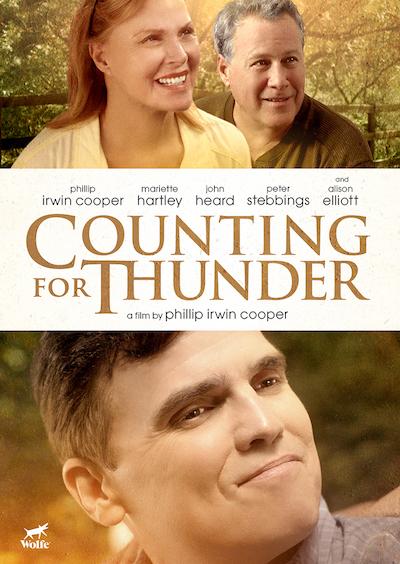
This lovely, well-told film tells the story of a man coming to terms with his family, his career, and his relationships, all told with a distinct Southern accent and charm.  With exceptional, natural acting all around, especially by writer/director/actor Phillip Irwin Cooper and the excellent Mariette Hartley and John Heard, the story follows a colorful, quirky Southern family where the mother is struggling with health issues and the adult son comes home from Los Angeles to help.  At turns, funny, sad and moving, this very enjoyable, well-written film is a charmer.

It was released yesterday 5/2/17 through Wolfe Video, for more information visit Wolfeondemand.com.

Counting for Thunder Film Read More »

DIY: Not your garden-variety Mother’s Day bouquet

Mother’s Day is a week away. Are you ready?

Mothers love to receive flowers, but they love them even more when you personally arrange them. (And they’ll love you even more, too.)

If you’re in a time crunch, this quick and easy arrangement is simple to create using some supermarket flowers and a keepsake box. It’s a beautiful way to honor the moms, sisters, aunts and bubbes in your life.

What you’ll need:

– One bunch of flowers
– Keepsake box
– Plastic trash bag
– Floral foam
– Knife
– Scissors

IMG_5125

1. Keepsake boxes are decorative containers used for storing small knickknacks. They are available at discount stores such as Ross and Marshalls for less than $10. They come in a variety of styles; the one I’m using in this example is an upholstered damask box from Ross. And this bunch of flowers from Trader Joe’s was $9.99.

IMG_5126

2. Line the keepsake box with plastic so water does not damage the box. I recommend just cutting the corner of a plastic garbage bag and placing it in the box. Don’t worry if the plastic extends past the edge of the box. You can trim it later.

IMG_5129-1

3. Trim a block of floral foam so it will fit inside the keepsake box. Floral foam is available from crafts stores such as Michaels and Jo-Ann. Be sure to buy the floral foam designated for fresh flowers instead of silk flowers. Soak the floral foam in water until it’s completely saturated and place it in the box within the plastic liner.

IMG_5135

4. Cut the stems of the flowers to about 3 to 4 inches and insert the stems into the floral foam. The floral foam keeps the flowers hydrated. When you’re done, look at the arrangement from every angle to make sure the flowers completely hide the foam. It’s that easy. Happy Mother’s Day!


Jonathan Fong is the author of “Walls That Wow,” “Flowers That Wow” and “Parties That Wow,” and host of “Style With a Smile” on YouTube. You can see more of his do-it-yourself projects at jonathanfongstyle.com.

DIY: Not your garden-variety Mother’s Day bouquet Read More »

Jewish and Muslim artists summon ‘Courage’ together


On a hot late-April afternoon, five actors — four women and one man — assembled onstage for rehearsal inside The Braid, an intimate venue in the Bergamot Arts District of Santa Monica and home to Jewish Women’s Theatre (JWT) since 2015.

Standing shoulder to shoulder, the actors launched into a dramatic reading of “Stillness,” an original work by the Egyptian-born Muslim poet Yasmin Mogahed. It’s about the serenity a new dawn brings.

The actors alternated lines, including the final verse: “Maybe that’s what’s so beautiful about this time of day: the stillness. And the hope that maybe this day will be different.”

Mogahed’s poem will open JWT’s new show, “More Courage,” a collection of poems, plays and stories performed and written by Muslim and Jewish artists, a mix meant to offer hope for a future of peaceful co-existence. It opens at The Braid on May 6.

Co-directed by JWT veterans Eve Brandstein and Susan Morgenstern, “More Courage” will run approximately 65 minutes. Its content will touch on topics like forbidden love between Arabs and Jews, the trials of being the first Jewish Miss America and a woman’s personal account of converting to Islam.

“Having courage has nothing to do with your religion or country of origin or ethnic background,” said Ronda Spinak, JWT’s artistic director. “What we want to do is to take a universal subject and offer up stories by Jews and Muslims, so that whether you’re a Jew or Muslim in the audience, you’ll identify with the stories.”

JWT, a nonprofit, independent theater company, was created with the goal of providing Jewish women a voice onstage. Spinak and two former colleagues founded it, sketching plans on napkins in 2007. Now, its salon-style shows draw more than 13,000 audience members annually at schools, synagogues, museums, art galleries, private homes, even prisons.

To add Muslim voices to “More Courage,” JWT is collaborating with NewGround: A Muslim-Jewish Partnership for Change, a Los Angeles-based community-building organization that encourages Jewish and Muslim collaboration. Its leadership, made up of Jews and Muslims, has been instrumental in recommending stories, books, songs and poems — like Mogahed’s — from Muslim artists to be considered for inclusion in the show, Spinak said.

Maryam Saleemi, NewGround’s communication and development manager, told the Journal that her organization was reaching out to Muslim actors to audition for the JWT production and setting up for a performance of “More Courage” at the IMAN Cultural Center, a mosque in Culver City.

Saleemi, who is a co-producer of the show, said she hopes it encourages people to share stories and come together in solidarity during what she sees as a trying time for both Jews and Muslims.

“I think that in this current time, with people living in fear and suspicion due to a rise of anti-Semitism and Islamophobia, it’s important to inspire our communities and to hear stories of courage,” she said. “It can’t just be stories of Muslims standing up for Muslims or just Jews standing up for Jews. It’s important to hear many different stories.”

One of the stories that Saleemi helped bring to JWT’s attention is that of Travina Springer, an African-American Muslim actress and comedian.

Springer, who was raised Baptist, visited a mosque with a Muslim friend and a list of questions after devouring a Malcolm X biography in college. Springer’s turn in “More Courage” details that initial interest, her conversion ceremony inside a parked car, her informing her Baptist parents at an Olive Garden (“because that’s where you go in Florida”) and the realities of being a Muslim woman in contemporary America.

“What I do with humor is expose people to different images, alternative narratives to what it means to be Muslim and Muslim in America,” she said. “I don’t think people even think of Black people as Muslims. They just think of foreigners, and that being American is something that’s added on to that identity. But I am American and that is very much what my identity is, while Islam is my faith.”

In a piece titled “Kosher Rebel,” Los Angeles-based actor Ayelette Robinson will play a real-life figure, Abby Stein, a transgender woman who came out after being ordained as a Chasidic rabbi in her ultra-Orthodox Brooklyn community. Julie Bram, a JWT producer for the show, read an interview with Stein in Haaretz and adapted Stein’s own words, with Spinak’s help, into a dramatic essay.

Robinson, who grew up Modern Orthodox in a Boston-area suburb, was raised worlds apart from Stein, who, as the piece illustrates, “never saw a movie, went to a Broadway show or listened to music.” However, Robinson, not entirely unlike Stein, drifted away from Orthodox life as a teen and now identifies as secular, which fractured relationships with family members. She identified with Stein’s courageous journey toward a more truthful life.

“What I really connect to is the fact that [Stein] realized being true to yourself, as cliché as that might sound, is better than anything else in the world, and despite all of the pain of losing connections to family or friends, nothing can dull that pain of living life less than whole,” she said. “It is so much better to just be who you are. Giving that up in exchange for keeping those relationships is really just deafening and paralyzing, and it’s hard to balance.”

A “More Courage” art exhibition, curated by Georgia Freedman-Harvey, an independent curator who sits on the board of the Jewish Artists Initiative, will accompany the show. The exhibition, which will be housed at The Braid, is composed of paintings, framed poems, ceramics, photography and mixed-media works from Muslim and Jewish artists, including renowned Jewish photographer Bill Aron.

“From the photograph of women joyously holding Torahs to the painting portraying the daily act of praying in a mosque, the exhibit touches on the many facets of courage, and what it takes to summon up the strength to express courage,” Freedman-Harvey wrote in her curatorial statement.

Along with Springer and Robinson, the cast of “More Courage” includes Mark Jacobson, Tiffany Mualem and Aneela Qureshi. On May 11, the IMAN Cultural Center will host the show.

“More Courage” opens at The Braid on May 6. Including Springer and Robinson, the cast includes Mark Jacobson, Tiffany Mualem and Aneela Qureshi. On May 11, the IMAN Cultural Center will host the show. For additional information, visit jewishwomenstheatre.org.

Jewish and Muslim artists summon ‘Courage’ together Read More »

A boy’s life and the birth of modern Hebrew

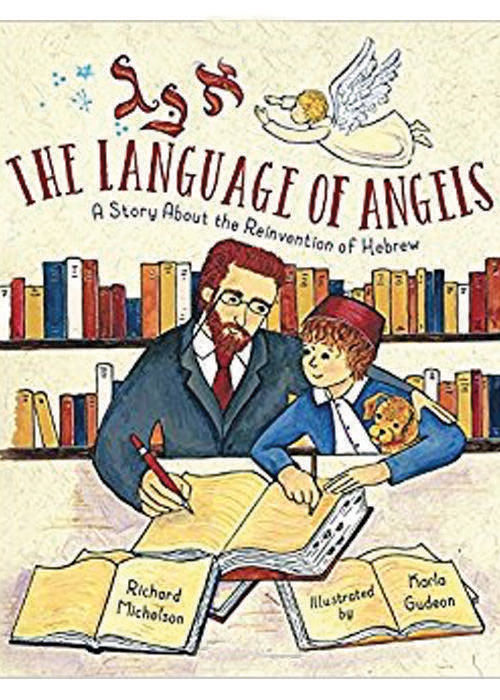
cov-angels-copyA new illustrated children’s book tells the story of a Jewish boy who has no friends and whose parents won’t let him play with anyone, fearful that other children actually may talk to him. He doesn’t speak until he’s 4 years old, and when he does, it is in response to his father’s anger at his mother for trying to soothe the boy by singing a soft Russian lullaby.
It’s a true story, and the boy at the center of it grows up to be Itamar Ben-Avi, son of Eliezer Ben-Yeduda, the founder of modern Hebrew.

Prolific children’s author Richard Michelson chooses well in “The Language of Angels” by focusing the story of the reinvention of the Hebrew language on Ben-Yehuda’s young son. At birth in 1882, Itamar was named Ben-Zion (he later changed it), and his parents wanted him to hear and speak Hebrew exclusively. Their intent was to raise the first Hebrew-speaking child in modern history.

When Ben-Yehuda and his wife, Devorah, immigrated to Palestine in 1881, Hebrew was only a written language and recited solely in the synagogue. But it was clear that as Jews from other countries arrived to Eretz Yisrael in large numbers at the end of the 19th century, they would need a common language, and Ben-Yehuda was devoted to making that happen.

Itamar’s family story is fascinating and unique. As an adult, he wrote an autobiography, from which Michelson takes much of his source material, and it translates well to the picture-book format.

Bright, folk-tinged illustrations by Karla Gudeon are enhanced by clever placement of Hebrew words and letters that seem to fly off the page joyously. Children are at first drawn into a possibly sad story of a boy who has no friends, spending much of his younger years fending off bullies who think he is desecrating Hebrew as the holy tongue. But the excitement builds when Itamar wants ice cream but doesn’t know how to ask for it.

“Because ice cream didn’t exist two thousand years ago, no one in history has ever asked for it in Hebrew,” Michelson writes in the book. After a bit of research, Itamar’s abba makes up the word “glida” on the spot, but, by then, the author tells us, “the glida had melted.”

Eventually, Itamar makes many friends and they compete with one another to make up new words for his father’s brilliant Hebrew dictionary. As Hebrew is taught at school to children as a first language, and easy-to-read newspapers help spread the word to adults, the Ben-Yehuda family experiment served as proof that it was possible to achieve the miracle of reviving an ancient language that had not been spoken for centuries.

A boy’s life and the birth of modern Hebrew Read More »

‘No Country’: A view of Israel many won’t cheer

book-copy2

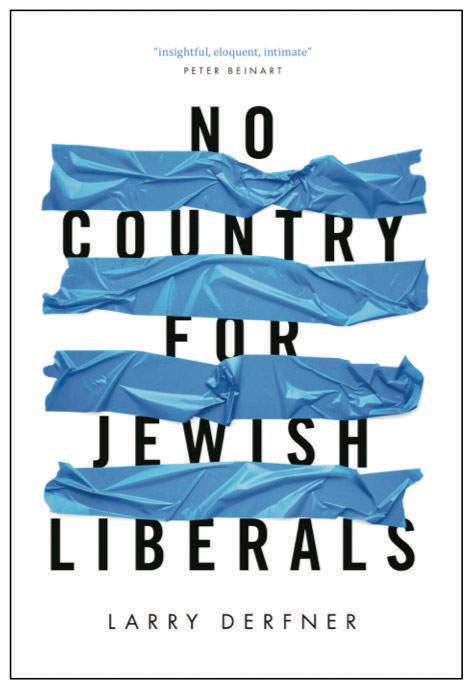
Larry Derfner is one of us.

He grew up in Los Angeles and started his career at City News Service, a fixture of L.A. journalism. A former contributing columnist to the Journal, he still contributes to a long list of distinguished American publications, ranging from Tablet to U.S. News & World Report.

Nowadays, however, he lives in Israel, where he serves on the editorial staff of Haaretz, and his home is in the “model city” of Modi’in. The story of what he found there — a story with deep resonance for many American Jews — is told in “No Country for Jewish Liberals” (Just World Books), a searing memoir and a challenging critique of Israel by a disaffected American Jew who is no longer at home in his new homeland.

Modi’in stands on the near side of the boundary between Israel and the West Bank, and when Derfner moved there in 1995, the development was meant to “show that while the previous Likud government had put its energy into building West Bank settlements, the Rabin government would forget about settlements and build on the Israeli side of the old pre-1967 Six-Day War border.”

Derfner, whose identities as a Jew and a liberal “meshed very smoothly,” embraced the “now-embarrassing, nostalgic, socialist idea that Modi’in would be the modern-day Israeli version of my Aunt Rose’s apartment complex in the Bronx that we used to visit in the ’50s: a humble community where Jewish working people gather in the evenings on the benches on the big lawn to kibitz.” What mattered just as much to Derfner and his young family was the fact that “the apartments would be big by Israeli standards and relatively cheap.”

“That was then,” Derfner writes. What matters now, as we discover in Derfner’s urgent, often witty and deeply unsettling book, is the hardening of Israeli politics that has reached even Modi’in.

“The majority of Modi’in residents are theoretically in favor of the two-state solution, but suspicious, at best, of even the most modern Palestinians and resentful of foreign pressure on any Israeli government,” he writes. “The people of Modi’in sit very comfortably within the Israeli ‘security hawk’ consensus.” To make the point, he quotes Gideon Levy, one of his colleagues at Haaretz: “It used to be that if you asked two Jews a question, you’d get three opinions. Now you only get one.”

Derfner thinks Israelis are nicer than they used to be — he attributes the softening of the Israeli character to “the advent of prosperity, consumerism, careerism, foreign travel, even air conditioning” — but he also insists that nationalism and patriotism, rather than the moral burden of serving as a light unto the nations, are now the core values of the Jewish state.

“The mindset here is very much like that in red-state America,” he writes. “I think of Israel as a small, Hebrew-speaking Texas, with Tel Aviv the country’s answer to Austin.”

Unlike the rest of the world, American Jews included, the Israelis are no longer preoccupied with the Palestinians, or so Derfner argues. “Israelis don’t believe in a solution; they think that trying to solve things will only make them worse, like it did before, and get a lot of them killed,” he explains. “The army has the Palestinians under control — why tamper with the way things are?”

All of these developments are deeply alienating to Derfner, who points out that ignoring a problem is not equivalent to solving a problem. “Fear and aggression, this has become the Israeli way,” he writes.

He deplores the treatment of Palestinians, African refugees and the Arab citizens of Israel, and he unapologetically declares that “Israel and I have gone in opposite directions.” He writes that he loves Israel “as much as I’m capable of loving a country,” but goes on to say that “it has done awesome damage to the Jewish soul and Jewish conscience.” Indeed, he is even willing to argue that “Palestinian terrorism, for all its hellishness and its innocent victims, amounts to self-defense,” an assertion that would be fighting words if uttered in certain places here and in Israel.

Like many American Jews who make aliyah, Derfner bumped into the sharper edges of the Jewish homeland, where the sacred mission of Zionism — the creation of a place where Jews can seek refuge without passports or visas — has been tragically compromised by those who are empowered by the state to decide who is a Jew. “My wedding was a glorious day, but, unlike my kids’ bar mitzvahs, it did not fill me with gratitude to Israel: Philippa and I got married in South Africa after I repeatedly failed to meet the medieval Israeli rabbinical establishment’s standard of proof of being Jewish,” he writes.

As I read Derfner’s troubling account of his experiences in Israel, I was fully aware of how his book will be received by a great many readers who are not prepared to hear, for example, that he does not blame the Palestinians for cheering the Scud missiles that Iraq launched against Israel, because “when you treat people like inferior beings, they’re going to want revenge, and we’d been treating the Palestinians like inferior beings for a very long time.”

But I could not forget that Derfner voted for Israel with his feet when he made aliyah. He pays his taxes in Israel, he served in the Israel Defense Forces, and so have his children. He has mastered the details and nuances of Israeli history and politics, both as a journalist and as an eyewitness to the most consequential events and personalities of the past several decades.

“Writing this is not treason,” Derfner insists. “It is an attempt at patriotism.”

For that reason alone, when Derfner speaks about Israel, I feel obliged to listen.

‘No Country’: A view of Israel many won’t cheer Read More »

The occupation that saved Israel

Imagine sitting down at a Passover seder and receiving a visitor who wants to kill you. That visitor is not the prophet Elijah or the Fifth Son — the one absent from the table — who has a change of heart. No, he’s a killer who hates Jews and wants to destroy them.

Fifteen years ago, on March 27, 2002, Abdel-Basset Odeh left his home in the West Bank and walked into a Passover seder in Netanya’s Park Hotel. He then blew himself up, killing 29 mostly elderly Jews and wounding 64 more.

The Jewish world was horrified but not shocked. That’s because the Netanya massacre was part of a murderous Second Intifada that lasted several years and killed more than 1,000 Israeli Jews. It seemed as if every week was marked by a similar calamity — a Palestinian would enter Israel from the West Bank and blow up Jews in restaurants, ice cream parlors, discos, cafés and public buses.

Since this year marks the 50th anniversary of Israel entering the West Bank after the Six-Day War of 1967, critics have come out in full force urging Israel to “end the occupation once and for all.” For the majority of Israelis, however, it’s a lot more complicated than that.

You see, Israelis remember something that happened right before Jews were being blown up every week by Palestinian terrorists. They remember that their prime minister, Ehud Barak, had, in fact, offered to end the occupation once and for all — and the Palestinians walked away.

It happened in July 2000, when President Bill Clinton brokered peace talks at Camp David. A year later, in a Newsweek article titled, “Clinton to Arafat: It’s All Your Fault,” the U.S. president let the world know who he felt was most responsible for the agonizing failure.

When Palestinian leader Yasir Arafat told him, “You are a great man,” the president replied, “The hell I am. I’m a colossal failure, and you made me one.”

What Israelis remember, above all, is that after the failure of peace, Arafat started a war. Israelis remember that after Barak offered to end the occupation, they started getting blown up by Palestinians entering from the West Bank.

And they remember that after the Netanya Passover massacre, Israel said, “Enough.”

Israelis remember that after Barak offered to end the occupation, they started getting blown up by Palestinians entering from the West Bank. 

The Jewish state was left with no choice but to double down on the occupation and go right to the source of the terror — the West Bank.

So Israel launched Operation Defensive Shield in 2002, calling up reservists and sending troops and heavy weaponry deep into the hearts of six major Palestinian cities, surrounding towns and West Bank refugee camps.

The goal was to stop terrorist attacks by regaining control of the West Bank, in particular the cities in Area A that were under the sole control of the Palestinian Authority.

What did they find when they regained control? Just what they expected. As reported in JPost, Israel uncovered 23 explosives laboratories and seized enormous quantities of weapons.

“The situation we had back then — with suicide bombers coming into the center of the country blowing themselves up — we don’t have that now,” Lt. Col. Yair Pinto, a commander during Operation Defensive Shield, said recently to JPost.

Indeed, in our zeal for peace, it’s easy today to forget the dark days of the past. Those were the days when Israelis would risk their lives any time they took their kids for ice cream, got on a bus, met a friend for coffee or sat down for a Passover meal inside a hotel.

So, yes, bemoan the occupation. Lecture Israel on the need to end it. I have as much sympathy as anyone for the need to shake up the status quo and make a durable peace between Israelis and Palestinians.

But I also have sympathy for Israelis who remember that when Israel was traumatized by daily terror, it wasn’t less occupation that saved them, it was more.


David Suissa is president of TRIBE Media Corp./Jewish Journal and can be reached at davids@jewishjournal.com.

The occupation that saved Israel Read More »

Fighter jets capture stunning footage of Israel at 69


The Air Force’s annual Independence Day flyover Tuesday was an impressive display of Israel’s aerial ascendancy.

But the pilots in the cockpits arguably saw the better show. Cruising at low altitude, they were treated to stunning views of Israel celebrating its 69th birthday at barbecues and beach parties held across the country, from the Negev to the Galilee.

“It was very, very exciting to see these places so close up,” said Lt. R, who piloted an F-15 in the flyover and could only be identified by his first initial because of Air Force security rules. “Our friends and family were waving at us, and we were looking for them.”

R’s fighter jet was one several outfitted with cameras for the event. The footage offers close-ups of the squadrons in action and expansive shots of Israel’s cities, coastline and farmland.

“When I flew over my hometown in the south, I knew where my family was, and they knew how to spot me,” Lt. R said. “My dad always wanted to be a pilot, and he taught me to have the same dream ever since I was a little boy.”


The main flyover included a few dozen fighter jets, helicopters, transport planes and trainers. Starting in the south, the aircraft traveled 530 miles and covered much of the country, including the major cities Beersheba, Jerusalem, Tel Aviv and Haifa. The Air Force also held acrobatic shows above cities and army bases throughout the country, from the morning until the afternoon.

Among the planes on display were three of Israel’s five F-35s, which were welcomed with much fanfare in recent months. Israel — the first country other than the United States to get the state-of-the-art fighter jet — plans to purchase a total of 50 of the fifth-generation stealth aircraft, which Israelis call the “Adir,” or “mighty one.”

“Of course I would like to fly the F-35,” R said. “But I love my plane. I wouldn’t trade it.”

Fighter jets capture stunning footage of Israel at 69 Read More »

‘Bert Berns Story’ pays tribute to a music pioneer

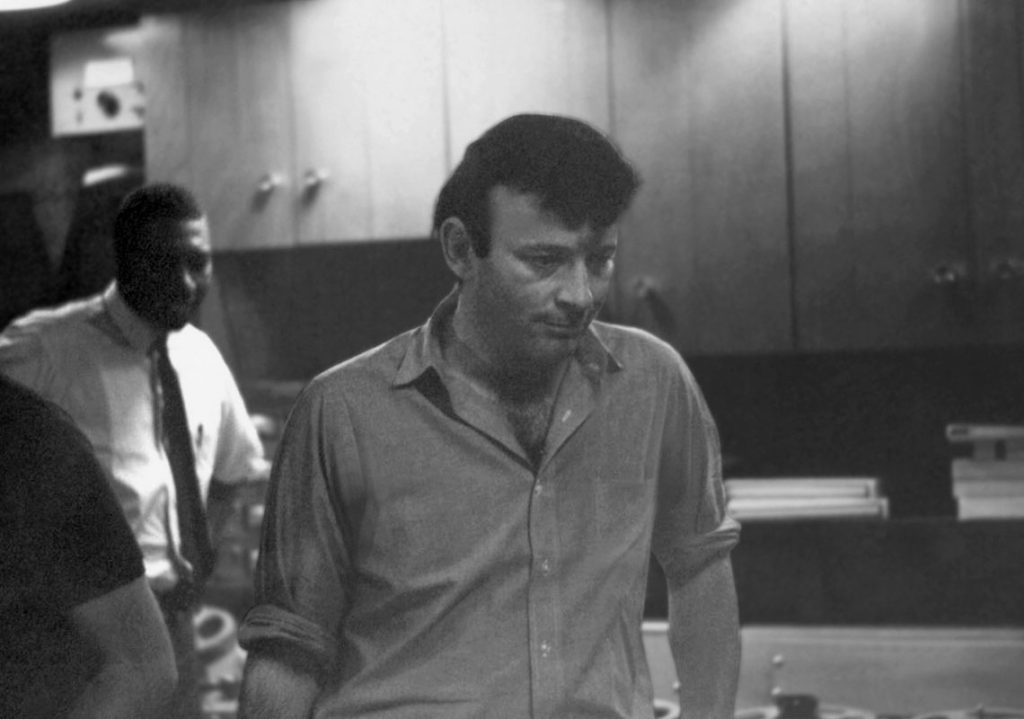
The name Bert Berns might not ring a bell, but his songs certainly do. As a prolific songwriter and music producer, Berns is the man behind such pop and soul hits as “Twist and Shout,” “Hang On Sloopy,” “Under the Boardwalk” and “Piece of My Heart.”  The founder of Bang! Records, Berns was one of the most influential music figures of the 1960s. But he died in 1967 at age 38, never achieving widespread recognition or fame.

His son, Brett Berns, has made it his life’s mission to remedy that with his documentary, “Bang! The Bert Berns Story,” which opens May 5 at the Laemmle NoHo 7 in North Hollywood. It’s a loving biographical homage to the father he barely knew.

Brett Berns was only 2 years old when his father, who suffered from rheumatic fever since childhood, died of heart failure, leaving behind his widow, Ilene, and two other children, Cassie, 10 months, and Russell, 2 weeks at the time.

“He knew he was going to die young, and sure enough, he did,” Berns said. “I didn’t get to know him, and he’d been pretty much written out of the history books. I knew I had to tell his dramatic life story and get people to pay attention to the body of work he left behind.”

The documentary, Berns’ first film, “was a 10-year effort. The biggest challenge was just getting started,” he said. He gradually conducted interviews with his father’s friends, collaborators and well-known soul singers, enabling him to land major stars. “Cissy Houston and Solomon Burke were heroes to guys like Paul McCartney, Van Morrison and Keith Richards. It was an enormous coup to get them, but I think they agreed to [be interviewed] because they loved Bert and his music.

“We got everyone we wanted, except for Neil Diamond,” Berns said, noting that his mother, a music industry bigwig in her own right — she took over at Bang! Records after her husband’s death — resisted taking part until McCartney and Morrison were on board. “She made me fight for it. But she’s a big star in the film. She was one of the toughest and most inspiring people I knew.”

Ilene Berns died in February at age 73.

Berns turned to author Joel Selvin and his book “Here Comes the Night: The Dark Soul of Bert Berns and the Dirty Business of Rhythm & Blues” for “so much of my father’s music and story that I wasn’t aware of. He’s the world’s leading authority on my dad,” he said. The film not only covers Berns’ creative career, it reveals his mob connections and his ties to Judaism and Israel.

Berns was born in the Bronx, N.Y., to Russian-Jewish immigrants who changed their name from Beresovsky. “His Jewish identity was mainly cultural, ethnic, nationalist. He was one of those tough, fighting Jews that took the lesson of the Holocaust and personalized it. He loved Israel. He was such a passionate Zionist,” his son said, offering an example: Bert Berns once turned a record release party into a fundraiser for the United Jewish Appeal. “He wanted to fight in the Six-Day War, but he had young children, he was running the label and his heart was failing,” his son said.

Twenty years later, Brett Berns graduated from the University of Virginia and fulfilled his father’s unrealized dream by making aliyah and joining the Israeli army. Brett’s connection to Judaism solidified during his college years, when he began to study Hebrew and visited Israel. The Yad Vashem memorial made an indelible impression on him. “It really shocked me, and I came back wanting to learn as much as I could about the Jewish people and Israel and be part of that experience,” he said.

Berns served in the infantry and was a paratrooper in the Israel Defense Forces, and planned to stay in Israel, but when the rights to his father’s music reverted to his heirs in 1990, he returned to the United States to help administer the publishing. “As I started to dig into my father’s music and legacy, I became, with my sister, a champion of my father’s legacy and efforts to tell his story,” he said.

As the documentary continues to be screened at film festivals and opens to the public, Berns is working on other ways to do that. “Piece of My Heart: The Bert Berns Story Musical,” by Daniel Goldfarb, played a limited run off-Broadway in 2014 and is being readied for its Broadway debut, “hopefully in the fall,” Berns said. “It’s a jukebox musical, but my dad’s songs are so deeply autobiographical that they really serve the story.”

He added that there might be a scripted film or TV version of Bert’s story in the future.

Berns said he thinks his father would love the film, the play, “and all of our efforts to have him achieve the recognition that’s eluded him all these decades. We got him into the Rock and Roll Hall of Fame last year, and with the 50th anniversary of his death this year, I hope people will take away the message of his life. He never gave up on his dreams, and he lived life like there was no tomorrow. I think there’s a lesson from that for everybody. He inspired me, and I hope he’ll inspire generations to come.”

‘Bert Berns Story’ pays tribute to a music pioneer Read More »

Defending Ed Asner, and Israel

The defenders of Israel fought a noble battle last week on behalf of the survival Jewish state. They forged a united front, raised their voices and rallied their troops. They charged into battle and came close, very close, to defeating their common enemy: Ed Asner.

Yeah, really. Ed Asner. The actor from “The Mary Tyler Moore Show” and “Lou Grant.” The voice of Carl Fredricksen in “Up.” Santa Claus in “Elf.”

The Los Angeles Jewish Film Festival was all set to honor Asner with a Lifetime Achievement Award at its gala opening on April 26. Days before the event, two self-appointed defenders of Israel sent out a mass email denouncing the festival for choosing Asner, and calling on advertisers and attendees to boycott the event.

Their issue was that Asner, who is 87, is listed on the advisory board of Jewish Voice for Peace (JVP), an advocacy group that supports the Boycott, Divestment and Sanctions (BDS) movement against Israel.  BDS seeks to protest and reverse Israel’s policies, including its occupation of the West Bank, by boycotting all Israeli products and services, including its academic and cultural institutions. As I’ve written many times, it is a deeply anti-Israel movement under the guise of an anti-occupation movement. 

The connection between Asner, BDS and JVP — which, spoiler alert, turned out to be far more tenuous than it first appeared — raised the defenders of Israel to DEFCON 5.  Immediately, they sent out an email whose subject line read, “SHAME ON THE LOS ANGELES JEWISH FILM FESTIVAL.”

Because TRIBE Media, which produces the Jewish Journal, is the sponsoring organization of the festival, we found ourselves at the bizarre end of a very small but very noisy pro-Israel advocacy effort.

As the events of the week played out, the experience gave me time to reflect on how the Jewish community decides who is inside and outside the tent, who is kosher and who is treif

In Israel, this has become a policy issue with diplomatic implications. The same week two well-meaning L.A. Jews were trying to take down a third for not meeting their standards of “pro-Israel,” Israeli Prime Minister Benjamin Netanyahu snubbed the German foreign minister because the minister refused to cancel his meeting with the anti-occupation groups B’Tselem and Breaking the Silence.

And since at least 2010, Netanyahu’s government has passed laws against not just those who support BDS, but those, like many Israeli artists, who support in principle a boycott on goods from the West Bank.

The aim of these actions is to normalize Israel’s now 50-year occupation and criminalize opposition to it. Those who oppose it went from being dismissed as doves to being persecuted as outlaws.

BDS poses a unique threat to Israel, though not necessarily an existential one. But one could easily make the argument that the occupation, if it results in a single chaotic binational state or apartheid rule over Palestinians, poses a far greater, truly existential threat to a democratic Jewish state.

The point is, we can have an argument over this without criminalizing, demonizing or ostracizing those who take one position or another. Some BDS folks really do want to erase Israel. But the (mostly) young Jews who are attracted to the movement see it as a way to redress an injustice. I think they’re wrong, but I want to engage them.

Similarly, those who think annexing part or all of the West Bank is the best way to manifest Jewish destiny or achieve security are wrong — and possibly even more dangerous to the state’s future — but I want to speak with them, as well.

Ed Asner, it turns out, doesn’t support BDS. In an interview with Avishay Artsy before the festival, he told the Journal he was rethinking it. Later, he flatly denounced it.

“I just want peace,” he said.

That didn’t quiet the defenders of Israel. They called him and the festival frauds because Asner was still listed as an adviser to JVP. Because at 87, after receiving more Emmy Awards for acting than any male in history, after standing up for the rights of workers, the oppressed and the disabled his whole life, after donating endless time and money in support of Jewish and non-Jewish causes, after playing an active role in his own Jewish community — in other words, after doing more for humanity and the Jewish people than the vast majority of us — Asner still wasn’t kosher enough.

Ridiculous.

It’s important to note that not one of the major groups that support and defend Israel — StandWithUs, the Zionist Organization of America, the Anti-Defamation League, American Jewish Committee — signed on to the anti-Asner campaign. They cut the guy some slack — maybe because they assumed he heard the word “peace” and said, “Sure, use my name.” Or maybe because the Jewish people and Israel have real enemies to fight, and Lou Grant isn’t one of them.

The night of the gala, the Ahrya Fine Arts Theater in Beverly Hills was packed. Asner stood and received his award to a standing ovation.

And, I’m happy to report, somehow Israel survived.


ROB ESHMAN is publisher and editor-in-chief of TRIBE Media Corp./Jewish Journal. Email
him at robe@jewishjournal.com. You can follow him on Instagram and Twitter @foodaism
and @RobEshman.

Defending Ed Asner, and Israel Read More »