What is a dedicated vegetarian, who is also a believing, contemporary Jew, to make of the book of Leviticus, specifically this week’s Torah portion, Vayikra? From the very beginning of the portion, we are confronted with animal sacrifice, with grisly descriptions of blood and torn flesh, of butchering and roasting — never letting up for the entirety of the portion.
The Torah is my sacred text. I believe the Torah always offers relevant lessons to all who will seek them. What am I, therefore, to make of Vayikra? I am forced to look for signs of divine metaphor — a poetic theology of hidden meanings, of celestial shadows and heavenly whispers.
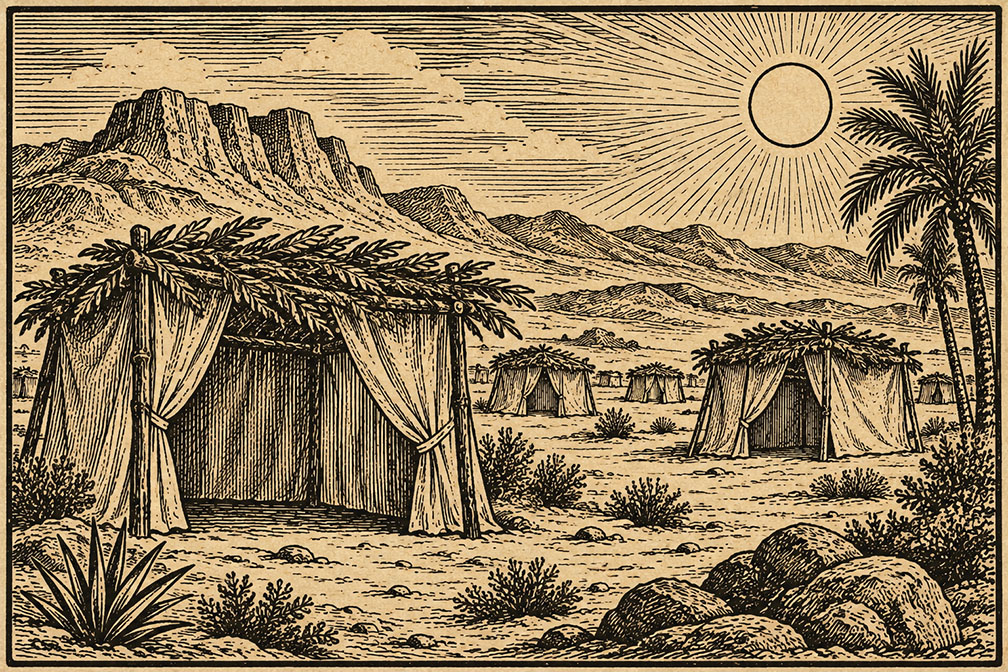
I begin my search at the first verse of Vayikra, Leviticus 1:1: “And he called out to Moses, and God spoke to Moses from the Tent of the covenant, saying …”
Immediately, I am moved to ask: Why “Vayikra” (“and he called out”)? And who is “he”? Why not the more prevalent opening, “Vayedaber Y’H el Moshe l’emor” (“and God spoke to Moses, saying …”)?
There is a mysterious, undefined, urgent call. But why the urgency, why the need to call out — why not just speak?
I believe that humanity itself is the reason for the urgent call: It is our imperative as human beings to confront our dangerous flaws and frailties before it’s too late. We are the guardians of the world, and we are responsible for its well-being.
The Alter Rebbe, Rabbi Shneur Zalman of Liadi, the first Lubavitcher rebbe, expounding on the kabbalah, the Jewish mystical tradition, identifies various levels of the human soul. He begins with two major categories: nefesh behemit and nefesh elokit — a beast-like soul and a divine soul.
This theology then breaks down each of those two levels into five rungs, adding up to 10 levels. Symmetry is crucial to all kabbalists: We were created in the image and likeness of God. God has Ten Emanations (the Ten Sefirot); God spoke the Ten Utterances (the Ten so-called Commandments). We who are made in God’s image and likeness have 10 toes, 10 fingers and 10 levels to our soul.
Our creation as human beings is no mere accident — we are meant to be living icons, if you will, walking metaphors of God, a means by which all who encounter us may be reminded of our creator. Even more importantly, the divine attributes we carry are meant to ignite within us a desire to be true to our origin — to seek closeness to God.
So long as we are distant from God, lost in the exile of amnesia, we are doomed, and together with us, the entire world is doomed. That, I believe, is the reason for the clarion call of Vayikra.
Leviticus 1:2 says: “Speak to the Children of Israel and say to them: A man, should he offer a sacrifice of you (from you), as an offering to God — from the beast, from the cattle, and from the flock shall you bring near your sacrifice.”
Why the strange wording? Both the alter rebbe and rabbi Lord Jonathan Sacks point to this curious wording, for it would seem to suggest that one is being asked to offer oneself as a sacrifice.
I also wonder how the second verse flows from the first. If there is urgency here, why talk about sacrifice?
There are a few possible answers. The first is offered by the actual Hebrew word for sacrifice, korban. The Hebrew is rooted in the word karov (near, close). A sacrifice is meant to draw us near to God. But this raises another question: How could offering up the life of an innocent animal possibly move us closer to God?
The answer to that question may be found through the Alter Rebbe’s explanation of the two levels of soul — the beastly and the divine: Offer up your “beastly” soul as a sacrifice to God. Bring forward your basest, most unyielding, material core, and offer it up on the altar of holiness; burn your inner beast so that it may become a pleasing scent unto God.
It is only through our daily, unending struggle with our beastly selves that we improve step by step. It is only by bringing our darkest, deepest and coarsest element as a gift that we purify and refine ourselves — and through us, the entire world.
As a vegetarian and as a lover of kabbalah, I am deeply moved by the metaphor offered up by the Alter Rebbe. The seemingly gory verses of Vayikra are transformed as I am called to look inward and to offer up my inner beasts.
And so I read: God cried out to Moses — tell the Children of Israel — the God wrestlers — to offer themselves, their sacrificial core for the benefit of God and humanity.
May our daily struggles with our imperfect souls become a pleasing scent for the entire world.