






fbpx

We Need Self-Defense

I\'m 16 years old. People often ask me, \"How do you feel growing up in this crazy time?\" \"Terrified,\" I answer.
[additional-authors]
July 25, 2002

I’m 16 years old. People often ask me, “How do you feel growing up in this crazy time?”

“Terrified,” I answer.

In a year replete with terrorism, suicide bombers, serial killers, kidnappers and rapists, my peers and I are horrified — horrified of what the world is becoming.

One might argue that this view is too pessimistic. Young people are reminded time and again that although there is evil in the world, there is much more good.

For me, this is no longer convincing.

My stomach twisted in anguish as I heard about the kidnapping of Elizabeth Smart, a girl two years my junior: A girl nabbed through her bedroom window.

Since the kidnapping, I haven’t been sleeping very well; my 7-year-old sister, Rachel, comes into my room regularly in the middle of the night.

“What’s wrong?” I ask.

“I’m too scared to sleep. A bad man might open my window and take me like he took Elizabeth,” comes her frightened response. Even my 14-year-old sister calls out in her sleep, with nightmares of being kidnapped.

And then, a few weeks ago, a 5-year-old was kidnapped, raped and left on the side of a road in Riverside County. This was a cute, smart child who was taught never to speak to strangers. She did everything correctly. She screamed, she kicked, she yelled, trying to escape her kidnapper’s grasp. Yet to no avail.

As I heard on the radio that her body had been found, two words suddenly flashed through my mind: self-defense.

I have attended school for 14 years now. I can modestly say that I am a good student, and devote much time to my studies. This past year, I have learned about photosynthesis in science and proofs in geometry.

Yet, it seems to me, that schools have been cutting back on classes that are truly essential, classes for the real world. Classes such as self-defense.

Schools teach students many important types of defense — we learn how to defend our viewpoints and how to support and defend different positions in essays.

But, why are we never taught how to defend our bodies?

All high schools mandate that students complete certain physical education requirements prior to graduation. Most schools offer a variety of courses that fit these requirements, such as basketball, soccer, baseball, dance or even juggling.

During these classes, we exercise with jumping jacks, sit-ups and stretches.

Although learning juggling, doing jumping jacks or doing push-ups might require great physical exertion, will this help a child escape an attacker’s grasp?

According to the National Center of Victims of Crime’s Teen Victim Project, approximately 3.4 million American teenagers become victims of crime each year.

”Teens are twice as likely to be victimized than any other age group, and the past 20 years, [there has been] a steady increase in the teenage victimization rate, with a dramatic increase in the past five years,” the center reports. Also, in 2000, 54 percent of reported rape cases occurred against girls under the age of 18.

These statistics clearly prove how it is essential for schools to implement programs of self-defense into their curriculums.

A self-defense class could save a child’s life.

So what exactly is self-defense? The Los Angeles Commission on Assaults Against Women, a nonprofit organization with the mission to end violence against youth, children and women, says that self-defense is “a set of awareness, assertiveness, verbal confrontation skills; safety strategies and physical techniques that enable someone to successfully prevent, escape, resist and survive violent assaults. A good self-defense course provides psychological awareness and verbal skills, not just physical training.”

In a self-defense class, one not only acquires physical skills, but also mental preparedness. Children, teens and adults enrolled in self-defense classes will see a sudden rise in their self-esteem and their ability to listen to their intuition.

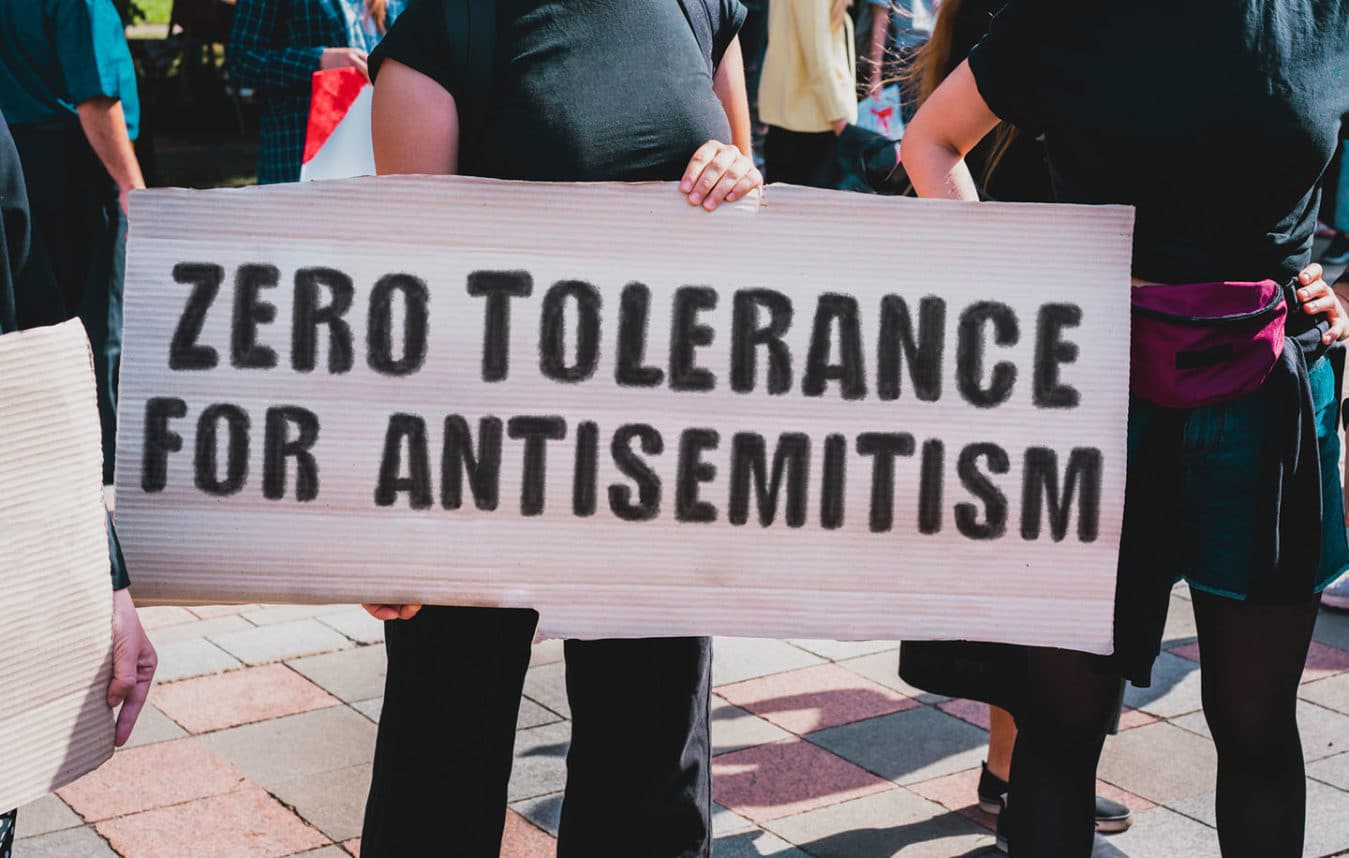
In short, they will feel more confident to defend themselves; a confidence which many of my peers and I currently lack. Jewish day schools, especially, should offer these classes, due to the rising wave of anti-Semitism.

In April, four skinheads attacked three Shelhavet High School students in Beverlywood shortly after midnight. The skinheads punched, kicked and beat up the students while throwing them to the ground and yelling obscenities. The four shouted, “Heil Hitler,” and called the boys “dirty kikes.”

Maybe, if these students had taken classes in self-defense, they might have been able to defend themselves against these depraved people.

Perhaps Jewish day schools could offer courses in Krav Maga, the official self-defense system of Israel. In Israel, Krav Maga is taught to elementary and high school students. We, too, should follow in Israel’s footsteps.

As a 16-year-old growing up in such a frightening time, I plead that all schools join together and supply us with the tools to learn how to defend ourselves.

And then, I can finally get some sleep.

For information on the Teen Victim Project, visit
www.ncvc.org/teens. To learn about Krav Maga, visit

Did you enjoy this article?
You'll love our roundtable.

Editor's Picks

Latest Articles

A Harira Hug in the Sukkah

I love making soup for this holiday because even if the days are still warm, the cooler evenings make you start craving something warm and comforting.

The Beat Goes On

While so much of the world seems obsessed with and consumed by its hatred of Israel and Jews, Israelis continue to build, create, work, celebrate, argue, raise families, and plan for the future.

Viral AI Video Targets Jewish Comedian

“The biggest concern is that people now have a pathway to shut down Jewish voices through complete falsities that people will believe. … For the future of Jewish entertainment, it’s very scary.”

Yiddish Historians: Writing in Their Own Language for Their Own People

Mark Smith has compiled an important anthology of Jewish history using 49 works by Yiddish historians to recreate or at least open the door to a world of Jewish thought that was once almost mainstream, but which no longer exists, except in the minds of too few specialists.
The Everlasting Melody

Most Jews who have sung “Eitz Chaim” over the past half-century probably never knew Portnoy. They did not know when he wrote the melody or how young he was when he composed it. They simply knew the song.

Who’s Really the Victim?

Those who would revel in Israel’s demise are claiming victimhood on every front and denying attacks on us in the same breath.

Biblical Deterrence

After Oct. 7, the sentiment in Israel toward the Iranian leadership was unequivocal: You went medieval — so we will go biblical.

How Sukkot Makes Us Whole

This year, I bless us that we open our eyes to truly see the beauty and the holiness of the world, and of the person before us at each and every moment, and to see the godliness of their aspirations and their fears.

The New Ushpizot

Ushpizin invite us to “welcome in our ancestral constellation and dwell amongst them.” This year, it’s Ushpizot, for the women. It’s the year of the Feminist Visitation.

Macklemore, Or Less

In between his songs, he proclaimed, “Free Palestine,” which is fine, asserted that opposing Israeli military actions is not antisemitic, which is accurate, and accused Israel of apartheid and genocide, which is offensive, untrue and hateful.

The Rokeach’s Remarkable Sukkah

To Rabbi Eleazar ben Judah of Worms (1176-1238), the medieval German pietist known as the Rokeach, the sukkah symbolized Jewish military might.

More news and opinions than at a Shabbat dinner, right in your inbox.