“God picked me to be a sample boy,” Danny said one day when he was 9. “God picked me to have my own unique point of view. That’s what’s unique about me — I have my own unique point of view. After I die, God will pick another sample boy to take my place.”
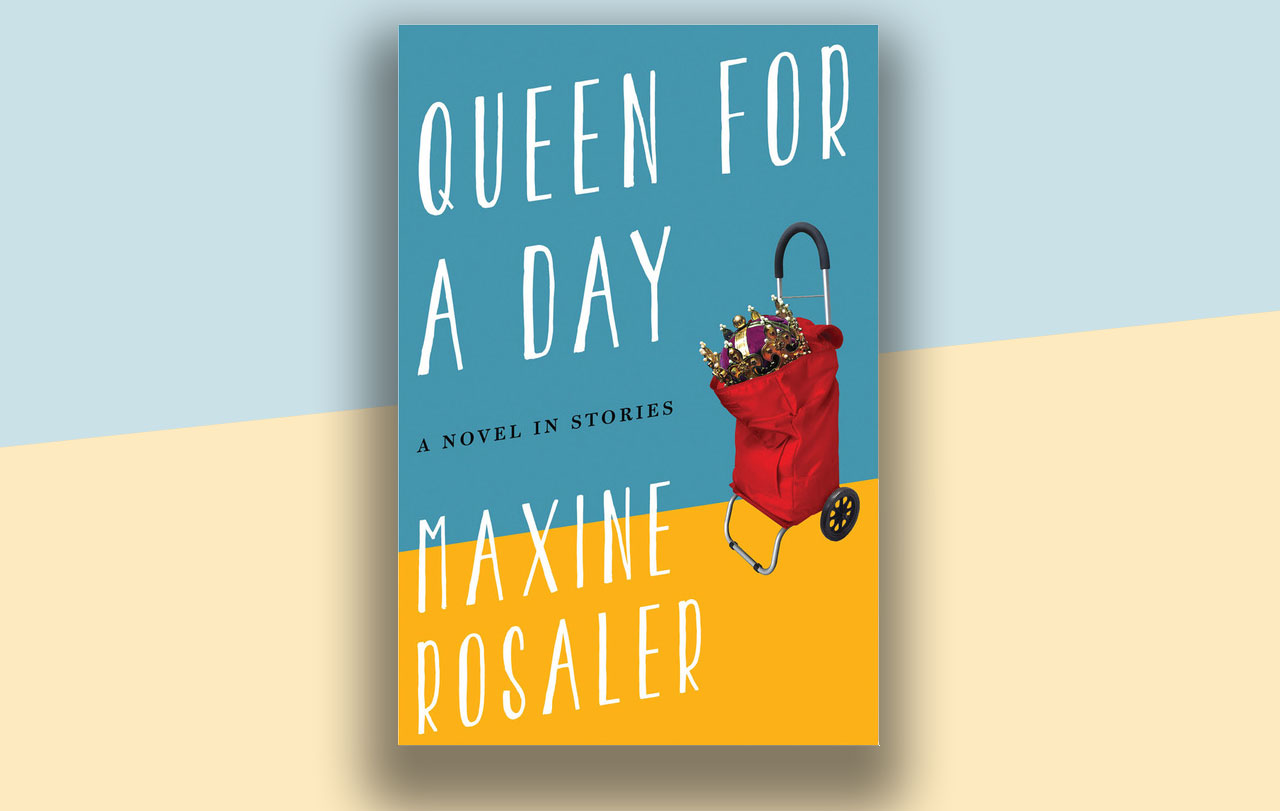
Danny is the protagonist of “Queen for a Day” (Delphinium Books), a debut “novel in stories” by Maxine Rosaler. This excerpt is one of the many unusual yet beautiful passages traversing this poignant book, which is based on Rosaler’s experiences with her autistic son, Benjy. The book focuses on Danny, but it’s really about how everyone else — his mother, father, teachers, therapists, etc. — react and respond to him and to other kids with special needs.
Rosaler is Mimi in the book, and one of Mimi’s many new friends is Amy (Mimi’s old friends, not coincidentally, disappeared after Danny was born). Amy’s father, a pediatrician, insisted that she put her autistic son in an institution: “His life is ruined, over before it has begun. But why should your life be ruined, too?”
The book — set in New York City in the mid-1990s, when society is transitioning from the practice of placing children with special needs in homes or institutions to allowing their families to nurture them — exposes an ugly underworld of doctors and bureaucrats who could not be less helpful and more exploitative. School districts, psychiatrists and counselors are not trained or equipped to fully address the challenges of special needs children, and Mimi spends her days consumed with writing letters, making phone calls, meeting with doctors, therapists, administrators and lawyers — days full of fear, fury, isolation and unbearable stress just trying to manage Danny’s daily life.
The book’s title is taken from a 1950s TV show on which female contestants — overwhelmed housewives before feminism — vie for the chance to be set free from the drudgery of their lives for just one day. Mimi and her friends were raised with feminism and expected to have it all — a career and a family. Having children with special needs has changed everything. Most of these mothers become depressed, anxious, bitter and resentful.
The year Danny gets into a yeshiva brings some immediate relief and hope. The school seems to be a natural fit for Danny’s ability to retain arcane facts — a characteristic of many autistic kids. “Danny seemed to enjoy learning a new language with an alphabet all its own. … He knew all the Hebrew prayers. He knew that fruits that grew on vines required different prayers from those that grew on trees, as did vegetables that grew underground versus those that grew aboveground.” And Mimi sees the yeshiva as a place of future support for Danny. After she and her husband die someday, she thinks, “there would be an entire community ready to step in to welcome him with open arms.”
Alas, the yeshiva isn’t set up to handle children like Danny, and he is forced to leave.
Suicide comes up frequently. “I just wanted to die for a little while,” Mimi says. “Probably there’s a point in everyone’s life where death seems like an attractive option.” One mother keeps two bags of barbiturates in the house, one for herself and one for her son.
Mimi refers to her life as “the battlefield of her existence.” She envies her husband’s more positive attitude: “How could he be in love with the same bewildering child and not let his life turn into one gigantic tragedy too?”
Mimi is ultimately saved by her (often dark) humor and her profound, unconditional love for her husband and Danny: “There existed an eternity in the love that was in my heart for my husband and my son.” The book tracks with exquisite detail the various stages she goes through to get to that point — her initial denial, her seeing the diagnosis of autism as tragic, and then her acceptance and even gratitude.
Mimi comes to realize that although raising an autistic child can create unimaginable stress, it is not a tragedy. “Wake up, Mimi!” she says to herself. “Is this how you want to be? Seeing misery in every grain of sand?”
Mimi comes to realize that although raising an autistic child can create unimaginable stress, it is not a tragedy. “Wake up, Mimi!” she says to herself. “Is this how you want to be? Seeing misery in every grain of sand?”
Mothers often talk about how Nature makes the second (or third or fourth) child easier. Well, what about children with incurable problems? Does Nature choose mothers and fathers with the most patience?
Mimi would shout: Absolutely not! She is the first to admit that she and her friends are imperfect. They are not saints.
But do these special children — children of God — end up changing their parents for the better?
There’s no question that Danny changes Mimi’s perspective on life. Danny’s world is beautiful. He is full of curiosity, delight and joy, and interested in machines, animals and plants. He lives completely unaware of and unconcerned about what people think of him. He is almost always happy. Mimi envies his world — until she realizes she can enter it too. And it is at that point that Mimi accepts Danny for who he is.
The bravery and tenacity of Mimi and Danny remind me of the first stanza of the song “This is Me.”
I am not a stranger to the dark
Hide away, they say
‘Cause we don’t want your broken parts
But I won’t let them break me down to dust
I know there’s a place for us
For we are glorious
Rosaler’s son Benjy, now 26, attends City College of New York, where he is majoring in chemistry. Through New York state’s Self-Direction program, Rosaler has been able to hire tutors to go to school with her son.
In “Queen for a Day,” she has been able to tell a story that, although woven with unbearable frustrations and fears, ultimately reveals lives that grow in love, acceptance and gratitude. It is a story that each of us needs to read.
Karen Lehrman Bloch is an author and cultural critic.