fbpx

August 23, 2018

Palestinian Gunman Targeting Israeli Soldiers May Have Worked for Doctors Without Borders

After conducting an investigation into a Palestinian gunman who was shot and killed at the Gaza border after he was targeting Israeli soldiers, Israel is saying that the gunman worked for Doctors Without Borders.

Reuters reports that the gunman, identified as 28-year-old Hani Majdalawi, shot at Israeli soldiers and tossed a grenade at them. A spokesman for Israel’s Coordination of Government Activities in the Territories (COGAT) told Reuters that they would be reaching out to Doctors Without Borders for an explanation.

No Palestinian terror groups have claimed that Majdalawi was one of their members. Majdalawi’s brother said on Facebook that Majdalwai was acting on his own and praised him as a “martyr.”

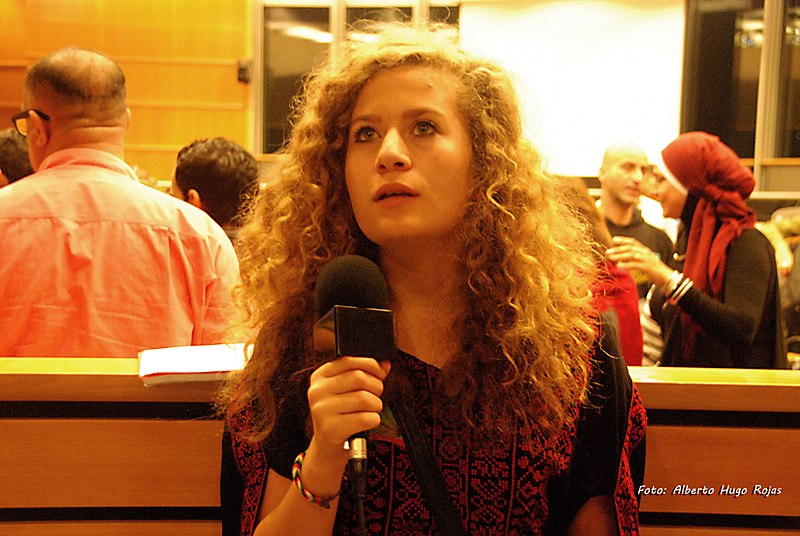
NGO Monitor researcher Yona Schiffmiller has argued that Doctors Without Borders is biased against Israel, citing their past support for Ahed Tamimi, the Palestinian girl who has thrown rocks at Israeli soldiers and even slapped one of them. Tamimi was recently praised by Hezbollah leader Hassan Nasrallah; she praised him in return.

Palestinian Gunman Targeting Israeli Soldiers May Have Worked for Doctors Without Borders Read More »

Palestinian Girl Who Slapped Israeli Soldier ‘Proud’ of Hezbollah Leader’s Praise

Sixteen-year-old Ahed Tamimi, the Palestinian girl who has made headlines after being imprisoned for eight months for slapping an Israeli soldier, said she is “proud” of being praised by Hezbollah leader Hassan Nasrallah.

A clip from Lebanese television and translated by MEMRI (Middle East Media Research Institute) begins with Nasrallah saying that Tamimi was “brave and courageous.”

“This is a girl that confronts Israeli soldiers and slaps them,” Nasrallah said before a crowd.

The clip then turns to Tamimi, who called Nasrallah “honorable” and thanked him for his support.

“His words boosted our morale – not just my morale but the morale of many people, because I represent the people,” Tamimi said, adding that Nasrallah’s words provided “support of the entire Palestinian people.”

Tamimi then said she “salutes” Nasrallah.

“We all support him and are proud of him,” Tamimi said.

Nasrallah has a record of anti-Semitic invectives, which includes him saying, “If we searched the entire world for a person more cowardly, despicable, weak and feeble in psyche, mind, ideology and religion, we would not find anyone like the Jew.” He has also said, “If they (Jews) all gather in Israel, it will save us the trouble of going after them worldwide.”

According to Jewish Virtual Library, Nasrallah has taken Hezbollah into “a more extremist line against Israel and the US” since he took over the terror group in 1991, pointing to his decision to have Hezbollah kidnap Israeli soldiers and then launch rockets into Israel in 2006, which resulted in the Second Israel-Lebanon War.

H/T: Times of Israel

Palestinian Girl Who Slapped Israeli Soldier ‘Proud’ of Hezbollah Leader’s Praise Read More »

Transforming Darkness Into Love

“God picked me to be a sample boy,” Danny said one day when he was 9. “God picked me to have my own unique point of view. That’s what’s unique about me — I have my own unique point of view. After I die, God will pick another sample boy to take my place.”

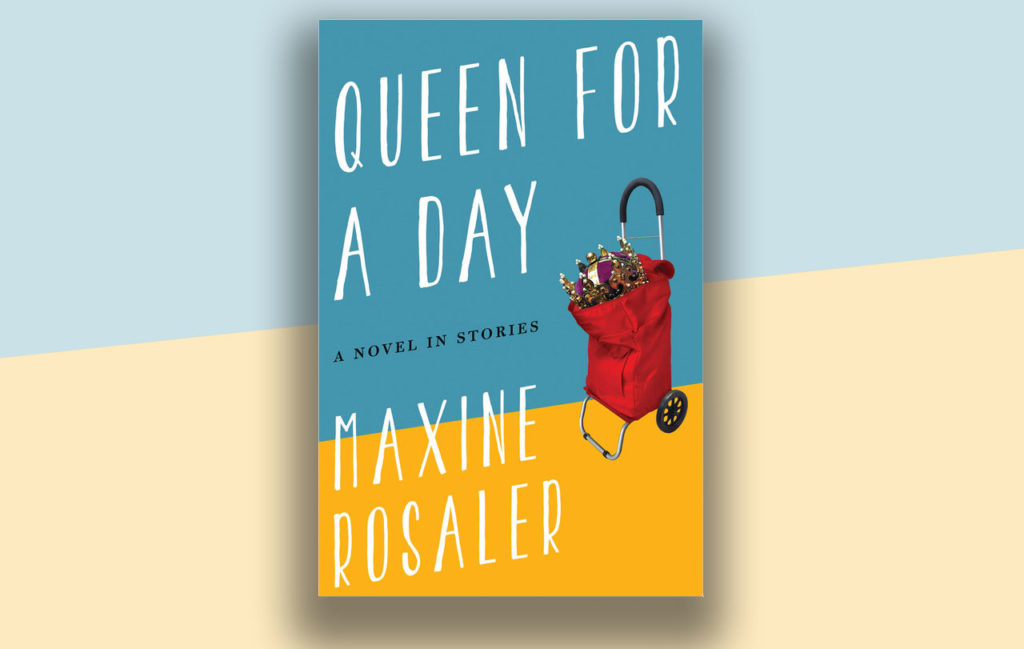
Danny is the protagonist of “Queen for a Day” (Delphinium Books), a debut “novel in stories” by Maxine Rosaler. This excerpt is one of the many unusual yet beautiful passages traversing this poignant book, which is based on Rosaler’s experiences with her autistic son, Benjy. The book focuses on Danny, but it’s really about how everyone else — his mother, father, teachers, therapists, etc. — react and respond to him and to other kids with special needs.

Rosaler is Mimi in the book, and one of Mimi’s many new friends is Amy (Mimi’s old friends, not coincidentally, disappeared after Danny was born). Amy’s father, a pediatrician, insisted that she put her autistic son in an institution: “His life is ruined, over before it has begun. But why should your life be ruined, too?”

The book — set in New York City in the mid-1990s, when society is transitioning from the practice of placing children with special needs in homes or institutions to allowing their families to nurture them — exposes an ugly underworld of doctors and bureaucrats who could not be less helpful and more exploitative. School districts, psychiatrists and counselors are not trained or equipped to fully address the challenges of special needs children, and Mimi spends her days consumed with writing letters, making phone calls, meeting with doctors, therapists, administrators and lawyers — days full of fear, fury, isolation and unbearable stress just trying to manage Danny’s daily life.

The book’s title is taken from a 1950s TV show on which female contestants — overwhelmed housewives before feminism — vie for the chance to be set free from the drudgery of their lives for just one day. Mimi and her friends were raised with feminism and expected to have it all — a career and a family. Having children with special needs has changed everything. Most of these mothers become depressed, anxious, bitter and resentful.

The year Danny gets into a yeshiva brings some immediate relief and hope. The school seems to be a natural fit for Danny’s ability to retain arcane facts — a characteristic of many autistic kids. “Danny seemed to enjoy learning a new language with an alphabet all its own. … He knew all the Hebrew prayers. He knew that fruits that grew on vines required different prayers from those that grew on trees, as did vegetables that grew underground versus those that grew aboveground.” And Mimi sees the yeshiva as a place of future support for Danny. After she and her husband die someday, she thinks, “there would be an entire community ready to step in to welcome him with open arms.”

Alas, the yeshiva isn’t set up to handle children like Danny, and he is forced to leave. 

Suicide comes up frequently. “I just wanted to die for a little while,” Mimi says. “Probably there’s a point in everyone’s life where death seems like an attractive option.” One mother keeps two bags of barbiturates in the house, one for herself and one for her son.

Mimi refers to her life as “the battlefield of her existence.” She envies her husband’s more positive attitude: “How could he be in love with the same bewildering child and not let his life turn into one gigantic tragedy too?”

Mimi is ultimately saved by her (often dark) humor and her profound, unconditional love for her husband and Danny: “There existed an eternity in the love that was in my heart for my husband and my son.” The book tracks with exquisite detail the various stages she goes through to get to that point — her initial denial, her seeing the diagnosis of autism as tragic, and then her acceptance and even gratitude.

Mimi comes to realize that although raising an autistic child can create unimaginable stress, it is not a tragedy. “Wake up, Mimi!” she says to herself. “Is this how you want to be? Seeing misery in every grain of sand?”

Mimi comes to realize that although raising an autistic child can create unimaginable stress, it is not a tragedy. “Wake up, Mimi!” she says to herself. “Is this how you want to be? Seeing misery in every grain of sand?”

Mothers often talk about how Nature makes the second (or third or fourth) child easier. Well, what about children with incurable problems? Does Nature choose mothers and fathers with the most patience?

Mimi would shout: Absolutely not! She is the first to admit that she and her friends are imperfect. They are not saints. 

But do these special children — children of God — end up changing their parents for the better?

There’s no question that Danny changes Mimi’s perspective on life. Danny’s world is beautiful. He is full of curiosity, delight and joy, and interested in machines, animals and plants. He lives completely unaware of and unconcerned about what people think of him. He is almost always happy. Mimi envies his world — until she realizes she can enter it too. And it is at that point that Mimi accepts Danny for who he is. 

The bravery and tenacity of Mimi and Danny remind me of the first stanza of the song “This is Me.”

I am not a stranger to the dark

Hide away, they say

‘Cause we don’t want your broken parts

But I won’t let them break me down to dust

I know there’s a place for us

For we are glorious

Rosaler’s son Benjy, now 26, attends City College of New York, where he is majoring in chemistry. Through New York state’s Self-Direction program, Rosaler has been able to hire tutors to go to school with her son.

In “Queen for a Day,” she has been able to tell a story that, although woven with unbearable frustrations and fears, ultimately reveals lives that grow in love, acceptance and gratitude. It is a story that each of us needs to read.


Karen Lehrman Bloch is an author and cultural critic.

Transforming Darkness Into Love Read More »

Arya Marvazy: Leading a Community to LGBTQ Acceptance

As the managing director of JQ International, 32-year-old Arya Marvazy is helping the organization lead the seismic shift toward LGBTQ acceptance in the Jewish community and beyond. 

Growing up in a Persian-Jewish community in Los Angeles, Marvazy didn’t think he could ever come out to his conservative Iranian family, let alone become a public activist in the LGBTQ movement. However, in 2015, after attending UC San Diego, moving to Israel for a year and working at Hillel International in Washington, D.C., Marvazy returned to LA to do both of those things. 

Last October, Marvazy launched the first Persian Pride Fellowship program at JQ International — a nine-month activist and leadership training program for young adult Iranians who identify as LGBTQ or as allies. The 12 interfaith Iranians who made up the first cohort completed several “impact projects” in the last year, including a panel with the city of West Hollywood and a two-minute public service announcement that received 16,000 views on Facebook. 

Marvazy met with the Journal to share his journey of coming out, living at the intersection of conflicting identities and working to bridge the gaps between those identities.  

Jewish Journal: What was your experience growing up gay in a Persian-Jewish community?
Arya Marvazy: At around age 12, I recognized I was different. I would look around me and think, ‘I’m screwed because I don’t see myself reflected anywhere within the community.’ What I heard was negative comments like, ‘Oh, that person is crazy,’ or ‘how disgusting.’

JJ: Did you feel accepted by the Jewish community?
AM: I don’t mark a difference between my Iranian experience and my Jewish experience because I grew up in such a rich Persian-Jewish community. For my family, Shabbat was our Torah. The way that we maintained our Judaism was through how valuable and consistent Shabbat was for us. Celebrating Shabbat with Persian Jews, celebrating High Holidays with Persian Jews, having Persian-Jewish friends, Persian-Jewish supermarkets — there wasn’t a separation between what it meant to be Iranian and what it meant to be Jewish because I was always at the intersection of those two identities. 

JJ: What do you feel is the best way for someone to become an ally of the LGBTQ community?
AM: An American friend, who heard my story and heard how deeply in the closet I was, simplified their recommendation to me. They would say, ‘Trust me, your parents are going to love you. It’s going to be totally OK,’ and here I was thinking, ‘You have no idea what I am up against, what my community thinks about this, what my parents think about this.’ 

We can never prescribe to another person, period, but in particular a person of a different culture or background or history. Because each person’s life and journey is unique, it’s detrimental to that person’s experience for us to propose how they might go about the next steps. Listening in more closely and offering a safe space for them to express what they feel are the best avenues by which to be good allies.

JJ: As a first-generation American, what do you feel is the source of the generation gap between you and your parents’ generation?
AM: They, understandably, desire not to assimilate and not become like the people they are now living among. Instead, they want to preserve the culture and identity they would have had if they had stayed in Iran. I understand the meaningfulness behind that pursuit. However, there is this reality, in particular with LGBTQ identity, that this is a part of people’s lives that has existed since the dawn of time. It is a very normal part of the human condition. It’s time for us, as young adults, to patiently and with intention, educate our parents and the generation before them about what our realities are as LGBTQ people.

JJ: How did you decide you were ready to come out?
AM: When I was 22, and at UC San Diego, a Persian fraternity brother came out to me. Because of him, my guard came down. I began my process of coming out with him. Then, I came out to some but [not] others. There was a constant editing of my experience, given who knew and who didn’t — what I said, how I expressed myself, who I was. That went on for about five years. 

“It’s time for us, as young adults, to patiently and with intention, educate our parents and the generation before them about what our realities are as LGBTQ people.”

JJ: How did you decide you wanted to focus your life’s work on activism for LGBTQ rights?
AM: My life’s mission is to help other people and to ensure [they] don’t suffer the way I did. At that point I had been a community organizer within the Jewish community for 10 years. I was going to post a video on Facebook and come out of the closet and offer my help to others. And I did that the day after National Coming Out Day in 2015. 

JJ: What do you hope to achieve with the JQ Persian Pride programming?
AM: Normalizing LGBTQ identity within the Iranian community is well on its way. We want to see that really become a solid part of the fabric of our community here in Los Angeles. When a community is able to say that they stand strongly as allies, the rest of the world looks at that as an example upon which to build. I want to continue expanding the programming that we are doing. I want to ensure that our youth are not suffering the consequences of parents who are unsupportive or communities that make them feel ‘less than.’ 

On a more individual level, I want every LGBTQ Iranian to know, if you need support, that support is here for you.


Evita Thadhani is a high school junior at Milton Academy in Massachusetts, and a Jewish Journal summer intern. 

Arya Marvazy: Leading a Community to LGBTQ Acceptance Read More »

Apple Flower Vases

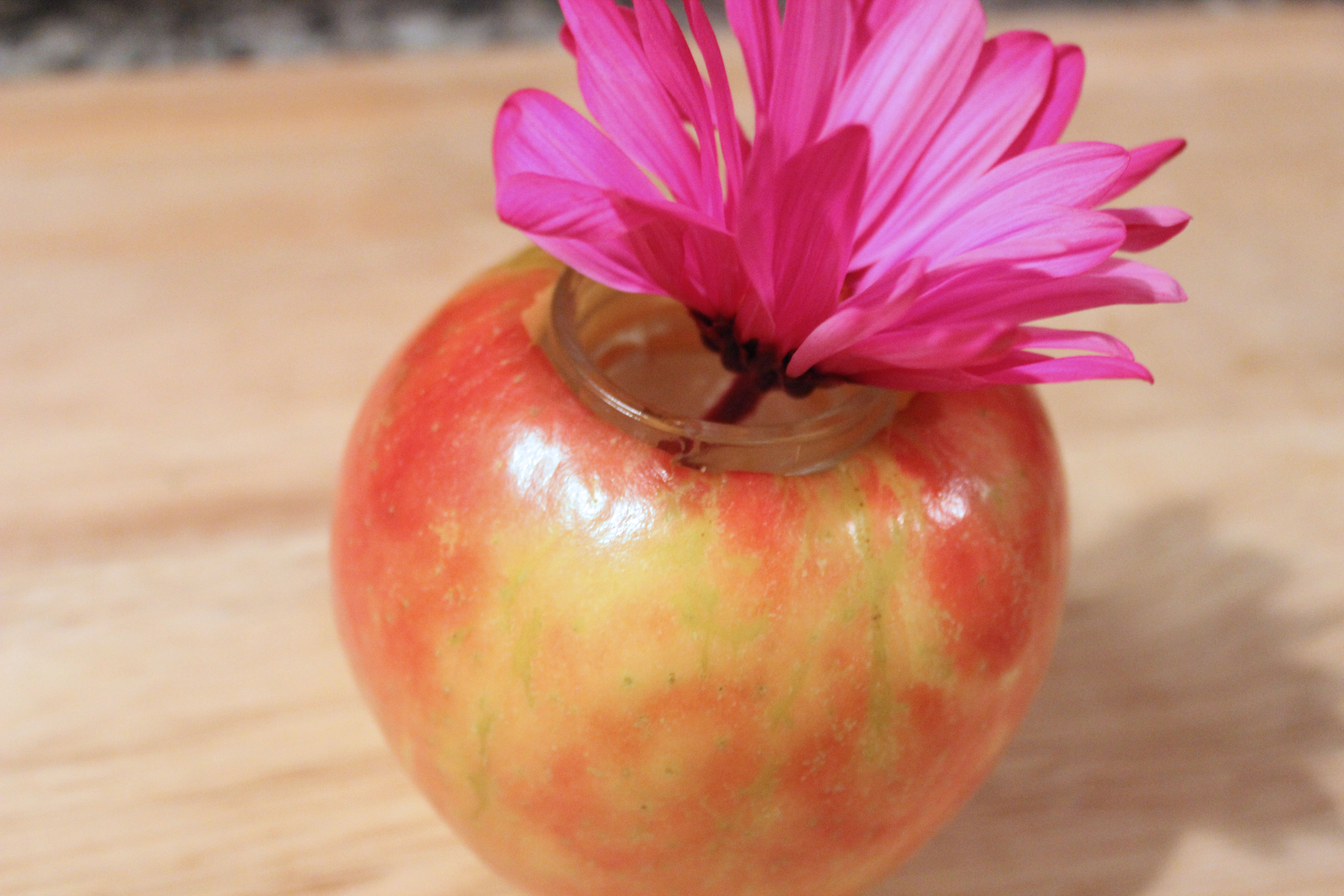
I’m really inspired by apples right now, partly because it’s a popular back-to-school motif, and also because it ties in with the upcoming Rosh Hoshanah holiday. Apples are so versatile for crafts and décor projects, as you can see with these floral arrangements featuring apples as miniature vases. They would make perfect teacher-appreciation gifts or stylish centerpieces for the High Holy Days.

I’ve included two different directions for this project — one using floral foam and one using a little jar to hold the water. Both work well, so it really depends on the supplies you have on hand.


What you’ll need:
Large apples
Melon baller
Floral foam
Small glass jar
Flowers

Floral Foam Method
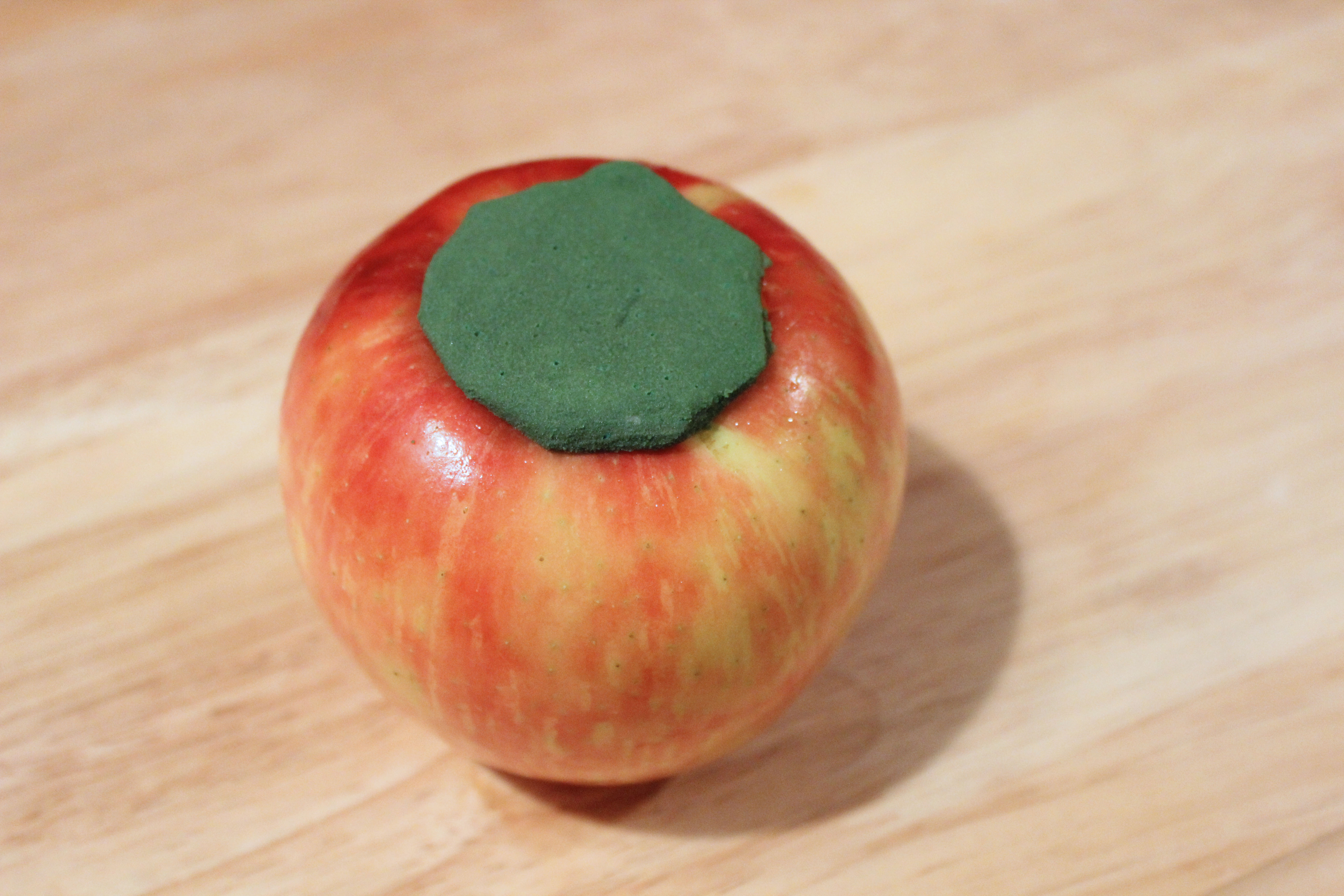
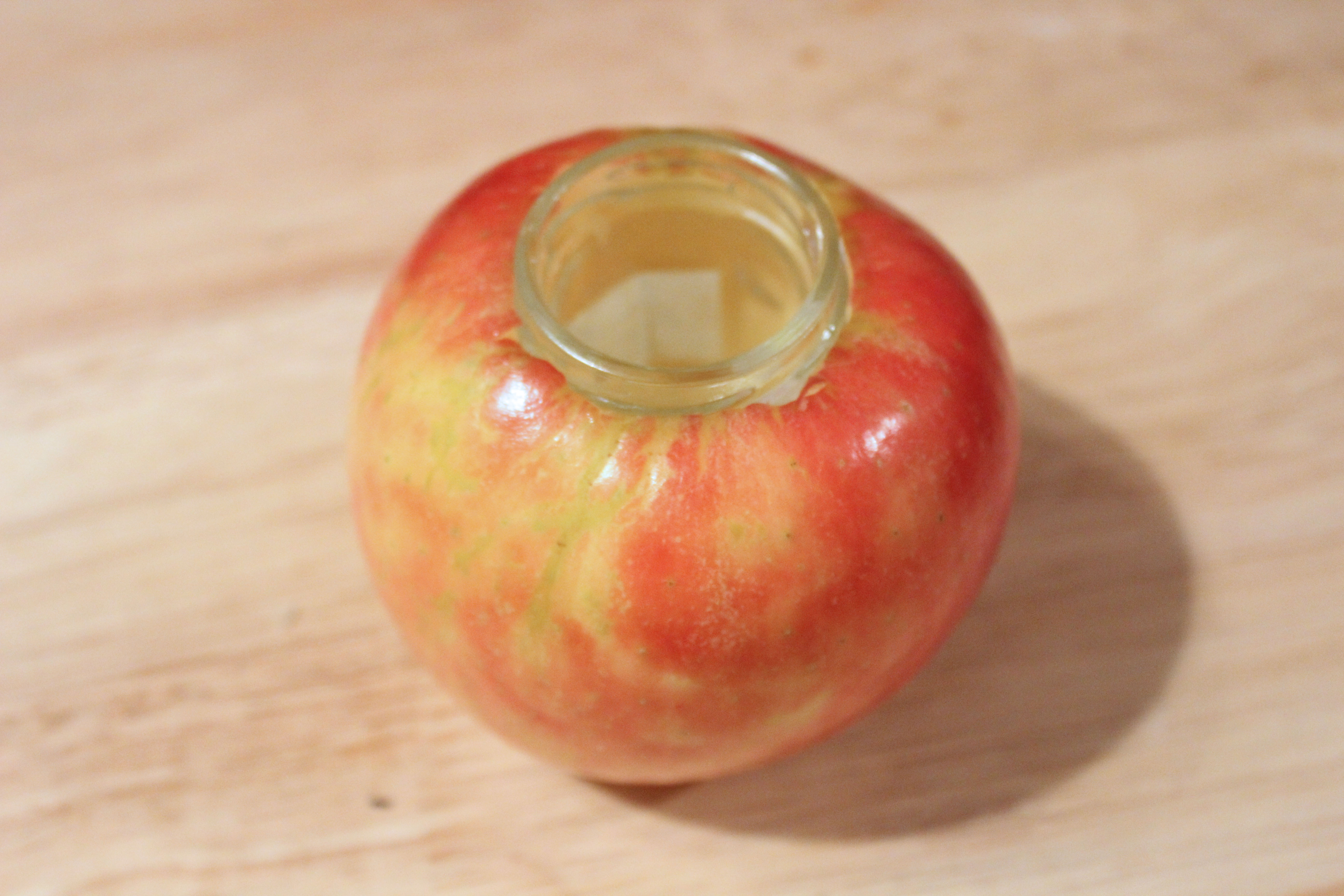
1. Using a melon baller, cut an opening in an apple that is about 2 inches in diameter and 2 inches deep.

2. Cut a piece of floral foam that will fit into the hole. Let the floral foam sit in water for a few seconds to absorb water, then place it in the opening.

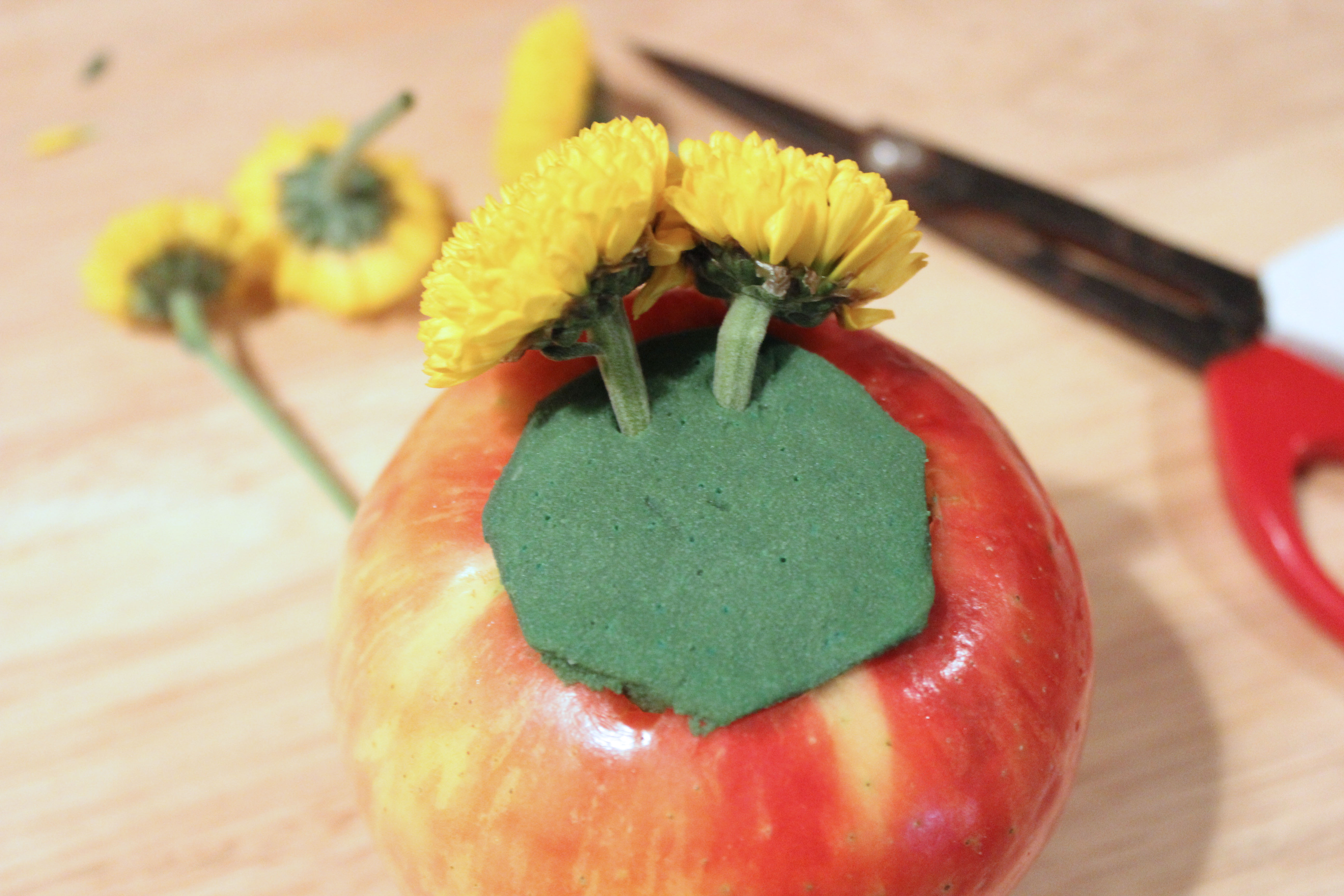
3. Cut the stems of your flowers and insert the stems into the floral foam. 


Glass Jar Method
1. I used a small glass jar that previously held jam. It’s the kind of jam jar served with room service and at brunch. You can also use a shot glass if it’s small enough.

2. Insert the jar in the opening of the apple. You may need to expand the hole to make it fit. 

3. Fill the jar with water. Cut the stems of the flowers and place the blooms in the jar. 


Jonathan Fong is the author of “Flowers That Wow” and “Parties That Wow,” and host of “Style With a Smile” on YouTube. You can see more of his do-it-yourself projects at jonathanfongstyle.com.

Apple Flower Vases Read More »

Sparrow Mart Art Installation Has a Kosher Section

High on a supermarket shelf, one side is stacked with boxes of matzo. The other side sits bare, because so many packets have already been sold. But who is buying matzo in late August? It’s not traditional High Holy Days fare.

That’s because the supermarket is called Sparrow Mart, located inside the Standard hotel in downtown Los Angeles, and every single product in the market — all 31,000 of them — are made of felt, all of which are for sale. The cheapest individual products left in the store are the sushi pieces ($10), while the most expensive individual products are the boxes of cereal ($160). A huge seafood counter is the most expensive item on sale at $50,000.

The pop-up market, which opened Aug. 1 and closes Aug. 25, is the brainchild of 32-year-old British artist Lucy Sparrow, who first came to America’s attention last summer when she brought 9,000 felt creations to New York and created a pop-up bodega called “8 ’Til Late.” When those products sold out early, her plan for Los Angeles was to make Sparrow Mart bigger and better. 

The gamble paid off. While attending the exhibition is free and is open Tuesdays to Sundays from 11 a.m. to 9 p.m., Sparrow Mart does not take reservations and people must line up at the hotel, where they are then let in to the supermarket 50 at a time. Since Sparrow Mart’s opening, there have been lines around the block.

The Journal was let in to the market ahead of a morning opening where Sparrow and her public relations rep, Clare Croome (also from England), were busy stocking shelves. Sparrow is in the store every day and often stands behind the checkout counter and sells the products to customers. Many have no idea that she’s the artist. 

“It’s part of the whole interactive art experience,” Sparrow said. She enjoys watching people come in and “ooh” and “aah” over the products that speak to them. “The point of the show is getting an emotional, nostalgic response,” she said. “Whatever’s happening in the real world out there, you can come in here and have this Zen-like range of stuff. It’s very comforting.”

Sparrow has filled her 2,800 square feet of space at the Standard with every imaginable grocery product. After laments from the New York visitors that she didn’t include any products from her own country, the Los Angeles pop-up now has an entire British section. Sparrow also wanted to focus on products unique to the Southland, including tortillas and Mexican soft drinks, an abundance of fruits and vegetables (which have been selling out at record pace), and an entire sushi section (none of which were part of the New York installation).

But the Journal came to check out the kosher section. While Sparrow isn’t Jewish, she said, “The Jewish community is such a massive part of L.A., I think it would be impossible not to have a [kosher section].”

Like all the products in the store, the attention to detail on the kosher products is astonishing. From kosher salt to gefilte fish jars, containers of borscht, Polish kosher dill pickles, egg noodles, Kedem grape juice and Manischewitz wine, and, of course, the ubiquitous matzos, the familiar symbols do evoke a sense of nostalgia.

“One of my favorites is the egg noodles,” Sparrow said, holding up a packet of them to be photographed with. “I tried to get that design spot on. We’ve also sold a lot of the Kedem grape juice.”

The Manischewitz hasn’t been selling so well, but that may be because Sparrow decided to make those just over a week ago, so they are new to the store. The Journal also explained local Jews’ love-hate relationship with the super-sweet wine. 

“I think I had matzos when I was little in England,” Sparrow said, and while she hasn’t tried the gefilte fish, she noted, “I’ve been told gefilte fish is great if your family makes it but if you have it from a jar it’s just disgusting.”

“The point of the show is getting an emotional, nostalgic response. Whatever’s happening in the real world out there, you can come in here and have this Zen-like range of stuff. It’s very comforting.” — Lucy Sparrow

In choosing which kosher products to include, Sparrow said, “I went around supermarkets choosing absolutely everything and tried to figure out what it was.”

Like all the other products in the store, Sparrow said choosing which products to include is “mainly about what is the best design. Some things don’t translate well to felt. It’s usually about the color and bold, classic designs that have been around for ages.”

Croome added that while some people have purchased the kosher products for Hanukkah gifts, one local woman came into the store and bought three of every single kosher product on the shelves. “She said she was going to put these things in the center of her Passover table next year,” Croome said, “and that she was having 30 people for the [seder].”

Sparrow hopes to sell all the products in the store before focusing on her next project — a medical installation for the Miami Art Fair. “I can’t say any more about that,” she said. “It’s top secret.”

There are still a few days left to check out Sparrow Mart. But be quick — the kosher horseradish is already all sold out.


Sparrow Mart is open Tuesdays-Sundays through Aug. 31 from 11 a.m.-9 p.m. at the Standard hotel, 550 S. Flower St.

Sparrow Mart Art Installation Has a Kosher Section Read More »

100 Years of Fading Memories

Sitting with Ray Walker, a woman just shy of her 100th birthday, in a dreary senior citizens’ home, I realize that trying to catch her in a sufficiently lucid state to conduct an interview with her, this might be as good as it gets. And it isn’t very good. She has trouble remembering where she is right now, let alone recalling the places she has been in her life.

She looks at me, her expression both wistful and crestfallen. “So many things are not so important anymore,” she says. 

Luckily, I know her intimately. The story goes that Walker fell off the bus and into my arms. It happened on Purim, after she made aliyah from the United States 11 years ago. A bus on Jerusalem’s Jaffa Street screeched to a halt and the driver opened the door, flinging Ray onto the curb where I was standing.

Walker’s glasses were smashed, her face was scratched, and the rest is history. We became fast friends. Until recently, I’d never felt the yawning abyss of the decades that separate us. She is, for all intents and purposes, my peer. We are kindred spirits in many ways. We email each other haikus and relay our thoughts in rhyme because ordinary speech is so, well, ordinary. 

Walker was born with a shock of red hair on the Lower East Side of Manhattan to immigrant parents from Eastern Europe on March 19, 1919. Her father worked in a factory making coats. Her mother, with whom she had a difficult relationship, was a homemaker. Of her two sisters and two brothers, Ray is the only one still alive. 

In her 70s, Walker moved to New York’s Orthodox enclave, Borough Park, in Brooklyn. Coming to the Holy Land seemed an obvious next step. Ask her now, though, and she cannot remember the exact reason she came to Israel.

She was a teacher, a job she called “great fun.” She was a hippie before the word even existed, traveling around the world, adhering to a strict vegetarian diet, eating superfoods decades before doing so became a thing, and never throwing out anything. She married in her 20s and a decade later she divorced. She never had children and never remarried. She once told me that her poems were her children. 

Walker makes everyone smile with her poems. On any particular day, no matter how forgetful she’s feeling, you can bet your bottom dollar she’ll remember every word of her poems. And the lyrics to songs by the Rat Pack. When times are tough, Walker  will smile brightly and sing, “Now nothing’s impossible, I’ve found for when my chin is on the ground/ I pick myself up, dust myself off, and start all over again.”  

She became religiously observant fairly late in life. In her 70s, she moved to New York’s Orthodox enclave, Borough Park, in Brooklyn. Coming to the Holy Land seemed an obvious next step. Ask her now, though, and she cannot remember the exact reason she came to Israel. She recalls a poem she wrote, five, 10, or was it 20 years ago? 

I had a thought…
Where did it go?
What was I saying?
Oh yes… “and so…”
Again I forgot it!
What’s with my mind!
Lately it’s been…
So absent, I find.

100 Years of Fading Memories Read More »

UCLA Unsure About Hosting Anti-Zionist Conference in November

National Students for Justice in Palestine (SJP) announced on their website that UCLA’s SJP chapter will be hosting the national SJP conference in November. However, when the Jewish Journal contacted UCLA, they had not yet confirmed that the conference would be happening on campus.

Algemeiner first reported that UCLA would be hosting the conference, linking to National SJP’s announcement, which states: “Students for Justice in Palestine at UCLA will be hosting the 8th annual National Students for Justice in Palestine Conference on November 16-18, 2018 in Los Angeles, CA.”

 But Ricardo Vazquez, UCLA’s associate director of media relations, told the Journal in an email that UCLA had first learned about the conference in a Facebook post on August 21.

“We [are] working to verify the information in the Facebook post,” Vazquez wrote. “SJP is a student group, and most students are still away from campus until we start the fall quarter in late September. To clarify again: This would be an SJP-sponsored event that the organization plans to host on campus.”

UCLA’s SJP and National SJP decried Zionism in the announcement as “perverse in all aspects of Palestinian life and aims to destroy Palestinian existence and culture.”

“With the Nakba and the Naksa, relentless attacks on Gaza, cementing apartheid into law, and the everyday oppression of Palestinians at all levels of life, it may seem at times like all hope of seeing a free Palestine has been diminished,” SJP UCLA and National SJP wrote on the National SJP website. “And yet, Palestinians have persevered through the generations by means of their resistance and resilience.”

They also referred to Zionism as “ethnic cleansing, destruction, mass expulsion, apartheid, and death” and that it “can be destroyed” and said that they would discuss divestment campaigns as one of the ways they can be active on college campuses.

UCLA’s Students Supporting Israel (SSI) chapter called on UCLA to deny SJP from being allowed to host their conference on campus in light of the May 17 disruption of an SSI event.

“SJP clearly aimed for the destruction of our event, the denial of our free speech, and the negation of the academic freedoms which our university stands for, a similar pattern of action used by them on US campuses time after time,” UCLA SSI wrote on Facebook. “While for some the events of May 17th are well in the past or act as merely a reminder of the growing prevalence of anti-Semitism Zionophobia across university campuses, for us, SJP across the country serves as an organization that denies freedom of speech and uses violent methods to silence their opponents, methods that lead to bullying and violence.”

They added that the SJP conference aims “to further subject our university to their racist, hateful, and Zionophobic tactics and messages.”

“Zionism is the national movement of the Jewish people that called for Jewish sovereignty and led to the establishment of the state of Israel,” UCLA’s SSI wrote. “Zionists believe in the return of an ancient and indigenous people into their homeland after a millennia, and the right of the Jewish people to finally become masters of their own destiny. Today, decades after the Jewish people have returned to their homeland to established a Jewish, indigenous, and democratic state, those who support the existence of Israel face anti-Semitism and Zionophobic attacks and disruptions against them on college campuses, and those efforts are greatly led by SJP.”

The post concluded with the call for the UCLA administration to “take the appropriate actions in not allowing a well-known hate group like SJP to host their national conference on our campus.”

“In doing so, the administration will set a national example that denial of free speech, disruption, intimidation of students, and violence will not be tolerated in the academic community,” UCLA’s SSI wrote.

UCLA professor Judea Pearl had a similar reaction.

“My students and colleagues at UCLA express revulsion and indignation at the idea that our campus will be hosting a racist Zionophobic conference aimed at the destruction of the Jewish homeland,” Pearl said in a statement sent to the Journal. “Israel is a cherished symbol of identity to thousands of students on this campus, and sponsoring a blunt Zionophobic conference at their face is telling them they are not welcome at the University of California. Zionophobic racism is still racism.”

“We plead with the Chancellor to react to this proposed conference the same way he would react to any racist conference, be it Islamophobic or white-supremacist.”

When asked about how UCLA would address concerns of pro-Israel students about the SJP conference, Vazquez responded:

UCLA is bound by the First Amendment, which protects everyone’s right to express their ideas, even those that are controversial or unpopular. UCLA officials condemned the disruption of the ‘Indigenous Peoples Unite’ event on May 17, activating UCLA’s student conduct process and forwarding complaints filed by students to the Los Angeles City Attorney’s Office, which is now reviewing the matter. UCLA remains committed to protecting all of our students, regardless of their religious or ethnic identities or political beliefs. We will hold everyone to the same standards and continue to work to foster an environment where everyone’s rights are protected. Today we are proud that UCLA has many intellectual and cultural links to Jewish and Israeli institutions. Many UCLA schools, departments, and institutes have active student and faculty exchange programs with Israel and we have study abroad programs at the Hebrew University, the Jerusalem Academy of Music and Dance, Ben-Gurion University of the Negev and the Technion.”

As of publication time, neither UCLA’s SJP nor National SJP had responded to the Journal’s request for comment.

UCLA Unsure About Hosting Anti-Zionist Conference in November Read More »

Table for Five: Ki Teitzei

Weekly Parsha: One Question, Five Voices
Edited by Salvador Litvak, the Accidental Talmudist

How do we fulfill the Jewish mission today?

Rabbi Sherre Z. Hirsch
Senior Rabbinic Scholar, Hillel International
Our son, Levi, at age 7 was asked by an adult acquaintance of ours, What “kind” of Jew are you? Levi, not understanding the question, silently stared back at him. Thinking that Levi did not hear the question, he asked again, emphasizing the word “kind,” hoping that Levi would respond with a familiar label like Reform, Conservative or Orthodox. Levi grinned from ear to ear and said, we are “joyful Jews.” 

What I want most to communicate to my children, my students and my congregants is for each person at their core to serve God with joy, for that is what Moses wanted from each of us — to serve God with joy (and by extension each human being as an expression of the Divine presence). 

Israel Salanter, the founder of the Mussar movement in the mid-19th century, understood that to serve another takes work. We must do a daily accounting of our souls and ask ourselves: How can I serve? Not in the expectation of reward or on the condition of reciprocity. Rather, we need to ask from the space of love, compassion and kindness — the essential ingredients of joy. 

If you are a traditionalist, you may serve through the practice of mitzvot. If you are an activist, via tikkun olam. A culturalist? Perhaps through celebration. Pious? Probably you serve through prayer. For an athlete, maybe movement is the method. A spiritualist? Stillness and meditation. Regardless, lose the label, serve with joy and then we can together say, “Mission accomplished.”

Rabbi Yekusiel Kalmenson
CEO, Renewal Health Group
“What does it mean to be Jewish?” is a question as old as Judaism itself. Historically, the first reference to Jewish nationhood comes from the original anti-Semite, Pharaoh. The book of Genesis refers to us as the “children of Israel,” a family unit. Pharaoh adds, “Behold the nation of the children of Israel are more numerous and stronger than we” (Exodus 1:9). Throughout our history, we’ve often been defined by our enemies and have thus self-identified. 

Moses changed all of that. His last speech to his liberated tribe of slaves was something to the effect of, “Life isn’t about finding yourself. Life is about creating yourself” (Bernard Shaw). What binds us is not our common enemies and their disdain for us. Our national identity should not be reinforced by hate from others, but by our love for God, our tradition and one another. 

Moses empowers us to create an identity for ourselves as universal ambassadors of monotheism and morality. From commerce to cuisine and marriage to meditation, the vastness of Torah is all-encompassing in its range and relevance. Our mission is therefore to forge and proactively create our destiny through exposing the higher meaning in our daily lives. 

Moses’ clarion call, therefore, is especially relevant today as anti-Semitism is rearing its ugly head yet again. If Judaism is to survive the test of time, it must be processed and personalized by the Jewish community rather be than designed and defined by our detractors. 

Rabbi Marc D. Angel
Founder and Director, Institute for Jewish Ideas and Ideals
In his charge to the Israelites, Moses reminds them that they were slaves in Egypt, that God redeemed them and gave them a set of commandments. They were never to forget their special mission to live as a righteous nation. Remember who you are; if you forget your special mission, you are lost, you betray God, you betray yourselves. 

Woody Allen made a film called “Zelig” about a man who constantly changed his appearance to blend in with the people around him. Zelig pretended to be anyone but turned out to be no one. 

During the course of a lifetime, there is temptation to play the role of Zelig. In order to curry favor with others, one adopts their attitudes, opinions, styles and behavior patterns. But in the process, one becomes inauthentic, a play actor rather than a genuine person true to oneself. 

Much human misery is the result of people betraying themselves by adopting artificial personae. They are so anxious to impress or blend in with others that they lose their own selves in the process. They no longer have the ability to distinguish between who they are and who they are pretending to be. 

Moses charged the ancient Israelites, as he would charge us today: Be true to your Torah, to your identity, to your deepest inner truths. Don’t chase after false gods and glitzy behaviors. If you betray your divine mission, you betray yourself. You were slaves in Egypt, but you are to be the agents of self-respecting freedom. 

Rabbi Daniel Bouskila
Sephardic Educational Center and Westwood Village Synagogue
Early in the Book of Deuteronomy, Moses articulates his vision for the children of Israel: to be an “Am Chacham v’Navon” — a “Wise and Understanding People” (Deuteronomy 4:6). There are five key components to our achieving this status:

1. “V’ahavta — You shall love God” (Deuteronomy 6:5) “Fulfill God’s commandments from a place of love,” says Rashi, so that Judaism never seems like a burden in our lives.

2. “V’ahavtem — You shall love the stranger” (Deuteronomy 10:19) “Those who forget what it feels like to be a stranger eventually come to oppress strangers,” says Rabbi Jonathan Sacks. Born out of our bitter experiences as slaves in Egypt, we should never reach the point of oppressing strangers. Never.

3. “Zachor — Remember what Amalek did to you” (Deuteronomy 25:17). Amalek represents pure evil. As a people who experienced Amalek’s evil first hand, we must never turn a blind eye to evil. We must stand up to evil, speak out against it and fight it by all means necessary.

4. “Lo Tasur — You shall not deviate to the right or to the left” (Deuteronomy 17:11). Extreme interpretations of Judaism are not sustainable. We must strive toward Maimonides’ ideal, the “Golden Middle Path.”

5. “V’asita ha-yashar — You shall do what is upright and good” (Deuteronomy 6:18). What does God ultimately want from us? To be honest, good people.

How do we fulfill this mission today? Simple: Love God, love the stranger, fight evil, shun extremism, be good. Not so simple, I know … but let’s keep trying.

Rabbi Jackie Redner
Rabbi in Residence, Vista Del Mar Child and Family Services
The Jewish people’s mission is to bring holiness into the world even during life’s darkest moments. When the adrenaline of war, lust and the desire to overpower another is upon us, this week’s parsha asks us to say “no” to ourselves:

When you go into battle against your enemies … and you see among the captives a beautiful woman and you desire her … you shall bring her into your house, she shall shave her head. … Remove the garments of her captivity and let her mourn her father and mother for a full month. — Deuteronomy 21:10-13

Before you do anything that may hurt another, learn how to say “no” to yourself. Stop — and in the moment between thought and action, search out, touch and then cleave to that which is real within you, beyond the mantle of the body and its reactivity.

Stop — before self-centeredness and limited perspective lead you to wrong another. See beyond appearances. See all the way through to the heart of the one who stands before you, beyond the mortal shell that we all wear and that makes us all vulnerable.

Do this. Take this moment so that God’s compassion can arise within you. Do this, all of this, so that through you, God’s compassion can begin to heal the broken heart of humankind.

Whether in business, politics, medicine or partnership, the ability to say “no” to oneself is central to the Jewish mission, and it is how Jews bring God’s blessing into our world. 

Table for Five: Ki Teitzei Read More »

Channeling Sweet Things

Grief is a funny thing. It can come out of nowhere and feel like a curtain descending upon the heart like a black veil. The scent of something cooking, a taste of your soul food, a song or photograph — you never know when the sorrow of loss will come to unmoor you.

My solution is to imagine a team of these lost souls moving around with me invisibly and protecting me from harm. These guardians are my grandparents, my uncles and aunts who are no longer here but I hold them in my thoughts as if they were. I have designated them as my protectors, and I know that when I need help I need only ask one of my team, and I tend to get the answer magically in the form of a memory. 

Because I don’t reside in Israel where the rest of my extended family lives, it’s sometimes easier for me to simply pretend that my loved ones are still around even when they are long gone. Although the way we bury our dead in Israel leaves very little to the imagination, there is still a conscious denial that takes place when you are not used to seeing someone on a regular basis. This can lull you into a sense that they might still be there — that is, until you go to ask them a question. Like this past week, for example, when I wanted to ask my Aunt Dora how to make kadayif, a dessert, like a baklava, that is ubiquitous in Israel, made from a shredded phyllo-based pastry abundant in Turkey, Greece and throughout the Middle East. 

The trouble is, even though I spoke to my Aunt Dora about recipes on the phone every Saturday for most of my life, when my impulse was to reach for the phone, the reality that she’d been dead for a year suddenly bore down on me. Because  kadayif, in all its angel hair-like pastry glory, is reminiscent of a bird’s nest, I recalled a story that Dora told me when I was a child about two girls who set off in search of a magic potion made from the milk of birds. In the fable, one of the girls who stops and enlists the help of others gets guidance to the elixir and prevails, while the other who tries to find the mythical potion alone comes up against obstacles and gives up hope. 

Because  kadayif, in all its angel hair-like pastry glory, is reminiscent of a bird’s nest, I recalled a story that Dora told me when I was a child about two girls who set off in search of a magic potion made from the milk of birds.  

That same day, one of my other aunts in Israel was invited to the home of a chef who served her a special meal. The dessert was kadayif with whipped cheese and plum confiture, and she said she thought of me instantly and sent me a photograph of the appropriately heavenly concoction along with the recipe.  

Was my Aunt Dora communicating with me? Did she whisper in my Aunt Hana’s ear to deliver the message? Who knows? What I do know is that almost a year ago, just a few weeks after Dora died, I was sitting at my computer late one night in Uganda when I received a message out of the blue from a stranger in Los Angeles. The message was an offer to write this weekly food column. I remember distinctly feeling that she had sent this gift to me as a consolation and I accepted the offer without hesitation. 

If you think about it, the very notion that you’ve been so loved that a benevolent team would assemble in your honor to promote your fate is enough. Even if it doesn’t seem sensible — perhaps even this belief is magical enough to attract all the right sweet things to you.

CHEF TADMOR SCHUTZ’S CHEESE KADAYIF WITH PLUM SAUCE AND CARAMELIZED NUTS

Note: you can find kadayif pastry in the frozen section in most Middle Eastern specialty stores or at a Greek or Turkish market. Don’t be intimidated by the number of ingredients in this dessert. You can make the components in advance and assemble the dessert at the last minute.

FOR THE PASTRY:
1 package kadayif pastry (300 grams, about 10 1/2 ounces), defrosted overnight in the refrigerator
300 grams (about 10 1/2 ounces) unsalted butter, melted and cooled

FOR THE WHIPPED CHEESE TOPPING:
500 ml (about 17 fluid ounces) whipping cream
1 cup confectioners’ sugar
1/ 2 teaspoon finely grated ginger
1 tablespoon lemon rind
2 teaspoons vanilla extract
500 grams (about 17 1/2 ounces) ricotta cheese

FOR THE PLUM SAUCE:
4 dark plums, pitted and cubed
4 tablespoons sugar
Rind of one lemon
Juice of 1 lemon
1/4 cup water

FOR THE CARAMELIZED NUTS:
4 tablespoons sugar
1/2 cup walnuts, roughly chopped
1/2 cup almonds, roughly chopped

Preheat oven to 360 degrees.

Pull apart defrosted kadayif pastry until it resembles cooked angel hair pasta. Pour cooled melted butter over the pastry and mix in with your fingers, fluffing up the kadayif.

Grease 12 large muffin tins or 12 ring molds and lay down an even layer of pastry in each. If you measure this out, each mold should hold 25 grams (about an ounce) of pastry. Bake for approximately 30 minutes or until pastry is a light golden brown.

In the meantime, make the whipped cream and cheese mixture. In a chilled bowl, whip the cream, confectioners’ sugar, ginger, lemon rind and vanilla until soft peaks form. Add the ricotta and whip until the mixture stiffens and holds its shape. Cover and refrigerate until assembly. 

To make the plum sauce, place chopped plums and remaining ingredients in a small saucepan on medium-high heat. Bring to a boil and let simmer until plums break down and liquid thickens. Turn off heat and set aside to cool.

To caramelize nuts, put sugar in a small saucepan on medium heat and melt without stirring — about 8 minutes. When sugar is caramel colored, tip in chopped nuts, and with a heat-resistant spatula, stir mixture until the nuts are fully coated. Spread nuts evenly on baking paper or greased aluminum foil and let cool until hardened. Be careful not to touch the nuts at this point because they are the temperature of lava. When nuts are completely cool, break up into smaller chunks.

To assemble, place kadayif pastry bases on a serving platter. Top each with one heaping spoon of whipped cheese mixture, load up with plum sauce and garnish with caramelized nuts. You can use any fruit — raspberries, peaches or strawberries and switch out the nuts as well. You can also stack kadayif bases with cheese mixture and fruit in between for a fancier presentation.

Serves 12


Yamit Behar Wood, an Israeli-American food and travel writer, is the executive chef at the U.S. Embassy in Kampala, Uganda, and founder of the New York Kitchen Catering Co.

Channeling Sweet Things Read More »