fbpx

Livin’ La

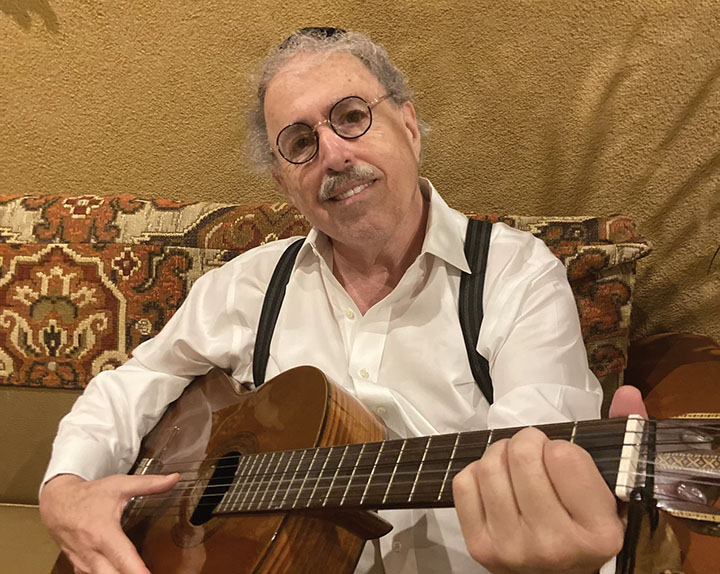
Singer-songwriter Diex sees himself as an ambassador, a bridge between the unlikely worlds of the prayer filled synagogues and the groove-shaking beats of J Lo, Enrique Iglesias and Ricky Martin.
[additional-authors]
December 18, 2003

Singer-songwriter Diex sees himself as an ambassador, a
bridge between the unlikely worlds of the prayer filled synagogues and the
groove-shaking beats of J Lo, Enrique Iglesias and Ricky Martin.

Since he moved to Los Angeles from Buenos Aires 18 months
ago, Diex’s reggae and jazz-tinged Latin melodies like “Desde Aca” (From Here)
and “Cuidad De Nostalgia” (City of Nostalgia) have been stealthily invading
college and noncommercial radio stations across the country. And while the
musical influences of his catchy songs come from Anglo and Latino songwriters
like the Beatles, Oasis, Fito Paez and Charles Garcia, it is also his Jewish
roots and his work as a musical arranger for synagogues in Argentina and Los
Angeles that inspires Diex.

“My mother is a singer who sings tango in Yiddish,” said
Diex, 30, who is known to his mother as Diego Goldfarb. “I have a lot of
melodies in my mind from her singing. I also like the Sephardi stuff — the
rhythm and percussions of Mizrachi music.”

Snatches of synagogue melodies too have insinuated
themselves into  Diex’s music. When he was 20, Diex started a decade long stint
as musical director in different synagogues. In Los Angeles, he worked at
Temple Etz Chayim in Thousand Oaks, but he says the American style of synagogue
music is too conservative for his tastes.

“I was more used to the Latin style with everyone singing,”
he said. “It is more messy, and more happy for my ears.”

Now Diex sees himself as a world citizen, a person whose
roots come from more than one place. His songs have a playful ambiguity about
them that reflect his roving identity and musical tastes, and he is not worried
that he sings in a language that many Americans don’t understand.

“Even if people don’t know what I am saying in the song,
they know that it is a love song or whatever,” he said. “I think there is
something international about music, and even without knowing the lyrics,
people can still feel the music.”

Diex will be performing at the Latin-Alternative Holiday
Party on Dec. 19 at the Alterknit Lounge in The Knitting Factory, 7021
Hollywood Blvd., at 9 p.m. $10. For tickets, call (323) 463-0204. He will also
be performing on Dec. 26 at Fusion at Club Good Hurt, 12249 Venice Blvd., Los Angeles,
at 11 p.m. (310) 390-1076.

For more information go to www.diexmusic.com .

Did you enjoy this article?
You'll love our roundtable.

Editor's Picks

Latest Articles

The Beat Goes On

While so much of the world seems obsessed with and consumed by its hatred of Israel and Jews, Israelis continue to build, create, work, celebrate, argue, raise families, and plan for the future.

Viral AI Video Targets Jewish Comedian

“The biggest concern is that people now have a pathway to shut down Jewish voices through complete falsities that people will believe. … For the future of Jewish entertainment, it’s very scary.”

Yiddish Historians: Writing in Their Own Language for Their Own People

Mark Smith has compiled an important anthology of Jewish history using 49 works by Yiddish historians to recreate or at least open the door to a world of Jewish thought that was once almost mainstream, but which no longer exists, except in the minds of too few specialists.

The Everlasting Melody

Most Jews who have sung “Eitz Chaim” over the past half-century probably never knew Portnoy. They did not know when he wrote the melody or how young he was when he composed it. They simply knew the song.

Who’s Really the Victim?

Those who would revel in Israel’s demise are claiming victimhood on every front and denying attacks on us in the same breath.

Biblical Deterrence

After Oct. 7, the sentiment in Israel toward the Iranian leadership was unequivocal: You went medieval — so we will go biblical.

How Sukkot Makes Us Whole

This year, I bless us that we open our eyes to truly see the beauty and the holiness of the world, and of the person before us at each and every moment, and to see the godliness of their aspirations and their fears.

The New Ushpizot

Ushpizin invite us to “welcome in our ancestral constellation and dwell amongst them.” This year, it’s Ushpizot, for the women. It’s the year of the Feminist Visitation.

Macklemore, Or Less

In between his songs, he proclaimed, “Free Palestine,” which is fine, asserted that opposing Israeli military actions is not antisemitic, which is accurate, and accused Israel of apartheid and genocide, which is offensive, untrue and hateful.

The Rokeach’s Remarkable Sukkah

To Rabbi Eleazar ben Judah of Worms (1176-1238), the medieval German pietist known as the Rokeach, the sukkah symbolized Jewish military might.

The Sukkah and the Power of Endurance

They can destroy our Temples, demonize us in social media, shower us with hate, but they can’t destroy a spirit that never stops building. That enduring spirit is the power of the sukkah.

NY Mag’s Habibi City

A satirical response to Zaina Arafat’s erasure of Jews in her New York Magazine article “Habibi City,” written as Zaina Arafat.

More news and opinions than at a Shabbat dinner, right in your inbox.