In the Israeli film “My Father My Lord,” the secular or casually religious Jew encounters a world whose mindset and lifestyle might as well be thousands of miles and centuries away.
It is the world of the charedi, or ultra-Orthodox, community, in which every action, every thought, is determined by God’s law, as elucidated by the sages.
This is the world of the Edelman family of Jerusalem, headed by Abraham, the community’s rabbi, who instructs his wife Esther and young son Menachem, “God doesn’t watch over those who don’t observe the Torah.”
But Abraham is no petty household tyrant. He is a deeply loving husband and father, who is deeply chagrined when he hurts Esther’s feelings but is the unquestioned authority on what may and may not be done in his household.
Menachem may be the apple of his parent’s eyes, but his natural inquisitiveness clashes with his father’s absolute strictures.
The trailer
The boy cannot understand why a postcard of African tribesmen must be ripped up because it represents idolatry, or why a faithful dog mourning its mistress cannot have a soul.
Esther is more of this world and encourages her son’s planning for a family vacation at the Dead Sea, of course with separate beaches for men and women.
Here the running parable of the Akedah, Abraham’s binding of Isaac in obedience to God’s will, is played out to the end—only this time, God does not grant a reprieve.
“My Father My Lord,” whose Hebrew title is the more innocuous “Hufshat Kaits” (Summer Vacation), is a profoundly affecting film.
Despite the movie’s brevity (74 minutes), it moves unhurriedly, with more conveyed by glances and gestures than by the sparse dialogue.
The film marks the debut of David Volach as director and writer and incorporates much of his own youth.
Interview with director Volach
“I was born into an ultra-Orthodox family in Jerusalem,” one of 19 siblings, he writes in his biographical notes. “In our home, worshipping God was a demanding activity that left no room for other areas of life.
“In my early teens, I harbored creative aspirations that I yearned to express through religion and worship. By my late teens, however, my long process of secularization began. Other creative endeavors—painting, writing and philosophy—began pulling at my heartstrings. At 25, I reached my final decision to leave religion and I emigrated to Tel Aviv to study film.”
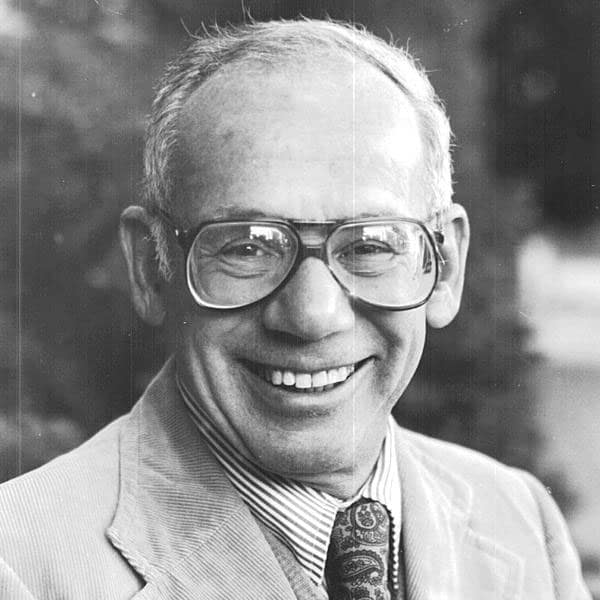
Volach’s casting is impeccable. Assi Dayan, son of war hero Moshe Dayan and ironically an outspoken secularist, acts the role of the single-minded rabbi with complete authenticity and considerable sympathy.
Sharon Hacohen Bar as Esther plays the family’s softer intermediary between father and son, until driven to a final act of rebellion against her husband and her God.
Ilan Griff, the son of recent Russian immigrants, gives an astonishingly natural performance as Menachem in his first movie role.
“My Father My Lord” opens Friday (July 11) at Laemmle’s Music Hall in Beverly Hills, Town Center in Encino, and Regency South Coast in Santa Ana.