fbpx

Mobster Makes Good

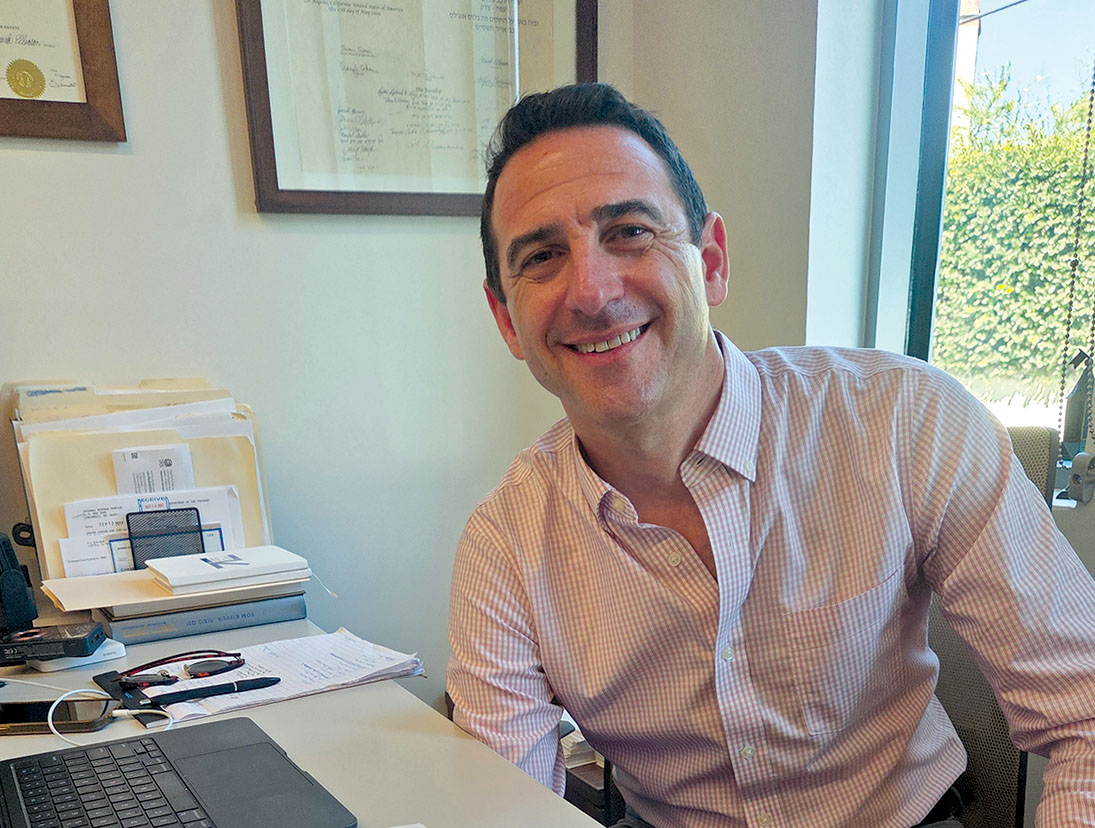
"It\'s a blessing to be able to work in this business. I don\'t want to look a gift horse in the mouth," says busy actor David Proval.
[additional-authors]
September 13, 2001

"It’s a blessing to be able to work in this business. I don’t want to look a gift horse in the mouth," says busy actor David Proval.

Best known for playing lunatic would-be mob boss Richie Aprile on "The Sopranos," Proval’s "ethnic" look has led the Jewish actor to numerous Italian — often mobster — roles, from his film breakthrough in "Mean Streets" (1973) as Robert DeNiro’s friend Tony, to his recurring guest appearances as Signore in "Everybody Loves Raymond."

"The neighborhood I grew up in was predominantly Italian and Jewish, so there is within my heritage some Italian influence," he says of his East New York, Brooklyn, upbringing, where he attended Yeshiva Toras Chaim.

But the self-described yeshiva bocher rarely got to play what he knows best, until recently. Taping an 1999 episode of "The West Wing" in which he played Rabbi Glassman was, according to Proval, "a very funny experience. I had just got off ‘The Sopranos’ playing a mobster, and two days later I’m in a synagogue on Wilshire Boulevard."

It was his Jewish heritage that got him involved with his latest project, Richard Krevolin’s play "Seltzer-Man." Introduced by a theater producer in 1994, "Richard and I have been working on this for seven years," the actor says. While Krevolin worked on the script, Proval contributed his own memories, especially of his relationship with his mother, and of one of his yeshiva teachers.

"Seltzer-Man," which debuts at Hollywood’s Tiffany Theatre on Sept. 15, tells the sad, but funny, tale of hard-drinking, raging poet Seymour Cohen, who daylights as a seltzer delivery man on the Lower East Side, and his occasional alter ego Yonkl Schwartz. He is, according to Proval, "a New York Jew on fire, burning with the accumulated rage of three thousand years of suffering."

"It’s a gem," Proval says, "This is the most personal role I’ve ever played."

Did you enjoy this article?
You'll love our roundtable.

Editor's Picks

Latest Articles

A Ka’ak By Any Other Name

A symbol of hospitality, families bake batches for holidays, family celebrations and visits with friends and relatives.

The Story That Never Goes Away

Rachel Goldberg-Polin, mother of slain hostage Hersh Goldberg-Polin, can’t stop speaking about her pain and the public love her body cannot always receive. She talks to the Journal about her son’s legacy and her new book.

Rosner’s Domain | A Dime-Store Abe: The Karhi Crisis

This week’s “Constitutional Crisis” is typical of the way the government operates. It issues a statement, or a tweet and then walks it back. Oops, we did not mean it. Or rather, we did, but we also meant to deny that we did.

Why Can’t We Be Friends?

If we want to see a less polarized society, both internally and beyond, we must emphatically reject the idea that political alignment is the predominant commonality for friendship.

Ruth-less, the Enigma of a Name

Jews spoke in two voices about Ruth, a kind of national schizophrenia, one with joyous chanting on Shavuos as the Book of Ruth was read; the other, removing her name from the chain-link of repeated names throughout the generations.

Honoring My Father: Saying Kaddish with Men

Saying kaddish every day tested my faith and commitment. It made me realize that there is no room for excuses. It taught me how to show up. It taught me that my voice can be heard, even when not expected.

The Yiddish Letter of American Liberty

Phillips’ letter – with its faith in Congress’ Declaration – now sits in display not far from the Liberty Bell and its inscription from the biblical book of Leviticus.

Searching for the Red Heifer

While there’s nothing wrong with keeping your eyes on the horizon for that magical heifer to appear, be sure to appreciate what you already have.

Broadening the Fight

If we agree that antisemitism is only one example of a widespread and pernicious instinct toward division and “other-ization,” then it becomes clear that we can only eradicate these animosities as part of a far broader effort.

More news and opinions than at a Shabbat dinner, right in your inbox.